Categories
Movies True Crime

Serpico

Serpico

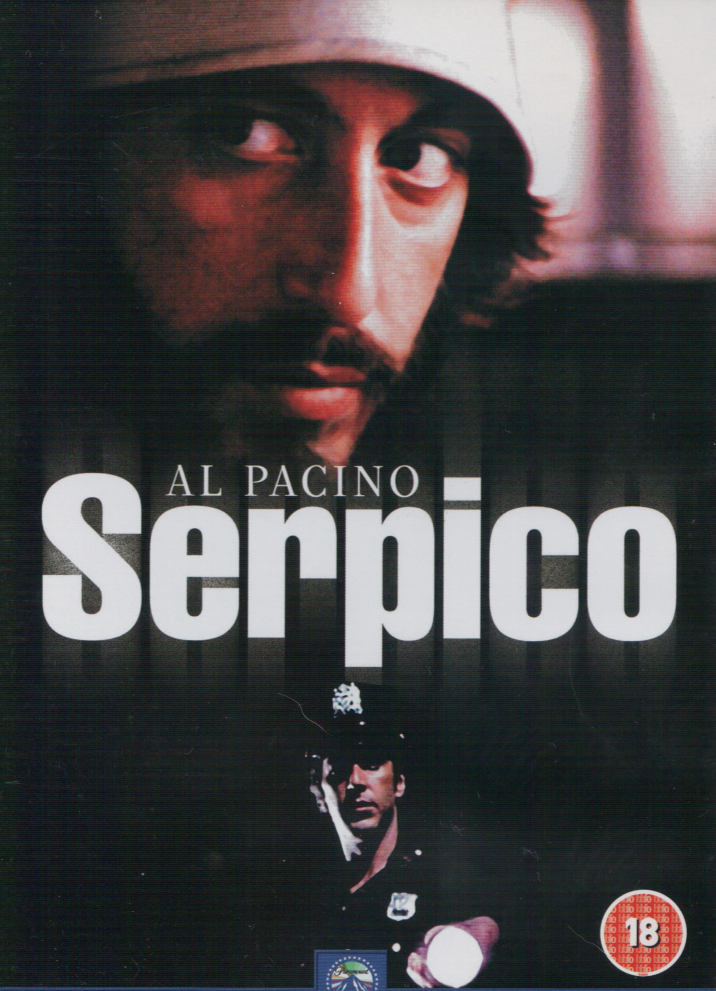
Serpico was based on Peter Maas’ biography of New York Police Department officer Frank Serpico, who went undercover to expose corruption in the police force. Directed by Sidney Lumet and starring Al Pacino, the film was released in 1973 and was a great commercial and critical success. Furthermore, Al Pacino won his first Golden Globe award for Best Actor in 1974 for his portrayal of Frank Serpico. Indeed, critics proclaim that the role of Frank Serpico is one of the highlights of Al Pacino’s career.

The film covers twelve years in the life of Frank Serpico, from 1960 to 1972. During his career, Serpico uncovered mass corruption in the N.Y.P.D. and he exposed this corruption to the authorities. However, far from being grateful and supportive they turned their backs on Serpico, exposing him to harassment and persecution. This harassment and persecution culminated in a shooting, when Serpico was wounded in the face during a drug raid on the 3rd February 1971.

The story was filmed on the streets of New York City and the real-life Frank Serpico looked on during the filming. However, Sidney Lumet considered that Serpico’s presence on the set would distract and inhibit the actors, especially Al Pacino, and so he was asked to leave.

In real-life, Frank Serpico grew his beard and hair, totally altering his appearance from clean-cut police officer to shaggy-haired hippy hero. In the film, this change of appearance was depicted by filming the scenes in reverse order, gradually trimming a hirsute Al Pacino as the scenes moved back in time.

Frank Serpico testified before the Knapp Commission, a government inquiry into N.Y.P.D. corruption. The inquiry sat between 1970 and 1972. On resigning from the police force Serpico was awarded the Medal of Honor and a disability pension. With his police career over, but his integrity intact, he moved to Wales and then Switzerland.

Categories
Movies Novels Private Detectives Sam Smith Private Eye Television True Crime

Happy St David’s Day

To help celebrate St David’s Day, The Detective Issue #2 will be offered free today on Amazon’s Kindle. If you are able please take advantage of this offer. The Detective Issue #2

cover-5

Categories
Movies Novels Private Detectives Television True Crime

The Detective Issue #2

The second issue of The Detective is now available from Amazon. Tomorrow, Issue #1 of The Detective will be offered free on Amazon so please take advantage of this offer if you are able…. The Detective Issue #2

cover-5

Categories
Movies Television

Columbo

Columbo

Created by Richard Levinson and William Link, Columbo is one of the most popular of all television detective shows and is a classic example of the inverted detective story. From the outset the murderer is known to viewers so the delight comes from watching Columbo as he wears down his prime suspect. This suspect is usually rich, influential and believes that he is smarter than Columbo. However, over the course of the programme Columbo first annoys then breaks down the murderer’s alibi, discovering a vital clue, which is often something minor.

The murderer, the guest star in the series, was played by a number of leading actors, including Gene Barry, John Cassavetes, Anne Baxter, Dick van Dyke and Robert Vaughn. Some actors – Robert Culp, Jack Cassidy and Patrick McGoohan – appeared, as different characters, many times in the series and Patrick McGoohan also directed a number of episodes.

Columbo first appeared in The Chevy Mystery Show in 1961 in an episode called ‘Enough Rope’ where the detective was played by Ben Freed. That episode was adapted for the stage as Prescription: Murder, which opened on the 15th January 1962 in San Francisco with Thomas Mitchell as Columbo. The play was adapted for television in 1968 with Lee J. Cobb and Bing Crosby favoured for the role of Columbo. However, neither actor was available and, although initially considered too young, Peter Falk landed the part.

Three years later NBC commissioned a second pilot, ‘Ransom for a Dead Man’ and the series proper started in September 1971 with ‘Murder by the Book’, an episode written by Steven Bochco and directed by Steven Spielberg.

Columbo alternated with McMillan and Wife and McCloud in a Mystery Movie series, though Columbo was by far the most popular of the three. Seeking to capitalize on its success, NBC considered a weekly series. However, Peter Falk sensed that over-exposure would kill the series and refused to play ball. His wisdom ensured that the series retained its integrity and that production standards remained high.

The show ran for seven seasons, until May 1978, and was resurrected in 1989. Over these series Peter Falk was Columbo with his shabby raincoat – the actor’s own – a battered car and a sad-looking basset hound. Seemingly bumbling and ineffectual, apologetic, with always one more question up his sleeve, Columbo’s persona concealed a sharp, perceptive, analytical mind. Peter Falk was born to play the part and he made it his own.

Columbo

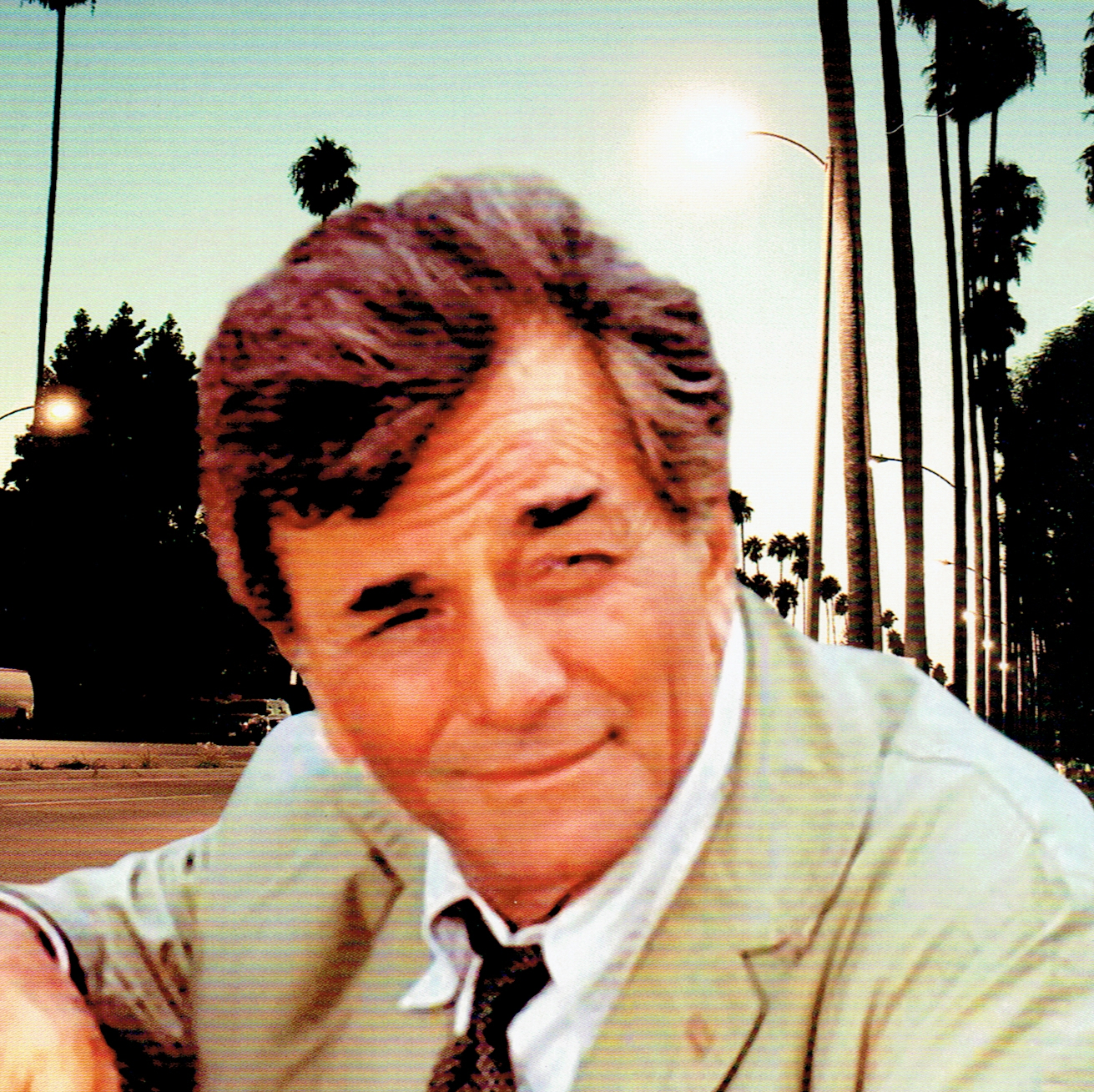
Peter Falk as Columbo

Columbo developed into an affable, friendly character, a man you would welcome as a friend. However, in the 1968 pilot and play, Prescription: Murder, Columbo had a harder edge and would often become angry. That anger appeared occasionally in later episodes, but was always well placed and effective. Humour also played a big part in the series, though the jokes worked best when they flowed naturally, rather than when the writers made Columbo behave like a clown, for a clown he was certainly not.

Constant references to Mrs Columbo, the detective’s wife, whom we never see, provided an in-joke to the series. Ill-advised, the producers gave Mrs Columbo a series of her own. Starring Kate Mulgrew as a newspaper reporter, that series commenced in February 1979 and ran for thirteen episodes. However, after only five episodes the producers recognized their error and dropped all references to Mrs Columbo. Instead Kate became Kate Callahan, but by then the series was lost.

Many quality detective series have been made over the years, but surely Columbo must rank in the all-time top five.

Categories
Movies Novels

The Third Man

The Third Man

A celebrated British noir charting post-war European malaise, Carol Reed’s The Third Man is widely regarded as the finest British film ever made.

The film centres on Holly Martins (Joseph Cotton) a writer of pulp westerns who arrives in Vienna to meet his old friend Harry Lime (Orson Welles) only to discover that Lime has been killed in an accident. Martins investigates the death and is assisted (and hampered) by Major Calloway (Trevor Howard), the head of British forces, and Anna (Alida Valli), Lime’s mistress. The screenplay was written by Graham Greene who regarded the film as a ‘comedy-thriller’, though the themes of suspicion and betrayal, which chimed in well with McCarthyism, offer few laughs. Instead we are left with a classic that captured the pessimism of a post Auschwitz and post Hiroshima world.

In 1948 the Cold War was fought with goods and not guns a fact highlighted by Lime’s penicillin scam, a scam that places Lime on the Devil’s shoulder.

The Third Man 2

Harry Lime is memorably played by Orson Welles in one of his iconic screen roles. In fact, Welles appears in only ten percent of the film – he arrives late, then steals the show. A myth has developed that Welles wrote Harry Lime’s dialogue, though that credit must go to Graham Greene. However, Welles did contribute the famous cuckoo clock speech, an improvised passage and a highlight of the film. The speech: “In Italy for thirty years under the Borgias they had warfare, terror, murder, bloodshed – but they produced Michelangelo, Leonardo da Vinci, and the Renaissance. In Switzerland, they had brotherly love, five hundred years of democracy and peace, and what did they produce? The cuckoo clock.”

The Third Man was shot on location in Vienna, and you could argue that the bomb damaged city is the film’s greatest character. Director Carol Reed filmed many shots at a slight angle making great use of the night-time shadows cast by the big spot lamps. The angle of filming and the use of shadows are the stylistic fingerprint of The Third Man.

Another distinctive feature of the film is Anton Karas’ zither soundtrack, a truly original score that dominated the music charts when the film was released in 1949.

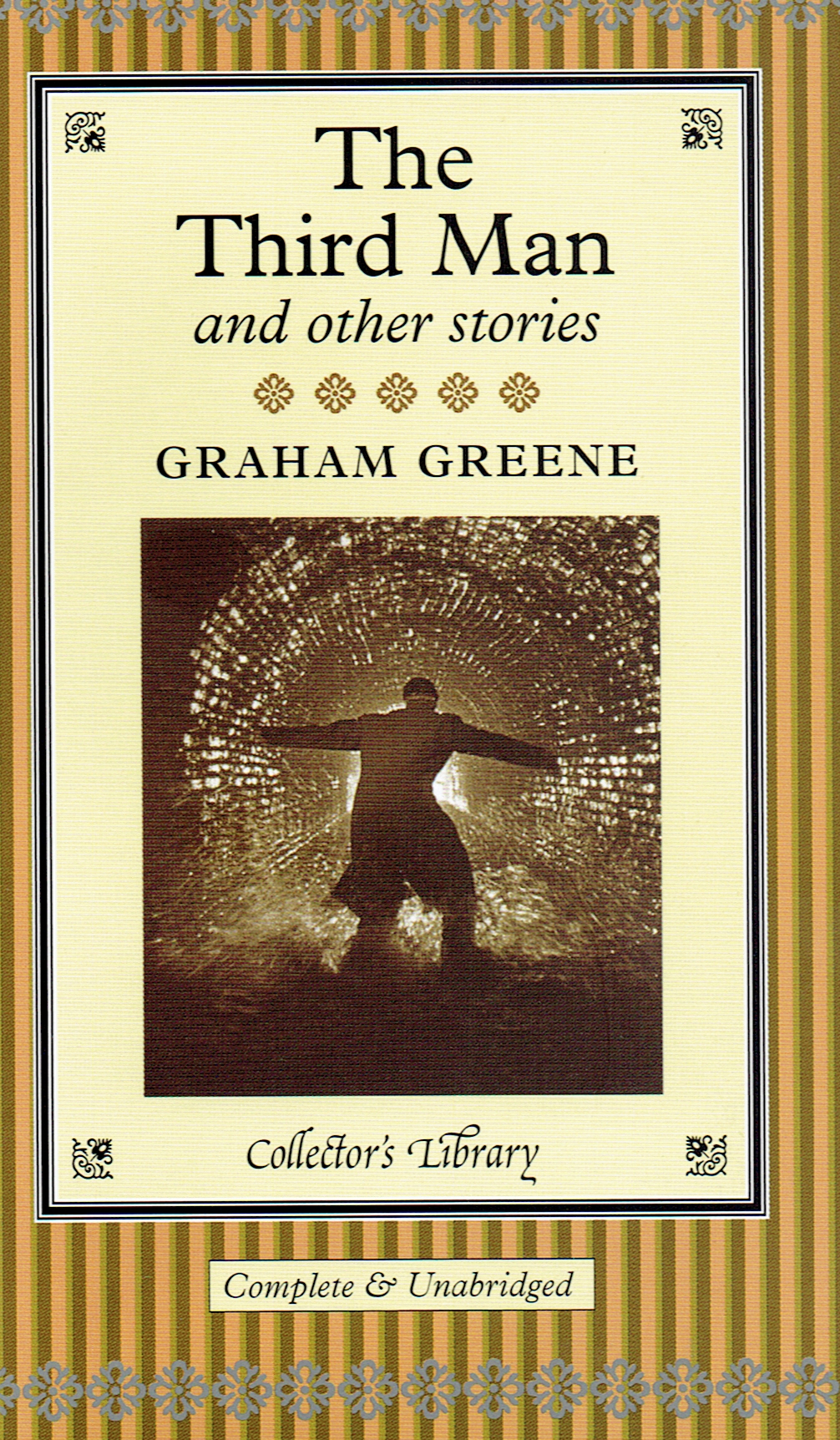
As well as the screenplay, Graham Greene also wrote a novella. The novella is true to the film, except in the ending where Graham Greene opts for a ‘traditional’ scene with Holly and Anna walking off arm in arm. However, Carol Reed thought that ending unrealistic and instead he provided cinema-goers with the classic scene of Anna walking past Holly.

The first choice to play Holly Martins was Carey Grant, while Noel Coward and Robert Mitchum were considered for the role of Harry Lime. It has also been suggested that Lime’s character was based on Kim Philby, the infamous British double agent and one-time colleague of Graham Greene in the British Secret Intelligence Service.

There are two versions of The Third Man, a British version and an American version. The British version runs for eleven minutes longer than the American version, which was re-edited by producer David O. Selznick.

Sometimes in collaborative artistic work all the elements come together to produce a classic, and that is true of The Third Man. The blend of acting, writing and directing has rarely been matched and certainly not surpassed. The best British film of all time? If you know of a better one, please tell me!