I made great progress this week with the writing of Branches, book two in The Olive Tree, my Spanish Civil War saga, and the editing of Operation Broadsword is nearly complete. My thoughts are turning to Operation Treasure, book four in my Eve’s War Heroines of SOE Series, and Stormy Weather, Sam Smith Mystery Series book eighteen, a novel about climate change.
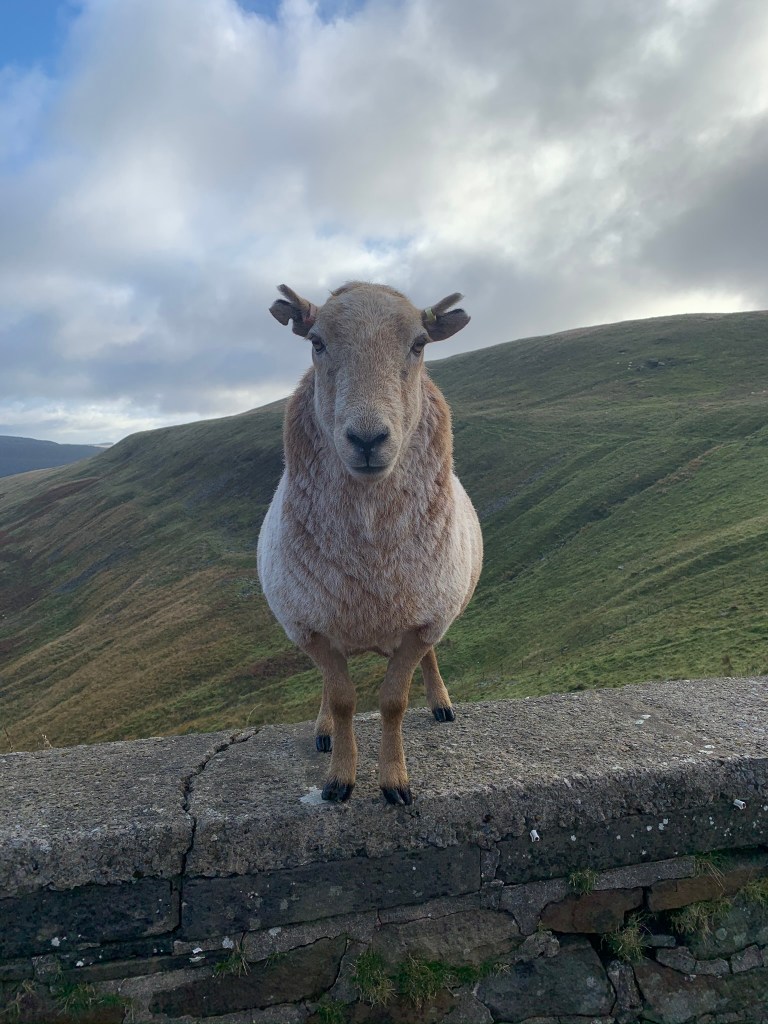
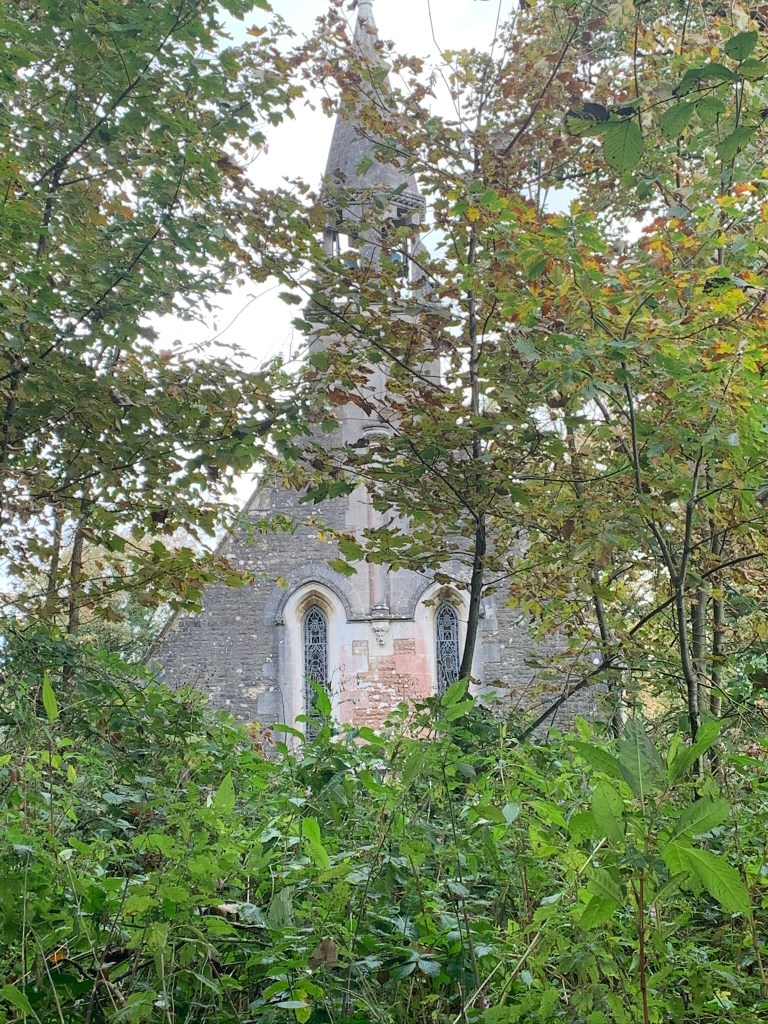
Met some friends on the Bwlch this morning.
My latest translation, available soon, Invasion in Afrikaans. Also, delighted that Nelmari has agreed to translate Blackmail, book three in my Ann’s War series.
‘Potato’ Jones, captain of the cargo steamer Marie Llewellyn. During the Spanish Civil War, ‘Potato’ Jones ferried 800 refugees to safety. In total Welsh sea captains ferried 25,000 refugees to safety.
He also delivered fuel, food, medicines, guns and ammunition to the anti-fascists in Spain, breaking the blockade at Bilbao.
Cardiff International Brigade veteran Tom Williams: “The fight for democracy in Europe is carried on by the British ships carrying predominantly Welsh crews, and we are known on the continent as the ‘Welsh Navy’.”
Eve is back at #1 🙂
Merthyr Mawr this week
It’s a simple job, they said. We want you to wander down to Maddox Street and Conduit Street in Mayfair and attach the main telephone cable to a new support wire…
I’m reading George Orwell at the moment, his experiences in the Spanish Civil War. Very lyrical and insightful.
Meanwhile, no irony here…
With Joana and Sandra, started work on two new translations today, Mind Games, Sam Smith Mystery Series book eleven, into Portuguese and Operation Locksmith, Eve’s War Heroines of SOE book two, into German. Great respect for translators and the talent they bring to these projects.
Hands up if you’ve said or heard these words 🙂
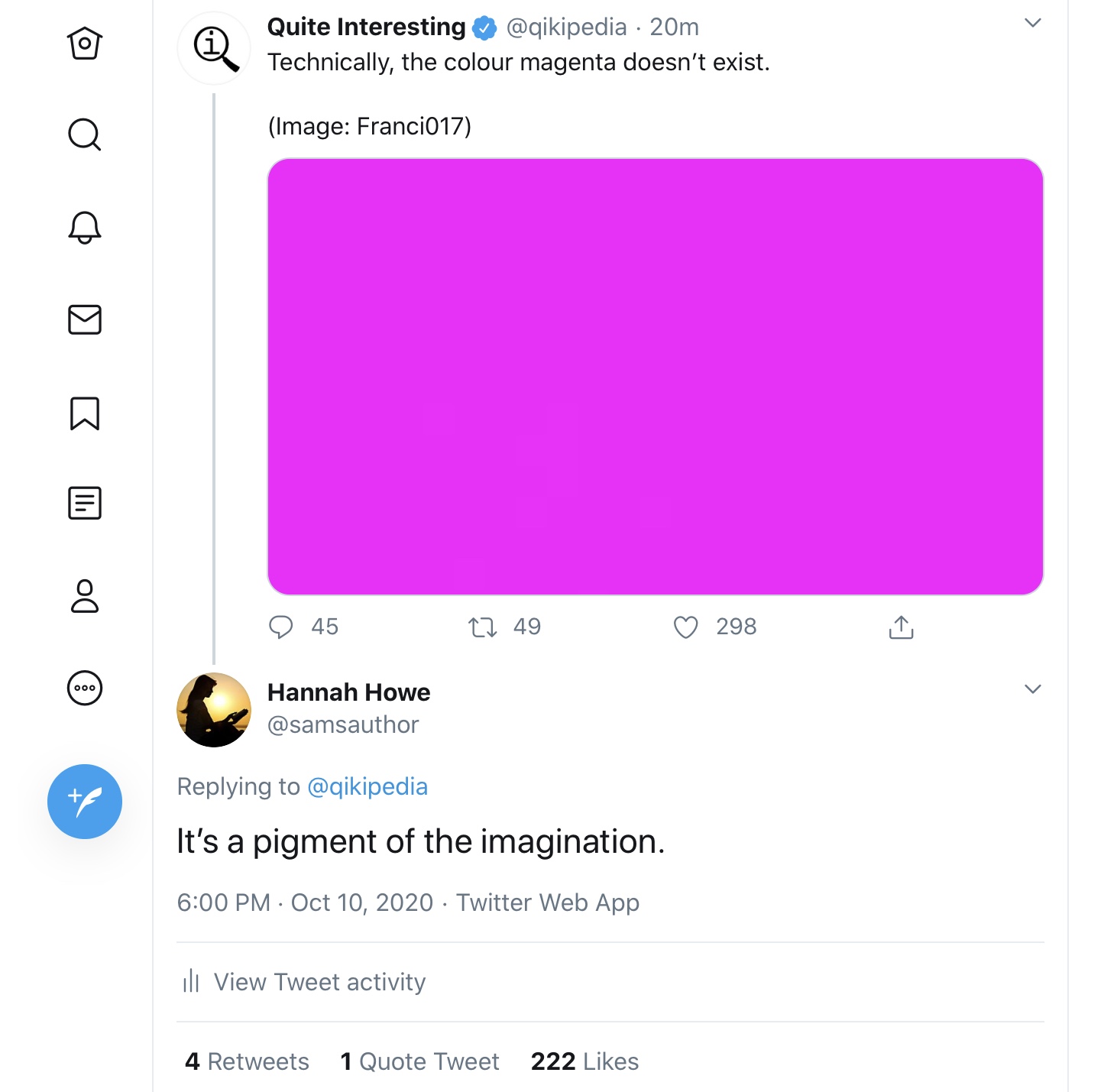
Responding to QI, the other followers said ‘I’d won Tweet of the Day’ and ‘I’d won the Internet’ with this comment 😂
Incidentally, I received well over 1,000 likes, which is easily a record for me.
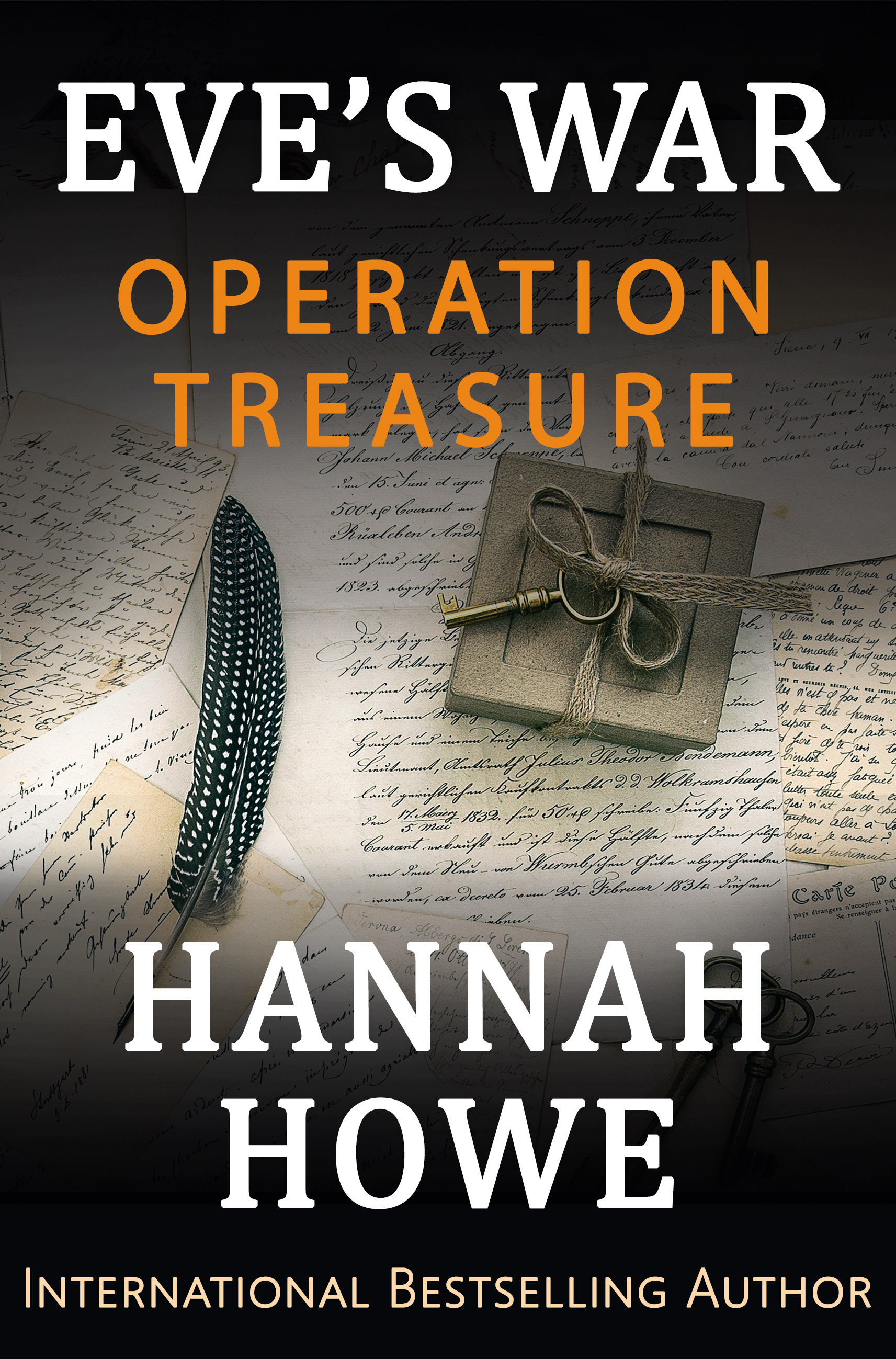
I’ve completed Operation Broadsword, book three in my Eve’s War Heroines of SOE Series, and now I’m looking forward to January 2021 and Operation Treasure, book four in the series, which is now available for pre-order.
Stabbed was obviously Shakespeare’s default modus operandi, but I’d love to work The Winter’s Tale’s Pursued by a Bear, or maybe Titus Andronicus’ Baked into a Pie into my books 🙂
Members of a Jedburgh team who supported Operation Market Garden in the Netherlands, 17 – 25 September 1944.
After D-Day, Jedburgh teams assisted SOE agents and the local Resistance. The teams usually consisted of three men: a commander, an executive officer and a non-commissioned radio operator. One of the officers would be British or American while the other would originate from the host country. The radio operator could be of any nationality.
The October 2020 issue of our Amazon #1 ranked eMagazine, Mom’s Favorite Reads 🙂
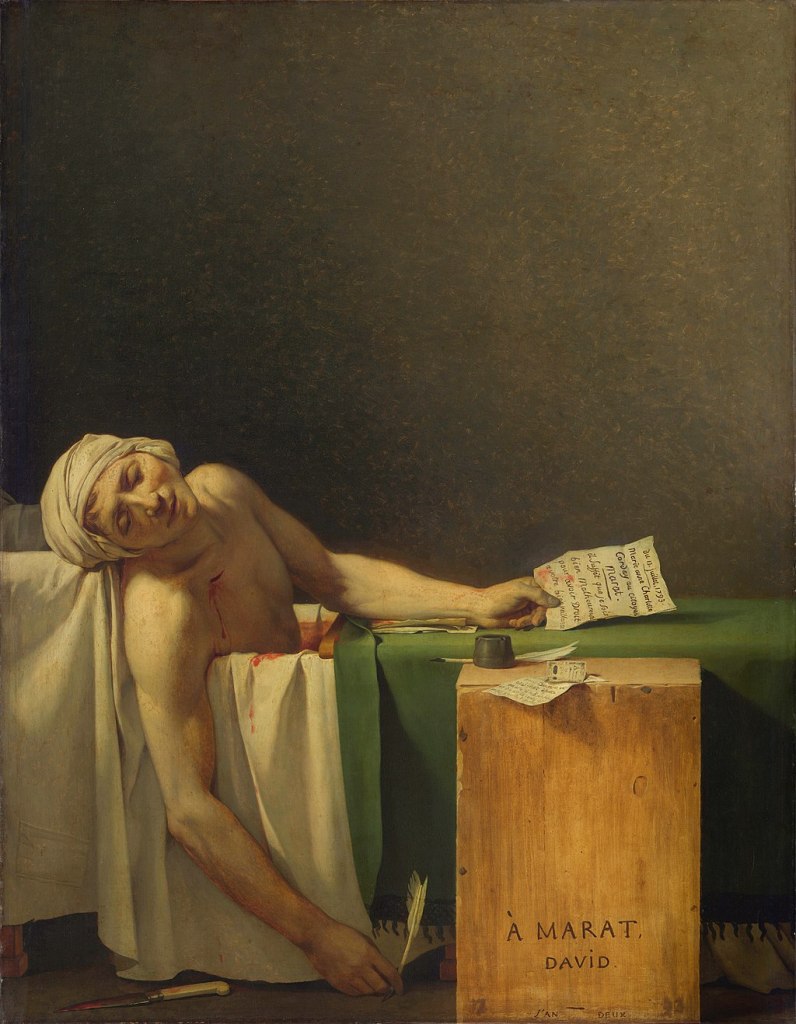
A beautiful murder ballad…Jean-Paul Marat murdered by Charlotte Corday with a dagger in the bath.
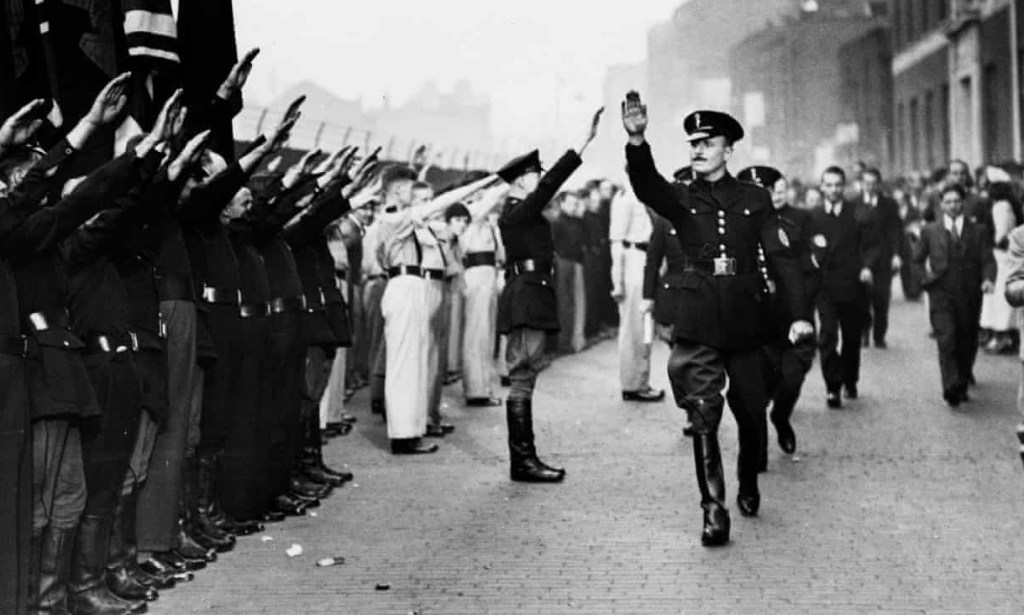
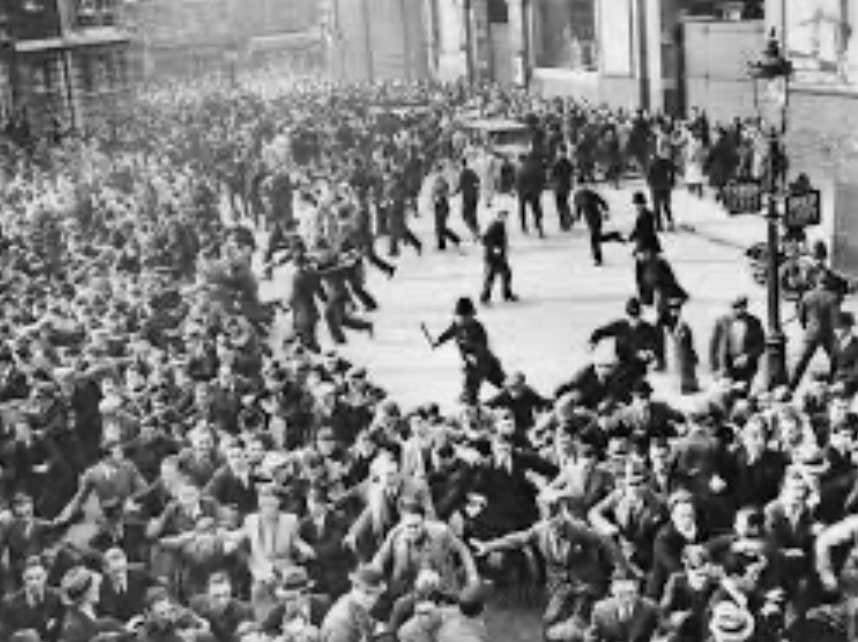
Sunday, 4 October 1936, The Battle of Cable Street when 20,000 anti-fascists clashed with 3,000 fascists. Facilitated by the Tories, Mosley sent his blackshirts into the East End of London to intimidate the Jewish community. However, the locals supported the Jews and repelled the fascists.
Colette, A Schoolteacher’s War was going to be a standalone novel. However, my research has taken the book into a trilogy. Based on the French Resistance and D-Day, each story will centre on a different lead character. Working titles, A Student’s War and A Housewife’s War.
Stories are universal, of course, so it’s lovely that I now have readers in 44 countries 🙂 America, Argentina, Australia, Belgium, Brazil, Bulgaria, Canada, Columbia, Denmark, El Salvador, England, Fiji, France, Germany, Greece, Hong Kong, Hungary, India, Indonesia, Ireland. Italy, Japan, Latvia, Malaysia, Mexico, Netherlands, New Zealand, Norway, Philippines, Poland, Portugal, Romania, Scotland, Singapore, Slovakia, South Africa, South Korea, Spain, Sweden, Switzerland, Turkey, Ukraine, Vietnam and Wales.
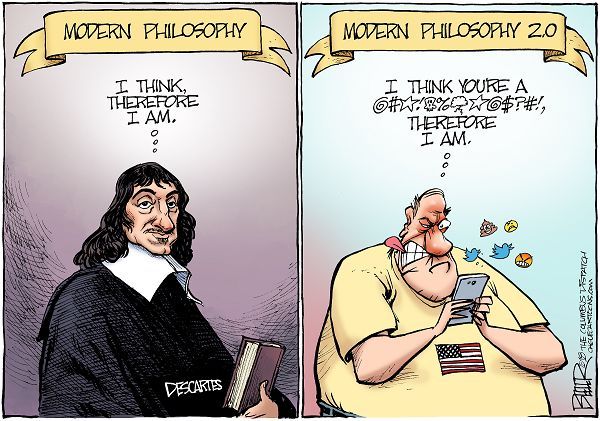
Modern Philosophy
One of the dogs trained to deliver first aid kits to frontline medics in the fight against fascism during the Spanish Civil War.
Movie stars who appeared in the Lux Screen Stars series weren’t paid. Novices at beauty product advertising, they didn’t think to ask.
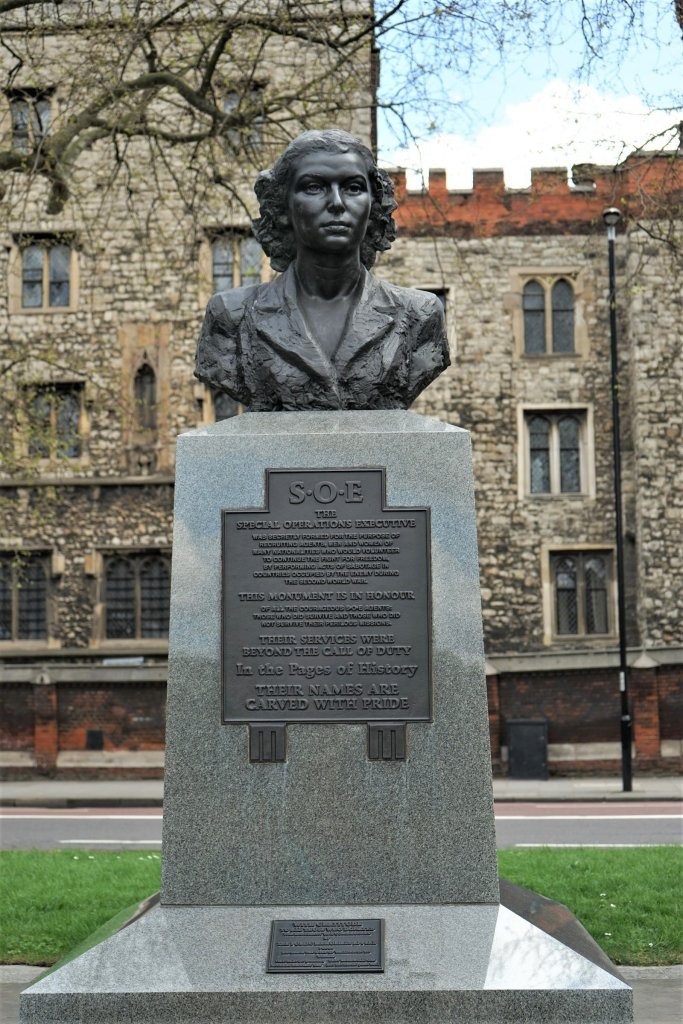
By common consent, Violette Szabo was regarded as the most beautiful of all the SOE F Section agents. A mother, she served the SOE in France until an unfortunate incident led to her capture and murder by the fascists.
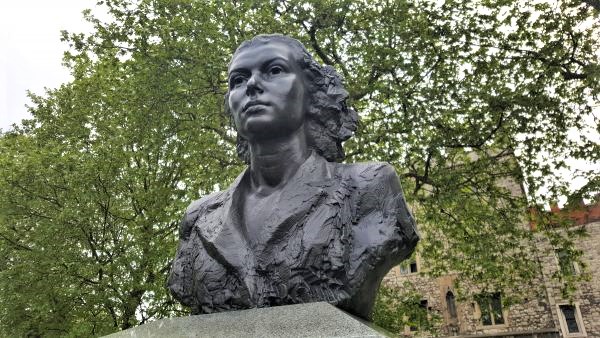
This memorial by Karen Newman, featuring Violette Szabo and dedicated to all SOE agents, was unveiled in 2009.
I wrote a chapter today where two of my characters in The Olive Tree: Branches, part two of my Spanish Civil War saga, walked along the banks of the Seine encountering a scene similar to this painting by Georges Seurat.
Where do you get your ideas from? Is a common question asked of authors. My answer is, my ideas always stem from my characters. Where do my characters come from? The answer to that question is various sources, including old photographs. Here’s an example of a nurse in the Spanish Civil War. I don’t know her name or background, but her strong features immediately spoke to me and just by studying the picture a fictional character, Lise Lazard, took shape. You can read about Lise in Branches, book two in The Olive Tree, A Spanish Civil War Saga. Available soon 🙂
I write, therefore I am…
In September 1953, sugar rationing in Britain finally came to an end. The wartime government introduced it in January 1940. A weekly sugar ration ranged from 8oz to 16oz per week.
Where to collect your ration if you lived in Birmingham. Maybe we’ll see similar Brexit inspired posters in the new year.
Station IX, which developed weapons and gadgets for SOE agents, created a small motorcycle called the Welbike. Although 3,641 bikes were produced they were rarely employed by the SOE. Instead they were issued to the 1st and 6th Airborne Divisions who used them during the Anzio and Normandy landings. The Welbike also featured at Arnhem during Operation Market Garden.
Bulgarian joke. Red Bull gives you wings. Vodka gives you 4×4 🤣
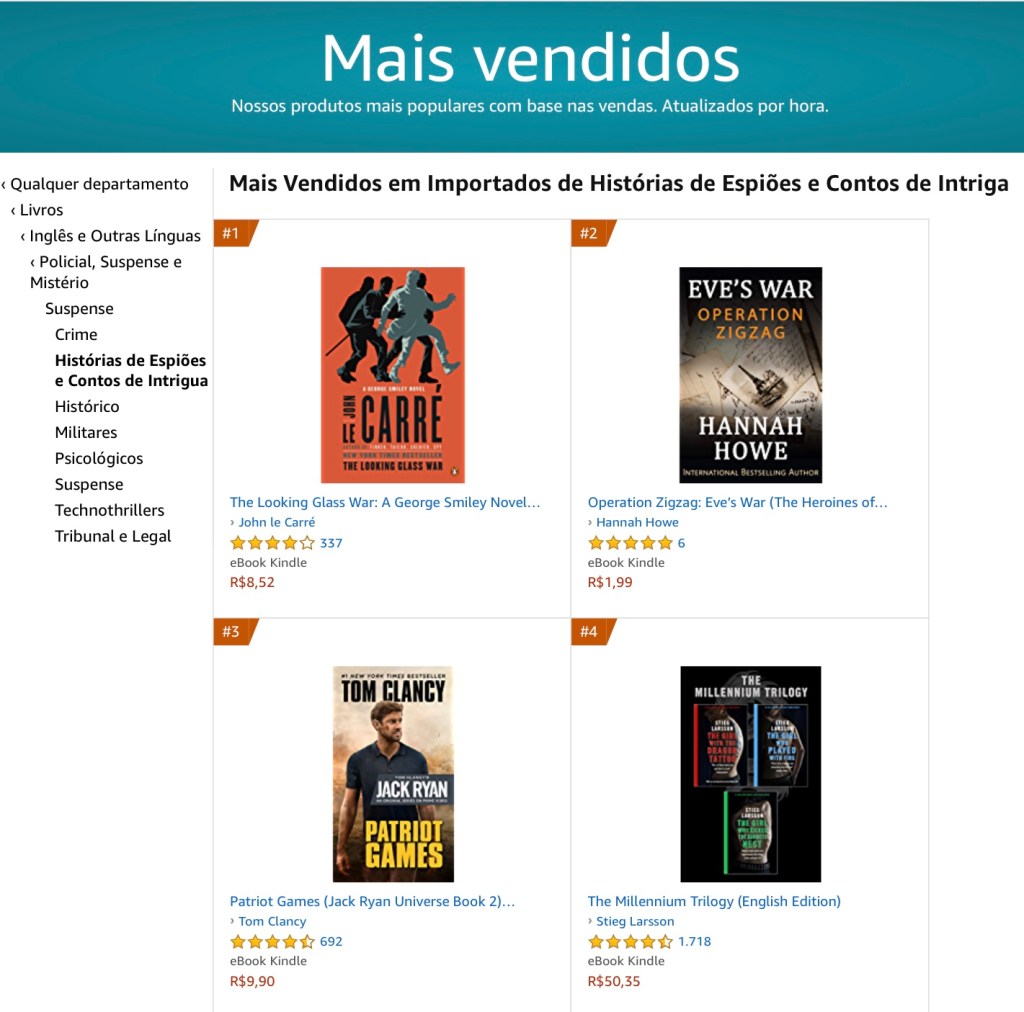
One for the album. Operation Zigzag has entered the Brazilian chart alongside John le Carre, Tom Clancy and Stieg Larsson 🙂
Eve at #1 for the first time 🙂
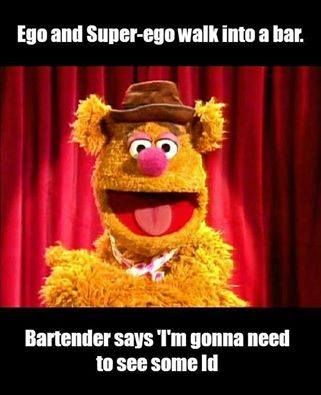
Philosophy humour.
I’m reading A Moment of War, Laurie Lee’s lyrical account of his time in the Spanish Civil War.
“Eulalia turned and smiled at me brilliantly, showing her tongue, her face cracking open like a brown snake’s egg hatching.”
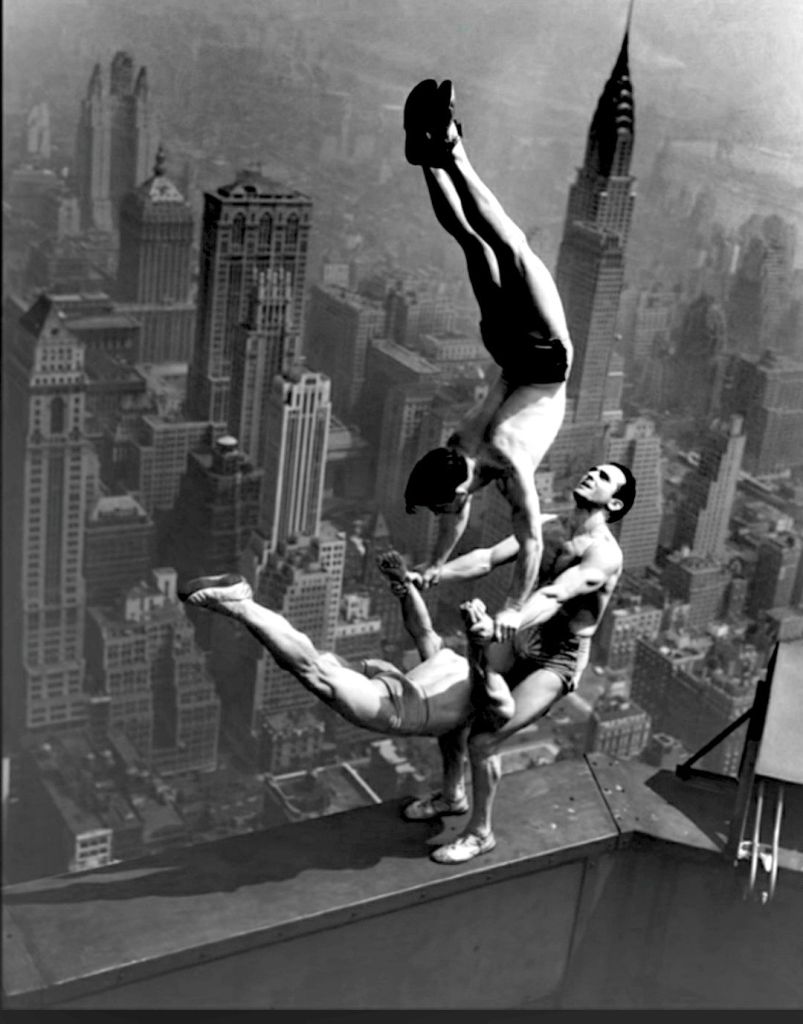
Vertigo, what vertigo?! Acrobats do their thing on top of the Empire State Building, 1934.
A lovely weekend for my Eve’s War Heroines of SOE Series, #1 in America and Britain, and now in Australia 🙂
Fat Banished!
No exercise!
No diets!
No baths!
No ill effects!
No danger!
Easy to swallow!
The solution you’ve been waiting for, sanitised tape worms!
October 1944, the Allies cross the Belgium-Germany border and prepare to write the closing chapters of World War II with the defeat of Hitler’s brand of fascism.
My article about SOE agent Odette Sansom is on page 24 of this month’s Seaside News 🙂
“We all have our time machines, don’t we. Those that take us back are memories…And those that carry us forward, are dreams.” – H.G. Wells, 21 September 1866.
19 September 1944. Dutch residents of Velp welcome British Sherman tanks of 30 Corps as they advance towards Grave and Nijmegen.
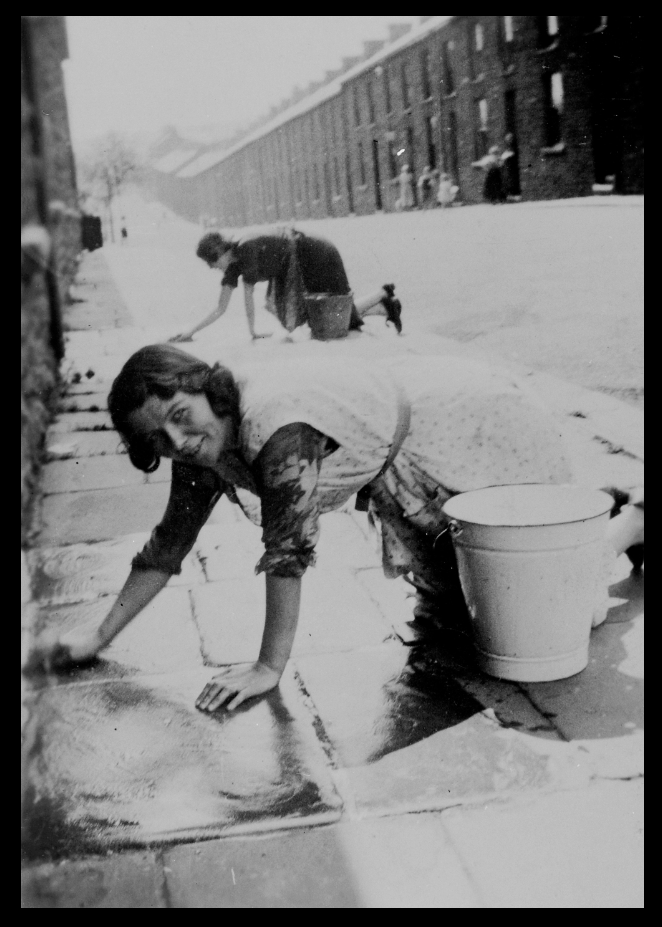
From The People’s Collection Wales. A common sight in the Victorian era and first half of the twentieth century, housewives scrubbing their front doorsteps.
A clean doorstep was regarded as a badge of pride.
Pictured, Mrs Blodwen Williams of Ynys-y-bŵl during the 1930s.
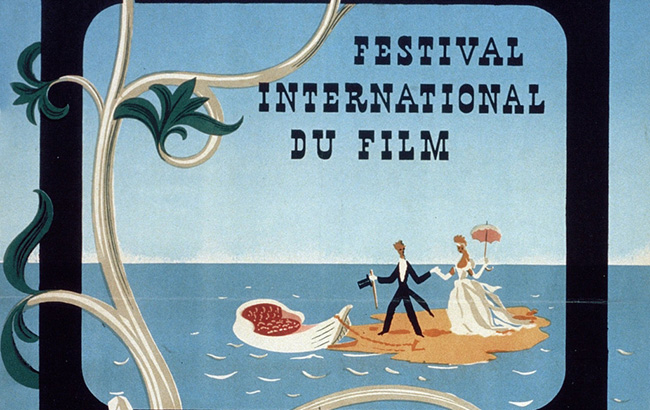
This week in 1946, filmmakers from twenty-one nations arrived in Cannes, an already-glamorous resort on the French riviera, and presented their films to their peers, establishing the Cannes Film Festival.
My Eve’s War Heroines of SOE series has entered the top five. We will start promoting the series during the autumn so I’m hoping it will attract more readers. From my point of view, it’s a great series to research and write.
Views from the Bwlch this week.
Health and Safety takes a holiday. Painting the Eiffel Tower in 1932.
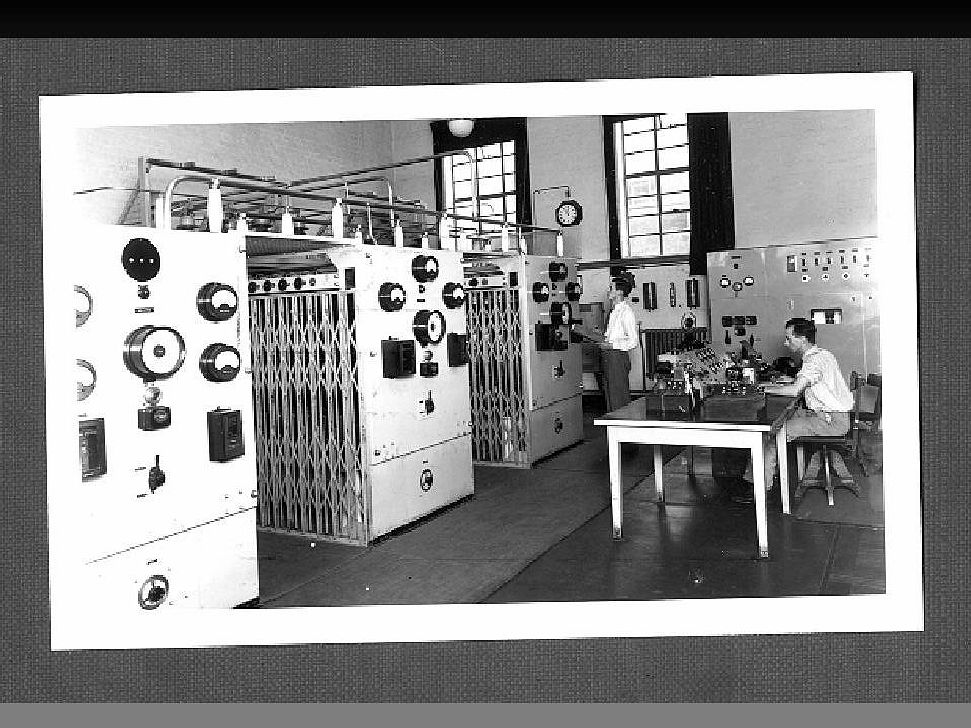
Pictured in 1942, the long wave radio transmitter at Criggion Radio Station, mid-Wales. The centre was vital to British communications during the Second World War.
I’m researching songs of the Spanish Civil War. This is A Las Barricadas, To The Barricades, a rousing call to arms based on Whirlwinds of Danger, Warszawianka, a Polish song.
Eileen Nearne who, along with her sister Jacqueline, served in France as an SOE agent. After transmitting over one hundred messages, Eileen was captured by the Gestapo. However, she escaped. Read her remarkable story here https://hannah-howe.com/eves-war/eileen-nearne/
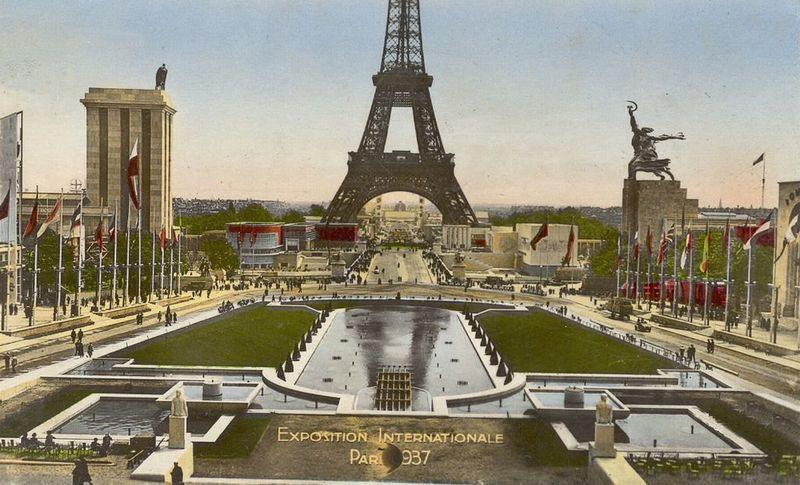
This week, my writing takes me to the Spanish Civil War with Branches, book two in The Olive Tree. This story actually starts in Paris during the International Exposition of 1937. Pictured, The Soviet pavilion and the German pavilion near the Eiffel Tower.
Enjoying dinner aboard a Zeppelin, Berlin to Paris, 1928.
The proof copy of Looking for Rosanna Mee has arrived from the printer. Also, I’m delighted that a Spanish version of this book, my latest Sam Smith Mystery, is now in production.
In Spain, Vice-President Pablo Iglesias announced that descendants of those who fought in the International Brigades will be able to apply for Spanish citizenship. In 2007 a law granted members of the International Brigades citizenship.
Los descendientes de los brigadistas internacionales que combatieron por la libertad y contra el fascismo en España, podrán acceder a la nacionalidad española. Ya era hora de decir desde el Gobierno a estos héroes y heroínas de la democracia: gracias por venir.
Translation: “The descendants of the international brigade members who fought for freedom and against fascism in Spain, will be able to access Spanish nationality. It was time to say from the Government to these heroes and heroines of democracy: thank you for coming.”
Commemorating the Battle of Britain, an international team effort.
A worker at the B.T.H. factory in Neasden Lane, Willesden writing messages on a Covenanter tank of British Guards Armoured Division, 22 September 1942.
A post World War Two silk dress made from ‘escape and evade’ maps. The maps were given to RAF pilots and SOE agents to aid their escape should they be trapped behind enemy lines.
Maps were printed on silk during the war because the material is durable, rustle free, easy to conceal and doesn’t degrade in water. The maps, along with secret messages, were often sewn into an agent’s clothing.
This weekend’s sweet treat in our house is a Teisan Lap, a moist cake that was very popular with coalminers.
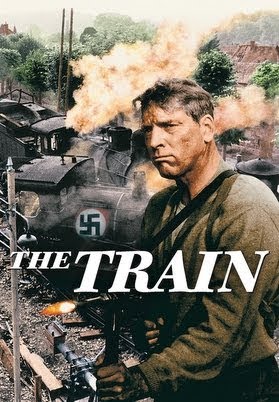
The Train, a 1964 Second World War movie, is based on an interesting premise: are great works of art more valuable than human life?
Directed by John Frankenheimer and starring Burt Lancaster, The Train is an ‘industrial’ movie in that sweat and coal dust are never far from the actors’ faces. It’s also a stirring action movie with a number of dramatic, explosive scenes.
John Frankenheimer and Burt Lancaster
It’s August 1944 and with the Allies closing in on Paris, the Nazis decided to transport, by train, the great art treasures of France to Germany. In the movie, the main protagonists are Paul Labiche, a railwayman and Resistance member, played by Burt Lancaster, and art lover Colonel Franz von Waldheim, played by Paul Scofield.
Given that the Allies are approaching, the Resistance only need to delay the train by a few days, while protecting its priceless cargo. Although initially reluctant to participate in the plan, Labiche devises an elaborate plan where, instead of travelling in a straight line to Germany, the train travels in a circle. In all aspects, the movie is gritty and realistic. However, this concept does require a suspension of disbelief because the Nazis never suspect that the train is taking a circuitous route.
Paul Scofield and Burt Lancaster
One of the most dramatic scenes in the movie is a train crash. This was filmed for real. However, the stuntman pulled the throttle back too far and the train travelled too fast, demolishing a dozen cameras en route. This left just one camera, buried in the ground, to capture the action, which it did to stunning effect, the wrecked train coming to rest above its all-seeing lens.
Due to a number of complex sequences, the movie overran it’s production schedule. Many of the French character actors in the film were committed to other projects. Therefore, director John Frankenheimer came up with a simple solution. As Resistance fighters, they were placed against a wall and shot by the Nazis. Historically correct, this explained their absence from the closing scenes of the film.
An agile performer, Burt Lancaster performed his own stunts. These included jumping on to a fast moving train and, later, being pushed off a fast moving train. He escaped without injury. However, on a rest day he played golf and badly damaged his knee. John Frankenheimer needed a reason to explain Lancaster’s limp, so he included a new scene in which the Nazis shoot Lancaster in the knee as he makes his escape thus allowing the production to continue without further delay.
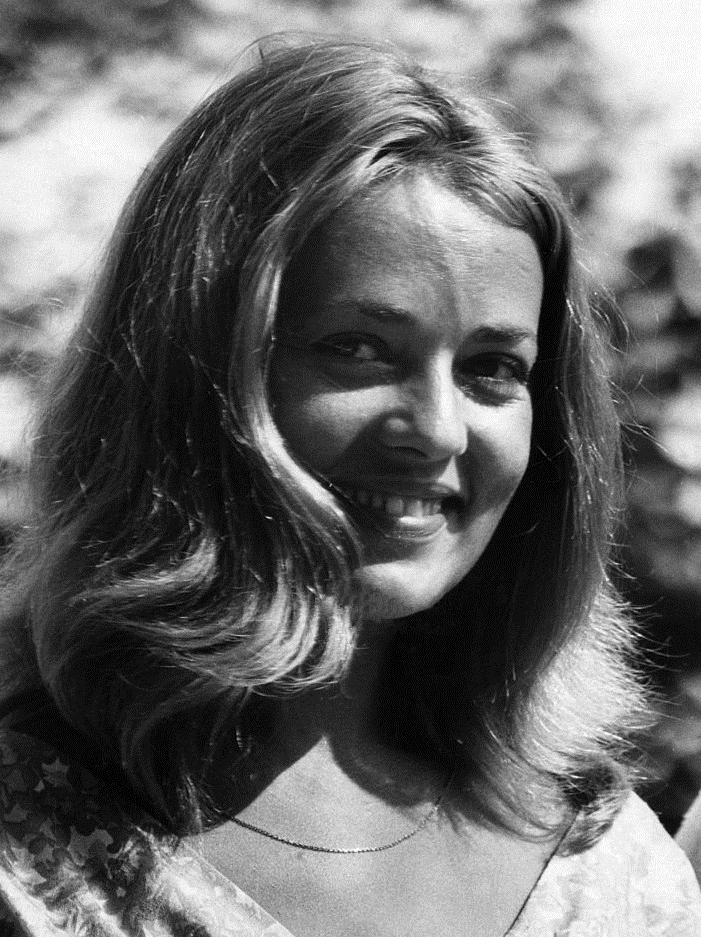
Jeanne Moreau
With filming complete, John Frankenheimer showed The Train to the production company, United Artists. They realised that the movie required another action scene. Therefore, Frankenheimer reassembled the cast for a dramatic Spitfire attack scene, a highlight of the movie.
At Lancaster’s suggestion, Frankenheimer also added a philosophical/romantic scene, which Lancaster largely wrote. This scene featured Lancaster and Jeanne Moreau, and is another highlight of the movie.
Throughout the film, John Frankenheimer juxtaposed the value of art with the value of human life. A brief montage at the close of the movie intercuts the crates full of paintings with the bloodied bodies of the hostages, shot by the Nazis, before a final scene shows Lancaster as Labiche limping away.



























 Hannah Howe