Categories
Dear Reader

Dear Reader #128

Dear Reader,

Some chart news. Operation Cameo, book six in my Eve’s War Heroines of SOE series, is a top twenty hot new release in Britain. We will publish the book in February 2022. Many thanks to all my readers for their support.

This week I parcelled 84 books to send to the Bodleian Library, Oxford; Cambridge University Library; National Library of Scotland; Trinity College Dublin; The British Library and the National Library of Wales. Publishers have been fulfilling this requirement since 1662. A great tradition 🙂

Researching the Gadsden branch of my family I discovered grocers in London and Newport Pagnell. Further research revealed that earlier they had been traders in Liberia, Nevis and South Carolina. 

Here’s Christopher Gadsden (16 February 1724 – 28 August 1805) an American politician who was the principal leader of the South Carolina Patriot movement during the American Revolution. He was a delegate to the Continental Congress, a brigadier general, Governor of South Carolina, a merchant and the designer of the Gadsden flag. He was also a signatory to the Continental Association and a Founding Father of the United States. 

More about the Gadsdens in future posts.
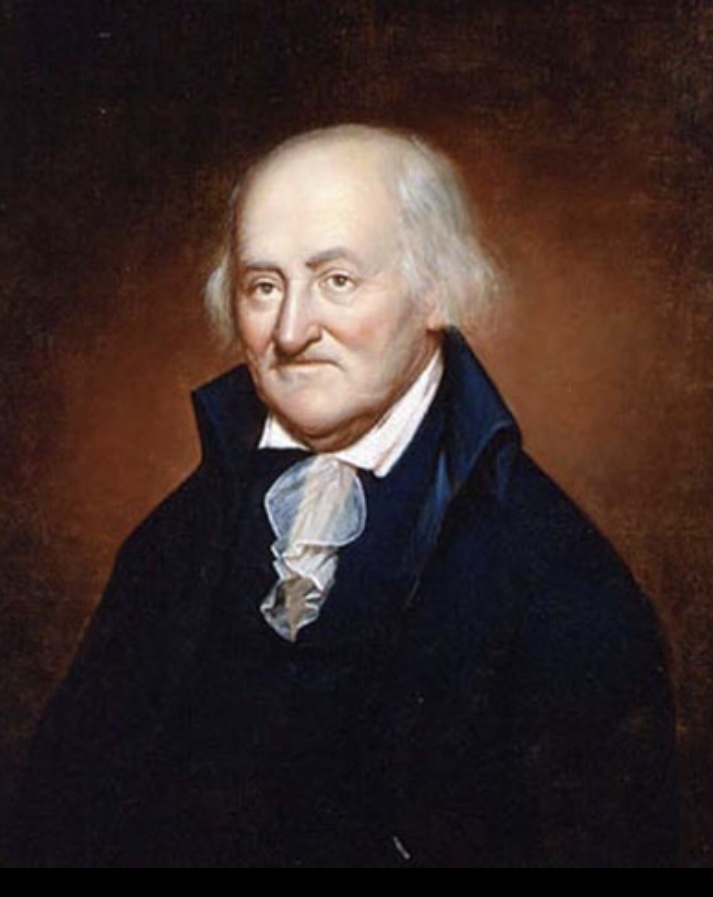
I reckon I should award the prize for my most exotically named ancestors to Zephaniah Thorpe and his wife Mary Discipline.

The son of Ralph Thorpe and Mary Wakefield, Zephaniah was baptised on 25 April 1790 in Lakenham, Norfolk. He was named after his grandfather, Zephaniah.

Mary Discipline was born on 25 January 1789 and baptised on 1 February 1789 in Heacham, Norfolk. Her parents were Thomas Discipline and Mary Smith.

Zephaniah Thorpe and Mary Discipline married on 22 August 1813 in St Dunstan, Stepney, which indicates that they had moved from Norfolk to London. However, this was a small step before they embarked on an even greater adventure. Before detailing that adventure it is worth noting that Zephaniah and Mary signed their names on their marriage certificate. For a well-to-do man this was common, but for a woman, even one from the middle classes, it was a rarity. Often, women of the age were not taught how to read or write for fear that it would ‘corrupt’ their minds.

In 1829, Zephaniah and Mary found themselves in New York. You would think that emigration was a ‘young man’s game’, but Zephaniah was 39 and Mary 40 when they embarked on their journey. What compelled them to leave? For settlers in earlier centuries religious persecution offered the main motivation, but in Zephaniah and Mary’s case it would seem that a better quality of life was the main factor.

Zephaniah had a skill – he was a sculptor specialising in marble. In the 1830s New York was a developing city with a need for artisans. Zephaniah and New York were made for each other, so he took the gamble and transferred his family across the Atlantic Ocean.

Using a chisel, sculptors would remove large portions of unwanted stone. During this roughing out phase they would work rhythmically ensuring that the stone was removed quickly and evenly. Some artists would carve directly on to the stone while others used a model formed from wax or clay.

An example of a sculpture created during Zephaniah’s era can be found in Green-Wood Cemetery. There is no evidence that Zephaniah worked on this sculpture, but he definitely saw it and maybe it offered him some inspiration. 

The sculpture is called Charlotte Canda (3 February 1828 – 3 February 1845). It’s a memorial to a young debutant, Charlotte, who died in a horse carriage accident on her way home from her seventeenth birthday party.

Stereoscopic view of Charlotte’s memorial by E & H T Anthony.

On 11 April 1838 at the Common Pleas Court in New York, Zephaniah and Mary applied for naturalisation. The application, sponsored by James Bryson, was granted and Zephaniah settled his family in Brooklyn.
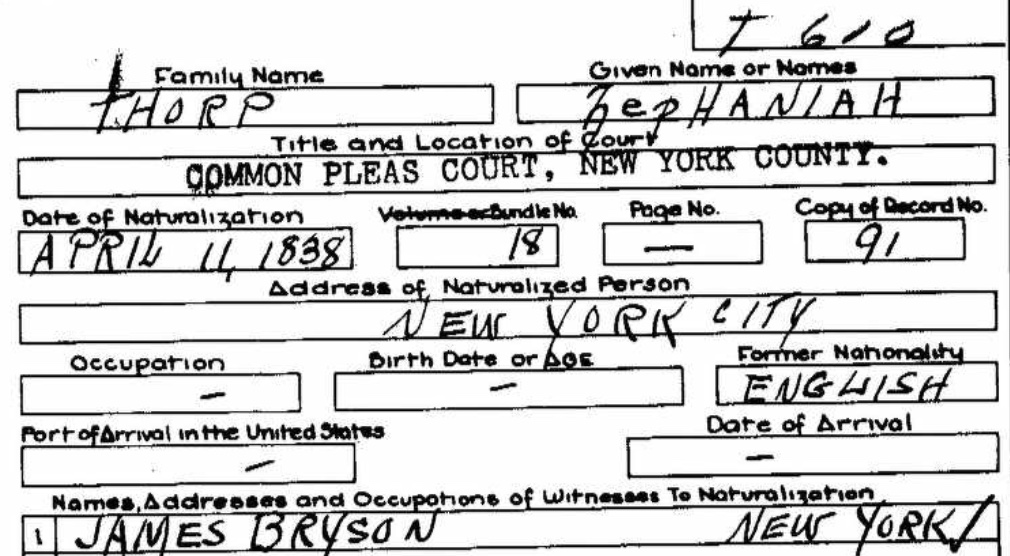
Application for naturalisation.

In 1855 Zephaniah was living at Number 59 Ward 7, New York with his wife, Mary, their son, Thomas aged 39, a lodger Bartu Durando a jeweller from New Jersey also aged 39, and granddaughter Josephine A Thorp aged 10.

The street contained families from Canada, Germany, Ireland and Prussia plying their trades as bookkeepers, carpenters, clerks and grocers. A cosmopolitan area. Zephaniah’s son Thomas was also a sculptor. What did father and son sculpt? Probably the great marble columns and artefacts in New York’s burgeoning churches and civic buildings. Certainly, there was plenty of work available because by this time they had been plying their trade for 26 years.

Ten years later, Zephaniah, Mary, Thomas and Josephine were living in Brooklyn, in a house valued at $800. In this census Josephine was described as a niece from Alabama. Ten years earlier the census had described her as a grandchild. Official records are not always accurate, sometimes through accident, other times through design – particularly when people wish to hide something. Often, you need to read between the lines. There is no record of Thomas’ wife, so I’m inclined to believe that she died young and that Josephine was Thomas’ daughter. Certainly, she lived with him throughout her childhood.

New York, c1865, a scene familiar to Zephaniah. Maybe he worked on these buildings?

Zephaniah died in Kings, New York on 9 September 1868 aged 80. He was buried in Green-Wood Cemetery, Brooklyn, Kings County, New York.

A Brooklyn directory of 1877 listed Mary as the widow of Zephaniah. It also listed Thomas as a sculptor, living at the same address. Josephine was not listed so it’s fair to assume that she had married and started her own family.

Mary died on 3 September 1876 of pneumonia at 287 Jay Street, Kings, New York. She was buried with Zephaniah in Green-Wood. By this time she had lived amongst the tall buildings of New York for 47 years, a far cry from her birthplace in the flat Norfolk Broads.
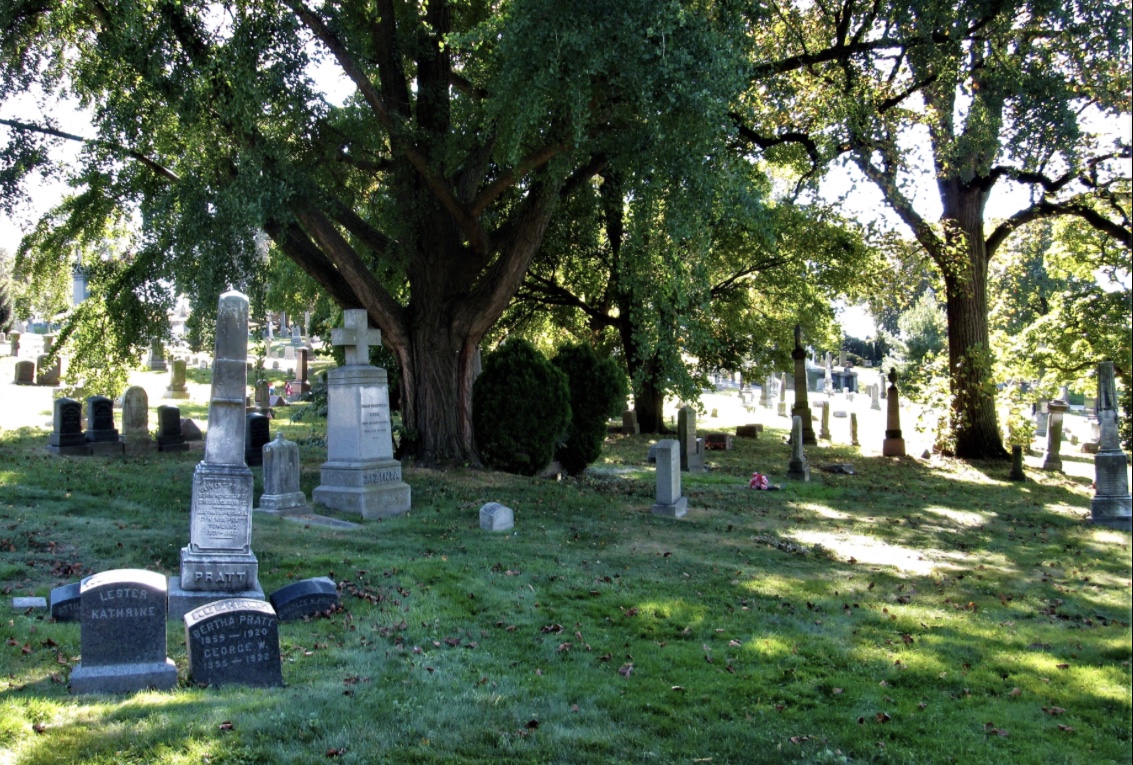
Green-Wood Cemetery. Credit: Find a Grave.

As ever, thank you for your interest and support.

Hannah xxx

For Authors

#1 for value with 565,000 readers, The Fussy Librarian has helped my books to reach #1 on 32 occasions.

A special offer from my publisher and the Fussy Librarian. https://authors.thefussylibrarian.com/?ref=goylake

Don’t forget to use the code goylake20 to claim your discount 🙂

Categories
Dear Reader

Dear Reader #127

Dear Reader,

Preparing for 2022. The new year will see the continuation of my Sam Smith and Eve’s War series, the conclusion of my Olive Tree Spanish Civil War Saga, and the start of a new series, Women at War, five novels about ‘ordinary’ women fighting fascism in France, Spain and Bulgaria, 1936 – 1945.

Exciting news. My Sam Smith Mystery Series will be translated into Italian. We will make a start on Sam’s Song this week. As a European, I’m delighted that my books are available in twelve languages.

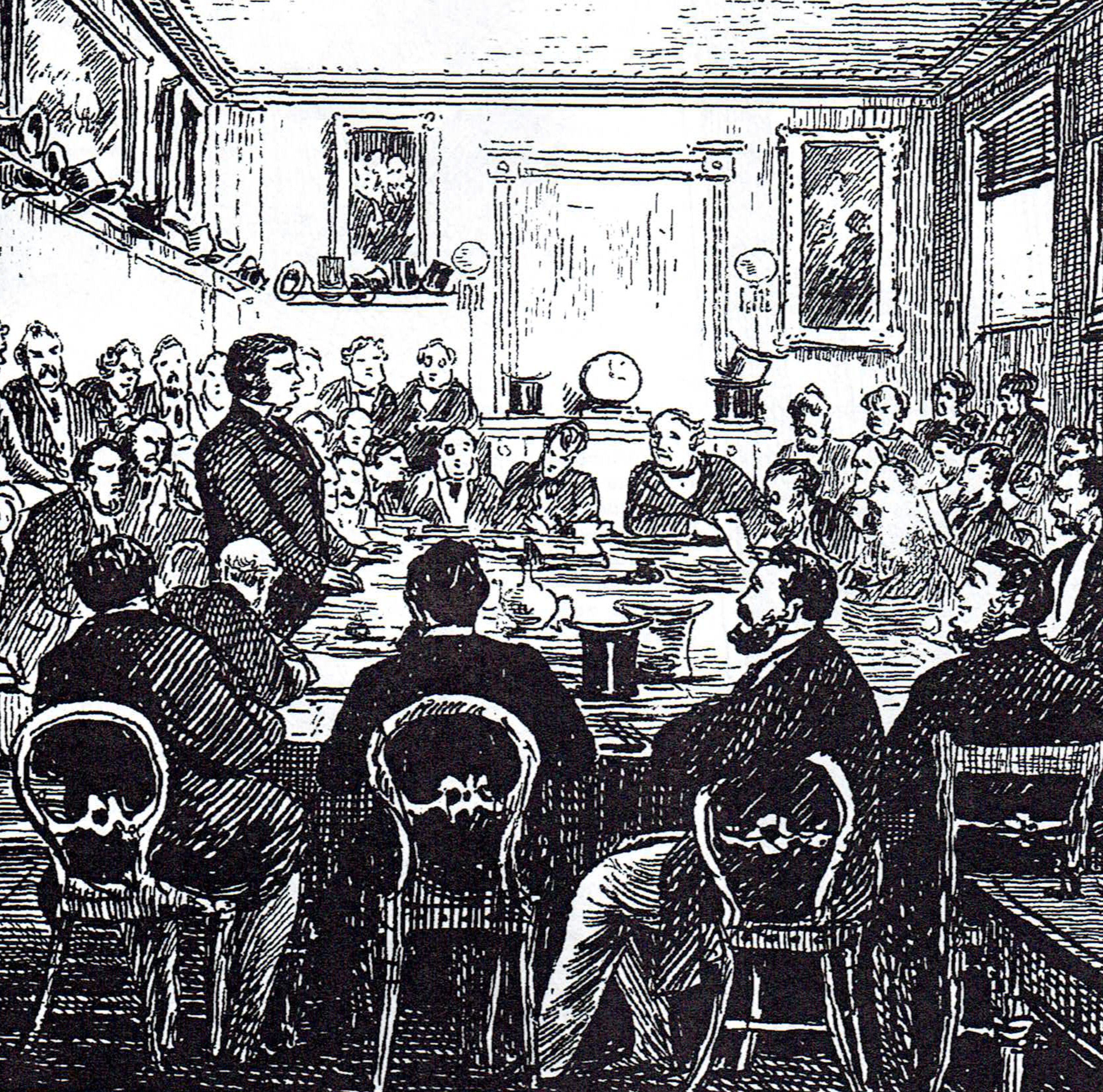
A rarity in the Victorian era, a husband’s petition for divorce, filed 16 November 1883. The husband stated that on ‘diverse occasions’ his wife committed adultery with ‘sundry persons’. Marriage dissolved. Damages awarded to the husband.

For Armistice Day.

My latest genealogy article for the Seaside News appears on page 36.

My direct ancestor Sir Edward Stradling was born c1295, the second son of Sir Peter de Stratelinges and Joan de Hawey. The exact location of his birthplace is unknown, but likely to be the family estates in Somerset.

When Sir Peter died, Joan married Sir John Penbrigg, who was granted wardship over Sir Peter’s estates and both young sons, Edward and his older brother, John, until they reached their twenty-first birthdays.

As an adult, Edward was Lord of St. Donats in Glamorgan, and Sheriff, Escheator, Justice of the Peace, and Knight of the Shire in Parliament for Somerset and Dorset. He rose to such prominence through his staunch support for Edward III.

St Donats Castle, a print from 1775.

Edward Stradling married Ellen, daughter and heiress of Sir Gilbert Strongbow. They produced the following children:

Edward (my direct ancestor) who married Gwenllian Berkerolles, daughter of Roger Berkerolles of East Orchard, Glamorgan.

John, who married Sarah, another daughter of Roger Berkerolles. Two bothers marrying two sisters.

When John died, c1316, Sir Edward inherited the following lands:

St Donat’s Castle, Glamorgan.

Combe Haweye, Watchet Haweye, Henley Grove by Bruton, Somerset, all of which included three messuages, a mill, five carucates, two virgates of land, thirty-one acres of meadow, and one hundred and forty-one acres of woodland.

Halsway and Coleford in Somerset.

Compton Hawey in Dorset.

Through his wife’s inheritance, he also obtained two manors in Oxfordshire. 

As Lord of St. Donats, Sir Edward rose against the Crown in the Despenser War of 1321–22. The war was a baronial revolt against Edward II led by marcher lords Roger Mortimer and Humphrey de Bohun, fuelled by opposition to Hugh Despenser the Younger, the royal favourite.

15th-century illustration showing Queen Isabella and Roger Mortimer; execution of Hugh Despenser the Younger in the background.

The Crown arrested Sir Edward in January 1322 and seized all his lands in England and Wales. It took two years and a loyalty payment of £200 – £92,000 in today’s money – before his estates were restored.

When Edward II was deposed in 1327, Edward Stradling was knighted by Edward III. Several appointments followed, including Sheriff and Escheator of Somerset and Dorset 1343, MP for Somerset 1343, and Justice of the Peace for Somerset and Dorset 1346–47. On 11 September 1346, Sir Edward was one of three knights of Somerset at Edward III’s Westminster parliament.

Sir Edward was one of the chief patrons of Neath Abbey and on 20 October 1341 he gifted the monastery one acre of land. He died c1363, either in St Donats or Somerset.

The Strandling line continued through the second Sir Edward, born in 1318 in St Donats Castle to Sir William, born in 1365 in St. Donats, to another Sir Edward, born in 1389 in St Donats. This Sir Edward was Chamberlain and Receiver of South Wales, Sheriff of Somerset and Dorset 1424-6, Steward and Receiver of Cantreselly and Penkelly, Keeper of Carmarthenshire and Cardiganshire (appointed 22 August 1439), Constable of Taunton 1434-42, and Knight of the Sepulchre.

Already well established amongst the nobility, the Stradling’s influence increased through the deeds of the third Sir Edward. He married Jane, daughter of Cardinal Beaufort, great uncle of Henry VI. This marriage ensured that he held a powerful position within the royal court. 

Administrative posts in South Wales and money followed. As with modern nobility, medieval nobility was a moneymaking-racket, a mafia, exploiting the poor. Lords and knights gave money to the Church to assuage their sins. Many lords were brutal and ruled through fear. Some, and I hope Edward was amongst them, used their positions of privilege and wealth to better their communities. For Edward these communities included parishes in Glamorgan, Somerset, Dorset and Oxfordshire. Of particular interest to me is the Stradling manor of Merthyr Mawr, a beautiful village, which is on my doorstep.

Sir Edward fought at Agincourt. He was captured by the French, and wool, a staple product of South Wales, was shipped to Brittany to defray his ransom.

In 1411, Sir Edward Stradling went on pilgrimage to Jerusalem. In 1452, aged sixty-three, he went on a second pilgrimage, but did not return. He died on 27 June 1452 in Jerusalem.

View of Jerusalem (Conrad Grünenberg, 1487).

To be a peasant or a noble in medieval times? Although I’m descended from noble houses, my inclination is to side with the peasants. Life is hard for the poor in any age, and it was certainly hard in medieval times. Against that, the nobles had to contend with political intrigues, treachery, wars and pilgrimages, from which many did not return. 

Given a choice, I think I would select a middle course, neither peasant nor noble, but an observer, a chronicler, recording my life and times. After all, through fiction, that’s what I do today.

As ever, thank you for your interest and support.

Hannah xxx

For Authors

#1 for value with 565,000 readers, The Fussy Librarian has helped my books to reach #1 on 32 occasions.

A special offer from my publisher and the Fussy Librarian. https://authors.thefussylibrarian.com/?ref=goylake

Don’t forget to use the code goylake20 to claim your discount 🙂


Categories
Dear Reader

Dear Reader #122

Dear Reader,

Some chart news. The pre-order for Damaged has entered the hot new releases chart at #48 alongside international bestselling authors Robert Bryndza and Michael Connelly.

Damaged is book nineteen in my Sam Smith Mystery Series. Many thanks to everyone who has followed Sam’s story.

A new year’s 2021 resolution achieved. Victory against chess.com’s computer, level 2000. This is the final position from a Réti Opening: Nimzowitsch-Larsen Variation. The computer over-extended in the centre (a common motif in this variation) lost a pawn and allowed my rook to reach the seventh rank. My a and b pawns became active and the computer had to sacrifice material to stop them queening.

Computers are very good at calculation, and can out-calculate me, so I use positional openings against them. If I gain a positional advantage, sometimes I can convert that into a winning position.

In this month’s issue of Mom’s Favorite Reads eMagazine…

An exclusive interview with bestselling author Caro Ramsey

Healing

Short Stories 

Recipes

An exclusive interview with artist Carl Jacobs

Paranormal Podcasts

World Space Week

And so much more!

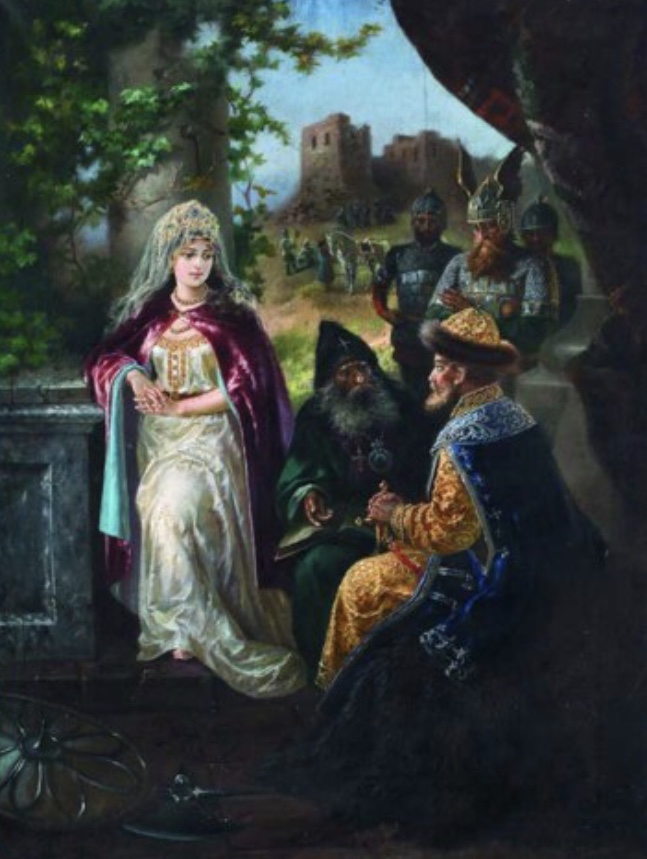
A cosmopolitan branch of my family tree. My direct ancestor Ярослав Владимирович “Yaroslav the Wise, Grand Prince of Kiev” married Ingegerd Ирина (Irina) “Sankta Anna” Olofsdottir of Sweden (both pictured). Their branch led to Gundreda de Warenne who married Roger Beaumont and continued through the Beauchamp, Turberville and Berkerolles families to the Stradlings who were lords of my home manor.

I often wonder how my ancestors met and decided to marry. For my noble ancestors marriages were arranged and I hope love developed from their union. At the other end of the scale I suspect that some of my pauper ancestors married out of financial need and for companionship. For the rest, the majority, I believe love was a factor. It was certainly a factor in this story, because my direct ancestor Sir Maurice Berkeley lost an inheritance over his choice of bride.

Maurice Berkeley, also known as Maurice the Lawyer, (1435- 1506) de jure the 3rd Baron Berkeley of Thornbury, Gloucestershire, was an English nobleman. He was born at Berkeley Castle in Gloucestershire, the youngest son of James Berkeley, the 1st Baron Berkeley, (1394–1463). Contemporaries also referred to James as James the Just.

Berkeley coat of arms.

Maurice’s mother was Lady Isabel, daughter of Thomas Mowbray, 1st Duke of Norfolk, while his elder brother was William Berkeley, 1st Marquess of Berkeley, the 2nd Baron Berkeley. William was known as William the Waste-All. In terms of succession, because William had no children, Maurice was in line to inherit the Berkeley fortune.

In 1465 Maurice married Isabel Meade (1444 – 29 May 1514), the daughter of Philip Meade (c1415-1475) of Wraxall Place in the parish of Wraxall, Somerset. Philip was an Alderman of Bristol, an MP, and thrice Mayor of Bristol, in 1458-9, 1461-2 and 1468-9. 

Maurice and Isabel produced four children.

  • Sir Maurice Berkeley, de jure 4th Baron Berkeley (1467 – 12 September 1523), eldest son and heir, who was made a Knight of the Bath at the coronation of King Henry VIII in 1509. 
  • Thomas Berkeley de jure 5th Baron Berkeley (1472 – 22 January 1532), second son, who was knighted on 9 September 1513 by Thomas Howard, Earl of Surrey, at the Battle of Flodden.
  • James Berkeley (c1474 – 1515).
  • Anne Berkeley (d.1560), my direct ancestor who married Sir William Denys (1470–1533) of Dyrham, Gloucestershire, a courtier of King Henry VIII and Sheriff of Gloucestershire in 1518 and 1526.

Maurice and his brother William were participants in the  Battle of Nibley Green, which was fought near North Nibley in Gloucestershire on 20 March 1470 between the troops of Thomas Talbot, 2nd Viscount Lisle, and William Berkeley. This battle was notable for being the last fought in England between private armies of feudal magnates.

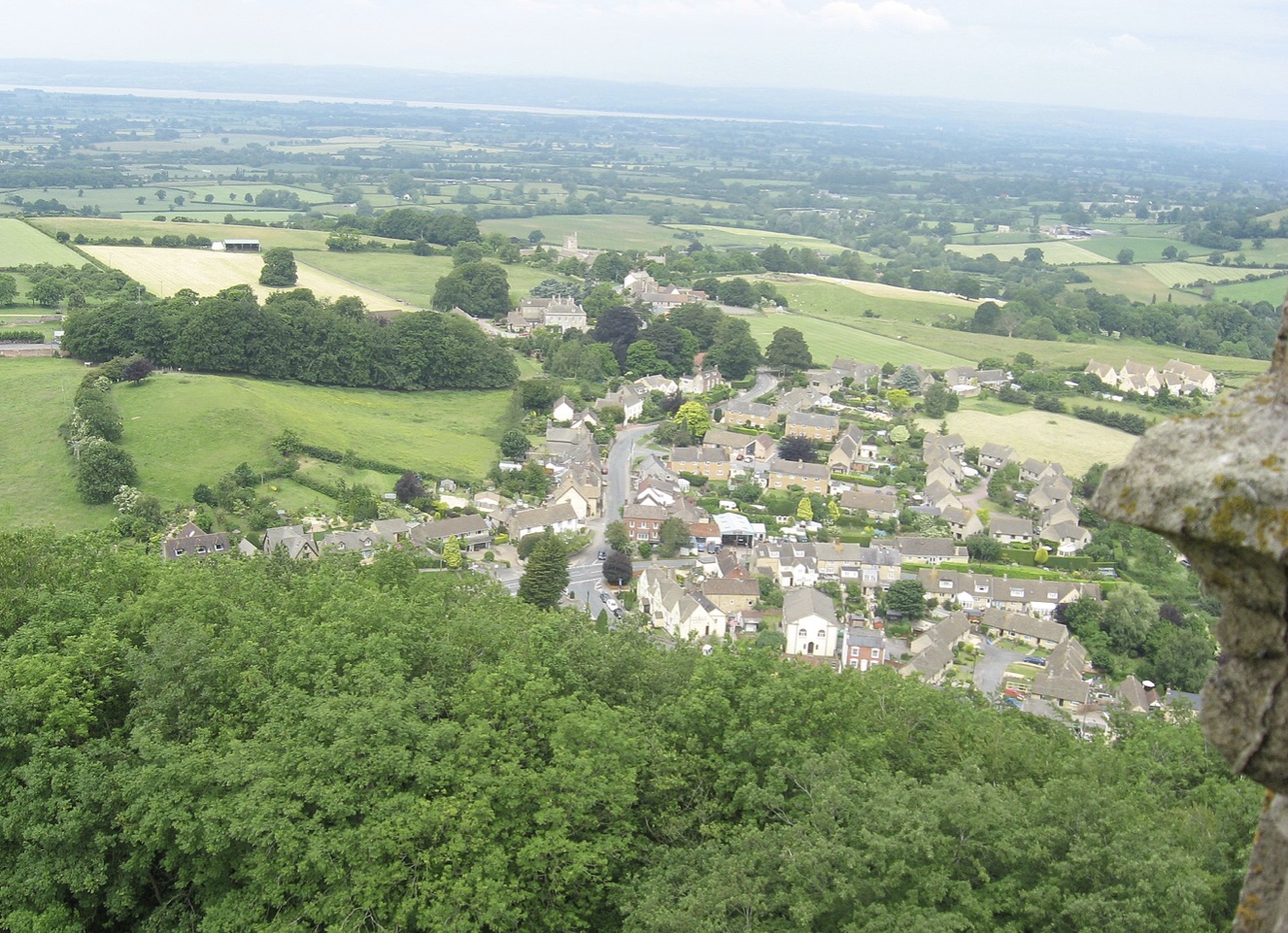
North Nibley (Wikipedia).

The Battle of Nibley Green took place because of a dispute over the inheritance of Berkeley Castle and associated lands. Lisle challenged William Berkeley to a battle, a challenge William accepted.

Lisle raised a force among his ill-equipped local tenants while William Berkeley drew upon the garrison at Berkeley Castle, his local levies, and miners from the Forest of Dean. Maurice, with his retinue, also rode to his brother’s aid.

In terms of numbers, the Berkeley brothers held the advantage, 1,000 men to 300. Philip Meade, Maurice’s father-in-law, also provided men to support the Berkeley brothers’ cause.

Lisle encouraged his men to charge against Berkeley’s troops. In response, Berkeley’s archers loosed their arrows and broke up the charge. One of the Dean Foresters, an archer named ‘Black Will’, shot Lisle in the left temple through his open visor and unhorsed him. In the melee, dagger thrusts put an end to Lisle’s life. Leaderless, Lisle’s army scattered and fled.

Jan Kip’s aerial view of Berkeley Castle engraved for the antiquary Sir Robert Atkyns’ The Ancient and Present State of Glostershire, 1712.

Despite Maurice Berkeley and Philip Meade’s support, William Berkeley disinherited his brother. The reason? William reckoned that Maurice had married beneath himself; he’d married a ‘commoner’ a person of ‘mean blood’.

In reality, Isabel’s father, Philip, was a wealthy merchant, but William reckoned that the marriage brought the noble family of Berkeley into disrepute. However, Maurice stood by Isabel and forsook his inheritance, which included Berkeley Castle.

Maurice died in September 1506 aged 70 and was buried in the Austin Friary in the City of London. Isabel was also buried there, in 1514.

As ever, thank you for your interest and support.

Hannah xxx

For Authors

#1 for value with 565,000 readers, The Fussy Librarian has helped my books to reach #1 on 31 occasions.

A special offer from my publisher and the Fussy Librarian. https://authors.thefussylibrarian.com/?ref=goylake

Don’t forget to use the code goylake20 to claim your discount 🙂

Categories
Dear Reader

Dear Reader #119

Dear Reader,

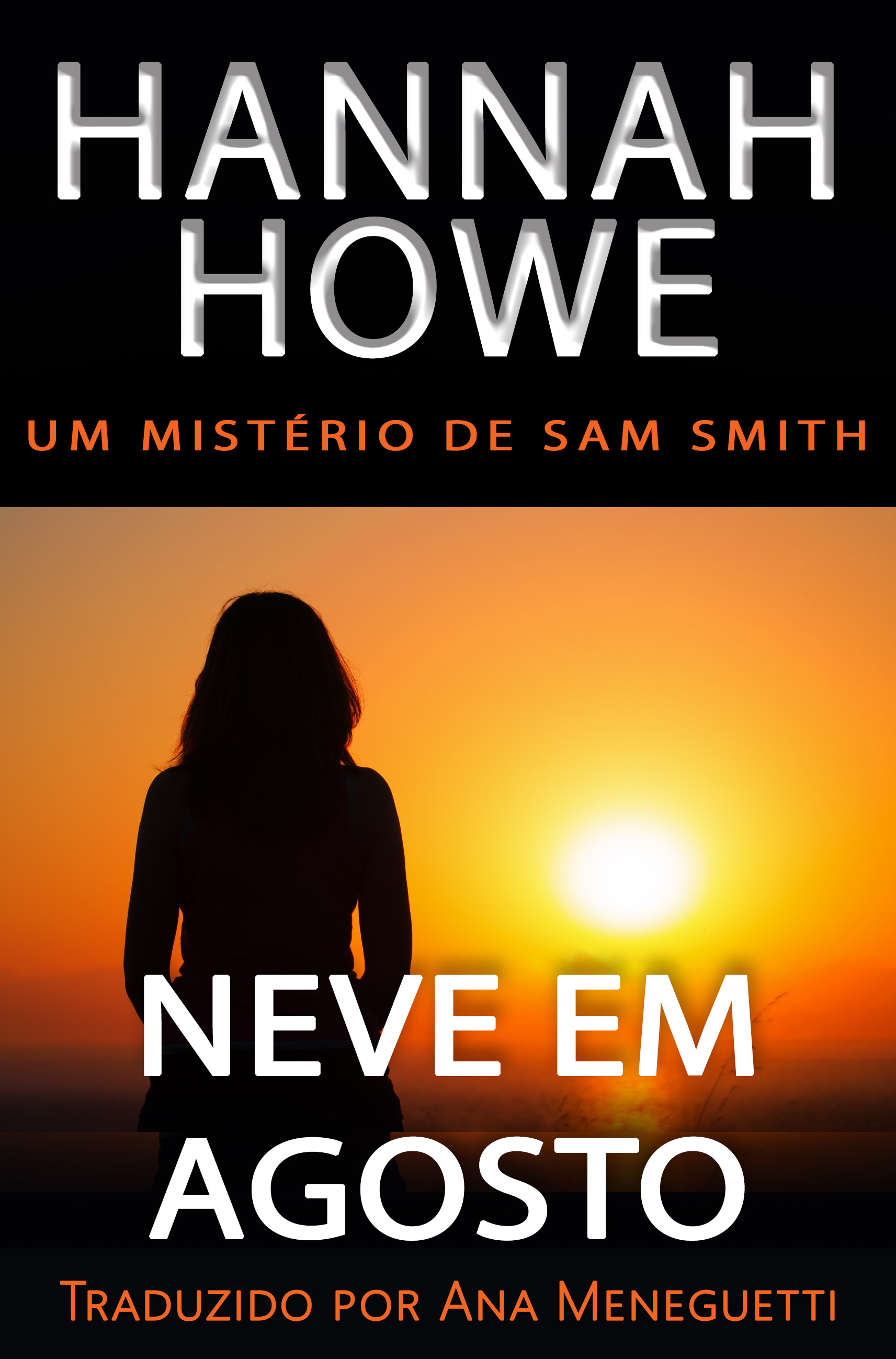
My latest translation, the Portuguese version of Snow in August, Sam Smith Mystery Series book sixteen.

Recently, I had the pleasure of interviewing author, playwright and journalist Tim Walker for Mom’s Favorite Reads. Meanwhile, Tim’s just published a new book, his thoughts on meeting stars of stage and screen. You can learn more about Tim’s book here https://www.amazon.co.uk/Star-Turns-Secrets-Screen-Legends/dp/1914489004/

Ancestry have updated my DNA result. I’m 65% Welsh. The other 35% is shared between Belgium, the Channel Islands, England, the Netherlands, Luxembourg, France, Switzerland, Germany, Ireland, Scotland, Faroe Islands, Iceland and Norway.

My main genetic communities are Wales, Pennsylvania, Eastern Ohio, Northern West Virginia and Maryland.

I have cousins in Australia, New Zealand, California, Oklahoma, Kansas, Texas, Wisconsin, Illinois, Michigan, New York, Ohio, Ontario, Toronto, Pennsylvania, West Virginia, New Jersey and North Carolina.

I’m sure I have relatives in other countries and territories that this DNA test doesn’t cover, but it’s fascinating to see where my ancestors came from and where they settled as emigrants.

My ancestor Arthur Iveson was born on 16 June 1772 in Hawes, Yorkshire to Thomas Iveson and Margaret Taylor. Maybe due to complications from the birth Margaret died in October 1772 while Thomas died in 1788. As the youngest child, Arthur followed a tradition common amongst well-to-do families – he entered the Church.

St Margaret’s Church, Hawes. Credit: Wikipedia.

In 1793 the Bishop of Carlisle ordained Arthur as a deacon and a year later he became a priest in York. From York the Church sent Arthur to Nottinghamshire then to Norfolk where he established himself as Rector of East Bradenham.

In Norfolk, on 6 March 1797, Arthur married Martha English. Of course, as a rector Arthur could read and write, and he signed his name. Martha also signed her name, something not many women of the time could do, even women born into wealthy families.

Between 1798 and 1806 the couple produced six children: Ann, Thomas, born 18 March 1799, Arthur, Martha, Martha and Arthur. Martha #1 and Arthur #1 died in infancy.

Apart from the tragic infant deaths, everything was going well for Arthur. Between 1802 and 1817 he appeared on the Electoral Roll in Norfolk, which placed him in a privileged position, one of the elite in the country who could vote. In 1816 his son Thomas became a clerk to William James Murray in Kings Lynn and shortly after that he followed his father into the Church, becoming a vicar.

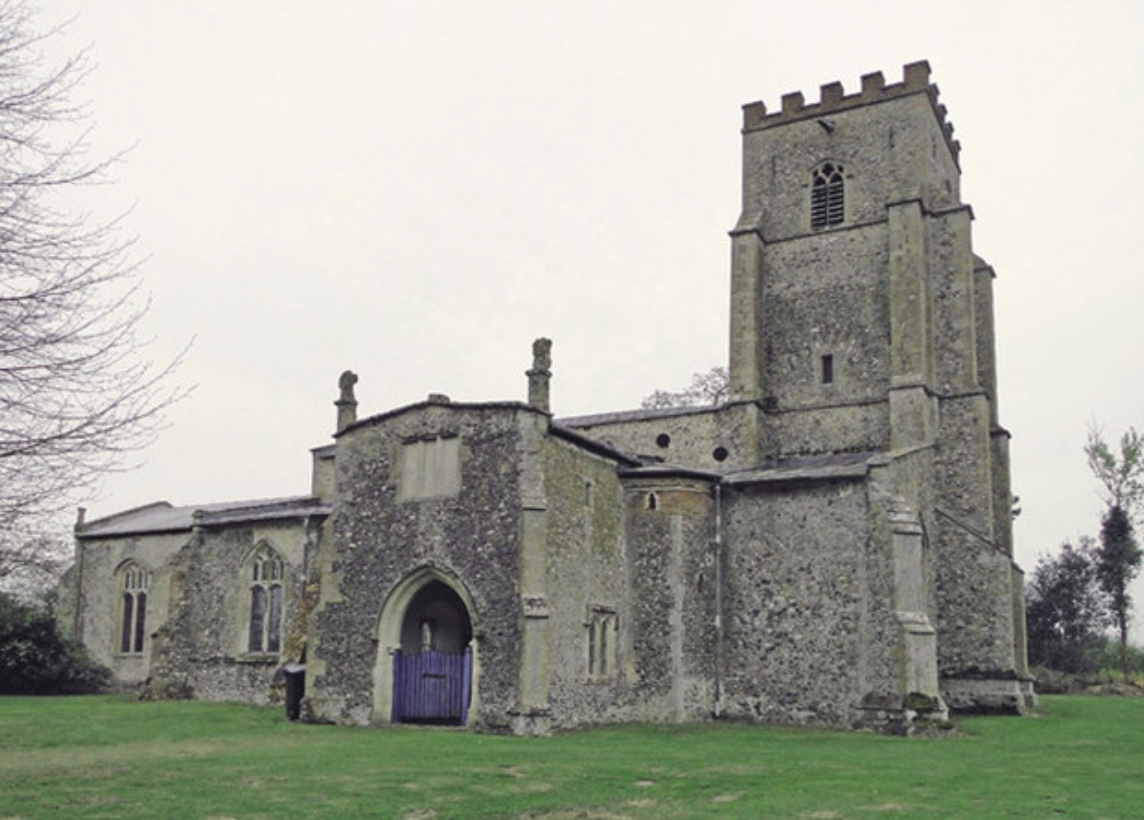
St Mary’s Church, East Bradenham. Credit: Wikipedia.

Arthur’s wife, Martha, died in 1828, and from that point events took a sinister turn.

At ten o’clock on the evening of 28 May 1832 Thomas entered Arthur’s rooms to talk with his father. The talk developed into an argument and Thomas produced a gun. He fired one shot, which entered Arthur’s heart.

With his father dying, Thomas ran next door to summon Captain Lake. He informed the captain of the shooting and Lake hastened to Arthur’s aid. The captain summoned two medical men, Mr Murlin, a surgeon, and Dr Tweedale, and they tended to Arthur, alas in vain, for he died within twenty minutes of the shooting.

The moment Arthur died, Thomas entered the kitchen and took a considerable amount of laudanum, which Mr Murlin promptly forced from his body. The Officers of Justice arrived and Thomas surrendered to them.

In July 1832 an inquest into the death of Arthur Iveson was held in a local public house, followed by a trial at the Quarter Sessions. During the inquest and trial it emerged that Thomas was ‘intelligent’ and a ‘gentleman’, although his behaviour of late had been eccentric.

The trial established that Thomas entered Arthur’s rooms with intent to shoot his father and that the bullet fired from his gun killed him. However, the jury acquitted Thomas on the grounds of insanity.

After the trial, Thomas entered a local infirmary and died there on 15 February 1836.

A Victorian Inquest

There is a postscript to this remarkable story. On 4 January 1848 in Hawes, Yorkshire, two cousins, John and Arthur Iveson, cousins of Arthur of Norfolk’s offspring, went drinking in a local pub, The Fountain Inn. They got drunk, argued, and engaged in a brawl. The brawl resulted in the death of Arthur Iveson.

The trail that followed delivered a verdict of manslaughter and John was sentenced to two months hard labour. After his prison sentence John resumed his role of local butcher. Twenty-two at the time of the manslaughter, he later married, raised a family and enjoyed a long life.

What to make of the Ivesons? Are they a violent branch of my family? I’m in touch with four first cousins, Iverson sisters, and no one would regard them as violent. Indeed, the opposite is true. It would appear that Thomas killed Arthur when in a troubled state of mind while John killed his cousin Arthur due to excessive alcohol consumption. 

History repeats, so they say, but when it comes to family members killing each other maybe it’s better if it doesn’t. 

To all current and future Ivesons, pax vobiscum – peace be with you.

As ever, thank you for your interest and support.

Hannah xxx

For Authors

#1 for value with 565,000 readers, The Fussy Librarian has helped my books to reach #1 on 31 occasions.

A special offer from my publisher and the Fussy Librarian. https://authors.thefussylibrarian.com/?ref=goylake

Don’t forget to use the code goylake20 to claim your discount 🙂

Categories
Dear Reader

Dear Reader #118

Dear Reader,

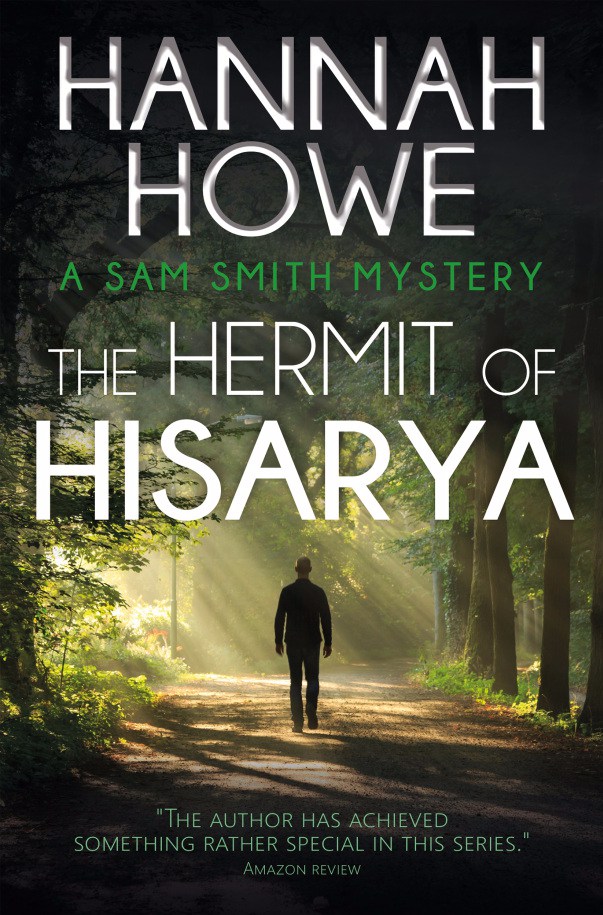
My Sam Smith mystery The Hermit of Hisarya has been included in academic lectures this week in Bulgaria, discussing cultural studies and world literature, and the interrelation between cultural identity and the imagination. What an honour, I’m blown away 😱

https://academia.edu/51152850/

My latest translation, The Hermit of Hisarya in Portuguese.

My article about my ancestor John Howe features in this month’s Seaside News.

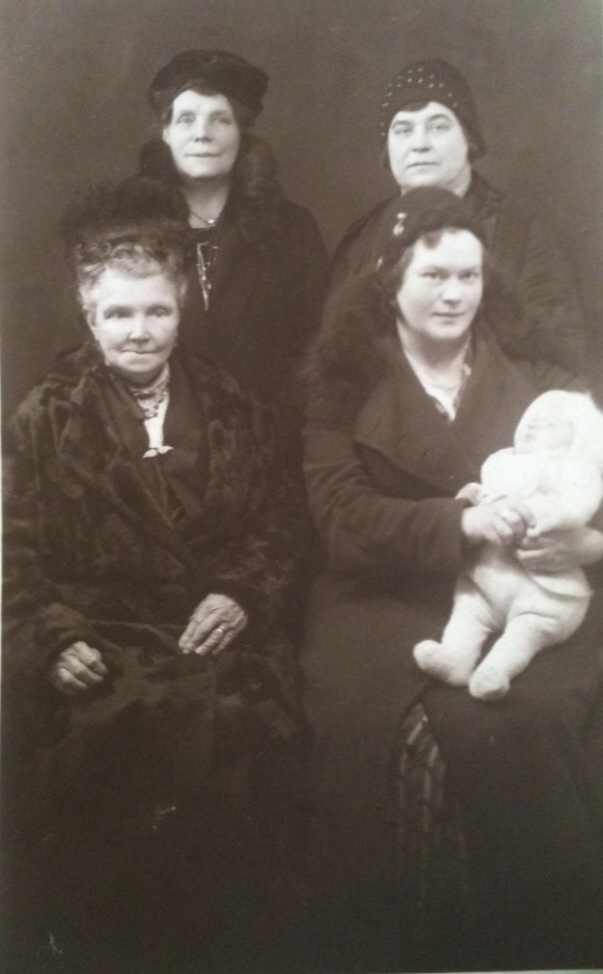
c1926, five generations from the Iveson branch of my family. More about the Ivesons next week.

My 5 x great grandmother Jennet, aka Jane, Williams was born to David Williams and Mary Jones in 1787 in Newton-Nottage, Wales. In the eighteenth century Newton-Nottage was a rural community and the majority of its inhabitants earned a living from the land.

Nottage, 19th century tithe map. Source: The National Library of Wales.

Jennet married Thomas Morgan in nearby Laleston on 10 October 1815. The couple produced five children: William, Richard, Mary, Sarah and a second child called Richard. Sadly, infant mortality was common in the nineteenth century and parents often reused a favourite name.

Jennet and Thomas’ eldest son, William, was born in 1812, three years before their marriage. Their first Richard was baptised on 21 January 1816, which indicates that Jennet was six months pregnant with her second child at the time of her marriage.

The accepted wisdom is that bastard children and their mothers were cast out by Victorian society. For the middle and upper classes this might well have been true. However, for the lower classes and those living in rural communities the locals took a more pragmatic view. Producing babies, in and out of wedlock, was literally a fact of life. An example from my family tree: my 3 x great grandparents William Bick and Fanny Brereton had six children before their marriage on 13 December 1868 (they had five more children after their marriage). Obviously, they did not feel pressurised into marriage and were not ostracised by their community. Marriages were expensive and many people needed the money for food and shelter. That said, some women were embarrassed about admitting to an illegitimate child as we shall see shortly.

Jennet’s husband, Thomas Morgan, was a shoemaker while his father, Richard, was a victualer in Laleston. When Thomas Morgan was born in 1784 only seven children were baptised in Laleston (population 2011, 12,586), which indicates that it was a small community, and that a birth, marriage or death was a major event.

Laleston baptisms, 1784.

Thomas Morgan died on 28 December 1827. A widow, Jennet supported herself and her family by working as a stone cutter at the local limestone quarries. Women who worked with stone, iron or coal usually wore shorter dresses compared to the Victorian norm because of the danger of those dresses catching fire. ‘Shorter’ in this instance means just a few inches above the ankle, so they were hardly a huge advertisement for health and safety.

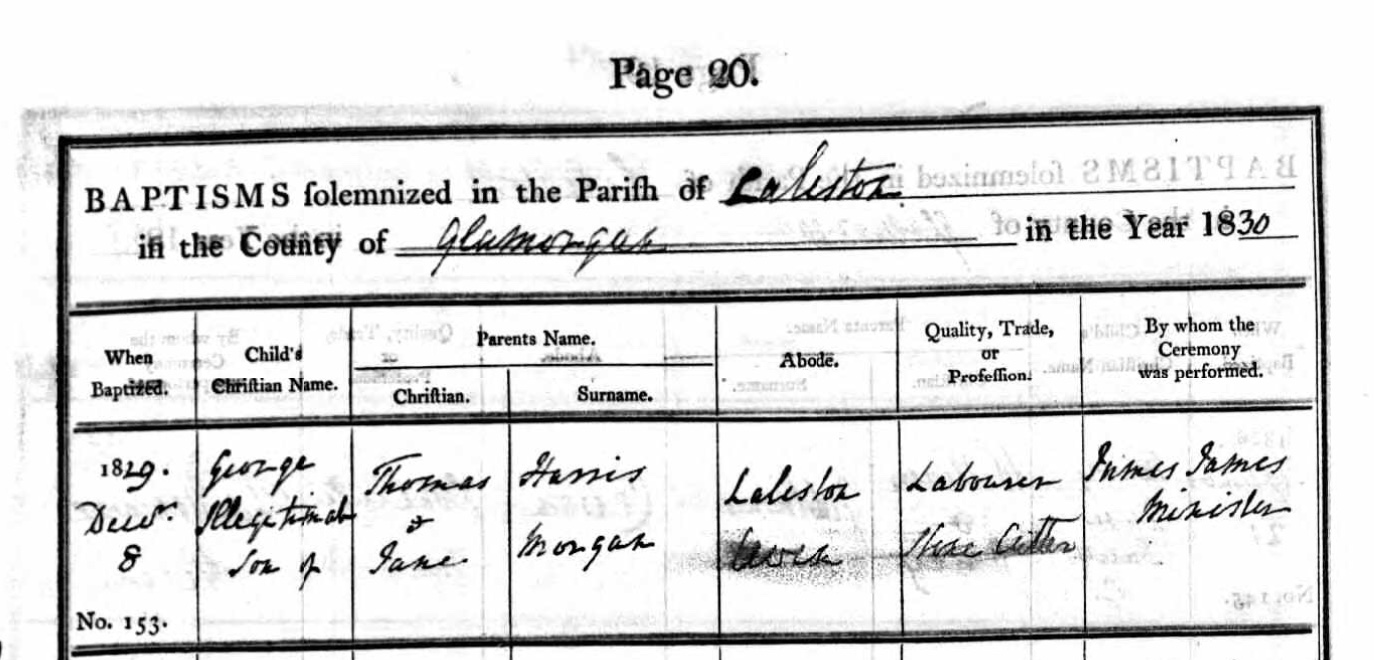
In 1829 Jennet met Thomas Harris and the couple produced a son, George, baptised on 8 December 1829. In the ten years before 1829 and the ten years after there was no one called Harris living in Laleston or surrounding villages. A family called Harris arrived in the 1840s, but they were not related to Thomas or George.

George’s baptismal record.

So, what of the mysterious Thomas Harris? It would appear that he drifted into Laleston looking for work, took advantage of Jennet, a lonely widow, then drifted out again. There is nothing to suggest that he acknowledged George as his son or supported him during his childhood.

Between 1829 and 1851 George was know as George Morgan and George Harris. In 1841 Jennet told the census enumerator that George’s surname was Morgan, even though her husband had died two years previously. Clearly, with this untruth she was trying to save face.

On 24 December 1853 George, now a blacksmith, married Lydia Williams and the couple took the surname Morgan. Indeed, George acknowledged Thomas Morgan as his father. Did he know the truth? Probably, because at various times before his marriage he did call himself Harris. Thomas Harris played no part in George’s life, so George decided to adopt his mother’s married name.

Lydia was a ‘minor’ at the time of her marriage to George and the couple were living at the same address. A ‘minor’ in this context means someone under the age of twenty-one; Lydia was twenty. During her marriage to George she gave birth to ten children.

On 9 April 1873 at the age of 86 Jennet died in Laleston. In her later years she lived with her daughter, and my direct ancestor, Mary, along with Mary’s husband and children. All of my Welsh ancestors during the Victorian era were tight-knit and supported each other. To date, I have not discovered any of them in the workhouse.

As ever, thank you for your interest and support.

Hannah xxx

For Authors

#1 for value with 565,000 readers, The Fussy Librarian has helped my books to reach #1 on 31 occasions.

A special offer from my publisher and the Fussy Librarian. https://authors.thefussylibrarian.com/?ref=goylake

Don’t forget to use the code goylake20 to claim your discount 🙂