Categories
Dear Reader

Dear Reader #127

Dear Reader,

Preparing for 2022. The new year will see the continuation of my Sam Smith and Eve’s War series, the conclusion of my Olive Tree Spanish Civil War Saga, and the start of a new series, Women at War, five novels about ‘ordinary’ women fighting fascism in France, Spain and Bulgaria, 1936 – 1945.

Exciting news. My Sam Smith Mystery Series will be translated into Italian. We will make a start on Sam’s Song this week. As a European, I’m delighted that my books are available in twelve languages.

A rarity in the Victorian era, a husband’s petition for divorce, filed 16 November 1883. The husband stated that on ‘diverse occasions’ his wife committed adultery with ‘sundry persons’. Marriage dissolved. Damages awarded to the husband.

For Armistice Day.

My latest genealogy article for the Seaside News appears on page 36.

My direct ancestor Sir Edward Stradling was born c1295, the second son of Sir Peter de Stratelinges and Joan de Hawey. The exact location of his birthplace is unknown, but likely to be the family estates in Somerset.

When Sir Peter died, Joan married Sir John Penbrigg, who was granted wardship over Sir Peter’s estates and both young sons, Edward and his older brother, John, until they reached their twenty-first birthdays.

As an adult, Edward was Lord of St. Donats in Glamorgan, and Sheriff, Escheator, Justice of the Peace, and Knight of the Shire in Parliament for Somerset and Dorset. He rose to such prominence through his staunch support for Edward III.

St Donats Castle, a print from 1775.

Edward Stradling married Ellen, daughter and heiress of Sir Gilbert Strongbow. They produced the following children:

Edward (my direct ancestor) who married Gwenllian Berkerolles, daughter of Roger Berkerolles of East Orchard, Glamorgan.

John, who married Sarah, another daughter of Roger Berkerolles. Two bothers marrying two sisters.

When John died, c1316, Sir Edward inherited the following lands:

St Donat’s Castle, Glamorgan.

Combe Haweye, Watchet Haweye, Henley Grove by Bruton, Somerset, all of which included three messuages, a mill, five carucates, two virgates of land, thirty-one acres of meadow, and one hundred and forty-one acres of woodland.

Halsway and Coleford in Somerset.

Compton Hawey in Dorset.

Through his wife’s inheritance, he also obtained two manors in Oxfordshire. 

As Lord of St. Donats, Sir Edward rose against the Crown in the Despenser War of 1321–22. The war was a baronial revolt against Edward II led by marcher lords Roger Mortimer and Humphrey de Bohun, fuelled by opposition to Hugh Despenser the Younger, the royal favourite.

15th-century illustration showing Queen Isabella and Roger Mortimer; execution of Hugh Despenser the Younger in the background.

The Crown arrested Sir Edward in January 1322 and seized all his lands in England and Wales. It took two years and a loyalty payment of £200 – £92,000 in today’s money – before his estates were restored.

When Edward II was deposed in 1327, Edward Stradling was knighted by Edward III. Several appointments followed, including Sheriff and Escheator of Somerset and Dorset 1343, MP for Somerset 1343, and Justice of the Peace for Somerset and Dorset 1346–47. On 11 September 1346, Sir Edward was one of three knights of Somerset at Edward III’s Westminster parliament.

Sir Edward was one of the chief patrons of Neath Abbey and on 20 October 1341 he gifted the monastery one acre of land. He died c1363, either in St Donats or Somerset.

The Strandling line continued through the second Sir Edward, born in 1318 in St Donats Castle to Sir William, born in 1365 in St. Donats, to another Sir Edward, born in 1389 in St Donats. This Sir Edward was Chamberlain and Receiver of South Wales, Sheriff of Somerset and Dorset 1424-6, Steward and Receiver of Cantreselly and Penkelly, Keeper of Carmarthenshire and Cardiganshire (appointed 22 August 1439), Constable of Taunton 1434-42, and Knight of the Sepulchre.

Already well established amongst the nobility, the Stradling’s influence increased through the deeds of the third Sir Edward. He married Jane, daughter of Cardinal Beaufort, great uncle of Henry VI. This marriage ensured that he held a powerful position within the royal court. 

Administrative posts in South Wales and money followed. As with modern nobility, medieval nobility was a moneymaking-racket, a mafia, exploiting the poor. Lords and knights gave money to the Church to assuage their sins. Many lords were brutal and ruled through fear. Some, and I hope Edward was amongst them, used their positions of privilege and wealth to better their communities. For Edward these communities included parishes in Glamorgan, Somerset, Dorset and Oxfordshire. Of particular interest to me is the Stradling manor of Merthyr Mawr, a beautiful village, which is on my doorstep.

Sir Edward fought at Agincourt. He was captured by the French, and wool, a staple product of South Wales, was shipped to Brittany to defray his ransom.

In 1411, Sir Edward Stradling went on pilgrimage to Jerusalem. In 1452, aged sixty-three, he went on a second pilgrimage, but did not return. He died on 27 June 1452 in Jerusalem.

View of Jerusalem (Conrad Grünenberg, 1487).

To be a peasant or a noble in medieval times? Although I’m descended from noble houses, my inclination is to side with the peasants. Life is hard for the poor in any age, and it was certainly hard in medieval times. Against that, the nobles had to contend with political intrigues, treachery, wars and pilgrimages, from which many did not return. 

Given a choice, I think I would select a middle course, neither peasant nor noble, but an observer, a chronicler, recording my life and times. After all, through fiction, that’s what I do today.

As ever, thank you for your interest and support.

Hannah xxx

For Authors

#1 for value with 565,000 readers, The Fussy Librarian has helped my books to reach #1 on 32 occasions.

A special offer from my publisher and the Fussy Librarian. https://authors.thefussylibrarian.com/?ref=goylake

Don’t forget to use the code goylake20 to claim your discount 🙂


Categories
Dear Reader

Dear Reader #126

Dear Reader,

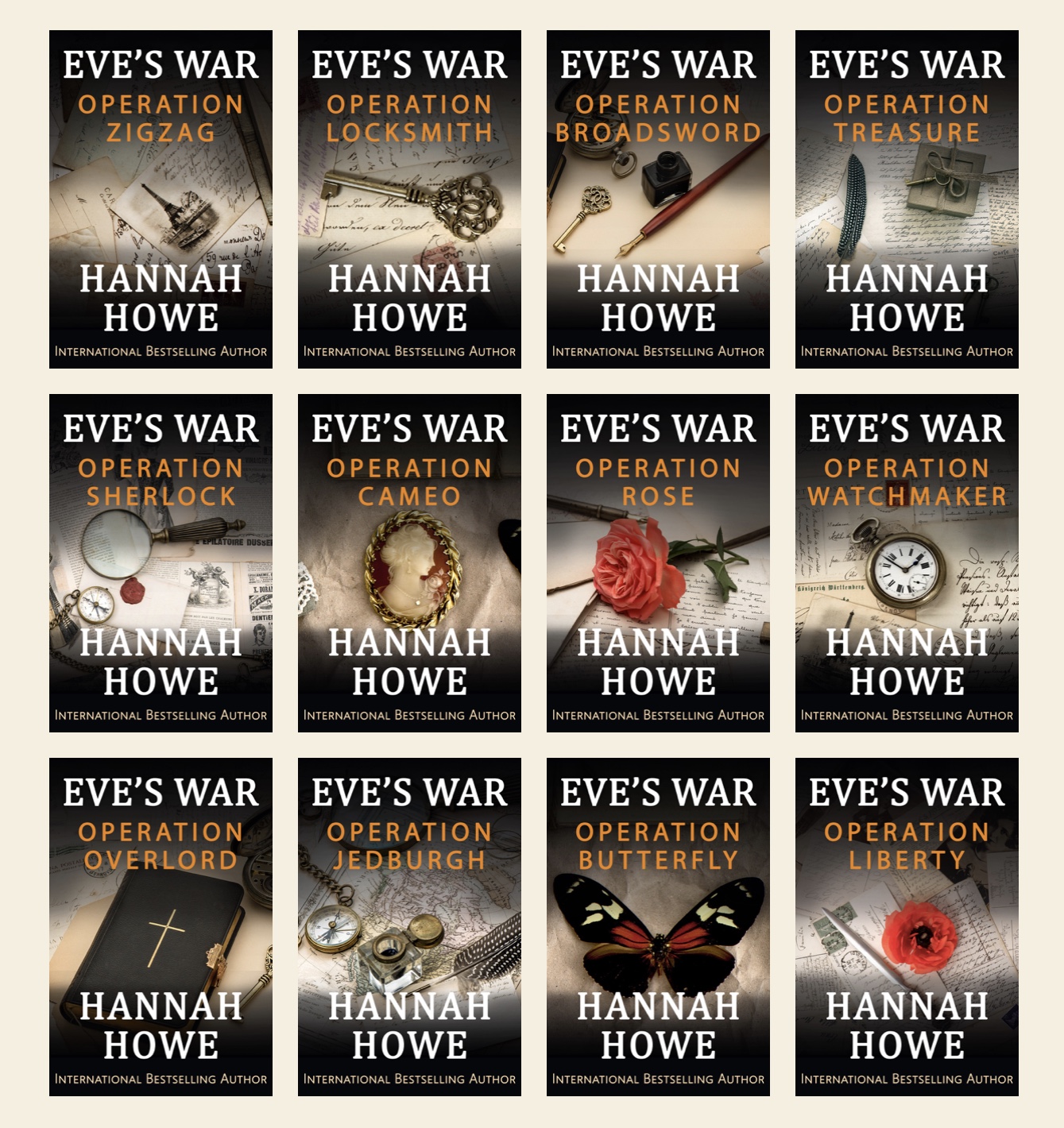
Some chart news. Operation Zigzag, book one in my Eve’s War Heroines of SOE series, is #1 on the Amazon charts while Operation Cameo, which I’m currently writing, is a #34 hot new release. Many thanks to all my readers for making this possible.

Through Ellen, born c1320, daughter and heiress of Sir Gilbert Strongbow, I’ve added a Strongbow branch to my family tree. I wonder if this entitles me to free cider 🤔

As mentioned above, Operation Cameo is now available for pre-order. You can find full details here https://www.amazon.com/Operation-Cameo-Eves-Heroines-Book-ebook/dp/B09K82MQNY/

A view familiar to my London ancestors, the Strand looking west towards Trafalgar Square, 1890.

Just asked my youngest son, “What do you want for Christmas?”

“A skeleton.” (He’s thinking of becoming a doctor).

“Where are we going to keep it?”

“The front room.”

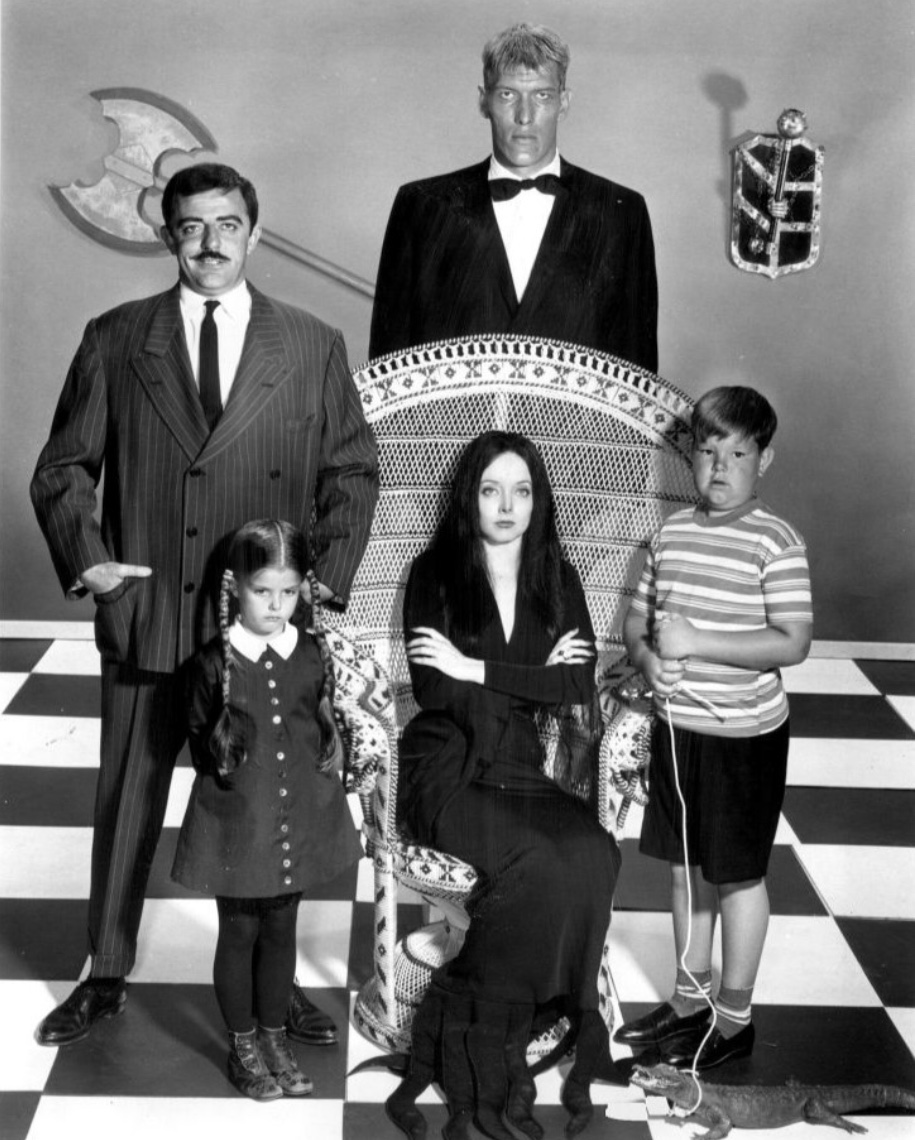
Welcome to the Addams family.

In this month’s issue of Mom’s Favorite Reads…

New York Times and USA Today Bestselling Author Joanna Penn interviewed by Wendy H Jones

Plus…Art, Author Resources, Flash Fiction, New Releases, Photography, Poetry, Puzzles, Recipes, Travel and so much more!

The son of Zephaniah Thorpe and Margaret Entwistle, my direct ancestor Ralph Thorpe was baptised on 14 March 1753 in Bolton-le-Moors, Lancashire.

A warper, a common trade in Lancashire with its proliferation of cotton mills, Ralph moved south in the early 1780s and plied his trade in Essex and Norfolk.

A cotton warper oversaw the industrial process of winding threads from various bobbins on to a warp beam, which had one large bobbin at the back of the loom containing all the warp threads. These threads would gradually unwind during the weaving process, producing the cloth. Warping was the second stage of cotton cloth production, following winding.

A warping machine. Image: Wikipedia.

On 9 December 1783, Ralph married Mary Wakefield in Wanstead, Essex. The couple produced six children including my direct ancestor Thomas Thorpe who, on 9 October 1814, married Mary Ann Freeman and settled in Essex.

Mary Wakefield died on 25 February 1796. A few months later Ralph spent some time in St Thomas’ Hospital, London. That the couple were ill at roughly the same time suggests that they were affected by a transmittable disease. One possibility was smallpox.

Ironically, that same year, 1796, Edward Jenner demonstrated that an infection with the relatively mild cowpox virus conferred immunity against the deadly smallpox virus. His research was crucial in the development of the smallpox vaccine, the first effective vaccine against a contagious disease.

Painting by Ernest Board. Dr Edward Jenner performing his first vaccination on eight year old James Phipps, 14 May 1796.

St Thomas’ Hospital originated as an Augustinian infirmary in the twelfth century and was dissolved in 1540. In 1551 the hospital was refounded by royal charter and functioned as a general hospital for the sick-poor, including sufferers of venereal disease. 

Endowments gave St Thomas’ a degree of financial security. Nevertheless, they still charged patients admission fees, a policy that was condemned by the hospital’s critics for limiting the ability of the very poor to access its services.

A central court of governors governed the hospital and they could number over two hundred. These governors were wealthy individuals who gifted £50 each to the hospital.

Old St Thomas’ Hospital, Southwark, 1739. Image: The Wellcome Library.

The original St Thomas’s Hospital survived the Great Fire of London in 1666. However, upgrades were needed and between 1693 and 1720 more than £37,000 was raised in order to create an elegant classical structure around three spacious courtyards. The rebuilt hospital had nineteen wards, including two foule wards for venereal patients and a cutting ward with room for more than 400 patients. Male and female patients were strictly segregated, as were the venereal patients.

The medical staff included physicians, surgeons and an apothecary, who was not allowed to marry or run a private practice. The nursing staff included a matron, sisters and nurses. The sisters and their nurses lived in the hospital and had to be single or widowed. 

St Thomas’ catered for patients with a wide range of medical and surgical conditions although they did exclude people classed as ‘incurable’ or ‘insane’. Patients were not allowed to stay longer than three months, after which time they were deemed incurable. Ralph left St Thomas’ Hospital on 9 June 1796. Therefore, he must have entered a month or so after Mary died.

St Thomas’ Hospital treated large numbers of patients. In 1800 the total number of inpatients was more than 3,200 with a further 4,700 outpatients. In wartime the patients were often supplemented by large numbers of wounded soldiers and sailors.

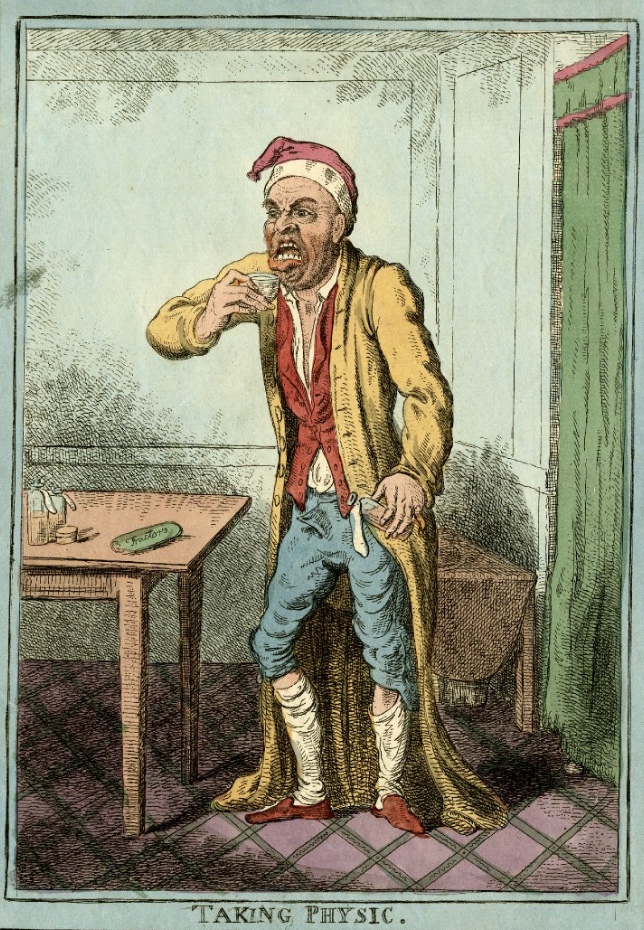
‘Taking Physic’. Image: The Trustees of the British Museum.

The death rates at St Thomas’ were relatively low, although it must be remembered that the hospital did not admit ‘incurable’ patients. In 1726, 4,873 patients were cured while 392 died, a mortality rate of 7.4 percent. In 1735, 4,688 patients were cured while 307 died, a mortality rate of 6.1 per cent. This pattern of mortality rates continued throughout the century.

The patients could be disruptive with harassment, petty theft and ‘ward wandering’ reported. Some patients ran away before the completion of their treatment, especially venereal patients who were subjected to the deeply unpleasant and extremely painful mercury-based ‘salivation’ therapies.

Having recovered, but without his wife, Ralph returned to Bolton-le-Moors where, on 23 January 1803, he married Mary Holden. Ralph died on 28 August 1826 in Bolton-le-Moors.

As ever, thank you for your interest and support.

Hannah xxx

For Authors

#1 for value with 565,000 readers, The Fussy Librarian has helped my books to reach #1 on 32 occasions.

A special offer from my publisher and the Fussy Librarian. https://authors.thefussylibrarian.com/?ref=goylake

Don’t forget to use the code goylake20 to claim your discount 🙂

Categories
Dear Reader

Dear Reader #125

Dear Reader,

I’m researching the Cannes Film Festival for Damaged my latest Sam Smith mystery. The film festival began in 1939 as a response to fascism – Hitler and Mussolini had fixed the only international film festival, at Venice, in their favour. 

The first movie premiered at Cannes, on 31 August 1939, was The Hunchback of Norte Dame. The followed day, Hitler invaded Poland and the festival was cancelled.

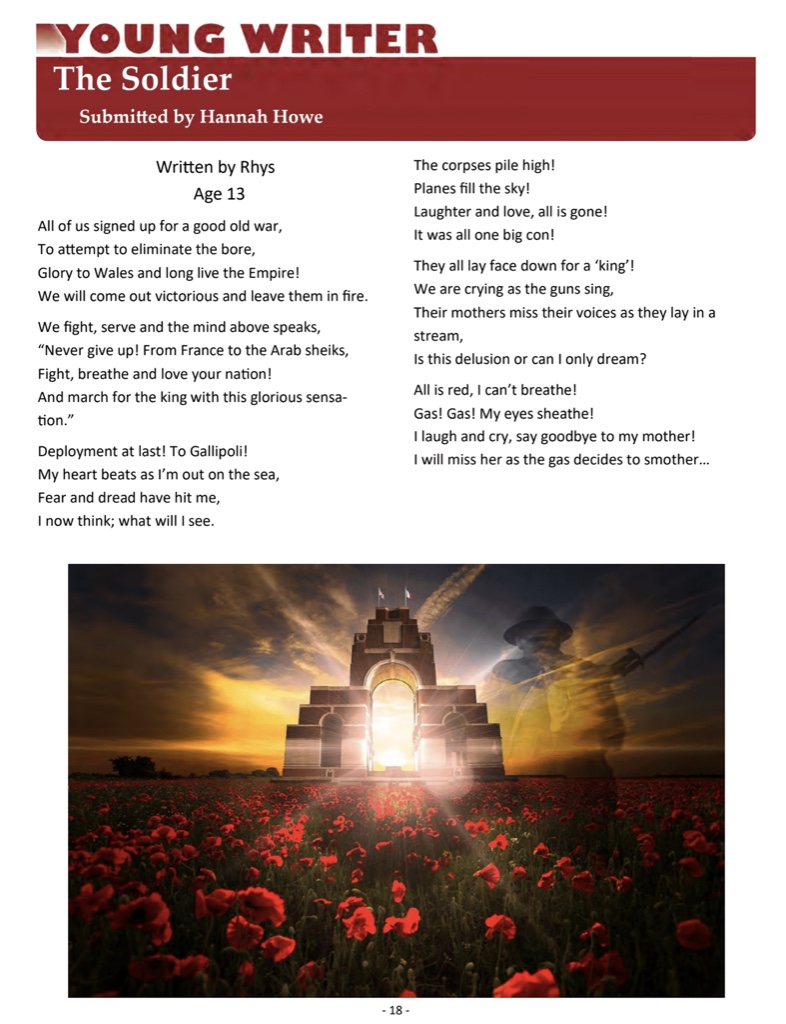
A sneak preview of Mom’s Favorite Reads’ November 2021 issue, a poem by my youngest son, Rhys. He wrote this poem from scratch in one draft.

A scene familiar to my Bristol ancestors, the Dutch House on the corner of Wine Street and High Street, 1884.

Through my gateway ancestor Barbara Aubrey (1637 – 1711) I’ve traced the Stradling branch of my family tree back to Sir John d’Estratlinges, born c1240 in Strättligen, Kingdom of Arles, Switzerland. He married a niece of Otho de Grandson and they produced a son, my direct ancestor Peter de Stratelinges, before her premature death. Later, in 1284, Sir John married Mathilda de Wauton, but the marriage produced no children.

Strättligen consisted of villages in the possession of the von Strättligen noble family, named after their home castle of Strättligburg. This family, my ancestors, ruled over much of western Bernese Oberland. Strättligburg was destroyed by the Bernese in 1332 and later generations of the Strättligens lost most of their possessions.

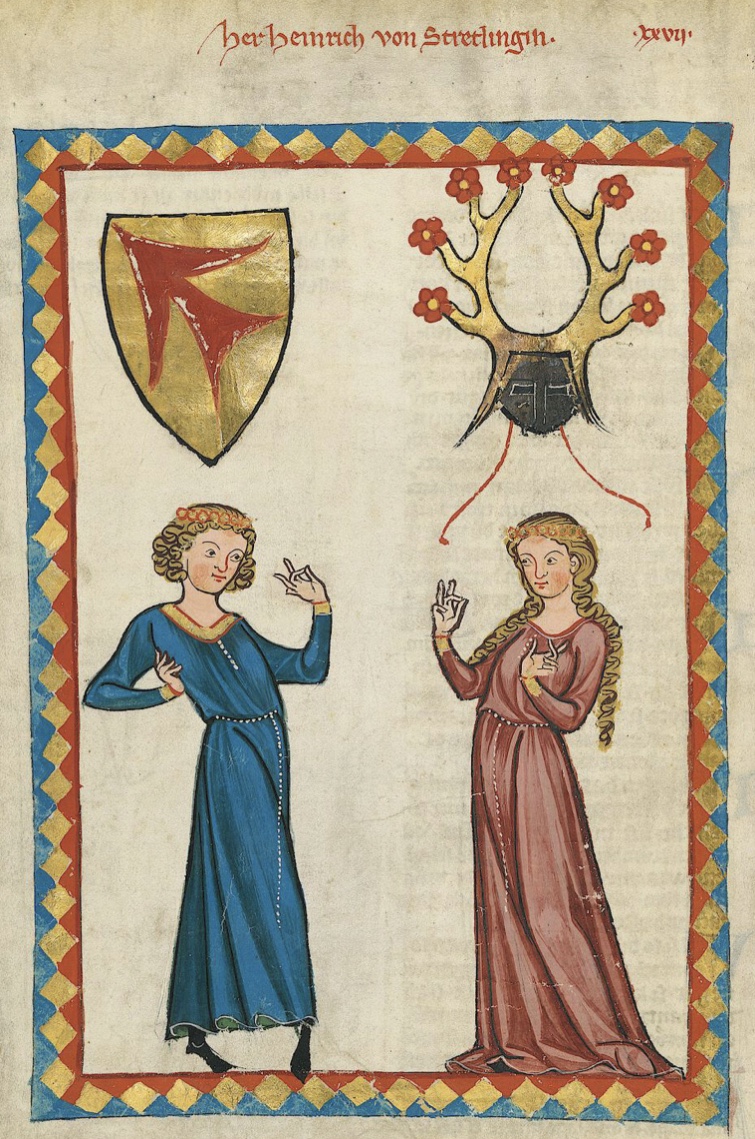
The minnesinger Heinrich von Stretlingin in Codex Manesse (fol. 70v), depicted with the arms of the von Strättligen family.

On 20 May 1290, Edward I granted Sir John d’Estratlinges a charter for a weekly market and an annual two-day fair for the Feasts of Saint Peter and Paul, which occurred on 29 June. The fair was held at Sir John’s Little Wellsbourne Manor.

On 3 July 1290, before his departure to Palestine, Sir Otho divided his Irish lands amongst three of his living nephews, including Sir John. Sir Otho’s charter, witnessed by many nobles, granted Sir John the following: 

Castle and Town of Kilfekle

Land of Muskerye

Manor of Kilsilam

Town of Clummele

On 4 May 1292, Henry de Foun quitclaimed a third of the following to Sir John de Strattelinges:

In Warwickshire: 36 messuages, 9 carucates, 9 virgates of land, 3 mills, 7 acres of wood, 15 acres of meadow, plus £51 10s of rent in Walton Deyuile, Walton Maudut, Wellsbourne, Lokesleye, Hunstanescote, Tysho and Ouer Pylardyngton.

In Oxfordshire: 1 messuage, 2 carucates of land, 1 mill, 5 acres of meadow plus £7 rent in Alkington.

In Gloucsestershire: 1 messuage and 4 virgates of land in Shenington.

Because his marriage to Mathilda produced no heir, all the de Wauton estates remained with her when she remarried. Subsequently, they were withheld from Sir John’s son, Sir Peter.

Sir John died c1294. A trusted servant of Edward I, the king cleared all of Sir John’s debts post mortem, ‘in consideration of John’s good service to him.’ Two points to note here: 1. If I had been alive at the time I would have been an opponent of Edward I, and therefore my ancestor Sir John, because of the king’s oppression of the Welsh people. 2. Even privileged nobles like Sir John ran up considerable debts. An example:

On 3 February 1294, John de Stratelinges, deceased, acknowledged in chancery that he owed Henry de Podio of Lucca and his merchants the considerable sum of £200. Edward I covered that debt.

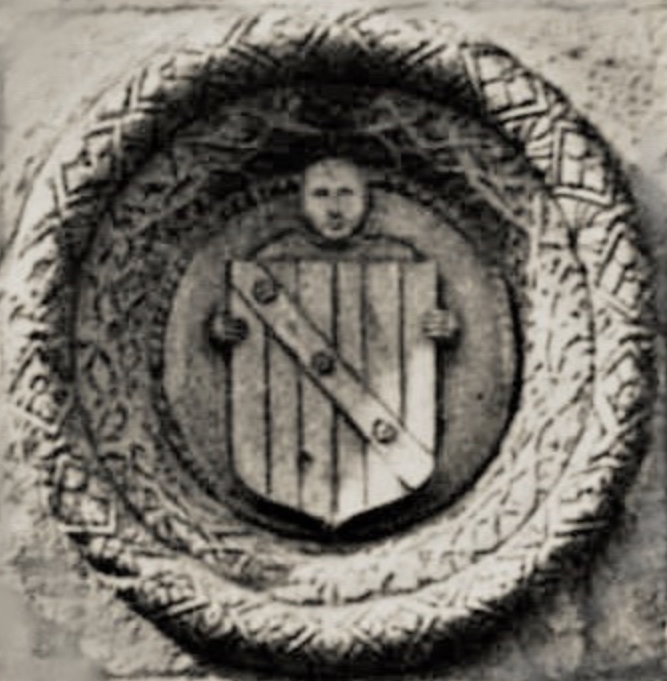
St Donats Castle Door Header. Image: Todd Gilbert, WikiTree.

Sir Peter de Stratelinges, son of Sir John, was born c1260 in Strättligen. He travelled to England with his father and in c1290 married Joan de Hawey, heiress of her brother, Thomas de Hawey. Their marriage produced two children: John Stradling and my direct ancestor Edward Stradling.

Sir Peter was governor of Neath Castle, Glamorgan, Wales. Through his wife’s inheritence, after her brother’s early death, he also obtained the following de Hawey estates:

St. Donat’s Manor, Glamorgan, Wales

Combe Hawey Manor, Somerset, England

Compton Hawey Manor, Somerset, England

Compton Hawey Manor, Dorset, England

In July 1297 Sir Peter was governor of Neath Castle when the king mandated ‘Peter de Straddeleye’ to deliver the castle to Walter Hakelute, ‘with its armour, victuals and other goods.’

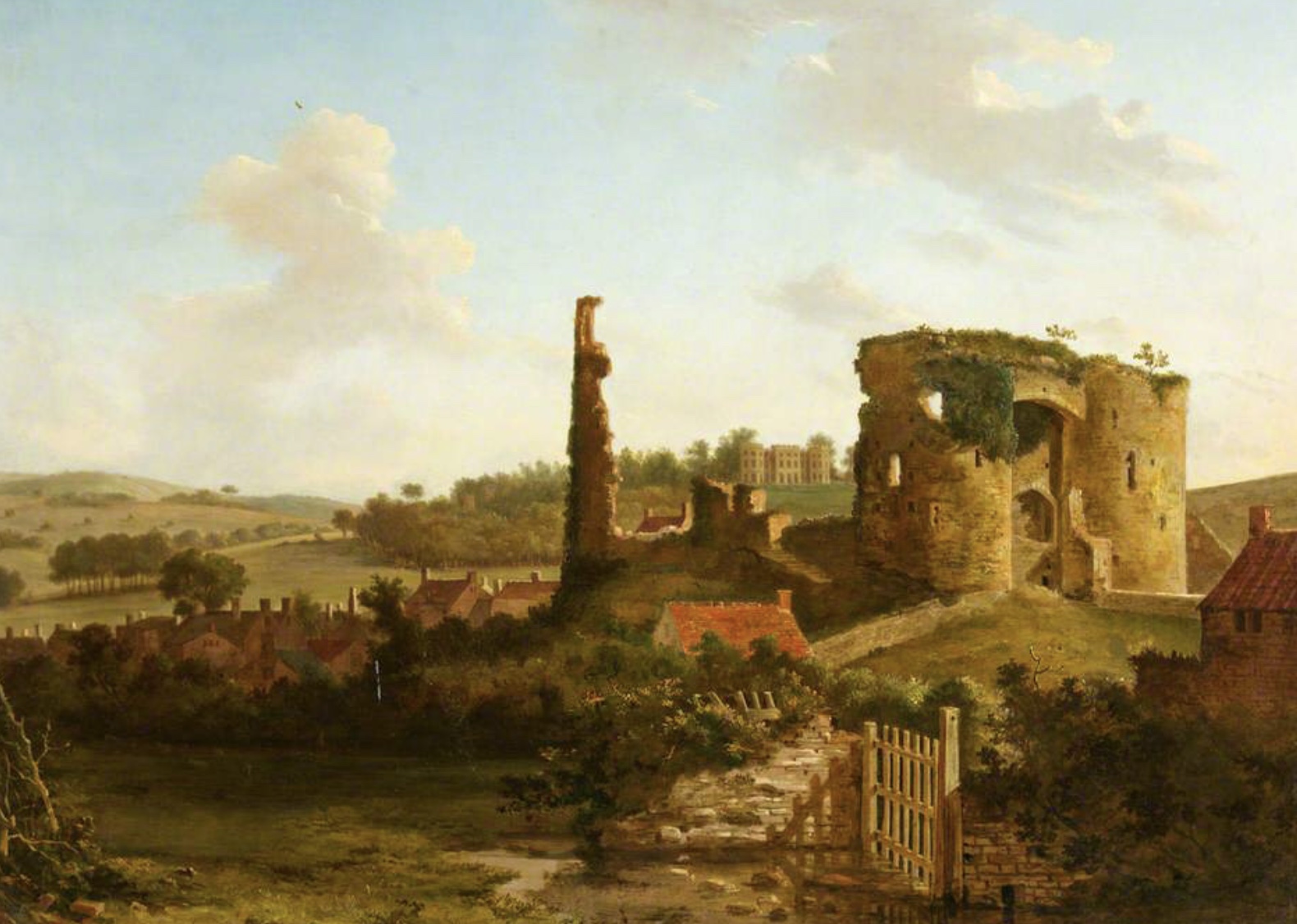
The Gnoll and Castle, Neath, 1790-1810 by Hendrik Frans de Cort.

On 1 April 1298 at Westminster, Sir Peter was nominated as attorney for the following men, who were out of the country tending to the king’s affairs:

  1. Otto de Grandson, who had gone to the Court of Rome.
  2. Peter de Stanye (d’Estavayer), who was ‘staying beyond the seas.’
  3. Aymo de Carto, provost of Beverley, who had also gone to the Court of Rome.

As attorney, Sir Peter spent a considerable amount of time in Ireland, up to three years, overseeing his nominators’ affairs. He died c1300 possibly in Ireland. By this time he had acquired lands in Ireland through inheritance.

Through his wife’s inheritance, Sir Peter established the Stradlings in Glamorgan, my home county. Through marriage to other noble houses, they produced links to many of the castles in Glamorgan. It’s ironic that, in the past, I visited these castles without the knowledge that my ancestors used to reside there.

As ever, thank you for your interest and support.

Hannah xxx

For Authors

#1 for value with 565,000 readers, The Fussy Librarian has helped my books to reach #1 on 31 occasions.

A special offer from my publisher and the Fussy Librarian. https://authors.thefussylibrarian.com/?ref=goylake

Don’t forget to use the code goylake20 to claim your discount 🙂

Categories
Dear Reader

Dear Reader #124

Dear Reader,

I’m researching the Victorian era and my poverty-stricken London ancestors. This is a view of Whitehall from Trafalgar Square, 1839. Produced by M de St Croix, it’s one of the earliest daguerreotype photographs of England, taken when M de St Croix was in London demonstrating Louis Daguerre’s pioneering photographic process during September and December 1839. 

In the foreground is Le Sueur’s statue of Charles I on horseback, and in the distance Inigo Jones’ Banqueting House – practically everything else has subsequently disappeared. The image has been reversed to show the scene as it was, as daguerreotypes only produce reversed views.

My direct ancestor Joan Plantagenet, daughter of Edward I of England and Eleanor of Castile. Joan was born in April 1272 in Akko (Acre), Hazofan, Kingdom of Jerusalem.

Joan has appeared many times in fiction, often depicted as a ‘spoiled brat’.  There is no evidence that this depiction represents her true character, but the myth remains. That’s the power of fiction.

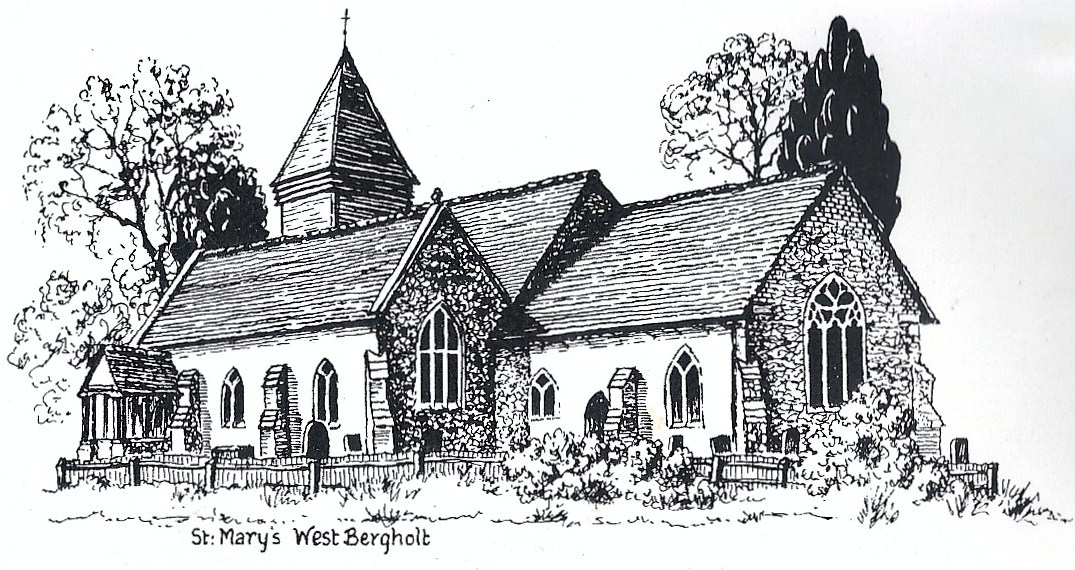
A lovely drawing of St Mary’s, West Bergholt, Essex, in the 1600s and 1700s the parish church of the Fincham, Balls, Clark and Sturgeon branches of my family.

My 4 x great grandmother Mary Ann Thorpe was baptised on 4 August 1816 in Great Braxted, Essex. The daughter of Thomas Thorpe and Mary Ann Freeman, she married Henry Wheeler on 3 November 1844 in St Mary, Lambeth, Surrey.

Mary Ann was Henry’s second wife. He was a petty thief. Also, she was eighteen years younger than him. Why did a young woman marry a far older, disreputable man? We will explore that question later.

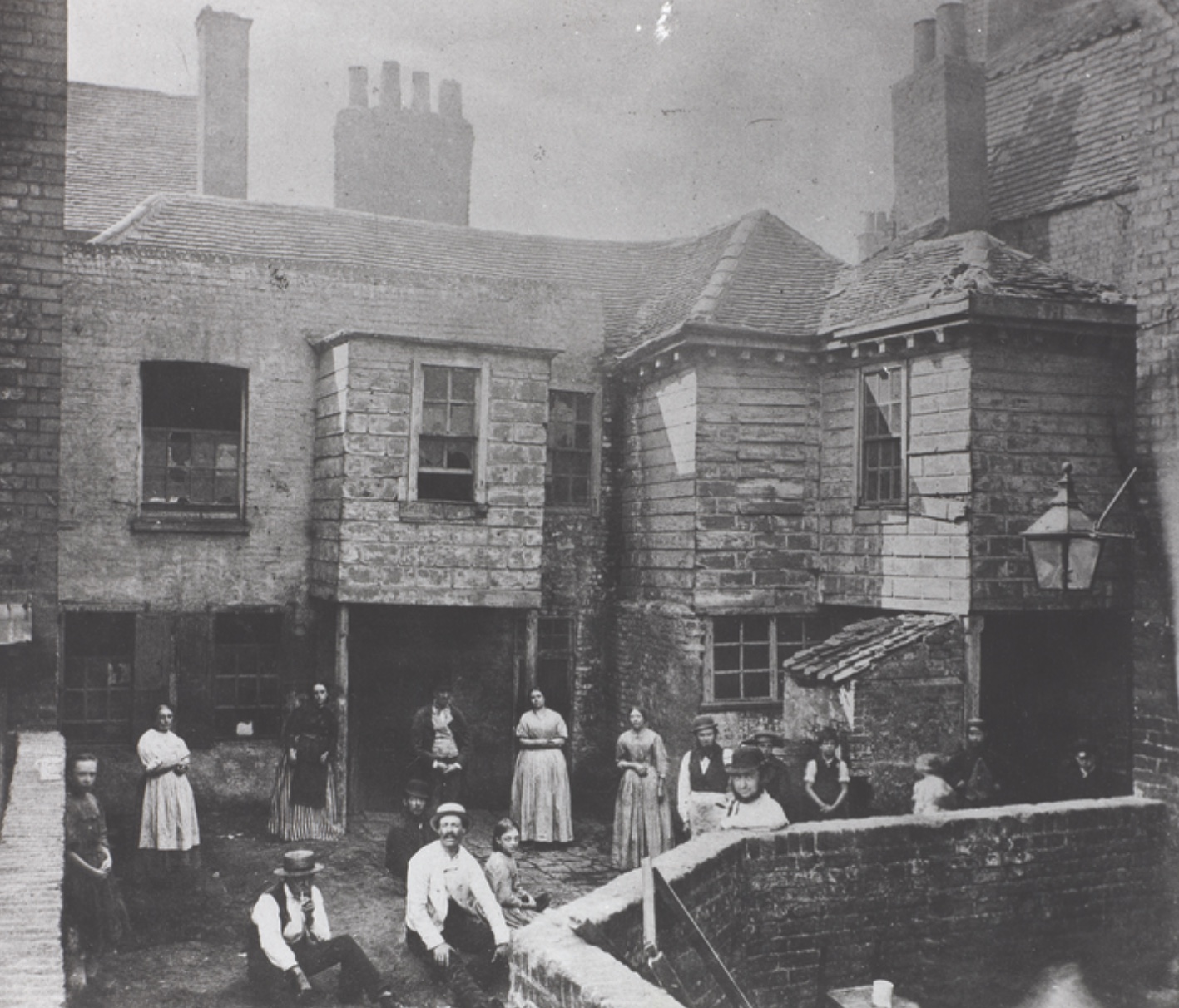
A slum in Market Court, Kensington, 1860s.

Mary Ann and Henry produced four children: Mary Ann, Charlotte, Joseph and Nancy, my direct ancestor, who when married at sixteen changed her name to Annie. There was a nine year gap between Mary Ann’s birth and Charlotte’s birth. This pattern replicated Henry’s first marriage to Elizabeth Mitchell where there was a nine year gap between their first two children, Henry and Eliza. That marriage produced five children in total. Why the nine year gaps? Henry’s wives were clearly fertile, but he was not around. Where was he? Read on…

After each marriage and the birth of the first child, Henry resorted to petty crime to make ends meet. The family endured great hardship, extreme poverty, and with new mothers and babies to feed Henry became ‘light-fingered’.

At other times, Henry was no saint. His name features frequently in the criminal records. However, on many occasions he was found ‘not guilty’. Nevertheless, it’s clear that the Wheeler family lived their lives on the fringes of society and mixed with petty, and possibly, hardened criminals.

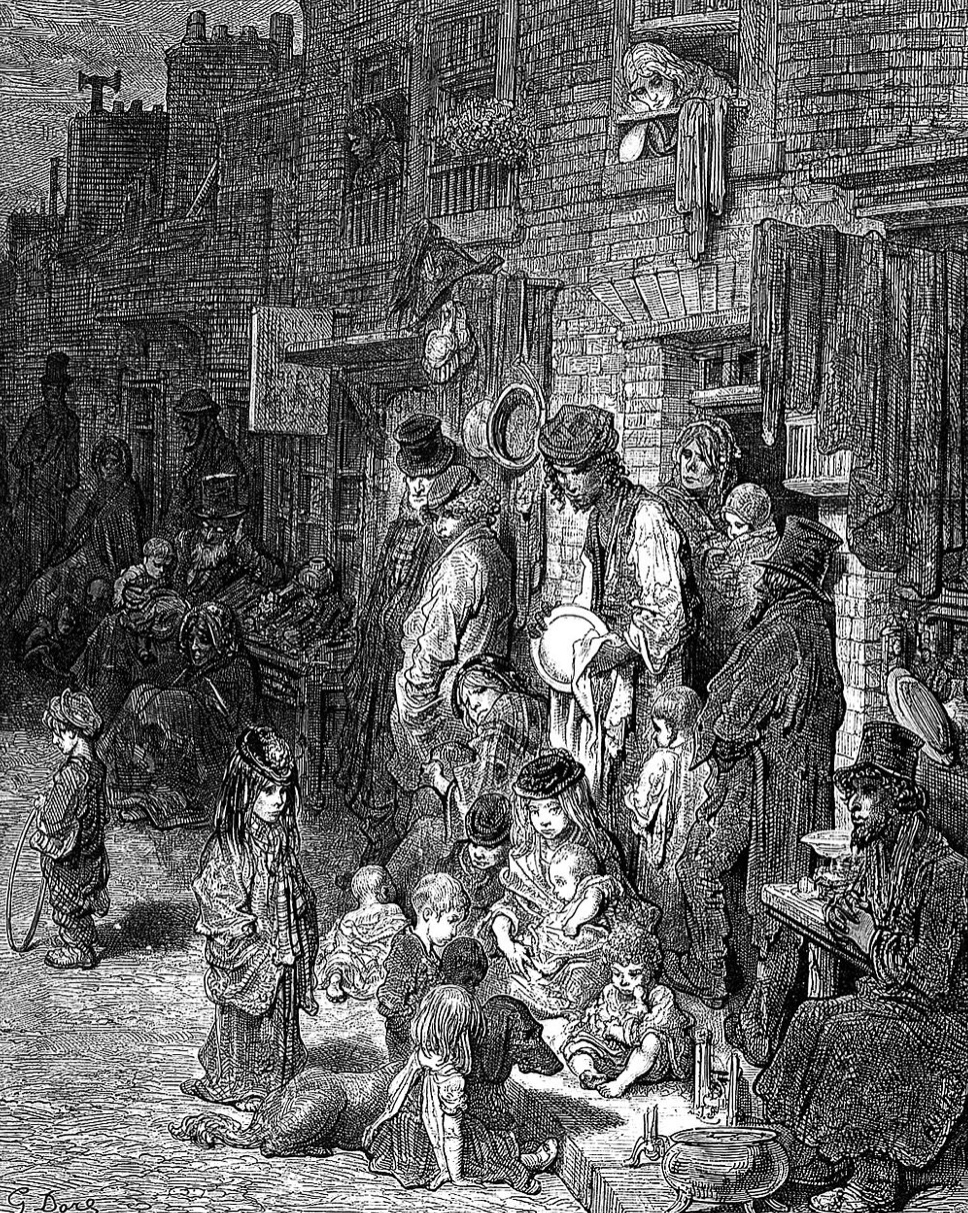
“Wentworth Street, Whitechapel”, 1872, by Gustave Doré (Wellcome Trust).

In 1845, after the birth of his daughter Mary Ann, Henry served a seven year prison sentence. The Victorians were keen on multiples of seven for their prison sentences, and this pattern extended to periods of transportation as well.

While Henry was in prison, his wife Mary Ann endured a difficult time. On 24 August 1849 it’s possible that she entered St Luke’s asylum. The records are sketchy, so it’s difficult to be certain, but the facts and circumstances fit so I am inclined to believe that she did spend some time in the asylum, maybe due to the burden of her circumstances. 

Or maybe Mary Ann suffered from long-standing mental health issues. It’s possible that those issues made a match with a man her own age unlikely, hence her choice of Henry, the eighteen year older petty criminal. The psychological profile certainly fits. That said, maybe it was a love match. Love can still blossom even in the most dire of circumstances.

Earlier, on 20 September 1848, Mary Ann entered the workhouse, a foreboding institution that was more a place of punishment than support. The Victorian era through the Industrial Revolution generated great wealth, but that wealth was concentrated on a relatively small number of individuals. These people were extremely rich, but they treated the poor with contempt. We can see a parallel in our own times.

Mary Ann left the workhouse on 10 January 1849, but her troubles were far from over. She still had a baby to feed, no husband to call on, and a fight against the diseases poverty brings. For all her troubles Mary Ann was a strong woman and lived to be eighty-six.

Before exploring Mary Ann’s later years, first we must go back in time, to 3 February 1845 when she found herself following her husband’s well-trodden path to the Old Bailey.

A trial at the Old Bailey.

Mary Ann was indicted for feloniously breaking and entering the dwelling-house of Susan Laws, on the 18 January 1845, and stealing two gowns, value 30s., the goods of Caroline Allen; and one shawl, 6s., the goods of Henry George Steer.

Caroline Allen, a dressmaker, gave evidence: she locked her door and went to bed late. In the morning, she discovered the door open and her possessions gone. She had no knowledge of Mary Ann. She also stated that two families and an old gentleman shared the dwelling-house.

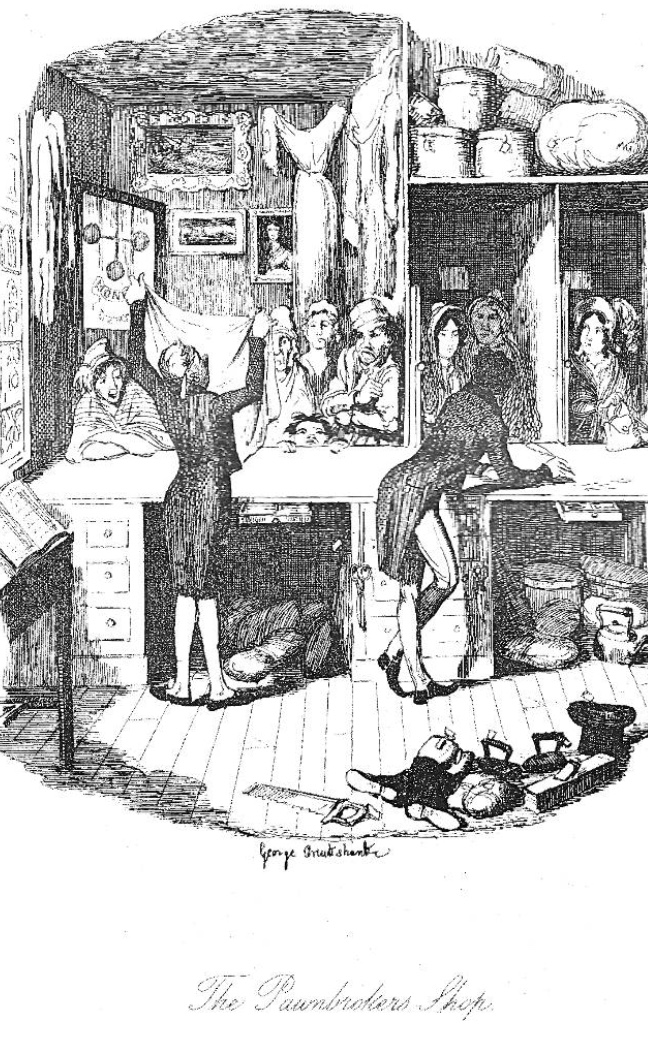
John Robert Davis stated that he was a shopman to Mr. Folkard, a pawnbroker, in Blackfriars Road. On the 18 January, at half-past nine in the morning, Mary Ann pledged the stolen gown at the pawnbrokers and he gave her an inferior duplicate. He reckoned that Mary Ann made three shillings on the trade.

The Pawnbroker’s Shop, 1876. 

Police constable Michael Cregan stated that he visited Mary Ann’s lodging and found the gown and shawl hidden under bedclothes. The court also established that the main door was ‘broken open’ although there were no marks of violence. The conclusion was that someone had used a skeleton key.

Eliza Beale, a fellow lodger, stated that she knew Mary Ann and that she was ‘an unfortunate girl.’ – An observation on Mary Ann’s mental health? Crucially, Eliza added that she came home at four o’clock in the morning when a man and woman asked her if she knew where they could get a bed. She let them into her room. They had a bundle with them, but she did not see them the following morning.

Martha Winfield, the landlady, contradicted Eliza Beale. However, Martha did not live in the house and therefore she was not an eyewitness to the events that night. Her contradiction was based on opinion, not on fact.

Verdict: Not Guilty.

In her closing years, as a widow, Mary Ann lodged with other elderly people. Over her eight-six years she certainly witnessed the darker aspects of London life. She also witnessed a period of dramatic change. At no stage was Mary Ann’s life easy. But she battled through and her life stands as a testimony to the human spirit.

As ever, thank you for your interest and support.

Hannah xxx

For Authors

#1 for value with 565,000 readers, The Fussy Librarian has helped my books to reach #1 on 31 occasions.

A special offer from my publisher and the Fussy Librarian. https://authors.thefussylibrarian.com/?ref=goylake

Don’t forget to use the code goylake20 to claim your discount 🙂

Categories
Dear Reader

Dear Reader #123

Dear Reader,

Always a satisfying moment, I’ve completed the storyboard for Operation Cameo, book six in my (Amazon #1 🙂) Eve’s War Heroines of SOE series. Next week, I will start on the first draft. Eve is feisty while her partner Guy is a pacifist. Based on true events.

My direct ancestor Joan, Countess of Kent (29 September 1328 – 7 August 1385) known to history as ‘The Fair Maid of Kent.’ French chronicler Jean Froissart described her as “the most beautiful woman in all the realm of England, and the most loving.”

Joan gave birth to my ancestor Thomas Holland and later when married to her third husband Edward Plantagenet ‘the Black Prince’, Richard II.

My direct ancestor Thomas Meade was born c1380 in Wraxall, Somerset. His parents were Thomas Atte Meade and Agnes Wycliff.

Thomas died in 1455 and this extract from his will offers an insight into the times.

“I leave to Philip Meade my son two pipes of woad, two whole woollen cloths, my beat goblet with a cover, made of silver and gilded, and my best brass bowl. I leave to Joan, the wife of Roger Ringeston, my daughter, one pipe of woad and 40s sterling.”

Lots of Quakers on my family tree. Here’s the latest discovery, Joan Ford, daughter of William Ford and Elizabeth Penny, born 11 December 1668 in Curry Mallet, Somerset. Joan was three years older than her husband, John Lowcock, not a big difference, but unusual for the era.

Just discovered that my direct ancestor Sir John Cobham, Third Baron Cobham, paid for the construction of Rochester Bridge (in the background on this painting) across the River Medway. This route, originally established by the Romans, was essential for traffic between London, Dover and mainland Europe.

Painting: Artist unknown, Dutch style, 17th century.

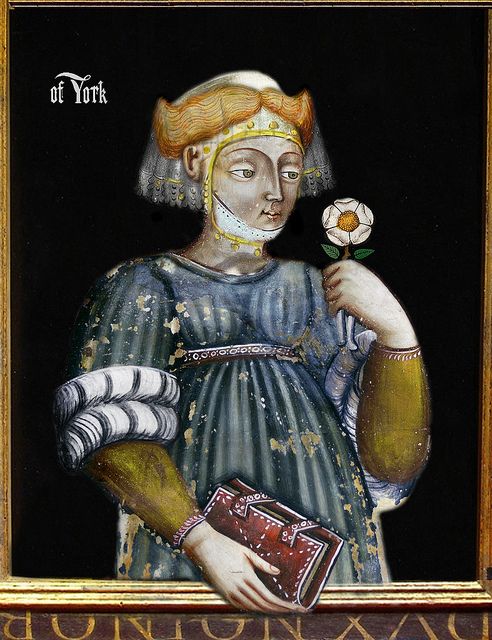
My 19 x great grandmother, Constance of York, Countess of Gloucester, was born in 1374, the only daughter of Edmund of Langley, 1st Duke of York, and his wife Isabella of Castile. 

In November 1397, Constance married Thomas Despenser, 1st Earl of Gloucester, one of Richard II’s favourites. The couple produced three children: a son, Richard, and two daughters. The first daughter, Elizabeth, died in infancy, while the second daughter, Isabel, was born after her father’s death.

When Henry IV deposed and murdered Richard II, the Crown seized the Despenser lands. In consequence, in December 1399, Thomas Despenser and other nobles hatched a plot known as the Epiphany Rising. Their plan was to assassinate Henry IV and restore Richard, who was alive at this point, to the throne.

According to a French chronicle, Edward, Constance’s brother, betrayed the plot, although English chronicles make no mention of his role. Thomas Despenser evaded immediate capture, but a mob cornered him in Bristol and beheaded him on 13 January 1400.

After Thomas’ death, Constance was granted a life interest in the greater part of the Despenser lands and custody of her son. However, in February 1405, during the Owain Glyndwr rebellion to liberate Wales, Constance instigated a plot to abduct Edmund Mortimer, 5th Earl of March, and his brother, Roger, from Windsor Castle. 

Constance’s plan was to deliver the young Earl, who had a claim to the English throne, to his uncle Sir Edmund Mortimer, who was married to Glyndwr’s daughter.

The first part of Constance’s plan went well, only to stumble when Henry’s men captured Edmund and Roger Mortimer as they entered Wales.

With the plot over, Constance implicated her elder brother, Edward – clearly sibling love was not a priority in the House of York – and he was imprisoned for seventeen weeks at Pevensey Castle. Meanwhile, Constance languished in Kenilworth Castle.

With the rebellions quashed, Henry IV released Constance and she became the mistress of Edmund Holland, 4th Earl of Kent. Out of wedlock, they produced my direct ancestor, Eleanor, who married James Tuchet, 5th Baron Audley.

Constance outlived Henry IV and her brother, Edward. She died on 28 November 1416 and was buried in Reading Abbey.

As ever, thank you for your interest and support.

Hannah xxx

For Authors

#1 for value with 565,000 readers, The Fussy Librarian has helped my books to reach #1 on 31 occasions.

A special offer from my publisher and the Fussy Librarian. https://authors.thefussylibrarian.com/?ref=goylake

Don’t forget to use the code goylake20 to claim your discount 🙂