Categories
Dear Reader

Dear Reader #101

Dear Reader,

My latest translation in Portuguese, The Olive Tree: Roots. A Spanish Civil War Saga. Available soon 🙂
Many of my London ancestors came from Lambeth. This is the Thames foreshore at Lambeth, c1866, a photograph by William Strudwick, one of a series showing images of working class London.

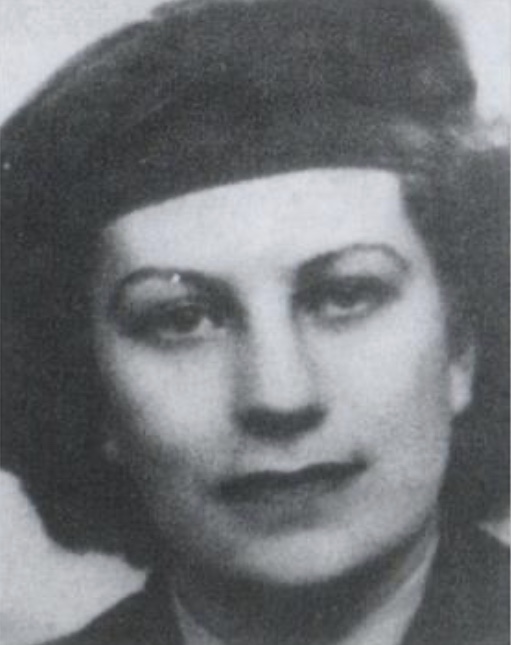
My article about SOE heroine Eileen Nearne appears on page 36 of this month’s Seaside News.

Mapping my ancestors over the past thousand years.

Map One: Twentieth Century.

My twentieth century ancestors lived in Glamorgan, London and Lancashire. My Glamorgan ancestors were born there while some of my London ancestors were evacuated to Lancashire during the Second World War where they remained for the rest of their lives.

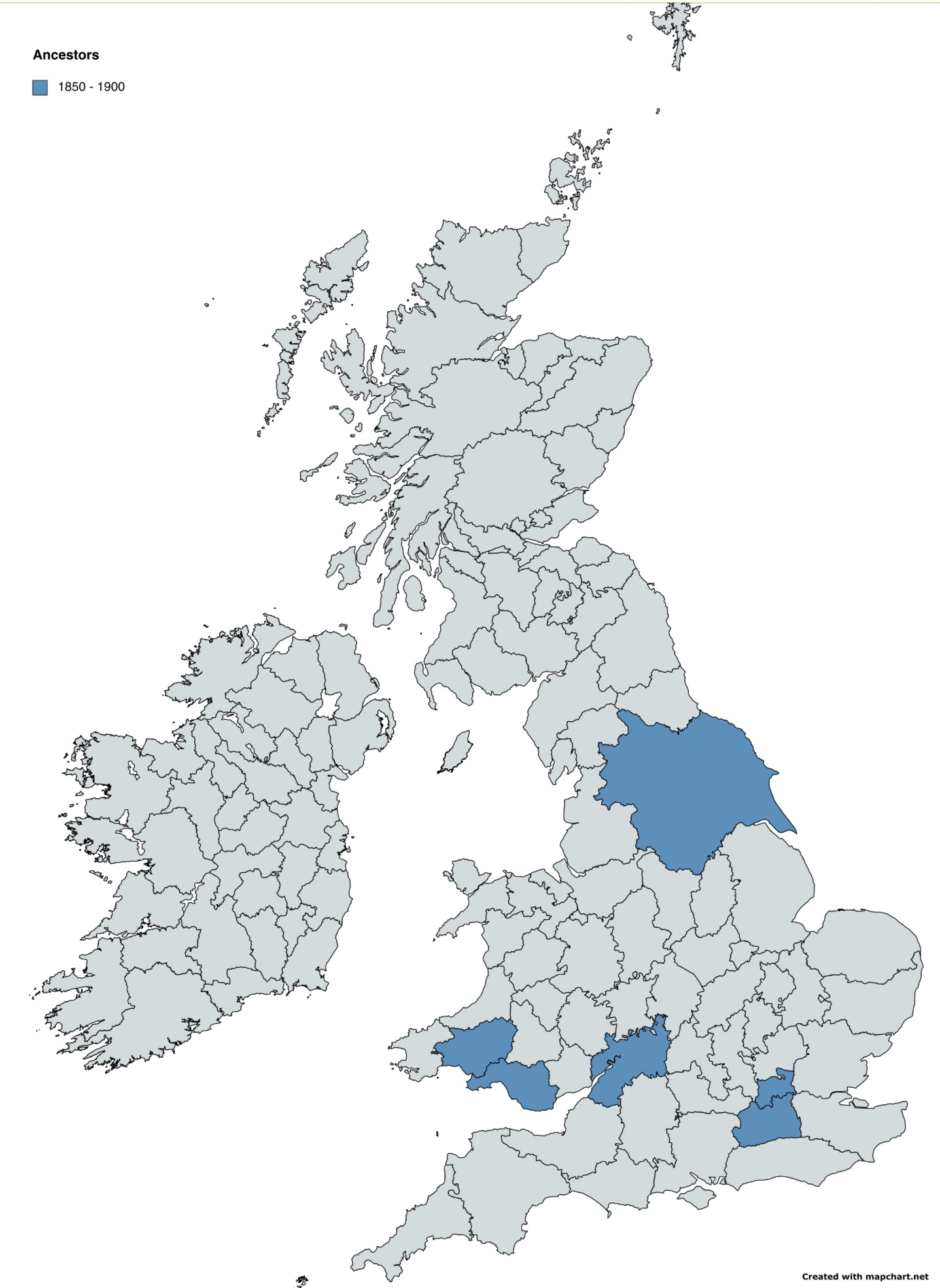
Map Two: 1850 – 1900

Three new counties appear on this map: Carmarthenshire, Gloucestershire and Yorkshire. Yorkshire is represented by a sailor who lived in Canada for a while before settling in London. My Gloucestershire ancestors moved to London because they had family there, and no doubt they were looking for better employment opportunities. My Carmarthenshire ancestors moved to Glamorgan to work on the land, on the newly developing railway lines, and in the burgeoning coal mines. Some branches emigrated to Patagonia, but my direct ancestors remained in Glamorgan.
Published this weekend, Stormy Weather, book eighteen in my Sam Smith Mystery Series. My intention was to write one book, but I’m delighted that Sam convinced me to develop her story into a series 🙂
My 2 x great grandmother Jane Dent was baptised on 9 October 1870. The eldest daughter of Richard Davis Dent and Sarah Ann Cottrell, she lived in Whitechapel during the terror of Jack the Ripper.

The police investigated eleven brutal murders in Whitechapel and Spitalfields between 1888 and 1891. Subsequently, five of those murders were attributed to Jack the Ripper, those of Mary Ann Nichols, Annie Chapman, Elizabeth Stride, Catherine Eddowes and Mary Jane Kelly, the murders taking place between 31 August and 9 November 1888.

The murders attracted widespread newspaper coverage and were obviously the major talking point within the Whitechapel community. What did that community look like and where did my ancestor, Jane Dent fit in?
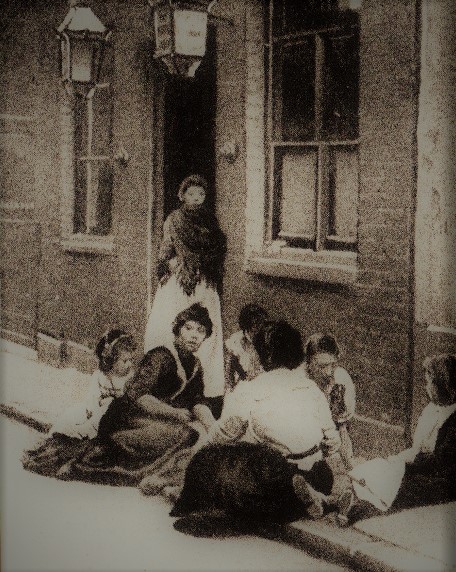
Members of the public on the streets of Whitechapel, London, circa 1890.

By the 1840s, Whitechapel had evolved into the classic image of Dickensian London beset with problems of poverty and overcrowding as people moved into the city from the countryside, mingling with an influx of immigrants. In 1884, actor Jacob Adler wrote, “The further we penetrated into this Whitechapel, the more our hearts sank. Was this London? Never in Russia, never later in the worst slums of New York, were we to see such poverty as in the London of the 1880s.”

In October 1888, Whitechapel contained an estimated six-two brothels and 1,200 prostitutes. However, the suggestion that all the Ripper’s victims were prostitutes is a myth. At least three of them were homeless alcoholics. The common thread they shared was they had fallen on hard times.

Jane’s father, Richard Davis Dent, died in 1883 when she was twelve so Jane lived in Whitechapel with her mother, Sarah Ann, and younger brothers and sisters, Thomas, Arthur, Eliza, Robert and Mary. The 1881 census listed Jane as a scholar, and it’s likely that she became a domestic servant after her schooling.
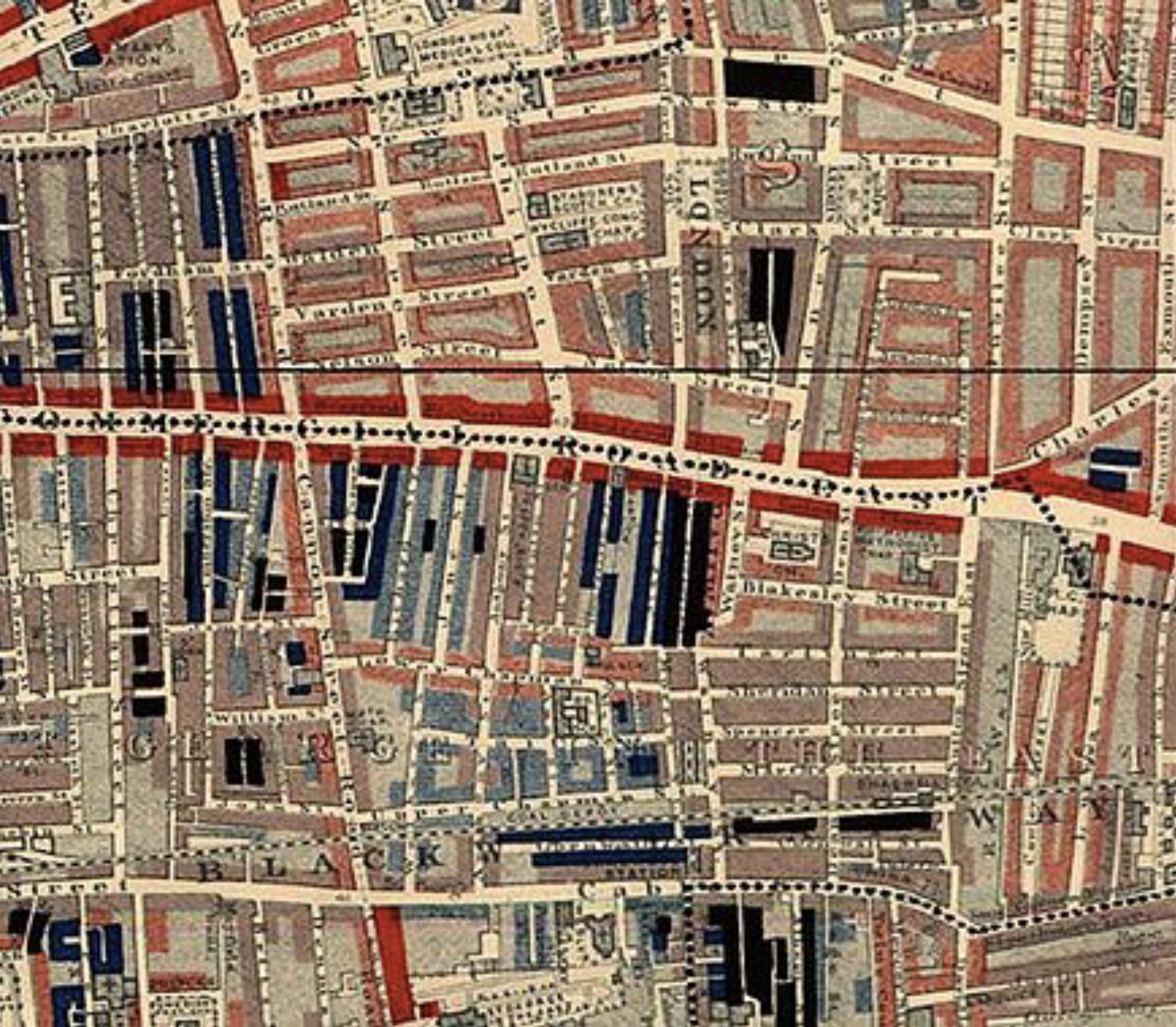
Charles Booth’s poverty map of Whitechapel. The red areas are affluent while the black areas indicate criminals and extreme poverty.

The Dent family lived in Urban Place. Their neighbours included a toy maker, a tobacco pipe maker, a French polisher, a vellum blind maker and a cabinet maker. These people were skilled artisans, so it wasn’t the roughest of neighbourhoods. Nevertheless, did Jane and her family discuss Jack the Ripper and his latest atrocities over the dining table? Almost certainly they did, and mothers throughout the generations have echoed Sarah Ann’s warnings to her daughters.

Did Jane meet Jack the Ripper, socially, at work or in the street? Possibly. Did she have a suspect in mind? Her thoughts were not recorded so we will never know. Did she modify her behaviour and avoid Whitechapel’s network of dark and dangerous allies? It is to be hoped that she did.

Although there are numerous suspects, from butchers to members of the royal family, it’s unlikely that we will ever discover Jack the Ripper’s true identity. The police at the time were led in the main by retired army officers, and were not the brightest detectives. Forensic science was basically unknown, so evidence gathering was limited. Nevertheless, the police’s failure to identify Jack the Ripper does raise some serious questions. 
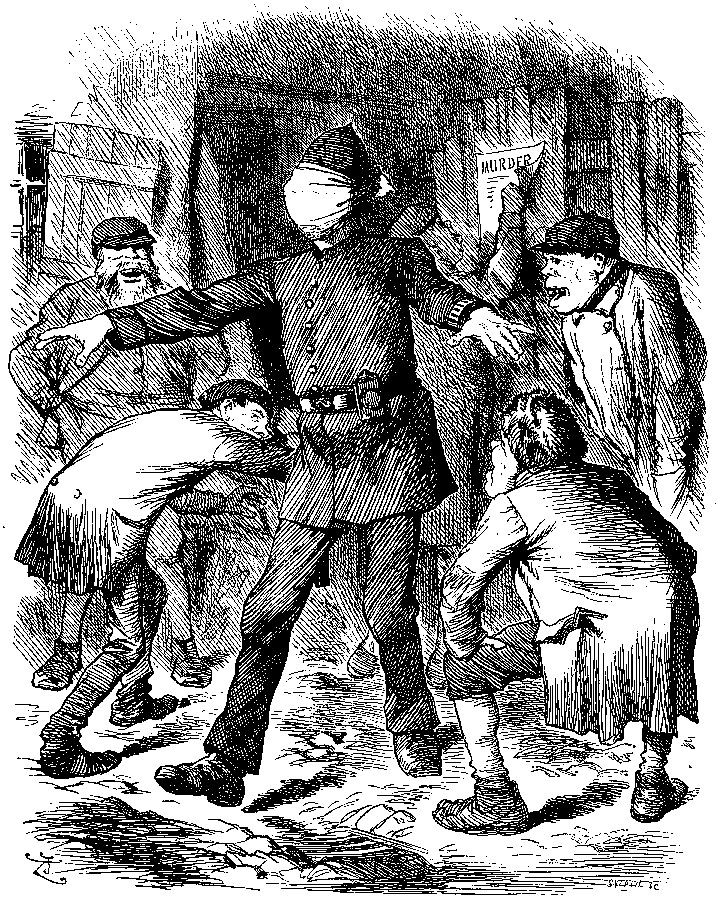
‘Blind Man’s Bluff’. A Punch cartoon by John Tenniel, 22 September 1888, criticising the police investigation.

Was there a cover-up? It’s likely that members of the royal family did visit prostitutes – this is a common theme over many centuries – and the government would have issued instructions to the police to cover-up any royal association with prostitutes for fear of a public backlash and revolution, which was rife in parts of Europe. Any royal cover-up would have hampered the investigation, but ultimately Jack the Ripper evaded arrest because the Victorian police force did not have the skills required to solve complex murders.

By 1891, the Whitechapel murders had ceased and Jane had married William Richard Stokes, a cabinet maker. The couple moved to Gee Street, in the St Luke’s district of London where they raised a family of nine children, including my direct ancestor, Arthur Stokes, and Robert Stokes who died on 26 June 1916 at Hébuterne, Nord-Pas-de-Calais, France during the First World War.

Jane Dent survived the terror of Jack the Ripper, but memories of his murders must have remained with her for the rest of her life. After all, she was only eighteen years old, an impressionable age in any era. She died on 6 June 1950 in the London suburb of Walthamstow.

As for Jack, I suspect that either he took his own life in November 1888 or, unknown as the Ripper, he entered an asylum at that time, and remained there for the rest of his life. Jack the Ripper was a compulsive murderer. He didn’t stop killing, something stopped him.

As ever, thank you for your interest and support.

Hannah xxx

Bestselling psychological and historical mysteries from £0.99. Paperbacks, brand new in mint condition 🙂
https://hannah-howe.com/store/
Categories
Dear Reader

Dear Reader #100

Dear Reader,

Some chart news. Operation Zigzag is #1, my thirtieth #1. Also, Operation Sherlock is a top thirty hot new release. And one for the album, Stormy Weather is a hot new release alongside Raymond Chandler and Lee Child. Many thanks to everyone who made this possible.

My article about SOE heroine Virginia Hall appears on page 36 of the Seaside News 🙂

My latest translation, Operation Broadsword in German. Sandra has translated nine of my books. It’s wonderful to work with someone so talented.

Wales and England in 1939, just before the outbreak of the Second World War. Source: Find My Past.

The Noulton branch of my family were season ticket holders at the Old Bailey with several generations of the family in trouble with the law.

I’ve just discovered that my 5 x great grandfather James Noulton, aged twelve, was sent to the Royal Philanthropic Society’s School in 1801. Established by gentlemen in London in 1788, the Philanthropic Society was concerned with the caring of homeless children left to fend for themselves by begging or thieving. Those admitted were children of criminals or those who had been convicted of crimes themselves. The school, pictured, moved to Redhill in 1849.

Many of the children were encouraged to emigrate to Australia, Canada or South Africa, or to join the army or navy. This ties in perfectly with my ancestor James because he joined the navy and served in the Napoleonic wars. More details in a future post.

My store, freshly updated. Bestselling psychological and historical mysteries from £0.99. Paperbacks, brand new in mint condition 🙂
https://hannah-howe.com/store/

Meet my ancestors, my 15 x great grandfather, Sir Rhys ap Thomas (1449 – 1525), the chief Welsh supporter of Henry VII.

Sir Rhys was the third son of Thomas ap Gruffudd ap Nicolas and Elizabeth Gruffydd. Through marriage to Elizabeth, daughter and heiress of Sir John Gruffydd of Abermarlais, Thomas ap Gruffudd ap Nicolas linked his family and thus this branch of my tree to the Welsh princes. 

Sir Rhys ap Thomas

With the Yorkists in the ascendant, as a child Sir Rhys joined his father at the court of Philip the Good, Duke of Burgundy. Father and son returned to Wales in 1467. On the death of his father, who had been predeceased by his two elder sons, Sir Rhys succeeded to the family estate. 

Lancastrian by tradition, Sir Rhys’ family opposed Richard III and made overtures to Henry Tudor while the latter was in exile in Brittany. 

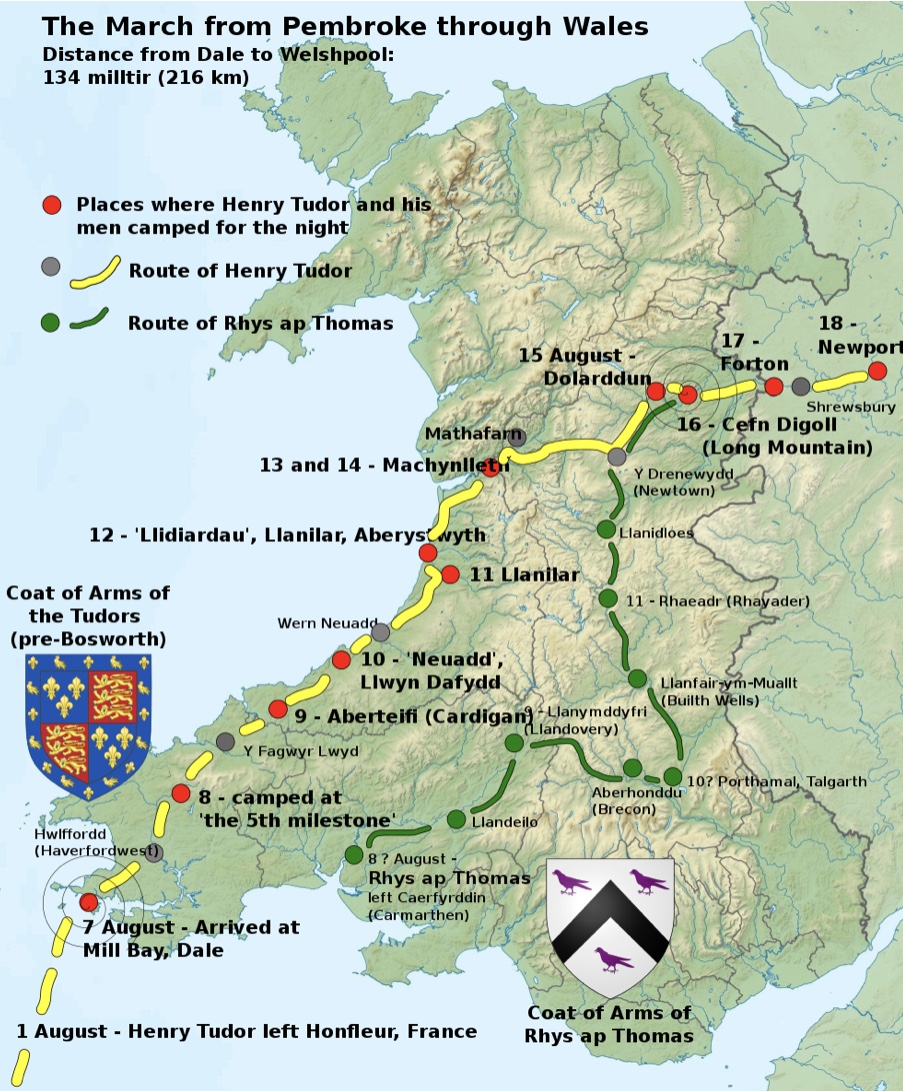
Sir Rhys welcomed Henry Tudor when the latter landed at Milford Haven and used his considerable influence to rally support for the future king, recruiting 500 men. Henry and Rhys’ forces marched separately through Wales before meeting at Welshpool and crossing into England. Chroniclers described Rhys’ Welsh force as by far the most powerful being ‘large enough to annihilate the rest of Henry’s army.’

Source: Wikipedia

On 22 August 1485, Henry’s army supported by Rhys’ followers met Richard III’s army at the Battle of Bosworth. Richard launched an attack, which Rhys’ men repelled. In desperation, Richard and his knights charged at Henry. The king was unhorsed, surrounded and killed. Some sources claim that Sir Rhys personally delivered the death blow to Richard III with his poleaxe. Whatever the truth, Henry knighted Rhys on the battlefield.

Grateful for his support, Henry Tudor bestowed more honours on Sir Rhys, including the offices of constable and steward of the lordship of Brecknock, chamberlain of the counties of Carmarthen and Cardigan, and steward of the lordship of Builth. Through these posts Sir Rhys held all the chief appointments that were in the king’s gift in South Wales. 

Henry Tudor

In support of the new king, Sir Rhys commanded of a troop of horse at the battle of Stoke (16 June 1487), capturing the pretender, Lambert Simnel, and he participated in the expedition against Boulogne in October 1492. 

At the battle of Blackheath (17 June 1497), Sir Rhys took the rebel leader, Lord Audeley, prisoner and was created a knight-banneret. Also, he was present at the surrender of Perkin Warbeck at Beaulieu Abbey in September 1497. For services to the king, he was was made Knight of the Garter on 22 April 1505. 

Carew Castle

Sir Rhys spent his latter years at Carew Castle. There, he held a great tournament to celebrate his admission to the Order of the Garter, inviting all the leading families of Wales. He also updated the castle, adding a gatehouse and windows.

Sir Rhys ap Thomas married twice, first to Eva, daughter of Henri ap Gwilym of Cwrt Henri, and second to Janet, daughter of Thomas Mathew of Radyr and widow of Thomas Stradling of St Donats. He died in 1525 and was buried at Greyfriars church, Carmarthen. 

As ever, thank you for your interest and support.

Hannah xxx

Categories
Dear Reader

Dear Reader #99

Dear Reader,

On 15 May 2021 we will publish Stormy Weather, book eighteen in my Sam Smith Mystery Series. Meanwhile, I’m working on Damaged, book nineteen in the series. We will publish this book in the autumn. Meanwhile, here’s the cover.

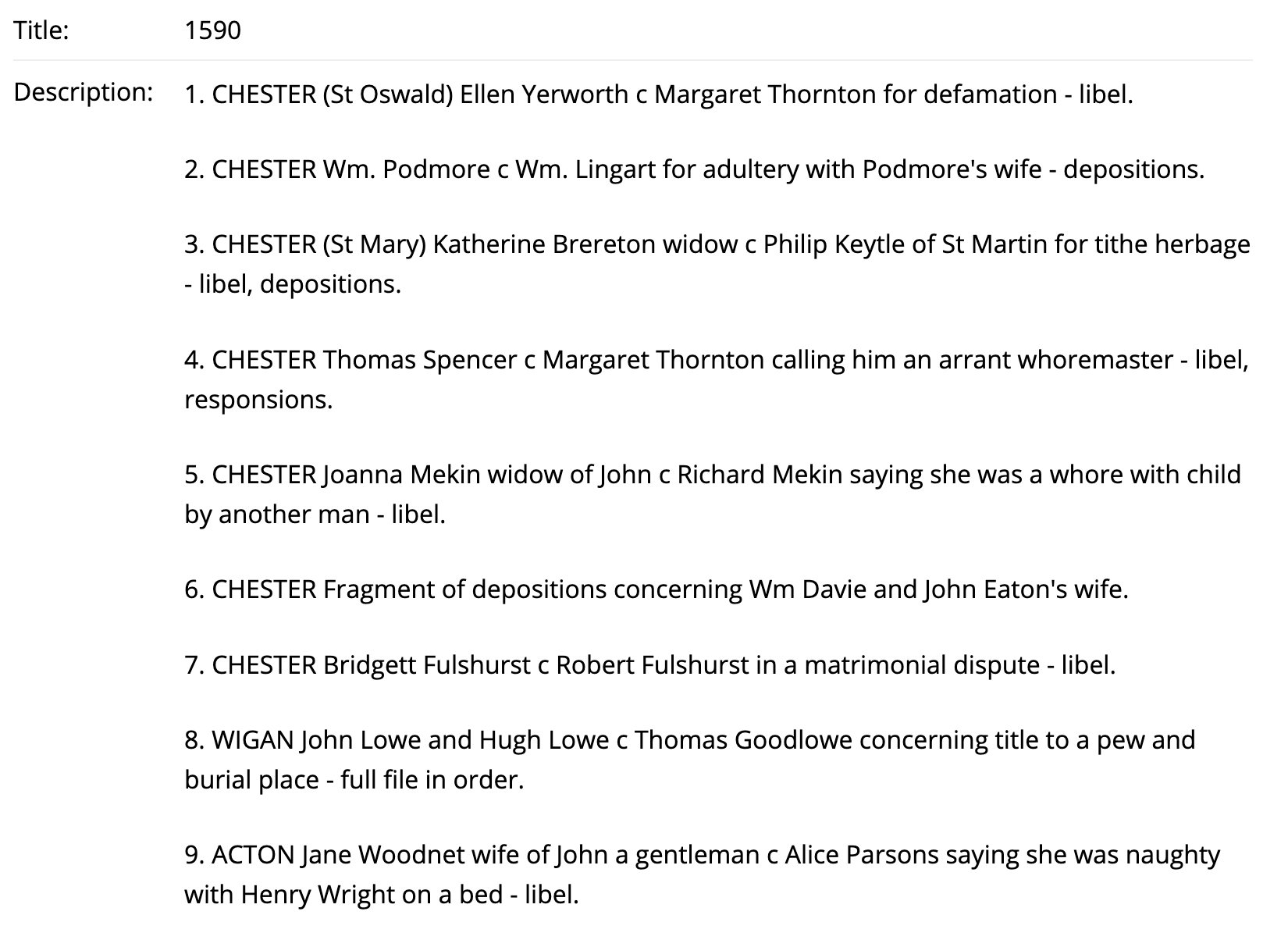
Chester, 1590, den of iniquity.

The Brereton’s are on my family tree. One generation were involved in a murder plot and an attempt to alter a will. The case reached the Star Chamber.

My latest translations, Ann’s War: Victory in Afrikaans and Eve’s War: Operation Broadsword in Portuguese.

The May 2021 issue of Mom’s Favorite Reads.

In this month’s issue…

Am I a Real Mum?

The Benefits of Journaling

International Nurses Day

Discovering Your Eighteenth Century Ancestors 

Things to Celebrate in May

Plus, travel, photography, puzzles, poems, short stories and so much more!

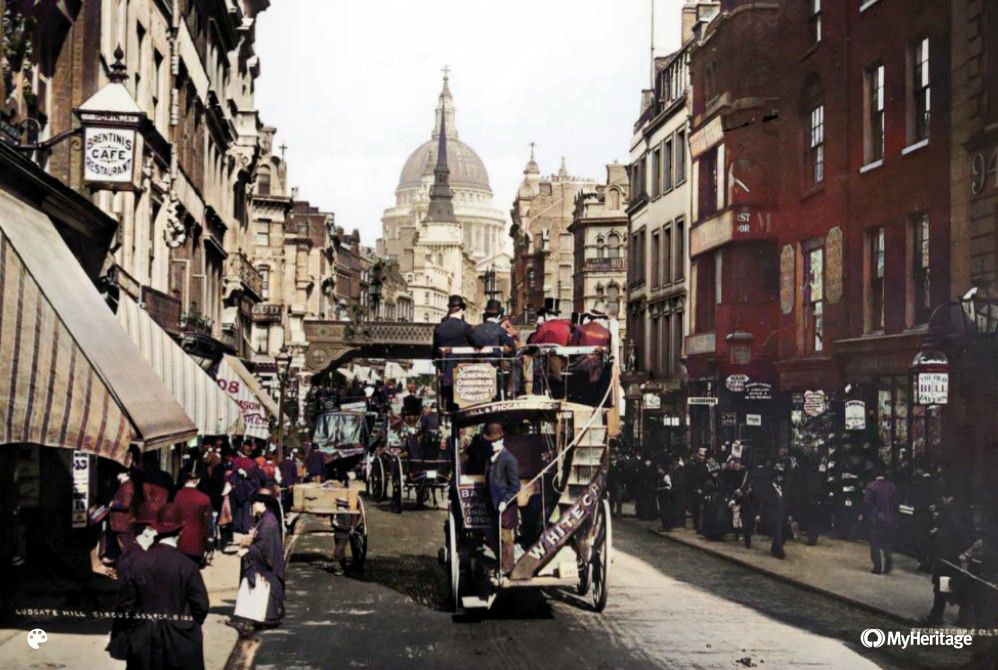
Colourised image of Fleet Street, London, 1888.

Just discovered that my 5 x great grandfather James Noulton served in the Napoleonic Wars, receiving a decoration in 1811 for his participation in the Invasion of Java.

Picture: A plan of the Cornelia, 1808, one of the two ships James Noulton served on.

More about James in future posts.

My 2 x great grandfather Albert Charles Bick was born on 3 September 1879 in Battersea, Surrey, the youngest of William Bick and Fanny Brereton’s eleven children.

William and Fanny moved to Battersea from Gloucestershire. The family also had connections in Hampshire and over several generations moved between these counties. William was a labourer so money for the family was always tight.

Albert started school at a young age, three. He attended Sleaford Street School, one of the new board schools created to give working class children an education.

Albert at school

After school, Albert found a job as a car man at the coal wharf, transporting coal on a horse and cart. He was still in this form of employment when he married Annie Noulton on 22 March 1902 in Lambeth, London. In thirteen years the couple had seven children.

In 1911, Albert was still a car man, now working at Doulton’s Pipe Works in Lambeth. The birth records of Albert and Annie’s children reveal that he worked as a car man throughout his married life. On 7 April 1911 there was a mass baptism when four Bick children from various strands of the family were baptised.

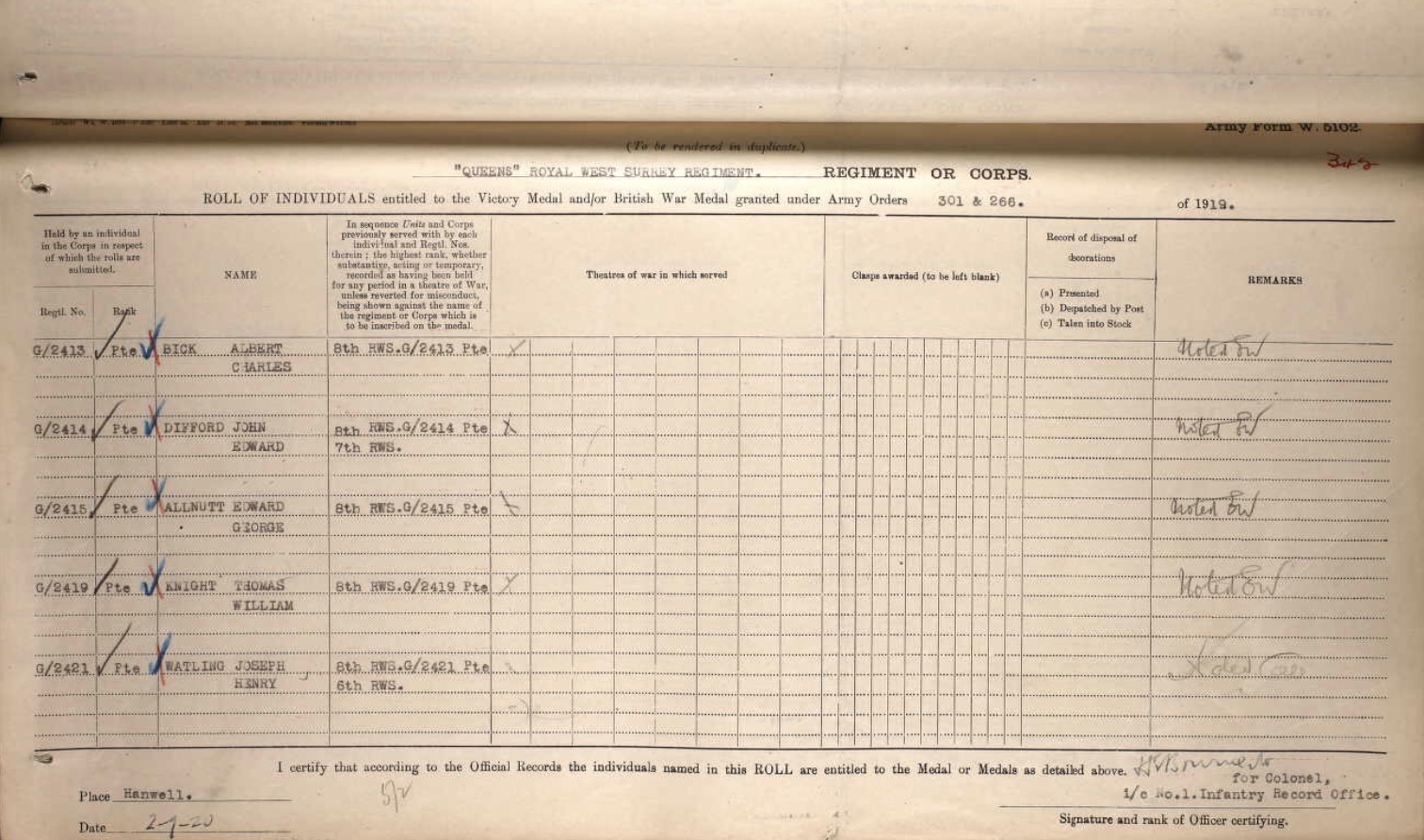
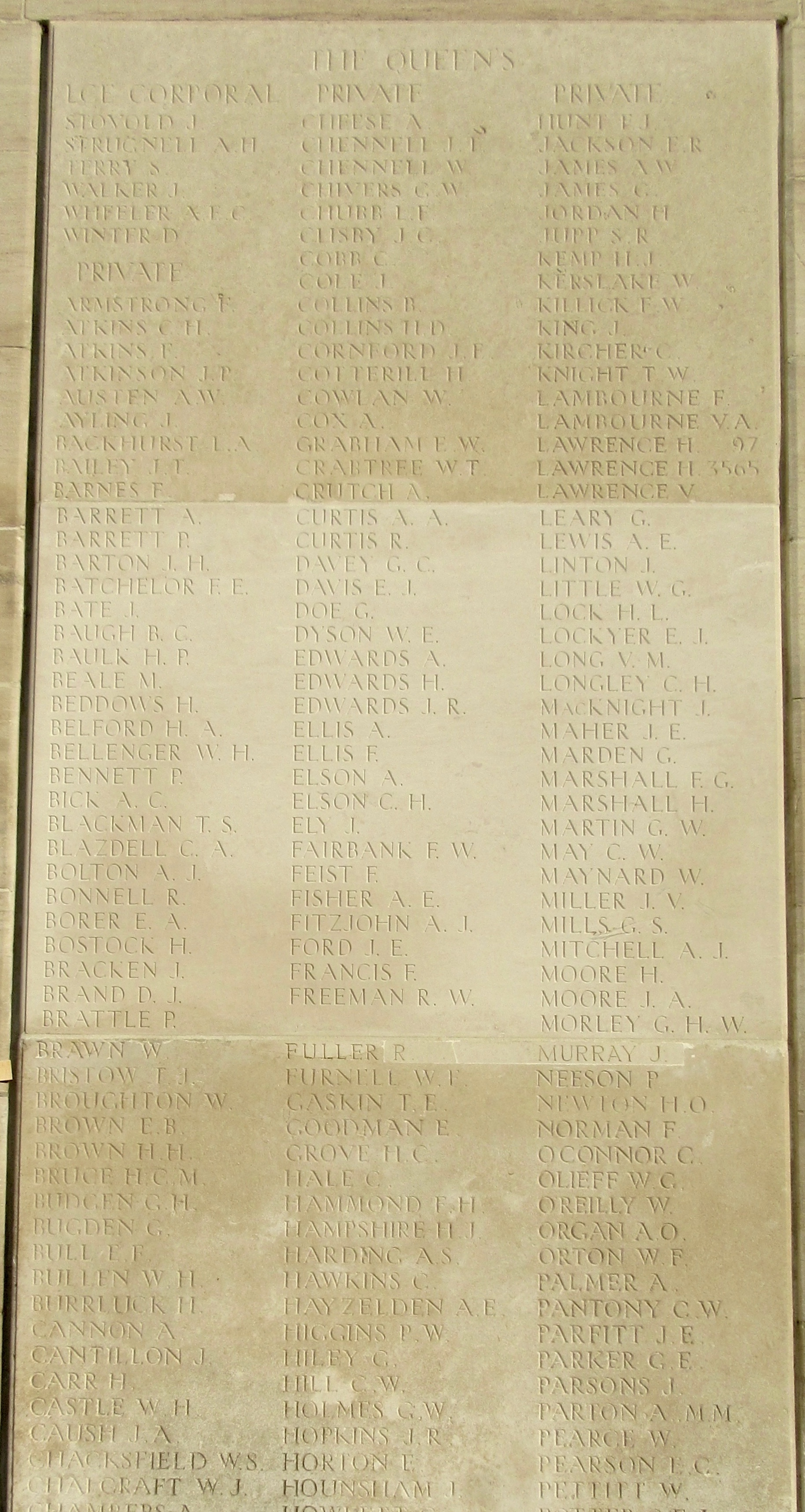
When the First World War broke out in 1914 Albert and Annie had six children with another on the way. During the summer of 1915, after the birth of his seventh child, Albert volunteered to serve in the Queen’s Royal West Surrey Regiment. Why did he volunteer? 

Albert’s brothers William, John and Frederick also volunteered, Frederick for the Red Cross. It would appear that the brothers volunteered together, and that it was a family decision. In 1911, the  family baptised four children together, so obviously they were a tight-knit family. By this time, the war had been raging for a year so unlike the first wave of volunteers who set off with naive optimism, the Bicks volunteered in the knowledge that they were entering hell.

The hell Albert entered had a name, the Battle of Loos. He departed for France on 31 August 1915 and engaged in the battle less than a month later, on 25 September 1915. 

The Battle of Loos was the biggest British attack of 1915, and the first time that the British used poisoned gas. The plan was for the French and British forces to break through the German defences in Artois and Champagne, and disrupt the pattern of trench warfare. 

At a conference on 6 September 1915 British commander Douglas Haig suggested that the extensive use of chlorine gas might facilitate an advance as long as the French and British were able to keep the attack secret.

Royal Engineers dug under no-man’s-land and planted mines under the parapets of the German front line trenches, ready to be detonated at zero hour.

Insufficient ammunition hampered the initial bombardment. Also, the British commanders did not fully appreciate the defensive formation of the German machine guns.

Prior to the attack, the British released 140 long tons of chlorine gas. The wind favoured no side and the gas affected both British and German troops.

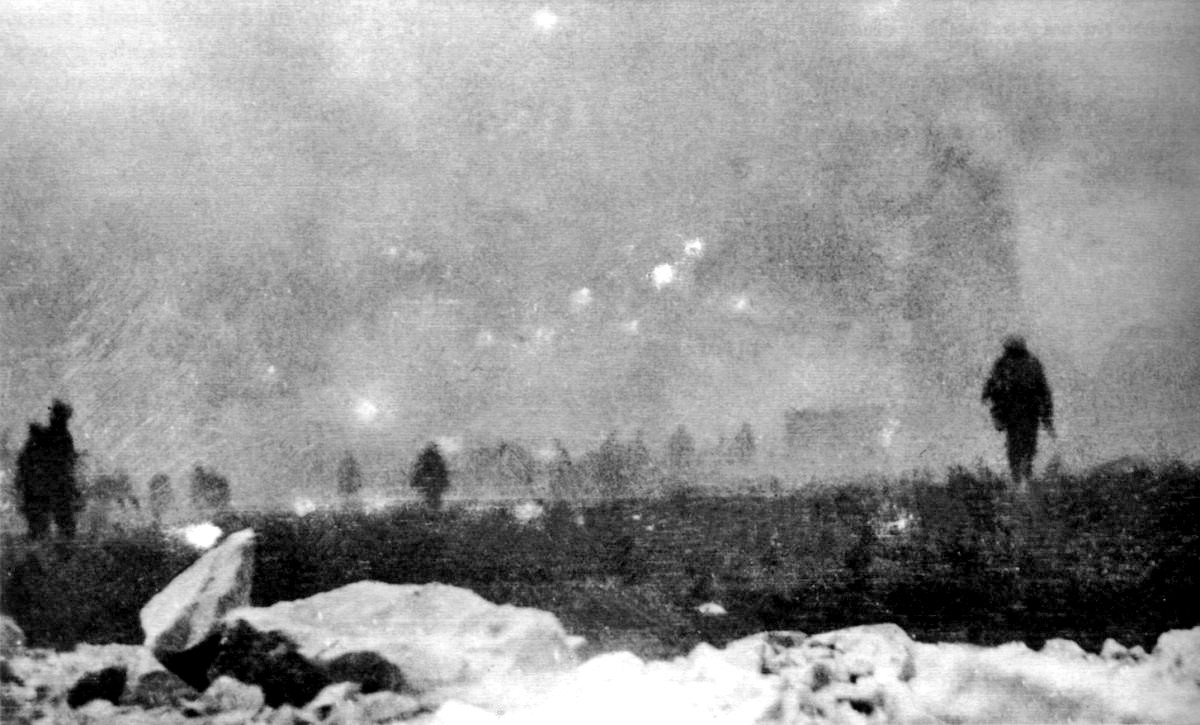
British infantry advancing at Loos 25 September 1915

The gas masks were inefficient so many soldiers removed them to obtain clear vision and, ironically, to catch their breath. At 6.30 am on 25 September 1915 Albert engaged in battle, charging across open ground, the air full of gas and bullets.

In many places the British artillery had failed to cut the German barbed wire before the attack. Furthermore, the engineers manning the poison gas cylinders warned against their use, because of the unpredictability of the wind. However, they were overruled by General Sir Hubert Gough. 

As the battle developed, the gas claimed more British than German casualties. Despite that disaster, the British did capture the village of Loos-en-Gohelle. Bad planning meant that the breakthrough could not be exploited. A contemporary account stated, ‘From what I can ascertain, some of the divisions did actually reach the enemy’s trenches, for their bodies can now be seen on the barbed wire.’

Major-General Richard Hilton, a Forward Observation Officer, said of the battle, ‘A great deal of nonsense has been written about Loos. The real tragedy of that battle was its nearness to complete success. Most of us who reached the crest of Hill 70, and survived, were firmly convinced that we had broken through on that Sunday, 26 September 1915. There seemed to be nothing ahead of us, but an unoccupied and incomplete trench system. The only two things that prevented our advancing into the suburbs of Lens were, firstly, the exhaustion of the “Jocks” themselves (for they had undergone a bellyfull of marching and fighting that day) and, secondly, the flanking fire of numerous German machine-guns, which swept that bare hill from some factory buildings in Cite St. Auguste to the south of us. All that we needed was more artillery ammunition to blast those clearly-located machine-guns, plus some fresh infantry to take over from the weary and depleted “Jocks.” But, alas, neither ammunition nor reinforcements were immediately available, and the great opportunity passed.’

Twelve attacking battalions suffered 8,000 casualties out of 10,000 men in four hours. In total, the British suffered 48,367 casualties in the main attack and 10,880 more in the second attack, a total of 59,247 losses, a high percentage of the 285,107 British casualties on the Western Front in 1915. Though Haig and Gough were culpable for this disaster, they escaped much of the blame. 

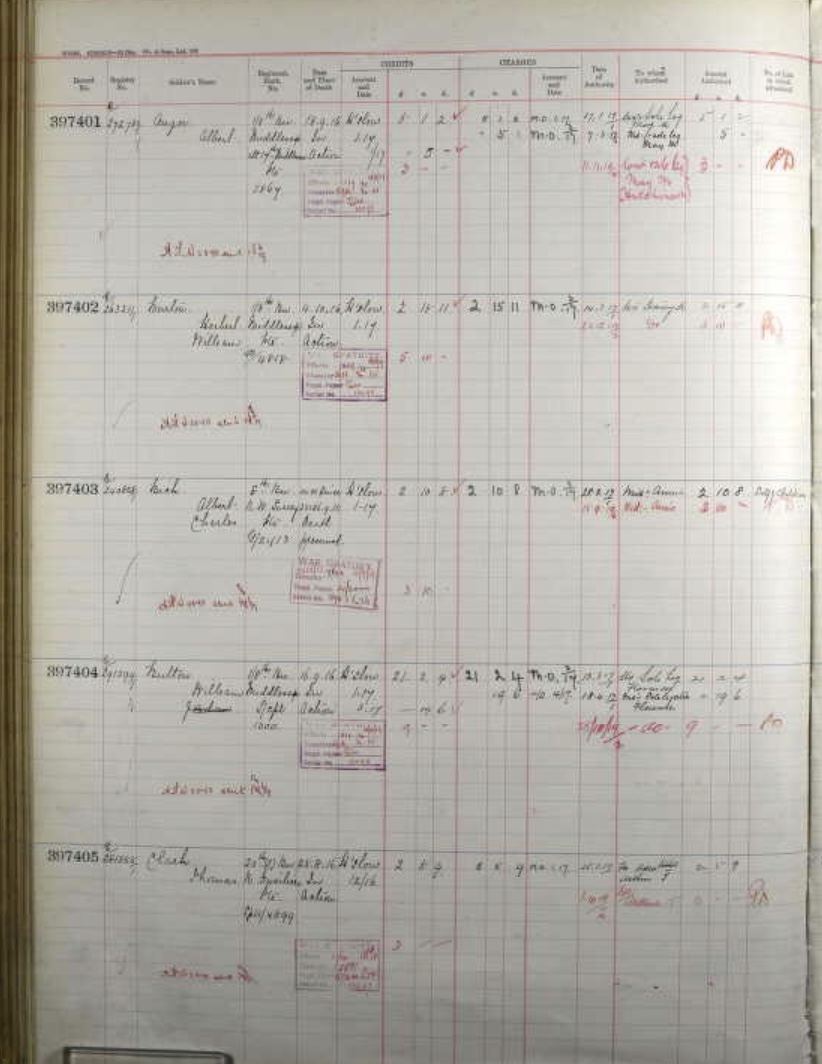
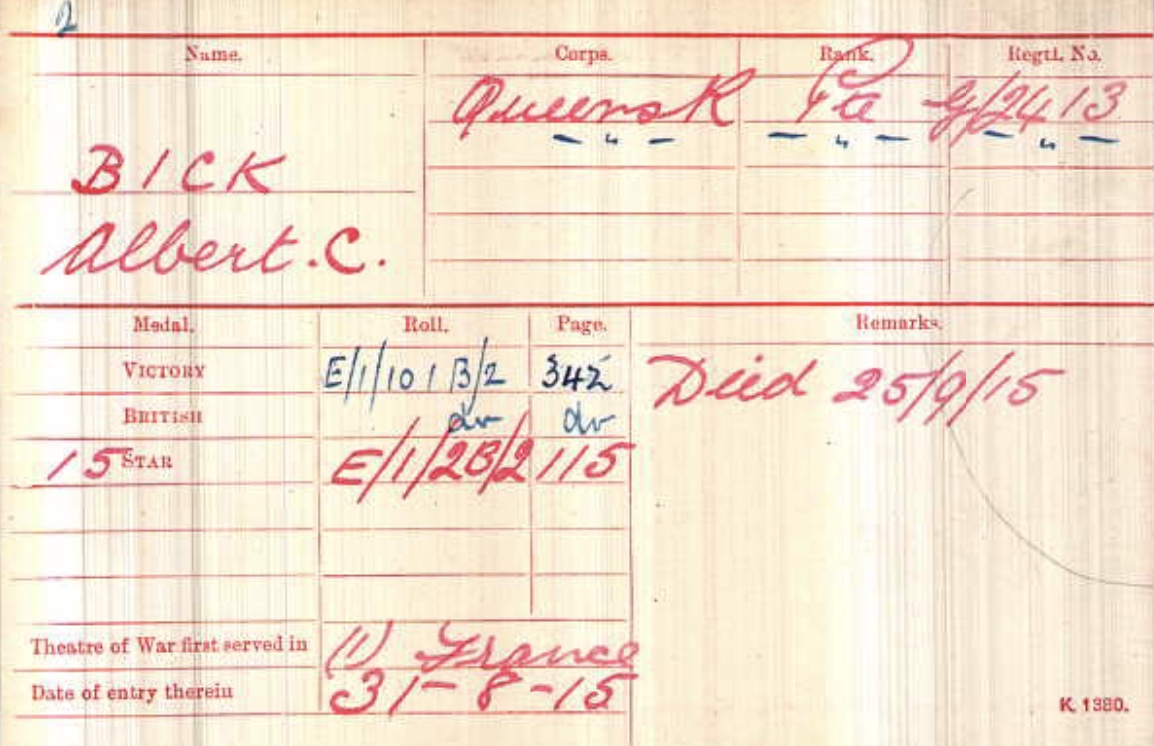
Albert Charles Bick died at Loos on 25 September 1915, whether through gas poisoning, a machine gun bullet or a mortar bomb is not known, for his body was not recovered. In the official files he is listed as ‘presumed dead’.

Annie received a widow’s pension. She did not remarry and died in 1963. Her eldest daughter and my direct ancestor, also Annie, survived her. As a child, I met daughter Annie several times during her later years, although I was too young to appreciate what the family had been through.

Loos War Memorial

The poet Robert Graves featured in the Battle of Loos and wrote about his experiences in Goodbye to All That while the Loos Memorial commemorates over 20,000 British and Commonwealth soldiers who fell in the battle and have no known grave, including Albert Charles Bick.

As ever, thank you for your interest and support.

Hannah xxx

Categories
Dear Reader

Dear Reader #89

Dear Reader,

Next week, I will complete the writing of Stormy Weather, Sam Smith Mystery Series book eighteen. I write my Sam Smith mysteries in ‘real time’ so the main decision was whether to include the pandemic. I realised early on that the nature of the pandemic and the government’s negligent response meant that the problem would remain with us for some time. Therefore, I decided to include the pandemic. The main theme of the story is the climate crisis so the pandemic and the way we abuse nature tied in with that theme. Stormy Weather is available for pre-order from all major Internet outlets.

Available soon, my latest translation, Escape in Afrikaans. We now have four books in this series published in Afrikaans while Nelmari is currently working on Victory, book five. It’s wonderful to see my books available in a number of languages, twelve at the latest count.

This week, I created the characters for Operation Sherlock, book five in my Eve’s War Heroines of SOE Series. This story is set in Paris and like all the stories in the series it’s based on true events. Character creation is my favourite part of the writing process. Once I’ve created the characters, I sit back and allow them to tell the stories. Operation Sherlock will be available for pre-order soon.

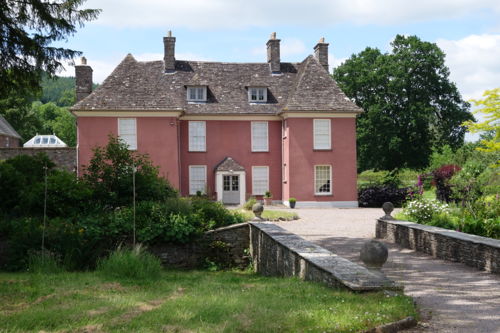
Meet the ancestors, my 29th great grandfather, Saunder de Sancto Alberico also know as Awbrey. He arrived with William the Conquerer (also a direct ancestor) in 1066. His son Sir Reginald Awbrey established a manor house and estate in Abercynrig, Brecon in 1093. The property, pictured, remained in the family until 1630.


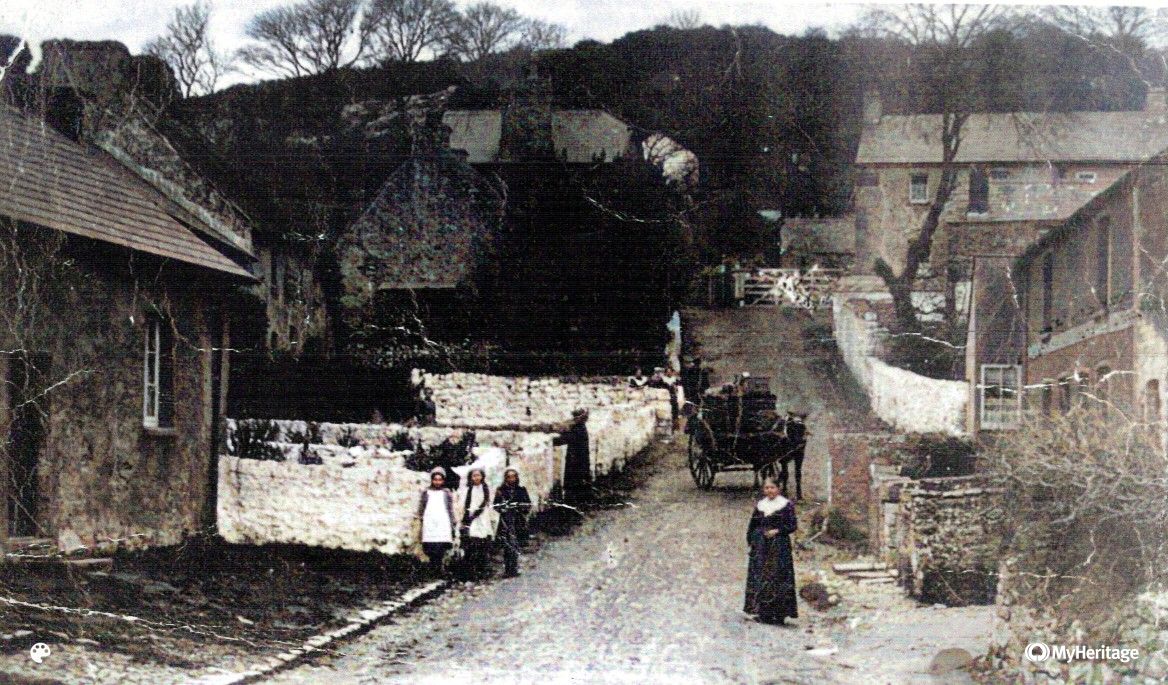
One of my favourite pictures. This is a colourised image of Lamb Row, South Corneli. The original dates from 1905. During the Victorian era, Lamb Row was home to the Howe branch of my family. You can see their house on the top left of the picture. It’s possible that some of my ancestors are in this picture. The image is deceptive because every time you look at it you see a new person. How many people can you identify?

Property Developing, Freedom of the City and Carnal Knowledge 

Samuel Axe, my 5 x great grandfather, was born in Greenwich in April 1771, the son of William Axe and Ann. He was baptised on 14 April 1771 at St Alfege Church, Greenwich.

Samuel married Grace Austin (1786–1823) on 22 September 1803 at St Luke Old Street, Finsbury, London and the couple lived in Hoxton, Middlesex where they produced eight children, including my direct ancestor, Jane Esther Axe.

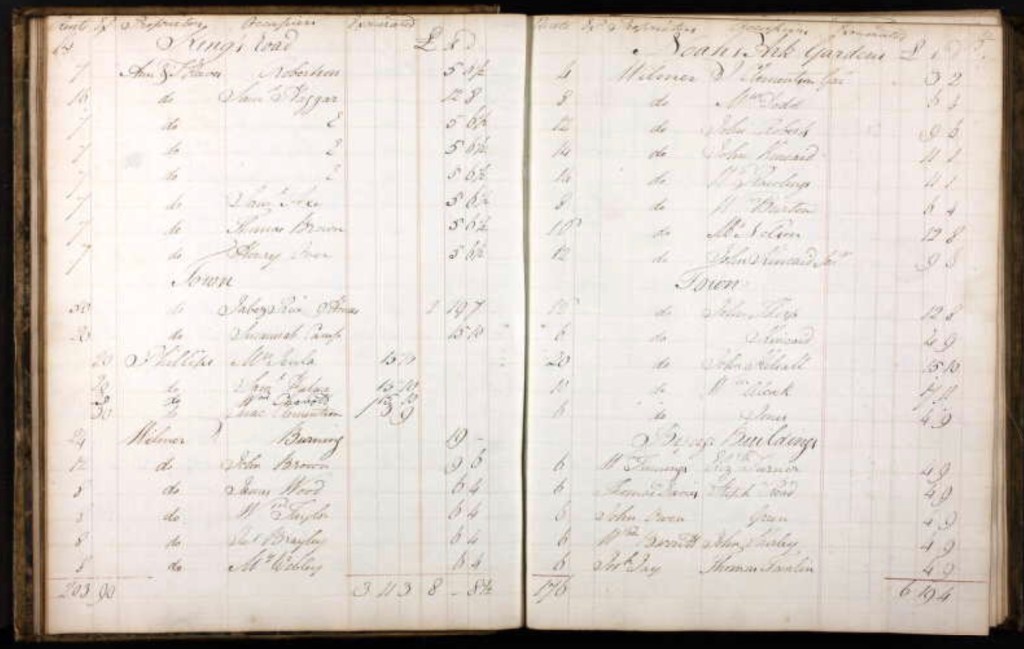
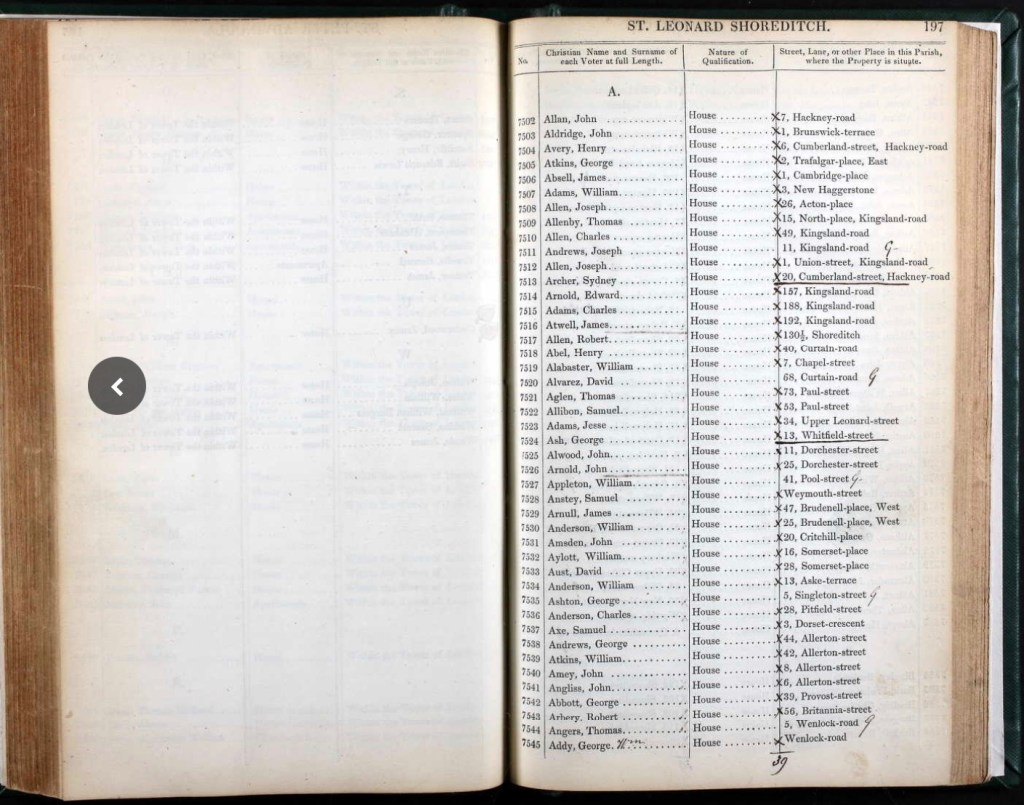
As a property owner, Samuel was eligible to vote and therefore appeared on the electoral registers, which confirm his address. 

Various documents describe Samuel’s occupation as ‘bricklayer’. In the first half of the nineteenth century a bricklayer was a builder, someone who designed and constructed houses. These houses could range from humble dwellings to huge city projects.

Colourised, Pitfield Street, Hoxton, London, 1896 – buildings built by Samuel? I love this image, it’s so full of life.

It would appear that all was not well with Samuel and Grace’s marriage because on 21 June 1816 Maria Hammont, single woman, petitioned the parish with the claim that ‘Samuel Axe, bricklayer of Hoxton Town gained carnal knowledge of her body.’ Maria gave birth to a bastard female on 12 May 1815 at her mother’s house in Hoxton Fields. The outcome of her petition was not recorded. However, Samuel was a wealthy man so hopefully he supported his child.

Samuel died on 26 November 1838 in Shoreditch, London and was buried on 2 December 1838. 

My direct ancestor, Jane Esther Axe, who lived in the same street as Samuel and Grace, was the sole executrix of Samuel’s will. Samuel left £600, approximately £40,000 in today’s money, which suggests he was successful in his trade.

On 17 January 1845 Samuel’s youngest son, John, paid £5 to acquire the ‘Benefits of a Fellowship Porter’. In other words, he could trade in ‘measurable goods’ such as coal, grain, flour and salt, overseeing their transportation from trading ships to dockside warehouses. This was a good position with the opportunity to make considerable sums of money.

The above records suggest that the Axe family lived in comfort during the first half of the nineteenth century. However, only five of Samuel’s eight children survived into adulthood.

As ever, thank you for your interest and support.

Hannah xxx

Categories
Dear Reader

Dear Reader #47

Dear Reader,

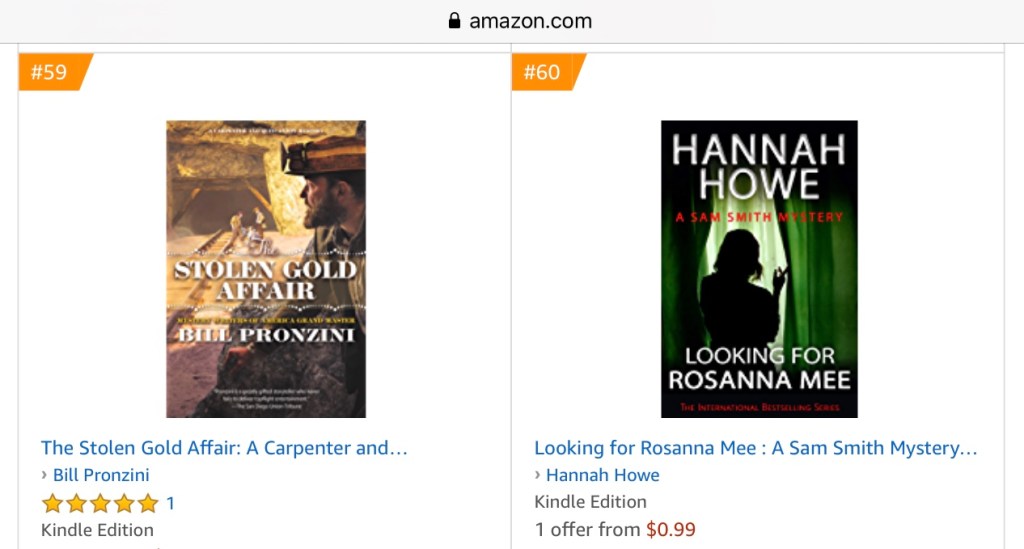
This is exciting, Looking for Rosanna Mee, which is published in September, is a Hot 💯 new release sitting alongside the legendary Bill Pronzini 🙂

https://www.amazon.com/Looking-Rosanna-Mee-Smith-Mystery-ebook/dp/B086C624BC/

I suspect this will be my book statistic of the week, my sales on Kobo are up exactly 1,000% (!) 🙂

https://www.kobo.com/us/en/search?query=hannah%20howe&fcsearchfield=Author

A busy week with audiobooks with five in production: Smoke and Mirrors, Stardust, Digging in the Dirt, Boston and The Devil and Ms Devlin, all in the Sam Smith Mystery Series. It’s always fascinating to hear how narrators interpret your words and it’s always great to work with other creative people.

Here’s some we made earlier https://hannah-howe.com/audio-books/

My Author of the Week, Val Tobin

As part of the Authors Give Back sale where authors support readers during this difficult time Val Tobin is offering her books for free and at 60% off the recommended retail price.

Nothing is more glorious than finding a book that keeps you turning pages to discover what happens next. Val Tobin’s stories will do just that. Take a journey with characters who will inspire you, intrigue you, and entice you to read just one more chapter.

https://www.smashwords.com/profile/view/valtobin

The Chocolate Egg and the Router

Earlier this week, I lost my Internet connection. An engineer was due today, so yesterday evening I decided to tidy the living room to make space for him. And guess what I found? In a corner inaccessible to man or beast, the router plug was sitting on the floor. I plugged it in and within ten minutes our Internet was restored.

So, how did the plug get on to the floor? As unlikely as it sounds it seems that one of my children reached for an Easter egg, knocked a small 5.1 music speaker off the shelf, the speaker landed on the plug and knocked it out of the socket. Throughout this a light remained on the router – it’s fed by two sockets – and the corner is inaccessible except for the plug sockets so no one thought to look there.

I told the engineer there was no need to call because I’d fixed the problem. Doubtless, he was impressed. However, I didn’t tell him how I did it 😉

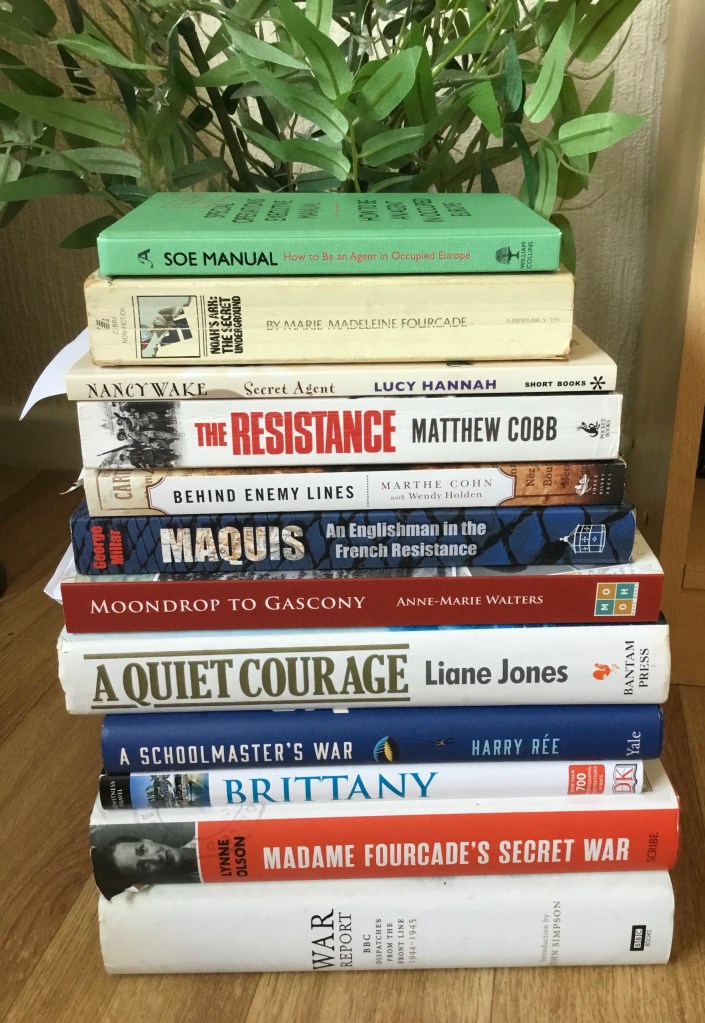
My current reading list for Eve’s War

Madame Fourcade was an amazing woman. Forget de Gaulle, Madame Fourcade was the real leader of the French Resistance. She was the one who rolled up her sleeves and got stuck in when it came to fighting the fascists.

Most of my Eve’s War series is set in Brittany, hence the need to top up my knowledge of that region.

After the war, Ann-Marie Walters established a career in literature and her book is the best written account of an SOE agent’s experiences in France.

“I’m very nervous, but patient. It’s a funny mixture really and you need that for radio work. You need the patience to do the coding and decoding. You need the resourcefulness of nervousness to be able to decide to go on if you think somebody’s listening in (the Gestapo used to listen in to transmissions in vans disguised as Red Cross vehicles) or to cut off and ask for another sked (transmission schedule).” – Yvonne Cormeau.

Yvonne was the ‘fastest finger in France‘. She transmitted Morse code messages at a rate of twenty words a minute (the average was twelve words a minute) and she sent more messages than any other female SOE wireless operator.

https://hannah-howe.com/eves-war/yvonne-cormeau/

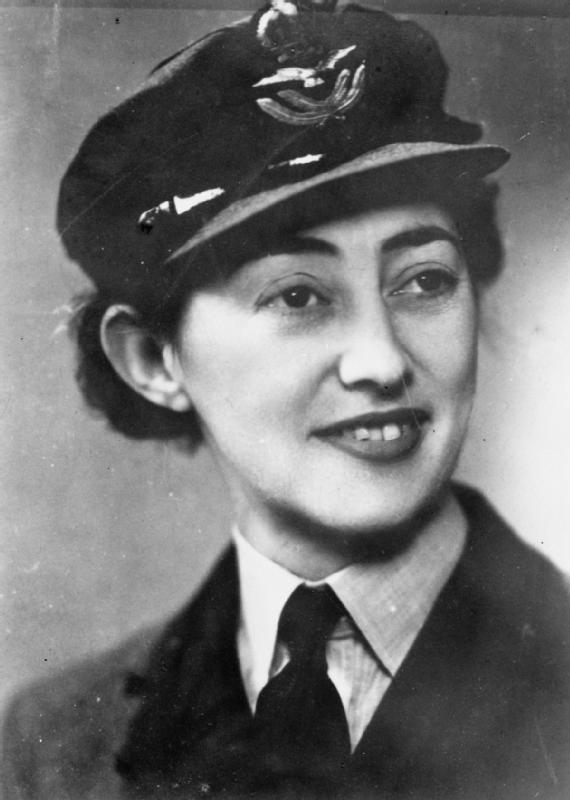
In 1944, SOE agent Anne-Marie Walters, pictured below, had a narrow escape when travelling by train to Condom via Tarbes. A Gestapo officer approached to search her cases, which contained small arms and demolition equipment. However, a young woman with two babies, unknown to Anne-Marie, but sensing danger, created a fuss over the Gestapo searching her bags. In the commotion, the Gestapo officer didn’t search Anne-Marie’s cases. When he left the carriage, the young woman offered Anne-Marie a smile of understanding. In that moment she had saved Anne-Marie’s life.

On another occasion, Anne-Marie found herself at a bus stop facing a snap search. While one fascist inspected her (false) documents another searched her handbag and pulled out a crumpled ball of toilet paper. Anne-Marie blushed at the sight and the fascist returned the toilet paper to her handbag. That toilet paper contained thirty coded messages. The BBC broadcast these messages at set times during the day. They carried instructions for the Resistance, informing them of arms drops via parachute, details of other networks and most famously of all the timing of the D-Day invasion. The code for that message was the first stanza of Paul Verlaine’s poem “Chanson d’automne”. The first part of the stanza, Les sanglots longs des violons de l’automne (“the long sobs of the violins of autumn”) indicated that the invasion would begin within 24 hours; the second, Blessent mon cœur d’une langueur monotone (“wound my heart with a monotonous languor”) was the specific call to action.

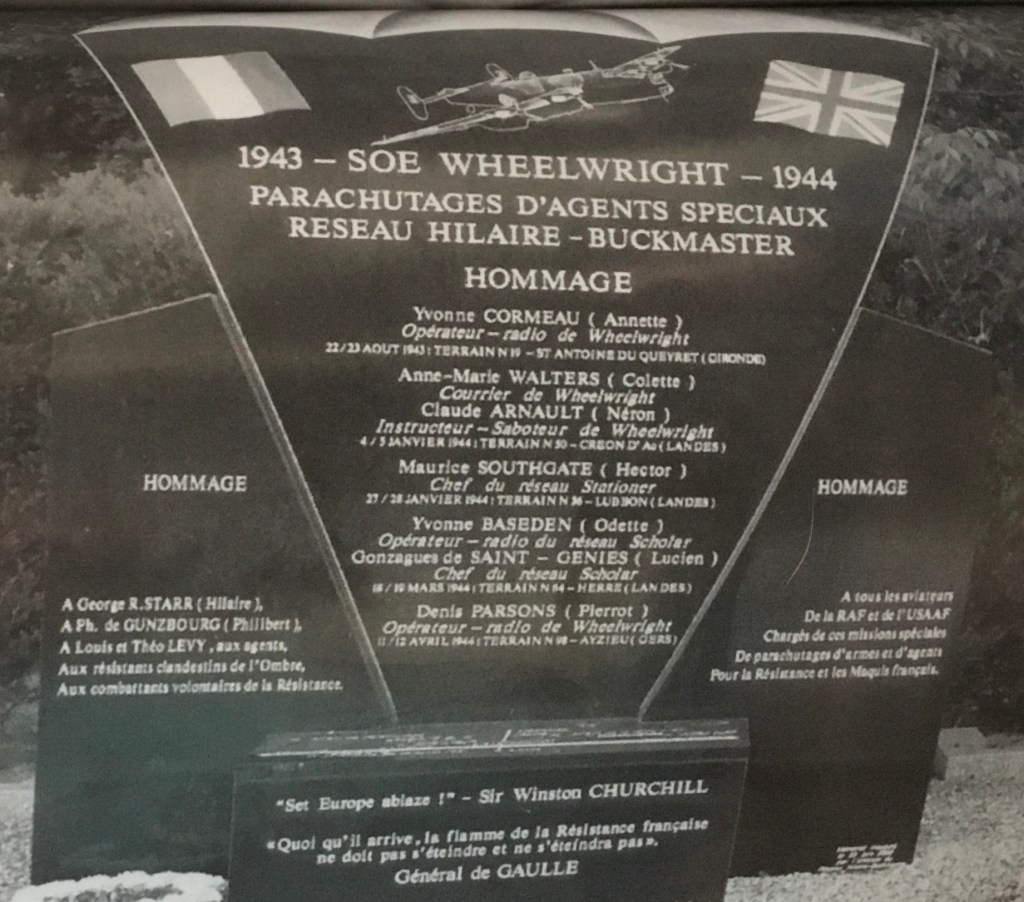
A memorial to the SOE agents of the Wheelwright network in Lapeyrade, Landes. Yvonne Cormeau, Anne-Marie Walters and Yvonne Baseden have featured on my website.

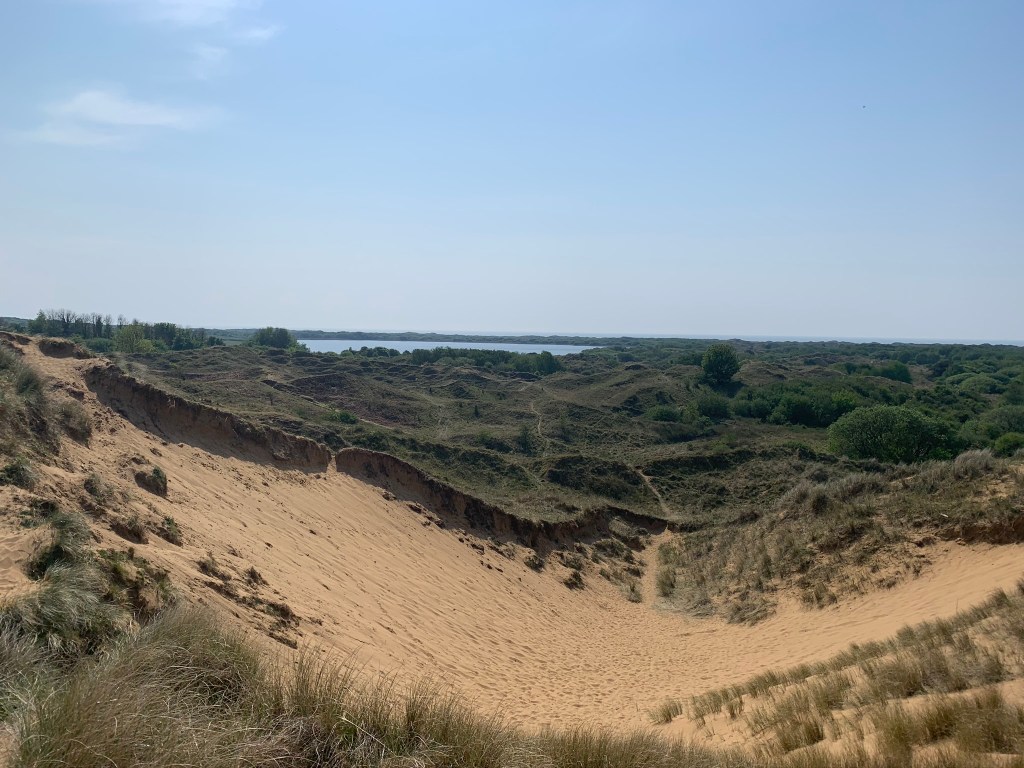
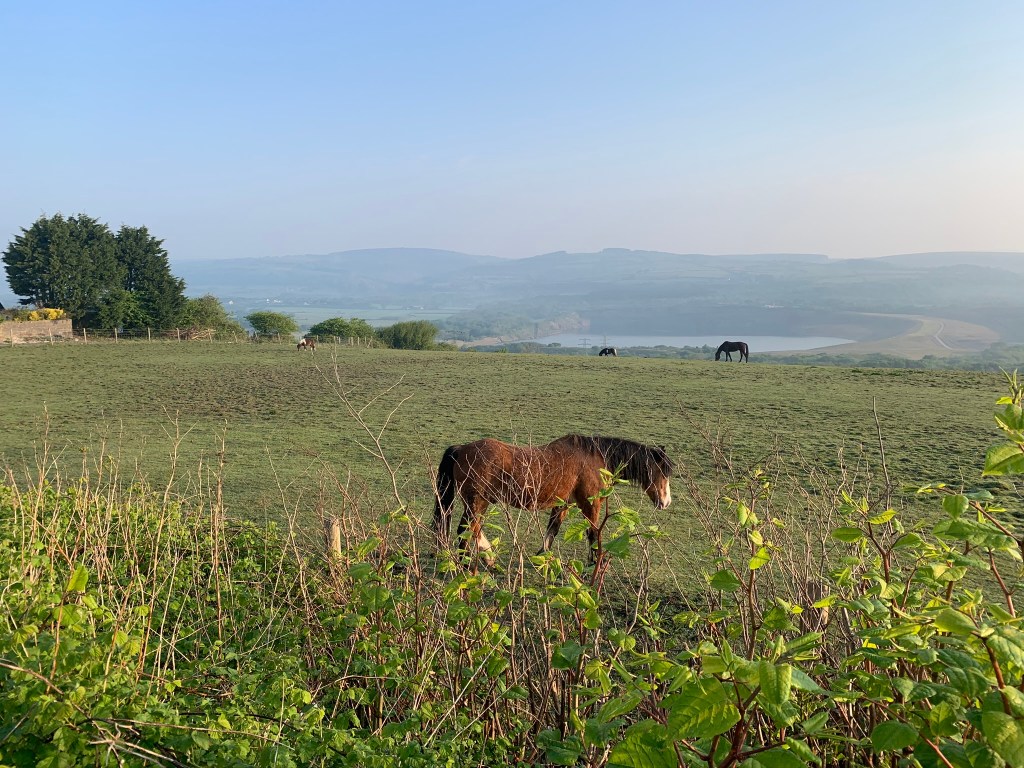
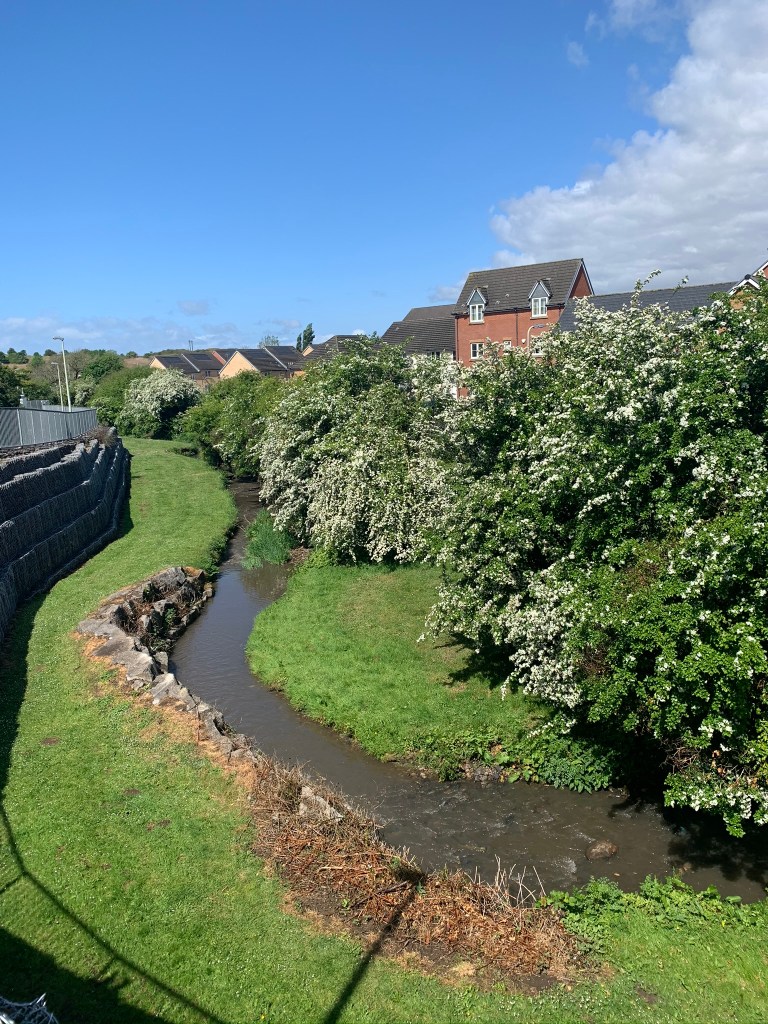
Pictures taken near my home in South Wales this week: Kenfig, Mawdlam, Cefn Cribwr, the Goylake River, Kenfig and Ballas

Women of Courage Heroines of SOE

SOE agent Eileen Mary “Didi” Nearne was born on 15 March 1921 in London to an English father, John, and a Spanish mother, Marie. She was the youngest of four children while her elder sister, Jaqueline, and her brother, Francis, also became SOE agents.

In 1923, the family moved to France where Eileen became fluent in French. After the German invasion in 1940, Eileen and Jacqueline followed the well-worn path to London via Barcelona, Madrid, Lisbon, Gibraltar and Glasgow, while their parents and brothers remained in Grenoble.

Eileen Nearne

In Britain, the SOE soon identified Eileen’s talents. Initially, she worked as a signals operator decoding secret messages, often written in invisible ink, received from agents in the field.

After a period of training, on 2 March 1944, Eileen arrived via Lysander in Les Lagnys, Saint-Valentin. Her mission was to work as a wireless operator for the Wizard network. She also organised sources of finance for the Resistance. Over five months she transmitted 105 messages, each one sent at enormous personal risk.

Coincidentally, Eileen’s organiser, Jean Savy, returned to Britain on 9 April 1944 on the same aircraft as her sister, Jacqueline, who had spent fifteen successful months in the field. Savy arrived in Britain with important information about the Nazi’s V1 rockets.

In July 1944, the Gestapo detected Eileen’s transmitter and arrested her. A period of barbarity followed, which included crude forms of inhuman treatment. Nevertheless, despite the torture, Eileen convinced the Gestapo that a businessman had hired her to send messages and that, at the time, she remained innocent of his British nationality.

In August 1944, the Gestapo sent Eileen to Ravensbrück concentration camp then on to Silesia. At the camps, the guards forced her into slave labour. However, she remained defiant and, despite more torture, refused.

Jacqueline Nearne

On 13 April 1945, Eileen escaped with two French women. Marching to another camp through the snow and dark they hid in a forest then travelled to Markkleeberg where the S.S. arrested them. However, they managed to fool the S.S. (it’s remarkable how many agents managed to do this) and with the aid of a priest they hid in Leipzig until the liberating Americans arrived a few days later.

It’s ironic that Eileen constantly lied to the Gestapo and, for the most part, the believed her. They regarded her as ‘a silly little French girl who was wasting their time.’ However, when she told the Americans the truth they didn’t believe her and it took some time before they handed her over to the British authorities.

After the war, Eileen suffered from what we now recognise as Post Traumatic Stress Disorder. Jacqueline cared for her and in 1997 she felt well enough to appear on a Timewatch television programme where she discussed her wartime experiences.

Eileen died in September 2010 aged eighty-nine.

As ever, thank you for your interest and support.

Hannah xxx