Categories
Dear Reader

Dear Reader #113

Dear Reader,

We are making great progress in translating all my books into Portuguese. Here is the latest addition, Stormy Weather, Sam Smith Mystery Series book eighteen. The theme of this story is the climate crisis.

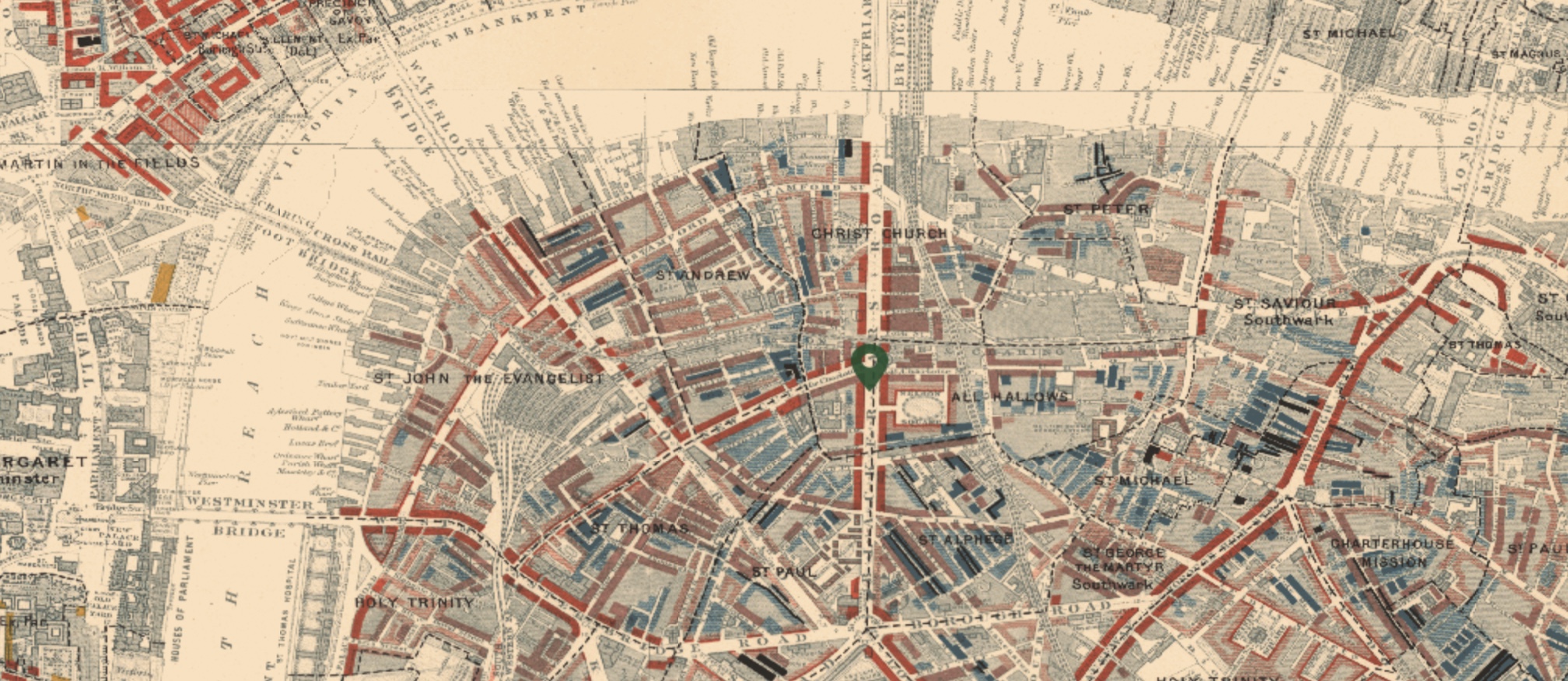
I’m researching my 4 x great grandparents, John Glissan and Sarah Foreman. John was a surgeon/dentist/chemist while Sarah was a nurse/dentist/chemist. In the 1830s they were living on Blackfriars Road, a prosperous street according to Charles Booth’s Victorian maps. Incidentally, my youngest son is thinking of becoming a dentist 🦷 
Just discovered that in the third quarter of the eighteenth century my ancestor Thomas Glissan subscribed to ‘Essays and Poems, Satirical, Moral, Political, and Entertaining’, by J.S. Dodd, which is still available.

In this month’s issue of Mom’s Favorite Reads eMagazine…

Bushcraft and Survival Skills

The Olympics

Side Benefits of Writing

World Honey Bee Day

Plus photography, puzzles, poems, recipes, short stories and so much more!

My 11 x great grandfather William Dent was born into a life of privilege in 1627 in Ormesby, Yorkshire. He married Elizabeth Jarrett on 16 July 1650 and the couple produced four sons: Robert, John (my direct ancestor), Charles and Edward, who sadly died in infancy. Robert entered Jesus College, Oxford on 28 May 1672 as ‘Robert Dent, son and heir of William Dent of Guisborough, gent.’ In July 1674, after college, Robert was admitted to the Middle Temple. 

In 1673 the Hearth Tax returns for Guisborough listed 214 households of which only twenty-one were taxed for possessing four or more hearths. William Dent’s property had nine hearths, which offers an insight into its grandeur. In later life William moved to Sunderland where he died in 1698.

The Dent branch of my family continued with John, son of William, William, John, George, William and Thomas Thompson Dent (11 February 1781 – 10 November 1854). By the eighteenth century the Dent family owned a number of properties throughout the North East of England. They farmed these properties as yeomen. 

John Dent, father of George, was born on 16 June 1700 in Romaldkirk, Yorkshire, the family’s main residence. Romaldkirk is a village in Teeside. It’s thought that its unusual name derives from St Rumwold, an obscure Saxon saint.

On 7 September 1715 John Dent became an apprentice merchant tailor to Peter King of York. Trade directories reveal that the Dents did branch out into the clothing trade with stores in Leeds. They also held on to their lands in Yorkshire.

John Dent’s Apprentice Indenture and signature

Thomas Thompson Dent married Betty Brown on 12 April 1806 in Bowes, Yorkshire. The couple produced six sons: Thomas Thompson Dent (my direct ancestor), John, William, George, Henry and Richard. 

In September 1842 Isabella Hutchinson was brought before the court and charged with stealing oats from one of Thomas Thompson Dent’s fields. Isabella cut off the ears of corn as they were growing. The case was proved and she was sentenced to one month’s hard labour in Northallerton gaol.

A contemporary newspaper report

In 1851 Thomas was seventy years old and a widower farming 200 acres in Lartington near Romaldkirk. His sons John, George and Richard, 42, 38 and 32 respectively, lived with him. All three were unmarried. A fourth son, Henry, had moved away from the family home. Three servants also lived on the farm: Mary Brunskill, 32, Sarah Langstaff, 25, and Joseph Minto, 22. Between master and servant events now took a romantic turn.

In 1840 the trade directories listed Richard Dent as a flour dealer no doubt trading in the crops grown at his father’s farm. Meanwhile, Sarah worked as a servant on the farm. The couple fell in love and married on 14 March 1857 in Romaldkirk. This was unusual for the Victorian era where there are plenty of examples of masters taking advantage of servants, but fewer instances of those encounters resulting in marriage.

Richard and Sarah’s marriage produced three children: Elizabeth, Mary Ann and Richard Thompson Dent. Sadly, Richard died in 1866, the year his son was born. 

Sarah lost her husband, but inherited a small fortune – the equivalent of £93,000 in today’s money. Sarah sold the farm and lived off her inheritance until her death in 1891. Despite her status of ‘highly desirable widow’ she didn’t remarry, maybe out of affection for her late husband. Certainly, her job as a humble servant on the Dent farm had turned her life around and placed her in a position where, financially at least, she had no reason to worry ever again.

Richard Thompson Dent, Richard and Sarah’s son, became a chemist in Barnard Castle, a highly successful chemist, for he left the equivalent of £235,000 in his will.

Thomas Thompson Dent’s will of 1854 bequeathed a farm in Cotherstone to his son John, another farm in Bowes to William, a third farm, also in Bowes, to Henry, and a fourth farm, again in Bowes, to Richard. Money, farming equipment and household utensils were also divided between the four sons.
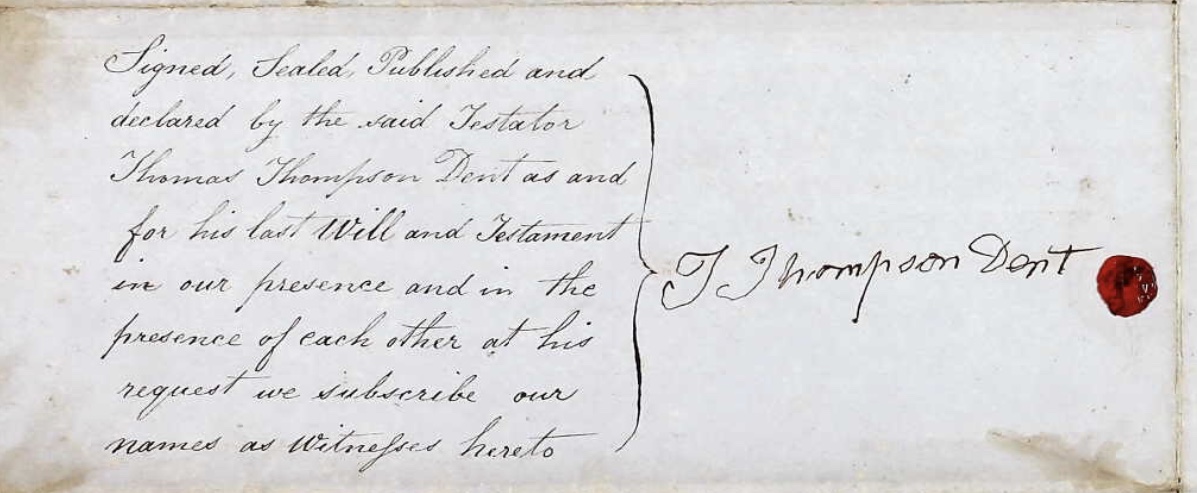
Extract from the will of Thomas Thompson Dent and his frail signature 

But what of Thomas’ son and my direct ancestor, Thomas Thompson Dent Jr? Why didn’t the will mention him? The reason is Thomas Jr, his wife Dorothy Hornsby and their five children had set sail for New York en route to Canada, arriving on 24 June 1846. More about them next time.

As ever, thank you for your interest and support.

Hannah xxx

Bestselling psychological and historical mysteries from £0.99. Paperbacks, brand new in mint condition 🙂
https://hannah-howe.com/store/
Categories
Dear Reader

Dear Reader #112

Dear Reader,

My latest translations, both in Portuguese. A very busy time with the translations and soon all my books will be available in Portuguese.

In the Victorian era ships’ manifests had a section ‘Died on the Voyage’, which doesn’t inspire much confidence 😱

A part-time, flexible hours job offer from Publishing Wales.

“Good news! We’ve extended the deadline to apply for our brand new administrative role. Help shape Publishing Wales / Cyhoeddi Cymru, as we start this exciting journey.

Job description and further details below. Apply by 9th August.”

https://www.cyhoeddi.cymru/jobs

My 6 x great grandfather John Cottrell was a cordwainer and shoe shop owner in Leather Lane, London. On 2 December 1830 at 12.30 pm a ten year old boy, John Hagan, walked into his shop and stole a pair of shoes, value 5s. Twelve days later John Hagan appeared at the Old Bailey accused of theft. The verdict: guilty.

However, John pleaded that he had no father and that his mother was in great distress. The judge, Mr Sergeant Arabin, took pity on John and respited the judgement, a rare case of leniency in an age when ‘justice’ was often cruel.

I am related to Geoffrey Howe, Baron Howe of Aberavon, CH, PC, QC, the deputy prime minister in Margaret Thatcher’s government, 1989 to 1990. Our mutual ancestor is John Howe of St Hilary, Glamorgan (1786 – 1856) ironically, a thatcher.

By 1799, the Napoleonic wars had taken their toll on Britain. The British royal treasury was running out of money to maintain the army and navy. Soldiers were starving and His Majesty’s navy had already mutinied. For Prime Minister William Pitt the Younger, the solution was simple: impose an income tax. Under the Act of 1799, all citizens who earned above £60 were to pay a graduated tax of at least one percent. Those with an income of over £200 were taxed ten percent. Some people regarded the tax as a patriotic duty while others complained. I don’t know what my 5 x great grandfather John Howe thought of the taxes, but their imposition forced him off the land into employment as a thatcher.

In 1799, not everyone was thrilled to pay their taxes.

John’s son, Edward, was also a thatcher. However, with his wife Rachel and their five children, Edward moved twenty-two miles west to Aberavon to ply his trade.

The fact that Edward employed a domestic servant suggests that he was successful in his business. However, this success did not influence his son, also Edward, who became a washman in the local tinplate and silver works. This begs the question: how did the grandson of a tinplate worker become a Conservative MP and deputy prime minister? The answer lies in understanding the Howe family and its traits.

In the 1600s and 1700s our ancestors Joseph, John and John Howe were landowners, churchwardens, Petty Constables and Overseers of the Poor, pillars of St Hilary society. In 1797, John the latter paid 2s 6d to ‘ten men in distress coming from the sea’ while in 1753 John the former made a payment of £1 17s 6d for the making and binding of Bibles, 1s for attending a coroner’s inquest and 7d for a pair of male stockings. He also awarded payments of a few pence to ‘the little boy of whom nothing else is known’.

John Howe’s account of 1753, written in his own hand.

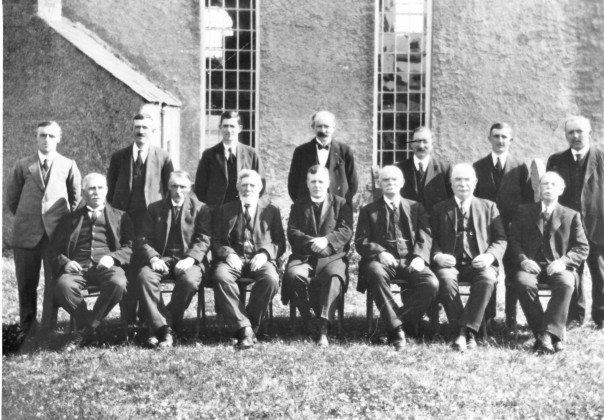
In the 1800s my 2 x great grandfather William Howe was a deacon of the local Methodist chapel and Headman of the village, in effect chairman of the village council, assisting the villagers with community problems and organising local events. Important to note that all these relatives were bilingual and immersed in Welsh culture with its distinctive, community-based, way of life.

Elders of Capel-y-Pil, c1930. William is seated, third from left.

For the Howes, a desire to serve the community as public servants ran deep. Geoffrey Howe inherited this trait. But how did he make the leap from the tinplate works to Downing Street? The words of a Labour prime minister, Tony Blair, come to mind, “Education! Education! Education!” Through education, Benjamin Edward Howe, Geoffrey’s father, transformed the family’s fortunes.

The son of Edward Howe and Hannah Evans, Benjamin Edward Howe was born on 3 December 1888 in Margam, Glamorgan, ‘a dirty little town’ according to contemporary chroniclers. That dirt was generated by the heavy industry and blast furnaces that dominated the area during the Victorian era.

In 1901, Benjamin was a scholar living with his parents and older sister Elizabeth. Many industrialists were far-sighted and opened schools in association with their factories. For example, Margam Tinplate Infants School opened in 1850. Benjamin attended the school and excelled in his studies.

Ten years later, aged twenty-two, Benjamin was a law student soon to qualify as a solicitor. From this point, his life moved on apace. On 1 May 1913 he became a member of the United Grand Lodge of Freemasons. In 1923 he married Eliza Florence Thompson and three years later the couple produced a son, Geoffrey. By 1939 Benjamin had established himself as a solicitor and the Coroner for West Glamorgan. His sister, Elizabeth, had also done well for herself; she was a headmistress.

Benjamin, a Freemason at Afan Lodge.

During the Second World War, Eliza upheld the family’s sense of civic duty by performing the role of Central Leader for Women Services for Civil Defence. Meanwhile, Geoffrey attended Abberley Hall School in Worcestershire, a co-educational preparatory day and boarding school teaching 150 pupils. The actor Sir Anthony Quayle and the author Antony Beevor also attended this school.

Benjamin died on 27 July 1958. In his will he left the equivalent of £252,000 in today’s money. By this time Geoffrey had married Elspeth Shand and established himself as a barrister-at-law.

As a child in the late 1970s I met Geoffrey Howe at a family gathering, a christening. In all truth, I have no memory of that event. I do recall that later, in the 1980s, whenever Geoffrey Howe appeared on television a member of the family, usually my father, would remind us that he was a relative, a ‘cousin’, the catch-all description for any relative who lived outside our immediate household. 

In the Victorian era and early twentieth century the Howes were Liberals, supporting the local candidates. That support drifted further left as the Labour Party and its ideas took a firm grip on the South Wales Valleys. Therefore, in family terms, Geoffrey was an outsider.

Many members of my family hated Margaret Thatcher because of the destruction she wrought on the Valleys, particularly the mining communities. However, they always maintained their respect for Geoffrey believing him to be a man of honour and principle. As events transpired with Geoffrey’s resignation on 1 November 1990 triggering Margaret Thatcher’s resignation three weeks later that family loyalty and belief were not misplaced.

I wonder what Geoffrey would make of Boris Johnson and his government. I sense that he would detest the man and all he stands for. Furthermore, he would not recognise the Johnson government as a Conservative administration.

Geoffrey Howe

Geoffrey Howe was Margaret Thatcher’s longest-serving cabinet minister, holding the posts of Chancellor of the Exchequer, Foreign Secretary, Leader of the House of Commons, Deputy Prime Minister and Lord President of the Council. In many ways, he embodied 400 years of Howe history. 

Obituarists stated that Geoffrey Howe was ‘warm and well liked by colleagues’ and was ‘one of the kindest and nicest men in politics’. While Andrew Rawnsley of The Observer noted that fellow politicians regarded Geoffrey Howe as ‘one of the most honest and decent practitioners of their profession.’

I have never voted Tory and cannot envisage a situation where I would vote Tory. Nevertheless, I am proud to regard Geoffrey Howe as an ancestor.

As ever, thank you for your interest and support.

Hannah xxx

Bestselling psychological and historical mysteries from £0.99. Paperbacks, brand new in mint condition 🙂
https://hannah-howe.com/store/
Categories
Dear Reader

Dear Reader #111

Dear Reader,

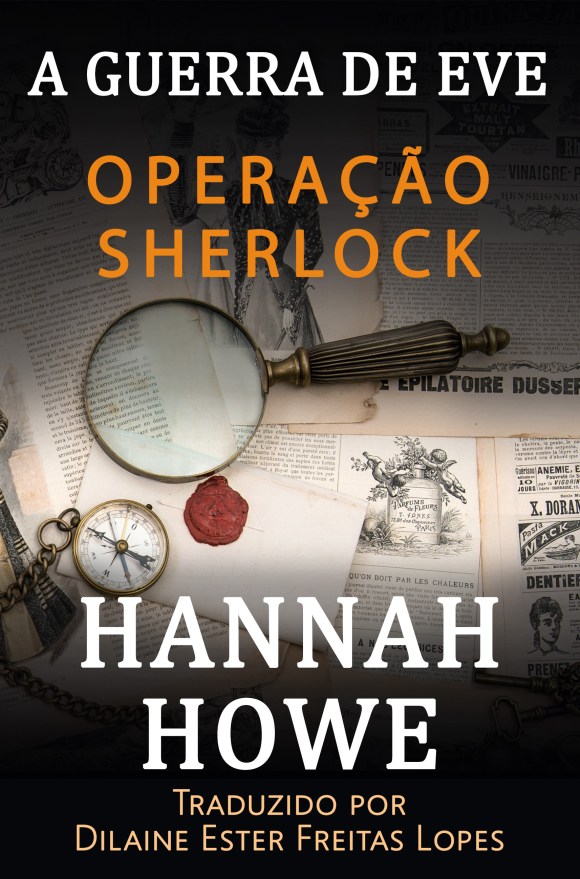
My latest translation, the Portuguese version of Operation Locksmith in my Eve’s War Heroines of SOE series. Ana is already hard at work on two new translations: Snow in August in my Sam Smith Mystery Series and Branches in my Olive Tree Spanish Civil War series. It‘s always a privilege to work with talented translators.

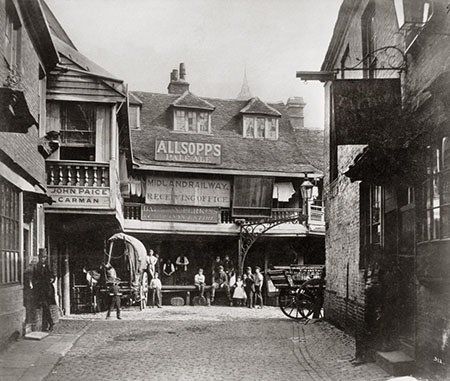
Tabard Inn, Talbot Yard, Southwark before demolition in 1875, a familiar landmark for my London-based ancestors.

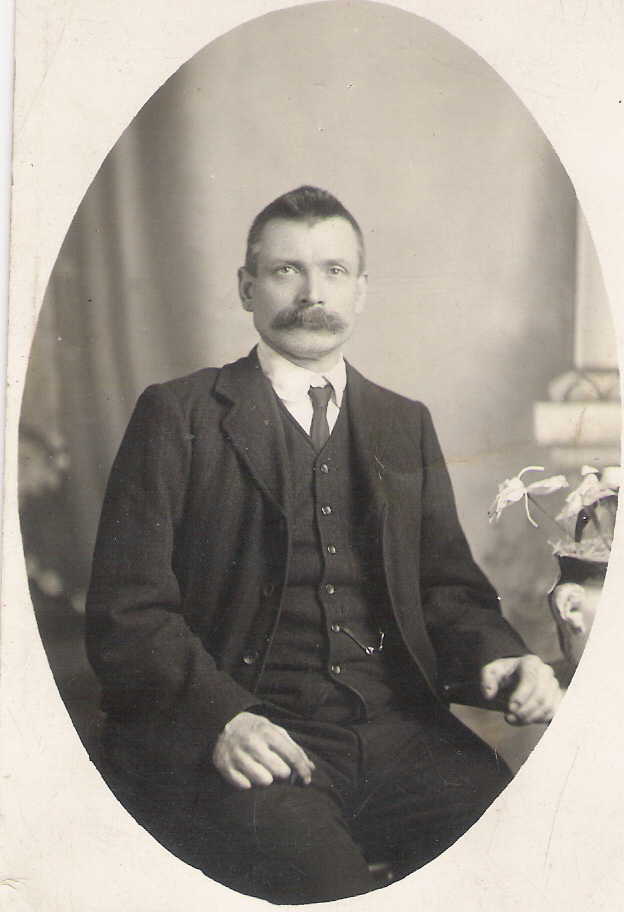
To date, I haven’t discovered any pictures of my 3 x great grandfather Thomas Jones, but here is his brother and my grand uncle Richard Morgan Jones 1874 – 1954. Bilingual, Richard was a coal hewer in the Rhondda Valley. I love the pride in his pose.

William Axe, my 6 x great-grandfather, was a Waterman to the Preventive Officers, overseeing the trade and potential smuggling that occurred on the River Thames. Here he features in The Times on 19 August 1789 in regard to a change in a by-law to allow a parcel of gold, rupees and dollars into the city.

The Mansell branch of my family tree begins with Philip Mansell, born c1040 in Normandy. Philip arrived in Britain with William the Conqueror in 1066 and established a manor in Buckinghamshire. 

In 1067, Philip married Demoiselle de Mountsorrell, whose family had settled in Leicestershire. The marriage increased Philip’s lands and also blessed him with five sons, including my direct ancestor Henry.

Philip was cup-bearer to William the Conqueror, a responsible position – Philip had to ensure that no one poisoned the Conquerer. His name was recorded on the Roll of Battle Abbey, confirming his participation in the Conquest. Indeed, Wace in his Chronicles of the Conquest wrote: ‘Then the Duke called in his good neighbours, the Britons, the Mansells, and Angevins, and those of Pontif and Boulogne.’

The surname Mansell originates from La Manche or Le Mans, with arguments in favour of either option. From Normandy, the name and family spread and within 200 years they reached my corner of Wales.

Bayeux Tapestry. Scene 57: the death of King Harold at the Battle of Hastings. Titulus: HIC HAROLD REX INTERFECTUS EST (Here King Harold is slain).

The Mansell branch of my family continued with Henry born in Buckinghamshire, c1068, who married Emma de Lucy. Emma’s brother, Sir Richard de Lucy, was Chief Justice of the Realm. Henry and Emma produced John Mansell who married Elaine de Lutterell. Their son Ralph married Cecilia Pagnell and they produced my direct ancestor, Sir Robert Mansell.

At this time, 1136, the family were still based in Buckinghamshire with estates in various corners of the country. In 1163, Sir Robert attacked and defeated Sultan Nouradin at La Bochen near Tripoli. On his return from the Crusade he married Joyce de Alneto.

The Alneto branch of my family connects with Charles Carolingian – Charles III King of Western France – Godefrid of Denmark and Arnulf of Flanders, c890 – 28 March 965.

The son of Count Baldwin II of Flanders and Ælfthryth of Wessex, daughter of Alfred the Great, Arnulf, also known as the Great, was the third Count of Flanders. He ruled the County of Flanders, an area now in northwestern Belgium and southwestern Netherlands.

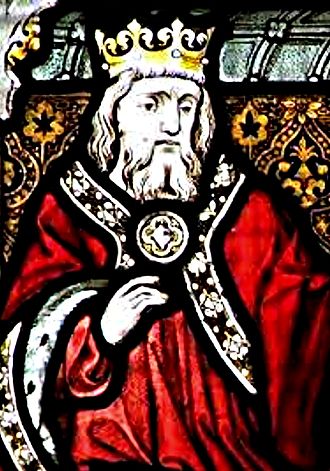
Arnulf, Count of Flanders

Through his mother, Arnulf was a descendant of the Anglo-Saxon kings of England, and through his father, he was a descendant of Charlemagne. Presumably Arnulf was named after Saint Arnulf of Metz, a progenitor of the Carolingian dynasty.

At the death of their father in 918, Arnulf became Count of Flanders while his brother Adeloft or Adelolf succeeded to the County of Boulogne. However, after Adeloft’s death in 933, Arnulf took the countship of Boulogne for himself, although later he conveyed it to his nephew, Arnulf II.

Arnulf greatly expanded Flemish rule in the south, taking all or part of Artois, Ponthieu, Amiens, and Ostrevent. He exploited the conflicts between Charles the Simple and Robert I of France, and later between Louis IV and his barons.

The southern expansion resulted in conflict with the Normans who were trying to secure their northern frontier. In 942 this led to the murder of William Longsword, the Duke of Normandy, at the hands of Arnulf’s men. With William Longsword’s death, the Norman/Viking threat receded and during the later years of his life Arnulf focused on reforming the Flemish government.

In genealogy, a question arises: how far back is relevant to the people we are today? In some respects you could argue that there is no relevance, yet these people are our ancestors and we are only here because of them. Relatives we enjoyed direct contact with nurtured us. However, through our DNA our natures and personalities are formed and I feel that all our ancestors are relevant to the people we become.

The Mansell branch of my family continued with Walter who married Hawise de Somerie. Walter held the sergeantry of Little Missenden as Napkin Bearer to the King, Henry III. You might recall that Philip, the progenitor of the Mansell line, performed a similar duty for William the Conquerer, which underlines the long and close association this branch of my family enjoyed with the rulers of England.

As ever, thank you for your interest and support.

Hannah xxx

Bestselling psychological and historical mysteries from £0.99. Paperbacks, brand new in mint condition 🙂
https://hannah-howe.com/store/

Categories
Dear Reader

Dear Reader #110

Dear Reader,

A busy time with the translations. I have eighty books translated and ten in production: one in Afrikaans, one in French and eight in Portuguese. Thanks to my translators, it’s wonderful to see my books reaching an international audience.

The storyboard for Damaged, Sam Smith Mystery Series book nineteen, is nearly complete. The book will be published on 27 December 2021. Pre-order details to follow soon.

From the British Newspaper Archive, The Court Gazette and Fashionable Guide 27 March 1841, manslaughter at the age of 94.

James Inglett appeared in the 1841 census, living in Hemingford Grey workhouse where he died at the age of 98 in 1844.

– 0 –

Lambeth, c1860, a scene very familiar to the Noulton and Wheeler branches of my family.

My 4 x great grandfather James Richard Brereton was baptised on 22 December 1793 at St Dunstan in the West, London. His parents were Thomas Brereton and Sarah Wright of Shoe Lane, Fleet Street, London. 

The Brereton branch of my family originated in Cheshire and arrived in London in the mid-1700s through my 6 x great grandfather Sandford Brereton while the Wright branch of my family had their roots firmly in London.

James was the third born of nine children. In 1807 he became an apprentice cutler, learning the skills required for metalworking. Apprentices usually served a seven-year term and, as with James, commenced their learning at the age of fourteen.

The apprentice became an extra worker in the master’s household. He or she was subject to the absolute authority of the master and by the terms of their ‘indenture’ could not gamble, go to the theatre or a public house, play cards or dice, marry or fornicate. Little wonder that some of the apprentices ran away from their masters.

The indenture signed by James Brereton.

In 1814 James qualified as a cutler. He was unable to establish a business in London so he took to the road as a tinker, making and repairing pots and pans. Various documents also describe James as a metal beater and a gold beater. Obviously, he was adept at working with precious metals and forming them to match the needs of his clients.

On 17 May 1818 James married Ann Lowcock in Martock, Somerset. At the time, Martock, situated on the fringe of the Somerset Levels, was a large village with a regular market. Maybe James and Ann met at the market as he travelled from town to town, selling his wares.

All Saints’ Church, Martock. Picture: Wikipedia.

Ann was the youngest of ten children and her parents, Aaron Lowcock and Mary Ashelford, produced her late in their married lives. Ann was only seventeen at the time of her marriage. It is easy to understand her situation: her parents were elderly and she faced the prospect of being alone. James, the tinker, had a trade and that alone set him apart from the agricultural labourers in the village. For both parties, there was an obvious attraction in the match.

Based mainly in Bristol, in nineteen years James and Ann produced six children, a child born approximately every three years, whereas the standard for the time was a child born every two years. Their sixth child, Fanny, was my 3 x great grandmother. Sadly, James did not live to see Fanny’s birth. He died in the summer of 1837 while Fanny was born on 19 November 1837. 

A 19th century tinker. Photograph by Ignacy Krieger (1817-1889).

Retracing James’ footsteps, Fanny moved to London where she raised her family. She moved there with William Bick, a West Countryman. However, Fanny and William only married on 13 December 1868 when she was carrying his seventh child. Obviously, their relationship was not wholly dependent on their marriage vows.

A widow with a baby and young children to support Ann moved south to Portsmouth and Southampton where she stayed with relatives. It is interesting to note that Ann’s home life revolved around three major ports: Bristol, Portsmouth and Southampton, and the various employment opportunities these ports offered.

In Portsmouth, Ann met William Poole and the couple produced two children. At various times, they lived in the West Country and on the south coast as William travelled, selling his wares as a toy maker.

A widow again in 1870 Ann returned to the West Country where she spent the remainder of her days, passing away on 29 November 1882, aged eighty-one.

James died young and I wonder if working with metal, metal poisoning, was the cause of his death. A skilled man with a trade to call on he provided for his family and ensured that they lived above the poverty line.

As for Ann, she lived a long life for the time. She lost two husbands, and a child in infancy, a child called James. Sadly, this was expected in the Victorian era. Through necessity and choice she travelled throughout her married life. I wonder if her decision to marry James was tied in with a desire to break free of her rural surroundings and village life.

As ever, thank you for your interest and support.

Hannah xxx

Bestselling psychological and historical mysteries from £0.99. Paperbacks, brand new in mint condition 🙂
https://hannah-howe.com/store/

Categories
Dear Reader

Dear Reader #109

Dear Reader,

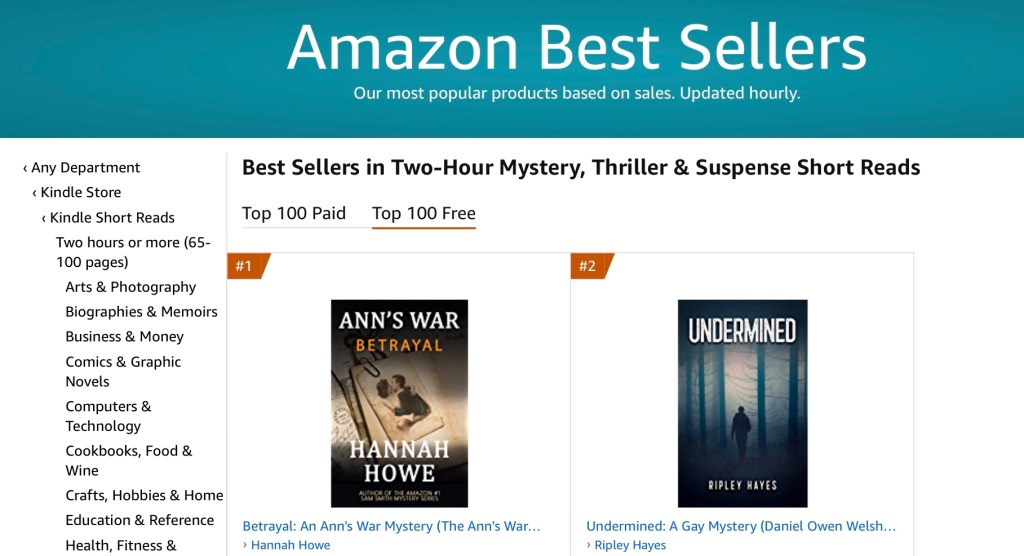
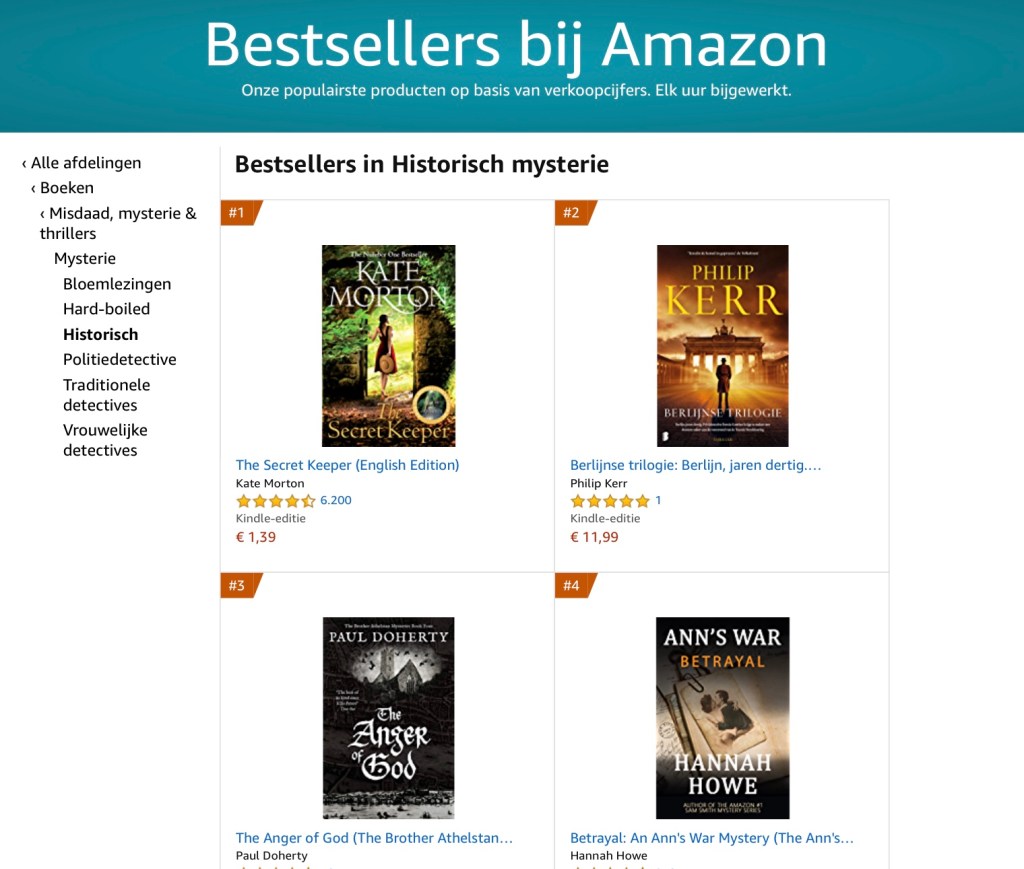
Betrayal at #1 in America this week and #4 in the Netherlands.

The ‘Welsh Tree of the Year’ at my local park, Margam.

My article about the amazing Nancy Wake appears in this month’s issue of the Seaside News.

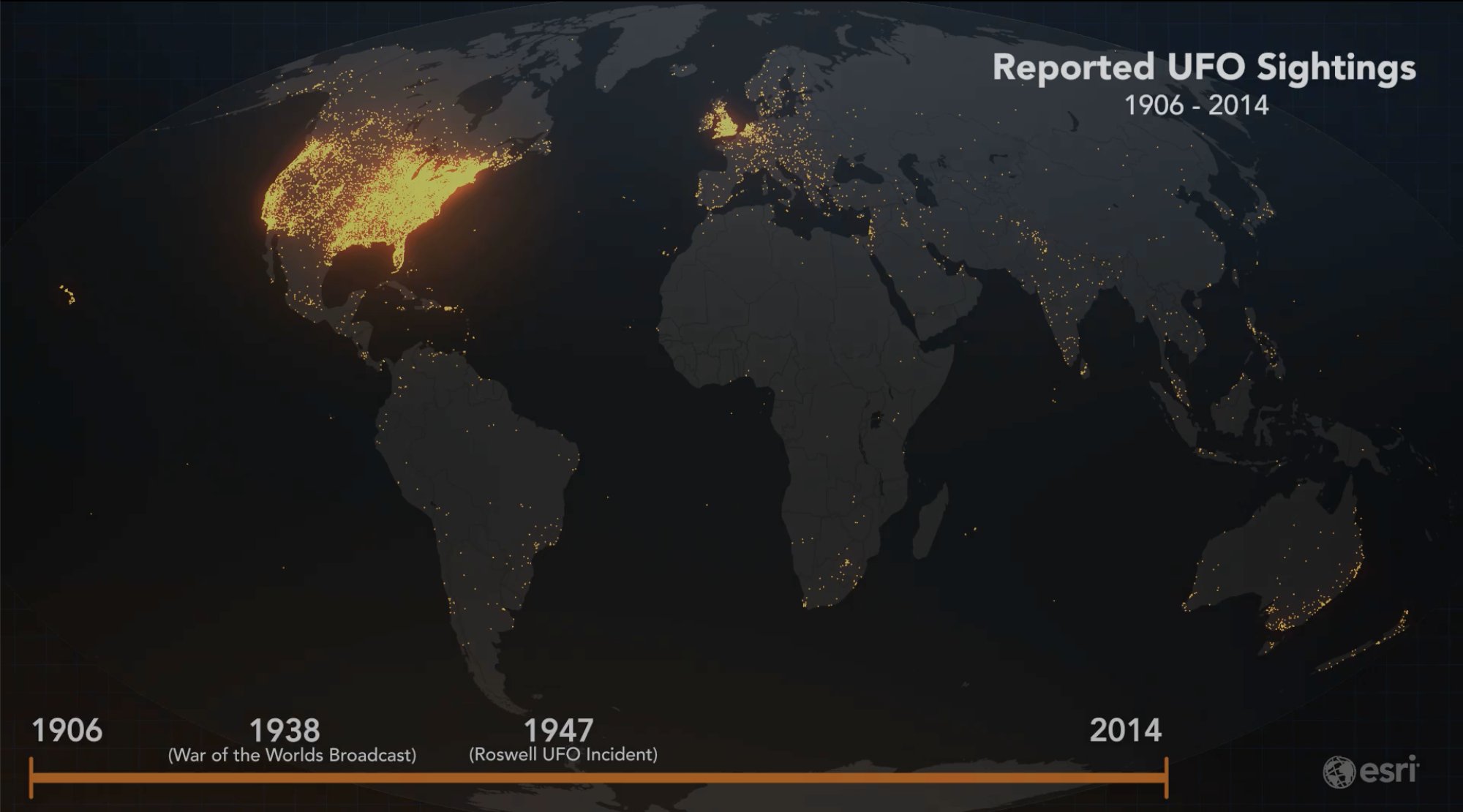
A map of all reported UFO sightings, 1906-2014. (Image: ESRI). Is there anybody out there…

Just discovered that my splendidly named ancestors Zephaniah Thorpe and Mary Discipline emigrated to New York City, arriving on 11 April 1838. Zephaniah was a sculptor specialising in marble. Maybe he worked on the pillars in this picture 🤔

A DNA test I took at Christmas 2020 established a link between a Morgan branch of my family and a Bevan branch. This in turn led to Barbara Aubrey, a gateway ancestor. A gateway ancestor is someone descended from royalty, the aristocracy, or landed gentry. Through Barbara Aubrey, and other gateway ancestors, I have discovered links to many of the noble households in Wales, especially in my home county of Glamorgan.

My direct ancestor, Gwladys ferch Dafydd Gam ‘the star of Abergavenny’ (1378 – 1454), was the daughter of Gwenllian ferch Gwilym and Dafydd ap Llewelyn ap Hywel, otherwise known as Dafydd Gam a man immortalised by William Shakespeare as Fluellen in Henry V.

Fluellen: “If your Majesty is remembered of it, the Welshmen did good service in a garden where leeks did grow, wearing leeks in their Monmouth caps, which your Majesty knows, to this hour is an honourable badge of the service, and I do believe, your Majesty takes no scorn to wear the leek upon St David’s Day.”

King Henry: “I wear it for a memorable honour; for I am Welsh, you know, good my countryman.”

The Battle of Agincourt, 1415. The Bridgeman Art Library.

Due to her discretion and influence, the poets compared Gwladys to the legendary Queen Marcia who was ‘one of the most illustrious and praiseworthy of women in early British history.’ Indeed, the poets sang Gwladys’ praises. ‘Gwladys the happy and the faultless. Like the sun – the pavilion of light,’ wrote Lewys Glyn Cothi. They also noted her beauty and luxurious dark hair.

Lewys Glyn Cothi (c1420 – 1490) was a prominent 15th century poet who composed numerous poems in Welsh. He was one of the most important representatives of the Beirdd yr Uchelwyr, ‘Poets of the Nobility.’ 

Lewys was a prolific poet, writing many celebratory poems and elegies. He was responsible for compiling much, if not all, of Llyfr Gwyn Hergest, the White Book of Hergest, which disappeared in the 19th century. He also added several poems to Llyfr Coch Hergest, the Red Book of Hergest, which is now in the National Library of Wales.

During Owain Glyndwr’s War of Independence, Gwladys served as Maid of Honour to Mary de Bohun (c1368–1394), wife of Henry IV, and afterwards she served Henry’s second wife, Queen Joan (c1370–1437). On her return to Wales, Gwladys married Sir Roger Vaughan of Bredwardine and from that day on she remained in her homeland.

Raglan Castle. Engraving, 1798.

The battlefield and royal politics proved tragic for Gwladys. At Agincourt, 1415, she lost her father, Dafydd Gam, and her husband, Sir Roger Vaughan. Later, at Easter 1456, her son Watkin was murdered at his home, Bredwardine Castle, while in 1469 two sons, Thomas and Richard (my direct ancestor) died at the Battle of Edgecote. In May 1472 a fourth son, Sir Roger Vaughan, was captured by Jasper Tudor and beheaded at Chepstow.

Gwladys’ second husband, Sir William ap Thomas of Raglan Castle, known as Sir William Herbert, also fought at Agincourt. Due to the colour of his armour, Sir William was nicknamed ‘The Blue Knight of Gwent.’

Gwladys’ first marriage produced five children, three boys and two girls, while her second marriage produced four children, two boys and two girls. All married into Welsh and English noble families: the Stradlings, Wogans, Vaughans, Devereauxs and Audleys. They also established the Herbert line, a branch of my family, one of the most influential families in medieval and post-medieval Wales.

In the Middle Ages, noble women were expected to obey their husbands, guard their virtue, produce offspring, and oversee the smooth running of their household. Good management skills were essential. Moreover, when her husband was away a wife’s role would increase substantially to the extent that she would assume control of her husband’s domain and even bear arms.

As Lady of Raglan Castle, Gwladys entertained her guests. She also assisted the needy and afflicted, and supported Welsh culture, especially the bards and minstrels. In Lewys Glyn Cothi’s elegy, he stated that Gwladys was ‘the strength and support of Gwentland the land of Brychan.’ 

Abergavenny Priory. Artist unknown.

Gwladys died in 1454. Along with her husband, Sir William ap Thomas, she was a great patron of Abergavenny Priory and an alabaster tomb along with effigies of the couple can still be found there.

According to legend, Gwladys was so beloved by her people that 3,000 knights, nobles and weeping peasantry followed her body from Coldbrook House (her son Richard’s manor) to the Herbert Chapel of St. Mary’s Priory Church where she was buried.

Born into privilege, Gwladys used her position to support the poor and vulnerable, and the arts. And for that she earned her people’s eternal love and respect.

As ever, thank you for your interest and support.

Hannah xxx

Bestselling psychological and historical mysteries from £0.99. Paperbacks, brand new in mint condition 🙂
https://hannah-howe.com/store/