Categories
Dear Reader

Dear Reader #124

Dear Reader,

I’m researching the Victorian era and my poverty-stricken London ancestors. This is a view of Whitehall from Trafalgar Square, 1839. Produced by M de St Croix, it’s one of the earliest daguerreotype photographs of England, taken when M de St Croix was in London demonstrating Louis Daguerre’s pioneering photographic process during September and December 1839. 

In the foreground is Le Sueur’s statue of Charles I on horseback, and in the distance Inigo Jones’ Banqueting House – practically everything else has subsequently disappeared. The image has been reversed to show the scene as it was, as daguerreotypes only produce reversed views.

My direct ancestor Joan Plantagenet, daughter of Edward I of England and Eleanor of Castile. Joan was born in April 1272 in Akko (Acre), Hazofan, Kingdom of Jerusalem.

Joan has appeared many times in fiction, often depicted as a ‘spoiled brat’.  There is no evidence that this depiction represents her true character, but the myth remains. That’s the power of fiction.

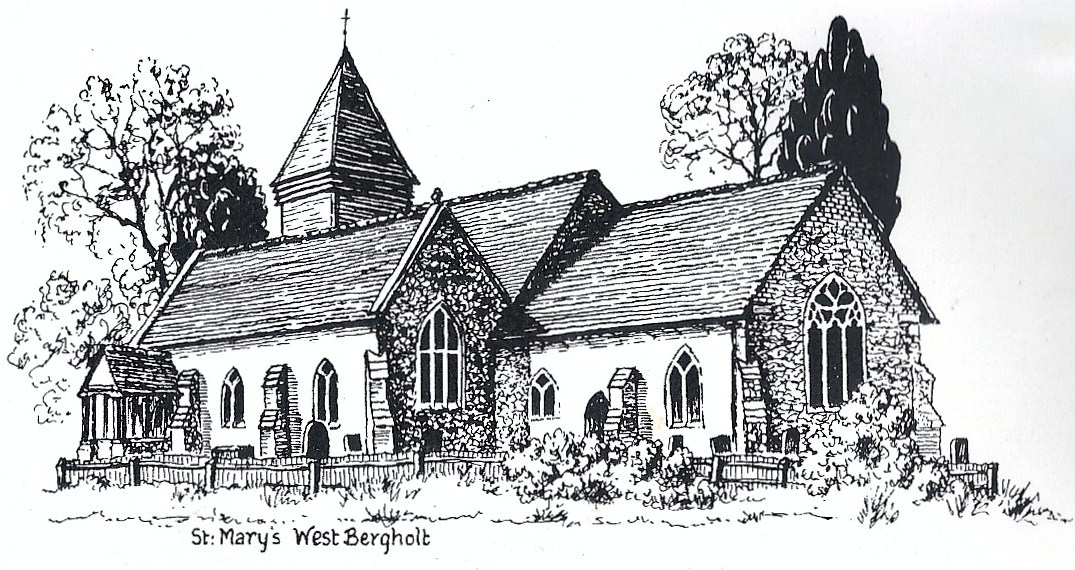
A lovely drawing of St Mary’s, West Bergholt, Essex, in the 1600s and 1700s the parish church of the Fincham, Balls, Clark and Sturgeon branches of my family.
My 4 x great grandmother Mary Ann Thorpe was baptised on 4 August 1816 in Great Braxted, Essex. The daughter of Thomas Thorpe and Mary Ann Freeman, she married Henry Wheeler on 3 November 1844 in St Mary, Lambeth, Surrey.

Mary Ann was Henry’s second wife. He was a petty thief. Also, she was eighteen years younger than him. Why did a young woman marry a far older, disreputable man? We will explore that question later.
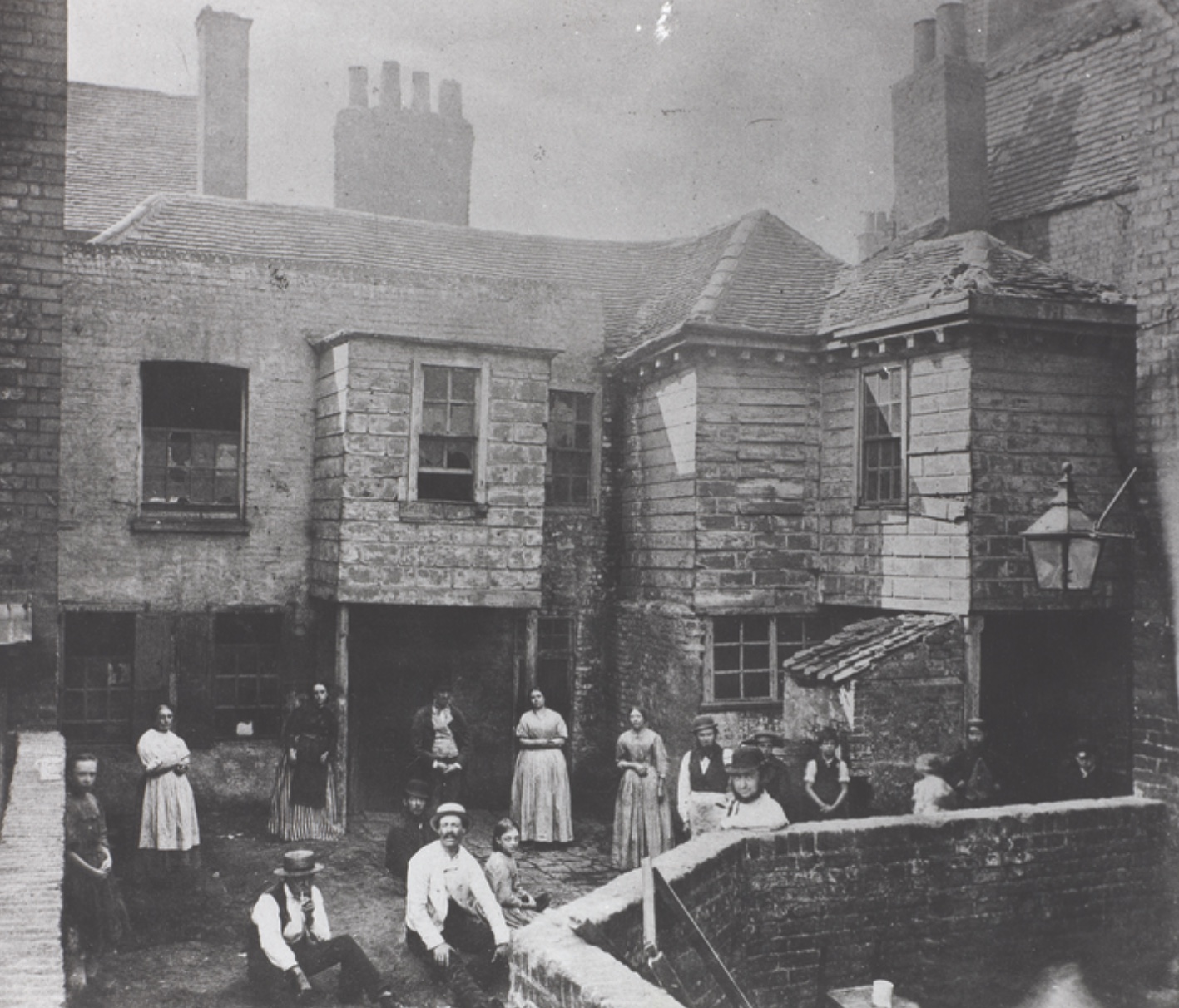
A slum in Market Court, Kensington, 1860s.

Mary Ann and Henry produced four children: Mary Ann, Charlotte, Joseph and Nancy, my direct ancestor, who when married at sixteen changed her name to Annie. There was a nine year gap between Mary Ann’s birth and Charlotte’s birth. This pattern replicated Henry’s first marriage to Elizabeth Mitchell where there was a nine year gap between their first two children, Henry and Eliza. That marriage produced five children in total. Why the nine year gaps? Henry’s wives were clearly fertile, but he was not around. Where was he? Read on…

After each marriage and the birth of the first child, Henry resorted to petty crime to make ends meet. The family endured great hardship, extreme poverty, and with new mothers and babies to feed Henry became ‘light-fingered’.

At other times, Henry was no saint. His name features frequently in the criminal records. However, on many occasions he was found ‘not guilty’. Nevertheless, it’s clear that the Wheeler family lived their lives on the fringes of society and mixed with petty, and possibly, hardened criminals.
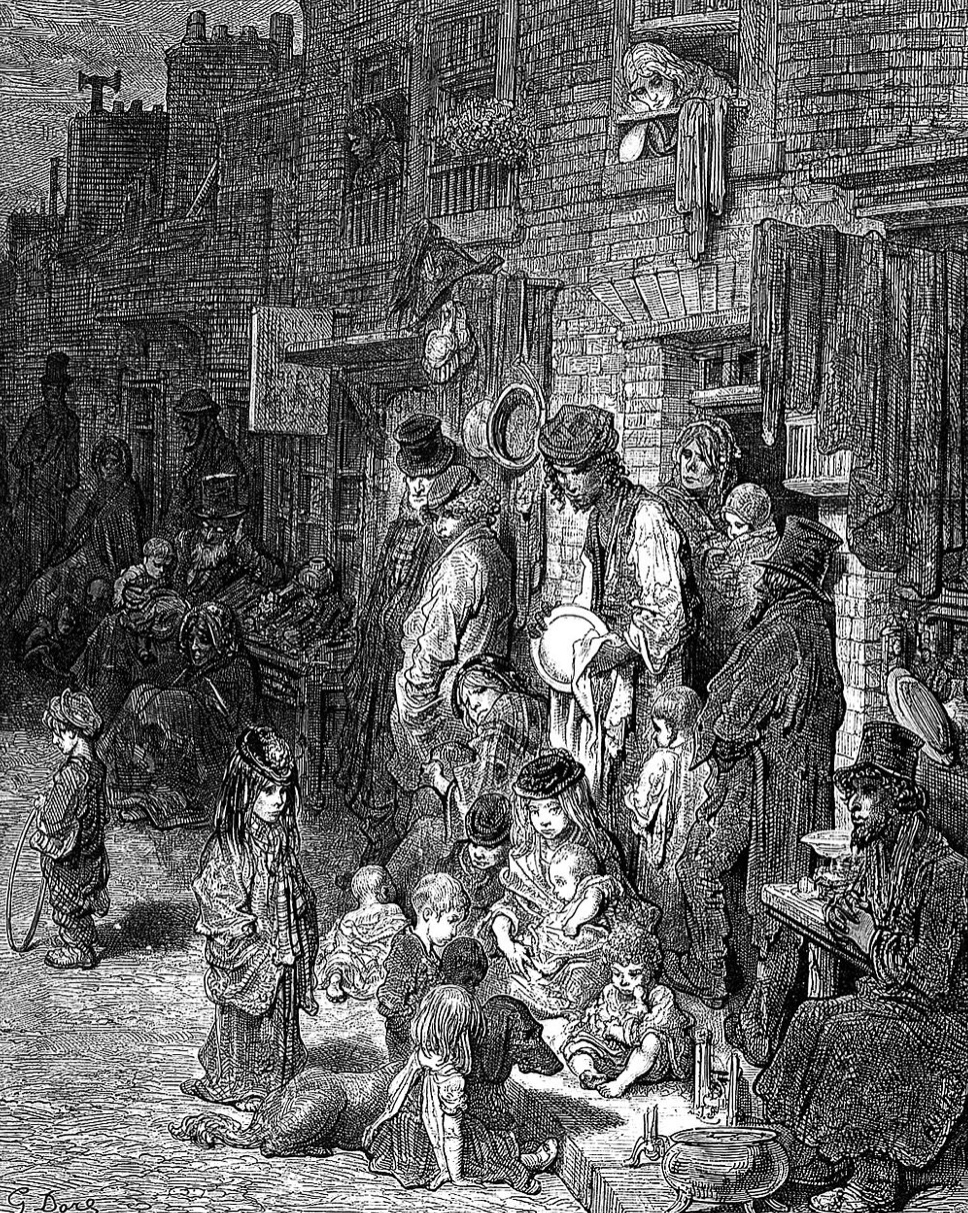
“Wentworth Street, Whitechapel”, 1872, by Gustave Doré (Wellcome Trust).

In 1845, after the birth of his daughter Mary Ann, Henry served a seven year prison sentence. The Victorians were keen on multiples of seven for their prison sentences, and this pattern extended to periods of transportation as well.

While Henry was in prison, his wife Mary Ann endured a difficult time. On 24 August 1849 it’s possible that she entered St Luke’s asylum. The records are sketchy, so it’s difficult to be certain, but the facts and circumstances fit so I am inclined to believe that she did spend some time in the asylum, maybe due to the burden of her circumstances. 

Or maybe Mary Ann suffered from long-standing mental health issues. It’s possible that those issues made a match with a man her own age unlikely, hence her choice of Henry, the eighteen year older petty criminal. The psychological profile certainly fits. That said, maybe it was a love match. Love can still blossom even in the most dire of circumstances.

Earlier, on 20 September 1848, Mary Ann entered the workhouse, a foreboding institution that was more a place of punishment than support. The Victorian era through the Industrial Revolution generated great wealth, but that wealth was concentrated on a relatively small number of individuals. These people were extremely rich, but they treated the poor with contempt. We can see a parallel in our own times.

Mary Ann left the workhouse on 10 January 1849, but her troubles were far from over. She still had a baby to feed, no husband to call on, and a fight against the diseases poverty brings. For all her troubles Mary Ann was a strong woman and lived to be eighty-six.

Before exploring Mary Ann’s later years, first we must go back in time, to 3 February 1845 when she found herself following her husband’s well-trodden path to the Old Bailey.

A trial at the Old Bailey.

Mary Ann was indicted for feloniously breaking and entering the dwelling-house of Susan Laws, on the 18 January 1845, and stealing two gowns, value 30s., the goods of Caroline Allen; and one shawl, 6s., the goods of Henry George Steer.

Caroline Allen, a dressmaker, gave evidence: she locked her door and went to bed late. In the morning, she discovered the door open and her possessions gone. She had no knowledge of Mary Ann. She also stated that two families and an old gentleman shared the dwelling-house.

John Robert Davis stated that he was a shopman to Mr. Folkard, a pawnbroker, in Blackfriars Road. On the 18 January, at half-past nine in the morning, Mary Ann pledged the stolen gown at the pawnbrokers and he gave her an inferior duplicate. He reckoned that Mary Ann made three shillings on the trade.
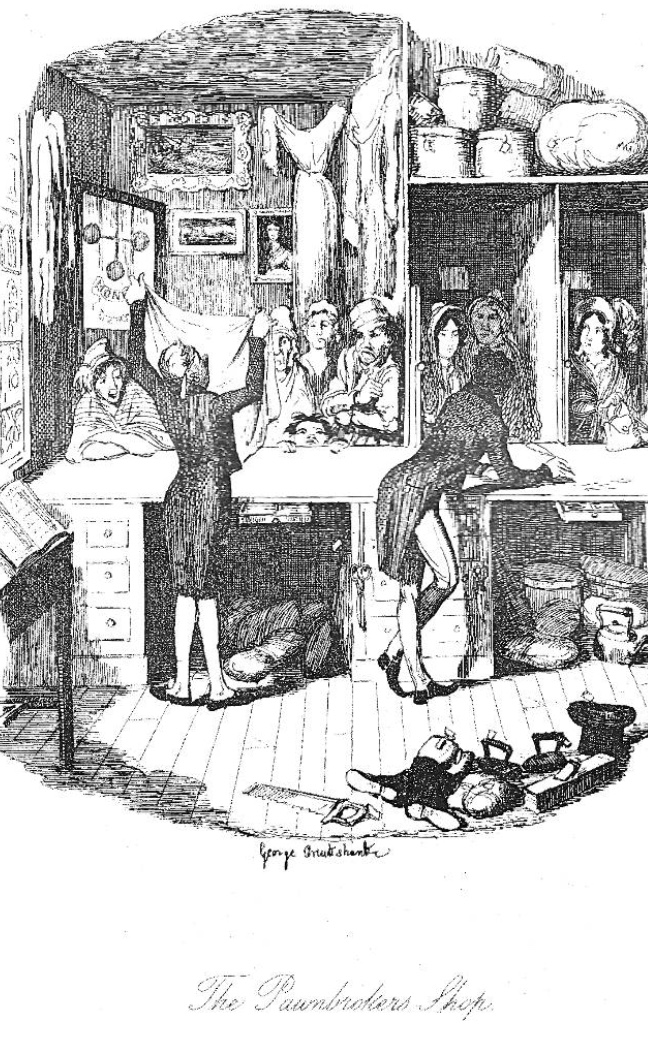
The Pawnbroker’s Shop, 1876. 

Police constable Michael Cregan stated that he visited Mary Ann’s lodging and found the gown and shawl hidden under bedclothes. The court also established that the main door was ‘broken open’ although there were no marks of violence. The conclusion was that someone had used a skeleton key.

Eliza Beale, a fellow lodger, stated that she knew Mary Ann and that she was ‘an unfortunate girl.’ – An observation on Mary Ann’s mental health? Crucially, Eliza added that she came home at four o’clock in the morning when a man and woman asked her if she knew where they could get a bed. She let them into her room. They had a bundle with them, but she did not see them the following morning.

Martha Winfield, the landlady, contradicted Eliza Beale. However, Martha did not live in the house and therefore she was not an eyewitness to the events that night. Her contradiction was based on opinion, not on fact.

Verdict: Not Guilty.

In her closing years, as a widow, Mary Ann lodged with other elderly people. Over her eight-six years she certainly witnessed the darker aspects of London life. She also witnessed a period of dramatic change. At no stage was Mary Ann’s life easy. But she battled through and her life stands as a testimony to the human spirit.

As ever, thank you for your interest and support.

Hannah xxx

For Authors

#1 for value with 565,000 readers, The Fussy Librarian has helped my books to reach #1 on 31 occasions.

A special offer from my publisher and the Fussy Librarian. https://authors.thefussylibrarian.com/?ref=goylake

Don’t forget to use the code goylake20 to claim your discount 🙂

Categories
Dear Reader

Dear Reader #118

Dear Reader,

My Sam Smith mystery The Hermit of Hisarya has been included in academic lectures this week in Bulgaria, discussing cultural studies and world literature, and the interrelation between cultural identity and the imagination. What an honour, I’m blown away 😱

https://academia.edu/51152850/

My latest translation, The Hermit of Hisarya in Portuguese.

My article about my ancestor John Howe features in this month’s Seaside News.

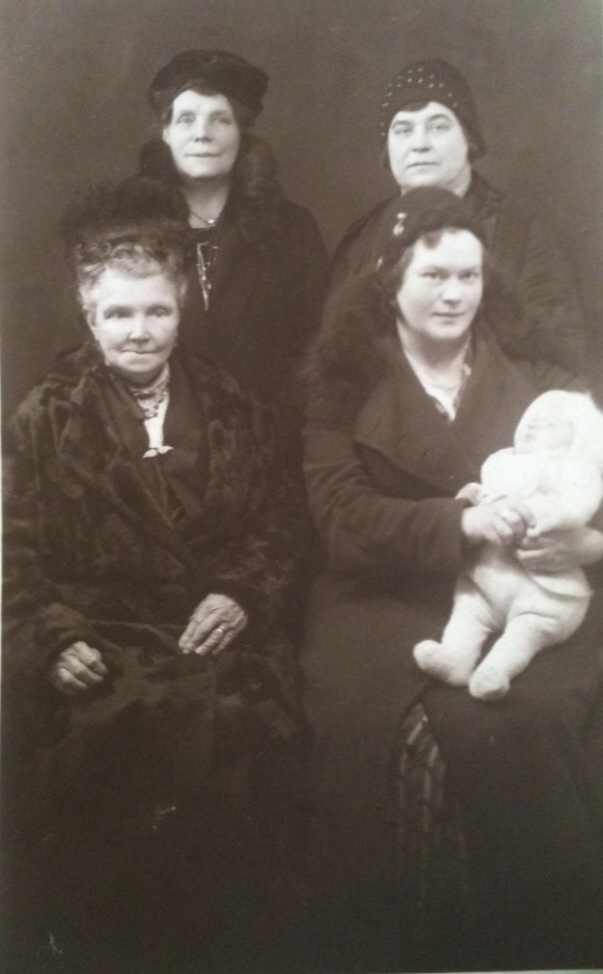
c1926, five generations from the Iveson branch of my family. More about the Ivesons next week.

My 5 x great grandmother Jennet, aka Jane, Williams was born to David Williams and Mary Jones in 1787 in Newton-Nottage, Wales. In the eighteenth century Newton-Nottage was a rural community and the majority of its inhabitants earned a living from the land.

Nottage, 19th century tithe map. Source: The National Library of Wales.

Jennet married Thomas Morgan in nearby Laleston on 10 October 1815. The couple produced five children: William, Richard, Mary, Sarah and a second child called Richard. Sadly, infant mortality was common in the nineteenth century and parents often reused a favourite name.

Jennet and Thomas’ eldest son, William, was born in 1812, three years before their marriage. Their first Richard was baptised on 21 January 1816, which indicates that Jennet was six months pregnant with her second child at the time of her marriage.

The accepted wisdom is that bastard children and their mothers were cast out by Victorian society. For the middle and upper classes this might well have been true. However, for the lower classes and those living in rural communities the locals took a more pragmatic view. Producing babies, in and out of wedlock, was literally a fact of life. An example from my family tree: my 3 x great grandparents William Bick and Fanny Brereton had six children before their marriage on 13 December 1868 (they had five more children after their marriage). Obviously, they did not feel pressurised into marriage and were not ostracised by their community. Marriages were expensive and many people needed the money for food and shelter. That said, some women were embarrassed about admitting to an illegitimate child as we shall see shortly.

Jennet’s husband, Thomas Morgan, was a shoemaker while his father, Richard, was a victualer in Laleston. When Thomas Morgan was born in 1784 only seven children were baptised in Laleston (population 2011, 12,586), which indicates that it was a small community, and that a birth, marriage or death was a major event.

Laleston baptisms, 1784.

Thomas Morgan died on 28 December 1827. A widow, Jennet supported herself and her family by working as a stone cutter at the local limestone quarries. Women who worked with stone, iron or coal usually wore shorter dresses compared to the Victorian norm because of the danger of those dresses catching fire. ‘Shorter’ in this instance means just a few inches above the ankle, so they were hardly a huge advertisement for health and safety.

In 1829 Jennet met Thomas Harris and the couple produced a son, George, baptised on 8 December 1829. In the ten years before 1829 and the ten years after there was no one called Harris living in Laleston or surrounding villages. A family called Harris arrived in the 1840s, but they were not related to Thomas or George.

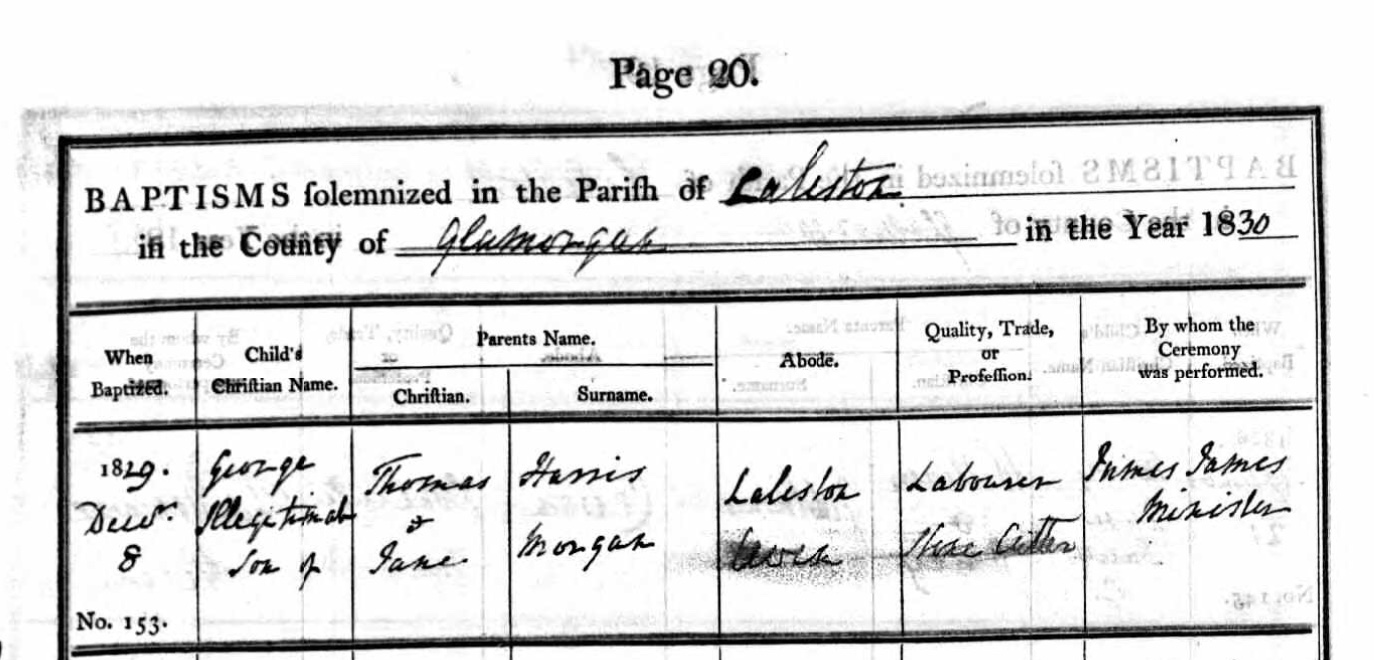
George’s baptismal record.

So, what of the mysterious Thomas Harris? It would appear that he drifted into Laleston looking for work, took advantage of Jennet, a lonely widow, then drifted out again. There is nothing to suggest that he acknowledged George as his son or supported him during his childhood.

Between 1829 and 1851 George was know as George Morgan and George Harris. In 1841 Jennet told the census enumerator that George’s surname was Morgan, even though her husband had died two years previously. Clearly, with this untruth she was trying to save face.

On 24 December 1853 George, now a blacksmith, married Lydia Williams and the couple took the surname Morgan. Indeed, George acknowledged Thomas Morgan as his father. Did he know the truth? Probably, because at various times before his marriage he did call himself Harris. Thomas Harris played no part in George’s life, so George decided to adopt his mother’s married name.

Lydia was a ‘minor’ at the time of her marriage to George and the couple were living at the same address. A ‘minor’ in this context means someone under the age of twenty-one; Lydia was twenty. During her marriage to George she gave birth to ten children.

On 9 April 1873 at the age of 86 Jennet died in Laleston. In her later years she lived with her daughter, and my direct ancestor, Mary, along with Mary’s husband and children. All of my Welsh ancestors during the Victorian era were tight-knit and supported each other. To date, I have not discovered any of them in the workhouse.

As ever, thank you for your interest and support.

Hannah xxx

For Authors

#1 for value with 565,000 readers, The Fussy Librarian has helped my books to reach #1 on 31 occasions.

A special offer from my publisher and the Fussy Librarian. https://authors.thefussylibrarian.com/?ref=goylake

Don’t forget to use the code goylake20 to claim your discount 🙂

Categories
Dear Reader

Dear Reader #115

Dear Reader,

Published this week, The Olive Tree: Leaves, part three of my Spanish Civil War saga. This story focuses on Dr Martinez’s attempts to protect his daughter, Espe, from the advancing fascists, and journalist Bernie Miller’s efforts to smuggle pictures of fascist atrocities out of Spain.

More details here 👇

I’ve discovered a hairdresser in the family. In 1790, my 6 x great grandfather Thomas Meek was educating an apprentice while fashioning the hair of the wealthy ladies of Gloucester in the style of Marie Antoinette, pictured here in the same year, 1790.

Known for being straight-laced, especially in photographs, here a Victorian couple reveal a playful side to their nature.

The son of Thomas Thompson Dent and Dorothy Hornsby, my 3 x great grandfather Richard Davis Dent was born in Bowes, Yorkshire and baptised there on 19 August 1839. Along with his parents and four siblings six year old Richard set sail for New York on the Rappahanock, arriving on 24 June 1846 before making his way to Canada.

In Canada, Richard and his family settled in Halton County where he worked on his father’s farm. Richard remained on the farm until his early twenties when he decided to leave.

Leaving must have been a big decision for Richard because the farm was prosperous, he was living amongst family and this combination offered a degree of security. That said, two of his sisters had died shortly before he made his decision and maybe their passing was a factor.

Richard returned to Britain, to London’s Docklands, where he found employment on the docks and on ships that were looking for crew members. Maybe his boyhood voyage on the Rappahanock hadsowed a seed for Richard. Not content to work within the confines of a farm he sought the freedom of the open ocean.

London Docks, 1845.

In London, Richard also found a wife, Sarah Ann Cottrell. Sarah Ann was born on 24 June 1848 in Bethnal Green, London to Matthew Cottrell and Sarah Gadsden. Matthew was a market porter while the Gadsden’s hailed from Hertfordshire and Buckinghamshire. Matthew and Sarah married on 9 January 1843 in St Mary, Haggerston, after the birth of their first two daughters.

Between 1870 and 1882 Richard and Sarah produced six children including my direct ancestor Jane, born 10 September 1870 in Whitechapel. You can read Jane’s story here https://hannah-howe.com/ancestry/dent-yorkshire-canada-london/

In 1881 Richard and Sarah were living in Hackney with their children. Richard worked on the docks while Sarah was a housewife. Life for a docker was hard. Colonel G. R. Birt, the general manager at the Millwall Docks, gave evidence to a parliamentary committee, on the physical condition of the workers: 

“The poor fellows are miserably clad, scarcely with a boot on their foot, in a most miserable state … These are men who come to work in our docks who come on without having a bit of food in their stomachs, perhaps since the previous day; they have worked for an hour and have earned 5d.; their hunger will not allow them to continue: they take the 5d. in order that they may get food, perhaps the first food they have had for twenty-four hours.”

These conditions led to the notorious dock strike of August 1889, which resulted in a victory for the 100,000 strikers. That victory led to the establishment of trade unions amongst London’s dockers and is widely considered to be a milestone in the development of the British labour movement.

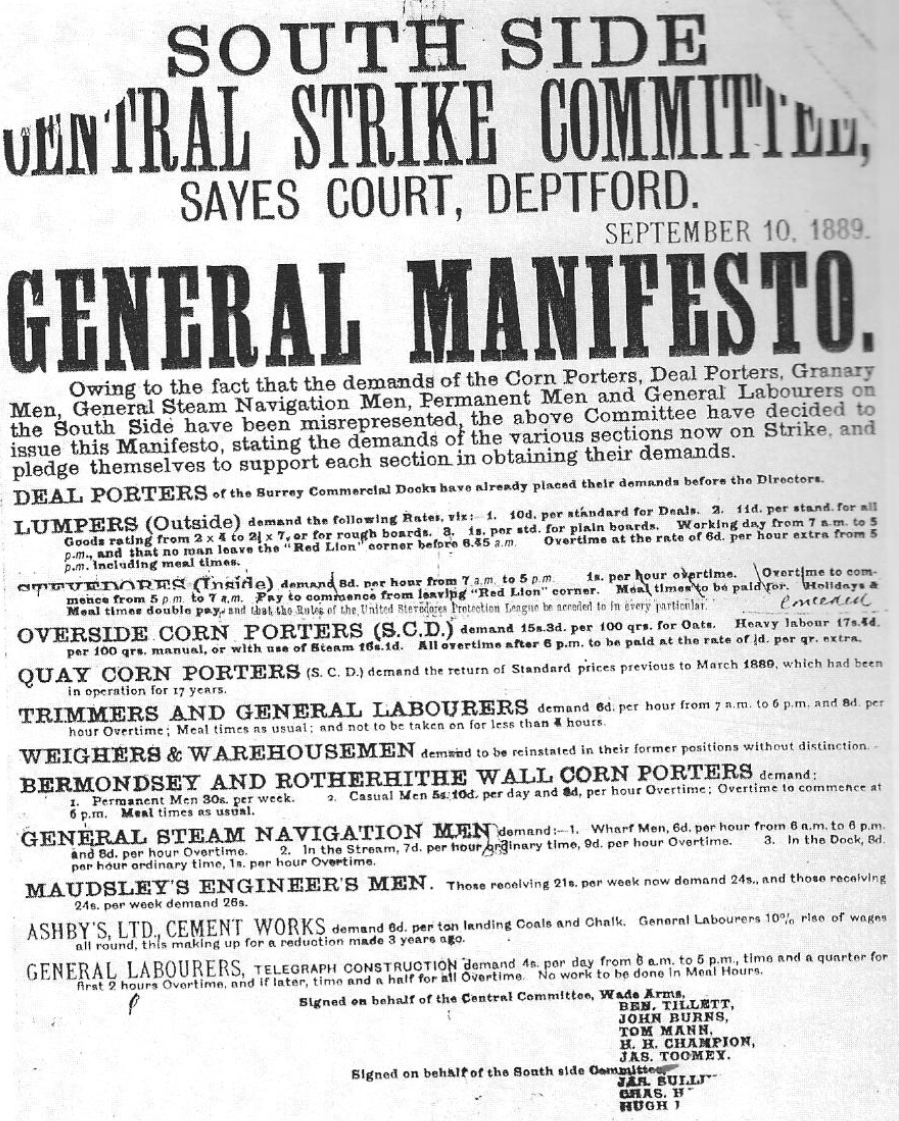
Manifesto of the South Side Central Strike Committee, issued during the strike.

With pay and conditions at the docks poor, Richard found employment on a merchant ship, the Stadacona, a name associated with a sixteenth century Iroquoian village located near Quebec City. 

Richard’s Stadacona was registered in Cardiff, Wales although a ship of the same name was launched by the Canadian navy in 1899. Thirty-five year old Charles Stocker mastered the Stadacona and with a crew of nineteen, including Richard, he set sail from Pensacola, Florida heading for Cardiff. Sadly, the Stadacona never arrived. On 13 March 1883 a shipping register recorded that the ship foundered, location unknown. and that all hands were lost.

Stadacona, 1899 version.

In the 1800s icebergs from Canada and Antarctica drifted into the waters off Florida, and it’s possible that the Stadacona stuck one of them. Equally, a storm might have caused the disaster. Whatever the reason, the sinking of the Stadacona must have been a horrific scene.

Richard’s tragic fate calls to mind this beautiful song by Mark Knopfler, ‘The Dream Of The Drowned Submariner’.

Lyrics: We run along easy at periscope depth

 Sun dappling through clear water

 So went the dream of the drowned submariner

 Far away from the slaughter

Your hair is a strawflower that sings in the sun

 My darling, my beautiful daughter

 So went the dream of the drowned submariner

 Cast away on the water

 From down in the vault, down in the grave

 Reaching up to the light on the waves

 So she did run to him over the grass

 She fell in his arms and he caught her

 So went the dream of the drowned submariner

 Far away on the water

 Far away on the water

A widow, Sarah Ann faced the daunting prospect of keeping her family fed and housed. The Poor Law Amendment Act of 1834 stated that widows were entitled to outdoor relief, meaning that they could receive assistance from outside the workhouse in the form of money, medical services, food, coal, and/or clothes. However, this assistance only lasted for the first six months of their bereavement.

In 1891 Sarah Ann was ‘living on her own means’, which suggests that she might have received a pension. More likely, her family were supporting her. Her son, Arthur Davis Dent, was living with his mother and he had secured a good job as a market porter at Billingsgate. 

When Arthur married, Sarah Ann lived with her father, Matthew Cottrell, an eighty-four year old widower. Sarah Ann supported herself and her father through employment as a charwoman, the Victorian name for a part-time domestic servant. This might sound like degrading work, and in some instances it was, but from my knowledge of elderly relatives, some of whom were charwomen, pride was often involved; to them, doing a good job was important, and they held their own in terms of their social standing.

London street dealer, 1877.

In 1911 Sarah Ann’s lived with her son Arthur, at thirty-eight already five years a widower, and his four children, aged six to fourteen. Obviously, she took on the mother’s role for these children. That task complete, Sarah Ann moved to West Ham in London. She died there during the summer of 1934 aged eight-six.

Although I have no letters to prove that the Dents in Canada corresponded with the Dents in London, it’s natural to assume that they did. And despite the fate that befell Richard, two of his children decided to make a life for themselves in Canada. On 27 September 1896 twenty year old Eliza Dent arrived in Philadelphia bound for Ontario. What a journey. What an adventure. Two years later she married Francis Gowan, originally from Ireland, and the couple produced three sons. They farmed land in Nottawasaga, Simcoe North, Ontario. Eliza died there in 1963, aged eight-seven.

Eliza’s brother, Robert Dent, arrived in Ontario in the early 1900s. He married Edith Eugenia Mollett. More about Robert next time.

As ever, thank you for your interest and support.

Hannah xxx

For Authors

#1 for value with 565,000 readers, The Fussy Librarian has helped my books to reach #1 on 31 occasions.

A special offer from my publisher and the Fussy Librarian. https://authors.thefussylibrarian.com/?ref=goylake

Don’t forget to use the code goylake20 to claim your discount 🙂

Categories
Dear Reader

Dear Reader #110

Dear Reader,

A busy time with the translations. I have eighty books translated and ten in production: one in Afrikaans, one in French and eight in Portuguese. Thanks to my translators, it’s wonderful to see my books reaching an international audience.

The storyboard for Damaged, Sam Smith Mystery Series book nineteen, is nearly complete. The book will be published on 27 December 2021. Pre-order details to follow soon.

From the British Newspaper Archive, The Court Gazette and Fashionable Guide 27 March 1841, manslaughter at the age of 94.

James Inglett appeared in the 1841 census, living in Hemingford Grey workhouse where he died at the age of 98 in 1844.

– 0 –

Lambeth, c1860, a scene very familiar to the Noulton and Wheeler branches of my family.

My 4 x great grandfather James Richard Brereton was baptised on 22 December 1793 at St Dunstan in the West, London. His parents were Thomas Brereton and Sarah Wright of Shoe Lane, Fleet Street, London. 

The Brereton branch of my family originated in Cheshire and arrived in London in the mid-1700s through my 6 x great grandfather Sandford Brereton while the Wright branch of my family had their roots firmly in London.

James was the third born of nine children. In 1807 he became an apprentice cutler, learning the skills required for metalworking. Apprentices usually served a seven-year term and, as with James, commenced their learning at the age of fourteen.

The apprentice became an extra worker in the master’s household. He or she was subject to the absolute authority of the master and by the terms of their ‘indenture’ could not gamble, go to the theatre or a public house, play cards or dice, marry or fornicate. Little wonder that some of the apprentices ran away from their masters.

The indenture signed by James Brereton.

In 1814 James qualified as a cutler. He was unable to establish a business in London so he took to the road as a tinker, making and repairing pots and pans. Various documents also describe James as a metal beater and a gold beater. Obviously, he was adept at working with precious metals and forming them to match the needs of his clients.

On 17 May 1818 James married Ann Lowcock in Martock, Somerset. At the time, Martock, situated on the fringe of the Somerset Levels, was a large village with a regular market. Maybe James and Ann met at the market as he travelled from town to town, selling his wares.

All Saints’ Church, Martock. Picture: Wikipedia.

Ann was the youngest of ten children and her parents, Aaron Lowcock and Mary Ashelford, produced her late in their married lives. Ann was only seventeen at the time of her marriage. It is easy to understand her situation: her parents were elderly and she faced the prospect of being alone. James, the tinker, had a trade and that alone set him apart from the agricultural labourers in the village. For both parties, there was an obvious attraction in the match.

Based mainly in Bristol, in nineteen years James and Ann produced six children, a child born approximately every three years, whereas the standard for the time was a child born every two years. Their sixth child, Fanny, was my 3 x great grandmother. Sadly, James did not live to see Fanny’s birth. He died in the summer of 1837 while Fanny was born on 19 November 1837. 

A 19th century tinker. Photograph by Ignacy Krieger (1817-1889).

Retracing James’ footsteps, Fanny moved to London where she raised her family. She moved there with William Bick, a West Countryman. However, Fanny and William only married on 13 December 1868 when she was carrying his seventh child. Obviously, their relationship was not wholly dependent on their marriage vows.

A widow with a baby and young children to support Ann moved south to Portsmouth and Southampton where she stayed with relatives. It is interesting to note that Ann’s home life revolved around three major ports: Bristol, Portsmouth and Southampton, and the various employment opportunities these ports offered.

In Portsmouth, Ann met William Poole and the couple produced two children. At various times, they lived in the West Country and on the south coast as William travelled, selling his wares as a toy maker.

A widow again in 1870 Ann returned to the West Country where she spent the remainder of her days, passing away on 29 November 1882, aged eighty-one.

James died young and I wonder if working with metal, metal poisoning, was the cause of his death. A skilled man with a trade to call on he provided for his family and ensured that they lived above the poverty line.

As for Ann, she lived a long life for the time. She lost two husbands, and a child in infancy, a child called James. Sadly, this was expected in the Victorian era. Through necessity and choice she travelled throughout her married life. I wonder if her decision to marry James was tied in with a desire to break free of her rural surroundings and village life.

As ever, thank you for your interest and support.

Hannah xxx

Bestselling psychological and historical mysteries from £0.99. Paperbacks, brand new in mint condition 🙂
https://hannah-howe.com/store/

Categories
Dear Reader

Dear Reader #107

Dear Reader,

Exciting translation news. Nelmari will translate my Sam Smith mystery series into Afrikaans. She will start work on Sam’s Song this week. The series will then be available in eleven languages 🙂

From LinkedIn and WikiTrees.

I have my ADGD under control today. I’m in the sixteenth century focusing on the Aubrey and Herbert branches of my family.

This week, I outlined Damaged, Sam Smith Mystery Series book nineteen. This book is set in Wales and France. Next week, I will work on the storyboard and when that is complete the book will be made available for pre-order.

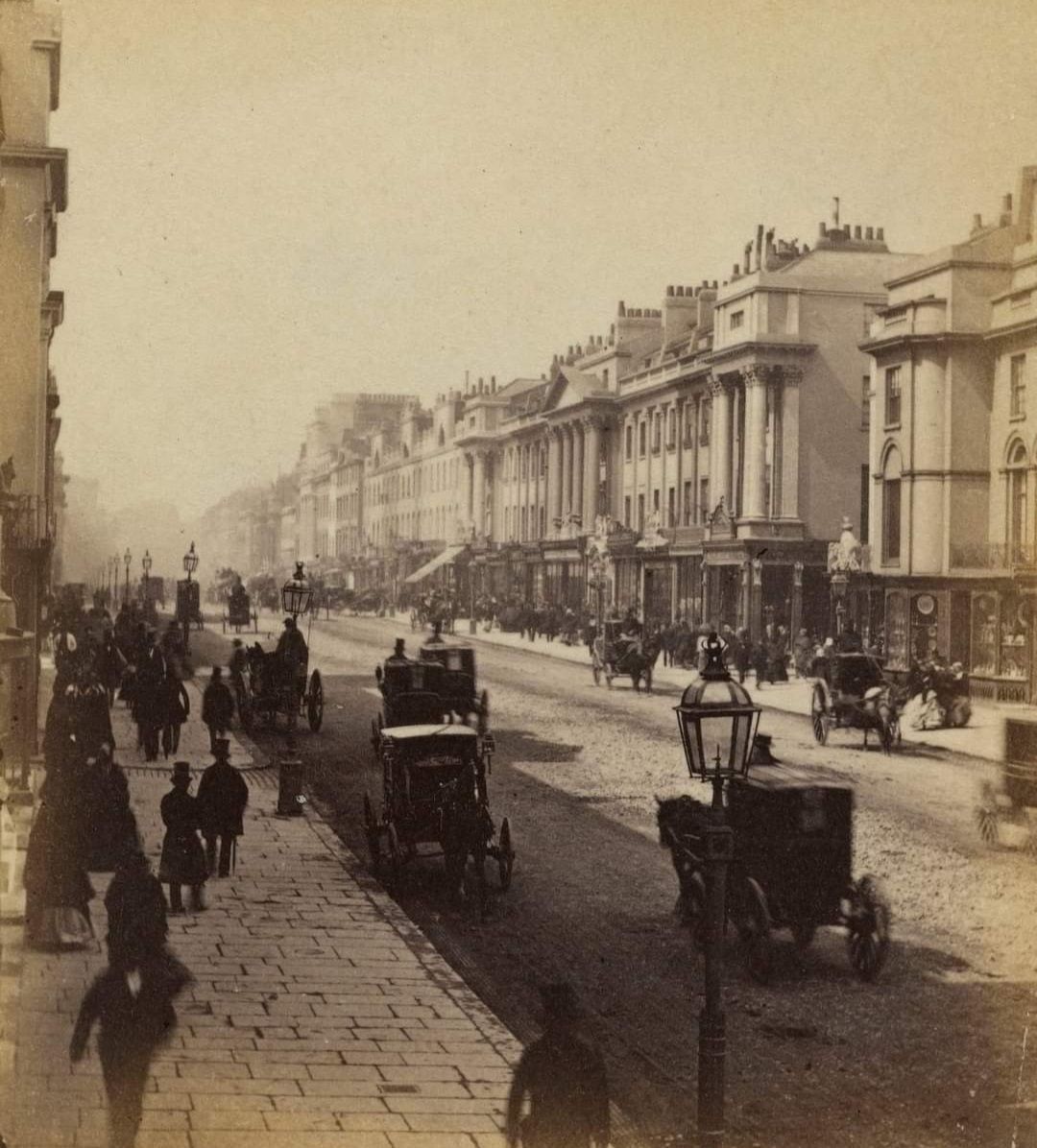
Regent Street, London, May 1860 a familiar sight for my London ancestors.

The sixteenth and seventeenth centuries were periods of great religious conflict, which resulted in many people entering, and leaving, the Netherlands and the Low Counties. Antwerp witnessed an exodus of fifty percent while the city of Hondschoote saw a decline of 18,000 to 385 inhabitants. My 11 x great grandparents Jacob Quick (1547 – 1604) and Wilhelm Steenberg (1582–1613) joined this migration. 

At the turn of the sixteenth century, Jacob and Wilhelm arrived in Wirksworth, Derbyshire, England. Apart from the quest for religious freedom, what drew them there? The answer could well be lead. For centuries the people of Wirksworth had relied on lead mining to make a living and by the 1600s lead had become as important to the national economy as wool. 

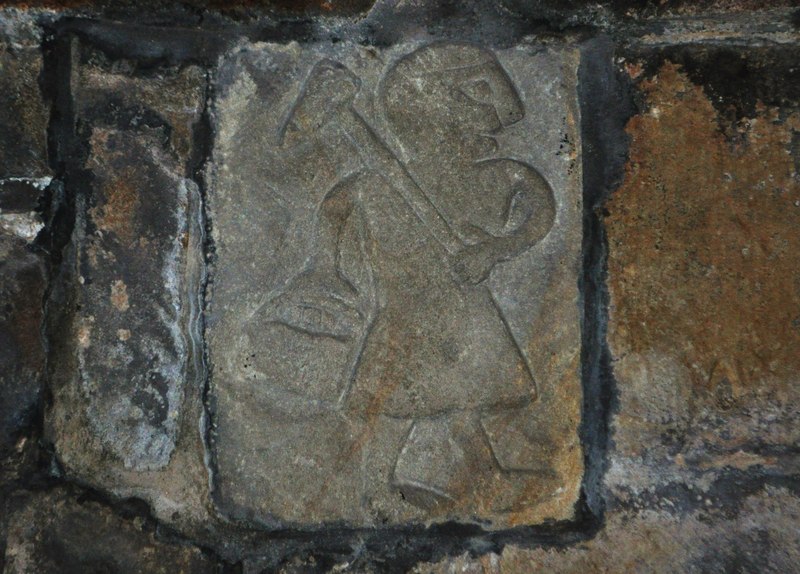
T’owd Man, Wirksworth. Image: Wikipedia.

Lead was vital for roofs, windows, water storage and piping. And, as the seventeenth century progressed, it became increasingly important for ammunition. In the mines, flooding was a problem. Therefore, in search of a solution, the locals turned to people who were experts at drainage and flood defences – the Dutch.

Jacob Quick and Wilhelm Steenburg settled into their new lives in Derbyshire. Jacob produced a son, Philip, born on 29 June 1597 in Bonsall, Derbyshire while Wilhelm produced a daughter, Rachel, born on 15 August 1602, also in Derbyshire. c1625, Philip married Rachel and in 1635 they produced my 9 x great grandmother Hannah Quick.

Although lead mining was hard and dangerous work at least the Quicks had the freedom to express themselves through their religion. Or so they thought. Then, in 1642 turmoil in the shape of the English Civil War, which raged until 1651.

Sir John Gell

Led by land and mine owner Sir John Gell, the people of Derbyshire sided with Parliament against the Royalists. A key Derbyshire battle was the Battle of Hopton Heath, which took place on Sunday 19 March 1643 between Parliamentarian forces led by Sir John Gell and Sir William Brereton (also an ancestor) and a Royalist force led by Spencer Compton, 2nd Earl of Northampton. 

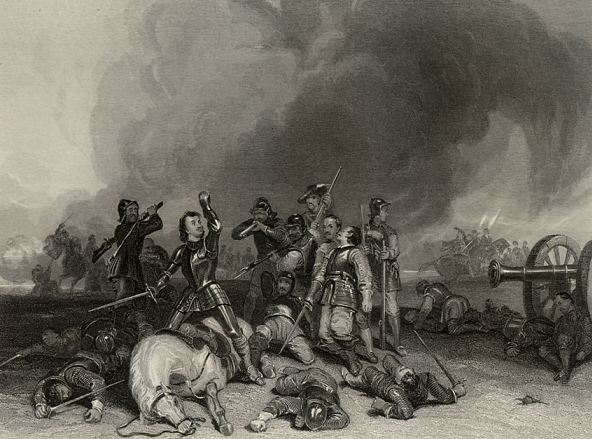
After the battle, which involved 2,600 men, evenly divided on each side, both camps claimed victory. The Parliamentarians believed that they had won because they held the field at the end of the day and had killed the Royalist’s commander, the Earl of Northampton. The Royalists claimed victory because they had captured eight artillery pieces and reoccupied the field the next morning. In truth, the battle was typical of war – a bloody draw.

Steel engraving, Battle of Hopton Heath by George Cattermole.

Did Philip Quick participate in the battle? History does not record his involvement. However, he did die c1643, possibly in a battle or skirmish associated with the Civil War.

A widow, Rachel remained in Derbyshire with her daughters Hannah and Sarah. She died in 1676. Meanwhile, Hannah met and married a local man, George Wood, born 1625. Their marriage was recorded at a Quaker Meeting in Matlock, Derbyshire in 1658. 

The Quicks, religious migrants, had discovered Quakerism, the new religion that was sweeping through England. However, George and Hannah’s beliefs would lead to more migration and a new home in America. More about that next time.

As ever, thank you for your interest and support.

Hannah xxx

Bestselling psychological and historical mysteries from £0.99. Paperbacks, brand new in mint condition 🙂
https://hannah-howe.com/store/