Categories
Dear Reader

Dear Reader #110

Dear Reader,

A busy time with the translations. I have eighty books translated and ten in production: one in Afrikaans, one in French and eight in Portuguese. Thanks to my translators, it’s wonderful to see my books reaching an international audience.

The storyboard for Damaged, Sam Smith Mystery Series book nineteen, is nearly complete. The book will be published on 27 December 2021. Pre-order details to follow soon.

From the British Newspaper Archive, The Court Gazette and Fashionable Guide 27 March 1841, manslaughter at the age of 94.

James Inglett appeared in the 1841 census, living in Hemingford Grey workhouse where he died at the age of 98 in 1844.

– 0 –

Lambeth, c1860, a scene very familiar to the Noulton and Wheeler branches of my family.

My 4 x great grandfather James Richard Brereton was baptised on 22 December 1793 at St Dunstan in the West, London. His parents were Thomas Brereton and Sarah Wright of Shoe Lane, Fleet Street, London. 

The Brereton branch of my family originated in Cheshire and arrived in London in the mid-1700s through my 6 x great grandfather Sandford Brereton while the Wright branch of my family had their roots firmly in London.

James was the third born of nine children. In 1807 he became an apprentice cutler, learning the skills required for metalworking. Apprentices usually served a seven-year term and, as with James, commenced their learning at the age of fourteen.

The apprentice became an extra worker in the master’s household. He or she was subject to the absolute authority of the master and by the terms of their ‘indenture’ could not gamble, go to the theatre or a public house, play cards or dice, marry or fornicate. Little wonder that some of the apprentices ran away from their masters.

The indenture signed by James Brereton.

In 1814 James qualified as a cutler. He was unable to establish a business in London so he took to the road as a tinker, making and repairing pots and pans. Various documents also describe James as a metal beater and a gold beater. Obviously, he was adept at working with precious metals and forming them to match the needs of his clients.

On 17 May 1818 James married Ann Lowcock in Martock, Somerset. At the time, Martock, situated on the fringe of the Somerset Levels, was a large village with a regular market. Maybe James and Ann met at the market as he travelled from town to town, selling his wares.

All Saints’ Church, Martock. Picture: Wikipedia.

Ann was the youngest of ten children and her parents, Aaron Lowcock and Mary Ashelford, produced her late in their married lives. Ann was only seventeen at the time of her marriage. It is easy to understand her situation: her parents were elderly and she faced the prospect of being alone. James, the tinker, had a trade and that alone set him apart from the agricultural labourers in the village. For both parties, there was an obvious attraction in the match.

Based mainly in Bristol, in nineteen years James and Ann produced six children, a child born approximately every three years, whereas the standard for the time was a child born every two years. Their sixth child, Fanny, was my 3 x great grandmother. Sadly, James did not live to see Fanny’s birth. He died in the summer of 1837 while Fanny was born on 19 November 1837. 

A 19th century tinker. Photograph by Ignacy Krieger (1817-1889).

Retracing James’ footsteps, Fanny moved to London where she raised her family. She moved there with William Bick, a West Countryman. However, Fanny and William only married on 13 December 1868 when she was carrying his seventh child. Obviously, their relationship was not wholly dependent on their marriage vows.

A widow with a baby and young children to support Ann moved south to Portsmouth and Southampton where she stayed with relatives. It is interesting to note that Ann’s home life revolved around three major ports: Bristol, Portsmouth and Southampton, and the various employment opportunities these ports offered.

In Portsmouth, Ann met William Poole and the couple produced two children. At various times, they lived in the West Country and on the south coast as William travelled, selling his wares as a toy maker.

A widow again in 1870 Ann returned to the West Country where she spent the remainder of her days, passing away on 29 November 1882, aged eighty-one.

James died young and I wonder if working with metal, metal poisoning, was the cause of his death. A skilled man with a trade to call on he provided for his family and ensured that they lived above the poverty line.

As for Ann, she lived a long life for the time. She lost two husbands, and a child in infancy, a child called James. Sadly, this was expected in the Victorian era. Through necessity and choice she travelled throughout her married life. I wonder if her decision to marry James was tied in with a desire to break free of her rural surroundings and village life.

As ever, thank you for your interest and support.

Hannah xxx

Bestselling psychological and historical mysteries from £0.99. Paperbacks, brand new in mint condition 🙂
https://hannah-howe.com/store/
Categories
Dear Reader

Dear Reader #109

Dear Reader,

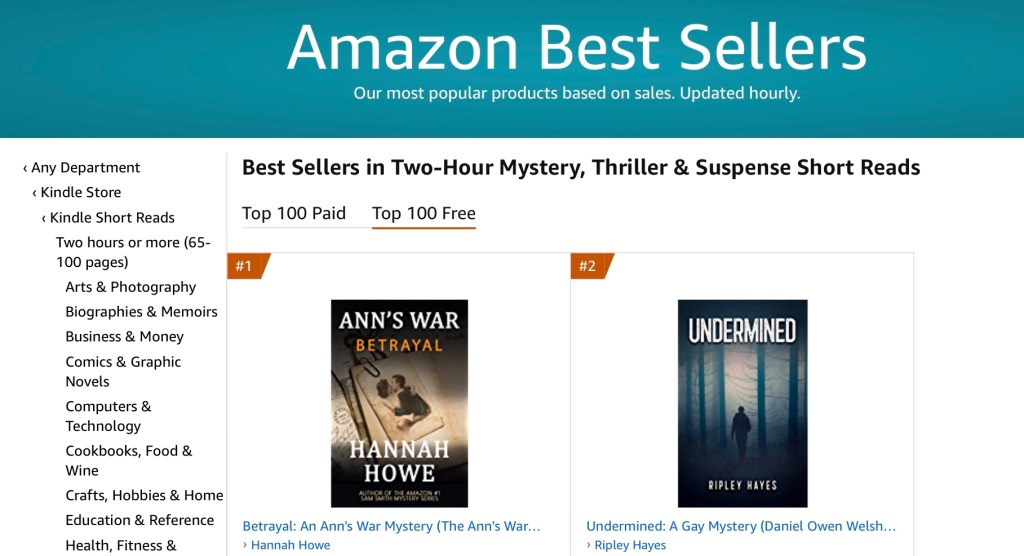
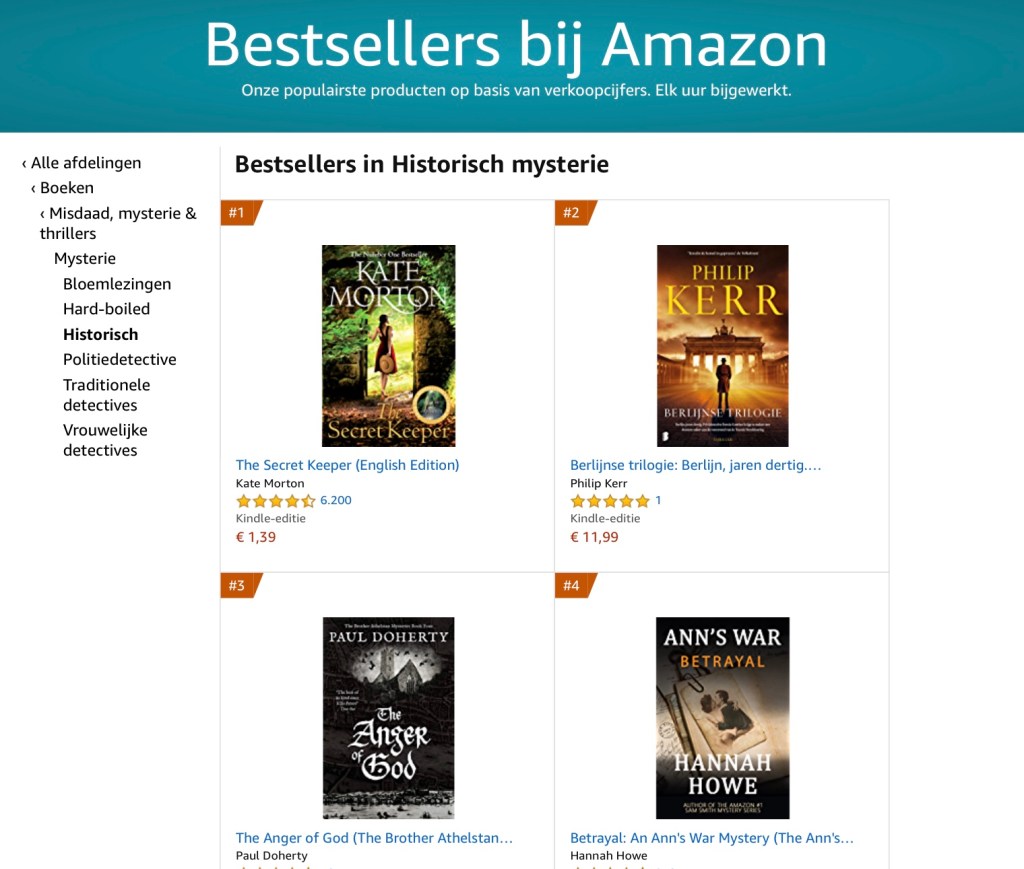
Betrayal at #1 in America this week and #4 in the Netherlands.

The ‘Welsh Tree of the Year’ at my local park, Margam.

My article about the amazing Nancy Wake appears in this month’s issue of the Seaside News.

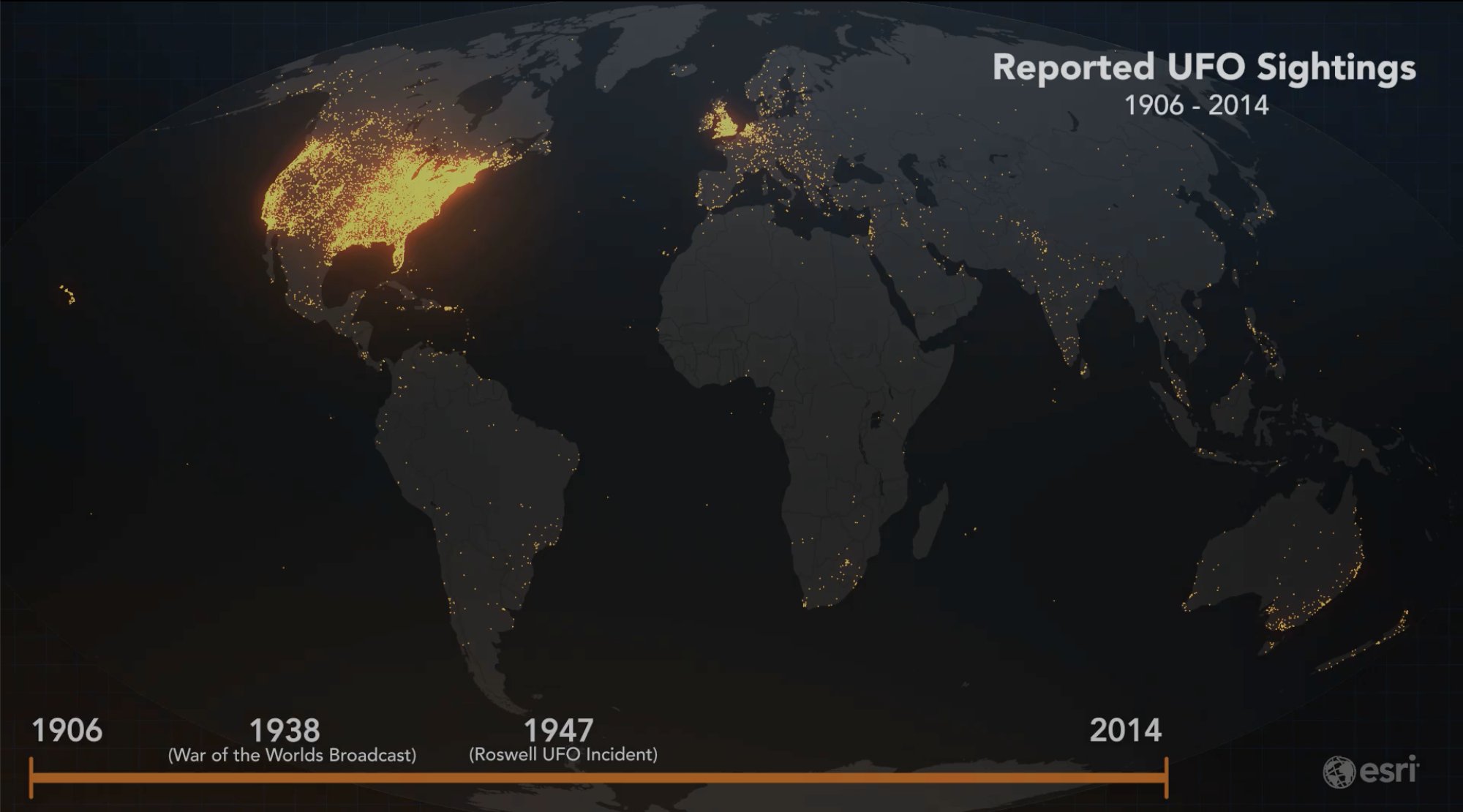
A map of all reported UFO sightings, 1906-2014. (Image: ESRI). Is there anybody out there…

Just discovered that my splendidly named ancestors Zephaniah Thorpe and Mary Discipline emigrated to New York City, arriving on 11 April 1838. Zephaniah was a sculptor specialising in marble. Maybe he worked on the pillars in this picture 🤔

A DNA test I took at Christmas 2020 established a link between a Morgan branch of my family and a Bevan branch. This in turn led to Barbara Aubrey, a gateway ancestor. A gateway ancestor is someone descended from royalty, the aristocracy, or landed gentry. Through Barbara Aubrey, and other gateway ancestors, I have discovered links to many of the noble households in Wales, especially in my home county of Glamorgan.

My direct ancestor, Gwladys ferch Dafydd Gam ‘the star of Abergavenny’ (1378 – 1454), was the daughter of Gwenllian ferch Gwilym and Dafydd ap Llewelyn ap Hywel, otherwise known as Dafydd Gam a man immortalised by William Shakespeare as Fluellen in Henry V.

Fluellen: “If your Majesty is remembered of it, the Welshmen did good service in a garden where leeks did grow, wearing leeks in their Monmouth caps, which your Majesty knows, to this hour is an honourable badge of the service, and I do believe, your Majesty takes no scorn to wear the leek upon St David’s Day.”

King Henry: “I wear it for a memorable honour; for I am Welsh, you know, good my countryman.”

The Battle of Agincourt, 1415. The Bridgeman Art Library.

Due to her discretion and influence, the poets compared Gwladys to the legendary Queen Marcia who was ‘one of the most illustrious and praiseworthy of women in early British history.’ Indeed, the poets sang Gwladys’ praises. ‘Gwladys the happy and the faultless. Like the sun – the pavilion of light,’ wrote Lewys Glyn Cothi. They also noted her beauty and luxurious dark hair.

Lewys Glyn Cothi (c1420 – 1490) was a prominent 15th century poet who composed numerous poems in Welsh. He was one of the most important representatives of the Beirdd yr Uchelwyr, ‘Poets of the Nobility.’ 

Lewys was a prolific poet, writing many celebratory poems and elegies. He was responsible for compiling much, if not all, of Llyfr Gwyn Hergest, the White Book of Hergest, which disappeared in the 19th century. He also added several poems to Llyfr Coch Hergest, the Red Book of Hergest, which is now in the National Library of Wales.

During Owain Glyndwr’s War of Independence, Gwladys served as Maid of Honour to Mary de Bohun (c1368–1394), wife of Henry IV, and afterwards she served Henry’s second wife, Queen Joan (c1370–1437). On her return to Wales, Gwladys married Sir Roger Vaughan of Bredwardine and from that day on she remained in her homeland.

Raglan Castle. Engraving, 1798.

The battlefield and royal politics proved tragic for Gwladys. At Agincourt, 1415, she lost her father, Dafydd Gam, and her husband, Sir Roger Vaughan. Later, at Easter 1456, her son Watkin was murdered at his home, Bredwardine Castle, while in 1469 two sons, Thomas and Richard (my direct ancestor) died at the Battle of Edgecote. In May 1472 a fourth son, Sir Roger Vaughan, was captured by Jasper Tudor and beheaded at Chepstow.

Gwladys’ second husband, Sir William ap Thomas of Raglan Castle, known as Sir William Herbert, also fought at Agincourt. Due to the colour of his armour, Sir William was nicknamed ‘The Blue Knight of Gwent.’

Gwladys’ first marriage produced five children, three boys and two girls, while her second marriage produced four children, two boys and two girls. All married into Welsh and English noble families: the Stradlings, Wogans, Vaughans, Devereauxs and Audleys. They also established the Herbert line, a branch of my family, one of the most influential families in medieval and post-medieval Wales.

In the Middle Ages, noble women were expected to obey their husbands, guard their virtue, produce offspring, and oversee the smooth running of their household. Good management skills were essential. Moreover, when her husband was away a wife’s role would increase substantially to the extent that she would assume control of her husband’s domain and even bear arms.

As Lady of Raglan Castle, Gwladys entertained her guests. She also assisted the needy and afflicted, and supported Welsh culture, especially the bards and minstrels. In Lewys Glyn Cothi’s elegy, he stated that Gwladys was ‘the strength and support of Gwentland the land of Brychan.’ 

Abergavenny Priory. Artist unknown.

Gwladys died in 1454. Along with her husband, Sir William ap Thomas, she was a great patron of Abergavenny Priory and an alabaster tomb along with effigies of the couple can still be found there.

According to legend, Gwladys was so beloved by her people that 3,000 knights, nobles and weeping peasantry followed her body from Coldbrook House (her son Richard’s manor) to the Herbert Chapel of St. Mary’s Priory Church where she was buried.

Born into privilege, Gwladys used her position to support the poor and vulnerable, and the arts. And for that she earned her people’s eternal love and respect.

As ever, thank you for your interest and support.

Hannah xxx

Bestselling psychological and historical mysteries from £0.99. Paperbacks, brand new in mint condition 🙂
https://hannah-howe.com/store/
Categories
Dear Reader

Dear Reader #108

Dear Reader,

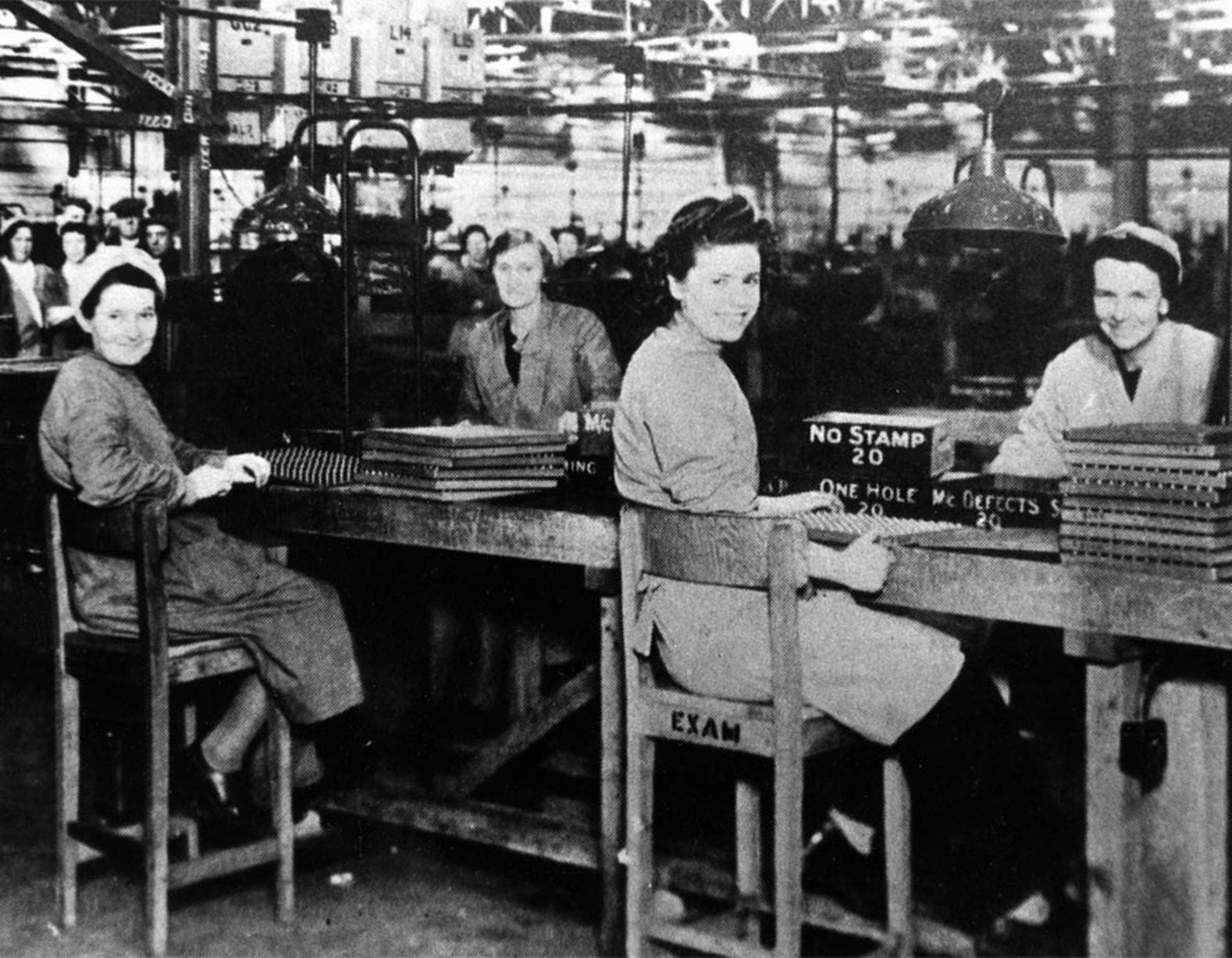
The munitions factory at Bridgend, 1942, known locally as ‘The Arsenal’. The factory was of huge significance to Britain’s war effort employing 40,000 people.

The chemicals in the munitions turned many of the women’s skin temporarily yellow. When the Americans arrived in 1944 and dated the women they called them their ‘Welsh daffodils’.

‘The Arsenal’ features in my Ann’s War Mystery Series.

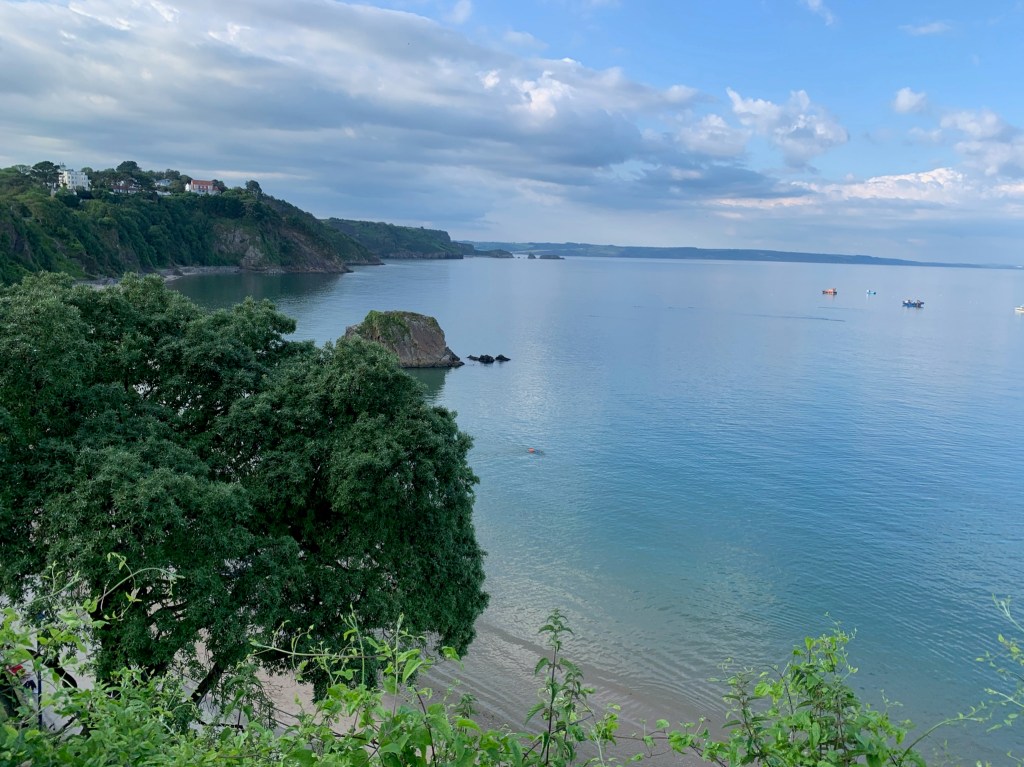
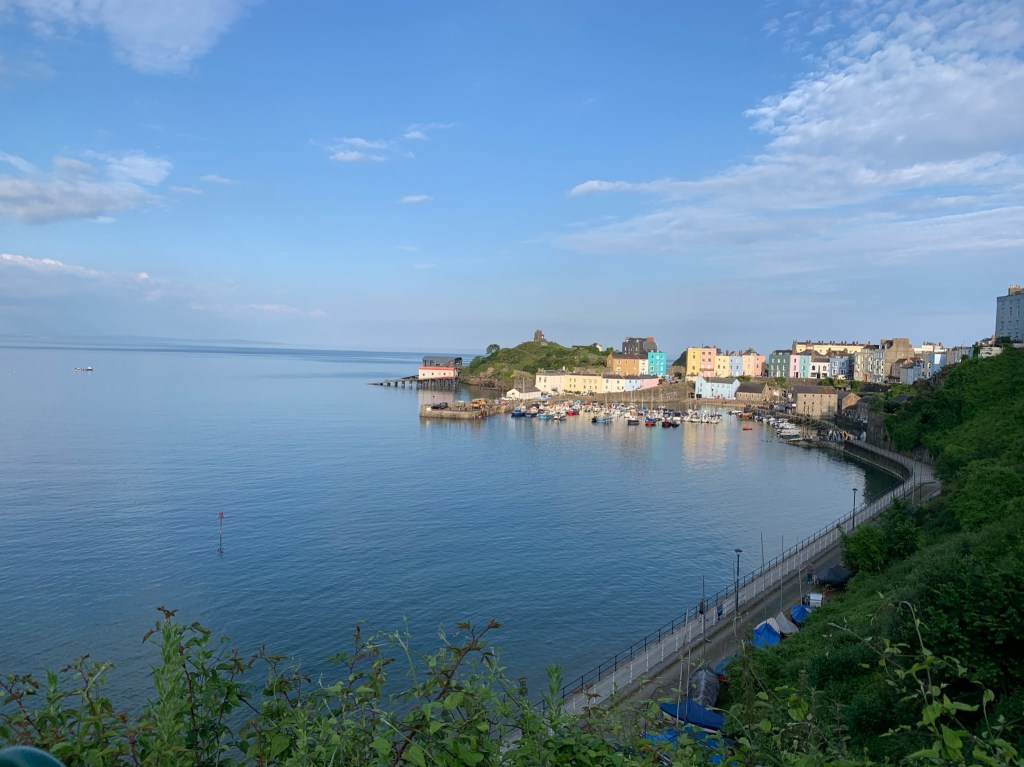
Evening at Tenby this week.

I’ve added a Keats branch to my family tree. Thomas Keats Esq built Sulham House, Berkshire (pictured) c1525. His daughter, Alice, married John Wilder and inherited the estate.

The Wilders arrived from Bohemia in the shape of another John, born 1418. John of Bohemia’s son, Nicholas, fought in the Battle of Bosworth alongside Henry Tudor. After his victory, Henry gifted lands to Nicholas Wilder, which secured the family’s fortune.

Researching Burt Lancaster for my writing, seen here as Dr Ernst Janning in the timeless classic Judgement at Nuremberg. Burt Lancaster, “A liberal with balls.” – Screen Actors Guild president Ed Asner.

In this month’s issue of Mom’s Favorite Reads…

A Family of Mice

Flash Fiction

Picnic Recipes

Author Features

Travel: Azerbaijan

Independent Bookshops

International Tiger Day

Plus, photography, puzzles, poems, short stories and so much more!

George Wood, my 9 x great grandfather, was born on 12 March 1625 in Bonsall, Derbyshire and baptised on 10 January 1632 while Hannah Quick, my 9 x great grandmother, was born in 1635 in Derbyshire. The couple married in 1658 in Matlock, a fact recorded in the Monyash Ashford Meeting of Quakers.

Quakers, a Protestant group also known as the Religious Society of Friends, established themselves in mid-seventeenth century England. Undoubtedly, the English Civil War had a strong bearing on their creation and beliefs. 

The Quakers based their message on the belief that ‘Christ has come to teach his people himself.’ They stressed the importance of a direct relationship with God through Jesus Christ, and a direct religious belief in the universal priesthood of all believers.

Quakers used thee as an ordinary pronoun. They wore plain dress, were teetotal, refused to swear oaths, refused to participate in wars and opposed slavery. Later, they founded banks and financial institutions, including Friends Provident, Lloyds and Barclays. They also founded three major confectionery makers, Cadbury’s, Fry’s and Roundtree’s.

James Naylor, a prominent Quaker leader, being pilloried and whipped.

A notable difference between Quakerism and Orthodox Protestantism was that many of the early Quaker ministers were women. Quakers were noted for their philanthropic efforts, which included the abolition of slavery, prison reform and social justice.

George’s union with Hannah was his second marriage. Previously, he married Anne who produced three children before her death in 1656. George and Hannah’s marriage also produced three children, including their last born, my 8 x great grandmother Elinor Wood.

The upheaval of the English Civil War left a deep scar on society, which took generations to heal. In some communities Quakers were accepted while in others they were ostracised and persecuted. At the age of 57 and 47 respectively, George and Hannah made the momentous decision to create a new lives for themselves and their children by emigrating to Pennsylvania. They began this hazardous journey on 27 May 1682.

George and Hannah were not a young couple looking to make their mark on the world. Indeed, they were approaching the stage where they could contemplate a quiet life. Yet, they embarked on their Pennsylvanian adventure. This suggests that their commitment to the Quaker cause ran deep and was central to their lives.

William Penn, the founder of Pennsylvania and West Jersey, as a young man.

Along with his son-in-law Richard Bonsall, and seven other families – six from Derbyshire – George was a founder member of Darby Township, alongside Darby Creek. The records described George as a yeoman or landowner with 1,000 acres of land to his name. George bought the land from William Penn on 23 March 1682. He also subscribed £50 (approximately £5,725 in today’s money) to the Free Society of Traders. A dam, saw mill and grist mill existed on his portion of the creek, which was obviously a hive of activity.

George was also active within the community, serving on the local Assembly. His fellow settlers elected him to this post in 1683, shortly after his arrival in Pennsylvania. 

Darby Township, Pennsylvania.

Quakers introduced many ideas that later became mainstream in American society, such as democracy in the Pennsylvania legislature, the Bill of Rights, trial by jury, equal rights for men and women, and public education. Furthermore, the Liberty Bell was cast by Quakers in Philadelphia, Pennsylvania.

The Quaker meetings in Delaware recorded the births, marriages and deaths of the Wood family, including Hannah’s death on 9 March 1687, five years after her arrival, and George’s death on 27 April 1705. George bequeathed his land, buildings, purse, apparel and ‘some books’ to his son, John, while his three daughters, Mary, Elizabeth and Elinor received a shilling each.

George and Hannah’s daughter, Elinor, married Evan Bevan, son of John Bevan and Barbara Aubrey, founder members of the Welsh Tract in Pennsylvania. More about the Bevan family and their lives in Pennsylvania in future posts.

As ever, thank you for your interest and support.

Hannah xxx

Bestselling psychological and historical mysteries from £0.99. Paperbacks, brand new in mint condition 🙂
https://hannah-howe.com/store/

Categories
Dear Reader

Dear Reader #107

Dear Reader,

Exciting translation news. Nelmari will translate my Sam Smith mystery series into Afrikaans. She will start work on Sam’s Song this week. The series will then be available in eleven languages 🙂

From LinkedIn and WikiTrees.

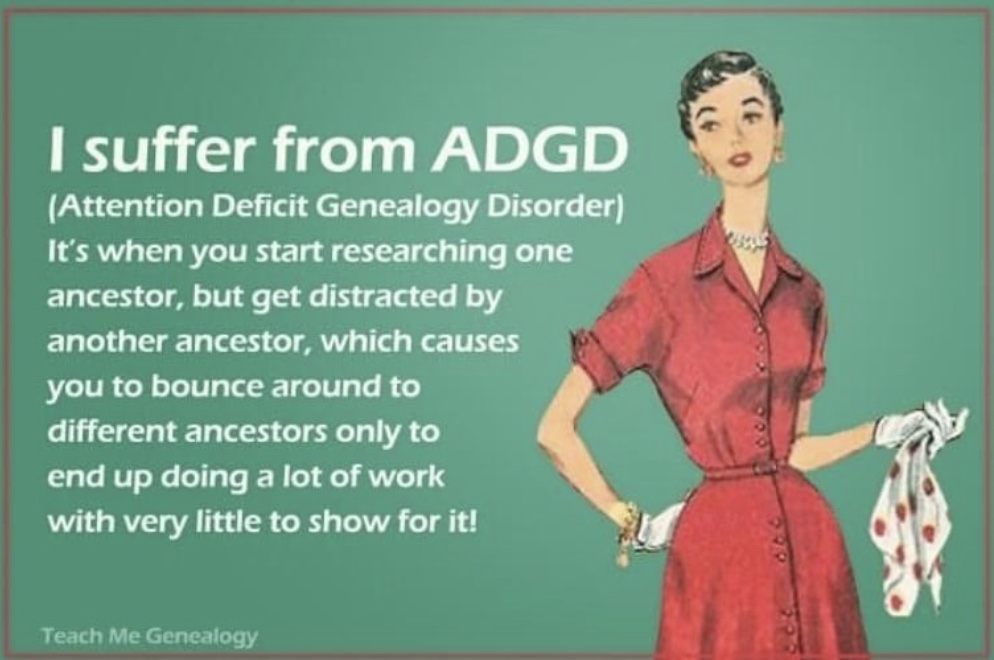
I have my ADGD under control today. I’m in the sixteenth century focusing on the Aubrey and Herbert branches of my family.

This week, I outlined Damaged, Sam Smith Mystery Series book nineteen. This book is set in Wales and France. Next week, I will work on the storyboard and when that is complete the book will be made available for pre-order.

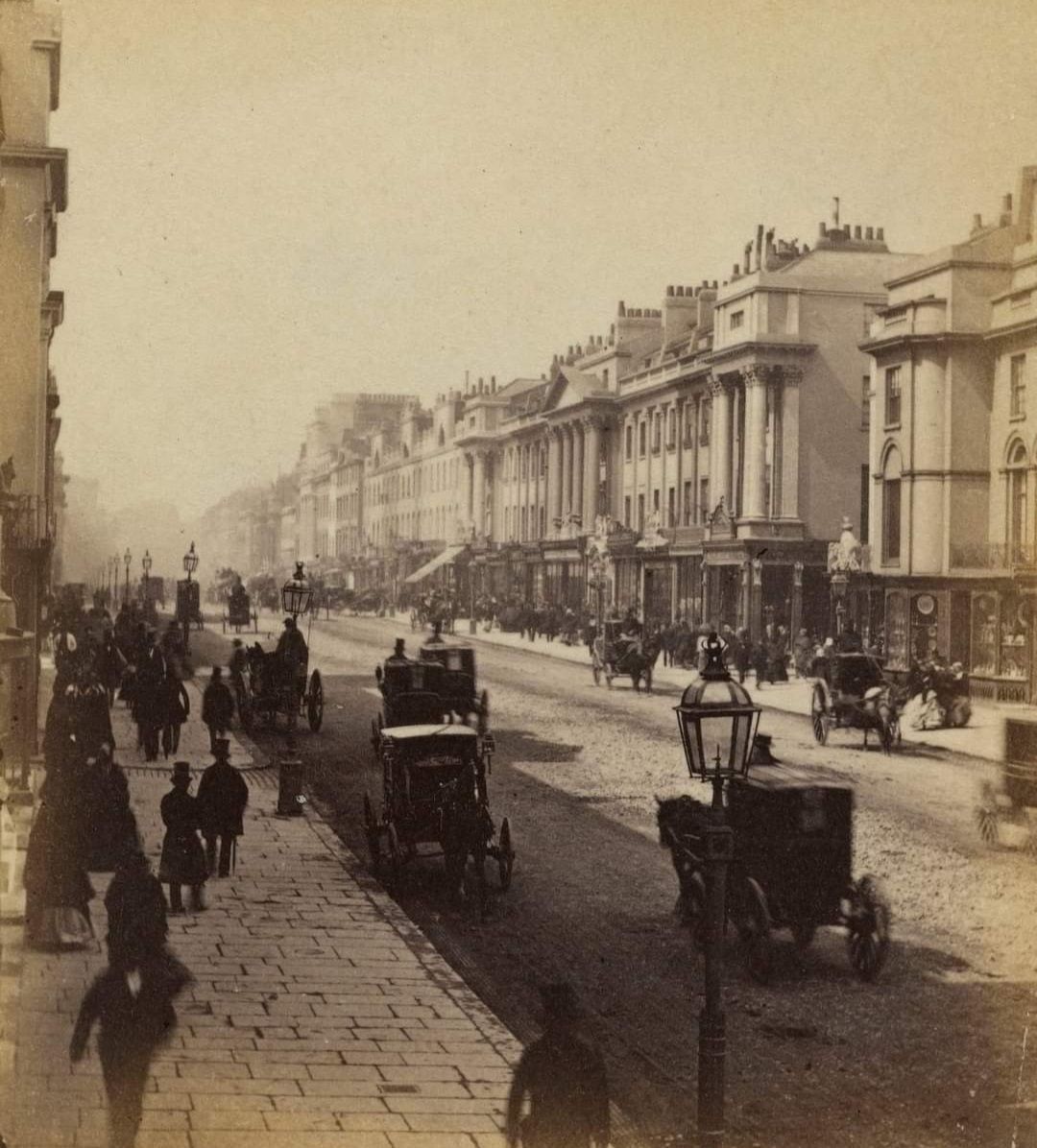
Regent Street, London, May 1860 a familiar sight for my London ancestors.

The sixteenth and seventeenth centuries were periods of great religious conflict, which resulted in many people entering, and leaving, the Netherlands and the Low Counties. Antwerp witnessed an exodus of fifty percent while the city of Hondschoote saw a decline of 18,000 to 385 inhabitants. My 11 x great grandparents Jacob Quick (1547 – 1604) and Wilhelm Steenberg (1582–1613) joined this migration. 

At the turn of the sixteenth century, Jacob and Wilhelm arrived in Wirksworth, Derbyshire, England. Apart from the quest for religious freedom, what drew them there? The answer could well be lead. For centuries the people of Wirksworth had relied on lead mining to make a living and by the 1600s lead had become as important to the national economy as wool. 

T’owd Man, Wirksworth. Image: Wikipedia.

Lead was vital for roofs, windows, water storage and piping. And, as the seventeenth century progressed, it became increasingly important for ammunition. In the mines, flooding was a problem. Therefore, in search of a solution, the locals turned to people who were experts at drainage and flood defences – the Dutch.

Jacob Quick and Wilhelm Steenburg settled into their new lives in Derbyshire. Jacob produced a son, Philip, born on 29 June 1597 in Bonsall, Derbyshire while Wilhelm produced a daughter, Rachel, born on 15 August 1602, also in Derbyshire. c1625, Philip married Rachel and in 1635 they produced my 9 x great grandmother Hannah Quick.

Although lead mining was hard and dangerous work at least the Quicks had the freedom to express themselves through their religion. Or so they thought. Then, in 1642 turmoil in the shape of the English Civil War, which raged until 1651.

Sir John Gell

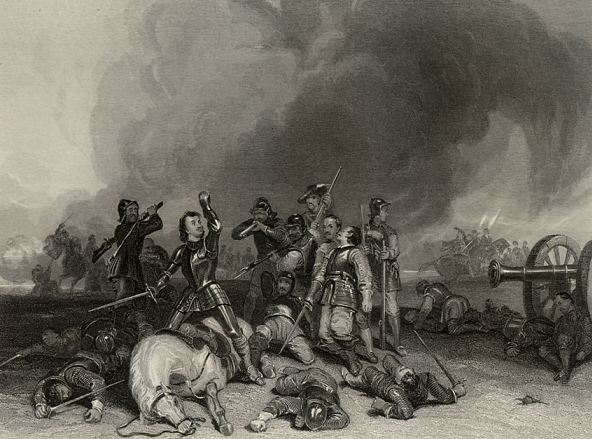
Led by land and mine owner Sir John Gell, the people of Derbyshire sided with Parliament against the Royalists. A key Derbyshire battle was the Battle of Hopton Heath, which took place on Sunday 19 March 1643 between Parliamentarian forces led by Sir John Gell and Sir William Brereton (also an ancestor) and a Royalist force led by Spencer Compton, 2nd Earl of Northampton. 

After the battle, which involved 2,600 men, evenly divided on each side, both camps claimed victory. The Parliamentarians believed that they had won because they held the field at the end of the day and had killed the Royalist’s commander, the Earl of Northampton. The Royalists claimed victory because they had captured eight artillery pieces and reoccupied the field the next morning. In truth, the battle was typical of war – a bloody draw.

Steel engraving, Battle of Hopton Heath by George Cattermole.

Did Philip Quick participate in the battle? History does not record his involvement. However, he did die c1643, possibly in a battle or skirmish associated with the Civil War.

A widow, Rachel remained in Derbyshire with her daughters Hannah and Sarah. She died in 1676. Meanwhile, Hannah met and married a local man, George Wood, born 1625. Their marriage was recorded at a Quaker Meeting in Matlock, Derbyshire in 1658. 

The Quicks, religious migrants, had discovered Quakerism, the new religion that was sweeping through England. However, George and Hannah’s beliefs would lead to more migration and a new home in America. More about that next time.

As ever, thank you for your interest and support.

Hannah xxx

Bestselling psychological and historical mysteries from £0.99. Paperbacks, brand new in mint condition 🙂
https://hannah-howe.com/store/
Categories
Dear Reader

Dear Reader #106

Dear Reader,

Where there’s a will there’s a murder, and my 12 x great grandfather Thomas Brereton (born 1555) was implicated 😱 The case reached the Star Chamber, who produced a report covering 106 large sheets of parchment. Was Thomas innocent or guilty? More research required…

My latest translation, the Portuguese version of A Parcel of Rogues.

My 7 x great grandfather Sandford Brereton was a Norwegian rug maker in Cheshire in the 1730s. Here’s a design from that period. I shall endeavour to discover how he became involved in that trade.

A scene familiar to my London ancestors, London Bridge looking north to south, 1890.

Many of my Welsh ancestors were agricultural labourers. A local view, taken today, and an image they would be familiar with.

The Dent branch of my family dates back to Sir Roger Dent, born in 1438, a Sheriff of Newcastle in the north-east of England. The line continued through his son, also Sir Roger and a Sheriff of Newcastle, to Robert, William, James and Peter until we arrive in the seventeenth century with the birth of my 12 x great grandfather the Rev Peter James Dent.

Peter was born in 1600 in Ormesby, Yorkshire. In 1624, he married Margaret Nicholson the daughter of the Rev John Nicholson of Hutton Cranswick in the East Riding of Yorkshire. Margaret was baptised on 8 March 1602 at Horton in Ribblesdale, Yorkshire.

The couple had five children:

William, my direct ancestor, born 1627

Peter, born 1629

Thomas, born 1631

George, born 1633

Stephen, born 1635

Dorothy, born 1637

In 1659, Thomas emigrated to Maryland with his cousin John Dent and his nephew Nicholas Proddy.

The Rev Peter James Dent was a Professor of Natural Sciences at Cambridge University and practiced medicine as an apothecary.

An apothecary. Image: Science Museum.

In addition to dispensing herbs and medicines, an apothecary offered general medical advice and a range of services that nowadays are performed by specialist practitioners. They prepared and sold medicines, often with the help of wives and family members. In the seventeenth century, they also controlled the distribution of tobacco, which was imported as a medicine.

Medicinal recipes included herbs, minerals and animal fats that were ingested, made into paste for external use, or used as aromatherapy. Some of the concoctions are similar to the natural remedies we use today. 

Along with chamomile, fennel, mint, garlic and witch hazel, which are still deemed acceptable, apothecaries used urine, fecal matter, earwax, human fat and saliva, ingredients discredited by modern science.

Experimentation was the name of the game. Detailed knowledge of chemistry and chemical properties was sketchy, but if something worked, such as drinking coffee to cure a headache, it became the elixir of the day.

A page from the Voynich Manuscript a book, possibly, used by apothecaries.

Peter left a Will, which I include here in his own words, for they offer a great insight into his life and times.

In the name of the Lord God my heavenly father and of Jesus Christ my sweet Saviour and Redeemer, Amen.

I, Peter Dent of Gisbrough in the County of York, apothecary, being in health and perfect memory, blessed be the name of God, doe make this my last will and testament the ffifth day of August one thousand six hundred seventy and one, hereby revokeing and making void all wills by me formerly made.

Ffirst, I give and bequeath my soule into the hands of the Allmighty, my blessed and heavenly Creator and Maker, fullly believing to be saved by faith in his mercy throught the meritts of Jesus Christ my alone redeemer and Saviour, my advocate, my all in all.

Item, I bequeath my body to the earth whereof it was made and the same to be buried in the parish of Gisburne aforesaid at the discrecon of my wife and friends.

Item, my will is first that my debts be paid and discharged out of my estate which being done, I give and bequeath unto my sonne Wm Dent all the estate and interest that I have in the dwelling house in Gisbrough aforesaid, wherein he, the said Wm Dent doth now inhabitt, he paying the rent and taxes lyable for the same.

Item, I give and bequeath to my wife, my house & garden and backside, which is in northoutgate called northoutgate house and garden, as alsoe the shep and stock in itt under the tollbooth and the two closes called the Turmyres and which I hold under Edward Chaloner of Gisbrough, Esq.

Item, I give and bequeath to my sonne Peter Dent halfe of all my goods belonging to my Apotheray trade or the value of them, with all the instrunts and other things belonging to itt, my debt books, all other my bookes, one great morter excepted.

Item, I give to my said sonne Will’m Dent the somme of ten pounds.

Item, I give to my sonne Thomas Dent tenn pounds.

Item, I give to my sonne George Dent the sume of tenn pouonds.

Item, I give to my sonne in law Oliver Prody my great brasse morter now in his shop as alsoe the summe of tenn pounds.

Item, I give to my daughter Dorothy Prody, wife of the said Oliver Prody, the summe of ten pounds and thirteen shilllings and foure pence to buy her a mourning ring.

Item, I give to each of my grandchildren which shall be living at my death tenn shillings as a token of my fatherly blessing upon them.

Item, I give to my daughters in law every one of them a mourneing ring about thirteene shillings foure pence a piece.

Item, I give to the poore of Ormsby five shillings.

Item, I give to Sarah & Abigail Nicholson, James Paul & Elizabeth Dugleby, each of them five shillings.

Item, I give to my sister Eliz. Prody 10s, to Kath Clark & Jane Con each of them 5s & to Eliz & Jane Prody 5s a piece.

Item, I give to (Christ)inna Dent, daughter of my brother Geo Dent, dec’ed, the sume of 10s.

Item, all the rest of my goods, moveable and unmoveable, I give & bequeath to my wife & desire her to discharge my funerall charges & expences not exceeding, but in a decent maner. And I give to the poore of Gisbrough ten pounds to be disposed as she shall think fitt.

Item, I do make my wife Margret Dent sole Executrix of this my last will and testa’nt & desireing her that my daughter Dorothy Proddy if living at my death may have after her mothers death the Northoutgate house and garden and all that belongings to it, except a lodging to my sonne George Dent in the said house dureing his batchlourship onely.

Item, I desire, nominate and appoint my cozen Thomas Proddy and my cozen Thomas Spencer to be sup’visors of this my last will and to each of them I give tenn shillings.

In witness whereof I have here unto sett my hand and seale the day and yeare above written.

Peter Dent

Sealed and published in the p(re)sence of

Ger. Ffox

Ja Wylnne

5 Oct 1671 – probate issued

As ever, thank you for your interest and support.

Hannah xxx

Bestselling psychological and historical mysteries from £0.99. Paperbacks, brand new in mint condition 🙂
https://hannah-howe.com/store/