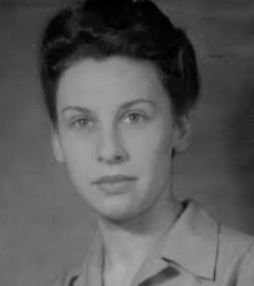
Where do you get your ideas from? Is a common question asked of authors. My answer is, my ideas always stem from my characters. Where do my characters come from? The answer to that question is various sources, including old photographs. Here’s an example of a nurse in the Spanish Civil War. I don’t know her name or background, but her strong features immediately spoke to me and just by studying the picture a fictional character, Lise Lazard, took shape. You can read about Lise in Branches, book two in The Olive Tree, A Spanish Civil War Saga. Available soon 🙂
I write, therefore I am…
In September 1953, sugar rationing in Britain finally came to an end. The wartime government introduced it in January 1940. A weekly sugar ration ranged from 8oz to 16oz per week.
Where to collect your ration if you lived in Birmingham. Maybe we’ll see similar Brexit inspired posters in the new year.
Station IX, which developed weapons and gadgets for SOE agents, created a small motorcycle called the Welbike. Although 3,641 bikes were produced they were rarely employed by the SOE. Instead they were issued to the 1st and 6th Airborne Divisions who used them during the Anzio and Normandy landings. The Welbike also featured at Arnhem during Operation Market Garden.
Bulgarian joke. Red Bull gives you wings. Vodka gives you 4×4 🤣
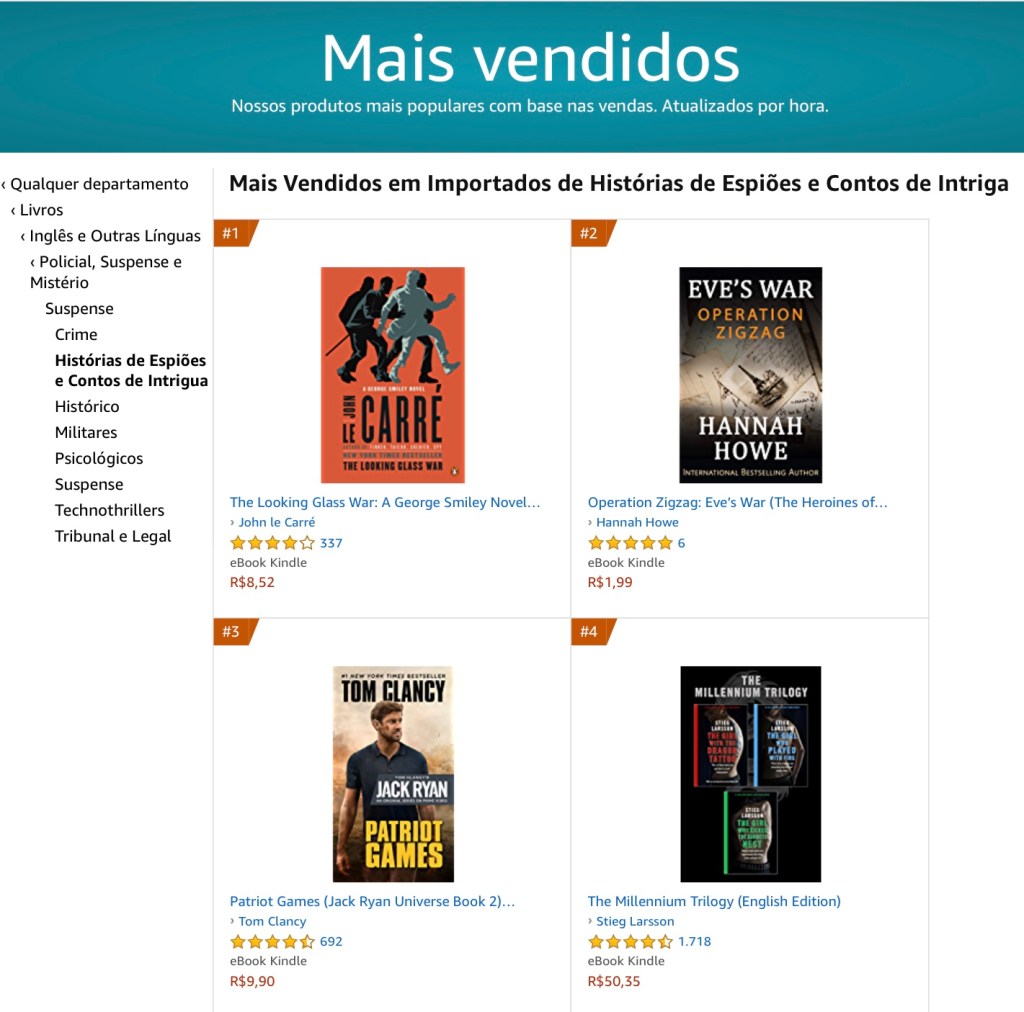
One for the album. Operation Zigzag has entered the Brazilian chart alongside John le Carre, Tom Clancy and Stieg Larsson 🙂
Eve at #1 for the first time 🙂
Philosophy humour.
I’m reading A Moment of War, Laurie Lee’s lyrical account of his time in the Spanish Civil War.
“Eulalia turned and smiled at me brilliantly, showing her tongue, her face cracking open like a brown snake’s egg hatching.”
Vertigo, what vertigo?! Acrobats do their thing on top of the Empire State Building, 1934.
A lovely weekend for my Eve’s War Heroines of SOE Series, #1 in America and Britain, and now in Australia 🙂
Fat Banished!
No exercise!
No diets!
No baths!
No ill effects!
No danger!
Easy to swallow!
The solution you’ve been waiting for, sanitised tape worms!
October 1944, the Allies cross the Belgium-Germany border and prepare to write the closing chapters of World War II with the defeat of Hitler’s brand of fascism.
My article about SOE agent Odette Sansom is on page 24 of this month’s Seaside News 🙂
“We all have our time machines, don’t we. Those that take us back are memories…And those that carry us forward, are dreams.” – H.G. Wells, 21 September 1866.
19 September 1944. Dutch residents of Velp welcome British Sherman tanks of 30 Corps as they advance towards Grave and Nijmegen.
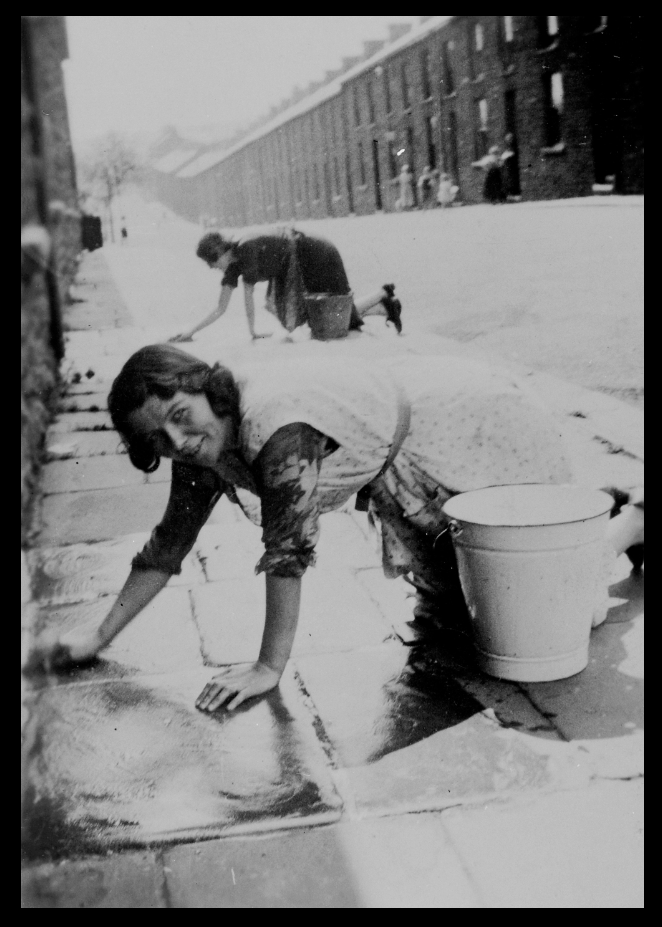
From The People’s Collection Wales. A common sight in the Victorian era and first half of the twentieth century, housewives scrubbing their front doorsteps.
A clean doorstep was regarded as a badge of pride.
Pictured, Mrs Blodwen Williams of Ynys-y-bŵl during the 1930s.
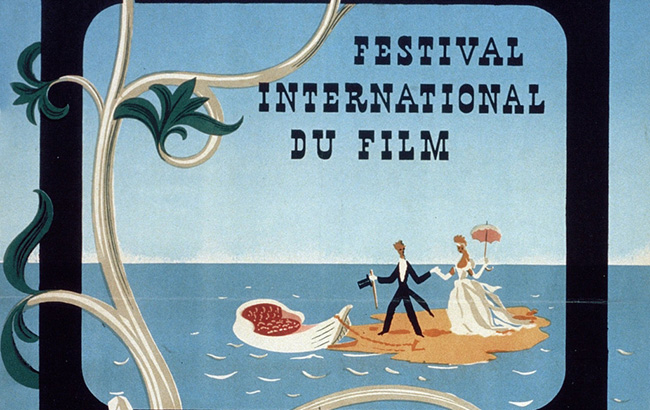
This week in 1946, filmmakers from twenty-one nations arrived in Cannes, an already-glamorous resort on the French riviera, and presented their films to their peers, establishing the Cannes Film Festival.
My Eve’s War Heroines of SOE series has entered the top five. We will start promoting the series during the autumn so I’m hoping it will attract more readers. From my point of view, it’s a great series to research and write.
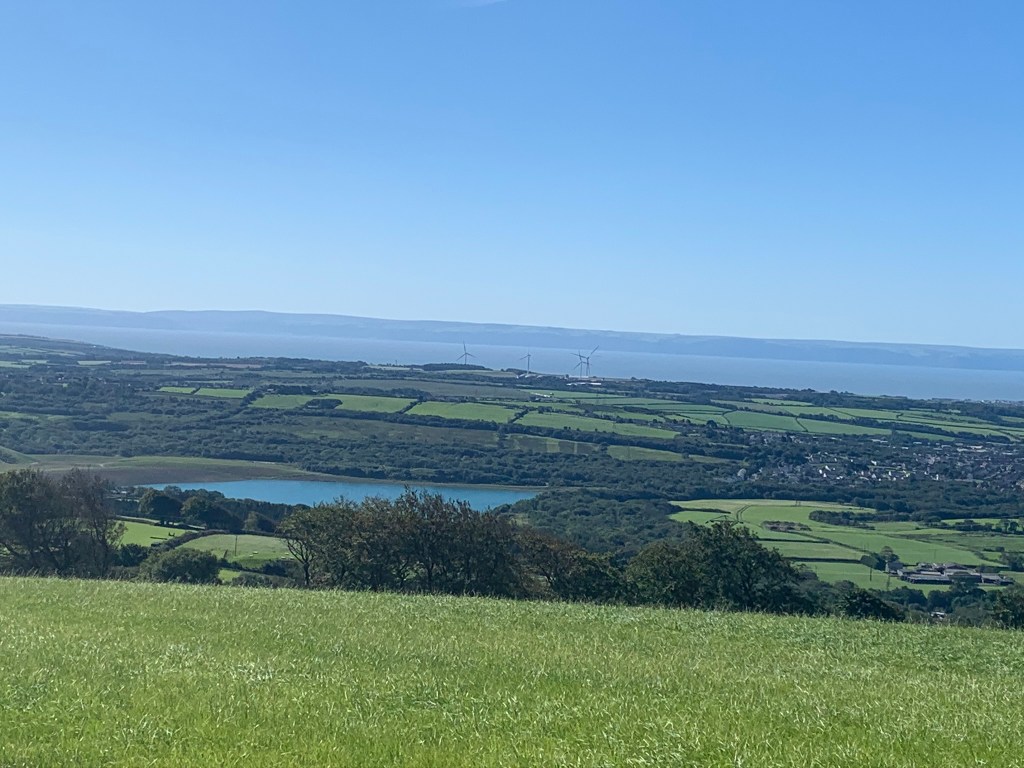
Views from the Bwlch this week.
Health and Safety takes a holiday. Painting the Eiffel Tower in 1932.
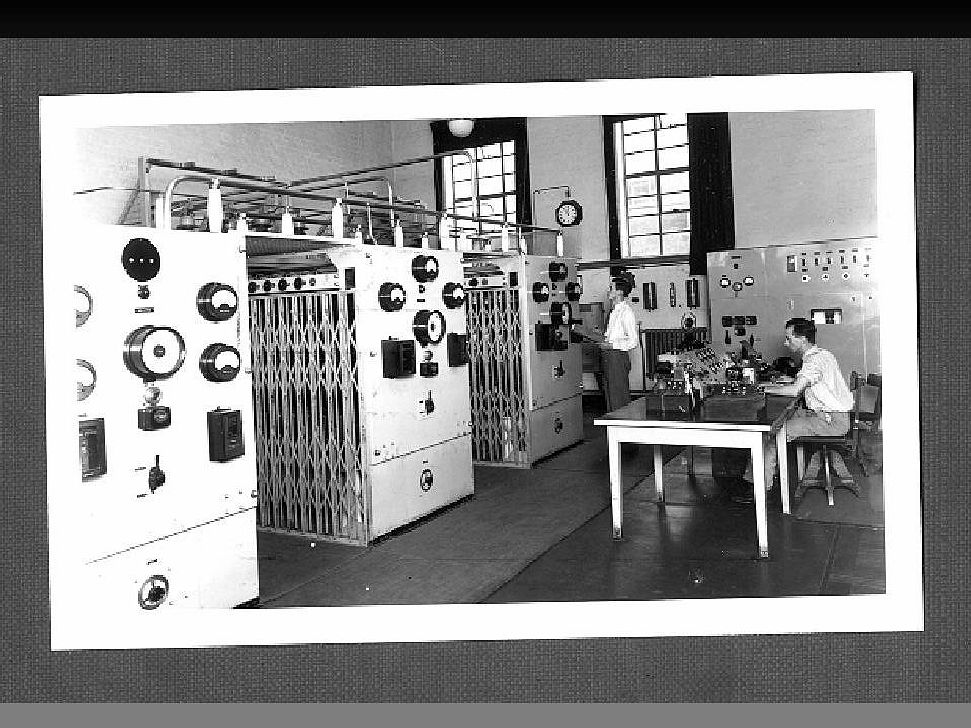
Pictured in 1942, the long wave radio transmitter at Criggion Radio Station, mid-Wales. The centre was vital to British communications during the Second World War.
I’m researching songs of the Spanish Civil War. This is A Las Barricadas, To The Barricades, a rousing call to arms based on Whirlwinds of Danger, Warszawianka, a Polish song.
Eileen Nearne who, along with her sister Jacqueline, served in France as an SOE agent. After transmitting over one hundred messages, Eileen was captured by the Gestapo. However, she escaped. Read her remarkable story here https://hannah-howe.com/eves-war/eileen-nearne/
Published this week, Looking For Rosanna Mee, my seventeenth Sam Smith Mystery. The intention was to write just the one book, but Sam thought otherwise…
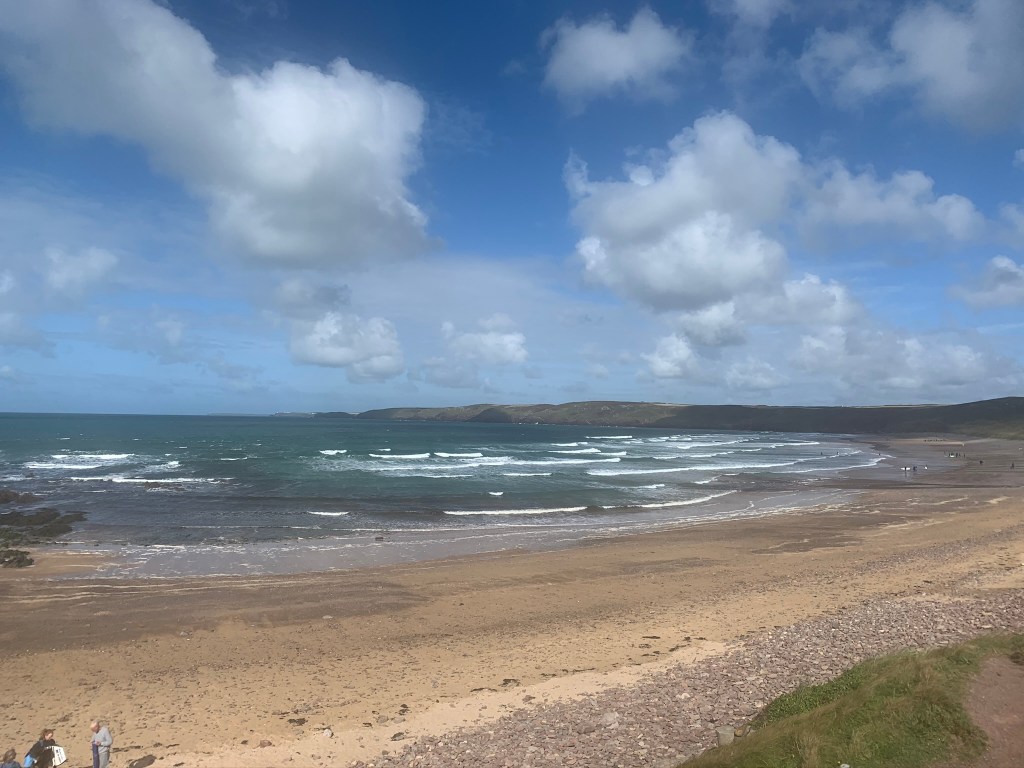
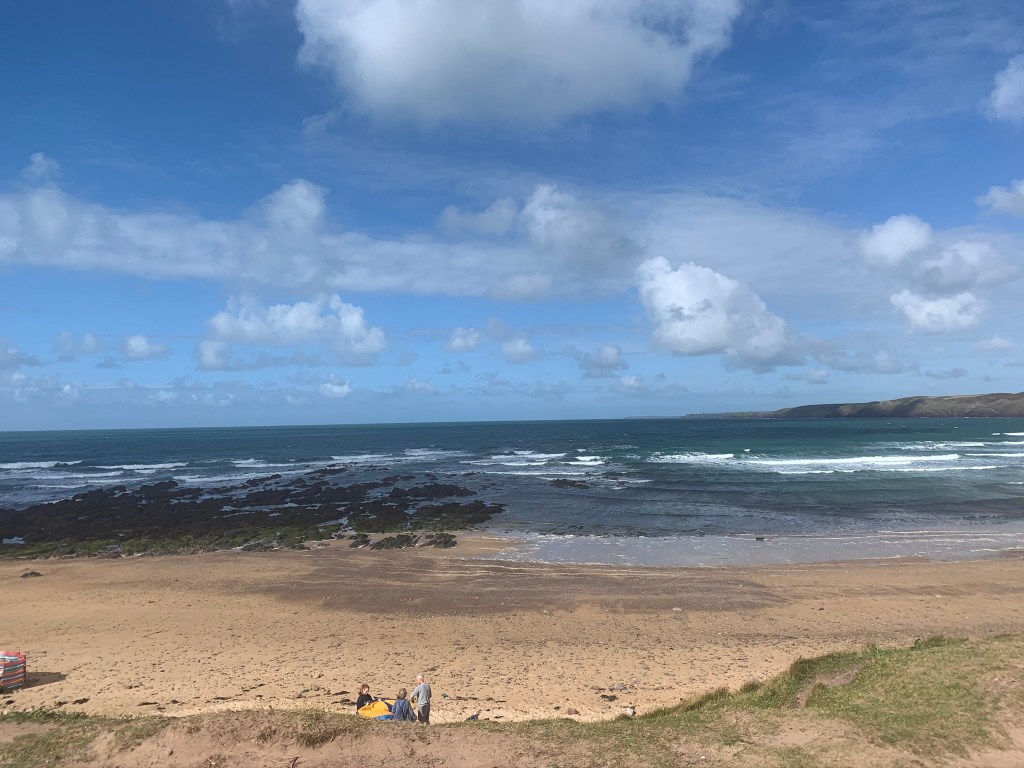
Freshwater West this week.
Maslow’s hierarchy for modern times 🤣
A tearful farewell at Paddington Station c1942, by Bert Hardy.
In 1952, Dwight Eisenhower gave a speech to D-Day veterans, discussing those who‘d died under his command. Before D-Day, he wrote a letter stating that whatever the outcome he’d take full responsibility. The memories moved him. Great leaders have empathy, they respect their men.
Delighted to announce that my Eve’s War Heroines of SOE Series will be translated into German 🙂
Introduced in Paris in 1932, this is the Cyclomer, an amphibious bicycle. With four air-filled floats for buoyancy and propelled by two fan blades, as you might have gathered the idea didn’t catch on.
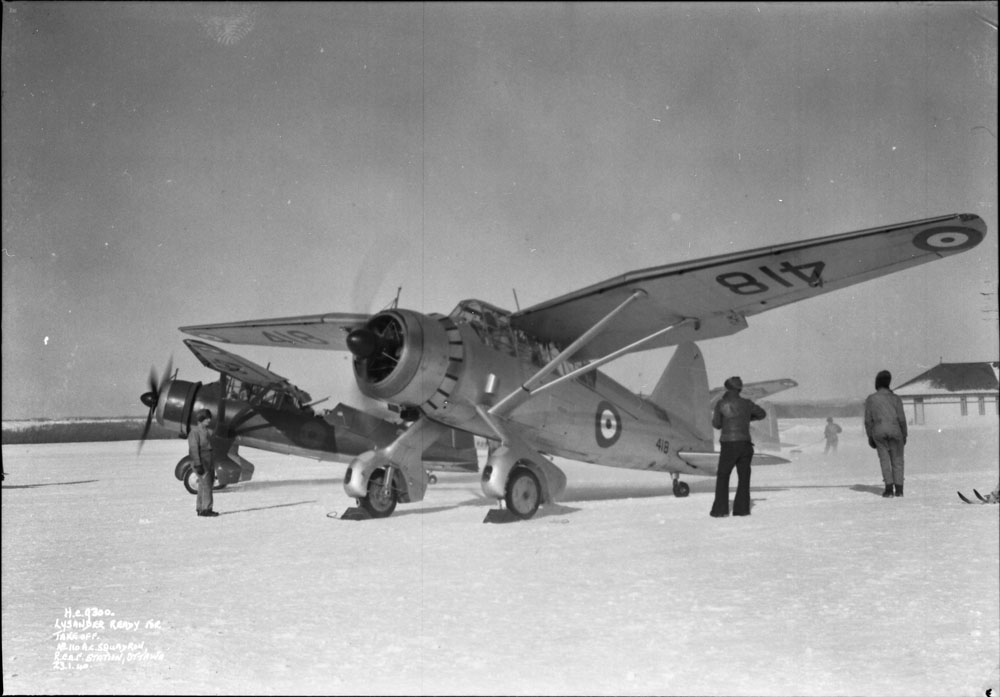
I’ve completed the writing of Operation Broadsword, book three in my Eve’s War Heroines of SOE Series. Editing to follow. This story ends with a Westland Lysander, a short-range aircraft that was adapted for clandestine operations.
The Lysander could use small, improvised airstrips and therefore was well suited to delivering and recovering agents from behind enemy lines particularly in occupied France with the help of the French Resistance.
Just made a bread pudding, based on my grandmother’s recipe 🙂
Cécile Rol-Tanguy and Henri Tanguy, the French Resistance couple who conducted clandestine operations, relayed confidential messages and participated in the liberation of Paris. Read their remarkable story here 👇
The Rance in Dinan. Eve was in Dinan this week, in Operation Broadsword, book three in my Eve’s War series. She is trying to get rid of a million francs, which is proving surprisingly difficult.
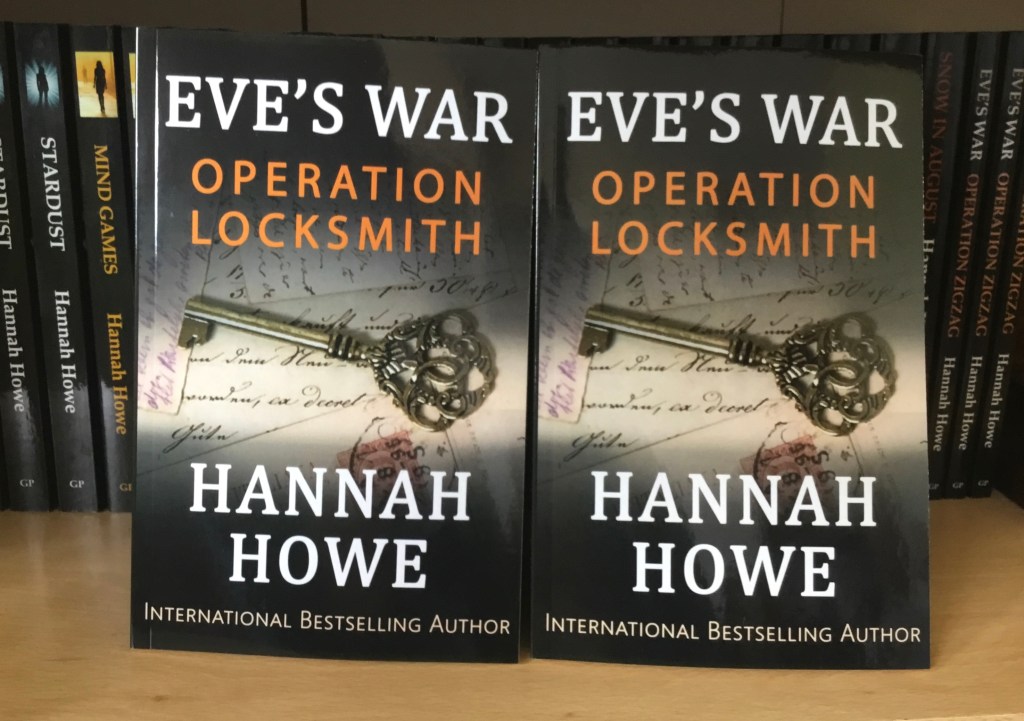
The print copies of Operation Locksmith have arrived 🙂
Café Society, Paris 1925.
I’m eclectic. Which one are you?
My latest translation, the German version of Operation Zigzag, book one in my Eve’s War Heroines of SOE Series. Great to see that readers in Germany are also downloading the English version.
The streets of London, 1930. The car on the right is a Burney, made by Streamline Cars Ltd and designed by Dennis Burney in 1927.
A walk through the woods this week, Craig yr Aber, Glamorgan.
First Officer Maureen Dunlop was a ferry pilot for the Air Transport Auxiliary. The women of the ATA transported newly manufactured aircraft from factories to aerodromes throughout Britain. She was trained to fly 38 types of aircraft, including Spitfires, Mustangs, Typhoons and bombers.
Four ‘It Girls’ dressed for an evening out, 1927.
I’m a Surrealist. How about you?
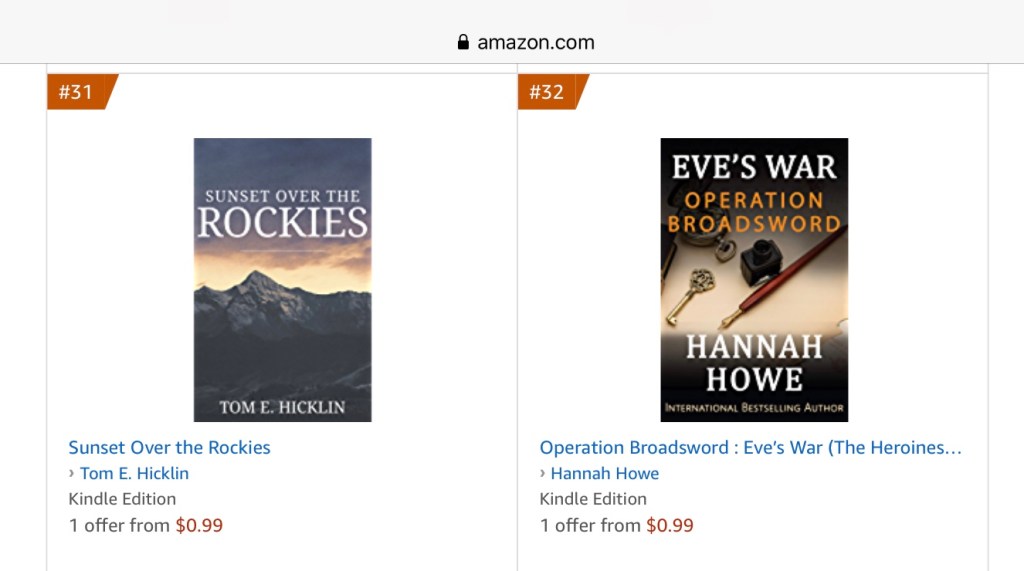
Excited to see that Operation Broadsword, book three in my Eve’s War Heroines of SOE Series, is ranked #32 as a hot new release. The book will be published in November 🙂
Heroines of the SOE
Anne-Marie Walters
On 21 June 1944, 2,000 Nazi soldiers attacked a pocket of the French Resistance. During the battle, Anne-Marie distributed hand-grenades and buried incriminating documents in a cave under a church. She also collected SOE money and took it with her as the Resistance withdrew from the village.
I’m writing chapter one of Operation Broadsword, book three in my Eve’s War Heroines of SOE series. Eve is preparing to parachute into France. The SOE give her French-tailored clothes, with jackets ten inches longer than British and American fashions, plus a gun, a .32 pistol made in Czechoslovakia. Blank pages are daunting, but the sight of a completed page is still very exciting.
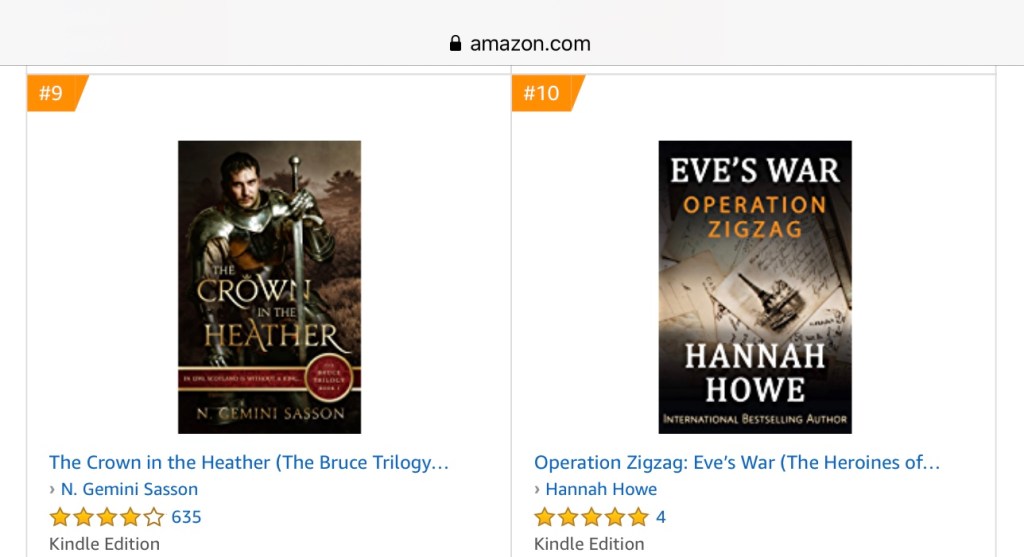
Operation Zigzag has entered the top ten of Amazon’s war chart 🙂
Spitfire pilots, 1940, who helped to win the Battle of Britain.
Read this from the top to the bottom, then from the bottom to the top.
I’m Greek 😱
Palace Chateaubriand in October 1944 during the siege of St Malo. Vogue carried an eight page report on the siege, filed by Lee Miller, a model and fashion photographer. The only journalist in the city during the siege, she wrote, “My heel sank into a disembodied hand, and I cursed the Germans for the horrible destruction that they had inflicted on this once-splendid city.”
Money does not make you immortal. The quest for unlimited wealth is a desperate attempt to fill a hollow soul, to attain happiness when the simple things in life are deemed ‘inadequate’. It is a Midas shadow that condemns the seeker to a life of darkness.
On 8 August 1944, British, Canadian and Polish forces launched Operation Totalize, the first phase of the Falaise Pocket, which pushed the Nazis out of Normandy. Picture: a Cromwell tank and Willys jeep passing an abandoned German 88 mm anti-tank gun.
Army trucks, cars and motorcycles for sale in Britain, 1946.
An early example of a ‘zebra crossing’ 😉
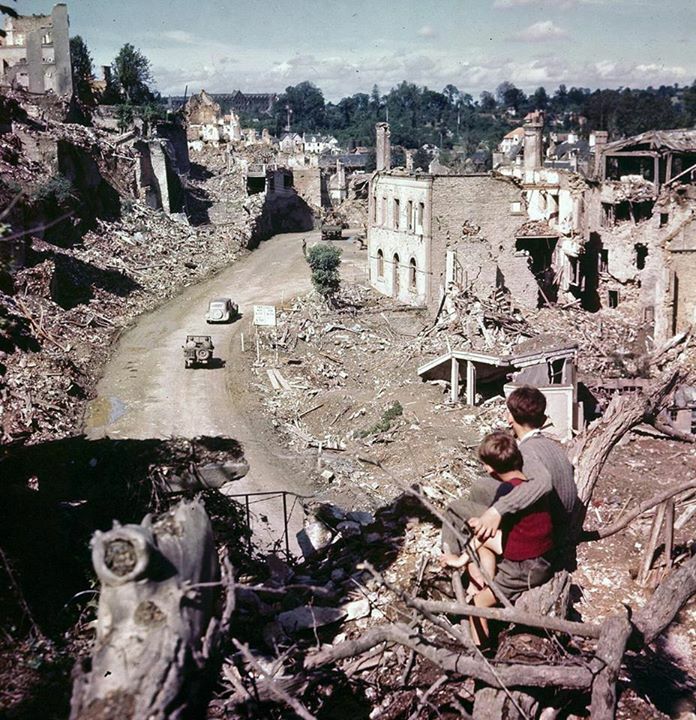
The Battle of Saint-Lô took place between 7 – 19 July 1944. Located at a strategic crossroads, the Americans bombarded the city destroying ninety-five percent of it before driving the Nazis out. In his report, Samuel Beckett dubbed the martyr city “The Capital of Ruins”.
Pictured, two French boys watch from a hilltop as Allied vehicles pass through the city in July 1944.
The great thing about writing and publishing is there are always new stories to write and new pastures to explore. Delighted to announce that my Ann’s War series will be translated into Afrikaans 🙂
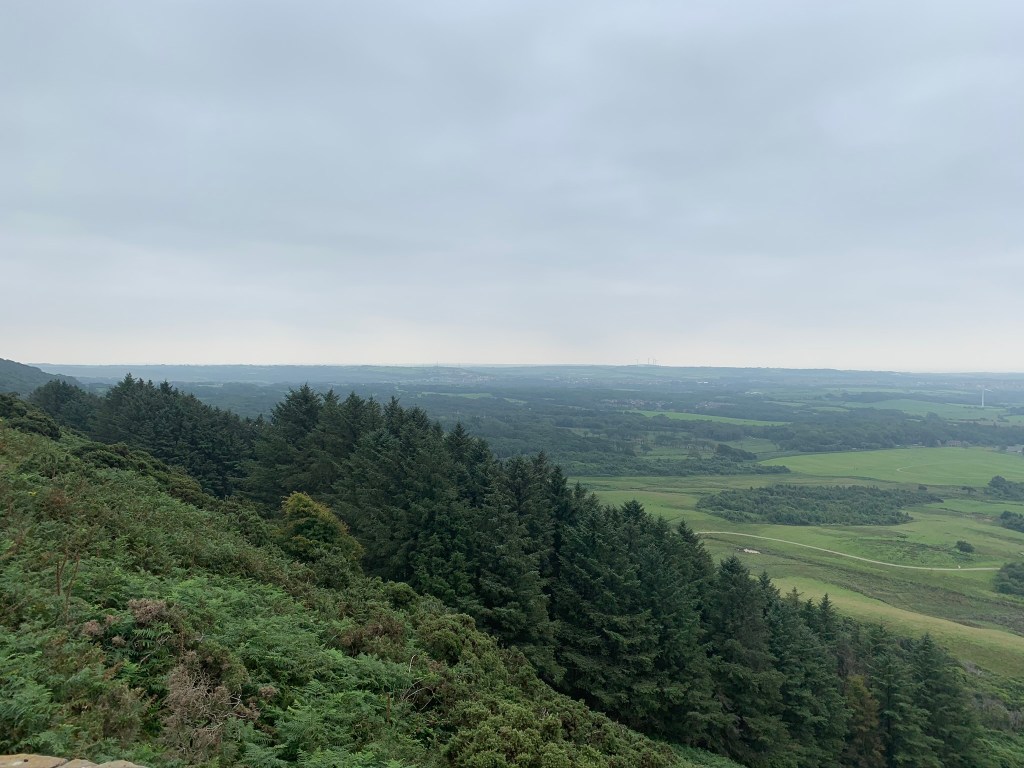
A muggy morning on Margam Mountain.
Apologies for the formatting errors. These are supplied by WordPress.
Odette Sansom, also known as Odette Churchill and Odette Hallowes, was born on 28 April 1912 in Amiens, France. Her father, Florentin Désiré Eugène ‘Gaston’ Brailly, was killed at Verdun shortly before the Armistice in 1918.
Odette Sansom
As a child, Odette contracted serious illnesses which blinded her for three and a half years. She also contracted polio, which left her bedridden for a number of months.
As an adult, Odette met an Englishman, Roy Patrick Sansom (1911–1957), in Boulogne and married him on 27 October 1931. The couple moved to Britain where they produced three daughters. Roy Sansom joined the army at the beginning of the Second World War. Two and a half years later, in the spring of 1942, Odette responded to an Admiritaty appeal for photographs of the French coast. Those photographs brought her to the SOE’s attention and the secretive organisation promptly recruited her into their service.
With her three daughters in a convent school, Odette trained as an SOE agent. At first, Odette’s instructors regarded her as too temperamental and stubborn for the SOE. One report stated, “She is impulsive and hasty in her judgments and has not quite the clarity of mind which is desirable in subversive activity. She seems to have little experience of the outside world. She is excitable and temperamental, although she has a certain determination. However, she is patriotic and keen to do something for France.”
George Starr, a successful agent who clashed with many of the female agents, particularly the attractive ones, described Odette as “a dreadful lady.” In particular, he deplored her “seductive behaviour.”
Odette landed on a beach near Cassis on the night of 2 November 1942. There, she made contact with Captain Peter Churchill. Her initial objective was to contact the French Resistance on the French Riviera and establish safe houses for other agents in Burgundy.
In January 1943, to evade arrest, Churchill and Odette moved their operations to Annecy in the French Alps. The couple resided at the Hotel de la Poste in the village of Saint-Jorioz. The hotel became a meeting place for agents, which aroused suspicion.
Spy-catcher Hugo Bleicher proceeded to Saint-Jorioz where he introduced himself to Odette as “Colonel Henri.” He suggested that they should travel to London to “discuss a means of ending the war.” Odette reported this meeting to her superiors and they warned her to sever all contact with Bleicher.
At the time of Bleicher’s meeting with Odette, Peter Churchill was in London consulting with the SOE. They warned him to avoid contact with Odette and “Colonel Henri” on his return to France. However, when he parachuted into Annecy during the night of 14 April 1943, he met Odette and they proceeded to the hotel in Saint-Jorioz. At 2 am on the 16 April, Bleicher, no longer in the guise of “Colonel Henri,” appeared in the hotel and arrested Odette and Churchill.
At Fresnes Prison, near Paris, Odette was interrogated by the Gestapo
fourteen times. Despite brutal torture, she stuck to her cover story and insisted that Peter Churchill was the nephew of Prime Minister Winston Churchill and that he knew nothing of her activities. The idea was, as a relative of Winston Churchill, the Gestapo would keep Peter Churchill, and Odette, alive as bargaining chips.
Nevertheless, in June 1943, the Gestapo condemned Odette to death on two counts to which she responded, “Then you will have to make up your mind on what count I am to be executed, because I can only die once.” Infuriated, Bleicher sent her to Ravensbrück Concentration Camp.
Ravensbruck Concentration Camp
In Ravensbrück, the Nazis kept Odette in a punishment cell on a starvation diet. However, her earlier blindness and paralysis, and the example set by her grandfather, who “did not accept weakness very easily”, aided her survival. Furthermore, she accepted in advance that the Gestapo might capture her and that she might die.
Odette adopted an attitude of defiance and found that this attitude earned a degree of respect from her captors and strengthened her mind.
Later, Odette insisted that she was not brave or courageous, but that she just made up her mind about “certain things.” She recalled in a post-war interview that while everyone has a breaking point, her feeling was that if she could “survive the next minute without breaking up, that was another minute of life.”
Because of her past illnesses, Odette knew that she could accept her situation and survive it. By accepting death, she felt that, “They would not win anything. They’ll have a dead body, useless to them. They won’t have me. I won’t let them have me.”
In general, the Gestapo found people of the prisoners’ own nationality to carry out their torture, so that the prisoners could not say they were tortured by the Nazis. Odette’s torture was carried out by a “very good-looking young Frenchman” who she believed was mentally ill.
In August 1944, with the Allies advancing on Ravensbrück, the camp commandant, Fritz Suhren, took Odette and drove her to an American base to surrender. He hoped that her supposed connections to Winston Churchill would allow him to negotiate his way out of execution.
In 1946, at the Hamburg ‘Ravensbrück Trials’, Odette testified against the prison guards charged with war crimes and this resulted in Suhren’s execution in 1950.
Odette receiving her George Cross
Odette’s wartime experiences led to a complex personal life. She divorced Roy Sansom in 1946 and married Peter Churchill in 1947, only to divorce him in 1956. That year, she married Geoffrey Hallowes, a former SOE officer.
Odette’s SOE experiences were chronicled in a movie, Odette, which was released in 1950. Anna Neagle played Odette while Trevor Howard played Peter Churchill. Odette insisted that the film should not be made in Hollywood for fear that her story would be fictionalised. The movie, a great success, ensured that Odette became a celebrated member of the SOE.










































 Hannah Howe