Categories
1962-63

Social History 1962-63 #5

Thursday 27 December 1962

Boxing Day Rail Disaster – Express Ploughs Into Crowded Train. Seventeen Killed. Fifty Injured. The Glasgow to London train ploughed into the back of a mainline train. The crash came in a snow storm near Wingsford, Cheshire. An inquiry is ongoing.

The holiday road death toll was down 25%, but heavy snow, ice and slush brought new dangers last night. The RAC said, “There were few cases of bad driving and the 50mph speed limit has been observed.”

Nineteen football matches were called off and three abandoned because of frozen pitches. All ten Rugby League and most of the Rugby Union matches were called off.

Salvation Army bandsmen playing Christmas carols in Sunderland had to stop because of frozen trombones.

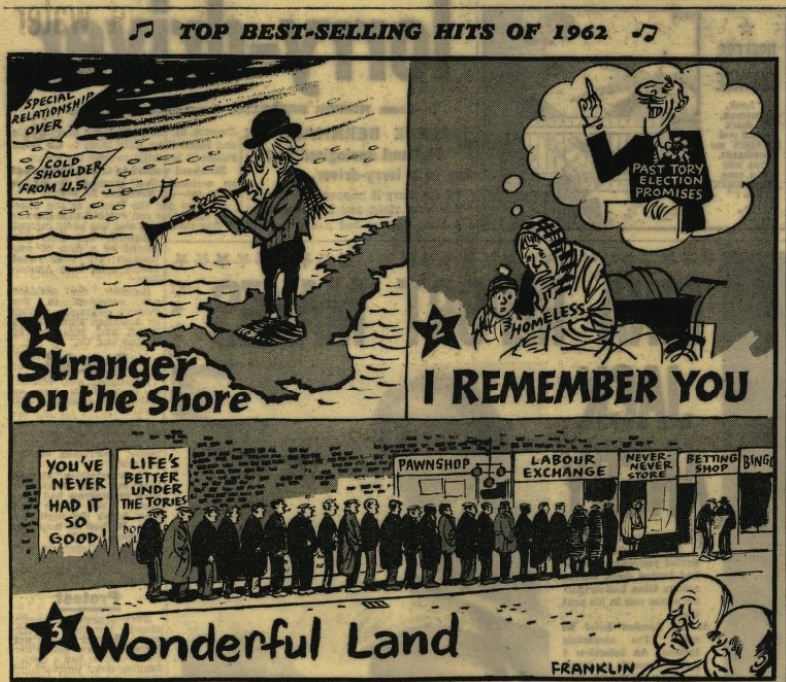
The disc they can’t forget – Frank Ifield’s I Remember You, which has just been voted the single of the year by disc columnists in a poll organised by Melody Maker. Acker Bilk came second with Stranger on the Shore. Let There Be Love by Nat Cole and George Shearing was third.

The women of Dungeness, Kent defeated their menfolk in the village’s annual tug o’ war.

Television highlights: Sooty and Sweep, Professional Boxing, The Royal Ballet.

Radio highlights: Housewives’ Choice, Smash Hits.

Weather: mainly cloudy with rain and sleet. 3c 37f.
Friday 28 December 1962

No Let-Up in White Nightmare. The Big Shiver Goes On Today. Threat To Sport at Weekend. The Big Freeze kept a firm grip on slip-slide Britain last night. And there is NO SIGN of a thaw. The roads were grim and grisly with snow up to a foot deep. The trains ran late with restricted services. A spokesman said, “We are in dire trouble.” And sport is faced with a big fade-out at the weekend.

The Duke of Windsor said “No comment” about his reported talks with Nazis in the mid-1930s. In official documents published today the Duke apparently spoke well of Hess and wished to meet Hitler. He disapproved of Britain siding with the French.

Television highlights: Johnny Mathis, A Suspicion of Poison – Chemical Fertilisers and Food, Gardening Club with Percy Thrower.

Radio highlights: Folk Weave, Time For Old Time, Refugee Conversations.

Agony Aunt. Is my husband right when he says that most men sleep on the left-hand side of the bed? Jane Adams’ reply: He’s wrong. Most men sleep on the right-hand side of their wives.

After being delayed on his journey from Merthyr to London, Howard Winstone, British featherweight champion, enjoyed a double-quick win over American Teddy Rand last night. It was all over half-way through the third round. I have never seen the Welshman in such a devastating mood. 

On tour in America, singing star Shirley Bassey, 25, has lost her voice. Her friend, model Hazel Graham said last night, “It’s this wretched central heating. It’s not the temperature so much as the dryness.”

Weather: more snow, cold. Outlook – continuing cold with further snow.

Saturday 29 December 1962

There’s no sign of a let-up in the Big Freeze. Water shortages are expected and people are being warned to keep off the ice.

Days lost to strikes in 1962: 5,717,000. Days lost to strikes in 1961: 2,970,000.

A nightclub guitarist stopped at customs had 1 1/4 lb of Indian hemp – worth £500 – sewn into his waistcoat a court heard yesterday. The guitarist, Peter Watson, told the court: “I was bringing it in to sell in coffee bars.” He was fined £200, or four months in prison.

Between 1950 and 1961, the number of women working part-time in industry rose by nearly 100,000 to a total of 390,700 the Labour Ministry said. Most of these women were married.

One in every eight babies born in London last year was illegitimate. The number has soared over the past six years to reach 7,632 in 1961. This is twice the rate for the rest of the country. A London welfare worker blamed drink and higher incomes for the illegitimate births. “There are too many girls living in bedsits and throwing bottle parties,” she said.

Three masked men in shortie raincoats snatched about £1,100 in a raid at London’s docks yesterday. However, the gang missed a box containing a larger sum of money.

Television highlights: 77 Sunset Strip, The Adventures of Jane, Have Gun Will Travel.

Radio highlights: Requests, Transatlantic Tops.

It looks like being a weekend for the can opener as far as vegetables are concerned. The bad weather means that most greengrocer’s shelves are now bare. 

Only nineteen matches in the four English football leagues have survived the weather – and some of them might be called off.

Weather: Very cold with snow and fog. 0c 32f.

Sunday 30 December 1962

Snow, ice, fog, frost, freezing rain. The old, cold year of 1962 is slipping and slithering out. The whole of Britain is in deep-freeze with every county hit by snow and ice. Last night, Devon Police were planning a helicopter drop of bread to Dartmoor Prison, which was cut-off by snow drifts. The River Thames was frozen for a quarter of a mile at Windsor, the first time such a stretch has been frozen since 1947. 

At La Roche-sur-Yon in western France they had pink ice. A tanker overturned and 1,500 gallons of wine flowed into the river, turning the water pink. 

Lessons on income tax and higher purchase agreements will be given to secondary school children next year. The aim of the lessons is to help older children with money matters and make them aware of the dangers of never-never agreements.

From Tuesday it will be illegal to keep mink without a £5 licence.

Television highlights: Z Cars. Sunday Night at the London Palladium with Vera Lynn. Music For Dreaming.

Radio highlights: Pick of 1962 Pops. Top Twenty.

Football: 42 matches called off. Only two games played in Division One: Burnley 4 Sheffield Wednesday 0, Nottingham Forest 3 West Ham 4.

Weather: cold or very cold with snow.

Monday 31 December 1962

Day of the Cruel Snow. Blizzard-lashed Britain is tackling the snow and ice chaos that has brought the country to a freezing halt. “It’s going to be grim,” say the AA. “Leave your car at home.” British Railways warn, “Expect delays and cancellations.”

The White Horror blocked 95,000 miles of road yesterday. Motorists abandoned snow-bound cars and many villages were cut-off. The heroes of the snow were still working early today – helicopter pilots, road rescue teams, ambulancemen, railmen and milkmen.

One fire in every seven is caused by an unstubbed cigarette end. Mr Denis Lawson, director of the Fire Research Station at Elstree said, “The burning cigarette end is certainly the villain of our piece. We don’t know why, but smokers appear to be increasingly careless with their butts.”

I spent half an hour yesterday cleaning the snow from my car – then I discovered that it belonged to the guy next door.

Television highlights: New Year Party at the White Heather Club, Hogmanay, Sing in the New with Ewan MacColl and Peggy Seeger.

Radio highlights: Big Ben at twelve. New Year Revels.

Sixty-seven football league games were knocked out of the programme between 22 and 29 December, and more than a million fans got the cold shoulder from the postponements. Now, another week of chaos threatens soccer. Should clubs install under-soil heating? Or is summer soccer the answer?

Weather: still cold with snow at times.

Coming soon, Songbird, my novel set in the winter of 1962-63

https://books2read.com/u/bMqNPG

New Release

Hollywood, 1948

My name is Dana Olsen. In my early twenties, I arrived in Hollywood with dreams of becoming a screenwriter. Instead, I found myself attached to a leading movie producer, running errands. Then, when a famous movie director was murdered, events embroiled me in the murder enquiry, and thrust me into the arms of a handsome detective who was investigating the case.

The murder enquiry was the sensation of the age, and its solution threatened to tear down the foundations of Hollywood itself.

***

For Authors

#1 for value with 565,000 readers, The Fussy Librarian has helped my books to reach #1 on over thirty occasions.

A special offer from my publisher and the Fussy Librarian. https://authors.thefussylibrarian.com/?ref=goylake

Don’t forget to use the code goylake20 to claim your discount 🙂

Categories
Dear Reader

Dear Reader #113

Dear Reader,

We are making great progress in translating all my books into Portuguese. Here is the latest addition, Stormy Weather, Sam Smith Mystery Series book eighteen. The theme of this story is the climate crisis.

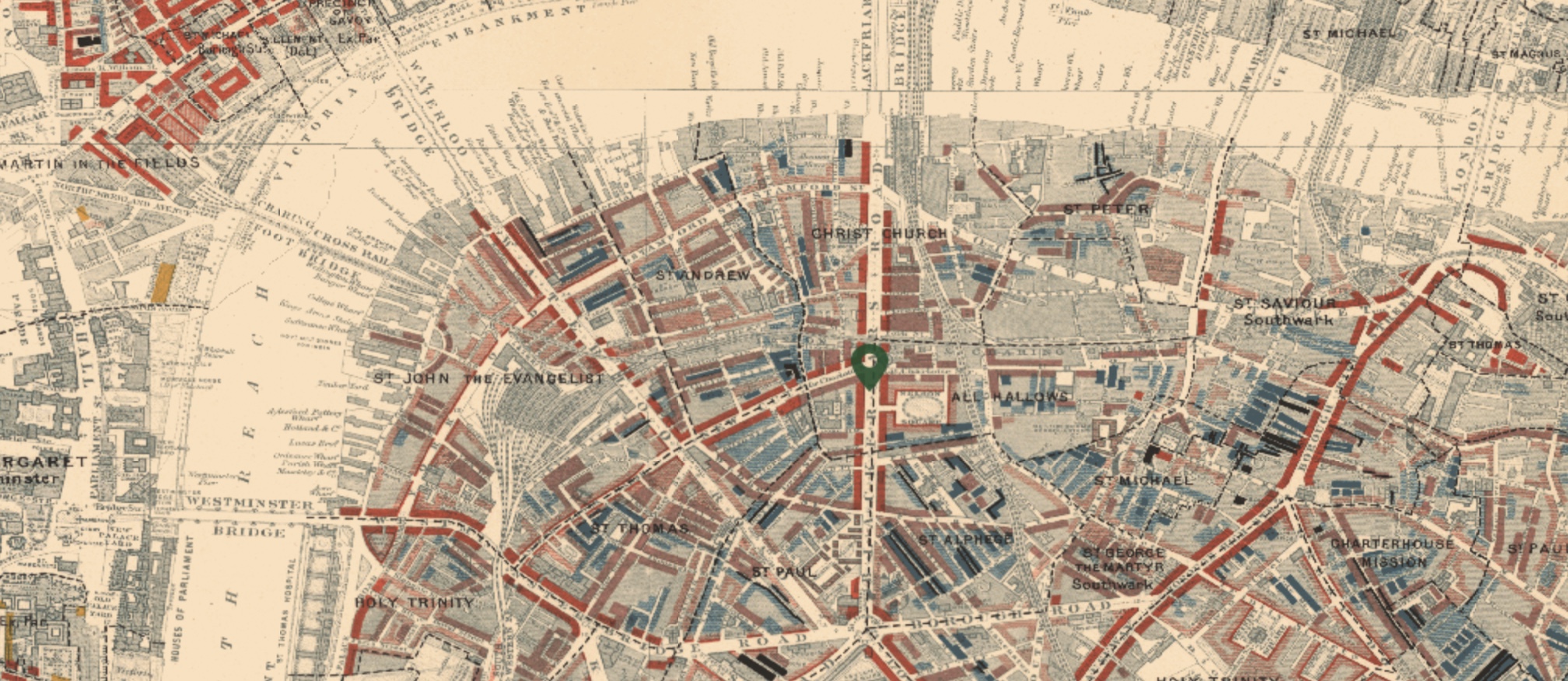
I’m researching my 4 x great grandparents, John Glissan and Sarah Foreman. John was a surgeon/dentist/chemist while Sarah was a nurse/dentist/chemist. In the 1830s they were living on Blackfriars Road, a prosperous street according to Charles Booth’s Victorian maps. Incidentally, my youngest son is thinking of becoming a dentist 🦷 

Just discovered that in the third quarter of the eighteenth century my ancestor Thomas Glissan subscribed to ‘Essays and Poems, Satirical, Moral, Political, and Entertaining’, by J.S. Dodd, which is still available.

In this month’s issue of Mom’s Favorite Reads eMagazine…

Bushcraft and Survival Skills

The Olympics

Side Benefits of Writing

World Honey Bee Day

Plus photography, puzzles, poems, recipes, short stories and so much more!

My 11 x great grandfather William Dent was born into a life of privilege in 1627 in Ormesby, Yorkshire. He married Elizabeth Jarrett on 16 July 1650 and the couple produced four sons: Robert, John (my direct ancestor), Charles and Edward, who sadly died in infancy. Robert entered Jesus College, Oxford on 28 May 1672 as ‘Robert Dent, son and heir of William Dent of Guisborough, gent.’ In July 1674, after college, Robert was admitted to the Middle Temple. 

In 1673 the Hearth Tax returns for Guisborough listed 214 households of which only twenty-one were taxed for possessing four or more hearths. William Dent’s property had nine hearths, which offers an insight into its grandeur. In later life William moved to Sunderland where he died in 1698.

The Dent branch of my family continued with John, son of William, William, John, George, William and Thomas Thompson Dent (11 February 1781 – 10 November 1854). By the eighteenth century the Dent family owned a number of properties throughout the North East of England. They farmed these properties as yeomen. 

John Dent, father of George, was born on 16 June 1700 in Romaldkirk, Yorkshire, the family’s main residence. Romaldkirk is a village in Teeside. It’s thought that its unusual name derives from St Rumwold, an obscure Saxon saint.

On 7 September 1715 John Dent became an apprentice merchant tailor to Peter King of York. Trade directories reveal that the Dents did branch out into the clothing trade with stores in Leeds. They also held on to their lands in Yorkshire.

John Dent’s Apprentice Indenture and signature

Thomas Thompson Dent married Betty Brown on 12 April 1806 in Bowes, Yorkshire. The couple produced six sons: Thomas Thompson Dent (my direct ancestor), John, William, George, Henry and Richard. 

In September 1842 Isabella Hutchinson was brought before the court and charged with stealing oats from one of Thomas Thompson Dent’s fields. Isabella cut off the ears of corn as they were growing. The case was proved and she was sentenced to one month’s hard labour in Northallerton gaol.

A contemporary newspaper report

In 1851 Thomas was seventy years old and a widower farming 200 acres in Lartington near Romaldkirk. His sons John, George and Richard, 42, 38 and 32 respectively, lived with him. All three were unmarried. A fourth son, Henry, had moved away from the family home. Three servants also lived on the farm: Mary Brunskill, 32, Sarah Langstaff, 25, and Joseph Minto, 22. Between master and servant events now took a romantic turn.

In 1840 the trade directories listed Richard Dent as a flour dealer no doubt trading in the crops grown at his father’s farm. Meanwhile, Sarah worked as a servant on the farm. The couple fell in love and married on 14 March 1857 in Romaldkirk. This was unusual for the Victorian era where there are plenty of examples of masters taking advantage of servants, but fewer instances of those encounters resulting in marriage.

Richard and Sarah’s marriage produced three children: Elizabeth, Mary Ann and Richard Thompson Dent. Sadly, Richard died in 1866, the year his son was born. 

Sarah lost her husband, but inherited a small fortune – the equivalent of £93,000 in today’s money. Sarah sold the farm and lived off her inheritance until her death in 1891. Despite her status of ‘highly desirable widow’ she didn’t remarry, maybe out of affection for her late husband. Certainly, her job as a humble servant on the Dent farm had turned her life around and placed her in a position where, financially at least, she had no reason to worry ever again.

Richard Thompson Dent, Richard and Sarah’s son, became a chemist in Barnard Castle, a highly successful chemist, for he left the equivalent of £235,000 in his will.

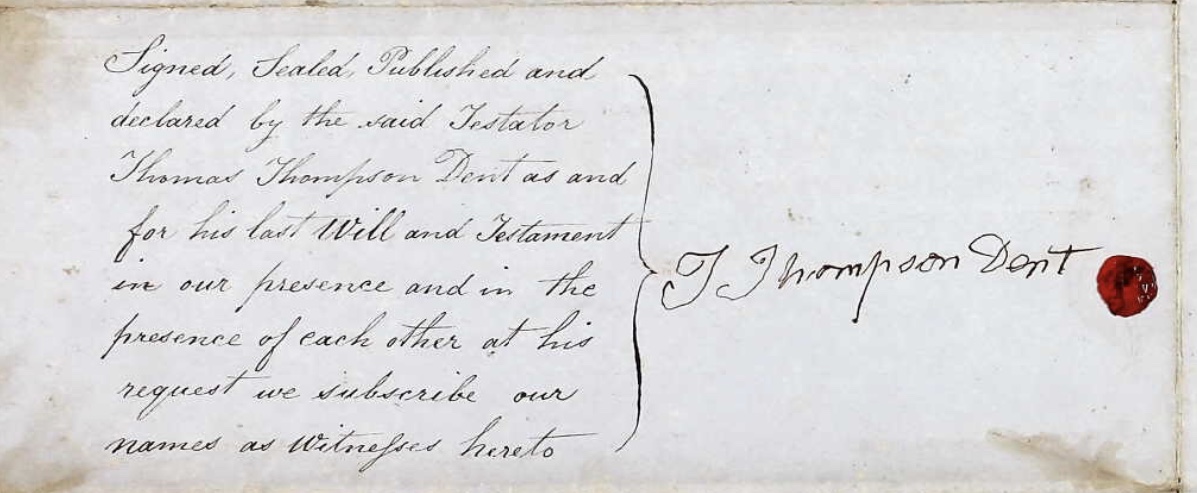
Thomas Thompson Dent’s will of 1854 bequeathed a farm in Cotherstone to his son John, another farm in Bowes to William, a third farm, also in Bowes, to Henry, and a fourth farm, again in Bowes, to Richard. Money, farming equipment and household utensils were also divided between the four sons.

Extract from the will of Thomas Thompson Dent and his frail signature 

But what of Thomas’ son and my direct ancestor, Thomas Thompson Dent Jr? Why didn’t the will mention him? The reason is Thomas Jr, his wife Dorothy Hornsby and their five children had set sail for New York en route to Canada, arriving on 24 June 1846. More about them next time.

As ever, thank you for your interest and support.

Hannah xxx

Bestselling psychological and historical mysteries from £0.99. Paperbacks, brand new in mint condition 🙂
https://hannah-howe.com/store/

Categories
Dear Reader

Dear Reader #85

Dear Reader,

Philosophical joke…

A new species discovered in 2020. As mankind goes backwards, the world continues to evolve.

A special week for Eve. Operation Zigzag is #1 while Operation Treasure, published 30 January, is #11 on the hot new releases chart 🙂

You make some interesting discoveries when you delve into the past…

15 August 1944, Allied troops landing in Provence. Colourised.

My 11 x great grandfather, William Hodsoll, was born in Ash by Wrotham, Kent in 1560. A gentleman farmer, William married Ellenor Dudley in Ash in 1587.

Ellenor was a widow. Born in Ash in 1562, she married Henry Parker in 1580 and gave birth to their son, Richard, a year later. Two years after that, Henry died and four years later Ellenor married William Hodsoll. 

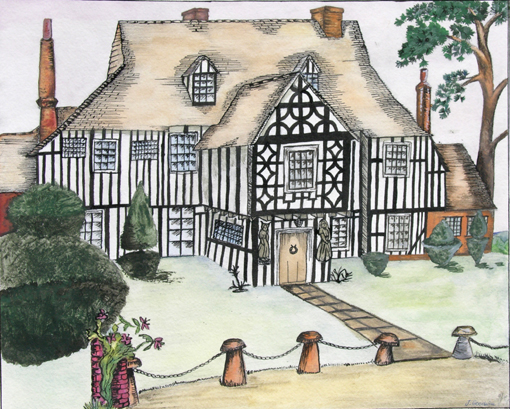
South Ash Manor House, the Hodsoll home. From the Kent Archeology website.

In his Will, dated 30 September 1616, William left his wife, Ellenor, a yearly rent of £50 plus his lands, tenements and inherited items.

William also deferred a loan to his wife, a debt accrued by his stepson, Richard Parker. The loan totalled £27 2s 6d, which Richard had to pay to Ellenor, his mother.

William was buried on 5 October 1616, so this Will was just about the last act of his life.

William’s horses also found they way to Ellenor along with his riding furniture. The Will strongly suggests that Ellenor was fond of riding, “furniture wch my sayd wyfe doth vse when shee rydeth or iornyth abroad.” 

Ellenor probably rode sidesaddle, a form of horse riding that developed in Europe in the Middle Ages. Sidesaddle allowed a woman to ride a horse in modest fashion while also wearing fine clothing.

William instructed Ellenor to offer board and lodgings to their son, William, my direct ancestor, and to give their other son, John, £300 “upon condition that, at or on the Feast of St. Michael 1618, he makes release by sufficient conveyance to said “sonne William” of all right and title “of & in all my Mannors, messuages, etc.”

A third son, Hewe, received £300 “at or on” 29 September 1620. While the executor was to pay “my sayd sonne Henry” £10 a year upon his making similar release to “my sayd sonne William”. Daughters Hester and Ellenor, at age 24, were to receive £100 each. 

Much of William’s original Will is damaged, but the pages that remain ofter an insight into his life. Although not as wealthy as his father, John, who outlived him by two years, William was still an extremely rich man who could afford a comfortable lifestyle.

William was a contemporary of William Shakespeare (both died in 1616) and it’s possible that he saw the original performances of the Bard’s plays. Certainly, he was aware of them.

Ellenor’s name is recorded in various forms across a range of documents, including Elianora, but in his Will, William writes her name as Ellenor. She died in Ash on 29 July 1631, aged 69 and survived at least three of her daughters.

– o –

My 10 x great grandfather, William Hodsoll, was baptised on 21 July 1588 in Ash by Wrotham, Kent. A gentleman farmer, he married Hester Seyliard in 1609, in Ash, Kent.

The Seyliards were a noble family that arrived in Britain from Normandy about a hundred years after the Norman Conquest and prospered through to the age of the Hanoverian succession.

Portrait of a Lady, c1600. Emilian School, artist unknown.

William and Hester produced four children, possibly five, before Hester’s premature death in 1623, aged 33. Their eldest son, Captain John Hodsoll, my direct ancestor, inherited the estate.

From 8 May 1598 in nearby Ightham, an example of the incidents that troubled the local court. “William Willmott, yoman, on 7 May, 1598, broke the head of Richard Austin with his dagger and drew blood. Fined 5s.—remitted because he is in the service of the lord.”

The remission of Willmott’s fine looks generous. However, on the same day the court heard that, “Richard Austin, labourer, attached to himself five other armed persons in the night of Saturday, 6 May, 1598, and they assaulted William Willmott in the mansion house called ‘Ightam Courtlodg’, and with an iron-shod stick which he held in his hands he broke the head of William Willmot, and drew blood, against the peace of our Lady the Queen and to the alarm of her people. Fined 5s.”

During William’s lifetime, the Hodsolls ceased to be the only manorial family resident in the parish. Although the family still enjoyed great wealth, there is a sense of slow decline, as a result of turbulent times and the number of progeny produced by each generation.

William lived through the English Civil War (1642–1651) also known as the English Revolution. The war pitted Oliver Cromwell’s Roundheads, the Parliamentarians, against Charles I’s Royalists, the Cavaliers, which ended with a Parliamentarian victory at the Battle of Worcester on 3 September 1651, and the beheading of Charles I.

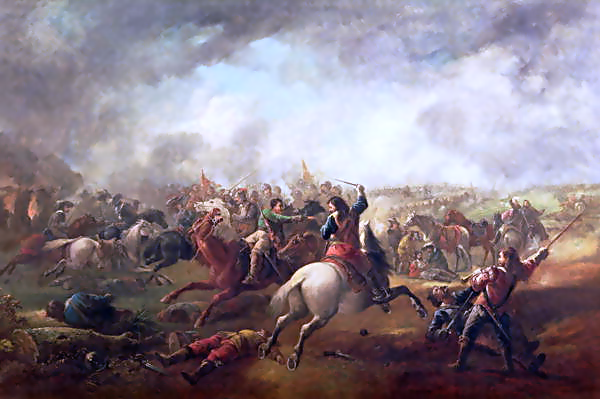
The Battle of Marston Moor, 1644. Artist, John Barker.

The Hodsolls could trace their family’s roots back to the English royal family, moved in royal circles and later served in Charles II’s navy, therefore it is fair to assume that they supported the Royalist cause. William was probably too old to participate in the Battle of Maidstone on 1 June 1648, but a victory for the attacking Parliamentarians meant that he had to tread carefully.

The Hodsolls did not lose their lands during the English Civil War and therefore it’s possible that they accommodated, and adjusted to, Cromwell’s victory.

St Peter and St Paul, Ash near Wrotham. Picture: John Salmon.

After Esther’s death, William married Elizabeth Gratwick and produced a second family with her. William died on 31 December 1663, aged 75. He was buried not with his predecessors in the nave of the parish church of St Peter and St Paul, but in the former Lady Chapel. This chapel became the Hodsoll chancel and many later generations of the family were also buried there.

This week, I added a Canadian branch to my family tree. Meet Elizabeth Dent and family, c1885. More about the Dents in future posts.

As ever, thank you for your interest and support.

Hannah xxx

Categories
Dear Reader

Dear Reader #69

Dear Reader,

Where do you get your ideas from? Is a common question asked of authors. My answer is, my ideas always stem from my characters. Where do my characters come from? The answer to that question is various sources, including old photographs. Here’s an example of a nurse in the Spanish Civil War. I don’t know her name or background, but her strong features immediately spoke to me and just by studying the picture a fictional character, Lise Lazard, took shape. You can read about Lise in Branches, book two in The Olive Tree, A Spanish Civil War Saga. Available soon 🙂
I write, therefore I am…

In September 1953, sugar rationing in Britain finally came to an end. The wartime government introduced it in January 1940. A weekly sugar ration ranged from 8oz to 16oz per week.

Where to collect your ration if you lived in Birmingham. Maybe we’ll see similar Brexit inspired posters in the new year.

Station IX, which developed weapons and gadgets for SOE agents, created a small motorcycle called the Welbike. Although 3,641 bikes were produced they were rarely employed by the SOE. Instead they were issued to the 1st and 6th Airborne Divisions who used them during the Anzio and Normandy landings. The Welbike also featured at Arnhem during Operation Market Garden.

Bulgarian joke. Red Bull gives you wings. Vodka gives you 4×4 🤣

One for the album. Operation Zigzag has entered the Brazilian chart alongside John le Carre, Tom Clancy and Stieg Larsson 🙂

Eve at #1 for the first time 🙂

Philosophy humour.

I’m reading A Moment of War, Laurie Lee’s lyrical account of his time in the Spanish Civil War.

“Eulalia turned and smiled at me brilliantly, showing her tongue, her face cracking open like a brown snake’s egg hatching.”

Vertigo, what vertigo?! Acrobats do their thing on top of the Empire State Building, 1934.

A lovely weekend for my Eve’s War Heroines of SOE Series, #1 in America and Britain, and now in Australia 🙂

Fat Banished!

No exercise!

No diets!

No baths!

No ill effects!

No danger!

Easy to swallow!

The solution you’ve been waiting for, sanitised tape worms!

October 1944, the Allies cross the Belgium-Germany border and prepare to write the closing chapters of World War II with the defeat of Hitler’s brand of fascism.

My article about SOE agent Odette Sansom is on page 24 of this month’s Seaside News 🙂

Met a friend on the dunes 🙂

As ever, thank you for your interest and support.

Hannah xxx

Categories
Dear Reader

Dear Reader # 63

Dear Reader,

During the Second World War when SOE agents parachuted into France they took pigeons with them. Questionnaires from the BBC were attached to the pigeons. The locals filled in the questionnaires and the pigeons returned to SOE HQ at 64 Baker Street.

On 5 September, I publish Looking for Rosanna Mee, Sam Smith Mystery Series book seventeen. It’s lovely to see the book sitting alongside JK Rowling (aka Robert Galbraith) in the top forty. Many thanks to my readers for their support 🙂

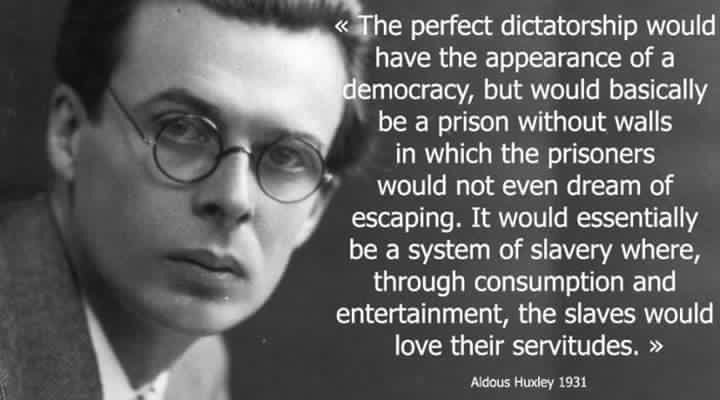
Through consumption and entertainment, the slaves would love their servitudes.” 

So much of the 1930s speaks to us today.

When the Nazis captured SOE agent Odette Sansom they placed her in the dark for three weeks believing that would break her. However, Odette didn’t mind the total darkness because as a child a serious illness had blinded her for three and a half years.

https://hannah-howe.com/eves-war/odette-sansom/

This is a 393 year old Greenland Shark. The oldest living vertebrate known on the planet, it’s been swimming in the ocean since 1627.

Researchers used radiocarbon dating to determine the age of the shark. A possible explanation for this species’ longevity is that they spend their lives 2,000 metres down, where the water temperature is around 29 degrees Fahrenheit. Extreme cold is associated with slow metabolism and maturation – Greenland Sharks don’t reach adulthood until age 150 – as well as long life spans.

Photo by Julius Nielsen.

2020

“I Facebook, therefore I am.”

When captured by the Gestapo, SOE agent Alix d’Unienville pretended to be mentally ill. In reality, she was very strong and this enabled her to escape while in transit to a concentration camp. She fled into a wood, hid, then returned to Paris in a Jeep.

https://hannah-howe.com/eves-war/alix-marrier-dunienville/

The battle for Paris began on the 10 August 1944 when railway and Metro staff went on strike, an example followed by policemen and postal workers.

The strike became general on the 18 August and by the 19 August fighting had broken out across the city. On that day 3,000 police officers invaded the Préfecture de Police, which became the first building to be officially liberated.

With the Allies advancing, the Nazis retreated. Those who remained sought to defend and destroy until forced into surrender on 25 August 1944.

August 1944, Allied soldiers greeted by young Parisian women as they enter Paris during its Liberation. (Photo by AFP)

What’s your emotion right now?

As ever, thank you for your interest and support.

Hannah xxx