Categories
Dear Reader

Dear Reader #78

Dear Reader,

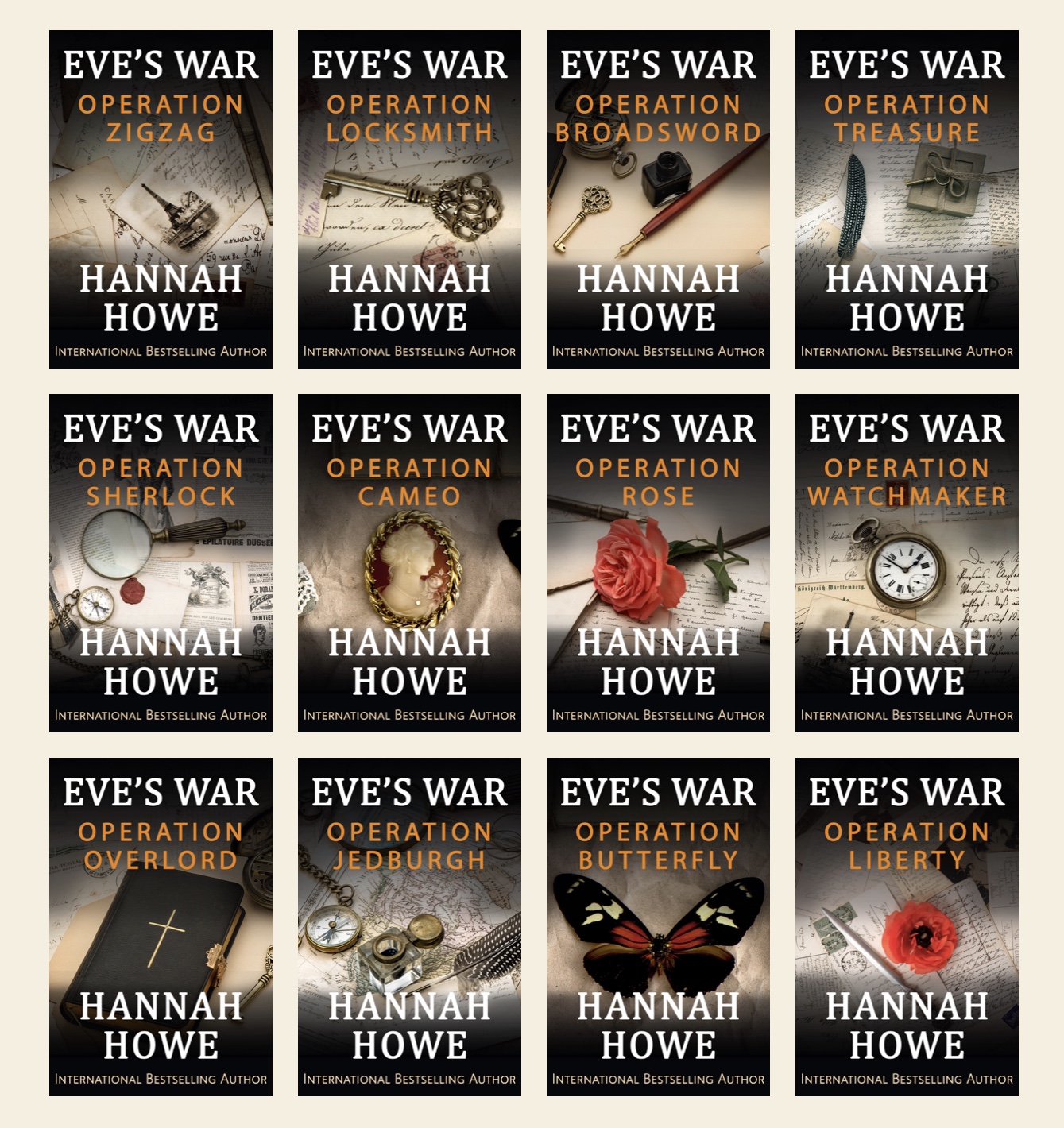
Delighted that my Eve’s War Heroines of SOE series will now be translated into Portuguese, as well as Spanish and German.
27 October 1865. My 3 x great uncle, Thomas Reynolds, made the newspapers in a bastardy case, which wasn’t proved. Maybe it was coincidence, but after this incident he married two other Mary’s, in 1867 and 1875.

The perfect job for the dentophobic.

Byline Times intends to publish Byline Wales. Very excited to be in discussions with their editor about playing a role.

https://bylinetimes.com/

29 May 1858. Some things are timeless. The issue of vaccination.

Smallpox was a common killer in nineteenth century Britain. It spread rapidly and killed around 30% of those who contracted it and left many survivors blinded or scarred. In the 1850s, the government passed a series of laws that made vaccination against smallpox compulsory.

Ancestry

Mary Hopkin, born in 1818, my 3 x great grandmother, gave birth to five children: Thomas Reynolds born 1842, Margaret Howe born 1851, Hopkin Howe born 1853, William Howe born 1855, and Mary Ann Howe born 1858. However, only one of her offspring, my direct ancestor William, survived her.
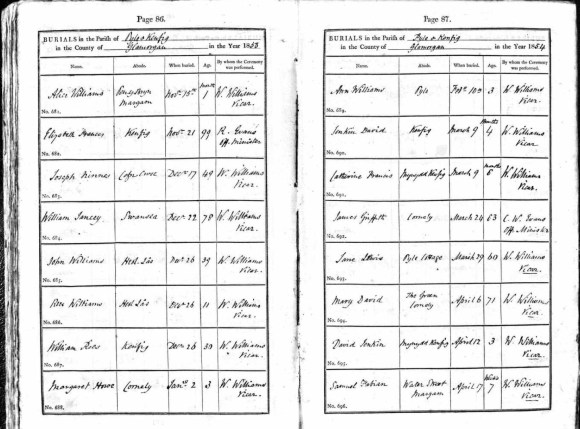
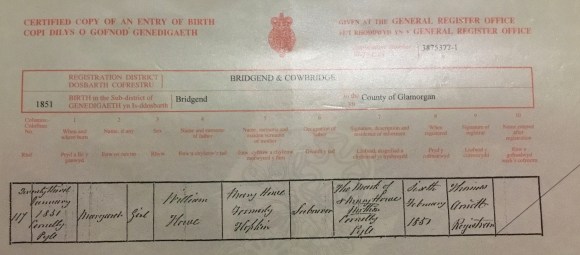
Margaret Howe was born on 23 January 1851 in South Corneli, Glamorgan. Sadly, she died of ‘brain fever’ on 30 December 1853 in St Brides, Glamorgan. Through her husband, William, Mary had a number of relatives in St Brides, but it’s not clear why Margaret was there and why Mary wasn’t with her. Did Mary have the fever too and was too ill to look after her child? Whatever the reason for Mary’s absence, Margaret’s death was a deviating blow for the family.

Mary Ann was born on 20 June 1858 in South Corneli, Glamorgan. Like her mother, Mary, Mary Ann was a dressmaker. Amazingly, a letter written by Mary Ann in 1877 survives. 
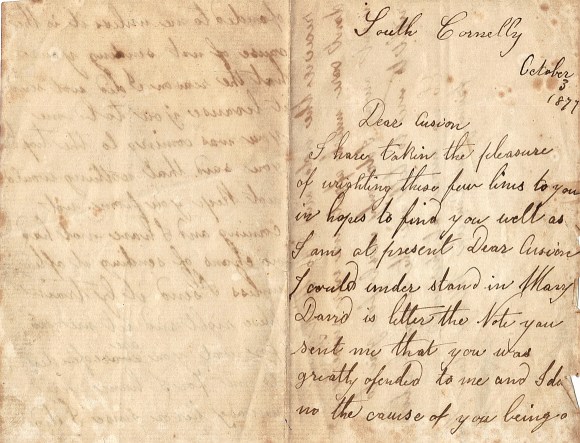
As well as sentimental value, the letter is interesting in that it is written in English by a native Welsh speaker, it mentions using the recently installed railway network and, more poignantly, Mary Ann states that she is well ‘at present’. Mary Ann endured poor health throughout her short life and died on 21 January 1886, aged twenty-seven.

South Corneli, October 3, 1877

Dear Cousin,

I have taken the pleasure of writing these few lines to you in hopes to find you well as I am at present. Dear Cousin I could understand in Mary David’s letter the note you sent me that you was greatly offended to me and I don’t know the cause of you being so offended to me unless it is the cause of not sending your hat. The reason I did not send it because you told me you was coming to the tea party. You said that nothing would not keep you from not coming and I have not had no chance of sending it after unless I send it by train. Please write and let me know for what you are offended to me for. I am very uneasy ever since I did receive the note and I do think you don’t care much about me ever since you went away. I do only wish for you to write to me to tell me the reason by return.

So no more at present. From your cousin,

Mary Ann Howe

Mary Ann Howe died of ‘cardiac syncope’ or heart failure. Her brother, Hopkin, a Methodist Minister, was at her side. She died at Alexandria Road in Pontycymer, fourteen miles north of Corneli. What was she doing there? 
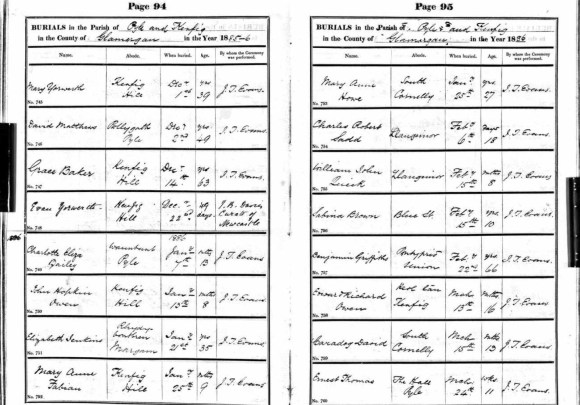
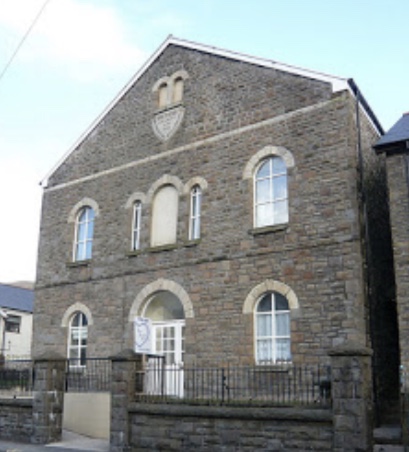
In 1882, the people of Pontycymer built the Bethel Methodist Chapel (pictured) with modifications added in 1885. The design incorporated a Romanesque style with two storeys, a gable-entry plan and round-headed windows. It seems highly likely that Hopkin was visiting the chapel, accompanied by his sister, Mary Ann. Mary Ann fell ill and was taken around the corner to a house in Alexandria Road where she died. 
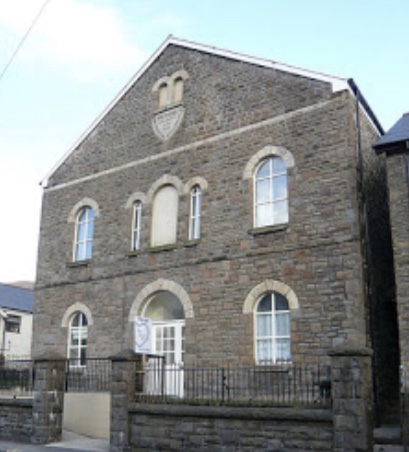
Because of her letter, I feel close to Mary Ann as an ancestor and remain grateful for her words and the insight into her life.

My 3 x great grandmother, Mary Hopkin, gave birth to Thomas Reynolds on 15 January 1842 in South Corneli, Glamorgan. Thomas’ father, also Thomas, died three years later.

In 1851, Thomas was living with his mother and stepfather, William Howe, and attending the local school. At nineteen he was a carter on a local farm, Morfa Mawr, and in 1867 he married Mary Rees who gave birth to a son, Edward, eighteen months later.

Mary died soon after the birth and while Thomas worked on a farm closer to his mother’s home, Edward lived with his grandmother.

Thomas married Mary Morgan on 15 May 1875 in their local church at Mawdlam. Three children arrived in four years: William 1876, Jenkin 1877 and Catherine 1880. Thomas was a railway packer at this time, living on Heol Las in North Corneli.
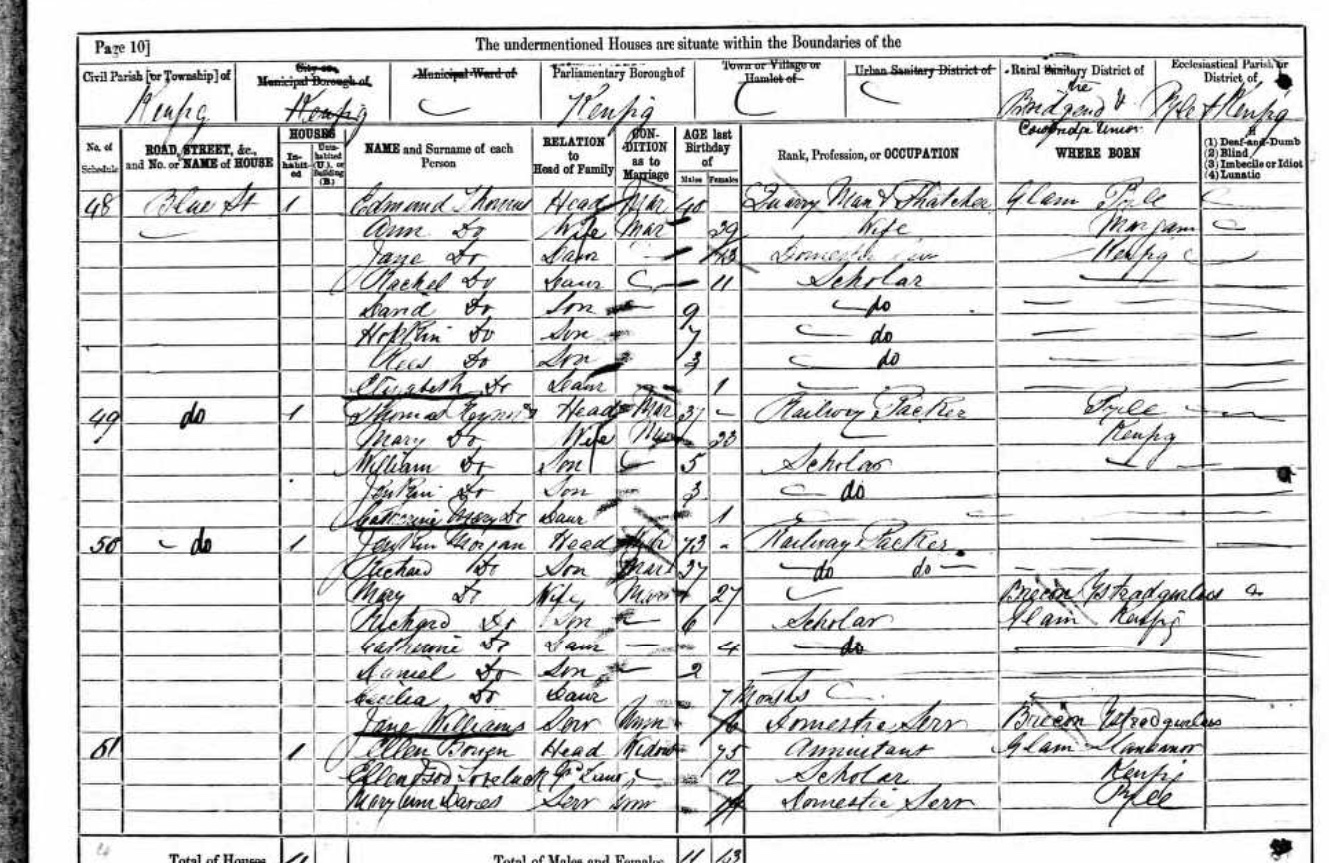
Mary died on 13 October 1886 and Thomas died five years later, on 11 March 1891. He was 49.
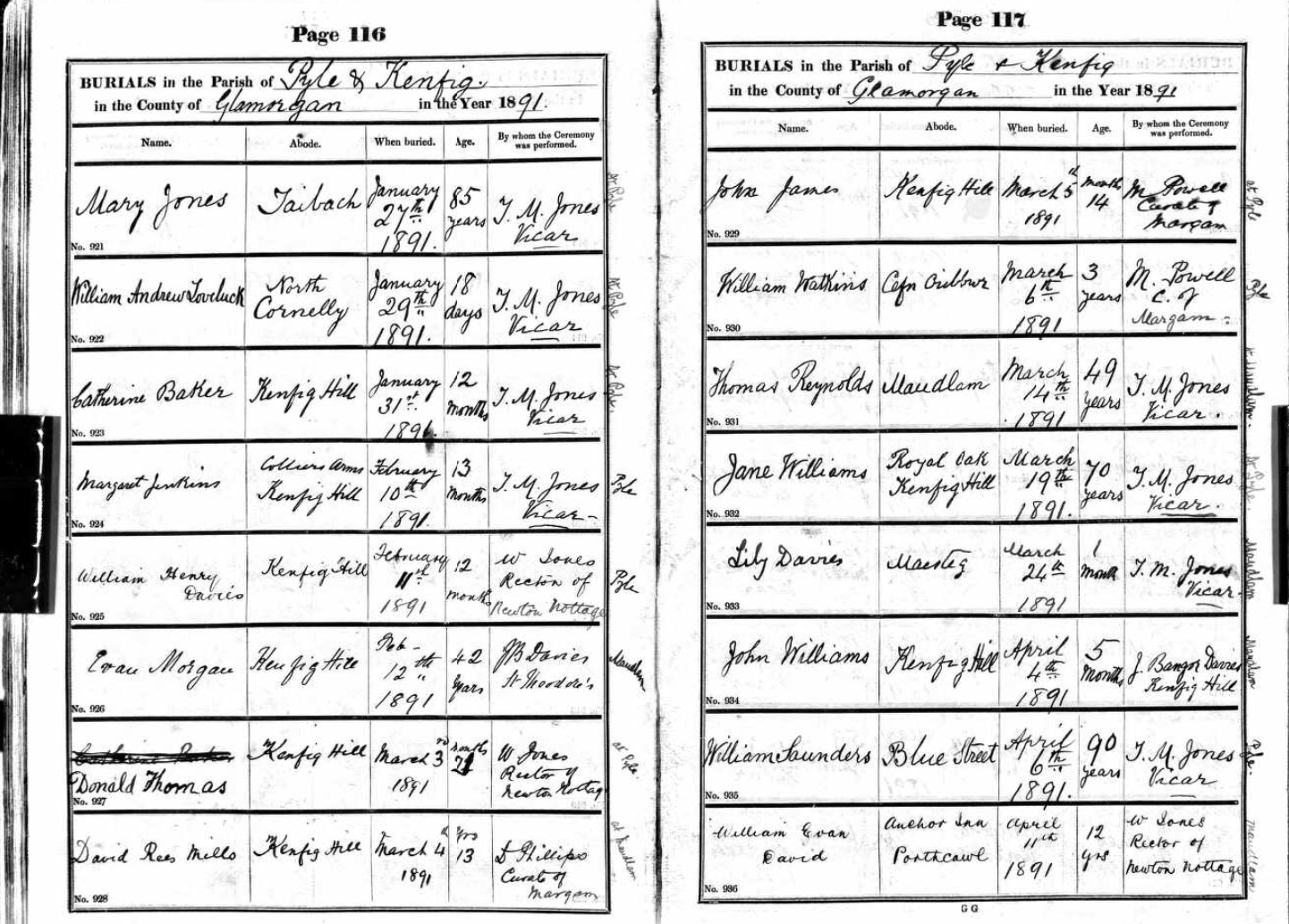
Thomas left a will bequeathing £79 7s 0d to his son Edward, the equivalent of two horses, eight cows or 242 days pay for a skilled tradesman.

For my 3 x great grandmother, Mary Hopkin, now aged 72, this was a bitter blow, the loss of her third child. Sadly, more tragedy was to follow.

In regard to family life, Mary Hopkin’s second son, Hopkin Howe, followed a similar path to his half-brother, Thomas Reynolds.

Born on 16 June 1853 in South Corneli, Hopkin lived with his parents, siblings and cousin, Anne Price. Anne married David John, who joined them in the family home in South Corneli. This was a significant event for Hopkin because David John was a blacksmith and he taught him the skills of his trade.

In 1871, Hopkin was living with a Welsh family in Stockton, Durham while he plied his trade as a blacksmith. Stockton was the home of the railway and Hopkin’s skills were in great demand.
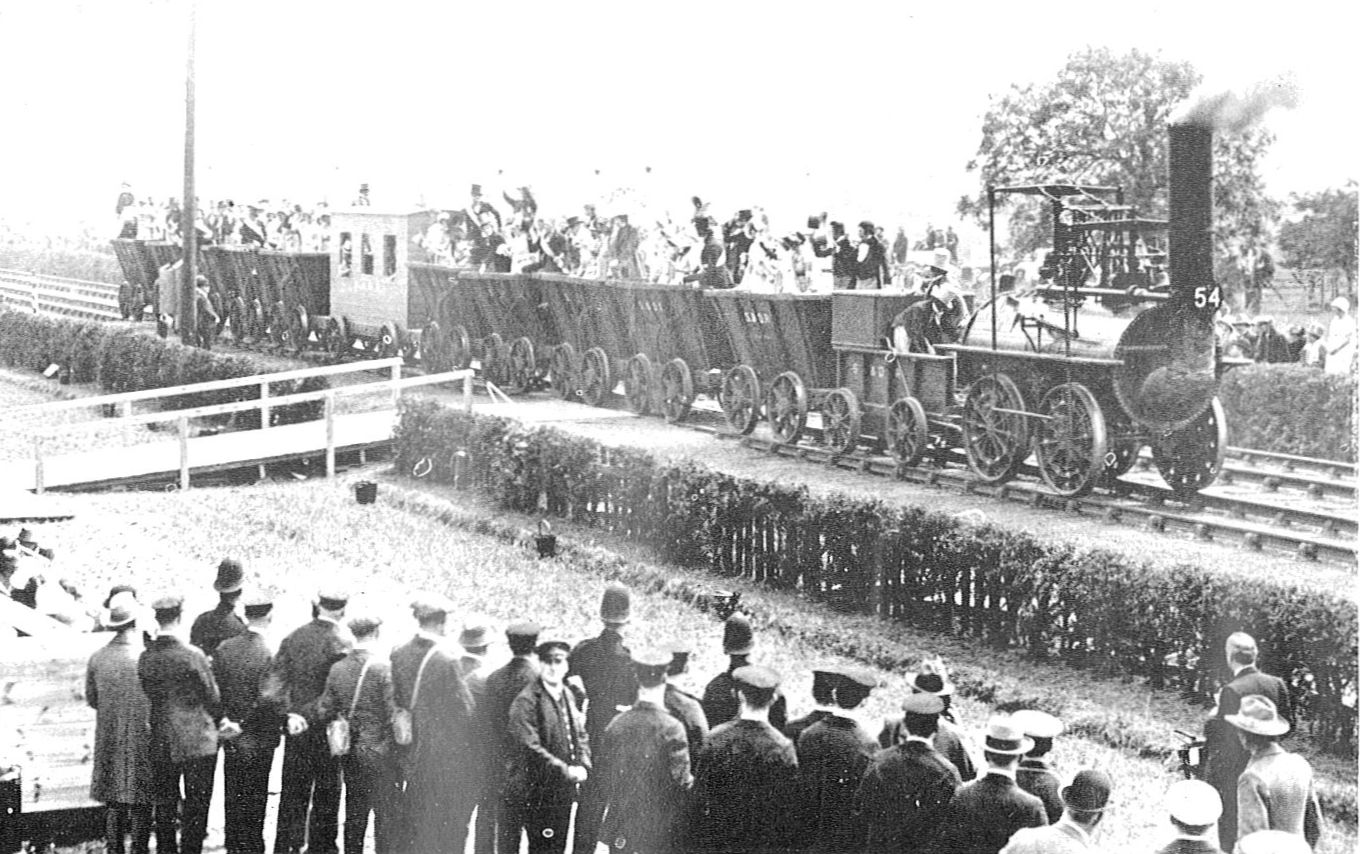
When Hopkin returned to Wales he changed career. He became a Methodist Minister. The chapel had always been central to the Howe family and it was Hopkin’s great ambition to become a minister. Having saved enough money to finance his training, Hopkin toured South Wales as a preacher of the gospel. 

26 March 1891. A happy occasion for my 3 x great uncle, Methodist minister Hopkin Howe, marrying David Morris and Mary Jane John.

Hopkin married Elizabeth Jones in 1884. This event brought great pleasure and tragedy. Elizabeth gave birth to a daughter, Elizabeth May Gwendoline Howe, on 27 November 1885, but died in childbirth. Deprived of her mother, baby Elizabeth died in infancy. One can only imagine how these events tested Hopkin’s faith.

Hopkin married again, Sarah Ann Jones, in December 1890 and he continued to tour South Wales preaching the gospel. However, he died four years later, of a lumber abscess, an infection in his spinal cord, on 19 February 1894. He left a will bequeathing £119 to Sarah Ann, the equivalent of a year’s wages. 

My 3 x great grandmother, Mary Hopkin, was 75 at this time. She still had her husband, William, at her side and her only surviving son, also William, lived with his family next door to her.

——-

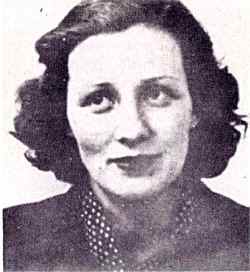
Marie-Madeleine Fourcade led the French Resistance during the Second World War. This exchange of messages with British Intelligence (MI6) explains how she assumed command.

N1 = Georges Loustaunau-Lacau, founder of Alliance, the French Resistance network.

POZ 55 = Marie-Madeleine Fourcade.

“N1 arrested this morning STOP Network intact STOP Everything continuing STOP Best postpone parachuting next moon STOP Confidence unshakable STOP Regards STOP POZ 55”

From MI6: “Who’s taking over?”

“I am STOP POZ 55”
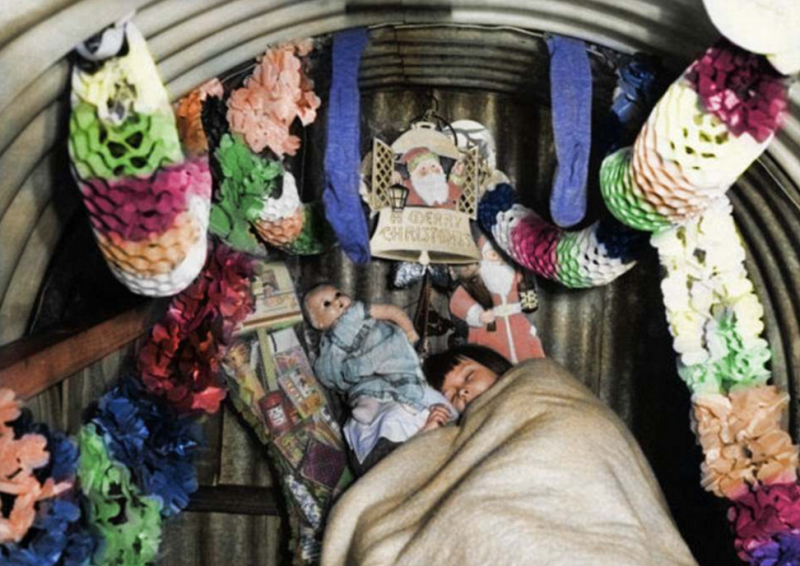
The Second World War. Inside an Anderson shelter on Christmas Eve.
In this month’s bumper issue of our Amazon #1 ranked magazine…

A Celtic Christmas, stories, articles and gift ideas based on a Celtic theme. Plus seasonal features to entertain you during the festive season and all your regular favorites.

As ever, thank you for your interest and support.

Hannah xxx

Categories
Dear Reader

Dear Reader #74

Dear Reader,

My article about SOE heroine Yvonne Cormeau is on page 36 of this month’s Seaside News 🙂

Did you know that the road to the IKEA in Valladolid, Spain is “Calle Me Falta un Tornillo” – “I’m Missing a Screw Street”.

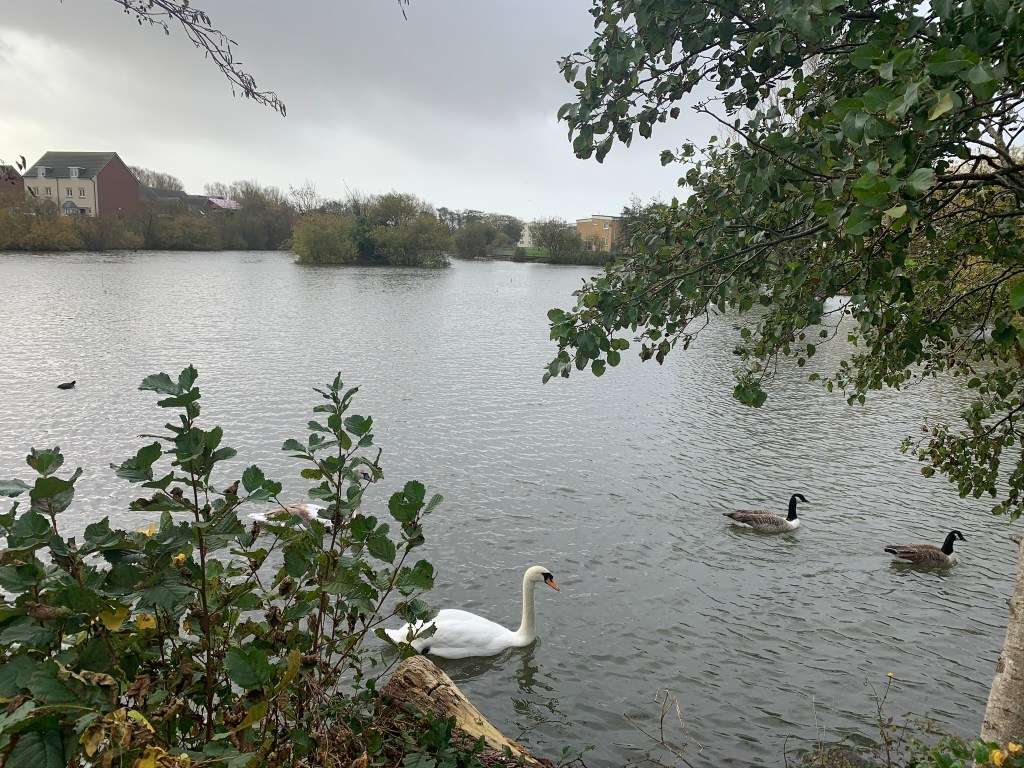
Swans and ducks on a local pond this morning.

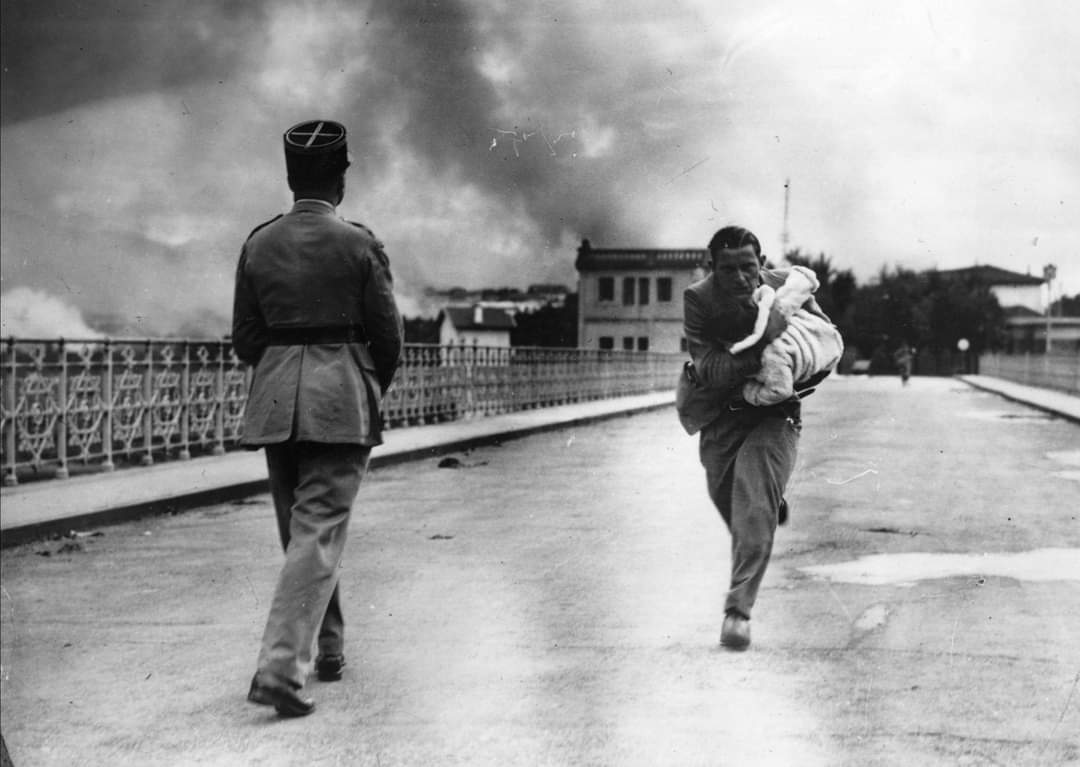
The Spanish Civil War. French journalist Raymond Vankers crossed the bridge from Irún, Spain to Hendaye, France to save a baby during the Battle of Irún, 6 September 1936.

Where the Sidewalk Ends, a 1950 noir movie, reunites Dana Andrews with Gene Tierney after the success of their 1944 classic, Laura. Where the Sidewalk Ends doesn’t quite match the class of Laura, nevertheless it is a excellent film with solid performances all round and a tight plot centred on one man’s path to redemption.

Occupied France, 1940. No petrol, so the locals converted their trucks to run on wood and coal.

November 5th was Bonfire Night in Britain. These are thought to be the earliest photographs of a bonfire. They were taken in 1853 by John Dillwyn Llewelyn at Penllergare in Swansea.

The Million Pound House

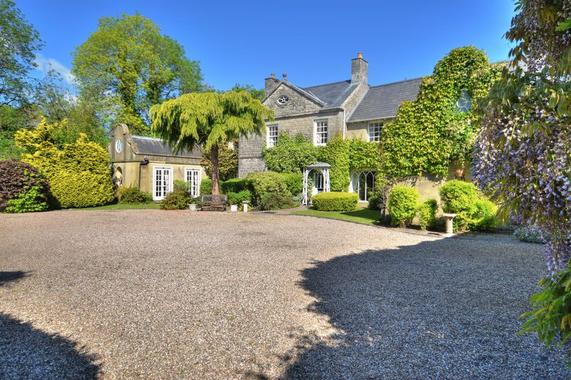
My ancestors in St Hilary owned Howe Mill, which recently went on the market for well over a million pounds.

I read about Howe Mill in a gazetteer that included this line ‘the Regency finery of Howe Mill’. The Regency refers to the period 1795 to 1837. However, further research revealed this entry, ‘Thomas David of Howe Mill was buried in 1699.’ Therefore, the mill existed in the seventeenth century and the Regency finery must refer to a refurbishment.

Howe Mill ground corn until the end of the nineteenth century. It was active in 1889, but maps published in 1899 list the mill as disused. It is situated within a twelfth century ringwork enclosure that might have served as the caput for the knight’s fee of Llandough. 

Howe derives from the Old Norse, haugr, which means hill, knoll, or mound. The Vikings settled, peacefully, in the Vale of Glamorgan in the ninth century so it is possible that my Viking ancestors acquired land that became a ringwork enclosure then a mill. Before 1699 their descendants sold the mill for a considerable sum of money. 

My St Hilary ancestors were wealthy. I know this because for many generations they held prominent places within the community. From a financial point of view they were lucky, probably because of a Viking who settled in the area and made his home on a piece of prime land.

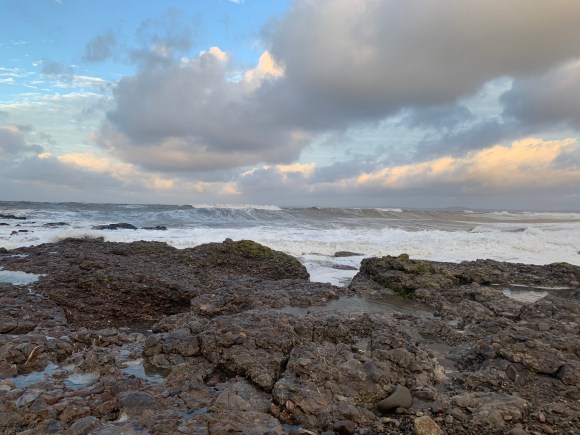
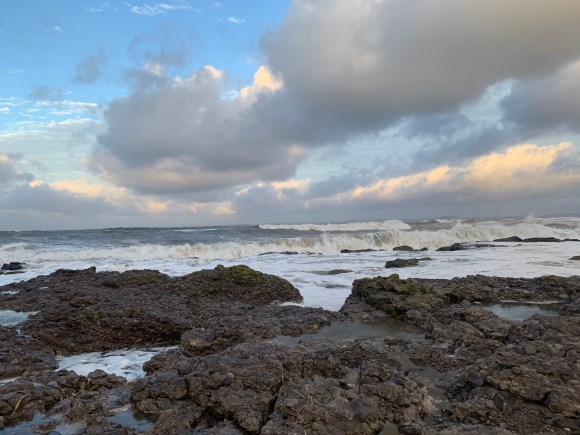
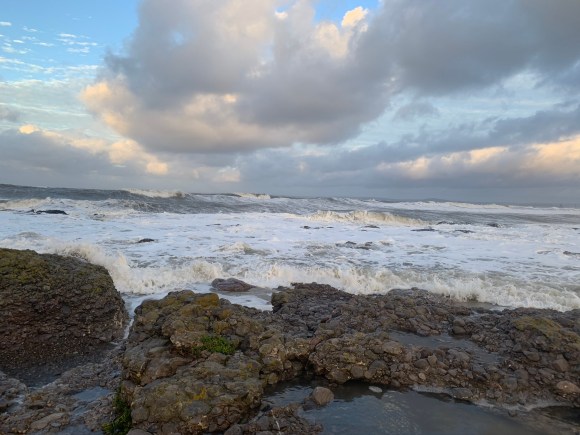
Sger Beach this week.

My Ancestry

John Howe, my 6 x great grandfather, was baptised on 24 July 1726 in St Hilary, Glamorgan, probably a week after his birth. Sadly, many babies died within a week of their birth so baptisms were often swift affairs.

The son of Joseph and Elizabeth, John became a successful farmer. When Joseph died on 5 July 1742, sixteen-year-old John became the ‘man of the house’ and helped his mother to run the farm.

In 1753, John became a churchwarden, Petty Constable and Overseer of the Poor. Overseers of the Poor were chosen from the ‘substantial householders’ within the community and were elected at the annual vestry. Although elected for a year, they often served multiple terms over many years.

As Overseer of the Poor, John made a payment of £1 17s 6d for the making and binding of bibles, 1s for attending a coroner’s inquest and 7d for a pair of male stockings. He also awarded payments of a few pence to ‘the little boy of whom nothing else is known’.

This is John’s account of 1753, written in his own hand.

Continuing the story of John Howe of St Hilary, my 6 x great-grandfather, a successful farmer, churchwarden, Petty Constable and Overseer of the Poor.

The pivotal period of John’s life arrived in April and May, 1761. On 3 April 1761 he married 39 year old Mary Williams, a widow, also of St Hilary. Then his first son, John, my 5 x great grandfather, was born on 28 April 1761. That’s right, Mary was eight months pregnant at the time of her marriage. On 1 May 1761 John’s mother, Elizabeth, died aged 62. A marriage, birth and death within four weeks. A very stressful time for John.

More children followed at regular intervals: Anne, born 17 March 1763, William, 25 November 1764 and Joseph, 12 October 1767. 

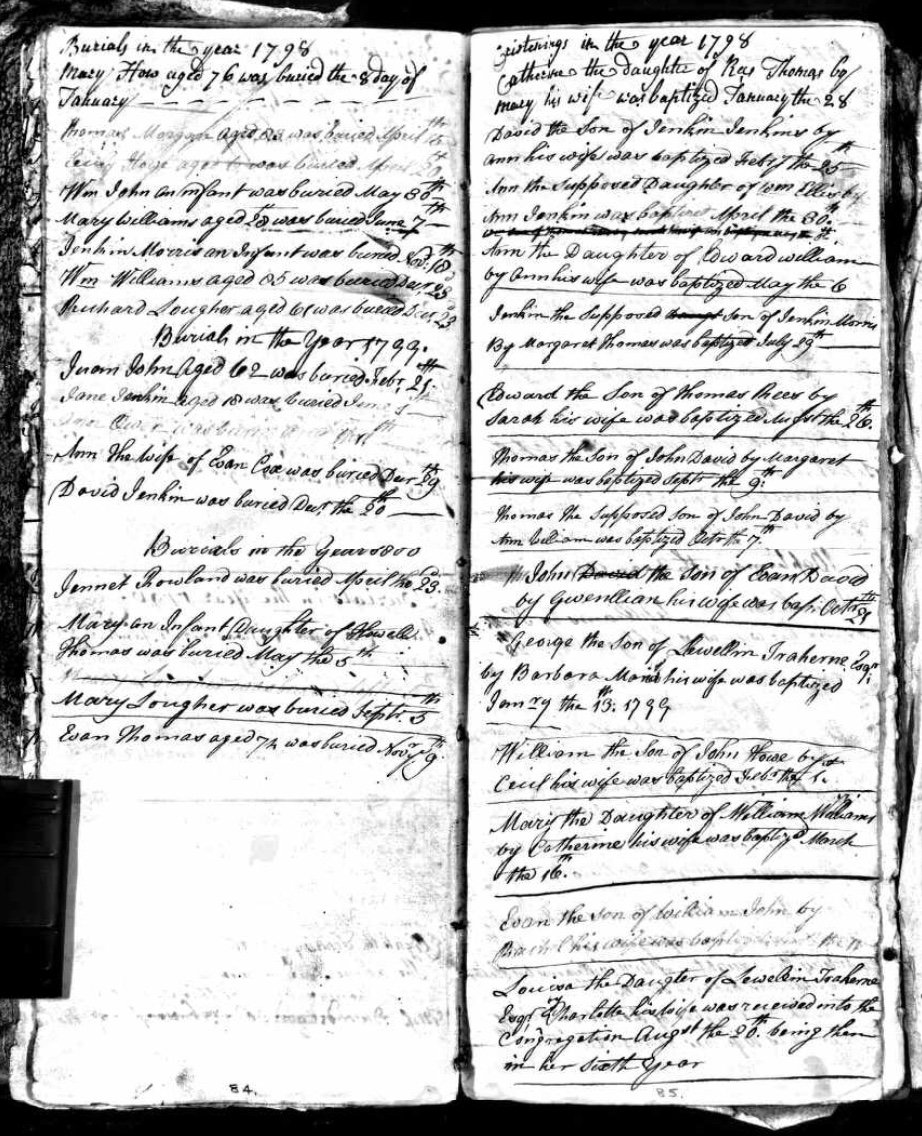
William died on 20 April 1795, aged 19, and Mary followed him three years later, on 8 January 1798. Her burial record is the first entry on the parish register for 1798.

The parish register for marriages reveals that both John and Mary were literate and that John’s cousins, John and Margaret, witnessed the wedding. With his farm, community activities and mother at home, John was probably waiting for the right moment to marry. With his standing in the community, he was an eligible bachelor so Mary, four years older than John, must have been pleased with the match. Equally, she must have possessed qualities that set her apart from younger women. The couple spent 37 years together and I trust enriched each other’s lives.

John died on 23 February 1818, aged 91. For the time, he certainly led a privileged life. And through his family, farm and community activities I sense that it was a rewarding life.

In this month’s issue of our Amazon #1 ranked magazine…

Celebrating the Little Things

Things Children Say

A Young Writer’s View of Our Oceans 

Nature

Poetry 

Art

Classic Movies 

And so much more!

As ever, thank you for your interest and support.

Hannah xxx
Categories
Dear Reader

Dear Reader #70

Dear Reader,

Stabbed was obviously Shakespeare’s default modus operandi, but I’d love to work The Winter’s Tale’s Pursued by a Bear, or maybe Titus Andronicus’ Baked into a Pie into my books 🙂

Members of a Jedburgh team who supported Operation Market Garden in the Netherlands, 17 – 25 September 1944.

After D-Day, Jedburgh teams assisted SOE agents and the local Resistance. The teams usually consisted of three men: a commander, an executive officer and a non-commissioned radio operator. One of the officers would be British or American while the other would originate from the host country. The radio operator could be of any nationality.

The October 2020 issue of our Amazon #1 ranked eMagazine, Mom’s Favorite Reads 🙂

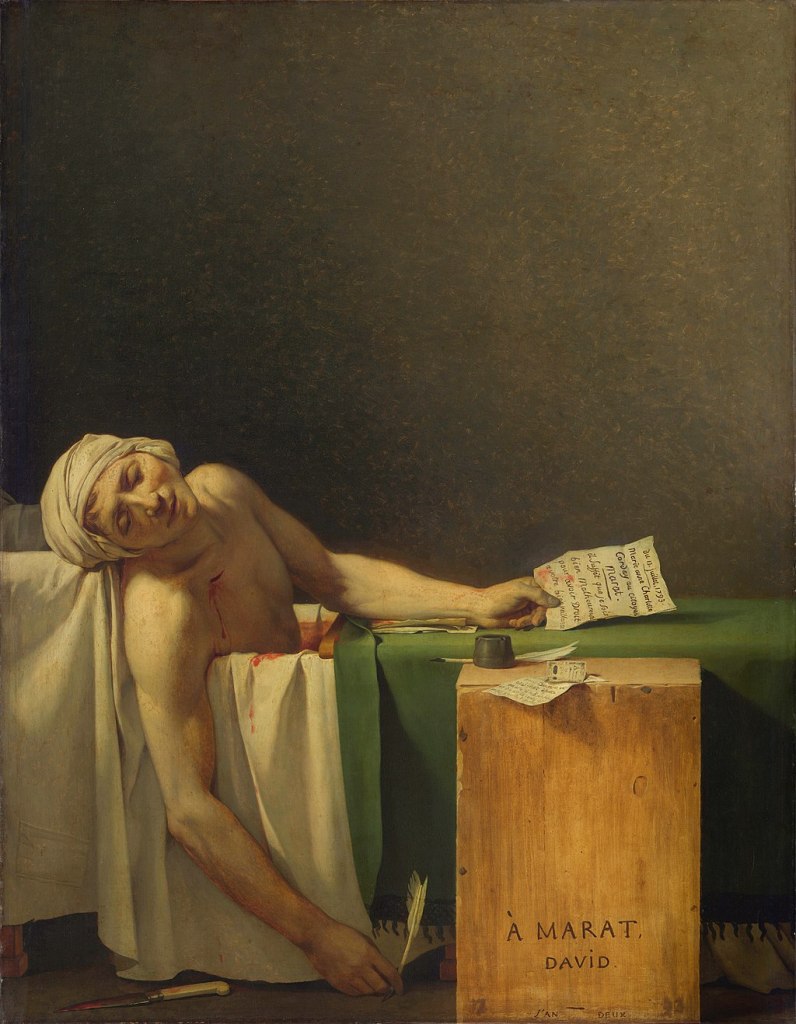
A beautiful murder ballad…Jean-Paul Marat murdered by Charlotte Corday with a dagger in the bath.

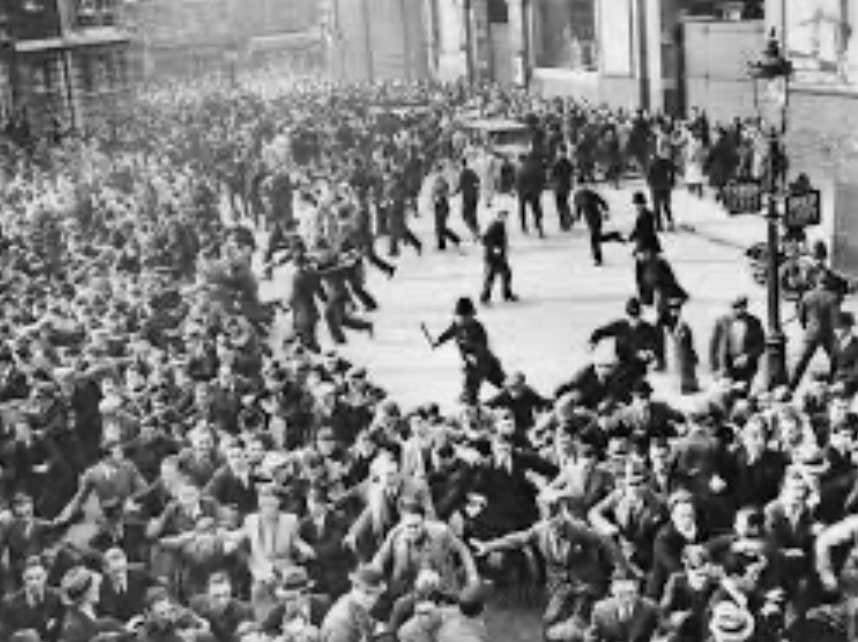
Sunday, 4 October 1936, The Battle of Cable Street when 20,000 anti-fascists clashed with 3,000 fascists. Facilitated by the Tories, Mosley sent his blackshirts into the East End of London to intimidate the Jewish community. However, the locals supported the Jews and repelled the fascists.

Colette, A Schoolteacher’s War was going to be a standalone novel. However, my research has taken the book into a trilogy. Based on the French Resistance and D-Day, each story will centre on a different lead character. Working titles, A Student’s War and A Housewife’s War.

Stories are universal, of course, so it’s lovely that I now have readers in 44 countries 🙂 America, Argentina, Australia, Belgium, Brazil, Bulgaria, Canada, Columbia, Denmark, El Salvador, England, Fiji, France, Germany, Greece, Hong Kong, Hungary, India, Indonesia, Ireland. Italy, Japan, Latvia, Malaysia, Mexico, Netherlands, New Zealand, Norway, Philippines, Poland, Portugal, Romania, Scotland, Singapore, Slovakia, South Africa, South Korea, Spain, Sweden, Switzerland, Turkey, Ukraine, Vietnam and Wales.

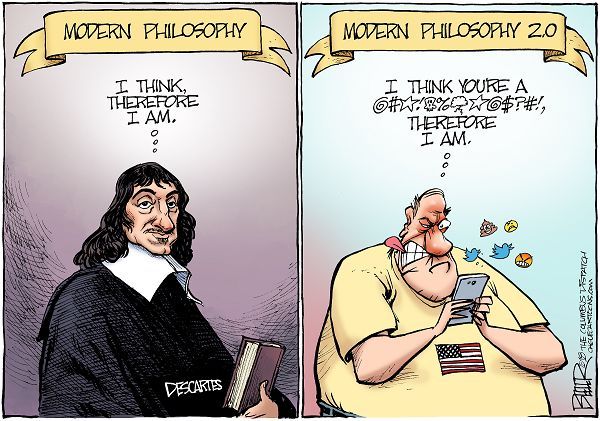
Modern Philosophy

One of the dogs trained to deliver first aid kits to frontline medics in the fight against fascism during the Spanish Civil War.

Movie stars who appeared in the Lux Screen Stars series weren’t paid. Novices at beauty product advertising, they didn’t think to ask.

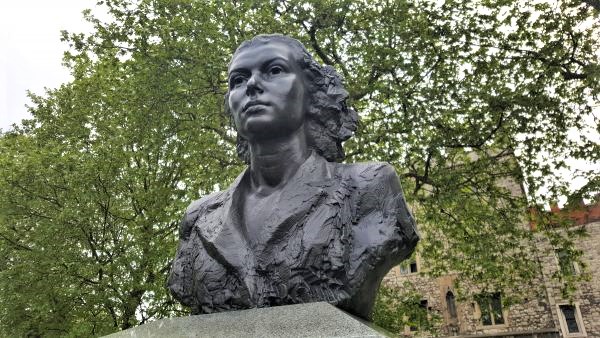
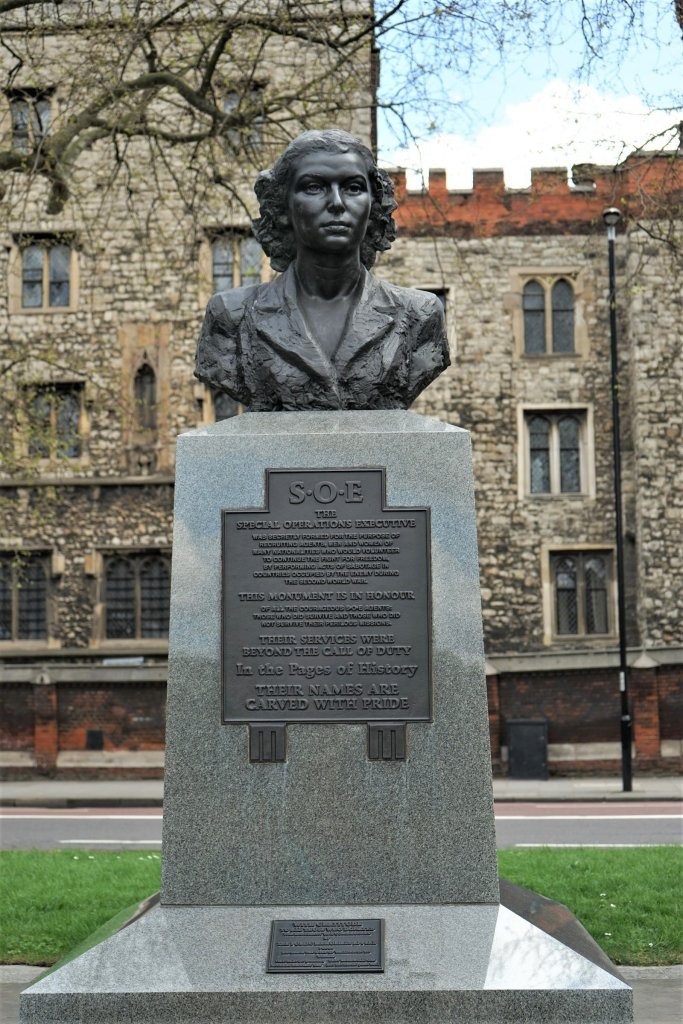
By common consent, Violette Szabo was regarded as the most beautiful of all the SOE F Section agents. A mother, she served the SOE in France until an unfortunate incident led to her capture and murder by the fascists.

This memorial by Karen Newman, featuring Violette Szabo and dedicated to all SOE agents, was unveiled in 2009.

I wrote a chapter today where two of my characters in The Olive Tree: Branches, part two of my Spanish Civil War saga, walked along the banks of the Seine encountering a scene similar to this painting by Georges Seurat.

As ever, thank you for your interest and support.

Hannah xxx

Categories
Dear Reader

Dear Reader #61

Dear Reader,

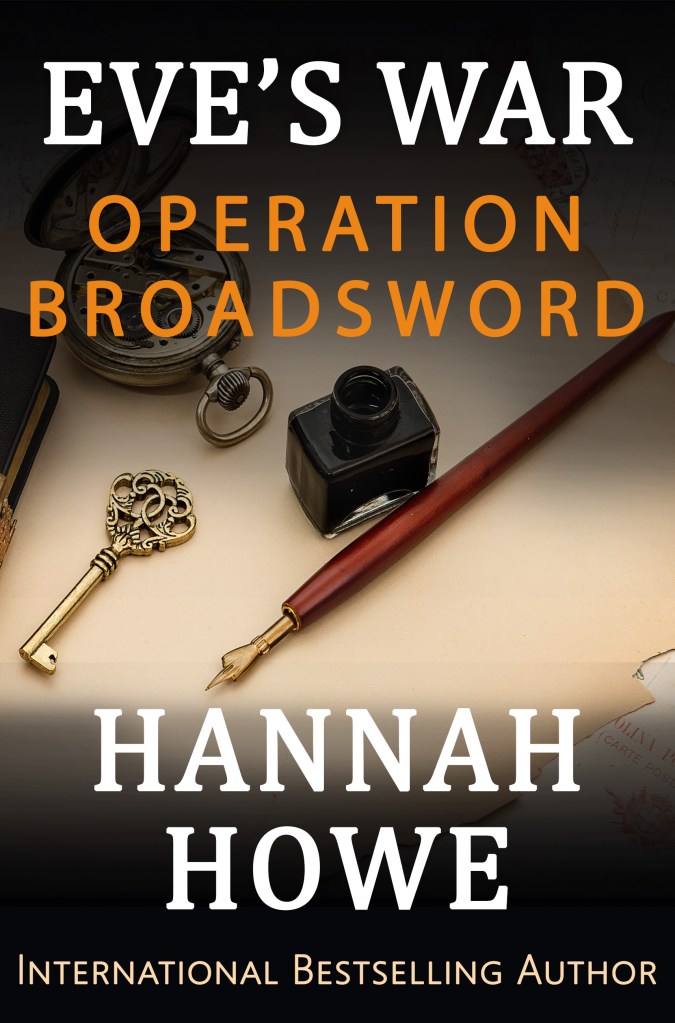
Operation Broadsword, book three in my Eve’s War Heroines of SOE Series, is now available to pre-order 🙂

https://books2read.com/u/bxn5e6

🎼🎼🎼 Blue eyes, baby’s got blue eyes…🎼🎼🎼

Packed with shorts stories, articles, puzzles, recipes and so much more, the latest issue of Mom’s Favorite Reads.

Images from my garden this week.

My article about SOE heroine Anne-Marie Walters appears on page 20 of the magazine.

I’m enjoying Paula’s narration of Operation Locksmith, book two in my Eve’s War Heroines of SOE Series. Normally, I don’t like listening to my own words, but it’s great fun to be a part of this production.

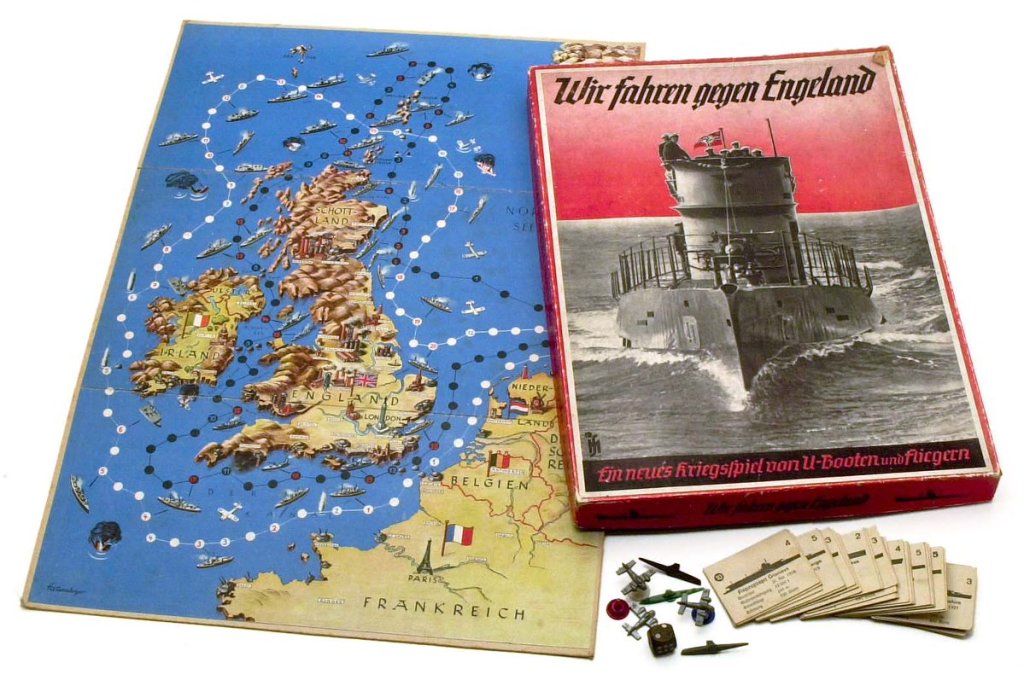
Nazi board game from 1941 – Wir fahren gegen England (We go against England).

“Fun for all the family.”

Normandy, 1944. While the battle rages, a Frenchwoman pours a drink for a British soldier.

We have more sheep than people 🙂

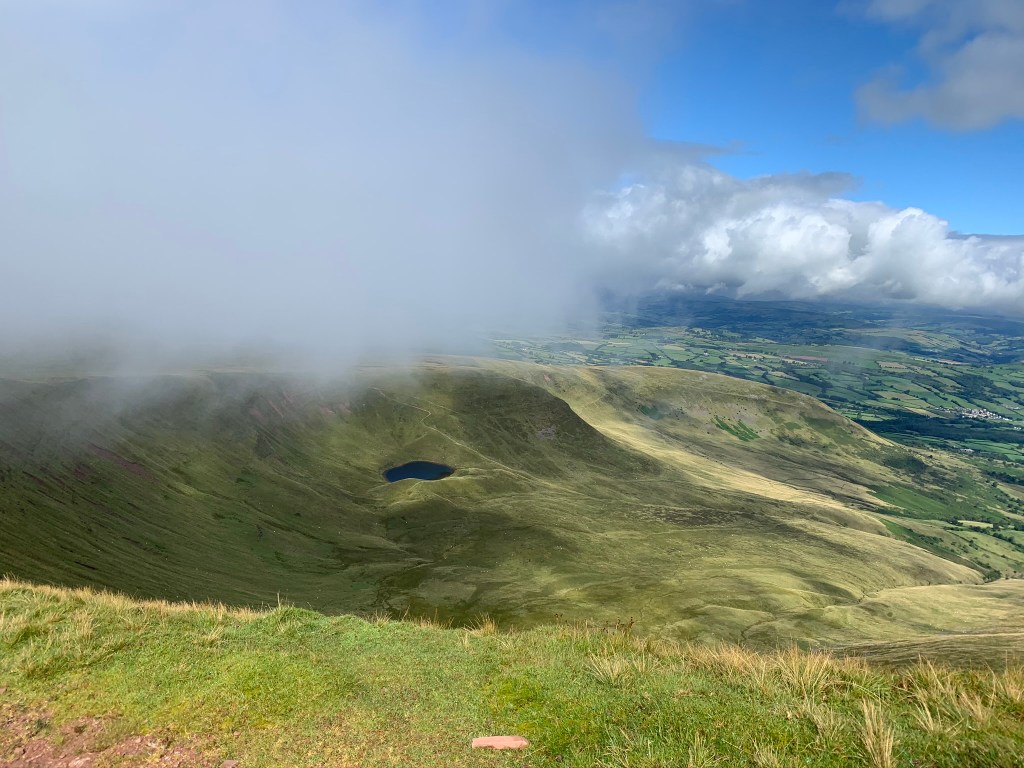
Walking through the clouds on Pen-y-Fan this week.

Basically, my approach to writing.

Hannah Arendt on Writing:

Gaus: Do you write easily? Do you formulate ideas easily?

Arendt: Sometimes I do; sometimes I don’t. But in general I can tell you that I never write until I can, so to speak, take dictation from myself…Usually I write it all down only once.

The organisational aspect of D-Day never ceases to amaze me.
2 August 1944. The French 2nd Armored Division arrived in France, landing at Utah Beach, Normandy. The division served under General Patton as part of the US Third Army.

Two weeks later, they helped to liberate Paris.

I’m really getting into my character Eve in my Eve’s War series, so much so that when she met a Maquis leader today and they shared cheese as a peace offering it gave me a strong urge to eat cheese. Tomorrow, Eve blows up a railway line. I hope I don’t get a strong urge to play with dynamite 🤣

On this date, with the First World War ten days old, George Bernard Shaw wrote an article urging both sides to shoot their officers and go home.

An inspiration for Guy Samson in my Eve’s War Heroines of SOE series, Francis Charles Albert Cammaerts was born in London on 16 June 1916. Under the code name Roger he was an agent of the Special Operations Executive. His parents were Professor Emile Cammaerts, a Belgian poet, and Tita Brand, a successful actress.

Francis Cammaerts

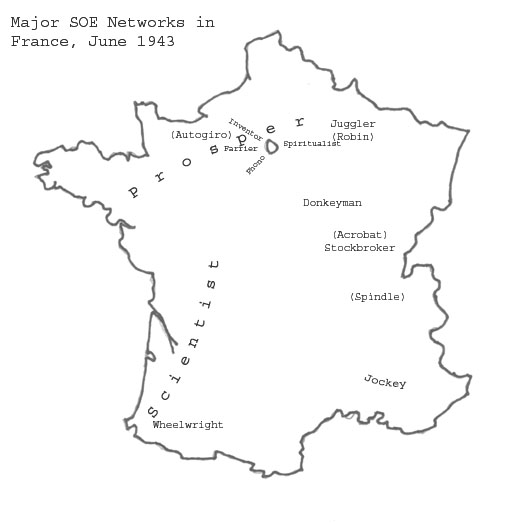
At the beginning of the Second World War, Cammaerts declared himself a conscientious objector. However, in October 1942 he joined the SOE and between March 1943 and September 1944 he led the Jockey network in southeastern France. Considered during training as more intellectual than practical he, nevertheless, completed the course with distinction.

Cammaerts became a pacifist in the 1930s while studying at Cambridge. After university, he established a teaching career where he met fellow teacher and pacifist Harry Rée. After much soul searching, Harry decided to join the SOE. This decision, along with the death of his brother, Pieter, who served in the RAF, convinced Cammaerts that he too should place his pasifist beliefs to one side and join the SOE.

Regarded as one of the finest male agents, Cammaerts recruited locals to the Resistance networks, supplying them with arms and training. He completed two tours as an SOE agent, totalling fifteen months, a period far longer than the average time served by an agent in France. He never stayed in the same house for more than three or four nights. Furthermore, he avoided hotels as their registers were checked by the Gestapo and French police, stayed clear of large railway stations and never told anyone of his plans. 

In the Jockey network, Cammaerts linked up with wireless operator Auguste Fioras. On 27 May 1943, the pair sent their first message to SOE headquarters in London while Fioras went on to transmit 416 wireless messages during 1943 and 1944, a record for an SOE wireless operator.

Cammaerts’ Jockey circuit, which had developed to include over 10,000 people, played a crucial role in the action that followed the D-Day landings. His men and women cut communication and railway lines, which severely hindered the movements of Nazi troops and armaments.

Aware of the risks the locals were taking, Cammaerts always informed them that he was an SOE agent and reminded them of the consequences should anyone talk or be caught. Despite this, he always received a warm welcome. Later, along with many other agents, he gave a great deal of credit to the ordinary French citizens who provided him and his colleagues with safety and support. In the television series Secret Agent, broadcast in 2000, Cammaerts said, “The most important element was the French housewife who fed us, clothed us and kept us cheerful.”

At 193 cm tall and with feet so large his nickname in France was “Big Feet”, Cammaerts feared that he would attract the Gestapo’s attention. Furthermore, he spoke French with a noticeable Belgian accent, which made him vulnerable to informers in the Malice. His security fears were realised on 13 August 1944 when he was arrested at a roadblock by the Gestapo. He was taken to Digne prison where he was beaten and interrogated. During the interrogation, he insisted that he was involved in the black market, a cover story he concocted to account for the large sum of money he carried about his person.

Even though Cammaerts was the most important SOE agent in southeastern France, the Gestapo didn’t realise that they had captured him. Nevertheless, they suspected that he belonged to the Resistance and arranged his execution.

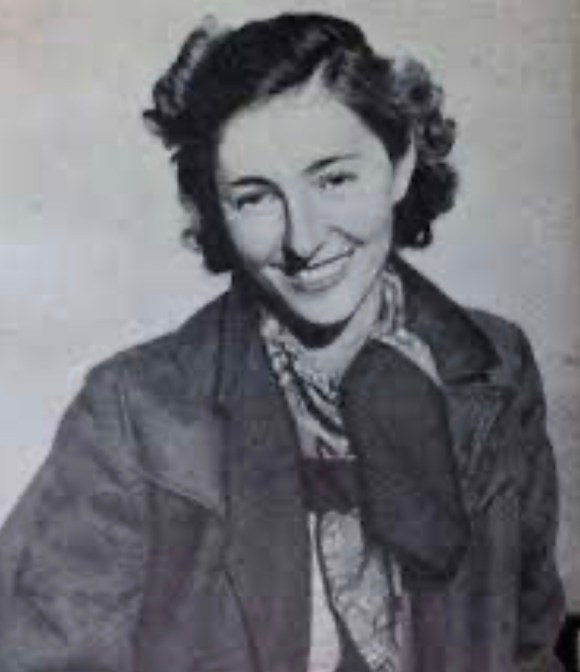
Christine Granville

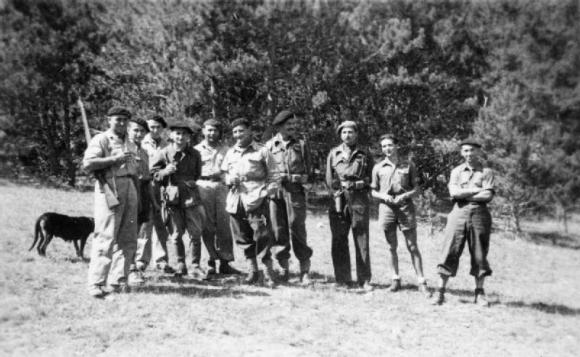
However, on 17 August 1944, two days before the Allied invasion of southern France, fellow agent and courier Christine Granville (aka Krystyna Skarbek) helped him to escape. Christine confronted two collaborators, Albert Schenck, a French liaison officer to the Gestapo, and Max Waem, a Belgian interpreter for the Gestapo. She told them that the Allied troops would arrive within hours and that if they did not cooperate they would be condemned as Nazi collaborators. Under threat from the avenging locals, Schenck and Waem secured Cammaerts’ release.

Maquisards with Christine Granville, second from right

In March 1945, Cammaerts joined the Special Allied Airborne Reconnaissance Force. The SAARF’s main objective was to assist in the reconstruction work in Germany after the fall of Hitler. For Cammaerts this meant dealing with the aftermath of the newly liberated concentration camps. Understandably, he was appalled by what he saw and later said, “The SAARF period was blank and grey and one of those certain areas in my life when I didn’t know what I was doing.”

During his pacifist period, Cammaerts met Nancy Findlay (Nan), and they married on 15 March 1941. Over the following decades, the couple had four children, three girls and a boy.

In 1948, Cammaerts became the first Director of the Central Bureau for Educational Visits and Exchanges, a UNESCO agency. Four years later, he returned to teaching. He was the subject of This Is Your Life in 1958 and in 1959 appeared for the defence in the notorious Lady Chatterley’s Lover trial, a case won by the publisher, Penguin Books, and the author, D.H. Lawrence.

Further teaching posts in Britain and Africa followed. Throughout his career, Cammaerts won high praise as an innovative educator. He finally retired in 1987 to live in the south of France. He died there in 2006.

As ever, thank you for your interest and support.

Hannah xxx
Categories
Dear Reader

Dear Reader #52

Dear Reader,

Hard to believe that I’ve been posting these weekly ‘letters’ for a year. I don’t publish a newsletter so the idea of these posts is to keep my readers up to date with my writing and publishing, and introduce new readers to my work. I hope you enjoy the content as much as I enjoy putting these posts together.

Published this week, the June 2020 issue of Mom’s Favorite Reads 🙂

Download or read the magazine online FREE

In this issue…

Lockdown for Teenagers

Modern Movie Classics

Photography

Articles

Poems

Humour

Puzzles

Young Writers

And an insight into the Month of June

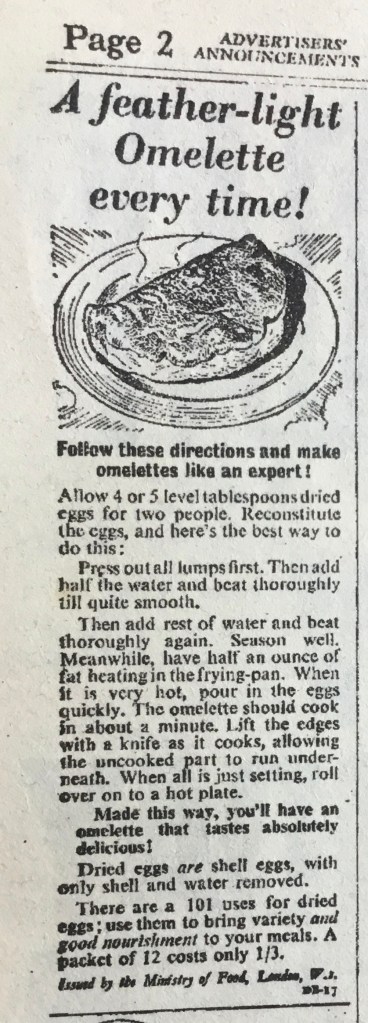
Countdown to the D-Day anniversary, 6th June. From a Second World War edition of the Daily Mirror, a recipe for omelettes made from dried eggs.

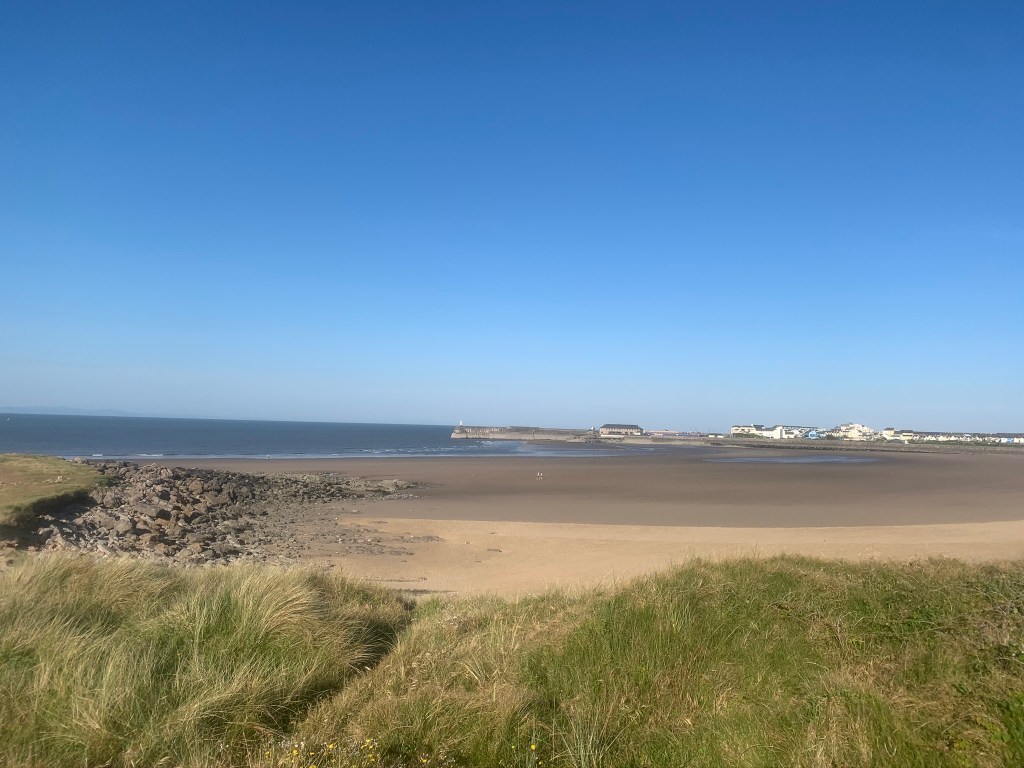
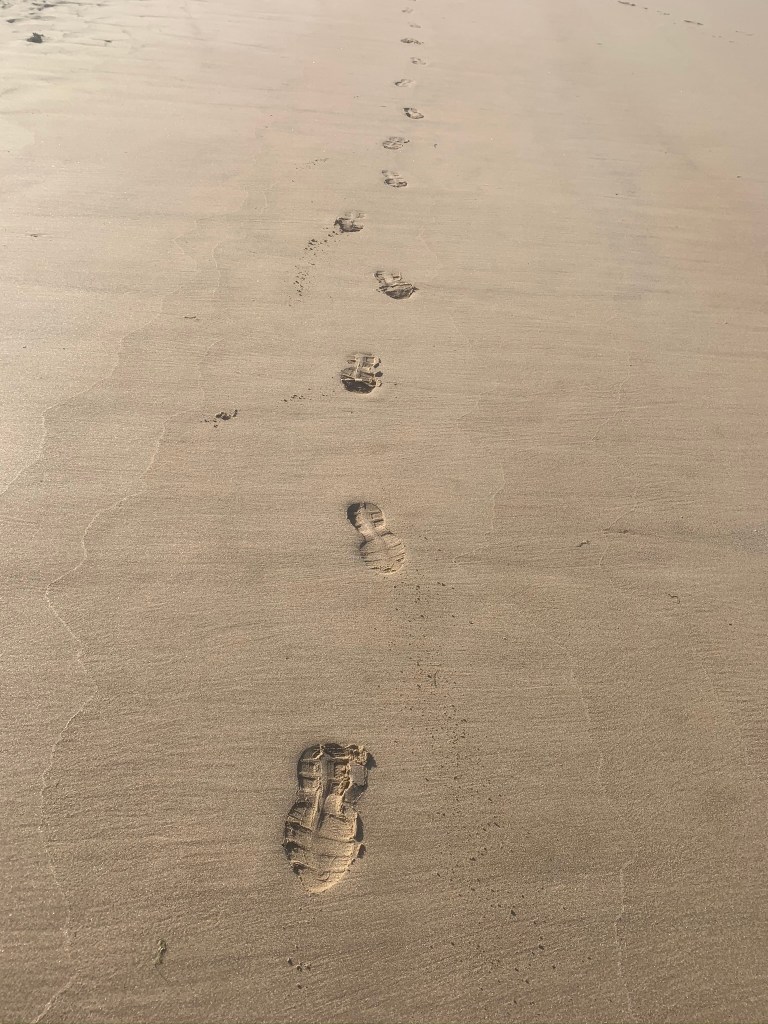
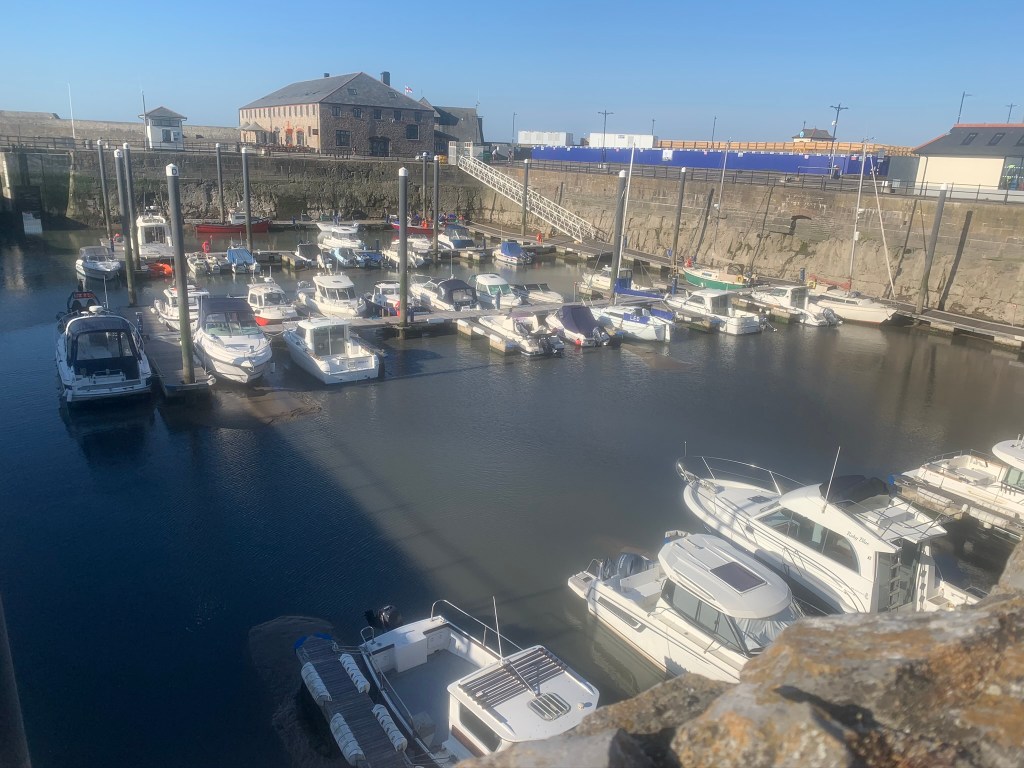
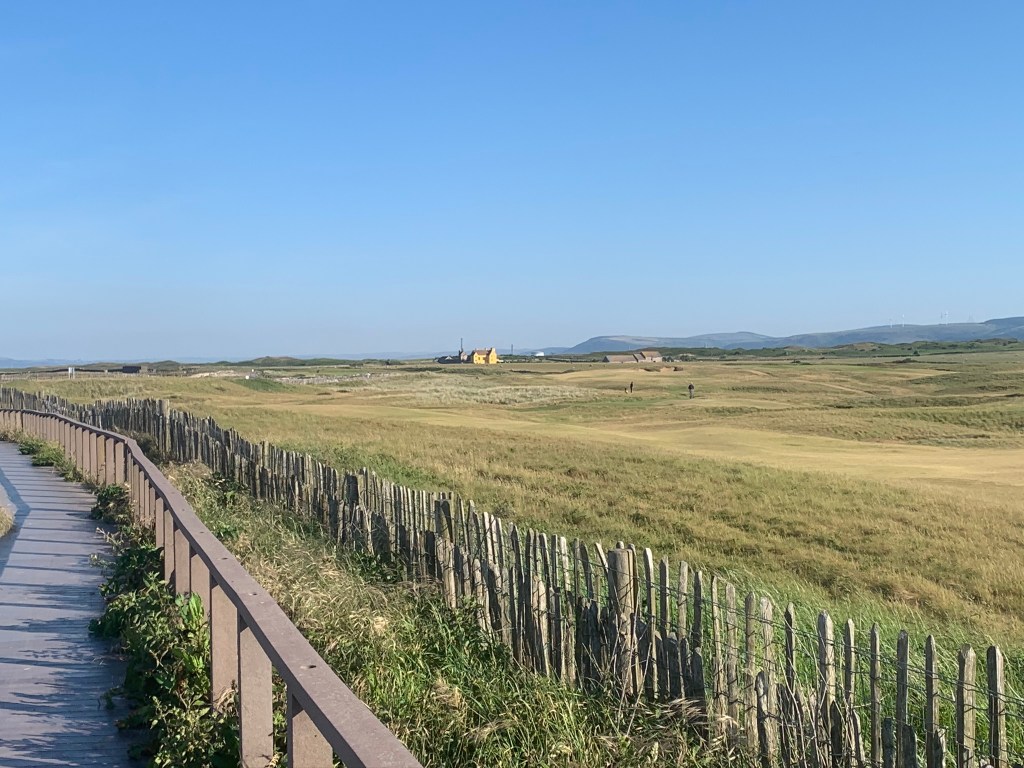
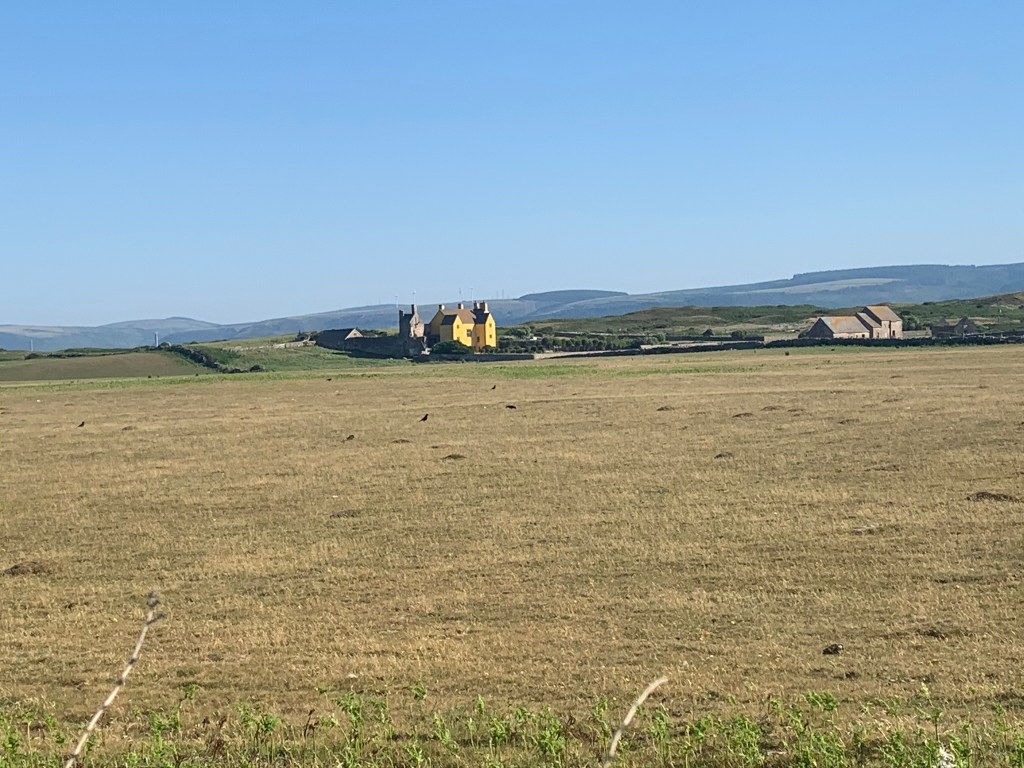
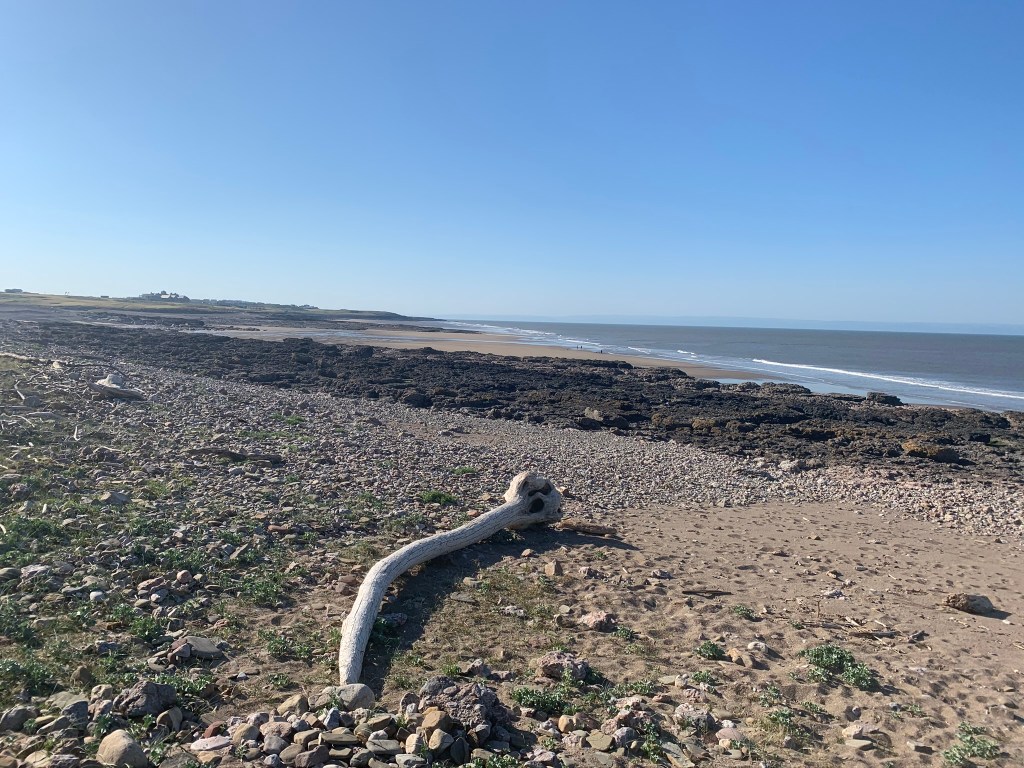
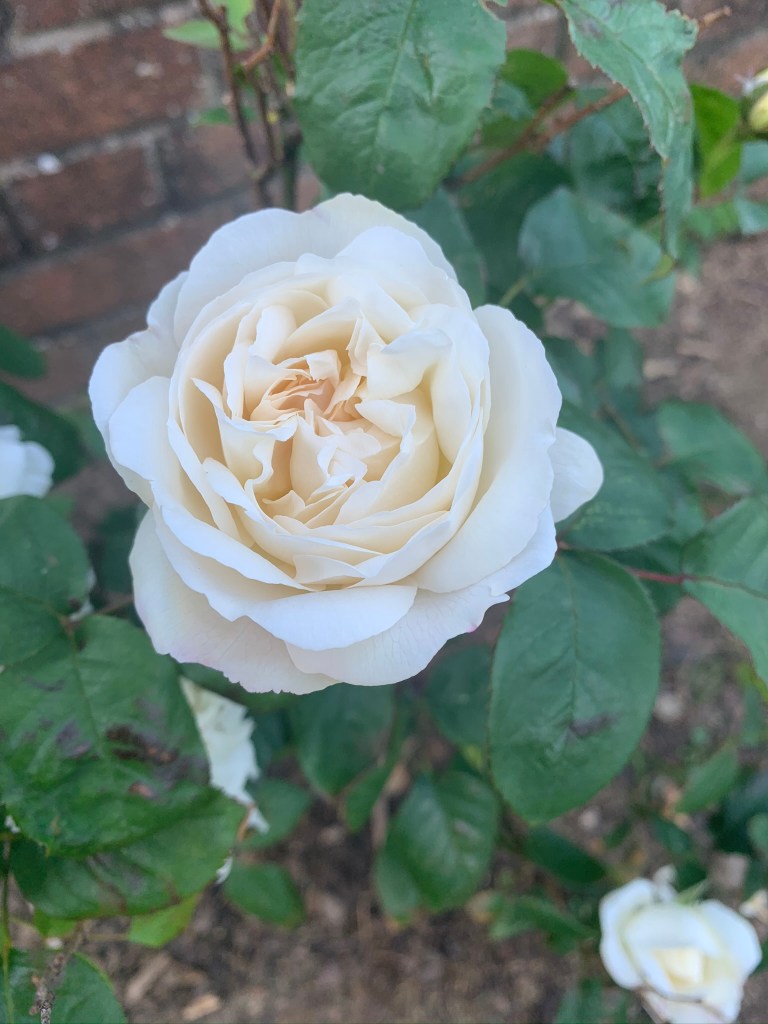
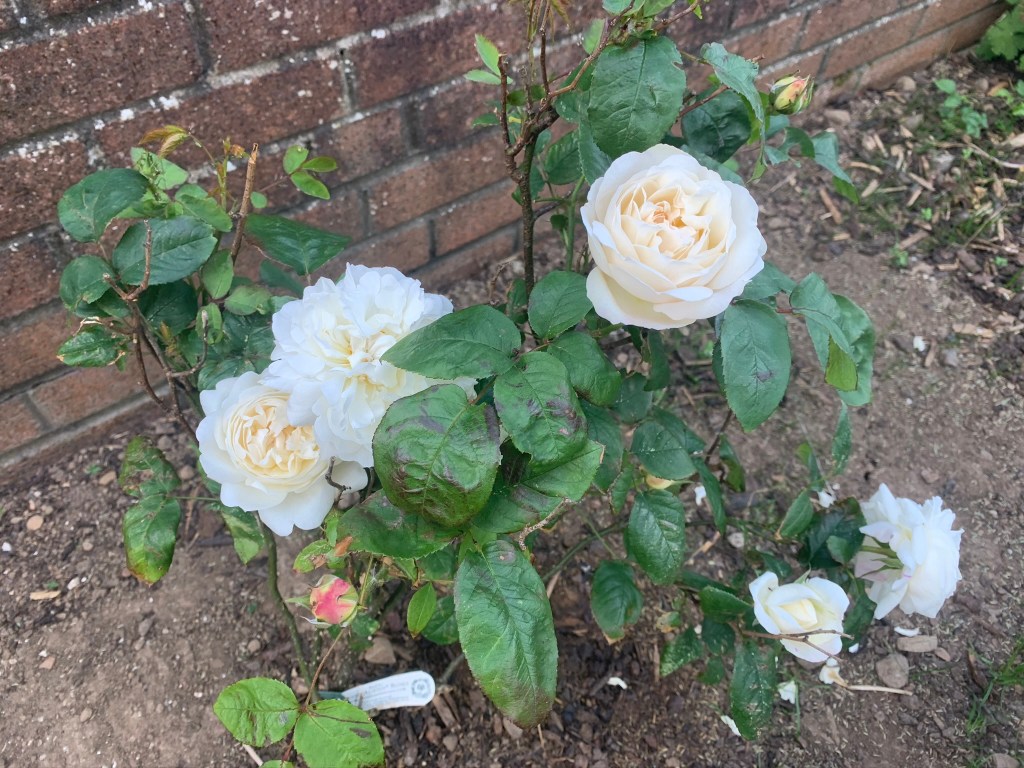
Local views this week…Coney Beach, , my footprints, Porthcawl Harbour, Sger House, roses in our garden

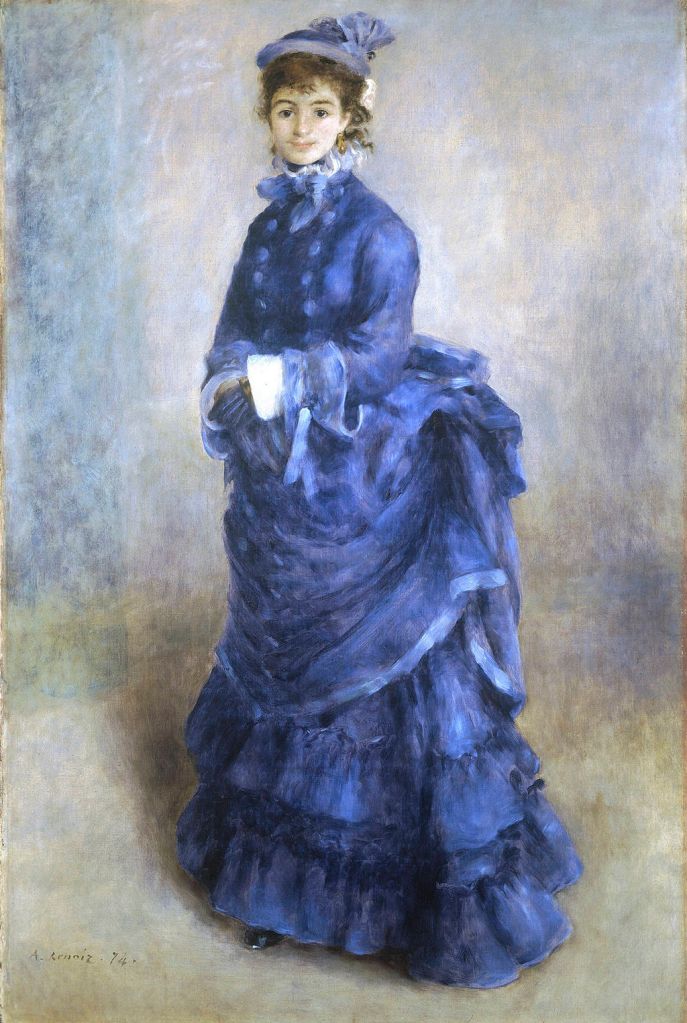
In Looking for Rosanna Mee, Sam Smith Mystery Series book seventeen, Sam visits Cardiff Museum where she admires Renoir’s La Parisienne.

Henriette Henriot, sixteen at the time, posed for La Parisienne. One of Renoir’s favourite models, she enjoyed a distinguished acting career, appearing on stage from 1875 until the outbreak of the First World War.

Countdown to the D-Day anniversary, 6th June.

4th June 1944, Rommel left Normandy and returned to Germany to attend his wife’s birthday. As a gift, he’d bought her a pair of suede shoes.

Two days later, the Allies paved the way for our freedom from fascism by landing on the Normandy beaches. Many bloody battles followed, but for the Nazis this was the beginning of the end.

PS: The shoes didn’t fit.

5th June 1944, General Eisenhower wrote this note, taking full responsibility, success or failure, for the D-Day landings.

Our ancestors had it tough, but at least they had real leaders.

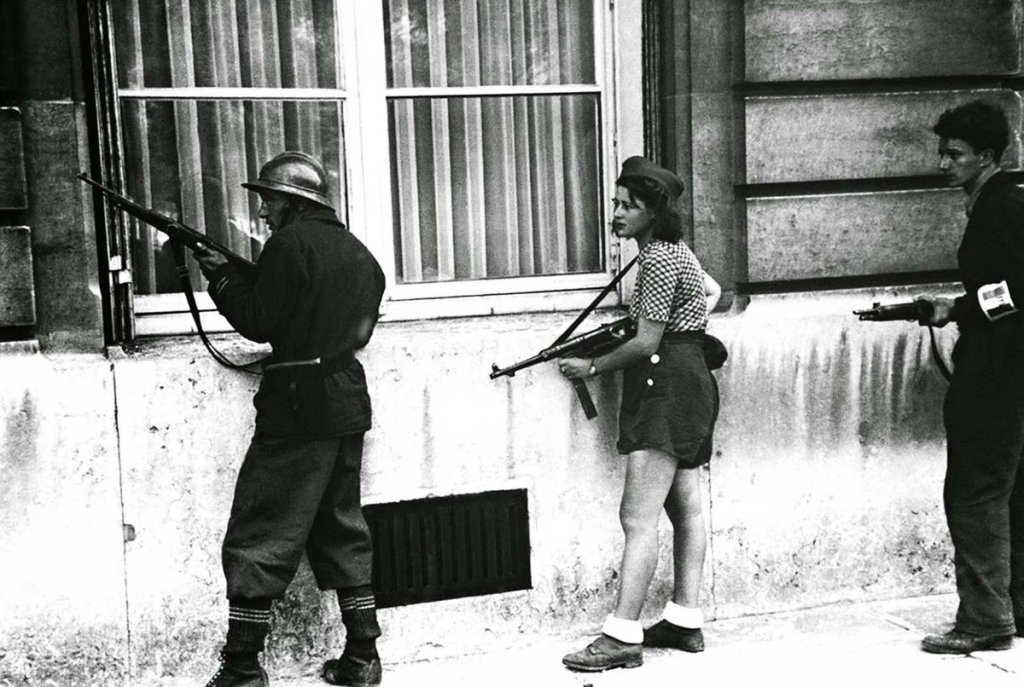
This is Resistance fighter Simone Segouin at the liberation of Paris, 25 August 1944. Wearing her distinctive shorts, she was just eighteen years old at the time.

Simone began her Resistance career by stealing a bicycle from a Nazi messenger, which she used to deliver Resistance messages. After that, she captured Nazi troops, blew up bridges and derailed trains. 

On 23 August 1944, Simone participated in the liberation of Chartres and two days later in the liberation of Paris. After the war, she became a nurse.

Aged ninety-four, Simone still lives in France.

June 6th, the 76th anniversary of D-Day

During the evening of 5th June 1944, the BBC broadcast the following message, informing SOE agents and the French Resistance of the imminent invasion. 

The long sobs

Of violins

Of autumn

Wound my heart

With a monotone

Languor.

The words were written by Paul Verlaine in his poem Chanson d’automne – Autumn Song. 

The SOE agents and Resistance members acted instantly, securing many villages and small towns, sabotaging roads, bridges and railways in actions that delayed the Nazis for a fortnight, vital time that allowed the Allies to gain a vital foothold in Normandy before driving the fascists out of France.

Pearl Witherington’s story will continue next week.

As ever, thank you for your interest and support.

Hannah xxx