Categories
Dear Reader

Dear Reader #126

Dear Reader,

Some chart news. Operation Zigzag, book one in my Eve’s War Heroines of SOE series, is #1 on the Amazon charts while Operation Cameo, which I’m currently writing, is a #34 hot new release. Many thanks to all my readers for making this possible.

Through Ellen, born c1320, daughter and heiress of Sir Gilbert Strongbow, I’ve added a Strongbow branch to my family tree. I wonder if this entitles me to free cider 🤔

As mentioned above, Operation Cameo is now available for pre-order. You can find full details here https://www.amazon.com/Operation-Cameo-Eves-Heroines-Book-ebook/dp/B09K82MQNY/

A view familiar to my London ancestors, the Strand looking west towards Trafalgar Square, 1890.

Just asked my youngest son, “What do you want for Christmas?”

“A skeleton.” (He’s thinking of becoming a doctor).

“Where are we going to keep it?”

“The front room.”

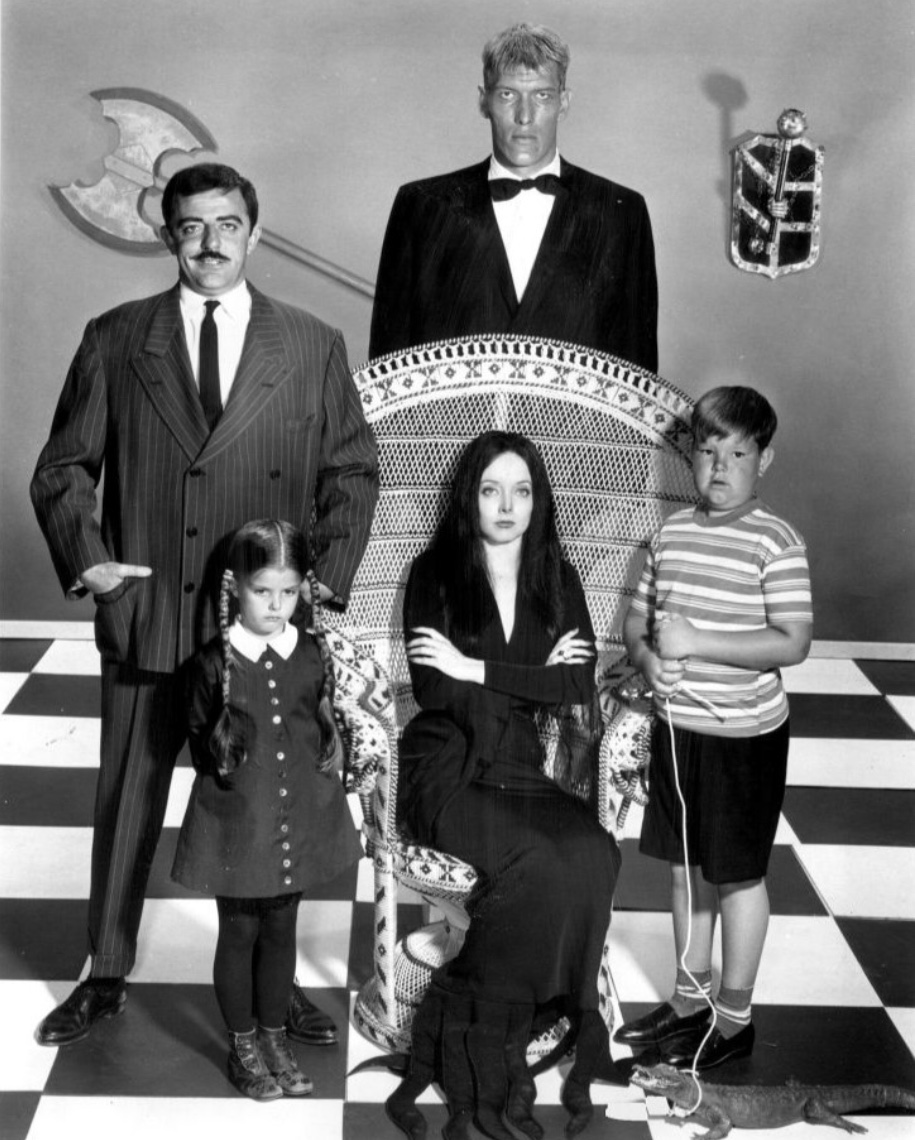
Welcome to the Addams family.
In this month’s issue of Mom’s Favorite Reads…

New York Times and USA Today Bestselling Author Joanna Penn interviewed by Wendy H Jones

Plus…Art, Author Resources, Flash Fiction, New Releases, Photography, Poetry, Puzzles, Recipes, Travel and so much more!

The son of Zephaniah Thorpe and Margaret Entwistle, my direct ancestor Ralph Thorpe was baptised on 14 March 1753 in Bolton-le-Moors, Lancashire.

A warper, a common trade in Lancashire with its proliferation of cotton mills, Ralph moved south in the early 1780s and plied his trade in Essex and Norfolk.

A cotton warper oversaw the industrial process of winding threads from various bobbins on to a warp beam, which had one large bobbin at the back of the loom containing all the warp threads. These threads would gradually unwind during the weaving process, producing the cloth. Warping was the second stage of cotton cloth production, following winding.

A warping machine. Image: Wikipedia.

On 9 December 1783, Ralph married Mary Wakefield in Wanstead, Essex. The couple produced six children including my direct ancestor Thomas Thorpe who, on 9 October 1814, married Mary Ann Freeman and settled in Essex.

Mary Wakefield died on 25 February 1796. A few months later Ralph spent some time in St Thomas’ Hospital, London. That the couple were ill at roughly the same time suggests that they were affected by a transmittable disease. One possibility was smallpox.

Ironically, that same year, 1796, Edward Jenner demonstrated that an infection with the relatively mild cowpox virus conferred immunity against the deadly smallpox virus. His research was crucial in the development of the smallpox vaccine, the first effective vaccine against a contagious disease.

Painting by Ernest Board. Dr Edward Jenner performing his first vaccination on eight year old James Phipps, 14 May 1796.

St Thomas’ Hospital originated as an Augustinian infirmary in the twelfth century and was dissolved in 1540. In 1551 the hospital was refounded by royal charter and functioned as a general hospital for the sick-poor, including sufferers of venereal disease. 

Endowments gave St Thomas’ a degree of financial security. Nevertheless, they still charged patients admission fees, a policy that was condemned by the hospital’s critics for limiting the ability of the very poor to access its services.

A central court of governors governed the hospital and they could number over two hundred. These governors were wealthy individuals who gifted £50 each to the hospital.

Old St Thomas’ Hospital, Southwark, 1739. Image: The Wellcome Library.

The original St Thomas’s Hospital survived the Great Fire of London in 1666. However, upgrades were needed and between 1693 and 1720 more than £37,000 was raised in order to create an elegant classical structure around three spacious courtyards. The rebuilt hospital had nineteen wards, including two foule wards for venereal patients and a cutting ward with room for more than 400 patients. Male and female patients were strictly segregated, as were the venereal patients.

The medical staff included physicians, surgeons and an apothecary, who was not allowed to marry or run a private practice. The nursing staff included a matron, sisters and nurses. The sisters and their nurses lived in the hospital and had to be single or widowed. 

St Thomas’ catered for patients with a wide range of medical and surgical conditions although they did exclude people classed as ‘incurable’ or ‘insane’. Patients were not allowed to stay longer than three months, after which time they were deemed incurable. Ralph left St Thomas’ Hospital on 9 June 1796. Therefore, he must have entered a month or so after Mary died.

St Thomas’ Hospital treated large numbers of patients. In 1800 the total number of inpatients was more than 3,200 with a further 4,700 outpatients. In wartime the patients were often supplemented by large numbers of wounded soldiers and sailors.
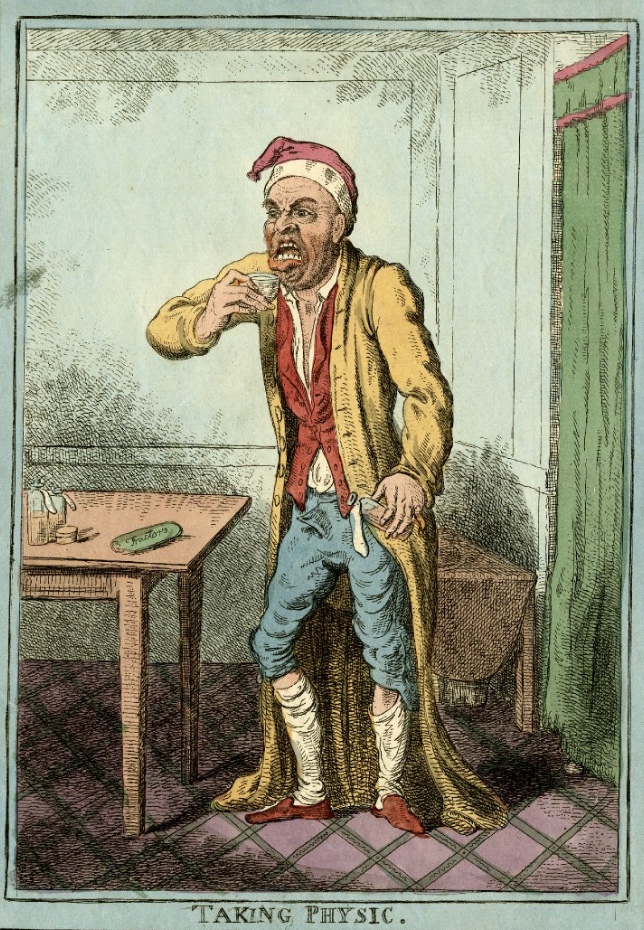
‘Taking Physic’. Image: The Trustees of the British Museum.

The death rates at St Thomas’ were relatively low, although it must be remembered that the hospital did not admit ‘incurable’ patients. In 1726, 4,873 patients were cured while 392 died, a mortality rate of 7.4 percent. In 1735, 4,688 patients were cured while 307 died, a mortality rate of 6.1 per cent. This pattern of mortality rates continued throughout the century.

The patients could be disruptive with harassment, petty theft and ‘ward wandering’ reported. Some patients ran away before the completion of their treatment, especially venereal patients who were subjected to the deeply unpleasant and extremely painful mercury-based ‘salivation’ therapies.

Having recovered, but without his wife, Ralph returned to Bolton-le-Moors where, on 23 January 1803, he married Mary Holden. Ralph died on 28 August 1826 in Bolton-le-Moors.

As ever, thank you for your interest and support.

Hannah xxx

For Authors

#1 for value with 565,000 readers, The Fussy Librarian has helped my books to reach #1 on 32 occasions.

A special offer from my publisher and the Fussy Librarian. https://authors.thefussylibrarian.com/?ref=goylake

Don’t forget to use the code goylake20 to claim your discount 🙂

Categories
Dear Reader

Dear Reader #122

Dear Reader,

Some chart news. The pre-order for Damaged has entered the hot new releases chart at #48 alongside international bestselling authors Robert Bryndza and Michael Connelly.

Damaged is book nineteen in my Sam Smith Mystery Series. Many thanks to everyone who has followed Sam’s story.

A new year’s 2021 resolution achieved. Victory against chess.com’s computer, level 2000. This is the final position from a Réti Opening: Nimzowitsch-Larsen Variation. The computer over-extended in the centre (a common motif in this variation) lost a pawn and allowed my rook to reach the seventh rank. My a and b pawns became active and the computer had to sacrifice material to stop them queening.

Computers are very good at calculation, and can out-calculate me, so I use positional openings against them. If I gain a positional advantage, sometimes I can convert that into a winning position.

In this month’s issue of Mom’s Favorite Reads eMagazine…

An exclusive interview with bestselling author Caro Ramsey

Healing

Short Stories 

Recipes

An exclusive interview with artist Carl Jacobs

Paranormal Podcasts

World Space Week

And so much more!

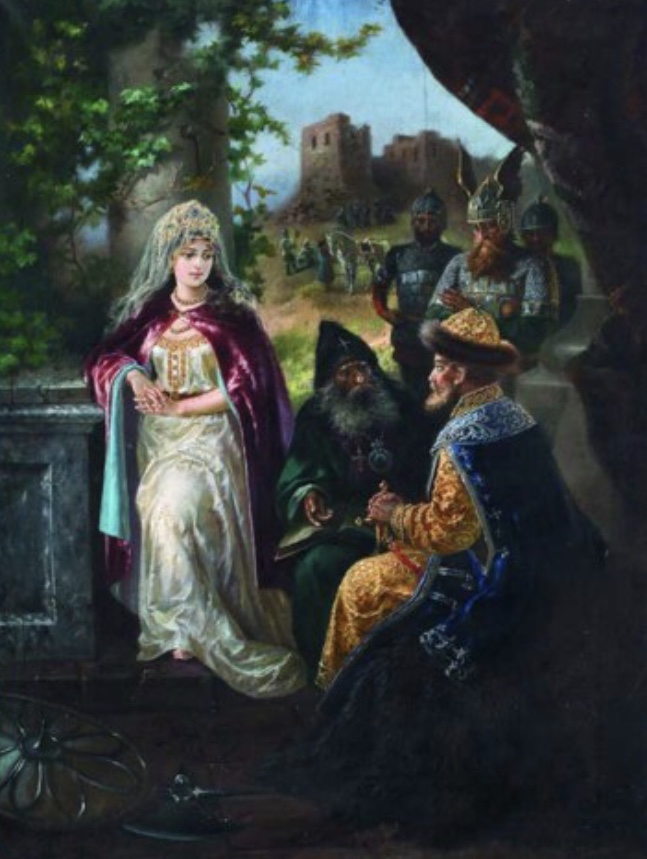
A cosmopolitan branch of my family tree. My direct ancestor Ярослав Владимирович “Yaroslav the Wise, Grand Prince of Kiev” married Ingegerd Ирина (Irina) “Sankta Anna” Olofsdottir of Sweden (both pictured). Their branch led to Gundreda de Warenne who married Roger Beaumont and continued through the Beauchamp, Turberville and Berkerolles families to the Stradlings who were lords of my home manor.

I often wonder how my ancestors met and decided to marry. For my noble ancestors marriages were arranged and I hope love developed from their union. At the other end of the scale I suspect that some of my pauper ancestors married out of financial need and for companionship. For the rest, the majority, I believe love was a factor. It was certainly a factor in this story, because my direct ancestor Sir Maurice Berkeley lost an inheritance over his choice of bride.

Maurice Berkeley, also known as Maurice the Lawyer, (1435- 1506) de jure the 3rd Baron Berkeley of Thornbury, Gloucestershire, was an English nobleman. He was born at Berkeley Castle in Gloucestershire, the youngest son of James Berkeley, the 1st Baron Berkeley, (1394–1463). Contemporaries also referred to James as James the Just.

Berkeley coat of arms.

Maurice’s mother was Lady Isabel, daughter of Thomas Mowbray, 1st Duke of Norfolk, while his elder brother was William Berkeley, 1st Marquess of Berkeley, the 2nd Baron Berkeley. William was known as William the Waste-All. In terms of succession, because William had no children, Maurice was in line to inherit the Berkeley fortune.

In 1465 Maurice married Isabel Meade (1444 – 29 May 1514), the daughter of Philip Meade (c1415-1475) of Wraxall Place in the parish of Wraxall, Somerset. Philip was an Alderman of Bristol, an MP, and thrice Mayor of Bristol, in 1458-9, 1461-2 and 1468-9. 

Maurice and Isabel produced four children.

  • Sir Maurice Berkeley, de jure 4th Baron Berkeley (1467 – 12 September 1523), eldest son and heir, who was made a Knight of the Bath at the coronation of King Henry VIII in 1509. 
  • Thomas Berkeley de jure 5th Baron Berkeley (1472 – 22 January 1532), second son, who was knighted on 9 September 1513 by Thomas Howard, Earl of Surrey, at the Battle of Flodden.
  • James Berkeley (c1474 – 1515).
  • Anne Berkeley (d.1560), my direct ancestor who married Sir William Denys (1470–1533) of Dyrham, Gloucestershire, a courtier of King Henry VIII and Sheriff of Gloucestershire in 1518 and 1526.

Maurice and his brother William were participants in the  Battle of Nibley Green, which was fought near North Nibley in Gloucestershire on 20 March 1470 between the troops of Thomas Talbot, 2nd Viscount Lisle, and William Berkeley. This battle was notable for being the last fought in England between private armies of feudal magnates.

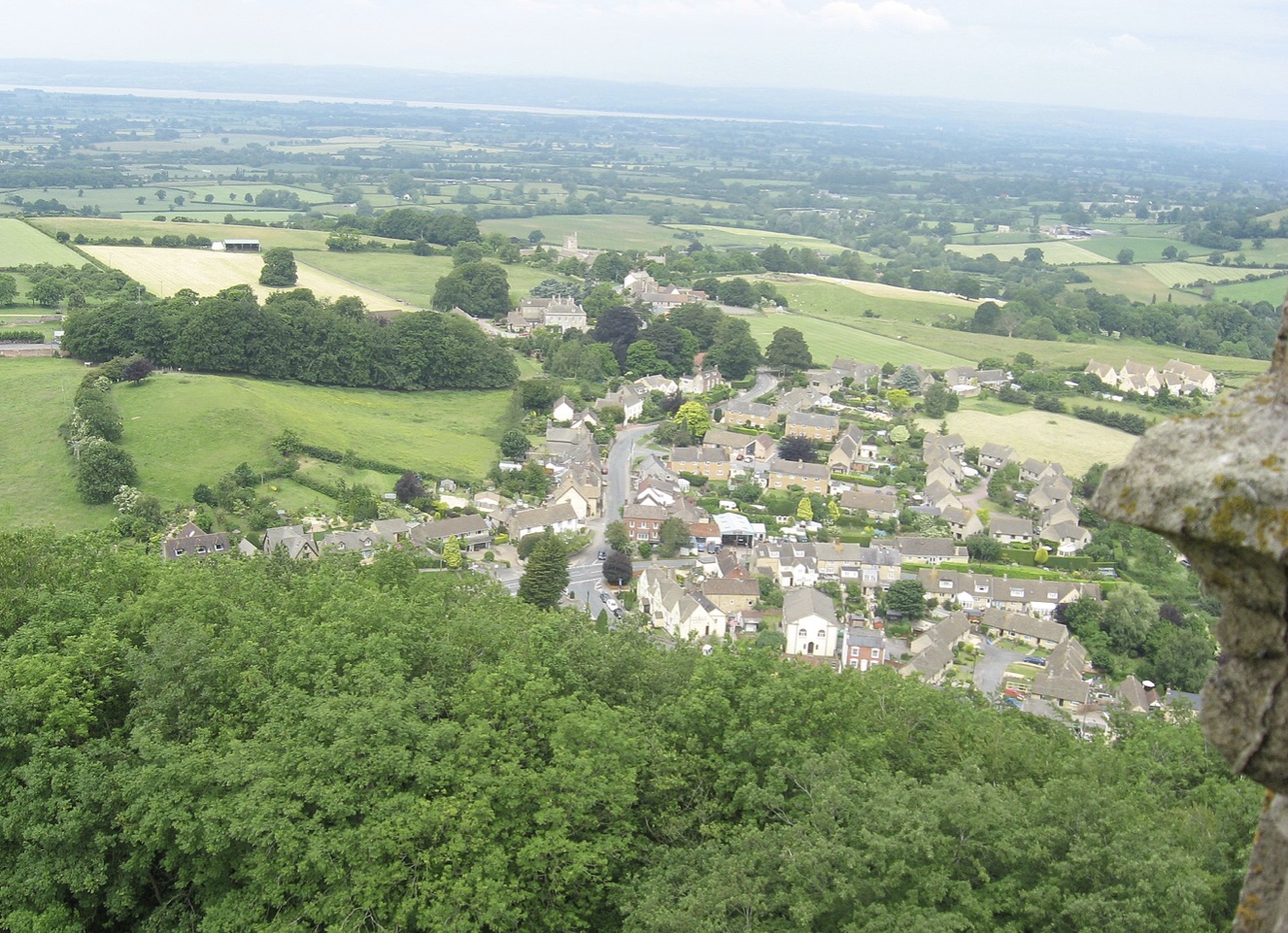
North Nibley (Wikipedia).

The Battle of Nibley Green took place because of a dispute over the inheritance of Berkeley Castle and associated lands. Lisle challenged William Berkeley to a battle, a challenge William accepted.

Lisle raised a force among his ill-equipped local tenants while William Berkeley drew upon the garrison at Berkeley Castle, his local levies, and miners from the Forest of Dean. Maurice, with his retinue, also rode to his brother’s aid.

In terms of numbers, the Berkeley brothers held the advantage, 1,000 men to 300. Philip Meade, Maurice’s father-in-law, also provided men to support the Berkeley brothers’ cause.

Lisle encouraged his men to charge against Berkeley’s troops. In response, Berkeley’s archers loosed their arrows and broke up the charge. One of the Dean Foresters, an archer named ‘Black Will’, shot Lisle in the left temple through his open visor and unhorsed him. In the melee, dagger thrusts put an end to Lisle’s life. Leaderless, Lisle’s army scattered and fled.

Jan Kip’s aerial view of Berkeley Castle engraved for the antiquary Sir Robert Atkyns’ The Ancient and Present State of Glostershire, 1712.

Despite Maurice Berkeley and Philip Meade’s support, William Berkeley disinherited his brother. The reason? William reckoned that Maurice had married beneath himself; he’d married a ‘commoner’ a person of ‘mean blood’.

In reality, Isabel’s father, Philip, was a wealthy merchant, but William reckoned that the marriage brought the noble family of Berkeley into disrepute. However, Maurice stood by Isabel and forsook his inheritance, which included Berkeley Castle.

Maurice died in September 1506 aged 70 and was buried in the Austin Friary in the City of London. Isabel was also buried there, in 1514.

As ever, thank you for your interest and support.

Hannah xxx

For Authors

#1 for value with 565,000 readers, The Fussy Librarian has helped my books to reach #1 on 31 occasions.

A special offer from my publisher and the Fussy Librarian. https://authors.thefussylibrarian.com/?ref=goylake

Don’t forget to use the code goylake20 to claim your discount 🙂

Categories
Dear Reader

Dear Reader #117

Dear Reader,

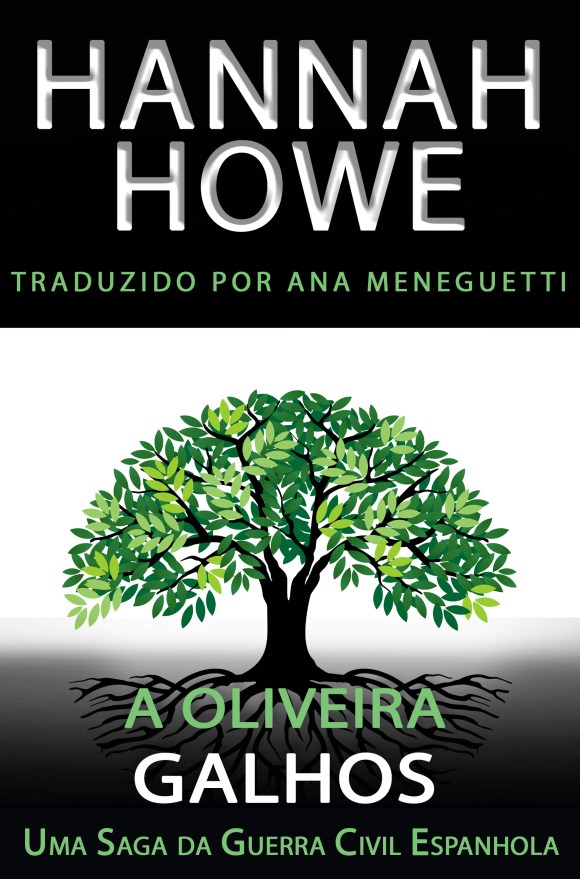
My latest translations, The Olive Tree: Leaves, Sins of the Father, Smoke and Mirrors, and Mind Games, all in Portuguese.

Just discovered that my 7 x great grandfather Thomas Hopkin lived to be 96 (1730 – 1826). He lived in Hutchens Point, Nottage, Glamorgan. On 29 May 1762 he married Catherine Rees from St Athan.

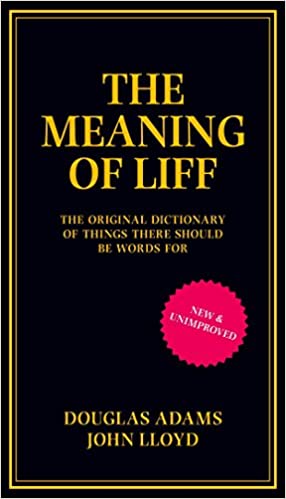
In the 1980s, Douglas Adams wrote a book, The Meaning of Liff, in which he applied humorous definitions to place names. He included Nottage: items you store in your shed for years, decide to throw out, only to realise that you need them a week later.

From 1918, ’Marriage Advice to Young Ladies’ from a ‘Suffragette Wife’.

Original pamphlet: Pontypridd Museum, Wales.

In this month’s issue of Mom’s Favorite Reads…

An exclusive interview with author, playwright and journalist Tim Walker featuring his meetings with a range of movie stars

Short Stories

Poetry

New Releases 

Travel

Activities 

Author Resources 

And so much more!

Around twelve years ago this was the first branch of my family tree that I explored in detail.

My 3 x great grandfather Thomas Jones was born to Thomas Jones, a coal miner, and Mary Morgan on 16 July 1843 in Laleston, Glamorgan. Thomas and Mary were not married at the time. This is a common discovery I have made for many of my Victorian ancestors and I will elaborate further in a future post.

Thomas’ wife and my 3 x great grandmother Hannah Morgan (the names Hannah, Morgan and Jones reoccur a lot in my family; indeed, four of the first sixteen branches start with a Jones) was born on 30 July 1848 to Richard Morgan, an ostler, and Margaret Jones in Tythegston, a small village near Laleston. You can read Richard and Margaret’s story here https://hannah-howe.com/ancestry/ancestry-13/

In 1851 Thomas was living with his parents in Laleston along with his three year old sister Ann and his grandmother, Jennet Morgan. Jennet was a widow at this time. Meanwhile, Hannah was living in Tythegston with her patents, four siblings, three lodgers and her grandmother, Mary.

Bridgend, 18 June 1850, a picture commemorating the opening of the railway station.

Ten years later Thomas was employed as a servant at Broadland House, Laleston. The owner of Broadland House, at the time, was Charles Drummond, a Londoner, an ‘esquire’, who later moved to Somerset. Drummond died in Somerset in 1888 leaving £2,500 11 shillings in his will.

Broadland House was set in 70 acres of land and the farm employed five servants, including Thomas, who worked as a ‘cow boy’. Mention of cow boys conjures up images of the Wild West. However, Thomas’ work was more prosaic, milking and feeding the animals. Twelve years old, Hannah was still at school and it’s likely that the couple had yet to meet.

That changed a few years later and on 22 February 1868 Thomas and Hannah found themselves walking down the aisle in Ruhama Baptist Chapel, Bridgend. There is a large church in Laleston so presumably Hannah chose the venue.

A child soon followed, my direct ancestor, Thomas. At the time of Thomas’ birth the landscape around Laleston was changing dramatically with the arrival of the railways and the development of coal mines. Thomas left the land to work in a coal mine and this ushered in a period of transience for the family as they moved from village to village seeking employment.

In 1881 the family found themselves in Llandyfodwg near Bridgend. Now with five children, Thomas and Hannah lived in Cardigan Terrace. The street name is revealing and indicates that it was established when a number of families settled in Llandyfodwg to work on the land and in the local coal mines. These families originated from west Wales. They were joined by families from the West Country of England. 

The west Walians and the locals spoke Welsh while the people from the West Country spoke English. Over time, a period of twenty years, many Welsh speakers became bilingual. However, few of the English people learned Welsh.

No pictures of Thomas Jones or Hannah Morgan exist, but this is their son, Richard Morgan Jones.

Each change of address for Thomas and Hannah represented a move of only a few miles. The baptismal records of their children allow us to chart their movements: Laleston, Newcastle, Llangeinor and Llandyfodwg, all within a five mile radius of Bridgend. 

Within this transience records were lost and Hannah disappeared from history. A death record dated 1881 pointed to Hannah. However, when examined in detail it revealed a different Hannah Jones (her married name, of course). My Hannah’s death was not recorded, or more likely it was lost.

Hannah definitely died before 1891 because at that time Thomas was a widow. He’d moved to Llantrisant, the home town of Hannah’s grandparents. Maybe he moved there to be closer to his extended family.

In 1891 Thomas was still working in the coal mines. His working life  represented stark contrasts: the early years spent in the open air, the latter years spent working in the dark. Both occupations offer a certain romanticism: the pastoral beauty of the countryside, the camaraderie of men working in life-threatening conditions, their existence reliant upon each other.

In 1891 Thomas and his three children, Thomas, Richard and Margaret, lived in Dinas, Llantrisant. Like their father, Thomas Jr and Richard were coal miners while fifteen year old Margaret was their housekeeper. Margaret’s childhood effectively came to an end when her mother died as she assumed the role of ‘woman of the house.’

Thomas’ street contained thirty people. All the men were coal miners. Twenty-three of those people spoke Welsh, six spoke English and only one was bilingual. 

After 1891, like Hannah, Thomas disappeared from the historical record. It’s probable that he died in May 1898.

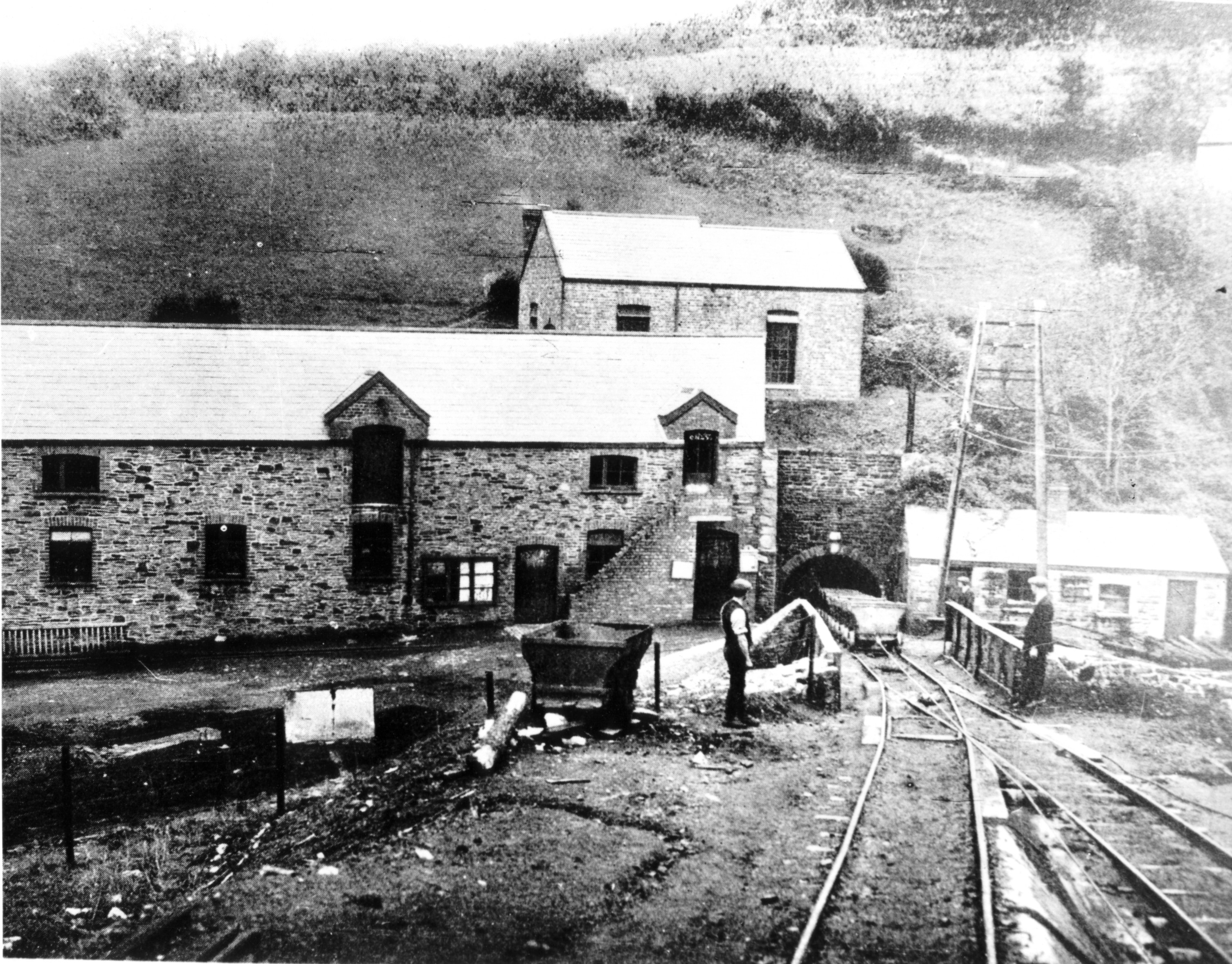
Bridgend coalfield: Bryndu Colliery.

While at work Thomas diced with death, every day. At random I have selected ten Joneses who worked alongside Thomas in the local coal mines. The brief notes that follow record their fate.

Thomas Jones, aged 22: killed by falling from a byat while moving a stage in the shaft.

Evan Jones, aged 14: killed by a full train passing over him.

William Jones, aged 38: killed when the mineshaft roof fell.

William Jones, aged 37: killed by a fall of coal.

William Jones, aged 16: killed by a fall of coal.

Richard Jones, aged 34: killed when the side of the pit gave way.

David Jones, aged 45: killed when the mine roof collapsed.

Thomas Jones, aged 48: killed by an explosion of firedamp, one of two people killed.

David Jones, aged 26: killed by a gas explosion, one of eleven people killed.

Lewis Jones, aged 12: run over by trams through breakage of coupling chains.

Bridgend coalfield: Aberbaiden Colliery showing the entrance to the slip.

Did my Thomas die in a mining accident? It’s possible, but there is no record. More likely he died from the illnesses associated with working in the coal mines, particularly ‘the dust’, aka emphysema, a cruel illness that smoothers the sufferer. 

Ancestors like my 3 x great grandfather Thomas worked and died so that Victorian society could prosper and a few select men could become obscenely rich. It’s a lesson from history we have yet to learn. Today, rich men pollute the planet and massage their egos by jetting into space. Meanwhile, many of their workers live and die in poverty. We must hope for a wiser generation, our children’s generation, that will look into the past, learn the lessons, and create a better future for us all.

As ever, thank you for your interest and support.

Hannah xxx

For Authors

#1 for value with 565,000 readers, The Fussy Librarian has helped my books to reach #1 on 31 occasions.

A special offer from my publisher and the Fussy Librarian. https://authors.thefussylibrarian.com/?ref=goylake

Don’t forget to use the code goylake20 to claim your discount 🙂

Categories
Dear Reader

Dear Reader #113

Dear Reader,

We are making great progress in translating all my books into Portuguese. Here is the latest addition, Stormy Weather, Sam Smith Mystery Series book eighteen. The theme of this story is the climate crisis.

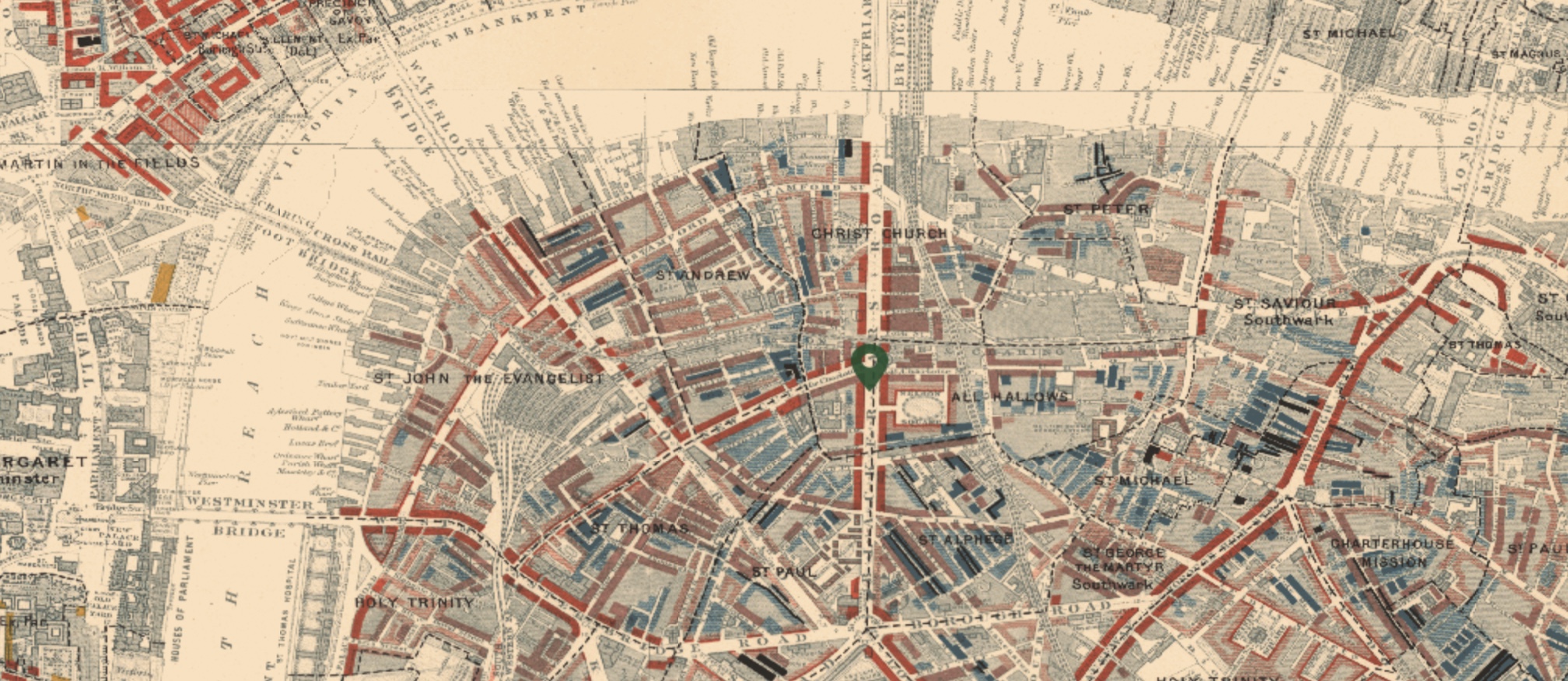
I’m researching my 4 x great grandparents, John Glissan and Sarah Foreman. John was a surgeon/dentist/chemist while Sarah was a nurse/dentist/chemist. In the 1830s they were living on Blackfriars Road, a prosperous street according to Charles Booth’s Victorian maps. Incidentally, my youngest son is thinking of becoming a dentist 🦷 

Just discovered that in the third quarter of the eighteenth century my ancestor Thomas Glissan subscribed to ‘Essays and Poems, Satirical, Moral, Political, and Entertaining’, by J.S. Dodd, which is still available.

In this month’s issue of Mom’s Favorite Reads eMagazine…

Bushcraft and Survival Skills

The Olympics

Side Benefits of Writing

World Honey Bee Day

Plus photography, puzzles, poems, recipes, short stories and so much more!

My 11 x great grandfather William Dent was born into a life of privilege in 1627 in Ormesby, Yorkshire. He married Elizabeth Jarrett on 16 July 1650 and the couple produced four sons: Robert, John (my direct ancestor), Charles and Edward, who sadly died in infancy. Robert entered Jesus College, Oxford on 28 May 1672 as ‘Robert Dent, son and heir of William Dent of Guisborough, gent.’ In July 1674, after college, Robert was admitted to the Middle Temple. 

In 1673 the Hearth Tax returns for Guisborough listed 214 households of which only twenty-one were taxed for possessing four or more hearths. William Dent’s property had nine hearths, which offers an insight into its grandeur. In later life William moved to Sunderland where he died in 1698.

The Dent branch of my family continued with John, son of William, William, John, George, William and Thomas Thompson Dent (11 February 1781 – 10 November 1854). By the eighteenth century the Dent family owned a number of properties throughout the North East of England. They farmed these properties as yeomen. 

John Dent, father of George, was born on 16 June 1700 in Romaldkirk, Yorkshire, the family’s main residence. Romaldkirk is a village in Teeside. It’s thought that its unusual name derives from St Rumwold, an obscure Saxon saint.

On 7 September 1715 John Dent became an apprentice merchant tailor to Peter King of York. Trade directories reveal that the Dents did branch out into the clothing trade with stores in Leeds. They also held on to their lands in Yorkshire.

John Dent’s Apprentice Indenture and signature

Thomas Thompson Dent married Betty Brown on 12 April 1806 in Bowes, Yorkshire. The couple produced six sons: Thomas Thompson Dent (my direct ancestor), John, William, George, Henry and Richard. 

In September 1842 Isabella Hutchinson was brought before the court and charged with stealing oats from one of Thomas Thompson Dent’s fields. Isabella cut off the ears of corn as they were growing. The case was proved and she was sentenced to one month’s hard labour in Northallerton gaol.

A contemporary newspaper report

In 1851 Thomas was seventy years old and a widower farming 200 acres in Lartington near Romaldkirk. His sons John, George and Richard, 42, 38 and 32 respectively, lived with him. All three were unmarried. A fourth son, Henry, had moved away from the family home. Three servants also lived on the farm: Mary Brunskill, 32, Sarah Langstaff, 25, and Joseph Minto, 22. Between master and servant events now took a romantic turn.

In 1840 the trade directories listed Richard Dent as a flour dealer no doubt trading in the crops grown at his father’s farm. Meanwhile, Sarah worked as a servant on the farm. The couple fell in love and married on 14 March 1857 in Romaldkirk. This was unusual for the Victorian era where there are plenty of examples of masters taking advantage of servants, but fewer instances of those encounters resulting in marriage.

Richard and Sarah’s marriage produced three children: Elizabeth, Mary Ann and Richard Thompson Dent. Sadly, Richard died in 1866, the year his son was born. 

Sarah lost her husband, but inherited a small fortune – the equivalent of £93,000 in today’s money. Sarah sold the farm and lived off her inheritance until her death in 1891. Despite her status of ‘highly desirable widow’ she didn’t remarry, maybe out of affection for her late husband. Certainly, her job as a humble servant on the Dent farm had turned her life around and placed her in a position where, financially at least, she had no reason to worry ever again.

Richard Thompson Dent, Richard and Sarah’s son, became a chemist in Barnard Castle, a highly successful chemist, for he left the equivalent of £235,000 in his will.

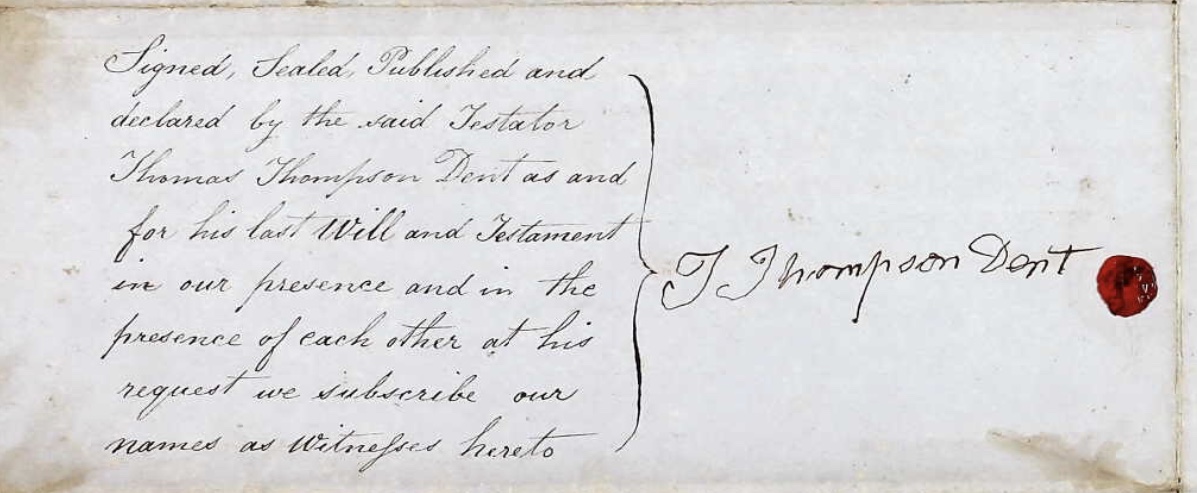
Thomas Thompson Dent’s will of 1854 bequeathed a farm in Cotherstone to his son John, another farm in Bowes to William, a third farm, also in Bowes, to Henry, and a fourth farm, again in Bowes, to Richard. Money, farming equipment and household utensils were also divided between the four sons.

Extract from the will of Thomas Thompson Dent and his frail signature 

But what of Thomas’ son and my direct ancestor, Thomas Thompson Dent Jr? Why didn’t the will mention him? The reason is Thomas Jr, his wife Dorothy Hornsby and their five children had set sail for New York en route to Canada, arriving on 24 June 1846. More about them next time.

As ever, thank you for your interest and support.

Hannah xxx

Bestselling psychological and historical mysteries from £0.99. Paperbacks, brand new in mint condition 🙂
https://hannah-howe.com/store/

Categories
Dear Reader

Dear Reader #108

Dear Reader,

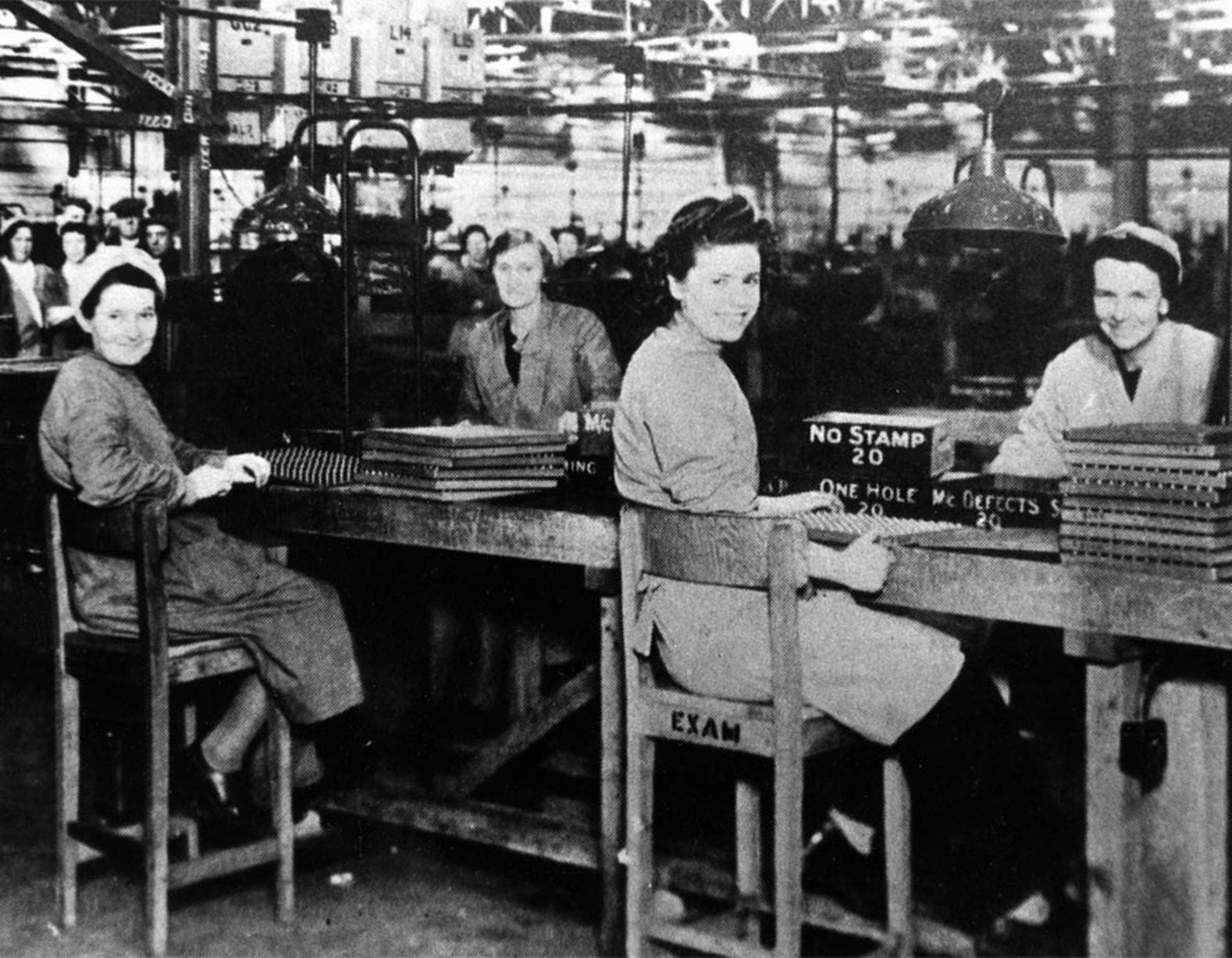
The munitions factory at Bridgend, 1942, known locally as ‘The Arsenal’. The factory was of huge significance to Britain’s war effort employing 40,000 people.

The chemicals in the munitions turned many of the women’s skin temporarily yellow. When the Americans arrived in 1944 and dated the women they called them their ‘Welsh daffodils’.

‘The Arsenal’ features in my Ann’s War Mystery Series.

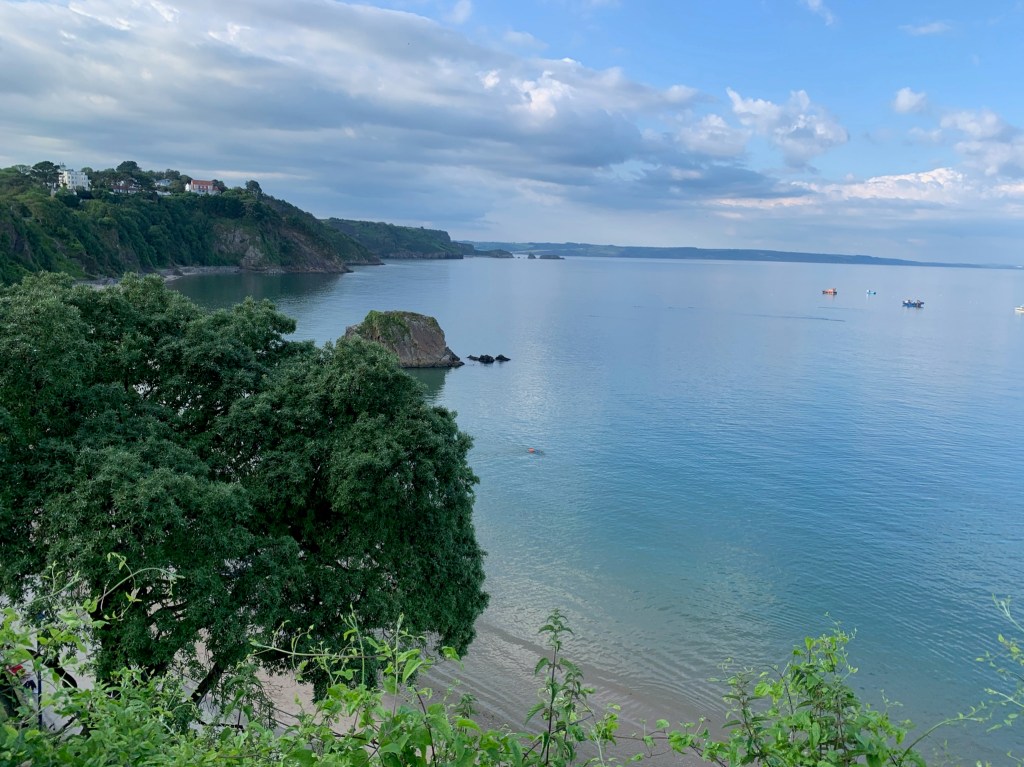
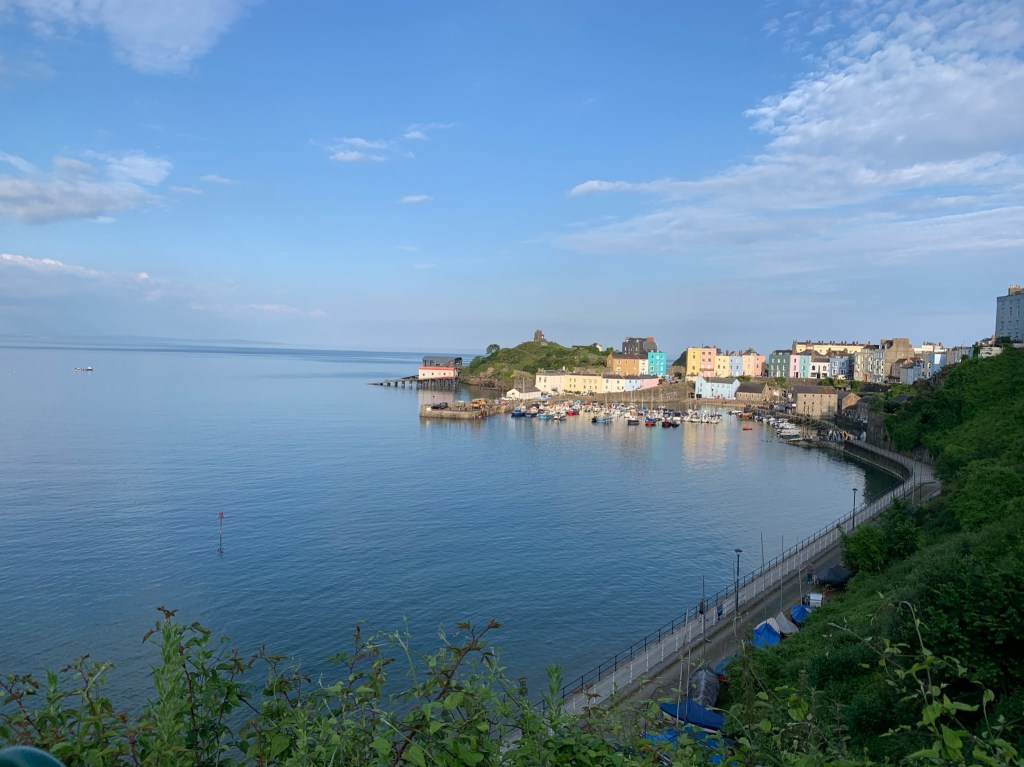
Evening at Tenby this week.

I’ve added a Keats branch to my family tree. Thomas Keats Esq built Sulham House, Berkshire (pictured) c1525. His daughter, Alice, married John Wilder and inherited the estate.

The Wilders arrived from Bohemia in the shape of another John, born 1418. John of Bohemia’s son, Nicholas, fought in the Battle of Bosworth alongside Henry Tudor. After his victory, Henry gifted lands to Nicholas Wilder, which secured the family’s fortune.

Researching Burt Lancaster for my writing, seen here as Dr Ernst Janning in the timeless classic Judgement at Nuremberg. Burt Lancaster, “A liberal with balls.” – Screen Actors Guild president Ed Asner.

In this month’s issue of Mom’s Favorite Reads…

A Family of Mice

Flash Fiction

Picnic Recipes

Author Features

Travel: Azerbaijan

Independent Bookshops

International Tiger Day

Plus, photography, puzzles, poems, short stories and so much more!

George Wood, my 9 x great grandfather, was born on 12 March 1625 in Bonsall, Derbyshire and baptised on 10 January 1632 while Hannah Quick, my 9 x great grandmother, was born in 1635 in Derbyshire. The couple married in 1658 in Matlock, a fact recorded in the Monyash Ashford Meeting of Quakers.

Quakers, a Protestant group also known as the Religious Society of Friends, established themselves in mid-seventeenth century England. Undoubtedly, the English Civil War had a strong bearing on their creation and beliefs. 

The Quakers based their message on the belief that ‘Christ has come to teach his people himself.’ They stressed the importance of a direct relationship with God through Jesus Christ, and a direct religious belief in the universal priesthood of all believers.

Quakers used thee as an ordinary pronoun. They wore plain dress, were teetotal, refused to swear oaths, refused to participate in wars and opposed slavery. Later, they founded banks and financial institutions, including Friends Provident, Lloyds and Barclays. They also founded three major confectionery makers, Cadbury’s, Fry’s and Roundtree’s.

James Naylor, a prominent Quaker leader, being pilloried and whipped.

A notable difference between Quakerism and Orthodox Protestantism was that many of the early Quaker ministers were women. Quakers were noted for their philanthropic efforts, which included the abolition of slavery, prison reform and social justice.

George’s union with Hannah was his second marriage. Previously, he married Anne who produced three children before her death in 1656. George and Hannah’s marriage also produced three children, including their last born, my 8 x great grandmother Elinor Wood.

The upheaval of the English Civil War left a deep scar on society, which took generations to heal. In some communities Quakers were accepted while in others they were ostracised and persecuted. At the age of 57 and 47 respectively, George and Hannah made the momentous decision to create a new lives for themselves and their children by emigrating to Pennsylvania. They began this hazardous journey on 27 May 1682.

George and Hannah were not a young couple looking to make their mark on the world. Indeed, they were approaching the stage where they could contemplate a quiet life. Yet, they embarked on their Pennsylvanian adventure. This suggests that their commitment to the Quaker cause ran deep and was central to their lives.

William Penn, the founder of Pennsylvania and West Jersey, as a young man.

Along with his son-in-law Richard Bonsall, and seven other families – six from Derbyshire – George was a founder member of Darby Township, alongside Darby Creek. The records described George as a yeoman or landowner with 1,000 acres of land to his name. George bought the land from William Penn on 23 March 1682. He also subscribed £50 (approximately £5,725 in today’s money) to the Free Society of Traders. A dam, saw mill and grist mill existed on his portion of the creek, which was obviously a hive of activity.

George was also active within the community, serving on the local Assembly. His fellow settlers elected him to this post in 1683, shortly after his arrival in Pennsylvania. 

Darby Township, Pennsylvania.

Quakers introduced many ideas that later became mainstream in American society, such as democracy in the Pennsylvania legislature, the Bill of Rights, trial by jury, equal rights for men and women, and public education. Furthermore, the Liberty Bell was cast by Quakers in Philadelphia, Pennsylvania.

The Quaker meetings in Delaware recorded the births, marriages and deaths of the Wood family, including Hannah’s death on 9 March 1687, five years after her arrival, and George’s death on 27 April 1705. George bequeathed his land, buildings, purse, apparel and ‘some books’ to his son, John, while his three daughters, Mary, Elizabeth and Elinor received a shilling each.

George and Hannah’s daughter, Elinor, married Evan Bevan, son of John Bevan and Barbara Aubrey, founder members of the Welsh Tract in Pennsylvania. More about the Bevan family and their lives in Pennsylvania in future posts.

As ever, thank you for your interest and support.

Hannah xxx

Bestselling psychological and historical mysteries from £0.99. Paperbacks, brand new in mint condition 🙂
https://hannah-howe.com/store/