Categories
Dear Reader

Dear Reader #124

Dear Reader,

I’m researching the Victorian era and my poverty-stricken London ancestors. This is a view of Whitehall from Trafalgar Square, 1839. Produced by M de St Croix, it’s one of the earliest daguerreotype photographs of England, taken when M de St Croix was in London demonstrating Louis Daguerre’s pioneering photographic process during September and December 1839. 

In the foreground is Le Sueur’s statue of Charles I on horseback, and in the distance Inigo Jones’ Banqueting House – practically everything else has subsequently disappeared. The image has been reversed to show the scene as it was, as daguerreotypes only produce reversed views.

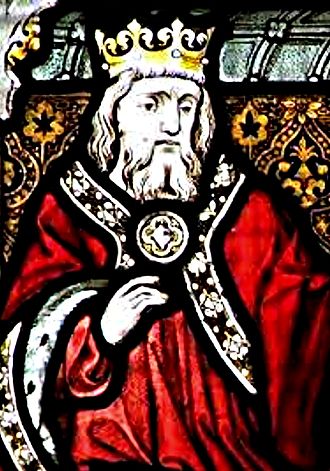
My direct ancestor Joan Plantagenet, daughter of Edward I of England and Eleanor of Castile. Joan was born in April 1272 in Akko (Acre), Hazofan, Kingdom of Jerusalem.

Joan has appeared many times in fiction, often depicted as a ‘spoiled brat’.  There is no evidence that this depiction represents her true character, but the myth remains. That’s the power of fiction.

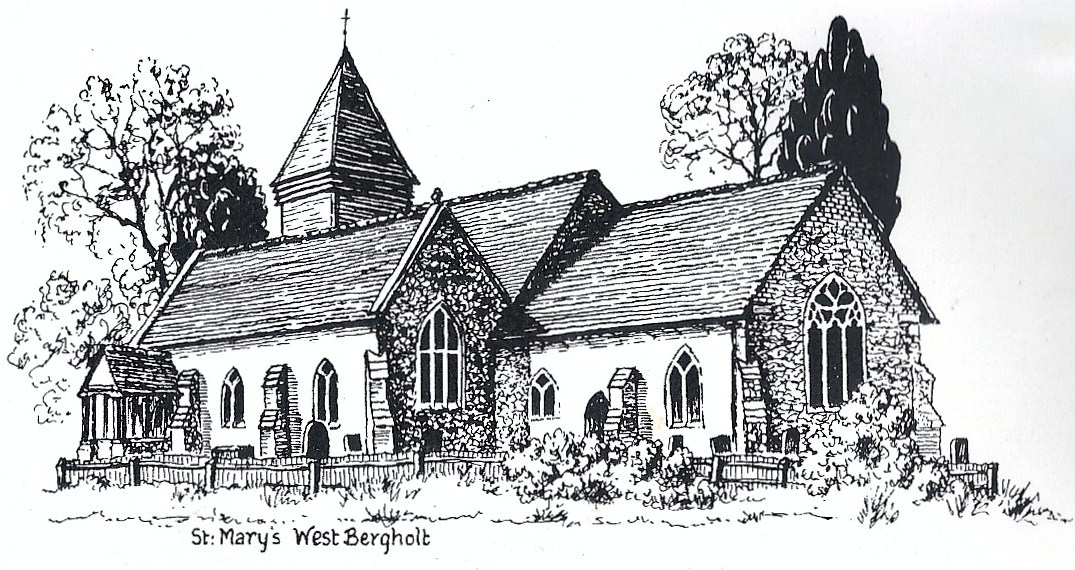
A lovely drawing of St Mary’s, West Bergholt, Essex, in the 1600s and 1700s the parish church of the Fincham, Balls, Clark and Sturgeon branches of my family.
My 4 x great grandmother Mary Ann Thorpe was baptised on 4 August 1816 in Great Braxted, Essex. The daughter of Thomas Thorpe and Mary Ann Freeman, she married Henry Wheeler on 3 November 1844 in St Mary, Lambeth, Surrey.

Mary Ann was Henry’s second wife. He was a petty thief. Also, she was eighteen years younger than him. Why did a young woman marry a far older, disreputable man? We will explore that question later.
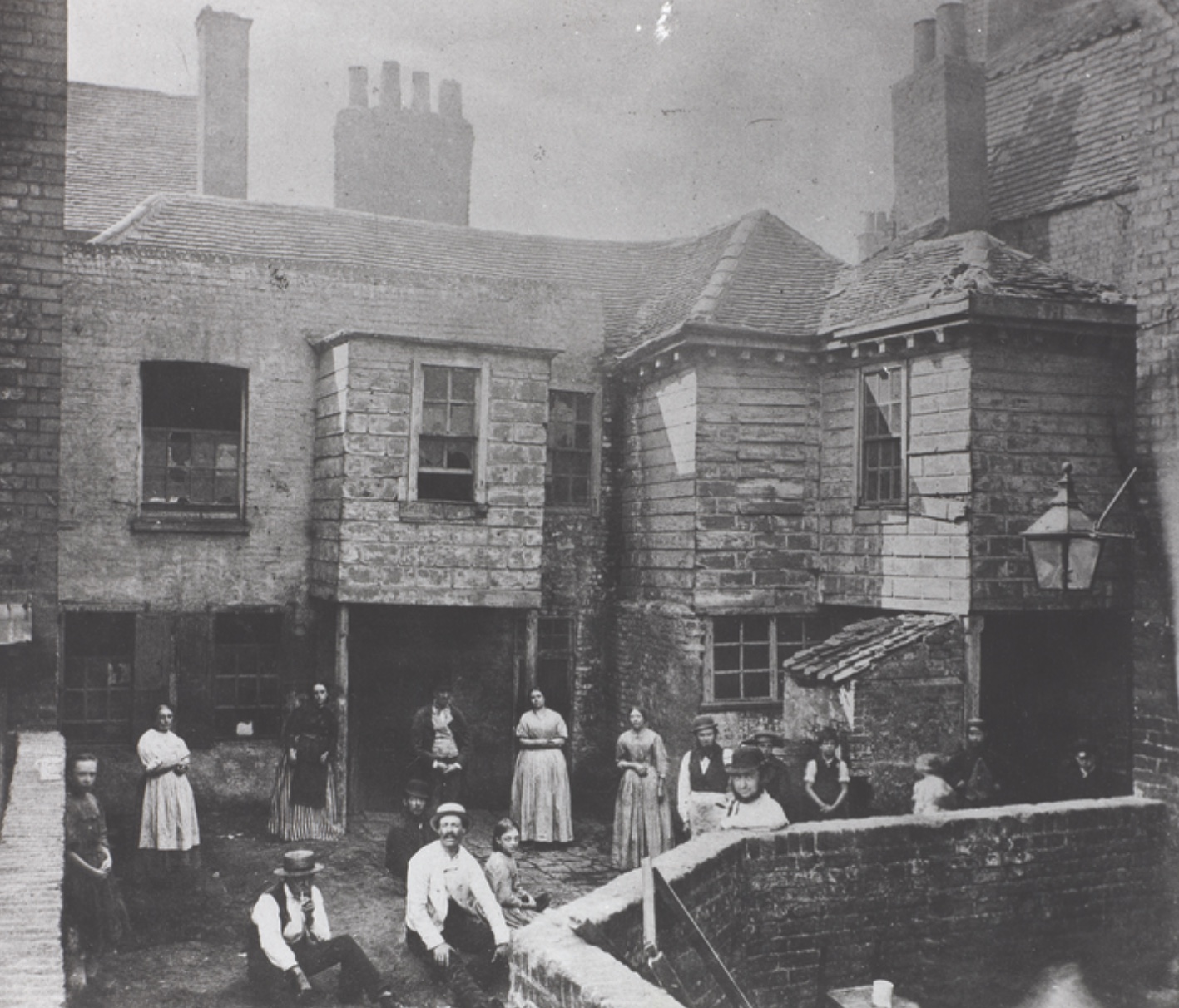
A slum in Market Court, Kensington, 1860s.

Mary Ann and Henry produced four children: Mary Ann, Charlotte, Joseph and Nancy, my direct ancestor, who when married at sixteen changed her name to Annie. There was a nine year gap between Mary Ann’s birth and Charlotte’s birth. This pattern replicated Henry’s first marriage to Elizabeth Mitchell where there was a nine year gap between their first two children, Henry and Eliza. That marriage produced five children in total. Why the nine year gaps? Henry’s wives were clearly fertile, but he was not around. Where was he? Read on…

After each marriage and the birth of the first child, Henry resorted to petty crime to make ends meet. The family endured great hardship, extreme poverty, and with new mothers and babies to feed Henry became ‘light-fingered’.

At other times, Henry was no saint. His name features frequently in the criminal records. However, on many occasions he was found ‘not guilty’. Nevertheless, it’s clear that the Wheeler family lived their lives on the fringes of society and mixed with petty, and possibly, hardened criminals.
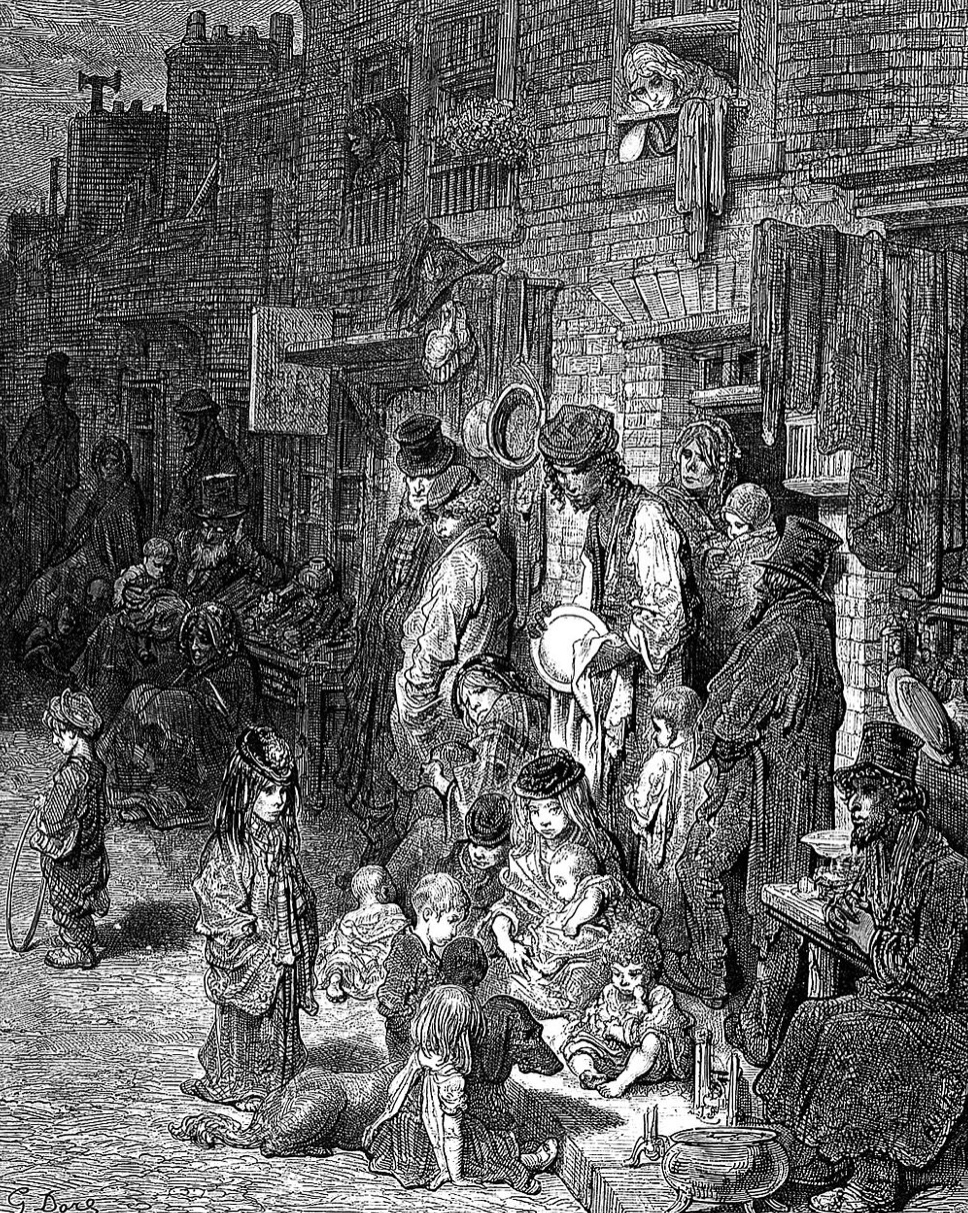
“Wentworth Street, Whitechapel”, 1872, by Gustave Doré (Wellcome Trust).

In 1845, after the birth of his daughter Mary Ann, Henry served a seven year prison sentence. The Victorians were keen on multiples of seven for their prison sentences, and this pattern extended to periods of transportation as well.

While Henry was in prison, his wife Mary Ann endured a difficult time. On 24 August 1849 it’s possible that she entered St Luke’s asylum. The records are sketchy, so it’s difficult to be certain, but the facts and circumstances fit so I am inclined to believe that she did spend some time in the asylum, maybe due to the burden of her circumstances. 

Or maybe Mary Ann suffered from long-standing mental health issues. It’s possible that those issues made a match with a man her own age unlikely, hence her choice of Henry, the eighteen year older petty criminal. The psychological profile certainly fits. That said, maybe it was a love match. Love can still blossom even in the most dire of circumstances.

Earlier, on 20 September 1848, Mary Ann entered the workhouse, a foreboding institution that was more a place of punishment than support. The Victorian era through the Industrial Revolution generated great wealth, but that wealth was concentrated on a relatively small number of individuals. These people were extremely rich, but they treated the poor with contempt. We can see a parallel in our own times.

Mary Ann left the workhouse on 10 January 1849, but her troubles were far from over. She still had a baby to feed, no husband to call on, and a fight against the diseases poverty brings. For all her troubles Mary Ann was a strong woman and lived to be eighty-six.

Before exploring Mary Ann’s later years, first we must go back in time, to 3 February 1845 when she found herself following her husband’s well-trodden path to the Old Bailey.

A trial at the Old Bailey.

Mary Ann was indicted for feloniously breaking and entering the dwelling-house of Susan Laws, on the 18 January 1845, and stealing two gowns, value 30s., the goods of Caroline Allen; and one shawl, 6s., the goods of Henry George Steer.

Caroline Allen, a dressmaker, gave evidence: she locked her door and went to bed late. In the morning, she discovered the door open and her possessions gone. She had no knowledge of Mary Ann. She also stated that two families and an old gentleman shared the dwelling-house.

John Robert Davis stated that he was a shopman to Mr. Folkard, a pawnbroker, in Blackfriars Road. On the 18 January, at half-past nine in the morning, Mary Ann pledged the stolen gown at the pawnbrokers and he gave her an inferior duplicate. He reckoned that Mary Ann made three shillings on the trade.
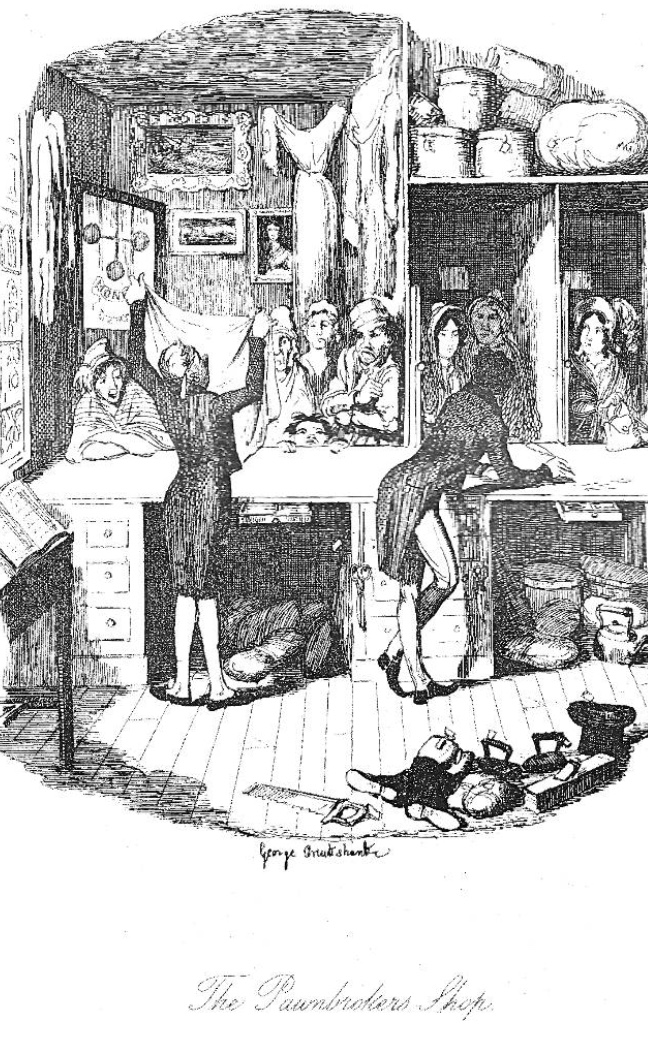
The Pawnbroker’s Shop, 1876. 

Police constable Michael Cregan stated that he visited Mary Ann’s lodging and found the gown and shawl hidden under bedclothes. The court also established that the main door was ‘broken open’ although there were no marks of violence. The conclusion was that someone had used a skeleton key.

Eliza Beale, a fellow lodger, stated that she knew Mary Ann and that she was ‘an unfortunate girl.’ – An observation on Mary Ann’s mental health? Crucially, Eliza added that she came home at four o’clock in the morning when a man and woman asked her if she knew where they could get a bed. She let them into her room. They had a bundle with them, but she did not see them the following morning.

Martha Winfield, the landlady, contradicted Eliza Beale. However, Martha did not live in the house and therefore she was not an eyewitness to the events that night. Her contradiction was based on opinion, not on fact.

Verdict: Not Guilty.

In her closing years, as a widow, Mary Ann lodged with other elderly people. Over her eight-six years she certainly witnessed the darker aspects of London life. She also witnessed a period of dramatic change. At no stage was Mary Ann’s life easy. But she battled through and her life stands as a testimony to the human spirit.

As ever, thank you for your interest and support.

Hannah xxx

For Authors

#1 for value with 565,000 readers, The Fussy Librarian has helped my books to reach #1 on 31 occasions.

A special offer from my publisher and the Fussy Librarian. https://authors.thefussylibrarian.com/?ref=goylake

Don’t forget to use the code goylake20 to claim your discount 🙂

Categories
Dear Reader

Dear Reader #123

Dear Reader,

Always a satisfying moment, I’ve completed the storyboard for Operation Cameo, book six in my (Amazon #1 🙂) Eve’s War Heroines of SOE series. Next week, I will start on the first draft. Eve is feisty while her partner Guy is a pacifist. Based on true events.

My direct ancestor Joan, Countess of Kent (29 September 1328 – 7 August 1385) known to history as ‘The Fair Maid of Kent.’ French chronicler Jean Froissart described her as “the most beautiful woman in all the realm of England, and the most loving.”

Joan gave birth to my ancestor Thomas Holland and later when married to her third husband Edward Plantagenet ‘the Black Prince’, Richard II.

My direct ancestor Thomas Meade was born c1380 in Wraxall, Somerset. His parents were Thomas Atte Meade and Agnes Wycliff.

Thomas died in 1455 and this extract from his will offers an insight into the times.

“I leave to Philip Meade my son two pipes of woad, two whole woollen cloths, my beat goblet with a cover, made of silver and gilded, and my best brass bowl. I leave to Joan, the wife of Roger Ringeston, my daughter, one pipe of woad and 40s sterling.”

Lots of Quakers on my family tree. Here’s the latest discovery, Joan Ford, daughter of William Ford and Elizabeth Penny, born 11 December 1668 in Curry Mallet, Somerset. Joan was three years older than her husband, John Lowcock, not a big difference, but unusual for the era.

Just discovered that my direct ancestor Sir John Cobham, Third Baron Cobham, paid for the construction of Rochester Bridge (in the background on this painting) across the River Medway. This route, originally established by the Romans, was essential for traffic between London, Dover and mainland Europe.

Painting: Artist unknown, Dutch style, 17th century.

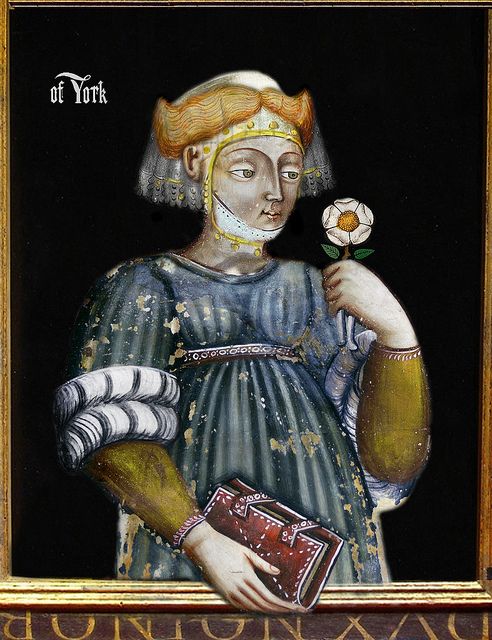
My 19 x great grandmother, Constance of York, Countess of Gloucester, was born in 1374, the only daughter of Edmund of Langley, 1st Duke of York, and his wife Isabella of Castile. 

In November 1397, Constance married Thomas Despenser, 1st Earl of Gloucester, one of Richard II’s favourites. The couple produced three children: a son, Richard, and two daughters. The first daughter, Elizabeth, died in infancy, while the second daughter, Isabel, was born after her father’s death.

When Henry IV deposed and murdered Richard II, the Crown seized the Despenser lands. In consequence, in December 1399, Thomas Despenser and other nobles hatched a plot known as the Epiphany Rising. Their plan was to assassinate Henry IV and restore Richard, who was alive at this point, to the throne.

According to a French chronicle, Edward, Constance’s brother, betrayed the plot, although English chronicles make no mention of his role. Thomas Despenser evaded immediate capture, but a mob cornered him in Bristol and beheaded him on 13 January 1400.

After Thomas’ death, Constance was granted a life interest in the greater part of the Despenser lands and custody of her son. However, in February 1405, during the Owain Glyndwr rebellion to liberate Wales, Constance instigated a plot to abduct Edmund Mortimer, 5th Earl of March, and his brother, Roger, from Windsor Castle. 

Constance’s plan was to deliver the young Earl, who had a claim to the English throne, to his uncle Sir Edmund Mortimer, who was married to Glyndwr’s daughter.

The first part of Constance’s plan went well, only to stumble when Henry’s men captured Edmund and Roger Mortimer as they entered Wales.

With the plot over, Constance implicated her elder brother, Edward – clearly sibling love was not a priority in the House of York – and he was imprisoned for seventeen weeks at Pevensey Castle. Meanwhile, Constance languished in Kenilworth Castle.

With the rebellions quashed, Henry IV released Constance and she became the mistress of Edmund Holland, 4th Earl of Kent. Out of wedlock, they produced my direct ancestor, Eleanor, who married James Tuchet, 5th Baron Audley.

Constance outlived Henry IV and her brother, Edward. She died on 28 November 1416 and was buried in Reading Abbey.

As ever, thank you for your interest and support.

Hannah xxx

For Authors

#1 for value with 565,000 readers, The Fussy Librarian has helped my books to reach #1 on 31 occasions.

A special offer from my publisher and the Fussy Librarian. https://authors.thefussylibrarian.com/?ref=goylake

Don’t forget to use the code goylake20 to claim your discount 🙂
Categories
Dear Reader

Dear Reader #122

Dear Reader,

Some chart news. The pre-order for Damaged has entered the hot new releases chart at #48 alongside international bestselling authors Robert Bryndza and Michael Connelly.

Damaged is book nineteen in my Sam Smith Mystery Series. Many thanks to everyone who has followed Sam’s story.

A new year’s 2021 resolution achieved. Victory against chess.com’s computer, level 2000. This is the final position from a Réti Opening: Nimzowitsch-Larsen Variation. The computer over-extended in the centre (a common motif in this variation) lost a pawn and allowed my rook to reach the seventh rank. My a and b pawns became active and the computer had to sacrifice material to stop them queening.

Computers are very good at calculation, and can out-calculate me, so I use positional openings against them. If I gain a positional advantage, sometimes I can convert that into a winning position.

In this month’s issue of Mom’s Favorite Reads eMagazine…

An exclusive interview with bestselling author Caro Ramsey

Healing

Short Stories 

Recipes

An exclusive interview with artist Carl Jacobs

Paranormal Podcasts

World Space Week

And so much more!

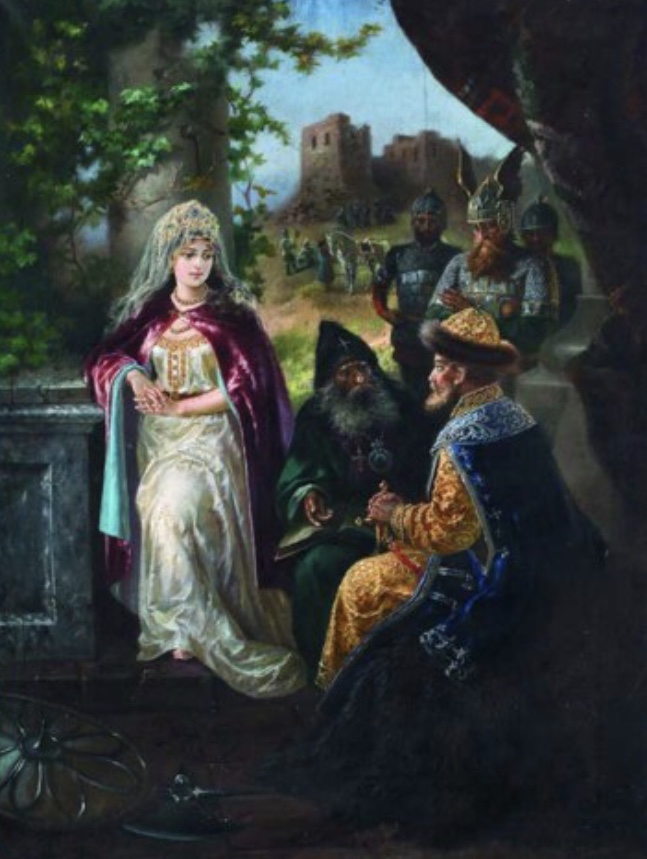
A cosmopolitan branch of my family tree. My direct ancestor Ярослав Владимирович “Yaroslav the Wise, Grand Prince of Kiev” married Ingegerd Ирина (Irina) “Sankta Anna” Olofsdottir of Sweden (both pictured). Their branch led to Gundreda de Warenne who married Roger Beaumont and continued through the Beauchamp, Turberville and Berkerolles families to the Stradlings who were lords of my home manor.

I often wonder how my ancestors met and decided to marry. For my noble ancestors marriages were arranged and I hope love developed from their union. At the other end of the scale I suspect that some of my pauper ancestors married out of financial need and for companionship. For the rest, the majority, I believe love was a factor. It was certainly a factor in this story, because my direct ancestor Sir Maurice Berkeley lost an inheritance over his choice of bride.

Maurice Berkeley, also known as Maurice the Lawyer, (1435- 1506) de jure the 3rd Baron Berkeley of Thornbury, Gloucestershire, was an English nobleman. He was born at Berkeley Castle in Gloucestershire, the youngest son of James Berkeley, the 1st Baron Berkeley, (1394–1463). Contemporaries also referred to James as James the Just.

Berkeley coat of arms.

Maurice’s mother was Lady Isabel, daughter of Thomas Mowbray, 1st Duke of Norfolk, while his elder brother was William Berkeley, 1st Marquess of Berkeley, the 2nd Baron Berkeley. William was known as William the Waste-All. In terms of succession, because William had no children, Maurice was in line to inherit the Berkeley fortune.

In 1465 Maurice married Isabel Meade (1444 – 29 May 1514), the daughter of Philip Meade (c1415-1475) of Wraxall Place in the parish of Wraxall, Somerset. Philip was an Alderman of Bristol, an MP, and thrice Mayor of Bristol, in 1458-9, 1461-2 and 1468-9. 

Maurice and Isabel produced four children.

  • Sir Maurice Berkeley, de jure 4th Baron Berkeley (1467 – 12 September 1523), eldest son and heir, who was made a Knight of the Bath at the coronation of King Henry VIII in 1509. 
  • Thomas Berkeley de jure 5th Baron Berkeley (1472 – 22 January 1532), second son, who was knighted on 9 September 1513 by Thomas Howard, Earl of Surrey, at the Battle of Flodden.
  • James Berkeley (c1474 – 1515).
  • Anne Berkeley (d.1560), my direct ancestor who married Sir William Denys (1470–1533) of Dyrham, Gloucestershire, a courtier of King Henry VIII and Sheriff of Gloucestershire in 1518 and 1526.

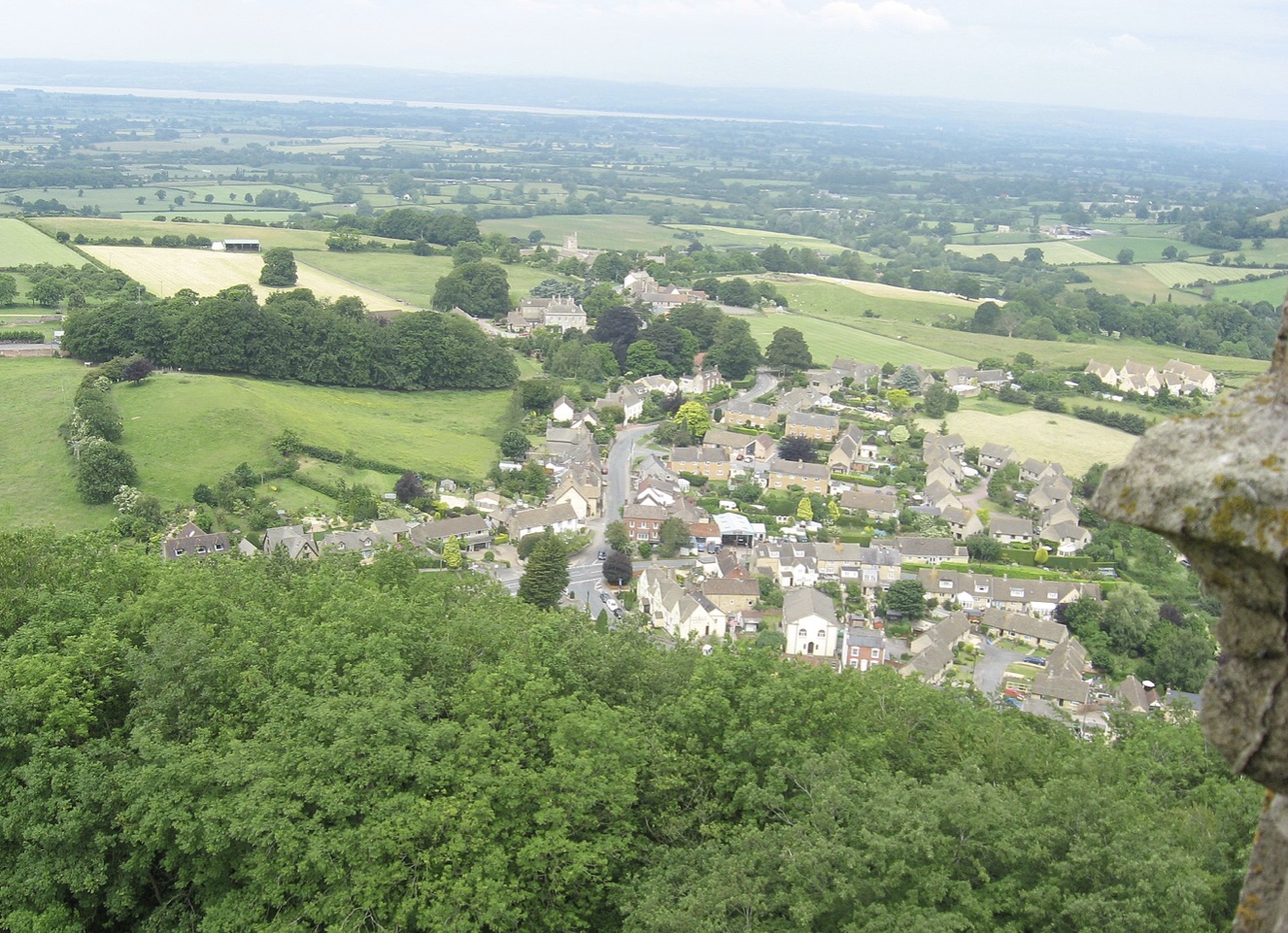
Maurice and his brother William were participants in the  Battle of Nibley Green, which was fought near North Nibley in Gloucestershire on 20 March 1470 between the troops of Thomas Talbot, 2nd Viscount Lisle, and William Berkeley. This battle was notable for being the last fought in England between private armies of feudal magnates.

North Nibley (Wikipedia).

The Battle of Nibley Green took place because of a dispute over the inheritance of Berkeley Castle and associated lands. Lisle challenged William Berkeley to a battle, a challenge William accepted.

Lisle raised a force among his ill-equipped local tenants while William Berkeley drew upon the garrison at Berkeley Castle, his local levies, and miners from the Forest of Dean. Maurice, with his retinue, also rode to his brother’s aid.

In terms of numbers, the Berkeley brothers held the advantage, 1,000 men to 300. Philip Meade, Maurice’s father-in-law, also provided men to support the Berkeley brothers’ cause.

Lisle encouraged his men to charge against Berkeley’s troops. In response, Berkeley’s archers loosed their arrows and broke up the charge. One of the Dean Foresters, an archer named ‘Black Will’, shot Lisle in the left temple through his open visor and unhorsed him. In the melee, dagger thrusts put an end to Lisle’s life. Leaderless, Lisle’s army scattered and fled.

Jan Kip’s aerial view of Berkeley Castle engraved for the antiquary Sir Robert Atkyns’ The Ancient and Present State of Glostershire, 1712.

Despite Maurice Berkeley and Philip Meade’s support, William Berkeley disinherited his brother. The reason? William reckoned that Maurice had married beneath himself; he’d married a ‘commoner’ a person of ‘mean blood’.

In reality, Isabel’s father, Philip, was a wealthy merchant, but William reckoned that the marriage brought the noble family of Berkeley into disrepute. However, Maurice stood by Isabel and forsook his inheritance, which included Berkeley Castle.

Maurice died in September 1506 aged 70 and was buried in the Austin Friary in the City of London. Isabel was also buried there, in 1514.

As ever, thank you for your interest and support.

Hannah xxx

For Authors

#1 for value with 565,000 readers, The Fussy Librarian has helped my books to reach #1 on 31 occasions.

A special offer from my publisher and the Fussy Librarian. https://authors.thefussylibrarian.com/?ref=goylake

Don’t forget to use the code goylake20 to claim your discount 🙂

Categories
Dear Reader

Dear Reader #120

Dear Reader,

My latest translation, Eve’s War: Operation Sherlock, in Spanish.

Through my gateway ancestor Barbara Aubrey (1637 – 1711) I am directly related to the Welsh nobility including The Lord Rhys, Yr Arglwydd Rhys, Prince of Wales. A ‘bit of a lad’ The Lord Rhys married twice, had eleven mistresses and fathered at least twenty-four children. A successful leader for over fifty years he was “a man of excellent wit and quick in repartee.”

My ancestor Rev William Aubrey (1573 – 1646) was the rector of Pendoylon parish church. William married Jane Mathews (1580 – 1650), whose line takes my ancestry back to Robert de Vere, the Third Earl of Oxford. Robert was a Surety Baron who witnessed the signing of Magna Carta.

Pedigree chart: Jeremy Crick.

My ancestor Humphrey Mathew (1567 – 1651) owned Castell-y-Mynach a late medieval mansion remodelled in the early seventeenth century and largely refenestrated in the late eighteenth-early nineteenth century. Humphrey married Mary Lewis.

This branch of my family leads to seven Magna Carta Surety Barons: Hugh le Bigod, Roger Bigod, Gilbert de Clare, Richard de Clare, John de Lacy, William de Mowbray and Saher de Quincy.

Looks like Magna Carta was our family gathering 🙂

Image: CBHC

The Iveson/Iverson branch of my family arrived in Britain with William the Conqueror in 1066 – the surname Iveson derives from Ives or Yves the French for yew or bow. Initially, they settled in the north of England, and Scotland. In Scotland they formed the Clan MacIver.

Born in 1586 in Edinburgh my ancestor Abraham Iveson migrated to Gloucester County, Virginia in 1636. He accompanied nineteen other settlers. 

On 17 October 1636 Abraham was listed as a headright for James Vanerit who had acquired 1,000 acres of land in Elizabeth City County, Virginia from a Mr Stafferton. Stafferton was owed the land for providing the transportation of the twenty colonists, including Abraham.

Dated 26 April 1637, a bill of landing listing Joseph Clifton, a London merchant, showed goods conveyed on the Tristan and Jane of London to ‘Abraham Iveson, planter’, and several others. The settlers were in need of home comforts and supplies, which arrived on the trade ships from Britain. In return, those ships carried the planters crops, including tobacco.

Tobacco advertisement, 18th century.

The planers in Virginia were cultivating hay, cotton, wheat, peanuts, barely, but mainly tobacco. Captain Francis Willis owned 3,000 acres of land, four others including Abraham owned 1,000 acres, and fifty-five others owned smaller parcels. 

A patent dated 10 June 1651 stated that Mr Abraham Iveson acquired 655 acres of land on the southwest side of the North River in Mobjack Bay, Gloucester County. As well as a landowner and planter Abraham was a member of the Virginia House of Burgesses, the elected lower house of the colonial Virginia General Assembly.

Abraham married twice, in Scotland Rebecca Gifford and later in Virginia (after Rebecca’s death), Joan Towson. He had six children: Hugh, Sarah, Richard, Lucy, Elizabeth and Abraham. He died in Virginia, in 1655.

After Abraham’s death, on 9 October 1677, his second wife Joan made a gift of an African slave girl to her grandson William, son of James Kay. William was to receive the slave girl when he came of age, and the children of this slave were to be bequeathed to James’ other children. Witnesses to this transaction were William Kay and Abraham’s son, also Abraham.

The slave trade triangle. Image: Wikipedia.

What to make of Abraham and his family?

At the beginning in the seventeenth century, many Scottish people emigrated to America, Australia, Canada, India, New Zealand and South Africa. These emigrants included freemen who left Scotland to promote trade or to set up military outposts and way stations for merchant ships. They also included people fleeing poverty and religious groups fleeing oppression. Abraham’s status in Virginia suggests that he was in the freeman category.

No surviving documents link Abraham to the tobacco trade, but given the size of his landholding and the fact that tobacco was the main crop cultivated in Virginia it seems fair to assume that he was involved in the tobacco trade. To make money from such a harmful drug is morally dubious, but maybe we can forgive Abraham in this instance because he was ‘of his time’.

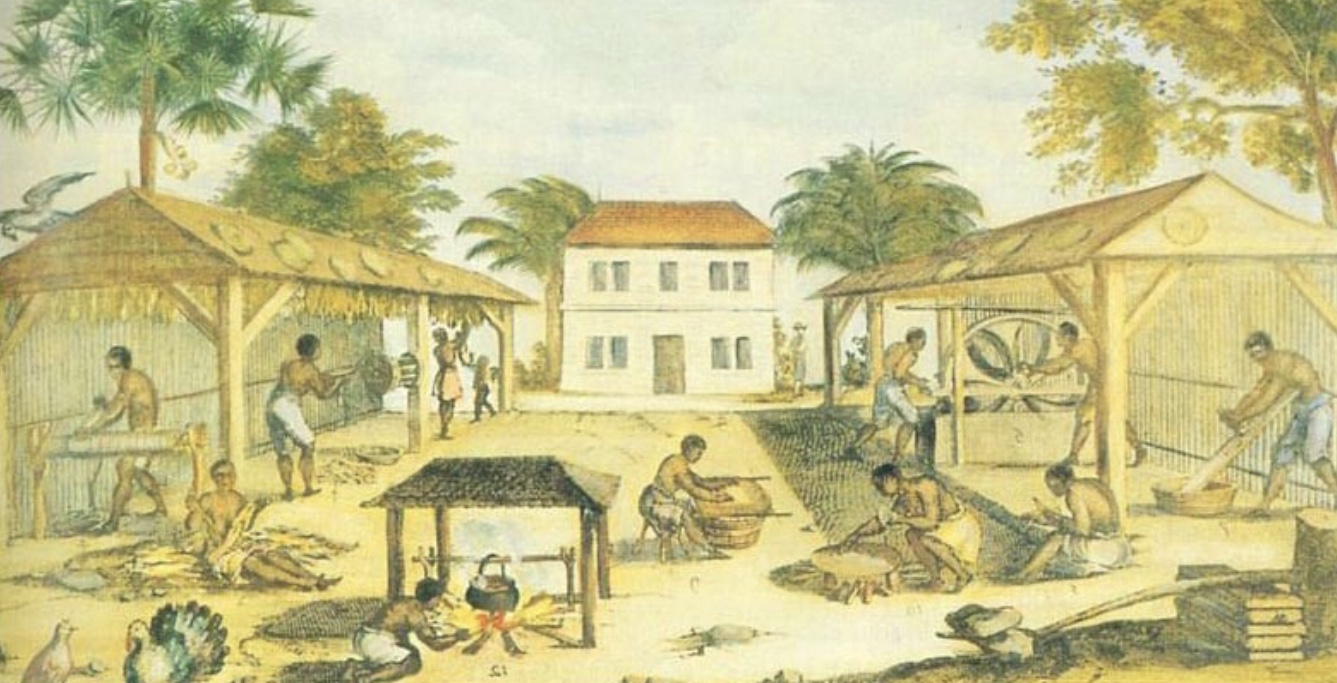
Virginia tobacco slaves, 17th century.

You could also argue that his slave ownership was ‘of its time’, but I find that a flimsy argument. By ‘owning’ people and restricting their freedom he knew what he was doing. Maybe he was kind to his slaves – I hope so – nevertheless, he did own them. 

Of my ancestors, Abraham is not alone in owning slaves in America and the West Indies. I will write about these ancestors in due course. Most of the ancestors I write about fill me with pride and I would love to have met them. Even though I’m not sure that I would have liked Abraham, I would have enjoyed talking with him too, if only to hear the moral defence of his position.

As ever, thank you for your interest and support.

Hannah xxx

For Authors

#1 for value with 565,000 readers, The Fussy Librarian has helped my books to reach #1 on 31 occasions.

A special offer from my publisher and the Fussy Librarian. https://authors.thefussylibrarian.com/?ref=goylake

Don’t forget to use the code goylake20 to claim your discount 🙂

Categories
Dear Reader

Dear Reader #111

Dear Reader,

My latest translation, the Portuguese version of Operation Locksmith in my Eve’s War Heroines of SOE series. Ana is already hard at work on two new translations: Snow in August in my Sam Smith Mystery Series and Branches in my Olive Tree Spanish Civil War series. It‘s always a privilege to work with talented translators.

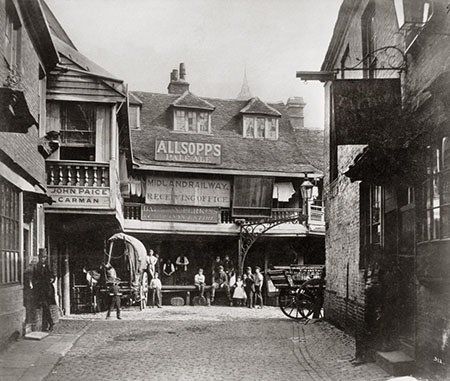
Tabard Inn, Talbot Yard, Southwark before demolition in 1875, a familiar landmark for my London-based ancestors.

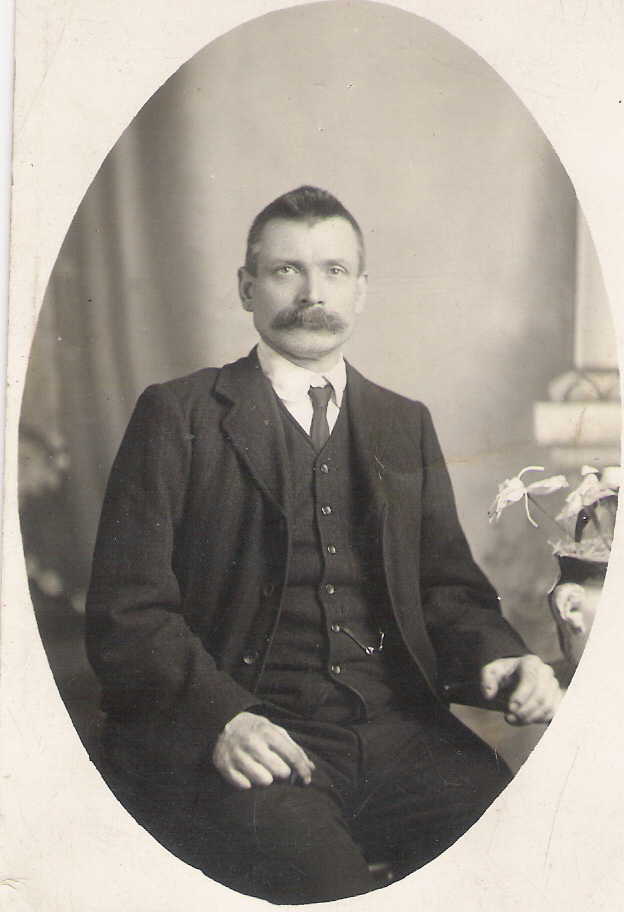
To date, I haven’t discovered any pictures of my 3 x great grandfather Thomas Jones, but here is his brother and my grand uncle Richard Morgan Jones 1874 – 1954. Bilingual, Richard was a coal hewer in the Rhondda Valley. I love the pride in his pose.

William Axe, my 6 x great-grandfather, was a Waterman to the Preventive Officers, overseeing the trade and potential smuggling that occurred on the River Thames. Here he features in The Times on 19 August 1789 in regard to a change in a by-law to allow a parcel of gold, rupees and dollars into the city.

The Mansell branch of my family tree begins with Philip Mansell, born c1040 in Normandy. Philip arrived in Britain with William the Conqueror in 1066 and established a manor in Buckinghamshire. 

In 1067, Philip married Demoiselle de Mountsorrell, whose family had settled in Leicestershire. The marriage increased Philip’s lands and also blessed him with five sons, including my direct ancestor Henry.

Philip was cup-bearer to William the Conqueror, a responsible position – Philip had to ensure that no one poisoned the Conquerer. His name was recorded on the Roll of Battle Abbey, confirming his participation in the Conquest. Indeed, Wace in his Chronicles of the Conquest wrote: ‘Then the Duke called in his good neighbours, the Britons, the Mansells, and Angevins, and those of Pontif and Boulogne.’

The surname Mansell originates from La Manche or Le Mans, with arguments in favour of either option. From Normandy, the name and family spread and within 200 years they reached my corner of Wales.

Bayeux Tapestry. Scene 57: the death of King Harold at the Battle of Hastings. Titulus: HIC HAROLD REX INTERFECTUS EST (Here King Harold is slain).

The Mansell branch of my family continued with Henry born in Buckinghamshire, c1068, who married Emma de Lucy. Emma’s brother, Sir Richard de Lucy, was Chief Justice of the Realm. Henry and Emma produced John Mansell who married Elaine de Lutterell. Their son Ralph married Cecilia Pagnell and they produced my direct ancestor, Sir Robert Mansell.

At this time, 1136, the family were still based in Buckinghamshire with estates in various corners of the country. In 1163, Sir Robert attacked and defeated Sultan Nouradin at La Bochen near Tripoli. On his return from the Crusade he married Joyce de Alneto.

The Alneto branch of my family connects with Charles Carolingian – Charles III King of Western France – Godefrid of Denmark and Arnulf of Flanders, c890 – 28 March 965.

The son of Count Baldwin II of Flanders and Ælfthryth of Wessex, daughter of Alfred the Great, Arnulf, also known as the Great, was the third Count of Flanders. He ruled the County of Flanders, an area now in northwestern Belgium and southwestern Netherlands.

Arnulf, Count of Flanders

Through his mother, Arnulf was a descendant of the Anglo-Saxon kings of England, and through his father, he was a descendant of Charlemagne. Presumably Arnulf was named after Saint Arnulf of Metz, a progenitor of the Carolingian dynasty.

At the death of their father in 918, Arnulf became Count of Flanders while his brother Adeloft or Adelolf succeeded to the County of Boulogne. However, after Adeloft’s death in 933, Arnulf took the countship of Boulogne for himself, although later he conveyed it to his nephew, Arnulf II.

Arnulf greatly expanded Flemish rule in the south, taking all or part of Artois, Ponthieu, Amiens, and Ostrevent. He exploited the conflicts between Charles the Simple and Robert I of France, and later between Louis IV and his barons.

The southern expansion resulted in conflict with the Normans who were trying to secure their northern frontier. In 942 this led to the murder of William Longsword, the Duke of Normandy, at the hands of Arnulf’s men. With William Longsword’s death, the Norman/Viking threat receded and during the later years of his life Arnulf focused on reforming the Flemish government.

In genealogy, a question arises: how far back is relevant to the people we are today? In some respects you could argue that there is no relevance, yet these people are our ancestors and we are only here because of them. Relatives we enjoyed direct contact with nurtured us. However, through our DNA our natures and personalities are formed and I feel that all our ancestors are relevant to the people we become.

The Mansell branch of my family continued with Walter who married Hawise de Somerie. Walter held the sergeantry of Little Missenden as Napkin Bearer to the King, Henry III. You might recall that Philip, the progenitor of the Mansell line, performed a similar duty for William the Conquerer, which underlines the long and close association this branch of my family enjoyed with the rulers of England.

As ever, thank you for your interest and support.

Hannah xxx

Bestselling psychological and historical mysteries from £0.99. Paperbacks, brand new in mint condition 🙂
https://hannah-howe.com/store/