Categories
Dear Reader

Dear Reader #154

Dear Reader,

Find Me If You Can, Series 1, Episode 8 of The Rockford Files opens with an intriguing premise: a client, Barbara, hires Rockford to find her. She offers him no information about herself, so the task looks difficult. However, Rockford rises to the challenge.

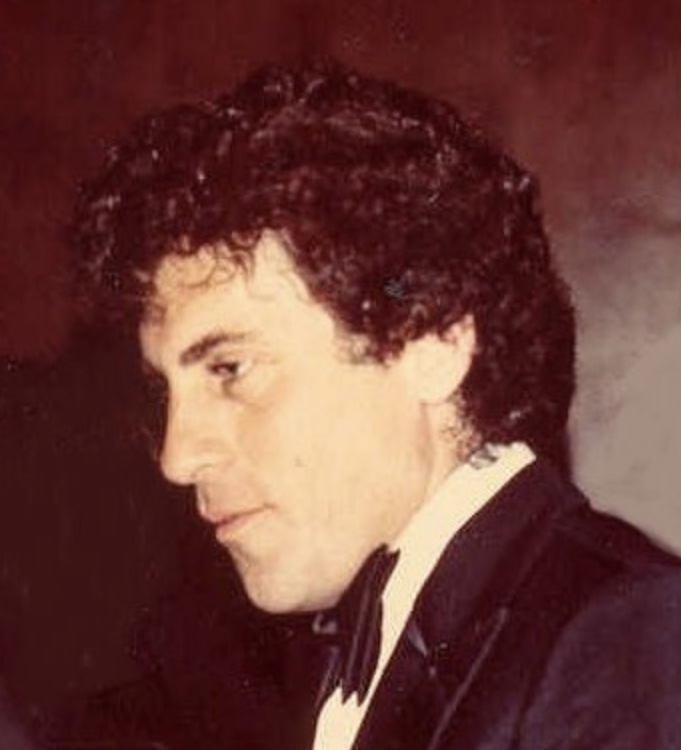
Paul Michael Glaser, pictured, is suitably dark as the villain, while the overall theme of the story is noir-ish. Indeed, Chandler’s Marlowe would have felt at home on these mean streets.

Lots of great dialogue in this one. Rocky (Rockford’s father) on observing a cut near his son’s left eye, “Look at that gash – two inches to the right, and you’d have been missing that eye.” Rockford, “Two inches to the left and he would have missed me completely.”
📸 Wikipedia

By 1700 London was becoming the hub of an empire. This was reflected in the grand buildings and squares that developed in the West End. The population grew and inns sprang up to profit from the traffic that travelled between the city and the provinces.

London was also becoming a city of contrasts. While some people lived in masons with halls, parlours, dining rooms, bedrooms, chambers, and servants, others made do with two rooms and possibly a stable, while the poorest of the poor resided in cellars.

By 1720 London no longer resembled its medieval roots. The major developments were still taking place north of the River Thames. However, around this time the expansion of Southwark and Westminster started in earnest.

🖼 A view of London from the east in 1751.

In this month’s issue of our #1 ranked magazine…

Author Libby Klein interviewed by Wendy H Jones. Plus, Author Features, Health, Nature, Photography, Poetry, Recipes, Short Stories, Young Writers, Book Lovers Day, and so much more!

Welsh Football Legends

William David Davies, popularly known as Dai, was born on 1 April 1948 in Glanamman in the Amman Valley. Football was in the family genes because his father played at amateur level and had trials for Sheffield United and Wolverhampton Wanderers.

Dai’s talent as a goalkeeper was recognised early. Aged 12 he represented his village under-18 team and aged 15 he played for Ammanford Town. 

A good all round sportsman, Dai also played rugby. However, with football making ever-more demands on his time, he quit rugby to concentrate on his goalkeeping. This decision paid off when, in 1969, he turned professional, aged 21.

By this stage of his career, Dai had also qualified as a physical education instructor. However, the lure of Swansea Town was too strong and he opted to place his PE career on hold and play for the club.

Swansea Youth, with Dai in goal, enjoyed an excellent run in the English Youth Cup. An Everton scout spotted him and in December 1970 he signed for the Football League champions. His transfer fee: £40,000. It was a great move for Dai and he played for Everton for seven seasons.

In 1977, Dai signed for Wrexham. His first season with Wrexham was a great success. The club experienced their lowest number of defeats in a season and they won the Football League Division Three title. 

Spells at Tranmere Rovers and Bangor City followed, along with second spells at Swansea and Wrexham. In total, Dai played 199 games for Wrexham and while at that club he made the majority of his Welsh team appearances – 28 out of 52 games.

Dai made his international debut on 16 April 1975 against Hungary. From that point, he enjoyed a consistent run missing only six out of 57 Wales games. His final appearance for his country occurred on 2 June 1982 versus France.

Dai enjoyed a varied life after his professional career. He published his autobiography, first in Welsh, Hanner Cystal a’ Nhad (‘Half as Good as My Father’), the title offering a tribute to his father. The English translation was titled ‘Never Say Dai’.

Dai had a financial interest in a Welsh book and craft shop, commentated on football for S4C, worked as a supply teacher, and ran a natural healing centre in Llangollen, which focused on  herbal medicine, massage, Pilates and reiki. 

Proud of his Welsh heritage, Dai was also a Druid and in 1978 he was initiated into the Gorsedd of Bards. He died on 10 February 2021, aged 72.

As ever, thank you for your interest and support.

Hannah xxx

For Authors

#1 for value with 565,000 readers, The Fussy Librarian has helped my books to reach #1 on 32 occasions.

A special offer from my publisher and the Fussy Librarian. https://authors.thefussylibrarian.com/?ref=goylake

Don’t forget to use the code goylake20 to claim your discount 🙂

Categories
Dear Reader

Dear Reader #153

Dear Reader,

My latest translation, the Portuguese version of Operation Rose, Eve’s War Heroines of SOE, book seven.

The Big Ripoff, Series 1, Episode 7 of The Rockford Files is a strong episode with some noir touches. In the early episodes of the series there is a sense that Rockford is a ‘loser’ in that he’s always the one being ripped-off. That pattern changed as the series progressed and in this episode, financially at least, Rockford emerges as a winner.

Some neat dialogue, which sums up Rockford’s character. Marilyn, a model, “Is there anything you won’t do for money?”

Rockford, “I won’t kill for it, and I won’t marry for it. Other than that, I’m open to just about anything.”

📸 Jill Clayburgh who guest-starred as Marilyn.

Welsh Football Legends

David Lloyd Bowen was born in Maesteg on 7 June 1928. His professional career as a club footballer centred on two clubs – Northampton Town and Arsenal. 

After only 12 games for Northampton Town, David caught the eye of the Arsenal scouts. In the summer of 1950 he signed for Arsenal and understudied Joe Mercer at wing-half.

Picture: Arsenal.com

David’s Arsenal debut arrived on 24 March 1951 versus Wolverhampton Wanderers. In 1952-53 Arsenal won the First Division title. However, David only made two appearances. Indeed, he only secured a regular place in the first team when Joe Mercer retired in 1954. 

From the 1954-55 season, David played for Arsenal for the next decade. However, success for Arsenal proved elusive during that decade. He did play for a London XI in the final of the Inter Cities Fairs Cup, a two-legged affair that ended in a resounding 8 – 2 victory for FC Barcelona. 

A natural leader, David captained Arsenal in his final two seasons at the club. In total he played 162 matches for Arsenal.

In 1959, David returned to Northampton Town as player-manager. His spell at the club lasted for eight years. Operating on a tight budget, he built a strong team and guided that team from the Fourth Division to the First Division in five seasons.

After their meteoric rise, David and Northampton Town experienced mixed fortunes. Relegation, in 1967, led to a parting of the ways only for David to enjoy a second managerial spell at the club, between 1969 and 1972. In 1970 he had the dubious honour of managing Northampton Town when they lost 8 – 2 to Manchester United in the FA Cup. The legendary George Best scored six goals on that occasion.

On the international stage, David made his Wales debut in September 1954, in a friendly against Yugoslavia. In total, he won 19 caps for Wales and was team captain during the 1958 World Cup finals. Along with goalkeeper Jack Kelsey, David was the first Arsenal player to feature in a World Cup finals.

In the 1958 tournament, Wales drew 1 – 1 against Hungary, 1 – 1 against Mexico, and 0 – 0 against hosts Sweden. They won a play-off against Hungary, 2 – 1, and secured a quarter-final match against Brazil. In that game, 17-year-old Pele scored the winner. Pele scored a further five goals in the tournament: a hat-trick in a 5–2 semi-final win over France and a brace in Brazil’s first World Cup tournament victory, 5–2 over Sweden.

David also enjoyed a ten year stint as Wales manager, between 1964 and 1974. During that period, he was active at Northampton Town as general manager, secretary and club director. He also found time to write about the game and serve as a summariser for ITV alongside commentator Hugh Johns during their coverage of the 1966 World Cup final.

David died on 25 September 1995 in Northampton. Later, the club named the North Stand at their Sixfields Stadium in his honour.

As ever, thank you for your interest and support.

Hannah xxx

For Authors

#1 for value with 565,000 readers, The Fussy Librarian has helped my books to reach #1 on 32 occasions.

A special offer from my publisher and the Fussy Librarian. https://authors.thefussylibrarian.com/?ref=goylake

Don’t forget to use the code goylake20 to claim your discount 🙂

Categories
Dear Reader

Dear Reader #152

Dear Reader,

My latest translation, the Italian version of Looking for Rosanna Mee, Sam Smith Mystery Series, book seventeen.

This Case is Closed, Series 1, Episode 6 of The Rockford Files is a feature-length episode. The series often featured ninety-minute episodes, which explored more complex plots, social issues, and included special guest stars. 

The longer episodes also allowed for a slower pace of direction, and longer scenes, such as the car chase at the beginning of This Case is Closed.

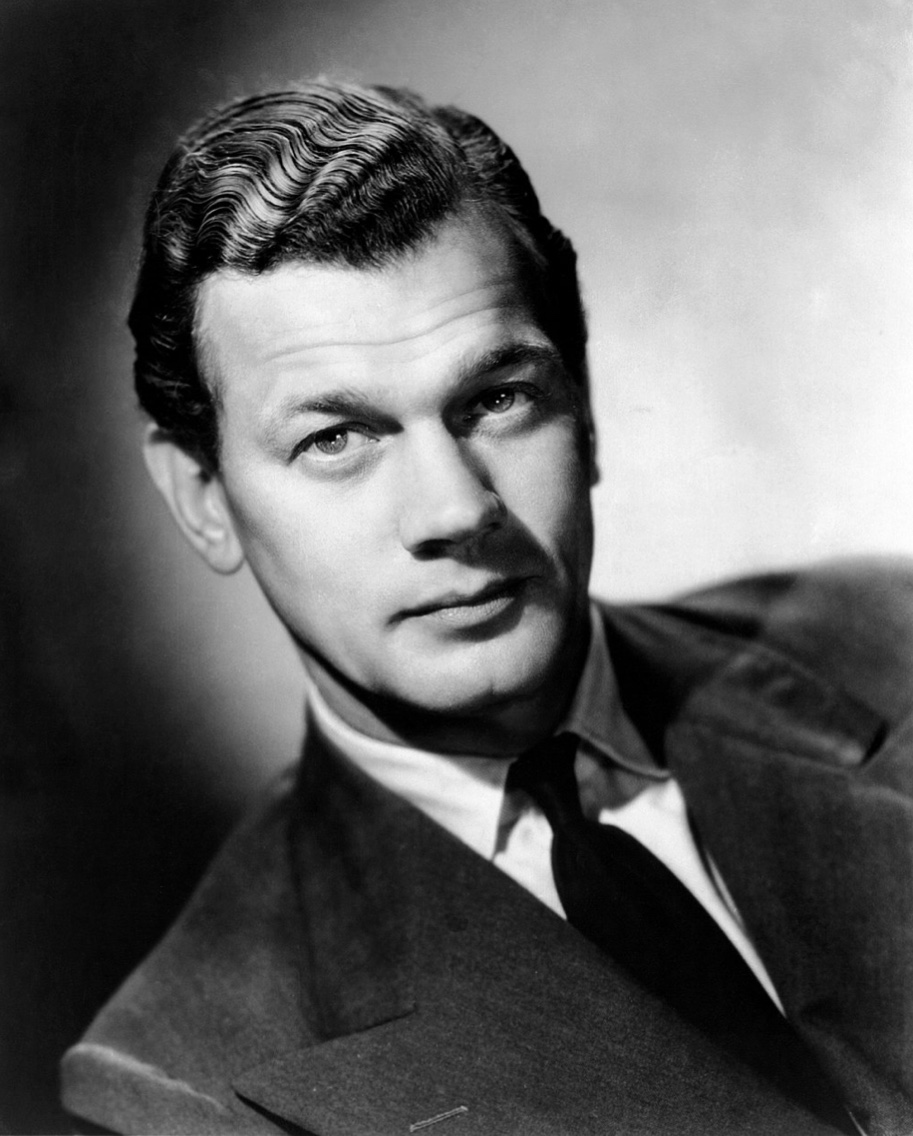
Joseph Cotton, pictured, appeared in this episode. A leading Hollywood actor during the 1940s, Joseph Cotton’s theatre, radio, movie and television credits are numerous. He appeared in many classics including Citizen Kane and The Third Man.

After the Great Fire of London in 1666 many individuals presented great schemes to rebuild and revolutionise the city. These individuals included John Evelyn, Christopher Wren and Robert Hooke. 

Their plans included replacing the narrow, dangerous and unsanitary medieval streets with avenues, piazzas, canals and fountains. 

A Fire Court – a panel of judges – was established to swiftly deal with legal issues and it soon became apparent that speed rather than any grand design would be the order of the day.

London was rebuilt at speed, mainly by utilising the foundation footprints established by Saxon and medieval predecessors. You could argue that a great opportunity was lost. Certainly, the Victorian slums that later followed support that argument.

🖼  John Evelyn’s plan for rebuilding London.

By 1676, the area of London destroyed by the Great Fire of 1666 had been completely rebuilt. Streets were widened while wooden civic buildings were rebuilt in stone. The architects looked to France, the Netherlands and Italy for stylistic inspiration.

Fifty-two churches were rebuilt while thirty-six were abandoned, their parishes merging with neighbouring parishes. The Great Fire represented an opportunity for transformation, but in general Londoners opted for continuity. Their principal aim was to get on with daily life. Therefore, they looked to replicate the past rather than create a city of the future.

Traffic increased, especially the flow of carts over London Bridge. In 1670 this led to the appointment of the first London traffic policemen. Compared to today, the traffic travelled on the opposite side of the road.

🖼 Ogilby and Morgan’s London Map of 1677.

Welsh Football Legends

Robert Earnshaw was born on 6 April 1981 in Mufulira, a mining town in Zambia. He was one of five children born to David and Rita Earnshaw. David managed a gold mine while Rita was a professional footballer in Zambia.

Football was deeply engrained in the Earnshaw family. Robert’s uncle, Fidelis, played professional football while two of his cousins, Kalusha and Johnson Bwalya, represented Zambia at international level.

School for Robert was different to say the least. His father secured a job in Malawi as the manager of a coal mine. The family relocated to Malawi where the children attended St Andrew’s School in Lilongwe, a six-hour drive from the family home. On Mondays Robert and his four siblings boarded a plane to school, stayed a week then, on Fridays, flew home.

Sadly, in May 1990, David Earnshaw contracted typhoid fever and died. In 1991, Rita decided to relocate. She moved her family to Bedwas, Wales, where her sister lived.

Robert later reflected, “It was the first time I had been away from Africa…Every little thing was different, everyone spoke English over here and although I could speak a little bit I had to learn. But when you’re a kid you just get on with it.”

In Wales, Robert developed his soccer skills, kicking a football around with his friends and classmates. Aged 12 he joined GE Wales and scored 80 goals in a single season.

Robert’s skills attracted the attention of Cardiff City. He made his professional debut on 6 September 1997 as a substitute during a 2–0 defeat to Millwall. It took time and a number of loan spells before Robert established himself in the Cardiff City first team. Hat-tricks and honours followed as Robert helped Cardiff City to the First Division in 2002-03.

Robert enjoyed a nomadic professional career playing for several English clubs along with clubs in Canada, Israel, and the United States before, in July 2012, returning to Cardiff City. His transfer fees totalled £12,650,000.

Robert could have played for Zambia. However, he decided to represent Wales. He reasoned, “I thought long and hard about what to do, but Wales was my country. It was where I grew up.”

Robert won Wales caps at youth and under-21 level. His excellent displays in a Welsh shirt and at club level earned him a place in the national side. Robert made his debut in May 2002 against Germany at the Millennium Stadium. He made sure that it was a memorable occasion, scoring in a 1 – 0 win. Unsurprisingly, he was named man of the match.

Robert cemented his place in the national team and became a leading member of the Euro 2004 qualifying squad. Another highlight of Robert’s career occurred in 2004 when he scored a hat-trick in a 4–0 friendly win over Scotland.

Over a decade, Robert represented Wales on 59 occasions, scoring 16 goals. On 25 May 2011 he had the honour of captaining his country against Scotland in the Nations Cup.

A remarkable fact about Robert’s career: he is the only player to have scored a hat-trick in the Premier League, all three divisions of the English Football League, the FA Cup, the League Cup and for his country in an international match.

As ever, thank you for your interest and support.

Hannah xxx

For Authors

#1 for value with 565,000 readers, The Fussy Librarian has helped my books to reach #1 on 32 occasions.

A special offer from my publisher and the Fussy Librarian. https://authors.thefussylibrarian.com/?ref=goylake

Don’t forget to use the code goylake20 to claim your discount 🙂

Categories
Dear Reader

Dear Reader #151

Dear Reader,

My latest translation, the Dutch version of Operation Locksmith, Eve’s War, Heroines of SOE book two.

Tall Woman in Red Wagon, Series 1, Episode 5 of The Rockford Files is a ‘flashback’ story with Rockford recalling events after a bullet-inducing concussion. 

Rockford’s printing press appears in this episode. One of the main features of The Rockford Files was the way Rockford teased information out of various people by impersonating numerous officials, his credentials always supported by cards freshly minted by his printing press.

There is no neat ending to this episode. I like that format and sometimes use it in my stories. In the main, readers and viewers like the author to wrap up all the lose ends, but in real life lose ends often roll on, and on…

📸 A still from Tall Woman in Red Wagon.

The Great Fire of London in 1666 destroyed 436 acres of land and made thousands of people destitute. The fire began on Sunday 2 September 1666 in Thomas Farriner’s bakery on Pudding Lane. By 7 am 300 houses had burned down.

The fire raged for four days consuming 13,200 houses, 87 churches, St Paul’s Cathedral, the Guildhall, and 52 livery company halls. Amazingly, the death toll did not reach double figures. However, the fire did make 100,000 people homeless.

London in 1666 was a tinderbox. Timber houses crowded the narrow streets. A dry summer had parched the ground. On the morning of the fire, a strong easterly wind fanned the flames, which leapt from building to building.

Each parish was equipped with axes and hooks to pull down buildings and create firebreaks. However, the fire was so intense that most people grabbed their belongings, tossed them on to boats and fled via the river. Others ran for the city gates.

Looters ran riot. Charles II travelled through the city on his horse, imploring people to fight the flames. The Lord Mayor, Thomas Bludworth, dithered fearing that if he ordered people to pull down their houses, they would respond with compensation claims.

From Pudding Lane, the fire spread to warehouses, then Cheapside, London’s principal street, then St Paul’s Cathedral. John Evelyn reported that the cathedral’s stones exploded like grenades, while molten lead flowed like a stream.

The fire reduced 80% of the city to ruins. For days, the ground was too hot to walk on. Without familiar landmarks, people wandered around, lost. Many camped in nearby fields. 

Charles II, and many Londoners, blamed the fire on an Act of God. Sin was its source, particularly the sin of gluttony. The reasoning for this? – The fire started in Pudding Lane. Indeed, an enquiry concluded that the fire was an accident, delivered by the Hand of God.

Thomas Farriner, the baker, escaped the fire. England was at war with France and the Netherlands at the time so, looking for a human scapegoat, the population persecuted a Frenchman, Robert Hubert, a man who suffered from mental health problems. 

After a trial, the authorities hung Hubert. However, evidence later proved that Hubert’s ship arrived in London after 2 September 1666. 

My ancestors – adults, children, babies – experienced the Great Fire. That horror must have remained with them for the rest of their days.

🖼 Painted in 1675, the Great Fire of London (artist unknown). This scene depicts the evening of Tuesday, 4 September 1666. To the left is London Bridge; to the right, the Tower of London. Old St Paul’s Cathedral is in the distance, surrounded by the tallest flames. The accuracy suggests that the artist had local knowledge.

Welsh Football Legends

Derek Tapscott was born on 30 June 1932 in Barry, Wales to Stanley and Florence Tapscott. He was one of sixteen children. 

Derek attended High Street Junior School. Upon leaving school he worked as a delivery boy for a butcher, an assistant to a television repairman then as an apprentice bricklayer.

At a time of National Service, Derek received his call in October 1950. He joined 4 Training Regiment of the Royal Engineers. At 18 Derek was already playing for Barry Town and the Royal Engineers granted him permission to link-up with the club on match days. During his National Service, Derek became a member of the drill staff and was promoted to the rank of corporal. 

After his National Service, Derek returned to bricklaying. His appearances for Barry Town continued. His skill caught the eye of the Tottenham Hotspur scouts and they invited him for a trial. However, Derek didn’t sign for Tottenham Hotspur. Instead, in October 1953, he joined their rivals, Arsenal. His transfer fee: £4,000.

Derek began his Arsenal career with a prolific run in the reserves, scoring 13 goals in 15 matches in the London Combination League. On 10 April 1954, he made his first-team debut against Liverpool and scored twice. He scored five more goals in five further matches that season.

During the 1954-55 season Derek established himself in the Arsenal first team. In 1955-56 from inside-forward he became the club’s top scorer, a feat he emulated the following season. He scored 21 and 27 goals respectively. 

European competition, in the form of the Inter-Cities Fairs Cup, beckoned. On 4 May 1956, Derek played for a London XI that defeated a Basel XI 1 – 0. 

Manchester United’s final domestic match before the tragic Munich air disaster was against Arsenal. That game developed into a nine-goal thriller with Manchester United taking the honours, 5 – 4. Later, Derek described the game as “the best I ever played in.”

Derek’s 1957-58 season was blighted by injury and he lost his first team place to Vic Groves. This resulted in a move, in September 1958, to Cardiff City. The transfer fee: £10,000. Derek left Arsenal with the impressive record of 68 goals in 132 matches.

Derek made his Cardiff City debut in a 4–1 win over Grimsby Town. The club continued to record impressive results and in 1960 they 

won promotion to the First Division. During this period, Derek scored six goals during a 16 – 0 victory over Knighton Town in the Welsh Cup, a club record.

Derek featured in Cardiff City’s first venture into European competition. He played in the team that reached the quarter-finals of the UEFA Cup Winners’ Cup scoring the winning goal against Sporting Clube de Portugal in the second round.

Further injuries curtailed Derek’s appearances for Cardiff City. At the beginning of the 1965-66 season he joined Newport County. However, he left that club at the end of that season and moved into non-league football where he played until his retirement in 1970.

On his retirement, Derek could look back at successful spells with Arsenal and Cardiff City, for whom he scored 102 goals in 234 appearances. He could also look back at an illustrious international career, representing Wales.

After only one appearance for Arsenal, Derek was named in the Wales squad for a match versus Austria. He made his debut on 9 May 1954 in Vienna. Austria won 2–0. Nine consecutive appearances followed as Derek established himself in the Wales team.

Derek scored his first international goal on 22 October 1955 during a 2–1 win over England. In the 1959 British Home Championship he scored in the final two matches of the competition, against England and Northern Ireland. From 14 appearances for Wales, Derek scored one other goal, at the Racecourse Ground, Wrexham on 23 November 1955 against Austria. 

After football, Derek worked for sports goods companies Gola and Diadora. He published his autobiography, Tappy: From Barry Town to Arsenal, Cardiff City and Beyond, in 2004.

Derek died on 12 June 2008. In 2012, Barry Town inducted him into the club’s Hall of Fame.

As ever, thank you for your interest and support.

Hannah xxx

For Authors

#1 for value with 565,000 readers, The Fussy Librarian has helped my books to reach #1 on 32 occasions.

A special offer from my publisher and the Fussy Librarian. https://authors.thefussylibrarian.com/?ref=goylake

Don’t forget to use the code goylake20 to claim your discount 🙂

Categories
Dear Reader

Dear Reader #150

Dear Reader,

My latest article for the Seaside News.

The teleplay for Exit Prentiss Carr, Series 1, Episode 4 of The Rockford Files, was written by long-standing Rockford Files associate Juanita Bartlett (pictured). 

This episode was set in the fictitious town of Bay City. Raymond Chandler set his 1940 novel Farewell My Lovely in Bay City, so presumably Exit Prentiss Carr was a homage to Chandler. Bay City also appeared in season two of The Rockford Files.

James Garner appeared in every scene in this episode. When that happens in detective fiction I think it makes for a stronger story, but obviously it’s quite demanding for the lead actor.

In the late sixteenth century, London had four regular companies and six permanent playhouses with plays performed every day except Sunday. The plays were popular with rich and poor alike with prices set to attract lower paid workers.

The authorities loathed the playhouses because people could gather together in large numbers while the plays themselves often challenged authority, a combination that offered the potential for civil unrest.

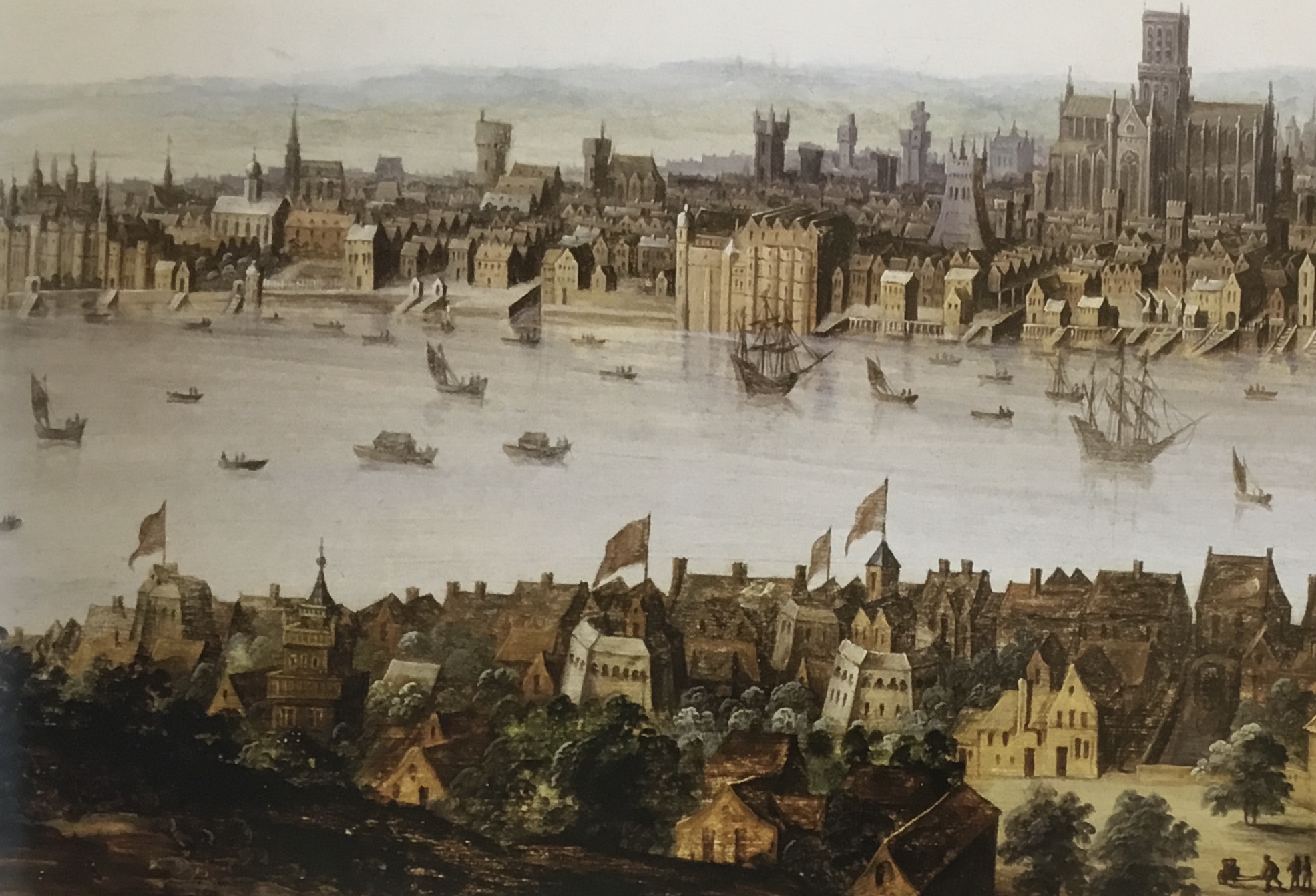
🖼 Bankside c1630, the earliest known oil painting of London. The theatres depicted on the south bank are the Swan, the Hope, the Rose, and the Globe. The flying flags indicated that there was a performance that day.

In the 1620s there were 400 taverns and 1,000 alehouses in London. Writing in 1621, Robert Burton said, “Londoners flocked to the tavern as if they were born to no other end but to eat and drink.”

Cookshops provided roast dinners and pies, and takeaways. Hawkers sold shellfish, nuts and fruit while if you fancied a cheesecake Hackney was the place to go, and Lambeth was noted for its apple pies.

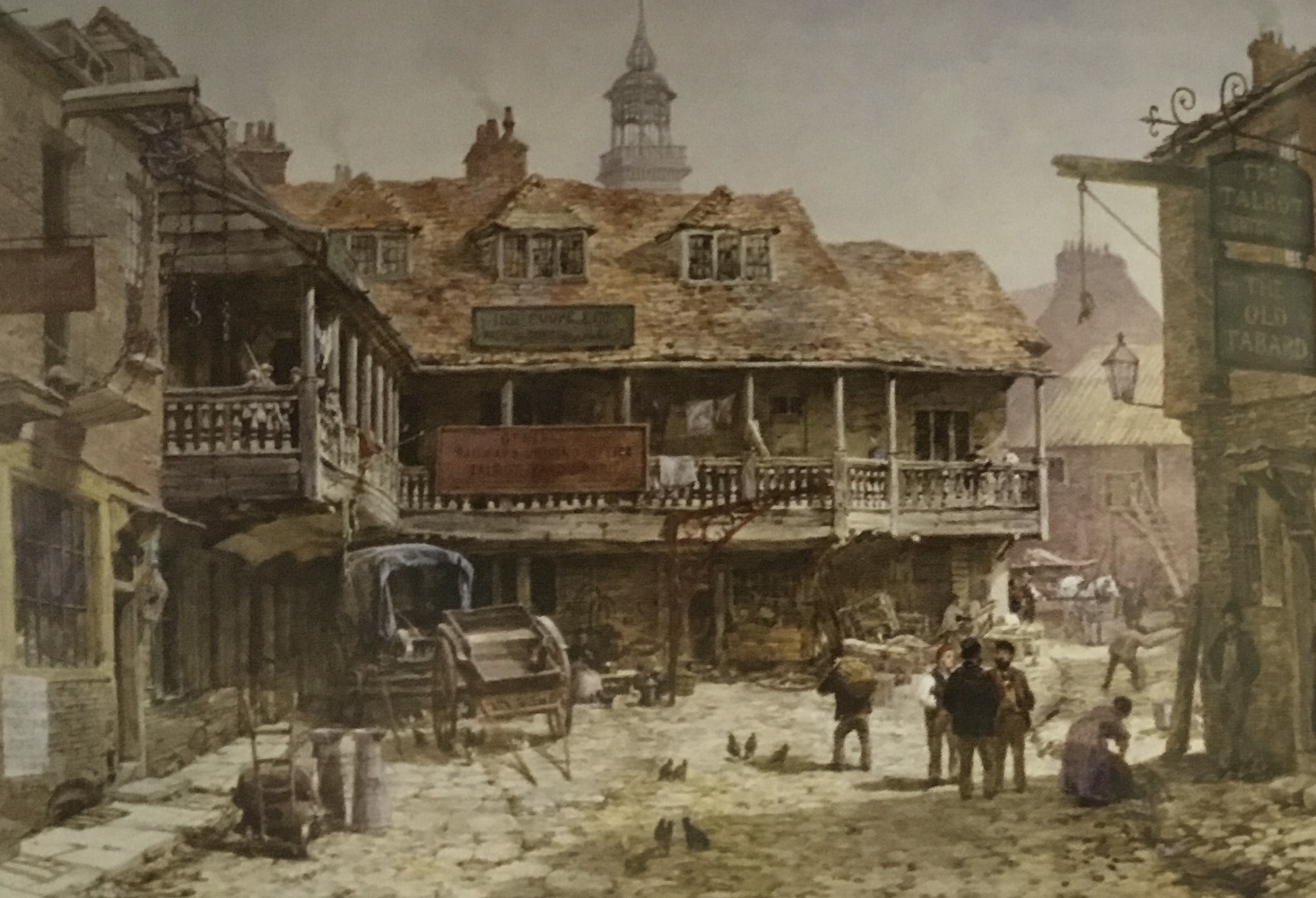
🖼 The Tabard Inn, renamed The Talbot, one of 48 inns or taverns situated between King’s Bench Prison and London Bridge, a distance of half a mile.

In 1642 Londoners rebelled against Charles I and he left town. The Civil War of 1642-49 was destructive, of course, but it did have some benefits. John Evelyn noted that when the supplies of hearth coal from Newcastle were interrupted London’s orchards and gardens bore ‘plentiful and infinite quantities of fruits.”

During the Civil War, London did not witness any major fighting, primarily because the Parliamentarians controlled the capital from an early stage. Without London, Charles I was doomed to defeat.

On the whole, city leaders were pro-Royalist while the workers sided with the Parliamentarians. However, by 1661 the workers were happy to welcome the new king, Charles II. The moment was lost, and Britain never recovered.

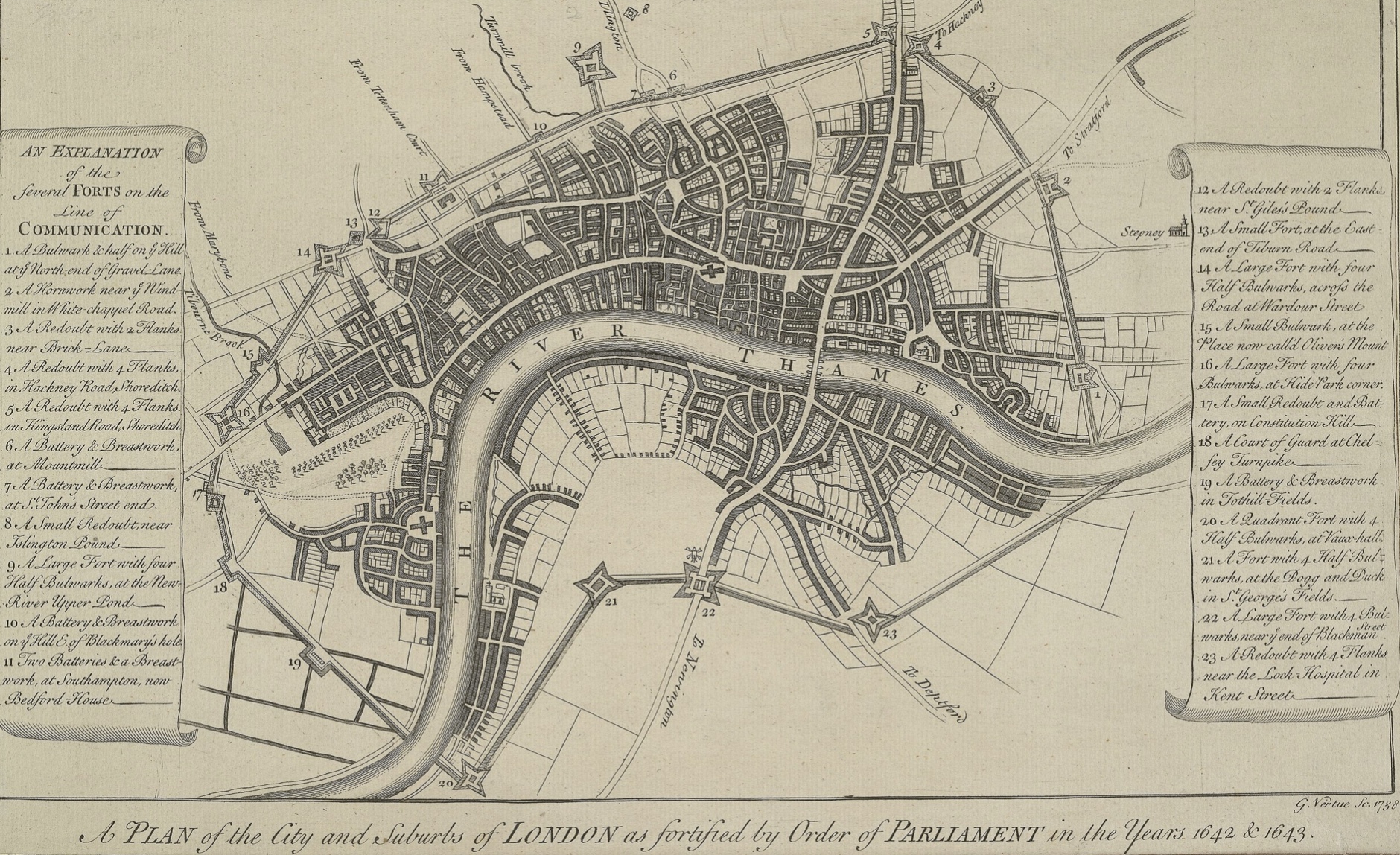
🖼 George Vertue’s plan of the London Lines of Communication, 1642.

Plague visited London in 1665. By the end of the year over 100,000 people were dead, a fifth of the population. The plague began just before Christmas 1664 when two men in Drury Lane died of ‘spotted fever’. 

By May 1665 the plague had spread to most of London’s 130 parishes and those who could afford to fled. Trade declined. The highways were clogged with refugees. Thomas Vincent remained in London throughout the plague. He noted that death rode ‘triumphantly on his pale horse through our streets and breaks into every house almost where any inhabitants are to be found’.

The authorities established ‘pest houses’ in fields and open spaces in an attempt to segregate the infected from the able-bodied. At the peak of the epidemic, mid-August to mid-September 1665, 7,165 people died in one week. Under such strain, traditional burial practices were abandoned in favour of common graves.

A Bill of Mortality published at the plague’s peak included the following as cause of death: Aged, 43. Burnt in his bed by a candle, 1. Constipation, 134. Flox and Smallpox, 5. Frighted, 3. Falling from a belfry, 1. Kingsevil, 2. Lethargy, 1. Rickets, 17. Rising of the Lights, 11. Scurvy, 2. Spotted Fever, 101. Stillborn, 17. Teeth, 121. Winde, 3. Wormes, 15. Plague, 7,165.

Males christened that week, 95; females, 81. Males buried, 4,095; females, 4,202. Parishes clear of the plague, 4. Parishes infected, 126. Many people returned to London in December 1665. However, members of parliament did not return until the following spring.

Welsh Football Legends

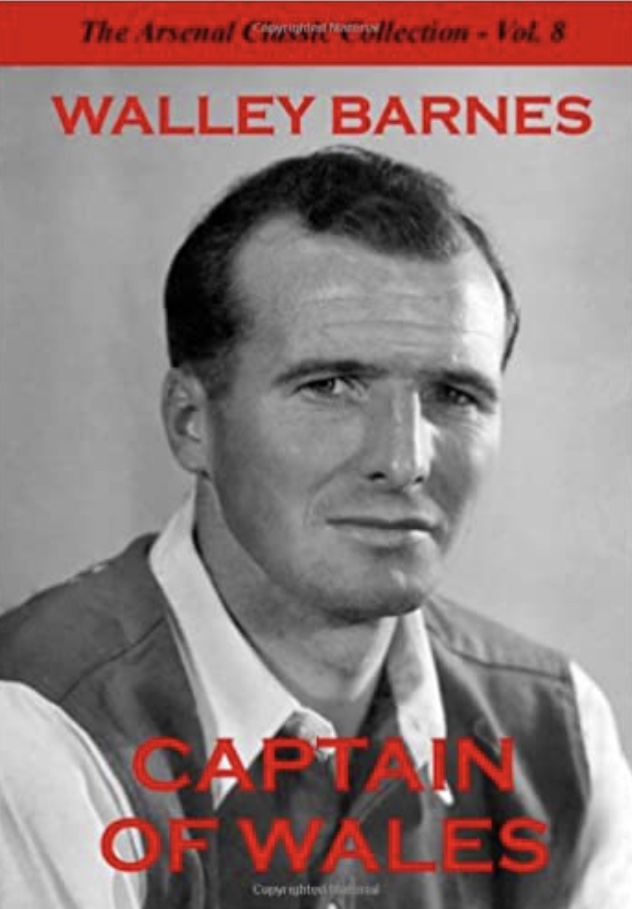
Walley Barnes was born on 16 January 1920 in Brecon, Wales. His parents were English. They were living in Brecon because Walley’s father, Edward, an army physical education instructor and footballer, was stationed with the South Wales Borderers.

Walley’s footballing career began during the Second World War. Initially, he played inside-forward for Southampton making 32 appearances between 1941 and 1943, scoring 14 goals. Walley’s impressive strike rate attracted the attention of Arsenal and he signed for the London club in September 1943.

At a time of ‘make do and mend’ footballers were versatile too. He played in virtually every position, including goalkeeper. In 1944 a serious knee injury threatened his career and an early retirement seemed a distinct possibility. However, Walley recovered, played in the reserves and forced his way back into first-team reckoning.

On 9 November 1946, Walley made his league debut for Arsenal against Preston North End. By 1946 he’d settled into his regular position of left-back. He won praise for his assured performances, his skilful distribution and his uncanny ability to cut out crosses. 

A regular in the Arsenal team that won the First Division Championship in 1947-48, Walley enjoyed more success in 1949-50 when Arsenal defeated Liverpool in the FA Cup final. On that occasion, deputising for injured captain Laurie Scott, Walley played right-back.

In the 1951-52 FA Cup final Walley injured a knee. He left the pitch after 35 minutes and missed the entire 1952-53 season, which saw another league triumph for Arsenal. Thereafter, his first-team appearances became more spasmodic.

After only eight appearances in 1955-56, Walley retired. In all he played 294 matches for Arsenal and scored 12 goals, most from the penalty spot.

For Wales, Walley won 22 caps and captained his country. He made his debut against England on 18 October 1947, marking Stanley Matthews. Matthews and England got the better of Wales that day and won 3 – 0. England also won the British Home Championship that year while Wales finished a creditable second.

As Walley’s playing career faded, he turned to management. Between May 1954 and October 1956 he managed Wales. Notably, on 17 July 1958 he signed a letter to The Times opposing the ‘policy of apartheid’ in international sport and defending ‘the principle of racial equality, which is embodied in the Declaration of the Olympic Games’.

Walley joined the BBC and presented coverage of FA Cup finals. With Kenneth Wolstenholme, he was a commentator on the first edition of Match of the Day, broadcast on 22 August 1964. He also provided expert analysis in the live commentary of the 1966 World Cup final when England beat West Germany 4 – 2.

Walley wrote his autobiography, Captain of Wales, which was published in 1953. He continued to work for the BBC until his death on 4 September 1975.

As ever, thank you for your interest and support.

Hannah xxx

For Authors

#1 for value with 565,000 readers, The Fussy Librarian has helped my books to reach #1 on 32 occasions.

A special offer from my publisher and the Fussy Librarian. https://authors.thefussylibrarian.com/?ref=goylake

Don’t forget to use the code goylake20 to claim your discount 🙂