Categories
Dear Reader

Dear Reader #121

Dear Reader,

I’ve received messages asking me when Operation Cameo, book six in my Eve’s War Heroines of SOE series, will be available. I’m pleased to say that the book will be listed on all major platforms as a pre-order later this month.

The earliest photograph to feature people. The Boulevard du Temple 1838 by Louis Daguerre. Because the exposure lasted for several minutes the moving traffic in the busy street left no trace. Only a shoe polisher and his client remained in place long enough to appear on the printed image. Sam mentions this in my latest Sam Smith mystery, Damaged.

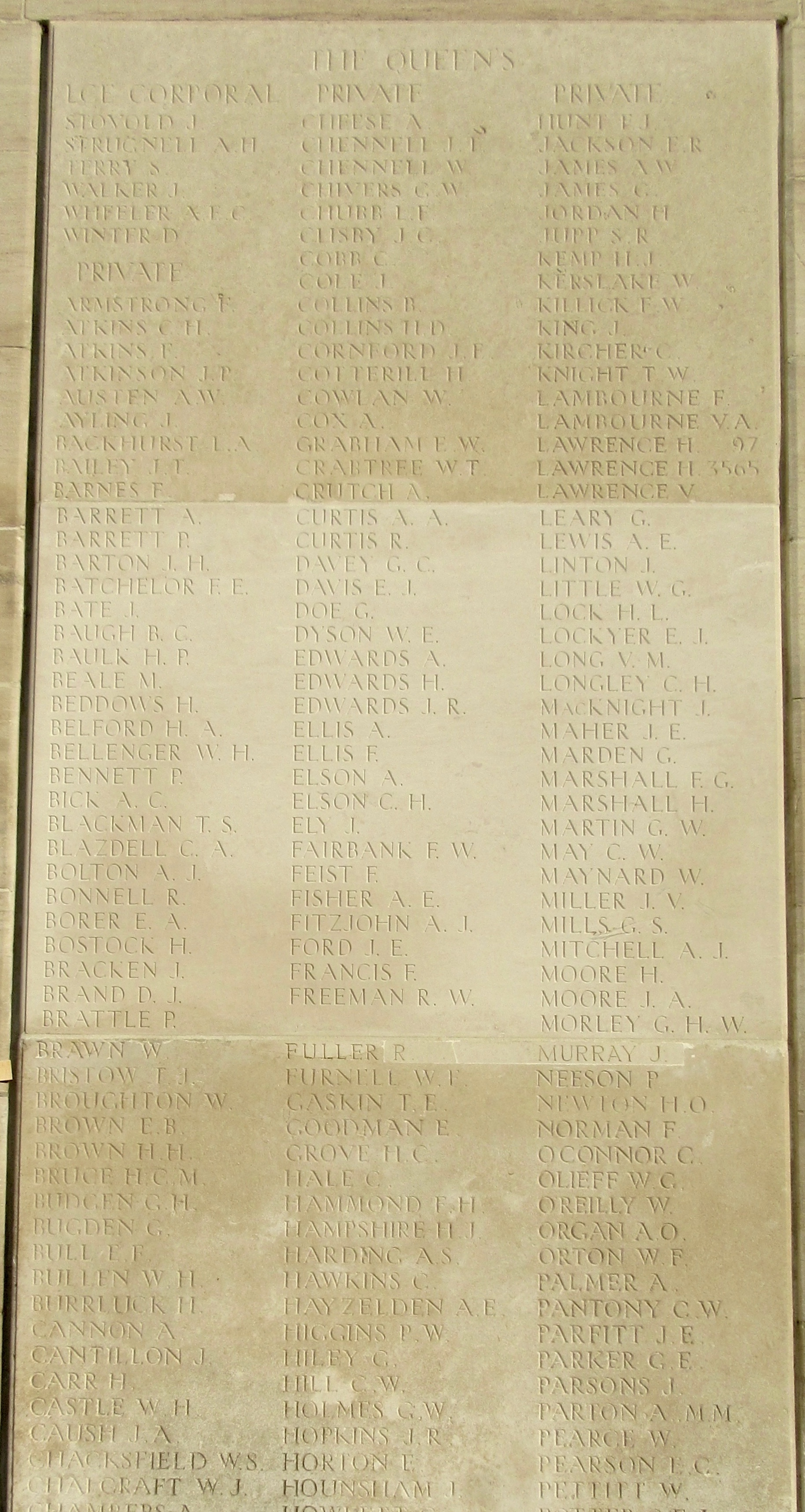
Summer 1915, C Company, The Queen’s Royal West Surrey Regiment, Number Nine Platoon. This picture includes my 2 x great grandfather Albert Charles Bick. 

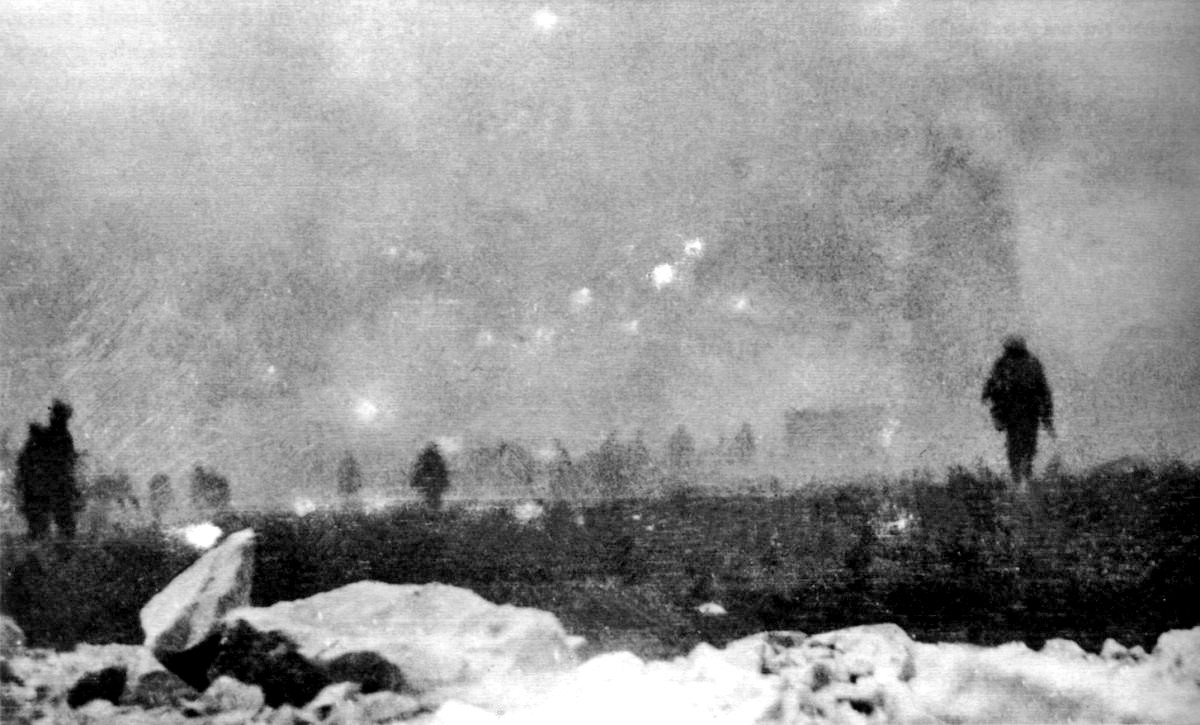
On 25 September 1915 the Royal West Surrey Regiment engaged in the Battle of Loos, which resulted in 80% British casualties, including Albert, when the generals gassed their own men.

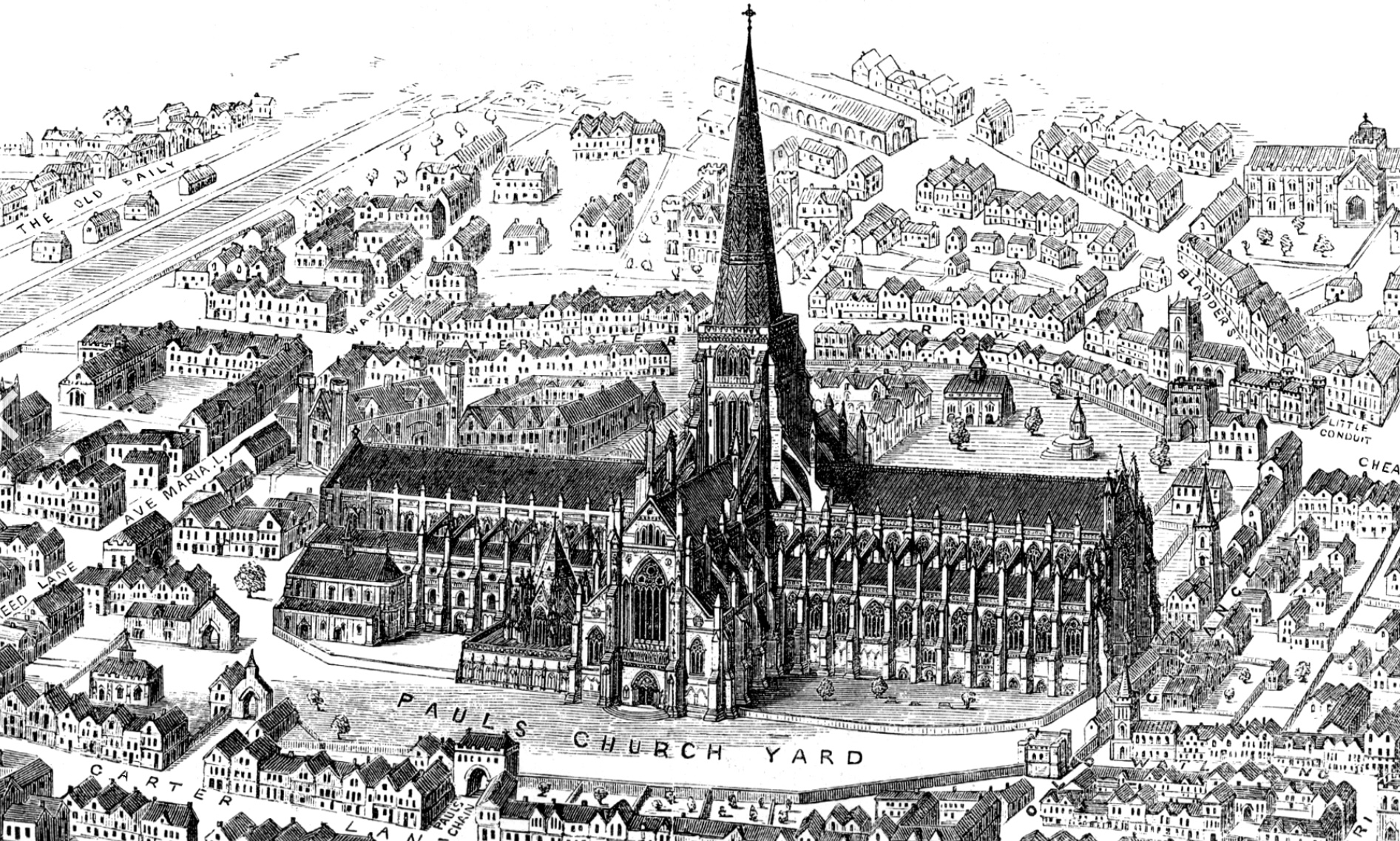
A State Lottery was recorded in 1569. The tickets were sold at St. Paul’s Cathedral in London, pictured c1560.
A poem written in Welsh c1920 about my 2 x great grandfather William Howe. Lines include: ‘He deserves all the praise he receives’. ‘A Christian in his warm home’. ‘William Howe is a godly saint for getting us all to pray again in the chapel with the children’. ‘We will enjoy a big feast at the Sunday School’. ‘We will sing his praises when we meet in heaven’.

My latest article for the Seaside News appears on page 36 of this month’s magazine.

I’ve traced the Bick branch of my family back to the fifteenth century. They settled in Badgeworth, Gloucestershire and lived there for hundreds of years. My branch of the family moved to London in the Victorian era, but you can still find Bicks in numerous numbers in Gloucestershire.

Unfortunately, the records for the Bicks of Badgeworth are not extensive, but I have uncovered a few nuggets of information that add details to my ancestors’ lives.

The surname Bick is of Dutch and German origin. It derives from the Middle Dutch and Middle High German word bicke meaning pickaxe or chisel. The name was associated with stonemasons and people who worked with pickaxes and chisels.

It’s likely that the Bicks arrived in Gloucestershire from the Netherlands or Germany in the early Middle Ages. My branch of the family feature in many land deeds during the sixteenth and seventeenth centuries. These deeds indicate that they farmed land as yeomen. However, they were never described as ‘gentlemen’, which suggests that there was no link with the gentry.

Bick sons married the daughters of the following families: Meek, Fawkes, Spring, Blush, Izod and Netherton. Evocative names. These families were also of the yeomen class. The name Fawkes suggests a link to the infamous Guy Fawkes. However, Guy was from York and it is unlikely that my ancestor, Jane Fawkes, was closely related to him.

From the land, my Bick ancestors became innkeepers, running coaching inns. George was a popular name over four successive generations. George ‘the second’ – 22 October 1668 to 3 June 1738 – was an innkeeper in Badgeworth. Some of the Bicks left wills, but they are difficult to read and those that are legible contain only basic details of modest inheritances for sons and daughters.

The Bick ancestor who captured my attention was Thomas Bick, born 1575 in Badgeworth. He died in 1623 of the ‘pest’, also known as the pestilence or plague. The plague is an infectious disease caused by the bacteria Yersinia pestis, which mainly infects rats and other rodents who become the prime reservoir for the bacteria.

Seventeenth century plague doctor with protective mask and clothing.

The Pestilence was a bubonic plague pandemic that occurred in Afro-Eurasia from 1346 to 1353. The plague created religious, social and economic upheavals with profound effects for the inhabitants of the time. It also drastically altered the course of European history.

Further waves of the plague swept over Europe throughout the fourteenth to seventeenth centuries. Certain years were more blighted than others, including 1623 the year that Thomas died. That bout of the pestilence lasted until 1640. It reoccurred again in 1644–54 and 1664–67. 

The 1664 to 1667 episode was the last major epidemic of the bubonic plague to occur in England. In 1665-66 it swept through London producing the ‘Great Plague of London’. Then, in September 1666, the ‘Great Fire of London’ destroyed the city. Some people speculated that the fire killed the pestilence, although records suggest that the disease was already on the wane. My London ancestors were caught up in the ‘Great Fire of London’, but more about them in future posts.

London 1665.

As we know to our cost, when we abuse nature and animals we create pandemics. Our ancestors did not have the scientific knowledge to appreciate this, but we do; there is no excuse.

Along with the pestilence, our ancestors died from a range of diseases and illnesses. Here is an example from 1632 with a few definitions.

Cut of the Stone – The surgical removal of a bladder stone

French Pox – Syphilis

Jawfaln – Locked jaw

Impostume – An abscess

King’s Evil – A tuberculous swelling of the lymph glands

Livergrown – Liver disease, possibly caused by alcoholism 

Murthered – Murdered

Planet – To be stricken with terror or affected adversely by the supposed influence of a planet

Purples – Purple blotches on the skin caused by broken blood vessels, indicative of an underlying illness, such as scurvy

Rising of the Lights – A condition of the larynx, trachea or lungs

Tissick – A cough

Tympany – Bloating

The saddest entry on this list, and the largest in number, is chrisomes and infants. Chrisomes refers to a baby less than a month old, which indicates that the start could often be the most dangerous period of a person’s life.

Stay safe. Wishing you well.

As ever, thank you for your interest and support.

Hannah xxx

For Authors

#1 for value with 565,000 readers, The Fussy Librarian has helped my books to reach #1 on 31 occasions.

A special offer from my publisher and the Fussy Librarian. https://authors.thefussylibrarian.com/?ref=goylake

Don’t forget to use the code goylake20 to claim your discount 🙂

Categories
Dear Reader

Dear Reader #116

Dear Reader,

Now available for pre-order, Damaged, Sam Smith Mystery Series book nineteen. This story is set in the South of France and deals with immigration and terrorism.

Eight and a half months pregnant. My detective agency was in good hands, Faye and Tamara’s hands, so time to put my feet up and await the Big Day. However, Gabe, my private eye friend from Boston, had other ideas.

Hired by Alexander Carmichael III the current head of a powerful Boston dynasty, Gabe was on the trail of Chelsea, Carmichael’s runway daughter. That trail led to Wales – hence my involvement – then on to the South of France.

Amongst the glitz and glamour of the South of France events took a murderous turn – someone was making and detonating bombs, and that someone had developed a close association with Chelsea.

We found ourselves in a race against time, to prevent an explosion and the loss of many innocent lives, and to return home to deliver my baby.

Read this from the top to the bottom then from the bottom to the top.

My latest translation, The Olive Tree: Branches, in Portuguese.

My ancestor Robert Dent was born on 17 July 1882 in London to Richard Dent and Sarah Ann Cottrell. As a child, Richard emigrated to Ontario, Canada only to return to London in his early twenties where he married Sarah Ann. He found employment at London Docks and on the ships that sailed into those docks. In 1883 his ship, Stadacona, foundered with all hands. You can read Richard’s story here https://hannah-howe.com/ancestry/dent-yorkshire-canada-london/dent-yorkshire-canada-london-4/

In the early 1900s Richard’s son, Robert, followed his sister, Eliza, to Ontario, Canada. On 17 November 1909 in Simcoe, Ontario, Canada, Robert married Edith Eugenia Mollett, a woman of French descent. Between 1910 and 1914 the couple produced three daughters: Caroline (named after Edith’s mother), Edith and Jessie. Then the First World War broke out.

Given their British and French backgrounds, Robert and Edith must have discussed the war and its unfolding events in some detail and those discussions led to Robert enlisting in the Royal Canadian Dragoons (1st Armoured Regiment) on 21 January 1916.

Most of what follows was recorded in Robert’s official war record.

Robert Dent’s attestation paper

At the time of his marriage to Edith, Robert was a railway assistant. He was still working on the railways when his daughter Caroline was born. Remarkably, we know the exact time of her birth: 8.40 pm on 20 September 1910. When Robert signed up he was a farmer. In common with the vast majority of men who signed up he had no military experience.

Robert’s personal details. Height: five foot five and three-quarter inches. Weight: 135 lbs. Girth: 37 inches when resting, 41 inches when expanded. Complexion: fair. Eyes: grey. Hair: light brown. He had no smallpox scars, but his skin did reveal four vaccination marks. His habits were considered ‘good.’ On 21 January 1916 the medical officer considered Robert ‘fit for active service.’

After training, Robert left Halifax, Canada on 15 August 1916. By ship he arrived in Liverpool, England on 24 August 1916 and was transferred to the 11th Reserves Battalion at Shorecliffe. On 27 October 1916 he was transferred to the 8th Battalion to serve overseas. 

The 8th Battalion was authorized on 10 August 1914 and embarked for Britain on 1 October 1914. It disembarked in France on 13 February 1915, where it fought as part of the 2nd Infantry Brigade, 1st Canadian Division in France and Flanders until the end of the war. The battalion was disbanded on 15 September 1920. During the Great War the battalion saw action on a number of key battlefields including Ypres, Passchendaele and the Somme.

A page from Robert’s military file

Robert’s war record reveals that he was ‘accidentally slightly wounded’ on 7 February 1917. These ‘slight’ wounds included gunshots to the right knee, thigh, leg, forearm and face, and they necessitated a thirty-two day stay at Clapton Military Hospital, from 3 March 1917 to 4 April 1917. 

How did Robert sustain his wounds? It would appear that he was present in a brigade bombing area, attending a bombing instructional course. The safely at the course must have been lax resulting in a accident. Robert’s medical record states that he sustained ‘gunshot wounds’ and not ‘shrapnel wounds’ so maybe he was hit by bullets during the exercise and not shrapnel from an exploding bomb.

On 4 April 1917 medics moved Robert to the Canadian Convalescent Hospital in Bromley, Kent, where he remained until 17 April 1917 when he was discharged with limited movement in his right knee.

Robert’s disability was of ‘a serious nature’ and would ‘interfere with his future efficiency as a soldier.’ On 27 July 1917 he made a will, leaving all his worldly possessions to his wife, Edith. Then, despite his injuries, he returned to the frontline.

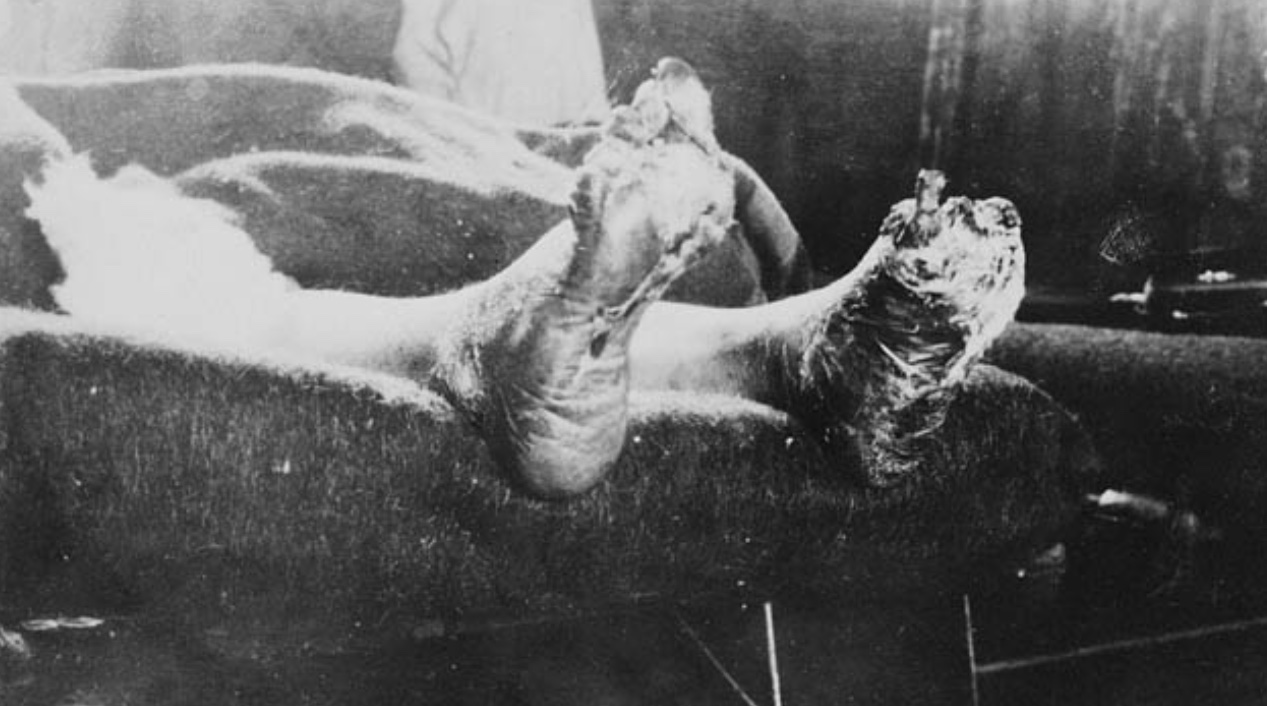
Back on the frontline, Robert suffered from trench foot, a common malady during the First World War. On 13 December 1917 he was transferred to the Canadian General Hospital in Shorecliffe where he remained until 12 March 1918, forty-eight days. During his stay surgeons removed his toenails.

A case of trench foot from the Great War, 1917

Despite his injuries, Robert survived the Great War. However, he then faced another twist of fate.

From February 1918 mankind had been engaged in another ‘war’, against the ‘Spanish Flu.’ While in England waiting to return to his family in Canada, Robert became ill. On 15 January 1919 he was admitted to the Mile End Military Hospital. A week later, on 21 January 1919, he died.

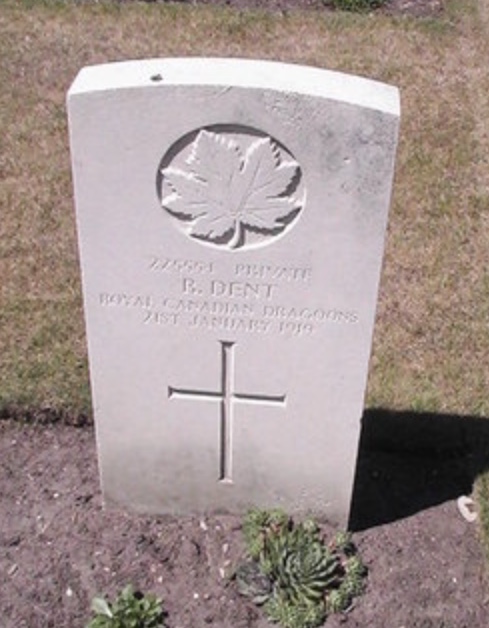
Trooper Robert Dent, service number 225554, survived the horrors of the Great War only to succumb to an unseen enemy. This suggests an irony and tragedy of Shakespearean proportions. However, this was no play; it was life, and death. Edith lost her husband. In return she received a gratuity of $180, her husband’s life valued at £4,000 in today’s money.

Robert Dent’s final resting place, Brookwood Cemetery.
Image: Find a Grave.

As ever, thank you for your interest and support.

Hannah xxx

For Authors

#1 for value with 565,000 readers, The Fussy Librarian has helped my books to reach #1 on 31 occasions.

A special offer from my publisher and the Fussy Librarian. https://authors.thefussylibrarian.com/?ref=goylake

Don’t forget to use the code goylake20 to claim your discount 🙂

Categories
Dear Reader

Dear Reader #99

Dear Reader,

On 15 May 2021 we will publish Stormy Weather, book eighteen in my Sam Smith Mystery Series. Meanwhile, I’m working on Damaged, book nineteen in the series. We will publish this book in the autumn. Meanwhile, here’s the cover.

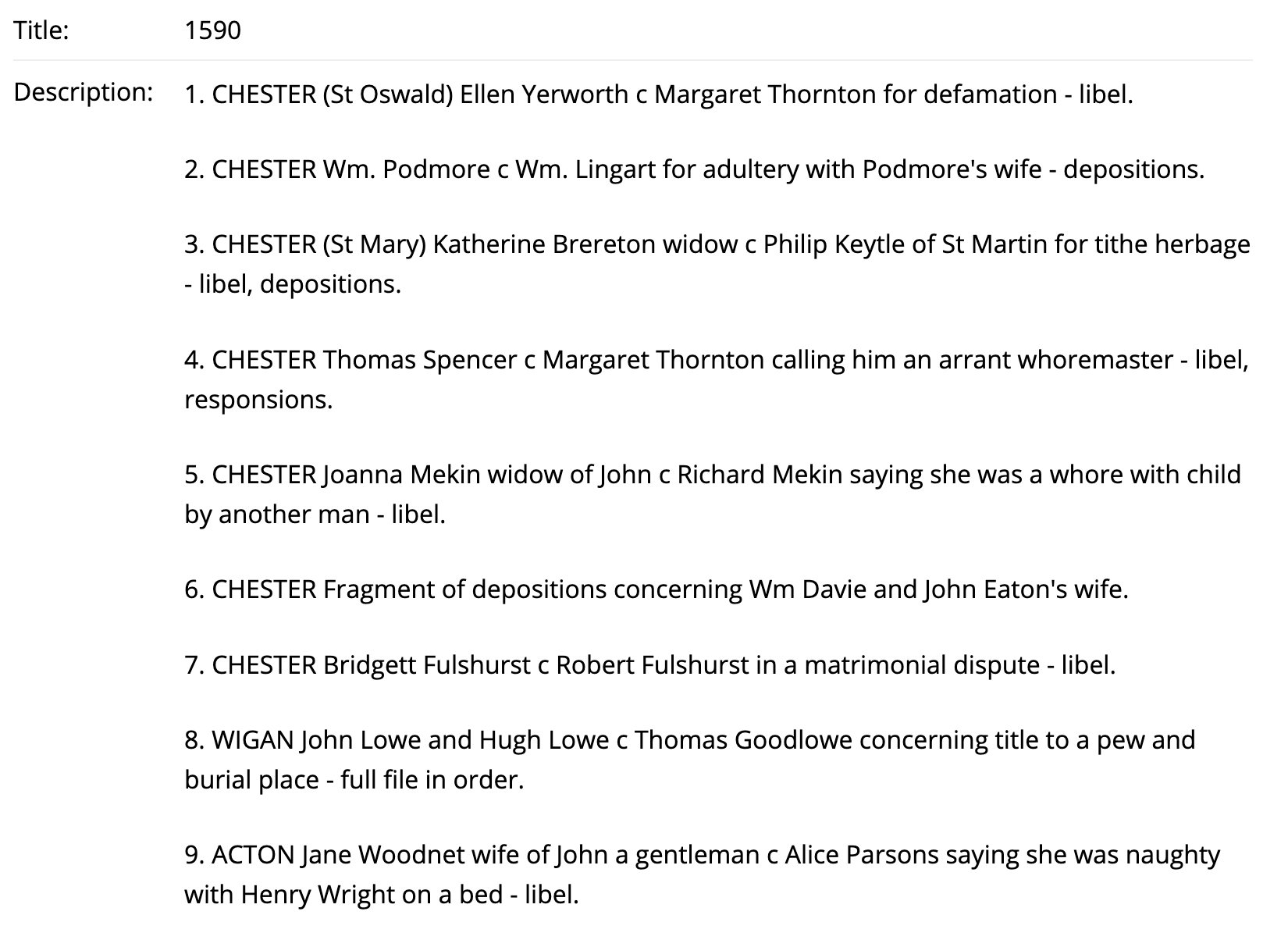
Chester, 1590, den of iniquity.

The Brereton’s are on my family tree. One generation were involved in a murder plot and an attempt to alter a will. The case reached the Star Chamber.

My latest translations, Ann’s War: Victory in Afrikaans and Eve’s War: Operation Broadsword in Portuguese.

The May 2021 issue of Mom’s Favorite Reads.

In this month’s issue…

Am I a Real Mum?

The Benefits of Journaling

International Nurses Day

Discovering Your Eighteenth Century Ancestors 

Things to Celebrate in May

Plus, travel, photography, puzzles, poems, short stories and so much more!

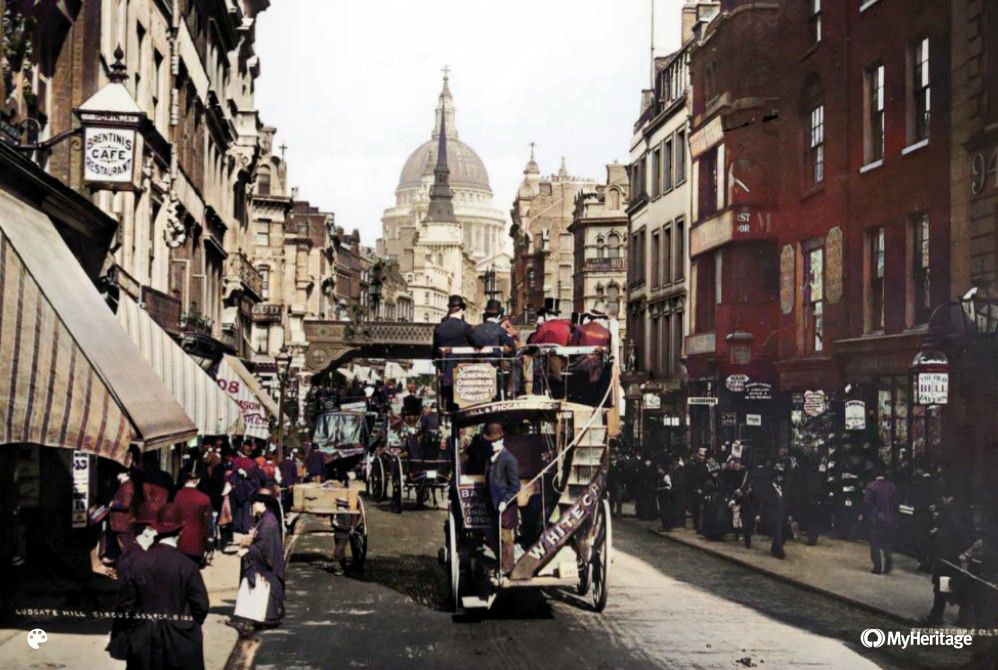
Colourised image of Fleet Street, London, 1888.

Just discovered that my 5 x great grandfather James Noulton served in the Napoleonic Wars, receiving a decoration in 1811 for his participation in the Invasion of Java.

Picture: A plan of the Cornelia, 1808, one of the two ships James Noulton served on.

More about James in future posts.

My 2 x great grandfather Albert Charles Bick was born on 3 September 1879 in Battersea, Surrey, the youngest of William Bick and Fanny Brereton’s eleven children.

William and Fanny moved to Battersea from Gloucestershire. The family also had connections in Hampshire and over several generations moved between these counties. William was a labourer so money for the family was always tight.

Albert started school at a young age, three. He attended Sleaford Street School, one of the new board schools created to give working class children an education.

Albert at school

After school, Albert found a job as a car man at the coal wharf, transporting coal on a horse and cart. He was still in this form of employment when he married Annie Noulton on 22 March 1902 in Lambeth, London. In thirteen years the couple had seven children.

In 1911, Albert was still a car man, now working at Doulton’s Pipe Works in Lambeth. The birth records of Albert and Annie’s children reveal that he worked as a car man throughout his married life. On 7 April 1911 there was a mass baptism when four Bick children from various strands of the family were baptised.

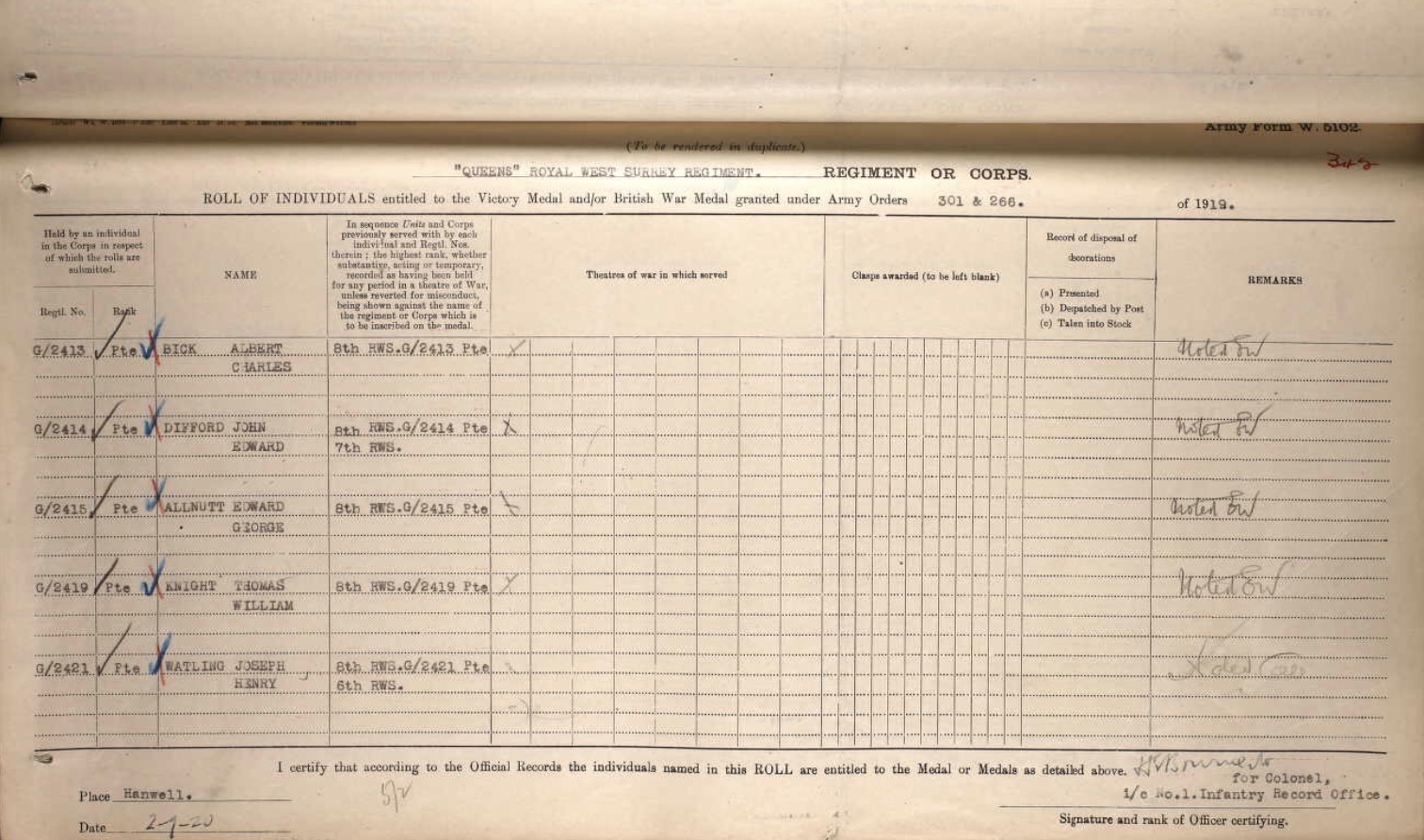
When the First World War broke out in 1914 Albert and Annie had six children with another on the way. During the summer of 1915, after the birth of his seventh child, Albert volunteered to serve in the Queen’s Royal West Surrey Regiment. Why did he volunteer? 

Albert’s brothers William, John and Frederick also volunteered, Frederick for the Red Cross. It would appear that the brothers volunteered together, and that it was a family decision. In 1911, the  family baptised four children together, so obviously they were a tight-knit family. By this time, the war had been raging for a year so unlike the first wave of volunteers who set off with naive optimism, the Bicks volunteered in the knowledge that they were entering hell.

The hell Albert entered had a name, the Battle of Loos. He departed for France on 31 August 1915 and engaged in the battle less than a month later, on 25 September 1915. 

The Battle of Loos was the biggest British attack of 1915, and the first time that the British used poisoned gas. The plan was for the French and British forces to break through the German defences in Artois and Champagne, and disrupt the pattern of trench warfare. 

At a conference on 6 September 1915 British commander Douglas Haig suggested that the extensive use of chlorine gas might facilitate an advance as long as the French and British were able to keep the attack secret.

Royal Engineers dug under no-man’s-land and planted mines under the parapets of the German front line trenches, ready to be detonated at zero hour.

Insufficient ammunition hampered the initial bombardment. Also, the British commanders did not fully appreciate the defensive formation of the German machine guns.

Prior to the attack, the British released 140 long tons of chlorine gas. The wind favoured no side and the gas affected both British and German troops.

British infantry advancing at Loos 25 September 1915

The gas masks were inefficient so many soldiers removed them to obtain clear vision and, ironically, to catch their breath. At 6.30 am on 25 September 1915 Albert engaged in battle, charging across open ground, the air full of gas and bullets.

In many places the British artillery had failed to cut the German barbed wire before the attack. Furthermore, the engineers manning the poison gas cylinders warned against their use, because of the unpredictability of the wind. However, they were overruled by General Sir Hubert Gough. 

As the battle developed, the gas claimed more British than German casualties. Despite that disaster, the British did capture the village of Loos-en-Gohelle. Bad planning meant that the breakthrough could not be exploited. A contemporary account stated, ‘From what I can ascertain, some of the divisions did actually reach the enemy’s trenches, for their bodies can now be seen on the barbed wire.’

Major-General Richard Hilton, a Forward Observation Officer, said of the battle, ‘A great deal of nonsense has been written about Loos. The real tragedy of that battle was its nearness to complete success. Most of us who reached the crest of Hill 70, and survived, were firmly convinced that we had broken through on that Sunday, 26 September 1915. There seemed to be nothing ahead of us, but an unoccupied and incomplete trench system. The only two things that prevented our advancing into the suburbs of Lens were, firstly, the exhaustion of the “Jocks” themselves (for they had undergone a bellyfull of marching and fighting that day) and, secondly, the flanking fire of numerous German machine-guns, which swept that bare hill from some factory buildings in Cite St. Auguste to the south of us. All that we needed was more artillery ammunition to blast those clearly-located machine-guns, plus some fresh infantry to take over from the weary and depleted “Jocks.” But, alas, neither ammunition nor reinforcements were immediately available, and the great opportunity passed.’

Twelve attacking battalions suffered 8,000 casualties out of 10,000 men in four hours. In total, the British suffered 48,367 casualties in the main attack and 10,880 more in the second attack, a total of 59,247 losses, a high percentage of the 285,107 British casualties on the Western Front in 1915. Though Haig and Gough were culpable for this disaster, they escaped much of the blame. 

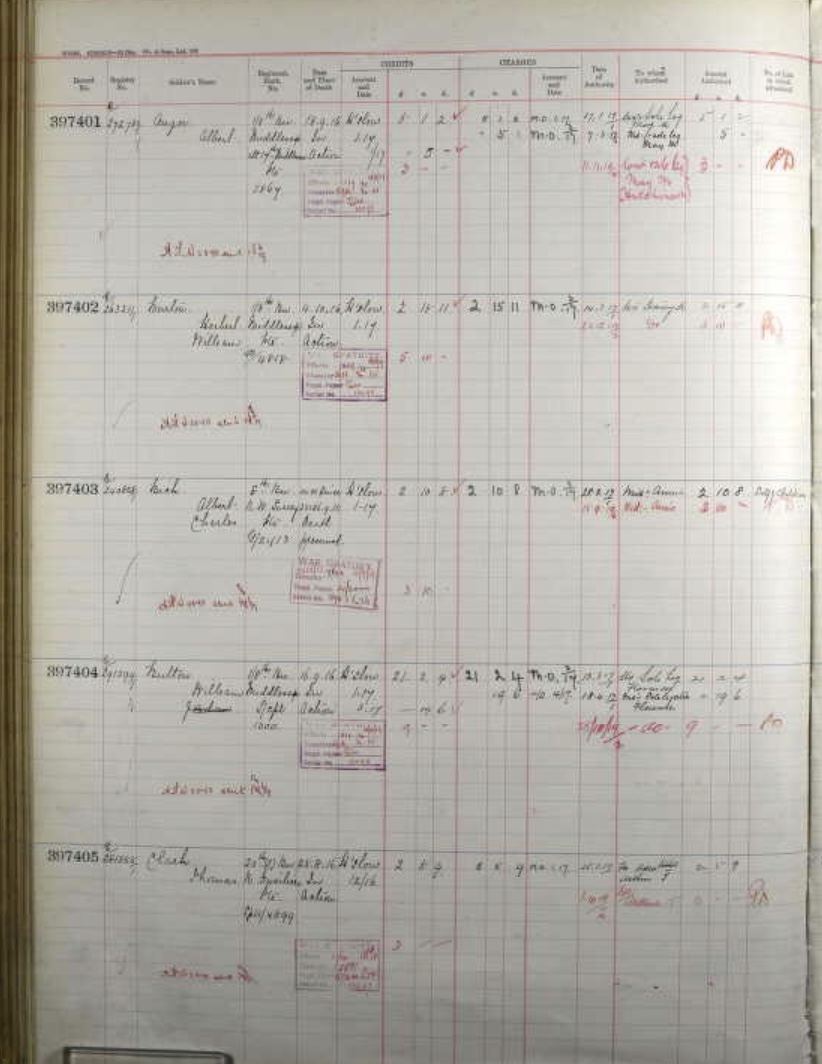
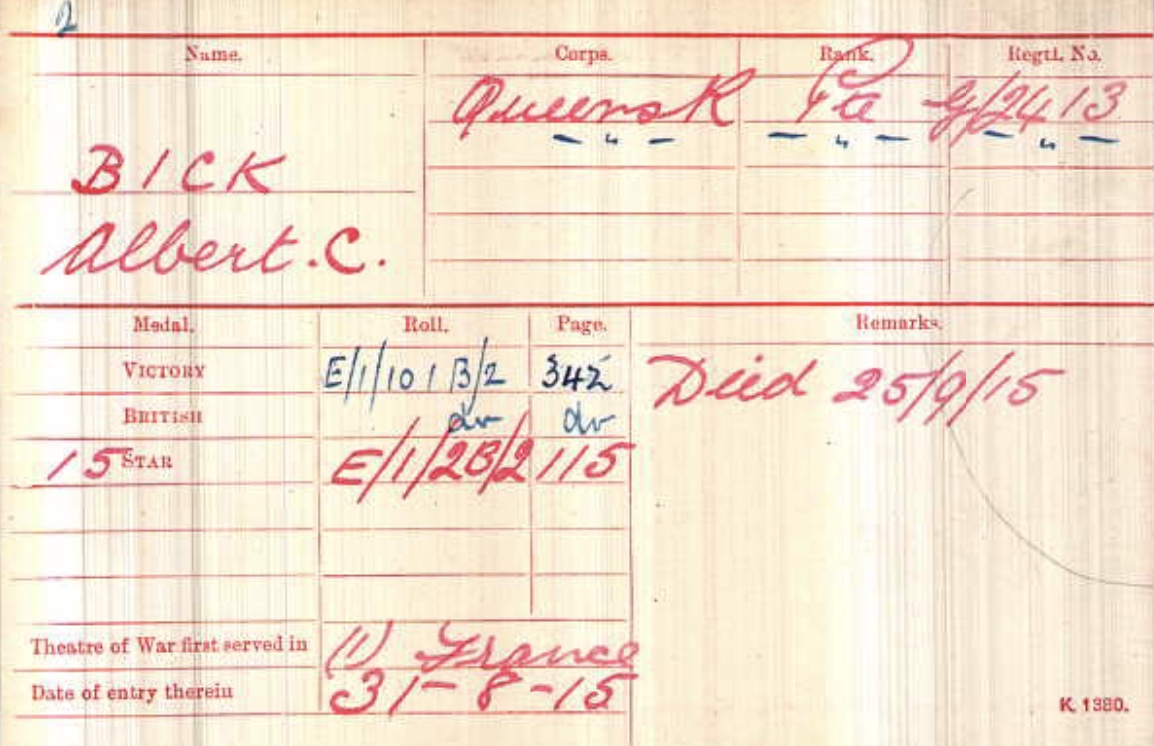
Albert Charles Bick died at Loos on 25 September 1915, whether through gas poisoning, a machine gun bullet or a mortar bomb is not known, for his body was not recovered. In the official files he is listed as ‘presumed dead’.

Annie received a widow’s pension. She did not remarry and died in 1963. Her eldest daughter and my direct ancestor, also Annie, survived her. As a child, I met daughter Annie several times during her later years, although I was too young to appreciate what the family had been through.

Loos War Memorial

The poet Robert Graves featured in the Battle of Loos and wrote about his experiences in Goodbye to All That while the Loos Memorial commemorates over 20,000 British and Commonwealth soldiers who fell in the battle and have no known grave, including Albert Charles Bick.

As ever, thank you for your interest and support.

Hannah xxx

Categories
Dear Reader

Dear Reader #83

Dear Reader,

Many thanks to my loyal readers for their pre-orders and for placing Stormy Weather, Sam Smith Mystery Series book eighteen, on the Hot 💯 chart.

Delighted to announce that my Ann’s War series will be translated into French 🙂

More translation news. We started work on two new translations this week both in Spanish: The Devil and Ms Devlin, Sam Smith Mystery Series book fifteen and The Olive Tree: Branches, book two in my Spanish Civil War saga. Many thanks to all my translators for their contributions to our translation projects.

Mom’s Favorite Reads

Happy New Year to All Our Readers!

In our New Year issue…

Surviving the Stone Age

Genealogy: Researching Your Family Tree

Nicolas Winton – The British Schindler 

Meditation

National Hat Day

Stories, Puzzles, Recipes, Humour, Poetry, International Bestsellers and so much more…

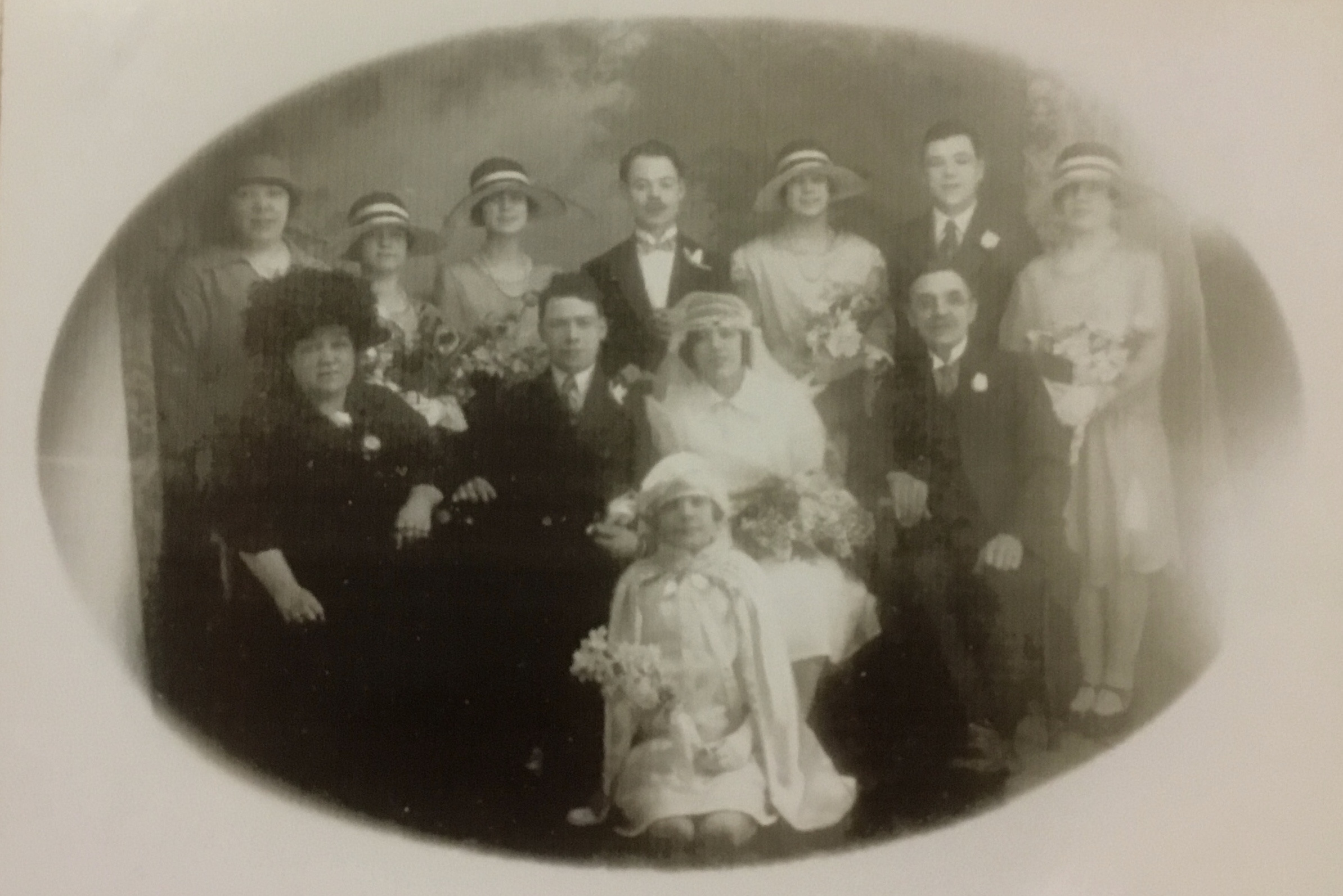
20 February 1927, the wedding of Louisa and John, my grand aunt and uncle.

The French Grand Prix, 1906.

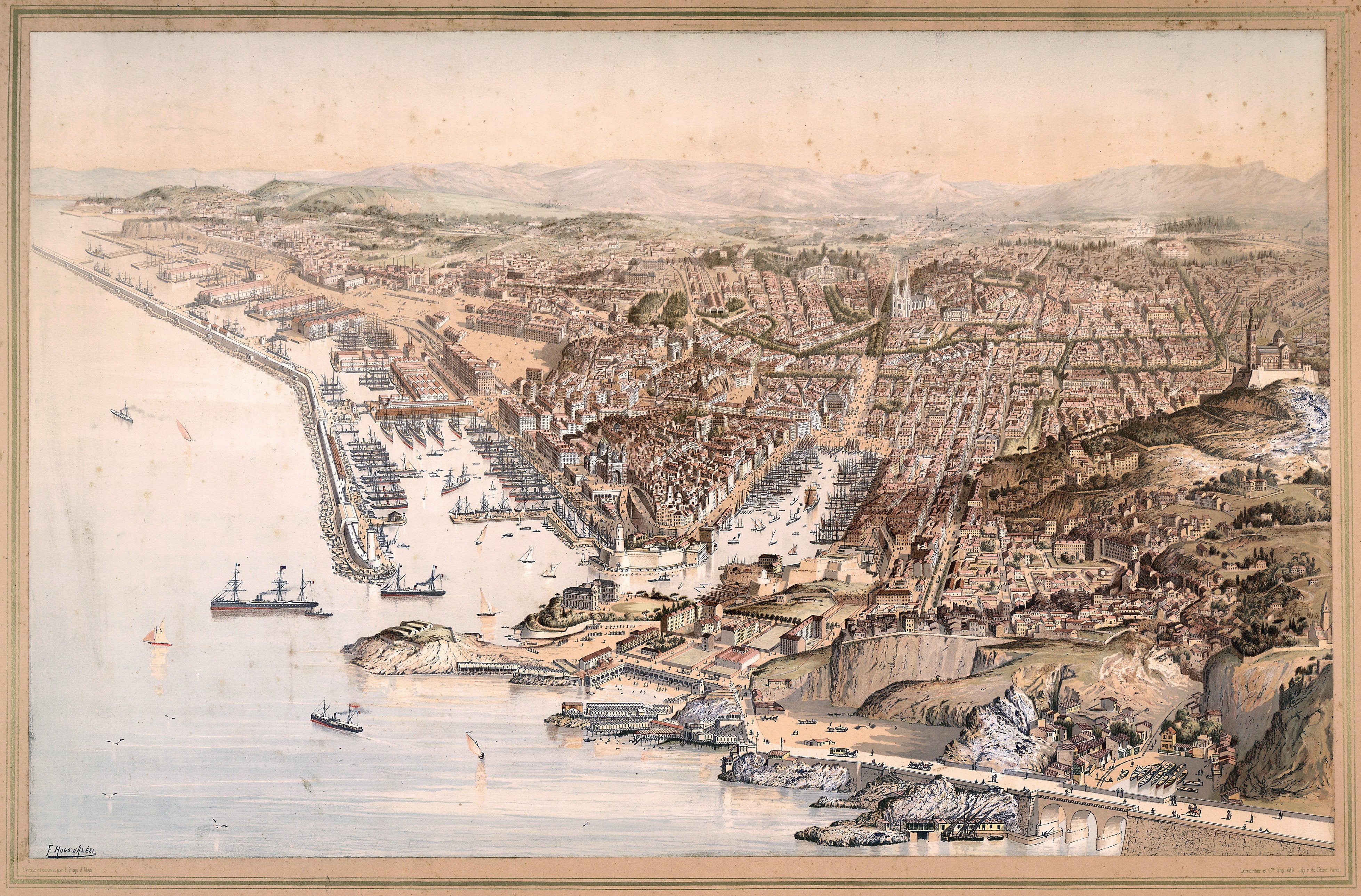
Marseille, the setting for my Heroine’s of SOE story, Eve’s War: Operation Zigzag, drawn in 1886.

A Roll of Honour produced by the Powell Duffryn Steam Coal Company in recognition of company officials who served in the First World War.

Ancestry

Three letters from Ken Howe (born 13.3.1919 in Corneli, the son of Billy Howe and Gwendolyne Thomas). In 1940 when the call came Ken responded to the threat of fascism and joined the Queen’s Own Hussars. His letters offer an insight into life at the front and here is the first of them.

30.9.1940

Dear Sis (Priscilla) Handel (brother-in-law) and Clive (nephew),

Thanks for your letter, which I received this morning. Glad to here that you are all okay, as I am. I have just come from dinner, which wasn’t so hot, and after reading about that rabbit my mouth is watering.

Jerry was around here (Newmarket) last night dropping his eggs, but far enough from us. As long as he keeps that distance I’ll be quite satisfied. I was in Newmarket last night with one of the boys from our tent and we spent most of our time in a church canteen reading and talking and it was a pleasant evening, what with free tea and cake. We were issued with a suit of denim last week, the stuff that the Home Guards use, and we use it for our work. We look like Home Guards walking around our camp. There has been talk of us moving this week, but I don’t know if it is right or not.

It is getting cold in the night time now, and I woke last night with my feet like lumps of ice. I think I will have to get a hot-water bottle sez me. We have been on wireless training this morning and I was nearly sleeping on my feet. We are going out in tanks this afternoon, messing about.

I had a letter from Aunt Edie yesterday, and she said she hoped to see me on my next leave, remember the 48 hours.

Joan (sister) sent me some fruit and biscuits in her parcel and I’ve been doing alright the last two days. Well old girl this is about all the news this time so I will sign off. Give my regards to the sergeant (his father?).

Till the next time, love to all,

Ken

Here is the second letter written by Ken Howe of the 4th Queen’s Own Hussars. Undated, 1940.

We have been cleaning this place out today. We will be a long way from here (Newmarket) by Saturday. Well, Sis, I’m not feeling too good about leaving the old country. It’s been a lovely autumn day, with the sun out, and it brings back memories of South Cornelly, and walks in the moonlight with the boys. It will be a new experience like when I was called up, and I expect I shall get used to it.

Ken Howe’s third letter, 9.2.1941, Middle East Forces

Dear Sis, Handel and Clive,

Just a few lines to say how we are getting on here. We are doing alright so far, and we haven’t got much to grumble at. Elwyn and myself were in Cairo a few days ago on leave, and we had quite a good time there. It isn’t as modern as I thought it would be, and in the native quarters how it smells. We stayed at the barracks there and it cost us nothing, though the money doesn’t half go. I ordered two cushion covers from one of the shops, with our badge on it. They make them and post them duty free for the troops. I’m afraid it will take a long time before you have them, one for you and Joan.

While in Cairo we met a few of our boys who were in our squad in Catterick and we hadn’t seen them for months, and in one of the clubs for our troops I met a chap named Thomas. He owns the Swan in Nottage and he knows Handel and Roy Edwards well. Surprising how small the world is, eh. We went to see the pyramids and Sphinx and other sites.

We both played football yesterday afternoon for the squadron and had our snaps taken by one of the boys, so I’ll send you some on when they are developed. We have had a few sandstorms and boy is there a mess. There’s sand in your nose, eyes, everywhere, and they blow for hours. Well old girl I’m afraid this is all for now. Hoping you are all in the best of health as I am. Cheerio for the present.

Love to all,

Ken

The cushion covers, made of black velvet, were sent to Priscilla and Joan with the message ‘To Sis All My Love Ken’ embroidered on them.

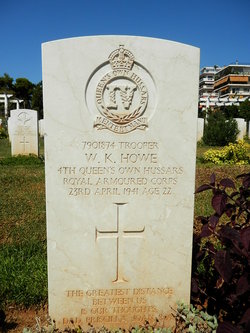
In March 1941 the Queen’s Own Hussars were mobilised to Crete and then to mainland Greece in the forces gathered together at short notice to defend Greece. Sadly, Ken was killed in action on the 23.4.1941, the day the Greek forces surrendered to the Axis. He was twenty-two years old.

The Greek campaign ended with a complete German and Italian victory. In many respects it was a ‘pointless’ campaign for the British because they did not have the military resources to carry out big simultaneous operations in North Africa and the Balkans. Even if they had been able to block the Axis advance, a counter-thrust across the Balkans was impossible.

As ever, thank you for your interest and support.

Hannah xxx

Categories
Dear Reader

Dear Reader #61

Dear Reader,

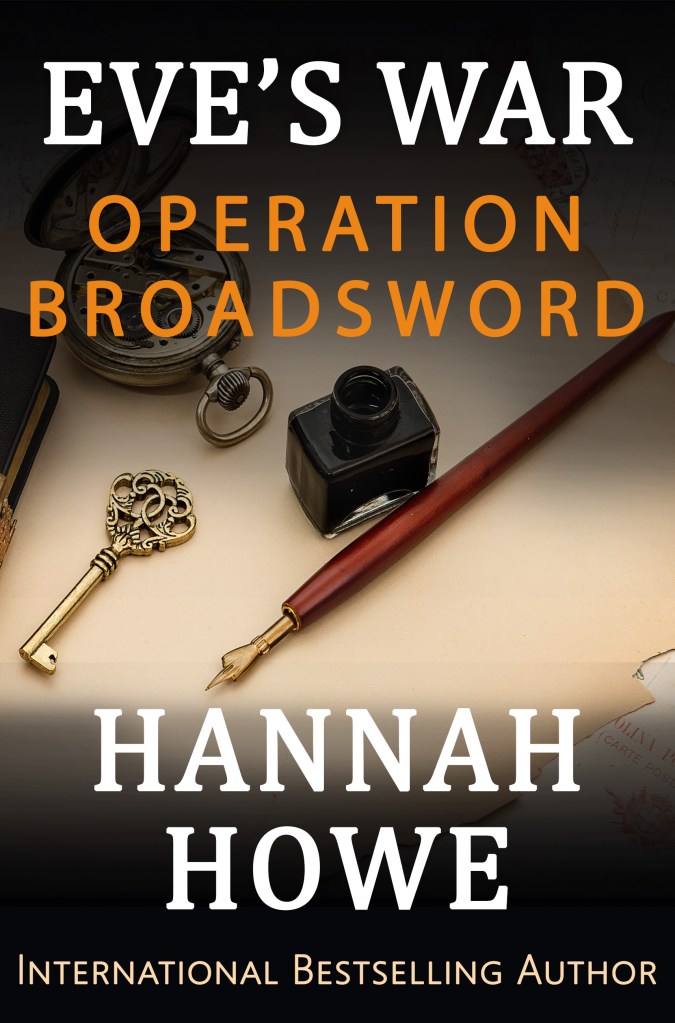
Operation Broadsword, book three in my Eve’s War Heroines of SOE Series, is now available to pre-order 🙂

https://books2read.com/u/bxn5e6

🎼🎼🎼 Blue eyes, baby’s got blue eyes…🎼🎼🎼

Packed with shorts stories, articles, puzzles, recipes and so much more, the latest issue of Mom’s Favorite Reads.

Images from my garden this week.

My article about SOE heroine Anne-Marie Walters appears on page 20 of the magazine.

I’m enjoying Paula’s narration of Operation Locksmith, book two in my Eve’s War Heroines of SOE Series. Normally, I don’t like listening to my own words, but it’s great fun to be a part of this production.

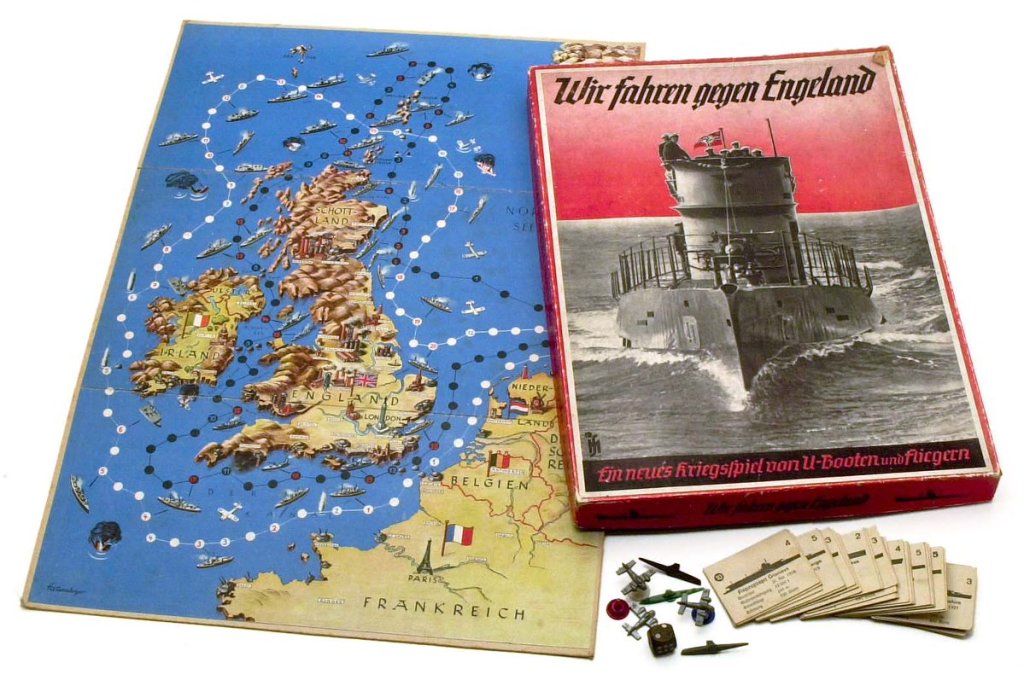
Nazi board game from 1941 – Wir fahren gegen England (We go against England).

“Fun for all the family.”

Normandy, 1944. While the battle rages, a Frenchwoman pours a drink for a British soldier.

We have more sheep than people 🙂

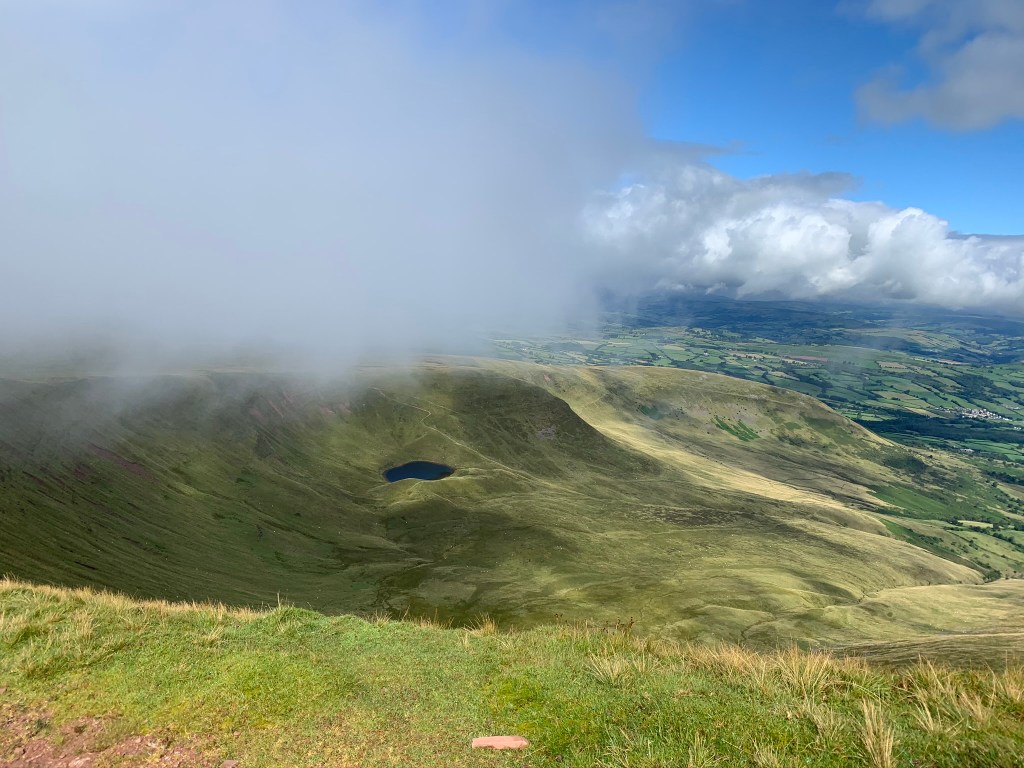
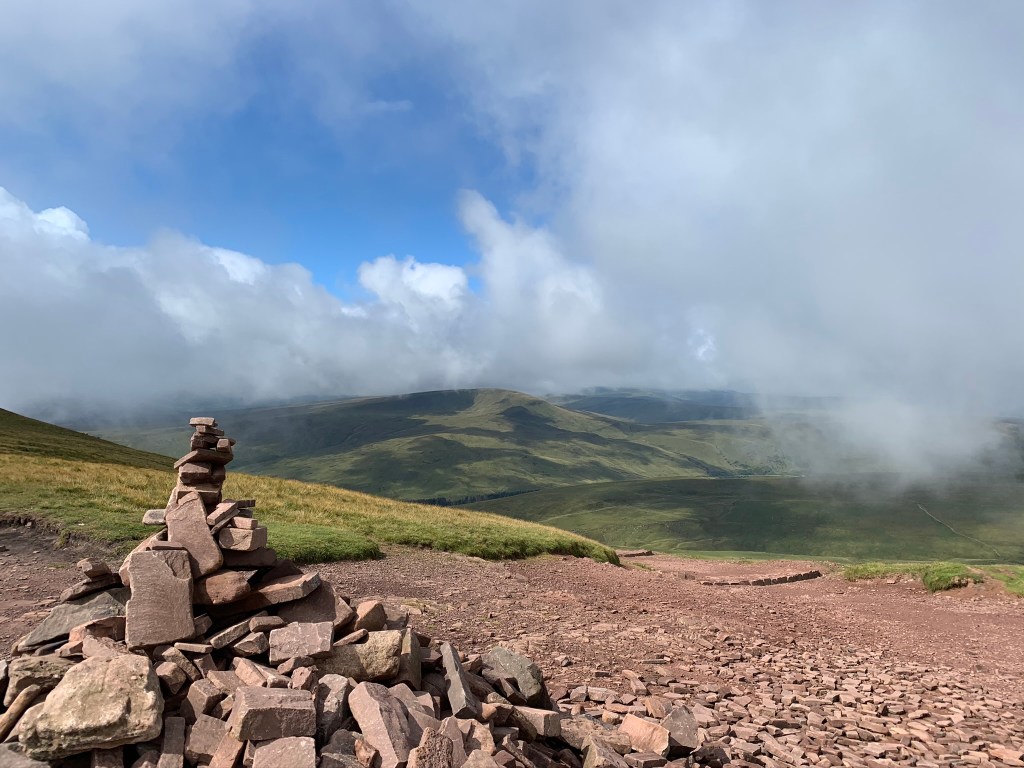
Walking through the clouds on Pen-y-Fan this week.

Basically, my approach to writing.

Hannah Arendt on Writing:

Gaus: Do you write easily? Do you formulate ideas easily?

Arendt: Sometimes I do; sometimes I don’t. But in general I can tell you that I never write until I can, so to speak, take dictation from myself…Usually I write it all down only once.

The organisational aspect of D-Day never ceases to amaze me.
2 August 1944. The French 2nd Armored Division arrived in France, landing at Utah Beach, Normandy. The division served under General Patton as part of the US Third Army.

Two weeks later, they helped to liberate Paris.

I’m really getting into my character Eve in my Eve’s War series, so much so that when she met a Maquis leader today and they shared cheese as a peace offering it gave me a strong urge to eat cheese. Tomorrow, Eve blows up a railway line. I hope I don’t get a strong urge to play with dynamite 🤣

On this date, with the First World War ten days old, George Bernard Shaw wrote an article urging both sides to shoot their officers and go home.

An inspiration for Guy Samson in my Eve’s War Heroines of SOE series, Francis Charles Albert Cammaerts was born in London on 16 June 1916. Under the code name Roger he was an agent of the Special Operations Executive. His parents were Professor Emile Cammaerts, a Belgian poet, and Tita Brand, a successful actress.

Francis Cammaerts

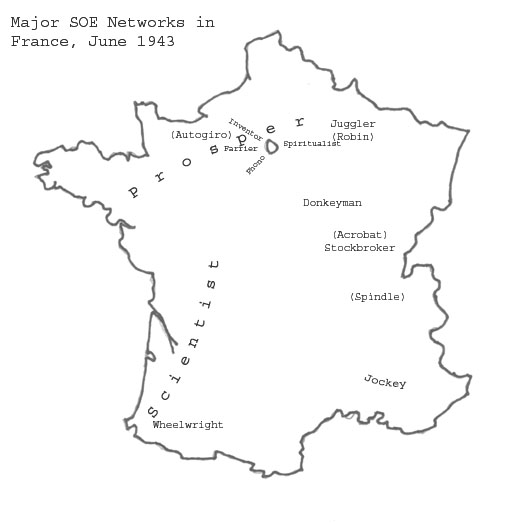
At the beginning of the Second World War, Cammaerts declared himself a conscientious objector. However, in October 1942 he joined the SOE and between March 1943 and September 1944 he led the Jockey network in southeastern France. Considered during training as more intellectual than practical he, nevertheless, completed the course with distinction.

Cammaerts became a pacifist in the 1930s while studying at Cambridge. After university, he established a teaching career where he met fellow teacher and pacifist Harry Rée. After much soul searching, Harry decided to join the SOE. This decision, along with the death of his brother, Pieter, who served in the RAF, convinced Cammaerts that he too should place his pasifist beliefs to one side and join the SOE.

Regarded as one of the finest male agents, Cammaerts recruited locals to the Resistance networks, supplying them with arms and training. He completed two tours as an SOE agent, totalling fifteen months, a period far longer than the average time served by an agent in France. He never stayed in the same house for more than three or four nights. Furthermore, he avoided hotels as their registers were checked by the Gestapo and French police, stayed clear of large railway stations and never told anyone of his plans. 

In the Jockey network, Cammaerts linked up with wireless operator Auguste Fioras. On 27 May 1943, the pair sent their first message to SOE headquarters in London while Fioras went on to transmit 416 wireless messages during 1943 and 1944, a record for an SOE wireless operator.

Cammaerts’ Jockey circuit, which had developed to include over 10,000 people, played a crucial role in the action that followed the D-Day landings. His men and women cut communication and railway lines, which severely hindered the movements of Nazi troops and armaments.

Aware of the risks the locals were taking, Cammaerts always informed them that he was an SOE agent and reminded them of the consequences should anyone talk or be caught. Despite this, he always received a warm welcome. Later, along with many other agents, he gave a great deal of credit to the ordinary French citizens who provided him and his colleagues with safety and support. In the television series Secret Agent, broadcast in 2000, Cammaerts said, “The most important element was the French housewife who fed us, clothed us and kept us cheerful.”

At 193 cm tall and with feet so large his nickname in France was “Big Feet”, Cammaerts feared that he would attract the Gestapo’s attention. Furthermore, he spoke French with a noticeable Belgian accent, which made him vulnerable to informers in the Malice. His security fears were realised on 13 August 1944 when he was arrested at a roadblock by the Gestapo. He was taken to Digne prison where he was beaten and interrogated. During the interrogation, he insisted that he was involved in the black market, a cover story he concocted to account for the large sum of money he carried about his person.

Even though Cammaerts was the most important SOE agent in southeastern France, the Gestapo didn’t realise that they had captured him. Nevertheless, they suspected that he belonged to the Resistance and arranged his execution.

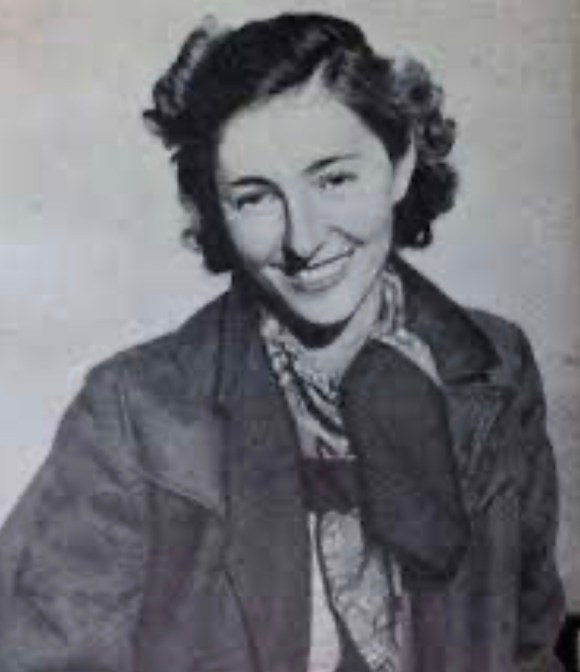
Christine Granville

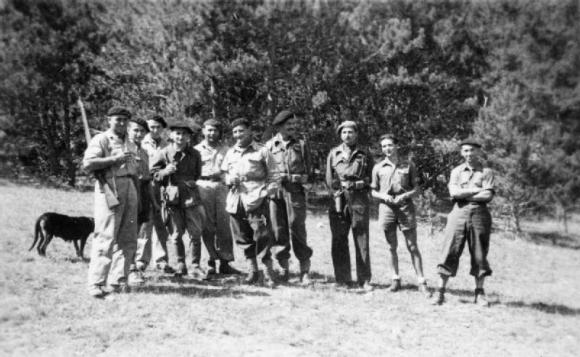
However, on 17 August 1944, two days before the Allied invasion of southern France, fellow agent and courier Christine Granville (aka Krystyna Skarbek) helped him to escape. Christine confronted two collaborators, Albert Schenck, a French liaison officer to the Gestapo, and Max Waem, a Belgian interpreter for the Gestapo. She told them that the Allied troops would arrive within hours and that if they did not cooperate they would be condemned as Nazi collaborators. Under threat from the avenging locals, Schenck and Waem secured Cammaerts’ release.

Maquisards with Christine Granville, second from right

In March 1945, Cammaerts joined the Special Allied Airborne Reconnaissance Force. The SAARF’s main objective was to assist in the reconstruction work in Germany after the fall of Hitler. For Cammaerts this meant dealing with the aftermath of the newly liberated concentration camps. Understandably, he was appalled by what he saw and later said, “The SAARF period was blank and grey and one of those certain areas in my life when I didn’t know what I was doing.”

During his pacifist period, Cammaerts met Nancy Findlay (Nan), and they married on 15 March 1941. Over the following decades, the couple had four children, three girls and a boy.

In 1948, Cammaerts became the first Director of the Central Bureau for Educational Visits and Exchanges, a UNESCO agency. Four years later, he returned to teaching. He was the subject of This Is Your Life in 1958 and in 1959 appeared for the defence in the notorious Lady Chatterley’s Lover trial, a case won by the publisher, Penguin Books, and the author, D.H. Lawrence.

Further teaching posts in Britain and Africa followed. Throughout his career, Cammaerts won high praise as an innovative educator. He finally retired in 1987 to live in the south of France. He died there in 2006.

As ever, thank you for your interest and support.

Hannah xxx