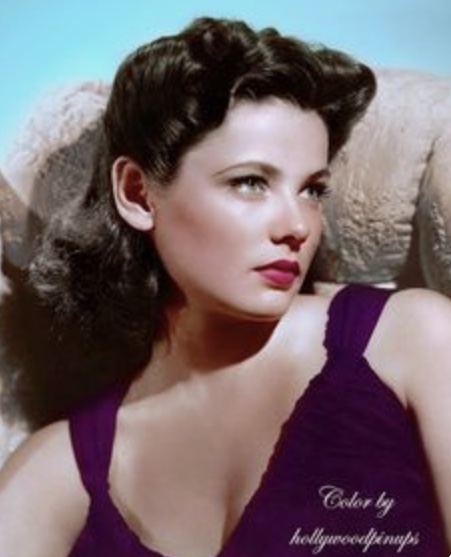
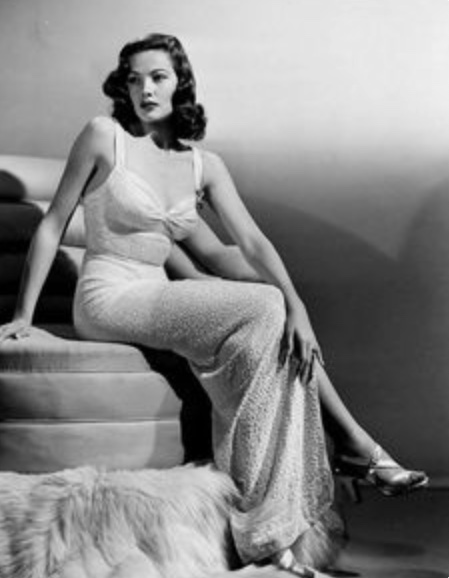
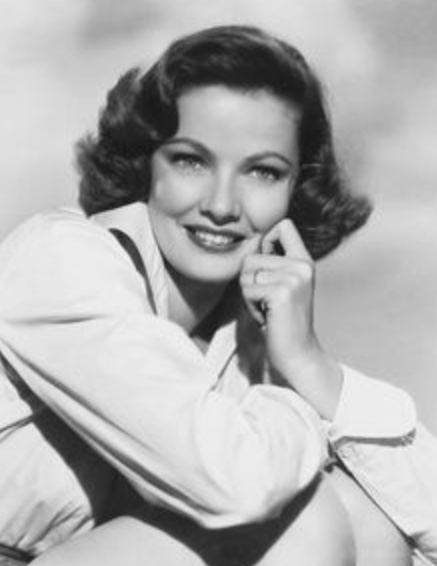
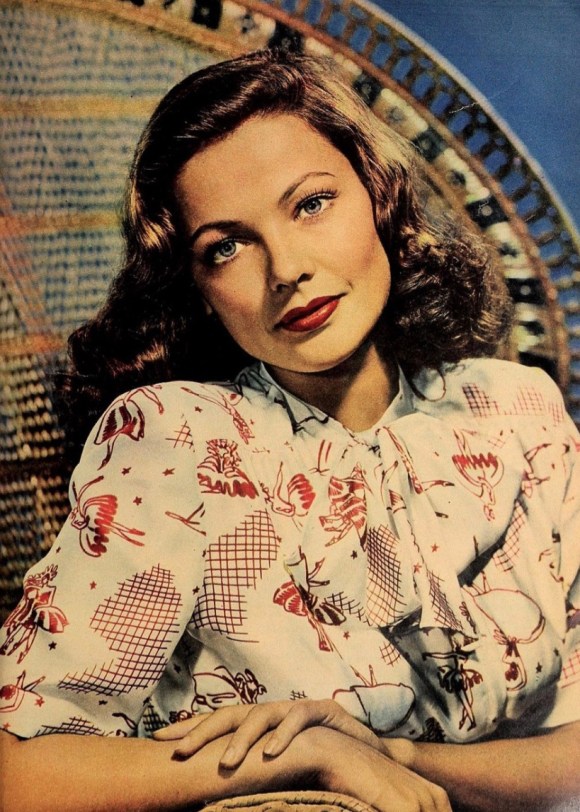
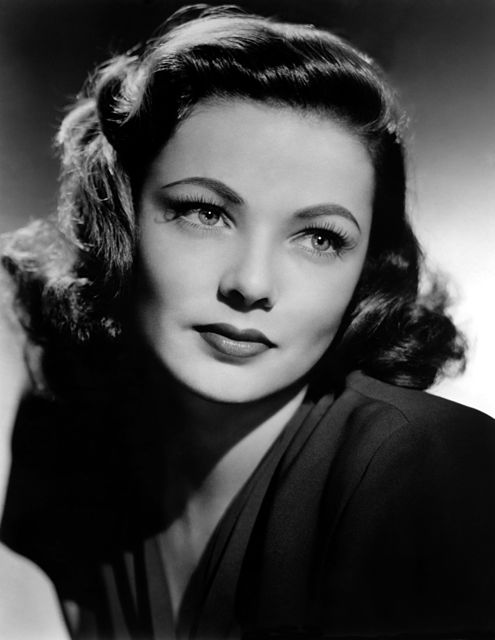
Born on November 19, 1920 in Brooklyn, New York, to a wealthy insurance broker and a socialite mother, Gene Tierney enjoyed a privileged upbringing, which included exclusive schools, extensive travel and glamorous parties. She caught the eye of Hollywood talent scouts and they offered her a contract.
As a teenager, Gene Tierney endured a mind-numbing season of debutante parties. At the close of the season, she informed her parents of her desire to carve out a career as an actress. Initially reluctant, her parents offered their support. Her father, Howard, secured mentoring and schooling, and he formed a company, to assist Gene in her ambitions.
With Gene Tierney’s star on the rise, eccentric movie mogul Howard Hughes entered the picture. He was besotted with her beauty. However, as she later pointed out, “Cars, furs and gems were not my weakness.” And she rebuffed Hughes. Despite the rebuff, Howard Hughes remained friends with Gene Tierney, one of many influential and powerful people she encountered during her life.
In 1940, Gene Tierney’s life changed direction when she met fashion designer Oleg Cassini. Within months, the couple married. Her parents were not pleased and a rift developed within the family. Over time, that rift widened until Gene was cut off financially, and from Connecticut high society. Later, she divorced Cassini, remarried him, then divorced him again.
In 1944, Gene Tierney landed the title role in Laura, arguably the highpoint of her acting career. Although the film received mixed reviews – a consistent thread throughout Gene’s career – it did well at the box office, netting over a million dollars, and now is regarded as a cinema classic. As Vincent Price, one of her co-stars in Laura, said, “No one but Gene Tierney could have played Laura. There was no other actress around with her particular combination of beauty, breeding and mystery.”
In 1955, while working with Humphrey Bogart on The Left Hand of God, Bogart noted that Gene had problems. He alerted the executives at Fox studios, but they dismissed his concerns in flippant fashion. As Gene Tierney later wrote, “It was the fashion at the time, still is, to feel that all actors are neurotic, or they would not be actors.” Spells in institutions and sanitariums followed as Gene sought relief from depression and mental health problems.
After enduring long spells of poor mental health, Gene Tierney later wrote, “If you break an arm or a leg it takes months for it to really heal, and years for it to be the same again. So you can imagine the problems with a broken mind.” And, “More than anything, I learned that the mind is the most beautiful part of the body and I am grateful to have mine back.”
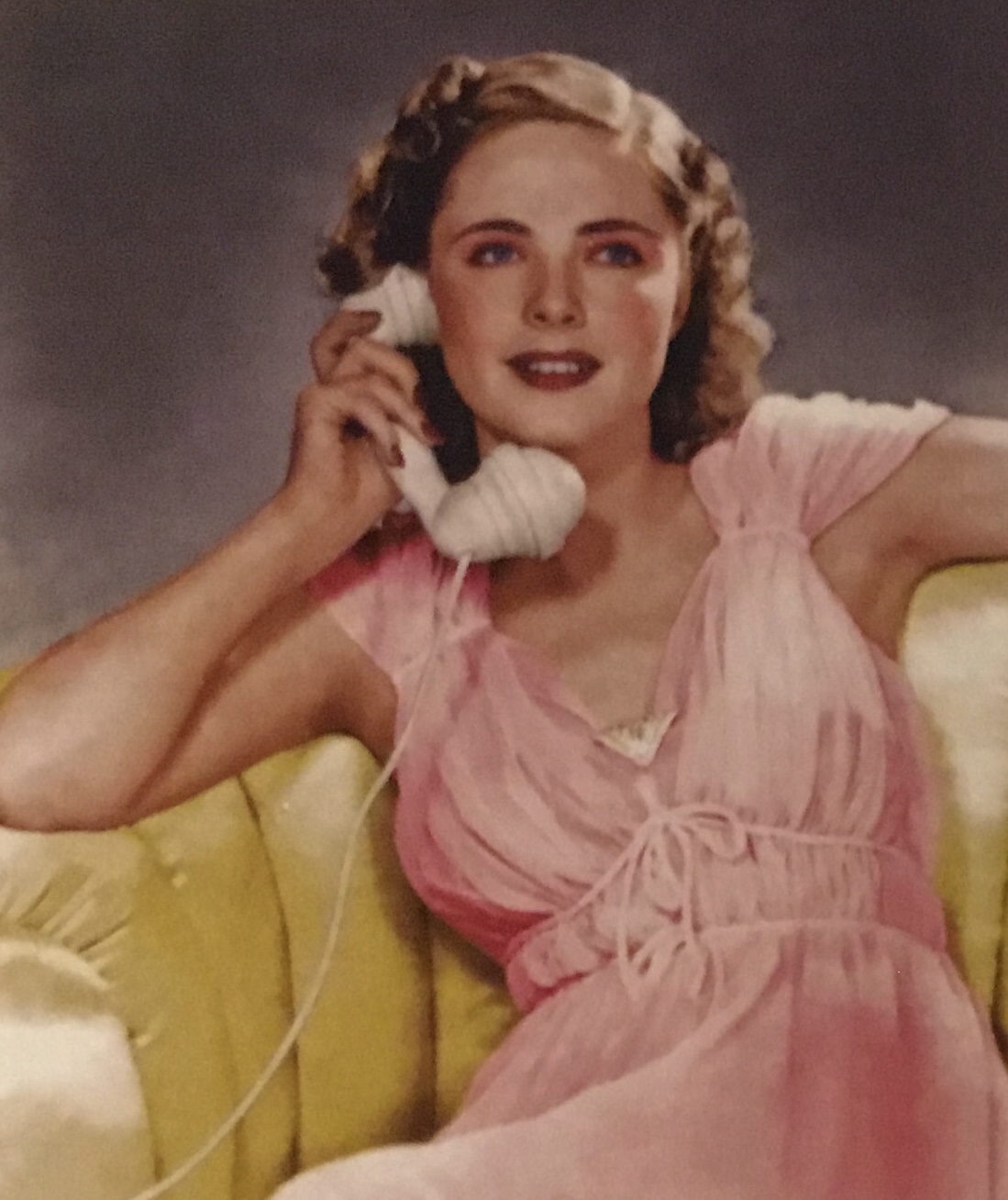
Mary Pickford(April 8, 1892 – May 29, 1979) enjoyed a career that spanned five decades. A movie pioneer, she co-founded Pickford-Fairbanks Studios and United Artists. Furthermore, she was one of the thirty-six founders of the Academy of Motion Picture Arts and Sciences.
During her career, Mary Pickford was known as “America’s Sweetheart”, “The Girl with the Curls”, and the “Queen of Movies”. One of the earliest stars to receive a billing under her own name, Mary enjoyed great popularity in the silent movie era of the 1910s and 1920s.
Mary Pickford defined the ingénue rolein motion pictures. She received the Academy Award for Best Actress for her first sound movie role as Norma Besant in Coquette, 1929. However, the arrival of the “talkies” signalled a decline in her career.
In 1909, Mary Pickford appeared in fifty-one films, most of them shorts. She starred in fifty-two features throughout her career. However, she didn’t adapt to the arrival of sound. She said of the “talkies” – “Adding sound to movies would be like putting lipstick on the Venus de Milo.”
Mary Pickford retired from movie acting in 1933. An astute businesswomen and producer throughout her career, she switched her focus to life behind the camera. A co-founder of United Artists, she finally sold her remaining shares in that company in 1956, for $3 million.
Mary Pickford married three times. First, to Owen Moore, a silent film actor, and an alcoholic. Second, and most famously, to Douglas Fairbanks. Their “marriage of the century” took place on March 28, 1920, after a secret relationship. Later, the couple were referred to as the “King and Queen of Hollywood”. And third to actor and band leader Charles “Buddy” Rogers, star of the highly acclaimed 1927 movie Wings.
After a glittering career, the lights dimmed on Mary Pickford later in life. Her divorce from Douglas Fairbanks and the end of the silent film era induced depression. Like her father before her, she turned to alcohol for comfort. Owning the rights to her early silent movies, Mary intended to burn them at her death but, thankfully, she donated them to the American Film Institute instead.
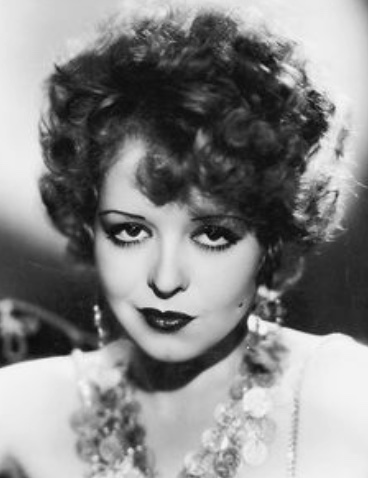
Clara Bow’s twelfth movie was Empty Hearts, produced during the summer of 1924 and released on September 15, 1924. Fourth on the bill, Clara played Rosalie.
A drama, the plot of Empty Hearts centred on a blackmail letter, relationships, and misunderstandings. The screenplay was based on a story written by Evelyn Campbell a screenwriter, author and actress active during Hollywood’s silent era. Evelyn also wrote Westerns.
At this stage of Clara’s career, B.P. Schulberg was loaning her out to various studios. Indeed, not one of her eight movies made in 1924 was produced by Schulberg. On the whole, these movies were beneath Clara’s talent, and she must have felt frustrated.
Serial Stars
Kay Aldridge
Although she was screen-tested for the part of Scarlett O’Hara in Gone with the Wind, Kay Aldridge made her name as a heroine in serials. She starred as Nyoka Gordon in Perils of Nyoka, 1942. In the series, Nyoka confronted a host of villains while looking for her father, who’d disappeared while on expedition in Africa. Each episode ended with the traditional cliffhanger.
Kay also played the heroine in Daredevils of the West, 1943, and Haunted Harbor, 1944. She retired from acting in 1945.
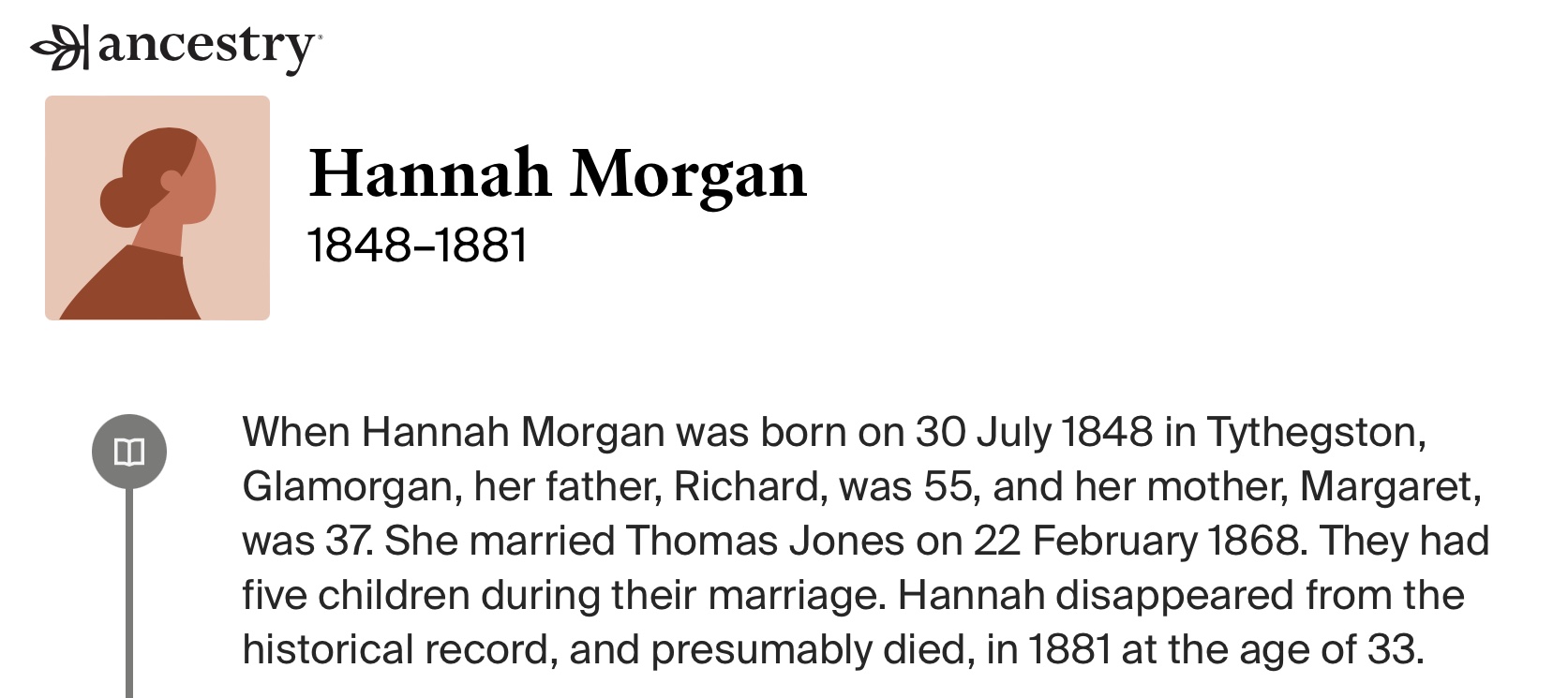
After ten years, I’ve completed the preliminary research on my family tree. Of course, because of missing records, there are gaps, but I’m delighted with the stories I’ve discovered. Now, I intend to trace a branch back in greater detail, starting with my 3 x great grandmother Hannah Morgan, 30 July 1848 – c1881. How far back does this branch go? Stay tuned and find out 😉
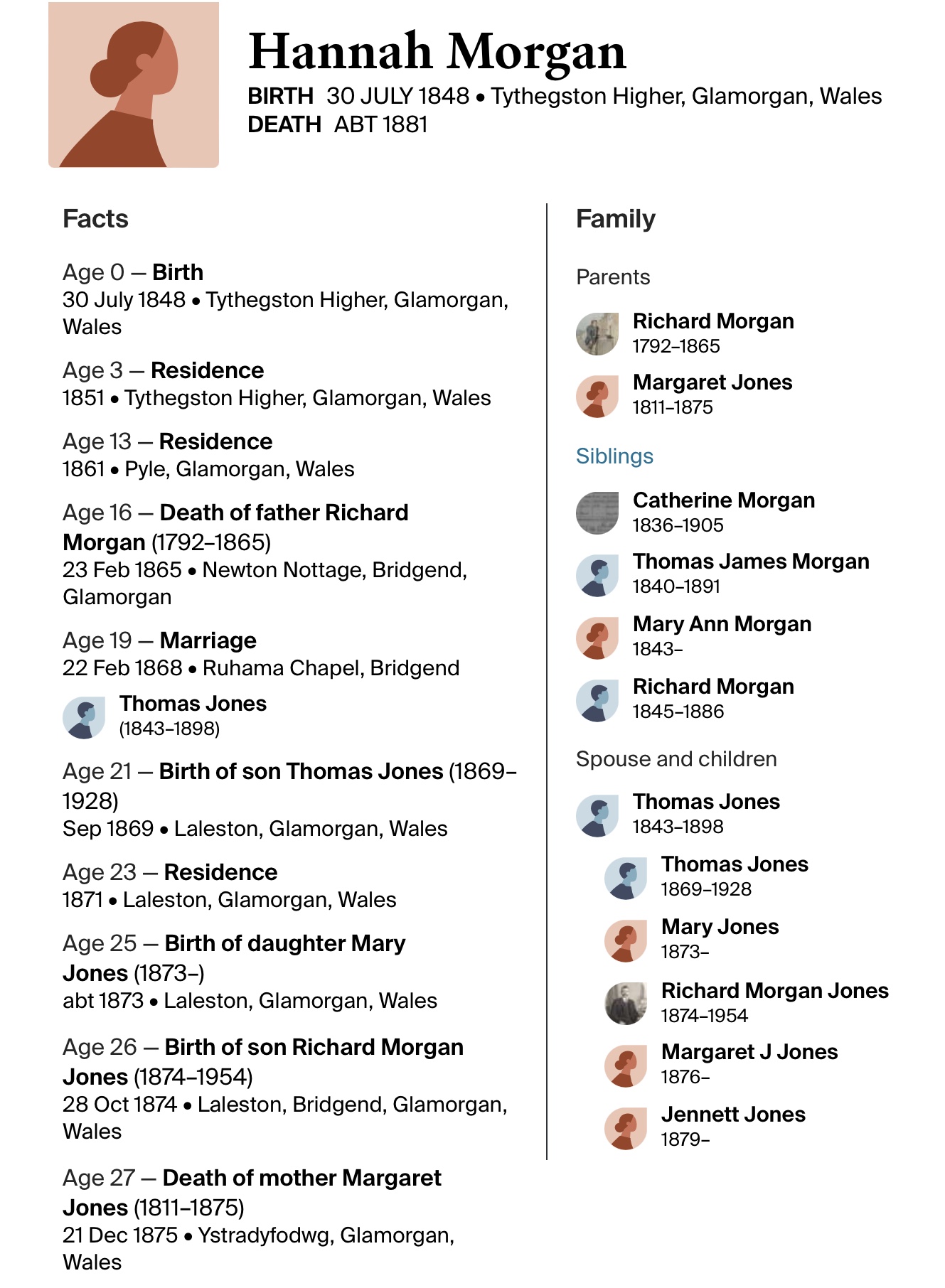
The basics of Hannah’s life, outlined below, look ordinary. However, as the mother of five children and the wife of a coal miner, she was one of the women who formed the backbone of Welsh society during the Victorian era.
Hannah’s father was an ostler, so it’s likely she was familiar with horses. Her mother lodged Irish navvies, so from a young age she became accustomed to the Victorian norm – a crowded house.
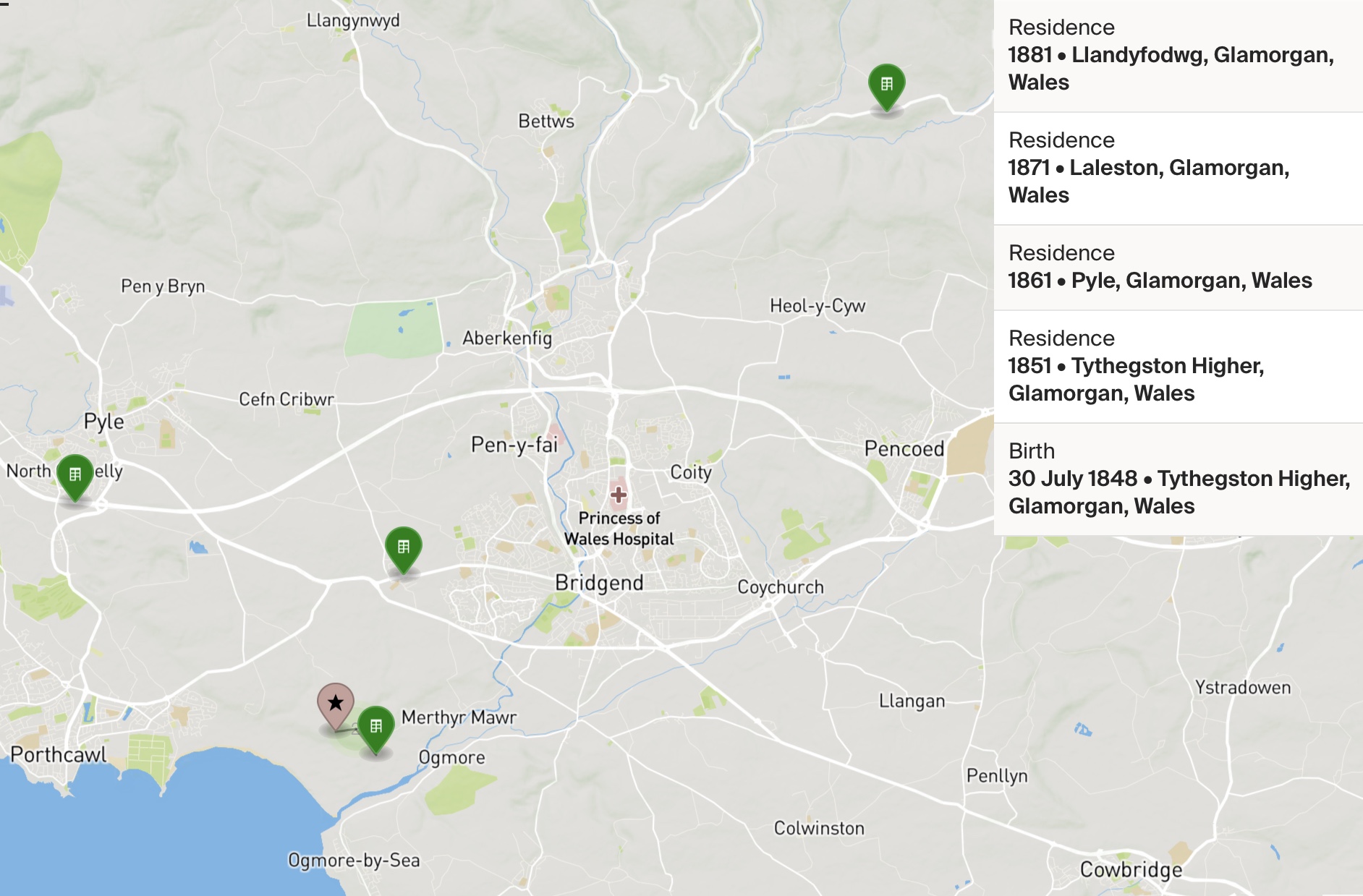
The points on this modern map highlight where my 3 x great grandmother Hannah Morgan was born and where she lived at the time of each census. The birth records of her five children indicate that her family was constantly on the move as her husband Thomas Jones sought employment in the newly developing coal mines that were transforming the culture and landscape of Glamorgan. Llandyfodwg, highlighted to the north, was Hannah’s last known address.
Hannah Morgan’s family chart and timeline reveal that, in common with many parents of her era, she named her children after her parents. Two of the major events of Hannah’s life occurred during her teenage years when her father died and when she married.
My 3 x great grandparents Hannah Morgan and Thomas Jones married on 22 February 1868, a Saturday, at Ruhama Baptist Chapel, Bridgend. As newlyweds establishing a home maybe they paid attention to advertisements like this one, which appeared on the day of their wedding.
Unfortunately, no pictures of Hannah Morgan or Thomas Jones exist. However, I have managed to find a picture of their son, Richard Morgan Jones, 1874 – 1954. Like his father, Richard was a coal miner in Glamorgan.
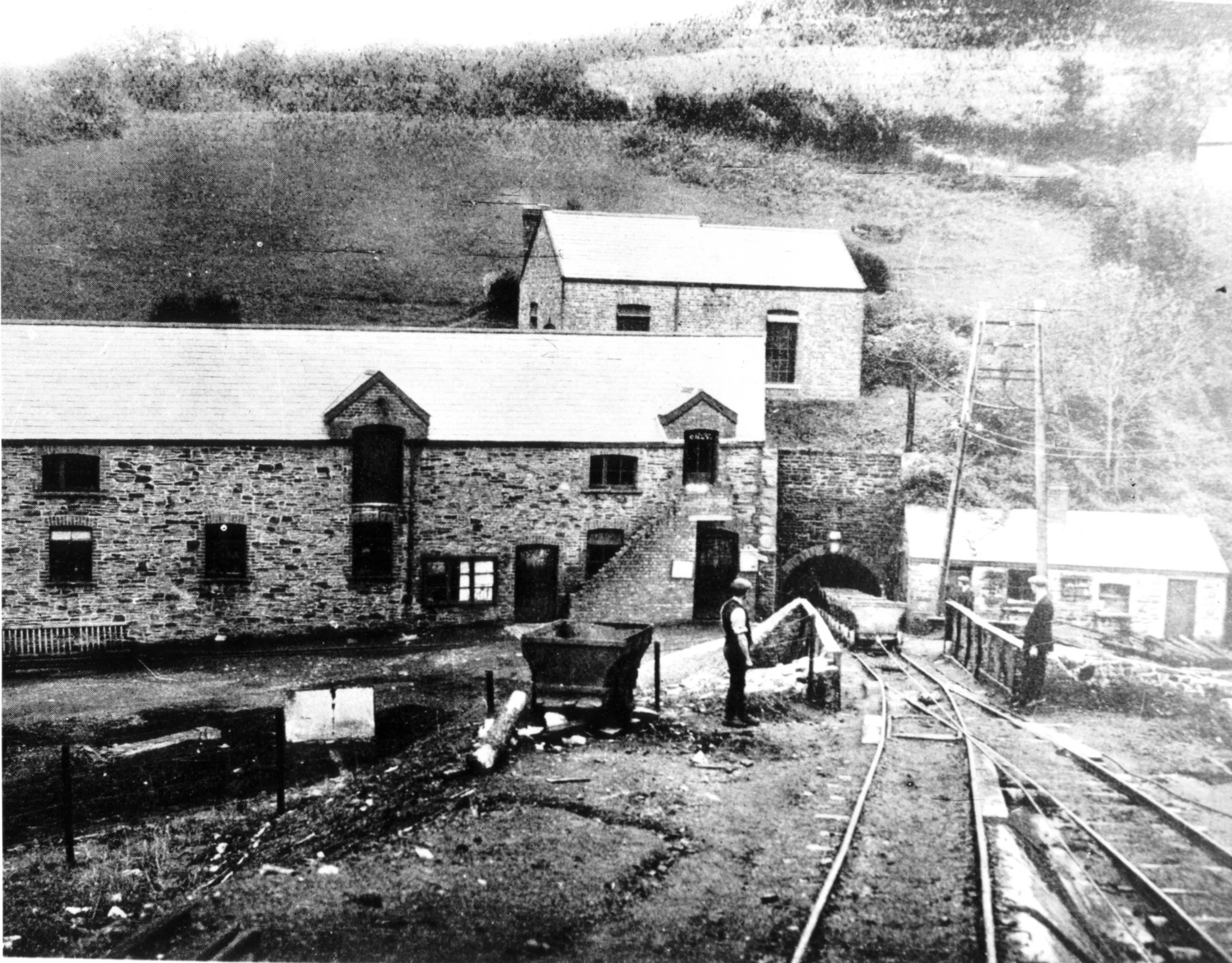
My 3 x great grandfather Thomas Jones started his working life as a ‘cow boy’. After that he worked as a coal miner, dicing with death, every day. At random I have selected ten Joneses who worked alongside Thomas in the local coal mines. The brief notes that follow record their fate.
Thomas Jones, aged 22: killed by falling from a byat while moving a stage in the shaft.
Evan Jones, aged 14: killed by a full train passing over him.
William Jones, aged 38: killed when the mineshaft roof fell.
William Jones, aged 37: killed by a fall of coal.
William Jones, aged 16: killed by a fall of coal.
Richard Jones, aged 34: killed when the side of the pit gave way.
David Jones, aged 45: killed when the mine roof collapsed.
Thomas Jones, aged 48: killed by an explosion of firedamp, one of two people killed.
David Jones, aged 26: killed by a gas explosion, one of eleven people killed.
Lewis Jones, aged 12: run over by trams through breakage of coupling chains.
📸 Aberbaiden Colliery
My 3 x great grandmother Hannah Morgan disappeared from the historical record in the 1880s. Some researchers think she emigrated to America. The historical record and my DNA profile confirm that a number of my ancestors did emigrate to America. However, I have found no records that suggest Hannah joined them. With her family, she moved around the Glamorgan coalfields. I suspect that her death record was lost due to the transient nature of her life.
Clara Bow Quotes: “Mr Schulberg could not use me in any of his productions at the time but there was nothing to prohibit him from ‘farming me out’ to other producers for small roles. Looking over my records I find that I played in twenty-seven productions in not so many months. But as time went on, I was getting no place. Always the instructions were the same: ‘Clara, X Blank wants you for a “bit” in their production, which starts Thursday’. Always a “bit”. If this was Hollywood, I wanted no more of it.
Gradually, I became better known. Occasionally, my name would creep into the billing on pictures and executives of the various studios were nodding now and then when I ran across them on the lot. I was getting somewhere.”
Intertitle #13
As ever, thank you for your interest and support.
Hannah xxx
For Authors
#1 for value with 565,000 readers, The Fussy Librarian has helped my books to reach #1 on 36 occasions.
A landmark for my Sam Smith mystery Sam’s Song, this week the book received its 1,000th review 🙂
The Portuguese version of our Hollywood magazine.
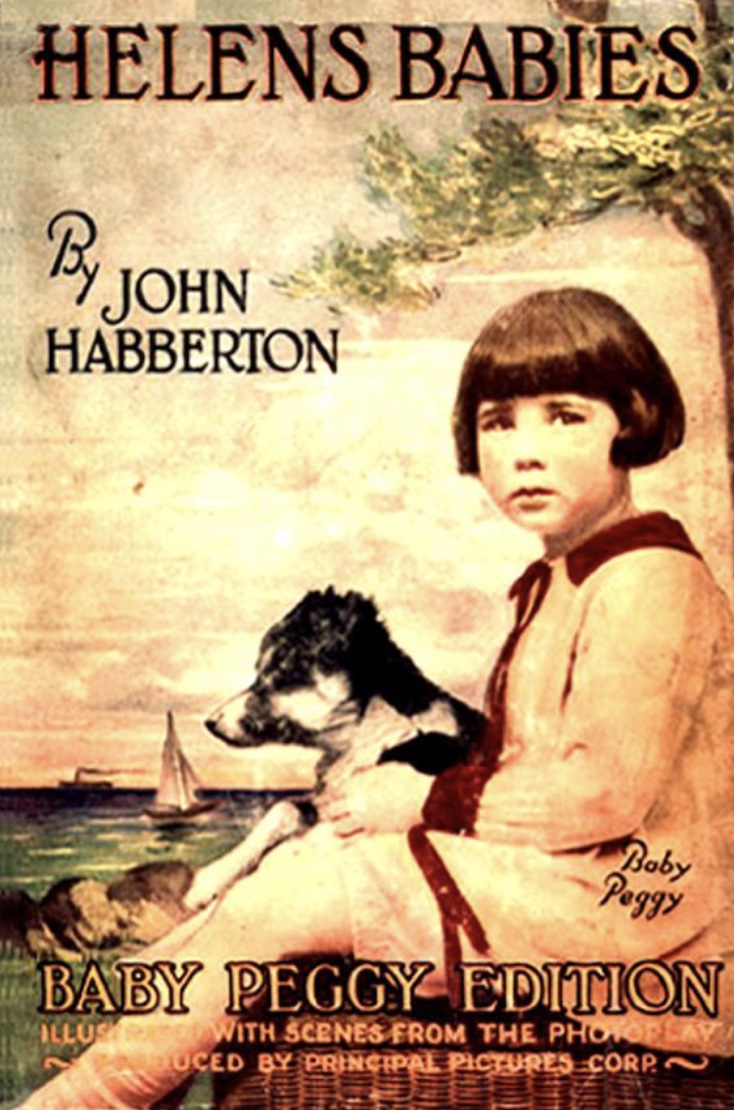
Clara Bow’s tenth movie was Helen’s Babies, a silent comedy based on an 1876 novel by John Habberton. Clara played Alice Mayton. The movie was produced during the spring of 1924 and released on October 24, 1924.
At this stage of Clara’s career, producer B.P. Schulberg was loaning her out to various studios. She would play one part in the morning, another in the afternoon. Consequently, her hairstyle and hair colour would change continuously, sometimes during the course of one day.
In 1924, aged nineteen, Clara was renting a three-bedroomed house on Hollywood Boulevard. Her boyfriend, cameraman Artie Jacobson, lived with her, along with her father who had moved from Brooklyn. Jacobson was a steadying influence on Clara’s life. Her father, however…that, as they say, is another story…
Welcome to Mom’s Favorite Reads 106 page bumper Christmas and fiftieth issue!
In this month’s issue of our #1 ranked magazine…
Interview with Orna Ross, founder of ALLI. Plus, Author Features, Health, Nature, Photography, Poetry, Short Stories, Young Writers, Nature Photography Day, and so much more!
Available to read FREE here 👇
Eileen Sedgwick in The Terror Trail, a 1921 serial. The foreground is actually a film set while the background is downtown Los Angeles.
Clara Bow Quotes: “My advice for a girl trying to make good in Hollywood…Destroy the illusion from the start. Hollywood is no fairyland. Success comes to those with talent and ability who are willing to face hard work, to make such sacrifices as are demanded.
Take good advice and ignore bad, but be sure you are able to differentiate between the two. Don’t let your feelings run away with your good judgement. When you realise you are wrong, admit it. When you know you are right, FIGHT! Be yourself at any cost.”
Intertitle #11
As ever, thank you for your interest and support.
Hannah xxx
For Authors
#1 for value with 565,000 readers, The Fussy Librarian has helped my books to reach #1 on 35 occasions.
By 1924 film producer B.P. Schulberg was guiding Clara Bow’s career. Under his guidance, she made her eighth movie,Poisoned Paradise: The Forbidden Story of Monte Carlo, a silent romantic drama.
Clara played Margot Le Blanc. Left a small fortune by her foster mother, Margot goes to Monte Carlo and loses the fortune gambling. She finds support, and love, from an artist, Hugh Kildair.
Throughout her life, Clara needed sound people around her to guide her. At this time, she had Schulberg along with her agent, Maxine Alton. However, an affair between Alton and Schulberg shattered Clara’s confidence in them. Clara was trusting and naïve, and it’s fair to say that Alton and Schulberg exploited her trust and naivety.
🖼 Lobby card for Poisoned Paradise
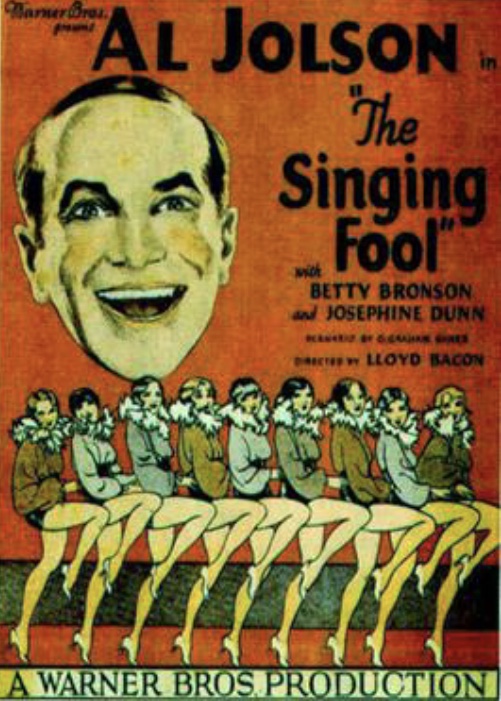
Highest Grossing Movie of 1928 (joint) The Singing Fool.
A part-talkie musical melodrama, The Singing Fool starred Al Jolson. Following hot on the heels of The Jazz Singer, this movie established Jolson as a leading entertainer. The Singing Fool was more popular than The Jazz Singer mainly because many movie theatres were not equipped to show talkies when the The Jazz Singer was released in 1927.
Although heavily reliant on its musical interludes, The Singing Fool was released as a silent movie, alongside the sound version. The film ran for 102 minutes with 66 minutes devoted to dialogue and singing.
Reviews were, in the main, positive. “The Singing Fool is the finest example of sound pictures made to date.” – the Film Daily. The New York Times felt that the dialogue was “a little halting” and “not convincing”, but concluded that the main point of interest was “Mr Jolson’s inimitable singing”, and on that basis the movie was “capital entertainment.”
My latest translation, the Italian version of Operation Sherlock, Eve’s War Heroines of SOE, book five.
Clara Bow Quotes: “During my recent troubles, when broken in health and on the verge of despair, my many friends of the vast motion picture audience came to my assistance with countless messages of faith and good cheer. To them, I am profoundly grateful. If I do make another motion picture, it will be to please to the best of my ability those fans and friends who at no time lost faith in me.”
The Golden Age of Hollywood Winter 2022
Intertitle #9
As ever, thank you for your interest and support.
Hannah xxx
For Authors
#1 for value with 565,000 readers, The Fussy Librarian has helped my books to reach #1 on 34 occasions.
















 Hannah Howe