Categories
1963

Social History 1963 #2

Sunday 6 January 1963

We may have coloured roads one day. A reflecting surface, which can be coloured, has been developed in America. The road surface shows up with the same brightness at night as during the day.

National Savings were up 13% on 1961 at £247,000,000. But they fell well short of the 1960 record of £343,400,000.

Dr Adenauer, the West German Chancellor, was 87 yesterday.

The top-selling hat of the season, say the milliners, is the bowler, in soft felts and furs. Women can add a spray of feathers for the “Wicked Lady” look.

The Light and Home Service of the BBC have forty-seven disc programmes this week – that’s 1,937 minutes of records and the essential chat before and after. However, columnist Bernard McElwaine is not happy. “The gramophone record is the most irritating invention since the telephone and the dentist’s drill,” he said.

DIY advice. If you have a door that sticks or won’t stay closed, just tighten the hinge screws. This is often sufficient. When an outside door sticks, it might be necessary to plane the edge or the bottom. But don’t do this in damp weather.

My young daughter was given a large dolls’ house for Christmas. After peering in every room, looking for the people, she asked, “Well, where are they all – watching television?”

Television highlights: Land of Song, Rejoice and Sing, Motor Cycle Scrambling.

Radio highlights: Melody on Strings, Richard Attenborough.

Football: FA Cup Third Round – only three games out of thirty-two played because of the snow: Preston 1 Sunderland 4, Plymouth 1 West Bromwich Albion 5, Tranmere 2 Chelsea 2.

Weather: very cold, snow, frost.
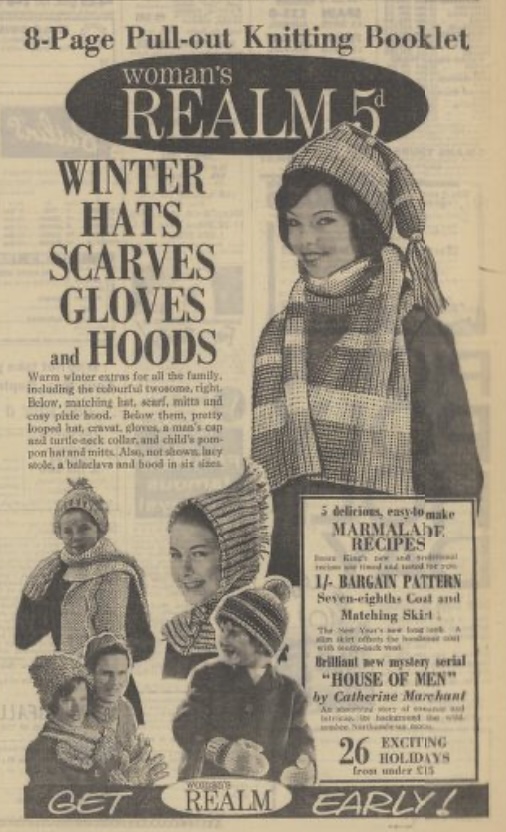
Monday 7 January 1963

Over a thousand trapped and starving animals were rescued from the snow yesterday. More than 100 people took part in the rescue on Dartmoor, Devon. And a new hazard – potholes. The Big Freeze has cracked many roads. A very slow thaw is expected to continue. But there may be more snow tomorrow.

Dozens of families in Hornchurch, Essex only get a two-and-a-half-inch picture. This has been going on for two years and it’s driving the locals crazy. There is insufficient voltage to power their television sets.

Hoover announced that the cost of their Hoovermatic combined washing-machine and spin-dryer was being cut by £6 6s to £82 19s.

Television highlights: University Challenge – Nottingham v Swansea. Discs-A-Go-Go. Leave it to Beaver.

Radio highlights: Folk Songs. A Book at Bedtime.

Two television sketches that drew scores of protest are to go on long-playing record today. The sketches are from That Was The Week That Was. They include an Army officer issuing instructions to his men by mixing Bible quotations with battle orders. And a woman telling his boyfriend that his fly buttons are undone.

Football: So far, 135 matches need to be rearranged. And the League are budgeting for at least one more bad weekend before the end of the season. An extension to the season is planned, but this will not affect the FA Cup Final.

Weather: continuing cold with frost. Outlook – similar.

Tuesday 8 January 1963

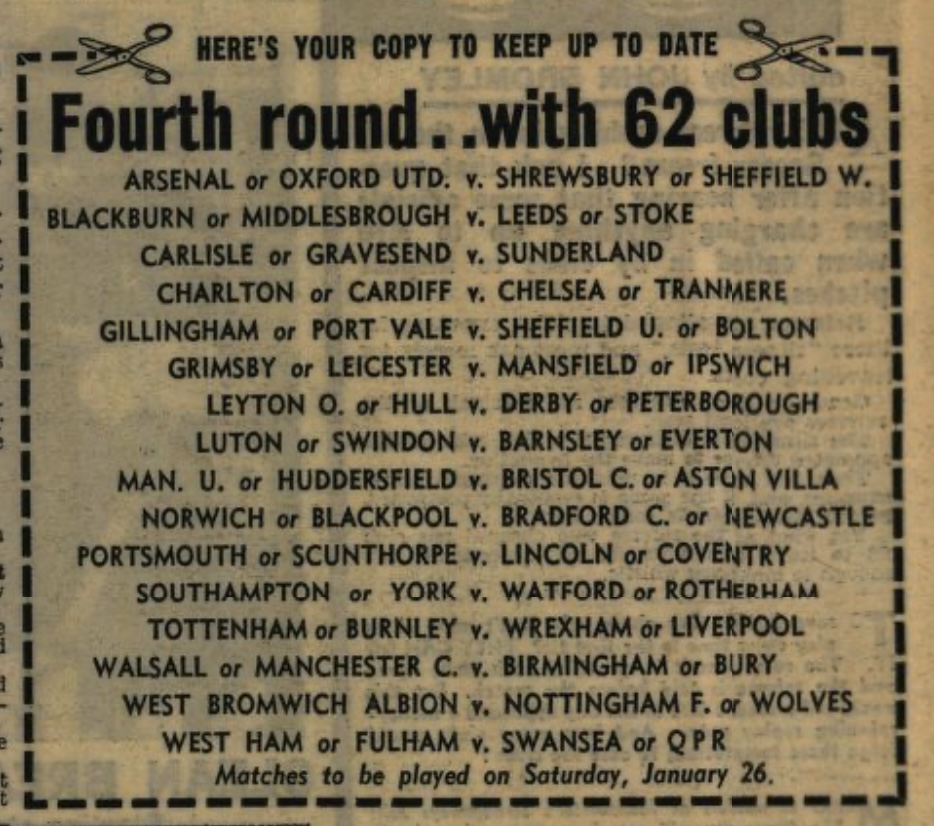
Because of the snow, only Sunderland and West Bromwich Albion cleared the FA Cup Third Round hurdle. Nevertheless, the Fourth Round draw went ahead as scheduled.

Safety belts will be compulsory in all cars in France, possibly next year. All the belts must be tested by the French Works Ministry and carry its seal of approval.

A thief stole skis, value £10, from outside the back door of Miss Phyllis Iles’ home in Ashstead, Surrey.

Girdles and bras of man-made elastic will sell at more realistic prices this year. One advantage of this elastic is that it gives light-weight control. Another advantage is that it wears longer.

In furniture, 1963 will bring an ever-increasing swing to the Scandinavian Look, with its stark lines and unpolished woods. Teak will be the mainstay of the Scandinavian Look, and varnished finishes are out.

In the kitchen, non-stick pans will become more popular, now that their special finishes have been perfected.

Eighty-year-old Christopher Stone, the first-ever BBC disc jockey, slipped and cut his face on an icy footpath in Eton, Bucks, high street yesterday.

Television highlights: Bookstand, Tonight with Cliff Michelmore, Treasure Hunt.

Radio highlights: Family Favourites, Big Ben Banjo Band.

Weather: snow showers, very cold. 0c, 32f.
Wednesday 9 January 1963

The threat of power station strikes is still on. If the strikes go ahead, many regions can expect blackouts.

Labour leader Hugh Gaitskell’s condition was improving, the Middlesex Hospital said last night. His four doctors said that he had a more restful day. Mr Gaitskell is suffering from pleurisy and pericarditis.

The bosom is about to make a comeback. designer Marc Bohan of Dior said, “The accent on the bust will be the strongest impact of my line.” The new look will also feature deep necklines and more emphasis on the legs, although hemlines will remain the same – just below the knee. Lipsticks will be bright red and the top fashion colour will be white.

To meet the need for television dinners, furniture manufacturers will be making supper tables 20 inches high. Coffee tables are usually 16 to 18 inches high.

Television highlights: Les Comediens-Mimes de Paris, Look – wildlife series, Cubism and After – modern art.

Radio highlights: Come into the Parlour, The Big ‘O’ Show.

Football: 145 out of 211 fixtures have now been postponed. Sunderland are the only club who have not experienced a postponement.

Weather: scattered snow showers. Outlook – very cold with further snow at times. Maximum temperature 1c, 34f.

Thursday 10 January 1963

The first transatlantic telecast by Relay – the telecommunications satellite that is four-times stronger than Telstar – was a success yesterday. Mr Martin Pulling, the BBC’s assistant director of engineering, predicted around-the-world live TV via satellites within the next five years.

Fiction and Fact. Fiction: “He awoke to find her still asleep beside him, her shining dark hair tousled…her skin soft and gently flushed…a little smile curving her mouth. He leaned over and kissed her and she opened her eyes in renewed wonderment of their love.” Fact: “He awoke to find her still asleep beside him, her dark hair screwed into rollers and tied up in a net…her skin still sploshed with last night’s beauty cream…her mouth wide open. He leaned over and dug her in the ribs and she unglued her eyes and said, ‘S’your turn to make the tea’.”

A father of eight who fell “terribly in love” married his mistress, thus committing bigamy. He was jailed for six months after a hearing at the Old Bailey.

Fights over the blankets, open and closed windows, and where to place the hot-water bottle – couples are being advised to think carefully before taking the marital plunge.

Television highlights: Criss Cross Quiz, Hancock, Amateur Boxing – Scotland v England.

Radio highlights: Have a Go! Railway Roundup.

In the Top Thirty this week: Guitar Man – Duane Eddy, He’s a Rebel – The Crystals, Globetrotter – The Tornados.

Weather: very cold, snow showers. Outlook – no change. 0c, 32f.

Coming soon, Songbird, my novel set in the winter of 1962-63

https://books2read.com/u/bMqNPG

For Authors

#1 for value with 565,000 readers, The Fussy Librarian has helped my books to reach #1 on over thirty occasions.

A special offer from my publisher and the Fussy Librarian. https://authors.thefussylibrarian.com/?ref=goylake

Don’t forget to use the code goylake20 to claim your discount 🙂

Categories
1920s

The 1920s #3

Introduced in 1922, the Austin Seven, the “Car for the Feminine Touch”.

Fashion

For women, the flapper look dominated. Clothes that restricted were cast aside in favour of short skirts and trousers, attire that offered greater comfort. Men too abandoned formal daily attire in favour of casual and athletic clothing. Indeed, the suits of today are still based on the basic designs of the late 1920s.

In fashion, the Roaring Twenties really kicked off in 1925. Jazz, and dances like the Charleston, influenced designs of female outerwear, and underwear. For the first time in centuries, women’s legs were seen in public with hemlines rising to the knee. 

Headbands were popular, until 1925, and jewellery remained in vogue throughout the decade, although the emphasis was not so much on dazzling expense, but more on design and style.

Actress Louise Brooks

Football

The 1923 FA Cup final was played between Bolton Wanderers and West Ham United on 28 April at the original Wembley Stadium in London. It was the first football match to be played at the stadium.

The official capacity was 125,000. However, a crowd estimated at 300,000 gained admittance. Consequently, the terraces overflowed and people were forced on to the pitch.

Mounted policemen, including one on a white horse (pictured), entered the scene. They cleared the pitch and, after a delay of 45 minutes, the match commenced. 

Bolton emerged as winners, 2 – 0, but the defining image of the day was the policeman on his white horse, ensuring that the game would be forever known as the “White Horse Final”.

More flapper slang from the 1920s

Noodle juice – tea
Nutcracker – a policeman’s truncheon
Oil can – an imposter
Out on parole – recently divorced
Potato – lacking Intelligence
Rock of Ages – a woman over thirty

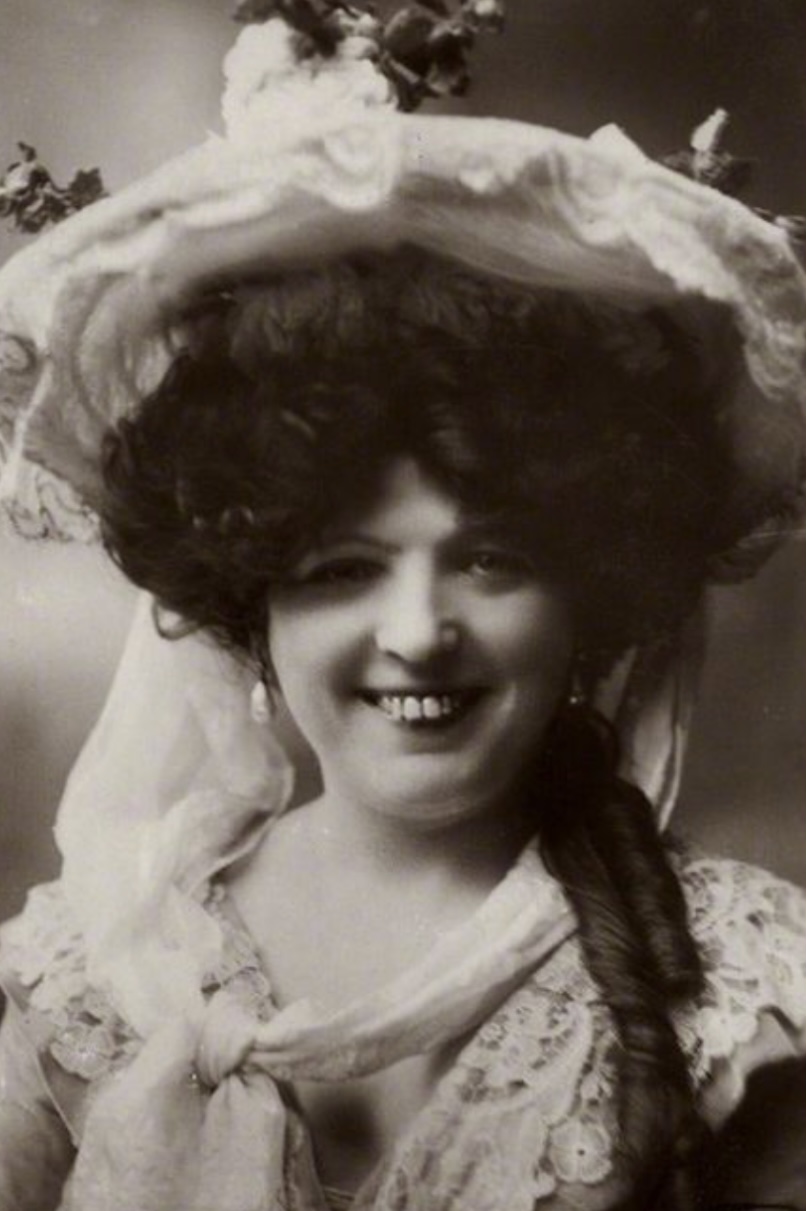
In April 1922, music hall star Marie Lloyd (pictured) collapsed in her dressing room after singing “The Cosmopolitan Girl” at the Gateshead Empire in Cardiff. Her doctor diagnosed exhaustion. After a period of rest, she returned to the stage in August, and reduced the running time of her act. 

On 12 August 1921, Marie Lloyd failed to show for an appearance at the London Palladium. Instead, she wrote her will. Marie Lloyd died two months later, on 7 October 1922. 

The Times wrote: “In her the public loses not only a vivid personality whose range and extremely broad humour as a character actress were extraordinary, but also one of the few remaining links with the old music-hall stage of the last century.”

In January 1920 the Marconi Company made occasional broadcasts, featuring music and speech, from Chelmsford, England. From 23 February to 6 March 1920 the company broadcast a series of thirty minute shows, repeated twice daily, from Chelmsford. These shows included live music performances.

A Marconi employee, 1906

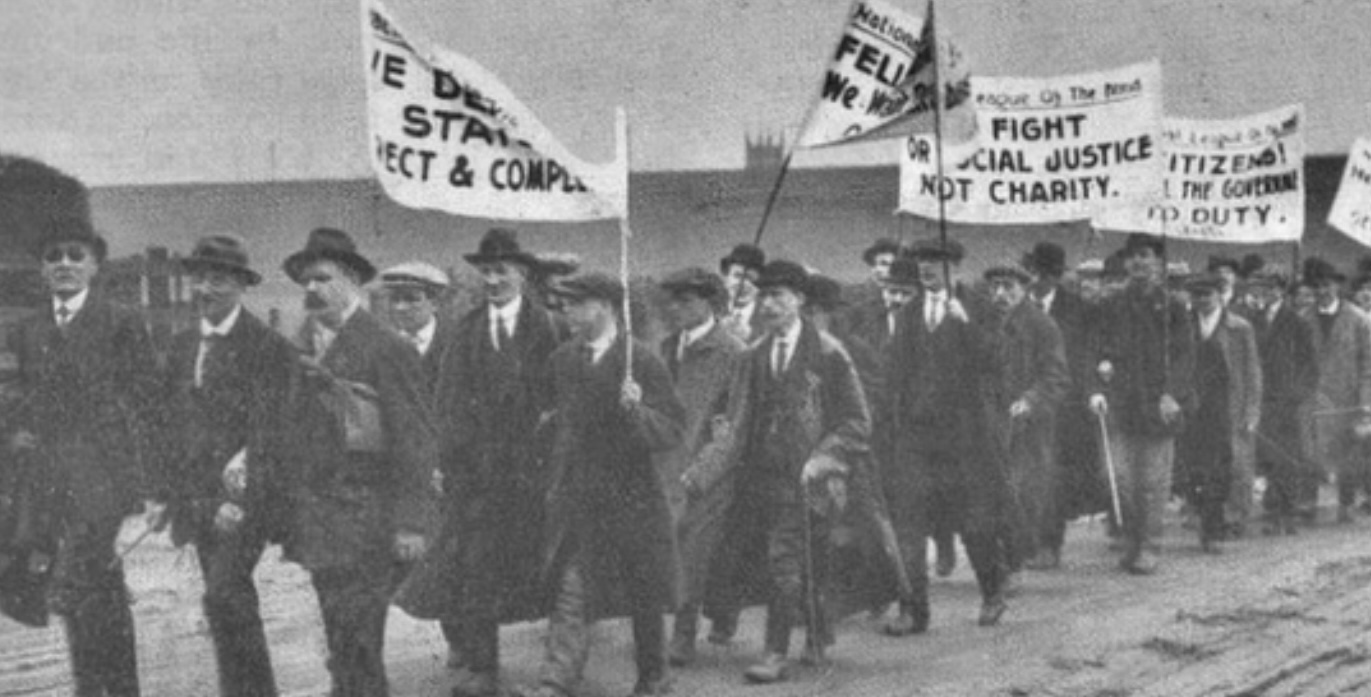
In 1920, 250 blind people marched from Newport, Manchester and Leeds to London. Organised by the National League of the Blind, the marchers assembled on 5 April 1920 and reached London on 25 April 1920, where a crowd of 10,000 supporters greeted them.

The NLB organised the march to protest against poor working conditions and poverty experienced by blind people. The leaders met Prime Minister David Lloyd George, who promised little, apart from to pay for the marchers’ rail tickets home.

However, a Blind Persons’ Act was introduced later in the year, the first disability-specific legislation in the world, which compelled local authorities to ensure the welfare of blind persons. 

The march of 1920 served as inspiration for the famous 1936 Jarrow March against unemployment, in which the NLB also participated.


Tula, my novel set in the 1920s

For Authors

#1 for value with 565,000 readers, The Fussy Librarian has helped my books to reach #1 on 32 occasions.

A special offer from my publisher and the Fussy Librarian. https://authors.thefussylibrarian.com/?ref=goylake

Don’t forget to use the code goylake20 to claim your discount 🙂

Categories
Dear Reader

Dear Reader #40

Dear Reader,

My personal top ten this week with Mind Games making the biggest leap up the charts.

The proof copy of Snow in August, which arrived this week.

Authors take two basic approaches to long-running series. 1. The lead characters remain exactly the same (Columbo is a good example of this). 2. The lead characters develop over time. My Sam Smith Mystery Series slots into the second category.

Looking for Rosanna Mee, book seventeen in the series, will see a development of Faye’s character. Sam will narrate, but Faye will lead the investigation. This will also be an ‘Alan story’ with the psychological aspect well to the fore.

Looking for Rosanna Mee will be available for pre-order shortly and the book will be published later this year.

I’m writing The Olive Tree, A Spanish Civil War Saga. In book one, Roots, Prince Nicolas Esteban invites author Naomi Parker to dinner. What should she wear? She decides on this dress by Madeleine Vionnet.

Recently, I enjoyed Dangerous Crossing, a 1953 film noir mystery, on DVD. Directed by Joseph M. Newman and starring Jeanne Crain and Michael Rennie, the movie was based on the 1943 play Cabin B-13 by John Dickson Carr.

The plot centres on the gaslighting of Jeanne Crain’s character as she embarks upon a honeymoon cruise.

A low-budget movie devoid of special effects, Dangerous Crossing relies on strong characterisation and a genuinely suspenseful plot.

Jeanne Crain is an attractive heroine who features in almost every scene while Michael Rennie lends solid support. To see the best of Jeanne Crain, however, I recommend Leave Her to Heaven where she excels in her trademark ‘girl next door’ role.

Research Makes Writing Easier

In Eve’s War, Guy Samson, my male SOE agent, is loosely based on three people. Guy has a Welsh mother and French father, but these people did not have that background.

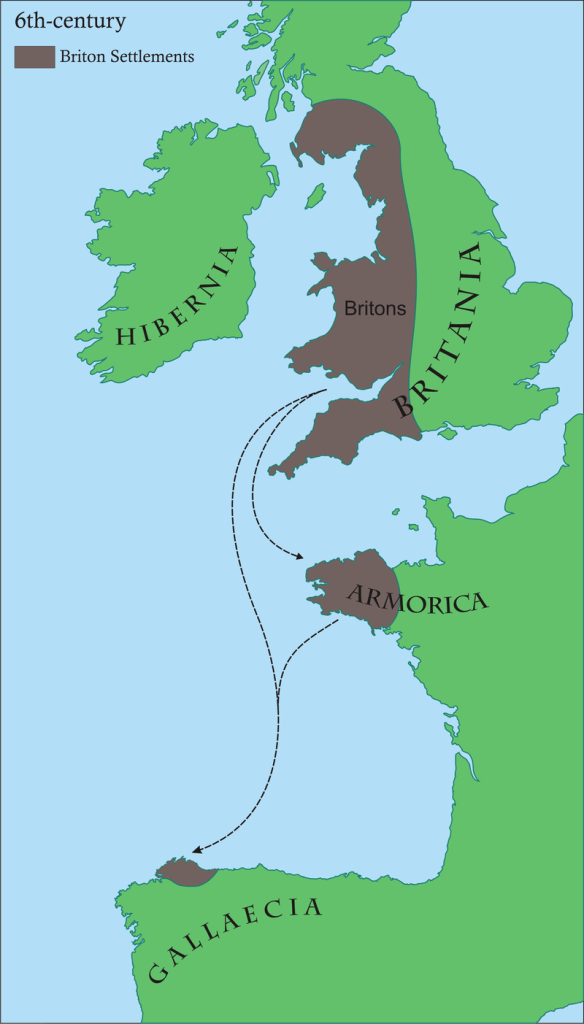
While researching the area where my SOE agents will operate, Brittany, I discovered another agent, Andre Hue, who had a Welsh mother and French father. This coincidence completes the circle and makes Guy’s character much stronger. And strong characters make the task of writing so much easier.

Pictured: the ancient links between Brittany and Wales.

I completed the storyboarding for Operation Locksmith this week, fifteen A3 pages of squiggles. In Operation Locksmith, Eve, Guy and Mimi train to become SOE agents, but is there a traitor in the camp?

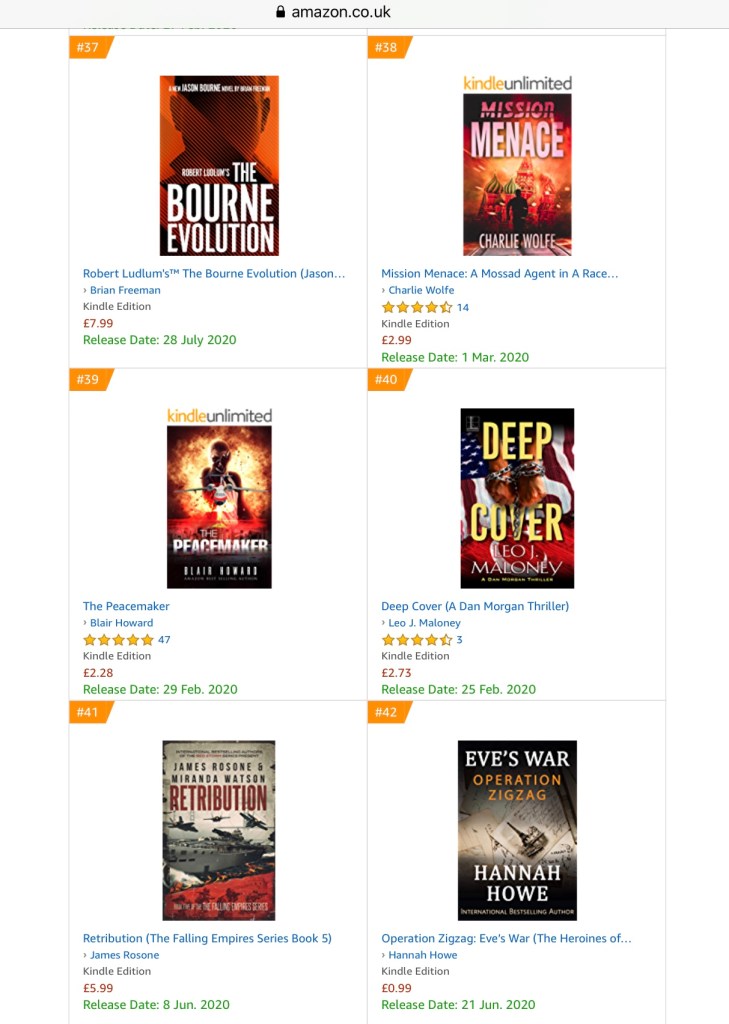
Meanwhile, it’s lovely to see that Operation Zigzag is keeping company with Robert Ludlum’s Bourne series 🙂

https://books2read.com/u/mKDDyv

Women of Courage Heroines of SOE

Maureen Patricia ‘Paddy’ O’Sullivan was born in Dublin on 3 January 1918 the daughter of journalist John Aloysius O’Sullivan (1873–1949) and Johanna Repen (1889–1919), who died when Paddy was only 15 months old.

At the age of seven Paddy was sent to live with an aunt in Belgium where she attended a convent school in Cortrai. At the beginning of the war she worked as a nurse in Highgate Hospital, London. She joined the WAAF on 7 July 1941 as an Aircraft Handler General Duties, and was later promoted to Section Officer. Her SOE report lists that her hobbies included reading, psychology and walking.

Paddy’s trainers had mixed views of her. She could be stubborn and prone to temper. However, others regarded her as kind-hearted and able.

As a member of the SOE, Paddy parachuted into Limoges on 23 March 1944. Falling through the fog, she landed heavily, sustaining a concussion. She awoke to find a cow breathing on her face. Later, she said that the two million francs strapped to her back, money to fund SOE and Resistance activities, saved her life.

As Micheline Marcelle Simonet, Paddy’s cover story revealed that she was a ‘dame de compagnie’ of a doctor in Paris. She was taking  one month’s leave to look for a lost Belgian parent in Creuse. Her documents, including a letter from the doctor, were good. However, the month-long limitation was a strange decision by the SOE because the intention was for Paddy to remain in the area for considerably longer than that. In the event, she changed her cover story and became the friend of a school-teacher’s wife – the school-teacher was a leader of the local Resistance.

On one occasion, Paddy was stopped by the Gestapo while transporting her wireless, which was hidden in a suitcase. In passable German, she flirted with the officer, made a ‘date’ for the following evening, then escaped, the suitcase forgotten by the lusting officer.

After noble and brave service, Paddy returned to Britain on 5 October 1944. 

As ever, thank you for your interest and support.

Hannah xxx