Categories
Dear Reader

Dear Reader #139

Dear Reader,

Operation Rose, Operation Watchmaker and Operation Overlord, books seven, eight and nine in my Eve’s War Heroines of SOE series are now available for pre-order. Full details here https://www.amazon.co.uk/dp/B088F9X5VR

I’ve always felt Welsh and European, and my updated DNA test result (covering seven generations) confirms that fact. The Welsh half of my family is very Welsh, 48/50% while the European half is made up of 37/50% from Belgium/England/France/Germany/Luxembourg/Switzerland/The Netherlands plus a further 8% from Scotland/Ireland, 4% from Scandinavia, and 1% from Wales.

The Wilder branch of my family tree starts with my 7 x great grandmother Lucy Wilder. Sadly, in the historical record women are usually recorded as little more than wives or daughters, so it’s difficult to discover many personal details about them. Lucy was born on 8 December 1714, married Thomas Stokes on 17 February 1736 and died on 17 October 1777, all in Pangbourne. She gave birth to at least three children, possibly more. The records for Pangbourne are fairly good, but it’s possible that some of her children’s births escaped the register.

Lucy’s father, my 8 x great grandfather, was Richard Wilder (1681 – 1731). Richard was a churchwarden at St James the Less in Pangbourne. Churchwardens were expected to set a good example, and maintain order and peace. They were responsible for almost everything in a church except those duties performed by a priest.

Churchwardens were usually elected to their office and served as volunteers in a part-time capacity. This suggests that Richard was a respected member of the community. It also begs the questions: how did Richard make a living, and how did the Wilders achieve a prominent place in their community? I’m hoping Richard’s parents and grandparents will provide the answers.
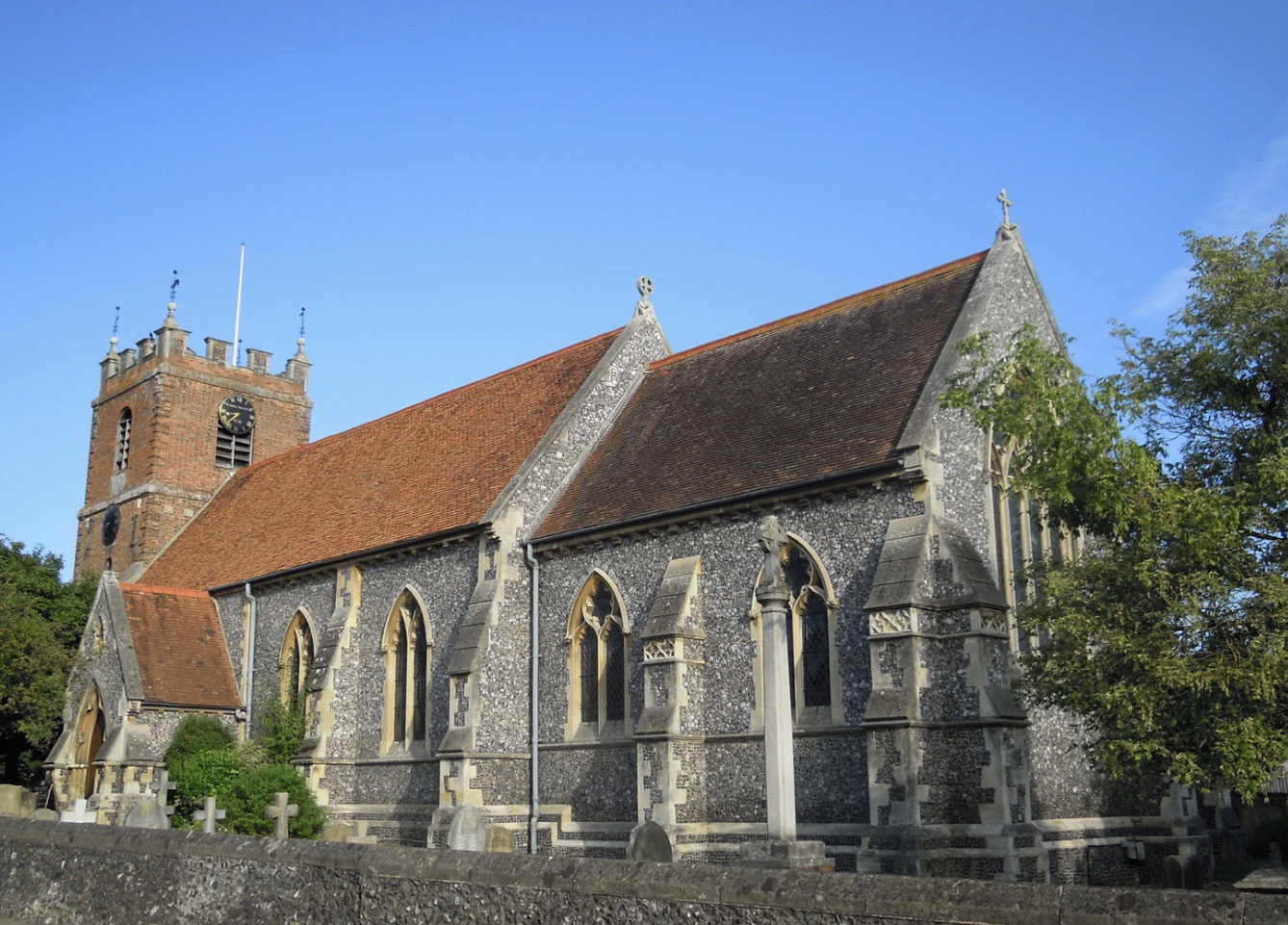
St James the Less, Pangbourne. Wikipedia.

My 9 x great grandfather Richard Wilder was a boat builder in Pangbourne, Berkshire with workshops on the River Thames. Born on 25 September 1648, Richard married Dorothy Fryzer on 30 May 1675 and within five years, 27 March 1676 to 15 May 1681, she gave birth to four children. The fourth child, Richard, was my 8 x great grandfather. Dorothy died eleven days after Richard’s birth. During the seventeenth century 1.5% of all births ended in the mother’s death as a result of exhaustion, dehydration, infection, hemorrhage, or convulsions.
Richard’s boat building business was a success because in 1703 he left that business, two houses and the equivalent of £43,000 to his second wife, Lucie. Here are highlights from his will.

I, Richard Wilder of Panborn in the County of Berks Boat Builder, being weak of body but of sound and perfect memory doe make and ordain this my last Will and Testament in manner and forme following.

I give and bequeath to my loving wife Luci Wilder being my executrix hereafter named 400l-00s-00d. Item I give and bequeath my house and land in Baswelldon to my said wife during her naturall life and afterwards to be divided share and part alike between my two sonns Richard and Edward and to their heirs forever. 

Item I give and bequeath my house and land at Streetly to my aforesaid wife during her naturall life and after her death to my sonn John and his heirs forever. 

Item give all my household goods to my wife except my wearing apparell and that I give amongst my sonns share and part alike equally divided.

Item I give and bequeath to all my brothers and sisters one shilling apiece except my sister Elizabeth and to her I give 40 shillings.

Item I give and bequeath to my daughter Dorothy Howard sixty pounds and to her daughter twenty pounds.

Item I give to the poor of Pangborn 50s in bread and to the poor of Basweldon 50s in bread at the day of my ffunerall.

Item I give and bequeath all the rest of my goods and chattells and money to be divided equally share and part alike amongst the rest of my children.

Item I doe make my loving wife Luci Wilder my full and whole executrix of this my last Will and Testament.

Item I desire that all of my Debts may be paid out of my [s?] without [doors?] and afterwards to be divided as before mentioned In witness hereof I have hereunto put my hand and seale this 4 day of August Anno 1703 The mark of Richard Wilder sealed and delivered with the 13 stamp being to the full effect in the presence of Richard Lyne, Ruth Lyne, William Woolford.

I doe make choice of Mr Thomas Burteridge of Baswelldon and of Mr John Wilder of Sulham to be my Trustees to see this my will performed.

My desire is that my wife and my two sonns carry on the Trade of building and that my wife may be got half shares with my two sonns in the trade and my two sonns the other half between them.

Probate granted to Lucie Wilder in London on the 19th November 1703.

Richard’s will makes mention of gifts of bread to the poor on the day of his funeral and his wish that his wife Lucie should continue with his business. The acknowledgment that women ran businesses in the 1600s and 1700s is rare, so this is a nice find.

Picture: River Thames Above Pangbourne by Harry Pennell.

Lucie died in 1730. She left a will and here are the highlights.

I Lucy Wilder of Pangbourne in the County of Berks

Widow being indisposed in body but of sound mind and

memory (thanks be to God) therefore doe this Twenty third

day of December in the year of our Lord One Thousand

seven hundred twenty and nine make publish and declare

this to be my last Will and Testament in manner ffollowing

I give devise and bequeath unto my son John Wilder All

those my two Messuages or Tenements with the appurts

lyeing and being in Streatly in the County of Berks and the

Land thereunto belonging and also my Messuage or Tenement

with the appurtenonites lyeing and being in Sutton in the said

County of Berks To hold to him his heirs or assigns forever

chargable nevertheless with the true payment of One hundred

pounds unto my son Edward Wilder in one year after my

decease and I doe hereby accordingly make lyable my said

Messuages and Land in Streatly and also my Messuage

and premises in Sutton with the true payment thereof

Item whereas my son in Law Thomas Howard who

Married my Daughter Lucy stands indebted unto me in the

Sum of ffifty pounds for Rent now I doe hereby forgive them

the said sum of ffifty pounds and likewise give unto my

said Daughter Lucy the Looking Glass that now stands in

my Parlour 

Item I give to my Daughter Anne Rawlins Twenty five pounds to be paid

unto her by my Executors hereinafter named in twelve months next after my

decease

Item I give to my Daughter Catherine Giles five pounds

and that her receipt notwithstanding her Coverture shall

be my Executors sufficient discharge for the same 

Item I doe hereby forgive my Son Edward Wilder all moneys

he now owes me whether on Bond Bill or otherwise he

having promised me that his sister Giles shall Occupy

and enjoy the house at Wantage which he lately

purchased during her Life without paying any ffurther

or other rent than one Pepper Corn by the year and

keeping the said House and Premises in Repair and

that her receipt to any Tennant or Occupier thereof

shall be a good discharge notwithstanding her Coverture

I likewise give unto my said Daughter Giles the Quilt

Curtains and Vallance in my best Chamber 

Item as [touching?] my wearing Apparell and Rings I give equally

between my three Daughters namely Lucy Howard

Anne Rawlins and Catherine Giles share and part

alike 

Item as [touching?] all other my Linnen of all kinds

I give equally between my two Sons John and Edward

Wilder and my three Daughters Lucy Howard, Anne

Rawlings and Catherine Giles share and part alike

desiring them to be loving and kind to one to the other 

Item all other my Plate and all other of my household Goods not herein before

dispose of I give to my son John Wilder (except the

Bed Bolster and two Pillows on which I now lye on the

Rugg and Blankets which now cover me and the hanging

Press in my (room) I am now in which I give to my Son Edward

Wilder 

Item I give to my Son in Law Richard Wilder a Ring of Twelve shillings

value and to his sister Dorcas [Hersey] a Ring of the like Value 

Item I give to my son John Wilder and my son Edward Wilder all my Estate

Title term and Interest which I have of and in Messuage ffarme and Lands

lyeing in the said Parish of Pangbourne called

Slipers together with the Lease whereby I hold the same To hold to them their

Executors Administrators and Assigns for and during all the remainder of my

said Term therein 

Item I give to my said Daughter Giles the Chair she wrought now standing in

my best Chamber

Item all the rest residue and remainder of all and singular

my Goods Chattells moneys lent on any Securities

whatsoever and not by me herein disposed of after all

my just debts Testamentary expences and Legacies are

first paid off and discharged I give the same equally to

my said Sons the said John and Edward Wilder share and

part alike and I do hereby make them the said John and

Edward Wilder joynt Executors of this my last Will and

Testament hereby revoking all former and other Wills

and Testaments by me heretofore made and doe Publish

and Declare this to be my last Will and Testament In

Testimony whereof I have to this my last Will contained

in two sheets of Paper to the ffirst thereof Sett my hand

and the last sheet hereof Sett my hand and Seal the

day and year ffirst above written ~ Lucy Wilder. Signed

Sealed Published and declared by the Testatrix to be

for and as her last Will and Testament in the presence

of us who subscribed our names as Witnesses in her

presence ~ Joanna Leader, Dorothy Emans, Ral Guise

Picture: House at Pangbourne by John Belcher.

To date, I haven’t discovered many details about my 10 x great grandfather Richard Wilder (1628 – 1675). However, his father, my 11 x great grandfather, William Wilder, left a will. Here are the highlights.

I William Wilder of Basledon in the Countie of Berks being sick and weak in bodie but in good and perfect memorie first give and bequeath my Soule into the hands of God my Saviour and Redeemer trusting in Jesus Christ for the pardon and remission of all my sinns.

Secondlie I give unto Richard Wilder my sonne all the goods in the Shop the bedstead in the Loft and the great Chest in the Loft that was my wife’s and all the wood and lumber in and about the house and the [Farm?]

Item I give unto Elizabeth his wife all my wearing Apparell except that which I have given William [?] Elizabeth.

Item my wearing Apparrell I give to my sonne Richard and his children.

Item I give to my Daughter in Law Elizabeth Wilder all my bees in the upper fold And to my God Sonne William Wilder I give all the Bees in the Lower fold.

Item all the rest of my goods whole I give unto William my God Sonne making him my whole Executor.

And this is the Last will and Testament of me the said William Wilder Dated this two [&] Twentieth Day of August in the year of our Lord One thousand Six Hundred ffiftie Six.

The mark of William Wilder 

Witnesses: Robert Hulett Hanna Hulett

William was obviously ill when he made his will. The wood and lumber mentioned might relate to the Wilder’s boat building business, although mention of a shop might indicate that they ran a store of some kind.

Bees were clearly important to them. In medieval and later centuries beeswax was highly prized for candles while fermented honey was used to make mead in areas where grapes could not be grown for wine.

Little is known about my 12 x great grandfather Richard Wilder, born 21 October 1575, except that his parents Thomas Wilder and Joan Sharland married a month after his birth, 26 November 1575. Sometimes, especially when an inheritance was concerned, these birth-marriage patterns were deliberate, to ensure that the potential bride was fertile.

In the early 1600s members of my Wilder family emigrated to Charlestown, Massachusetts. However, my ancestor John Wilder remained in Berkshire where he married Alice Keats. John, Alice and later generations developed Sulham House, now a listed building. Picture: Wikipedia.

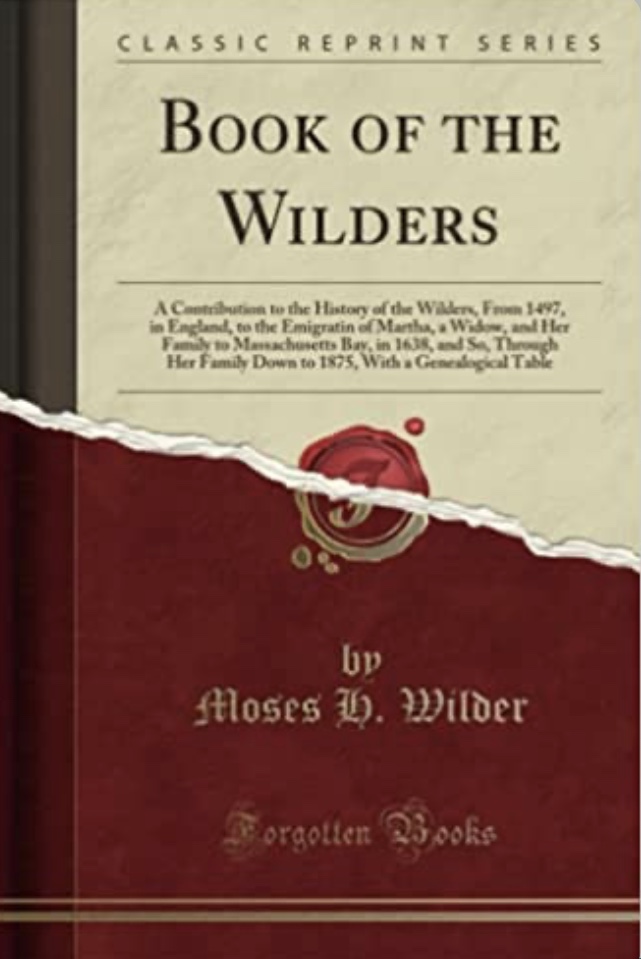
According to the Book of the Wilders written by Moses Hale Wilder in 1878 my branch of the Wilder family originated from Nicholas Wilder. “The first Wilder known in history was Nicholas, a military chieftain, in the army of the Earl of Richmond, at the battle of Bosworth, in 1485. The fact that it is a German name, and that it is quite common in some parts of Germany at the present time, would indicate that he was one of those who came with the Earl from France, and landed at Milford Haven.”

However, some modern genealogists think that the Wilders were farmers from Basildon. Wilder is of German origin, meaning “untamed” or “wild”, so I suspect both theories contain a grain of truth.
As ever, thank you for your interest and support.

Hannah

For Authors

#1 for value with 565,000 readers, The Fussy Librarian has helped my books to reach #1 on 32 occasions.

A special offer from my publisher and the Fussy Librarian. https://authors.thefussylibrarian.com/?ref=goylake

Don’t forget to use the code goylake20 to claim your discount 🙂

Categories
Sam Smith Mystery Series

Dear Reader #138

Dear Reader,

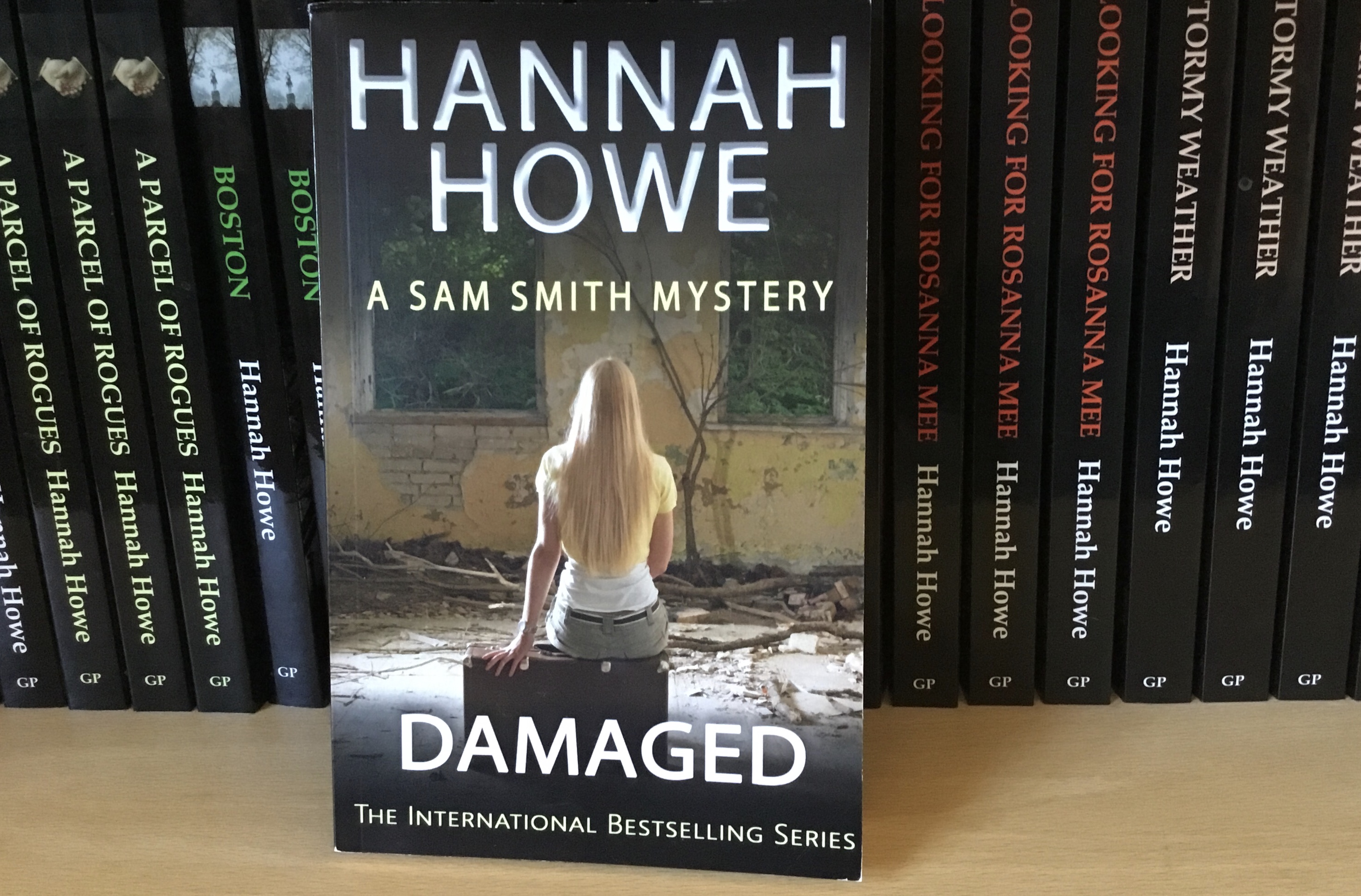
I’m delighted with this insight in a review for Damaged because it sums up my vision for the series. “Sam is a very compelling modern day female film noir detective. That I realize is a bold statement. Sam surrounds herself with good people and manages them incredibly well.”

Published on 27 February, Operation Cameo, Eve’s War book six, is a top thirty hot new release 🙂

My latest translations, the Spanish and Portuguese versions of The Olive Tree: Leaves. A Spanish Civil War Saga. I’ve worked with Ana on a number of translations and she’s great to work with. Nelson was excellent too, and great to have the series available in Spanish.

My latest article for the Seaside News appears on page 48 of the magazine.

My 8 x great grandfather John Cotterell (1718-75) was a ‘Chinaman and Glass Seller’. Here’s his trade card from 1752. John sold ‘a great variety of glasses, old as well as new china and lacquered wares with various sorts of fine teas, coffee, chocolate and snuff, Indian fans and pictures, etc. Wholesale and Retail at the lowest prices’.

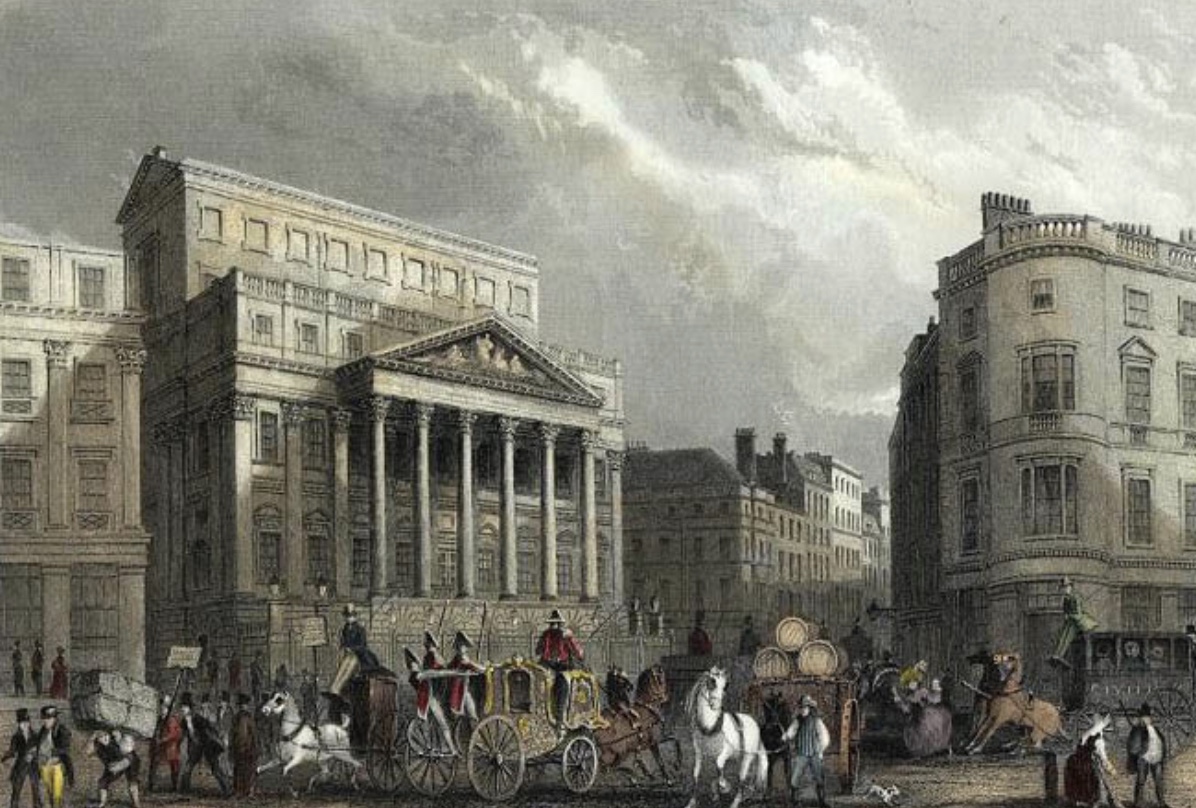
My 8 x great grandfather John Cotterell’s store, selling a variety of items imported from India, was located at the ‘Indian Queen and Canister against the Mansion House’, pictured shortly after John’s time (1718-75). The exact address was 9 Mansion House Street. John’s business appeared in the trade directories for over thirty years.

We all have favourite relatives and the same is true of ancestors. My 4 x great grandmother Jane Esther Axe is one of my favourite ancestors. An educated woman, Jane was born on 10 October 1812 and baptised on 15 August 1813 (a long gap between birth and baptism) in St Leonard’s, Shoreditch, pictured.

The church is mentioned in the line “When I grow rich, say the bells of Shoreditch” from the nursery rhyme Oranges and Lemons while the crypt beneath the church is the final resting place of many actors from the Tudor period.

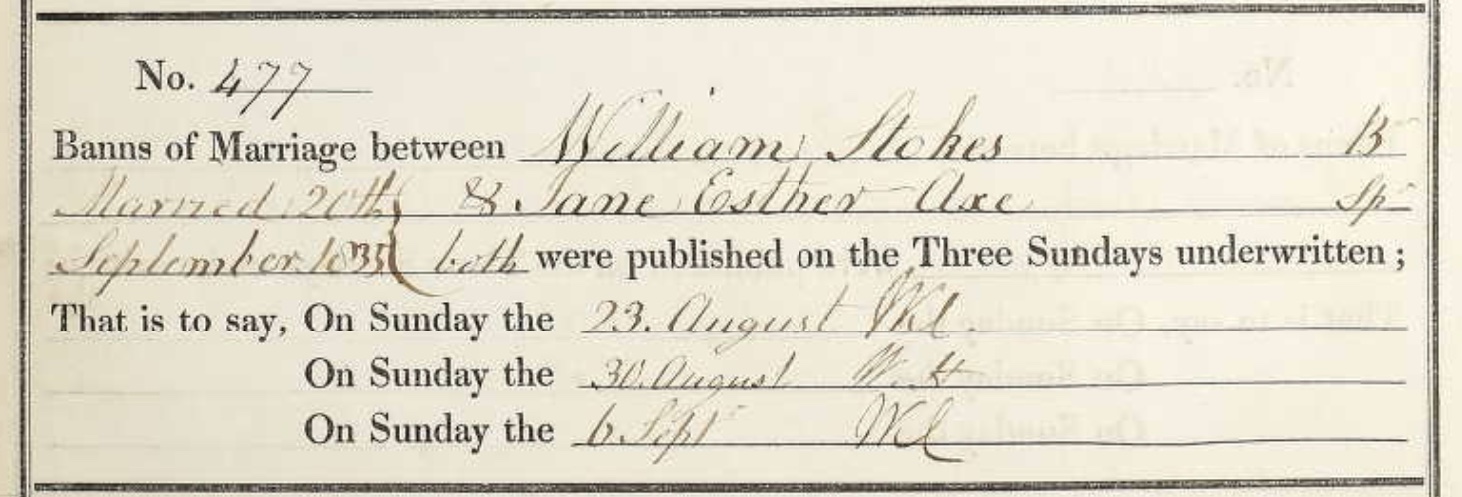
My 4 x great grandparents William Stokes and Jane Esther Axe posted their marriage banns in April and May 1835. However, something cropped up because they cancelled the marriage and posted the banns again in August and September. They married on 20 September 1835.

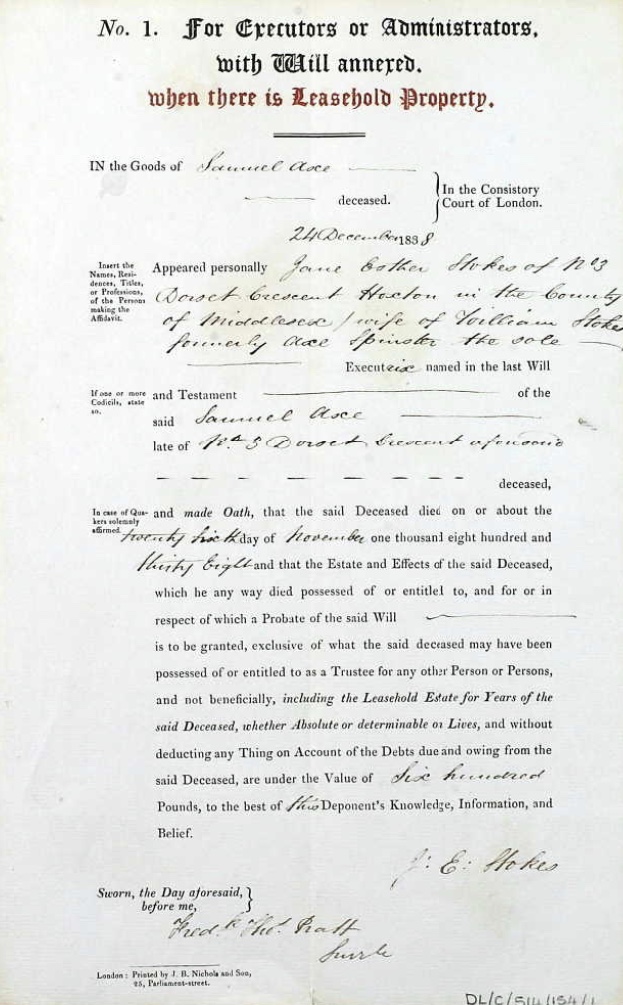
I have a strong sense that my 4 x great grandmother Jane Esther Axe was a well organised woman who knew what she was about. She had four children in six years, but after the age of thirty, no more, which suggests birth control. And despite having five brothers, she was the executrix of her father’s will.

My 4 x great grandfather William Stokes was a corn meter. Corn meters had the exclusive right of measuring all corn delivered within the city and port of London. They were the link between the cargo ships and the markets. Image: William’s workplace, the Customs House on the Thames.

4 Nov 1857. My 4 x great grandfather William Stokes’ son, William Fredrick, aged 21, is awarded ‘The Freedom of the City of London’, which meant he had the right to trade in the City and become a member of a guild or livery company.

The electoral register for 1862, which featured my 4 x great grandfather William Stokes. As a property owner, he was one of only one million men in England and Wales eligible to vote (out of seven million). The Reform Act of 1867 doubled that number. The Tories introduced the Act thinking it would be a vote winner, but they lost the 1868 general election.

The Stokes branch of my family, from Pangbourne, Berkshire, were  carpenters for hundreds of years, the family business passing from father to son. In 1794 and 1795 my 5 x great grandfather Richard Stokes took on two apprentices, William Reeves and William Smith, which suggests his business was doing well.

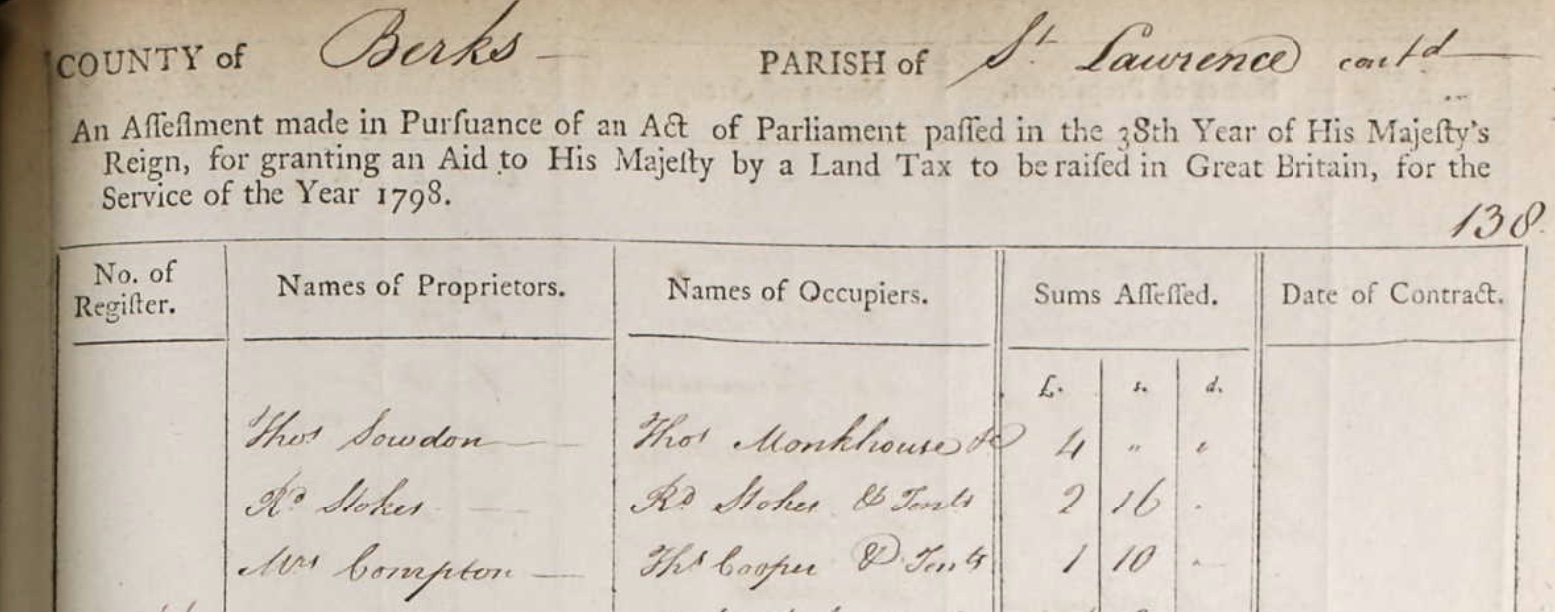
The poll books of 1796, when my 5 x great grandfather Richard Stokes was twenty-one, and tax register of 1798 reveal that he owned land and therefore was one of the relatively few people in the country eligible to vote. The records also reveal that Richard lived next door to the Monkhouse family. On 15 May 1797 he married their daughter, Martha.

My 6 x great grandfather Richard Wilder Stokes was born on 10 October 1742. A carpenter, he died shortly before his 34th birthday. He didn’t leave a will, which suggests his death was sudden, maybe the result of an accident in his carpentry workshop?

A year later, Richard’s widow, Sarah, married John Challis, a member of the 1st Regiment of Foot Guards, later renamed the Grenadier Guards. Sadly, Sarah died sixteen months after the wedding.

Beyond the basic dates: born 12 October 1712 in Pangbourne; married Lucy Wilder 17 February 1736, also in Pangbourne; died 7 July 1776, once again in Pangbourne, nothing is known of my  7 x great grandfather Thomas Stokes. The same is true of his father, Thomas: only the dates survive. Born 21 August 1681; married Katherine Whittick 14 July 1707; died 4 June 1754, all in Pangbourne. So, we move on to my 9 x great grandfather, William Stokes.

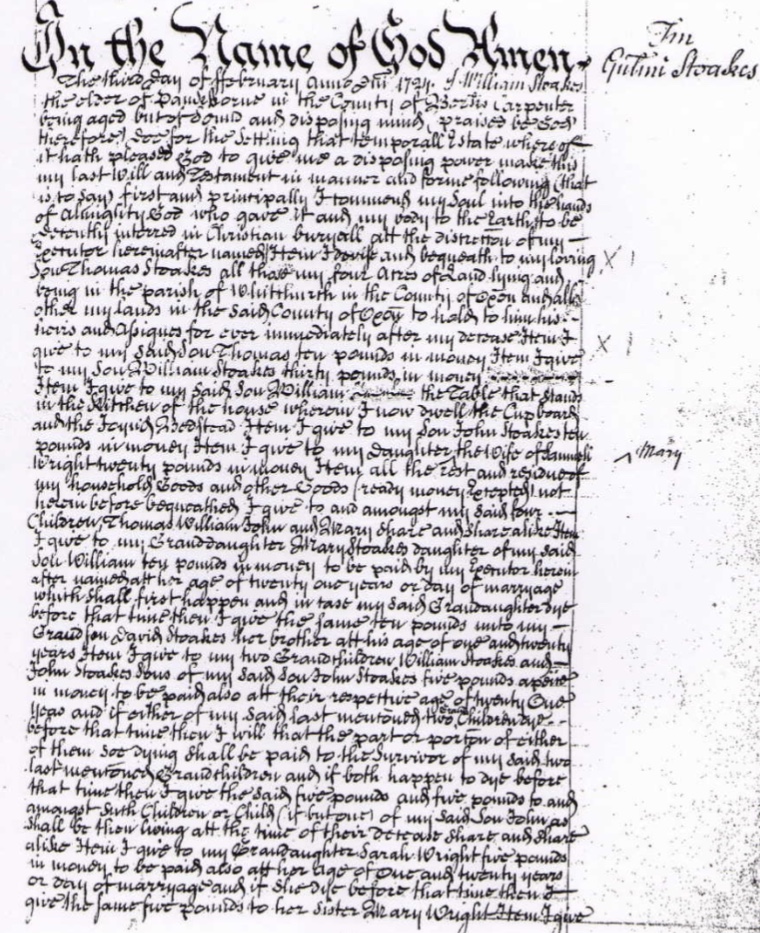
The will of my 9 x great grandfather William Stokes, carpenter of Pangbourne, shines a light on his times. The will dates from 23 October 1727. 

“I give my loving son Thomas (my ancestor) all those my four Acres of Land lying and being in the parish of Whitchurch in the County of Oxon and all other my lands in the said County of Oxon to hold to him, his heirs and assignes for ever immediately after my decease and ten pounds in money.”

“I give to my son William Stoakes thirty pounds in money. I give to my said son William the Table that stands in the Kitchen of the house wherein I now dwell the Cupboard and the Bedstead.”

“I give to my Son John Stoakes ten pounds in money.” 

“I give to my Daughter, the Wife of Samuel, Mary Wright twenty pounds in money. All the rest and residue of my household goods and other goods (ready money excepted) not herein before bequeathed I give to and amongst my said four Children, Thomas, William, John and Mary share and share alike.”

“I give to my Granddaughter Mary Stoakes daughter of my said Son William ten pounds in money to be paid by my Executor herein after named att her age of twenty one years or day of marryage which shall first happen and in case my said Grandaughter dye before that time then I give the same ten pounds unto my Grandson David Stokes her brother att his age of one and twenty years.”

“I give to my two Grandchildren William Stoakes and John Stoakes sons of my said son John Stoakes five pounds apeice in money to be paid also att their respective age of twenty one years and if either of my said last mentioned two Grandchildren dye before that time then I will that the part or portion of either of them so dying shall be paid to the survivor of my said two last mentioned Grandchildren and if both happen to dye before that time then I give the said five pounds and five pounds to and amongst such children or child (if but one) of my said son John as shall be then living att the time of their decease share and share alike.”

“I give to my Grandaughter Sarah Wright five pounds in money to be paid also att her age of one and twenty years or day of marryage and if she dye before that time then I give the same five pounds to her sister Mary Wright.”

“I give To my two Grandsons William Stoakes and George Stoakes Sons of my Son George Stoakes deceased five pounds apeice to be paid also To them att their respective age of one and twenty years but If either of them may said two last mentioned Grandsons dye Before that time then I will that the part or portion him so Dying shall be paid to the survivor of them attaining that age.”

“All the rest and residue of my Estate whatsoever not herein Before bequeathed I give and bequeath unto my said son William Stoakes whom I do hereby make and Ordaine full and sole Executor of this my Will.”

William left £12,500 in today’s money. I find it interesting that, as a carpenter in Pangboune, he owned land in Oxon. I suspect that he inherited that land, which points towards the Stokes family’s roots.

My 10 x great grandfather Thomas Stokes was born on 5 May 1626 in Whitchurch, Oxon. He married Jane Deane on 10 February 1651 in Caversham, Oxford and died on 16 December 1682 in Tilehurst, Berkshire thus confirming the Stokeses connection between Berkshire and Oxfordshire.

In the 1600s, through civil war, religious conflicts and plagues records were often lost or destroyed, so unless you can connect to an established pedigree identifying ancestors becomes harder. 

Thomas Stokes married Jane Deane in 1651 and there is a suggestion that the Deane family were one of the earliest settlers in America, but that requires further research. In 1736, another Thomas Stokes married Lucy Wilder. An established pedigree does exist for the Wilder family, so my next task is to see where my ancestors fit into that pedigree.

As ever, thank you for your interest and support.

Hannah

For Authors

#1 for value with 565,000 readers, The Fussy Librarian has helped my books to reach #1 on 32 occasions.

A special offer from my publisher and the Fussy Librarian. https://authors.thefussylibrarian.com/?ref=goylake

Don’t forget to use the code goylake20 to claim your discount 🙂
Categories
Dear Reader

Dear Reader #137

Dear Reader,

After a break since Christmas 2021, my blog is back. A week before Christmas, I became ill with Covid. That illness continued well into January. Since then, I have been catching up with my writing schedule, hence the break. 

I hope you will enjoy this blog post and future content.

My latest translations, the Italian version of Operation Locksmith and the Portuguese version of Damaged: Sam Smith Mystery Series book nineteen.

In this month’s issue of Mom’s Favorite Reads…

An exclusive interview with Jennifer Shahade two-time USA Women’s Chess Champion, poker champion, author and podcaster. Plus, Author Features, Nature, Photography, Poetry, Recipes, Short Stories, Jazz Appreciation Month, and so much more!

My Recent Genealogical Research

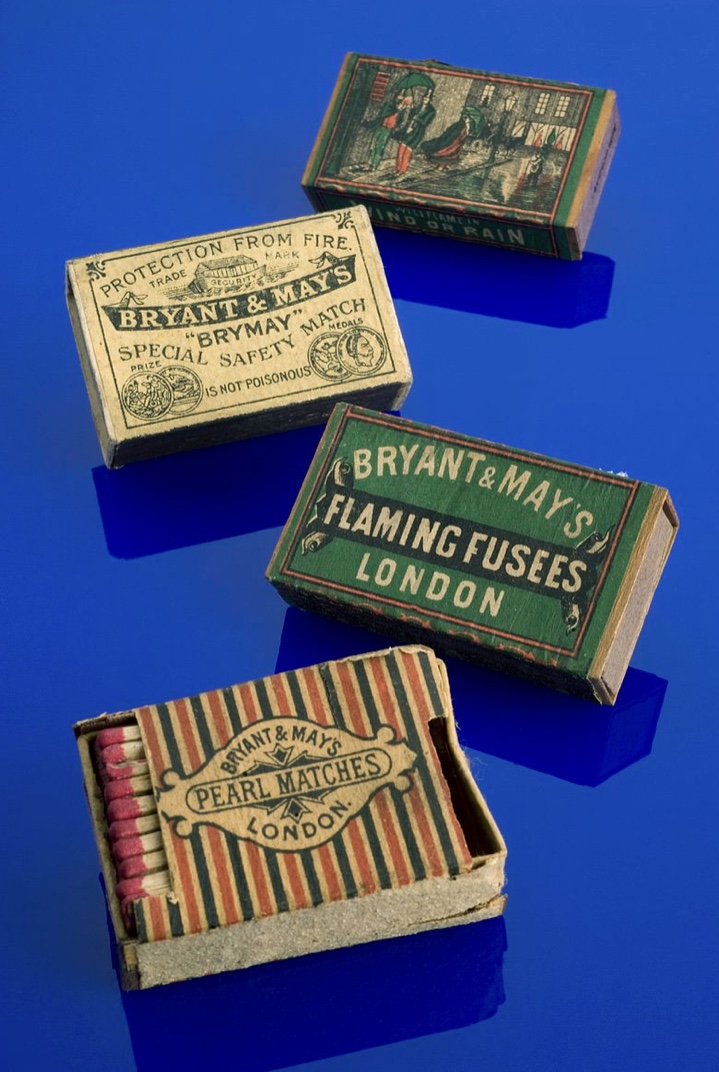
My 3 x great grandmother Sarah Ann Cottrell was born on 24 June 1848 in St Leonard’s, Shoreditch. Aged twelve she worked as a matchbox maker, on piece rates. Sarah Ann’s father, Mathew, was a fishmonger, a decent trade, so her matchboxes brought in bonus pennies to support her mother and five siblings.

Picture: Wellcome Trust

My 4 x great grandfather Mathew Cottrell was a fishmonger at Billingsgate Market. Here’s the market as Mathew would have seen it plus a description, both from the Illustrated London News, 7 August 1852.

In 1852, my 4 x great grandfather Mathew Cottrell was a fishmonger at Billingsgate Market so it seems fair to assume that his wife, Sarah, was adept at preparing fish dishes. Here’s some advice from A Mother’s Handbook, published the same year.

“Fish should be garnished with horseradish, or hard boiled eggs, cut in rings, and laid around the dish, or pastry, and served with no other vegetable but potatoes. This, or soup, is generally eaten at the commencement of a dinner.”

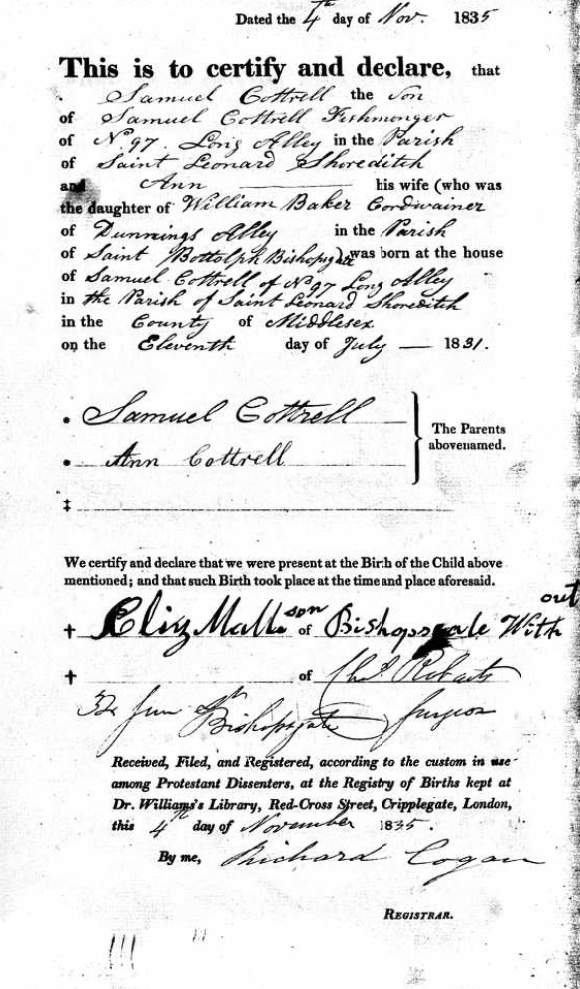
My 5 x great grandfather Samuel Cottrell was born on 11 July 1796 in Finsbury. After his marriage to Ann Baker he moved to Billingsgate where he worked as a fishmonger. Samuel and Ann were nonconformists, protestant dissenters. He lived in Dunnings Alley, a hotbed of dissent.

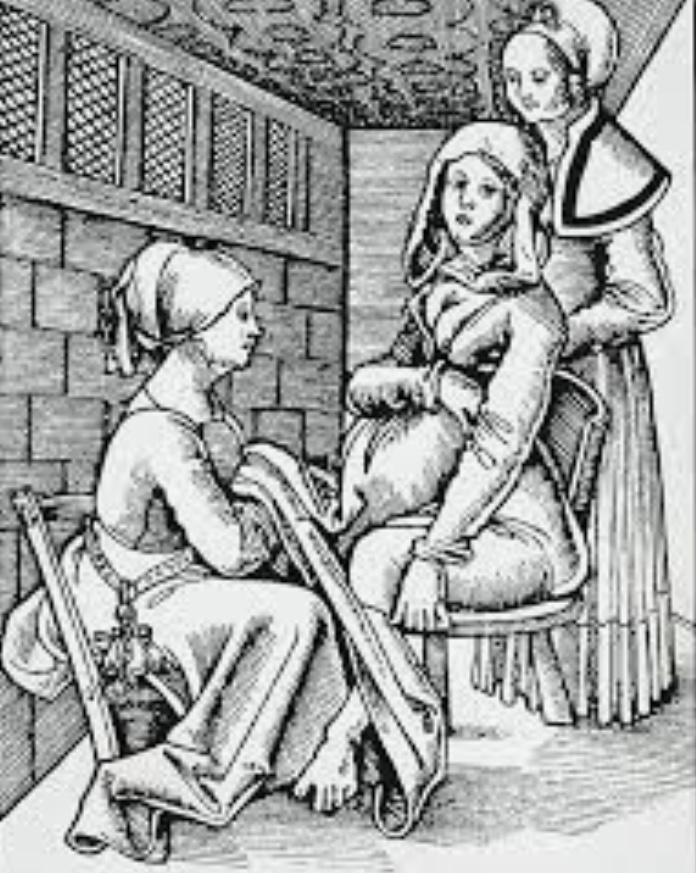
Somehow, Samuel and Ann avoided every census in the 1800s. However, the nonconformists kept detailed records, including details of Samuel’s family. These records confirm that a midwife was in attendance for all of Ann’s births along with, on occasion, a surgeon.

My 5 x great grandfather Samuel Cottrell lived a long life, 84 years. However, he struggled during his final two years. Unable to move freely, in 1878 he spent a month in Homerton Workhouse Infirmary. He signed himself out.

Two years later, Samuel spent two years in Bow Road Infirmary, pictured. Shortly after he left, a ‘Mad Russian’ murdered one of the inmates, slicing him with a knife. Within ten days Samuel was back in Homerton. He spent a further six months there, dying on 1 September 1880.

They kept stealing his shoes. My 6 x great grandfather John Cottrell was a boot maker. The Old Bailey website lists three occasions 1830 – 1832 when boys aged ten, twelve and seventeen stole his shoes. The court offered mercy to the ten year old, but the other two were transported for seven years.

St Mary Woolnoth, London. My 7 x great grandfather John Cottrell was born there on 6 Nov 1747 and baptised there on 29 Nov 1747. He ran a business as a chandler. He served on several coroner’s inquest juries and, like my Howe ancestors, was an Overseer of the Poor.

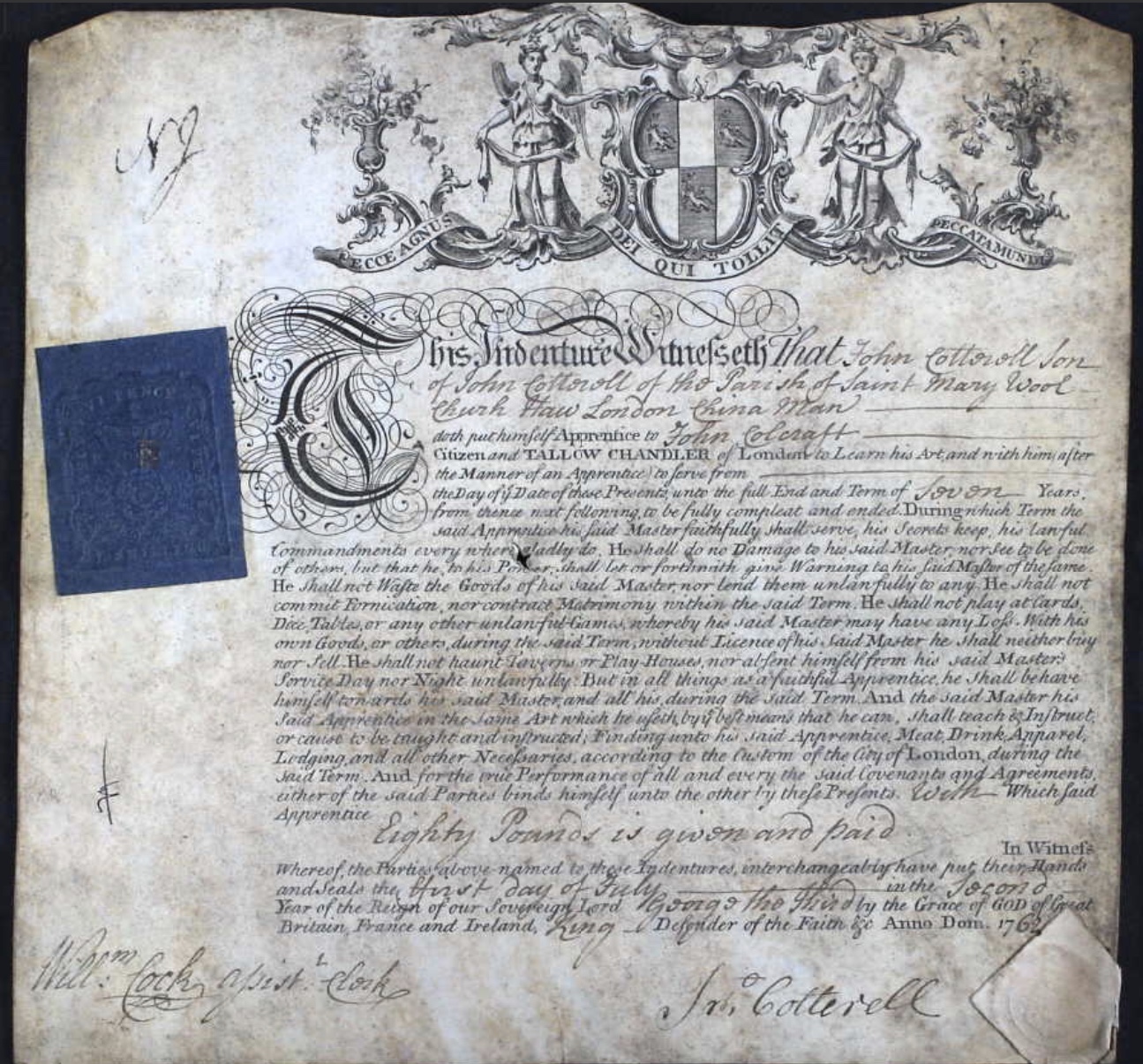
1 July 1762. An indenture belonging to my 7 x great grandfather John Cotterell. His father, also John, paid John Coleratt £80 (£8,200 today) so that he could learn the trade of tallow chandler. These indentures were standard in the 18th and 19th centuries with the names and trades added as applicable.

Apprentices were forbidden from playing cards, dice, entering taverns or playhouses, fornicating or marrying. Usually, these indentures covered a period of seven years. Little wonder that some apprentices broke the agreement and absconded.

John served his apprenticeship and in 1775 established a business on 55 Fore Street, Moorfield, selling food and household items.

As a ‘respectable member of the community’ my 7 x great grandfather John Cotterell served on five Coroner’s juries, in 1776,  1779, 1781, 1783 and 1785, each time investigating suspicious deaths in the community. 

In 1785 on ‘Friday this 20th. Day of May by Seven of the Clock in the After noon twenty-four able and sufficient Men of said Liberty’ gathered at John’s house to investigate the death of Robert Jurquet. The jury concluded that being of unsound mind, with a razor, Robert Jurquet took his own life.

My 7 x great grandfather John Cotterell’s elder brother, William, was sword bearer of the City of London. The office was created in the 14th century when it was recorded that the Lord Mayor should have, at his own expense, someone to bear his sword before him: 

‘a man well-bred’, one ‘who knows how in all places, in that which unto such service pertains, to support the honour of his Lord and of the City.’

Picture: George III receiving the Civic (Pearl) Sword from the Lord Mayor of London on his way to St Paul’s Cathedral, an event William probably attended.

As ever, thank you for your interest and support.

Hannah

For Authors

#1 for value with 565,000 readers, The Fussy Librarian has helped my books to reach #1 on 32 occasions.

A special offer from my publisher and the Fussy Librarian. https://authors.thefussylibrarian.com/?ref=goylake

Don’t forget to use the code goylake20 to claim your discount 🙂

Categories
Dear Reader

Dear Reader #136

Dear Reader,

Preparing a new series, Women at War, three novels set in France in 1944. Research ongoing, writing will start later this year.

My direct ancestors Robert Gadsden and William Gadsden were grocers.

Robert was born on 30 November 1714 in Hanslope, Buckinghamshire. On 18 October 1743 he married Elizabeth Richardson in Newport Pagnell, Buckinghamshire, but the marriage did not produce any children. Elizabeth died young and, on 18 July 1755 in Newport Pagnell, Robert married for a second time. His new bride was another Elizabeth, Elizabeth Crips, a widow. This marriage produced seven children, including their first born, my direct ancestor William.

Grocery stores in the 1700s sold a wide variety of items including sugar, tobacco, spices, coffee, tea, rice, chocolate and dried fruit. They featured local produce and items like those listed above from abroad. Earlier and later generations of Gadsdens were traders who travelled far and wide, to America and Africa, for example. Its tempting to think that Robert and William developed their stores from these overseas connections. However, instead of travelling they focused on selling their goods from their local stores.

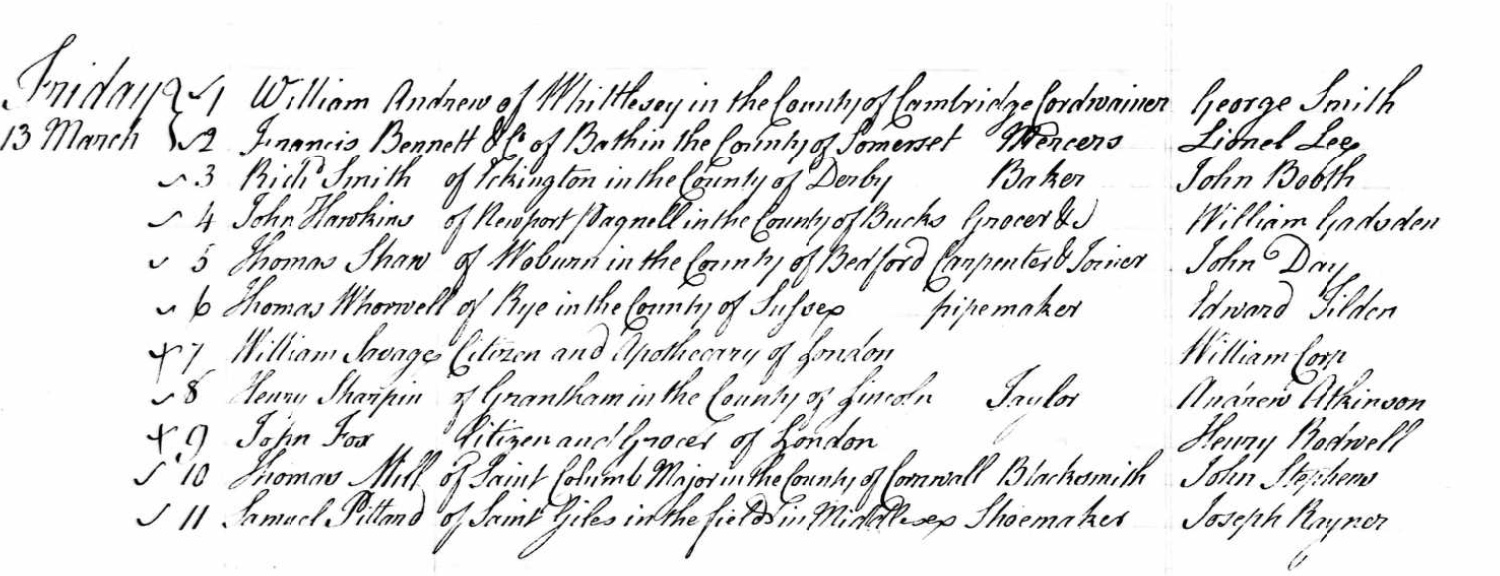
Robert died on 21 July 1768 in Newport Pagnell. William was only twelve and so too young to take over the family business. Instead, he had to learn the trade as an apprentice. He commenced his apprenticeship on 13 March 1772 in Newport Pagnell.

William’s apprenticeship

William was born on 3 August 1756 in Newport Pagnell and baptised five days later. After his apprenticeship he married twenty-year-old Elizabeth Chibnall, also in Newport Pagnell. The couple produced nine children, including my direct ancestor William and the baby of the family, Robert. Both were to feature in trials at the Old Bailey.

It would appear that William, born 1756, ran a steady business as a grocer. Maybe on account of the land tax introduced in 1798 he moved his family and business to London. He settled in Shoreditch and died there on 14 July 1819, a death that triggered a tragic chain of events.

On 17 February 1820 twenty-two-year-old Robert Gadsden was indicted for feloniously breaking and entering the dwelling-house of John West, Esq. This incident occurred at one o’clock in the afternoon, on 29 January 1820 at St. Marylebone. John West’s wife, Harriet, was present when Robert allegedly stole a shawl, value twenty shillings, the goods of Sarah Griffiths.

Sarah Griffiths gave evidence: “I am servant to Mr. John West who lives in Baker Street, Portman Square, St. Marylebone. On the 29th of January, about one o’clock, I was in the house; Mrs. West, and five of the servants were at home. My shawl laid on a table in the housekeeper’s room, opposite the window which looks into the area – it was about a quarter of a yard from the window – the sash was down; nobody was in the room. I was upstairs, heard an alarm, came down, missed it, and found the prisoner in custody.”

William Ledger gave evidence: “I am servant to Mr. West. I had been out to fetch some water, and as I returned I saw the prisoner down the area – he was a stranger. I watched him, saw him lay a bundle of wood on the ledge of the window, lift up the sash, and with a stick that had a hook to it, he drew out the shawl off the table, put it under his jacket, and walked on into the passage of the house. I ran downstairs, secured him in the passage, and saw him throw the shawl down.”

Finally, Richard Coates gave evidence: “I am a constable. I was sent for, and took the prisoner at Mr. West’s, with the shawl.”

The shawl was produced in court and sworn to. Then Robert spoke in his defence: “I went to see if they wanted any wood; the shawl laid on the window-ledge, and I carried it into the passage. He took me, and it fell from my hand.”

Verdict: Guilty.

Sentence: Death.

The shock deeply upset Robert’s mother, Elizabeth, and she died less than a week later, on 23 February 1820.

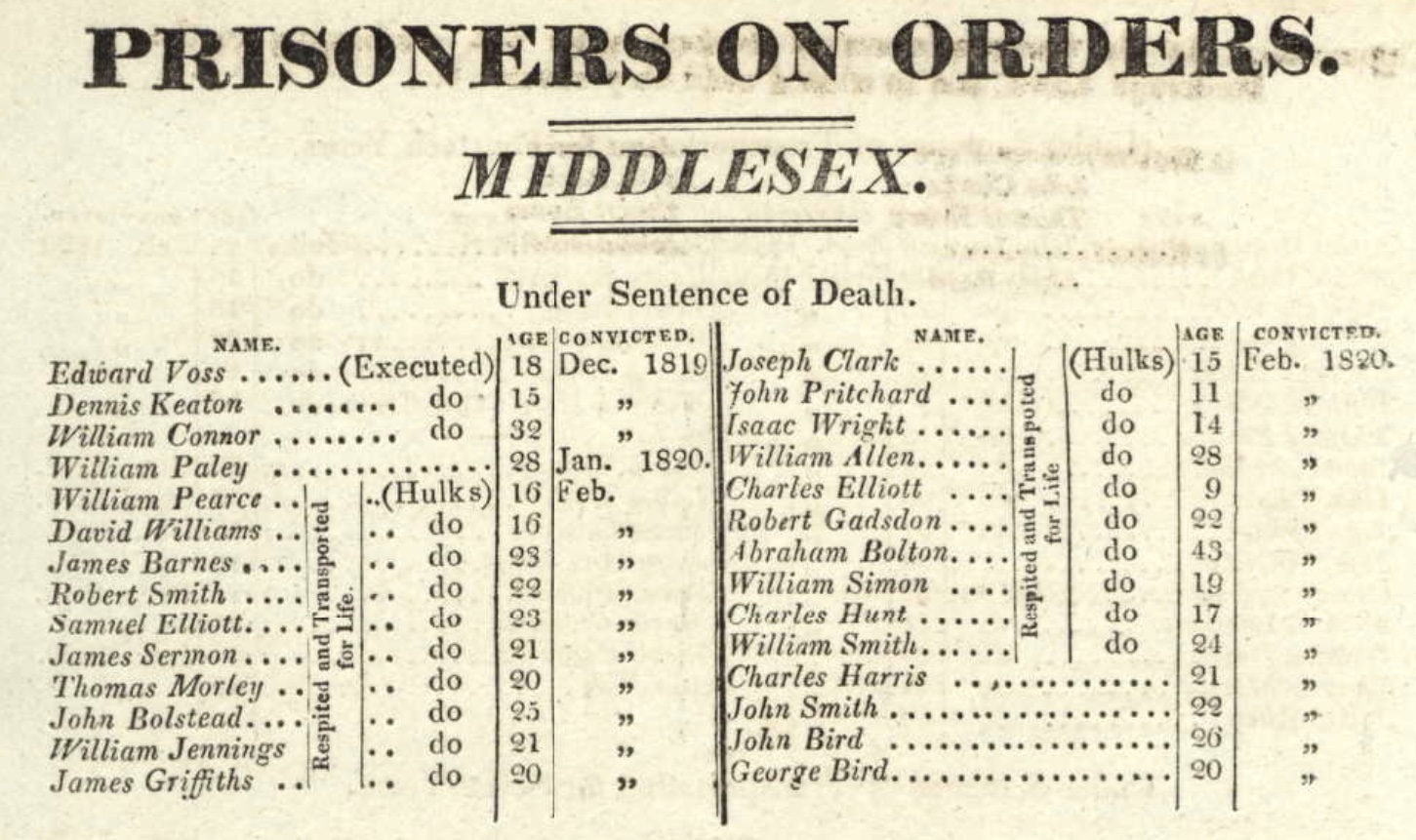
Robert condemned. Look at the ages of those sentenced to hang for petty crimes.

Sentenced to hang, Robert appealed. On 11 April 1820 he found himself on the prison hulk Bellerophon moored at Woolwich. With his appeal successful, he was transferred to the Caledonia, which set sail in July 1820 for Hobart Town, Van Diemen’s Land.

Initially transported for life, Robert gained a full pardon on 13 July 1840. However, before that the authorities granted him parole. On 1 April 1829 in Hobart, Robert married Elizabeth Lewis. A daughter, Elizabeth, arrived a year later. Sadly, she died before her fourth birthday.

Van Diemen’s Land 1828

After his pardon, Robert remained in Hobart. He died there in 1870. While he was in Australia, maybe Robert corresponded with his brother, William. If he did, maybe William reflected on his appearance at the Old Bailey. However, before exploring that case, some details about William.

William Gadsden was born on 10 December 1790. On 14 May 1810 he married Maria Beadle at Saint Matthew, Bethnal Green, London. The couple produced five children including my direct ancestor Sarah.

William broke the link with the grocery trade and made a living as a willow cutter, a silk weaver and latterly as a stone mason. His appearance at the Old Bailey occurred on 15 January 1817 as a witness.

The trial featured James Taylor, 17, and John Blake, 18. They were accused of stealing one pair of boots, value one shilling.

John Burton, owner of the boots, stated: “I live at Hackney. On the 17th of December, between two and four o’clock in the afternoon, I lost the boots from my tool-house, adjoining my dwelling-house; my yard door was on the latch, and so was the tool-house door; I missed the boots after four o’clock. I went next day to inquire if any jack-ass boys had been seen about, and found that the prisoners had been our way, selling catsup. I went to town, and found the two prisoners at the Bull’s Head, Kingsland’s Road; they were taken into custody.”

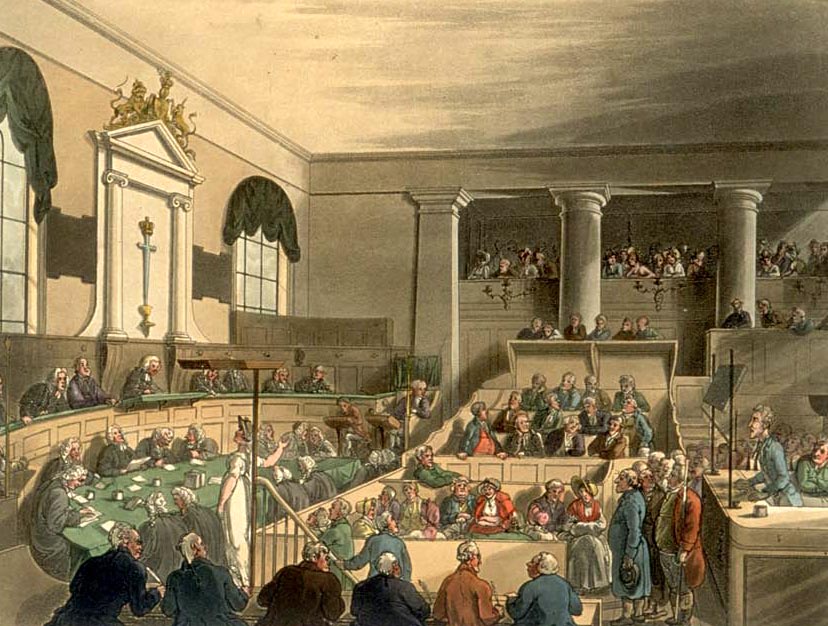
The Old Bailey, early nineteenth century

James Ingram gave evidence: “I am a smith; I was at the Bull’s Head, in Kingsland Road; about half-past five o’clock in the afternoon, the prisoner, Taylor, came into the house with a pair of boots, he asked me if I knew anybody that would buy them; I told him I would go and see; I took them out of his hand, and went to Saunders’ Gardens, which is close to the house, and offered them to Gadsden for twelve shillings. He offered me ten shillings for them; I went to Taylor, and he said I might let him have them – I did, and gave the money to Taylor, and he gave me a shilling for my trouble; he told me if Blake should come in, and ask what I sold them for, to say six shillings. In about a quarter of an hour Blake came in, and said, if he had been there at the time they should not have been sold for that money. I was quartered at the Bull’s Head.”

William Gadsden said: “I gave ten shillings for the boots. I gave them up to Armstrong.”

John Armstrong: “On the 17th of December, Mr. Burton applied to me. I and my son, accompanied him to the Bull’s Head, in Kingsland Road, and found Ingram and Blake sitting there together, we took them. I left Ingram in Burton’s care, and took Taylor, who was there. I took Ingram to Gadsden’s house, and he gave me the boots; we took the three to the office, and I heard both Taylor and Blake say, it was the first thing they had ever done, and that it was through distress.”

Joshua Armstrong: “I was with my father, and took the prisoners; they said it was the first robbery they had ever committed.”

Verdict: both Blake and Taylor guilty.

Sentence: Transportation for seven years.

I wonder if William and Robert ever reflected on their experiences at the Old Bailey and the fateful day in January 1820 when Robert stole a shawl and set in motion a chain of events which meant that they would never see each other again.

As ever, thank you for your interest and support.

Hannah xxx

For Authors

#1 for value with 565,000 readers, The Fussy Librarian has helped my books to reach #1 on 32 occasions.

A special offer from my publisher and the Fussy Librarian. https://authors.thefussylibrarian.com/?ref=goylake

Don’t forget to use the code goylake20 to claim your discount 🙂

Categories
Dear Reader

Dear Reader #135

Dear Reader,

Cover reveal for Sugar Daddy, Sam Smith Mystery Series book twenty, due for publication later this year. This story is about an unscrupulous businessman who lures a student into prostitution and the brink of suicide. Sam isn’t impressed and sets out to nail the bastard.

My latest genealogy article for the Seaside News appears on page 48 of the magazine 🙂

My latest translation, the Italian version of Sam’s Song, available soon. And the good news is Stefania has agreed to translate more books in my Sam Smith mystery series 🙂

On 18 April 1887 my grand aunt Elizabeth Middleton was accused of ‘receiving’. It’s likely that she came into contact with stolen goods at a London market. This was common at the time. Also common for the time, the case was dismissed.

I’ve researched the Aubrey branch of my family tree back to Saunder de Sancto Alberico, aka Aubrey, of Normandy. He arrived with William the Conquerer in 1066. Earlier, he produced a son, Sir Reginald Aubrey, born c1060, who married Isabel de Clare. The de Clare family produced William the Conqueror so it’s clear that all these noble families were close.

Sir Reginald was a member of an army commanded by Bernard Newmarche. This army fought the Welsh c1093 in the Brycheiniog (Brecknock) region of Wales. After numerous battles, Newmarche granted Sir Reginald the manors of Abercynrig and Slwch. Unrest continued, so Newmarche’s forces stayed at his castle in present day Brecon until the early 1100s. By that time, through their land-grab, the Aubreys had established themselves in the Brecon Beacons.

The line continued through another Reginald to William. Marriages to other noble families, such as the Gunters, ensured that the Aubreys consolidated their position in society then prospered. William produced a son, William, who produced a son, Thomas, born c1190 in Abercynrig. A hundred years after their arrival in Brecon, the Aubreys were now one of the leading noble families.

The Aubrey Manor House

Five Thomases take us to Richard Aubrey, born c1350 in Abercynrig. Abercynrig Manor in the parish of Llanfrynach is located just over a mile north of Llanfrynach village and just over two miles southeast of Brecon. Aubrey ownership of the manor house is listed as follows:

Reginald Aubrey, born c1095

William, born c1125

William, born c1160

Thomas, born c1190

Thomas, born c1220

Thomas, born c1255

Thomas, born c1285

Thomas, born c1315

Richard, born c1350

Walter, born c1380

Morgan, born c1410

Jenkin, born c1435

Hopkin, born c1465

William, born c1480

Richard, born c1510

Dr William Aubrey, born 1529

Sir Edward Aubrey, born c1550

Sir William Aubrey, born 1583

The succession of father to son was broken in the 1550s when Richard Aubrey sold Abercynrig to his cousin Dr William Aubrey, an anti-Puritan lawyer and judge.

William Aubrey, born c1480, disinherited his sons Morgan and John, my direct ancestor Richard therefore inheriting. Morgan went to London where he established a trade in salt and silk. This made him a wealthy man. Later, he moved to Herefordshire, took over the estate of Clehonger, and established a cadet branch of the family.

Dr William Aubrey was born in 1529 at Cantref, Brecknockshire, the second son of Thomas Aubrey MD and Agnes Vaughan. He was educated at Christ’s College, Brecon, then Oxford. He entered  Oxford c1543 and obtained a degree in 1547. Two years later he was made a Bachelor of Civil Law and five years after that a Doctor of Civil Law.

Dr William Aubrey

After a distinguished career at Oxford, Dr William Aubrey became a prominent member of the group of Welsh civil lawyers who played a notable role in ecclesiastical, judicial and diplomatic affairs during Elizabeth I’s reign. 

John Aubrey, the seventeenth-century antiquary, left an account of his great-grandfather, William, praising his ‘rare skill and science in the law’, and ‘sound judgment and good experience therein.’

John described William as of ‘medium build and somewhat inclining to fatness of visage, with a grave countenance and a delicate, quick, lively and piercing black eye.’

Although he lived most of his life in London or Kent, William considered himself a Welshman. He bought land off family members and became one of the largest landowners in Brecon. Indeed, he was able to ride ‘nine miles together in his own land.’

Through his Welsh and English lands, William acquired an income of £2,500 a year, approximately £350,000 a year in today’s money. He wrote, ‘God of his goodness hath very plentifully bestowed upon me.’

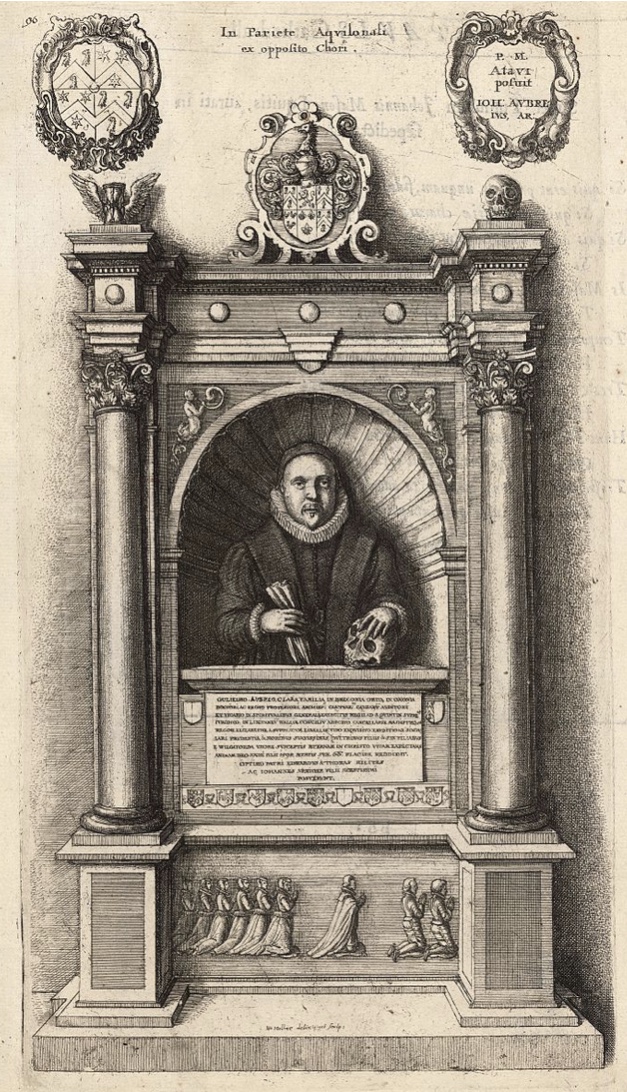
An engraving of Dr William Aubrey’s monument by Wenceslaus Hollar. William’s six daughters and wife are depicted on the bottom, along with two of his sons. It is not known why his third son was not depicted.

William married Wilgiford and the couple produced three sons and six daughters. He died on 25 June 1595 and was buried at Old St Paul’s on 24 July. It’s suggested that his chief clerk, his ‘loving and trusty servant’ Hugh Georges, proved the will on 29 July, then ran away to Ireland with the money. Antiquary and great-grandson John Aubrey stated somewhat tersely, “Georges cosened (deceived) all the legatees.”

As ever, thank you for your interest and support.

Hannah xxx

For Authors

#1 for value with 565,000 readers, The Fussy Librarian has helped my books to reach #1 on 32 occasions.

A special offer from my publisher and the Fussy Librarian. https://authors.thefussylibrarian.com/?ref=goylake

Don’t forget to use the code goylake20 to claim your discount 🙂