In September 1920, the first Bentley cars were delivered to customers. Pictured, a Bentley EXP2 (Experimental nr. 2), the oldest surviving Bentley (📸 Wikipedia).
The 1921-22 season was the 30th for the Football League. Liverpool were champions while Bradford City and Manchester United were relegated. Nottingham Forest and Stoke took their place.
For this season the Third Division was divided into North and South sections increasing the number of clubs in the league from 66 to 86.
Graphic: Wikipedia
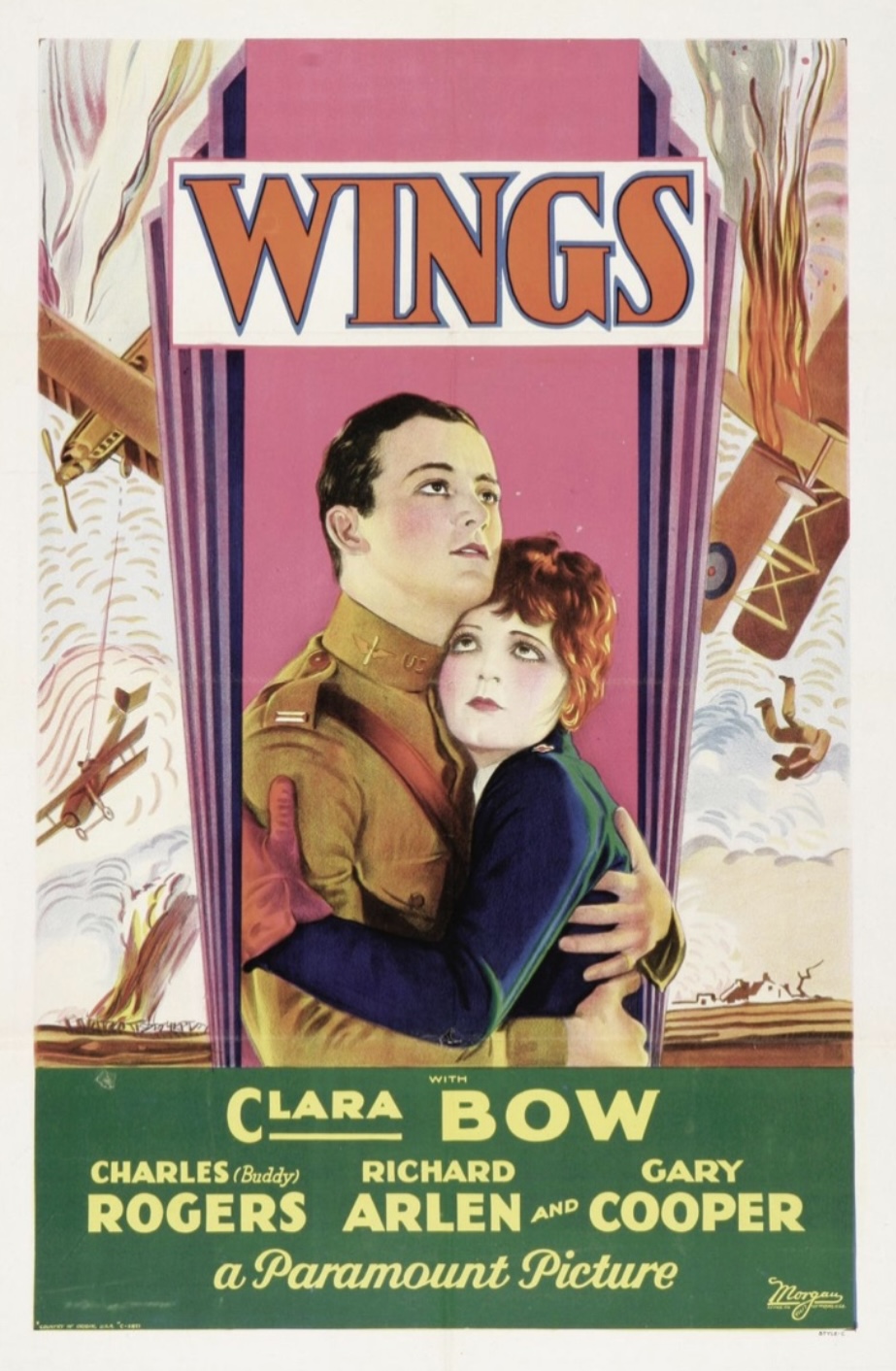
Wings, a First World War drama that dominated the movie world in 1927, opened at the Criterion Theater in New York City on August 12, 1927. Tickets cost $2, an unheard-of admission price. The standard rate was $0.25 a ticket.
Wings was a homage to First World War fighter pilots. As its star Clara Bow rightly observed, it was a buddy movie and she was only added to the cast because she was red hot at the box office. Clara’s appearance guaranteed that the movie would be a success. Furthermore, the quality of the film, and the amazing stunt flying, ensured that Wings won the first ever Academy Award for Best Picture.
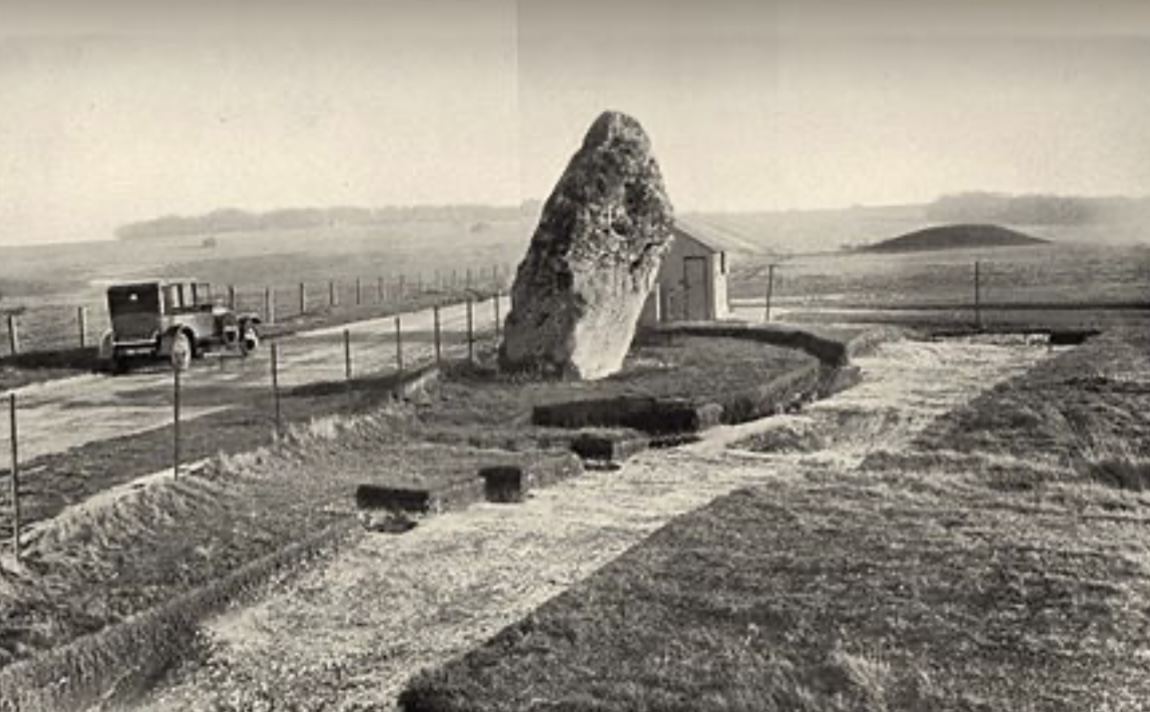
Between 1919 and 1926, Lieutenant-Colonel William Hawley (1851–1941) conducted pioneering excavations at Stonehenge. One of Hawley’s main achievements was to identify the Aubrey Holes (named after one of my ancestors, John Aubrey). Hawley also found cremated and uncremated human remains, which first indicated a funerary role for Stonehenge. His multiphase interpretation of the site was dismissed at the time, but in the 1950s the idea was revived. However, his idea that Stonehenge was a fortified settlement is still not accepted.
Excavations near the Heelstone (The Antiquaries Journal, 1925)
Motoring. Compulsory hand signals for all drivers were introduced on 10 October 1920.
Hand signals would remain a crucial part of motoring life until the 1970s, when the increased use of indicators on vehicles rendered them superfluous.
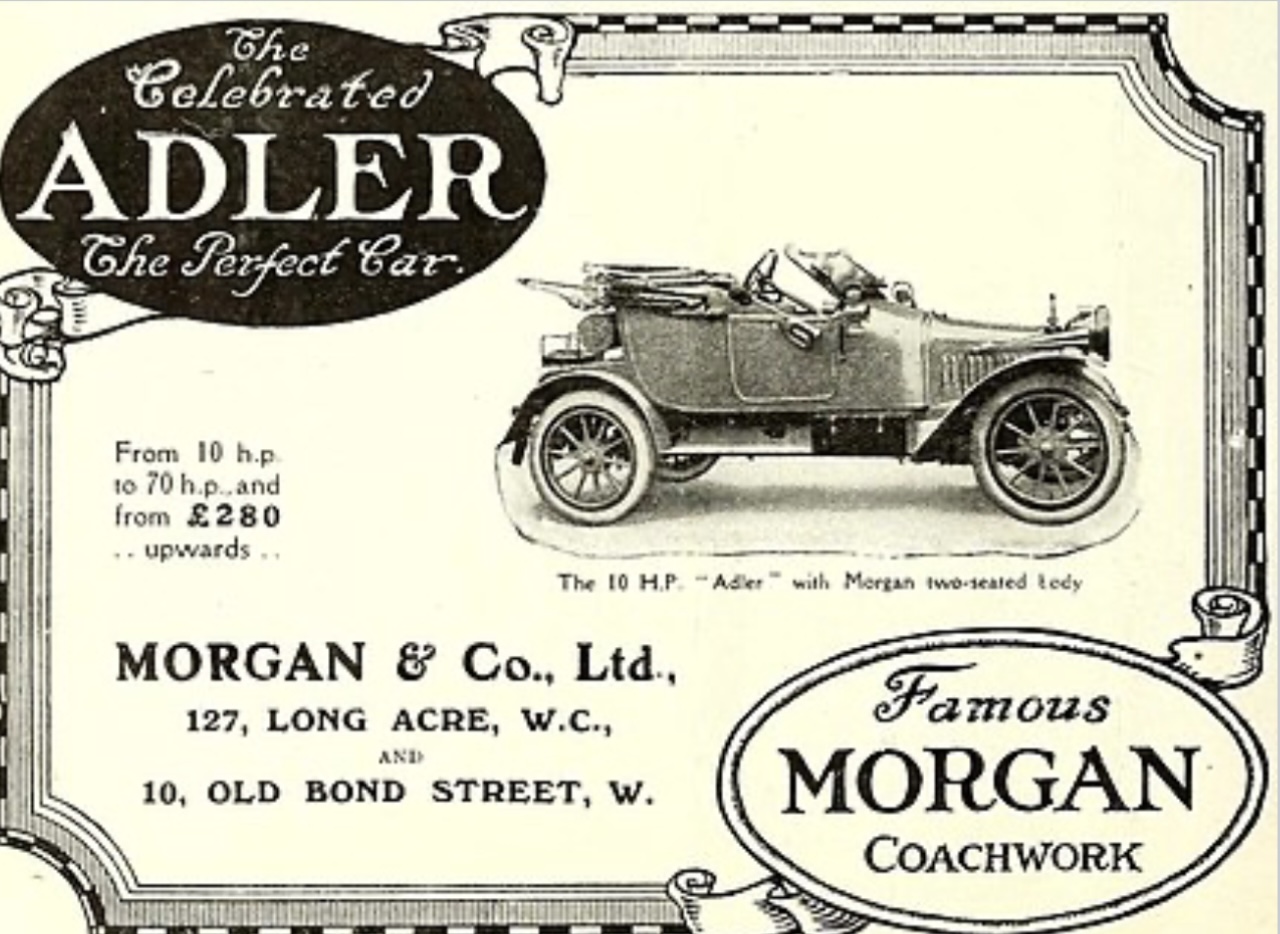
An advertisement for the Morgan Adler, “The Perfect Car”
In 1921, Swiss psychoanalyst Hermann Rorschach published Psychodiagnostik in which he proposed the inkblot test.
In the Rorschach test, a subject’s perception of inkblots is recorded and analysed using psychological interpretation and complex algorithms. The test can shed light on a subject’s personality and emotional functioning, and is particularly helpful when subjects are reluctant to articulate their thoughts.
The first Rorschach card (I reckon this is Scooby Doo with his back to a mirror 😉)
More flapper slang from the 1920s
Sharpshooter – a good dancer and big spender
Spoon – kissing
Strike breaker – a woman who dates her friend’s boyfriend
Tomato – a woman lacking intelligence
Umbrella – a man that any woman can borrow for an evening
Whangdoodle – jazz music
For Authors
#1 for value with 565,000 readers, The Fussy Librarian has helped my books to reach #1 on 32 occasions.
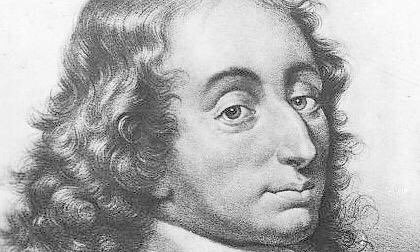
“The heart has its reasons which reason knows not.” – Blaise Pascal
In 1942 a Lockheed P38 Lightning crashed during training on the beach at Harlech, Wales. It is now a Scheduled Ancient Monument.
Picture: RC Survey
Listening to and loving Paula’s interpretation of Eve’s War: Operation Zigzag, which is currently in production.
‘It wasn’t only wickedness and scheming that made people unhappy, it was confusion and misunderstanding; above all, it was the failure to grasp the simple truth that other people are as real as you.’ – Ian McEwan, in Atonement.
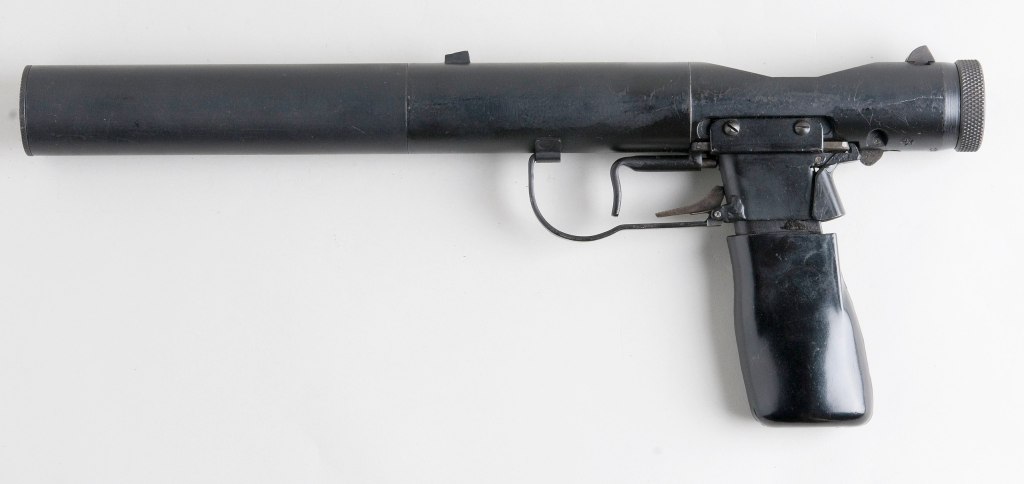
This is a Welrod Mk 1, the gun of choice for SOE agents during the Second World War.
In Operation Locksmith, book two in my Eve’s War series, Eve uses a Welrod for the first time.
The Welrod is an extremely quiet gun, producing a sound of around 73 dB when fired, and thus is ideal for clandestine operations.
“There was a definite process by which one made people into friends, and it involved talking to them and listening to them for hours at a time.” – Rebecca West
This week, I enjoyed a documentary about the Spitfire. With its elliptical wing design it must be the most graceful aeroplane ever built.
“Never be afraid to raise your voice for honesty and truth and compassion against injustice and lying and greed. If people all over the world do this, it would change the earth.“ – William Faulkner
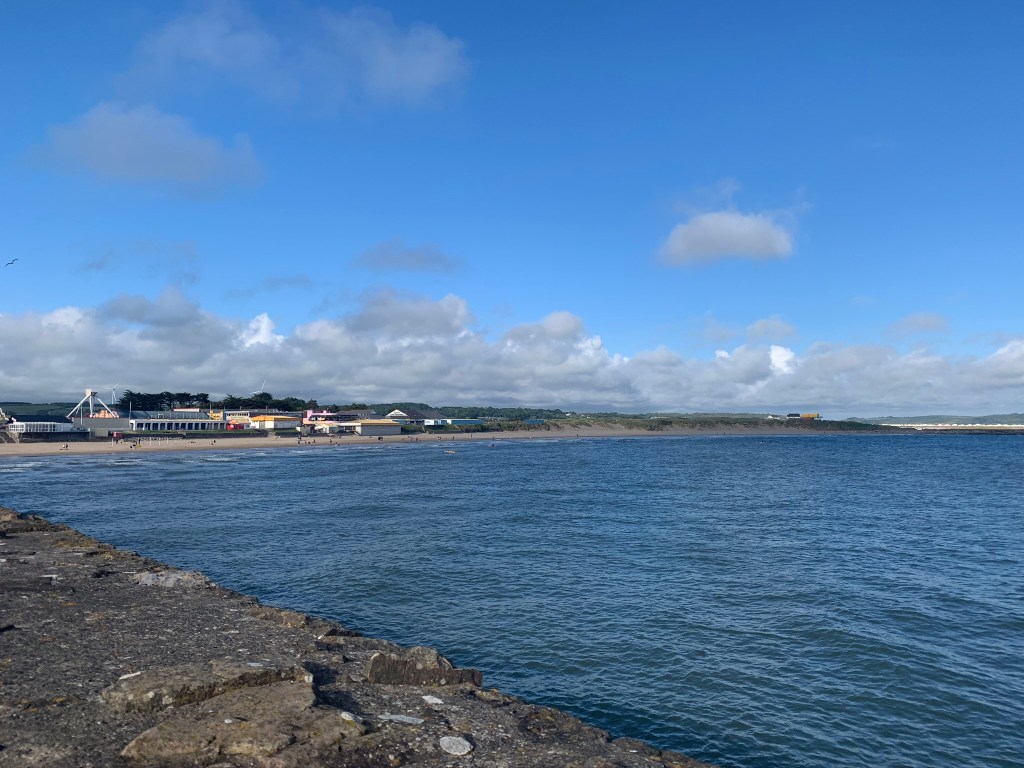
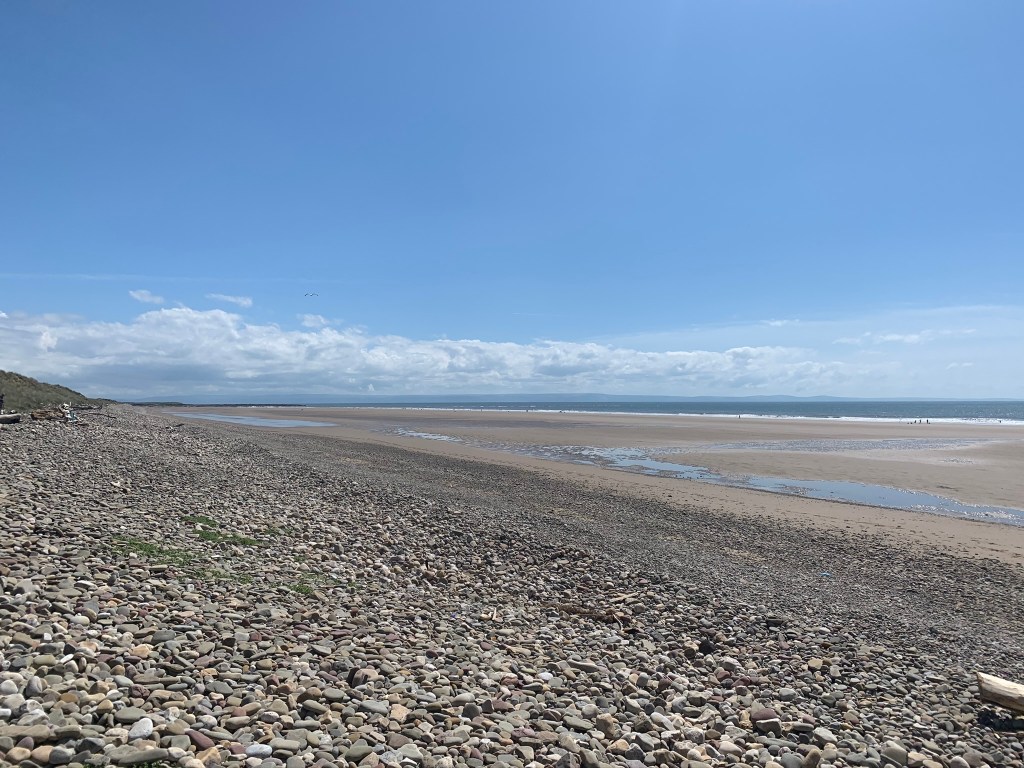
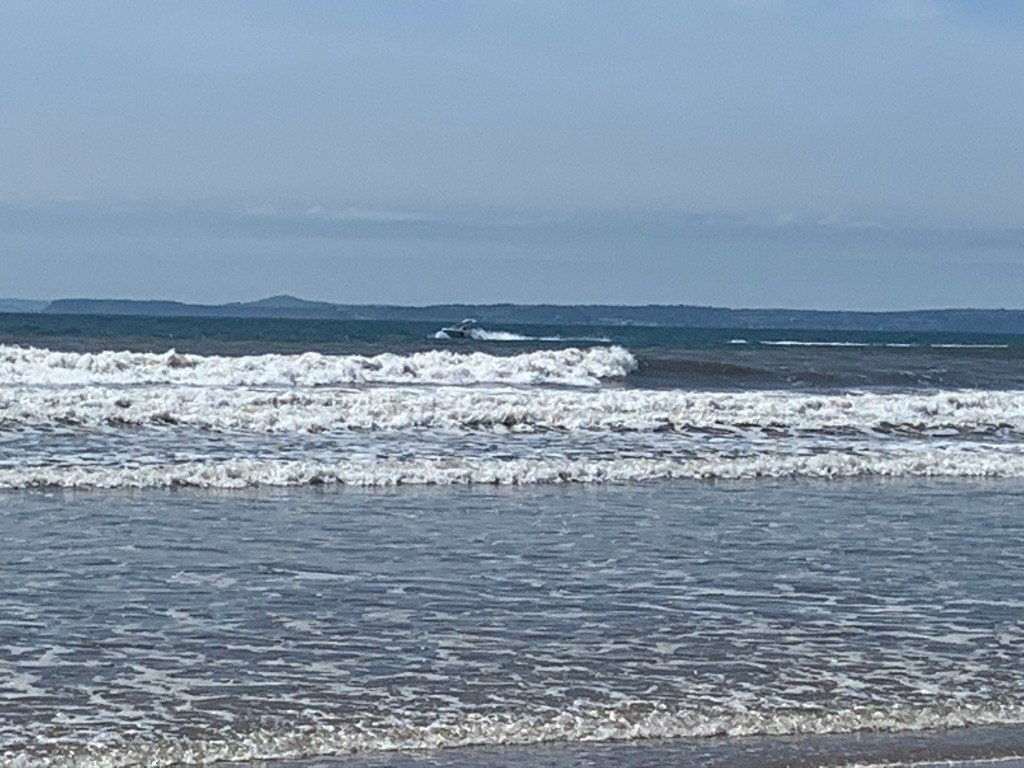
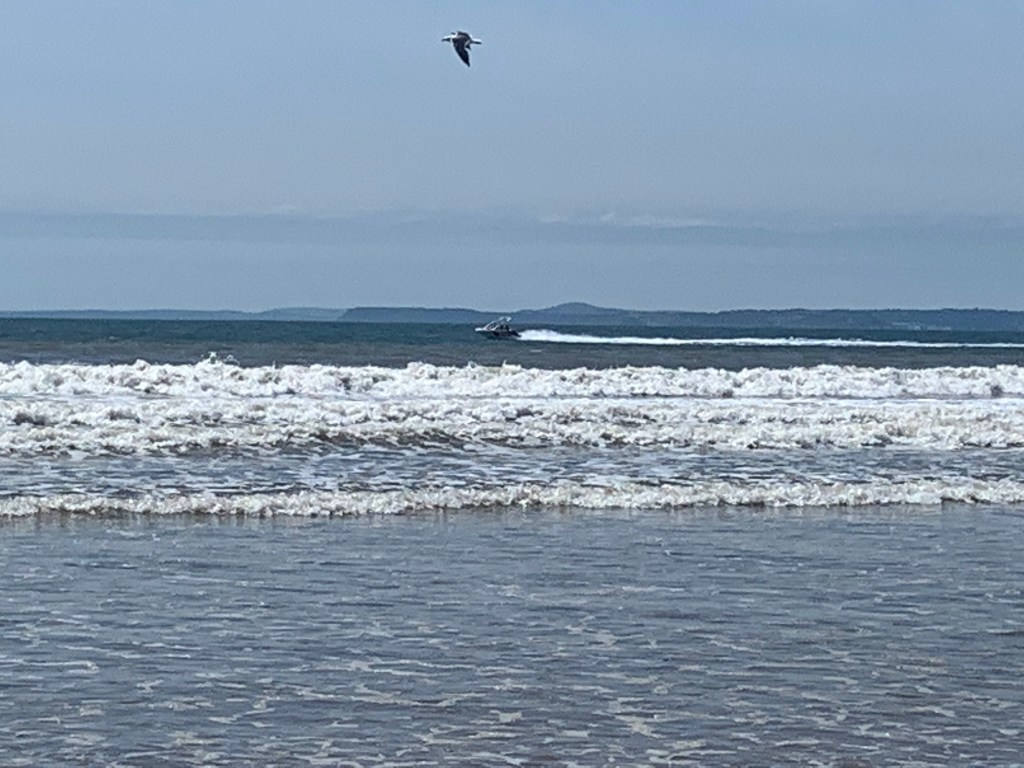
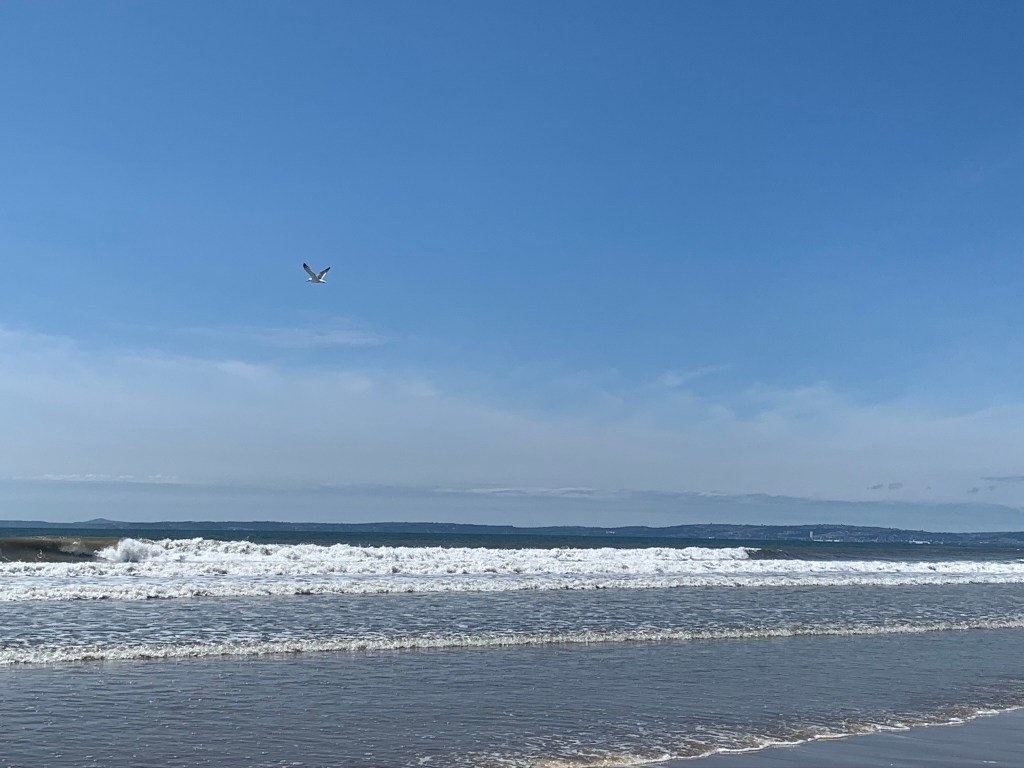
Local pictures this week, Kenfig coast.
A new series, Resistance Couples
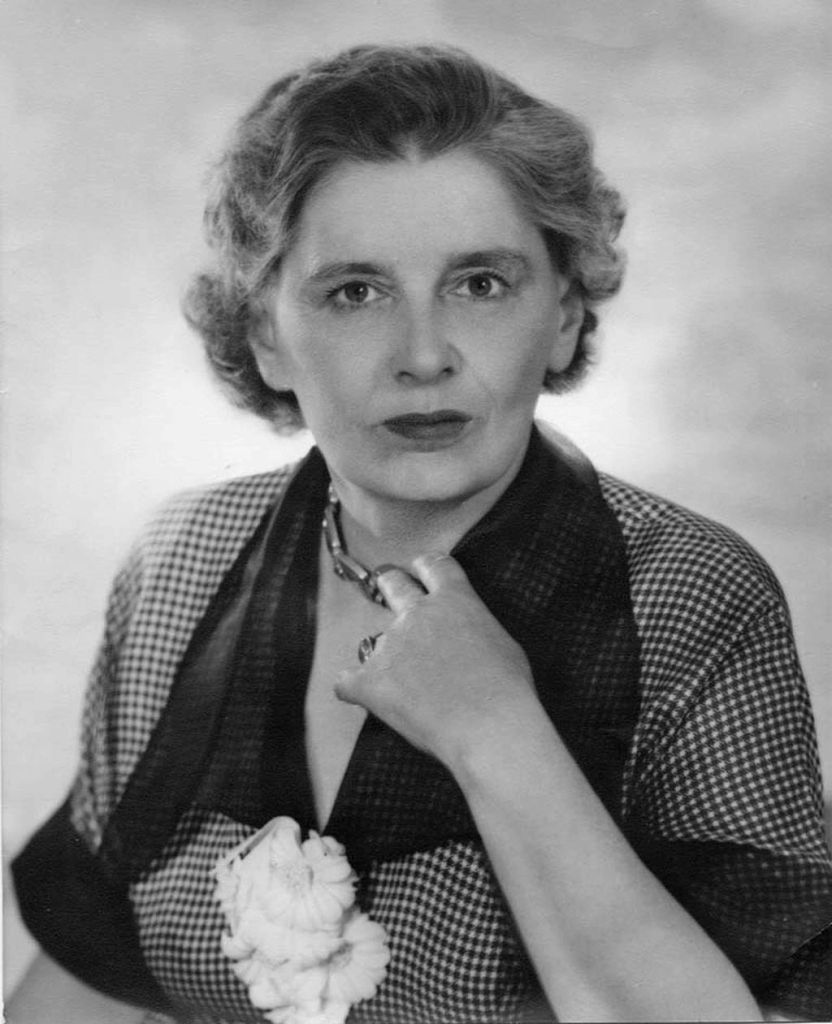
Cécile Rol-Tanguy, born 10 April 1919, was a leading member of the French Resistance during the Second World War. She participated in the liberation of Paris, conducted clandestine operations and relayed confidential messages.
In 1936, Cécile met Henri Tanguy, a political activist who volunteered for the International Brigades and fought against the fascists in the Spanish Civil War. The couple married in 1939 and their first child, Françoise, was born in November. Sadly, Françoise fell ill and died on 12 June 1940, two days before the Nazis entered Paris.
In an interview in 2014, Cécile recalled that painful episode: “I can still remember the terrible pall of burning smoke over Paris and wondering if that was what had made my baby ill. I left her in the hospital overnight, and when I went back the next day, there was another baby in her bed.”
Cécile and Henri Rol-Tanguy
During the Nazi occupation, Henri joined the French Forces of the Interior while Cécile supported the FFI as a liaison officer.
After the birth of her second child, Hélène, Cécile used her baby’s pushchair to conceal guns, grenades and clandestine newspapers. At this time, 1942, the Nazis arrested Cécile’s father and deported him to Auschwitz, where he died.
Despite this setback, Cécile and Henri fought on. In May 1944, Henri was appointed regional leader of the FFI. With Cécile’s help he established an underground command post at Place Denfert-Rochereau, and from there the couple distributed messages to the Resistance.
25 August 1944, the 2nd Armored (Leclerc) Division destroy a Nazi tank in front of the Palais Garnier.
On 19 August 1944, Cécile and Henri published a pamphlet, a call to arms for the citizens of Paris. The people responded and on 25 August they liberated Paris, sweeping the hated Nazi occupiers aside.
Recalling that momentous day, Cécile said, “When they told us, (of the victory) we didn’t hear the bells ringing, but we had a pillow fight with the girls who were with me.”
Parisians line the Champs Élysée for a parade conducted by the French 2nd Armoured Division, 26 August 1944.
After the liberation, Henri became an officer in the French army while Cécile joined the Union des Femmes Françaises, an organisation that maintained the memory of Resistance and anti-fascist fighters.
The couple had four surviving children: Hélène and Jean, who were born during the war, and Claire and Francis, who were born after the war. Later, the family left Paris to live near the Loire.
After 63 years of marriage, Henri died on 8 September 2002. Cécile passed away at her home at midday on 8 May 2020, the 75th anniversary of VE Day, aged 101.
My top ten sales countries this week: America, Britain, Canada, Australia, Bulgaria, Brazil, Indonesia, South Africa, Germany, France.
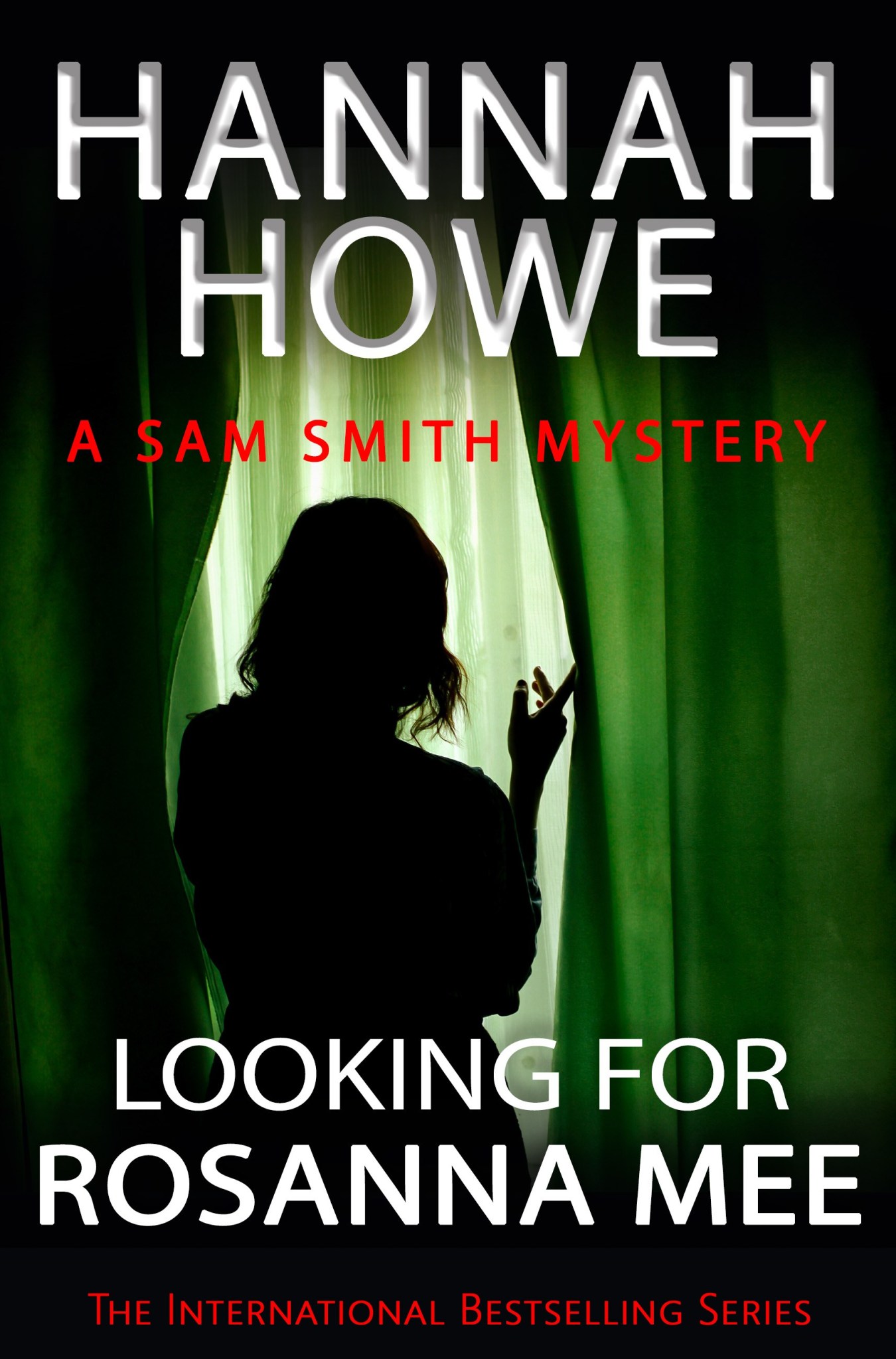
My latest Sam Smith Mystery, Looking for Rosanna Mee, book seventeen in the series, is now available for pre-order 🙂
“Aged twenty-one, Rosanna Mee was housebound, severely agoraphobic. Yet, when Faye and I arrived at her flat to deliver legal papers we could not find her. She’d disappeared. How could a woman who had not travelled from her home in three years simply disappear? That was the first in a series of questions that led us into the world of bodybuilding, fraud and murder.
Meanwhile, the kaleidoscope of my life continued to change. As the picture settled I discovered that I was saying goodbye to a friend, hello to a new office and facing a development that would totally transform my personal life.”
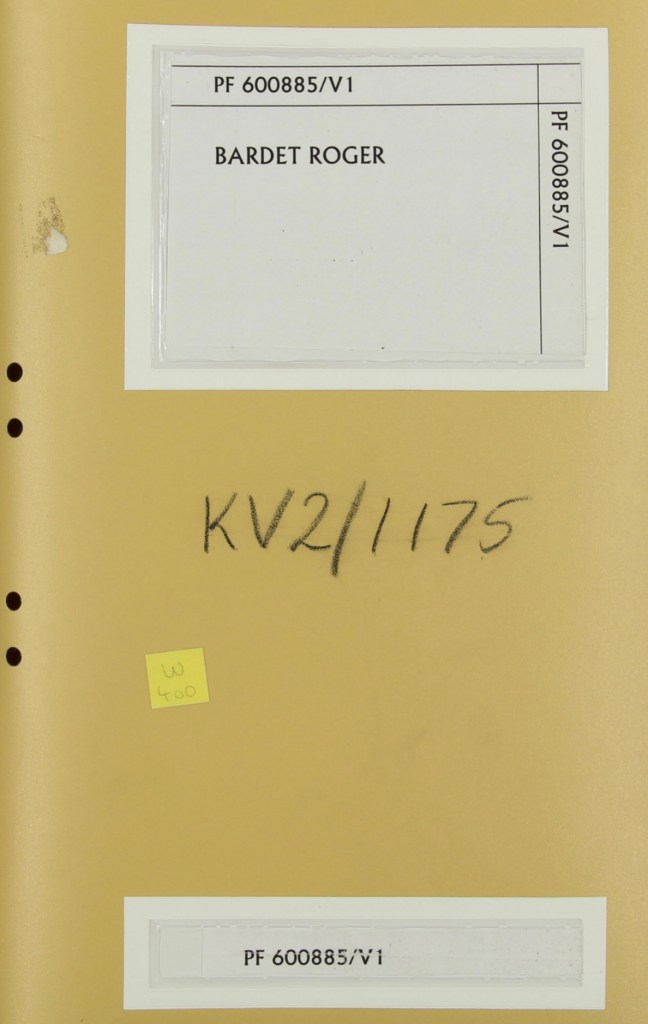
I managed to get hold of another ‘top secret’ document. This document is the SOE file on traitor Roger Bardet who betrayal many of his colleagues to the Nazis. His story will form the basis for Operation Sherlock, book five in my Eve’s War Heroines of SOE Series.
Local pictures taken at Sger and Kenfig this week, a stone’s throw from my home.
I’m outlining Operation Broadsword, book three in my Eve’s War Heroines of SOE Series. In this story Eve, Guy Samson and Mimi Duchamp arrive in Dol-de-Bretagne, by parachute, to establish the Broadsword resistance network.
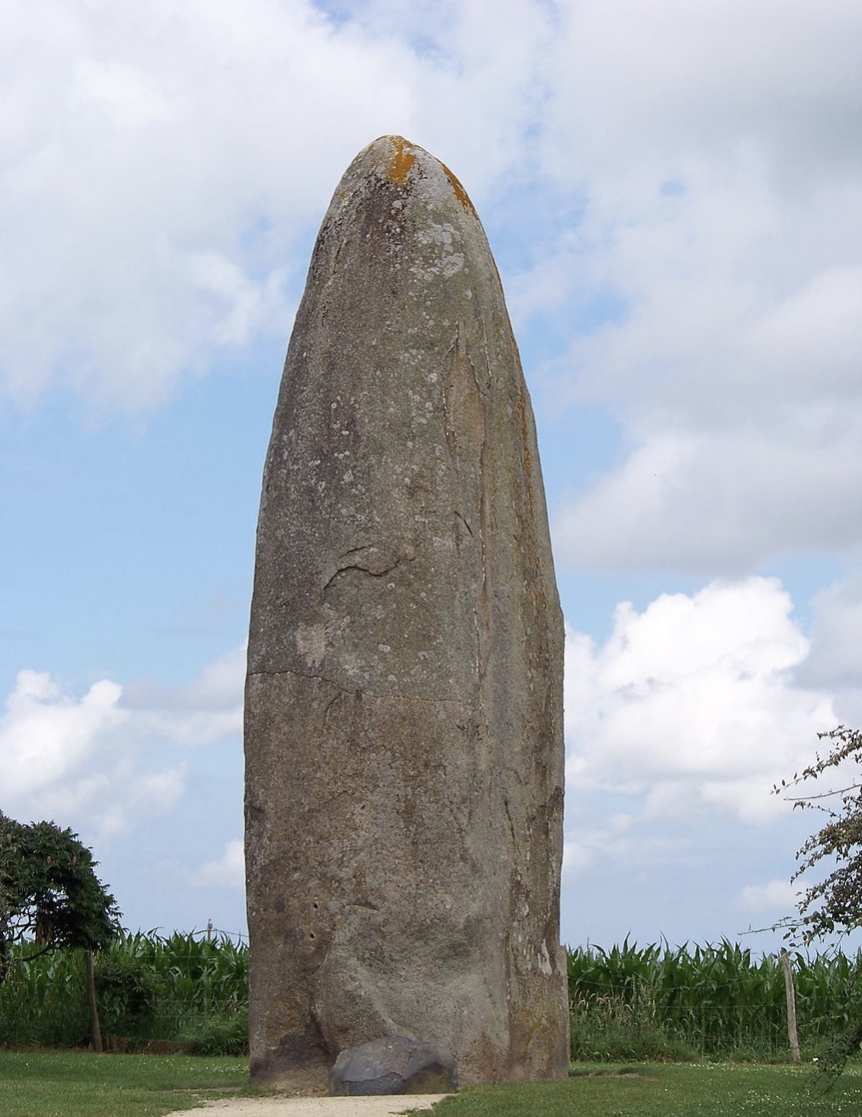
In peacetime, Guy is an archaeologist, a professor, and he uses that cover in Dol-de-Bretagne. One of the historical objects that catches his eye is the Menhir de Champ-Dolent, the largest standing stone in Brittany at over nine metres high. The menhir is made of pinkish granite and weighs an estimated 100 tonnes.
In the story, Eve discovers that friends can be enemies. However, can enemies also become friends?
I’ve finalised the running order for my Eve’s War Heroines of SOE series. The stories, all based on true events, will cover December 1942 to October 1944. The books are in various stages of production, from draft outlines to completed manuscripts. Publication will begin in June and will continue at two monthly intervals.
The running order:
Operation Zigzag Operation Locksmith Operation Broadsword Operation Treasure Operation Sherlock Operation Cameo Operation Rose Operation Watchmaker Operation Overlord Operation Jedburgh Operation Butterfly Operation Liberty
Virginia Hall Goillot was a rare breed, an American who worked for the SOE.
Born in Baltimore, Maryland on 5 April 1906, Virginia attended university where she studied French, German and Italian. Completing her studies in Europe, she travelled to France, Germany, Austria and Poland. In Poland in 1931 she secured employment as a consular service clerk at the American Embassy.
In 1932, Virginia lost her left leg below the knee after a shooting accident. The surgeons affixed a wooden leg, which she nicknamed Cuthbert.
After her accident, Virginia made several attempts to become a diplomat. However, the American authorities rejected her on the grounds that she was a woman and disabled. Consequently, in March 1939, she resigned as a consular clerk.
In February 1940, Virginia became an ambulance driver for the French army. After the fall of France in June 1940, she made her way to Spain where she met George Bellows, a British Intelligence Officer. This meeting led to an invitation to join the SOE.
Virginia joined the SOE in April 1941 and, after training, she arrived in Vichy France on 23 August 1941. Her cover story, as a reporter for the New York Post, allowed her to travel, talk with people and gather information. During this period, she became adept at changing her appearance through various forms of disguise.
In common with other SOE agents, Virginia organised the Resistance, supplied agents with money, conducted weapons training, helped downed airmen to escape, tended wounds, established safe houses and recruited new members to the cause.
Among Virginia’s recruits was Lyon brothel owner Germaine Guérin. Guérin made several safe houses available to Virginia. She also passed on information garnered from her prostitutes, tidbits gleaned from the German officers who frequented her brothel. Furthermore, while in Lyon, George Whittinghill, an American diplomat, allowed Virginia to smuggle reports to Britain in the diplomatic pouch.
Downed airmen often made their way to Lyon where contacts told them to visit the American Consulate and say they were, ‘A friend of Olivier’. Olivier was Virginia and with the help of brothel owner Germaine Guérin and others she hid, fed and helped the airmen to escape to Spain then on to Britain.
Unfortunately, the Nazis captured Germaine Guérin and sent her to a concentration camp, but she survived. On hearing this news, Virginia arranged compensation of 80,000 francs from Britain for Guérin.
M.R.D. Foot, the official historian of the SOE, said that an agent’s motto was “dubito, ergo sum” – “I doubt, therefore I survive.” Virginia took this motto to heart. Indeed, in October 1941 she sensed danger and refused to attend a meeting of SOE agents in Marseille. That meeting led to disaster and the arrest of a dozen agents.
Virginia learned that the Nazis had incarcerated the twelve agents arrested in October 1941 in the Mauzac prison near Bergerac. With the aid of Gaby Bloch, wife of prisoner Jean-Pierre Bloch, Virginia smuggled tools and sardine tins into the prison. With these tools and tins the prisoners made a key to the prison door and on 15 July 1942 they escaped and hid in the woods. After an intense manhunt, Virginia helped the men to escape into Spain then on to Britain. Later, several of the escapees returned to France to lead SOE networks.
Furious with the escape, the Nazis flooded Lyon with Gestapo officers. Also, on 7 November 1942, the American Consulate in Lyon informed Virginia that the Allied invasion of North Africa was imminent and that the Nazis would retaliate in brutal fashion. Therefore, she escaped by train from Lyon to Perpignan. Then, with a guide, she walked – on one good leg – over a 7,500 foot pass across the Pyrenees into Spain, covering fifty miles in two days.
The Gestapo referred to Virginia as ‘that Canadian bitch’ even though she was, of course, American. You have to wonder at the basic intelligence and ability of the Gestapo when they couldn’t capture a one-legged woman with distinctive red hair. Furthermore, she spoke French with a broad American accent.
Although Virginia was eager to return to France, the SOE refused on the grounds that she was known to the Gestapo. However, the Americans had no such qualms and so, by gunboat, she returned to France in March 1944 as a wireless operator for the American OSS.
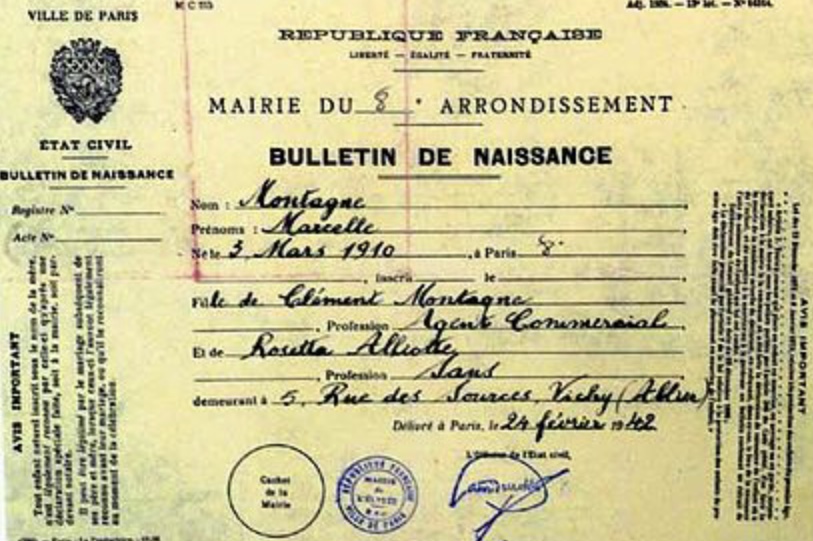
French identification certificate for Virginia Hall as “Marcelle Montagne” forged by OSS
While working for the OSS, Virginia fell in love with a colleague, Paul Goillot. After the war, the couple lived together and eventually married in 1957.
In 1947, Virginia joined the CIA, one of the first women hired by the new agency. She retired in 1966, aged sixty, to a farm in Barnesville, Maryland, where she lived until her death on 8 July 1982.
Admired by fellow agents, Virginia did much to establish the early SOE networks in France. Quite rightly, she is remembered as a woman of remarkable ability and courage.
Happy Easter and as ever, thank you for your interest and support.
Delighted to announce my publishing schedule for 2020. It’s an ambitious one with the following books in the pipeline.
Snow in August: Sam Smith Mystery Series Book 16
The Olive Tree: Roots: A Spanish Civil War Saga Book 1
Looking for Rosanna Mee: Sam Smith Mystery Series Book 17
The Olive Tree: Branches: A Spanish Civil War Saga Book 2
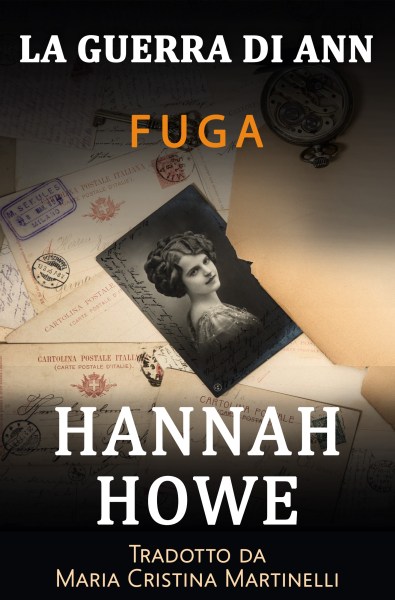
Another beautiful translation from Cristina. Available soon 🙂
Recently, I visited a series of caves in west Wales where I learned about the Red Lady of Paviland. The Red Lady of Paviland, pictured, is an Upper Paleolithic partial skeleton dyed in red ochre and buried in the Goat’s Hole Cave 33,000 years ago. William Buckland discovered the skeleton in 1823.
The Red Lady obtained her name because of the red ochre dye and jewellery found at the site. However, later analysis proved that ‘she’ was a man.
This incident will feature in Snow in August, out soon.
The joy of research is it will often lead you to items you were not originally looking for.
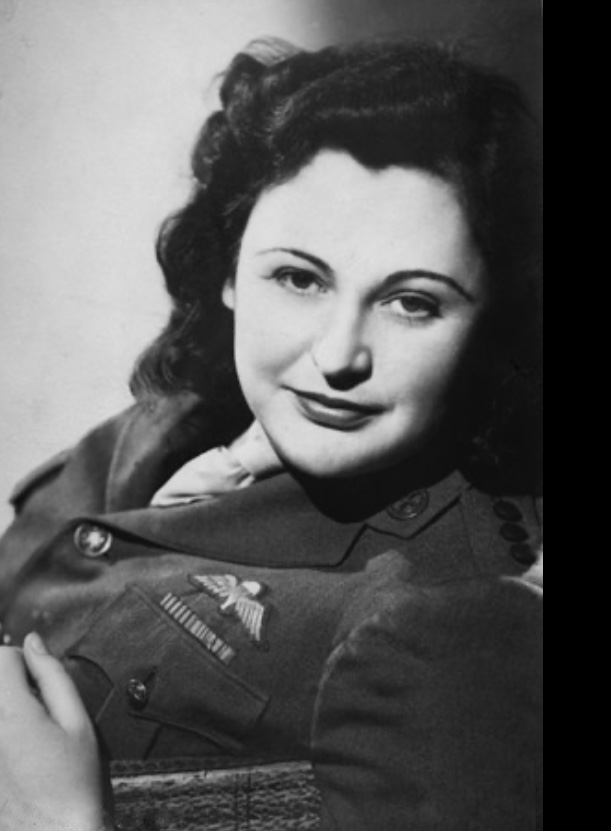
While looking for books to place on the Europe by Book website https://europebybook.com I discovered the story of Nancy Wake, a remarkable woman.
“Nancy Wake (30 August 1912 – 7 August 2011) worked for the Pat O’Leary escape line and the Special Operations Executive in France during World War II.
After the fall of France to Nazi Germany in 1940, Wake became a courier for the Pat O’Leary escape network. As a member of the escape network, she helped Allied airmen evade capture by the Germans and escape to neutral Spain.
In 1943, when the Germans became aware of her, she escaped to Spain and codenamed “Helene,” joined the Special Operations Executive.”
I intend to learn more about Nancy Wake and use elements of her story in a novel I’m currently researching.
Struggling to find the right presents for your children this year? Here’s fun for all the family! The aim is to become a tax-dodging millionaire. If you fail, you lose!
In a recent study, Buckets, Trapnell and Paulhus sought to examine the dark personality traits of Internet trolls. The researchers explored trolling in 1,215 participants and compared this to the dark personality triad, which is the dark triad – narcissism, Machiavellianism and psychopathy – plus sadism. They discovered that all forms of dark personality were significantly higher in individuals who troll with sadism the strongest factor.
So many good people do so many wonderful things. Our political leaders pale into insignificance in comparison.
In September 1912 Charles Dawson, a respected country lawyer, made a shocking discovery. He found a prehistoric humanoid skull in a gravel pit near Piltdown Common, Sussex. The skull proved Charles Darwin’s 1859 Theory of Evolution. Or did it?
Dr Arthur Smith Woodward of the British Museum joined Charles Dawson on his archaeological dig. Together, they found fossilized bone fragments, flint tools and fossilized teeth. Experts were called in and they confirmed that Piltdown Man was half a million years old and the missing link between ape and man, a fact they announced to the British public on 18th December 1912.
However, in November 1953 a group of palaeontologists tested the skull and pronounced it a fake. The skull was indeed human, but the teeth and jawbone came from an orang-utan.
Who perpetrated the hoax? The prime suspect is Charles Dawson, a man ambitious to prove his credentials as a geologist. But what of Sir Arthur Conan Doyle (pictured), a man interested in science, a neighbour of Dawson’s and the creator of Sherlock Holmes? Did Conan Doyle perpetrate the hoax and thus create a real-life mystery?






























 Hannah Howe