
Sins of the Flesh
A Victorian Morality Tale
This is a true story about real people. The principal characters are Mary Ware, a thirty-six-year-old housewife, her new-born son and the Rev. Daniel Lewis, a Calvinistic Methodist Minister. The story takes place in the village of Kenfig Hill, South Wales. The transcript below is taken from the Glamorgan Gazette, published in May 1860. If you read this transcript you can place yourself in the position of the three magistrates and decide whether you support Mary Ware’s testimony, or that of the Rev. Daniel Lewis.
At the Bridgend Petty Sessions, on Saturday last, before Richard Franklyn and A. O. Lord, Esqs., and the Rev. C. R. Knight, Mary Ware, a married woman, aged thirty-six, appeared personally to prosecute against the Rev. Daniel Lewis, a Welsh Calvinistic Methodist minister, a charge of being the father of her illegitimate child. She had no legal advocate. Mr. Llewellyn appeared for Mr. Lewis, the defendant. The court was densely crowded with spectators. Mr. Stockwell, the magistrates’ clerk, said the charge is that Daniel Lewis, Minister of the Gospel, is the father of the child of which Mary Ware was delivered in November last. The plaintiff, through an interpreter (Mary was a Welsh speaker, the sessions were held in English) deposed as follows:
“My name is Mary Ware. I live at Kenfig Hill, and am a married woman. My husband went to Australia three years ago the third of March last. I have not seen him since, but I have had letters from him. I am thirty-six years of age, and have had five children by my husband. Three are living with me, and two I have buried. I do not live in lodgings, but keep a house of my own. My husband sent money to me a little time back. I have had a child lately – a boy, born the 14th day of December last – not the 24th. The father of the child is Daniel Lewis – that man – the defendant in this case. He is a minister of the Methodist persuasion. He is a married man, so they say; he lives at Merthyr. There is a Methodist chapel at Kenfig Hill; I was a member of it. I did not sleep in my own house. I slept in my father’s house, which is next door. The connexion, took place on the Saturday night – that was the first night. I found myself pregnant fifteen weeks afterwards, and went to meet the defendant at Pencoed. I was told he was there preaching, and I went to him, and saw him. I asked him how he was; he asked me how I was; and I told him I was not well, and had not been since he was in my house, and I was afraid it was in consequence of what had occurred between him and me. He told me it was impossible – it could not be that – it must be a cold. I told him I would make an oath there had not been anything between myself and anybody else but him. I heard a part of his sermon, but he had began before I got there. I did not see him again until after I was confined. Some weeks after my confinement, while I was still in bed, the Rev. Mr. Howell, of Swansea, and Mr. X of Bryn, came to my house with Leyshon Williams and Isaac Williams. These men are all Methodists. They all came into the room; and Mr. Howell, of Swansea, put some questions to me. Amongst them he asked me who the father of my child was. I told him I had only one father to it, and the Lord was witness to it. And he asked me who it was, and I said it was Daniel Lewis; and Daniel Lewis then told me that I had been a temptation to him; and I said he had been a temptation to me, and both had fallen into the pit together, and I was in it yet, and I would try to keep him out of it. By that I meant I would not publish it. The first time that I found myself to be in the family way was when I went to him at Pencoed. He told me he would see me in six weeks at Cornelly, and I said I would then tell him the truth, whether I was in the family way or not. He did not show any anger. He did not come to Cornelly, but sent a letter by Morgan Rees, stating that new arrangements prevented his coming. I did not communicate with him any more after the fifteenth week, until after the child was born. That was owing to the fact that he lived so far off, and I was not going out of the house. My two brothers communicated the fact to him. I told them to say him that I was confined, and had no father to the child.”
But cross-examined by Mr. Llewellyn, Mary said: “It was the first night that Mr. Lewis came when I had intercourse with him. This was on the Saturday, and at no other time. He came by the seven p.m. train, and arrived at my house at eight p.m. He came into my house. That was the appointed place for the Methodist minister in the district. Mr. Lewis went to bed about eleven p.m.; he had no tea; he refused it. The intercourse took place between eight and eleven p.m. When I saw Mr. Lewis at Pencoed, he did not positively deny being the father. He did not say, ‘You put me in the way of temptation, but I resisted you.’ He did not say, ‘I kept clear of you, not withstanding your provocation.’ Mr. Howell and some gentlemen came as a committee of investigation. I did not hear Mr. Lewis deny, on that occasion, he had no connexion with me. He said it was impossible for me to be in the family way for as much as passed between him and me on that occasion. I have been married sixteen years the 3rd of May. I knew Mr. John Evans; he is not living now. He kept a shop at Kenfig Hill. I purchased goods off him fifteen years ago. He was a young man and I never saw any wife. Sometimes it might be late when l went to his shop – as late as ten o’clock. I used to stop to talk, and no more.”

Kenfig Hill, c1900
Leyshon Williams offered this statement: “I live at Kenfig Hill, and was one of the committee appointed to inquire into this matter, and had some conversation with the woman – not before we went up. In the chapel at Cornelly, before we went to her, there was a conversation, with Mr. Lewis as to the paternity of the child. He denied it. When we went up to her, he again denied it, but said the plaintiff tempted him. He told me she had tempted him on the Wednesday night – the following Wednesday after the Saturday night. She was telling that he had an intercourse with her on Saturday night. Everything was settled in Cornelly chapel, that all were to go to the woman’s. He, before the committee, said he was not guilty – he said she had tempted him 11 o’clock Wednesday night. He said that she had been a temptation to him on the Wednesday night and Thursday morning. He said, she was sleeping in her father’s house next door; and early in the morning, about seven o’clock came into the house and opened the door of his bedroom and came in, remained a very short time and went out again; and she afterwards lighted the fire in the other room, and then she came into his bedroom again, and coming up to his bedside, and throwing the clothes off his breast, she leaned on him with her bosom, and put her hand in a place where she ought not. That is his own statement to the committee. He said it occurred on the Thursday morning, and he made that statement in her presence. On Saturday night, Sunday night, and Wednesday night, he slept in her house. When the committee went to her house, Mr. Howell, of Swansea, asked her if she was the mother of the child? She said, yes. Mr. Howell said – there must be a father. She said, there is. Mr. Howell said, who is the father? and she said, ‘Mr. Lewis is the father, and nobody else’ and she added everything that had taken place between her and Lewis had taken place on the Saturday night, and he was denying it, and said nothing had taken place. He only told them the same as he had told the society. She said that both were a temptation, one as much as the other. He did not in her presence state what had been the temptation on the Wednesday; but he did state what had occurred on the Thursday. She did not deny but that the occurrence had taken place as he described it. I have known Mary Ware twenty years. I have known nothing against her until this happened. When reports had spread about respecting him and Mrs. Ware, it was Mr. Lewis who insisted upon an investigation by a committee. He denied the fact, but did not deny the temptation. He told them that when she came to the bed to him, he said to her that she was a married woman, and he was a married man, and that she was no more free because of her husband being in Australia. In the bedroom Mr. Lewis said he was innocent of being the father of this child.”
Isaac Williams, through an interpreter, deposed, “I am a weaver, and live on Kenfig Hill, and belong to the Methodists. I am one of the committee, and know Mr. Lewis. I had no talk with him, that I now remember, between him and myself alone. I remember what he told the defendant at Cornelly. He said it was impossible for him to be the father of the child, from as much as passed between them. He said that he had a great many questions to ask the woman, but she was weak, and he did not ask her. He did not tell us the particulars in committee, but he said the woman had meddled with him improperly. He did say when it was – either on a Wednesday night or Thursday morning.”
Mr. Lord, a magistrate, asked: “Did he say he had refused to do what she wanted him to do?”
Witness, Isaac Williams: “Yes. He said he refused to yield to the temptation. This was in the committee. Am I to tell you all what occurred before the committee in her room?”
Mr. Lord, “Yes.”
Witness, Isaac Williams: “Mr. Howell, of Swansea, the minister, asked him what was the reason, if she had tempted him, that he remained in the house, in the very place of temptation, and that he stayed there on Thursday, eating his dinner? His answer was that it was a delicate matter – that it might have cast a stigma upon the woman had he gone away from the house immediately this had occurred. Mr. Howell replied, ‘I don’t see it was delicate at all. It was worse to stay than to come away.’ In answer to that, Mr. Lewis said he did not like to come away, for fear someone would think she was an indecent woman, or something of that sort. Mr. Howell asked Mr. Lewis why he did not go away immediately after breakfast? He did wonder that, after a temptation had occurred, he should remain in the place of temptation. It was very prudent he (Mr. Howell) said for a minister or any other man to go away from the temptation. In reply to that, Mr. Lewis said he did not like to – it was a delicate case. Mr. Howell said, ‘I don’t see it delicate at all.’ That was in the committee. Then we went to the bedroom. She was very ill; our ministers were very kind to her, and did not press her too much. Mr. Howell said there must be a father to this child. She said, ‘Yes.’ Mr. Howell said, ‘Who is the father?’ She said, ‘Nobody but Daniel Lewis. I can answer before my God I have no other father to it.’ And then, they could not agree as to the night of the temptation; she said Saturday, and he said Wednesday. He described the nature of the temptation by throwing himself upon the bed, and said, ‘Did you not tempt me in this way?’ and she told that he was as much a temptation to her as she was to him. He has not been preaching since then, nor since the committee commenced the investigation. I am a deacon of the chapel. Mr. Lewis has been suspended from the ministry in consequence of this. Mr. Lewis called for this investigation. He wrote a letter requesting that the woman might be brought before the committee face to face with him. He was not quite willing to go to the bedroom, when the complainant proposed it. The woman was to come down to Pyle. She was so ill, however, that she could not be brought. Mr. Lewis objected to go to her bedroom; Mr. Howell said, ‘There is nothing in that; we will meet once more to make an end of it.’ Mr. Lewis denied throughout that he was the father of the child.”

Kenfig Hill
Mr. Llewellyn, the Rev. Daniel Lewis’ advocate, then addressed the Bench on behalf of the defendant, expressing his own entire belief in his client’s innocence, of which, he said, he believed the magistrates would also be convinced when the defendant came before them, and gave his own version of what had occurred. His manner, he thought, would convince them that he could not be that guilty person described by the complainant. Her statement was altogether incredible – that she, a respectable person, and he a respectable man, should, within three hours after entering her house, have done what she stated. He might have rested the case where it stood, for the law required some corroborative evidence besides that of the woman, but there was none save that of the woman. But the defendant was not satisfied merely that the case should fail for want of evidence. It was important for him to be restored to his former position, character, and office, and that without delay. He would therefore call not only the defendant, but also other witnesses, to speak as to the plaintiff’s conduct.
Mr. Lewis, the defendant, was then sworn, and on examination by Mr. Llewellyn, said “I am a minister of the Welsh Calvinistic Methodist Connexion, and have been so for 21 years. In March 1859, I had to go to the Kenfig chapel. I had to go to this Mrs. Ware’s house. It is usual in some churches for ministers to be received at certain appointed houses of the members. I was appointed to be received at her house. I got to Pyle about nine o’clock, the train being late; it should have been there at eight. I went towards the chapel, and saw the woman at the door of her cottage. She came towards me and said that was the house for me to remain at. I had supper there that night. She had a cottage of two rooms – a living-room and a bedroom. Her father and mother lived in the adjoining cottage. She gave up her room, going herself to her father’s to sleep. No familiarities whatever occurred between us. Isaac Williams, the last witness, agreed to meet me at the train, but was not there.”
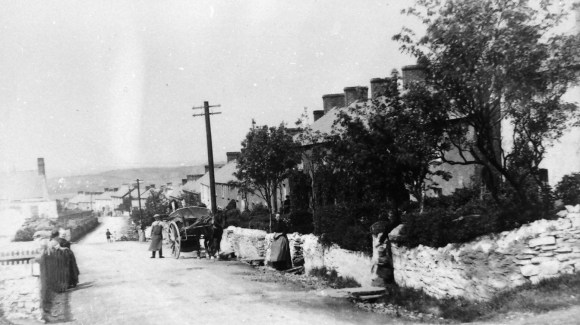
Kenfig Hill
Mr. Llewellyn, ‘This woman states that you had connexion with her between nine o’clock and eleven that night.’ Witness (in a firm and rather indignant manner) ‘I deny it. I went to rest at eleven o’clock.’ Mr Llewellyn, ‘What was her conduct that night? Had you family worship?’ Rev. Daniel Lewis, ‘This woman was kind to me, and acted as a religious person. She brought the Bible to me, and called in her father, and I read the Scriptures and offered up prayer. I was away on Monday. There is a practice amongst the Methodists of visiting certain small places when the minister comes to Kenfig. I was to be at Pen-y-Bryn. The deacon requested me to make a slight alteration in the arrangement, which I did, and in consequence of that, on Wednesday night I went back to this woman’s house, having duty at the chapel. After chapel, I went to Leyshon Williams, and from thence to the complainant’s house; while there Isaac Williams came in. When he left there was none in the house but myself and this woman. There was something in her language that evening that was very indecent – particularly after Williams went out. I went into the bedroom. She followed me there. She began to recite passages of scripture which had some allusion to adultery. I then left the room. She apologised to me for what she said, I told her to go to her father and mother that night, and go to bed. I went to my room, and in a few minutes afterwards retired to rest. Nothing further occurred that night. On Thursday night, about eleven o’clock, I heard her open the door of the house, and immediately afterwards she opened the door of my room and came in. I pretended to be asleep, though I was not so. She went away and made the fire, and then she came again and opened my door. She came up to my bed, and throwing the clothes off my breast, she smiled at me, and threw herself partly on the bed. I asked her what she meant and said that I was a married man and she a married woman. She seemed to pass it off, and said she was a naughty woman. I am here on my oath, gentlemen, and I say there is the greatest impossibility that I could be the father of her child. When I saw her at Pencoed, I asked her how they were at Moriah; she said they were all well, except herself. She then said, she did not know what was the matter with her, and by her manner, rather than anything she said, appeared to hint that she was in the family way. She said she had not been well since I was at the house. I said, certainly you gave me temptation, but I resisted you, and I have nothing at all to do with what you now hint. She then passed it off, and said perhaps it was only a cold, and she added, she had been with Dr. Cook, at Pencoed, receiving medicine. I understood that she had come up purposely to see Dr. Cook. I concluded by the way she spoke that she inferred I was the cause of her condition. I called to her mind the temptation she had offered me, and how I had resisted it. We were just about to part, for I had to go by the train, when I said to the woman of a house close by, who was waiting to speak to me, here is a woman from Kenfig, and she is a member with us; she is just going by train. Dear me, said the woman, she is not going away without tea. And she invited her in, and she had a cup of tea with us. There were about six of us.’
Mr. Lord, magistrate: “And this was after you knew she intended to charge you with being the father of the child!”
The Rev. Daniel Lewis cross-examined by Mary Ware: “Don’t you remember the conversation at Pencoed, what you said when I told you what had occurred between yourself and me on the Saturday night.”
The Clerk: “What was that?”
Mary Ware: “He said, oh, nothing will happen from that – it was on}y child’s play.”
The Rev. Daniel Lewis: “I deny it.”
Mary Ware: “I asked him on the Sunday night, how he got on in preaching, after what had occurred on Saturday. He said, ‘Oh, I got on very well’.”
The Rev. Daniel Lewis: “I deny it.”
Mr. Lord, magistrate: “How came you to take tea with her immediately after she had charged you with being the father of her child?”
The Rev. Daniel Lewis: “She did not take tea with me alone, neither did I invite her; there were about six persons present—the man and woman of the house; a man and woman of Pencoed; and Mr. Howell, of Pencoed. She did not say at Pencoed that she had come purposely to Pencoed to see me, and that she had walked to Bridgend, to avoid any notice of her departure being taken by neighbours. Mr. Howell, of Pencoed, was present. l had known her before my visit in March, eight or ten months. I had slept in her house once before. On that Saturday night she brought my supper.”
Mr Llewellyn, advocate: “Are you sure you took supper?”
The Rev. Daniel Lewis: “Oh, certainly.”
The Clerk: “You say she came to your room, and threw off the clothes, as you lay in bed?”
The Rev. Daniel Lewis: “Yes, Sir. With that she threw herself partly on the bed. I resisted her, and told her how wrong it was; and with that she went away. She threw her arms round my neck, and I pushed her away. I took breakfast there, about nine or half-past nine, with her and the children, and I was obliged to wait there, or go elsewhere, till the two pm train. Just after breakfast, William Thomas came in, and we conversed. That is my reason for staying in the house after what had occurred. She asked me to perform family worship. After what had occurred – meaning her conduct – I told her I would not read. She said, You must pray. She then went out and returned. She then gave me the Bible. I read a psalm, and prayed; she joined in the observance of the prayer. Her mother came in; then Mr. Thomas took a bit of dinner with the complainant. I have no recollection of speaking with her before leaving. I did not complain of her conduct before her confinement. My reason for that was, I did not like to make an example of her, thinking that her general character was not in accordance with what I had seen, and that it was a casual thing with her. I knew, Sir, I was perfectly free from participation in her conduct, and had rebuked it. Thinking that she was not a person of light character, and that it might not occur again, I did not wish to expose her.”
By the Bench: “Her coming to Pencoed did not shake my belief in her general good conduct. Six months had elapsed since I had seen her, and I knew it was impossible that what she hinted could refer to me. Catherine Davies said I lived with Mr. Evans of Kenfig as servant, in the spring of last year, up to April. I know the plaintiff. We were brought up together. She was in the habit of coming to the shop. She was on good terms with Mr. Evans – but like some other women. I never saw anything improper between her and Mr. Evans; I did not tell Mr. Lewis that I had. I told him that plaintiff used to come in at eleven o’clock at night, and stay ten minutes. I saw her have, not beer and biscuits, but some beer, which Mr. Evans gave her. There was no familiarity – only taking a glass of beer. It was not every customer that took beer and biscuit with Mr Evans.”

Capel-y-Pil, Cornelly Methodist Chapel
Mrs. Ann Thomas, sworn, and examined by Mr. Llewellyn: “I am the wife of Mr. Thomas, the Baptist minister, at Kenfig. I went to see Mary Ware, nine or ten days after she was confined. I told you what conversation occurred. Mrs. Ware said, if Mr. Lewis would come and settle about the child, she did not want anything further. I did not say it was like Mr. Evans. I did not tell Mr. Lewis so. I did not say to Mr. Lewis that it was very wrong to charge Mr. Lewis.”
In answer to another question, Mrs. Ann Thomas, with some feeling, said, “I have nothing further to say. I lived by Mary Ware fifteen years, and have nothing to say against her.”
Laughter from the public gallery.
Mrs. Ann Thomas: “I did not tell Mr. Lewis that Mary Ware had been turned from the harvest field.”
The Chairman (to Mr. Llewellyn): “How can you say anything more favourable to Mary Ware than your own witness is stating?”
The Rev. R. Knight, magistrate: “She (Ann Thomas) is a brother minister’s wife.”
Mr. Llewellyn, advocate: “After you hear what the defendant will state, I think you will be of the opinion that she (Ann Thomas) has contradicted herself.”
Magistrate, “She is your own witness.”
Defendant was then recalled to prove that he took down the statements of the two last witnesses at Mr. Thomas’s house. The Magistrates then held a short consultation, after which the Chairman said, “Daniel Lewis, the magistrates have given their very best attention to this case – as, indeed, is due to all cases – but this is a particularly painful case – seeing that you are a Minister of the Gospel; and they, to the best of their ability, sifted all the evidence; and it is with very great pain that they have come to the unanimous conclusion that you are the father of the child, and they therefore order that you pay 2s. 6d. a week, and the expenses.”
Cheers from the public gallery.
The Magistrates expressed their strong displeasure at this ebullition of feeling, and directed it to be suppressed, and the police to ascertain who had been guilty of such indecorum.
Mr. Llewellyn, advocate: “This decision is a matter of great importance to Mr. Lewis and I have now to give notice of his intention to appeal against it.”
The Chairman, “Of course you have a perfect right to do that. [To the police-officer] You had better explain that to the woman (Mary Ware).”
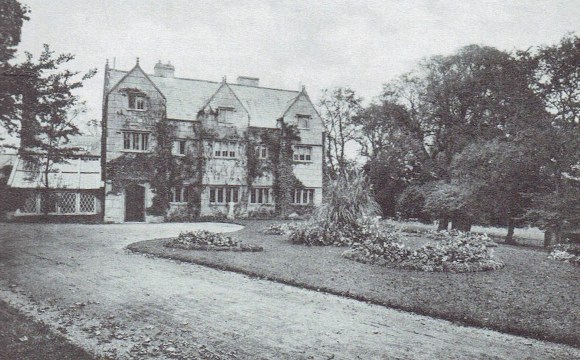
Nottage Court
Although that was the end of the Petty Sessions, it was not the end of Mary’s story. Through a curious turn of events, she became one of the Rev. C.R. Knight’s eight servants at his grand manor house, Nottage Court. The Rev. C.R. Knight was, of course, one of the magistrates.
Mary Ware remained a Methodist for the remainder of her life. She died on 29th March 1898 aged 74. She was buried in plot D17 at Capel-y-Pil Methodist Chapel.
What of Mary’s son by Daniel Lewis? She christened him Daniel Lewis Ware. Daniel became a clerk at a local tin plate works and married Margaret. The couple produced nine children, including twins, Ethel and Florence.










 Hannah Howe