Categories
Eve’s War

Pearl Witherington

I hold all the women in my Heroines of the SOE series in the greatest respect, but I must admit that I hold a special admiration for Pearl Witherington possibly because her upbringing mirrored that of my modern-day detective, Sam Smith. Also, Pearl is the main inspiration for my character Mimi Duchamp in Eve’s War. As such, I feel that she deserves a blog post of her own.

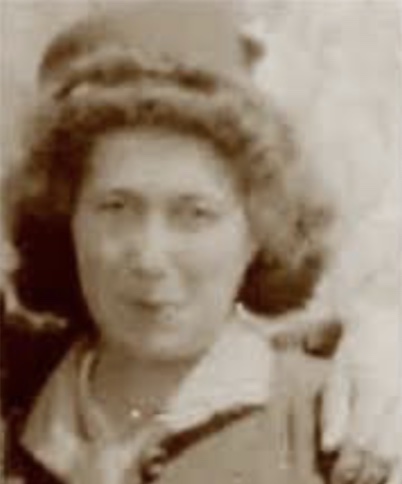
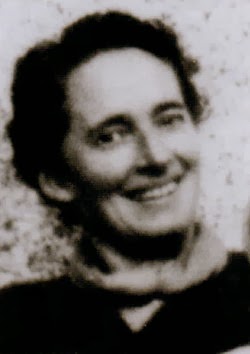
Cecile Pearl Witherington Cornioley was born on 24 June 1914. She served the SOE under the code names Marie and Pauline. Born in Paris to British parents, she parachuted into France in September 1943 as a courier for the Stationer network. However, due to circumstances and her immense ability by May 1944 she was head of the Wrestler network in central France. She was the only woman to lead an SOE network in France.
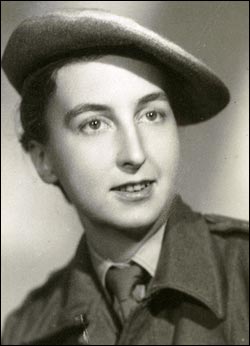
Pearl’s network, which expanded to over 2,000 Maquisard fighters after D-Day, was especially efficient in sabotaging railroads and telephone lines. 

Pearl’s father, born into money, succumbed to alcohol and lost his way. Her mother, who was partially deaf and possessed a limited range of French, relied on Pearl to negotiate with tradesmen and creditors – without her father’s income the family slid into debt. She did this at an early age, forgoing most of her schooling. Indeed, she only enjoyed four years in school. Often, she walked miles across Paris to deal with family business and scavenge food then studied in the evenings.

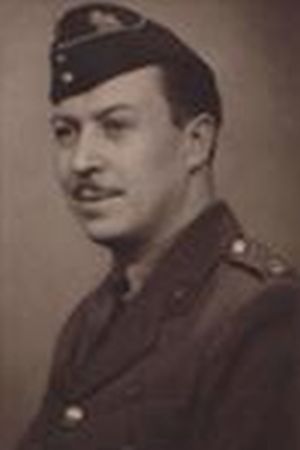
After school, Pearl found employment at the British Embassy, where she impressed and excelled. She fell in love with Henri Cornioley (1910–1999), the son of well-to-do parents. Initially, Henri’s parents rejected Pearl because of her impoverished background. The loving couple couldn’t enjoy each other’s company at home, so they met in cinemas and parks. In February 1940, Henri joined the British Army and Pearl did not see him again for three and a half years.

Henri and Pearl

Pearl escaped from occupied France with her mother and three sisters in December 1940. After a long and perilous journey, the family arrived in London in July 1941. Through her Embassy contacts, she found work in the Air Ministry.

Determined to fight back against Hitler’s occupation of France, Pearl joined the SOE on 8 June 1943. In training she emerged as the ‘best shot’ the service had ever seen, male or female.

When Pearl parachuted into occupied France on 22 September 1943, she joined Maurice Southgate, leader of the Stationer network, and courier Jacqueline Nearne. Southgate also reunited Pearl with her fiancé, Henri, who had escaped from a Nazi prisoner of war camp.

Over the next eight months, posing as a cosmetics saleswoman, Pearl performed her duties as a courier. Covering a vast area, she was constantly on the move, sleeping on trains when the opportunity arose. Frequently, she encountered Gestapo checkpoints where the French police examined her (false) identity papers. Her cover was based on Marie Jeanne Marthe Verges, a woman who had disappeared.

The Gestapo arrested Maurice Southgate on 1 May 1944. With Southgate a Gestapo prisoner, Pearl formed and became leader of a new SOE network, Wrestler. With the help of her fiancé, Henri, and a neighbouring network, Pearl’s group attacked the railway infrastructure 800 times in June 1944 alone. Their main focal points were the railway lines between Paris and Bordeaux. By disrupting these lines, Pearl hindered the Nazis efforts to transport men and artillery to the battle front in Normandy.

On the morning of 11 June 1944, Nazi soldiers attacked Pearl at the Les Souches chateau, her headquarters near the village of Dun-le-Poëlier. Under fire, Pearl hid the tin where she kept a large amount of money and fled to a wheat field where she hid until nightfall. Henri also hid in the wheat field where he counted fifty-six truckloads of Nazi soldiers participating in the operation. By this time, the towns and countryside were full of ‘Wanted’ posters with Pearl carrying a million franc reward on her head.

The Nazis destroyed everything of value to the SOE in the chateau, including their weapons and radio. Therefore, through a neighbouring network, Pearl requested fresh supplies from Britain, which duly arrived on her birthday, 24 June, via a three-plane air-drop. 
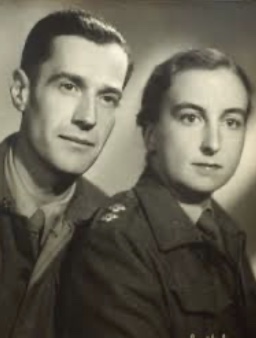
Henri and Pearl

Rearmed and reconnected, Pearl went from strength-to-strength. The number of Maquis in her region doubled to nearly 4,000 as the D-Day invasion took effect. Pearl and Henri organised their men into four subsections. Sixty planeloads of arms also arrived, along with Captain Francis Perdiset who, on Pearl’s request, assisted in the military operations. Throughout, Pearl’s men held her in the highest respect, often referring to her as ‘Lieutenant Pauline’.

In late August 1944, Pearl’s men moved to the Forest of Gatines near Valencay. Their objective was to stop the Nazi army in southern France from linking up with battalions in northern France. 

After a battle on September 9-10, more than 19,000 Nazis surrendered.   They surrendered to the advancing Americans; they were too frightened to surrender to Pearl’s men.

On 21 September 1944, Pearl returned to Britain. There, she offered an extraordinary and unique breakdown of her expenditure in the field, which amounted to several million francs. Her accounts listed everything, from cigarettes to razor blades.

Pearl married Henri Cornioley in Kensington Register Office on 26 October 1944. The couple remained together for life and produced a daughter, Claire. Pearl published her autobiography, Code Name Pauline, in 1997. 

After the war, Pearl worked for the World Bank. In 1991, with Henri’s assistance, she established the Valencay SOE memorial, which commemorates the 104 SOE agents who died in the line of duty. The couple retired to Valencay, one of the places she frequented during the war.

One of the most extraordinary women of her age, Pearl died, in the Loire Valley, aged 93.

Categories
Dear Reader

Dear Reader #34

Dear Reader,

Some big changes to my top ten this week with Ann at #1 and all five books in my Ann’s War series in the top ten. Saving Grace also features, at #9. Betrayal reached #1 on the Amazon charts this week, for the eighth time. Many thanks to everyone who supports my books.

A lovely review for the Spanish version of Saving Grace. Many thanks to all my translators for their fantastic contributions to my books.

5 out of 5 stars Una novela súper interesante bien narrada.

Es una muy interesante historia, narrada de forma que te atrapa rápidamente, se nota que la autora investigó bien la temática antes de escribir. Lo recomiendo 100%

Mom has been publishing monthly magazines since October 2018. As editor, I’m delighted to announce that you can now catch up with all our back issues. Simply visit Mom’s website for hundreds of pages of articles, stories, recipes, puzzles, big name interviews and so much more 🙂

I am reading over forty books as I research Eve’s War. All of these books tell remarkable stories. However, the stand-out book so far is Moondrop to Gascony by Anne-Marie Walters. Anne-Marie, only twenty when she arrived in France as an SOE agent, had a way with words. Indeed, after the war she became a translator and editor, and created her own literary agency.

It’s interesting to note the difference in the covers from the first edition to a recent edition. Writers have also added an introduction and notes to the recent edition.

Quite rightly, Moondrop to Gascony won the John Llewellyn-Rhys prize in 1947.

Women of Courage – Heroines of the SOE

Anne-Marie Walters was born in Switzerland on 16 March 1923. Under the code name Colette she served the Wheelwright network as a courier. Twenty years old when she arrived in France she was, after Sonya Butt, the youngest female agent of the SOE.
Anne-Marie was born in Geneva. Her mother was French while her father was F.P. Walters, Deputy Secretary-General of the League of Nations. The family left Switzerland for Britain after the outbreak of the war and Anne-Marie joined the WAAF in 1941.

The SOE recruited Anne-Marie on 6 July 1943 and after a period of training she joined the Wheelwright network in France arriving on 4 January 1944.

On 16 March 1944, Anne-Marie celebrated her twenty-first birthday. Her hosts provided a beautifully decorated birthday cake with twenty-one lighted candles. However, the candles soon emptied the room for they were pieces of detonating fuse painted pink by the group’s explosives expert!

After D-Day the French Resistance became bolder and the Nazis more brutal in suppressing any opposition. On 21 June 1944 an estimated 2,000 soldiers of the German army attacked a pocket of the Resistance led by Lt. Colonel George Starr. During the battle, Anne-Marie distributed hand-grenades to the Resistance and buried incriminating documents in a cave under a church. She also collected SOE money and took it with her when she and the Resistance withdrew from the village. 

During her time in the SOE, Anne-Marie clashed with section leader George Starr. Of him she later said, “He is strictly an agent and neither a politician nor a military strategist…the guerrilla action he commanded was most unsuccessful.” In turn, Starr criticised Anne-Marie. He said, “She wore high Paris fashion,” thus violating his principle that couriers should be inconspicuous. He ordered her to leave France adding that she was “undisciplined, indiscreet, very ‘man-mad’ and disobedient.”

However, Starr, a controversial character who faced a court of enquiry when he returned to Britain, acknowledged Anne-Marie’s courage and willingness to undertake any mission. 

Anne-Marie left France in August 1944 and travelled through Spain en route to Algiers. In Britain she wrote a report. In her report she claimed that Starr accused her of having an affair with a fellow agent and of spreading rumours that he was having an affair with a female SOE agent. 

In 1946, Anne-Marie published a book, Moondrop to Gascony, detailing her experiences in the SOE. Her book, beautifully written, won the John Llewellyn-Rhys prize in 1947.

Later, under her married name, Anne-Marie Comert, she established herself as an editor, translator and literary agent. She died in France in 1998, aged 75.

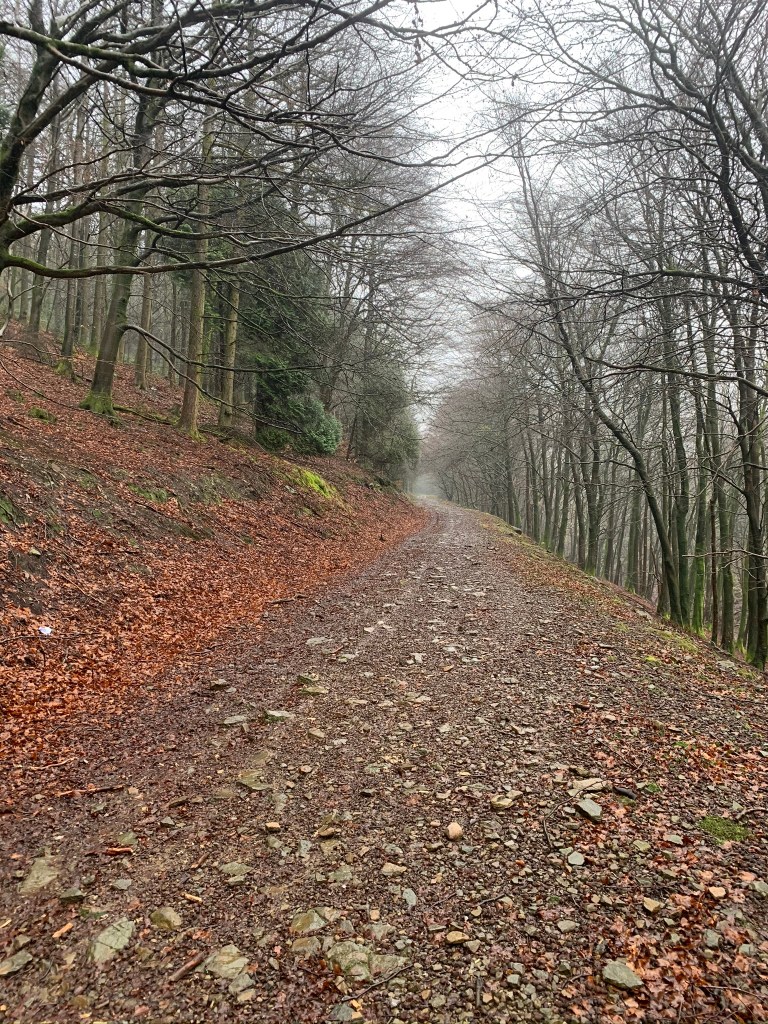
Local views around Ogmore this misty, moisty morning.

Meet Eve Beringar, narrator of Eve’s War https://hannah-howe.com/eves-war/eve-beringar-background/

As ever, thank you for your interest and support.

Hannah xxx

Categories
Dear Reader

Dear Reader #33

Dear Reader,

My sales top ten this week. Many thanks to everyone who supports my books.

Some people stand out. If you watch this video you will see what I mean. Currently, I’m reading dozens of books about twenty-one female SOE agents. All these women were remarkable, but some stand out even amongst such illustrious company.

This research will shape my SOE agents, Eve and Mimi. It’s an honour to read about these people, and their stories are gold dust for an author. So many ideas spring from every page. It’s very exciting.

Local views this week, at Sger.

Women of Courage, Heroines of the SOE

More research for my forthcoming Eve’s War series.

Lise Marie Jeanette de Baissac was born on 11 May 1905 in Mauritius, which made her a British subject. Of French descent, she was the youngest of three children.

In 1919 Lise and her family moved to Paris. When the Germans occupied Paris in 1940 Jean, her eldest brother, joined the British Army while Lise and her youngest brother, Claude, travelled for six months through Spain, Portugal and Gibraltar before arriving in Britain.

In Britain, Claude was recruited by the SOE while initially Lise worked at the Daily Sketch newspaper. Soon, Lise joined Claude in the SOE. However, instead of being trained for the usual roles of courier or wireless operator, Lise was instructed to create her own resistance circuit.

Lise de Baissac

Lise trained with Mary Herbert, Jacqueline Nearne and Odette Sansom. She impressed her trainers with her ability and her imperturbable, cool reactions. They regarded her as intelligent, strong-minded and decisive, with a flair for organisation.

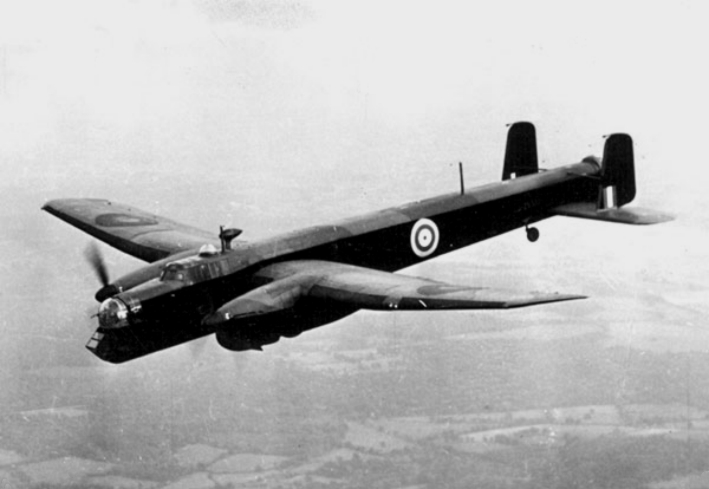
On 24 September 1942, Lise and Andrée Borrel were the first female SOE agents to parachute into France. The agents jumped from a Whitley bomber and landed in the village of Boisrenard near the town of Mer. Their mission was to establish a safe house in Poitiers where new agents could settle into their secret lives.

An Armstrong Whitworth Whitley c1940

Lise’s role was to form a new circuit and to establish a centre where agents could go with complete security for material help and information on local details, and to organise the pick-up of arms drops from Britain to assist the French resistance.

Cover stories were vital to SOE agents. For her cover story Lise was Madame Irene Brisse, a poor widow from Paris, seeking refuge in the provinces from the tension of life in the capital. She moved into an apartment on a busy street near the Gestapo HQ, and became acquainted with the Gestapo chief, Herr Grabowski.

Posing as an amateur archeologist, Lise cycled around the countryside to reconnoitre possible parachute drop-zones and landing areas for the RAF. When local networks collapsed and the Gestapo closed in, Lise was flown back to Britain. There, while assisting new recruits in training, she broke her leg.

With her leg healed, on 10 April 1944 Lise returned to France where she rejoined her brother Claude. After D-Day, she gathered information on German dispositions and passed that information on to the Allies. She was bold enough to rent a room in a house occupied by the local commander of the German Forces.

According to Lise, on one occasion, “The Germans arrived and threw me out of my room. I arrived to take my clothes and found they had opened up the parachute I had made into a sleeping bag and were sitting on it. Fortunately they had no idea what it was.”

In the summer of 1944 Lise enjoyed another lucky escape when cycling from Normandy to Paris. She was searched by a young soldier at a German checkpoint while carrying spare parts of radio sets around her waist. Later, Lise said, “He searched me very carefully. I knew he could feel the things I was carrying. But he said nothing. Perhaps he was looking for a weapon like a revolver, maybe he thought it was a belt. I do not know.”

Claude de Baissac

Lise’s colleagues spoke very highly of her. Captain Blackman, the leader of an SAS party in France wrote: “Every day she would cycle sixty or seventy kilometres. She often carried much compromising material on her person and bicycle, such as wireless material and secret documents. If she had been discovered carrying such things she would have been undoubtedly shot on the spot without trial or formal enquiry. Consequently she risked her life daily.”

Lise continued her SOE activities until the liberation, organising several groups and providing the Allies with information. She was also involved in sabotage missions, setting tyre bursters and mines on roads used by the military, cutting telephone wires, underground cables and railway lines. On at least one occasion she took part in an attack on an enemy column.

After the war Lise married Gustave Villameur, an artist and interior designer living in Marseille. She died on 29 March 2004, aged 98.

In 2008, Lise’s life was recaptured in the highly fictionalised French film Female Agents (Les Femmes de l’ombre).

As ever, thank you for your interest and support.

Hannah xxx

Categories
Dear Reader

Dear Reader #32

Dear Reader,

My new banner featuring some old favourites and forthcoming titles.

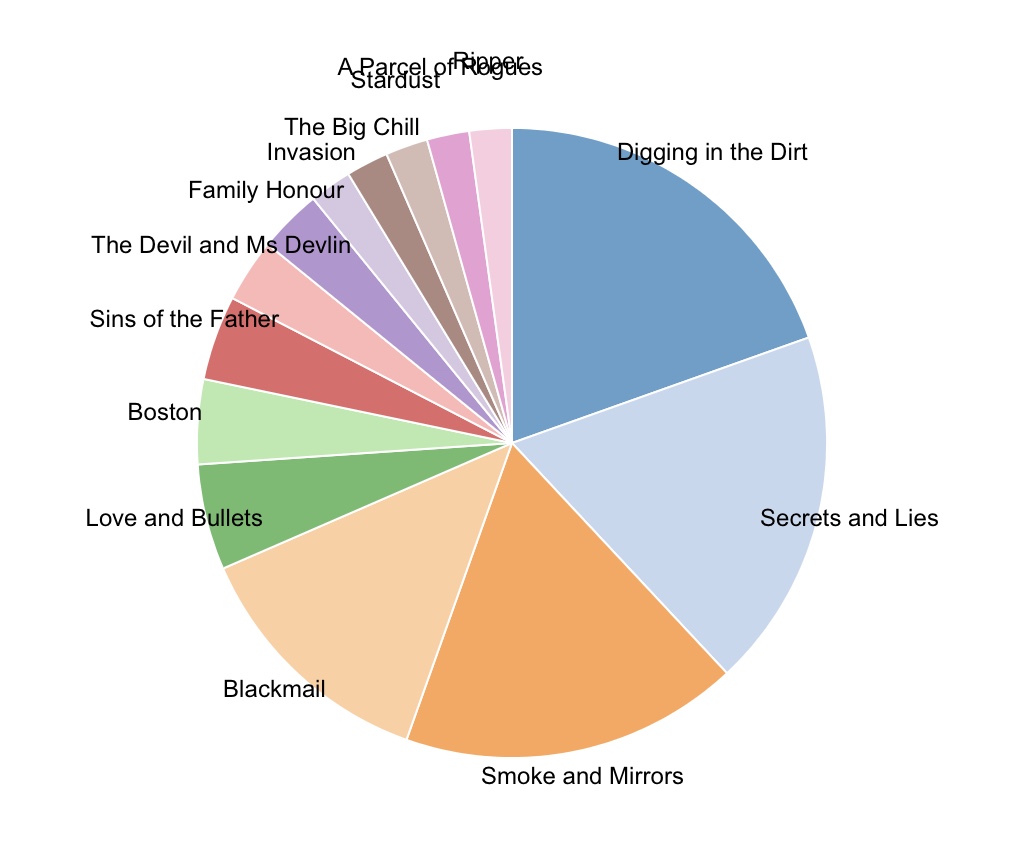
My sales on Apple so far this year reveal a pleasant surprise…Digging in the Dirt (Sam) is my current bestseller followed by Secrets and Lies (Sam), Smoke and Mirrors (Sam) and Blackmail (Ann). Digging in the Dirt was great fun to write so I’m delighted that my readers like it too.

Recently, I had the pleasure of interviewing Shakespearean actress Melinda Mullins. You can read that interview here https://issuu.com/momsfavoritereads/docs/january_2020

Melinda is also a talented artist. Here is an example of her work.

To see more of Melinda’s beautiful paintings and drawings please visit her website http://www.emcleobryant.com

Many thanks to Gloria for her lovely translation of Mind Games into Spanish. We have started the publishing process and the book will be available soon.

This is my 45th translation, sixteen of them into Spanish, with more in progress.

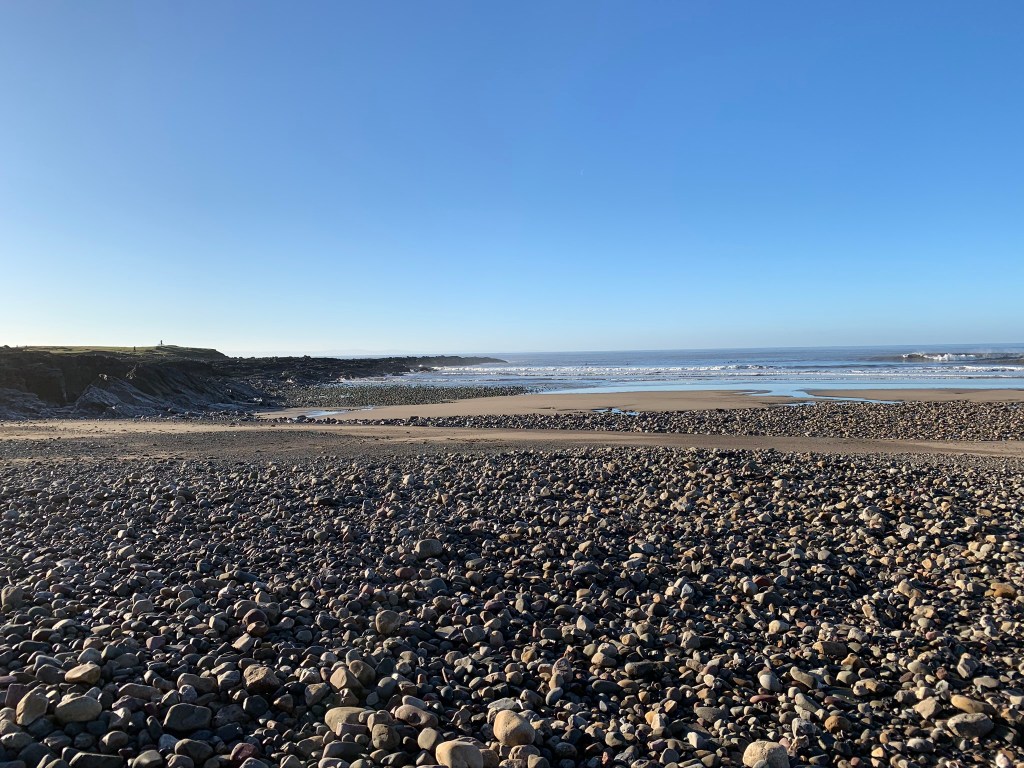
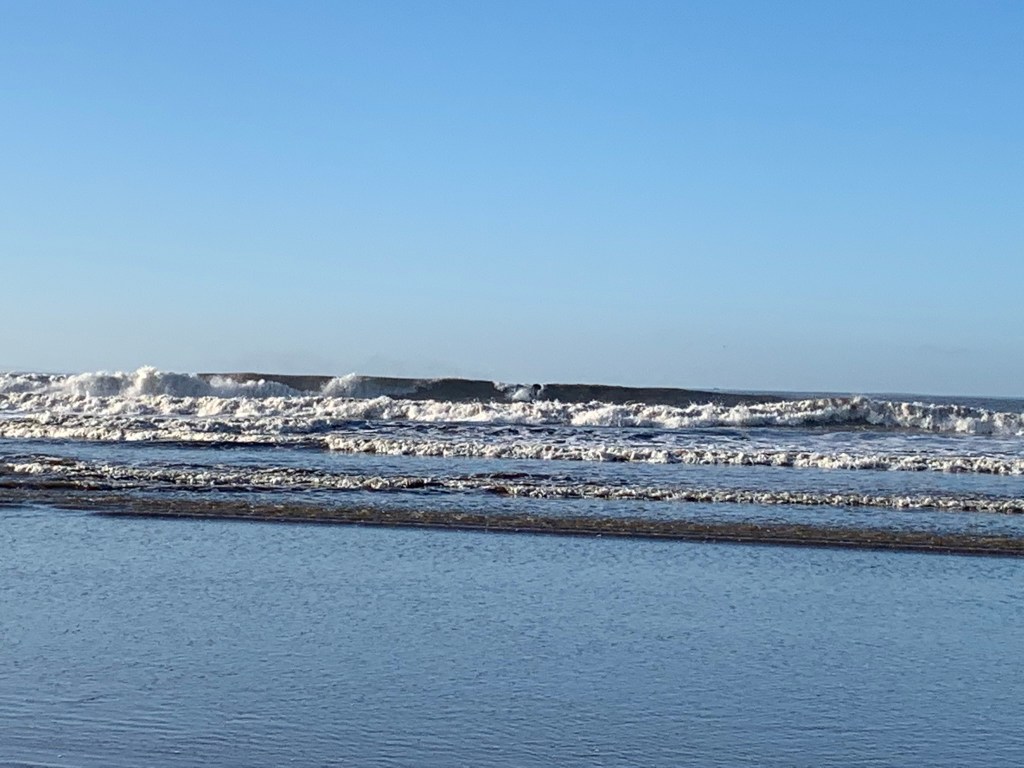
My local beach this week.

My personal top ten this week. Many thanks to everyone who supports my books.

Women of Courage, Heroines of the SOE.
More details from my Eve’s War research.

Valentine Blanche Charlet, born in Belgium on 23 May 1898, was one of the oldest female SOE agents to serve in France. Blanche worked as a courier for the SOE and held the rank of Field Agent and Guerrilla Commander. Before the Second World War she lived in Brussels where she managed an art gallery.

Blanche was one of the first four female agents the SOE trained. When she arrived in France, on 1 September 1942, she worked with fellow agent and wireless operator Brian Stonehouse. 

On 24 October 1942, German detector vans picked up Stonehouse’s radio signals while he was transmitting to London. They tracked him down to his safe house and arrested him. Before the Germans left, Blanche arrived for a pre-arranged meeting with Stonehouse and she too was arrested and interned in Castres Prison. 

The Germans held Blanche until September 1943 when she secured guns and spare keys from a sympathetic Yugoslavian wardress. Along with French resistante Suzanne Charisse and thirty-five others, Blanche escaped.

Blanche and Suzanne reached open country and, helped by Benedictine monks, they took refuge in a monastery. 

The monks sheltered Blanche and Suzanne in a guest house for two months before the women followed an escape route into the Pyrénées. However, the heavy winter snow prevented them from crossing into Spain.

In the spring of 1944, Blanche made her way to Brittany where she boarded a lifeboat ferrying supplies and fresh agents. German patrol boats were waiting. However, despite them and a gunfight, Blanche made her escape. 

Blanche reached safely on 20 April 1944. She made her report and stated that the practice interrogations she had endured with the SOE had saved her life. In more peaceful circumstances, she lived until 1985.

Mary Katherine Herbert was born in Ireland on 1 October 1903. 

At the outbreak of the Second World War, Mary worked in the British Embassy in Warsaw, then as a civilian translator in the Air Ministry. She joined the WAAF on 19 September 1941 and, at her own request, transferred to the SOE in May 1942, aged thirty-nine.

A well educated woman with a degree in art, Mary was fluent in French, German, Italian and Spanish. She also obtained a diploma from the University of Cairo in Arabic. 

Mary trained with Lise de Baissac, a contact who later would have a significant influence on her life. 

Mary arrived in France on 30 October 1942. She travelled to Bordeaux to act as a courier for the Scientist circuit, using the codename Claudine. In keeping with fellow SOE agents she travelled by bicycle and train, liaised with the French Resistance, carried messages, sought safe houses and potential recruits. Another task familiar to Mary and her fellow agents was to arrange and attend parachute drops as fresh agents arrived in France.

In France, Mary caught up with Lise de Baissac. She also met Lise’s brother, Claude. An affair between Mary and Claude produced a daughter, Claudine, born in December 1943. After the birth, Mary and Claudine moved into a flat maintained by Lise.

On 18 February 1944, the Gestapo raided Lise’s flat and arrested Mary in the belief that she was Lise. Separated from her baby daughter, Mary remained in prison until Easter 1944. During that time she created a cover story for herself stating that she was Madame Marie Louise Vernier, a Frenchwoman from Egypt. Despite interrogation by the Gestapo, Mary did not waver from her cover story.

Upon her release, Mary hid in a small country house near Poitiers. In September 1944, after a difficult search conducted in trying times, she was reunited with Claude and Lise.

Mary and Claude, marriage index

Mary married Claude in November 1944. After the war, she lived a quieter life giving private French lessons.

Mary died on 23 January 1983 with her daughter Claudine at her side.

As ever, thank you for your interest and support.

Hannah xxx

Categories
Dear Reader

Dear Reader #31

Dear Reader,

A lovely week for my books with Sam’s Song reaching #2 on the private investigator’s chart. The book has already reached #1 seven times, which is beyond my expectations 🙂

Great to see that Snow in August is still a Hot 💯 New Release sitting alongside New York Times bestselling author Harlan Coben 🙂

This week I completed the first draft of The Olive Tree: Roots, a Spanish Civil War Saga. The editing of Snow in August, Sam Smith Mystery Series book sixteen is also going well. Both books are available for pre-order.

My research this week centred on Eve’s War, my Special Operations Executive series. I’m studying the lives of twenty-one female agents. Here are the remarkable stories of two of them.

The exact number of Special Operations Executive agents who served in France isn’t known, but the female branch is estimated at forty. The two female agents in my Eve’s War series are a composite of twenty-one of those agents and my stories are based on their real-life experiences.

Giliana Balmaceda

Giliana Balmaceda was the first female agent the SOE sent to occupied France. Born in Chile c1910 she worked as an actress in Paris where she met Victor Gerson, a British citizen and a dealer in fine rugs and carpets.

The couple married and on 18 June 1940, at the signing of the armistice, they escaped to Britain where they joined the SOE.

Victor Gerson suggested creating a network of helpers to assist the entrance and exit of SOE agents assigned to France and Giliana volunteered to assess the possibility.

In May 1941 the SOE sent Giliana into occupied France. She returned through Spain in late June 1941. During her three months in France Giliana travelled freely in Lyons and Vichy, ostensibly on holiday, her Chilean passport securing her passage.

With a large haul of intelligence, contacts and administrative documents, such as ration cards, Giliana returned to Britain. There, the SOE reproduced the documents and subsequently agents used them on their clandestine missions.

Sonya Butt

Sonya Esmée Florence Butt, also known as Sonya d’Artois, was the youngest female SOE agent to serve in France. Born on 14 May 1924, Sonya worked as a courier for the Headmaster network under the code name Blanche.

Sonya Butt

Sonya’s role of courier brought her into contact with German check-points. The SOE preferred female agents as couriers because when travelling around the district on bicycles they were less likely to attract attention compared to males of military or working age.

Sonya joined the SOE, aged 19, on 11 December 1943. Her training included soldiering skills and stamina development, plus specialist skills for her life in occupied France. This training regime was new to women at the time. However, the training was familiar to men, including a French-Canadian army officer, Captain Guy D’Artois, whom Sonya met and later married.

Sonya Butt and Guy D’Artois

On 28 May 1944, the SOE parachuted Sonya into Le Mans to work as a courier. She arrived nine days before D-Day. A fellow agent who landed with her was shot, so Sonya took on his role of weapons instructor. As a courier, she carried money, delivered messages and maintained contact with fellow SOE agents and the French Resistance.

After D-Day, the Allies liberated Sonya’s district. However, before then two German soldiers detained her for questioning. Thankfully, her cover story and false papers withstood the interrogation and she was released.

Sonya Butt

In October 1944, Sonya returned to Britain. She married Guy d’Artois and the couple lived in Canada where they raised six children, three boys and three girls.

Sonya died on 21 December 2014 at the age of 90. It is a remarkable fact that of the twenty-one agents who form the background for my two SOE characters two-thirds of them lived well into their eighties and nineties.

As ever, thank you for your interest and support.

Hannah xxx