When my 2 x great grandfather William Howe died on 14 May 1933 the newspapers carried the following obituary: “We regret to report the death of Mr William Howe, aged 78, of Wood View, Cornelly, who passed away on Sunday. Mr Howe was senior deacon at Cornelly Calvinistic Methodist Chapel and superintendent for many years at the Sunday School in South Cornelly. A man of Godly character and exemplary life, he was held in respect by all whom he came into contact with, and his memory will be cherish, especially by those who first learned the path of rectitude and duty at Cornelly Sunday School. He was employed for a number of years as the foreman to Mr Gaen at the quarries, and his fellow workmen were given a half day off to attend the funeral.”
The report continued with a long list of notable people who attended the funeral.
William died at Wood View, a house that remained in the family. However, he’d spent many years of his life at Lilac Cottage, South Cornelly.
For decades after William’s passing his descendants, my ancestors, continued to live at Lilac Cottage. I intend to take a snapshot of their lives, focusing on the war years, 1939-45, and tell the story of the Lilac Cottage Howes who served on the Home Front and the Frontline. It’s a tale of ordinary people, of village life, and great sacrifice. It’s a story personal to me, yet common to many people. During 1939-45, Britain was full of “Lilac Cottages” and the lives of my Howes mirrored the lives of many people who lived through this challenging time.
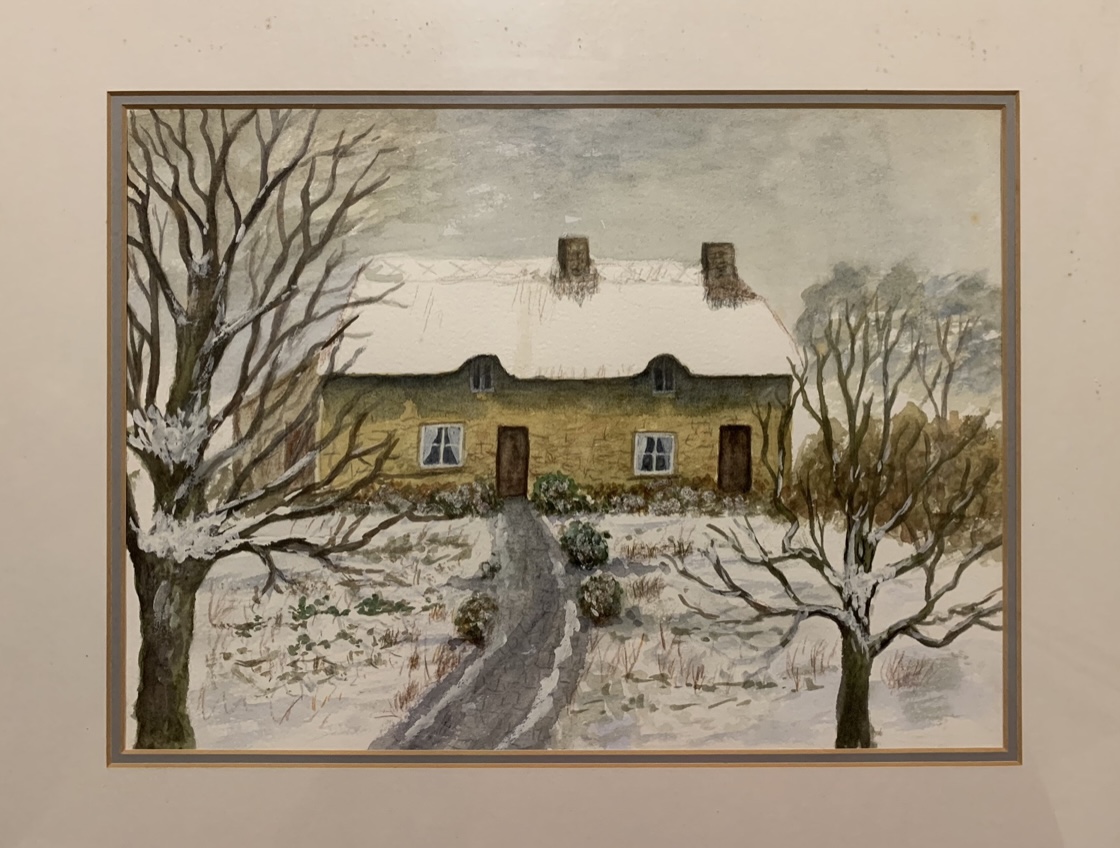
Lilac Cottage, a watercolour by Priscilla Doreen Howe
The Howes at Lilac Cottage, 1939
William David Howe – son of William Howe
Gwendolyne Thomas – wife of William David Howe
Joan Mary Howe – daughter of William David Howe
William Kenneth Howe – son of William David Howe
Clifford Roy Howe – son of William David Howe
Evan Howe – brother of William David Howe
Mary Ann Howe – sister of William David Howe
Also, Priscilla Doreen Howe – daughter of William David Howe – who in 1937 married Handel Edwards.
Living in Wood View, next door to Priscilla and Handel Edwards:
Christiana Howe – sister of William David Howe – her husband David T David, and their two children.
The cottage was divided in two with William David Howe and his family living in one part of the building and Evan and Mary Ann living in the other part.
Consider this the prologue. I will tell you more in Chapter One, next time.
For Authors
#1 for value with 565,000 readers, The Fussy Librarian has helped my books to reach #1 on 36 occasions.
After their victories against Scotland and Ireland, New Zealand met England at Crystal Palace. In a one-sided contest, New Zealand scored five tries to none. Duncan McGregor scored four of the tries, Fred Newton the other. None of the tries were converted, so the score finished 15 – 0 in the All Blacks’ favour.
All-round sportsman C.B. Fry stated: “The notion that these men beat us because of our physical degeneracy is nonsense. They beat us by organisation and by tactics.”
In the Empire News ‘The Impressionist’ wrote: “It is my firm opinion that as a side the New Zealanders form the finest I have ever seen. It is a treat, yea an education to watch them. Gallant little Wales may be depended upon to make a great effort next Saturday. I hope to be present to see the struggle.”
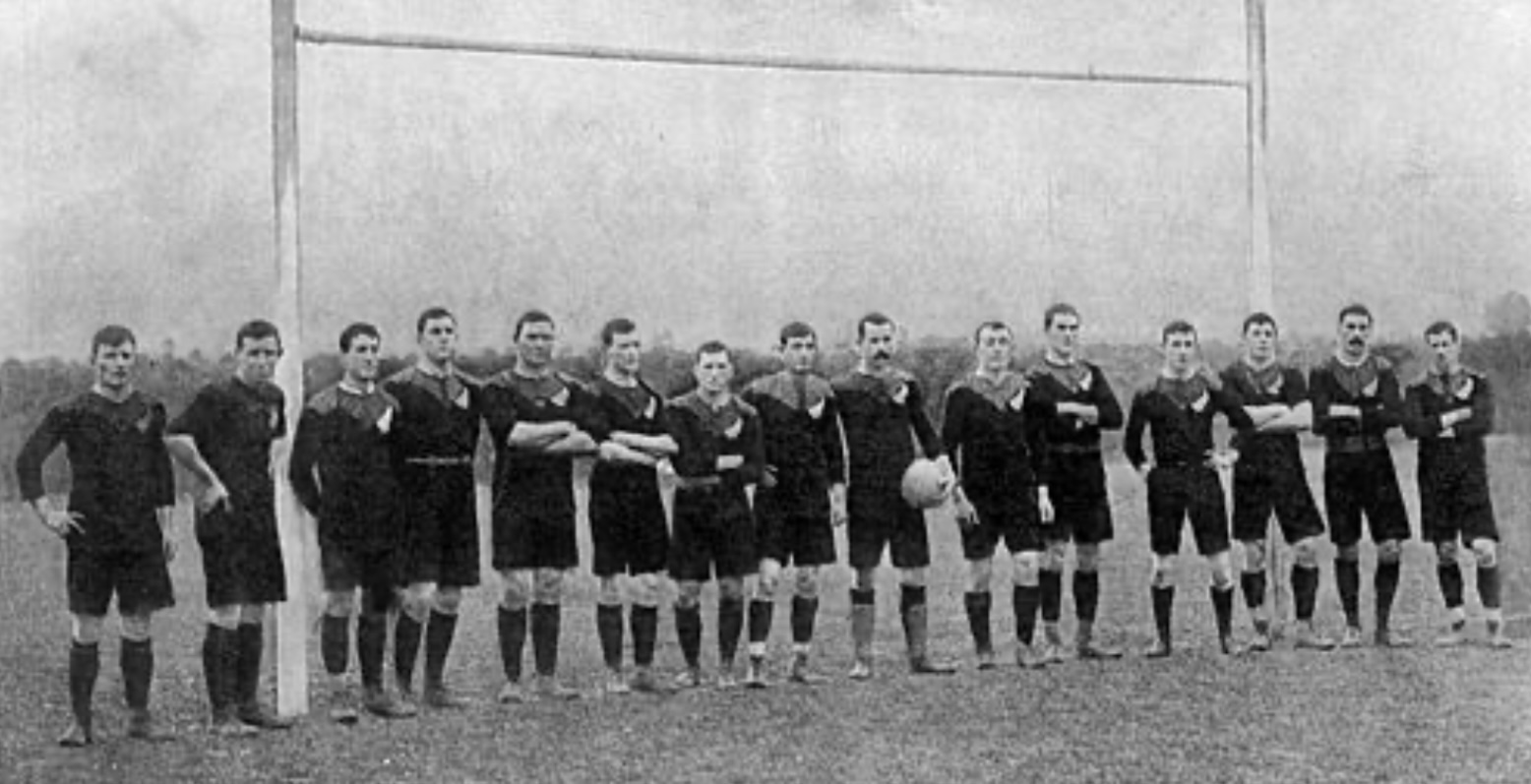
The New Zealand team v England
Part Nine: The Build-Up to the Wales Match
Throughout October 1905, the Welsh Match Committee observed the New Zealanders and analysed their style of play. They soon realised that they would have to develop new tactics to overcome the tourists’ unorthodox style.
On 20 November 1905, the Committee held the first of two trials. The ‘Probables’ adopted the New Zealand formation, utilising seven forwards instead of eight, However, they were beaten 18–9 by the ‘Possibles’ and their traditional Welsh formation.
Despite this setback, the Committee persisted with the experiment and the ‘Probables’ won the second trial match 33–11. A final training session was held on 12 December 1905 dedicated to drop kicking (worth four points, a point more than a try) and perfecting the new scrum technique.
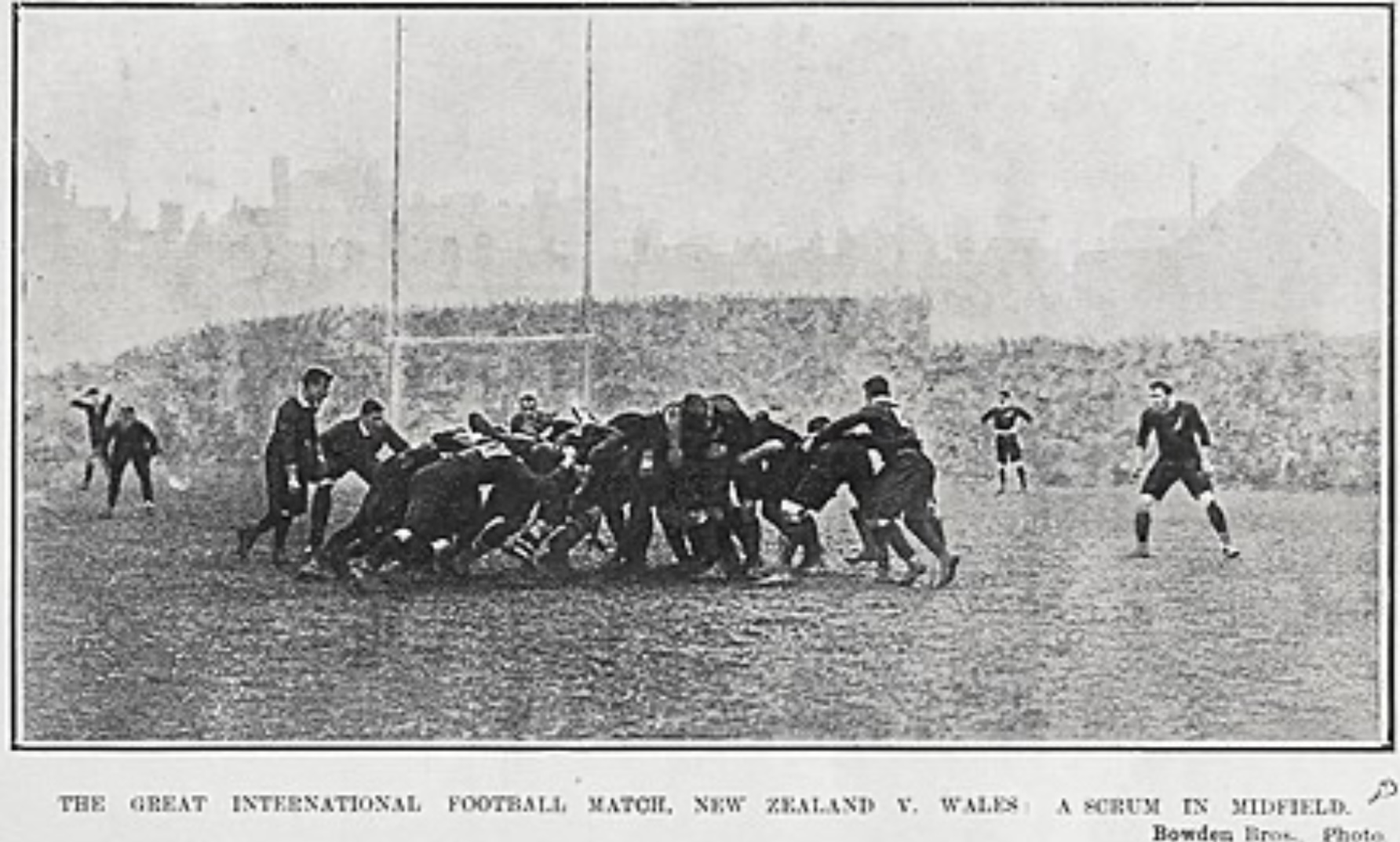
A scrum during the Wales v New Zealand match
Part Ten: The Haka
While the Welsh players concentrated on their new tactics, the administrators considered how they should respond to the New Zealand Haka. A selector, Tom Williams, suggested that the appropriate Welsh response to the New Zealanders’ cultural challenge should be the singing of the Welsh national anthem, Hen Wlad Fy Nhadau.
A debate ensued in the Welsh newspapers and the idea attracted a great deal of support. Nevertheless, no official plan was created, and no one was certain how the crowd would react after the New Zealanders had performed their Haka (pictured).
Part Eleven: The Press
The consensus amongst the media in London was that Wales had no chance against the all-conquering All Blacks. This article, published in The Times on the morning of the match, 16 December 1905, was typical.
“Time has stolen the dash from two or three of the best (Welsh players) – and the missing eighth man (the tactic to play only seven forwards) is likely to be badly missed before the Cardiff game comes to its conclusion in the inevitable defeat of Wales.”
Welsh lock Jack Williams receiving treatment at half-time
Part Twelve: The Crowd
Additional trains were provided for the travelling spectators. Large queues formed before the Arms Park gates were opened at 11am and those gates were closed again at 1.30pm with the ground full.
Many would-be spectators, locked out of the ground, climbed trees in order to glimpse the match. In addition, taxi drivers parked outside the ground and charged people for the privilege of standing on their cabs to get a view over the stand.
A line-out contested during the match
Part Thirteen: Pre-Match Build-Up
Crowds throughout Britain and Ireland offered hostility or indifference to the New Zealand Haka. However, the Welsh public, informed and aware of its cultural significance, offered the Haka due respect.
As the Haka concluded, Welsh winger Teddy Morgan (pictured) led an immediate response by singing Hen Wlad Fy Nhadau. Morgan encouraged his teammates to join in, and the crowd soon added their impassioned voices.
“Imagine some 40,000 people singing their national anthem with all the fervour of which the Celtic heart is capable. It was the most impressive incident I have ever witnessed on a football field. It gave a semi-religious solemnity to this memorable contest, intensely thrilling, even awe-inspiring. It was a wonderful revelation of the serious spirit in which the Welsh take their football.” – New Zealand captain Dave Gallaher’s remark on experiencing the Welsh crowd singing their anthem at a sporting occasion for the first time.
The singing of Hen Wlad Fy Nhadau is the first recorded instance of a national anthem being sung before an international sporting fixture – anthems were normally reserved for royalty and formal state occasions.
Witnesses, including the New Zealand players and London press, noted the impact of the anthem on the players, crowd and themselves. For decades to come, match reports, player interviews and memoirs all cited the anthem as a factor in the Welsh victory.
Soon, the singing of national anthems would become a formal part of proceedings in a variety of sports and, eventually, a standard practice across the sporting world.
Teddy Morgan
Part Fourteen: The Match
Hodges kicked off for Wales. Seeling made a break for New Zealand, and was brought down by the Welsh defence, resulting in the first scrum. The All Blacks adopted their usual formation of seven packed forwards. However, Wales abandoned the British system of eight forwards – they packed down with seven men, including four in the front row. This meant whichever side New Zealand tried to gain the loose-head advantage, Wales had a man outside.
Wales dominated the first half. Indeed, New Zealand only breeched the Welsh 25 in the minutes before half time. In the opening fifteen minutes, the All Blacks conceded a string of penalties. The best chance fell to Wales, but that chance faded when Willie Llewellyn, yards from the try line, failed to hold a difficult pass from Jack Williams.
On twenty-three minutes another scrum was called and Dicky Owen called the move he’d devised in training. Wales won the ball. Owen ran down the blindside with the backline of Bush, Nicholls and Llewellyn following him in support. This initial move drew Gallaher, Hunter and most of the New Zealand backs to the blindside. Then Owen switched play. He threw a long pass back to the openside. Cliff Pritchard picked up the ball from his bootlaces. He drew the covering tackle of Deans before passing to Gabe who beat McGregor. Finally, Gabe passed to Morgan who sprinted twenty-five yards past the covering full-back Gillett to touch down in the left corner. The try went unconverted. Half-time: Wales 3 – 0 New Zealand.
New Zealand rallied in the second half and dominated the attacking play. However, their kicking game was not up to its usual standard, and they had issues with the strong Welsh scrum.
Billy Wallace crossed the try line, but only after he’d placed a foot in touch. A forward pass from Deans put McGregor in the clear, and he was rightly called back.
The All Blacks pressed through a series of scrums on the Welsh goal line, but the Welsh forwards refused to yield. With the mist descending, Deans made a break and sprinted thirty yards to the try line. Inches from the try line, Morgan and Gabe tackled Deans. The referee, John Dallas, arrived and said no try. He estimated that Deans was a good six to twelve inches short of scoring. Some reports suggested that Deans made an illegal double movement, and was still short. Deans, however, insisted that he had scored, then been pulled back. New Zealand’s best chance had gone. Final score: Wales 3 – 0 New Zealand.
The Wales team v New Zealand
Part Fifteen: The Cultural Impact
At the sound of the final whistle, the crowd rushed on to the field and carried the Welsh players on their shoulders. Later, Gallaher led his team into the Welsh changing room, where he offered his congratulations, and the players exchanged jerseys. He also conceded that on the day, “the best team won”.
The victory over New Zealand cemented rugby’s place in the Welsh national psyche. It laid the foundations for the first Golden Age of Welsh Rugby. As the century unfolded, despite the devastation of two world wars, more Golden Ages followed. Welsh rugby enjoyed feasts of success and endured famines of defeat. Peaks and troughs. It has always been so.
As ever, thank you for your interest and support.
Hannah xxx
For Authors
#1 for value with 565,000 readers, The Fussy Librarian has helped my books to reach #1 on 36 occasions.
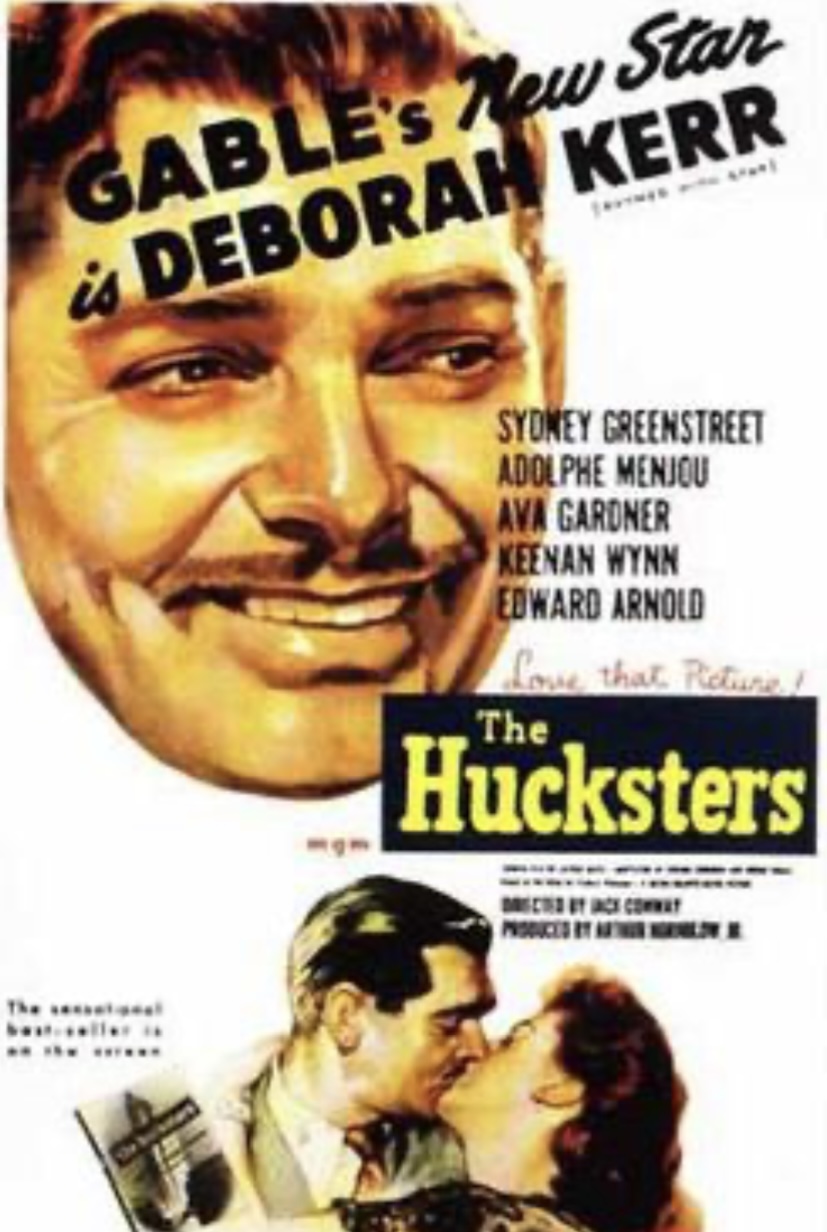
“Hollywood has apologised to film fan Shirley Browne of Blythe, Northumberland, who didn’t like The Hucksters staring Clark Gable and Deborah Kerr. As a peace offering MGM sent Shirley a parcel containing sweets, fruit and tins of meat. ‘I considered The Hucksters to be a very poor film,” Shirley told The Daily Mirror, “so let Hollywood know about it. I’m glad I did.’”
Movie News – March 19, 1948
“The story of an unusual love is told in striking fashion in Notorious. Ingrid Bergman, probably one of the best dramatic actresses to appear for years, plays the leading role, and Cary Grant makes a splendid addition to his record of screen successes.”
The first day of spring, and the start of a new social history series: Spring and Summer of 1976, featuring news, weather, sport, cinema, television and music items from that era. Item number one is the television guide for 20 March 1976. Do you remember any of these programmes?
21 March 1976
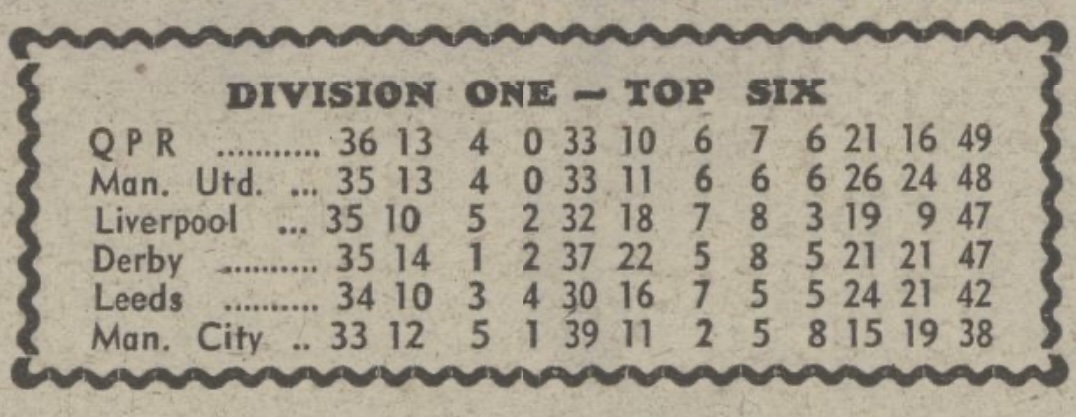
“Football’s winter of defensive discontent ended with a bang yesterday as the strikers turned the clock back to the good old days and celebrated British summer time with a glut of goals. Top of the hit parade were dour, dogged old Arsenal with six against Euro-heroes West Ham at Highbury.”
22 March 1976
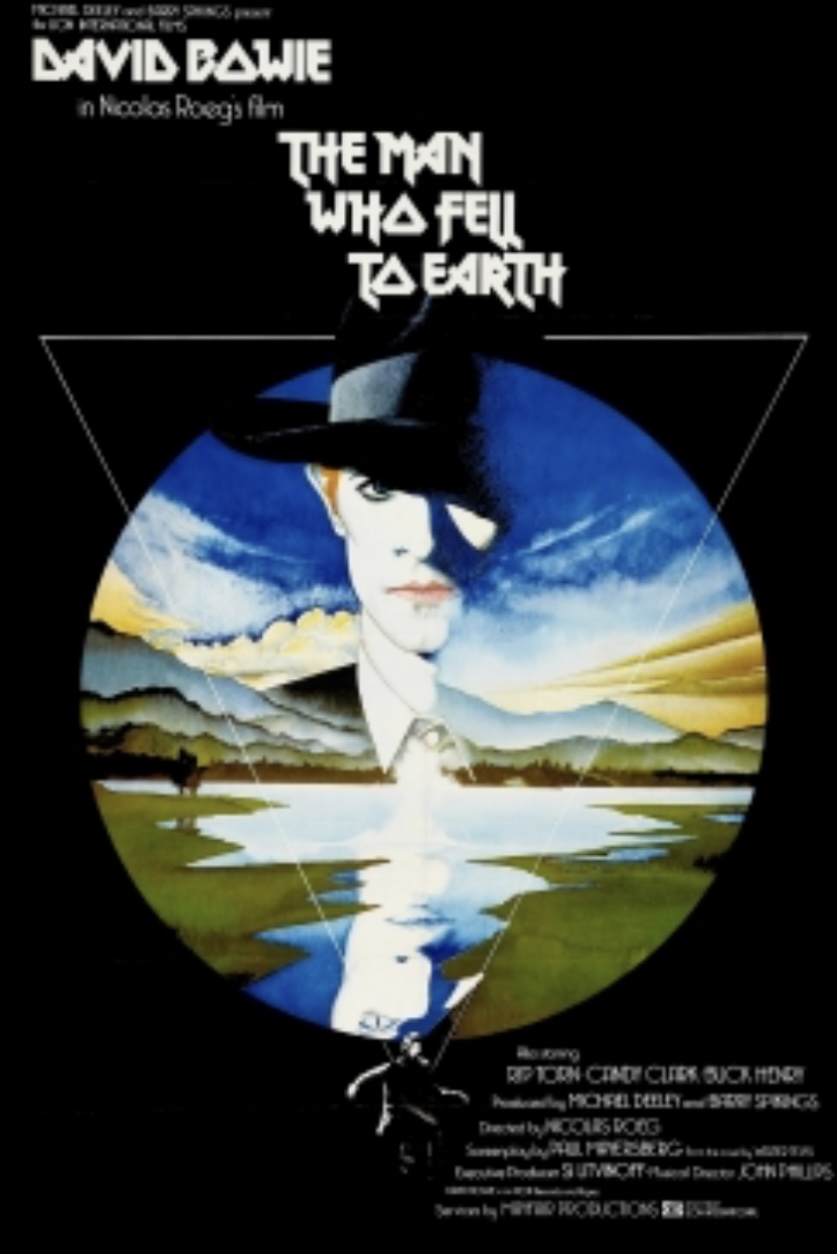
“British rock star David Bowie was arrested earlier today and charged with possession of marijuana. He was released on £1,000 bail. Bowie gave up music for the theatre, but returned to singing and his act soon became one of the more zany attractions on the pop scene. He is the star of a new science fiction film, The Man Who Fell to Earth, directed by Nicolas Roeg.”
23 March 1976
And now the weather…
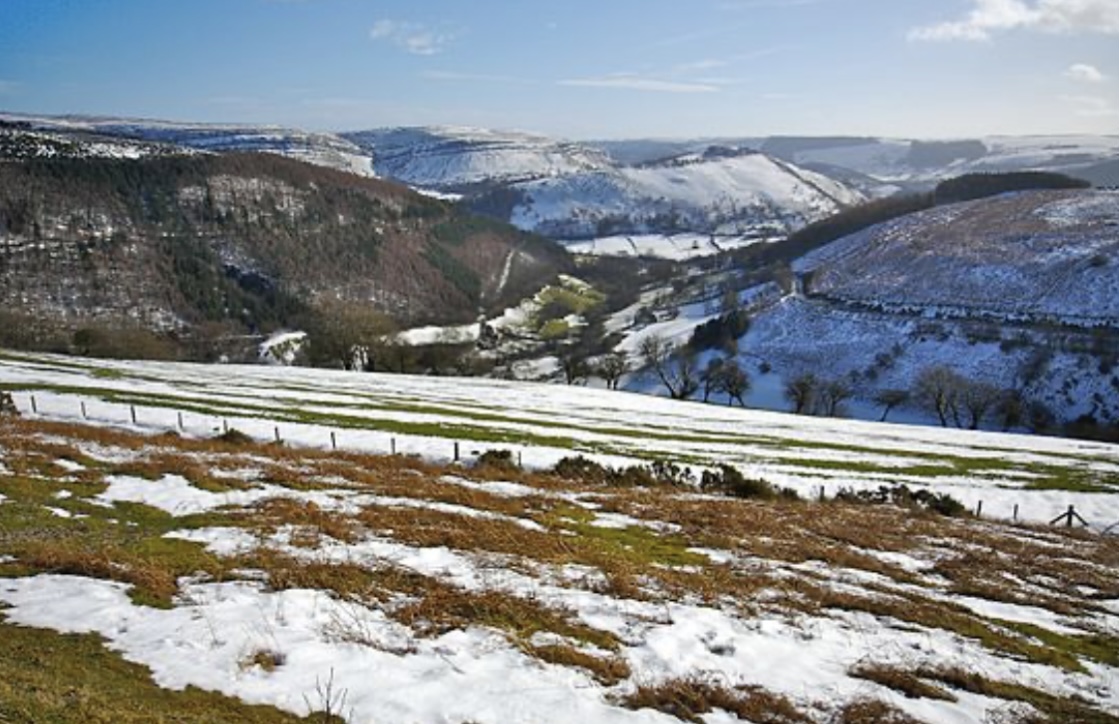
“Yesterday, the first full day of summertime, snow blocked the Horseshoe Pass near Llangollen and the Crimea Pass near Blaenau Ffestiniog. A six-inch fall of snow also blocked the Llanberis Pass for a time. In other parts of Britain, wintry conditions brought eight inches of snow overnight. Sunny periods are forecast for today.”
The Horseshoe Pass (Wikipedia)
24 March 1976
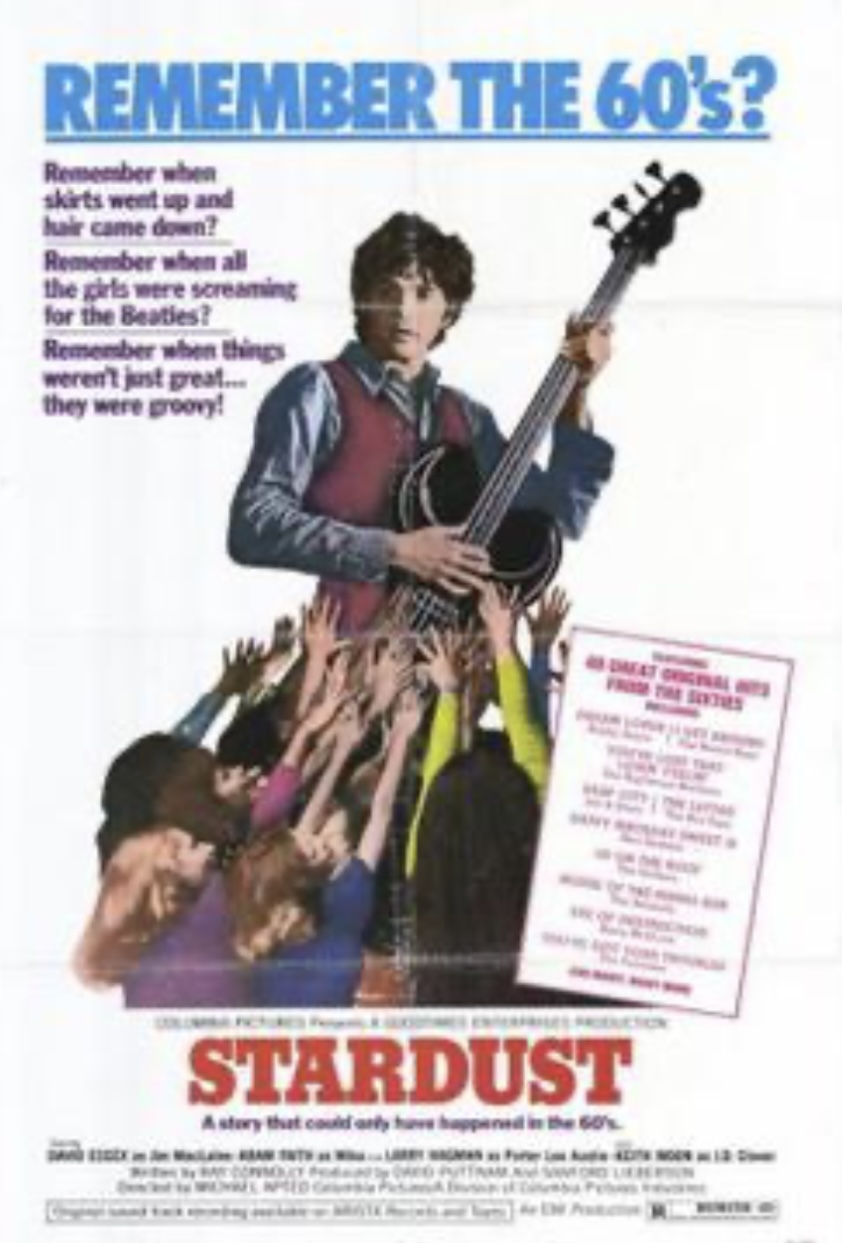
Movies showing at Theatre One this week: David Essex in Stardust (aa) and That’ll Be the Day (aa), and your last chance to see Enter the Dragon (x). Also, Lip Service (x), The Revengers (x), and Beyond the Valley of the Dolls (x). For members only: Bedspread and Country Girl. Just think, the censor had to watch all these movies. It was a dirty job, but someone had to do it…
As ever, thank you for your interest and support.
Hannah xxx
For Authors
#1 for value with 565,000 readers, The Fussy Librarian has helped my books to reach #1 on 36 occasions.
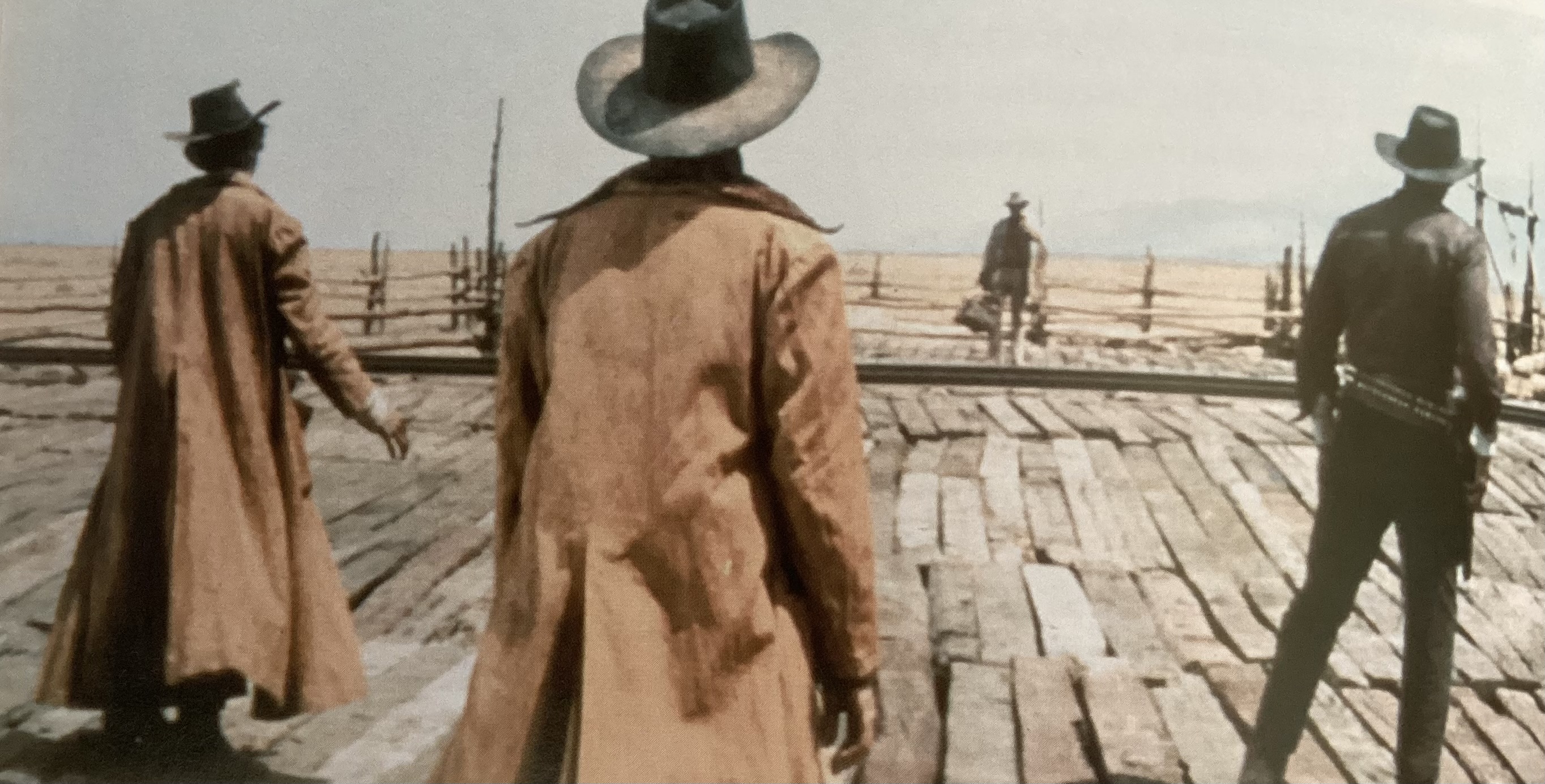
Charles Bronson’s character is walking towards three gunmen in which 1968 movie?
Quiz answers at the foot of this post.
Movie News – March 4, 1948
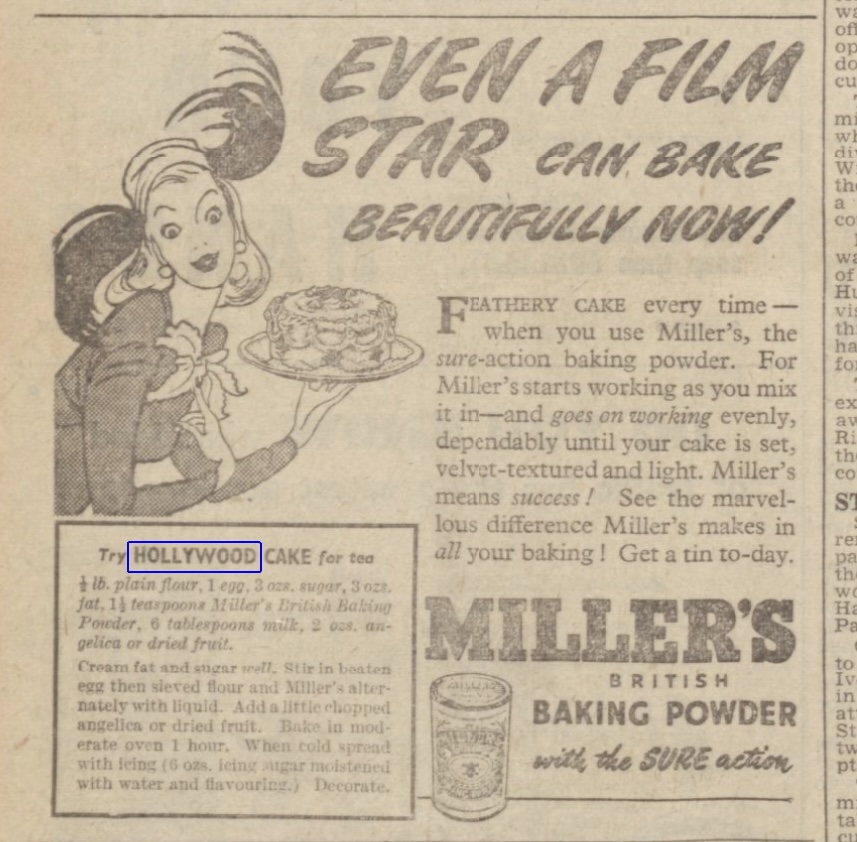
A Piece of (Hollywood) Cake
Movie News – March 5, 1948
“Eddie Voight, one of Hollywood’s most famous make-up artists, has decided that the film actress, Eve Arden, has more ‘binaural lure’ than any other actress in the world. This is Eddie’s phrase for ears that have sex appeal!”
Movie Quiz #9
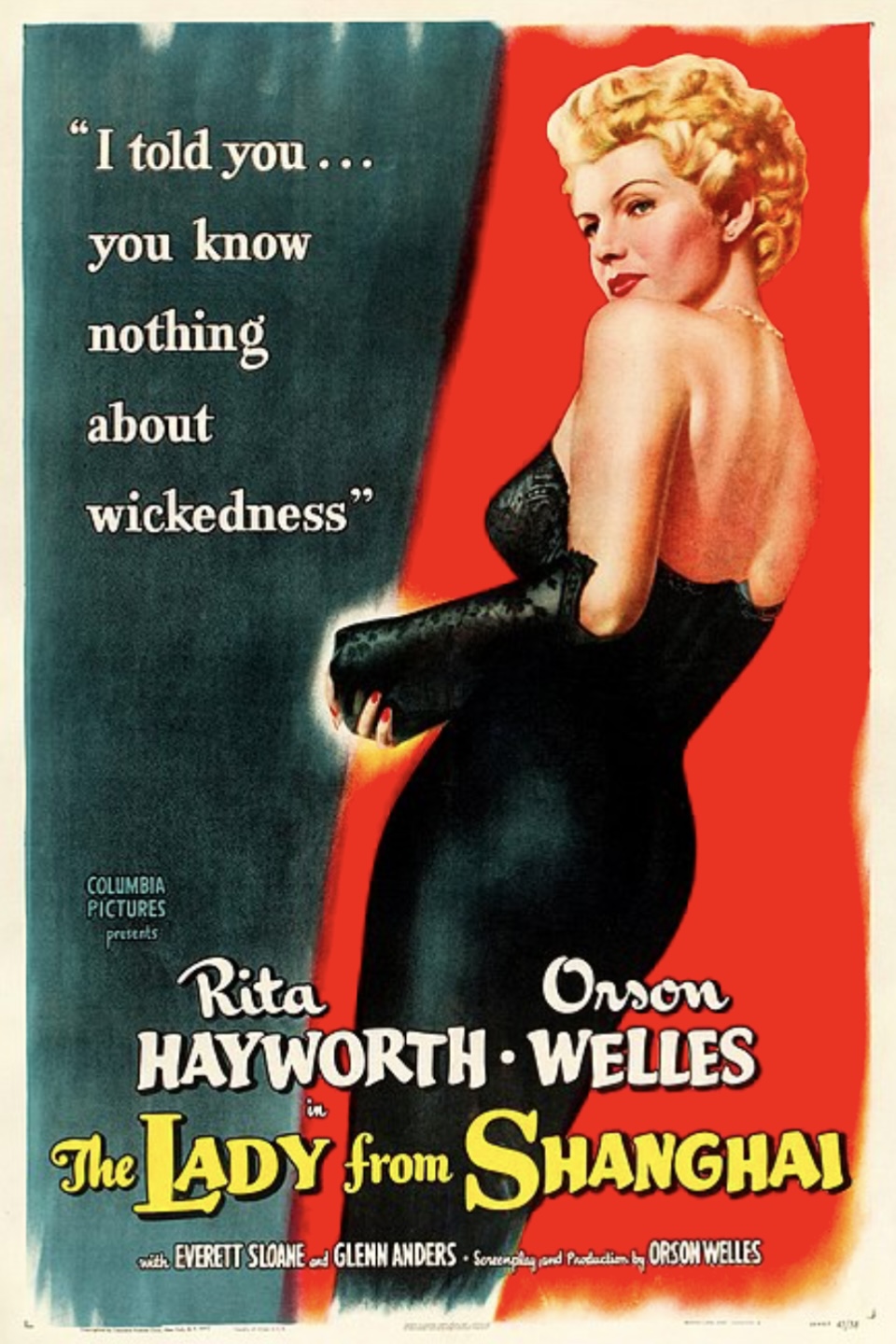
Can you name this notorious actress?
Movie News – March 6, 1948
“The Lady From Shanghai is a hard to hear, hard to follow murder thriller made by Mr Orson Welles before he and Miss Rita Hayworth parted. Miss Hayworth looks lovely, but does not dance. Mr Welles’ ingenious photographic effects do not compensate for his inaudible and incomprehensible story.”
Movie News – March 7, 1948
“Scotland’s single attempt to introduce “no smoking” in cinemas has ended in failure. Six months ago, Mr R J Pennycook began the experiment at the Tonic Cinema, Queen’s Park, Glasgow. Mr Pennycook had visited American cinemas and been impressed by the pure atmosphere and clean-cut presentation on the screen.”
“Before long,” Mr Pennycook said, “young people stopped coming. Most of the grumbling came from girls. Folk who come now can smoke if they want to. After all, I suppose it is a part of their relaxation.”
Movie News – March 8, 1948
“Howard Hughes, multi-millionaire, plane designer, tool manufacturer and pilot, is trying to buy control of RKO, one of Hollywood’s most powerful film companies. There is no evidence that as a producer he has any special talent.”
Historian Betty Lasky described Howard Hughes’s relationship with RKO as a “systematic seven-year rape.”
Howard Hughes as depicted by Ernest Hamlin Baker for the July 19, 1948 cover of Time.
Movie Quiz #10
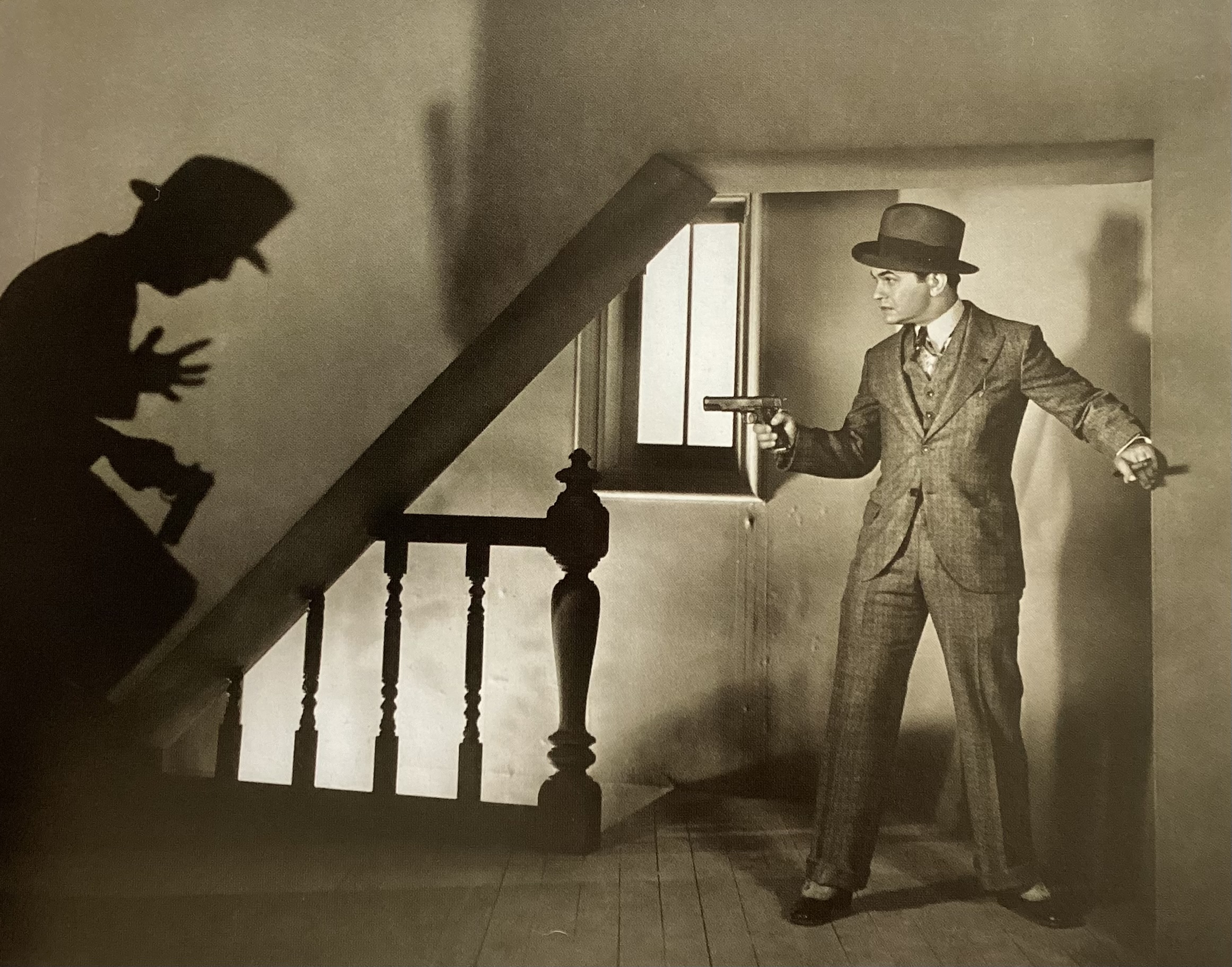
Can you name the actor and the movie?
Movie News – March 9, 1948
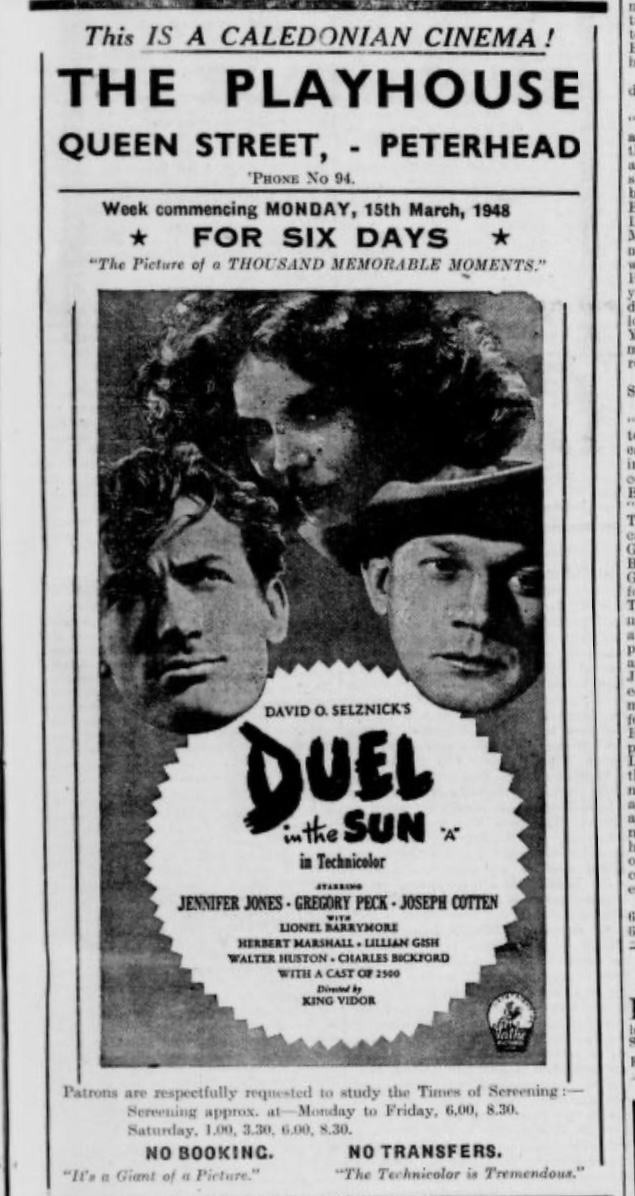
A promotion for Duel in the Sun, aka Lust in the Dust, “A Picture of A Thousand Memorable Moments.”
Note the telephone number – not seven or ten digits, simply 94.
Movie News – March 10, 1948
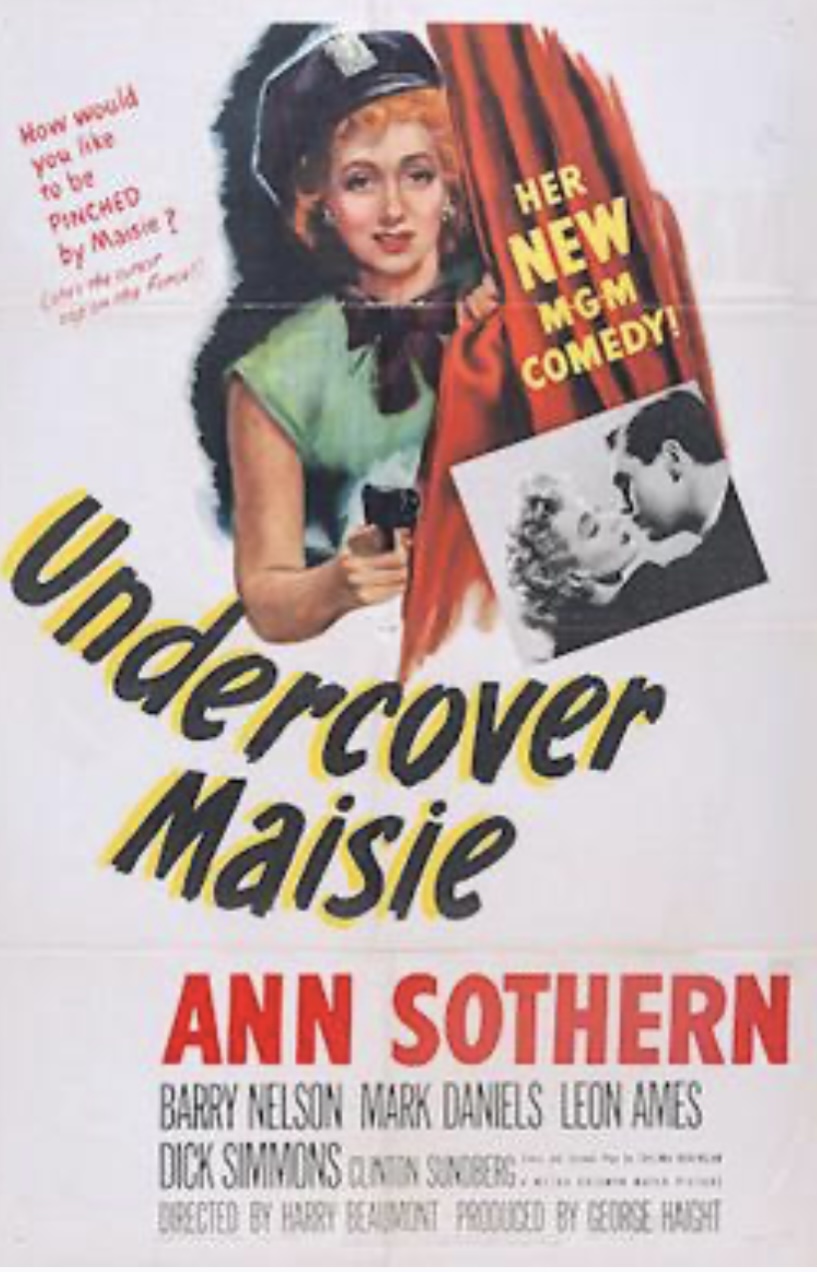
“Undercover Girl is the latest in the ever-popular Maisie series, and brings Ann Sothern to the screen once again in her incomparable role of the soft-hearted, hard-boiled Brooklyn girl who meets all difficulties with incurable optimism.”
Quiz #8 answer: Once Upon a Time in the West
Quiz #9 answer: Mae West. “When she is portraying a bad woman, she’s sumptuously, voluptuously, riotously bad, and she revels in complete vulgarity.” – Alma Whitaker on Mae West, in the Los Angeles Times.
Quiz #10 answer: Edward G Robinson in Little Caesar
As ever, thank you for your interest and support.
Hannah xxx
For Authors
#1 for value with 565,000 readers, The Fussy Librarian has helped my books to reach #1 on 32 occasions.
In the early 1370s, as a widow with several young children to look after, my medieval ancestor Katherine de Roet faced an uncertain future. Then, John of Gaunt came to her aid. He placed her in the service of his new wife, Constance of Castile. Also, he offered direct financial support.
Meanwhile, Katherine’s sister, Phillipa, found herself a husband – none other than the poet, Geoffrey Chaucer, (pictured).
Why was John of Gaunt so generous towards Katherine? Events were about to take a dramatic turn…
In the autumn of 1372 the social status of my medieval ancestor, Katherine de Roet, increased significantly. The reason? She became John of Gaunt’s mistress.
A love affair between the couple had been on the cards for years. Now, with Katherine a widow, and despite the fact that John of Gaunt was married to Constance of Castile, he decided to act. Soon, she was pregnant, and attracting the displeasure of the royal court.
In 1373, my medieval ancestor, Katherine de Roet, mistress of John of Gaunt, was pregnant. Consequently, she retreated to her estate in Kettlethorpe.
Between 1373 and 1381, Katherine bore four children to John of Gaunt, the Duke of Lancaster: three sons and a daughter.
Katherine named her first son John, after his father. Her children carried the surname Beaufort. It’s not known why that surname was chosen. My connection to Katherine stems from the Beaufort branch of my family.
In the 1370s, John of Gaunt, the Duke of Lancaster, appointed his mistress, my medieval ancestor Katherine de Roet, as the governess to his daughters Philippa and Elizabeth. This was, of course, a ruse, so that John of Gaunt could remain close to Katherine.
Throughout her affair with John of Gaunt, Katherine kept a low profile, retreating to her estate in Kettlethorpe to give birth. For his part, John of Gaunt made sure that Katherine wanted for nothing. Clearly, he cared deeply for her. According to surviving documents, Katherine and John were good and loving parents. Indeed, the “Anonymous Chronicle” reports that Katherine “loved the Duke of Lancaster and the children born from him”.
John of Gaunt
In June 1377, King Edward III (pictured) died and the kaleidoscopic picture of the royal court turned again. In March 1378, my medieval ancestor Katherine de Roet made public her affair with John of Gaunt, Duke of Lancaster.
Thomas Walsingham wrote in his chronicle that John of Gaunt, “casting aside every shame of man and the fear of God, allowed himself to be seen riding through the Duchy with his concubine, a certain Katherine Swynford (Katherine’s married name). Walsingham added that the people were indignant and despaired because of such scandalous behavior. In his opinion, it was because of Katherine, whom he called “a witch and a whore”, that “the most terrible curses and vile insults began to circulate against the Duke”.
Incidentally, my direct link to the kings of England begins with Edward III.
The chroniclers did not approve of my medieval ancestor Katherine de Roet’s relationship with John of Gaunt. Henry Knighton wrote: “a certain foreigner Katherine Swynford lived in his wife’s house, whose relationship with him was very suspicious”.
Furthermore, the love affair disturbed members of John of Gaunt’s family, who feared its consequences. John of Gaunt himself in 1381 said that clerics and servants repeatedly warned him about the detrimental effect of his relationship with Katherine on his reputation, but he ignored them.
Considering that John of Gaunt and Katherine de Roet are my direct ancestors, I’m glad he did.
In April 1378, my medieval ancestor Katherine de Roet was joined by her sister, Philippa Chaucer, wife of the poet Geoffrey Chaucer, on her estate in Kettlethorpe. When able, John of Gaunt called on Katherine.
The chroniclers were still furious about Katherine and John of Gaunt’s love affair. They pointed out that Katherine’s income was greater than that of John’s wife, Constance of Castile.
Personal and political events were coming to a head, and they exploded with the Peasants’ Revolt of 1381.
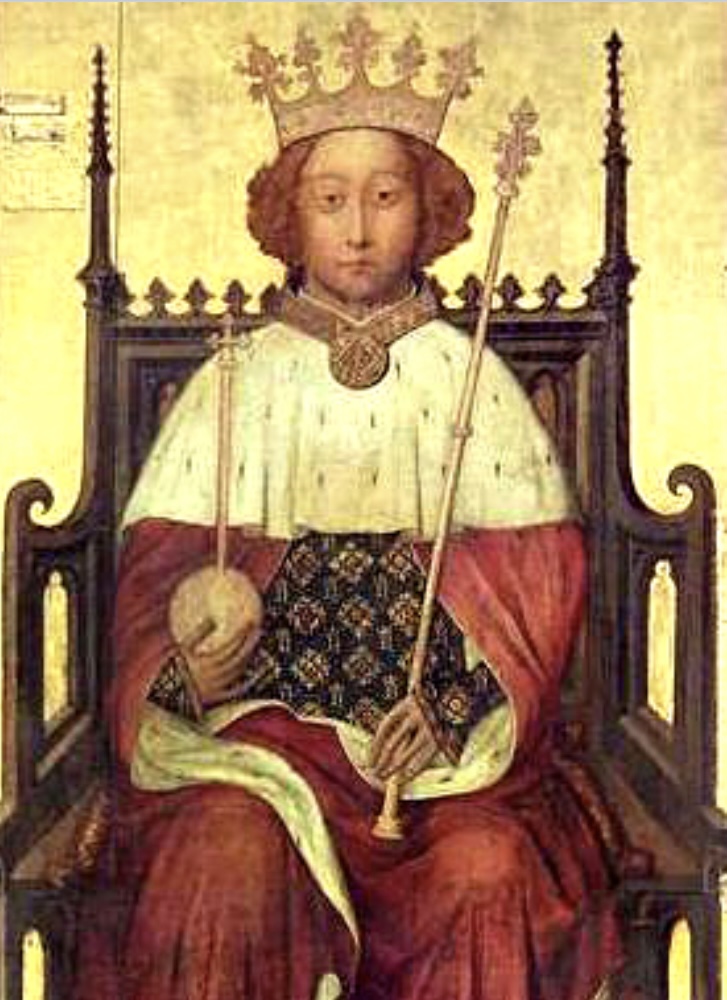
Richard II, King of England at the time of the Peasants’ Revolt
After the Peasants’ Revolt of 1381 (pictured), chronicler Thomas Walsingham stated that John of Gaunt “blamed himself for the death of [those] who had been overthrown by unholy violence” and “reproached himself for his connection with Katherine Swynford, or rather forswearing her”.
As a result, John of Gaunt ended his affair with my medieval ancestor Katherine de Roet Swynford and reconciled with his wife, Constance of Castile. One of the great romances of the medieval era appeared to be over.
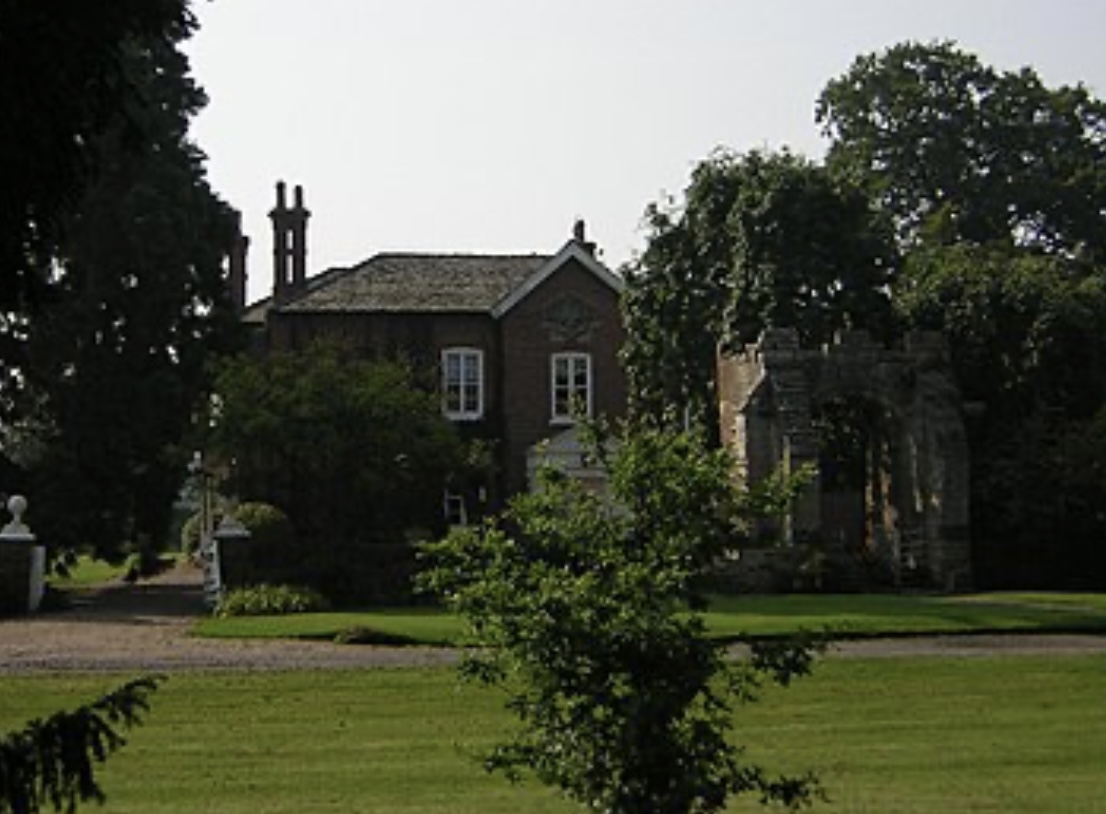
In 1381, my medieval ancestor Katherine de Roet returned to her estate in Kettlethorpe (pictured, Wikipedia). She remained there for twelve years, her illicit relationship with John of Gaunt apparently over.
Then fate intervened again. John of Gaunt’s wife, Constance of Castile, died and free from his political obligations, John resumed his relationship with Katherine. To everyone’s surprise, and many noblemen’s displeasure, in 1396 he married Katherine.
Discontent amongst the nobles rumbled on. Then the Pope came to John and Katherine’s aid. He recognised their marriage as valid and legitimatised all of their children. John and Katherine’s long struggle was over. They could enjoy their autumn years together, in peace.
Concluding the story of my ancestors Katherine de Roet and John of Gaunt.
Together at last, Katherine and John no doubt entertained Katherine’s sister, Philippa, and her husband Geoffrey Chaucer. Maybe Geoffrey regaled them with his latest poems.
Katherine and John’s descendants, the Beaufort family, played a major role in the Wars of the Roses with Henry VII claiming the throne through his link to Margaret Beaufort, Katherine and John’s great-granddaughter.
Through her son John Beaufort and her daughter Joan Beaufort, Katherine became the ancestor of all English kings since Edward IV.
As ever, thank you for your interest and support.
Hannah xxx
For Authors
#1 for value with 565,000 readers, The Fussy Librarian has helped my books to reach #1 on 32 occasions.















 Hannah Howe