Categories
Genealogy

Lowcock Branch #3

Early married life for my 4 x great grandparents Ann Lowcock and James Richard Brereton saw the birth of three children: Thomas, Sarah and James. 

Thomas was born late 1818/early 1819. The records for him are scarce, and his baptism record has not survived.

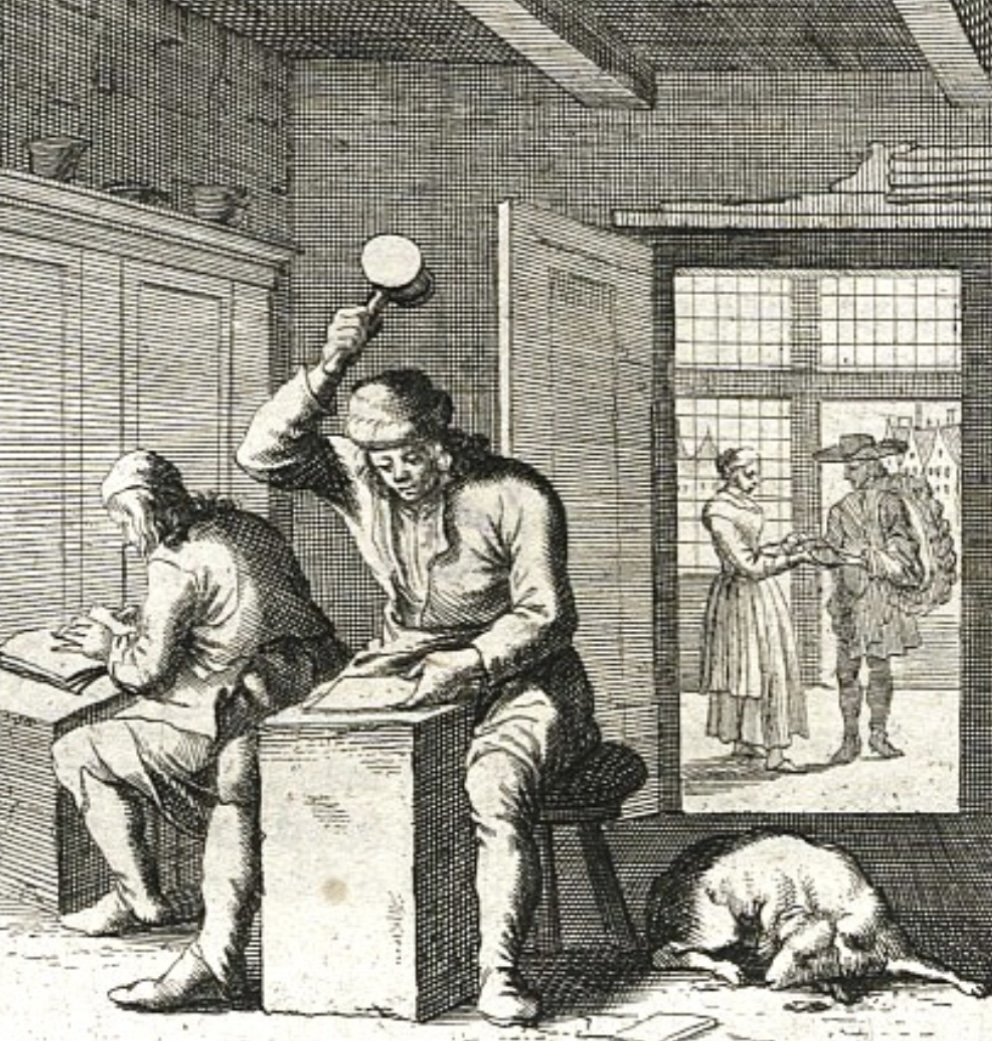
Sarah was born on 29 March 1820 in Bristol and baptised on 29 April 1821 in the church of St Philip and St Jacob, Bristol. Her father James was working as a highly-skilled goldbeater at that time, producing gold leaf.

A goldbeater at work

Baby James was born late 1824. Again, there is no record of his baptism. One reason for the lack of Thomas and James’ baptism records could be that the family were moving around Somerset as James Brereton sought employment. 

No child was recorded born to James and Ann c1822. In common with most women of the period, Ann gave birth every two or three years, so the four year gap is unusual. My suspicion is that their baby born c1822 died in infancy, and the records have not survived.

Although James had a good trade, working in metal, his health failed – possibly due to metal poisoning. And his family found themselves in London, seeking financial support. Almost certainly, James had returned to his birth city to connect with his family. However, by this time his father Thomas had died and his mother Sarah did not have the means to offer financial support.

The record of James and Ann’s eviction

Seeking poor relief, James, Ann and their children were evicted from St Dunstan in the West, London. What would happen to them next?

***

 For Authors

#1 for value with 565,000 readers, The Fussy Librarian has helped my books to reach #1 on 36 occasions.

A special offer from my publisher and the Fussy Librarian. https://authors.thefussylibrarian.com/?ref=goylake

Don’t forget to use the code goylake20 to claim your discount 🙂

Categories
Genealogy

Lowcock Branch #2

I’m researching my 4 x great grandmother Ann Lowcock and her family.

On 17 May 1818 Ann married James Richard Brereton in her home town of Martock, Somerset. James was born on 19 November 1793 in Shoe Lane, Fleet Street, London, and baptised on 22 December 1793 in St Dunstan-in-the-West, London. How and why did he make his way to Martock?

James was the third of nine children born to Thomas Brereton and Sarah Wright. In 1807 he became an apprentice cutler, learning the skills required for metalworking. Apprentices usually served a seven-year term and, as with James, commenced their learning at the age of fourteen.

James’ father, Thomas, paid £30 – the equivalent of around £3,000 now – so that James could learn a trade. Thomas was a clerk in Fleet Street, and earning a decent living.

The apprentice became an extra worker in the master’s household. He or she was subject to the absolute authority of the master and by the terms of their ‘indenture’ could not gamble, go to the theatre or a public house, play cards or dice, marry or fornicate. Little wonder that some of the apprentices ran away from their masters.

In 1814 James qualified as a cutler. His skills allowed him to work with various metals, including gold. 

James travelled across southern England, plying his trade. In Martock, he met Ann Lowcock, and they married. Ann, from a secure family had, seemingly, secured her future. Now, she was expected to raise a family. More about that next time…

For Authors

#1 for value with 565,000 readers, The Fussy Librarian has helped my books to reach #1 on 36 occasions.

A special offer from my publisher and the Fussy Librarian. https://authors.thefussylibrarian.com/?ref=goylake

Don’t forget to use the code goylake20 to claim your discount 🙂
Categories
Music

The Wrecking Crew

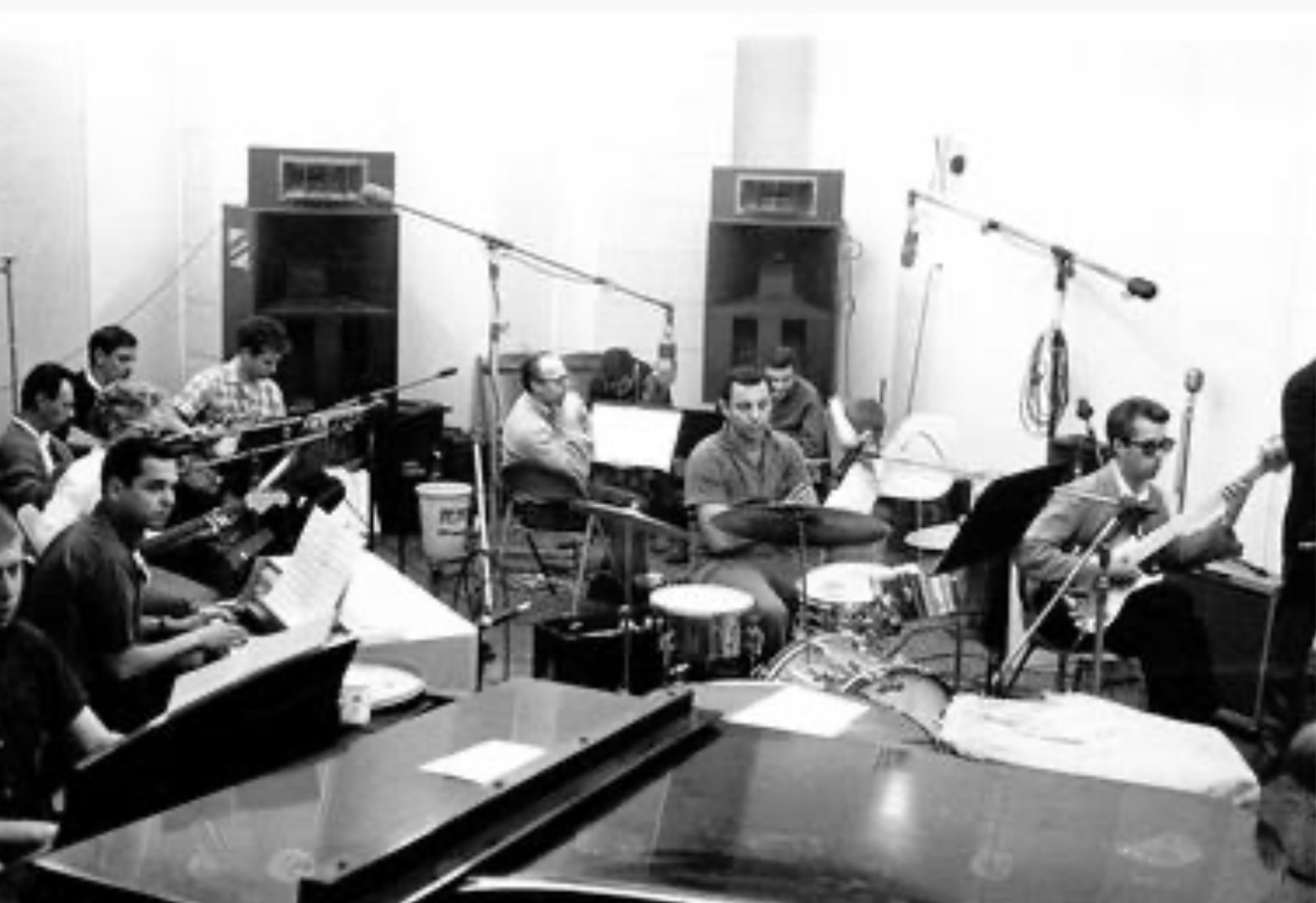
The Wrecking Crew, aka The Clique and The First Call Gang, were an ad hoc collection of high-quality session musicians who played on many of the hits of the 1960s. The musicians included Hal Blaine, Tommy Tedesco and Carol Kaye and they played on records released by artists such as The Beach Boys, The Monkees, the Mamas and the Papas, Frank Sinatra and Sonny & Cher.

Members of the Wrecking Crew

From a jazz background, playing music in the West and East Coast nightclubs, the Wrecking Crew took their musical skills into the recording studios where they would often record a full album in a day. These musicians were presented with one-chord and three-chord pop songs. Their job was to add the jazz chords and licks, and make the songs “swing”. This they did in style, transforming a basic song into an international hit.

The Wrecking Crew often went uncredited on the record sleeves and labels, but the next time you find your foot tapping to a musical rhythm, or you find yourself singing along to your favourite 1960s song, the chances are the rhythm and melody were provided by the Wrecking Crew.

My article for the Seaside News about Peggy Lee appears on page 43 of the magazine.

For Authors

#1 for value with 565,000 readers, The Fussy Librarian has helped my books to reach #1 on 36 occasions.

A special offer from my publisher and the Fussy Librarian. https://authors.thefussylibrarian.com/?ref=goylake

Don’t forget to use the code goylake20 to claim your discount 🙂

Categories
Seren

Seren The Maid of Sker

Some book news

Available now for pre-order

Seren: The Maid of Sker. A Georgian Murder Mystery.

When a body is washed up on the shore, county coroner Samuel Brereton arrives in Sker to investigate. When a second body is washed up, his investigations turn to murder.

Seconded to assist Samuel due to her extensive local knowledge, Seren, a maid at Sker House, discovers the truth about the murder. Seren also falls in love with Samuel, a love that seems destined to remain unrequited, until she uncovers a startling secret about her ancestry.

https://www.amazon.com/dp/B0D6KWV147/

For Authors

#1 for value with 565,000 readers, The Fussy Librarian has helped my books to reach #1 on 36 occasions.

A special offer from my publisher and the Fussy Librarian. https://authors.thefussylibrarian.com/?ref=goylake

Don’t forget to use the code goylake20 to claim your discount 🙂

Categories
Favourite Record

Favourite Song of the 1950s/1960s #4

When the qualifying process is complete, in just over a week, on Mastodon we will start voting on our top twenty favourite records of the 1950s/1960s, placing them in order. Through 190 match-ups, we will create a unique chart, every song a classic.

Here is some background on one of the qualifiers, Summer in the City by The Lovin’ Spoonful.

Summer in the City was written by John Sebastian, Mark Sebastian and Steve Boone. John Sebastian reworked the lyrics and melody from a song written by his brother, Mark. Boone contributed the bridge.

The song was recorded in two sessions at Columbia Records Studios, New York in March 1966 and featured an early example of sound effects – car horns and a pneumatic drill.

John Sebastian was aiming for a song that built up the tension. He explained: “I was going for the scary, minor chord, Hit the Road Jack (which also features in our top twenty) sequence that doesn’t warn you of what’s coming in the chorus.”

John Sebastian compared the results to Mussorgsky’s Night on Bare Mountain. For the bridge, bassist Steve Boone suggested a jazzy figure akin to the compositions of George Gershwin.

I Can’t Get No Satisfaction by The Rolling Stones

I Can’t Get No Satisfaction was written by Mick Jagger and Keith Richards, and released in America in 1965. Initially, the song was only played on pirate radio stations because the lyrics were considered too suggestive. Music critic Paul Gambaccini stated: “The lyrics to this were truly threatening to an older audience. This song was perceived as an attack on the status quo.”

Keith Richards wrote the music for Satisfaction in his sleep and recorded it on cassette, which included acoustic guitar, the main riff, and snoring. Mick Jagger wrote the lyrics by a swimming pool in Clearwater, Florida , four days before the band went into the studio.

My Generation by The Who

My Generation was written by Pete Townshend, and released as a single on 29 October 1965. Apparently, Townshend wrote the song on a train, inspired by the Queen Mother, who allegedly insisted that Townshend’s 1935 Packard hearse should be towed off a street in Belgravia because it offended her.

In 1985, Townshend told Rolling Stone that “My Generation was very much about trying to find a place in society.” Four years later, he explained that, to him, the line “I hope I die before I get old” meant “before I get very rich.”

Paint it Black by The Rolling Stones

Paint it Black was released as a single in May 1966. The song, about grief and loss, featured Indian, Middle Eastern and European influences.

The first chart-topping single to feature the sitar, Paint it Black widened the instrument’s audience. Also, the song was influential to the development of psychedelic music in the mid-1960s.

Paint it Black was credited to Mick Jagger and Keith Richards. However, the melody originated from a series of improvisations played by Brian Jones on the sitar. Bill Wyman felt that Paint it Black should have been credited to all the band members because the song’s final arrangement originated from a studio improvisation by Brian Jones, Charlie Watts and himself.

Penny Lane/Strawberry Fields Forever by The Beatles

Credited to the John Lennon-Paul McCartney songwriting partnership, Penny Lane and Strawberry Fields Forever were released as a double A-side in February 1967. The songs were intended for Sgt Pepper’s Lonely Hearts Club Band, but because the record company insisted on releasing a single, and the Beatles’ policy to omit previously released singles from their albums, Penny Lane and Strawberry Fields Forever didn’t feature on Sgt Pepper, a decision producer George Martin later described as “a mistake”.

In 2009, McCartney stated, “Penny Lane was kind of nostalgic, but it was really [about] a place that John and I knew … I’d get a bus to his house and I’d have to change at Penny Lane, or the same with him to me, so we often hung out at that terminus, like a roundabout. It was a place that we both knew, and so we both knew the things that turned up in the story.”

Strawberry Fields was the name of a Salvation Army children’s home near John Lennox’s home in Woolton, Liverpool. Lennon’s aunt Mimi Smith recalled: “There was something about the place that always fascinated John. He could see it from his window … He used to hear the Salvation Army band [playing at the garden party], and he would pull me along, saying, ‘Hurry up, Mimi – we’re going to be late.'”

Penny Lane/Strawberry Fields Forever is included as a double A-side in our chart poll to match the buying choices and charts of the time.

Book News

Two items brought to my attention this week, in relation to Eve’s Peace, my Heroines of SOE sequel. One, the proof copy of the paperback version. Two, this wonderful review. “Love, distrust, trust, & secrets galore. Woven superbly by the author makes for wonderous reading, hard to put down book. Rating the book a 9 1/2 only because now I must look for sequels & prequels for this wonderful series…”

For Authors

#1 for value with 565,000 readers, The Fussy Librarian has helped my books to reach #1 on 36 occasions.

A special offer from my publisher and the Fussy Librarian. https://authors.thefussylibrarian.com/?ref=goylake

Don’t forget to use the code goylake20 to claim your discount 🙂