Categories
1920s

1920s #4

In September 1920, the first Bentley cars were delivered to customers. Pictured, a Bentley EXP2 (Experimental nr. 2), the oldest surviving Bentley (📸 Wikipedia).

The 1921-22 season was the 30th for the Football League. Liverpool were champions while Bradford City and Manchester United were relegated. Nottingham Forest and Stoke took their place.

For this season the Third Division was divided into North and South sections increasing the number of clubs in the league from 66 to 86.

Graphic: Wikipedia

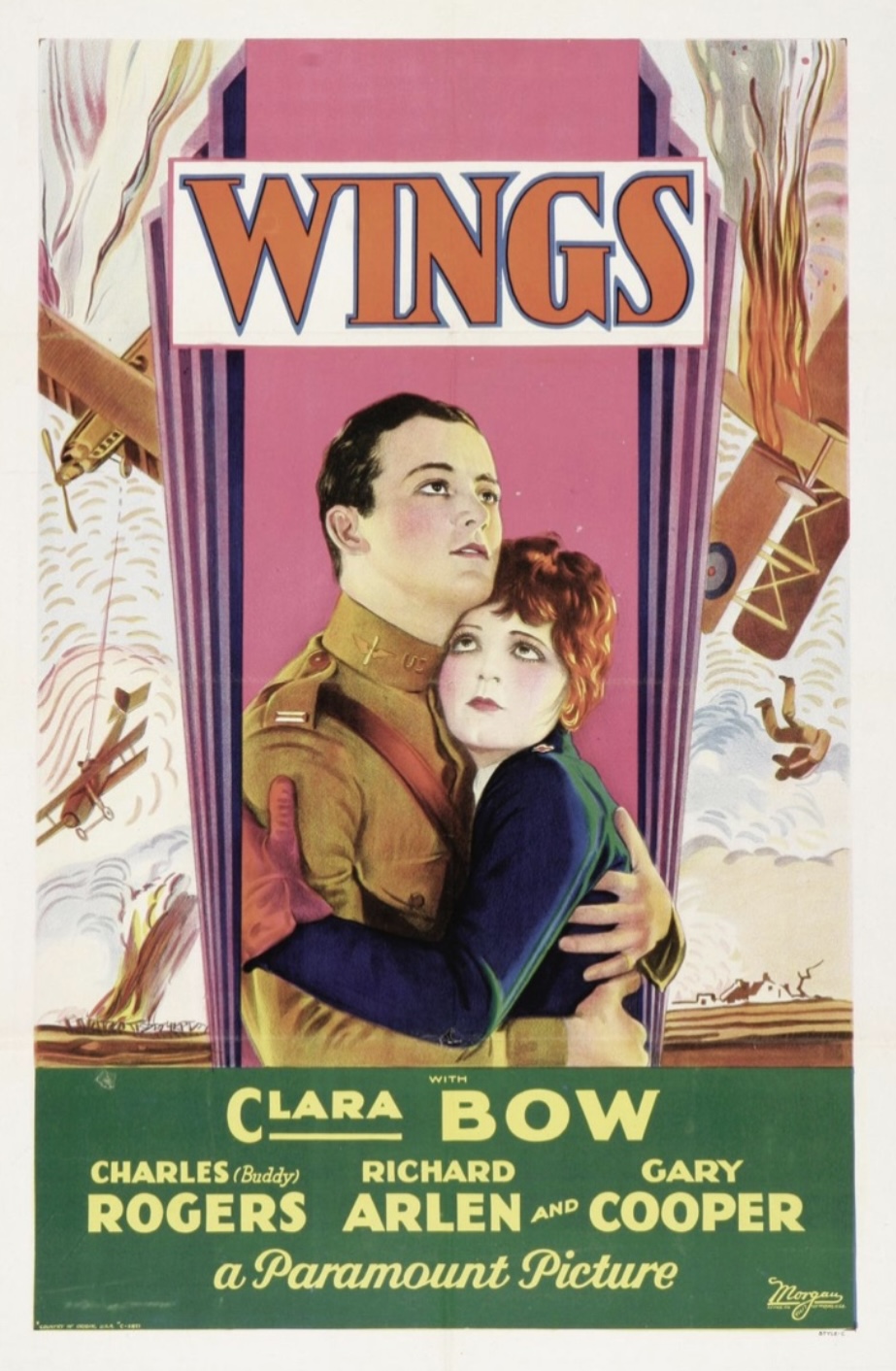
Wings, a First World War drama that dominated the movie world in 1927, opened at the Criterion Theater in New York City on August 12, 1927. Tickets cost $2, an unheard-of admission price. The standard rate was $0.25 a ticket.

Wings was a homage to First World War fighter pilots. As its star Clara Bow rightly observed, it was a buddy movie and she was only added to the cast because she was red hot at the box office. Clara’s appearance guaranteed that the movie would be a success. Furthermore, the quality of the film, and the amazing stunt flying, ensured that Wings won the first ever Academy Award for Best Picture.
Between 1919 and 1926, Lieutenant-Colonel William Hawley (1851–1941) conducted pioneering excavations at Stonehenge. One of Hawley’s main achievements was to identify the Aubrey Holes (named after one of my ancestors, John Aubrey). Hawley also found cremated and uncremated human remains, which first indicated a funerary role for Stonehenge. His multiphase interpretation of the site was dismissed at the time, but in the 1950s the idea was revived. However, his idea that Stonehenge was a fortified settlement is still not accepted.
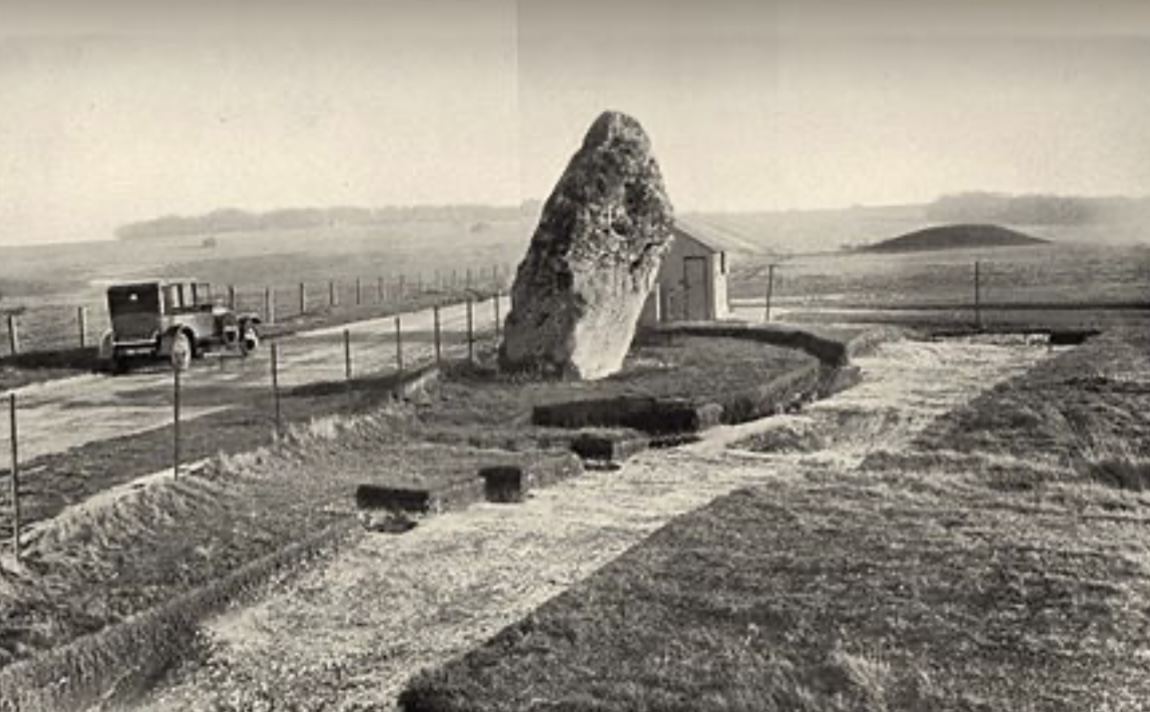
Excavations near the Heelstone (The Antiquaries Journal, 1925)

Motoring. Compulsory hand signals for all drivers were introduced on 10 October 1920.

Hand signals would remain a crucial part of motoring life until the 1970s, when the increased use of indicators on vehicles rendered them superfluous.
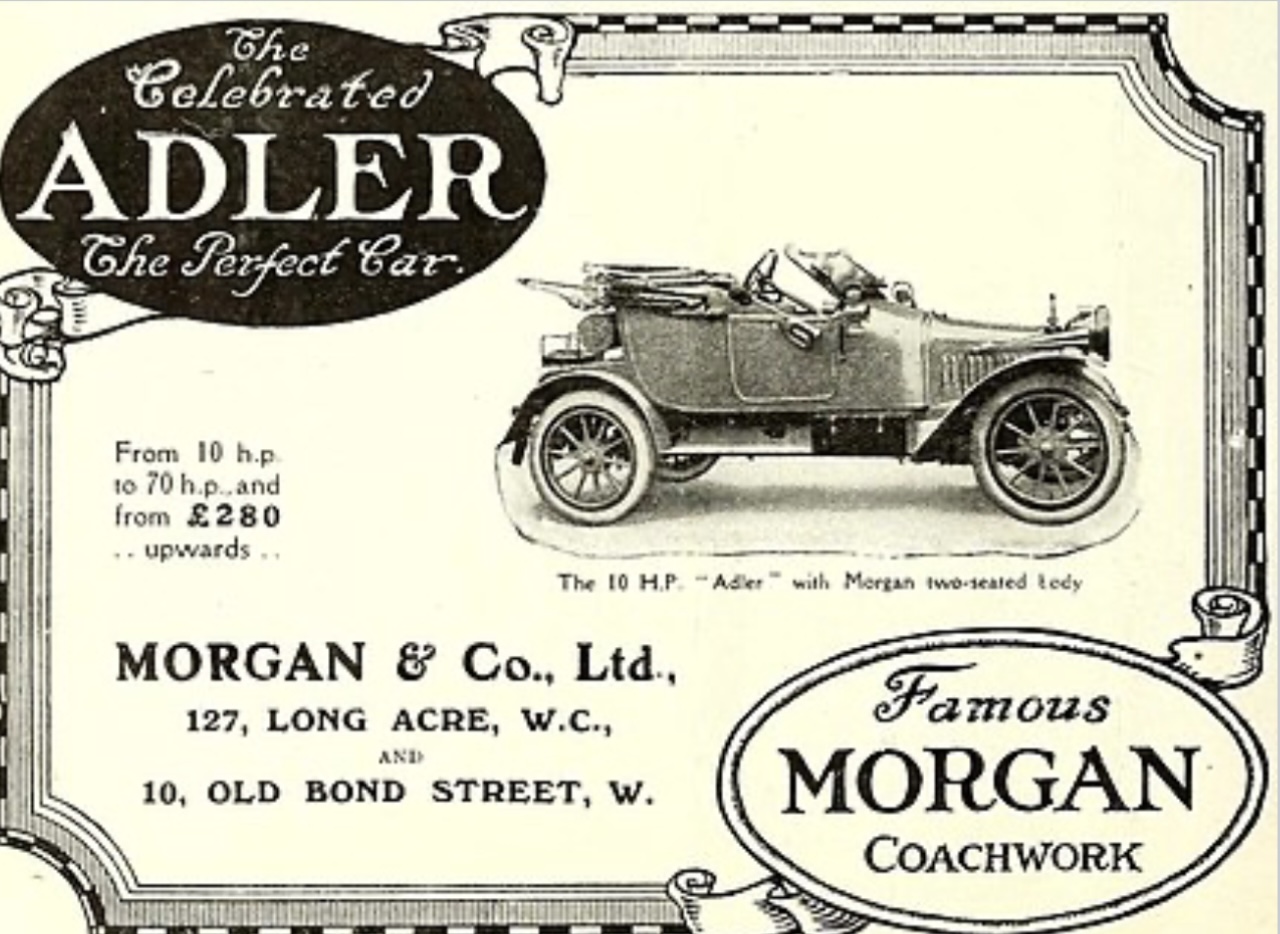
An advertisement for the Morgan Adler, “The Perfect Car”

In 1921, Swiss psychoanalyst Hermann Rorschach published Psychodiagnostik in which he proposed the inkblot test. 

In the Rorschach test, a subject’s perception of inkblots is recorded and analysed using psychological interpretation and complex algorithms. The test can shed light on a subject’s personality and emotional functioning, and is particularly helpful when subjects are reluctant to articulate their thoughts.

The first Rorschach card (I reckon this is Scooby Doo with his back to a mirror 😉)

More flapper slang from the 1920s

Sharpshooter – a good dancer and big spender

Spoon – kissing

Strike breaker – a woman who dates her friend’s boyfriend 

Tomato – a woman lacking intelligence

Umbrella – a man that any woman can borrow for an evening

Whangdoodle – jazz music

For Authors

#1 for value with 565,000 readers, The Fussy Librarian has helped my books to reach #1 on 32 occasions.

A special offer from my publisher and the Fussy Librarian. https://authors.thefussylibrarian.com/?ref=goylake

Don’t forget to use the code goylake20 to claim your discount 🙂

Categories
Cherry Wainer

Cherry Wainer


When Cherry Wainer died on November 14, 2014 that evening, at a concert, Elton John dedicated Don’t Let the Sun Go Down on Me to her. Who was Cherry Wainer, and how did she and other musicians, achieve success in the late 1950s, early 1960s? I intend to follow Cherry’s career in an effort to find out.


Cherry Wainer was born on March 2, in East London, Eastern Cape, South Africa. The year of her birth is in dispute. Most sources list Cherry’s birth year as 1935. However, the documents I’ve seen list her birth year as 1932.

At the age of eight, already a talented pianist, Cherry performed a concert with an orchestra. Her father was a music promoter, and undoubtedly he helped to open doors early in Cherry’s career.

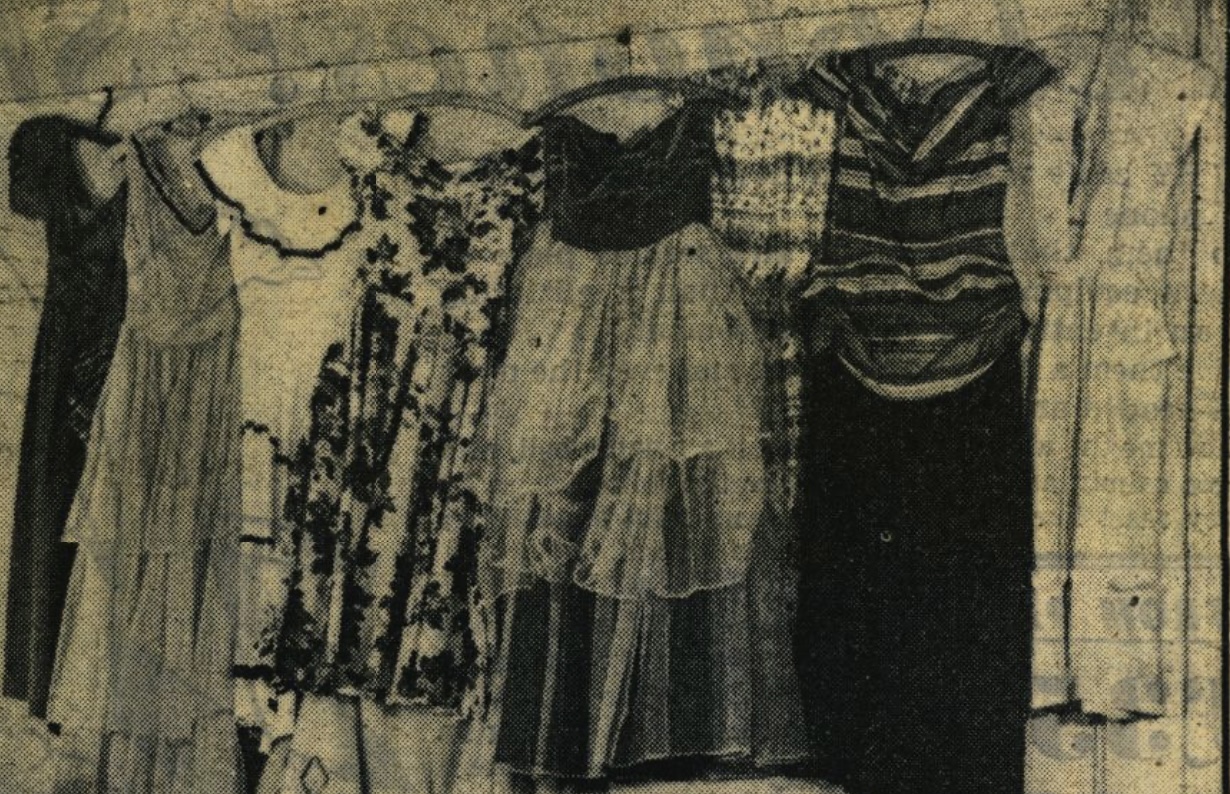
Cherry’s plans to become a classical pianist changed direction when she was introduced to the Hammond organ, and the music of jazz organist Jimmy Smith. To develop her career, as a teenager Cherry set out for London, England with her mother and sixty-three outfits that she was “determined to wear.”

Some of the outfits Cherry was determined to wear

Early in 1948, Cherry, a teenager, and her mother Zelda boarded the Athlone Castle (pictured). The ship left Durban and docked at East London (where Cherry boarded), Port Elizabeth, Mossel Bay, Cape Town and Madeira before arriving at Southampton on 6 February 1948.

Cherry and Zelda took lodgings at 24 Burgoyne Road, Harringay, London and from there Cherry embarked on her studies – singing, drama and dancing.

In May and June 1948, chaperoned by her mother, Zelda (pictured), Cherry Wainer was in London studying singing, drama and dancing. Billed as Cherry Wayne and playing a mini-organ, she also found time to appear in variety shows at the Coventry Hippodrome, the Croydon Empire and the Windsor Theatre. The critics noted that Cherry “stood out” from the other acts. Although only a student, Cherry was already making a name for herself.

I’m researching the career of musician Cherry Wainer and the 1950s-1960s music scene.

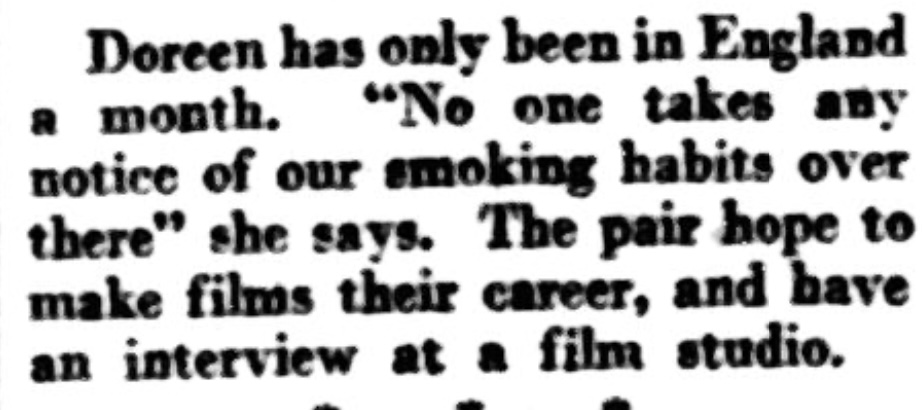
From August 1948 through to February 1949 Cherry appeared in variety shows at the Windmill Theatre in London. In April 1948 the press reported that Miss Cherry Wainer was seen “puffing away contentedly on a briar pipe between dances at the White Hart Hotel”. 

Below, a quote from Cherry’s friend, Doreen Brebner.

Cherry told the reporter that she “smoked cigars too – anything!” And that she found British tobacco milder than her native South African brands. Clearly, Cherry was something of a character.

Throughout 1949, Cherry developed her career in variety shows playing solo pianoforte and a Hammond solovox organ. The variety shows featured singers, dancers and comedians. Some of those listed on the bills became regulars on British television and radio. Most drifted into obscurity. 

Cherry’s career was on the rise, however, and her music and drama studies faded into the background as theatrical agents clamoured for her signature.

In February 1950, up and coming theatrical agent Cliff Martell announced that he was signing a number of new acts including singer Jimmy Young (who later became a BBC disc jockey), and Cherry Wainer. However, a month later, this forthright notice was placed in The Stage.

Clearly, Cherry was in demand, and career opportunities beckoned.

* * *

Throughout 1950 Cherry continued to perform on the entertainment circuit, singing and playing her Hammond solovox organ. She was only eighteen (possibly younger – her mother might have altered Cherry’s age to secure her gigs). At that point, she decided to return to South Africa, where she developed her career. She would return to Britain, but it would be a four year wait.

More next time…

For Authors

#1 for value with 565,000 readers, The Fussy Librarian has helped my books to reach #1 on 32 occasions.

A special offer from my publisher and the Fussy Librarian. https://authors.thefussylibrarian.com/?ref=goylake

Don’t forget to use the code goylake20 to claim your discount 🙂
Categories
1920s

The 1920s #3

Introduced in 1922, the Austin Seven, the “Car for the Feminine Touch”.

Fashion

For women, the flapper look dominated. Clothes that restricted were cast aside in favour of short skirts and trousers, attire that offered greater comfort. Men too abandoned formal daily attire in favour of casual and athletic clothing. Indeed, the suits of today are still based on the basic designs of the late 1920s.

In fashion, the Roaring Twenties really kicked off in 1925. Jazz, and dances like the Charleston, influenced designs of female outerwear, and underwear. For the first time in centuries, women’s legs were seen in public with hemlines rising to the knee. 

Headbands were popular, until 1925, and jewellery remained in vogue throughout the decade, although the emphasis was not so much on dazzling expense, but more on design and style.

Actress Louise Brooks

Football

The 1923 FA Cup final was played between Bolton Wanderers and West Ham United on 28 April at the original Wembley Stadium in London. It was the first football match to be played at the stadium.

The official capacity was 125,000. However, a crowd estimated at 300,000 gained admittance. Consequently, the terraces overflowed and people were forced on to the pitch.

Mounted policemen, including one on a white horse (pictured), entered the scene. They cleared the pitch and, after a delay of 45 minutes, the match commenced. 

Bolton emerged as winners, 2 – 0, but the defining image of the day was the policeman on his white horse, ensuring that the game would be forever known as the “White Horse Final”.

More flapper slang from the 1920s

Noodle juice – tea
Nutcracker – a policeman’s truncheon
Oil can – an imposter
Out on parole – recently divorced
Potato – lacking Intelligence
Rock of Ages – a woman over thirty

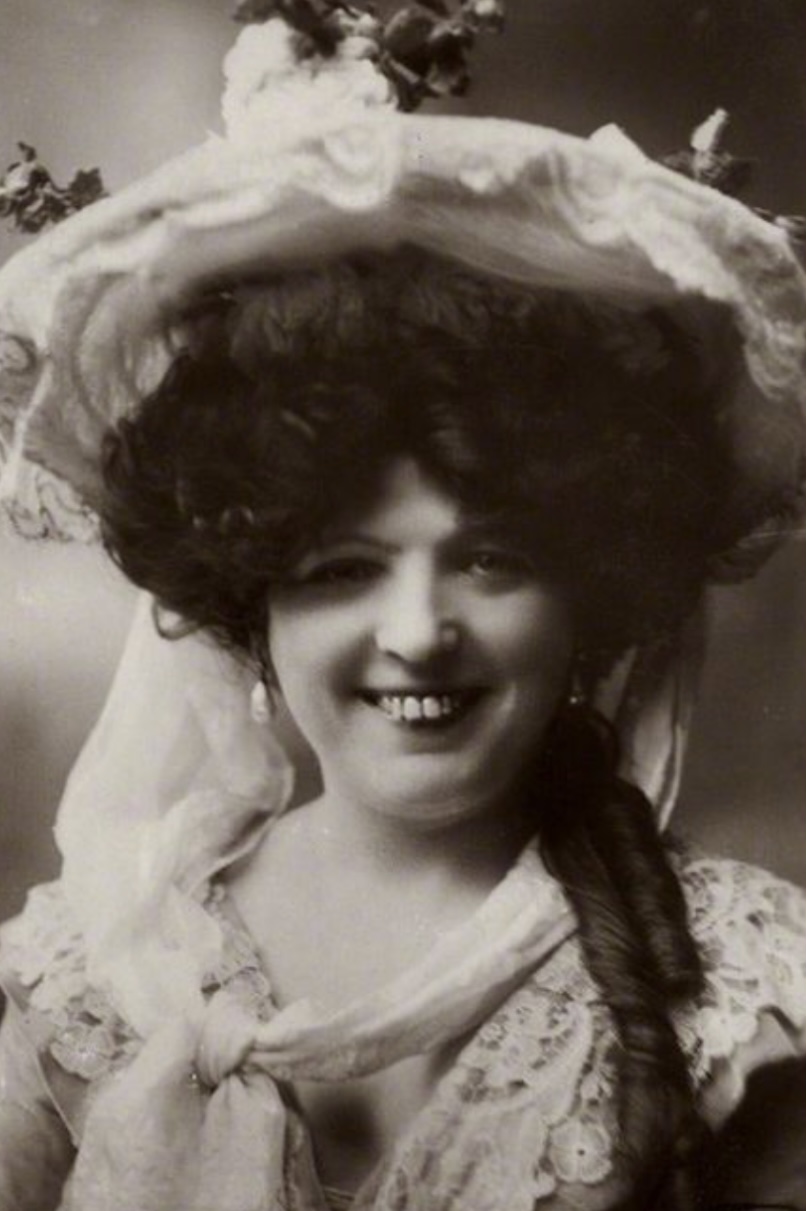
In April 1922, music hall star Marie Lloyd (pictured) collapsed in her dressing room after singing “The Cosmopolitan Girl” at the Gateshead Empire in Cardiff. Her doctor diagnosed exhaustion. After a period of rest, she returned to the stage in August, and reduced the running time of her act. 

On 12 August 1921, Marie Lloyd failed to show for an appearance at the London Palladium. Instead, she wrote her will. Marie Lloyd died two months later, on 7 October 1922. 

The Times wrote: “In her the public loses not only a vivid personality whose range and extremely broad humour as a character actress were extraordinary, but also one of the few remaining links with the old music-hall stage of the last century.”

In January 1920 the Marconi Company made occasional broadcasts, featuring music and speech, from Chelmsford, England. From 23 February to 6 March 1920 the company broadcast a series of thirty minute shows, repeated twice daily, from Chelmsford. These shows included live music performances.

A Marconi employee, 1906

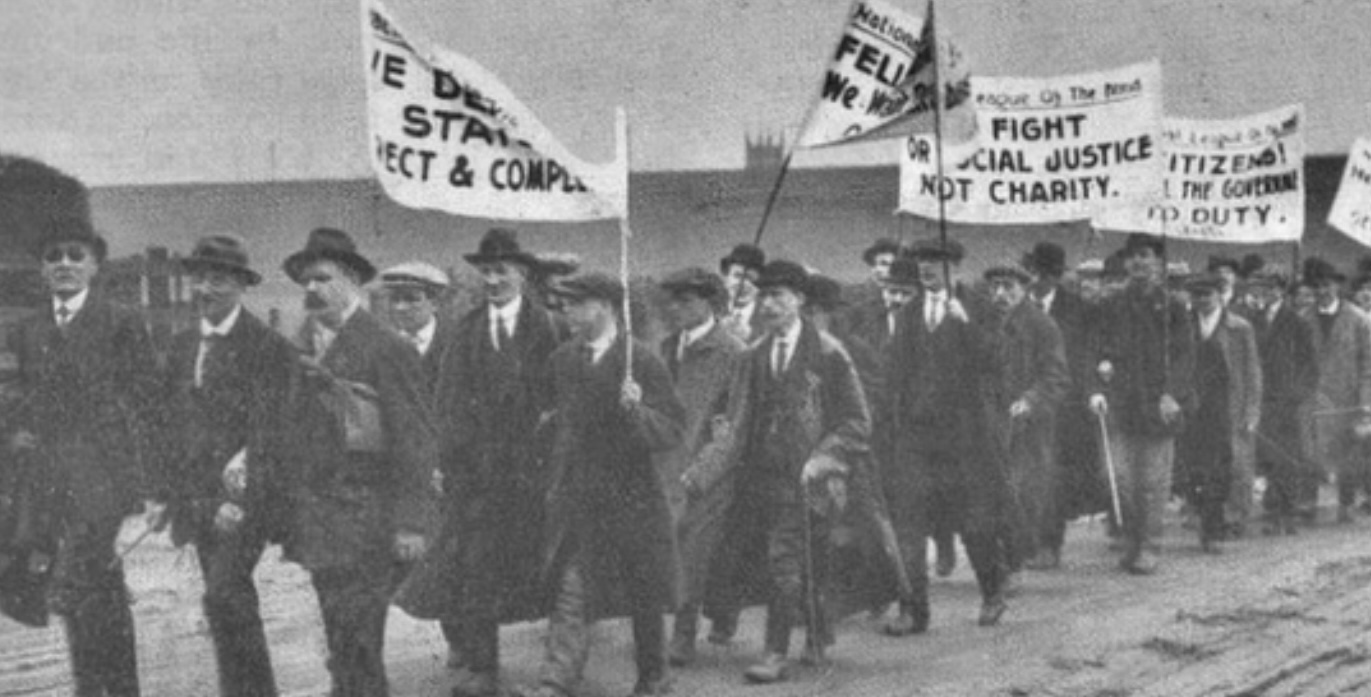
In 1920, 250 blind people marched from Newport, Manchester and Leeds to London. Organised by the National League of the Blind, the marchers assembled on 5 April 1920 and reached London on 25 April 1920, where a crowd of 10,000 supporters greeted them.

The NLB organised the march to protest against poor working conditions and poverty experienced by blind people. The leaders met Prime Minister David Lloyd George, who promised little, apart from to pay for the marchers’ rail tickets home.

However, a Blind Persons’ Act was introduced later in the year, the first disability-specific legislation in the world, which compelled local authorities to ensure the welfare of blind persons. 

The march of 1920 served as inspiration for the famous 1936 Jarrow March against unemployment, in which the NLB also participated.


Tula, my novel set in the 1920s

For Authors

#1 for value with 565,000 readers, The Fussy Librarian has helped my books to reach #1 on 32 occasions.

A special offer from my publisher and the Fussy Librarian. https://authors.thefussylibrarian.com/?ref=goylake

Don’t forget to use the code goylake20 to claim your discount 🙂

Categories
1920s

The 1920s #2

1920s Flapper Slang

Fire alarm – a divorced woman

Fire bell – a married woman 

Fire extinguisher – a chaperone 

Forty-niner – a man looking for a rich wife

Handcuff – an engagement ring 

Hush money – a young woman’s allowance 

Munitions – a woman’s make-up

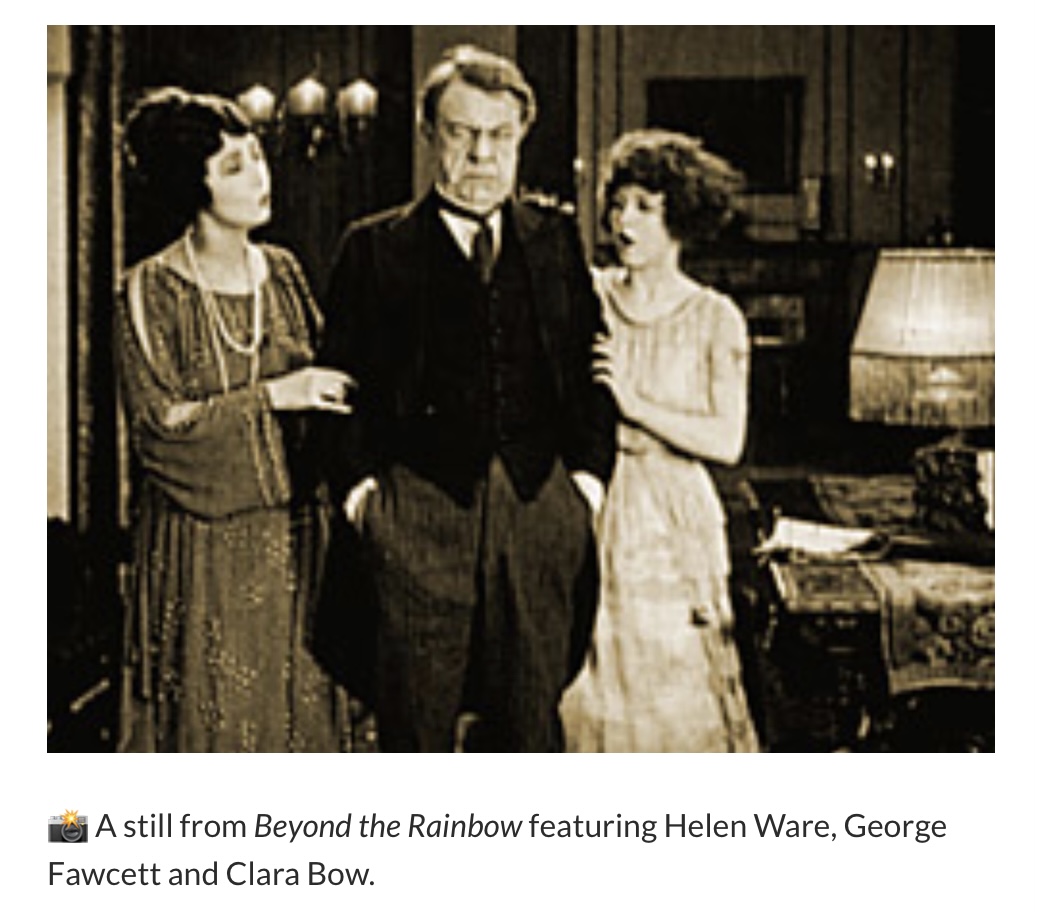
Clara Bow, the superstar of the era, made her debut in Beyond the Rainbow. Filmed in New York in 1921, when Clara was sixteen, the movie went on public release on February 19, 1922. A 16mm print of the film still survives.

The plot is a decent one: guests arrive at a party and are passed a mysterious note saying, ‘Consult your conscience. Your secret is common gossip.’ All the guests have something to hide, so panic and murder ensue.

The note was written by Clara’s character, Virginia Gardener, as a mischievous joke. It’s ironic that in her first movie Clara was the instigator of chaos because, in her own iconic way, that set the tone for her career.

Clara appeared in five scenes in Beyond the Rainbow, but strangely those scenes were cut from the final print, only to be restored when she became a star. Her billing also moved up from ninth to third when she achieved stardom.

Alvin ‘Shipwreck’ Kelly, 1893 – 1952, achieved fame in the 1920s and 1930s as a pole sitter. He calculated that he spent 20,613 hours sitting on flagpoles, including 210 hours in sub-freezing weather and 1,400 hours in the rain. 

Kelly married Frances Vivian Steele, an elevator operator, a match clearly made in heaven, or at least close to it.

📸 Getty Images

The #1 song in 1920, Dardanella, recorded by Ben Selvin and his Novelty Orchestra. Released in December 1919, the song reached number one the following month and remained there for thirteen weeks. Selvin’s recording broke records by becoming the first record to sell more than three million copies. It eventually sold five million and became the second-highest single of the 1920s.

Many artists covered the song, including Acker Bilk, Bing Crosby and Louis Armstrong, plus Geoff and Maria Muldaur.

Football

A talented Wales team featuring Willie Davies, Ted Vizard and Fred Keenor (pictured) won the 1923-24 British Home Championship thanks to victories over Scotland, 2 – 0 at home, 2 – 1 against England (away) and 1 – 0 against Ireland (away). The game against Ireland was a tumultuous affair decided by a Moses Russell penalty.

Scotland finished second, Ireland third, and England fourth.

Television

In 1921, Charles Francis Jenkins (pictured) incorporated Jenkins Laboratories in Washington D.C. with the purpose of “developing radio movies to be broadcast for entertainment in the home”.

In 1922, Jenkins demonstrated his television principles by transmitting a set of static pictures from Washington D.C. to a navy station in Anacastia by telephone wire.

In 1923, Jenkins demonstrated “true” television, transmitting 48-line moving silhouette images at 16 frames per second from Washington to Anacostia Navy station.

A year later, enter John Logie Baird who demonstrated a semi-mechanical television system, transmission moving silhouette images in Britain.

Literature 

Published in 1922, The Beautiful and the Damned by F. Scott Fitzgerald. Set in New York City, the plot follows a young artist Anthony Patch and his flapper wife Gloria Gilbert who become “wrecked on the shoals of dissipation” while excessively partying at the dawn of the hedonistic Jazz Age. 

Fitzgerald modelled the main characters on himself and his wife Zelda, detailing their tempestuous marriage. Three years later, the author covered similar themes of self-absorption and hedonism in his novel The Great Gatsby.

Tula, my novel set in the 1920s

For Authors

#1 for value with 565,000 readers, The Fussy Librarian has helped my books to reach #1 on 32 occasions.

A special offer from my publisher and the Fussy Librarian. https://authors.thefussylibrarian.com/?ref=goylake

Don’t forget to use the code goylake20 to claim your discount 🙂

Categories
1920s

The 1920s #1

In the new year, I hope to research 1925 in detail. Meanwhile, here’s some general information about the 1920s, starting with some flapper slang.

Airedale – an unfashionable, not with-it man
Alarm clock – a chaperone
Apple sauce – flattery
Banks closed – no petting or kissing
Barneymugging – the opposite of banks closed
The bee’s knees, the cat’s pyjamas, the elephant’s instep – the best

In 1925 Clarence Birdseye, pictured, invented a process for frozen food. Later, he invented the double belt freezer. His initial product line featured 26 items, including 18 cuts of frozen meat, spinach, peas, a variety of fruits and berries, blue point oysters, and fish fillets.

More flapper slang from the 1920s

Billboard – flashy man or woman
Biscuit – a cute, possibly promiscuous, woman
Cake basket – a limousine
Clothesline – local gossip
Corn shredder – a dancer who treads on your feet
Dropping the pilot – getting a divorce
Edisoned – being asked a lot of questions
Eye-opener – marriage
Father Time – a man over thirty

🖼️ The Flapper, 1922

In 1925, a number of record companies improved on an electrical recording process originally developed by Western Electric and produced a more lifelike sound.

Jazz dominated the music scene. The word jazz arose out of West Coast slang, c1912. At that time it did not refer to music. Jazz was used in an article about baseball in 1913 and appeared in reference to music in a Chicago Daily Tribune article of 1915.

The King and Carter Jazzing Orchestra, 1921

On 5 August 1926 Warner Brothers produced the first Vitaphone movie, Don Juan (the third highest grossing film of the year). The Vitaphone system used multiple 33 1⁄3 rpm gramophone records to play back music and sound effects synchronised with film.

The Jazz Singer, the first part-talkie, followed in 1927, then the first all-talkie Lights of New York, in 1928, then the first all-colour all-talkie On With The Show, in 1929. The silent movie era arguably ended with Modern Times in 1936.

The 2020s

At the moment, we are promoting Sins of the Father, book eight in my nineteen book Sam Smith mystery series (book twenty is scheduled for next year). I’m delighted to say that Sins of the Father is #1 on Amazon’s private investigator chart 🙂

For Authors

#1 for value with 565,000 readers, The Fussy Librarian has helped my books to reach #1 on 38 occasions.

A special offer from my publisher and the Fussy Librarian. https://authors.thefussylibrarian.com/?ref=goylake

Don’t forget to use the code goylake20 to claim your discount 🙂