Categories
Dear Reader

Dear Reader #150

Dear Reader,

My latest article for the Seaside News.

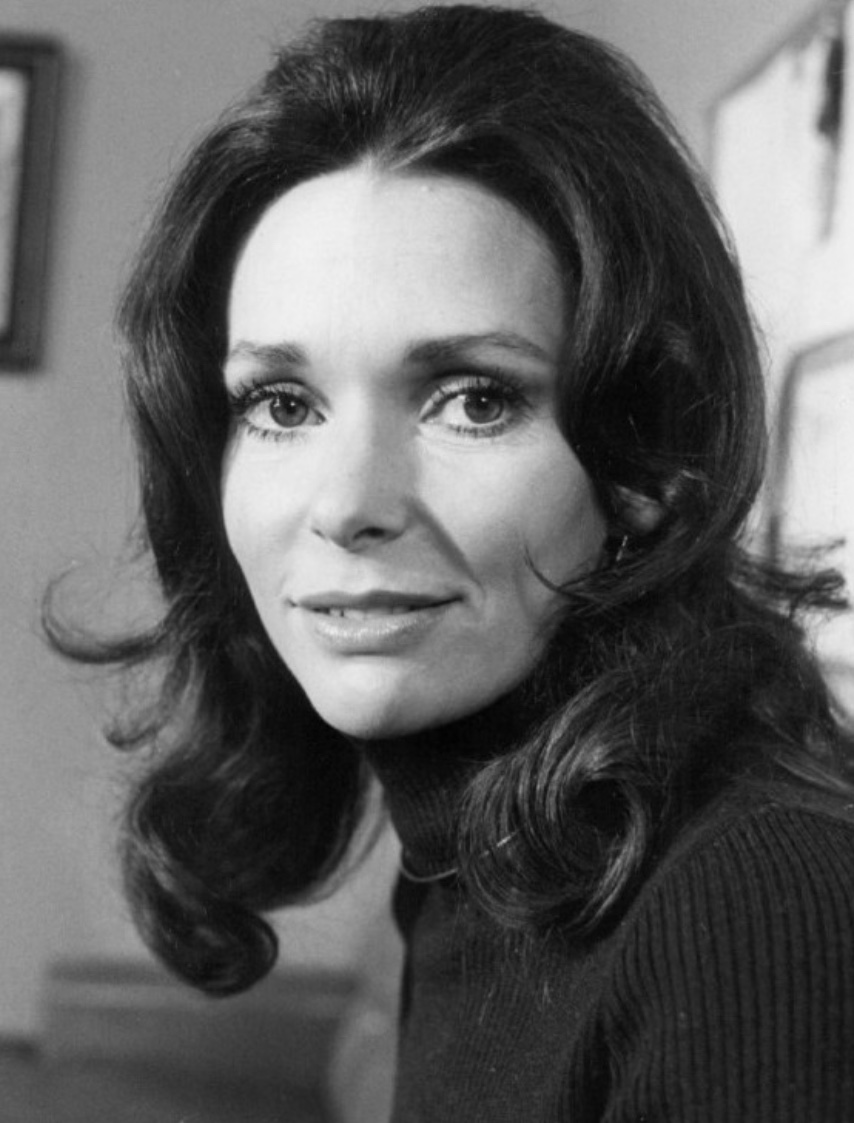
The teleplay for Exit Prentiss Carr, Series 1, Episode 4 of The Rockford Files, was written by long-standing Rockford Files associate Juanita Bartlett (pictured). 

This episode was set in the fictitious town of Bay City. Raymond Chandler set his 1940 novel Farewell My Lovely in Bay City, so presumably Exit Prentiss Carr was a homage to Chandler. Bay City also appeared in season two of The Rockford Files.

James Garner appeared in every scene in this episode. When that happens in detective fiction I think it makes for a stronger story, but obviously it’s quite demanding for the lead actor.

In the late sixteenth century, London had four regular companies and six permanent playhouses with plays performed every day except Sunday. The plays were popular with rich and poor alike with prices set to attract lower paid workers.

The authorities loathed the playhouses because people could gather together in large numbers while the plays themselves often challenged authority, a combination that offered the potential for civil unrest.

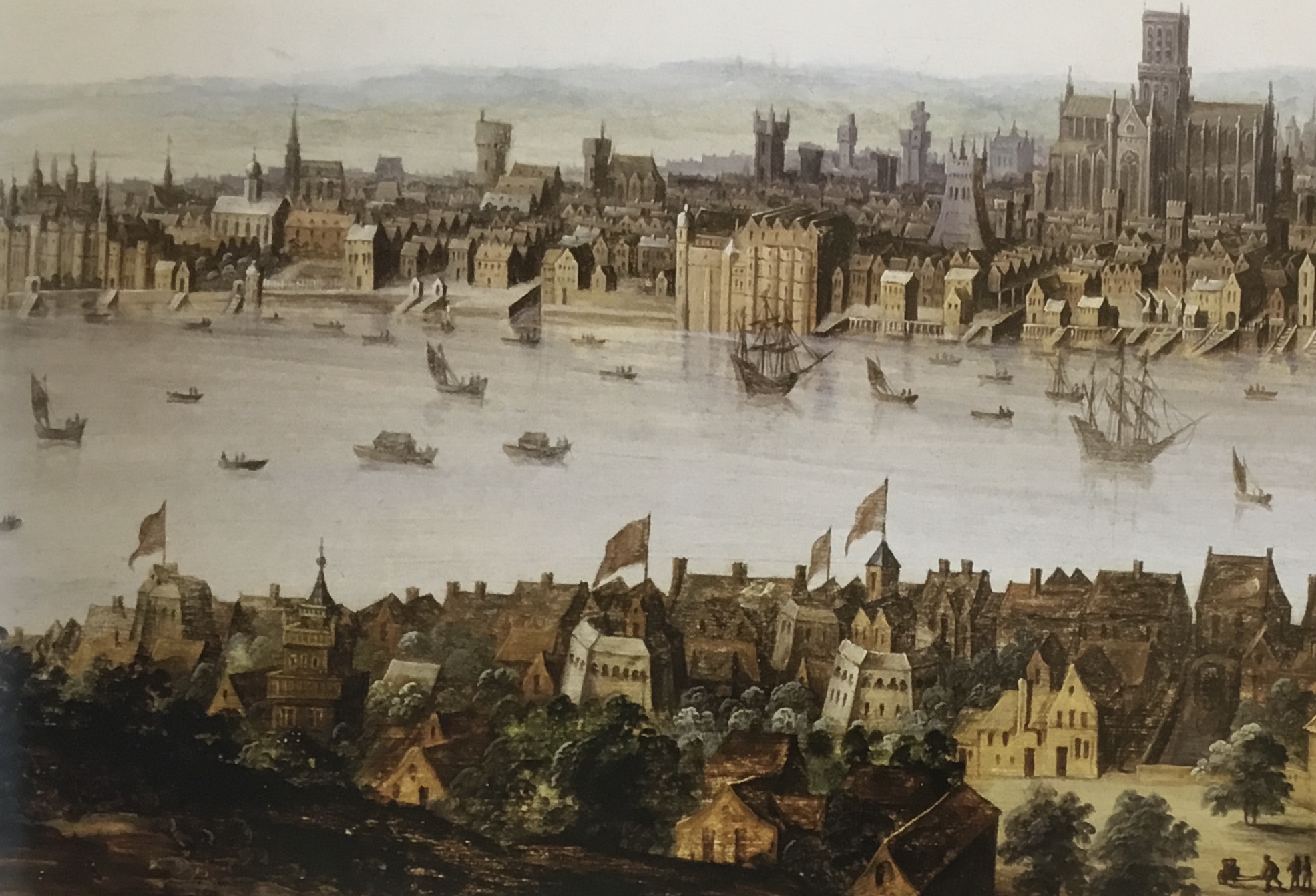
🖼 Bankside c1630, the earliest known oil painting of London. The theatres depicted on the south bank are the Swan, the Hope, the Rose, and the Globe. The flying flags indicated that there was a performance that day.
In the 1620s there were 400 taverns and 1,000 alehouses in London. Writing in 1621, Robert Burton said, “Londoners flocked to the tavern as if they were born to no other end but to eat and drink.”

Cookshops provided roast dinners and pies, and takeaways. Hawkers sold shellfish, nuts and fruit while if you fancied a cheesecake Hackney was the place to go, and Lambeth was noted for its apple pies.

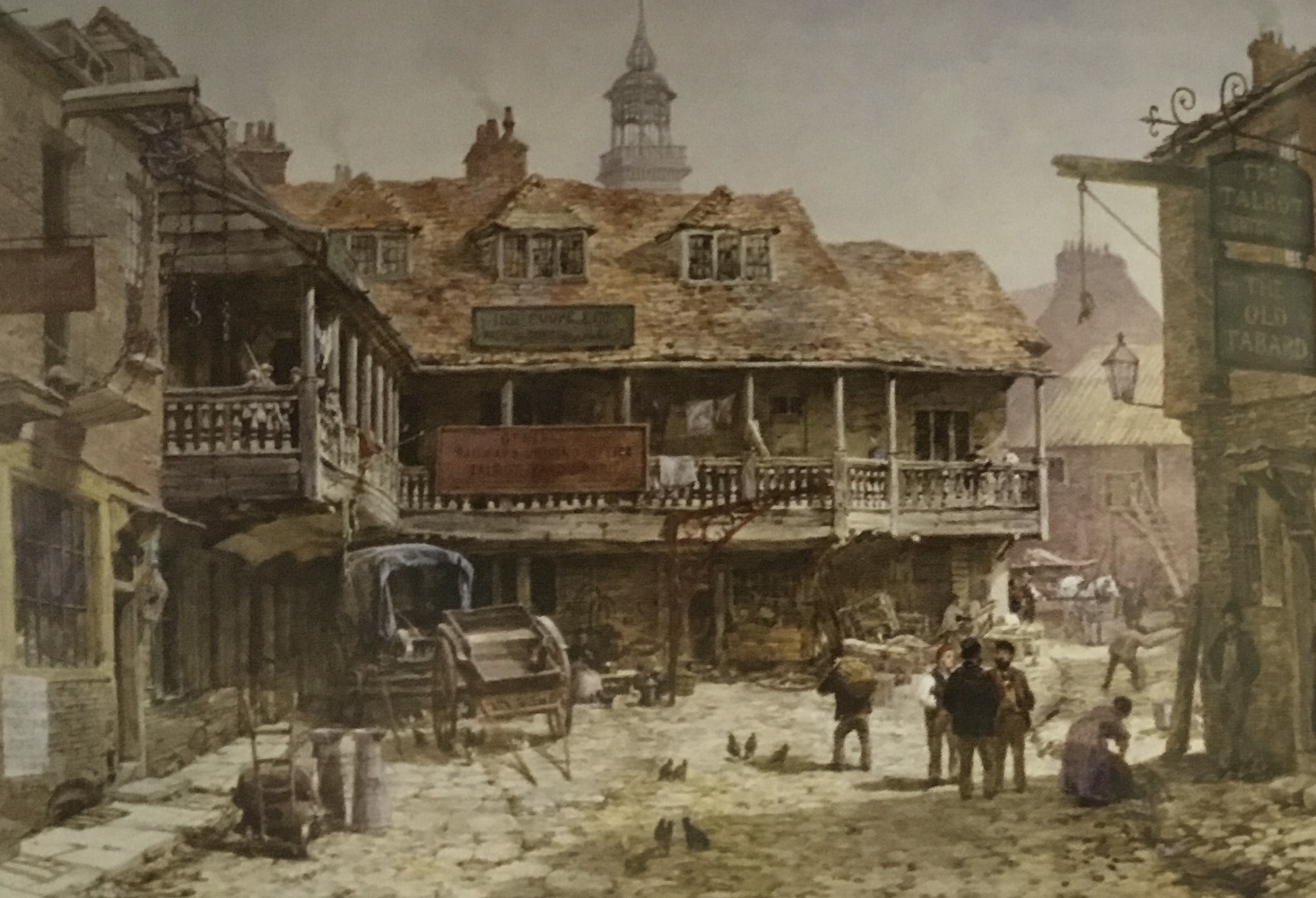
🖼 The Tabard Inn, renamed The Talbot, one of 48 inns or taverns situated between King’s Bench Prison and London Bridge, a distance of half a mile.
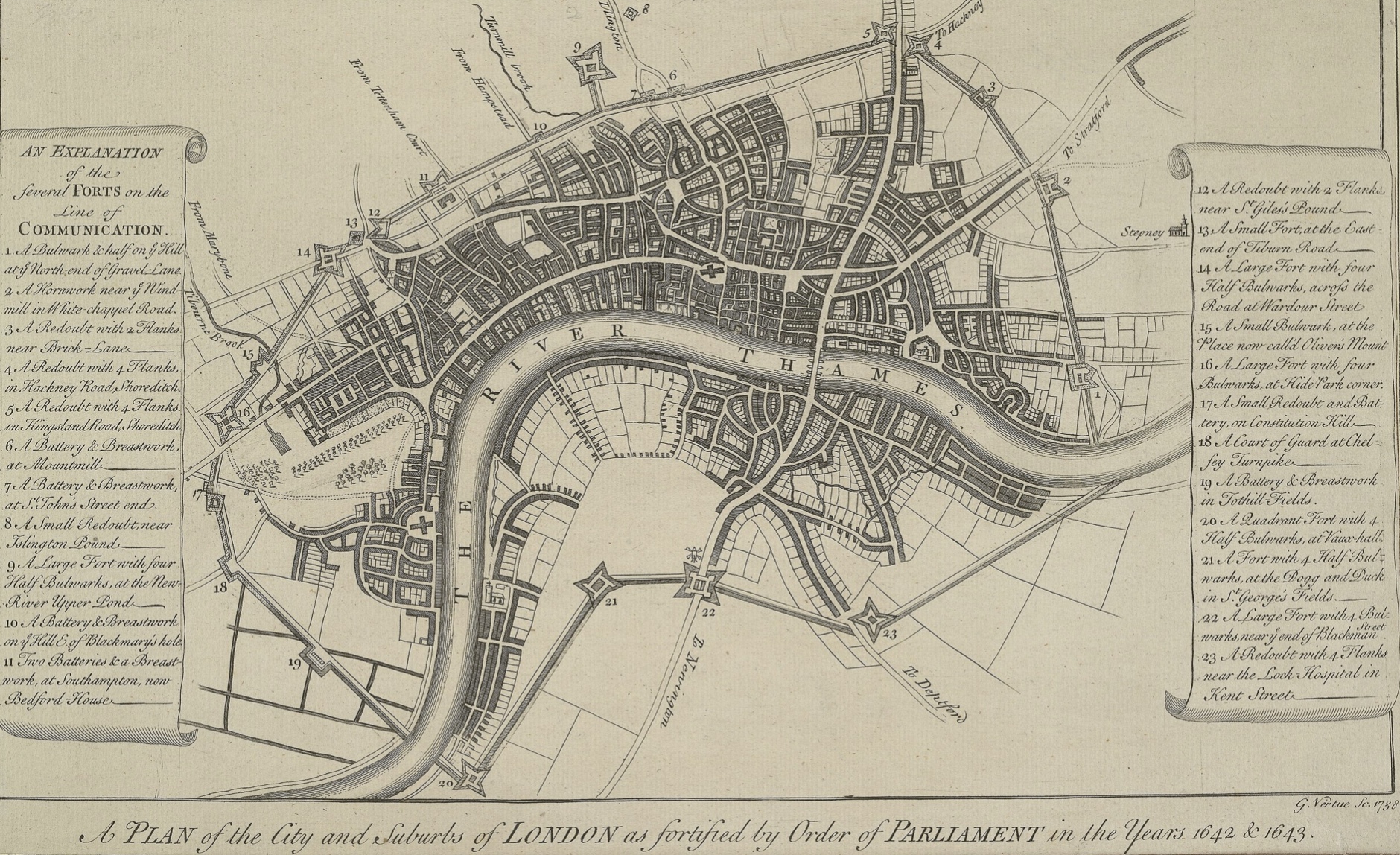
In 1642 Londoners rebelled against Charles I and he left town. The Civil War of 1642-49 was destructive, of course, but it did have some benefits. John Evelyn noted that when the supplies of hearth coal from Newcastle were interrupted London’s orchards and gardens bore ‘plentiful and infinite quantities of fruits.”

During the Civil War, London did not witness any major fighting, primarily because the Parliamentarians controlled the capital from an early stage. Without London, Charles I was doomed to defeat.

On the whole, city leaders were pro-Royalist while the workers sided with the Parliamentarians. However, by 1661 the workers were happy to welcome the new king, Charles II. The moment was lost, and Britain never recovered.

🖼 George Vertue’s plan of the London Lines of Communication, 1642.
Plague visited London in 1665. By the end of the year over 100,000 people were dead, a fifth of the population. The plague began just before Christmas 1664 when two men in Drury Lane died of ‘spotted fever’. 

By May 1665 the plague had spread to most of London’s 130 parishes and those who could afford to fled. Trade declined. The highways were clogged with refugees. Thomas Vincent remained in London throughout the plague. He noted that death rode ‘triumphantly on his pale horse through our streets and breaks into every house almost where any inhabitants are to be found’.

The authorities established ‘pest houses’ in fields and open spaces in an attempt to segregate the infected from the able-bodied. At the peak of the epidemic, mid-August to mid-September 1665, 7,165 people died in one week. Under such strain, traditional burial practices were abandoned in favour of common graves.

A Bill of Mortality published at the plague’s peak included the following as cause of death: Aged, 43. Burnt in his bed by a candle, 1. Constipation, 134. Flox and Smallpox, 5. Frighted, 3. Falling from a belfry, 1. Kingsevil, 2. Lethargy, 1. Rickets, 17. Rising of the Lights, 11. Scurvy, 2. Spotted Fever, 101. Stillborn, 17. Teeth, 121. Winde, 3. Wormes, 15. Plague, 7,165.

Males christened that week, 95; females, 81. Males buried, 4,095; females, 4,202. Parishes clear of the plague, 4. Parishes infected, 126. Many people returned to London in December 1665. However, members of parliament did not return until the following spring.

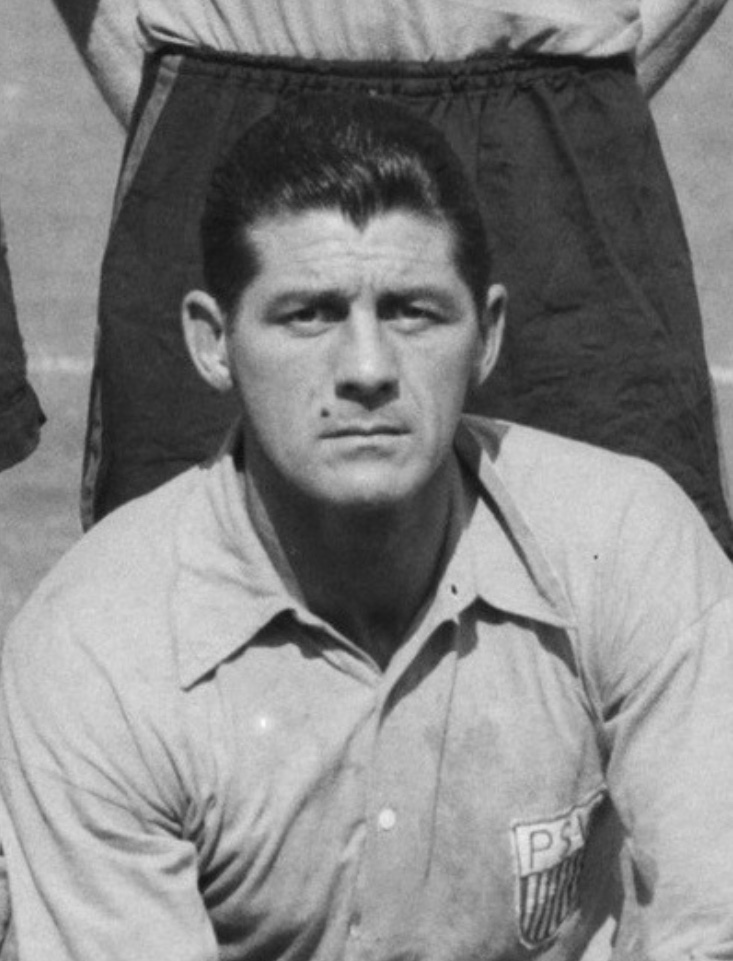
Welsh Football Legends

Walley Barnes was born on 16 January 1920 in Brecon, Wales. His parents were English. They were living in Brecon because Walley’s father, Edward, an army physical education instructor and footballer, was stationed with the South Wales Borderers.

Walley’s footballing career began during the Second World War. Initially, he played inside-forward for Southampton making 32 appearances between 1941 and 1943, scoring 14 goals. Walley’s impressive strike rate attracted the attention of Arsenal and he signed for the London club in September 1943.

At a time of ‘make do and mend’ footballers were versatile too. He played in virtually every position, including goalkeeper. In 1944 a serious knee injury threatened his career and an early retirement seemed a distinct possibility. However, Walley recovered, played in the reserves and forced his way back into first-team reckoning.

On 9 November 1946, Walley made his league debut for Arsenal against Preston North End. By 1946 he’d settled into his regular position of left-back. He won praise for his assured performances, his skilful distribution and his uncanny ability to cut out crosses. 

A regular in the Arsenal team that won the First Division Championship in 1947-48, Walley enjoyed more success in 1949-50 when Arsenal defeated Liverpool in the FA Cup final. On that occasion, deputising for injured captain Laurie Scott, Walley played right-back.

In the 1951-52 FA Cup final Walley injured a knee. He left the pitch after 35 minutes and missed the entire 1952-53 season, which saw another league triumph for Arsenal. Thereafter, his first-team appearances became more spasmodic.

After only eight appearances in 1955-56, Walley retired. In all he played 294 matches for Arsenal and scored 12 goals, most from the penalty spot.

For Wales, Walley won 22 caps and captained his country. He made his debut against England on 18 October 1947, marking Stanley Matthews. Matthews and England got the better of Wales that day and won 3 – 0. England also won the British Home Championship that year while Wales finished a creditable second.

As Walley’s playing career faded, he turned to management. Between May 1954 and October 1956 he managed Wales. Notably, on 17 July 1958 he signed a letter to The Times opposing the ‘policy of apartheid’ in international sport and defending ‘the principle of racial equality, which is embodied in the Declaration of the Olympic Games’.

Walley joined the BBC and presented coverage of FA Cup finals. With Kenneth Wolstenholme, he was a commentator on the first edition of Match of the Day, broadcast on 22 August 1964. He also provided expert analysis in the live commentary of the 1966 World Cup final when England beat West Germany 4 – 2.
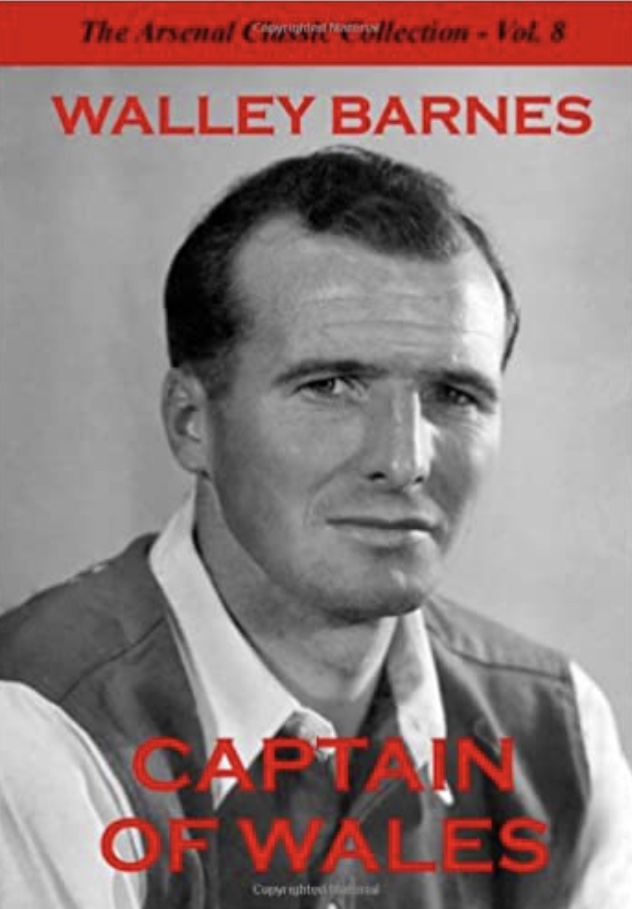
Walley wrote his autobiography, Captain of Wales, which was published in 1953. He continued to work for the BBC until his death on 4 September 1975.

As ever, thank you for your interest and support.

Hannah xxx

For Authors

#1 for value with 565,000 readers, The Fussy Librarian has helped my books to reach #1 on 32 occasions.

A special offer from my publisher and the Fussy Librarian. https://authors.thefussylibrarian.com/?ref=goylake

Don’t forget to use the code goylake20 to claim your discount 🙂

Categories
Dear Reader

Dear Reader #149

Dear Reader,

The Countess, Series 1, Episode 3 of The Rockford Files saw another solid story from John Thomas James enlivened by crisp dialogue from Stephen J. Cannell. Joe Santos as the long-suffering Sergeant Becker appears in this episode. 

In a phone call with Rockford, Becker implies that his wife’s name is Nancy. However, when that character appears later in the series, played by Pat Finley, her name is Peggy. Incidentally, she is one of my favourite side-characters in the series.

Mistakes in long-running series are inevitable. It’s hard enough for writers to keep track of events in real life, let alone in a fictional universe. The fact that fans notice any errors is a compliment to a series, I reckon; it highlights their deep commitment.

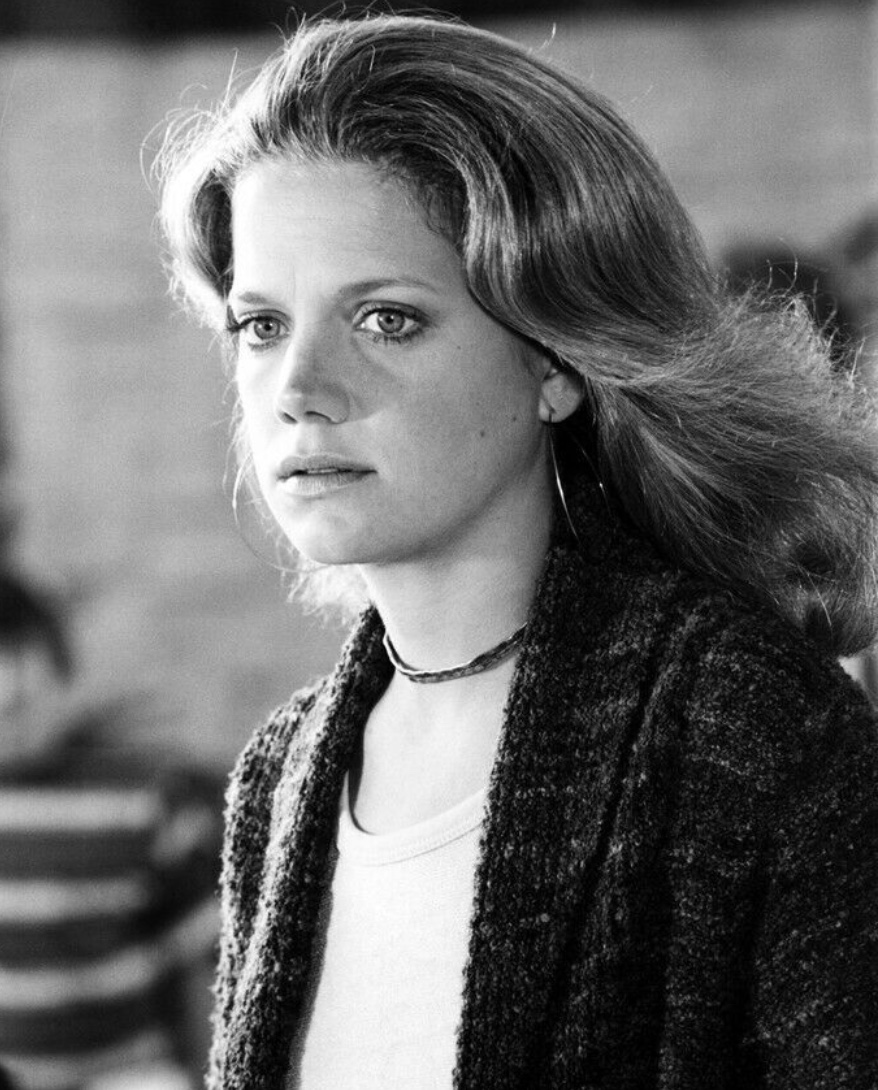
Susan Strasberg, ‘The Countess’. 

The Dissolution of the Monasteries (1535 – 40) created great wealth for some, and more modest opportunities for others. The great religious land carve up started in London. With an influx of people from other parts of Britain, and abroad, the city grew from 150,000 inhabitants in 1580 to 500,000 by 1660. 

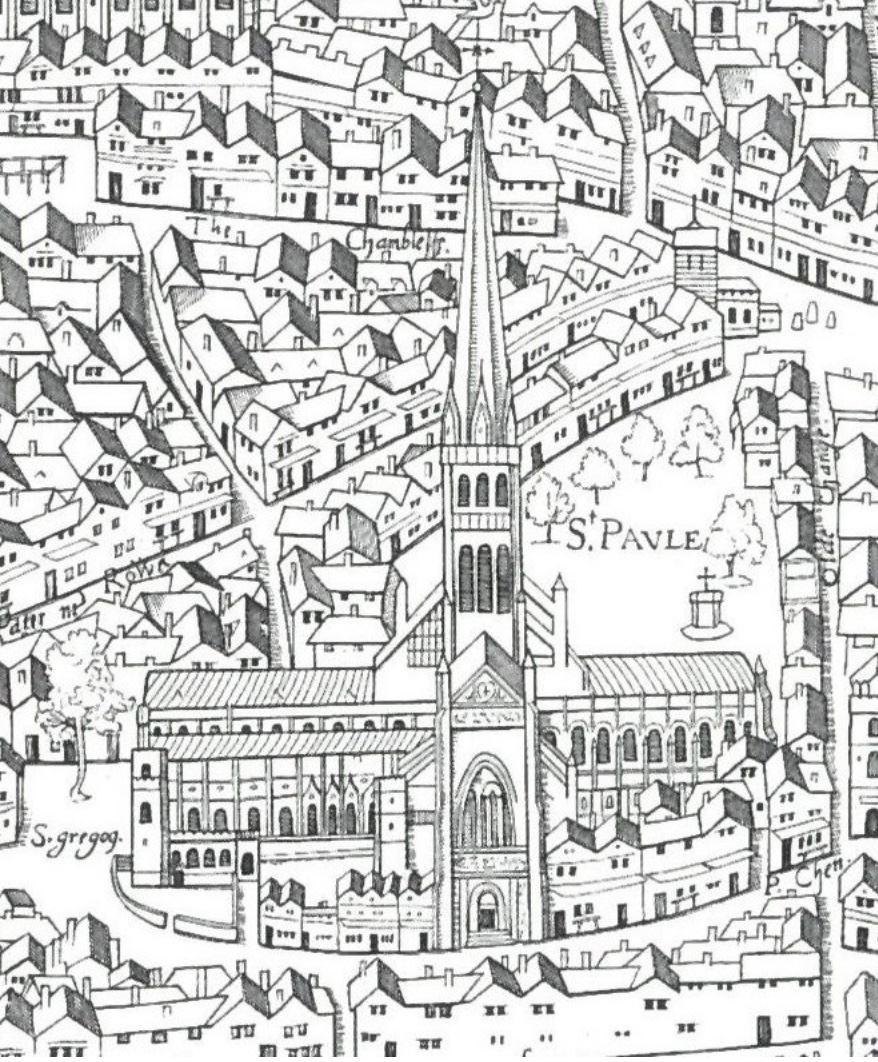
The ‘Copperplate’ map of London, produced from a survey conducted between 1553 and 1559, is the earliest true map of London. Sadly, only three of the original fifteen printing plates survived – the Moorfields plate, the Eastern City and the Western City.

From the Copperplate Map of London, 1559, St Paul’s Cathedral. 

St Paul’s lost its spire when it was struck by lightning in 1561. 

The printed word was seen as a threat to the Establishment (because people could form their own opinions). Nevertheless, by 1550, St Paul’s became the national centre of the book trade.

Education, Tudor and Stuart London. In ‘petty schools’ children learned the alphabet and the Lord’s Prayer. However, they were not taught how to write. Teachers were often invalids and paupers, seeking means of support.

Grammar schools, for boys, taught Latin and Greek, but not English. In theory, these schools were free, but most levied fees that went beyond the budget of the poor. City companies, such as brewers and coopers, also established grammar schools. 

Adults attended lectures on astronomy, divinity, geometry, law, music, physic and rhetoric. The upwardly mobile studied history, music and dancing. These subjects prepared them for their move into the ‘right’ social circles.

What have immigrants ever done for us? From the late sixteenth century, women escaping religious persecution in Europe established schools in London and taught girls. Consequently , female literacy increased from 16% in 1590 to 48% in 1690.

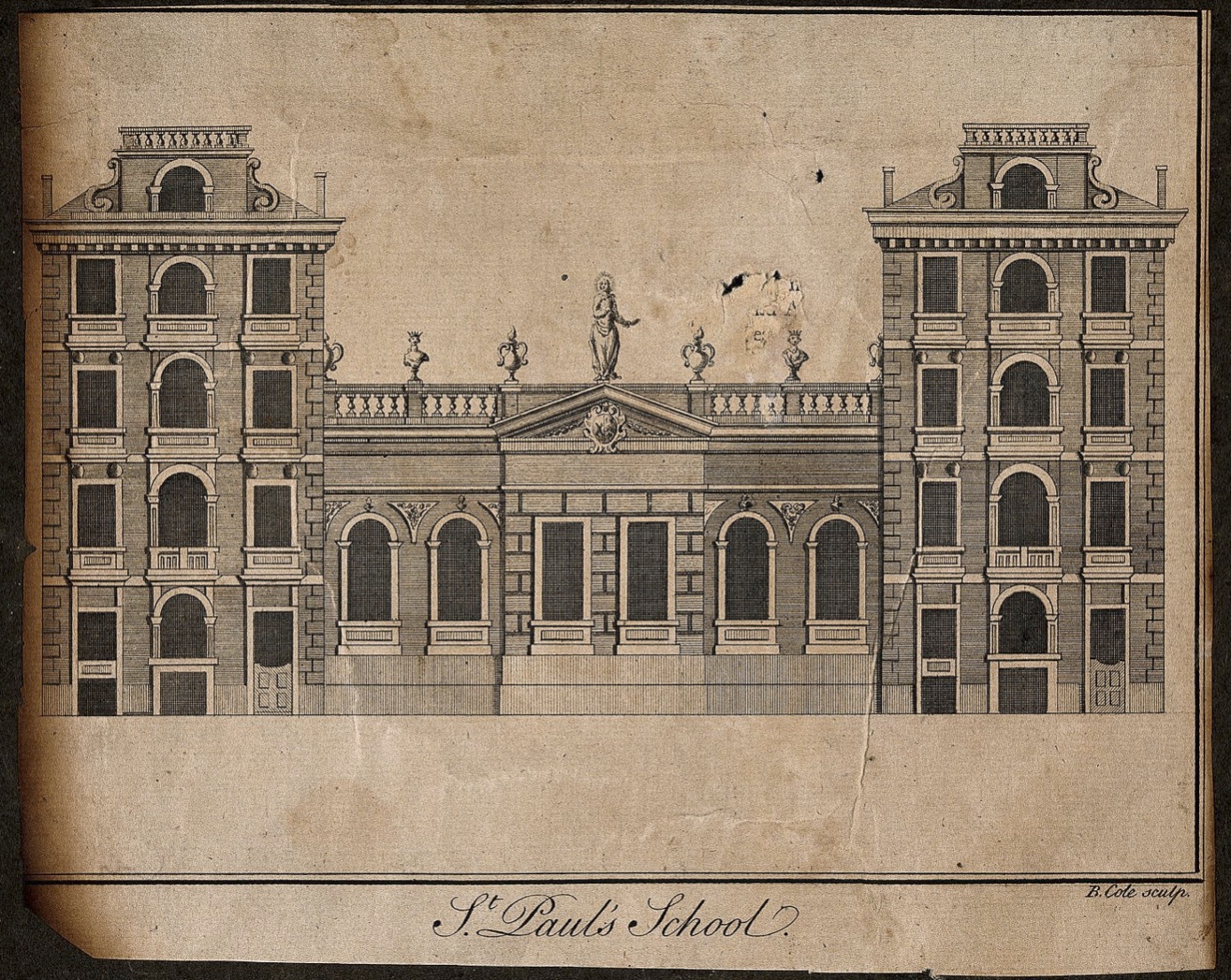
St Paul’s School, c1670. Wellcome Images.

With 28 bookshops encircling its churchyard, St Paul’s Cathedral became the centre of literacy in Tudor London. In 1599 they even removed the ‘common privy’ to make way for a new bookshop. 

William Caxton established the first printing press in Westminster in 1476. Other presses followed, in Dowgate, Fleet Street, and St Dunstan’s in the West.

Wynkyn de Worde (his real name) was the most prolific printer and publisher in early Tudor Britain. He acquired Caxton’s impress and published bestsellers such as The Golden Legend and The Chronicles of England. 

Branching out, de Worde published marriage guidance manuals, children’s books, medical treatises and romances. By the time of his death in 1535 his catalogue listed over 800 books.

St Paul’s Cathedral with bookshops crammed between the buttresses. John Gipkyn, 1616.

In the early 1600s the rich and poor of London lived side-by-side in timber and brick houses. Gardens were common, while some buildings were six storeys tall. The larger houses had lead cisterns to collect rainwater. All properties shared community wells.

Around 1630 the wealthy moved to the suburbs. Tradesmen lived in two-up, two-down houses with their shops occupying the ground floor. The poor lived in one-up, one down houses while those in extreme poverty lived in cellars.

By 1640 the united city had divided along class lines. And with each new decade and century those divisions increased.

A plan of timber-framed houses drawn by Ralph Treswell, c1600.

Welsh Football Legends

George Latham MC and Bar was born in Newtown, Powys on 1 January 1881. As a footballer, he played for Newtown, Cardiff City, Liverpool, Stoke City and Southport Central. He was also capped, ten times, by Wales.

As a military man, George served in the Second Boer War and the First World War. He received the Military Cross for his bravery in Gaza, Palestine and Turkey, 1917-18, and the Bar for his courage in Beersheba, 1918. George completed his military career with the rank of captain.

George was also a successful coach. He coached Cardiff City during their halcyon period, 1911 – 36, when the team won the FA Cup, 1927, and narrowly missed out on the league title, denied by goal difference.

George’s origins were humble. The fifth of six boys, his parents were William, a labourer, and Esther, a laundress. He attended New Road School then trained as a tailor in Market Street.

As a teenager, George played for Newtown as an inside forward and achieved modest success. However, in 1900 he volunteered to serve in South Africa during the Second Boer War. He joined the Fifth South Wales Borderers, who were stationed in Newtown.

In fourteen months George saw action in a number of places, including Brandfort and Potchefstroom. He rose from private to the rank of corporal. He played football in South Africa, for a team named the Docks. After the Boer War, George also played for the South African side, the Caledonians.

George’s footballing career in England was, initially, patchy. He joined Liverpool, but had to wait three years before his debut, on 8 April 1905. Never a first team regular, he made only nineteen appearances in seven years. Moves to Southport and Stoke followed before George joined Cardiff City as player-coach in February 1911.

In George’s first season, Cardiff City won the Welsh Cup, defeating Pontypridd 3 – 0 in a replay. George replaced the injured Bob Lawrie in the replay, but presented his winner’s medal to him after the game.

George was a squad player at Cardiff City, filling in for injured players. Nevertheless, he won ten caps for Wales, making his debut on 6 March 1905 in a 3–1 victory over Scotland. George’s tenth and final cap, on 18 January 1913 v Ireland was notable: due to a lack of fit players, as coach George joined the team. Wales won, 1 – 0.

In footballing terms, George’s main skill was as a coach. Working alongside Fred Stewart, he guided Cardiff City to the FA Cup final on two occasions. Cardiff lost 1 – 0 to Sheffield United in 1925 before tasting victory against Arsenal in 1927 in a famous match that ended 1 – 0.

During his spell with Cardiff City, George arranged annual charity matches with his hometown club Newtown to rise money for the Montgomery County Infirmary. After George’s death at the infirmary in 1939, Newtown named their ground Latham Park in his honour.

You can read more player profiles here https://hannah-howe.com/sixty-four/

In this month’s issue of Mom’s Favorite Reads…

Author Caroline Dunford interviewed by Wendy H Jones. Plus, Author Features, Health, Nature, Photography, Poetry, Recipes, Short Stories, Young Writers, National Picnic Month, and so much more!

As ever, thank you for your interest and support.

Hannah xxx

For Authors

#1 for value with 565,000 readers, The Fussy Librarian has helped my books to reach #1 on 32 occasions.

A special offer from my publisher and the Fussy Librarian. https://authors.thefussylibrarian.com/?ref=goylake

Don’t forget to use the code goylake20 to claim your discount 🙂
Categories
Dear Reader

Dear Reader #148

Dear Reader,

Betrayal, book one in my Ann’s War Mystery Series, has returned to the top of the Amazon charts. Many thanks to my readers for their support.

The Dark and Bloody Ground, Series 1, Episode 2 of The Rockford Files, introduced Gretchen Corbett, pictured, as attorney Beth Davenport to the series. The producers were reluctant to tie Rockford to a long-term ‘love interest’, so until much later in the series the implied on-off affair between Rockford and Beth was the closest the series came to romance.

Would The Rockford Files have worked with a permanent romantic interest? I think James Garner would have made it work, but I can understand why the producers wanted to keep Rockford ‘footloose and fancy free’.

Some days, you feel as though you’ve lost a week and a half…

In 1752 they had a problem: how to align the English calendar with Europe? Solution: lose eleven days. Therefore, Wednesday 2 September 1752 was followed by Thursday 14 September 1752.

The parish register of Martock, Somerset made a note of that fact.

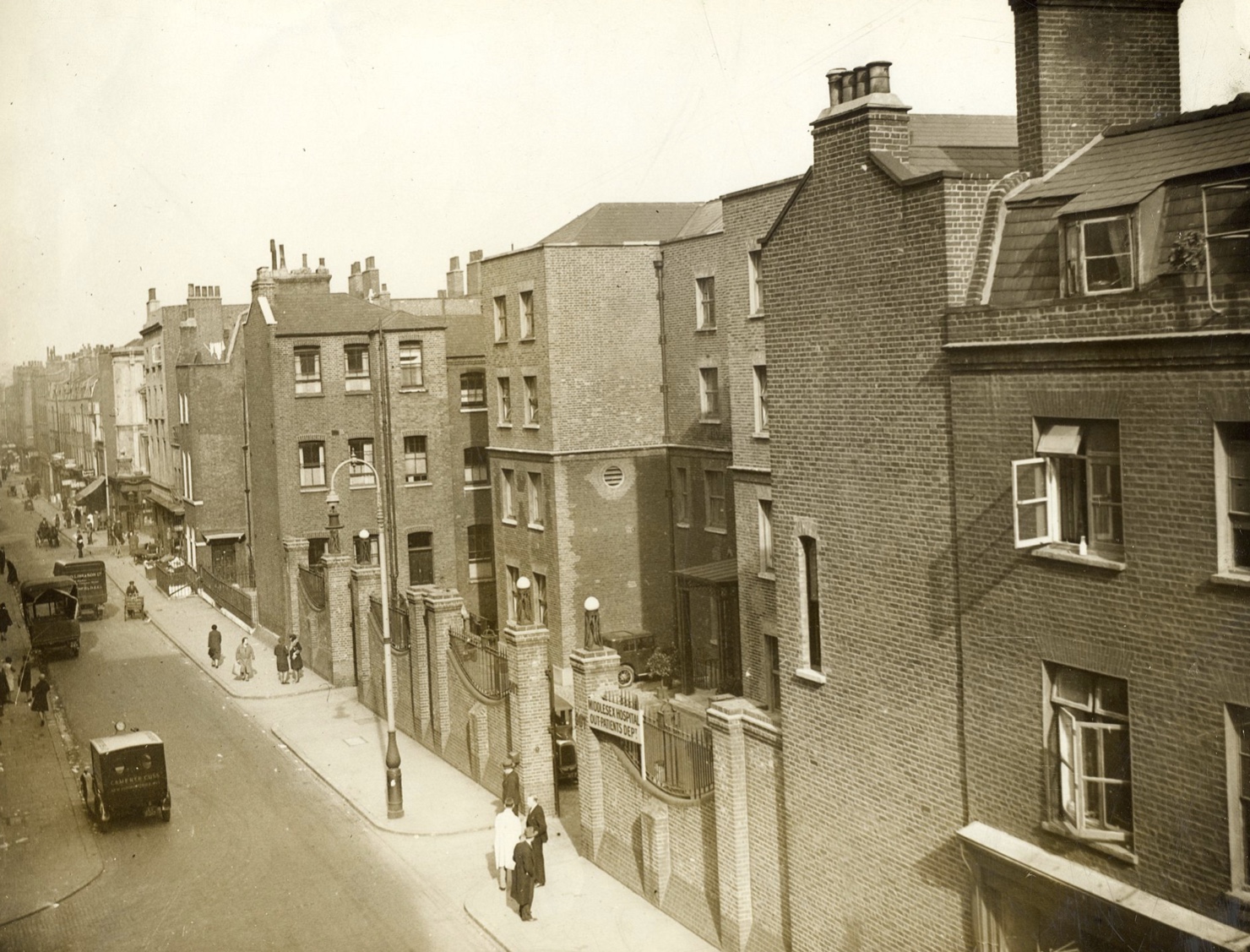
Many of the initial facilities in the NHS were developed on former workhouse sites. From the 1830s workhouses accepted sick paupers then in the 1870s they admitted non-paupers for treatment.

Picture, 1930. Cleveland Street Workhouse, London, later became part of the Middlesex Hospital.

London from Southwark, c1630 (artist unknown). This is one of only four paintings of London depicting the city before the Great Fire of 1666. A landscape familiar to Shakespeare, and my London ancestors.

In 1483-4 immigrants in London were taxed. Their tax returns offer a flavour of the multi-cultural nature of the city. The returns include: Thurstan Grysley, Icelander, servant to the mayor; John Sewell, French, armourer; John Letowe, Lithuanian, printer; John Evynger, ‘German’, brewer. Plus a number of Scottish artisans.

Through wills dated 1374 – 1486 we can identify the crafts and trades prevalent in medieval London. Victualers top the list at 22%, then merchants 14%, metalworkers 13%, tailors 12%…builders 6%…transport workers 2%.

🖼 London, c1300, vectorised by William R Shepherd, 1923.

Welsh Football Legends

Trevor Ford, born 1 October 1923 to Trevor and Daisy Ford, was a centre forward who played for Swansea Town, Aston Villa, Sunderland, Cardiff City, PSV Eindhoven, Newport County and the Wales national team. In a career that spanned fifteen years he scored 202 league goals in 401 matches.

Trevor Senior served as a physical training instructor during the First World War. He encouraged young Trevor, buying him a new football and boots for each birthday. He also made him practice his football for two hours each day, often using a tennis ball on his stronger right foot to improve control. 

Cricket was another one of Trevor’s passions. At the age of 14, he was selected to represent Wales against a London Schools under-15 side as a bowler, playing alongside his future Wales and Cardiff City teammate Alf Sherwood. Later, he fielded substitute during the match at St Helen’s, Swansea when Garry Sobers hit six sixes in one over.

A physical player, Trevor began his career during the Second World War with his hometown club Swansea Town. After the war he joined Aston Villa before, in October 1950, breaking the British transfer fee record with a move to Sunderland. The fee: £30,000.

In 1953 Trevor returned to Wales to play for Cardiff City. However, a scandal from his time at Sunderland, involving illegal payments in an attempt to circumvent the maximum wage, brought a suspension. Unable to play in Britain, Trevor joined PSV Eindhoven. He returned to Britain in 1960 and completed his club career at Newport County.

As an international, Trevor represented Wales on 38 occasions becoming his country’s record goalscorer with 23 goals, a record later equalled by Ivor Allchurch then surpassed by Ian Rush and Gareth Bale. Due to his suspension, Trevor was not selected for the 1958 World Cup finals, a bitter blow for him and Wales.

Trevor made his first appearance for Wales on 4 May 1946 against Northern Ireland in a ‘Wartime International’. Northern Ireland won, 1–0. His first official cap arrived during the 1946-47 British Home Championship when he scored in Wales’ 3 – 1 victory over Scotland, a game played at the Racecourse Ground, Wrexham. He scored again against Northern Ireland, but the game ended in a 2 – 1 defeat.

Trevor made it three goals in three games when, in the following season, he scored against Scotland. However, his finest personal performance arrived in 1949 when he scored a hat-trick against Belgium. He also scored two goals against England, twice, Portugal, Switzerland and Yugoslavia. 

Trevor won his final cap on 20 October 1950 in a 2–2 draw with Scotland. Of course, he scored.

Trevor used his physicality to great effect and often stretched the rules to the limit when challenging goalkeepers. His Wales international teammate John Charles said, “He used to bang everybody and knock them out of the way, he was never frightened.” He added that Trevor was a “wonderful person”.

Trevor admitted that his personality changed when he stepped on to the pitch and that he played “like an animal”. However, no referee cautioned him or sent him off.

Sunderland colleague Billy Bingham later stated, “He got some terrible knocks from goalkeepers, but he also knew how to dish it out and he never complained to refs”. He added, “The two of us would lift weights, and I don’t think he broke a sweat while I was struggling to lift some of them. He was the bravest player I ever played with.”

Following his retirement, Trevor entered the car trade. He died in his native Swansea on 29 May 2003 at the age of 79 and was buried in Oystermouth Cemetery.

You can read more player profiles here https://hannah-howe.com/sixty-four/

As ever, thank you for your interest and support.

Hannah xxx

For Authors

#1 for value with 565,000 readers, The Fussy Librarian has helped my books to reach #1 on 32 occasions.

A special offer from my publisher and the Fussy Librarian. https://authors.thefussylibrarian.com/?ref=goylake

Don’t forget to use the code goylake20 to claim your discount 🙂

Categories
Dear Reader

Dear Reader #147

Dear Reader,

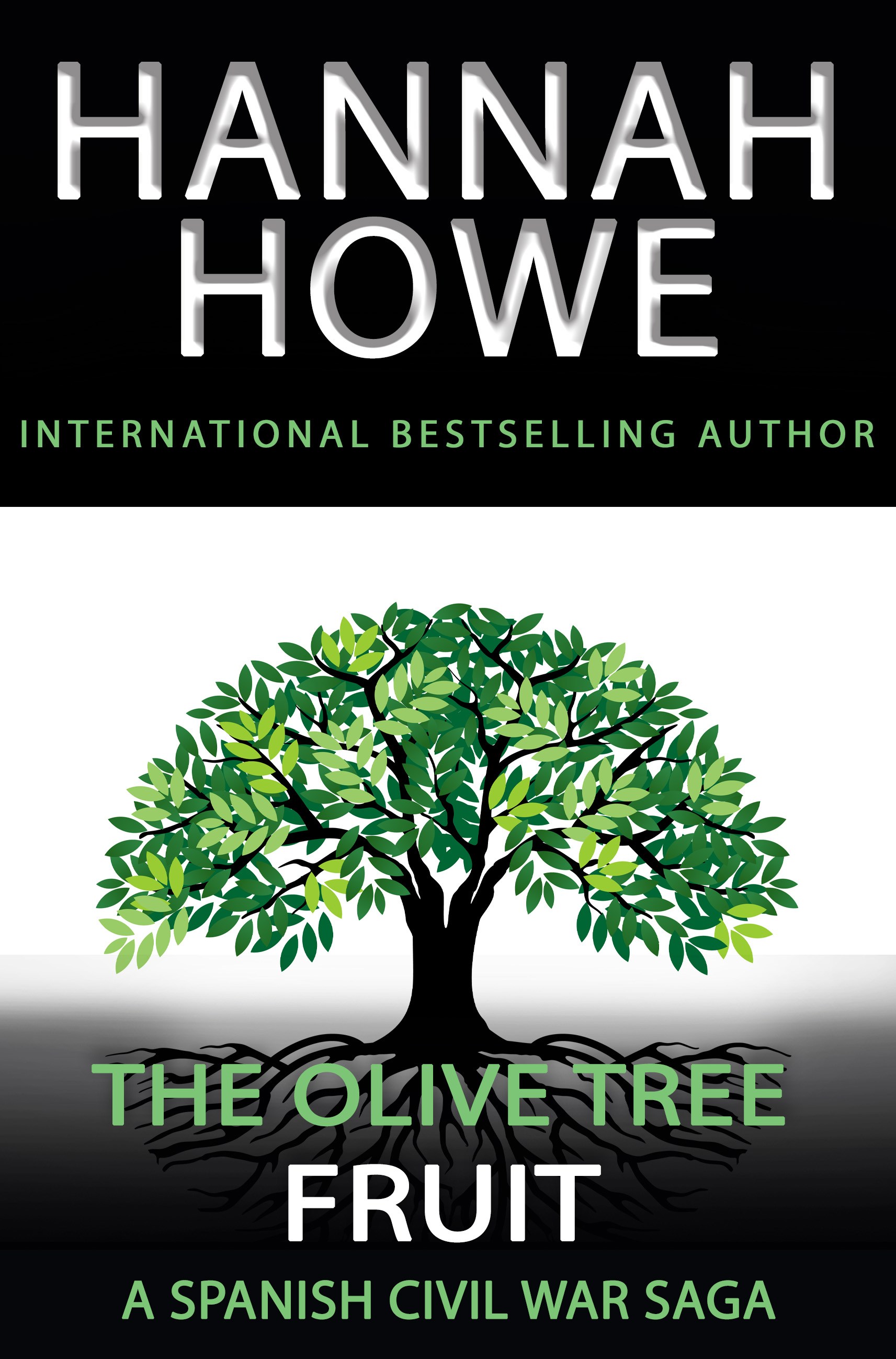
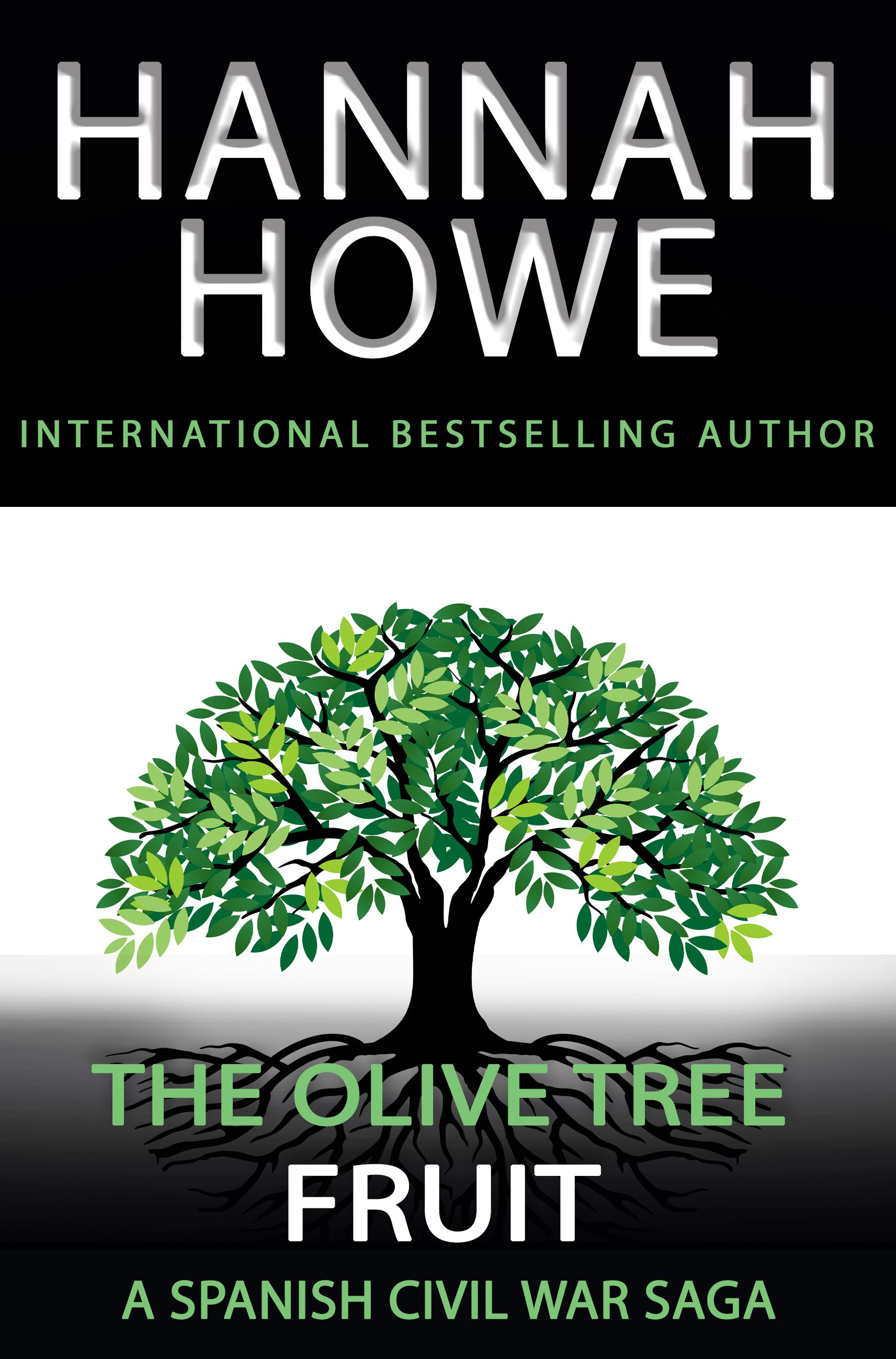
Published this week, The Olive Tree: Fruit, book four of five in my Spanish Civil War Saga.

The blurb:

Christmas 1937. A respite from the fighting allows time for celebrations, and for passions to ignite.

Volunteer nurse Heini Hopkins can deny her feelings no longer: she is attracted to handsome surgeon, Dr Miguel Martinez. However, her love for International Brigades Volunteer Deiniol Price remains strong. What should she do? Which way should she turn?

Meanwhile, author Naomi Parker wrestles with her feelings for the Condor Legion’s ace pilot, Prince Nicolas Esteban. She also falls under suspicion as Luis Rodriguez, the Minister of Propaganda, hunts for a spy in his camp.

Book four in The Olive Tree: A Spanish Civil War Saga places Heini on the frontline where she battles to save Deiniol, and her heart.

My latest translation, the Spanish version of Operation Cameo, Eve’s War Heroines of SOE book six.

Last week, I started rewatching The Rockford Files. This week, after the pilot episode, the series started with The Kirkoff Case, a good story by John Thomas James with some great one-liners in the teleplay by Stephen J Cannell: Rockford to a thug, “Does your mother know what you do for a living?”

James Woods guest starred and, if anything, was underused. This episode featured more physical violence than later episodes. It also featured a great ‘flicked cigarette’ gag. Overall, an enjoyable episode, but I think the confession at the end, as portrayed in a newspaper headline, went against James Woods’ character: Larry Kirkoff didn’t seem the type to confess.

This week’s answer machine message: “Jim, it’s Norma at the market. It bounced – you want us to tear it up, send it back, or put it with the others?”

Not a relative, but this is touching. The death record of Sarah Slumbers of Drury Lane, 10 February 1833.

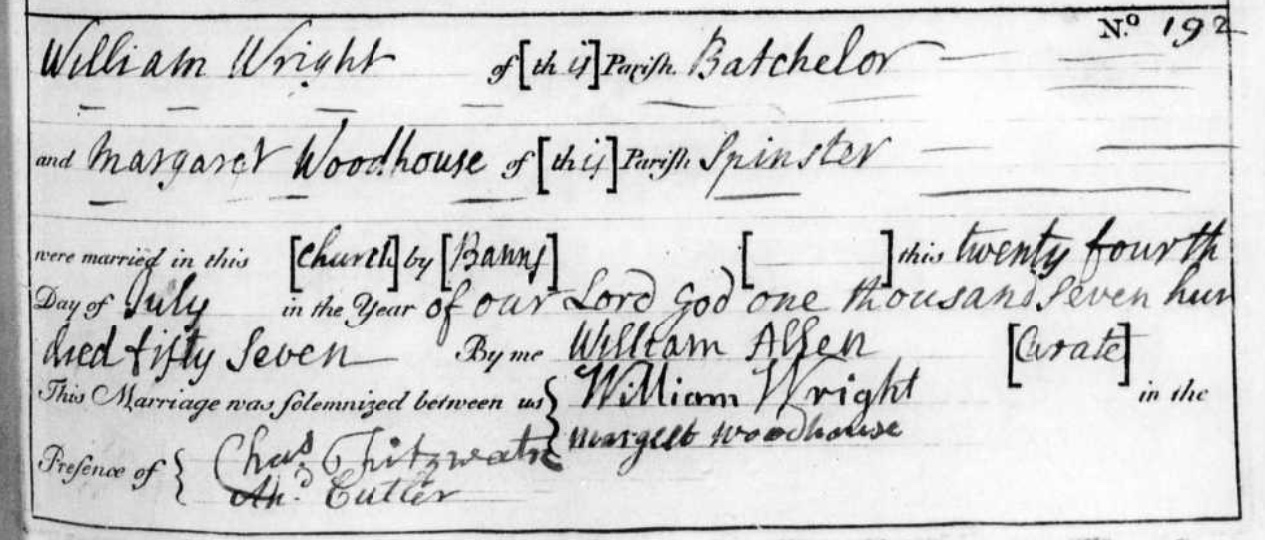
It’s always nice when you discover your ancestors’ signatures because they offer an insight into character. My 6 x great grandparents William Wright and Margaret Woodhouse’s signatures, 24 July 1757. Margaret was literate. I get a sense that this branch is leading somewhere…

My 7 x great grandfather Thomas Woodhouse owned a brewery. He was a ‘servant of St Mary’s, Lambeth’, supplying that part of London with ale. On 28 November 1728, Thomas married Mary Fitzherbert. The Fitzherberts go back to medieval times, so nobility is a possibility, if the records exist.

I’ve traced the Woodhouse branch of my family tree back to Droitwich, Worcestershire. My 9 x great grandfather, John Woodhouse, a ‘gentleman’, died on 21 September 1685. However, before his death he arranged for his son, also John, my 8 x great grandfather, to become an apprentice with Lawrence Fullove, a Quaker and distiller, based in London. 

John’s apprenticeship started on 19 April 1687, his fifteenth birthday, and was set for seven years. However, Lawrence Fullove died on 26 September 1689 leaving John without a master.

On 15 July 1690 John’s apprenticeship was turned over to George Vale of the Distiller’s Company. John completed his apprenticeship and established a brewery in St Mary’s, Lambeth, which was inherited by my 7 x great grandfather, Thomas Woodhouse.

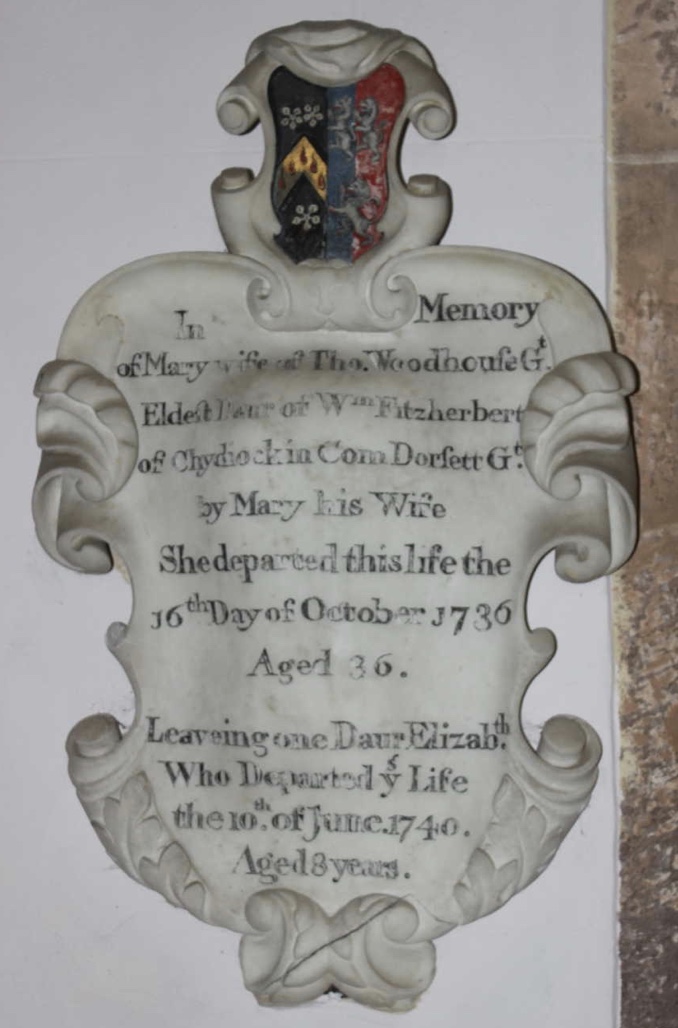
A touching memorial to my 7 x great grandmother Mary Fitzherbert and her daughter Elizabeth, commissioned by her husband, Thomas Woodhouse. The ornate nature of the memorial suggests that Thomas’ brewery business was doing well. And the coat of arms connects to the nobility.

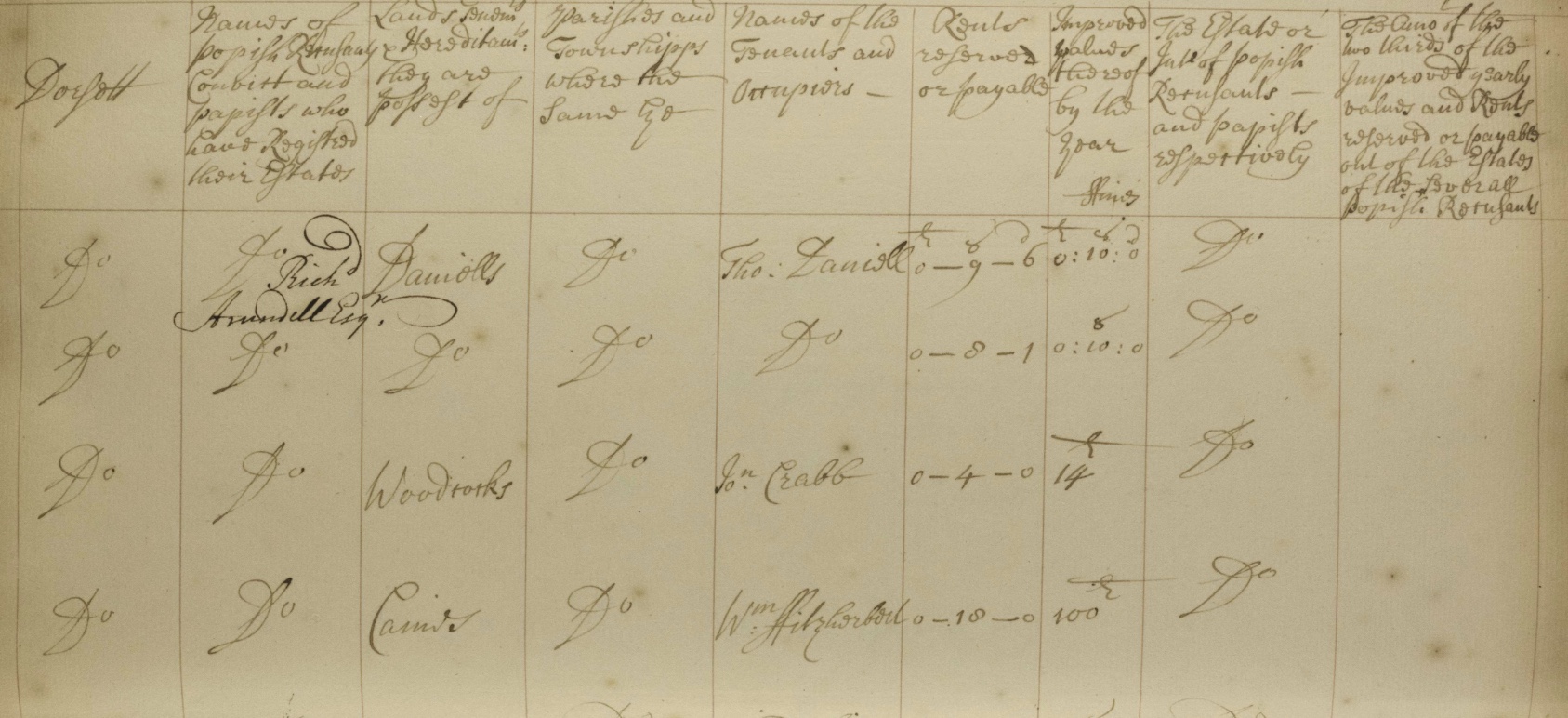
Dorset Quarter Sessions, 1729. A payment of 2 shillings 1 1/2 pence made by my 8 x great grandfather Mr William Fitzherbert for maintenance of the highways in the parish of Chidiock.

In 1717 as a popish recusant, my 8 x great grandfather William Fitzherbert forfeited his estates. A common theme with my ancestors: in love, religion and politics they stood up for what they believed in. They didn’t take any bullshit from anyone, especially the government.

Welsh Football Legends

Leigh Richmond Roose was born on 27 November 1877 in Holt near Wrexham. A goalkeeper, and a celebrated amateur at a time when the game was largely professional, Leigh Roose was regarded as one of the best players in his position during the Edwardian era.

Raised by his clergyman father after his mother’s untimely death, Leigh Roose left school in 1895 and attended Aberystwyth University. He also studied medicine at King’s College London, but did not qualify as a doctor.

A big man at over six feet tall and thirteen stone, Leigh Roose began his footballing career in 1895 with Aberystwyth Town. He earned great praise during this phase of his career. Indeed, the eminent Welsh historian Thomas Richards referred to him as Yr Ercwlff synfawr hwn – ‘This wondrous Hercules’.

From Aberystwyth Town, Leigh Roose went on to play for Stoke, two spells, Everton, Sunderland plus several guest appearances for other clubs, including Celtic, Aston Villa and Woolwich Arsenal. Leigh Roose retained his amateur status throughout his club career. However, he did cash-in on expenses.

On the international stage, Leigh Roose played for Wales, in 1900, in a 2 – 0 victory over Ireland. He won 24 caps in total, in an international career that spanned eleven years. The highlight of his career arrived in 1907 when Wales won the British Home Championship for the first time. Because Wales did not play their first international match against an overseas opponent until 1933 all of Leigh Roose’s games were played against England, Scotland or Ireland.

Leigh Roose used his physical presence to intimidate his opponents. He was powerful, recklessly brave and the possessor of amazing reflexes earning a reputation as a shot-stopper and penalty saver.

Leigh Roose was an eccentric and anecdotes about his behaviour appeared frequently in contemporary newspapers. One anecdote stated that in March 1909 he travelled with Wales to play against Ireland in a British Home Championship match. At Liverpool station he appeared with one hand heavily bandaged and informed the waiting press that he had broken two fingers, but would still play.

News of Leigh Roose’s disability reached the Irish fans and they turned out in huge numbers in anticipation of witnessing an Irish victory. Instead Wales won the game 3–2 with Leigh Roose playing superbly. Leigh Roose’s injury had been a ruse, his broken fingers a practical joke.

Injury, in the form of two broken wrists, did curtail Leigh Roose’s career. Nevertheless, he remained a celebrity, the ‘David Beckham of his day’. When a newspaper invited its readers to select a World XI to face another planet, they chose Leigh Roose as the World XI’s goalkeeper by a large margin.

Leigh Roose led a glamorous life. He wore Saville Row suits and owned an apartment in central London. He was popular with the ladies including, it is said, with musical hall star Marie Lloyd.

Although well above the age of recruitment, Leigh Roose joined the British Army at the outbreak of the First World War. He served in the Royal Army Medical Corps in France and Gallipoli. Later he returned to London and enlisted as a private in the Royal Fusiliers. He served on the Western Front and transferred his fearless attitude on the football field to the battlefield winning the Military Medal for bravery. 

His citation read: “Private Leigh Roose, who had never visited the trenches before, was in the sap when the flamethrower attack began. He managed to get back along the trench and, though nearly choked with fumes with his clothes burnt, refused to go to the dressing station. He continued to throw bombs until his arm gave out, and then, joining the covering party, used his rifle with great effect.”

Promoted to the rank of lance corporal, Leigh Roose fought in the Battle of the Somme. Tragically, he was killed towards the end of the battle, on 7 October 1916, aged 38. His body was not recovered, so his name appears on the war memorial to missing soldiers at Thiepval.

You can read more player profiles here https://hannah-howe.com/sixty-four/

As ever, thank you for your interest and support.

Hannah xxx

For Authors

#1 for value with 565,000 readers, The Fussy Librarian has helped my books to reach #1 on 32 occasions.

A special offer from my publisher and the Fussy Librarian. https://authors.thefussylibrarian.com/?ref=goylake

Don’t forget to use the code goylake20 to claim your discount 🙂

Categories
Dear Reader

Dear Reader #146

Dear Reader,

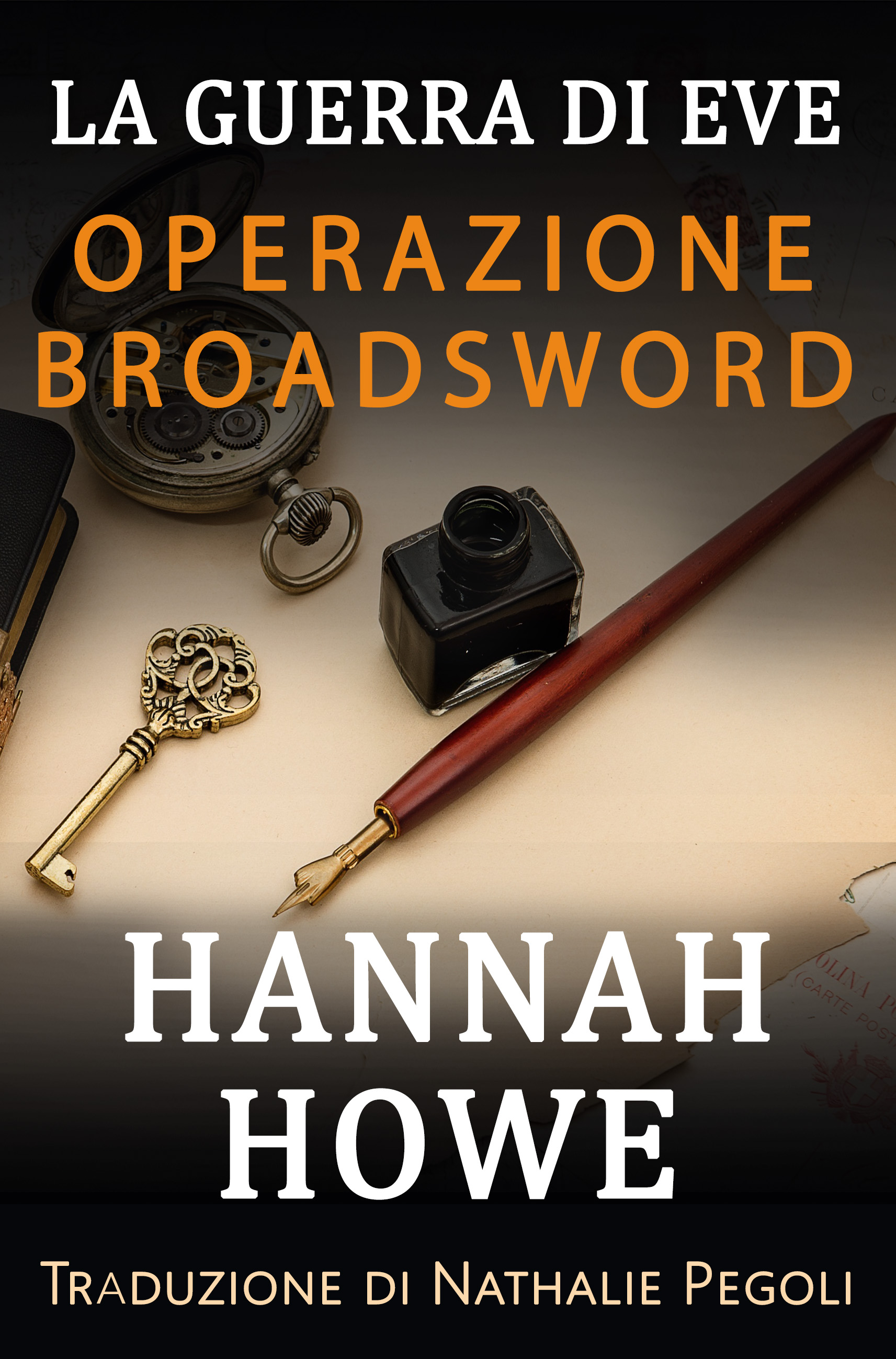
My latest translation, the Italian version of Operation Broadsword, Eve’s War Heroines of SOE, book three.

This week, I started rewatching The Rockford Files. Most of the regular cast appeared in the pilot, including Stuart Margolin as Angel. Jamie Farr of M*A*S*H was considered for the part, and would have done a fine job, but Stuart Margolin made it his own. He portrayed the character so well with just the movements of his eyes. Around this time Margolin also featured in an episode of M*A*S*H.

The answering machine messages at the start are iconic. In the pilot, Luis Delgado (who appears as ‘himself’ in a marriage scene later in the episode) said, “Billings, L.A.P.D. You know, Thursday is Chapman’s 20th year, and we’re giving a little surprise party at the Captain’s. I think you should come. By the way, we need five bucks for the present…” Cue the equally iconic theme music…

In this month’s issue of Mom’s Favorite Reads…

Writer and historian Mary W Craig interviewed by Wendy H Jones. Plus, Author Features, Health, Nature, Photography, Poetry, Recipes, Short Stories, Young Writers, Nature Photography Day, and so much more!

Do you have one of these, a Princess Mary Christmas Gift Box? As you can see, I have two, from both sides of my family, one in better condition than the other.

Each box was decorated with an image of Mary and other military and imperial symbols and typically filled with an ounce of tobacco, a packet of cigarettes in a yellow monogrammed wrapper, a cigarette lighter, and a Christmas card and photograph from Princess Mary. Some contained sweets, chocolates and lemon drops.

The boxes were distributed to all members of the British armed forces on Christmas Day 1914, although some servicemen had to wait until 1920.

Most baptism records tend to be scrawled, but for some reason many in the West Country were recorded with a neat hand. Here’s the baptism record for my 5 x great grandfather, John Bick.

Many of my Bick ancestors were baptised in St Mary de Lode Church, Gloucester. It is believed that St Mary’s was built on the site of the first Christian church in Britain. Certainly, it was built on top of two Roman structures, possibly temples.

Photo: Wikipedia

In honour of the Wales football team and their World Cup qualifying achievement, I intend to feature pen-portraits of past players on Twitter and my website. I will feature some ‘big names’, but the majority will be ‘unsung heroes’ from the 19th and 20th centuries. 

I’m starting with Alf Sherwood because he used to visit my great grandmother. For more details, read on…

The son of Herbert Sherwood, a labourer and coal miner from Wiltshire, and Alice Maud Williams, a labourer’s daughter from Aberdare, Alfred Thomas Sherwood was born on 13 November 1923 in North View Terrace, Aberaman, a stone’s throw away from his hometown football club. 

In 1939 Alf was an apprentice wagon painter. Then, during the Second World War, he was drafted into the coal mines to work as a ‘Bevin Boy’.

Scouts recognised Alf’s footballing prowess at an early age and he gained caps at youth level for Wales. He was also an accomplished cricketer. 

In 1942, Alf joined Cardiff City from Aberaman Athletic. A wing-half at Aberaman, he switched to full-back at Cardiff. He was so impressive that he made that position his own for the rest of his career.

When the Football League returned for the 1946–47 season, Alf missed just one match for Cardiff City. That season the club gained promotion as champions of Third Division South. In the 1951–52 season, Alf was appointed club captain and under his leadership Cardiff City gained promotion to the First Division.

Alf’s senior international career began on his 23rd birthday in a match against England in the British Home Championship. The score: 3 – 0 to England. However, on 22 October 1955 in the British Home Championship match played at Ninian Park, as captain Alf led Wales to a famous 2-1 victory over England.

In total, Alf won 41 Welsh caps. He earned a reputation as ‘the king of the slide-tacklers’. Indeed, Stanley Matthews described him as “the most difficult opponent he ever played against.” Students of the game reckoned that Alf’s main qualities were outstanding pace, sound tackling and a wonderful positional sense.

Alf also served club and country as a stand-in goalkeeper. On 17 April 1954 in a match against Liverpool, he saved a penalty taken by Scottish international Billy Liddell, which ultimately condemned Liverpool to relegation.

After an illustrious career, Alf worked for the National Coal Board. He also worked as an insurance agent and during the course of this work he called on my great grandmother, Edith, to collect her monthly insurance premiums and chat.

Alf died on 12 March 1990.

You can read more player profiles here https://hannah-howe.com/sixty-four/

As ever, thank you for your interest and support.

Hannah xxx

For Authors

#1 for value with 565,000 readers, The Fussy Librarian has helped my books to reach #1 on 32 occasions.

A special offer from my publisher and the Fussy Librarian. https://authors.thefussylibrarian.com/?ref=goylake

Don’t forget to use the code goylake20 to claim your discount 🙂