Categories
Dear Reader

Dear Reader #124

Dear Reader,

I’m researching the Victorian era and my poverty-stricken London ancestors. This is a view of Whitehall from Trafalgar Square, 1839. Produced by M de St Croix, it’s one of the earliest daguerreotype photographs of England, taken when M de St Croix was in London demonstrating Louis Daguerre’s pioneering photographic process during September and December 1839. 

In the foreground is Le Sueur’s statue of Charles I on horseback, and in the distance Inigo Jones’ Banqueting House – practically everything else has subsequently disappeared. The image has been reversed to show the scene as it was, as daguerreotypes only produce reversed views.

My direct ancestor Joan Plantagenet, daughter of Edward I of England and Eleanor of Castile. Joan was born in April 1272 in Akko (Acre), Hazofan, Kingdom of Jerusalem.

Joan has appeared many times in fiction, often depicted as a ‘spoiled brat’.  There is no evidence that this depiction represents her true character, but the myth remains. That’s the power of fiction.

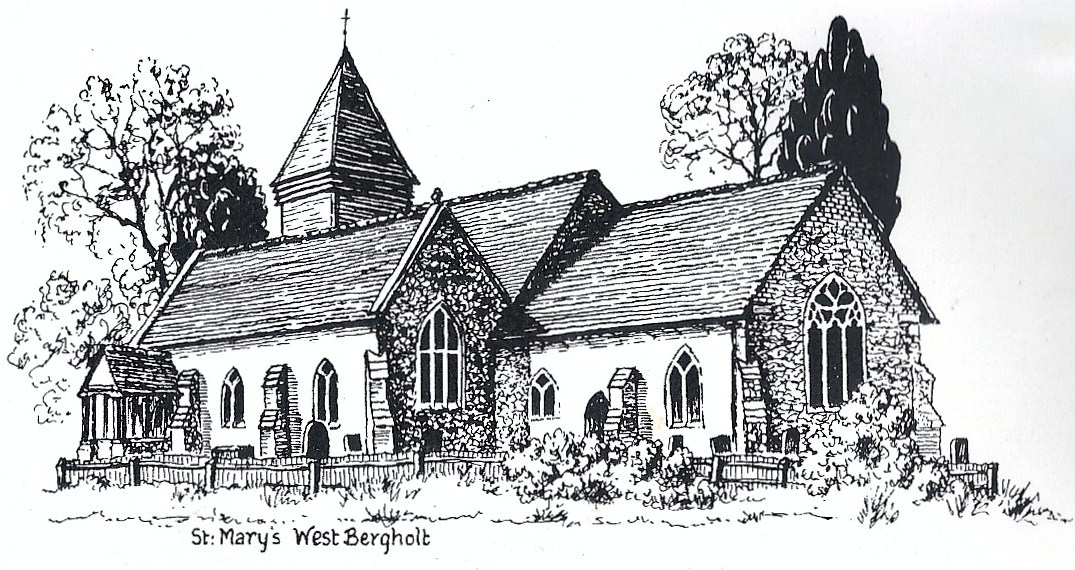
A lovely drawing of St Mary’s, West Bergholt, Essex, in the 1600s and 1700s the parish church of the Fincham, Balls, Clark and Sturgeon branches of my family.
My 4 x great grandmother Mary Ann Thorpe was baptised on 4 August 1816 in Great Braxted, Essex. The daughter of Thomas Thorpe and Mary Ann Freeman, she married Henry Wheeler on 3 November 1844 in St Mary, Lambeth, Surrey.

Mary Ann was Henry’s second wife. He was a petty thief. Also, she was eighteen years younger than him. Why did a young woman marry a far older, disreputable man? We will explore that question later.
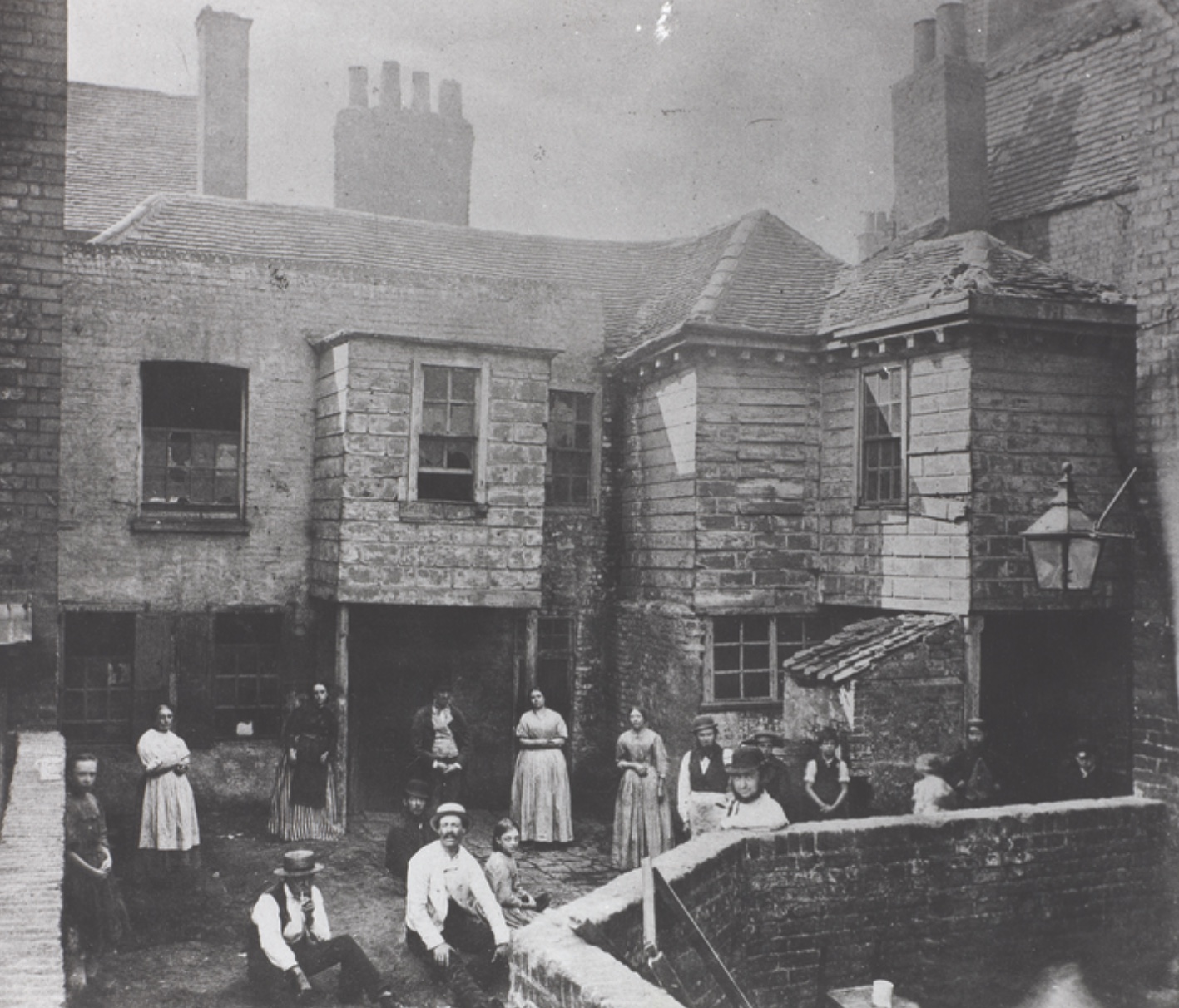
A slum in Market Court, Kensington, 1860s.

Mary Ann and Henry produced four children: Mary Ann, Charlotte, Joseph and Nancy, my direct ancestor, who when married at sixteen changed her name to Annie. There was a nine year gap between Mary Ann’s birth and Charlotte’s birth. This pattern replicated Henry’s first marriage to Elizabeth Mitchell where there was a nine year gap between their first two children, Henry and Eliza. That marriage produced five children in total. Why the nine year gaps? Henry’s wives were clearly fertile, but he was not around. Where was he? Read on…

After each marriage and the birth of the first child, Henry resorted to petty crime to make ends meet. The family endured great hardship, extreme poverty, and with new mothers and babies to feed Henry became ‘light-fingered’.

At other times, Henry was no saint. His name features frequently in the criminal records. However, on many occasions he was found ‘not guilty’. Nevertheless, it’s clear that the Wheeler family lived their lives on the fringes of society and mixed with petty, and possibly, hardened criminals.
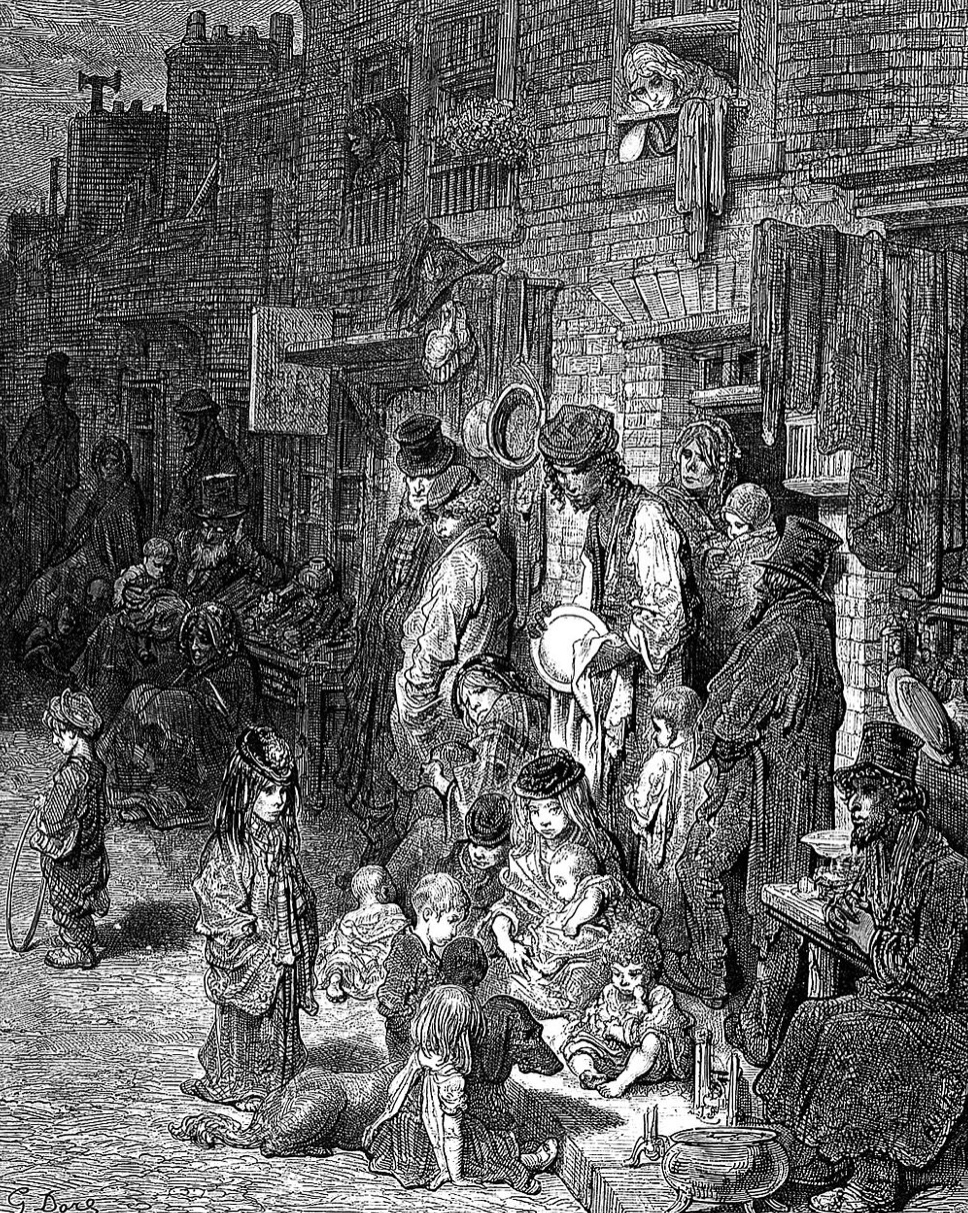
“Wentworth Street, Whitechapel”, 1872, by Gustave Doré (Wellcome Trust).

In 1845, after the birth of his daughter Mary Ann, Henry served a seven year prison sentence. The Victorians were keen on multiples of seven for their prison sentences, and this pattern extended to periods of transportation as well.

While Henry was in prison, his wife Mary Ann endured a difficult time. On 24 August 1849 it’s possible that she entered St Luke’s asylum. The records are sketchy, so it’s difficult to be certain, but the facts and circumstances fit so I am inclined to believe that she did spend some time in the asylum, maybe due to the burden of her circumstances. 

Or maybe Mary Ann suffered from long-standing mental health issues. It’s possible that those issues made a match with a man her own age unlikely, hence her choice of Henry, the eighteen year older petty criminal. The psychological profile certainly fits. That said, maybe it was a love match. Love can still blossom even in the most dire of circumstances.

Earlier, on 20 September 1848, Mary Ann entered the workhouse, a foreboding institution that was more a place of punishment than support. The Victorian era through the Industrial Revolution generated great wealth, but that wealth was concentrated on a relatively small number of individuals. These people were extremely rich, but they treated the poor with contempt. We can see a parallel in our own times.

Mary Ann left the workhouse on 10 January 1849, but her troubles were far from over. She still had a baby to feed, no husband to call on, and a fight against the diseases poverty brings. For all her troubles Mary Ann was a strong woman and lived to be eighty-six.

Before exploring Mary Ann’s later years, first we must go back in time, to 3 February 1845 when she found herself following her husband’s well-trodden path to the Old Bailey.

A trial at the Old Bailey.

Mary Ann was indicted for feloniously breaking and entering the dwelling-house of Susan Laws, on the 18 January 1845, and stealing two gowns, value 30s., the goods of Caroline Allen; and one shawl, 6s., the goods of Henry George Steer.

Caroline Allen, a dressmaker, gave evidence: she locked her door and went to bed late. In the morning, she discovered the door open and her possessions gone. She had no knowledge of Mary Ann. She also stated that two families and an old gentleman shared the dwelling-house.

John Robert Davis stated that he was a shopman to Mr. Folkard, a pawnbroker, in Blackfriars Road. On the 18 January, at half-past nine in the morning, Mary Ann pledged the stolen gown at the pawnbrokers and he gave her an inferior duplicate. He reckoned that Mary Ann made three shillings on the trade.
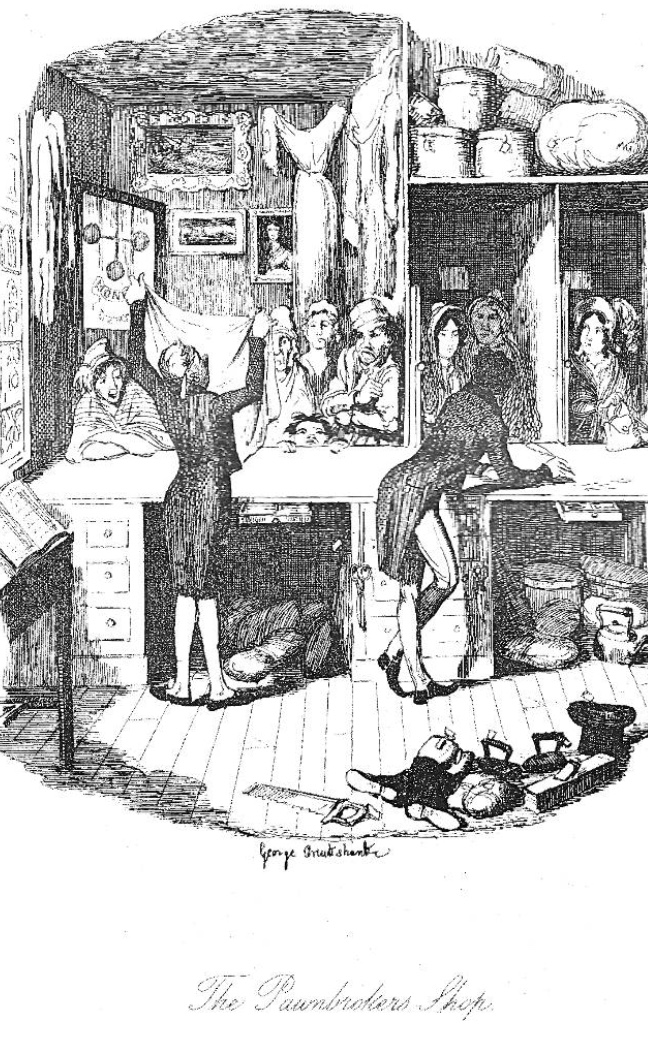
The Pawnbroker’s Shop, 1876. 

Police constable Michael Cregan stated that he visited Mary Ann’s lodging and found the gown and shawl hidden under bedclothes. The court also established that the main door was ‘broken open’ although there were no marks of violence. The conclusion was that someone had used a skeleton key.

Eliza Beale, a fellow lodger, stated that she knew Mary Ann and that she was ‘an unfortunate girl.’ – An observation on Mary Ann’s mental health? Crucially, Eliza added that she came home at four o’clock in the morning when a man and woman asked her if she knew where they could get a bed. She let them into her room. They had a bundle with them, but she did not see them the following morning.

Martha Winfield, the landlady, contradicted Eliza Beale. However, Martha did not live in the house and therefore she was not an eyewitness to the events that night. Her contradiction was based on opinion, not on fact.

Verdict: Not Guilty.

In her closing years, as a widow, Mary Ann lodged with other elderly people. Over her eight-six years she certainly witnessed the darker aspects of London life. She also witnessed a period of dramatic change. At no stage was Mary Ann’s life easy. But she battled through and her life stands as a testimony to the human spirit.

As ever, thank you for your interest and support.

Hannah xxx

For Authors

#1 for value with 565,000 readers, The Fussy Librarian has helped my books to reach #1 on 31 occasions.

A special offer from my publisher and the Fussy Librarian. https://authors.thefussylibrarian.com/?ref=goylake

Don’t forget to use the code goylake20 to claim your discount 🙂

Categories
Dear Reader

Dear Reader #114

Dear Reader,

A lovely message from my local library this week. Apparently, my books are ‘proving popular’ with borrowers and the library would like to acquire more copies. We will send them a parcel of my books, free of charge. ‘Libraries gave us power.’ Support your local library!

Eve at #1 and another lovely review. “Great read! Can’t wait to read the next episode! I would recommend this book to anyone who likes to read about the resistance, spy and wartime.”

Many thanks to everyone who supports my books.

My article about SOE agent Pearl Witherington appears in the August issue of the Seaside News. Pearl is probably my favourite SOE agent, although all were truly remarkable.

A remarkable discovery. A writer in the family. On 24 December 1716 my direct ancestor William Axe, the son of a clergyman, boarded the St George bound for the Cape in Africa. He was one of four writers who joined the crew and the ‘Company of Royal Adventurers of England Trading with Africa.’ 

The Company of Royal Adventurers of England Trading with Africa, later known as the Royal African Company, was founded by the British royal family in 1660. It shipped more African slaves to the Americas than any other company in the history of the Atlantic Slave Trade. I wonder if William Axe wrote about that. More research required.

In the spring of 1846 my 4 x great grandparents Thomas Thompson Dent Jr and Dorothy Hornsby set sail for New York bound for Canada. They arrived in New York on 24 June 1846 then with their five children, William, Thomas, Elizabeth, Richard and Henry, and baby Dorothy, travelled north where they established a farm in Ontario, Canada. Why did they make such a hazardous journey with the risk of disrupting their stable lives?

As the eldest son of Thomas Thompson Dent Sr, Thomas Jr stood to inherit much of his land – Thomas Sr owned at least four farms in Bowes, Yorkshire, and the surrounding area. Did father and son fall out, or did Thomas Jr reckon that the prospects for his family were better served in Canada? When Thomas Sr died in 1854 he made no mention of Thomas Jr in his will, so the migration to Canada appears to have severed all ties within that branch of my family. That said, passenger lists indicate that Thomas Jr did travel to Britain then back to Canada in 1871. Although travel was slower in the Victorian era our ancestors were often more mobile than we sometimes realise.

In 1846 Thomas and his family made their initial journey by steerage, the cheapest form of maritime travel. Their ship, the Rappahanock, sailed from Liverpool with 453 passengers. Travelling by steerage, one imagines that their journey was a challenging one.

The Pays d’en Haut region of New France, 1755, an area that included most of Ontario.

In the 1840s, Canada was a young developing country. The Canadian government were looking for settlers to farm the land and they made generous offers to entice people to settle. In Britain, orphans were often sent to Canada to work the land. Many of them stayed and you could argue that they faced better prospects in the fields of Canada than in the slums of a city like London.

Between 1815 and 1850, Over 960,000 people arrived in Canada from Britain. The new arrivals included refugees escaping the Great Irish Famine as well as people from Scotland displaced by the Highland Clearances. Infectious diseases killed between 25 and 33 percent of Europeans who immigrated to Canada before 1891.

The 1840s in particular saw heavy waves of immigration into Ontario. During this decade the population of Canada West more than doubled. As a result, for the first time, the English-speaking population of Canada West surpassed the French-speaking population of Canada East, tilting the representative balance of power.

An economic upturn followed in the 1850s, which coincided with an expansion of the railway system across the province. The economic situation improved further with the repeal of the Corn Laws and trade agreements with the United States. As a result, the timber trade, mining and alcohol distilling boomed. Farmers too benefited from this good fortune.

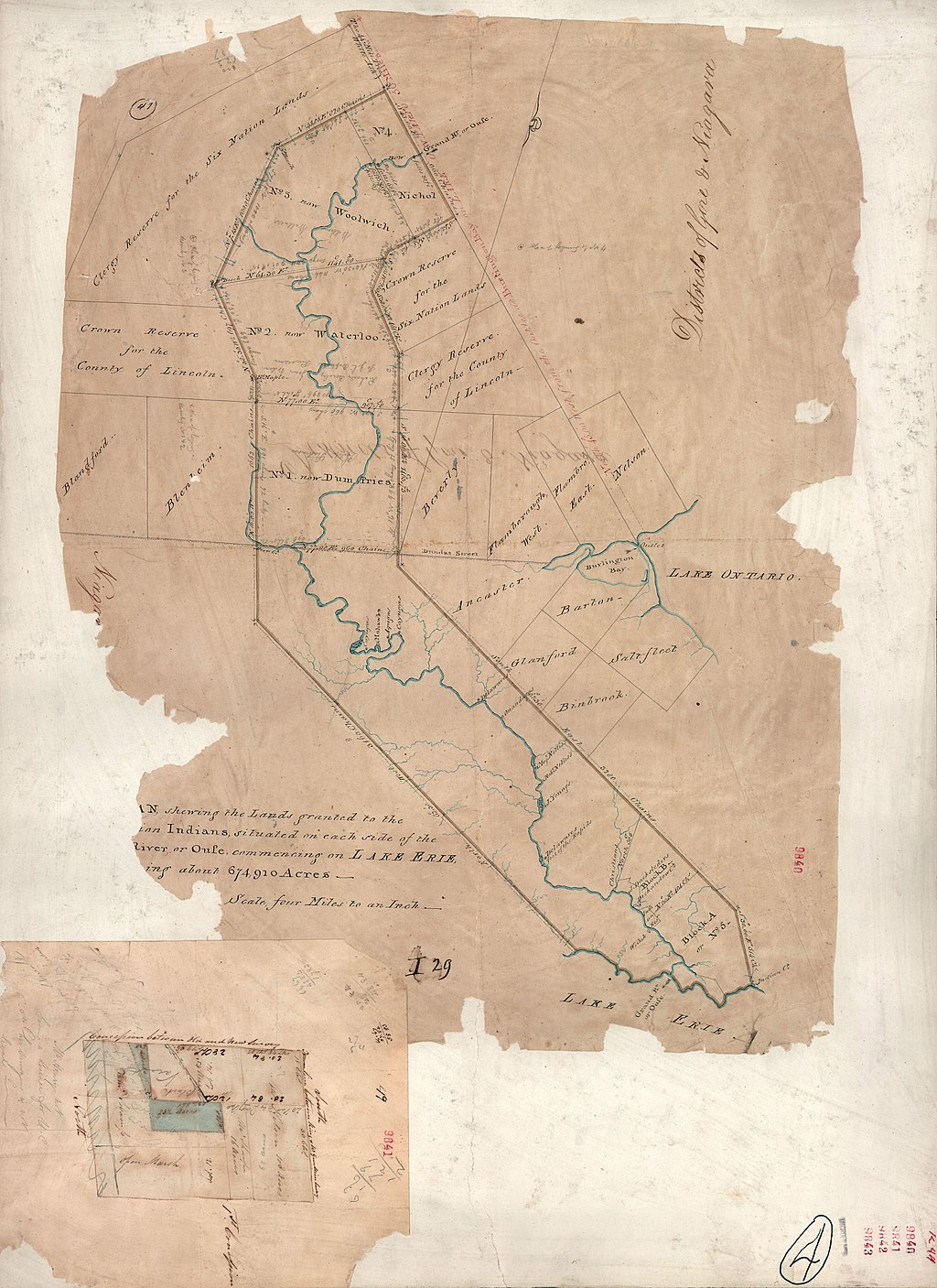
Halton County, Ontario, 1821, home to the Dent family from 1846.

In Ontario, Thomas and Dorothy had two more children: Mary and Robert. In 1851 Thomas and his family were farming in Halton County. All their immediate neighbours – farmers, shoemakers, carpenters and a clergyman – came from either England or Ireland.

Ten years later, in 1861, Thomas and Dorothy were living in a two storey farmhouse built of brick. They were prospering. However, as we have seen, life in Canada could be a struggle with a battle against infectious diseases and within two years two of their daughters, Mary and Dorothy, died.

By 1871 the family had dispersed with sons and daughters marrying. Thomas and Dorothy worked their farm with the assistance of their son, eighteenth year old Robert. Presumably, they hired servants for seasonal tasks. However, at the time of the 1871 census none of those servants lived on the farm.

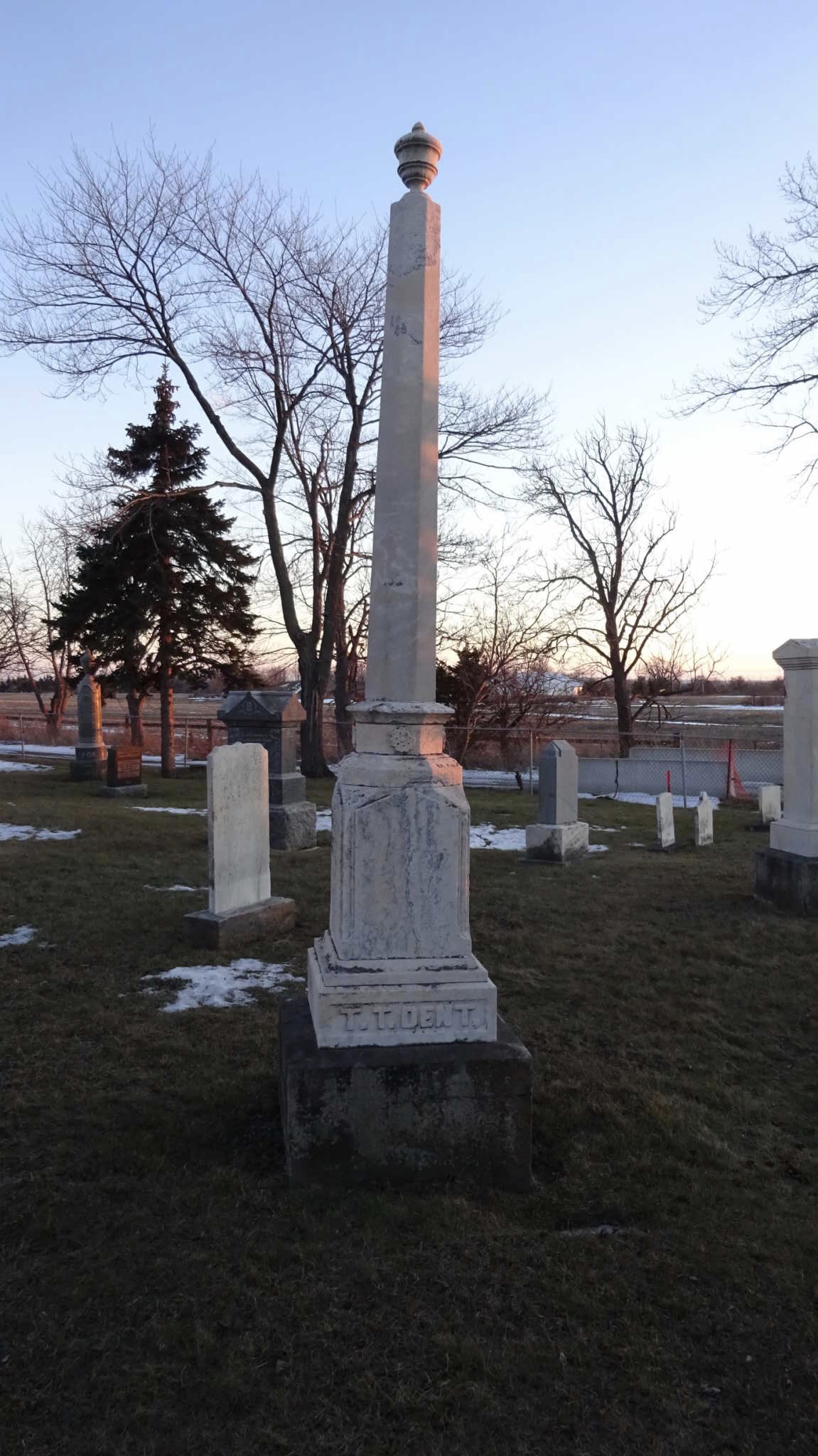
Thomas died in 1876, aged 69, of typhoid. He was buried in St Stephen’s Anglican Cemetery, Hornby, Halton County, Ontario. 

By 1881 Robert was running the farm. Dorothy was seventy at this point and still going strong. However, she died in 1888 and was buried in the family plot at St Stephen’s Anglican Cemetery, Hornby, Halton County, Ontario. 

As for Thomas and Dorothy’s children: William Dent married Margaret Featherstone. They raised a family and ran a farm in Halton, Ontario. Henry Hornsby Dent married Mary Ann Gilley. He also raised a family and ran a farm in Halton, Ontario. By 1911 he regarded himself as a Canadian. Robert married Augusta Tuck. He also considered himself a Canadian and farmed in Halton, Ontario. For this branch of the family the transfer of allegiance from Yorkshire to Canada was complete.

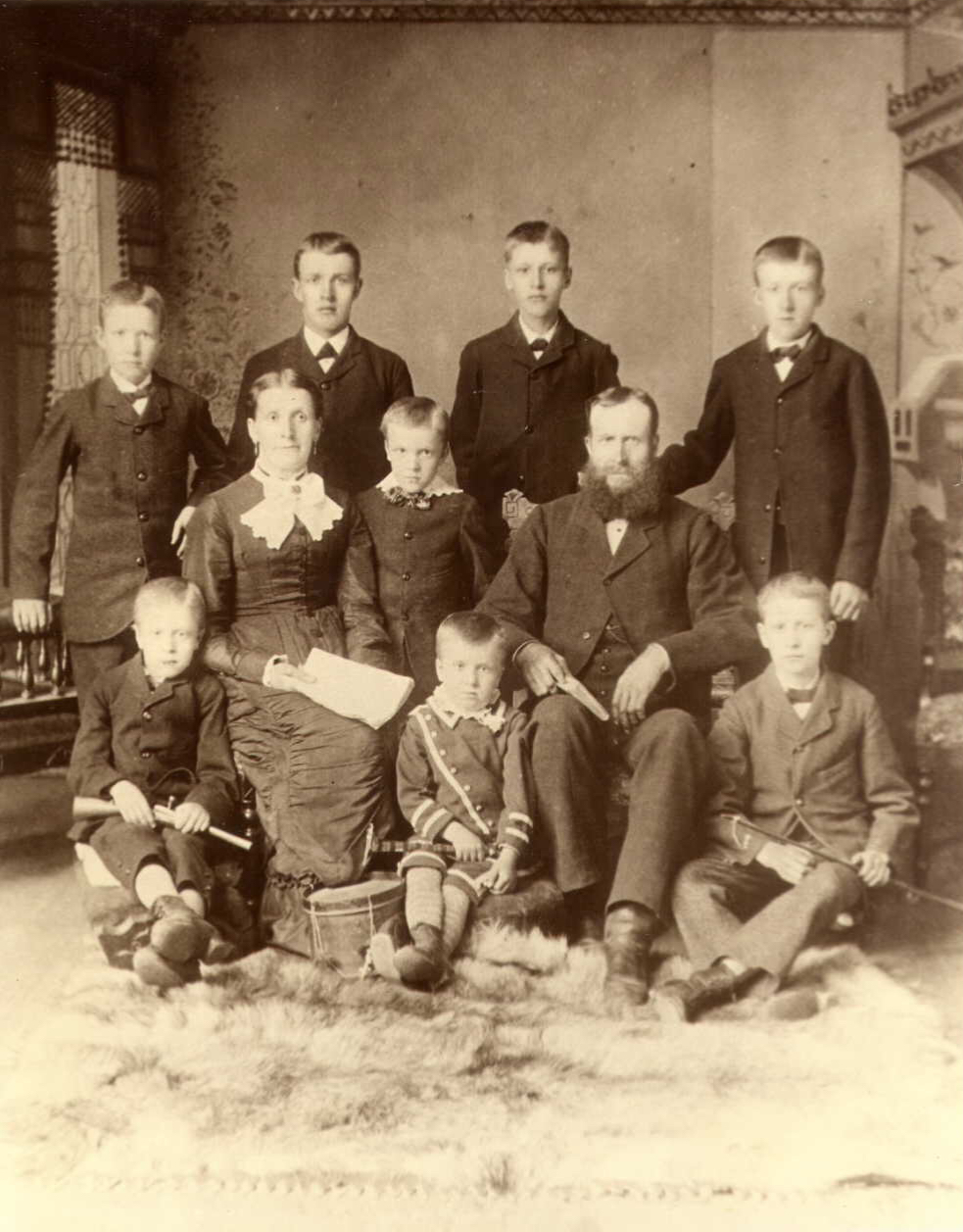
Of the daughters, only Elizabeth survived into adulthood. On 30 October 1861 in Halton, Ontario she married Henry Gastle, a farmer originally from England. The couple produced eight sons, pictured, c1880.

In all of this, what happened to my 3 x great grandfather Richard Dent? In the 1860s he decided that a farmers life in Canada was not for him and returned to Britain. More about Richard next time.

As ever, thank you for your interest and support.

Hannah xxx

For Authors

#1 for value with 565,000 readers, The Fussy Librarian has helped my books to reach #1 on 31 occasions.

A special offer from my publisher and the Fussy Librarian. https://authors.thefussylibrarian.com/?ref=goylake

Don’t forget to use the code goylake20 to claim your discount 🙂

Categories
Dear Reader

Dear Reader #11

It’s been a summer of ideas. Initially, my goals for the year were to publish Victory and write Snow in August. However, in May I had an idea to write about the Spanish Civil War, a subject I had never considered writing about before that moment. I hesitated, because it is a big subject, but the ideas kept coming. I believe there is truth in the saying, ‘Subjects choose their authors, authors don’t choose their subjects.’

Since May I have had ideas for five books in my Spanish Civil War series plus three ideas for Sam Smith mysteries. Today, I developed ideas for a Sam Smith mystery and got stuck around chapter twenty-three. That’s because one of the characters proved elusive to me. Then I realised he didn’t really fit into the book because his involvement dragged the story away from the central character and complicated the theme. So I returned to the theme and the central character and the full story unfolded naturally. 

This story, so far untitled, will see Sam get very angry on behalf of her client. I love writing Sam when she’s angry and, believe me, she’ll be tearing up some trees in this one. The source of her anger is a woman who does something that is beyond the pale. Furthermore, the story is based on reality.

I’m delighted and honoured to be featured by the Fussy Librarian this week. You can read my interview with Sadye of the Fussy Librarian here https://www.thefussylibrarian.com/newswire/2019/08/02/author-qa-hannah-howe

This week, my Spanish Civil War research led me to Dorothy Parker.

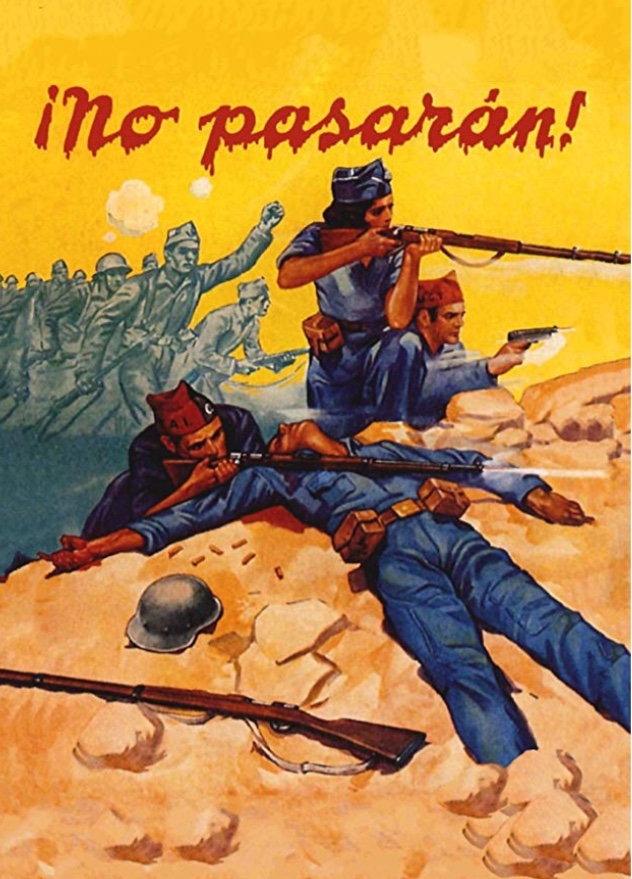
During 1936-9 the Conservative government in Britain, plus the governments in America and France, adopted a stance of ‘non-intervention’ in the Spanish Civil War. In fact, this amounted to support for the fascists because of the various outcomes these governments desired a fascist victory over a victory for the Spanish people. Of course, Britain, America and France paid heavily for this stance because it encouraged Hitler and Mussolini, and this led to the Second World War.

With no support from overseas governments, the Spanish people relied on individuals and organisations for support. Dorothy Parker held her hand up and stepped forward as one of those individuals.

A celebrated poet, writer and wit, Dorothy Parker was one of the founders of the Anti-Nazi League in Hollywood. She helped to raise $1.5 million ($65 million at today’s value) for Spanish refugees. For her trouble, she was blacklisted during the McCarthy era, ‘the time of the toad’, as she called it. However, history smiles on Dorothy Parker while McCarthy’s name is associated with all that is dark about humanity. 

While in Spain, in October 1937, Dorothy Parker said, “It makes you sick to think of it. That these people who pulled themselves up from centuries of oppression and exploitation cannot go on to a decent living, to peace and progress and civilisation, without the murder of their children and the blocking of their way because men want more power. It is incredible, it is fantastic, it is absolutely beyond all belief…except that it is true.”

I have added lots more to my website pages this week – the pictures offer a clue – so please take a look around. I hope you will find something of interest.

As ever, thank you for your interest and support.

Hannah xxx