Categories
Maid Marian and Robin Hood

Maid Marian and Robin Hood #1

I’m developing a series about Maid Marian that will, naturally, also feature Robin Hood. My posts here will focus mainly on British productions of the legend, simply because I find them more interesting – I’m not a big fan of “Hollywood does medieval”.

My main focus in these posts will be on the 1955-59 British television series, The Adventures of Robin Hood. However, other productions will also feature.

Over twenty actresses have portrayed Maid Marian in film and on television.

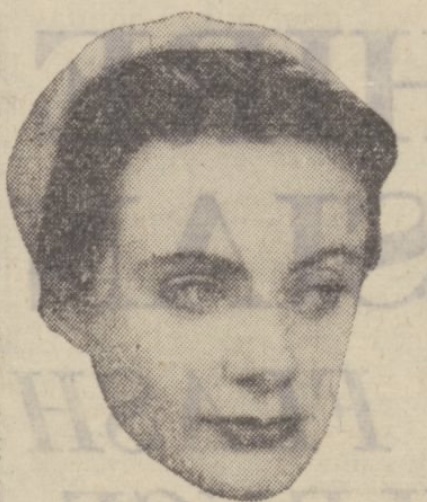
Josée Richard (pictured) played Maid Marian in the 1953 BBC mini-series Robin Hood. She was married to broadcaster Robert Robinson for over fifty years.

Josée Richard, below, pictured in The Sketch in July 1953.

In 1953 Patrick Troughton starred as Robin Hood in a six-episode television seriesthe first television production of Robin Hood. The thirty minute episodes were transmitted live, and only eight minutes from the second episode, The Abbot of St. Mary’s, survived.

The cast included Josée Richard as Maid Marian, Wensley Pithey as Friar Tuck, Kenneth Mackintosh as Little John and David Kossoff as the Sheriff of Nottingham.

The Episodes:

  1. Gathering the Band (17 March 1953)
  2. The Abbot of St. Mary’s (24 March 1953)
  3. Who Is Robin? (31 March 1953)
  4. The Silver Arrow (7 April 1953)
  5. A King Comes to Greenwood (14 April 1953)
  6. The Secret (21 April 1953)

Richard Greene thought long and hard – for three months – before accepting the part of Robin Hood in the television series The Adventures of Robin Hood (1955-59). An established screen and stage actor, he was aware of the risks of “stepping down” to make a television series. Had the scripts and production values been poor, the decision would have severely damaged his career. However, the scripts and production values were excellent, and Robin Hood became the defining role of his distinguished career.

Anticipated pattern of future blog posts: Marian and Robin – every six days, 1963 newspaper digests – every six days.

Available for order and pre-order, my Swinging Sixties Mystery Series

https://books2read.com/u/bMqNPG

For Authors

#1 for value with 565,000 readers, The Fussy Librarian has helped my books to reach #1 on over thirty occasions.

A special offer from my publisher and the Fussy Librarian. https://authors.thefussylibrarian.com/?ref=goylake

Don’t forget to use the code goylake20 to claim your discount 🙂

Categories
1963

Social History 1963 #4


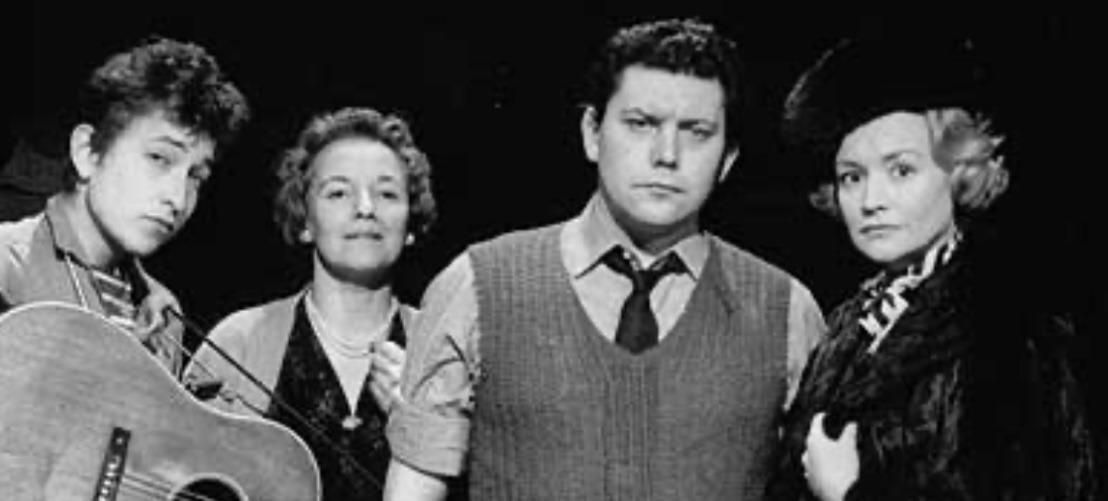
On 13 January 1963, the BBC broadcast the play Madhouse on Castle Street, which featured Bob Dylan. Dylan had originally been cast as the lead, but his acting was not up to standard. Given a singing role, he offered one of the earliest public performances of Blowing in the Wind, sung over the credits.

The cast of Madhouse on Castle Street

The television schedule for 13 January 1963, and details of the play Bob Dylan appeared in. Despite Dylan’s subsequent rise to fame, the BBC destroyed the recording of the play.

British Cricket in 1963 saw the introduction of a professional limited overs competition, “The First Class Knock Out Competition for the Gillette Cup”. In the inaugural season, the matches consisted of 65 overs per side with a bowler bowling a maximum of 15 overs.

In the semi-finals, Sussex, 292 all out, beat Northamptonshire, 187 all out, by 105 runs, while Worcestershire, 60 – 1, beat Lancashire, 59 all out, by 9 wickets.

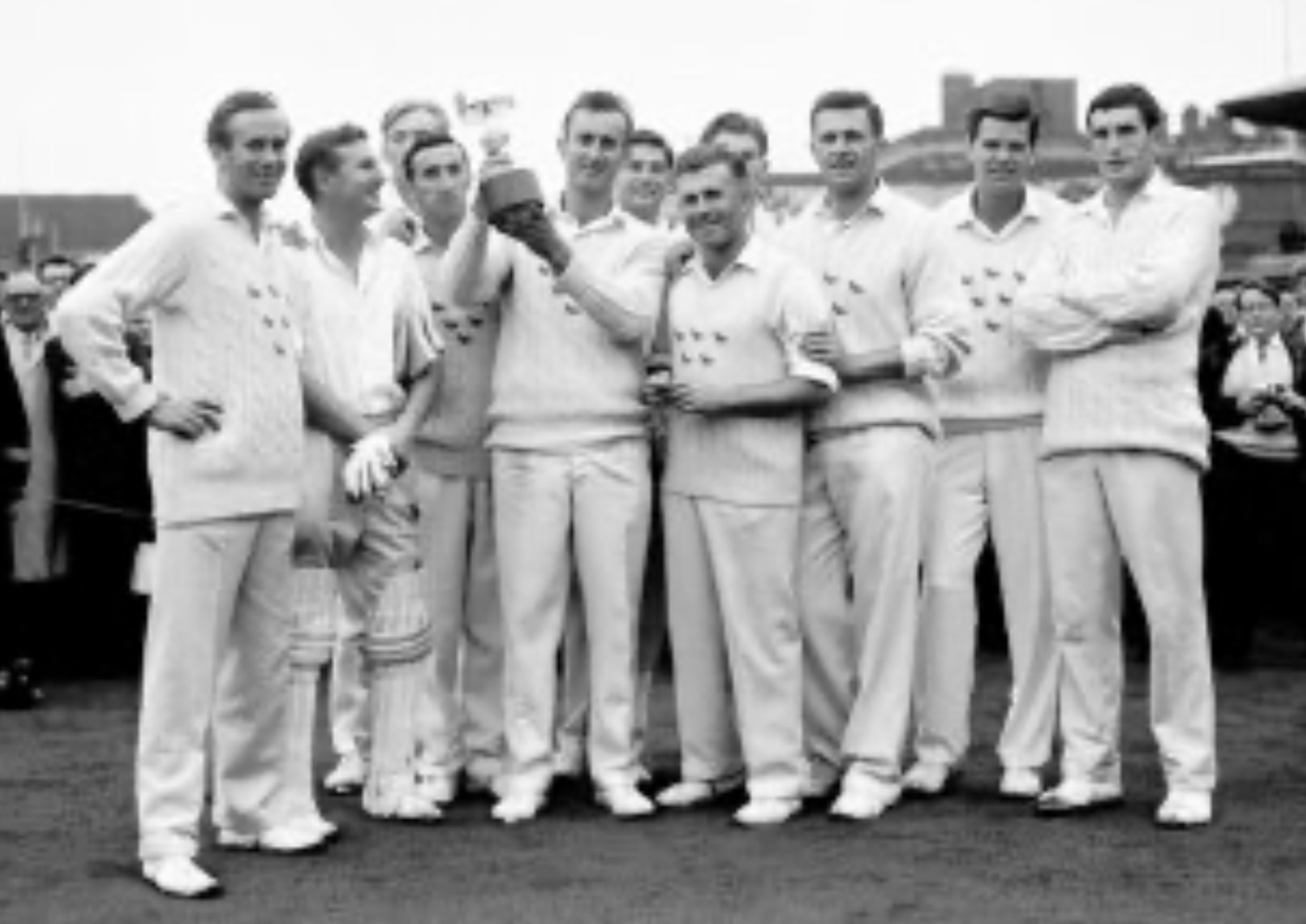
In the final, Sussex 168 all out, beat Worcestershire, 154 all out, by 14 runs. 

The early starts, to accommodate 130 overs in a day, often meant that the team batting first were at a severe disadvantage due to the dewy conditions favouring the bowlers.

The Sussex team displaying the trophy

In September 1963, the Ku Klux Klan bombed a church in Birmingham, Alabama, shattering a stained-glass window. In response, John Petts, a stained-glass artist from Carmarthenshire, Wales launched a campaign to fund and create a new window as a gift to the church from the people of Wales. The funds were raised in the blink of an eye, and a friendship between the community in Alabama and Wales continues to this day.

📸 BBC

Developed in Birmingham, England in 1963, the Mellotron became one of the sounds of the sixties. Manfred Mann used the Mellotron on Semi-Detached Suburban Mr James, 1966, while a year later the Beatles used the instrument on Strawberry Fields Forever.

In the 1960s and 1970s the Mellotron became a mainstay for progressive rock bands including the Moody Blues, Barclay James Harvest, King Crimson, Yes and Genesis. 

By the 1980s, many bands preferred synthesisers to Mellotrons, and production of the latter ceased in 1986. However, groups like Radiohead resurrected the Mellotron and production recommenced in 2007.

📸 Wikipedia

Quotes from Peggy Lee, singer, songwriter, actress and sage.

“I didn’t intend to be a jazz singer, but Louis Armstrong said I always knew how to swing. He wrote it on a photograph he gave me. I’m proud of that.”

Vancouver, 1950s. “The place was jammed, the audience was very drunk and I was quietly singing, ‘I Only Have Eyes For You’ when one man cracked another over the head with a bottle. ‘Are the stars out tonight…” CRA-A-CK. ‘I don’t know if it’s cloudy or bright…’ CRA-A-CK. The fight was on. Meanwhile, I continued to sing…”

“Some of us just go along believing what we read in the papers until that marvellous day when people stop intimidating us – or should I say, we refuse to let them intimidate us, and we think and do things on our own.”

Coming soon, Songbird, my novel set in 1963

https://books2read.com/u/bMqNPG

For Authors

#1 for value with 565,000 readers, The Fussy Librarian has helped my books to reach #1 on 32 occasions.

A special offer from my publisher and the Fussy Librarian. https://authors.thefussylibrarian.com/?ref=goylake

Don’t forget to use the code goylake20 to claim your discount 🙂
Categories
Dear Reader

Dear Reader #218

Dear Reader,

I’m pleased to say that the writing of Sunshine, book two in my Golden Age of Hollywood series, is going well, and that we hope to bring the publication date forward from April 2024 to earlier in the year. Watch this space 🙂

Sunset Boulevard: Notes on a Classic

”No one ever leaves a star. That’s what makes one a star.” – Norma Desmond, just before shooting the man who rejected her, Joe Gillis.

📸 William Holden as Joe Gillis and Gloria Swanson as Norma Desmond in Sunset Boulevard.

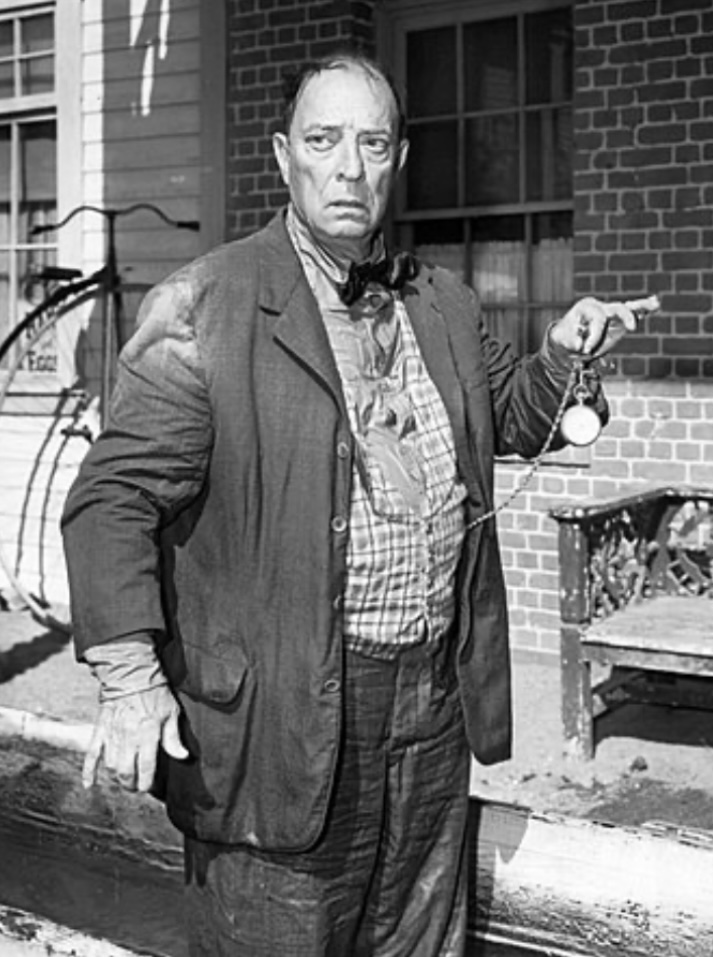
Along with H.B. Warner and Anna Q. Nilsson, Buster Keaton (pictured) appears as himself in Sunset Boulevard, as one of Norma Desmond’s bridge players. In a derogatory comment, Joe Gillis refers to the bridge players as “the waxworks”.

A Hollywood Murder

Continuing my investigation into the 1922 murder of movie director William Desmond Taylor.

Edward F Sands (pictured) worked as William Desmond Taylor’s valet prior to his current valet, Henry Peavey. A known embezzler and forger, Sands was also a serial deserter from the the U.S. military. In the summer of 1921, while Taylor was in Europe, Sands forged the movie director’s cheques and wrecked his car. Shortly after the murder, Sands disappeared and was never seen again. 

One theory suggests that Sands knew about Taylor’s past life as William Cunningham Deane-Tanner, antique dealer and wife deserter, and was blackmailing him. Another theory suggests that Sands knew that Taylor was bisexual (an aspect of Taylor’s life strongly hinted at, although not definitively proved) and was blackmailing him over his affairs with men.

As with Henry Peavey, one is tempted to ask why did Taylor employ such a person in the first place?

Nancy Olson

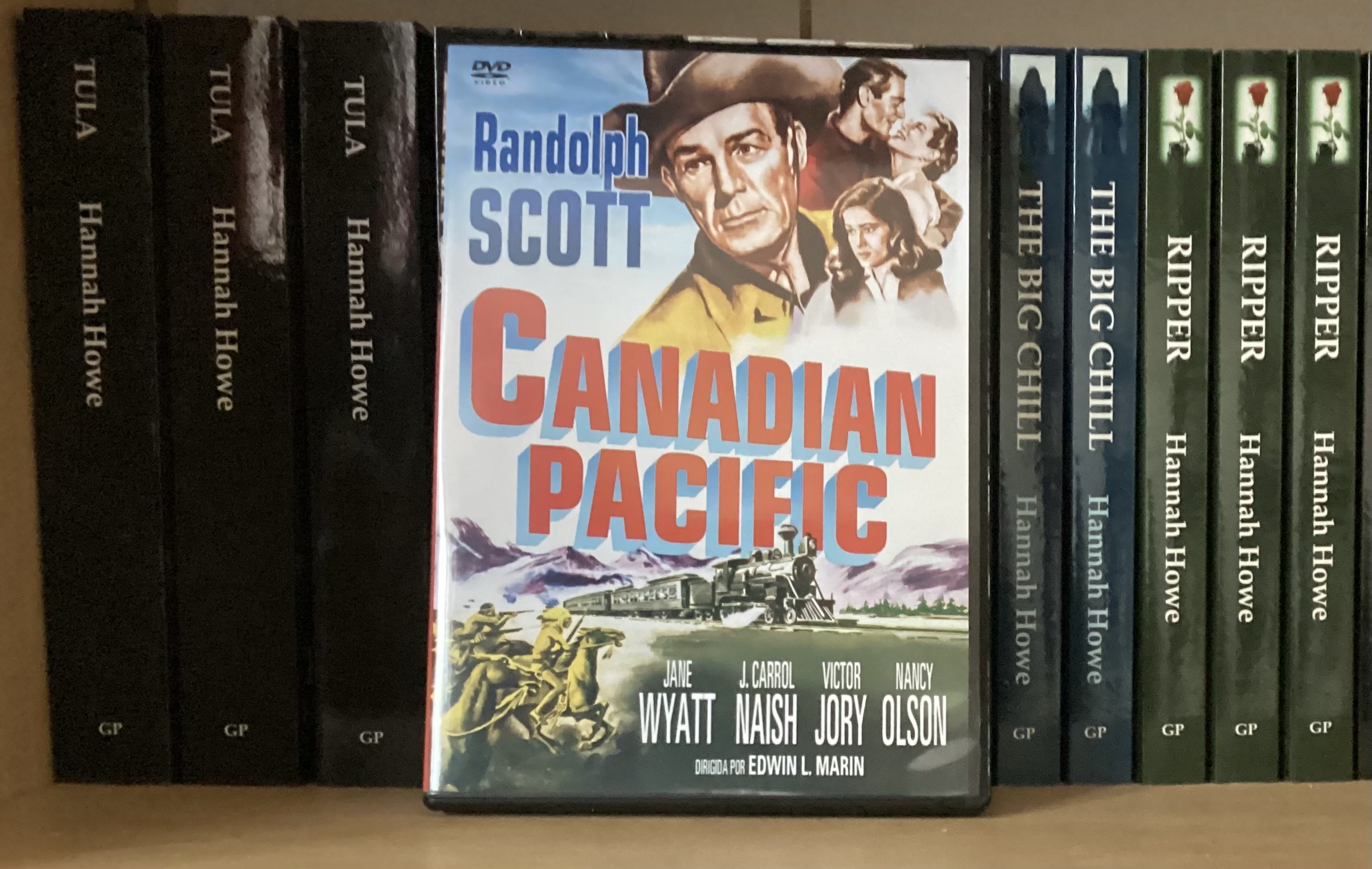
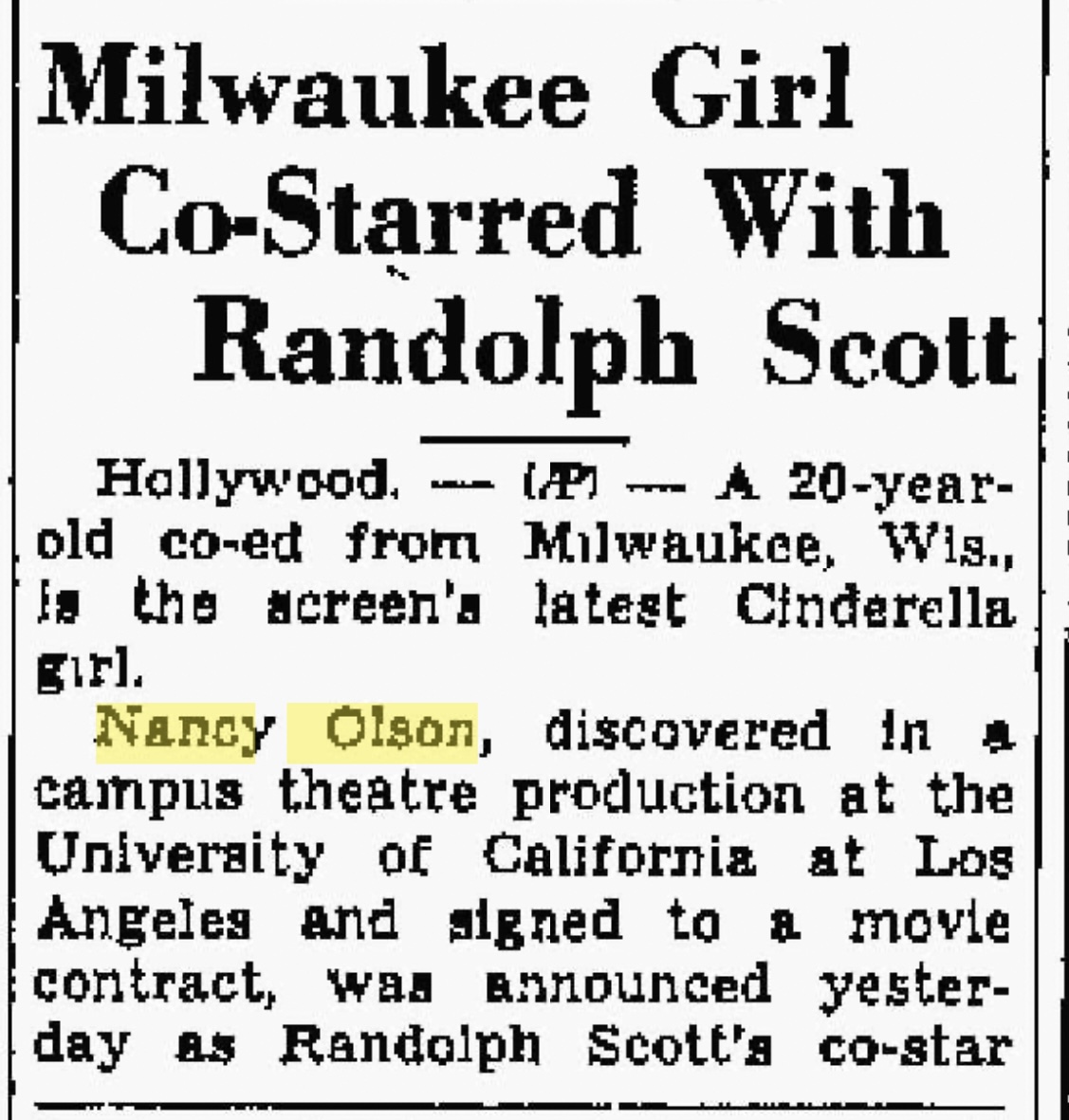
Nancy Olson made her movie debut in a Western, Canadian Pacific (1949). In a curious piece of casting, this colour movie featured Nancy, a blue-eyed blonde with her family’s roots firmly entrenched in Scandinavia, as a ‘half-breed’ Indian. Furthermore, her fiancé, Randolph Scott, was old enough to be her father. Welcome to the wonderful world of the movies, Nancy Olson.

August 1948. Nancy Olson “discovered”.

Nancy Olson certainly put her heart and soul into her movie debut playing Cecille Gautier in Canadian Pacific (1949). She appeared in ten scenes (plus minor continuity scenes) where she either hugged Randolph Scott or was involved in feisty exchanges with the other characters. In the whipping scene with Victor Jory (Nancy held the whip), she literally left her mark.

Why Nancy Olson became an actress, August 1948.

Columbo

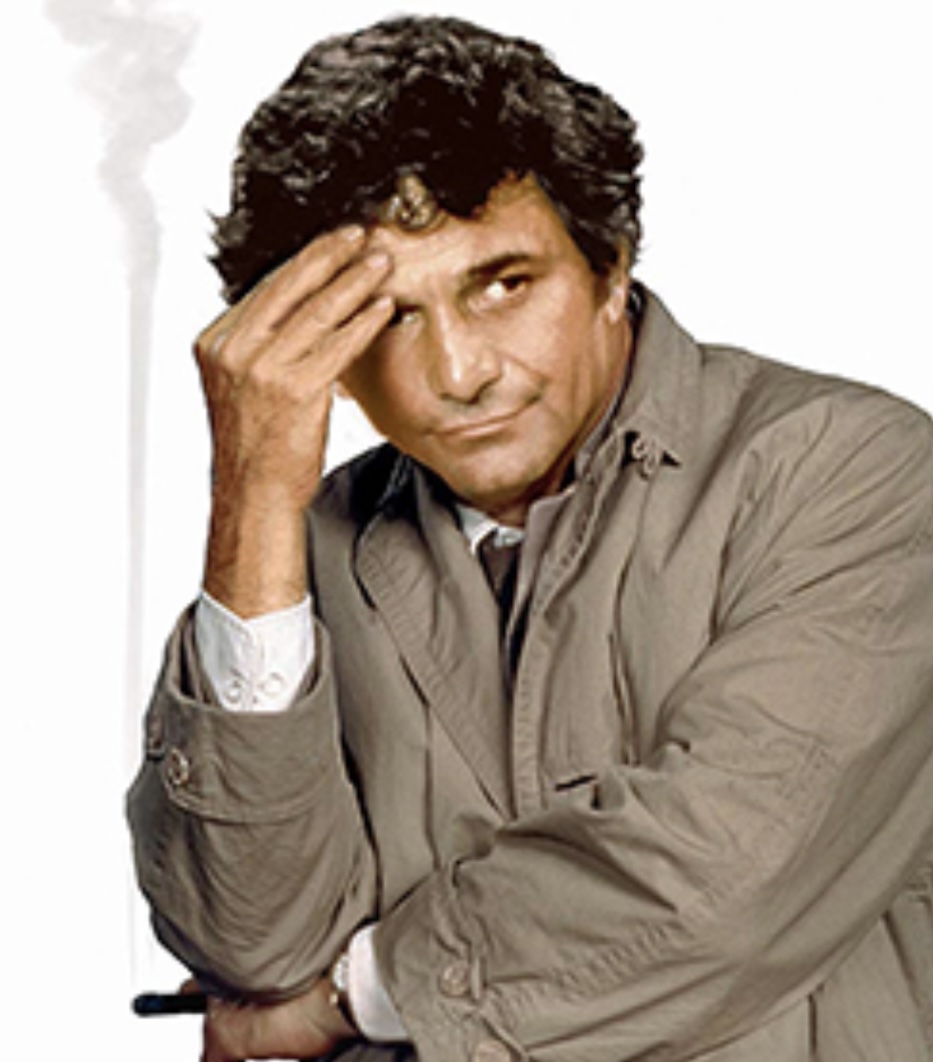
Season One, Episode Seven: “Blueprint for Murder”. Patrick O’Neal played the murderer in this episode and Forrest Tucker the victim. The murder was not depicted, which led me to think that the “victim” would reappear later in the episode. The story contained a neat plot centred on a construction site. This was the only television episode of any series that Peter Falk directed.

Social media https://toot.wales/@HannahHowe

As ever, thank you for your interest and support.

Hannah xxx

For Authors

#1 for value with 565,000 readers, The Fussy Librarian has helped my books to reach #1 on 38 occasions.

A special offer from my publisher and the Fussy Librarian. https://authors.thefussylibrarian.com/?ref=goylake

Don’t forget to use the code goylake20 to claim your discount 🙂

Categories
Dear Reader

Dear Reader #217

Dear Reader,

Coming soon, the audiobook version of Tula, book one in my Golden Age of Hollywood series, featuring a wonderful narration by Amelia Mendez.

Clara Bow’s fifty-seventh and final movie was Hoopla, produced between September 2 and November 9, 1933, and released on November 30, 1933. Clara played Lou, an amoral cooch dancer.

Clara hated her role, but appeared in the movie to fulfil her contract. She was unhappy about the whole production. However, the critics loved her performance and the film.

Variety: “A more mature performance, which shows an improved actress. She looks and photographs extremely well. Bow seems ripe to comeback strongly and this performance will help plenty.”

Sadly, Clara disagreed. “I’ve had enough. I don’t wanna be remembered as someone who couldn’t do nothin’ but take her clothes off. I want somethin’ real now.” Clara found that reality as a housewife and mother. She quit the yellow brick road for life on a ranch.

Clara was still in her twenties and had plenty to offer as an actress. She still had “it”. As she developed as a person, her performances would have become even more mature, stronger. If offered the right parts, she could have made classic movies and be remembered for the great talent she was.

To appreciate Clara’s talent, I would recommend her second film, “Down to the Sea in Ships”. In that film, Clara’s youthful ability is on display, and you can see why the producers developed her role and added more scenes for her to appear in.

I would also recommend her penultimate film, “Call Her Savage”. This film is over-plotted – it’s half-a-dozen films in one, but with so much going on at least the movie offered Clara an opportunity to display her wide range of acting talents.

I’m doing some in-depth research on the movie Sunset Boulevard. Here’s my second note.

Sunset Boulevard: Notes on a Classic

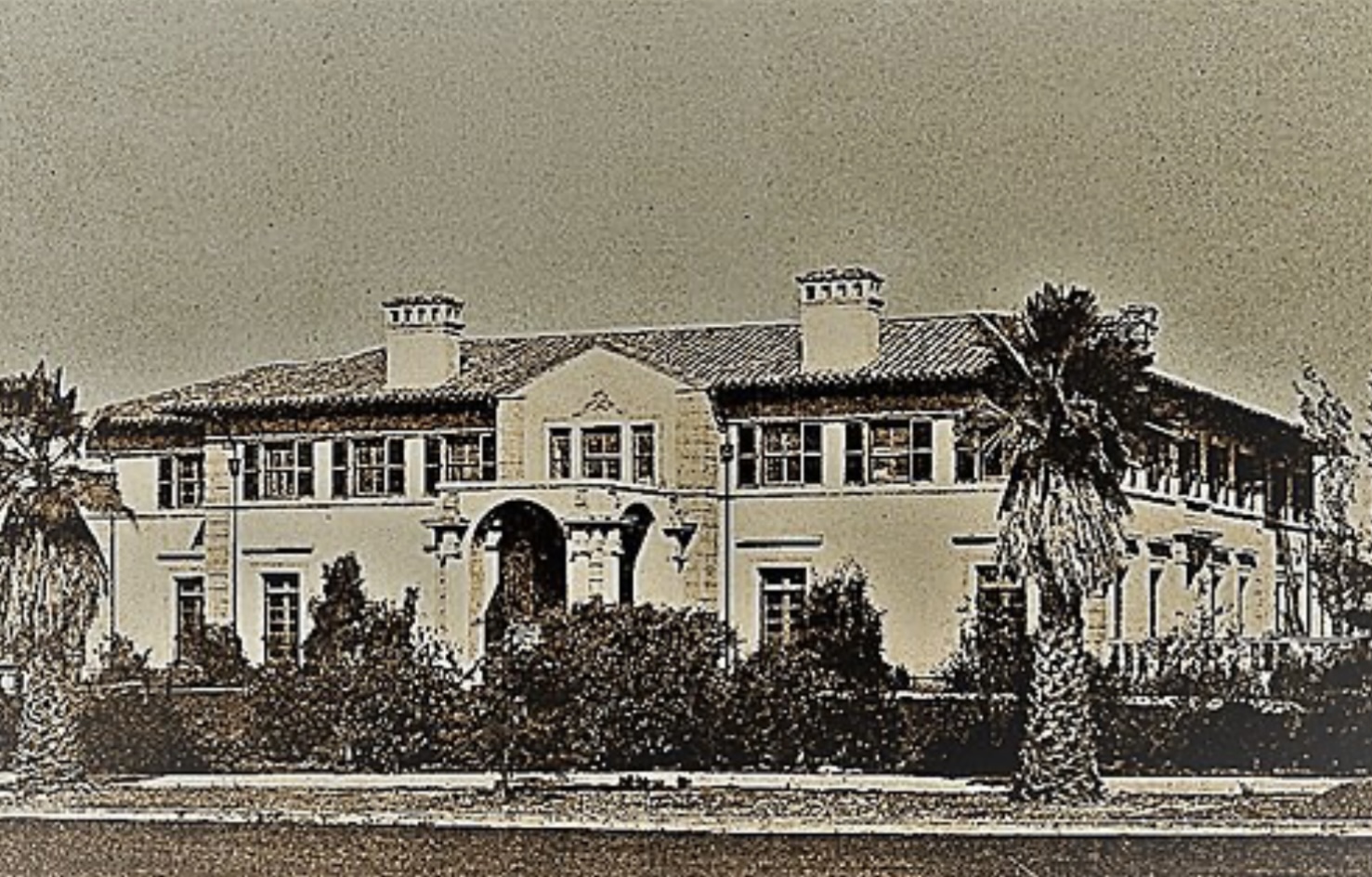
“A great big white elephant of a place. The kind crazy movie people built in the crazy twenties.” – Joe Gillis in Sunset Boulevard.

📸 The William O. Jenkins House, also known as the “Phantom House”, built for businessman William O. Jenkins in 1922 and 1923, Norma Desmond’s house in Sunset Boulevard.

An Isotta Fraschini Tipo 8A, Norma Desmond’s car in Sunset Boulevard.

Norma Desmond: “We have a car. Not one of those cheap things made of chromium and spit but Isotta Fraschini. Have you ever heard of Isotta Fraschini? All hand-made. It cost me twenty eight thousand dollars.” That’s around $500,000 in today’s money.

Columbo – Season One, Episode Six: “Lady in Waiting”.

Susan Clark played the murderer in this episode, psychologically one of the best of the first series. Leslie Nielsen played her fiancé. Leslie Nielsen (pictured: Wikipedia) was so good in The Naked Gun series that I struggle to take his straight roles seriously. That said, he’s very good in Columbo and his scenes with Peter Falk are a highlight.

A Hollywood Murder

The professional hitman hired by drug runners theory is one of the weakest in the Taylor case. I include it here because it features in newspaper reports, occasionally.

I’ve searched a newspaper database containing 883,643,177 articles using the keywords “William Desmond Taylor” and “drugs”, covering the period 1900 – 1949. My search returned 14 items. Most of those items were false leads with the word “drug” on the same page as “Taylor”. Some of the articles suggested that Taylor was a drug pusher. Two suggested that he was murdered by a drug pusher. None of the articles suggested that Taylor was an anti-drug campaigner. If he was campaigning against drugs in Hollywood, his campaign did not capture the media’s attention.

Some reports suggest that Mabel Normand was a drug addict. To date, I have not read anything to confirm that. If Mabel was an addict, as a friend it would be understandable if Taylor tried to help her. In trying to help her, he might have talked with studio bosses, who also had good reason to banish drugs from their sets.

The newspapers made no mention of drugs in association with William Desmond Taylor before his murder. The drug angle only featured in some newspapers after his death. Before his death, there was no indication in the media that Taylor was leading an anti-drug campaign.

Some moviemakers were vociferous in their stance and making anti-drug movies in the early 1920s. Director Graham Cutts made Cocaine. He was not murdered. Director Irving Cummings made The Drug Traffic. He was not murdered. Director Norton S Parker made The Pace That Kills. He was not murdered. Numerous people in Hollywood were spreading the anti-drug message in the 1920s and 1930s. Gangsters did not murder them.

As I stated earlier, if Mabel Normand was a drug addict, it would be understandable if William Desmond Taylor tried to help her. Maybe she informed him of her drug suppler and he informed the studio bosses, who in turn informed the police. Corruption was rife. Many officials in the police were on the take. They already knew who was supplying the Hollywood community with drugs, and were prepared to turn a blind eye.

The problem remains: Mabel, or another actor, is still an addict. Even if movie executives banned drug pushers from the studio lot, the addict will get his drugs from elsewhere. And the regular round of parties so beloved of Old Hollywood would offer the drug pushers an opportunity to create new addicts; they would not need access to the studio lot.

With the police in his pocket, effectively waving the drugs through, only an idiot would murder a high profile person, stir up a hornets’ nest, and attract unwanted attention.

If the Eight O’Clock Man murdered William Desmond Taylor, I don’t think he was a professional hitman hired by gangsters, so I’m inclined to place him low on my list of suspects. I would place a second-rate hitman hired by gangsters slightly higher, but still low down on my list.

As Kevin Brownlow and John Kobal wrote in their book, Hollywood: The Pioneers – “A theory was put forward that Taylor had been taking on the drug racket single-handed, in the hope of curing his friend, comedienne Mabel Normand, of addiction, but this proved to be desperate publicity in the face of unpalatable evidence.”

I’m starting a new feature on my website and social media looking at 20th century movies and music through the life of Nancy Olson. Nancy came to prominence in 1950 through her Oscar nominated performance in Sunset Boulevard. She married twice, to lyricist Alan Jay Lerner, and to Capitol Records executive Alan W. Livingston. Nancy is 95 and I think her life story is fascinating. I hope you will enjoy the items I intend to share.

American television, February 2, 1960. Do you remember any of these films and programmes?

Social media https://toot.wales/@HannahHowe

As ever, thank you for your interest and support.

Hannah xxx

For Authors

#1 for value with 565,000 readers, The Fussy Librarian has helped my books to reach #1 on 38 occasions.

A special offer from my publisher and the Fussy Librarian. https://authors.thefussylibrarian.com/?ref=goylake

Don’t forget to use the code goylake20 to claim your discount 🙂

Categories
Dear Reader

Dear Reader #215

Dear Reader,

Clara Bow’s fifty-fifth movie was Kick In, produced between February 25 and March 26, 1931, and released on May 23, 1931. Clara played Molly Hewes. Mike-fright and an inability to deliver her lines gripped Clara during this production. Constantly, her gaze was drawn to the microphone that hung above her head like the Sword of Damocles. 

“This ain’t no life,” Clara conceded after storming off the set. “The fun’s all gone.” 

Clara would make more movies, but her dream had faded. Her heart was no longer in Hollywood.

Columbo

Season One, Episode Four: “Suitable for Framing”. Set in the art world, critic Dale Kingston (Ross Martin) murders his uncle and tries to frame his aunt (Kim Hunter) so that he can inherit his uncle’s valuable art collection. He also murders his lover and accomplice in the crime, art student Tracy, (Rosanna Huffman). Not the strongest in the Columbo canon, the convoluted plot fails to hold the attention.

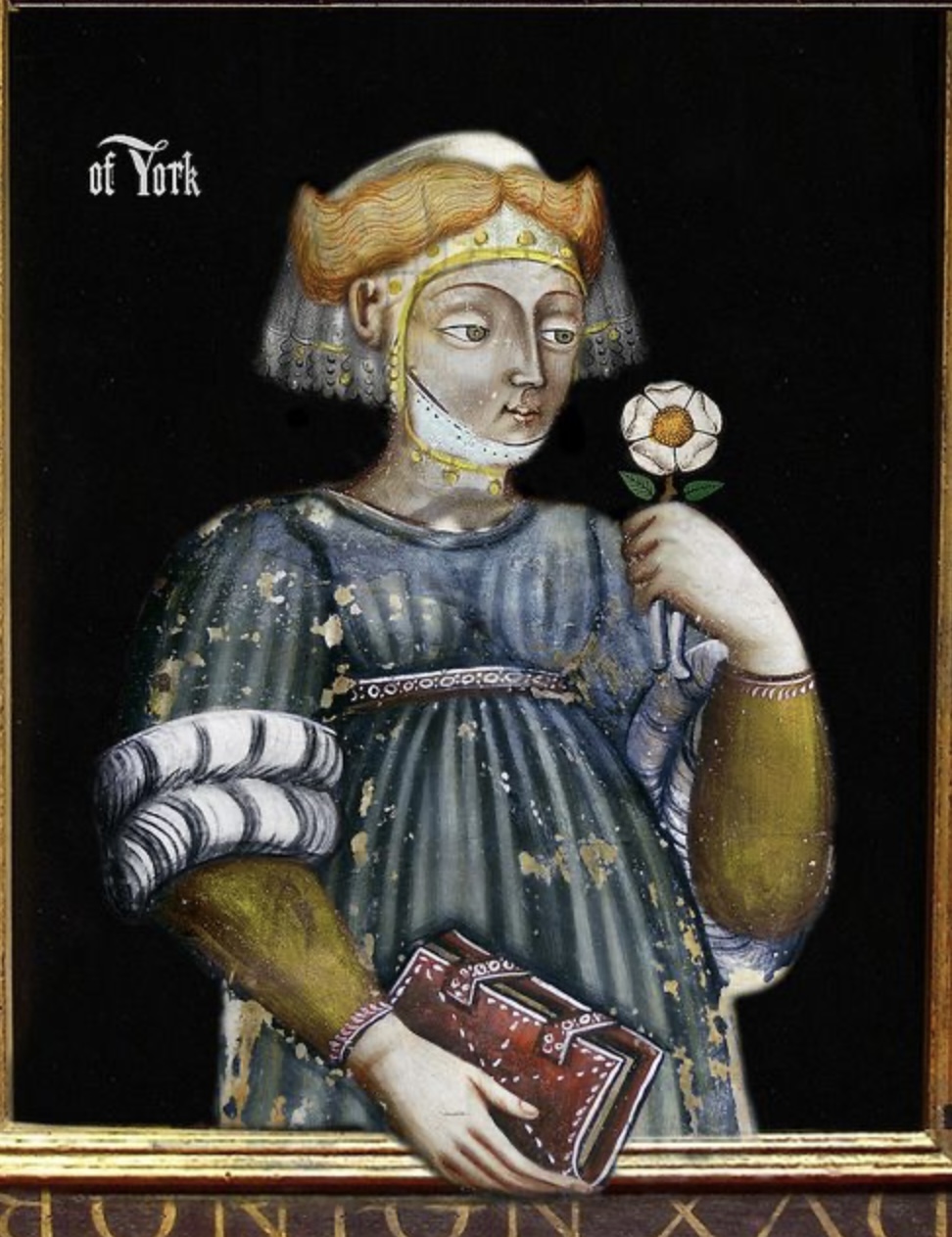
My 19 x great grandmother, Constance of York, Countess of Gloucester, was born in 1374, the only daughter of Edmund of Langley, 1st Duke of York, and his wife Isabella of Castile. 

In November 1397, Constance married Thomas Despenser, 1st Earl of Gloucester, one of Richard II’s favourites. The couple produced three children: a son, Richard, and two daughters. The first daughter, Elizabeth, died in infancy, while the second daughter, Isabel, was born after her father’s death.

When Henry IV deposed and murdered Richard II, the Crown seized the Despenser lands. In consequence, in December 1399, Thomas Despenser and other nobles hatched a plot known as the Epiphany Rising. Their plan was to assassinate Henry IV and restore Richard, who was alive at this point, to the throne.

According to a French chronicle, Edward, Constance’s brother, betrayed the plot, although English chronicles make no mention of his role. Thomas Despenser evaded immediate capture, but a mob cornered him in Bristol and beheaded him on 13 January 1400.

After Thomas’ death, Constance was granted a life interest in the greater part of the Despenser lands and custody of her son. However, in February 1405, during the Owain Glyndwr rebellion to liberate Wales, Constance instigated a plot to abduct Edmund Mortimer, 5th Earl of March, and his brother, Roger, from Windsor Castle. 

Constance’s plan was to deliver the young Earl, who had a claim to the English throne, to his uncle Sir Edmund Mortimer, who was married to Glyndwr’s daughter.

The first part of Constance’s plan went well, only to stumble when Henry’s men captured Edmund and Roger Mortimer as they entered Wales.

With the plot over, Constance implicated her elder brother, Edward – clearly sibling love was not a priority in the House of York – and he was imprisoned for seventeen weeks at Pevensey Castle. Meanwhile, Constance languished in Kenilworth Castle.

With the rebellions quashed, Henry IV released Constance and she became the mistress of Edmund Holland, 4th Earl of Kent. Out of wedlock, they produced my direct ancestor, Eleanor, who married James Tuchet, 5th Baron Audley.

Constance outlived Henry IV and her brother, Edward. She died on 28 November 1416 and was buried in Reading Abbey.

*****

A Hollywood Murder

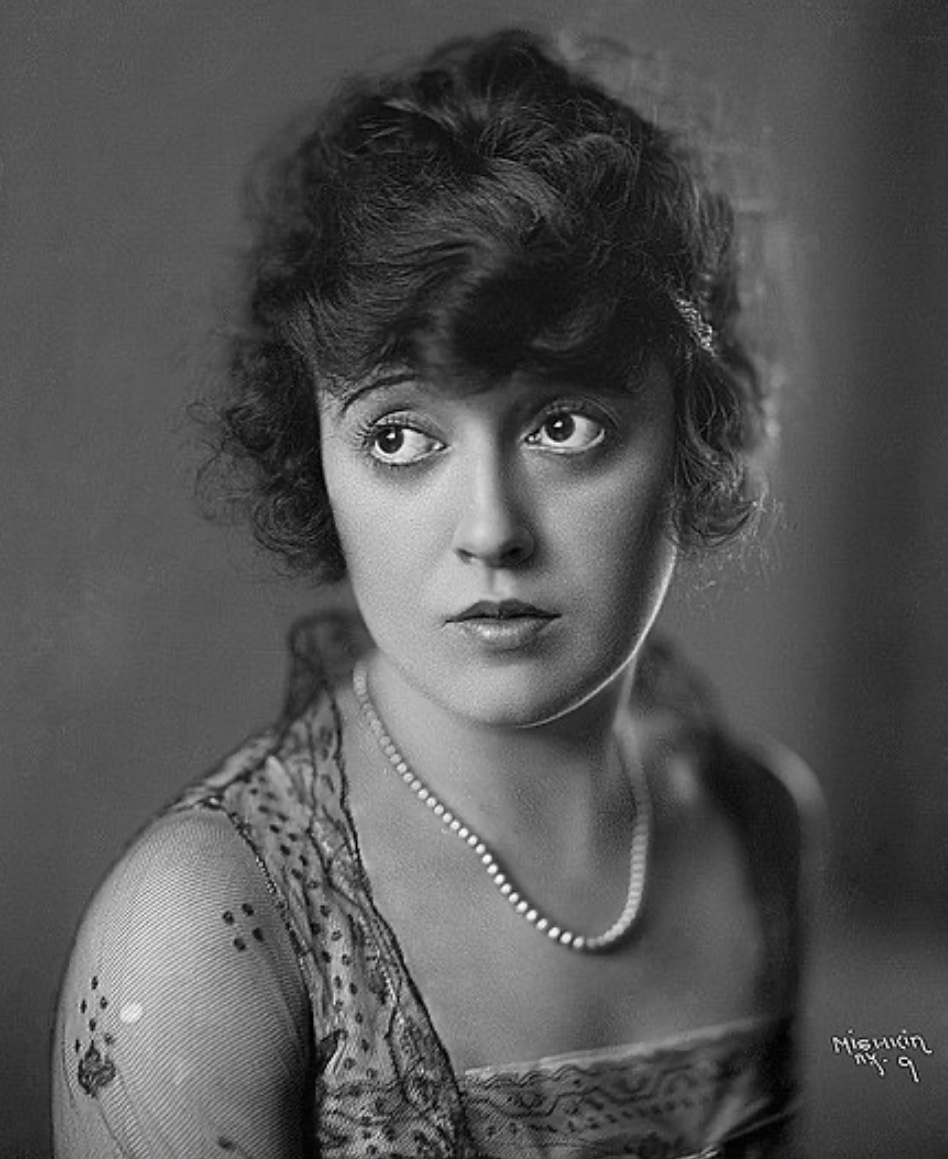
Mabel Normand (November 9, 1893 – February 23, 1930) was a silent movie actress, the leading comedienne of Hollywood’s Early Age. She was also a talented screenwriter, director and producer with her own production company, the Mabel Normand Feature Film Company.

Mabel had strong feelings for William Desmond Taylor, possibly romantic feelings, which he did not return. Instead, he was content to act as her mentor within a close friendship. 

Mabel visited Taylor on the evening he was murdered and was one of the last people to see him alive.

Poor health blighted the latter part of Mabel’s career. Some rumours state that she was a drug addict, but hard facts on that matter are hard to find. She suffered from tuberculous and that terrible disease claimed her life in 1930, at the age of thirty-six.

Did any of the events in January 1922 surrounding comedienne Mabel Normand lead to the murder of movie director William Desmond Taylor?

At that time, Mabel and Taylor were very close friends. She appeared keen to take their relationship a stage further, but at that stage of his life Taylor was not interested in forming romantic relationships with women. Nevertheless, Taylor’s apartment was festooned with pictures of Mabel and he carried a photograph of her in his pocket watch. 

Mabel and Taylor enjoyed a strong friendship. She was keen to learn about literature and philosophy, and he was keen to teach her. Their bond might have provoked jealousy in Mary Miles Minter, who was obsessed with Taylor, and her mother Charlotte Shelby who, apparently, also had strong feelings for him. The bond might also have annoyed someone who had feelings for Mabel. 

From the start, the police considered that jealousy was the motive for the murder, so this is a line worth pursuing.

*****

My latest Golden Age of Hollywood article for the Seaside News appears on page 40 of the magazine.

Social media https://toot.wales/@HannahHowe

As ever, thank you for your interest and support.

Hannah xxx

For Authors

#1 for value with 565,000 readers, The Fussy Librarian has helped my books to reach #1 on 38 occasions.

A special offer from my publisher and the Fussy Librarian. https://authors.thefussylibrarian.com/?ref=goylake

Don’t forget to use the code goylake20 to claim your discount 🙂