Categories
Sam Smith Mystery Series

Lilac Cottage

Lilac Cottage

The Howe Family, 1939-45

When my 2 x great grandfather William Howe died on 14 May 1933 the newspapers carried the following obituary: “We regret to report the death of Mr William Howe, aged 78, of Wood View, Cornelly, who passed away on Sunday. Mr Howe was senior deacon at Cornelly Calvinistic Methodist Chapel and superintendent for many years at the Sunday School in South Cornelly. A man of Godly character and exemplary life, he was held in respect by all whom he came into contact with, and his memory will be cherish, especially by those who first learned the path of rectitude and duty at Cornelly Sunday School. He was employed for a number of years as the foreman to Mr Gaen at the quarries, and his fellow workmen were given a half day off to attend the funeral.”

The report continued with a long list of notable people who attended the funeral.

William died at Wood View, a house that remained in the family. However, he’d spent many years of his life at Lilac Cottage, South Cornelly. 

For decades after William’s passing his descendants, my ancestors, continued to live at Lilac Cottage. I intend to take a snapshot of their lives, focusing on the war years, 1939-45, and tell the story of the Lilac Cottage Howes who served on the Home Front and the Frontline. It’s a tale of ordinary people, of village life, and great sacrifice. It’s a story personal to me, yet common to many people. During 1939-45, Britain was full of “Lilac Cottages” and the lives of my Howes mirrored the lives of many people who lived through this challenging time.

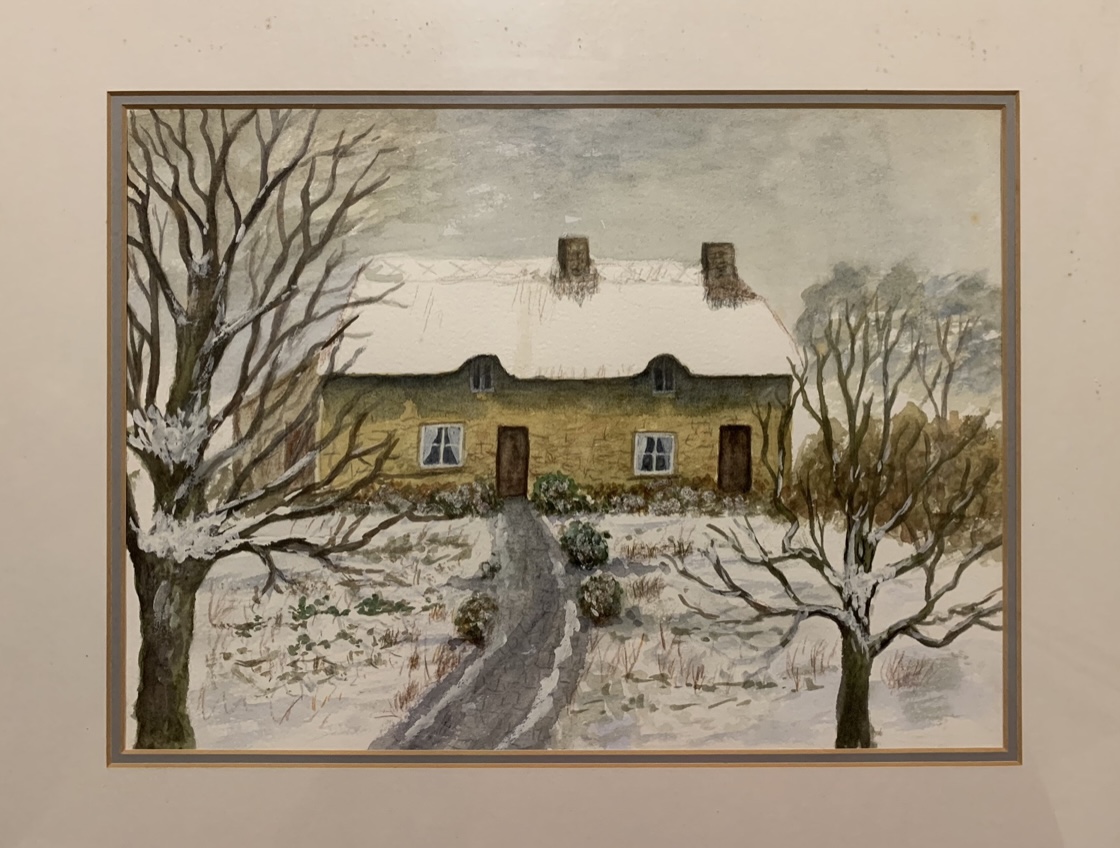
Lilac Cottage, a watercolour by Priscilla Doreen Howe

The Howes at Lilac Cottage, 1939

William David Howe – son of William Howe

Gwendolyne Thomas – wife of William David Howe

Joan Mary Howe – daughter of William David Howe

William Kenneth Howe – son of William David Howe 

Clifford Roy Howe – son of William David Howe

Evan Howe – brother of William David Howe

Mary Ann Howe – sister of William David Howe

Also, Priscilla Doreen Howe – daughter of William David Howe – who in 1937 married Handel Edwards.

Living in Wood View, next door to Priscilla and Handel Edwards:

Christiana Howe – sister of William David Howe – her husband David T David, and their two children.

The cottage was divided in two with William David Howe and his family living in one part of the building and Evan and Mary Ann living in the other part.

Consider this the prologue. I will tell you more in Chapter One, next time.

For Authors

#1 for value with 565,000 readers, The Fussy Librarian has helped my books to reach #1 on 36 occasions.

A special offer from my publisher and the Fussy Librarian. https://authors.thefussylibrarian.com/?ref=goylake

Don’t forget to use the code goylake20 to claim your discount 🙂

Categories
Wales

Match of the Century #2

Part Eight: The Third Test

England v New Zealand

After their victories against Scotland and Ireland, New Zealand met England at Crystal Palace. In a one-sided contest, New Zealand scored five tries to none. Duncan McGregor scored four of the tries, Fred Newton the other. None of the tries were converted, so the score finished 15 – 0 in the All Blacks’ favour.

All-round sportsman C.B. Fry stated: “The notion that these men beat us because of our physical degeneracy is nonsense. They beat us by organisation and by tactics.”

In the Empire News ‘The Impressionist’ wrote: “It is my firm opinion that as a side the New Zealanders form the finest I have ever seen. It is a treat, yea an education to watch them. Gallant little Wales may be depended upon to make a great effort next Saturday. I hope to be present to see the struggle.”

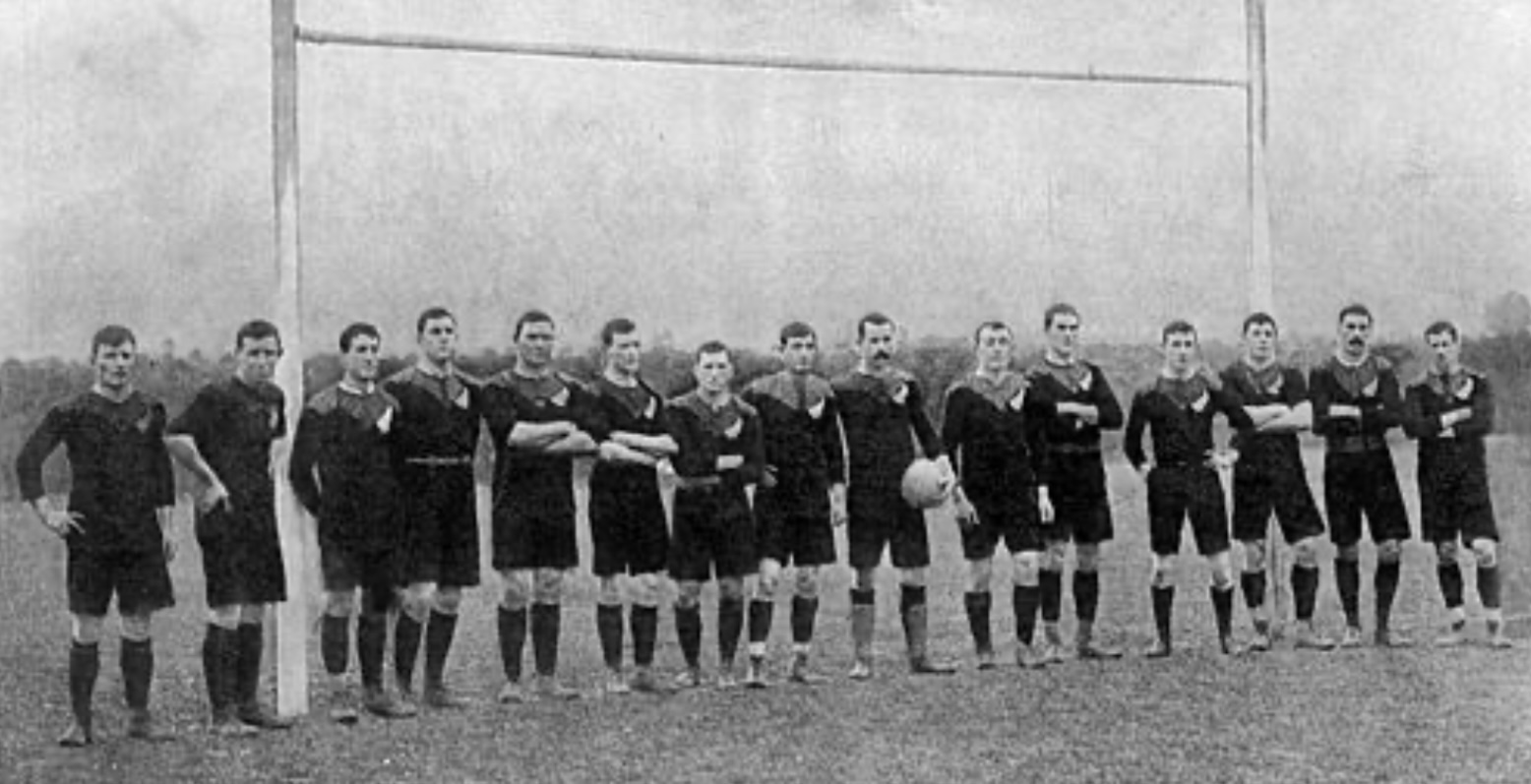
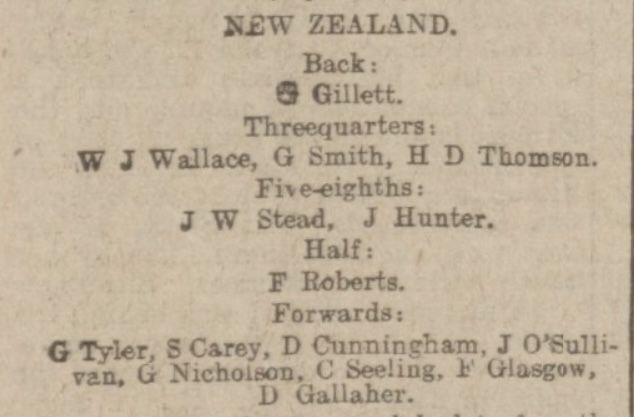
The New Zealand team v England

Part Nine: The Build-Up to the Wales Match

Throughout October 1905, the Welsh Match Committee observed the New Zealanders and analysed their style of play. They soon realised that they would have to develop new tactics to overcome the tourists’ unorthodox style.

On 20 November 1905, the Committee held the first of two trials. The ‘Probables’ adopted the New Zealand formation, utilising seven forwards instead of eight, However, they were beaten 18–9 by the ‘Possibles’ and their traditional Welsh formation. 

Despite this setback, the Committee persisted with the experiment and the ‘Probables’ won the second trial match 33–11. A final training session was held on 12 December 1905 dedicated to drop kicking (worth four points, a point more than a try) and perfecting the new scrum technique.

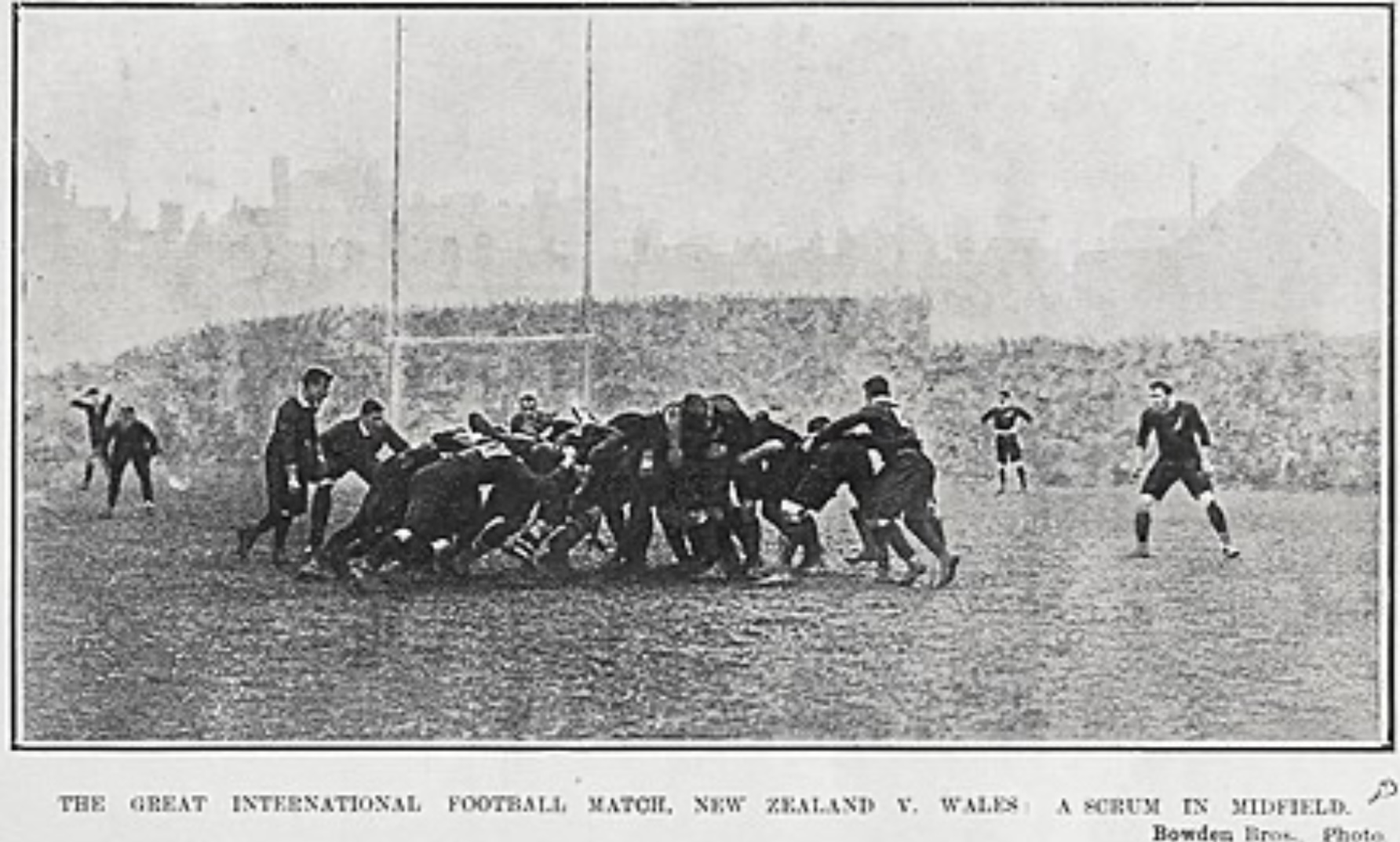
A scrum during the Wales v New Zealand match

Part Ten: The Haka

While the Welsh players concentrated on their new tactics, the administrators considered how they should respond to the New Zealand Haka. A selector, Tom Williams, suggested that the appropriate Welsh response to the New Zealanders’ cultural challenge should be the singing of the Welsh national anthem, Hen Wlad Fy Nhadau.

A debate ensued in the Welsh newspapers and the idea attracted a great deal of support. Nevertheless, no official plan was created, and no one was certain how the crowd would react after the New Zealanders had performed their Haka (pictured).

Part Eleven: The Press

The consensus amongst the media in London was that Wales had no chance against the all-conquering All Blacks. This article, published in The Times on the morning of the match, 16 December 1905, was typical. 

“Time has stolen the dash from two or three of the best (Welsh players) – and the missing eighth man (the tactic to play only seven forwards) is likely to be badly missed before the Cardiff game comes to its conclusion in the inevitable defeat of Wales.”

Welsh lock Jack Williams receiving treatment at half-time

Part Twelve: The Crowd

Additional trains were provided for the travelling spectators. Large queues formed before the Arms Park gates were opened at 11am and those gates were closed again at 1.30pm with the ground full.

Many would-be spectators, locked out of the ground, climbed trees in order to glimpse the match. In addition, taxi drivers parked outside the ground and charged people for the privilege of standing on their cabs to get a view over the stand.

A line-out contested during the match

Part Thirteen: Pre-Match Build-Up

Crowds throughout Britain and Ireland offered hostility or indifference to the New Zealand Haka. However, the Welsh public, informed and aware of its cultural significance, offered the Haka due respect.

As the Haka concluded, Welsh winger Teddy Morgan (pictured) led an immediate response by singing Hen Wlad Fy Nhadau. Morgan encouraged his teammates to join in, and the crowd soon added their impassioned voices.

“Imagine some 40,000 people singing their national anthem with all the fervour of which the Celtic heart is capable. It was the most impressive incident I have ever witnessed on a football field. It gave a semi-religious solemnity to this memorable contest, intensely thrilling, even awe-inspiring. It was a wonderful revelation of the serious spirit in which the Welsh take their football.” – New Zealand captain Dave Gallaher’s remark on experiencing the Welsh crowd singing their anthem at a sporting occasion for the first time.

The singing of Hen Wlad Fy Nhadau is the first recorded instance of a national anthem being sung before an international sporting fixture – anthems were normally reserved for royalty and formal state occasions.

Witnesses, including the New Zealand players and London press, noted the impact of the anthem on the players, crowd and themselves. For decades to come, match reports, player interviews and memoirs all cited the anthem as a factor in the Welsh victory. 

Soon, the singing of national anthems would become a formal part of proceedings in a variety of sports and, eventually, a standard practice across the sporting world.

Teddy Morgan

Part Fourteen: The Match

Hodges kicked off for Wales. Seeling made a break for New Zealand, and was brought down by the Welsh defence, resulting in the first scrum. The All Blacks adopted their usual formation of seven packed forwards. However, Wales abandoned the British system of eight forwards – they packed down with seven men, including four in the front row. This meant whichever side New Zealand tried to gain the loose-head advantage, Wales had a man outside. 

Wales dominated the first half. Indeed, New Zealand only breeched the Welsh 25 in the minutes before half time. In the opening fifteen minutes, the All Blacks conceded a string of penalties. The best chance fell to Wales, but that chance faded when Willie Llewellyn, yards from the try line, failed to hold a difficult pass from Jack Williams.

On twenty-three minutes another scrum was called and Dicky Owen called the move he’d devised in training. Wales won the ball. Owen ran down the blindside with the backline of Bush, Nicholls and Llewellyn following him in support. This initial move drew Gallaher, Hunter and most of the New Zealand backs to the blindside. Then Owen switched play. He threw a long pass back to the openside. Cliff Pritchard picked up the ball from his bootlaces. He drew the covering tackle of Deans before passing to Gabe who beat McGregor. Finally, Gabe passed to Morgan who sprinted twenty-five yards past the covering full-back Gillett to touch down in the left corner. The try went unconverted. Half-time: Wales 3 – 0 New Zealand.

New Zealand rallied in the second half and dominated the attacking play. However, their kicking game was not up to its usual standard, and they had issues with the strong Welsh scrum. 

Billy Wallace crossed the try line, but only after he’d placed a foot in touch. A forward pass from Deans put McGregor in the clear, and he was rightly called back. 

The All Blacks pressed through a series of scrums on the Welsh goal line, but the Welsh forwards refused to yield. With the mist descending, Deans made a break and sprinted thirty yards to the try line. Inches from the try line, Morgan and Gabe tackled Deans. The referee, John Dallas, arrived and said no try. He estimated that Deans was a good six to twelve inches short of scoring. Some reports suggested that Deans made an illegal double movement, and was still short. Deans, however, insisted that he had scored, then been pulled back. New Zealand’s best chance had gone. Final score: Wales 3 – 0 New Zealand.

The Wales team v New Zealand

Part Fifteen: The Cultural Impact

At the sound of the final whistle, the crowd rushed on to the field and carried the Welsh players on their shoulders. Later, Gallaher led his team into the Welsh changing room, where he offered his congratulations, and the players exchanged jerseys. He also conceded that on the day, “the best team won”.

The victory over New Zealand cemented rugby’s place in the Welsh national psyche. It laid the foundations for the first Golden Age of Welsh Rugby. As the century unfolded, despite the devastation of two world wars, more Golden Ages followed. Welsh rugby enjoyed feasts of success and endured famines of defeat. Peaks and troughs. It has always been so.

As ever, thank you for your interest and support.

Hannah xxx

For Authors

#1 for value with 565,000 readers, The Fussy Librarian has helped my books to reach #1 on 36 occasions.

A special offer from my publisher and the Fussy Librarian. https://authors.thefussylibrarian.com/?ref=goylake

Don’t forget to use the code goylake20 to claim your discount 🙂

Categories
Spring Summer 1976

Movies ‘48 #12 and More

Movie News – March 18, 1948

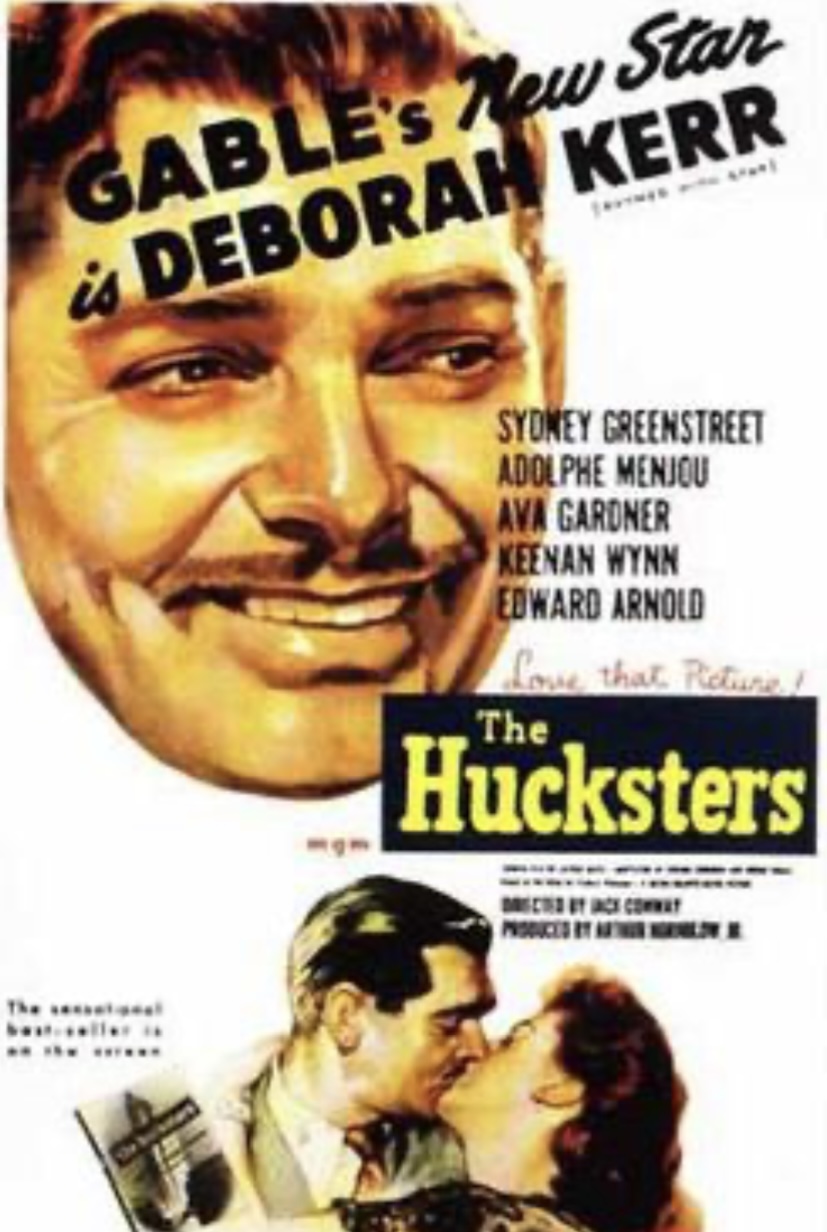
“Hollywood has apologised to film fan Shirley Browne of Blythe, Northumberland, who didn’t like The Hucksters staring Clark Gable and Deborah Kerr. As a peace offering MGM sent Shirley a parcel containing sweets, fruit and tins of meat. ‘I considered The Hucksters to be a very poor film,” Shirley told The Daily Mirror, “so let Hollywood know about it. I’m glad I did.’”

Movie News – March 19, 1948

“The story of an unusual love is told in striking fashion in Notorious. Ingrid Bergman, probably one of the best dramatic actresses to appear for years, plays the leading role, and Cary Grant makes a splendid addition to his record of screen successes.”

The first day of spring, and the start of a new social history series: Spring and Summer of 1976, featuring news, weather, sport, cinema, television and music items from that era. Item number one is the television guide for 20 March 1976. Do you remember any of these programmes?

21 March 1976

“Football’s winter of defensive discontent ended with a bang yesterday as the strikers turned the clock back to the good old days and celebrated British summer time with a glut of goals. Top of the hit parade were dour, dogged old Arsenal with six against Euro-heroes West Ham at Highbury.”

22 March 1976

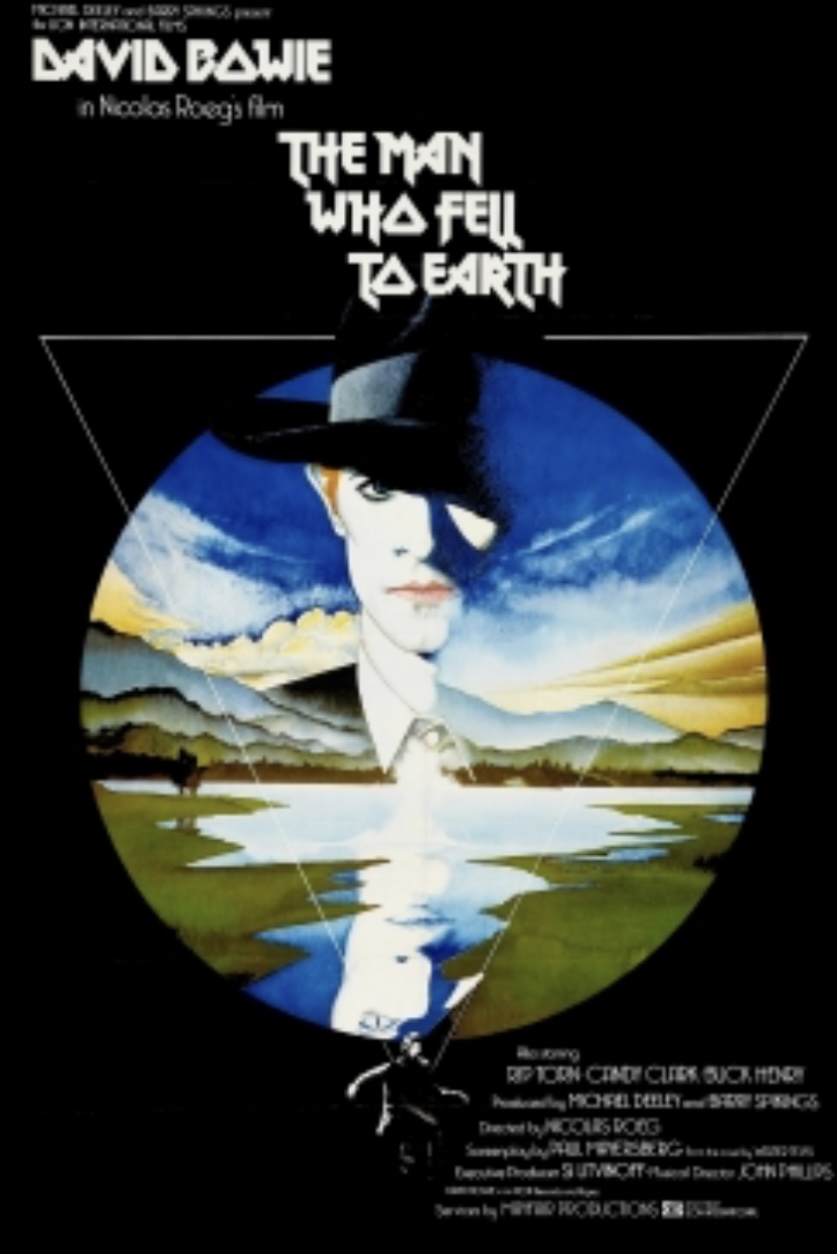
“British rock star David Bowie was arrested earlier today and charged with possession of marijuana. He was released on £1,000 bail. Bowie gave up music for the theatre, but returned to singing and his act soon became one of the more zany attractions on the pop scene. He is the star of a new science fiction film, The Man Who Fell to Earth, directed by Nicolas Roeg.”

23 March 1976

And now the weather…

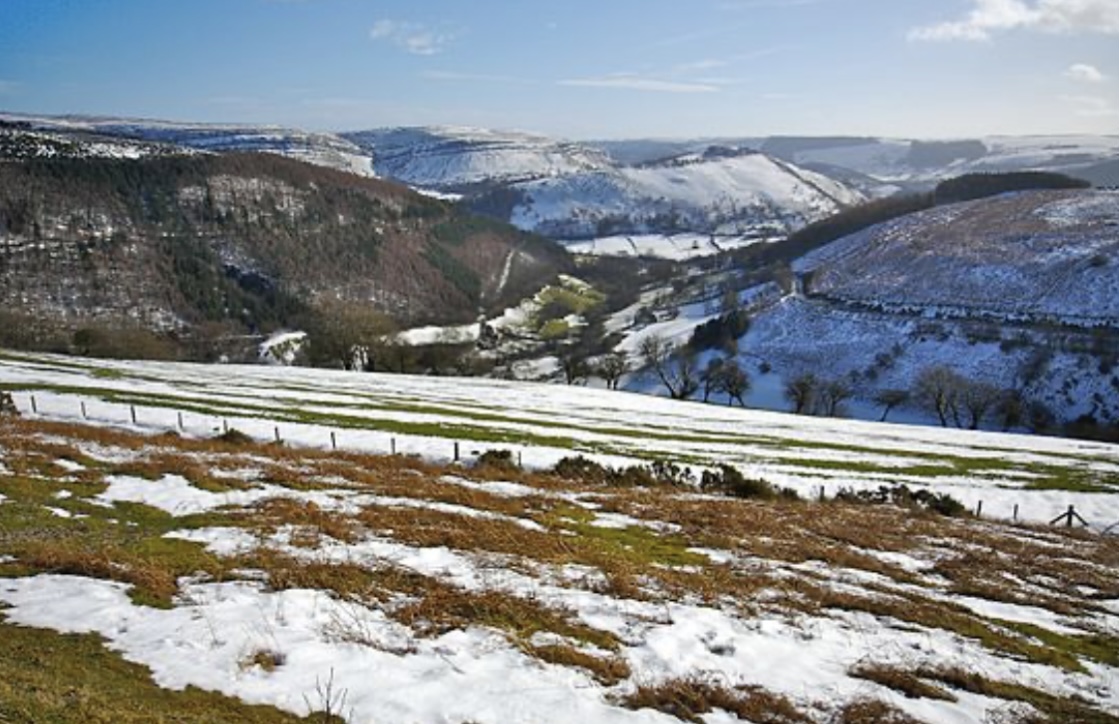
“Yesterday, the first full day of summertime, snow blocked the Horseshoe Pass near Llangollen and the Crimea Pass near Blaenau Ffestiniog. A six-inch fall of snow also blocked the Llanberis Pass for a time. In other parts of Britain, wintry conditions brought eight inches of snow overnight. Sunny periods are forecast for today.”

The Horseshoe Pass (Wikipedia)

24 March 1976

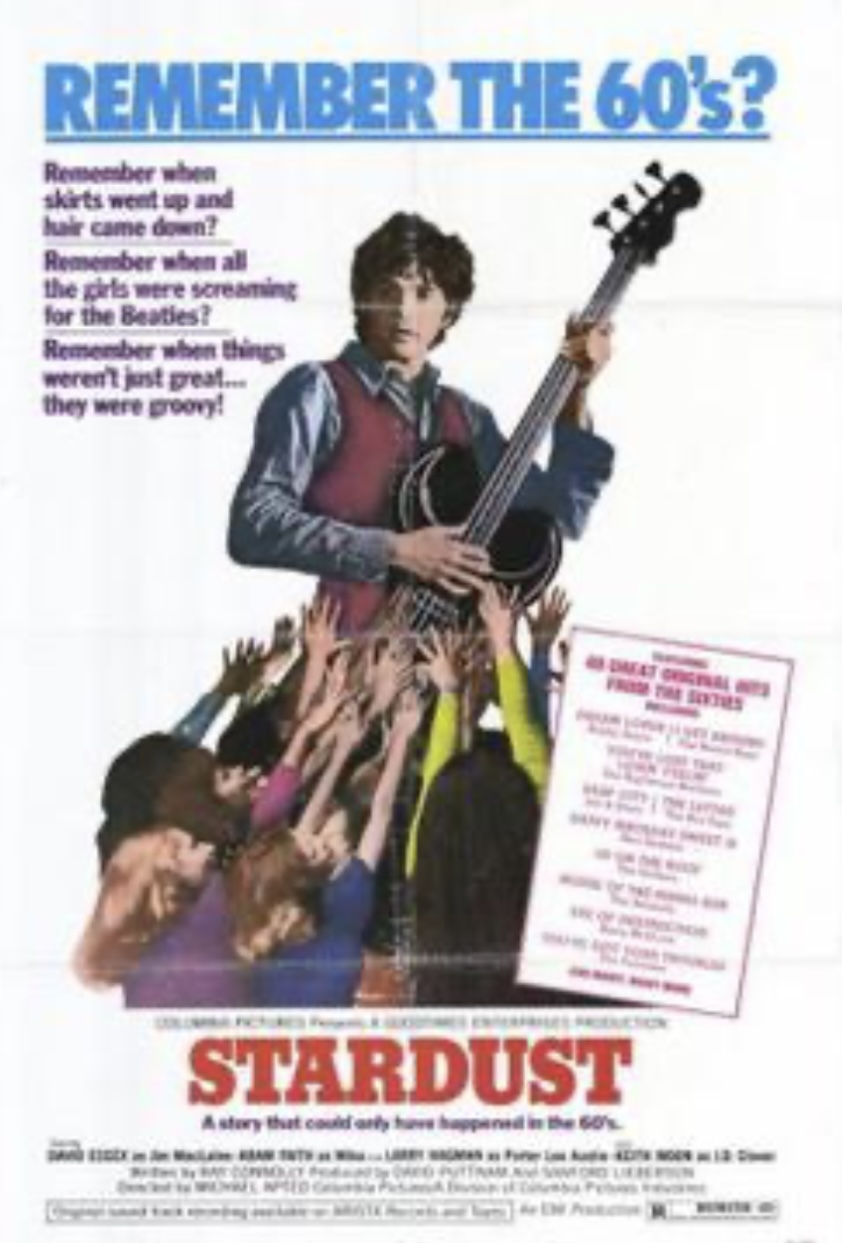
Movies showing at Theatre One this week: David Essex in Stardust (aa) and That’ll Be the Day (aa), and your last chance to see Enter the Dragon (x). Also, Lip Service (x), The Revengers (x), and Beyond the Valley of the Dolls (x). For members only: Bedspread and Country Girl. Just think, the censor had to watch all these movies. It was a dirty job, but someone had to do it…

As ever, thank you for your interest and support.

Hannah xxx

For Authors

#1 for value with 565,000 readers, The Fussy Librarian has helped my books to reach #1 on 36 occasions.

A special offer from my publisher and the Fussy Librarian. https://authors.thefussylibrarian.com/?ref=goylake

Don’t forget to use the code goylake20 to claim your discount 🙂
Categories
Sam Smith Mystery Series

Match of the Century #1

My latest social history project is the “Match of the Century”, the rugby union match that took place on 16 December 1905 between Wales and New Zealand. This match shaped the sporting cultures of Wales and New Zealand, and the wider sporting world.

I hope you will enjoy following this story from the build-up to the match, to the match itself, and its aftermath.

“Match of the Century”

Rugby Union: Wales v New Zealand, 16 December 1905

Part One: The Tourists Arrive

Eastern Daily Press, 9 September 1905

“The team of New Zealand footballers, which is to tour Britain this season, landed at Plymouth yesterday. The players number twenty-eight. The first match is with Devon on the 16th inst. and the last with Wales on December 16th, after which the team returns home.”

The tour actually continued into the new year, but this study will conclude with the momentous match against Wales.

The New Zealand squad with their manager George Dixon and coach Jimmy Duncan

Part Two: Tactics

Athletic News, 11 September 1905

“One doubts that the seven pack of New Zealand will be successful against the eight packs of Great Britain. One has been inclined to the view that their success has been due to the superiority of their men and not their system.”

“In the backs, the New Zealanders play a scrum half, two five-eights and three three-quarters. As a rule, the half-back sends the ball to the five-eights when the latter is moving fast, and not while he is stationary.”

The New Zealanders also had an advantage in the scrums and line-outs. In Britain, the forwards did not have specific positions – they would scrum down in the order they arrived at the scrum. Each New Zealand forward, however, had a specific role.

The New Zealanders eliminated the lottery of the line-out through practice. They used their full-back as an attacker, and were fitter because they played forty-five minutes per half, instead of the thirty-five minutes commonplace in Britain.

New Zealand captain, Dave Gallaher

Part Three: Previewing the First Match

The Pall Mall Gazette, 16 September 1905

“If the game were generally played in England with the same finesse and skill as in Wales, it is possible that there would be a rugby revival. The New Zealanders should help in this direction, for they play an open, fast, clever, and attractive game. The tour may thus gain many converts to the code.”

Full-back George Gillett

Part Four: The First Match

Devon 4 v 55 New Zealand

“The sensational scoring by New Zealand against Devon at the County Ground, Exeter was far beyond expectations. There is something extraordinary in the play of the Colonials. The manner in which they acquitted themselves was brilliant, their clever footwork and exceedingly good passing eclipsing anything seen previously at the County Ground.”

“The New Zealanders are an exceedingly fine lot of men, some of them being of exceptional physique. The forwards were heavier than the Devonian eight, but at the conclusion of play all were in excellent condition.”

Part Five: More Victories and a Suggestion

After their opening win against Devon, the New Zealand tourists recorded eighteen more victories against English teams, amassing 557 points with only 15 conceded. Their apparent invincibility prompted the following suggestion:

“Mr Hamish Stuart, rugby writer, has come forward with the suggestion that an Imperial team should challenge the New Zealanders. If the Colonials are to be beaten something big will certainly have to be done. A match between fifteen of England, Scotland, Ireland and Wales against New Zealand would be the very thing to rouse the Rugby Unionists not only of this country, but of the world.”

New Zealand on their way to a 23 – 0 victory over Somerset

Part Six: The First Test

Scotland v New Zealand

The New Zealanders arrived in Edinburgh for their first Test Match, against Scotland, on 18 November 1905 boasting a record of nineteen games played on tour, nineteen victories, 612 points scored and only nineteen conceded. Could the Scotland team rise to the challenge? Here’s what happened.

“It was a struggle worth many a journey to see. A sheer hard, strenuous encounter in which quarter was neither asked for nor given. The pace right through was terrific. Every man must have been trained to the hour to stand it. Half-time score: Scotland 7 points New Zealand 6 points.”

“Five minutes to go and Scotland a point ahead. Can anything more intensely dramatic be imagined or desired?”

“Two minutes to go. With beautiful judgment and speed, Smith (New Zealand, pictured) dodged Scoular by a foot, sprinted twenty-five yards and is over. The scene is something to be remembered. Of course, it is all over now. To make doubly sure, in the last second they score again near the posts from a loose rush. Then the whistle went on the most exciting game I have ever seen. New Zealand won by four tries (12 points) to Scotland one dropped goal, one try (7 points).” – “The Impressionist”, The Empire News, 19 November 1905.

Part Seven: The Second Test

Ireland v New Zealand

After their victory against Scotland, New Zealand met Ireland at Lansdowne Road, Dublin on 25 November 1905. On the Thursday before the Test Match, both teams attended the theatre together, sitting alternatively so that they could better mix. IRFU officials also took the New Zealanders out for breakfast.

As for the match itself: “Ireland’s fifteen was virtually the great side that did so well last year, and was only just beaten for the championship by Wales at Swansea. Against the New Zealanders, it was only after a splendid match that Ireland were beaten by three goals to nil, 15 – 0. The home forwards played up to their reputation, but New Zealand turned the game by their superior work outside the scrum.” – “The Referee”, 26 November 1905.

The All Blacks training by playing association football 

As ever, thank you for your interest and support.

Hannah xxx

For Authors

#1 for value with 565,000 readers, The Fussy Librarian has helped my books to reach #1 on 32 occasions.

A special offer from my publisher and the Fussy Librarian. https://authors.thefussylibrarian.com/?ref=goylake

Don’t forget to use the code goylake20 to claim your discount 🙂

Categories
Ancestral Stories

Ancestral Stories #8

Sarah Wildsmith

My 7 x Great Grandmother

Sarah and Gregory

My ancestor Sarah Wildsmith entered her thirties as a widow. She’d married at nineteen, but her husband, Philip Spooner, had languished in the debtor’s prison and died there. Could Sarah rebuild her life? Could she find a new husband?

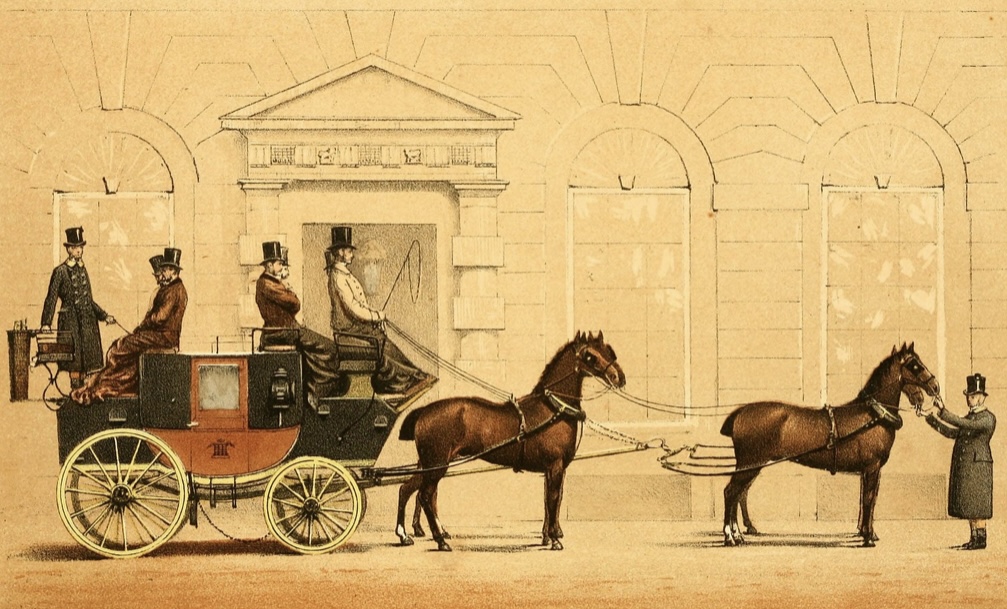
In 1731, a new man, literally, rode into town. His name: Gregory Wright. Gregory was a gentleman with a high reputation, the White Knight of the neighbourhood. He rode and tended to horses. He also ran a coaching business, transporting the citizens of London in his fine carriages. 

Gregory was Sarah’s age, thirty-one. Furthermore, he was an eligible bachelor. Gregory’s coaches ferried wedding parties. Dare Sarah dream that she could become his bride?

On 6 November 1731, my ancestor Sarah Wildsmith, as Sarah Spooner widow, married gentleman, coachman and bachelor Gregory Wright. Both bride and groom were thirty-one. The marriage was a “Clandestine Marriage”, a private affair held in the environs of the ‘Mint and Mayfair Chapel’.

After weathering natural and emotional storms during the first thirty years of her life, as the wife of a prosperous and respected gentleman, Sarah could look forward to sunnier days, and the prospect of raising a family.

While my ancestor Sarah Wildsmith settled into married life with her gentleman husband Gregory Wright, the world developed around her. In 1733 the invention of the flying shuttle revolutionised weaving, and in the same year the Sugar and Molasses Act was passed to tax British colonists in North America.

In 1739-40 the weather was extreme again with a Great Frost in Britain. Also, relevant to Gregory and his coaching business, the Hawkhurst smugglers were active in the south east of England, and highwayman Dick Turpin was hanged in 1738.

On 2 September 1737 Sarah and Gregory baptised a daughter, Mary, in St Dunstan in the West, London. Then, on 7 June 1739 Sarah gave birth to William, my 6 x great grandfather. William was baptised on 8 July 1739, also in St Dunstan in the West, London. In time, William would learn from his father and join him in the family’s coaching business.

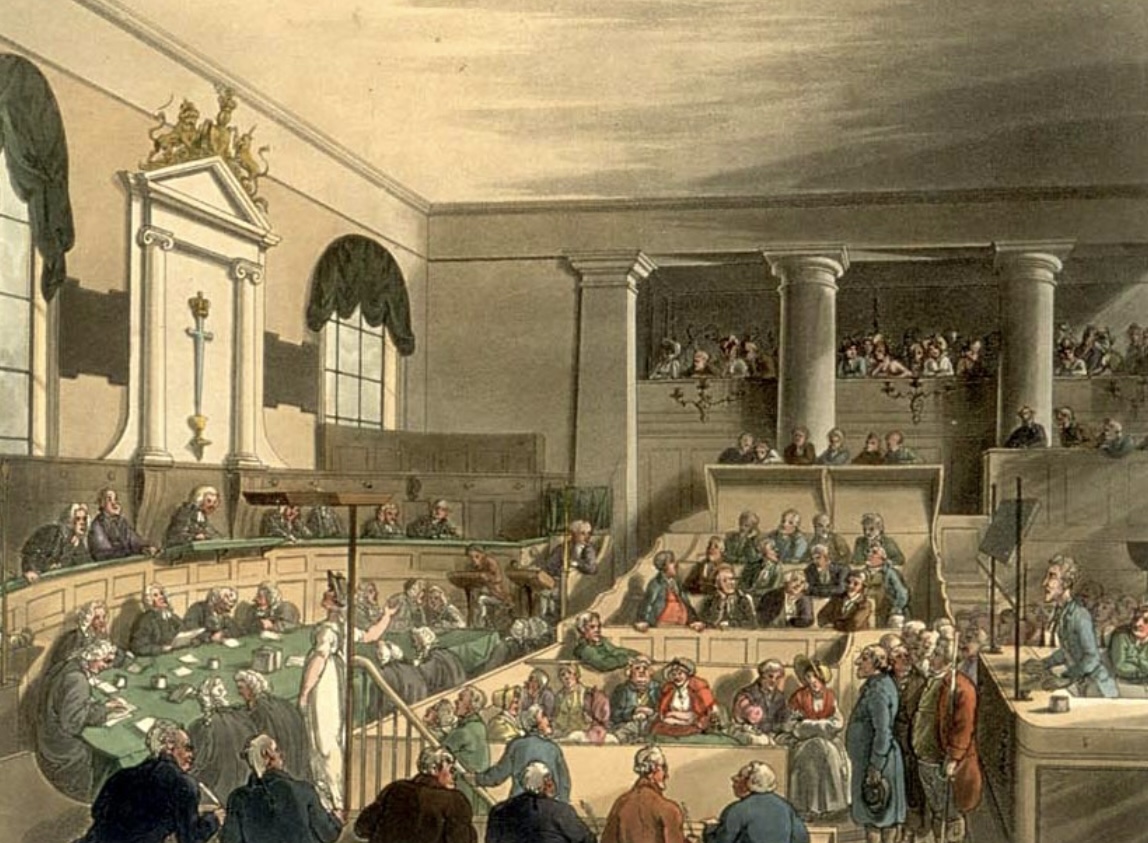
On 22 February 1752 my 7 x great grandfather Gregory Wright appeared at the London Sessions in the Old Bailey, as a witness. There, Gregory gave the following evidence.

‘Gregory Wright on his Oath Saith That On or about the Fourteenth of January Instant Two Coach Door Glasses was discovered to be Stolen out of a Coach House at the Bell and Tunn Inn, Fleet Street. Aforesaid the property of William Chamberlain, esq.’

In the court proceedings, Gregory Wright was described as a stable-keeper and coach-master living at Temple-Muse, Fleet Street, White Fryars in London.

The report continued that the thief, John Knight, tried to sell the coach glasses for twenty shillings, approximately £120 in today’s money. Knight, one of Gregory’s servants, was found guilty and sentenced to transportation.

***

A second trial, for perjury, took place on 8 April 1752 at the Old Bailey. Trials in those days were usually brief affairs, over in a matter of minutes. However, this trial received a number of witnesses and ran for some time. Details from the Old Bailey website https://www.oldbaileyonline.org/

‘Thomas Ashley, was indicted for wilful and corrupt perjury on the trial of Joseph Goddard in swearing he met Simons the Jew near Brentford-turnpike, and asked him to drink a pint of beer, that he then took hold of his beard in a joke, that the Jew held up his staff and struck him, that after that he throw’d the Jew in a ditch and scratched him in the bushes, and flung a stone which fell on his head and broke it three weeks before, Sept. 11.’

Henry Simons gave evidence through an interpreter and insisted that no one had harmed him, therefore suggesting that Thomas Ashley had committed perjury at Joseph Goddard’s trial. In his evidence, Henry Simons mentioned the Rose and Crown, an inn later owned by my Brereton ancestors.

Lettice Sergeant also gave evidence and mentioned the Rose and Crown, ‘on this side of the turnpike on Smallbury-green’. She lodged there ‘from the latter end of April to Michaelmas Day.’ She stated that Ashley was drunk, that insults were offered, but that no violence took place.

Gregory Wright gave evidence. He stated, ‘I live at the Temple-Muse, Fleet-street, White Fryars, on the 21st of August last, I set out from my house after one o’clock, for Newberry-Fair by myself, till I came on the other side Hammersmith, there Mr. Pain and Mr. Mercer overtook me; we lay at Maidenhead that night; we continued in company till we came to Newberry; upon out going between the Coach and Horses, on the other side Brentford, and the Rose and Crown Alehouse, before we came at the Turnpike, I saw one man pursuing another; we might be about two hundred yards from the Rose and Crown Alehouse; I saw it was a Foreigner by his dress, that was pursued, which made me anxious to enquire what was the matter; the man behind called out stop Thief! stop Thief! which I believe to be the prisoner at the bar; when the Jew got to us, he got between Mr. Pain’s horse and mine; the drunken man, the pursuer, scrambled up near, we kept him back, the drunken man said he is a rogue and a villain; we desired he’d tell us what he had done; he said he has drank my beer and ran away, and would not pay for it; said I if that he all, let the poor man go about his business, and what is to pay, I’ll pay it; no said he, he would not, and made a scuffle to come at the Jew; I took particular notice of the Jew, he made signs holding his hand up to his beard, we said he should desist; then he (Ashley) said to me, you have robbed me, said I if this is the case you are a villain, and if you say so again I’ll horse-whip you; we stopped him there till the Jew got near to the houses at Brentford; he was very near turning the corner where the bridge is; I believe on my oath, the Jew was at least two-hundred yards off; I turned myself on my horse, half britch, to see whether he was secure, the drunken man swore and cursed, and used many bad words; there came a woman and took hold on him, she seem’d to be his wife, she desired him to go back: he fell down, then Mr. Pain said, the man (Simons) is safe enough; the last woman that gave evidence told me nothing was the matter, that the Jew did nothing to him, he had drank none of his beer, but refused it, and that he made an attempt to pull him by the beard, with that we advanced towards the Crown Alehouse, I, and I believe Mr. Pain, stopt with me; there was the woman that was examined first, I asked her what was the matter, she said no thing at all; I said if there is anything to pay for beer that that poor Jew has drank, I am ready to pay for it; she said the Jew did no harm to the man, nor drank none of his beer.’

Question: ‘Had there been a stone throw’d?’

Gregory Wright: ‘I saw none throw’d, and believe the man was so drunk that he was not able to pursue or over-take him: I saw the woman at the door the time they were running, they crossed the road backwards and forwards; the Jew kept, it may be, fifteen or twenty yards before him, I kept my eye upon them from the first of the calling out stop thief!’

On his cross examination Gregory Wright said, ‘When we first heard the alarm, we believed the Jew might be within fifty yards of the alehouse, and the others about two-hundred yards from the Rose and Crown alehouse; that they were nearer that than the Coach and Horses; that they met the Jew about two-hundred yards on this side of the Rose and Crown alehouse; that we saw no blood or mark at all on the Jew, that he made no such complaint or sign to his head, but said my beard, and sign’d to it.’

Other witnesses agreed that although the mood was threatening no violence took place and that on the whole the community were protective of Henry Simons.

Question to Mr. Wright again. ‘How came you to know of this trial to give your evidence?’

Gregory Wright. ‘I was waiting at the door of the grand jury last sessions, to find a bill against a person (the stolen coach glasses); as I was leaning over the rails, I heard Lettice Sergeant talking about the affair of this Jew; the Jew I observed looked me out of countenance; I asked his interpreter what he look’d at me so hard for, he said he believed he knew me. The woman said she was come to support the cause of this poor unhappy man, and added, that in August last there were four gentlemen coming on the road when he was pursued, and he has made all the enquirey he can to find them out, and can’t find any of them; said I what time in August? she said the 21st; I look’d at the Jew, and saw he was the same man; I ask’d his interpreter whether he was pursued by any man, he said yes, he was; I said to the woman, I know the men, by which means I was brought to the grand jury about this affair; this bill and mine were in together.’

Question to Mr. Wright. ‘Did you, or any of you, tell this witness the drunken man had thrown the Jew into the ditch?’

Gregory Wright: ‘When this witness said so, it gave me a shock: we neither of us told him so. I saw Ashley down: there were none but women at that man’s house when we came there.’

Other witnesses, including thirteen-year-old Edward Beacham supported the testimony offered by Gregory Wright, while Martha James stated that Thomas Ashley was drunk, and that ‘I never saw a man so drunk in my life.’

Verdict: Guilty.

Sentence: Thomas Ashley, to stand once in the pillory at the gate of the Sessions House for the space of one hour, between the hours of twelve and one, and imprison’d during twelve months, after which to be transported for seven years.

This trial offers an insight into the local community, the legal system and Gregory’s character. He was protective of Henry Simons and was willing to meet any expense incurred by Simons at the inn. Gregory was obviously a kind and principled man; an ancestor to be proud of.

My ancestor Sarah Wildsmith died on 8 November 1759. Her husband Gregory Wright survived her by twenty-eight years, but did not remarry.

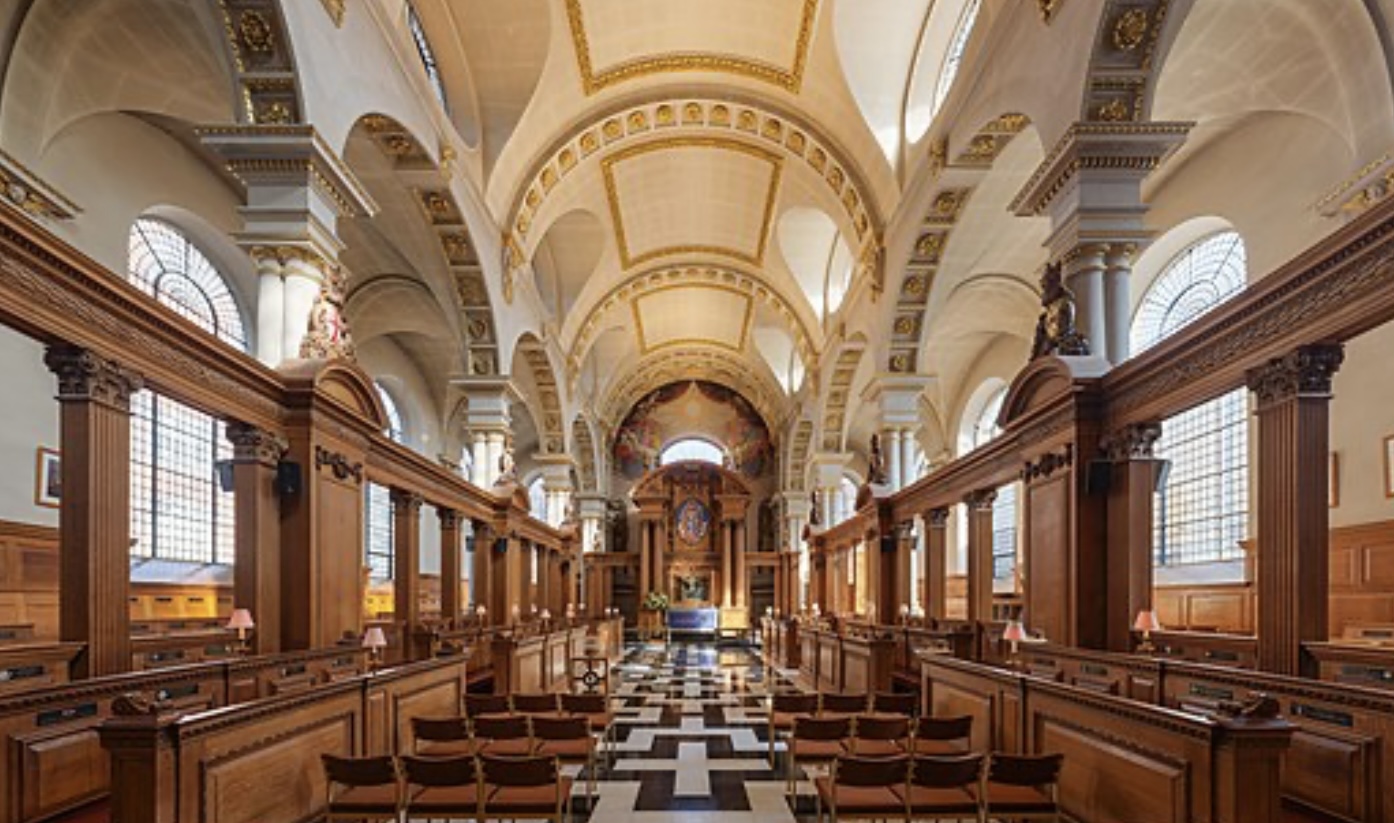
Sarah and Gregory were held in high esteem by their community, a fact illustrated by Sarah’s burial place. She was granted the privilege of being buried in the central aisle of the church, St Bride’s, Fleet Street (pictured, Wikipedia).

As ever, thank you for your interest and support.

Hannah xxx

For Authors

#1 for value with 565,000 readers, The Fussy Librarian has helped my books to reach #1 on 40 occasions.

A special offer from my publisher and the Fussy Librarian. https://authors.thefussylibrarian.com/?ref=goylake

Don’t forget to use the code goylake20 to claim your discount 🙂