Categories
1920s

The 1920s #7

The first Tarzan comic strip began on 7 January 1929. However, his first appearance in print occurred in the October 1912 issue of The All-Story.

The Buck Rogers comic strip also began on 7 January 1929.

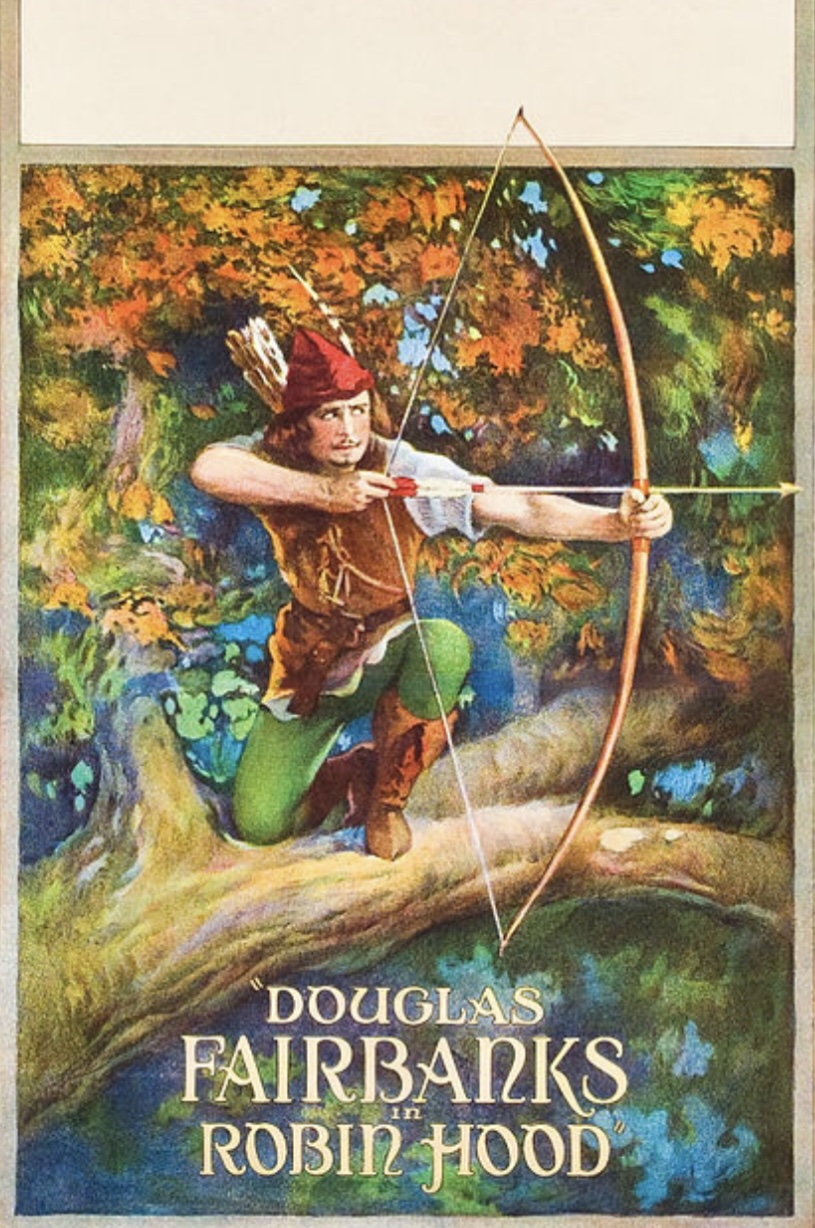
Douglas Fairbanks in Robin Hood (to give the movie its full title) was released on 18 October 1922. The film was the first ever to have a Hollywood premiere, held at Grauman’s Egyptian Theatre. With a budget of one million dollars (the equivalent of $18.2 million today) Douglas Fairbanks in Robin Hood was the most expensive number one ranked film of the decade.
On 13 October 1922, the 3-D silent movie Mars Calling was screened at New York’s Selwyn Theatre. The film ran for 95 minutes and demonstrated the Teleview process, which used alternate frame sequencing viewable through motorised stereopticons.

In the 1928-29 football season, The Wednesday won the first division league title for the third time, creating a new record. Formed in 1867 as an off-shoot of The Wednesday Cricket Club, The Wednesday changed their name to Sheffield Wednesday in 1929. The club holds the distinction of being the second-oldest professional association football club in England.

Graphic: Wikipedia

On 3 December 1926 mystery author Agatha Christie (pictured) disappeared from her home in Surrey. Eleven days later, journalist Ritchie Calder found her in a Harrogate hotel using the surname of her husband’s mistress.

Confession: I’ve never read an Agatha Christie book or seen a movie adaptation.

On 5 February 1924 a radio time signal was broadcast for the first time, from the Royal Greenwich Observatory, signalling Greenwich Mean Time. 

Greenwich Mean Time was first adopted in Britain in 1847 by the Railway Clearing House, and by most railway companies the following year. Gradually, GMT became the standard in other aspects of life.

A reminder that in Britain our clocks go back an hour this weekend.

The Shepherd Gate Clock at the gates of the Royal Observatory, Greenwich is permanently kept on Greenwich Mean Time (Wikipedia).

For Authors

#1 for value with 565,000 readers, The Fussy Librarian has helped my books to reach #1 on 32 occasions.

A special offer from my publisher and the Fussy Librarian. https://authors.thefussylibrarian.com/?ref=goylake

Don’t forget to use the code goylake20 to claim your discount 🙂

Categories
Cherry Wainer

Cherry Wainer #3

I’m researching the career of musician Cherry Wainer and the 1950s-1960s music scene.

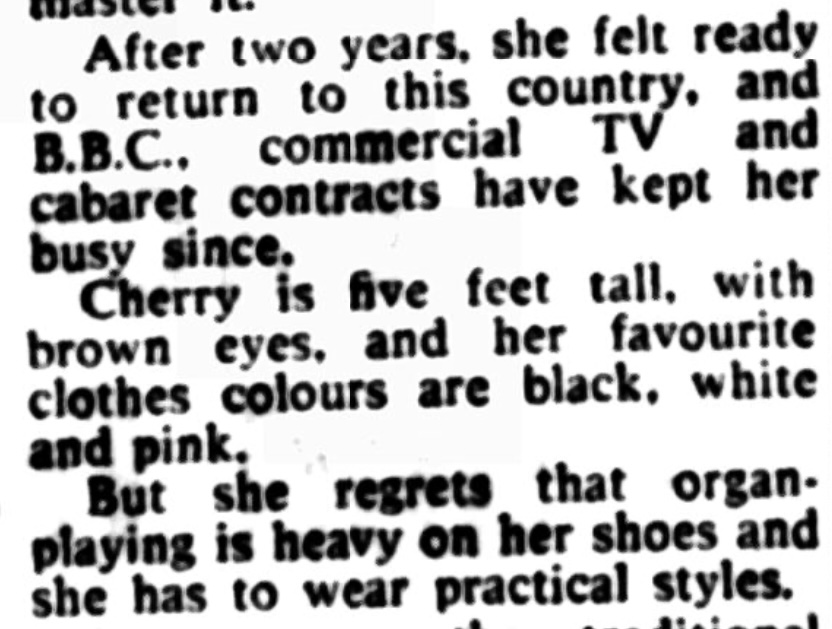
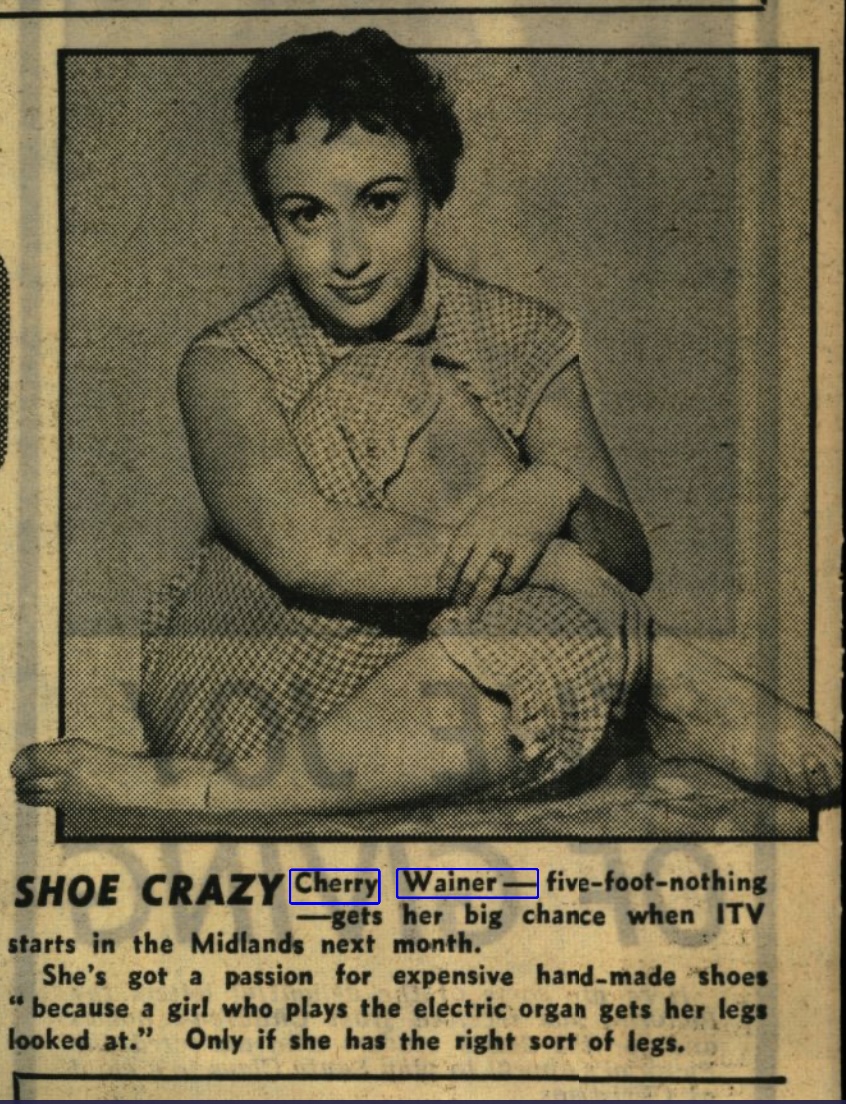
At Christmas 1955, the newspapers reported on Cherry’s return to Britain, her looks, and her footwear.

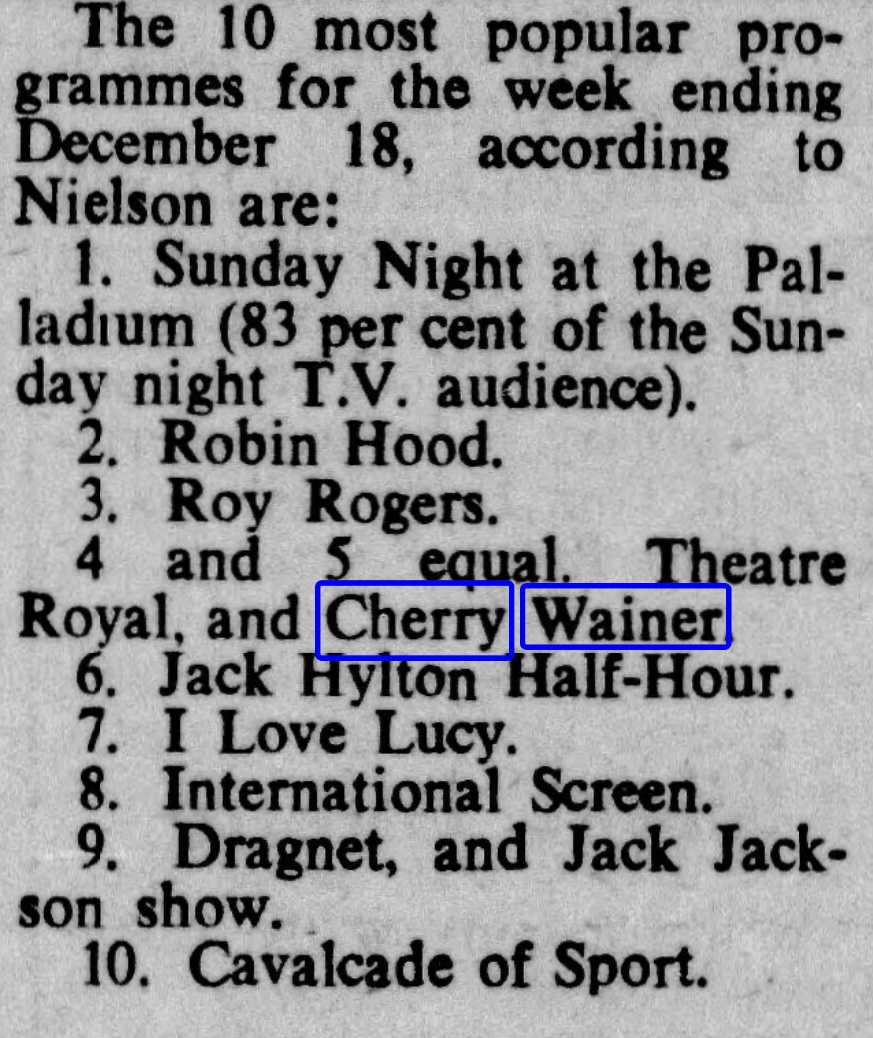
In 1955, not only was Cherry appearing on TV, but her show was proving very popular.

From January 1956, more on Cherry’s legs and shoes, and the upward trend in her career. Less than a year after making her television debut, she was becoming a fixture on television.

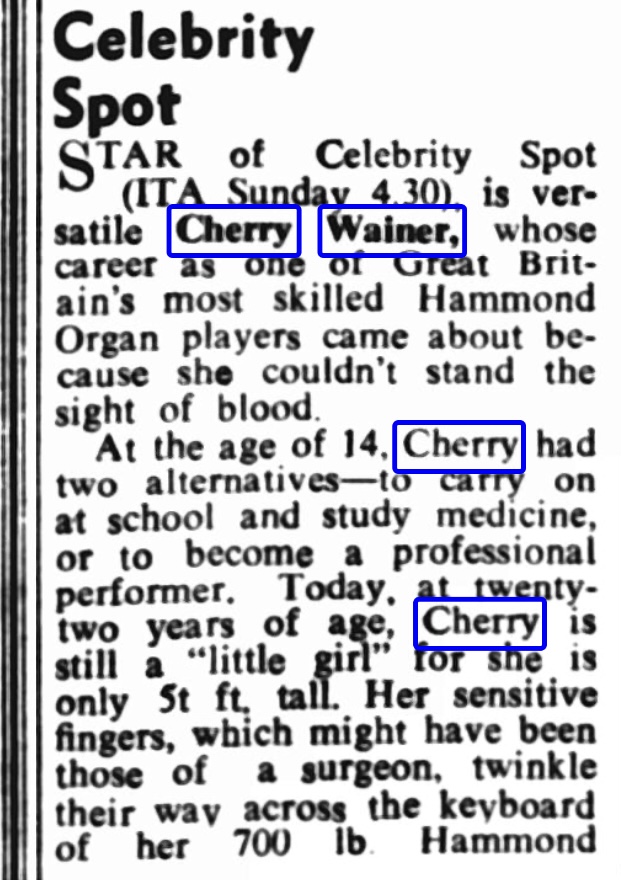
An article in the media in the spring of 1956 revealed that Cherry could have become a surgeon, but decided to make music her career.

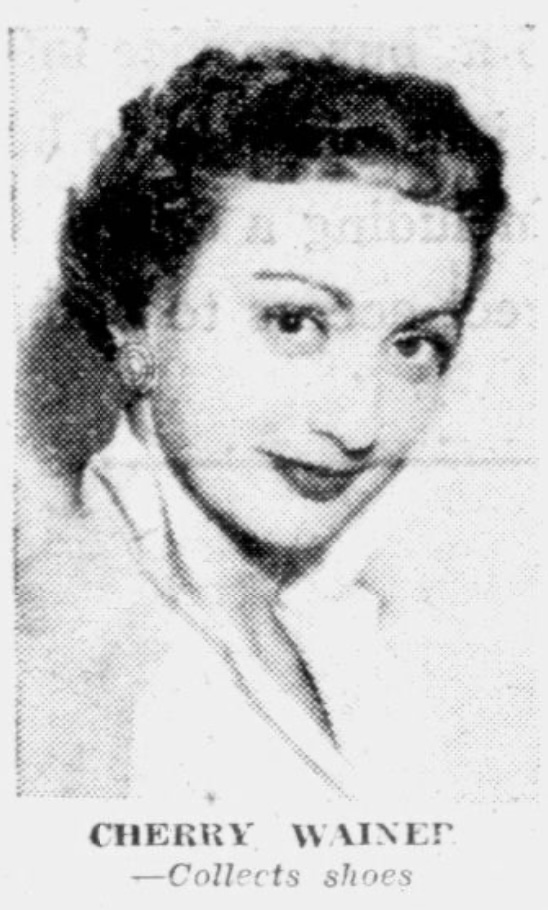
In March 1956, the media reported that Cherry loved collecting shoes. She owned more than 25 pairs, and favoured high, spiky heels with a touch of originality. Her feet were tiny, size 2 1/2.

Cherry was living in London during this stage of her career, in a spacious flat above the Cuban Legation, Lancaster Gate.

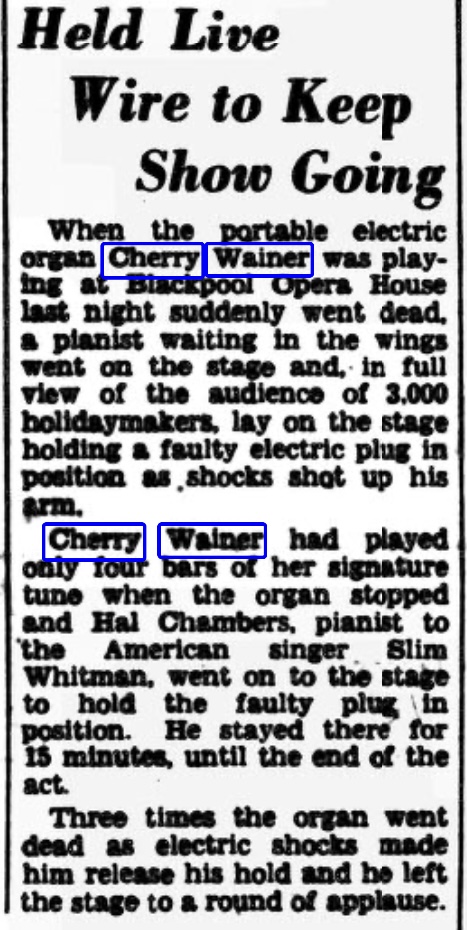
In April 1956, Cherry gave an electrifying performance…

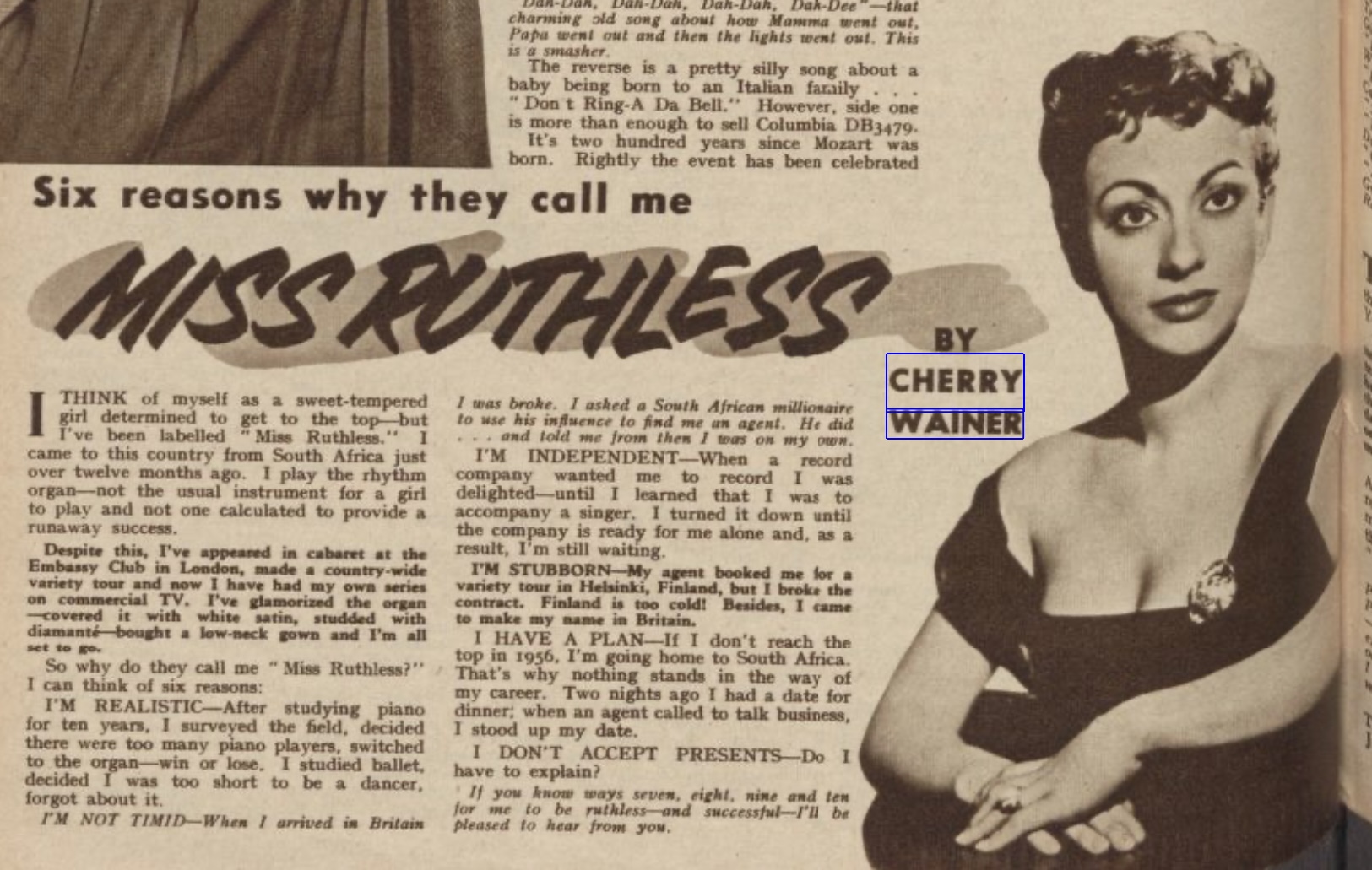
In May 1956, Cherry expressed how determined she was to succeed. Indeed, Picturegoer revealed that Cherry was known as “Miss Ruthless”.

For Authors

#1 for value with 565,000 readers, The Fussy Librarian has helped my books to reach #1 on 32 occasions.

A special offer from my publisher and the Fussy Librarian. https://authors.thefussylibrarian.com/?ref=goylake

Don’t forget to use the code goylake20 to claim your discount 🙂
Categories
Cherry Wainer

Cherry Wainer #2

I’m researching the career of musician Cherry Wainer and the 1950s-1960s music scene.

In 1954, after four years spent developing her career in South Africa, Cherry returned to Britain, along with her Hammond organ, sheet music and eight suitcases of clothes – she appeared to have a penchant for the latest fashions. A hard slog on the entertainment circuit beckoned as she strove to break into the “big time”.

Even though Cherry Wainer was born in South Africa, in May 1955 the press were describing her as “Britain’s Greatest Rhythm Organist”. She was sharing bills with the likes of Alma Cogan and playing tunes like Mr Sandman and Waters of Minnetonka. She was also billed above Reg Varney who went on to become a regular on British television. It was taking Cherry a while to become an “overnight sensation”, but her career kept moving in the right direction.

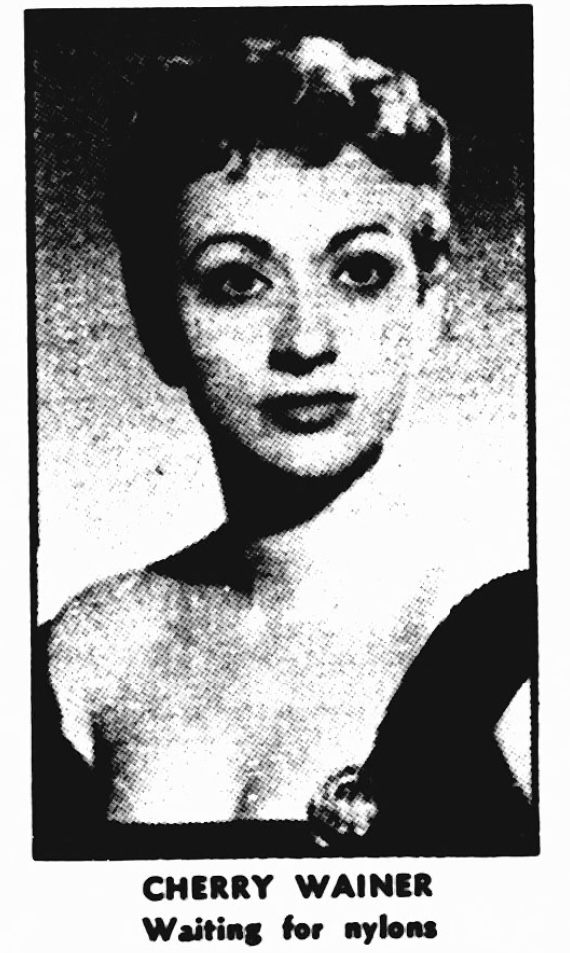
In August 1955, while performing in Manchester, Cherry told a reporter about her problem with nylons. Cherry refused to wear nylons with seams, and reinforced toes and heels. Consequently, she laddered a pair at every performance. “I’ve been going on-stage bare-legged all this week,” Cherry said. “I’ve run right out of stockings and I can’t buy the sort of nylons I like in this country. I’m waiting for my mother to get me some in America.”

In August 1955 the press reported that Cherry’s organ was insured for £1,250 (around £40,000 now). The organ always travelled in the guard’s van while Cherry sat in the nearest compartment.

At the time, Cherry had a residency at the Winter Garden’s, Morecambe, but the management did grant her time to be a judge in a National Bathing Beauty Contest, which was won by Patricia Nunns (pictured).

In August and September 1955, Cherry was sharing the bill with the likes of Des O’Conner, who became a regular on British television. She was also appearing in Paris. The Stage reported: “Most attractively gowned, and using trick lighting to make her lovely dress even lovelier, Cherry Wainer is an atomic ball of a personality at the keys of her electric organ. She plays with the confidence of one who knows she has mastered her numbers and so can put that little extra into them. Full marks for this South African blossom. Her Sabre Dance is a real sizzler.”

In October 1955, The Stage announced that “vivacious South African organist Cherry Wainer would be appearing on TV”.

Cherry featured on ABC Television – Associated British Cinemas (Television) Ltd. ABC was a commercial television company established in the 1950s by cinema chains in an attempt to compete with television, which was attracting cinema audiences.

Cherry played the Hammond organ “with a dexterity unmarred by four-inch heels”.

On 22 December 1955, at Chelsea Barracks, Cherry joined Vera Lynn, the Coldstream Guards and Scots Guards to entertain the troops. The event was broadcast on television as part of the Christmas Season programming.

Along with her variety show appearances, Cherry was now becoming a regular on television.

The ABC Studios in Didsbury, Manchester (Wikipedia)

For Authors

#1 for value with 565,000 readers, The Fussy Librarian has helped my books to reach #1 on 32 occasions.

A special offer from my publisher and the Fussy Librarian. https://authors.thefussylibrarian.com/?ref=goylake

Don’t forget to use the code goylake20 to claim your discount 🙂
Categories
Cherry Wainer

Cherry Wainer


When Cherry Wainer died on November 14, 2014 that evening, at a concert, Elton John dedicated Don’t Let the Sun Go Down on Me to her. Who was Cherry Wainer, and how did she and other musicians, achieve success in the late 1950s, early 1960s? I intend to follow Cherry’s career in an effort to find out.


Cherry Wainer was born on March 2, in East London, Eastern Cape, South Africa. The year of her birth is in dispute. Most sources list Cherry’s birth year as 1935. However, the documents I’ve seen list her birth year as 1932.

At the age of eight, already a talented pianist, Cherry performed a concert with an orchestra. Her father was a music promoter, and undoubtedly he helped to open doors early in Cherry’s career.

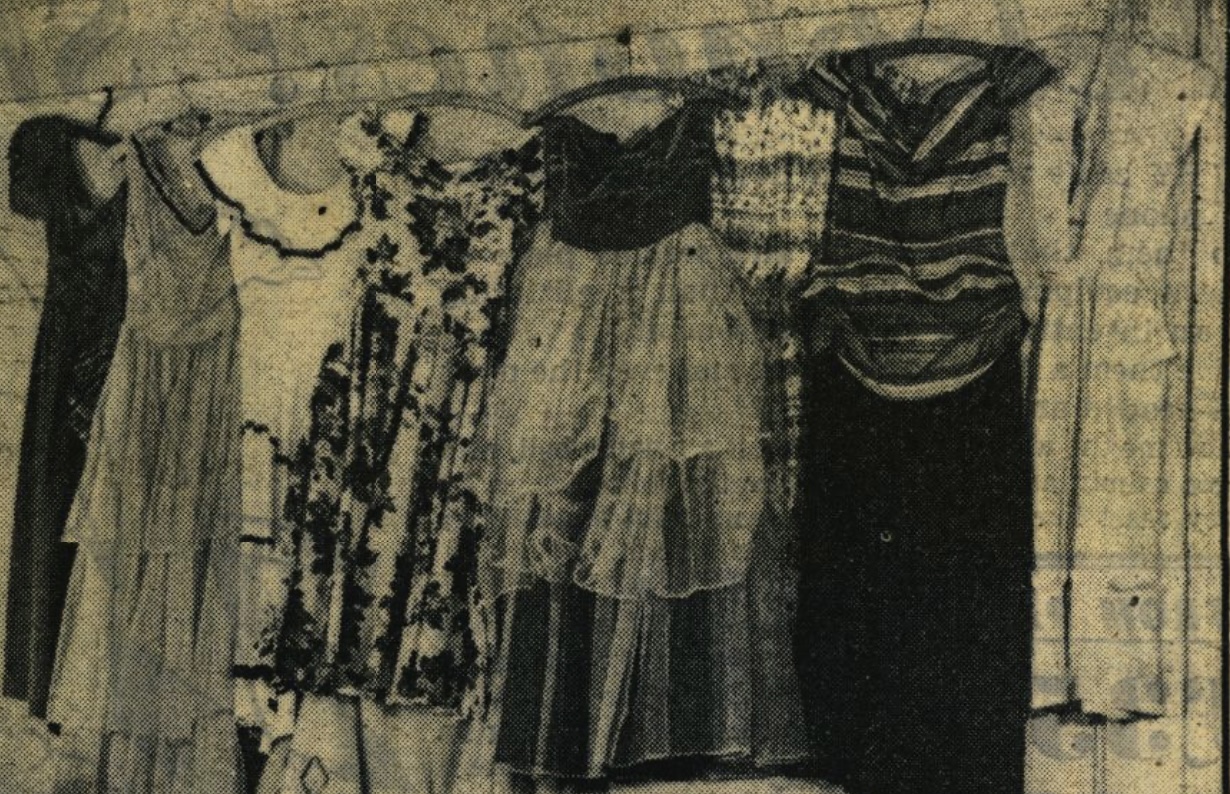
Cherry’s plans to become a classical pianist changed direction when she was introduced to the Hammond organ, and the music of jazz organist Jimmy Smith. To develop her career, as a teenager Cherry set out for London, England with her mother and sixty-three outfits that she was “determined to wear.”

Some of the outfits Cherry was determined to wear

Early in 1948, Cherry, a teenager, and her mother Zelda boarded the Athlone Castle (pictured). The ship left Durban and docked at East London (where Cherry boarded), Port Elizabeth, Mossel Bay, Cape Town and Madeira before arriving at Southampton on 6 February 1948.

Cherry and Zelda took lodgings at 24 Burgoyne Road, Harringay, London and from there Cherry embarked on her studies – singing, drama and dancing.

In May and June 1948, chaperoned by her mother, Zelda (pictured), Cherry Wainer was in London studying singing, drama and dancing. Billed as Cherry Wayne and playing a mini-organ, she also found time to appear in variety shows at the Coventry Hippodrome, the Croydon Empire and the Windsor Theatre. The critics noted that Cherry “stood out” from the other acts. Although only a student, Cherry was already making a name for herself.

I’m researching the career of musician Cherry Wainer and the 1950s-1960s music scene.

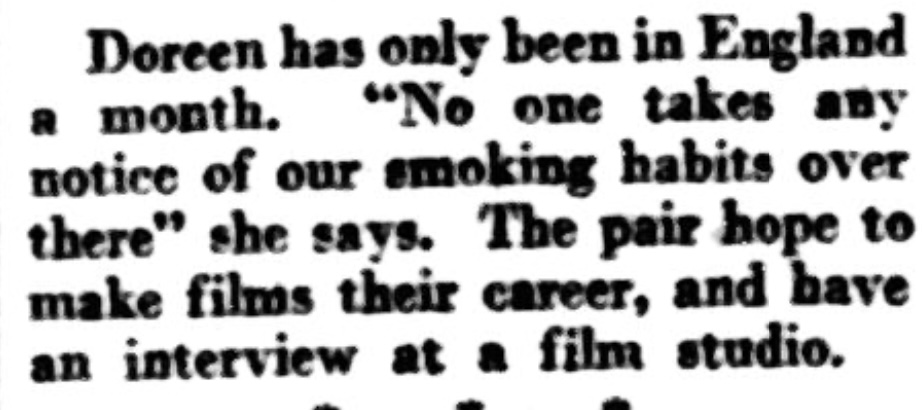
From August 1948 through to February 1949 Cherry appeared in variety shows at the Windmill Theatre in London. In April 1948 the press reported that Miss Cherry Wainer was seen “puffing away contentedly on a briar pipe between dances at the White Hart Hotel”. 

Below, a quote from Cherry’s friend, Doreen Brebner.

Cherry told the reporter that she “smoked cigars too – anything!” And that she found British tobacco milder than her native South African brands. Clearly, Cherry was something of a character.

Throughout 1949, Cherry developed her career in variety shows playing solo pianoforte and a Hammond solovox organ. The variety shows featured singers, dancers and comedians. Some of those listed on the bills became regulars on British television and radio. Most drifted into obscurity. 

Cherry’s career was on the rise, however, and her music and drama studies faded into the background as theatrical agents clamoured for her signature.

In February 1950, up and coming theatrical agent Cliff Martell announced that he was signing a number of new acts including singer Jimmy Young (who later became a BBC disc jockey), and Cherry Wainer. However, a month later, this forthright notice was placed in The Stage.

Clearly, Cherry was in demand, and career opportunities beckoned.

* * *

Throughout 1950 Cherry continued to perform on the entertainment circuit, singing and playing her Hammond solovox organ. She was only eighteen (possibly younger – her mother might have altered Cherry’s age to secure her gigs). At that point, she decided to return to South Africa, where she developed her career. She would return to Britain, but it would be a four year wait.

More next time…

For Authors

#1 for value with 565,000 readers, The Fussy Librarian has helped my books to reach #1 on 32 occasions.

A special offer from my publisher and the Fussy Librarian. https://authors.thefussylibrarian.com/?ref=goylake

Don’t forget to use the code goylake20 to claim your discount 🙂
Categories
1920s

The 1920s #3

Introduced in 1922, the Austin Seven, the “Car for the Feminine Touch”.

Fashion

For women, the flapper look dominated. Clothes that restricted were cast aside in favour of short skirts and trousers, attire that offered greater comfort. Men too abandoned formal daily attire in favour of casual and athletic clothing. Indeed, the suits of today are still based on the basic designs of the late 1920s.

In fashion, the Roaring Twenties really kicked off in 1925. Jazz, and dances like the Charleston, influenced designs of female outerwear, and underwear. For the first time in centuries, women’s legs were seen in public with hemlines rising to the knee. 

Headbands were popular, until 1925, and jewellery remained in vogue throughout the decade, although the emphasis was not so much on dazzling expense, but more on design and style.

Actress Louise Brooks

Football

The 1923 FA Cup final was played between Bolton Wanderers and West Ham United on 28 April at the original Wembley Stadium in London. It was the first football match to be played at the stadium.

The official capacity was 125,000. However, a crowd estimated at 300,000 gained admittance. Consequently, the terraces overflowed and people were forced on to the pitch.

Mounted policemen, including one on a white horse (pictured), entered the scene. They cleared the pitch and, after a delay of 45 minutes, the match commenced. 

Bolton emerged as winners, 2 – 0, but the defining image of the day was the policeman on his white horse, ensuring that the game would be forever known as the “White Horse Final”.

More flapper slang from the 1920s

Noodle juice – tea
Nutcracker – a policeman’s truncheon
Oil can – an imposter
Out on parole – recently divorced
Potato – lacking Intelligence
Rock of Ages – a woman over thirty

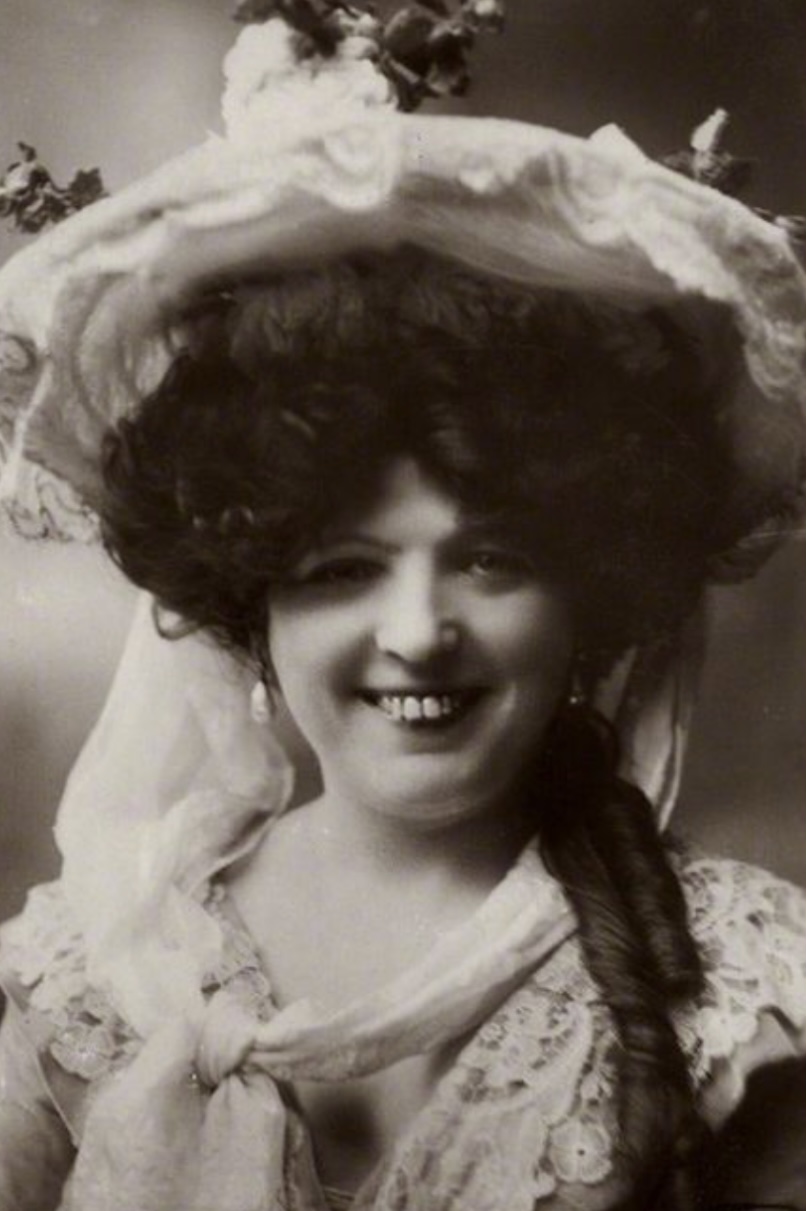
In April 1922, music hall star Marie Lloyd (pictured) collapsed in her dressing room after singing “The Cosmopolitan Girl” at the Gateshead Empire in Cardiff. Her doctor diagnosed exhaustion. After a period of rest, she returned to the stage in August, and reduced the running time of her act. 

On 12 August 1921, Marie Lloyd failed to show for an appearance at the London Palladium. Instead, she wrote her will. Marie Lloyd died two months later, on 7 October 1922. 

The Times wrote: “In her the public loses not only a vivid personality whose range and extremely broad humour as a character actress were extraordinary, but also one of the few remaining links with the old music-hall stage of the last century.”

In January 1920 the Marconi Company made occasional broadcasts, featuring music and speech, from Chelmsford, England. From 23 February to 6 March 1920 the company broadcast a series of thirty minute shows, repeated twice daily, from Chelmsford. These shows included live music performances.

A Marconi employee, 1906

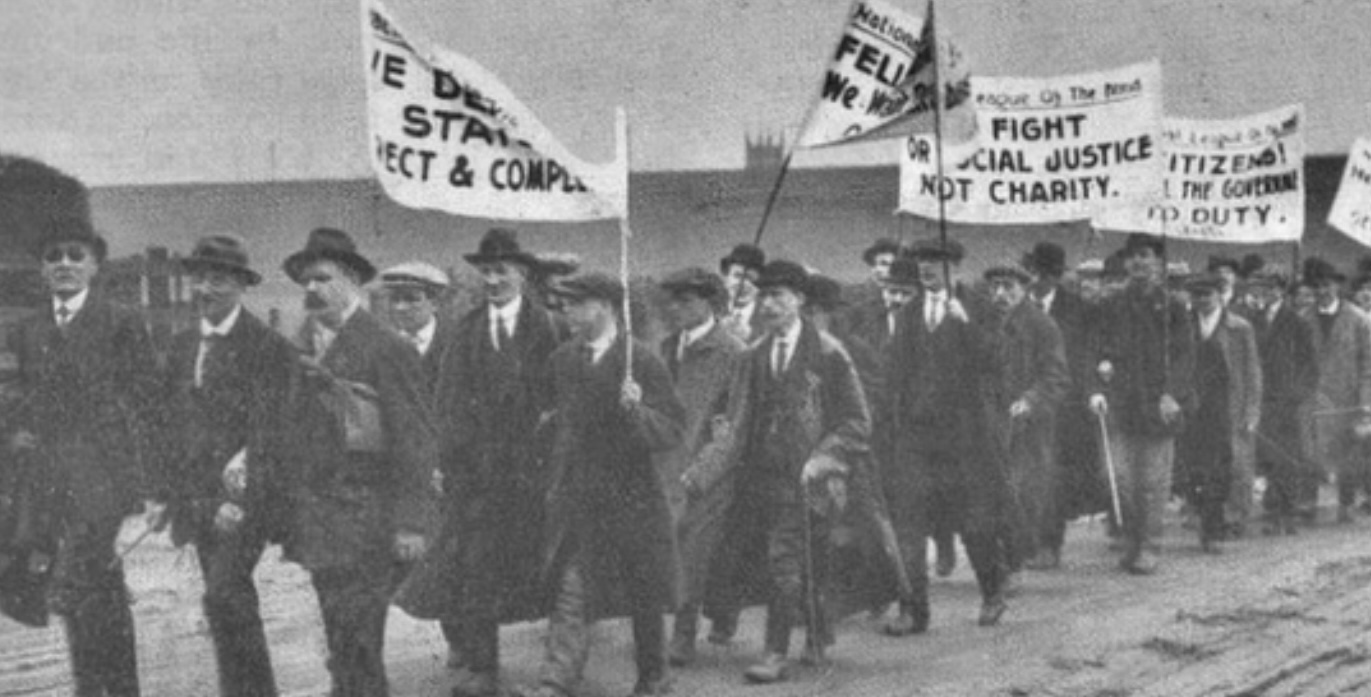
In 1920, 250 blind people marched from Newport, Manchester and Leeds to London. Organised by the National League of the Blind, the marchers assembled on 5 April 1920 and reached London on 25 April 1920, where a crowd of 10,000 supporters greeted them.

The NLB organised the march to protest against poor working conditions and poverty experienced by blind people. The leaders met Prime Minister David Lloyd George, who promised little, apart from to pay for the marchers’ rail tickets home.

However, a Blind Persons’ Act was introduced later in the year, the first disability-specific legislation in the world, which compelled local authorities to ensure the welfare of blind persons. 

The march of 1920 served as inspiration for the famous 1936 Jarrow March against unemployment, in which the NLB also participated.


Tula, my novel set in the 1920s

For Authors

#1 for value with 565,000 readers, The Fussy Librarian has helped my books to reach #1 on 32 occasions.

A special offer from my publisher and the Fussy Librarian. https://authors.thefussylibrarian.com/?ref=goylake

Don’t forget to use the code goylake20 to claim your discount 🙂