Categories
Cherry Wainer

Cherry Wainer


When Cherry Wainer died on November 14, 2014 that evening, at a concert, Elton John dedicated Don’t Let the Sun Go Down on Me to her. Who was Cherry Wainer, and how did she and other musicians, achieve success in the late 1950s, early 1960s? I intend to follow Cherry’s career in an effort to find out.


Cherry Wainer was born on March 2, in East London, Eastern Cape, South Africa. The year of her birth is in dispute. Most sources list Cherry’s birth year as 1935. However, the documents I’ve seen list her birth year as 1932.

At the age of eight, already a talented pianist, Cherry performed a concert with an orchestra. Her father was a music promoter, and undoubtedly he helped to open doors early in Cherry’s career.

Cherry’s plans to become a classical pianist changed direction when she was introduced to the Hammond organ, and the music of jazz organist Jimmy Smith. To develop her career, as a teenager Cherry set out for London, England with her mother and sixty-three outfits that she was “determined to wear.”
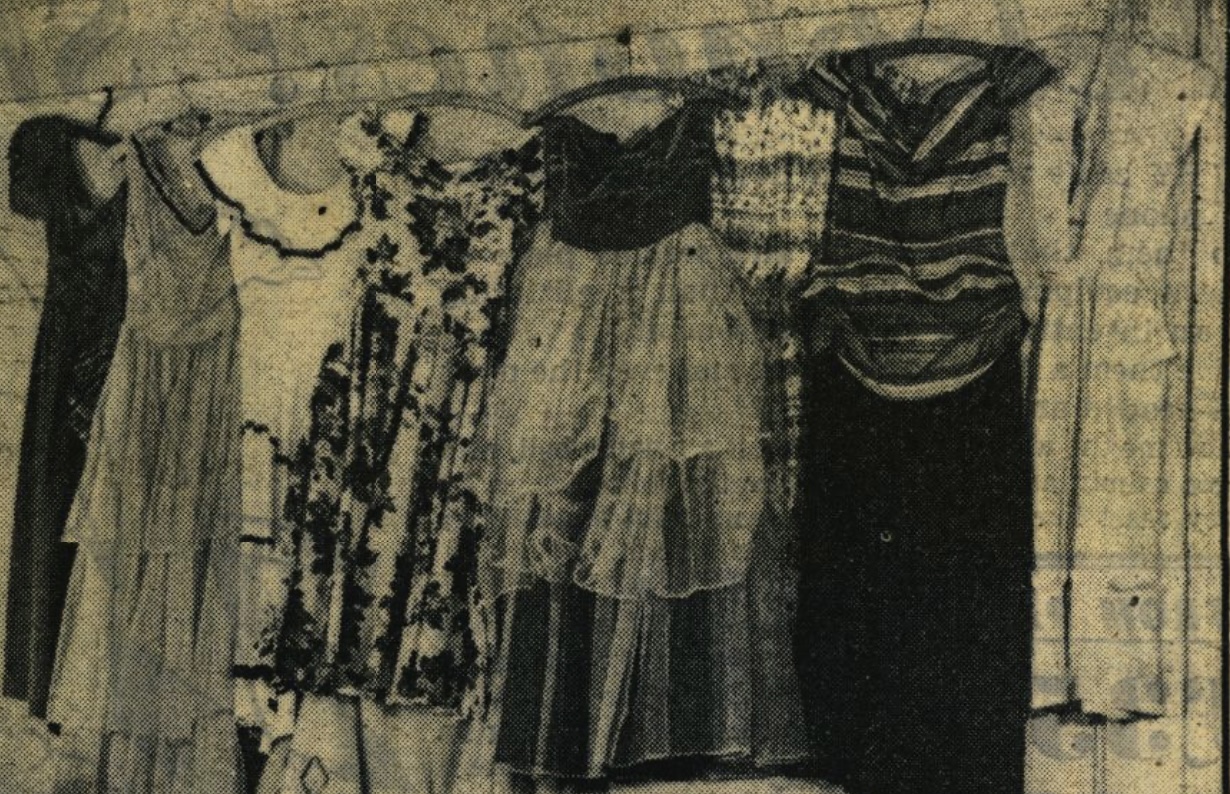
Some of the outfits Cherry was determined to wear

Early in 1948, Cherry, a teenager, and her mother Zelda boarded the Athlone Castle (pictured). The ship left Durban and docked at East London (where Cherry boarded), Port Elizabeth, Mossel Bay, Cape Town and Madeira before arriving at Southampton on 6 February 1948.

Cherry and Zelda took lodgings at 24 Burgoyne Road, Harringay, London and from there Cherry embarked on her studies – singing, drama and dancing.

In May and June 1948, chaperoned by her mother, Zelda (pictured), Cherry Wainer was in London studying singing, drama and dancing. Billed as Cherry Wayne and playing a mini-organ, she also found time to appear in variety shows at the Coventry Hippodrome, the Croydon Empire and the Windsor Theatre. The critics noted that Cherry “stood out” from the other acts. Although only a student, Cherry was already making a name for herself.

I’m researching the career of musician Cherry Wainer and the 1950s-1960s music scene.

From August 1948 through to February 1949 Cherry appeared in variety shows at the Windmill Theatre in London. In April 1948 the press reported that Miss Cherry Wainer was seen “puffing away contentedly on a briar pipe between dances at the White Hart Hotel”. 

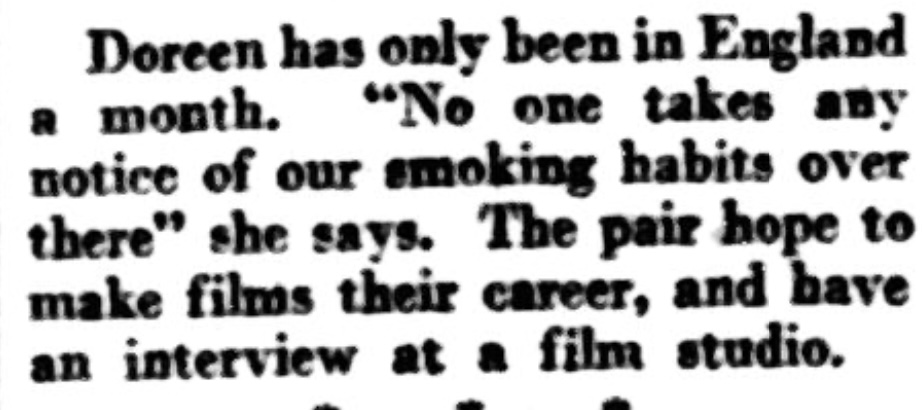
Below, a quote from Cherry’s friend, Doreen Brebner.

Cherry told the reporter that she “smoked cigars too – anything!” And that she found British tobacco milder than her native South African brands. Clearly, Cherry was something of a character.
Throughout 1949, Cherry developed her career in variety shows playing solo pianoforte and a Hammond solovox organ. The variety shows featured singers, dancers and comedians. Some of those listed on the bills became regulars on British television and radio. Most drifted into obscurity. 

Cherry’s career was on the rise, however, and her music and drama studies faded into the background as theatrical agents clamoured for her signature.

In February 1950, up and coming theatrical agent Cliff Martell announced that he was signing a number of new acts including singer Jimmy Young (who later became a BBC disc jockey), and Cherry Wainer. However, a month later, this forthright notice was placed in The Stage.

Clearly, Cherry was in demand, and career opportunities beckoned.

* * *

Throughout 1950 Cherry continued to perform on the entertainment circuit, singing and playing her Hammond solovox organ. She was only eighteen (possibly younger – her mother might have altered Cherry’s age to secure her gigs). At that point, she decided to return to South Africa, where she developed her career. She would return to Britain, but it would be a four year wait.

More next time…

For Authors

#1 for value with 565,000 readers, The Fussy Librarian has helped my books to reach #1 on 32 occasions.

A special offer from my publisher and the Fussy Librarian. https://authors.thefussylibrarian.com/?ref=goylake

Don’t forget to use the code goylake20 to claim your discount 🙂

Categories
Music Notes

Music Notes #2

Humphrey Lyttelton

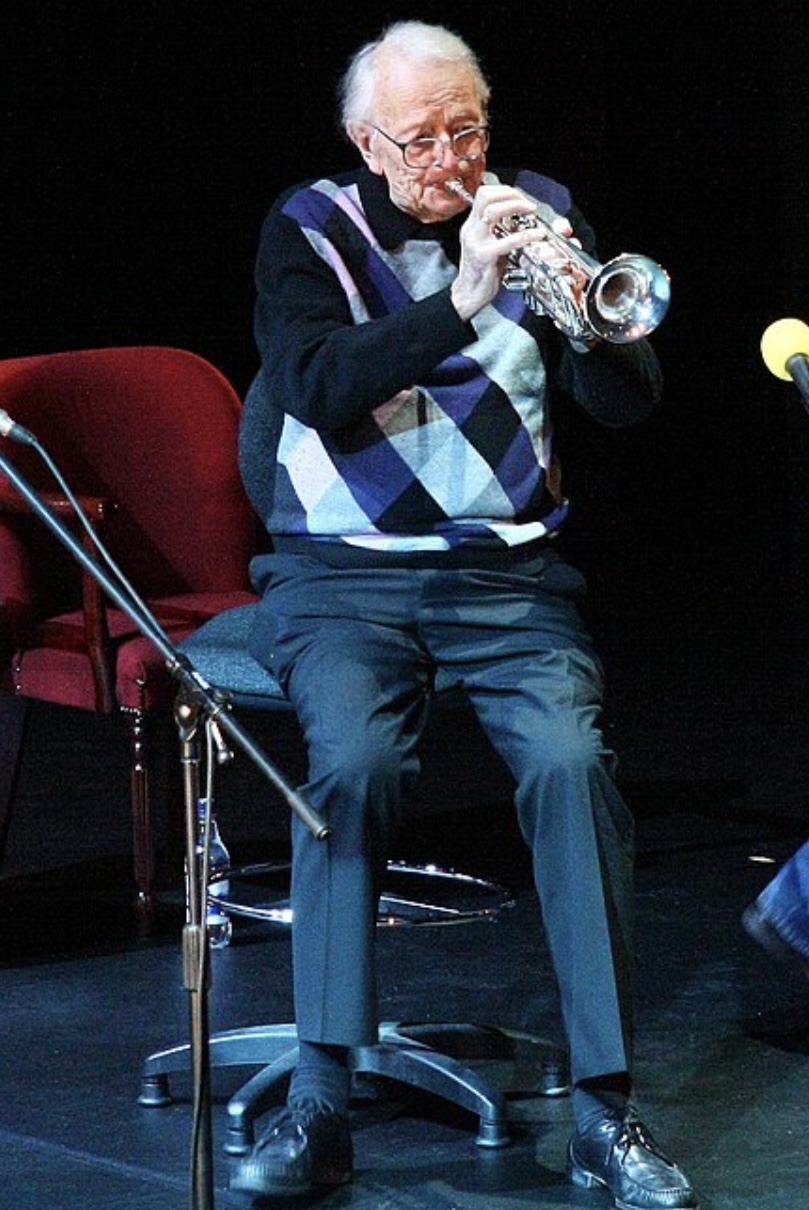
Humphrey Lyttelton aka “Humph” (23 May 1921 – 25 April 2008) was a talented broadcaster, humorist, cartoonist, trumpeter and jazz band leader. Musically, he is remembered for Bad Penny Blues, a hit in 1956, while as a broadcaster he presented The Best of Jazz for forty years, and hosted the hilarious comedy panel game I’m Sorry I Haven’t a Clue. Louis Armstrong was so impressed with Humphrey Lyttelton’s playing that he referred to him as “that cat in England who swings his ass off.”

📸 Wikipedia

Born at Eton College and related to the nobility, Humphrey Lyttelton turned his back on titles and honours. A turning point in his life arrived upon leaving school when he worked at Port Talbot Steel Works. His experiences there forged his political beliefs, which he termed as “romantic socialism”.

A second lieutenant in the Grenadier Guards, Humphrey Lyttelton saw Second World War action at Salerno, Italy during Operation Avalanche. When he came ashore, he held a pistol in one hand and a trumpet in the other.

On VE Day, 8 May 1945, Humphrey Lyttelton joined the celebrations in London by playing his trumpet from a wheelbarrow. Inadvertently, the BBC broadcast his performance in a recording that still survives.

My latest article for the Seaside News

For Authors

#1 for value with 565,000 readers, The Fussy Librarian has helped my books to reach #1 on 36 occasions.

A special offer from my publisher and the Fussy Librarian. https://authors.thefussylibrarian.com/?ref=goylake

Don’t forget to use the code goylake20 to claim your discount 🙂
Categories
Music Notes

Music Notes

Music Notes

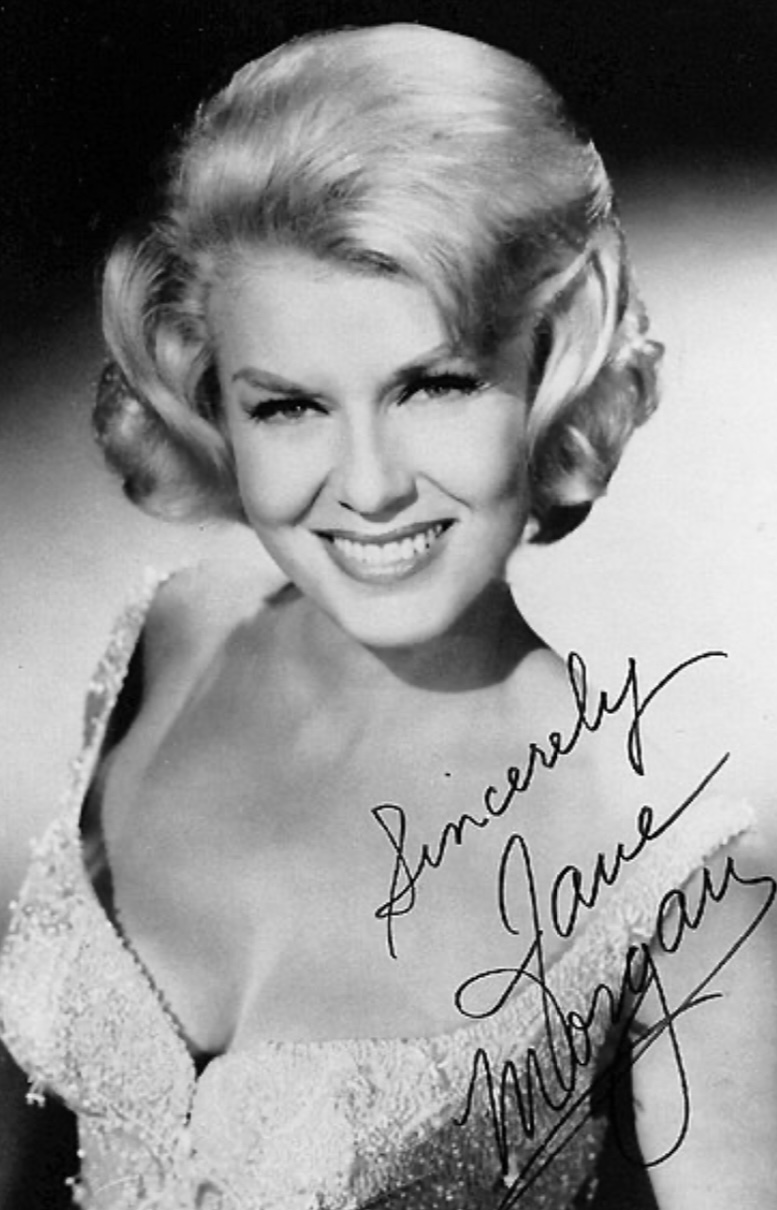
Jane Morgan (pictured) enjoyed a long career on Broadway, on record, on television, and in nightclubs and movies. Her career blossomed in America and Europe, and featured a number of million sellers including The Day the Rains Came (number one in Britain in 1959), which she released as a double A side, an English version of the song and a French version – Le jour où la pluie viendra. 

Later in her career, Jane Morgan released an answer song to Johnny Cash’s A Boy Named Sue called A Girl Named Johnny Cash. She performed this song on Cash’s television show, 1971. Check it out, it’s clever and amusing.

Jane married twice and her second husband, Jerry Weintraub, was instrumental in Elvis Presley’s re-emergence in the early 1970s.

Jane Morgan celebrated her 100th birthday on 3 May 2024.

Some artists write and record a song in half an hour. With ‘More Than a Feeling’, Boston’s Tom Scholz took five years. During that time, Scholz worked for Polaroid, and used his wages to build a recording studio in his basement. Boston’s rich sound, built around Scholz’s harmonised guitars and Brad Delp’s long-held notes, arguably, created the blueprint for the American rock sound of the mid to late seventies.

Incidentally, Scholz cited ‘Walk Away Renee’, the Left Banke version, as his main ‘More Than a Feeling’ influence.

***

A pop music curiosity: The Specials’ Too Much Too Young (1980), at just under two minutes, was the shortest number one since the Beatles’ From Me to You (1963).

“And every song was short and sweet, and every beat was fast
And every paper in the land said rock-and-roll won’t last
You know it just won’t last, it’s such a rapid burn.”

Class of ‘58 – Al Stewart

***

Originally established in 1931 to broadcast in German and French, in 1933 Radio Luxembourg began Sunday broadcasts in English on 208 metres medium wave. After 1945, the station broadcast an English service daily and introduced a new feature – a top twenty based on sheet music sales.

With the BBC indifferent to popular music, Radio Luxembourg’s evening shows became an important source for British listeners. Indeed, the station dominated the pop music airwaves until the arrival of pirate radio ships in 1964.

Radio Luxembourg at Expo ‘58, Brussels, Belgium

In 1971 Radio Luxembourg abandoned its pre-recorded shows and adopted an “all live” format with disc jockeys presenting their programmes from Luxembourg. 

In the late sixties and early seventies strong competition from BBC Radio 1 and British commercial radio stations reduced Radio Luxembourg’s audience. Listeners also preferred the cleaner sound of the BBC programmes to Radio Luxembourg’s “fade in-fade out” reception. 

Despite the heavy hand of sponsors interrupting the music, and the dodgy reception, Radio Luxembourg played an important part in the development of 1960s pop culture. 

The book that started my writing career. Sam’s Song has received over 3,000 reviews and ten years after publication was #1 again recently on the Amazon charts https://www.amazon.com/Sams-Song-Smith-Mystery-Book-ebook/dp/B00OHZ151W

For Authors

#1 for value with 565,000 readers, The Fussy Librarian has helped my books to reach #1 on 36 occasions.

A special offer from my publisher and the Fussy Librarian. https://authors.thefussylibrarian.com/?ref=goylake

Don’t forget to use the code goylake20 to claim your discount 🙂

Categories
Music

The Wrecking Crew

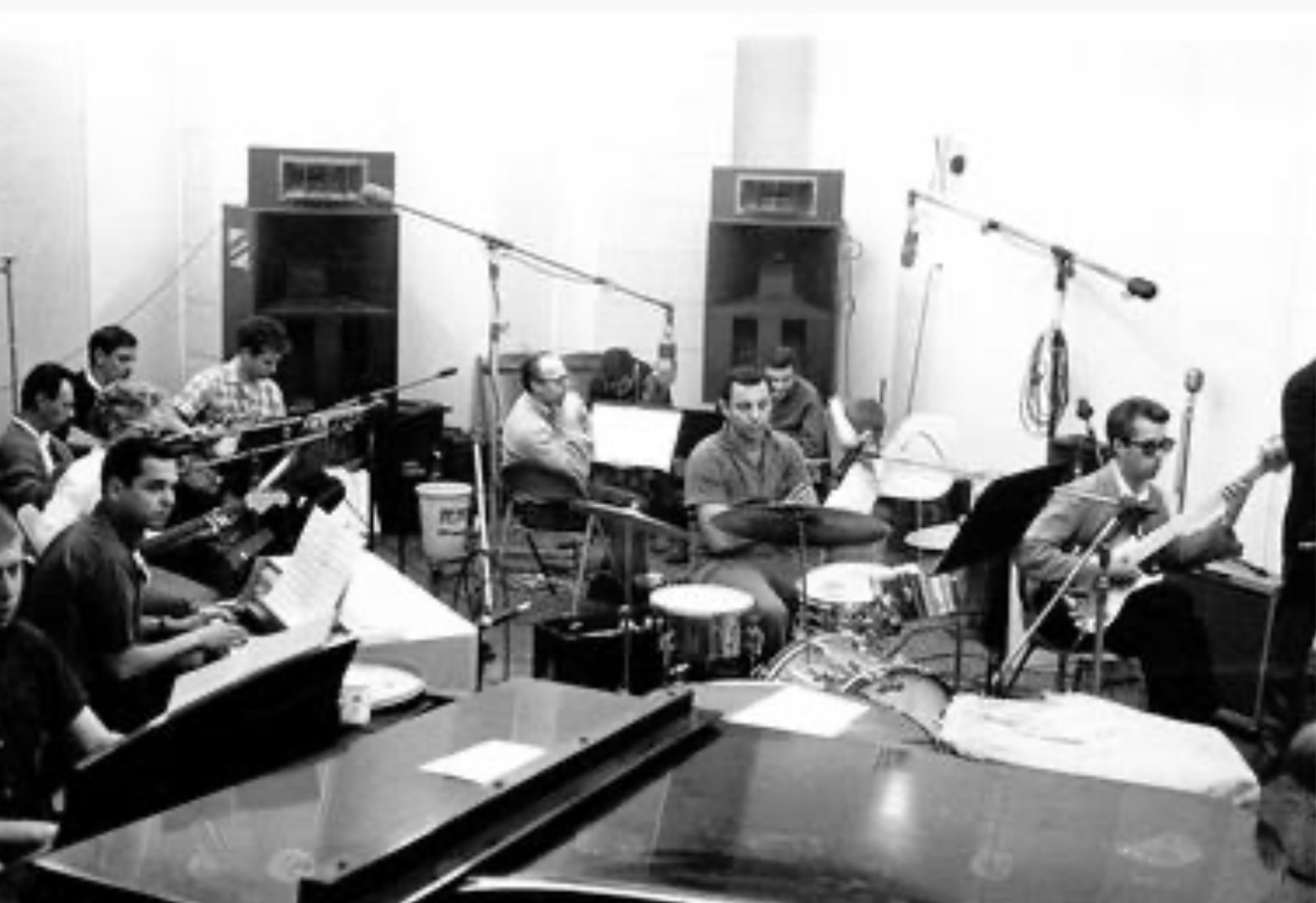
The Wrecking Crew, aka The Clique and The First Call Gang, were an ad hoc collection of high-quality session musicians who played on many of the hits of the 1960s. The musicians included Hal Blaine, Tommy Tedesco and Carol Kaye and they played on records released by artists such as The Beach Boys, The Monkees, the Mamas and the Papas, Frank Sinatra and Sonny & Cher.

Members of the Wrecking Crew

From a jazz background, playing music in the West and East Coast nightclubs, the Wrecking Crew took their musical skills into the recording studios where they would often record a full album in a day. These musicians were presented with one-chord and three-chord pop songs. Their job was to add the jazz chords and licks, and make the songs “swing”. This they did in style, transforming a basic song into an international hit.

The Wrecking Crew often went uncredited on the record sleeves and labels, but the next time you find your foot tapping to a musical rhythm, or you find yourself singing along to your favourite 1960s song, the chances are the rhythm and melody were provided by the Wrecking Crew.

My article for the Seaside News about Peggy Lee appears on page 43 of the magazine.

For Authors

#1 for value with 565,000 readers, The Fussy Librarian has helped my books to reach #1 on 36 occasions.

A special offer from my publisher and the Fussy Librarian. https://authors.thefussylibrarian.com/?ref=goylake

Don’t forget to use the code goylake20 to claim your discount 🙂
Categories
Music

1950s/1960s Top Twenty Chart Poll

Since the beginning of the year, on Mastodon, we’ve been voting on our top twenty records of the 1950s and 1960s. Through a series of elimination polls, we established a top twenty, then matched each record to produce this “definitive” chart.

As you can see, Space Oddity claimed the number one spot. Due to the number of votes Space Oddity received in the qualifying rounds, I regarded David Bowie’s superb record as the number one seed. When Space Oddity easily out-polled Good Vibrations in the first round, I thought that the eventual number one position was never seriously in doubt.

Again, because of the high number of votes Respect received in the qualifying rounds, I regarded this record as the number two seed. However, the popularity of Penny Lane/Strawberry Fields Forever took me by surprise simply because this record qualified through the repêchage, and not as an individual year winner.

I’m pleased that the repêchage system worked – three of the top ten: Penny Lane/Strawberry Fields Forever, Paint it Black and I Can’t Get No Satisfaction qualified through the repêchage.

I’m also pleased that records such as Respect, The Dock of the Bay and Son of a Preacher Man featured in the top ten because I feel that these records add credence to the chart – the voters weren’t only interested in ‘the usual suspects’.

In general, records from the middle and late 1960s faired better than records from the early 1960s and 1950s. Maybe this had something to do with the voters holding a personal connection to these records, or maybe improvements in recording technology throughout the 1960s make these records sound better to modern ears.

My personal top five from the top twenty, in no particular order: Summer in the City, Fever, Then He Kissed Me, Do Doo Ron Ron and Hey Jude. Each, in its own way, captures something magical about the pop record.

I would like to thank the administrators on Tŵt Wales and all the people on Mastodon who participated in the polls. Around 19,000 votes were cast during the course of the Top Twenty Poll. It would take me several hours to count the thousands of votes cast in the qualifying rounds. 

I feel that the compiling of this chart was a great community effort displaying social media at its best. Now on to the 1970s…