Categories
Music Notes

Music Notes

Music Notes

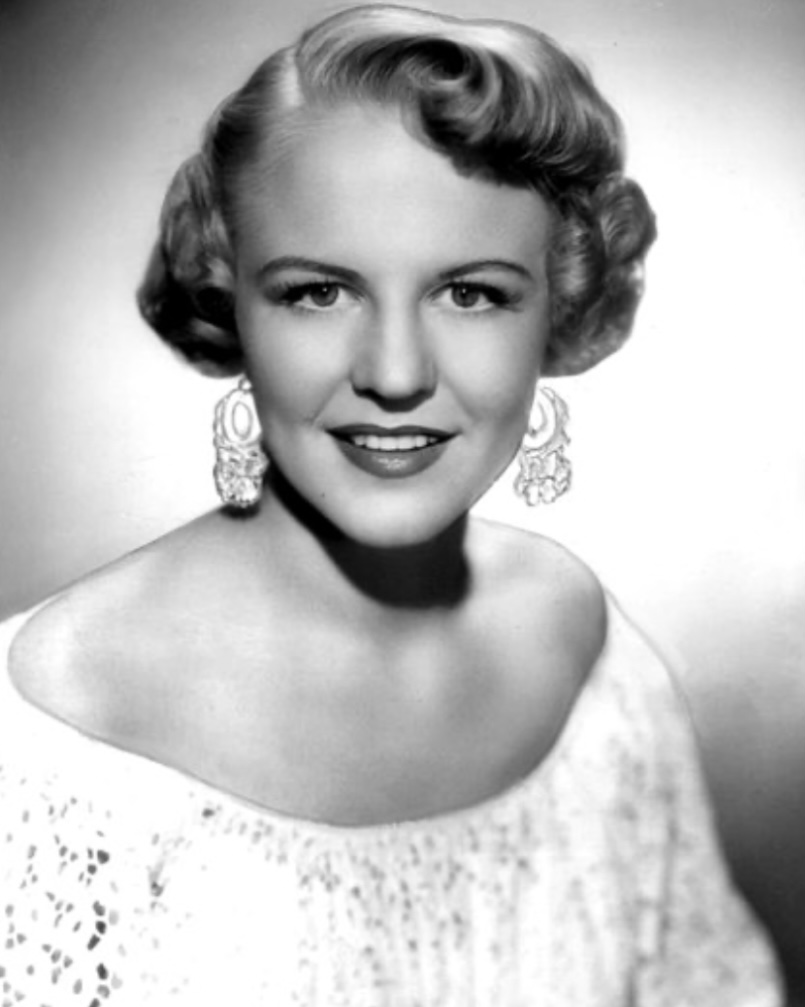
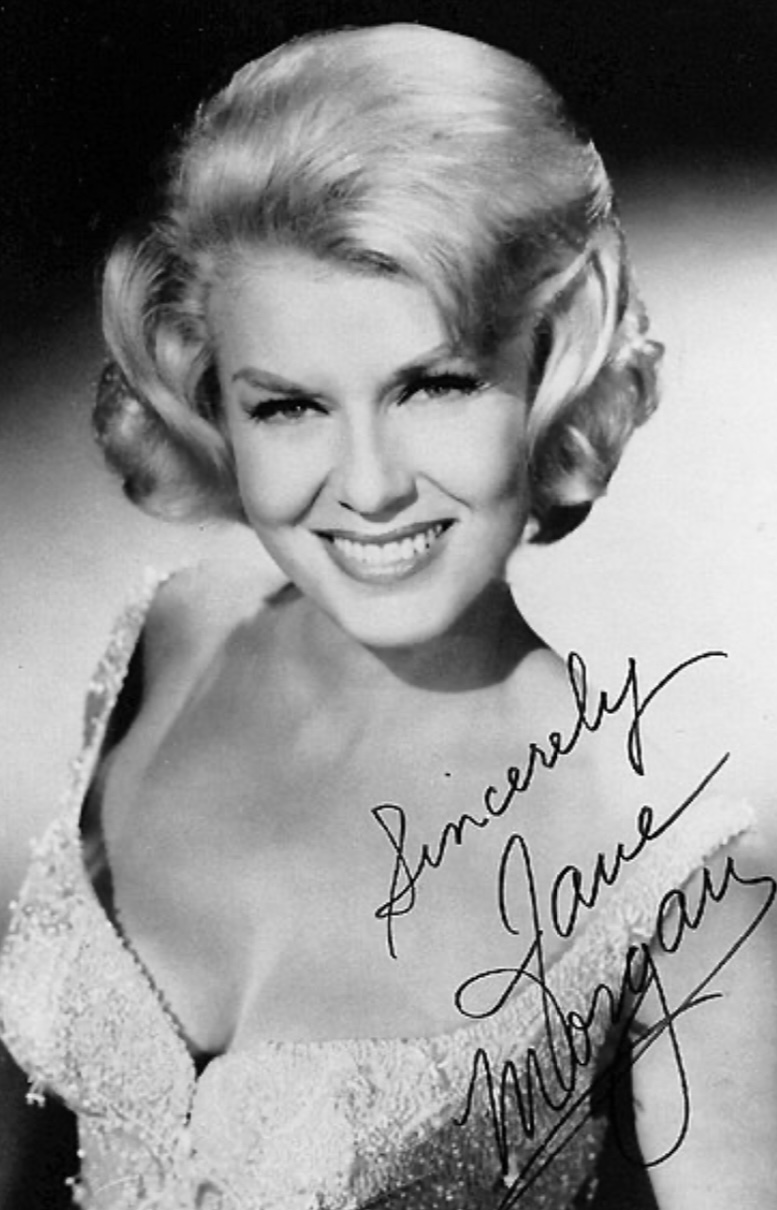
Jane Morgan (pictured) enjoyed a long career on Broadway, on record, on television, and in nightclubs and movies. Her career blossomed in America and Europe, and featured a number of million sellers including The Day the Rains Came (number one in Britain in 1959), which she released as a double A side, an English version of the song and a French version – Le jour où la pluie viendra. 

Later in her career, Jane Morgan released an answer song to Johnny Cash’s A Boy Named Sue called A Girl Named Johnny Cash. She performed this song on Cash’s television show, 1971. Check it out, it’s clever and amusing.

Jane married twice and her second husband, Jerry Weintraub, was instrumental in Elvis Presley’s re-emergence in the early 1970s.

Jane Morgan celebrated her 100th birthday on 3 May 2024.
Some artists write and record a song in half an hour. With ‘More Than a Feeling’, Boston’s Tom Scholz took five years. During that time, Scholz worked for Polaroid, and used his wages to build a recording studio in his basement. Boston’s rich sound, built around Scholz’s harmonised guitars and Brad Delp’s long-held notes, arguably, created the blueprint for the American rock sound of the mid to late seventies.

Incidentally, Scholz cited ‘Walk Away Renee’, the Left Banke version, as his main ‘More Than a Feeling’ influence.

***

A pop music curiosity: The Specials’ Too Much Too Young (1980), at just under two minutes, was the shortest number one since the Beatles’ From Me to You (1963).

“And every song was short and sweet, and every beat was fast
And every paper in the land said rock-and-roll won’t last
You know it just won’t last, it’s such a rapid burn.”

Class of ‘58 – Al Stewart

***

Originally established in 1931 to broadcast in German and French, in 1933 Radio Luxembourg began Sunday broadcasts in English on 208 metres medium wave. After 1945, the station broadcast an English service daily and introduced a new feature – a top twenty based on sheet music sales.

With the BBC indifferent to popular music, Radio Luxembourg’s evening shows became an important source for British listeners. Indeed, the station dominated the pop music airwaves until the arrival of pirate radio ships in 1964.

Radio Luxembourg at Expo ‘58, Brussels, Belgium

In 1971 Radio Luxembourg abandoned its pre-recorded shows and adopted an “all live” format with disc jockeys presenting their programmes from Luxembourg. 

In the late sixties and early seventies strong competition from BBC Radio 1 and British commercial radio stations reduced Radio Luxembourg’s audience. Listeners also preferred the cleaner sound of the BBC programmes to Radio Luxembourg’s “fade in-fade out” reception. 

Despite the heavy hand of sponsors interrupting the music, and the dodgy reception, Radio Luxembourg played an important part in the development of 1960s pop culture. 
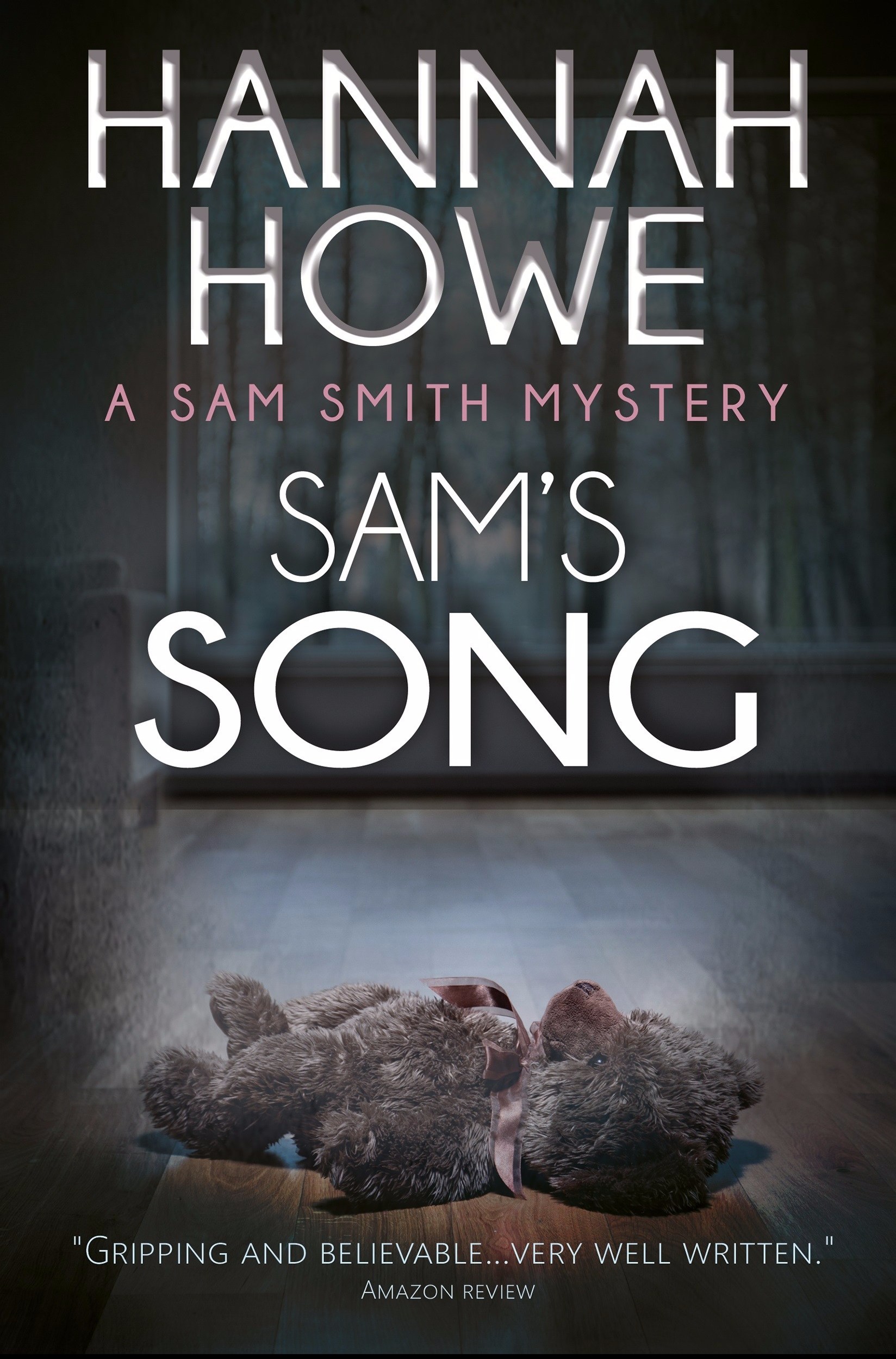
The book that started my writing career. Sam’s Song has received over 3,000 reviews and ten years after publication was #1 again recently on the Amazon charts https://www.amazon.com/Sams-Song-Smith-Mystery-Book-ebook/dp/B00OHZ151W

For Authors

#1 for value with 565,000 readers, The Fussy Librarian has helped my books to reach #1 on 36 occasions.

A special offer from my publisher and the Fussy Librarian. https://authors.thefussylibrarian.com/?ref=goylake

Don’t forget to use the code goylake20 to claim your discount 🙂

Categories
Music

The Wrecking Crew

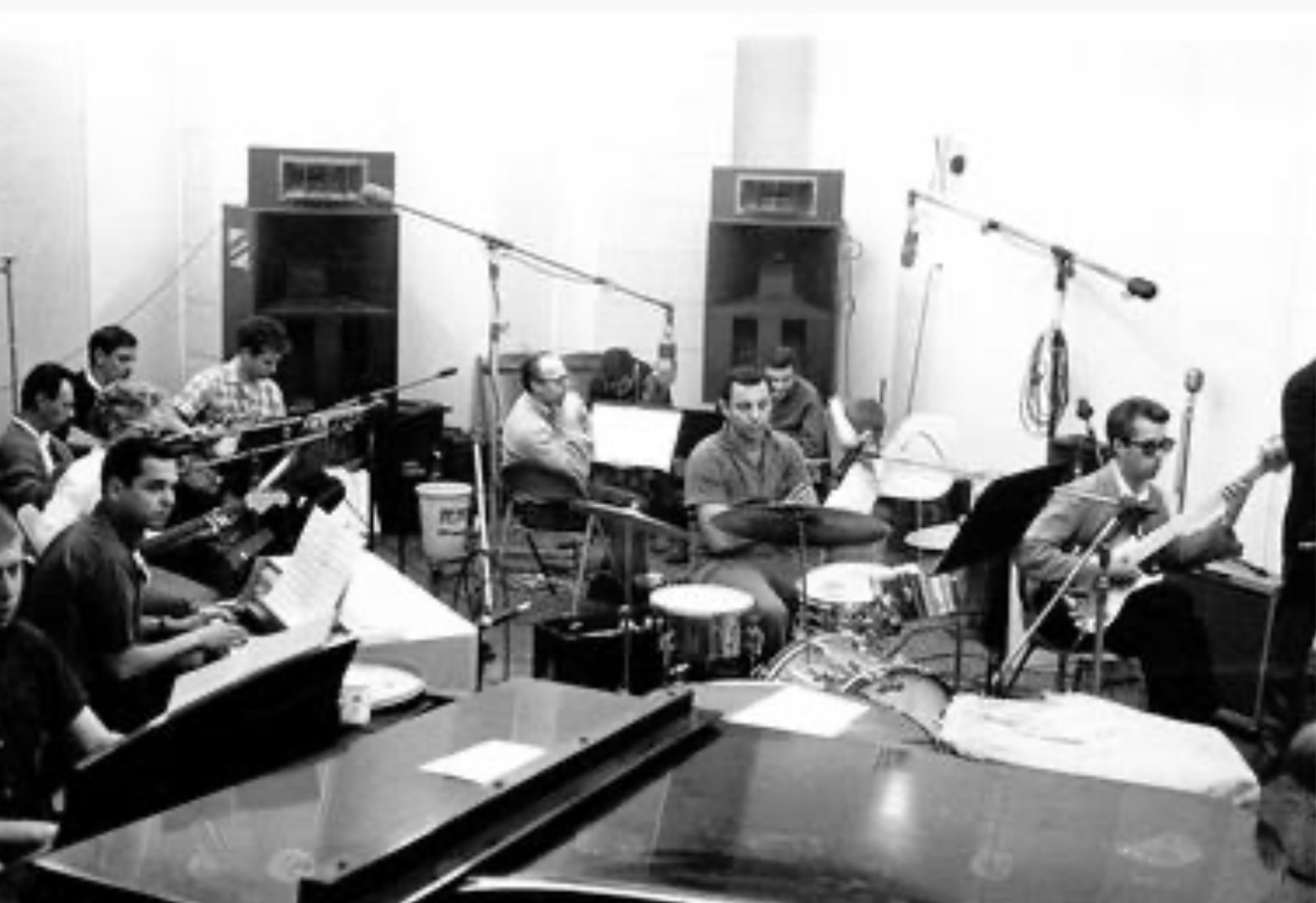
The Wrecking Crew, aka The Clique and The First Call Gang, were an ad hoc collection of high-quality session musicians who played on many of the hits of the 1960s. The musicians included Hal Blaine, Tommy Tedesco and Carol Kaye and they played on records released by artists such as The Beach Boys, The Monkees, the Mamas and the Papas, Frank Sinatra and Sonny & Cher.

Members of the Wrecking Crew

From a jazz background, playing music in the West and East Coast nightclubs, the Wrecking Crew took their musical skills into the recording studios where they would often record a full album in a day. These musicians were presented with one-chord and three-chord pop songs. Their job was to add the jazz chords and licks, and make the songs “swing”. This they did in style, transforming a basic song into an international hit.

The Wrecking Crew often went uncredited on the record sleeves and labels, but the next time you find your foot tapping to a musical rhythm, or you find yourself singing along to your favourite 1960s song, the chances are the rhythm and melody were provided by the Wrecking Crew.

My article for the Seaside News about Peggy Lee appears on page 43 of the magazine.

For Authors

#1 for value with 565,000 readers, The Fussy Librarian has helped my books to reach #1 on 36 occasions.

A special offer from my publisher and the Fussy Librarian. https://authors.thefussylibrarian.com/?ref=goylake

Don’t forget to use the code goylake20 to claim your discount 🙂
Categories
Music

1950s/1960s Top Twenty Chart Poll

Since the beginning of the year, on Mastodon, we’ve been voting on our top twenty records of the 1950s and 1960s. Through a series of elimination polls, we established a top twenty, then matched each record to produce this “definitive” chart.

As you can see, Space Oddity claimed the number one spot. Due to the number of votes Space Oddity received in the qualifying rounds, I regarded David Bowie’s superb record as the number one seed. When Space Oddity easily out-polled Good Vibrations in the first round, I thought that the eventual number one position was never seriously in doubt.

Again, because of the high number of votes Respect received in the qualifying rounds, I regarded this record as the number two seed. However, the popularity of Penny Lane/Strawberry Fields Forever took me by surprise simply because this record qualified through the repêchage, and not as an individual year winner.

I’m pleased that the repêchage system worked – three of the top ten: Penny Lane/Strawberry Fields Forever, Paint it Black and I Can’t Get No Satisfaction qualified through the repêchage.

I’m also pleased that records such as Respect, The Dock of the Bay and Son of a Preacher Man featured in the top ten because I feel that these records add credence to the chart – the voters weren’t only interested in ‘the usual suspects’.

In general, records from the middle and late 1960s faired better than records from the early 1960s and 1950s. Maybe this had something to do with the voters holding a personal connection to these records, or maybe improvements in recording technology throughout the 1960s make these records sound better to modern ears.

My personal top five from the top twenty, in no particular order: Summer in the City, Fever, Then He Kissed Me, Do Doo Ron Ron and Hey Jude. Each, in its own way, captures something magical about the pop record.

I would like to thank the administrators on Tŵt Wales and all the people on Mastodon who participated in the polls. Around 19,000 votes were cast during the course of the Top Twenty Poll. It would take me several hours to count the thousands of votes cast in the qualifying rounds. 

I feel that the compiling of this chart was a great community effort displaying social media at its best. Now on to the 1970s…

Categories
Music

Fever – Peggy Lee

Fever is one of the most sensual songs ever committed to vinyl. Peggy Lee (pictured) recorded her version in May 1958 in Hollywood. She significantly altered the lyrics adding historical invocations, including the verses beginning “Romeo loved Juliet,” and “Captain Smith and Pocahontas”.

With Jack Marshall, Peggy Lee arranged a slow, sultry version of Fever. Her vocal was accompanied by bass, limited drums, and finger snaps, Peggy Lee adding some of the finger snaps. The song was her 118th single in a career that featured over 1,000 masters and 270 compositions.

Peggy Lee was born on 26 May 1920 in North Dakota. Her ancestors were Scandinavian – Swedish and Norwegian immigrants. Her mother died when Peggy was four, and this resulted in a difficult childhood.

As a teenager, Peggy Lee appeared on local radio stations. Engagements in California and Chicago followed, and they brought her to the attention of band leader Benny Goodman. Goodman and Peggy recorded together, producing a string of hits, including How Deep is the Ocean and My Old Flame.

In 1943, Peggy left Benny Goodman’s band. She enjoyed further success as a singer and composer, and also featured in movies including The Jazz Singer (1953) and Pete Kelly’s Blues (1955), earning an Academy Award nomination for Best Supporting Actress.

In 1955, Peggy Lee wrote He’s a Tramp for the movie Lady and the Tramp. Indeed, she co-wrote all the original songs in that film. She also provided the voices for the dog Peg and the Siamese cats. 

Despite poor health in later life, Peggy Lee continued to perform and record. However, Fever, the record she made with Jack Marshall and her ex-husband Dave Barbour, remained as her signature song.

When you listen to Peggy Lee’s recordings and witness her performances, it’s easy to understand why she was regarded as “The Queen of American Pop Music.”

The book that started my writing career. Sam’s Song has received over 3,000 reviews and ten years after publication is still riding high on Amazon’s private detective chart https://www.amazon.com/Sams-Song-Smith-Mystery-Book-ebook/dp/B00OHZ151W

For Authors

#1 for value with 565,000 readers, The Fussy Librarian has helped my books to reach #1 on 36 occasions.

A special offer from my publisher and the Fussy Librarian. https://authors.thefussylibrarian.com/?ref=goylake

Don’t forget to use the code goylake20 to claim your discount 🙂

Categories
Favourite Record

Favourite Song of the 1950s/1960s #4

When the qualifying process is complete, in just over a week, on Mastodon we will start voting on our top twenty favourite records of the 1950s/1960s, placing them in order. Through 190 match-ups, we will create a unique chart, every song a classic.

Here is some background on one of the qualifiers, Summer in the City by The Lovin’ Spoonful.

Summer in the City was written by John Sebastian, Mark Sebastian and Steve Boone. John Sebastian reworked the lyrics and melody from a song written by his brother, Mark. Boone contributed the bridge.

The song was recorded in two sessions at Columbia Records Studios, New York in March 1966 and featured an early example of sound effects – car horns and a pneumatic drill.

John Sebastian was aiming for a song that built up the tension. He explained: “I was going for the scary, minor chord, Hit the Road Jack (which also features in our top twenty) sequence that doesn’t warn you of what’s coming in the chorus.”

John Sebastian compared the results to Mussorgsky’s Night on Bare Mountain. For the bridge, bassist Steve Boone suggested a jazzy figure akin to the compositions of George Gershwin.

I Can’t Get No Satisfaction by The Rolling Stones

I Can’t Get No Satisfaction was written by Mick Jagger and Keith Richards, and released in America in 1965. Initially, the song was only played on pirate radio stations because the lyrics were considered too suggestive. Music critic Paul Gambaccini stated: “The lyrics to this were truly threatening to an older audience. This song was perceived as an attack on the status quo.”

Keith Richards wrote the music for Satisfaction in his sleep and recorded it on cassette, which included acoustic guitar, the main riff, and snoring. Mick Jagger wrote the lyrics by a swimming pool in Clearwater, Florida , four days before the band went into the studio.

My Generation by The Who

My Generation was written by Pete Townshend, and released as a single on 29 October 1965. Apparently, Townshend wrote the song on a train, inspired by the Queen Mother, who allegedly insisted that Townshend’s 1935 Packard hearse should be towed off a street in Belgravia because it offended her.

In 1985, Townshend told Rolling Stone that “My Generation was very much about trying to find a place in society.” Four years later, he explained that, to him, the line “I hope I die before I get old” meant “before I get very rich.”

Paint it Black by The Rolling Stones

Paint it Black was released as a single in May 1966. The song, about grief and loss, featured Indian, Middle Eastern and European influences.

The first chart-topping single to feature the sitar, Paint it Black widened the instrument’s audience. Also, the song was influential to the development of psychedelic music in the mid-1960s.

Paint it Black was credited to Mick Jagger and Keith Richards. However, the melody originated from a series of improvisations played by Brian Jones on the sitar. Bill Wyman felt that Paint it Black should have been credited to all the band members because the song’s final arrangement originated from a studio improvisation by Brian Jones, Charlie Watts and himself.

Penny Lane/Strawberry Fields Forever by The Beatles

Credited to the John Lennon-Paul McCartney songwriting partnership, Penny Lane and Strawberry Fields Forever were released as a double A-side in February 1967. The songs were intended for Sgt Pepper’s Lonely Hearts Club Band, but because the record company insisted on releasing a single, and the Beatles’ policy to omit previously released singles from their albums, Penny Lane and Strawberry Fields Forever didn’t feature on Sgt Pepper, a decision producer George Martin later described as “a mistake”.

In 2009, McCartney stated, “Penny Lane was kind of nostalgic, but it was really [about] a place that John and I knew … I’d get a bus to his house and I’d have to change at Penny Lane, or the same with him to me, so we often hung out at that terminus, like a roundabout. It was a place that we both knew, and so we both knew the things that turned up in the story.”

Strawberry Fields was the name of a Salvation Army children’s home near John Lennox’s home in Woolton, Liverpool. Lennon’s aunt Mimi Smith recalled: “There was something about the place that always fascinated John. He could see it from his window … He used to hear the Salvation Army band [playing at the garden party], and he would pull me along, saying, ‘Hurry up, Mimi – we’re going to be late.'”

Penny Lane/Strawberry Fields Forever is included as a double A-side in our chart poll to match the buying choices and charts of the time.

Book News

Two items brought to my attention this week, in relation to Eve’s Peace, my Heroines of SOE sequel. One, the proof copy of the paperback version. Two, this wonderful review. “Love, distrust, trust, & secrets galore. Woven superbly by the author makes for wonderous reading, hard to put down book. Rating the book a 9 1/2 only because now I must look for sequels & prequels for this wonderful series…”

For Authors

#1 for value with 565,000 readers, The Fussy Librarian has helped my books to reach #1 on 36 occasions.

A special offer from my publisher and the Fussy Librarian. https://authors.thefussylibrarian.com/?ref=goylake

Don’t forget to use the code goylake20 to claim your discount 🙂