The first 24 Hours of Le Mans race took place on 26 and 27 May 1923, on public roads around Le Mans. Originally the race was planned as a three-year event, with first prize awarded to the car that travelled the furthest distance over three consecutive 24-hour races. This idea was abandoned in 1928.
French, British and Italian drivers and cars dominated the early events, with Bugatti, Bentley and Alfa Romeo featuring prominently.
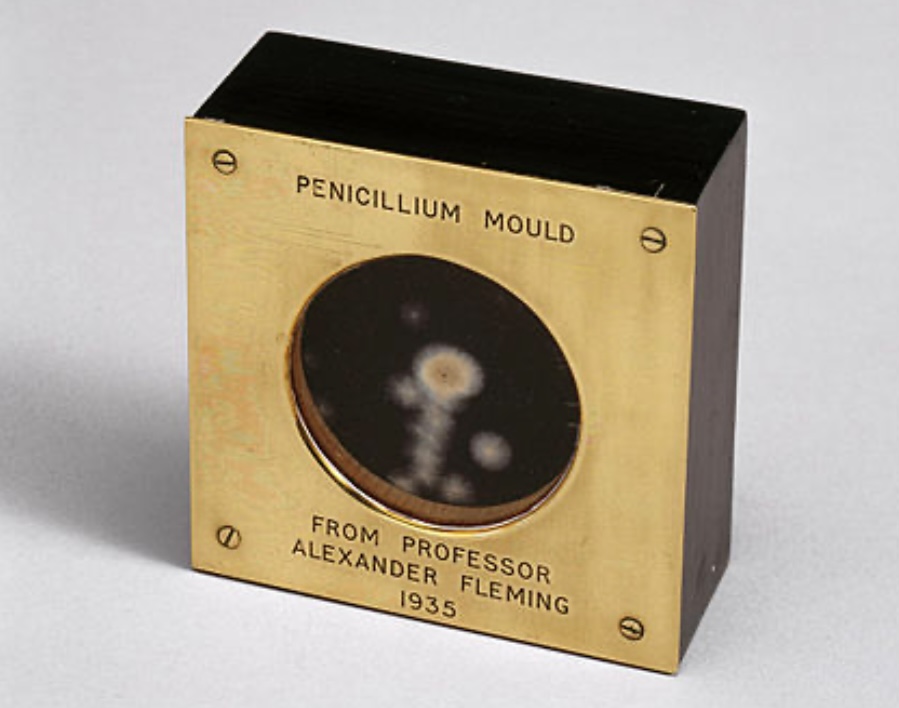
On 3 September 1928 Alexander Fleming observed by chance that fungal contamination of a bacterial culture appeared to kill the bacteria. He confirmed his observation with a new experiment on 28 September at St Mary’s Hospital, London. When Fleming published his experiment in 1929, he called the antibacterial substance (the fungal extract) penicillin.
Fun Fact: I’m allergic to penicillin. When prescribed a course as a teenager, I swelled up and turned bright green.
📸 Wikipedia
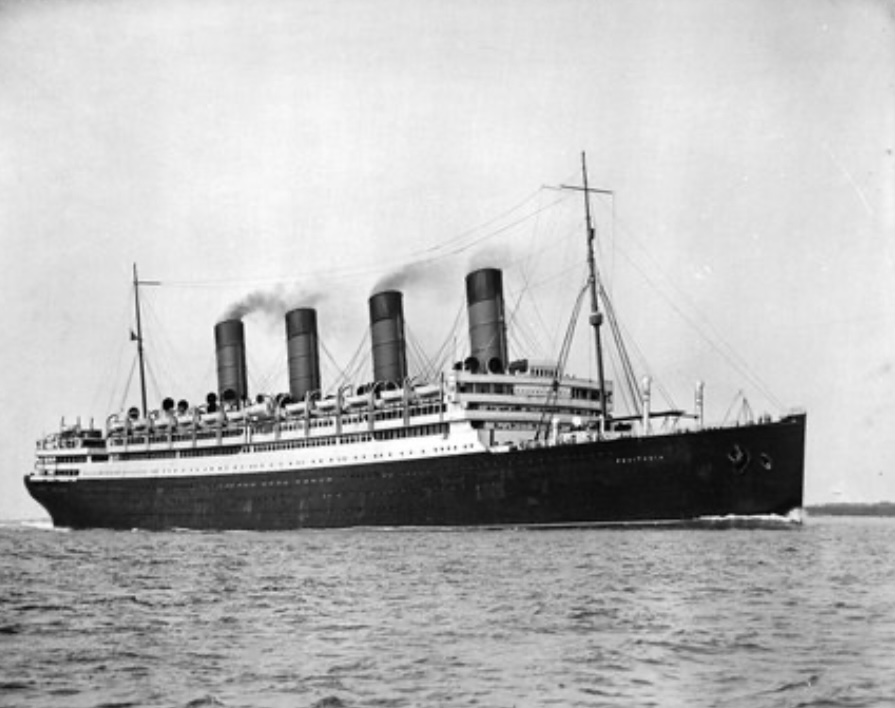
Before the 1920s, shipping companies made their money transporting immigrants to various countries, especially the United States. However, when the USA brought in stricter regulations for immigration many shipping companies turned to cruises to sustain their income. Instead of a means of transport only, the ships became floating hotels.
The Aquitana
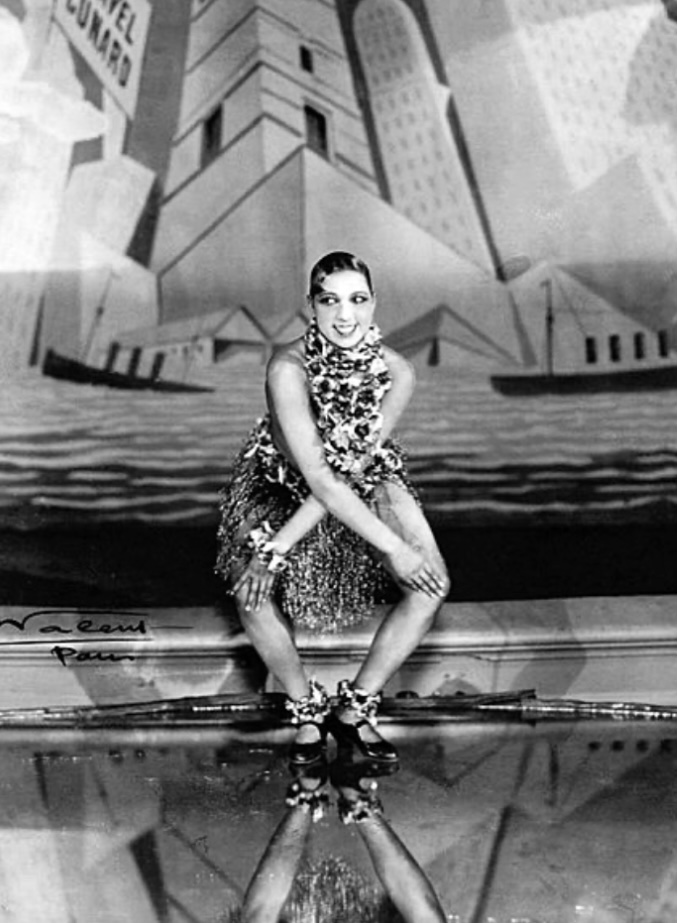
Joséphine Baker, June 3, 1906 – April 12, 1975), was an American-born French dancer, singer, and actress. Joséphine established her career in France where she appeared in movies and danced at the Folies Bergère in Paris. Her performances were a sensation and she became an icon of the Jazz Age.
During the Second World War, Joséphine Baker aided the French Resistance. After the war, she was awarded the Resistance Medal and the Croix de Guerre, and was named a Chevalier of the Legion of Honour.
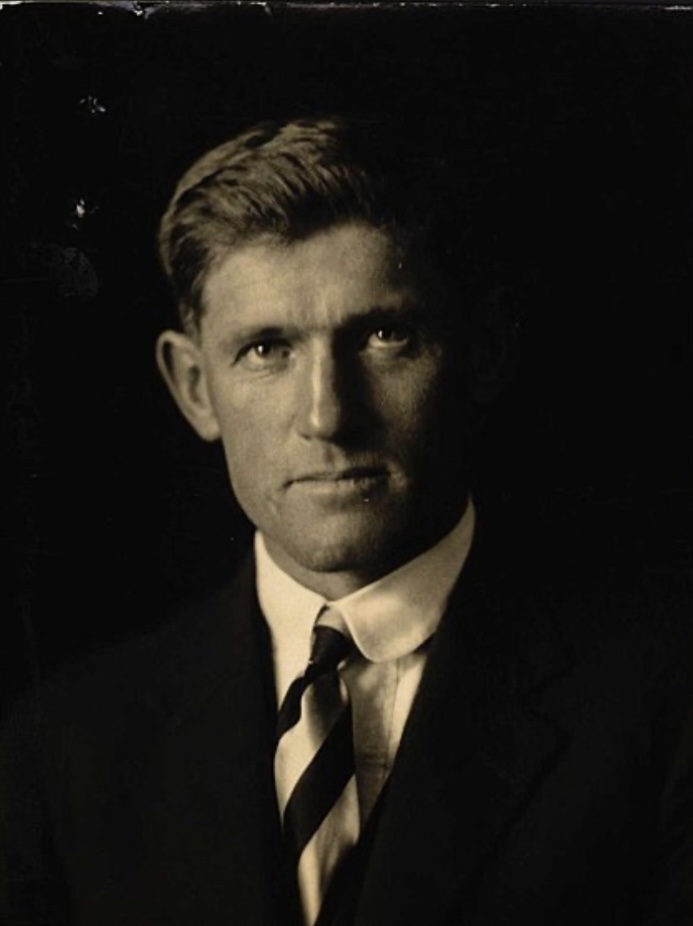
On Saturday, 3 January 1925 Cyril Brownlie of New Zealand (pictured) was sent off for foul play during a Test match against England, the first time anyone had been dismissed from the field of play in an international rugby union match.
New Zealand won a bruising encounter, 17 – 11.
The first electric razor was patented in 1928 by the American manufacturer Col. Jacob Schick (pictured). A military officer, inventor, and entrepreneur, Schick founded Schick Dry Shaver Inc.
Schick’s company did well and he moved most of his wealth to a series of holding companies in the Bahamas. This did not please the Joint Congressional Committee on Tax Evasion & Avoidance, so to avoid an investigation Schick became a Canadian citizen in 1935.
On March 28, 1920 “America’s Sweetheart” Mary Pickford and “Everybody’s Hero” Douglas Fairbanks married, thus becoming Hollywood’s first supercouple.
They created a home, “Pickfair” (pictured), a mock-Tudor-designed six-bedroom house, which contained a screening room, glassed-in sun porch, bowling alley and billiard room. Unfortunately, as with many Hollywood unions, the marriage drifted towards divorce.
For Authors
#1 for value with 565,000 readers, The Fussy Librarian has helped my books to reach #1 on 32 occasions.
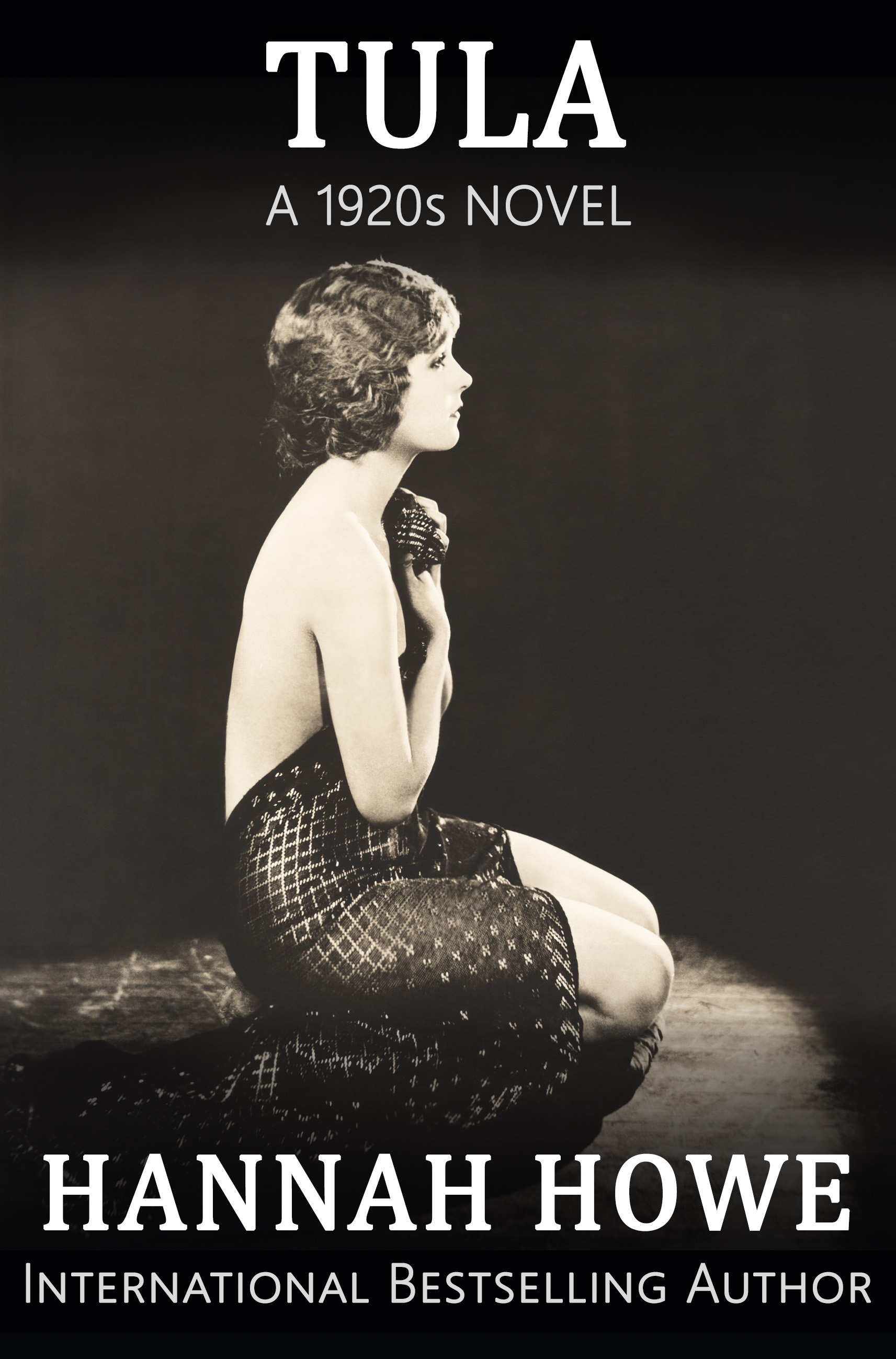
I’m excited to introduce a new project, Tula, a novel set in the 1920s. Tula is an actress who has climbed from the gutter to become a major star in Hollywood. However, as the story opens, she is in an asylum. How did she get there?
Tula believes that the recent death of her father triggered her emotional collapse. However, as she chronicles the first twenty-four years of her life, she discovers the true trigger for her breakdown.
This story might sound dark, but light arrives in the shape of Tula’s determination to escape from poverty, and her strength in facing up to and overcoming her emotional problems.
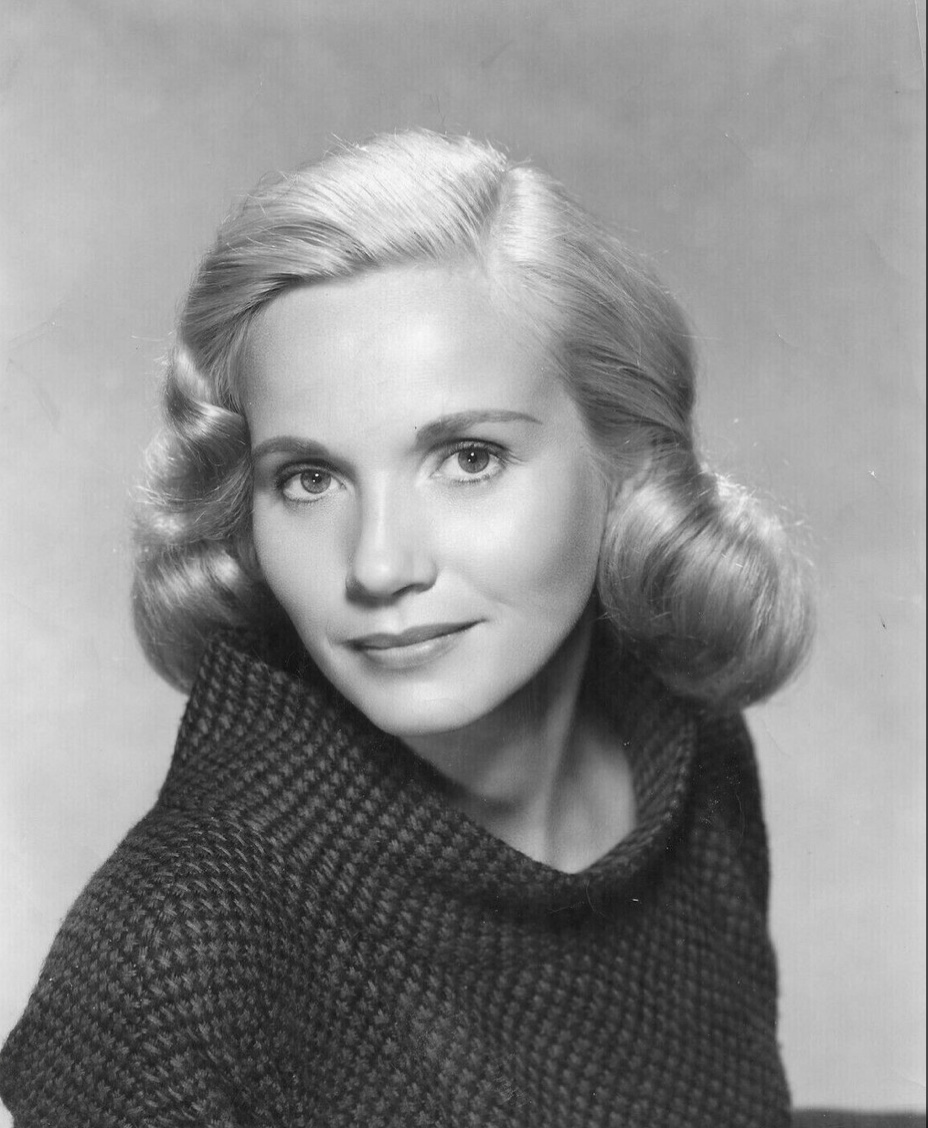
Continuing my research into Eva Marie Saint’s ancestry using public records. I’m looking to answer two questions: was Eva’s talent the result of nurture, or nature? And why am I drawn to her as an actress? Can I find the answers to these questions in her roots?
Today’s record is the 1930 census. This census confirms that Eva was born in New Jersey, that at the age of five she was attending school and literate, and that she lived with her older sister, Adelaide, and her parents, John and Eva. John was a credit man for a rubber company, Eva Senior was a housewife.
Eva’s family rented a home on 81 Street, Queens, New York. Most of their neighbours were born in New York. However, their parents came from Austria, Russia, Germany, Czechoslovakia, Hungary and Ireland. They were merchants, bookkeepers, salesmen, secretaries, photographers and hairdressers.
This was an immigrant area, not the poorest, not the richest. Unlike some actresses, Eva did not enjoy a gilded path to fame and fortune; she had to work for her success. That is something I can relate to, and it partially answers one of my questions.
However, for the full answers, I need to explore Eva’s parents’ records. More, next time.
***
In the seventeenth century, London’s doctors qualified through an apprenticeship. They set bones, tended injuries and bled patients. Physicians represented a different branch of medicine. They qualified through universities and advised on diet, exercise and drugs.
Treatments centred on purging, sweating and bleeding in an attempt to restore the balance of a patient’s body.
Physicians charged a fee, usually between 10 and 20 shillings, which placed them well out of the reach of many Londoners.
For day-to-day medical treatments, Londoners visited barbers. Along with offering a haircut and a shave, a barber would bleed a client and draw his teeth.
Medicines were sold by apothecaries, who developed into pharmacists. These medicines were derived from herbs, plants and vegetables and sold for a penny per dose.
Many of the treatments were ineffective, which led to challenges by ‘new scientists’ like Nicholas Culpepper, pictured. The establishment hated Culpepper because he challenged their cosy cartel, stated that high medical fees were ‘un-Christian’, and because he treated London’s poor.
Caledonia – It’s Worth a Fortune! Series 1, Episode 11 of The Rockford Files. All writers have standby plots. One of John Thomas James’ standby plots was ex-cons looking for hidden money. In Caledonia, JTJ delivered a neat twist at the end.
This episode was directed by Stuart Margolin, a talented actor/director. While Margolin’s direction was always crisp, his greatest contribution to The Rockford Flies was his portrayal of Angel, one of the great support characters of American television. James Garner’s interactions with Stuart Margolin were always a delight to watch.
We are eleven episodes in but Angel, Beth and Becker are yet to appear as regular characters. Even Rocky has only made fleeting appearances at this point. The Rockford Files always had a strong sense of direction, but the series grew in strength when the support characters became regulars.
Stuart Margolin
Len Allchurch, born 12 September 1933, enjoyed a distinguished footballing career, which spanned nearly twenty years. During that time he represented Sheffield United, Swansea Town and Stockport County.
Born in Swansea, and the brother of the legendary Ivor Allchurch, Len also won eleven caps for Wales and was a member of his country’s 1958 World Cup squad.
In 1950, at the age of seventeen, Len began his professional career with Swansea Town. In March 1961, for a fee of £18,000, he signed for Sheffield United. Len scored six goals in eight games and helped his new club to clinch promotion.
Over the following three seasons, Len scored 37 goals in 140 appearances for Sheffield United before, in March 1965, transferring to Stockport County. His transfer fee: £10,000, making him the most expensive signing in the club’s history.
Eventually, Len’s career turned full circle and he ended his professional days at his home club, Swansea Town.
Len enjoyed many highlights during his long and distinguished career, but perhaps this remains the most remarkable fact: he did not receive a single caution or booking throughout his entire Football League career.
Len Allchurch 📸 BBC
I’m researching the life of Clara Bow, a superstar in the 1920s. However, before exploring Clara’s life, where did the Bows come from? The answer is England. Like many of their generation, they set sail for America in the 1600s and became planters in Hartford.
The early American Bows were wealthy men and women. However, by the time Clara was born in New York in 1905, the family fortune had long gone. Indeed, Clara’s father Robert flitted from one humble occupation to another, and between 1905 and 1923 the family lived at fourteen different addresses.
Clara Bow was a superstar in the 1920s, yet her birth was not even recorded. Piecing the facts together from various records, a birthdate of 29 July 1905 looks the most likely candidate. Why wasn’t Clara’s birth registered? There were several reasons.
One, Clara’s father, Robert, was often absent from the family home. Two, Clara and her mother, Sarah (pictured), were ill after the birth, and their illnesses were exacerbated by a New York heatwave. Indeed, Sarah was in such poor physical, and probably mental, condition that a doctor warned her not to become pregnant.
Clara was Sarah’s third child. Her first daughter, Alene, was stillborn on 25 June 1903 while her second daughter, Emily, was born and died on 13 May 1904. Given this background, it was a minor miracle that Clara made it to 30 July, let alone beyond.
***
In this month’s issue of Mom’s Favorite Reads…
Multi-award winning author/poet Jessica Bell interviewed by Wendy H Jones. Plus, Author Features, Health, Nature, Photography, Poetry, Recipes, Short Stories, Young Writers, International Country Music Day, and so much more!
As ever, thank you for your interest and support.
Hannah xxx
For Authors
#1 for value with 565,000 readers, The Fussy Librarian has helped my books to reach #1 on 32 occasions.
This week, I made great progress with the writing of Operation Rose, Eve’s War Heroines of SOE book seven, and Fruit, book four in my Olive Tree Spanish Civil War saga. Covid slowed me down over recent months, but this week was much more like it.
In this month’s issue of Mom’s Favorite Reads…
Crime and thriller author Shawn Reilly Simmons interviewed by Wendy H Jones. Plus, Author Features, Nature, Photography, Poetry, Short Stories, Young Writers, National Batman Day, and so much more!
You discover all sorts when you look through parish records.
My 3 x great grandmother Lucy Sarah Glissan was born in Stepney, London in 1842. In 1851 with her sisters Amelia, 13, and Mary Ann, 6, she was living in 28 Church Road, St-George-in-the-East, London in the shadow of this impressive Anglican church. Lucy’s parents were John Glissan, a surgeon/chemist/dentist and Sarah Glissan née Foreman, a nurse/chemist/dentist.
In 1861 my 3 x great grandmother Lucy Sarah Glissan, 19, was living with her sisters, Amelia, 23, and Sarah Ann, 16, in 2 Charles Street, St George-in-the-East, London. All three were unmarried tailoresses.
A baby also lived with the sisters, William, their ‘brother’. A problem: their mother, Sarah, was a widow of seven years and past childbearing age. To save face, the sisters had lied to the enumerator. So, which one of them gave birth to William?
The answer: my 3 x great grandmother Lucy Sarah Glissan. Shortly after the census was taken, Lucy Sarah married William’s father, Richard Stokes. Sadly, shortly after that William died. The couple produced seven more children including my direct ancestor William Richard Fredrick Stokes.
Lucy Sarah Glissan married Richard Stokes, who later ran a furniture-making business, at St Mary’s, Stepney on 27 May 1861. Both were nineteen, and literate. By 1870 80% of males were literate compared to 75% of females, up from 66% and 50% in thirty years. Lucy Sarah’s younger sister, Mary Ann, who witnessed the wedding, was also literate.
Roath Village School, Cardiff, 1899 (National Museum of Wales).
Lucy Sarah Glissan gave birth to eight children in twenty years 1861 – 1881. Her first and eighth child both died in infancy. The other six prospered. In the Victorian era the average number of children per family was six.
Family portrait, (not the Glissans) 1893.
The Glissan sisters were close, so we should take a moment to explore Amelia and Mary Ann’s lives. Amelia married Charles Samuel, a mariner from Antwerp. The couple did not have any children. When Amelia died in 1894, Charles fell on hard times and entered the workhouse. Mary Ann married James Reynolds, a gun maker/engineer. The couple produced only one child, who died young.
Lucy Sarah died on 9 October 1888 at Red Lion Street, Shoreditch.
***
My 4 x great grandfather John Glissan was born in 1803 in Ireland. In 1824 Apothecaries Hall in Dublin recognised him as an apothecary with a licence to trade. A few years later, John moved to London where he found employment assisting John William Keys Parkinson, son of James Parkinson, the doctor who gave his name to Parkinson’s Disease.
Photographed in 1912 this is 1 Hoxton Square, London, the home and office of Parkinson and Son, surgeons and apothecaries. In the late 1820s my 4 x great grandfather John Glissan assisted the son, James, and added the skills of dentist and surgeon to his trade of apothecary. Picture: Wellcome Trust.
17 September 1829 a report in the London Courier detailing the evidence John Glissan, a surgeon, gave to an inquest into the death of Henry Kellard, a pauper.
In the early 1830s my 4 x great grandfather John Glissan left Parkinson and Son and set up his own business as a surgeon/chemist/dentist. Initially, he struggled and was forced to go on the road as a traveller, selling his medicines. In 1834 he was declared insolvent. Life for him in London was tough.
In early June 1833, at nine o’clock in the evening, Susannah Griffiths left her lodgings at 12 Dyer Street, London. She walked along George Street to the junction of Blackfriars Road, one of the most fashionable roads in nineteenth century London. She made her way to 147 Blackfriars Road and the shop owned by my 4 x great grandfather John Glissan. There, Susannah purchased a quantity of arsenic.
Returning home, Susannah set her needlework to one side and wrote a note, quoting Shakespeare’s Macbeth, “Canst thou not minister to a mind diseas’d, Pluck from the memory a rooted sorrow, Raze out the written troubles of the brain.” She added, “I have taken poison.” Then she placed the note under her pillow and swallowed the arsenic.
Susannah was educated. She understood Shakespeare. I imagine that she was a sensitive soul. A coroner’s inquest held at Christ Church Workhouse absolved John Glissan of any blame and concluded that Susannah died whilst being of unsound mind.
Two days after the newspaper report on Susannah’s tragic suicide, this mysterious message appeared in the Morning Advertiser. I’m not sure what to make of the note. There were no follow up messages, so I’m not sure what my ancestor John made of it either.
17 November 1833. If gout was your problem, my 4 x great grandfather John Glissan, a surgeon/dentist/chemist, was your man. In the 1830s, John appeared in many newspapers advertisements promoting potions for all manner of ailments.
16 February 1834. Another advertisement featuring John Glissan. This advert ran on a regular basis in the Weekly True Sun.
Top of the Pops, 16 February 1834. Note that female singers dominated. Madame Vestris (pictured) was Lucia Elizabeth Vestris (née ElizabettaLucia Bartolozzi; 3 March 1797 – 8 August 1856) an actress and a contralto opera singer. She was also a theatre producer and manager.
For the first thirty years of his life John Glissan concentrated on learning the skills of a chemist, surgeon and dentist, and on establishing his business. In 1834, life offered a new challenge. More about that next time.
As ever, thank you for your interest and support.
Hannah
For Authors
#1 for value with 565,000 readers, The Fussy Librarian has helped my books to reach #1 on 32 occasions.
My latest translation by Nelmari, the Afrikaans version of Sam’s Song. Available soon 🙂
My latest genealogy article appears on page 48 of the Seaside News.
Another scene familiar to my London ancestors, High Street, Camden Town, c1890.
This week saw the longest game in World Chess Championship history, 136 moves. Eventually, Magnus Carlsen’s rook, knight and two pawns proved too strong for Ian Nepomniachtchi’s queen. Carlsen currently leads the fourteen game series 4 – 3.
Arranging our Christmas decorations with the usual suspects 🌲
I’ve traced the Gadsden branch of my family back to 1086 and the Doomsday Book. At that time the name was recorded asGatesdene. The family were living in Hertfordshire. Maybe they arrived with William the Conqueror, or shortly after. That said some sources suggest that the name Gadsden has English origins relating to ‘valley’.
A page from the Doomsday Book
The early Gadsdens were well-to-do, landowners who relative to the times enjoyed comfortable lifestyles. For most branches of the family this pattern continued into the nineteenth century.
The Gadsdens mixed with the nobility and moved in royal circles. An example: John of Gadsden was a physician to Edward II and Edward III, the first Englishman to hold that appointment. John wrote a book, Rosa Anglica, the first English textbook on medicine, which compiled the medical knowledge of his age.
It is believed that John of Gadsden was familiar with the method of distilling fresh water from saltwater. This process, desalination, was thought to be a modern discovery.
Some of John of Gadsden’s contemporaries regarded him as a genius, the ‘brightest man of his age’. He was a philosopher, a philologist, a poet, he was skilled at manual operations and bone-setting, and he was a great oculist. He was skilled at physiognomy and wrote a treatise on chiromancy. A great dealer in ‘secrets’, he also performed ‘miracles’.
John’s greatest skill was in concocting ‘receipts’, potions. However, some people doubted his wisdom and regarded him as a superstitious quack. His doubters accused him of ‘laying baits’ for the delicate, the ladies and the rich.
When small pox afflicted Edward II’s son, the future Edward III, the king called for John of Gadsden. John’s ‘prescription’ was to dress his patient in scarlet and ensure that everything about the sickbed was made of scarlet. John worked on the ‘sympathetic’ concept, which stated that the colour red cured inflammation. Quackery or not, the king’s son duly recovered ‘without a mark on his face’.
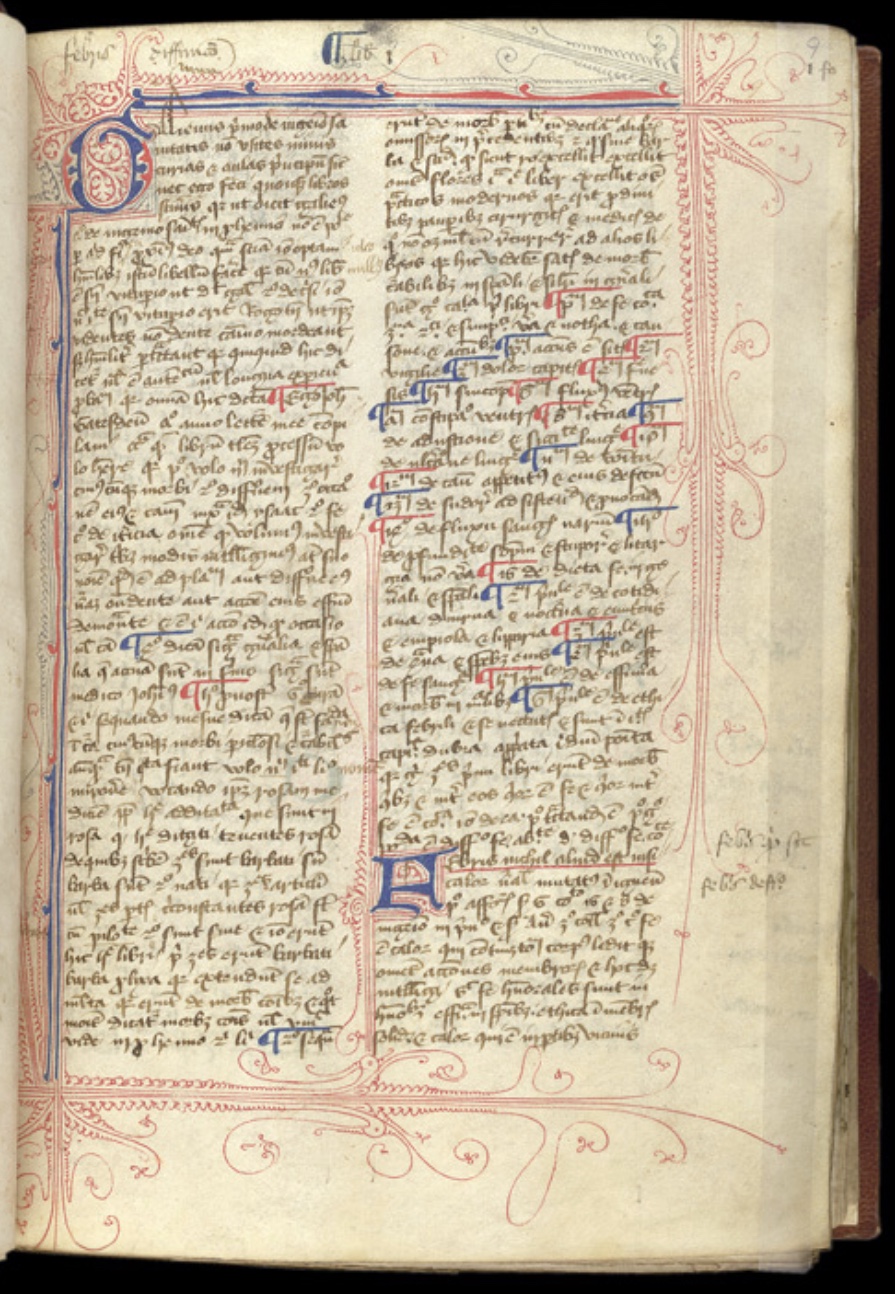
John wrote his book, Rosa Anglica, while resident at Merton College, Oxford. The source of his material stemmed from the Arabians and the moderns ‘who had written in Latin just before him’. His book was an encyclopaedia of all his potions and it offers an insight into the medical practices of the day, as applied to the nobility and common people.
The preface to Rosa Anglica
John wrote ‘Rosa Anglica, or Practical Medicine From Head to Foot’, between 1304 and 1317. His book contained four tracts on urine (a key to medieval medical diagnosis and treatment). The original manuscript was owned by All Souls College, Oxford, a leading centre of medical studies in Europe during the fifteenth century.
In his preface to ‘Rosa Anglica’ John wrote, ‘Just as the rose excels among flowers this book excels among textbooks on practical medicine.’ Clearly, he didn’t suffer from undue modesty.
John found time to be prebendary of St Paul’s. He also held theological posts at Chipping Norton and Chichester. Chaucer knew of him and mentioned him as the ‘Doctor of Physik’.
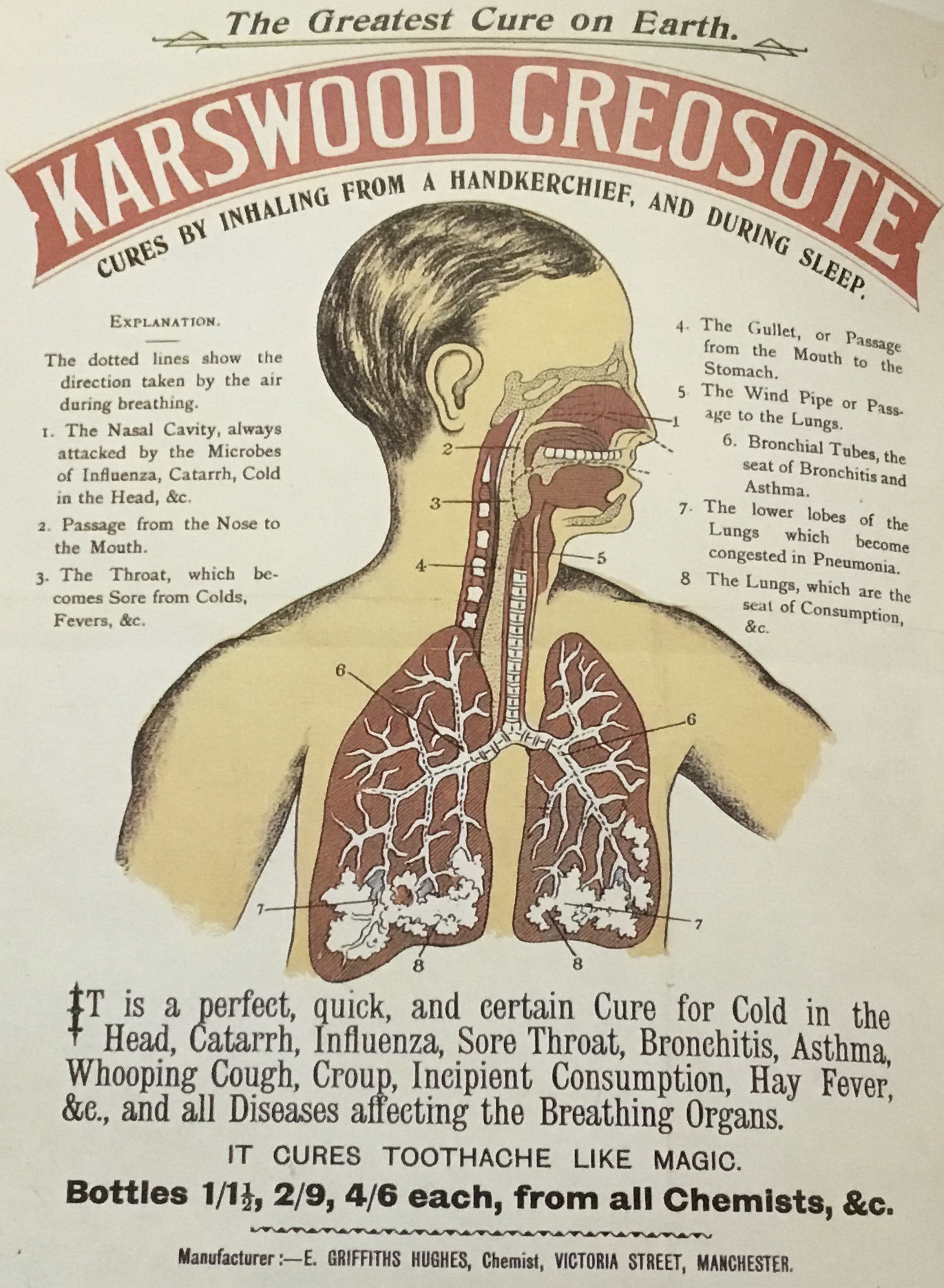
So, was John of Gadsden a genius or a quack? I suspect that he was a bit of both. Here’s an example of his quackery, a cure for toothache. John recommended that you should extract a tooth by smothering it with the fat from a dead green tree frog, cow dung or partridge brain. For the tooth to grow back, you should apply the brain of a hare to the gums. Clearly, this was nonsense and liable to do more harm than good. Yet, editions of his book were published in 1502 and 1595, and for centuries read throughout Europe.
A dentist with silver forceps and a necklace of large teeth, extracting a tooth c1365.
Many of John’s methods were based on superstition while others were crude. However, whether through luck or good judgment he formed a formidable reputation.
John was a man of his time. Thankfully, over the centuries we have made advances in medicine. But we should also consider that future generations will look back on us and reckon that some of our methods were based on quackery and that they were crude.
As ever, thank you for your interest and support.
Hannah xxx
For Authors
#1 for value with 565,000 readers, The Fussy Librarian has helped my books to reach #1 on 32 occasions.
Some chart news. Operation Zigzag, book one in my Eve’s War Heroines of SOE series, is #1 on the Amazon charts while Operation Cameo, which I’m currently writing, is a #34 hot new release. Many thanks to all my readers for making this possible.
Through Ellen, born c1320, daughter and heiress of Sir Gilbert Strongbow, I’ve added a Strongbow branch to my family tree. I wonder if this entitles me to free cider 🤔
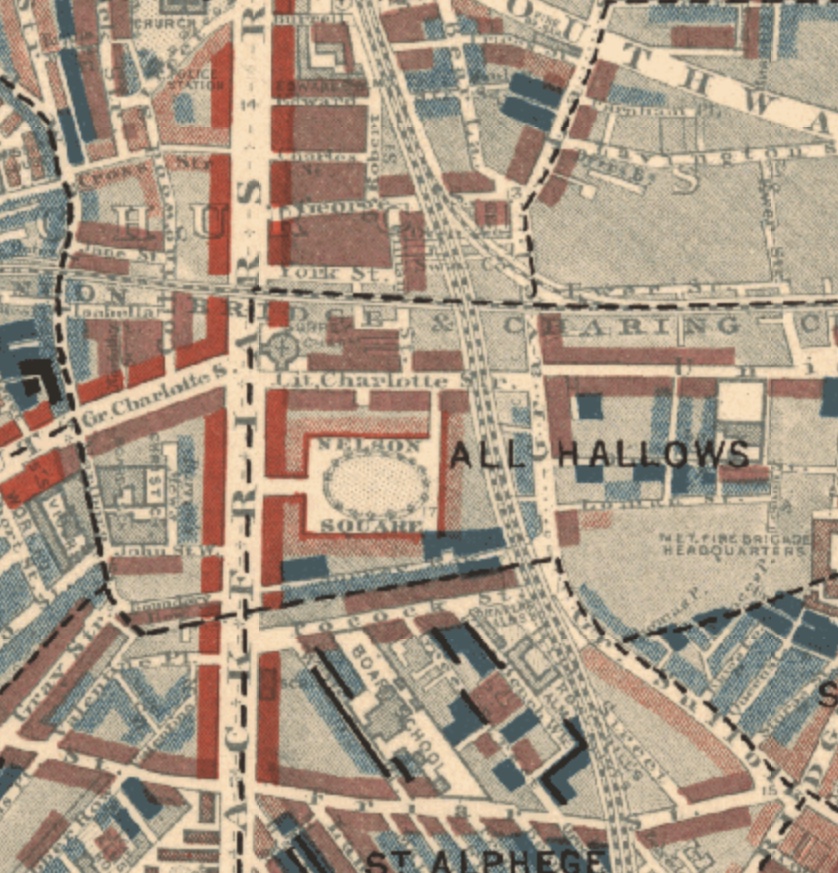
A view familiar to my London ancestors, the Strand looking west towards Trafalgar Square, 1890.
Just asked my youngest son, “What do you want for Christmas?”
“A skeleton.” (He’s thinking of becoming a doctor).
“Where are we going to keep it?”
“The front room.”
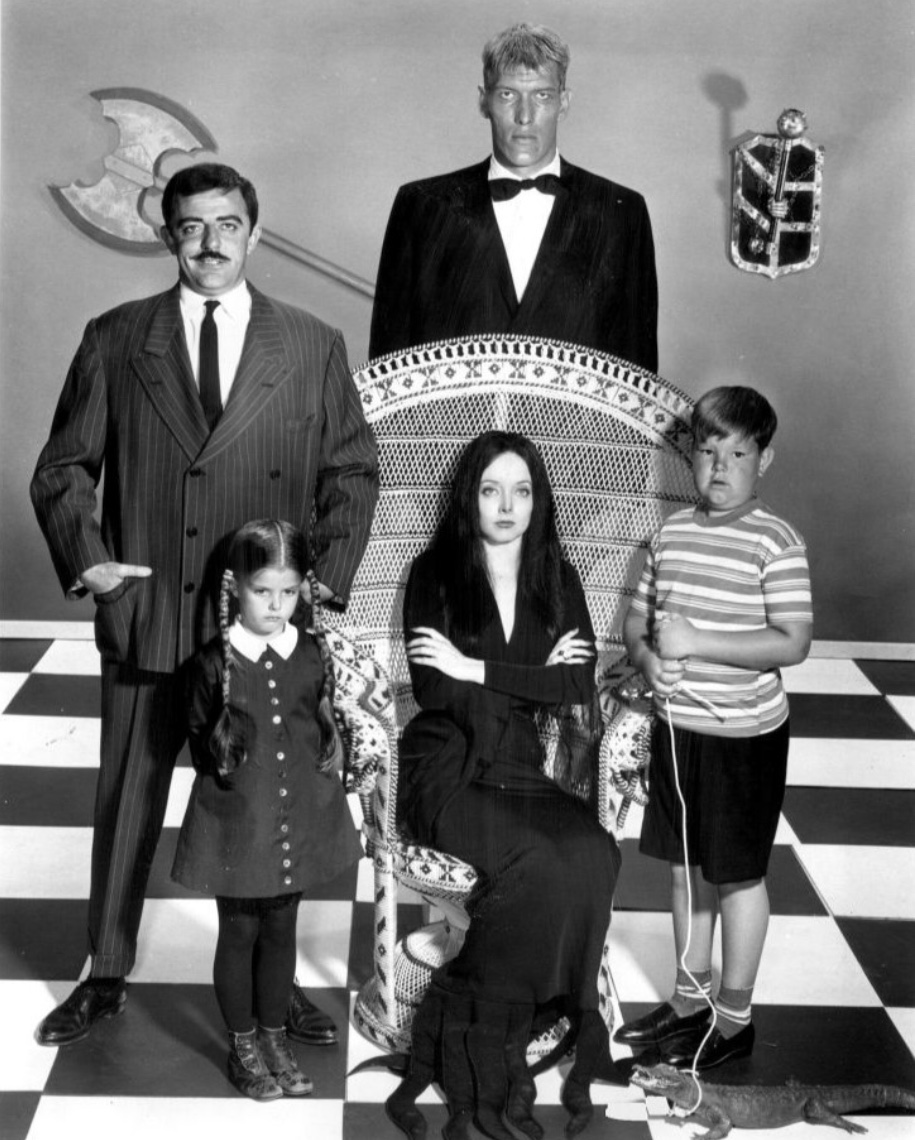
Welcome to the Addams family.
In this month’s issue of Mom’s Favorite Reads…
New York Times and USA Today Bestselling Author Joanna Penn interviewed by Wendy H Jones
Plus…Art, Author Resources, Flash Fiction, New Releases, Photography, Poetry, Puzzles, Recipes, Travel and so much more!
The son of Zephaniah Thorpe and Margaret Entwistle, my direct ancestor Ralph Thorpe was baptised on 14 March 1753 in Bolton-le-Moors, Lancashire.
A warper, a common trade in Lancashire with its proliferation of cotton mills, Ralph moved south in the early 1780s and plied his trade in Essex and Norfolk.
A cotton warper oversaw the industrial process of winding threads from various bobbins on to a warp beam, which had one large bobbin at the back of the loom containing all the warp threads. These threads would gradually unwind during the weaving process, producing the cloth. Warping was the second stage of cotton cloth production, following winding.
A warping machine. Image: Wikipedia.
On 9 December 1783, Ralph married Mary Wakefield in Wanstead, Essex. The couple produced six children including my direct ancestor Thomas Thorpe who, on 9 October 1814, married Mary Ann Freeman and settled in Essex.
Mary Wakefield died on 25 February 1796. A few months later Ralph spent some time in St Thomas’ Hospital, London. That the couple were ill at roughly the same time suggests that they were affected by a transmittable disease. One possibility was smallpox.
Ironically, that same year, 1796, Edward Jenner demonstrated that an infection with the relatively mild cowpox virus conferred immunity against the deadly smallpox virus. His research was crucial in the development of the smallpox vaccine, the first effective vaccine against a contagious disease.
Painting by Ernest Board. Dr Edward Jenner performing his first vaccination on eight year old James Phipps, 14 May 1796.
St Thomas’ Hospital originated as an Augustinian infirmary in the twelfth century and was dissolved in 1540. In 1551 the hospital was refounded by royal charter and functioned as a general hospital for the sick-poor, including sufferers of venereal disease.
Endowments gave St Thomas’ a degree of financial security. Nevertheless, they still charged patients admission fees, a policy that was condemned by the hospital’s critics for limiting the ability of the very poor to access its services.
A central court of governors governed the hospital and they could number over two hundred. These governors were wealthy individuals who gifted £50 each to the hospital.
Old St Thomas’ Hospital, Southwark, 1739. Image: The Wellcome Library.
The originalSt Thomas’s Hospital survived the Great Fire of London in 1666. However, upgrades were needed and between 1693 and 1720 more than £37,000 was raised in order to create an elegant classical structure around three spacious courtyards. The rebuilt hospital had nineteen wards, including two foule wards for venereal patients and a cutting ward with room for more than 400 patients. Male and female patients were strictly segregated, as were the venereal patients.
The medical staff included physicians, surgeons and an apothecary, who was not allowed to marry or run a private practice. The nursing staff included a matron, sisters and nurses. The sisters and their nurses lived in the hospital and had to be single or widowed.
St Thomas’ catered for patients with a wide range of medical and surgical conditions although they did exclude people classed as ‘incurable’ or ‘insane’. Patients were not allowed to stay longer than three months, after which time they were deemed incurable. Ralph left St Thomas’ Hospital on 9 June 1796. Therefore, he must have entered a month or so after Mary died.
St Thomas’ Hospital treated large numbers of patients. In 1800 the total number of inpatients was more than 3,200 with a further 4,700 outpatients. In wartime the patients were often supplemented by large numbers of wounded soldiers and sailors.
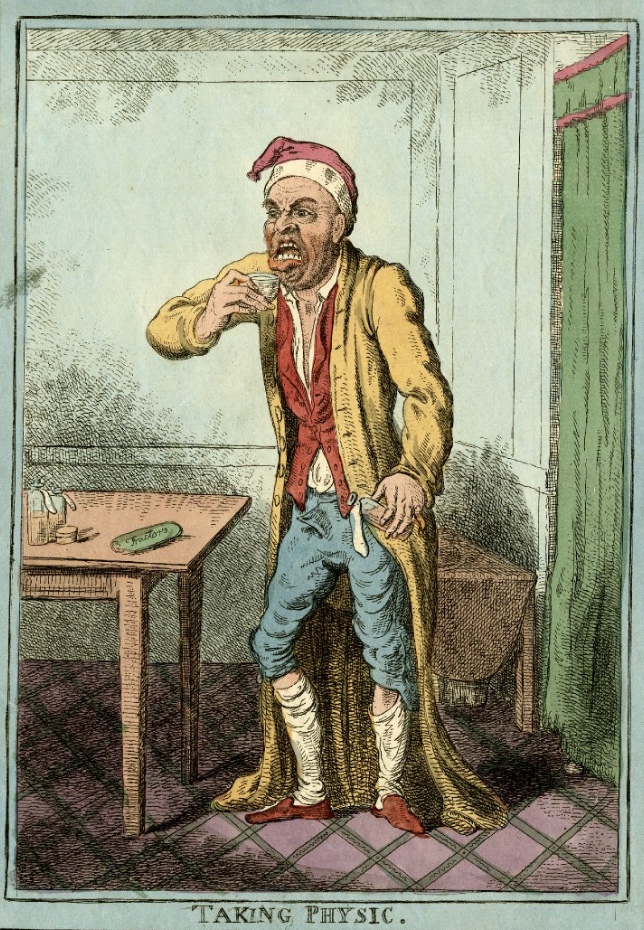
‘Taking Physic’. Image: The Trustees of the British Museum.
The death rates at St Thomas’ were relatively low, although it must be remembered that the hospital did not admit ‘incurable’ patients. In 1726, 4,873 patients were cured while 392 died, a mortality rate of 7.4 percent. In 1735, 4,688 patients were cured while 307 died, a mortality rate of 6.1 per cent. This pattern of mortality rates continued throughout the century.
The patients could be disruptive with harassment, petty theft and ‘ward wandering’ reported. Some patients ran away before the completion of their treatment, especially venereal patients who were subjected to the deeply unpleasant and extremely painful mercury-based ‘salivation’ therapies.
Having recovered, but without his wife, Ralph returned to Bolton-le-Moors where, on 23 January 1803, he married Mary Holden. Ralph died on 28 August 1826 in Bolton-le-Moors.
As ever, thank you for your interest and support.
Hannah xxx
For Authors
#1 for value with 565,000 readers, The Fussy Librarian has helped my books to reach #1 on 32 occasions.












 Hannah Howe