Categories
Maid Marian and Robin Hood

Maid Marian and Robin Hood #8

The Adventures of Robin Hood

Episode 6: A Guest for the Gallows

Introductory minstrel song: “Old Will Stuteley cannot pay, and into prison he is cast; the Sheriff is the very one, who turns him loose at last!”

Regular Cast

Sir Robin of Locksley – Richard Greene

*Maid Marian – Bernadette O’Farrell

The Sheriff of Nottingham – Alan Wheatley

Little John – Archie Duncan

Friar Tuck – Alexander Gauge 

*Joan of the Blue Bull Inn – Simone Lovell

*Didn’t feature in this episode 

Original air date: 25 December 1955

Screenplay: Eric Heath (pseudonym of Ring Lardner Jr.)

Director: Ralph Smart

Plot: The poor people can’t pay their taxes. The Sheriff’s solution – let’s hang one of them.

Health and Safety was clearly not a thing in Sherwood Forest to judge from the number of arrows flying around, bearing messages. To be fair to the television series, many of the Robin Hood films used this communication system as well.

Maid Marian doesn’t feature in this episode and Robin has an enjoyable time kissing “Lass”, played by Jan Miller. Although she appeared previously, Maid Marian is yet to make her mark on the series.

To save Will Stutely, Robin goes incognito as a market trader. The Sheriff of Nottingham meets him and fails to recognise him, a scene that requires the audience to suspend a fair amount of disbelief.

Standout scene: the exchange of Will Stutely for the Sheriff of Nottingham, followed by the Sheriff’s inevitable betrayal, and Friar Tuck’s cunning intervention.

Sword fights – 1. Bow fights/bow skills – 1.

Running total: Sword fights – 6. Bow fights/bow skills – 6.

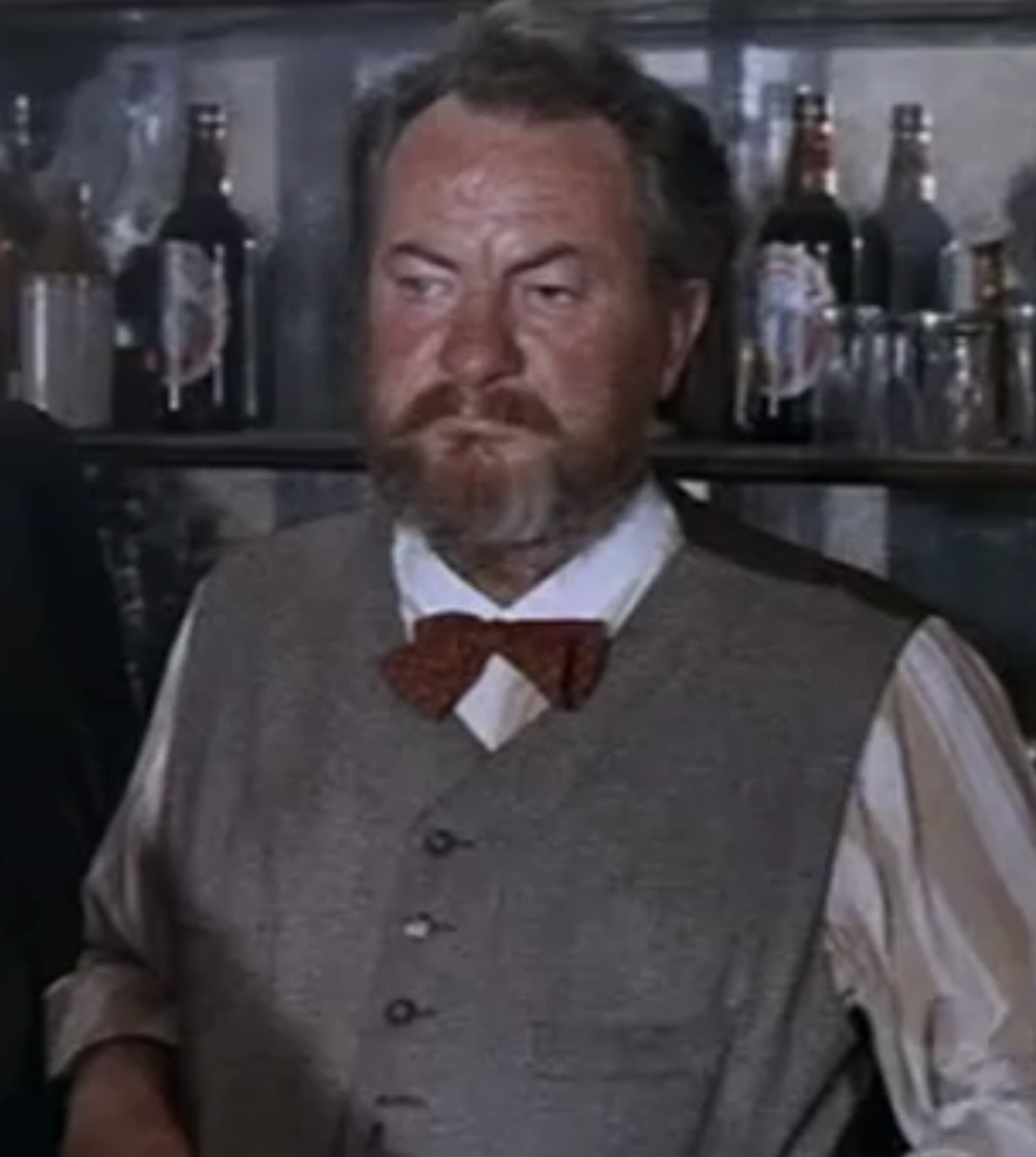
Robert Desmond, pictured, played Will Stutely. He appeared opposite Richard Attenborough three times in his career, most notably as Griffith the Tailor in The Great Escape. Later, he established roles in soaps such as Compact and Crossroads, plus the obligatory appearance in The Avengers. 

Robert Desmond’s final film role, in 1967, is one for trivia fans. He appeared as Auctioneer in Calamity the Cow, which featured a young Phil Collins of Genesis fame.

🏹 🏹 🏹

Will Scarlet – Fact or Fiction?

🖼️ Will Scarlet by Louis Rhead, 1912

In a later ballad, Robin Hood and the Newly Revived, Will appears as a finely dressed young man shooting deer in Sherwood Forest. He offers his name as Young Gamwell and is renamed Will Scarlet by Robin Hood when he accepts an invitation to join the outlaw band.

Traditionally, Will is depicted as being younger than the other outlaws. A skilled swordsman, he loves fine clothes, particularly garments made from red silk. 

There is nothing in the historical record to suggest that Will Scarlet was based on a real person. His character has evolved as balladeers and writers have developed the Robin Hood legends over time.

Using red as the signature colour for Will Scarlet, my character will have Welsh origins, and go by the name Gwilym Goch. Also, because as we all know Welshmen can sing, my character will be Robin Hood’s musician, taking on aspects of Alan-a-Dale character from the legends.

Numerous actors have portrayed Will Scarlet in films and on television. This list is far from exhaustive – it merely offers my personal highlights.

Anthony Forwood in The Story of Robin Hood and His Merrie Men, 1952

Ronald Howard and Paul Eddington in the television series The Adventures of Robin Hood, 1955-59

Douglas Mitchell in A Challenge for Robin Hood, 1967

🏹 🏹 🏹

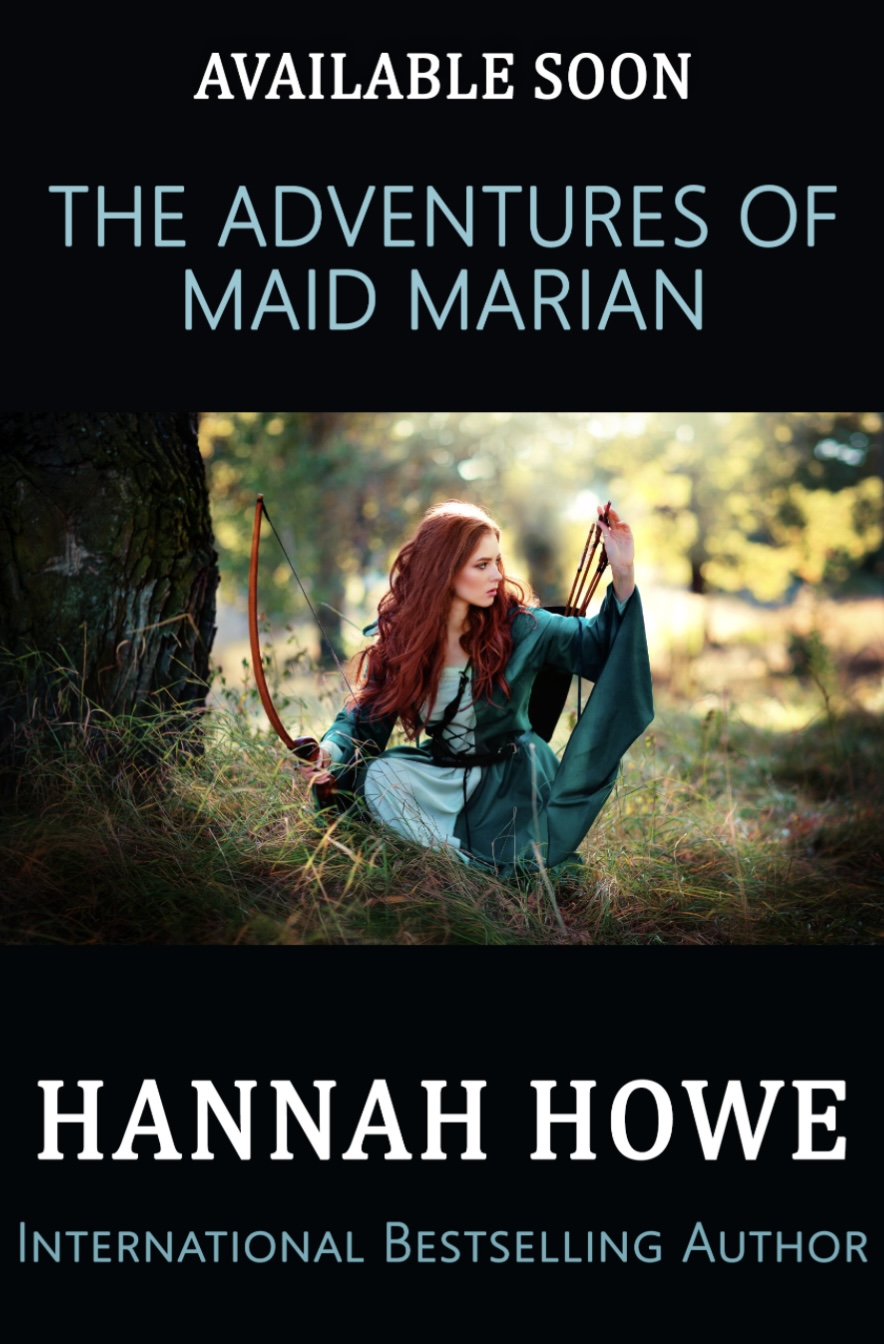
Coming soon, my Adventures of Maid Marian series
🏹 🏹 🏹

For Authors

#1 for value with 565,000 readers, The Fussy Librarian has helped my books to reach #1 on over thirty occasions.

A special offer from my publisher and the Fussy Librarian. https://authors.thefussylibrarian.com/?ref=goylake

Don’t forget to use the code goylake20 to claim your discount 🙂

Categories
Maid Marian and Robin Hood

Maid Marian and Robin Hood #6

The Adventures of Robin Hood

Episode 4: Friar Tuck

Introductory minstrel song: “Mildred flees Sir William’s trope, ’tis Harold she would rather wed; she seeks the aid of Friar Tuck, and vows are safely said!”

Regular Cast

Sir Robin of Locksley – Richard Greene

Maid Marian – Bernadette O’Farrell

The Sheriff of Nottingham – Alan Wheatley

Little John – Archie Duncan

Friar Tuck – Alexander Gauge 

Joan of the Blue Bull Inn – Simone Lovell

Original air date: 16 October 1955

Screenplay: Eric Heath (a pseudonym for Ring Lardner Jr.)

Director: Ralph Smart

Plot: Robin Hood and Friar Tuck play Cupid, assisting in the marriage of a young couple, Harold the Smith and Mildred, foiling Sir William of Malmesbury’s plans in the process. This story introduced Friar Tuck to the series.

Guest Actors

Harold the Smith – John Drake

Mildred – Faith Bailey

Lord Germaine – Douglas Wilmer

Sir William of Malmesbury – Leslie Phillips

Leslie Phillips will feature in future episodes, and I will profile him then.

Observation: even the peasants read messages – the literacy level was clearly high in medieval Nottingham.

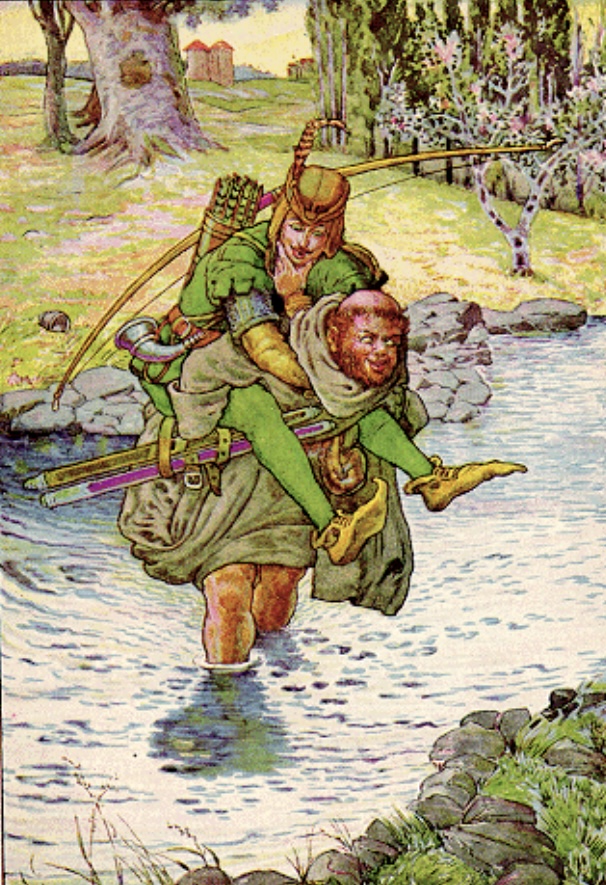
Standout scene: another evergreen scene – Friar Tuck carrying Robin Hood across a river.

Sword fights – 2. Bow fights/bow skills – 0.

Running total: Sword fights – 4. Bow fights/bow skills – 3.

🏹 🏹 🏹

Alexander Gauge 

Alexander Gauge played Friar Tuck from 1955 until 1959. A fine character actor, he is best remembered for his role as the mischievous friar. In my dream cast list he would probably get the role.

Born in China, educated in California and a British soldier in India during the Second World War, Alexander Gauge took to the stage in 1945 and appeared in a number of Shakespearian roles. Along with his stage work, he also featured in over forty film and television productions. One of his roles was Brigadier Wellington-Bull in the series The Adventures of Brigadier Wellington-Bull, alongside Valerie Singleton.

Tragically, Alexander Gauge died aged 46 in 1960 from an overdose.

🏹 🏹 🏹

Friar Tuck – Fact or Fiction?

Along with Maid Marian, Friar Tuck was associated in medieval ballads and plays with the May Games. In some of the legends he was a monk at Fountains Abbey and St Mary’s Abbey, York.

In many versions of the legends, Friar Tuck first encounters Robin Hood on a riverbank. There, a battle of wits ensues as first one then the other is forced to carry his tormentor across the river.

🖼️ Robin Hood and Friar Tuck by Louis Rhead

The common depiction of Friar Tuck is a man of cheerful character, obsessed with food and drink. In many of the tales he offers comic relief. However, in some he is a physically fit swordsman who is also adept with the longbow.

It’s possible that Tuck was a Franciscan Friar. Other scholars have argued that he belonged to an Augustinian, Benedictine or Carmelite order. Alternatively, and more likely in my opinion, he could have been a renegade monk or a hermit.

Two hundred years later than Marian and Robin’s time, in 1417, two royal writs referred to Robert Stafford, a Sussex chaplain who had assumed the alias of Frere Tuk. This Friar Tuck was still at large in 1429. It’s possible that this friar was incorporated into the legends by medieval playwrights and balladeers.

Numerous actors have portrayed Friar Tuck in films and on television. This list is far from exhaustive – it merely offers my personal highlights.

James Hayter in The Story of Robin Hood and His Merrie Men, 1952

Alexander Gauge in the television series The Adventures of Robin Hood, 1955-59

Niall MacGinnis in Sword of Sherwood Forest, 1960

James Hayter (again) in A Challenge for Robin Hood, 1967

🏹 🏹 🏹

Available for order and pre-order, my Swinging Sixties Mystery Series

https://books2read.com/u/bMqNPG

For Authors

#1 for value with 565,000 readers, The Fussy Librarian has helped my books to reach #1 on over thirty occasions.

A special offer from my publisher and the Fussy Librarian. https://authors.thefussylibrarian.com/?ref=goylake

Don’t forget to use the code goylake20 to claim your discount 🙂

Categories
Maid Marian and Robin Hood

Maid Marian and Robin Hood #4

The Adventures of Robin Hood

Episode 2: The Moneylender

Introductory minstrel song: “Trapped by the Sheriff, stands Robin like a mighty rock; and falls heir to the brave Will Scatlock!”

Regular Cast

Sir Robin of Locksley – Richard Greene

The Sheriff of Nottingham – Alan Wheatley

Edgar – Alfie Bass

Guest Stars

Herbert of Doncaster – Leo McKern

Original air date: 2 October 1955

Screenplay: Ian Larkin and Eric Heath (a pseudonym for Ring Lardner Jr.)

Director: Ralph Smart 

Plot: Robin questions the outlaws’ methods and who they choose to rob. He offers suggestions and, as events unfold, is vindicated.

The opening scenes with Leo McKern’s character are played for laughs. Thereafter, the story settles into a solid adventure tale. 

This was Leo McKern’s second appearance. Producer Hannah Weinstein assembled a stock company and the main supporting roles were played by about seven regular actors – full use made of false beards and wigs.

A strong point was made in this episode regarding the redistribution of wealth. The line, “The Sheriff protects those who steal from the poor” still resonates.

A note on the set design – a section of the Bayeux Tapestry can be seen in the Sheriff’s hall.

If you like flames, there’s a spectacular display of arson in this episode.

Alan Wheatley (pictured) was a regular in films, on television, the stage and radio. During the Second World War his voice became familiar to listeners on the Continent as he broadcast to occupied Europe.

In 1951 Wheatley played Sherlock Holmes in a series of six televised dramatisations. This was the first series to feature Conan Doyle’s famous character. He achieved another first in 1964 when his character was the first ever killed by a Dalek on screen.

Alan Wheatley’s most prominent role was the Sheriff of Nottingham. He played the sheriff in fifty-four episodes, offering the character a degree of gravitas, eschewing the cartoon-style approach often seen in Robin Hood films.

Standout scene: Robin breaking a sword at the end, offering respect – a genuinely moving scene.

Sword fights – 0. Bow fights/bow skills – 2.

Running total: Sword fights – 1. Bow fights/bow skills – 3.

Fashion, c1215

Isabelle d’Angoulême (pictured) was the second wife of King John. In her own right, she was Countess of Angoulême and Countess of La Marche.

For noble ladies at that time, the fashion was for open necks and edging with a passement at the wrists and neck. In 1215 the girdle was worn at the waistline with the gown draping over it. As the decades rolled on, it became fashionable to highlight the waistline and fully reveal the girdle.

The common girdle image of the thirteenth century, with the girdle sloping down from the top of the hip bone to a point at the front, didn’t become fashionable until c1250.

The Sheriff of Nottingham – Fact or Fiction?

The Sheriff of Nottingham is one of the main antagonists in the Robin Hood legends. Usually, he is in league with Sir Guy of Gisborne or King John. Three villains trying to capture Robin Hood is viewed as overkill, so these antagonists rarely feature together.

🖼️ The Sheriff of Nottingham by Louis Rhead, 1912

In some stories, the Sheriff swaps places with Sir Guy in regard to a lecherous interest in Maid Marian. He’s often depicted as corrupt and cruel – think modern-day tyrants.

What of the medieval reality? The post of Sheriff of Nottingham came into existence in 1449. However, well before that date, from 1068, a High Sheriff of Nottingham, Derbyshire and the Royal Forests existed. This neatly dovetails with the Robin Hood legends.

Placing Maid Marian and Robin Hood during the reigns of King Richard and King John, we discover two possible contenders for the Sheriff of Nottingham in the Robin Hood legends

Contender number one – William de Wendenal. William was High Sheriff from 

1191 to 1194, during King Richard’s absence. He is mentioned in the book Chronica magistri Rogeri de Hoveden by the twelfth century chronicler Roger of Howden. However, upon King Richard’s return, William de Wendenal simply disappeared from the historical record.

Contender number two – Philip Marc. In 1207, Marc “requested” 100 pounds from “three men of Newark”. The request was accompanied by a threat – pay up, or be burned to the ground. Sound familiar?

Unsurprisingly, Marc was not popular. Indeed, Item 50 in the Magna Carta specifically mentioned Marc. It insisted on Marc and his brothers’ removal, and that in the future they should “have no bailiwick in England”. 

In the Robin Hood legends, the Sheriff of Nottingham is rarely mentioned by name, but in Philip Marc, I think we have a serious contender.

Numerous actors have portrayed the Sheriff of Nottingham in films and on television. This list is far from exhaustive – it merely offers my personal highlights.

Peter Finch in The Story of Robin Hood and His Merrie Men, 1952

Alan Wheatley in the television series The Adventures of Robin Hood, 1955-59

Peter Cushing in Sword of Sherwood Forest, 1960

John Arnatt in A Challenge for Robin Hood, 1967

🏹 🏹 🏹

Available for order and pre-order, my Swinging Sixties Mystery Series

https://books2read.com/u/bMqNPG

For Authors

#1 for value with 565,000 readers, The Fussy Librarian has helped my books to reach #1 on over thirty occasions.

A special offer from my publisher and the Fussy Librarian. https://authors.thefussylibrarian.com/?ref=goylake

Don’t forget to use the code goylake20 to claim your discount 🙂
Categories
1963 Maid Marian and Robin Hood

Maid Marian and Robin Hood #3

The Adventures of Robin Hood

Episode 1: The Coming of Robin Hood 

Introductory minstrel song: “Robin of Locksley, a knight bold and good; back from the Holy Wars, becomes Robin Hood!”

📷 Richard Greene as Robin Hood

Regular Cast

Sir Robin of Locksley – Richard Greene

The Sheriff of Nottingham – Alan Wheatley

Edgar – Alfie Bass

Guest Stars

Sir Roger de Lisle – Leo McKern

Original air date: 25 September 1955

Screenplay: Eric Heath on UK prints, Lawrence McClellan on US prints – both pseudonyms of Ring Lardner Jr. From what I’ve seen, the UK prints are far superior to the US prints – no idea why 🤷‍♀️

Director: Ralph Smart 

Plot: After four years in the Holy Land, Sir Robin of Locksley Hall returns home to claim his inheritance. However, Sir Roger de Lisle has other ideas.

There is a serious, sombre tone to this story. The plot establishes Robin’s character as the Royal Forester and the Master of Locksley Hall. Spoiler (or maybe not) he’s destined to become an outlaw.

Leo McKern (pictured – Wikipedia) was an Australian actor who appeared in numerous film, stage and television roles. Among the most noted are A Man For All Seasons, The Prisoner and Rumpole of the Bailey. After a factory accident when aged 15, he was fitted with a glass eye. In 1997, he appeared in a party political broadcast for the United Kingdom Independence Party (UKIP).

The role of Sir Roger de Lisle was one of Leo McKern’s first on television. He played a villain, a man looking to steal from Robin Hood.

Standout scene: Robin is queuing to meet the Sheriff of Nottingham, to discuss his inheritance. When he’s invited to queue-jump, he protests. Quite rightly too – after all, this is England.

Sword fights – 1. Bow fights/bow skills – 1. (I will be keeping a running score).

🏹 🏹 🏹

Researching Maid Marian in my library, I went off on a tangent and discovered this image, The Marriage of Guinevere and King Arthur by Lancelot Speed. Don’t look for historical accuracy – in his notes, Lancelot explained that he based this image on the fashions of 1460.

The picture is the frontispiece of Sir James Knowles’ The Legends of King Arthur and his Knights, originally published in 1860. My copy is a ninth edition, published 1912.

Maid Marian – Fact or Fiction?

Maid Marian was not mentioned in the earliest Robin Hood ballads. She appears to have developed through the May Games festivities, commonly held around Whitsun. Some traditions regarded her as a shepherdess, while others gave her a noble background.

Writing c1500, Alexander Barclay referred to “some merry fytte of Maid Marian or else of Robin Hood”. She was also mentioned around this time in association with Friar Tuck.

In Anthony Munday’s 1598 play, The Downfall of Robert, Earl of Huntingdon, Marian appeared as Matilda, Robin’s lawfully-wedded wife – she changed her name to Marian when she joined him in the forest. So, in fiction at least, we have a Marian based on a Matilda. 

The Robin Hood stories are usually set during the reign of King Richard/Prince John or King John. In his play, Anthony Munday identified Maid Marian with the historical Matilda, daughter of Robert Fitzwalter, who had to flee England because of an attempt to assassinate King John in response to his unwanted advances towards Maid Marian.

Did Anthony Munday invent this background for Marian, or did he base his story on historical sources? I haven’t found conclusive evidence one way or the other, but in all these legends there tends to be a grain of truth somewhere.

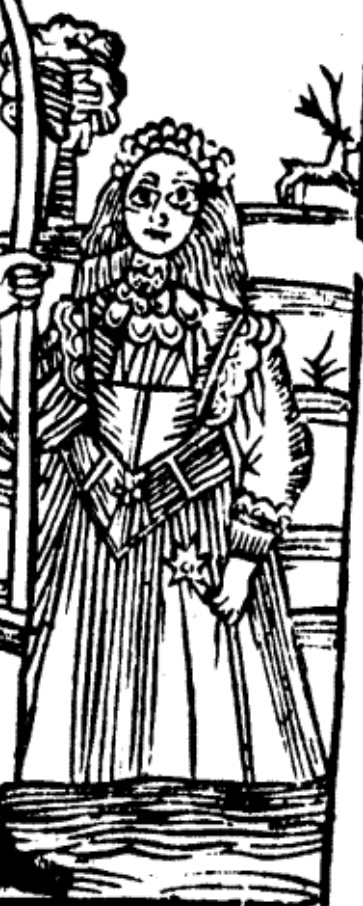
🖼️ 17th century woodcut of Maid Marian

Available for order and pre-order, my Swinging Sixties Mystery Series

https://books2read.com/u/bMqNPG

For Authors

#1 for value with 565,000 readers, The Fussy Librarian has helped my books to reach #1 on over thirty occasions.

A special offer from my publisher and the Fussy Librarian. https://authors.thefussylibrarian.com/?ref=goylake

Don’t forget to use the code goylake20 to claim your discount 🙂

Categories
Maid Marian and Robin Hood

Maid Marian and Robin Hood #2

The Adventures of Robin Hood

The Making of a Television Series

Beginnings: The Stage, 21 April 1955

More details about the actors in future posts. 

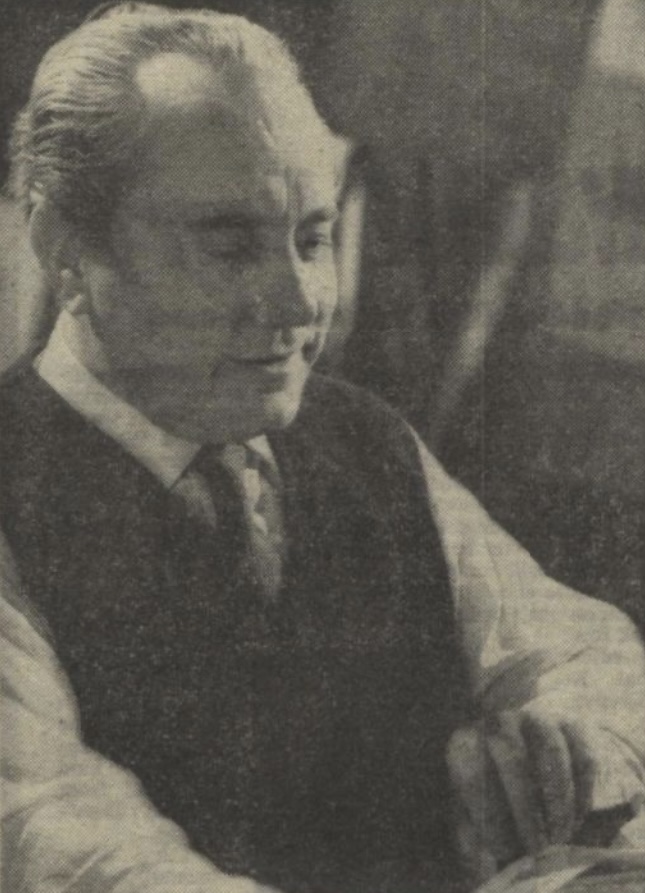
Ralph Smart (pictured) was an influential figure in ITC television, producing, directing and writing a number of television series including The Adventures of Robin Hood, The Adventures of Sir Lancelot, William Tell, The Invisible Man, Danger Man and The Protectors.

In 1954, Ralph joined producer Hannah Weinstein to direct The Adventures of Robin Hood. In February 1959, he told The Stage, “I like having my own way. I longed to be a producer. Then I became one. But I found that frustrating because, as executive producer, Hannah had the last say!”

Ralph retired to Queensland, Australia. He died there on 12 February 2001 aged 92.

August 1955

An insight into the making of The Adventures of Robin Hood

Kinematograph, December 1955

Another insight into the making of The Adventures of Robin Hood, from Sidney Cole, associate producer on the television series.

“The basis of good storytelling is always to present the narrative in the clearest and most direct way.”

The television series The Adventures of Robin Hood was produced by Hannah Weinstein (pictured), an American-British journalist, publicist and political activist. Fleeing political persecution, Hannah left America and settled in Britain. In London, in 1952, she established Sapphire Films. With the support of Lew Grade, Sapphire Films made series for the ITV network, including The Adventures of Robin Hood.

With the McCarthy Witch Hunts in full swing, Hannah Weinstein commissioned Robin Hood scripts from blacklisted America writers. The writers adopted pseudonyms and great care was taken at the time to keep their identities secret. A series about outlaws was effectively written by “outlaws”.

Despite the McCarthyites hating Hannah, Sapphire Films, and everything she stood for, The Adventures of Robin Hood was a great success in America. In the television series, good triumphed over evil, and that was reflected in real life.

Available for order and pre-order, my Swinging Sixties Mystery Series

https://books2read.com/u/bMqNPG

For Authors

#1 for value with 565,000 readers, The Fussy Librarian has helped my books to reach #1 on over thirty occasions.

A special offer from my publisher and the Fussy Librarian. https://authors.thefussylibrarian.com/?ref=goylake

Don’t forget to use the code goylake20 to claim your discount 🙂