Categories
1963

Social History 1963 #20

Saturday 6 April 1963

Leo Horn, the Dutch referee in control of the England v Scotland Home International, is an Amsterdam textile king, top-ranking judo expert, and a personal friend of Crown Prince Bernhard.

Ready and raring to go – five women who will be out on the trail of speeding motorists next week. The women are the first Z-Cars team for the south of England. Their shiny new MGs will be on the roads of south-east London on Monday. “Men drivers will probably be surprised to be stopped by women, but I don’t think we’ll have any trouble with them,” said WPC Dorothy Farrant.

A million pound order for a fleet of long-distance luxury buses, complete with bars and lavatories, was announced yesterday. Stewardesses will serve on the buses, which will operate between London, the Midlands and Lancashire.

Detectives were called to the Mayfair offices of bandleader-businessman Geraldo where a gelignite gang had blown out a safe during the night and stolen about £2,000.

Television Top Five: Coronation Street (March 25), Coronation Street (March 27), The Defenders, Take Your Pick, This is Your Life.

Television highlights: Grandstand. Juke Box Jury. That Was The Week That Was.

Radio highlights: Motor Cycling. Piano Interlude.

It snowing again. An inch of snow fell on Dartmoor last night. Snow also fell on Bath, Chelmsford, the Chilterns, Kent, Norfolk, the West Riding and Central London.

Weather: rain or sleet with snow on high ground. Outlook – little change. 8c, 46f.

Sunday 7 April 1963 

The Labour Party’s plans for a “University of the Air” have taken a big stride towards becoming effective. However, a national TV university will only be possible when the government sanctions a fourth channel devoted to education. This channel could be run through a joint project between the BBC and ITA.

Many marriages break up simply because the wife becomes unattractive before the husband loses his looks, so says Sir Jocelyn Simon, President of the Divorce Court. He is against divorce by consent. In 1960 under half the divorce cases were on the grounds of adultery. More than half were husbands against wives, though few were “hotel cases”.

Scotland Yard, worried about the increase in cases of robbery with violence, is planning to make more use of newspapers and television to trap wanted men.

We eat around £90,000,000 worth of sausages in Britain every year, but we can do better if we go beyond just frying them. This week sees the launch of a new sausage that can be served at dinner parties. It’s a tasty beef model coarsely chopped to give a chewy meat texture and absorb other flavours.

I tip the Beatles’ new self-written disc, From Me to You, as a cert to hit the jukebox jackpot.

Television highlights: Noggin and the Flying Machine. Jane Eyre. The Harry Secombe Show.

Radio highlights: Three-way Family Favourites. Your Hundred Best Tunes.

Scotland, despite an injury to left back and captain Eric Caldow – who broke his left leg after only five minutes – deservedly beat England 2 – 1 to win the Home International soccer championship. England, for the first time at Wembley, wore their new long-sleeved shirts. The 100,000 crowd paid £76,500 – a British record – to see the game.

Weather: sunny spells, showers, average temperatures.

Monday 8 April 1963 

Britain’s car planners are studying the Paris fashions, and the result will be more colour on the roads. A Ford spokesman said, “Women usually decide the colour of the family car, and they are influenced by fashions.” Computer analysis revealed that Triumph saloon car buyers prefer dark blue or dark green, while white or red is favoured for sports cars.

More and more wives are sending their husbands’ shirts to the new 48-hour shirt service shops that are opening up all over the country at a rate of one a week. They offer a professionally laundered shirt returned in a plastic packet at prices from 1s 9d to 2s 3d a time.

Canon Gervase Markham, Vicar of Grimsby, wants young people to be forbidden to marry until six months after the formal announcement of their engagement. He conceded that this might lead to an increase in the number of illegitimate births, but believes it would reduce the number of divorces.

The Post Office plans to switch its parcel traffic from the railways to the roads. This is in response to the Beeching railway cuts.

What’s wrong with British soccer? Sheffield Wednesday’s manager Vic Buckingham has an answer to this hoary question. “There are not enough oohs and aahs. Keep the ball in the penalty area to get the crowd oohing and aahing. The more you get the ball into the penalty area the more excitement there is – and more goals.”

Television highlights: Panorama – the Canadian elections. Ballroom Dancing. Rugby Union – Richmond v Wasps.

Radio highlights: Ballads. The World Tomorrow.

Weather: mainly dry with sunny spells. Outlook – dry and sunny. 12c, 54f.

Tuesday 9 April 1963 

New European space projects include a space post office system for phone calls, cable and TV employing twelve satellites, which would orbit 7,500 miles above the Earth, starting in 1968, plus a two-satellite system serving the Commonwealth and Europe, and a rocket-ferry system to be used to build orbiting stations in space.

The first automatic Tube train went into service on London’s District Line yesterday. The driver switched over to automatic control at Stamford Brook Station and the train ran to the next station, Ravenscourt Park. Then the driver took over again.

Out of the first 5,000,000 vehicles officially tested for road-worthiness, more than a million and a half failed to pass a straightforward mechanical check. There are fears that this problem could get worse as more vehicles take to the roads due to Dr Beeching’s cut in rail services.

The Faroe Islands are to enforce a twelve-mile fishing limit next year. This will end a concession under which British trawlermen have been able to fish within six miles of the Faroes. 

Football League, Division One. Top three: Tottenham Hotspur played 32, points 47. Leicester City played 33, points 47. Everton played 32, points 44. FA Cup Sixth Round, second replay: Nottingham Forest 0 Southampton 5.

Portsmouth beat St Mirren 2 – 0 at Fratton Park last night. However, they lost two footballs that landed on the roof.

Television highlights: The Apple Tree with the Golden Fruit – Hungarian film. Programme For Deaf Children. The Story of a Test Pilot.

Radio highlights: Bidin’ My Time. Unmarried Mothers.

Weather: cloudy but dry. Outlook – dry. 13c, 55f.

Wednesday 10 April 1963 

Railway lines axed under the Beeching plan may be turned into roads. At the moment, there is no road plan to compensate for the lack of railways. It is hoped that bus services will fill in the gaps left by the railway changes.

The battle of the petrol pumps hots up today with the announcement of another new chain of filling stations. One day after Italian-owned Agip opened its first three stations, Jet revealed plans to open regular price filling stations in Britain. Jet had 248 filling stations in 1961. That figure is now 535 and expanding at a rate of 100 a year.

The extra 30s charge for a coloured telephone is to go. But from 1 May there will be a £1 charge for a new-type phone of any colour.

Over 280,000 houses were built in England and Wales last year, 10,000 more than in 1961.

It makes you think what qualifications – if any – are needed to become an MP when hairdressers and comedians stand for parliament. – WH Story, London, SW4.

Theatrical agent Mr Earl de Wolfe was ordered yesterday to return to his wife, actress Catherine Lancaster, within 28 days. Miss Lancaster was granted an order for restitution of conjugal rights by Mr Justice Karminski of the Divorce Court.

Television highlights: Welsh Radicalism. Hobbies Club. Barn Dance.

Radio highlights: Round Britain Quiz. Parade of the Pops with Russ Conway.

Weather: cloudy with rain. Outlook – unchanged. 15c, 59f.


Available for pre-order, Songbird, my novel set in the winter of 1962-63

https://books2read.com/u/bMqNPG

For Authors

#1 for value with 565,000 readers, The Fussy Librarian has helped my books to reach #1 on over thirty occasions.

A special offer from my publisher and the Fussy Librarian. https://authors.thefussylibrarian.com/?ref=goylake

Don’t forget to use the code goylake20 to claim your discount 🙂

Categories
Dear Reader

Dear Reader #174

Dear Reader,

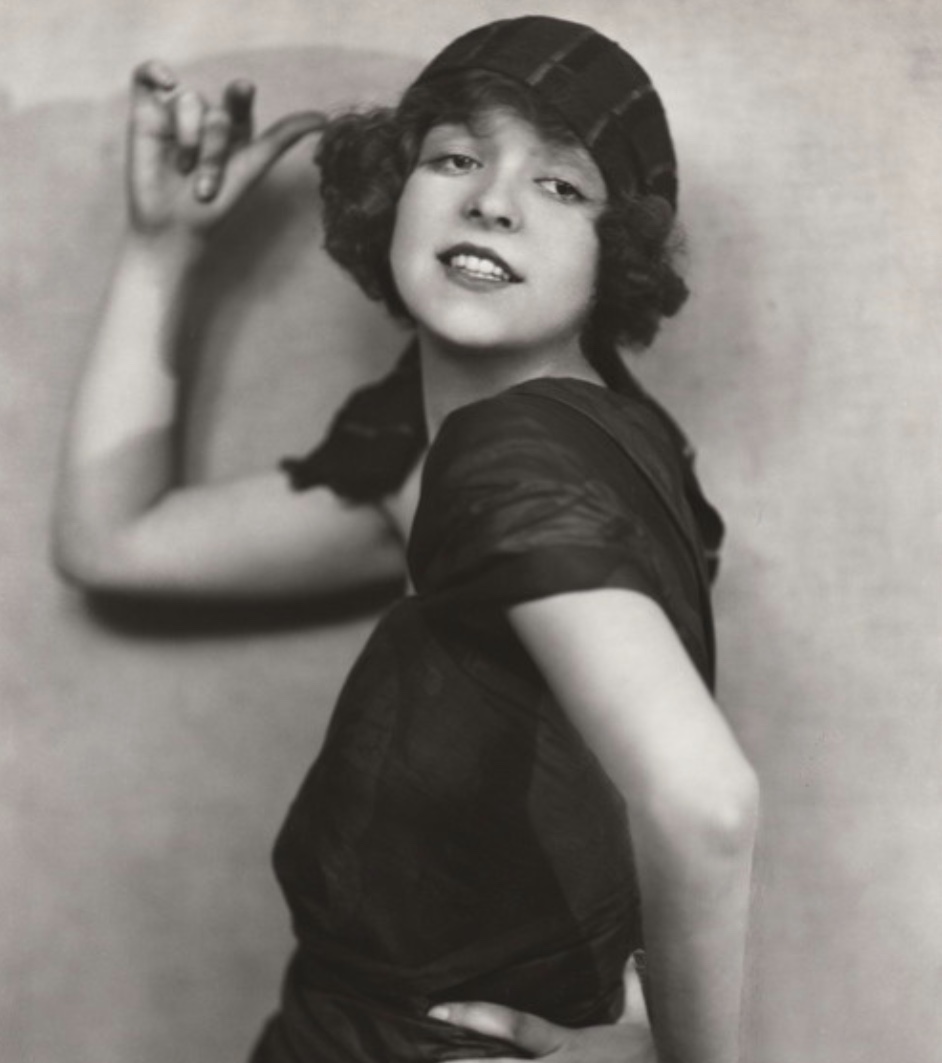
Clara Bow’s thirteenth movie was This Woman, produced during the summer of 1924. This Woman went on general release from November 2, 1924. Clara was very much a ‘jobbing’ actress at this stage, appearing in bit parts. She was listed eighth (out of nine) on the bill. To add insult to injury, the New York Times miscredited her as ‘Clare Bow’.

This Woman ran for seventy minutes and was released by Warner Bros. Clara played Aline Sturdevant, a jealous young lover. The movie was considered lost, but a complete print can be found at Lobster Films, Paris.

Joan Woodbury (December 17, 1915 – February 22, 1989) enjoyed an acting career that began in the 1930s and lasted well into the 1960s. She appeared in B-movies and as the heroine opposite cowboy actors such as Roy Rogers.

Joan appeared in fifty films between 1937 and 1945. Her most memorable role arrived in 1945 when she played Daily Flash newspaper journalist Brenda Starr in the serial Brenda Starr, Reporter.

Technicolor, a series of colour motion picture processes, dates back to 1916. In the 1930s three black and white films ran through a special camera to produce Technicolor, a process that continued into the 1950s when the 3-strip camera was replaced by a standard camera loaded with a single strip ‘monopack’ colour negative film. 

Technicolor’s three-colour process became famous for its highly saturated colour. Initially, the process was used for musicals, animations and costume dramas, but it also featured in film noir, in movies such as Leave Her to Heaven.

Betty Compson (March 19, 1897 – April 18, 1974) acted and produced during Hollywood’s silent era. Her notable performances included The Docks of New York and The Barker, the latter earning her an Academy Award nomination for Best Actress.

Initial success enabled Betty to establish her own production company, which gave her creative control over screenplays and financing. Unlike a number of female stars of the silent era, Betty’s voice recorded well and she extended her career into the talkies.

In common with many actresses of the era, Betty married three times: to director James Cruze; to agent/producer Irving Weinberg; and to Silvius Gall, a marriage that lasted until Gall’s death in 1962.

A Christmas present. An excellent version of The Great Gatsby.

“They were careless people, Tom and Daisy – they smashed up things and creatures and then retreated back into their money or their vast carelessness or whatever it was that kept them together, and let other people clean up the mess they had made.”

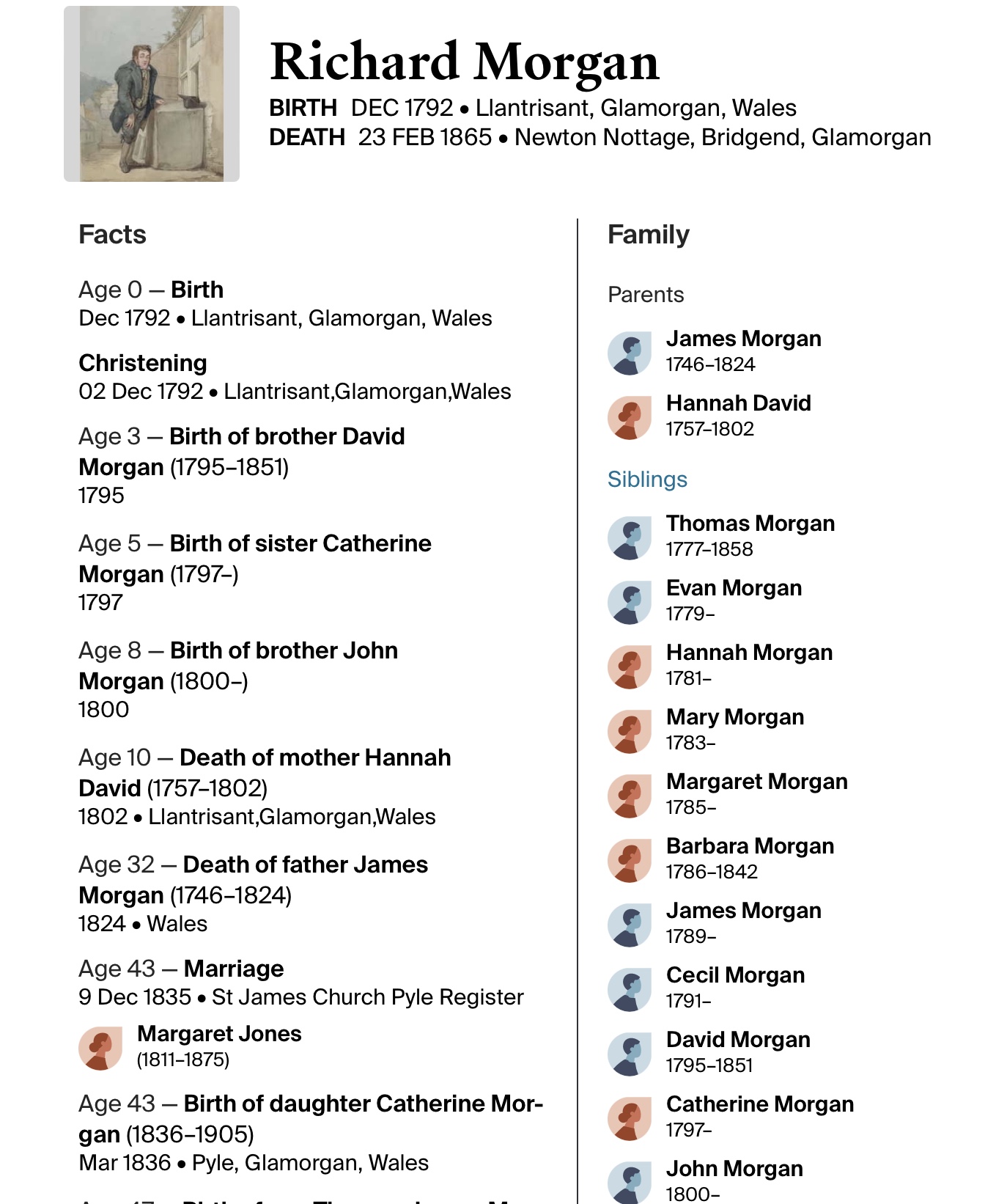
My 4 x great grandfather, Richard Morgan, was baptised on 2 December 1792 in Llantrisant, Glamorgan, the ninth of twelve children born to James Morgan and Hannah David. Sadly, Hannah died when Richard was ten. Richard’s family were associated with inns and horses, and he spent a long working life as an ostler.

At the relatively advanced age of 43, my 4 x great grandfather Richard Morgan married Margaret Jones in St James’ Church, Pyle (pictured). St James’ was originally built in the medieval town of Kenfig. However, over a period of 200 years sand encroached upon the town and, eventually, buried it. The burgesses moved their town to Pyle, c1481, where they rebuilt St James’. They rebuilt one wall ‘upside down’ using the smaller stones on the bottom as they arrived from Kenfig.

During my research, I wondered what persuaded Richard to travel twenty miles west to settle in Pyle. Then, I hit upon a theory. As an ostler, he moved there to work at Pyle Coaching Inn, the main inn on the main highway. Then, while researching the births of Richard and Margaret’s children, I discovered that Richard was listed as a horse keeper at Pyle Coaching Inn, and living in nearby Cefn Cribwr, or Tythegston Higher as it was also called. It’s lovely when your theories are confirmed in the facts.

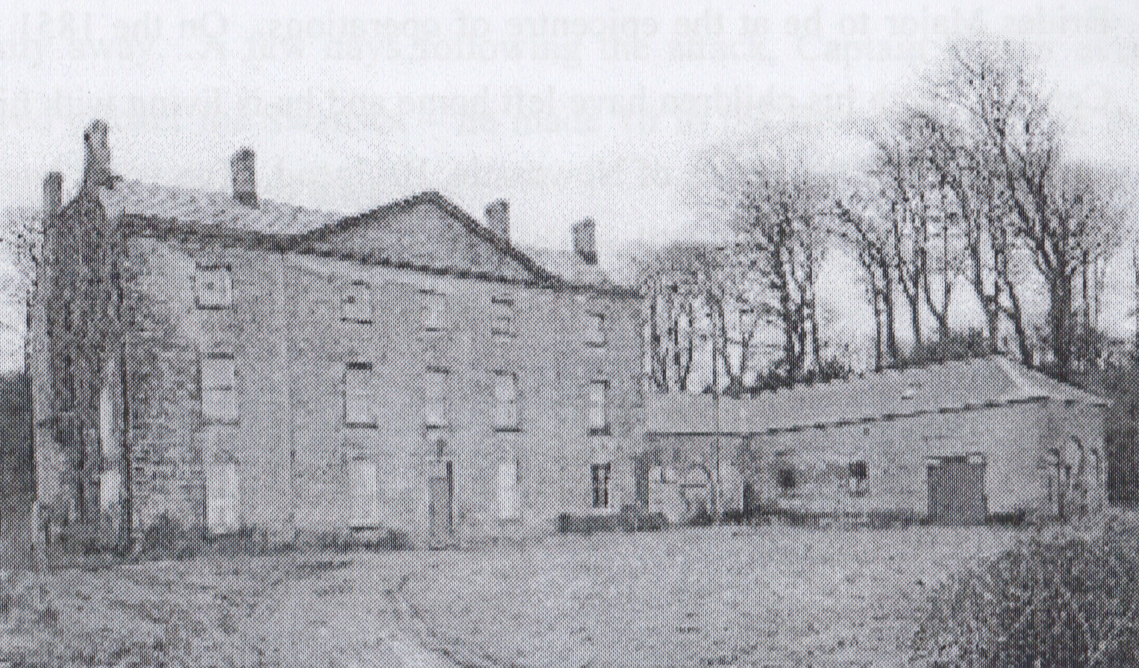
Mail deliveries became available to the public in 1635 and the introduction of national mail coaches in 1785 further increased the traffic travelling along the highways. The ongoing war with France meant that the gentry could no longer take the ‘grand tour’ of Europe and so they looked around for alternatives, their eyes and minds soon focusing on Wales with its romantic landscapes and medieval ruins. All of this led to the building of Pyle Coaching Inn during the 1780s by Thomas Mansel Talbot of Margam.

Thomas Mansel Talbot took a private apartment at the Inn and he would stay there while indulging in his passion for hunting and fishing. He built the Inn in the fashionable Georgian style with three floors and rooms of various sizes. The largest room was five metres by four and a half metres, and the building contained forty beds and twelve double-bedded rooms. Moreover, the Inn also boasted a spacious dining room and stables for eight coaching horses. My 4 x great grandfather Richard Morgan tended those horses.

Many 18th and 19th century antiquarians who travelled through south Wales visited the buried medieval town at Kenfig and invariably they also stayed at the Inn. Furthermore, it is rumoured that Admiral Lord Nelson resided there on one occasion.

Isambard Kingdom Brunel did stay at the Inn in 1849 – 50 to oversee the construction of the south Wales leg of the Great Western Railway. Another distinguished guest was Josiah Wedgwood and it is said that he gained inspiration for some of his pottery from the colour of the rocks and pebbles on the beach at Pink Bay.

📸 Pyle Coaching Inn, c1950, shortly before demolition.

When the railways arrived in Glamorgan in the 1840s they took passenger and commercial trade away from the horse carriages. As a result, my 4 x great grandfather Richard Morgan lost his job as an ostler at Pyle Coaching Inn. However, Richard adapted. He became a colt breaker then a horse keeper. With his love and knowledge of horses, he worked with the animals for the rest of his life.

🖼 Bridgend Railway Station, the commemorative opening, 1850.

When Richard lost his job as an ostler at Pyle Coaching Inn, due to the development of the railways, his wife Margaret decided to create her own ‘inn’ where she boarded navigators who had travelled from their homes in Ireland to help construct the railways. You could say life gave her lemons, so she made lemonade.

📸 Residents of Pyle Coaching Inn, c1900.

Clara Bow Quotes: “Romance had touched lightly upon me up to this time. Of course, I met many nice boys and went to dances and to the theatre with them just as any other girl would do. But even the intimation of love was far from my thoughts. I had a career to think of.”

Intertitle #14

As ever, thank you for your interest and support.

Hannah xxx

For Authors

#1 for value with 565,000 readers, The Fussy Librarian has helped my books to reach #1 on 36 occasions.

A special offer from my publisher and the Fussy Librarian. https://authors.thefussylibrarian.com/?ref=goylake

Don’t forget to use the code goylake20 to claim your discount 🙂

Categories
Dear Reader

Dear Reader #54

Dear Reader,

“If there’s a book that you want to read, but it hasn’t been written yet, then you must write it.” – Toni Morrison

This is how I started writing and why I write.

My latest translation, the Spanish version of Snow in August, available soon 🙂

My latest audiobook. We hope to complete production next week 🙂

“In books we never find anything but ourselves. Strangely enough, that always gives us great pleasure, and we say the author is a genius.” – Thomas Mann

You mean, I’m not a genius?! 🤣

“Some cry with tears, others with thoughts.” – Octavio Paz

Picture: On the Green Bank, Sanary, 1911 – Henri Lebasque

A statue problem, solved. From 1949.

This week is refugee week. My country, Wales, has a proud history of welcoming refugees. This picture shows the children at Cambria House, Caerleon, Basque refugees from the Spanish Civil War.

Sandra Puhl translated my Ann’s War series into German and I’m delighted that she has agreed to translate my Eve’s War series. One of the joys of writing is working with creative people.

Art as therapy.

A crochet panel produced by George Preece following a life-changing accident at Abercynon Colliery in 1909.

George was involved in a transport accident which resulted in the loss of both legs. Unable to work again, he spent his time making the crochet panel, and other items from old food tins.

I enjoyed this film this week. During the first half, I thought the hero and heroine were too flippant for the subject matter. However, a tragic incident at the halfway mark changed the mood and the various strands came together to produce a suspenseful conclusion. Not a classic, but a good variation on the POW theme.

Brittany, 16 August 1944. Members of the FFI (French Forces of the Interior). Their uniforms show the French flag with the Free French emblem, the Cross of Lorraine.

By mid-August 1944 the Nazis were in full retreat and these women were contemplating the liberation of Paris, which arrived after a week-long battle, 19 August to 25 August.

Approximately twenty percent of the FFI were women. Many fought alongside their husbands, including Cécile Rol-Tanguy, Lucie Aubrac, Paulette Kriegel-Valrimont, Hélène Viannay, Cletta Mayer and Marie-Hélène Lefaucheux. They organised acts of sabotage, wrote and distributed newspapers, and freed many from Nazi concentration camps. Indeed, Marie-Hélène Postel-Vinay rescued Pierre Lefaucheux from a Gestapo prison camp. The couple subsequently married.

As ever, thank you for your interest and support.

Hannah xxx

Categories
Sam Smith Mystery Series

Europe by Book

Today, I’m launching a new venture, Europe by Book. I’m starting with a Facebook page. A website and more outlets will follow.

This year, Plovdiv is the European Capital of Culture, so it is a good place to start our tour of Europe by Book.

In 1855, Hristo G. Danov created the first Bulgarian publishing company and printing-press. Furthermore, the city can boast Bulgaria’s first public library, the Ivan Vazov National Library, founded in 1879 and named after the famous Bulgarian writer and poet Ivan Vazov. Today, the library houses over 1.5 million books.

Do you have a favourite Bulgarian author, either from the past or present? Please comment so that I can share your favourites with my readers 🙂

https://www.facebook.com/EuropeByBook