Categories
1920s

The 1920s #1

In the new year, I hope to research 1925 in detail. Meanwhile, here’s some general information about the 1920s, starting with some flapper slang.

Airedale – an unfashionable, not with-it man
Alarm clock – a chaperone
Apple sauce – flattery
Banks closed – no petting or kissing
Barneymugging – the opposite of banks closed
The bee’s knees, the cat’s pyjamas, the elephant’s instep – the best

In 1925 Clarence Birdseye, pictured, invented a process for frozen food. Later, he invented the double belt freezer. His initial product line featured 26 items, including 18 cuts of frozen meat, spinach, peas, a variety of fruits and berries, blue point oysters, and fish fillets.

More flapper slang from the 1920s

Billboard – flashy man or woman
Biscuit – a cute, possibly promiscuous, woman
Cake basket – a limousine
Clothesline – local gossip
Corn shredder – a dancer who treads on your feet
Dropping the pilot – getting a divorce
Edisoned – being asked a lot of questions
Eye-opener – marriage
Father Time – a man over thirty

🖼️ The Flapper, 1922

In 1925, a number of record companies improved on an electrical recording process originally developed by Western Electric and produced a more lifelike sound.

Jazz dominated the music scene. The word jazz arose out of West Coast slang, c1912. At that time it did not refer to music. Jazz was used in an article about baseball in 1913 and appeared in reference to music in a Chicago Daily Tribune article of 1915.

The King and Carter Jazzing Orchestra, 1921

On 5 August 1926 Warner Brothers produced the first Vitaphone movie, Don Juan (the third highest grossing film of the year). The Vitaphone system used multiple 33 1⁄3 rpm gramophone records to play back music and sound effects synchronised with film.

The Jazz Singer, the first part-talkie, followed in 1927, then the first all-talkie Lights of New York, in 1928, then the first all-colour all-talkie On With The Show, in 1929. The silent movie era arguably ended with Modern Times in 1936.

The 2020s

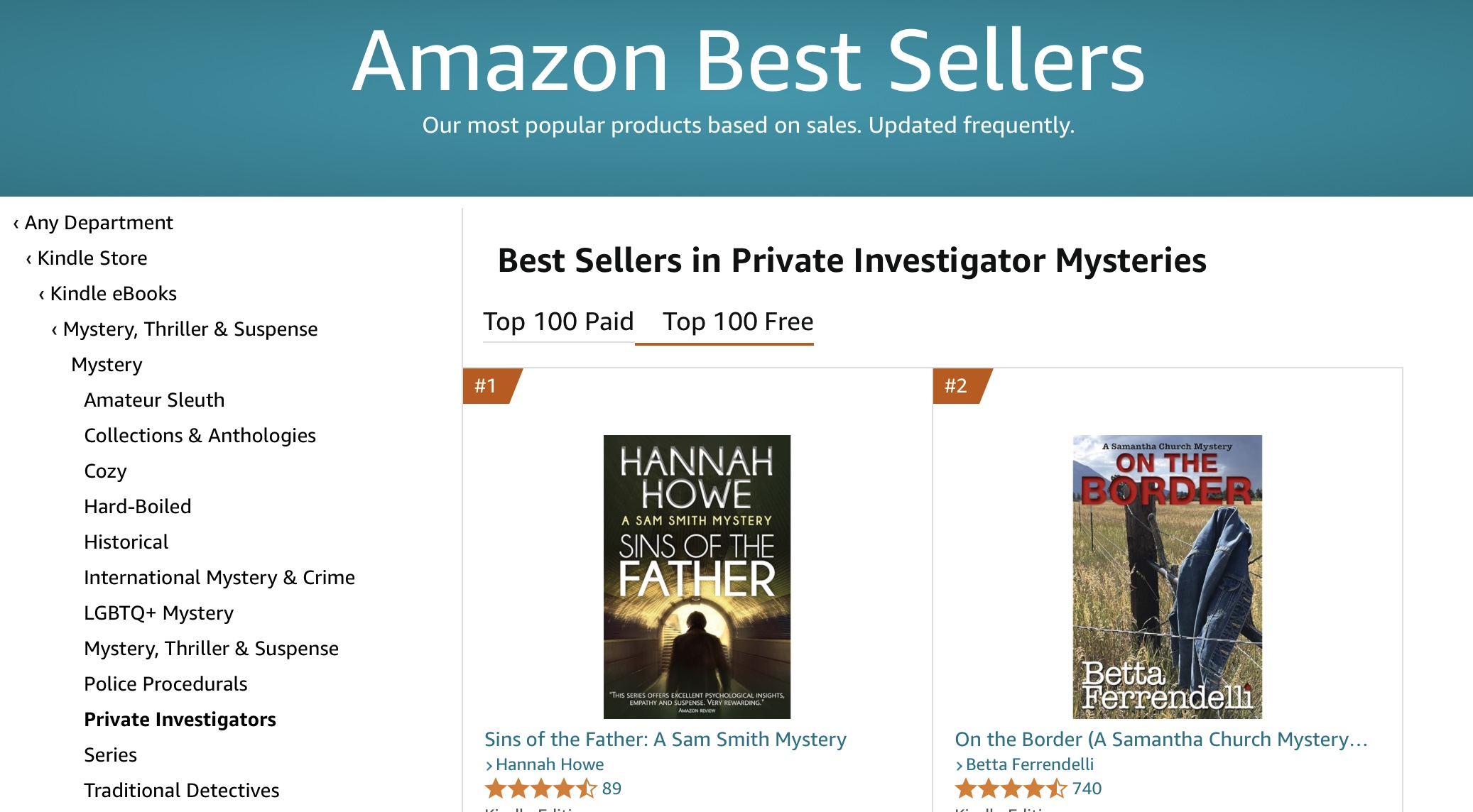
At the moment, we are promoting Sins of the Father, book eight in my nineteen book Sam Smith mystery series (book twenty is scheduled for next year). I’m delighted to say that Sins of the Father is #1 on Amazon’s private investigator chart 🙂
For Authors

#1 for value with 565,000 readers, The Fussy Librarian has helped my books to reach #1 on 38 occasions.

A special offer from my publisher and the Fussy Librarian. https://authors.thefussylibrarian.com/?ref=goylake

Don’t forget to use the code goylake20 to claim your discount 🙂

Categories
Genealogy

Lowcock Branch

I’m researching the Lowcock branch of my family, starting with my 4 x great grandmother Ann Lowcock. Ann was born in March 1799 in Martock, Somerset to Thomas Lowcock and Ann Lawrence. However, she wasn’t baptised until 23 September 1804, also in Martock (pictured).

Why the delay? It is difficult to say. The family had strong church connections, so it is unlikely that the delay occurred on religious grounds. Maybe Ann’s mother was unwell for some time after the birth. Or maybe Ann was baptised at that time because she was unwell and not expected to survive. From this distance, we can only speculate.

Ann’s father, Thomas, was baptised on 2 November 1766 in Martock. He married Ann Lawrence on 1 March 1795, again in Martock. 

Thomas was a weaver and a property owner in Martock. Weaving was undergoing a revolution in the early 1800s, and no doubt Thomas was caught up in that revolution. However, there is no evidence in the records to suggest that he was involved in, or affected by, the Luddites.

The Lowcock family enjoyed a high standing in Martock society. Ann’s brother, James, was a glove maker and a clerk at the local church. Indeed, he appeared as a witness at many weddings.

The evidence suggests that Ann enjoyed a comfortable childhood in a prosperous market town. Like most women of that era, she was illiterate. Society expected her to find a husband and raise a family, which she did. More about that next time…

* * *

    For Authors

    #1 for value with 565,000 readers, The Fussy Librarian has helped my books to reach #1 on 36 occasions.

    A special offer from my publisher and the Fussy Librarian. https://authors.thefussylibrarian.com/?ref=goylake

    Don’t forget to use the code goylake20 to claim your discount 🙂

    Categories
    Seren

    Seren The Maid of Sker

    Some book news

    Available now for pre-order

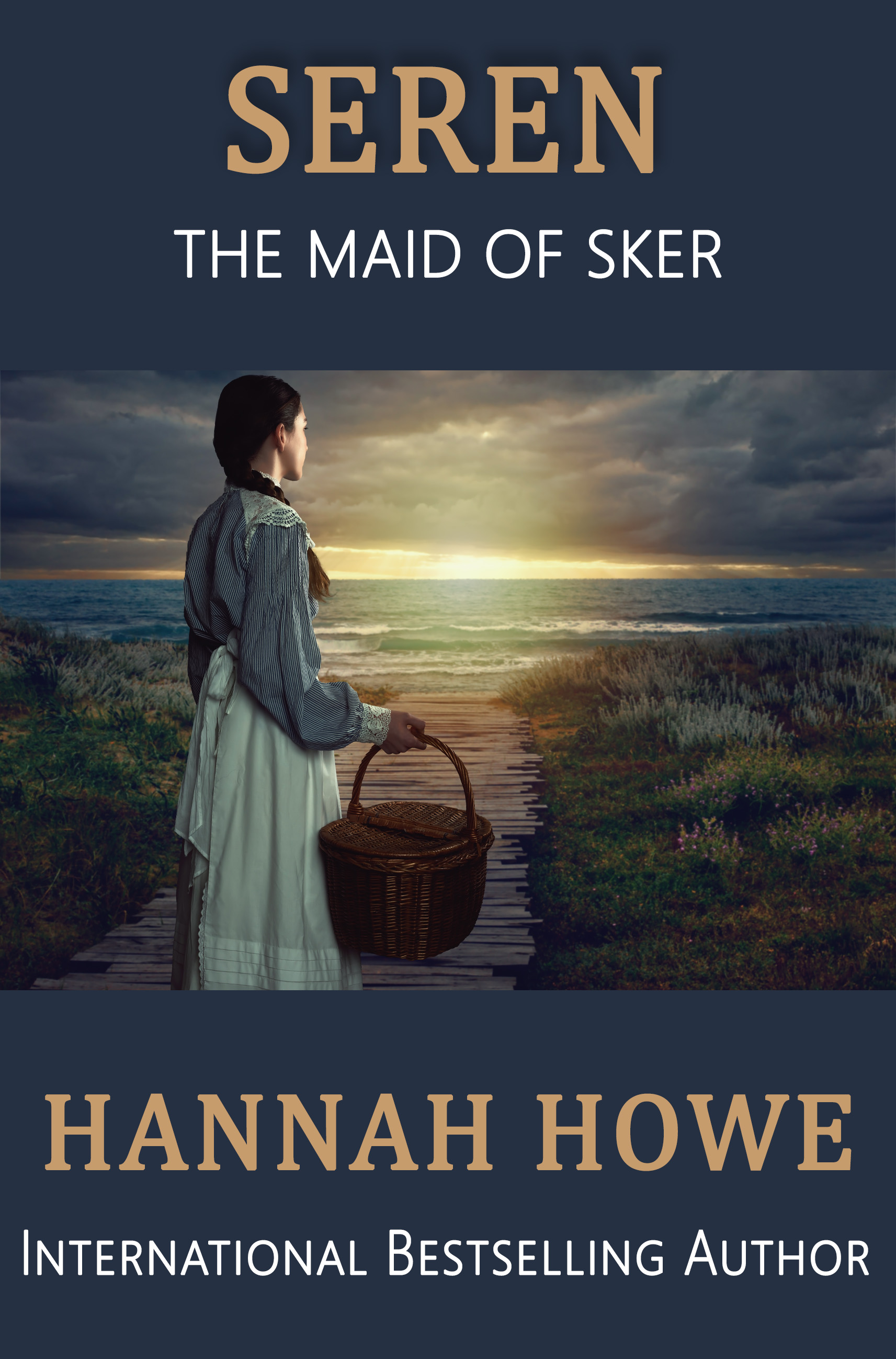
    Seren: The Maid of Sker. A Georgian Murder Mystery.

    When a body is washed up on the shore, county coroner Samuel Brereton arrives in Sker to investigate. When a second body is washed up, his investigations turn to murder.

    Seconded to assist Samuel due to her extensive local knowledge, Seren, a maid at Sker House, discovers the truth about the murder. Seren also falls in love with Samuel, a love that seems destined to remain unrequited, until she uncovers a startling secret about her ancestry.

    https://www.amazon.com/dp/B0D6KWV147/

    For Authors

    #1 for value with 565,000 readers, The Fussy Librarian has helped my books to reach #1 on 36 occasions.

    A special offer from my publisher and the Fussy Librarian. https://authors.thefussylibrarian.com/?ref=goylake

    Don’t forget to use the code goylake20 to claim your discount 🙂
    Categories
    Favourite Record

    Favourite Song of the 1950s/1960s

    When the qualifying process is complete, in about a month, on Mastodon we will start voting on our top twenty favourite records of the 1950s/1960s, placing them in order. Through 190 match-ups, we will create a unique chart, every song a classic.

    Here is some background on one of the qualifiers, Fever by Peggy Lee.

    Peggy Lee recorded her version of Fever in May 1958 in Hollywood. She significantly altered the lyrics adding historical invocations, including the verses beginning “Romeo loved Juliet,” and “Captain Smith and Pocahontas”. 

    With Jack Marshall, Peggy Lee arranged a slow, sultry version of the song. Her vocal was accompanied by bass, limited drums, and finger snaps, Lee adding some of the finger snaps.

    Fever became Peggy Lee’s signature song and most successful hit. It remains one of the most sensual songs ever committed to vinyl.

    Peggy Lee

    Here is some background on the second qualifier, Space Oddity by David Bowie.

    Space Oddity was rush-released on 11 July 1969 to capitalise on the Apollo 11 Moon landing. Indeed, the BBC used the song as background music during its coverage of the event.

    After a slow start, Space Oddity reached number five on the British charts. The song was re-released in 1972; adapted and cover versions followed in later years.

    “Space Oddity came from a feeling of sadness about this aspect (dehumanisation) of the space thing, so I wrote a song-farce about it, to try and relate science and human emotion. I suppose it’s an antidote to space fever, really.”  – David Bowie, 1969.

    The third qualifier, Runaway by Del Shannon

    Runaway was written by Del Shannon (pictured) and keyboardist Max Crook. Crook invented a clavioline-based keyboard called a Musitron, which he played on the record’s central break. The song was recorded in A minor, then sped up to just below B-flat minor. 

    Genesis included the lyric and melody line “my little runaway” in their song “In the Cage”, from the album The Lamb Lies Down on Broadway.

    The fourth qualifier, Respect by Aretha Franklin

    Respect was originally recorded by Otis Redding and released in 1965. In 1967 Aretha Franklin rearranged the song, which resulted in a bigger hit. The music in the two versions is significantly different, while the lyrics, centred on dignity, also display changes.

    Initially a ballad, Respect is shrouded in mystery in that no one is certain who wrote the song. Bandleader Percy Welch said it was written by a guitarist at Bobby Smith’s recording studio in Macon. The record label credits Otis Redding, but it seems he adapted a song brought to him by Earl “Speedo” Sims, who obtained it from the mystery guitarist.

    The fifth qualifier, The Loco-Motion by Little Eva

    The Loco-Motion was written by Carole King and Gerry Goffin, then a married couple. They wrote the song for Dee Dee Sharp, but she rejected it. Meanwhile, Goffin and King’s babysitter, Eva Boyd, recorded the demo. Then, as Little Eva, she released the song in 1962.

    The Loco-Motion is notable for making three appearances in the American top three, each in a different decade: the 1962 version by Little Eva (#1), a 1974 version by Grand Funk Railroad (#1), and a 1988 version by Kylie Minogue (#3).

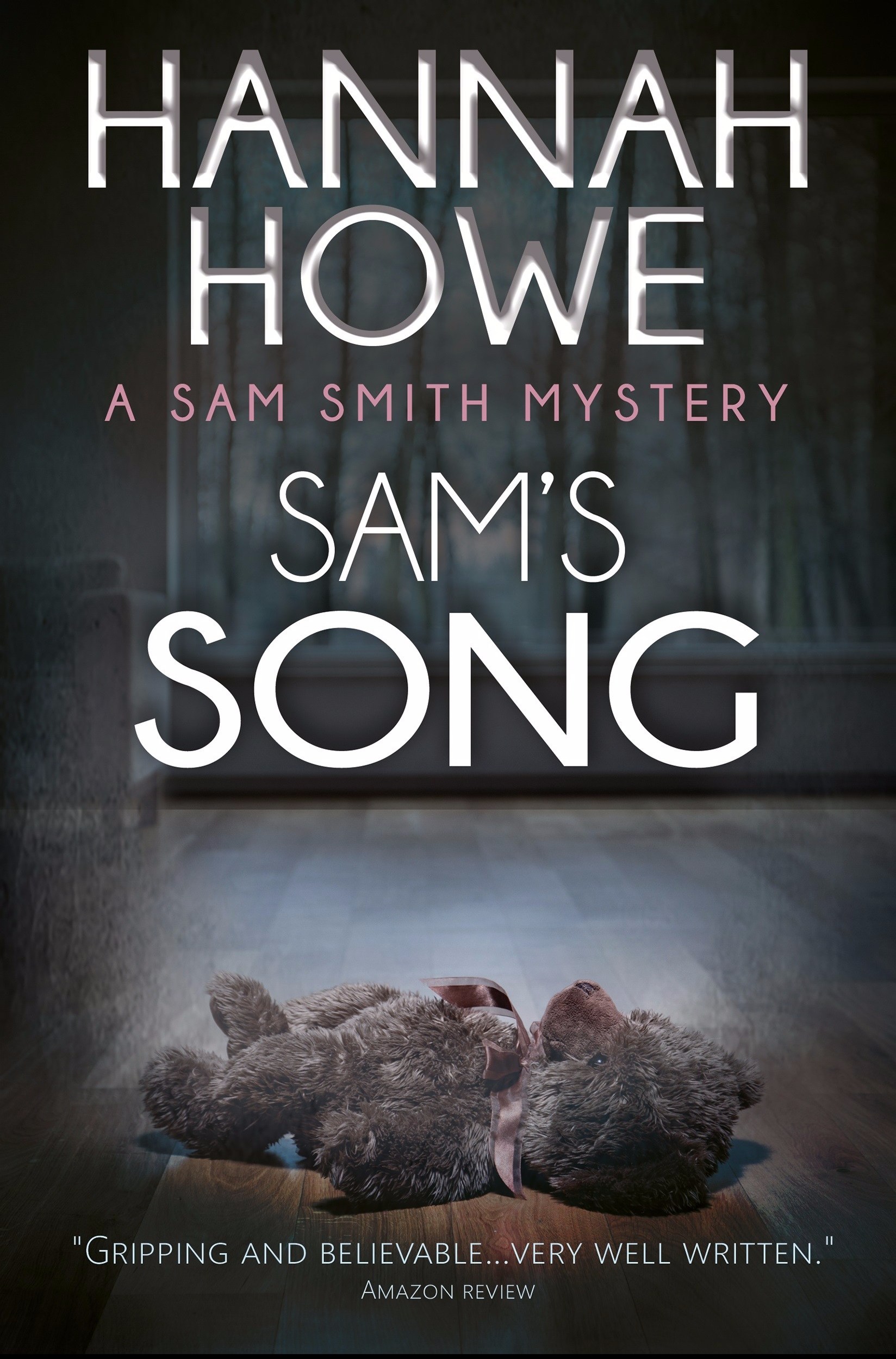
    The book that started my writing career. Sam’s Song has received over 3,000 reviews and ten years after publication was #2 on Amazon’s private detective chart again this week https://www.amazon.com/Sams-Song-Smith-Mystery-Book-ebook/dp/B00OHZ151W

    For Authors

    #1 for value with 565,000 readers, The Fussy Librarian has helped my books to reach #1 on 36 occasions.

    A special offer from my publisher and the Fussy Librarian. https://authors.thefussylibrarian.com/?ref=goylake

    Don’t forget to use the code goylake20 to claim your discount 🙂

    Categories
    Lilac Cottage

    Lilac Cottage #3

    Continuing the story of the Howe family, the occupants of Lilac Cottage, 1939-45.

    Lilac Cottage

    Born on 4 July 1885 to my 2 x great grandparents William Howe and Ann Jones, Evan Howe lived in one half of Lilac Cottage with his sister Mary Ann Howe. Like so many of the male members of the family, Evan worked in the local limestone quarry. 

    Working in the dusty quarry, Evan liked a drink in the evening. Indeed, on one occasion he featured in the local newspapers for drinking “shandy gaff” after hours.

    Evan never married. A boxer in his youth, he was prominent in local social circles. In 1918 he was a member of a committee that presented an honour to a returning First World War soldier. Aged 54 in 1939, Evan knew that he was unlikely to be called up, and therefore would have to serve his country on the home front.

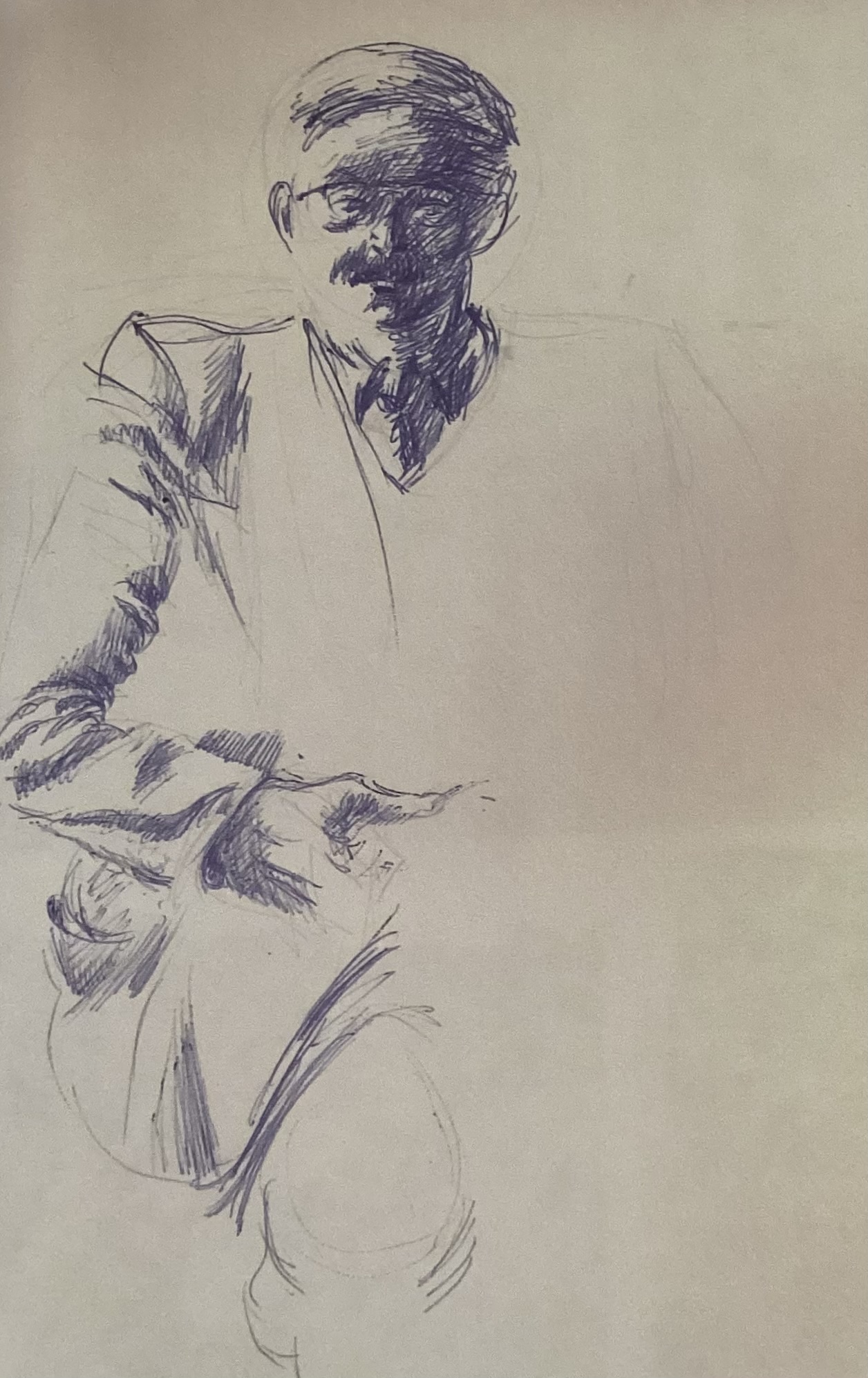
    Sketch of Evan Howe, c1960, by Gail Kennard

    Mary Ann Howe sister of Evan Howe was born on 2 September 1879 in South Cornelly. She was sixty when war broke out on 3 September 1939 and helped with the domestic duties at Lilac Cottage. A dressmaker in her youth, she remained unmarried throughout her life.

    A possible reason for Mary Ann’s spinster status was that she lost a leg during her childhood. Family legend states that she injured her leg falling from a tree, and the surgeon amputated it on the kitchen table. This legend stems from contemporaries of Mary Ann, her brothers and sisters, so it may well contain the essence of the truth.

    Mary Ann was partial to snuff and refused to touch coins. Maybe she believed that coins transmitted disease. Whatever, she insisted on paying for her goods with paper money.

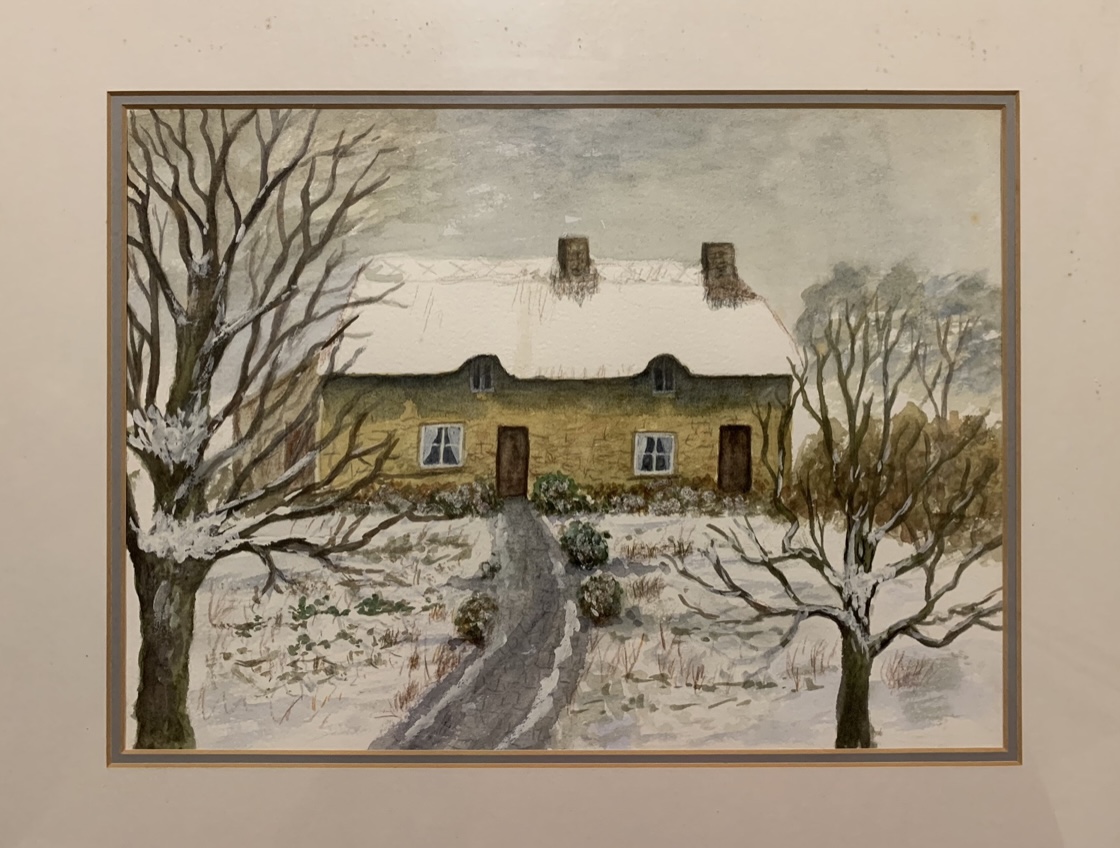
    In the spring of 1937, Priscilla Doreen Howe – granddaughter of my 2 x great grandfather William Howe – married Handel Edwards and the couple lived adjacent to Lilac Cottage in South Cornelly. Priscilla was a talented artist and painted the picture of Lilac Cottage featured on this page.

    Priscilla was named after her aunt Priscilla, a teenager who sadly died in 1913 during an operation. 

    Priscilla’s husband, Handel Edwards, was a lorry driver at the local quarry. His parents ran the New House, a popular public house in the village.

    The locals gathered outside the New House, early twentieth century (Gail Kennard)

    Living in Wood View, my 2 x great grandfather William Howe’s old house, and next door to Priscilla and Handel Edwards, were Christiana Howe – sister of Evan and Mary Ann Howe – her husband David T David, and their two children, Hopkin and Enid. 

    Born on 27 August 1881, Christiana married David T David in the autumn of 1899. She was heavily pregnant at the time, and gave birth to her first child, of nine, Thomas David on 10 February 1900. 

    When David T David, a strict no-nonsense man, married Christiana, he was a plate layer on the railways. Later, he became a coal hewer. By the time war broke out, David T David had improved his working status considerably – he was the foreman at a sand and gravel company that extracted sand from nearby Morfa Beach.

    Christiana was noted for her kind and placid manner, and for her prefect skin, which reminded flawless even into old age.

    Christiana Howe, David T David and one of their children, early twentieth century (Howe family archive)

    On 4 September 1939, the day after war had been declared against Hitler’s Germany, in the local newspapers the first wedding mentioned was a Howe wedding – Hilda Maud Howe married Philip Phillips in the local chapel. Hilda was descended from my 4 x great grandparents John Howe and Christiana John.

    Hilda Howe (Ancestry website)

    The newspapers also featured items related to the announcement that Britain was at war with Germany – a furniture store asked its customers to call in during daylight hours, because it would close at dusk; the Bedwellty Dog and Agricultural Show was cancelled; and recruits were urgently needed for the Women’s Land Army. People went about their daily routines, but even in the first week of September 1939 those routines were changing.

    For Authors

    #1 for value with 565,000 readers, The Fussy Librarian has helped my books to reach #1 on 36 occasions.

    A special offer from my publisher and the Fussy Librarian. https://authors.thefussylibrarian.com/?ref=goylake

    Don’t forget to use the code goylake20 to claim your discount 🙂