Categories
1962-63

Social History 1962-63 #2

Friday 7 December 1962

The Great Smog should vanish today. This was the heartening forecast last night after three days of death and chaos in Britain. Over the past three days, sixty-seven people have died.

Four gibbons escaped across a frozen moat surrounding their artificial island in Whipsnade Zoo. They climbed nearby trees and were captured by the zoo keepers.

The government is to be asked to ban completely cigarette advertising on television. The request will be made to the Home Office next Thursday by a deputation from the National Society of Non-Smokers.

‘Agony Aunt’ Marjorie Proops’ CHRISTMAS. C is for Cash – where does it all go? H is for Hints – get the right presents. R is for Roulette – you can’t learn to gamble too young. I is for Indigestion. S is for Sex, Sin and Sausages – all in their way delicious. T is for Tibetan Lamb – a snug outfit that costs 45 guineas for the jacket and 5 guineas for the hat. M is for Men – I don’t need mistletoe or an excuse for kissing. A is for Apprehension – so far, I’ve only bought one present. S is for more Sausages – chipolatas for the Christmas dinner.

Television highlights: Captain Pugwash, Dr Kildare, Take Your Pick.

Radio highlights: Take Your Partners, Parliament, Smooth ‘n’ Swinging.

Frost threatens the horse racing meetings at Lingfield, Newcastle, Chepstow and Uttoxetter. 

Football League Cup semi-final draw – Aston Villa v Sunderland, Birmingham or Manchester City v Bury.

Weather: hazy sun, some rain. Outlook – persistent fog unlikely. Rain in most places.
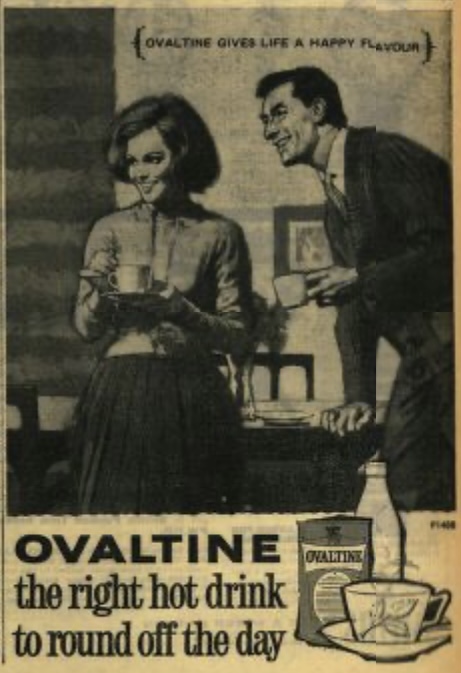
Saturday 8 December 1962

London breathed a sigh of relief as the Great Smog lifted yesterday. However, nearly 1,000 people were taken to hospital, and 116 people died.

Autolite Ltd have created cigarettes that light themselves. They light when you rub the end against a striking surface on the packet. The cigarettes will be on sale early in the new year, cost 4s 6s for a packet of twenty.

Hitler’s deputy, Martin Bormann, who vanished in 1945, died in Paraguay three years ago, a French news agency reported yesterday.

There’s a battle of the sexes every time the television is switched on at Dinsdale Lodge Retirement Home. The women want to watch travel, fashion and Coronation Street while the men prefer Westerns, boxing and football. The residents asked the council for a second television set, but they said “no”.

Best weekend buys: sprouts 10d, swedes 4d, bananas 1s 4d, Spanish oranges 3d each, Belgian hothouse black grapes 5s.

Television highlights: The Lone Ranger, Laramie, That Was The Week That Was.

Radio highlights: Variety Playhouse, World of Books, Honey Hit Parade.

Today’s rugby: Lancashire v Yorkshire, Cornwall v Gloucestershire, Harlequins v Cardiff. Varsity match: Oxford v Cambridge at Wembley.

Weather: dry and cloudy, mild.9c, 48f
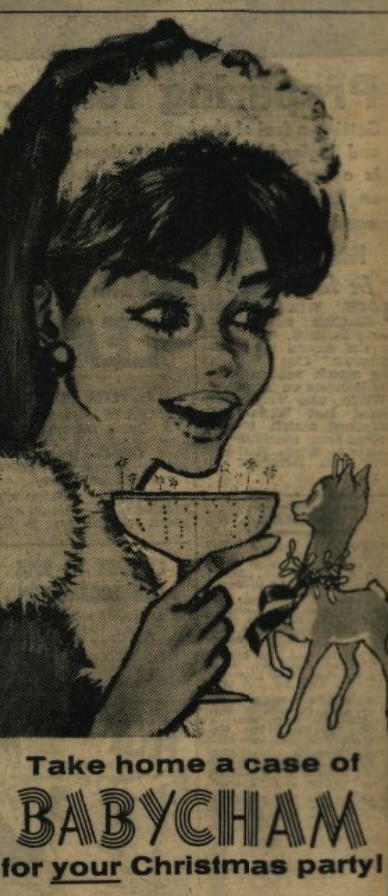
Sunday 9 December 1962

Thieves stole 400 Christmas trees from an estate in Wiltshire.

Chris Preece of Shropshire, tired of his rugby injuries, took up soccer – and dislocated his arm. Now he’s taken up darts…

Agony Aunt Column: Sue writes from Merseyside – “My fiancé was horrified when I told him that I wear hair curlers in bed. He said I must never wear them when we are married, but my hair will look terrible. What should I do? Jane Adams’ advice – Settle for straight hair. He’ll love you all the more.

Agony Aunt Column: “Modern Miss” writes from North London – “I spend many weekends at my boyfriend’s flat. After six months of intimate living, I’m still not sure if we are suited for each other. What should I do? Jane Adams’ advice – I suggest you go home for the weekend for a change, and put this affair in cold storage.

Christmas gift ideas: Revlon’s Cleopatra-inspired milk bath that turns ordinary bath water into a mass of foaming milky-white bubbles. 29s 6d.

Television highlights: Indoor Soccer, Sunday Break – Love, Sex and Marriage. Sunday Night at the London Palladium with Lonnie Donegan.

Radio highlights: Gardening, Thinking Aloud, Reith Lectures.

Weather: sunny spells and showers. Strong winds reaching gale force.
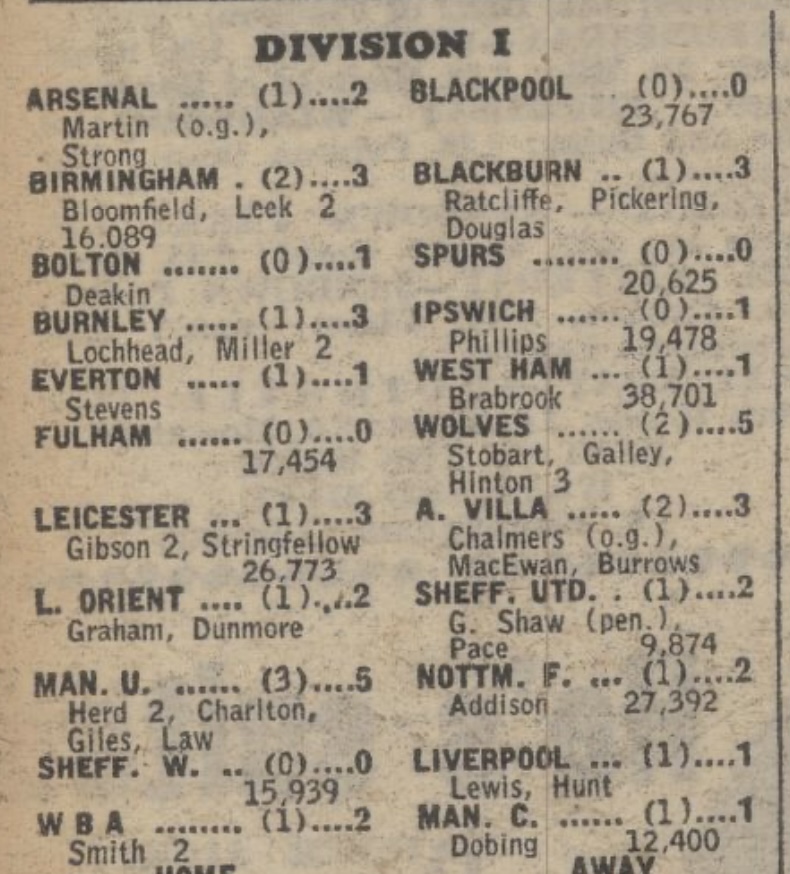
Monday 10 December 1962

A whirlwind roared through Redditch yesterday leaving a one and a half mile trail of havoc. And in three minutes it damaged sixty houses, blew the roof off a prefabricated school, uprooted trees, and carried parts of garages into neighbours’ gardens.

Nearly a thousand viewers jammed the BBC switchboards yesterday in response to That Was The Week That Was. The satirical show lampooned prime minister Harold Macmillan and religion. In one sketch, Millicent Martin told a man in a restaurant that his fly buttons were undone.

According to the magazine Films and Filming, seven of this year’s top ten films are British. The top three: 1. The Guns of Navarone 2. Dr No. 3. The Young Ones.

Television highlights: What’s My Line? Panorama, Professional Boxing. 

Radio highlights: Melody on the Move, The Dales, Democracy in America.

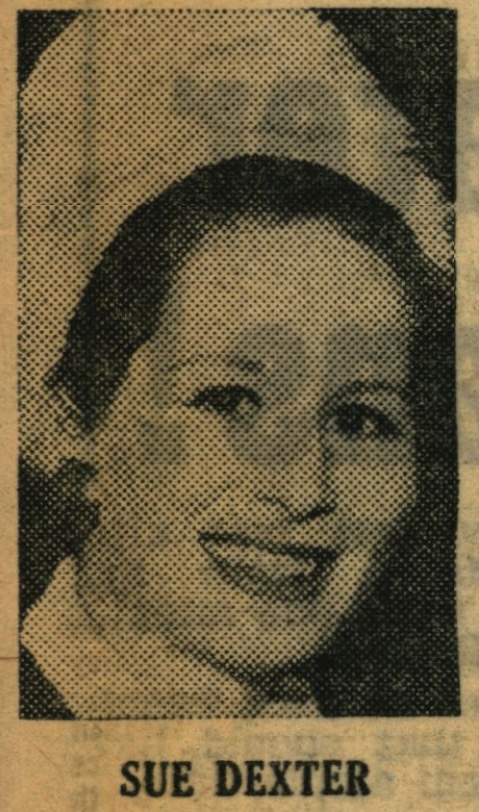
Sue Dexter (pictured), 24 year old wife of England cricket captain Ted Dexter said. “I’ll guarantee that the press will blame me if Ted does not do so well.” Sue arrived in Sydney to join Ted and his team on their Test Match tour of Australia.

Weather: bright at first, rain later. 8c, 46f.
Tuesday 11 December 1962

The Minister of Health, Enoch Powell, yesterday gave local councils the go-ahead to add fluoride to drinking water supplies.

Ninety-seven-year-old Dr William George was preaching at the evening service at a chapel in Criccieth when suddenly two windows shattered and a bullet whistled overhead. Carnarvonshire police are looking for the gunman.

Soccer: seventy-four out of eighty-four of Algeria’s referees have gone on strike because the “don’t shoot the ref” rule was ignored on the weekend. At several matches, referees had to run for their lives to avoid being shot. Meanwhile, in world football, English referees are no longer considered the best.

Manchester City’s goalkeeper Bert Trautmann broke a bone in his left thumb at West Bromwich on Saturday. His regular deputy, Harry Dowd, is also nursing a broken finger.

Television highlights: Soccer – the second half of the European Cup Winners’ Cup tie, Glasgow Rangers v Tottenham Hotspur. Andy Pandy. Compact. 

Radio highlights: Movietime, Bing Sings, Time for Laughter.

Weather: rain and drizzle. Outlook – rather cold, with showers. 9c 48f.
Wednesday 12 December 1962

Bing Crosby has sold 12,000,000 records with White Christmas. Now he has another likely super-seller with Little Drummer Boy.

Nottingham Police plan to frighten motorists into good driving with a Ghost Squad – a fleet of all-white vehicles.

A jury awarded a jilted woman £850 for breach of promise. She was also allowed to keep the £522 engagement ring.

Elastoplast reported £2,217,000 profits for the first nine months of 1962, up £263,000 on last year.

Television highlights: Bucknell’s House – DIY, In or Out? – a panel discuses the Common Market, Take a Letter – crossword game with Bob Holness.

Radio highlights: Postal Bingo, Teen and Twenty Disc Club, Get With It.

Football: Best home record – Everton, 27 games since a defeat. Best away record – Stoke and Celtic, 8 games since a defeat.

Results: Birmingham 6 Manchester City 0. Two own goals, one by goalkeeper Steve Fleet, helped Birmingham into the League Cup semi-finals.

European Cup Winners’ Cup: Glasgow Rangers 2 Tottenham Hotspur 3 (aggregate 4 – 8).

Weather: sunny intervals, showers, high winds. Outlook – little change. 7c 45f.
Coming soon, Songbird, my novel set in the winter of 1962-63

https://books2read.com/u/bMqNPG

For Authors

#1 for value with 565,000 readers, The Fussy Librarian has helped my books to reach #1 on over thirty occasions.

A special offer from my publisher and the Fussy Librarian. https://authors.thefussylibrarian.com/?ref=goylake

Don’t forget to use the code goylake20 to claim your discount 🙂

Categories
1962-63

Social History 1962-63 #1

Saturday 1 December 1962

Actor Sean Connery, 32, married actress Diane Cilento, 25, in a secret ceremony at a Gibraltar registry office. Witnesses were two local taxi drivers. The couple spent their wedding night at the Rock Hotel, Gibraltar, before leaving to honeymoon in Spain.

Jellied eels are to go up in price, from 2s a bowl to 2s 6d. The last increase was in 1942 when the price leapt from 1s to 2s.

A rear-engined mini-car being built by the Rootes Group in Paisley, Scotland will be called the Imp, it was announced yesterday.

Two young beatniks were married yesterday, Linda Ellis and Richard Wardell. They borrowed the wedding ring and have no money. After the wedding, Richard said, “We intend to carry on our beatnik way of life.”

Events: an international caravan exhibition at Olympia and Bertram Mills’ Circus.

Cinema: West Side Story, The Longest Day, Lawrence of Arabia.

Television highlights: Grandstand, Dixon of Dock Green, Juke Box Jury.

Radio highlights: Sports Parade, Ted Heath Bandstand, Let’s Take a Spin.

Weather: early fog and frost. Outlook: little change.

Sunday 2 December 1962

Britain’s first ever 1 1/2 pint milk containers were delivered to doorsteps in London this morning.

Morphy Richards spin dryer £24 3s 0d (HP terms available).

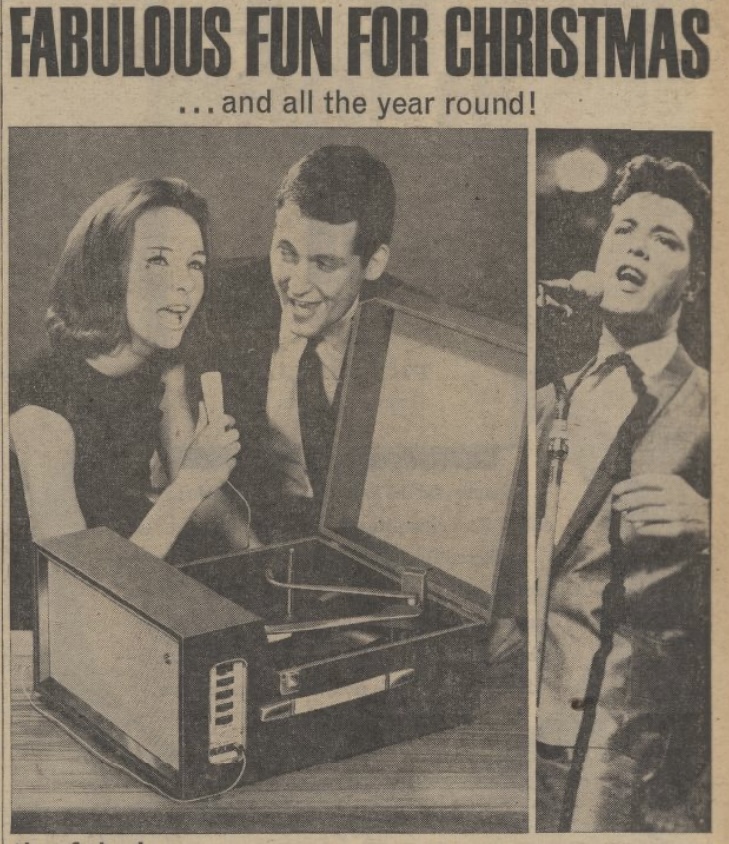
“Put your favourite discs on the fabulous new Fidelity Duet Ampligram (pictured), pick up the mike and sing. From the loudspeaker comes the recorded vocal and your voice mixed!” No price-tag, but a booklet was available.

A new type of stingless aftershave lotion in the form of a jelly-like paste will be available soon – 5s 6d.

Television highlights: The Saint, with Roger Moore, Pinky and Perky, Perry Mason, with Raymond Burr; The Sudden Silence, a play starring Barry Foster (who later starred as Van der Valk).

Radio highlights: Pick of the Pops, 4pm – 5pm on the Light Programme.

Pop charts: 1. She Taught Me How to Yodel – Frank Ifield 2. Swiss Maid – Del Shannon 3. Let’s Dance – Chris Montez

Football highlights: Manchester City 2 – 4 Arsenal. The top two in the league, Tottenham Hotspur and Everton, played out a goalless draw in front of 60,000 fans.

The weather: fog and a heavy frost.

Monday 3 December 1962

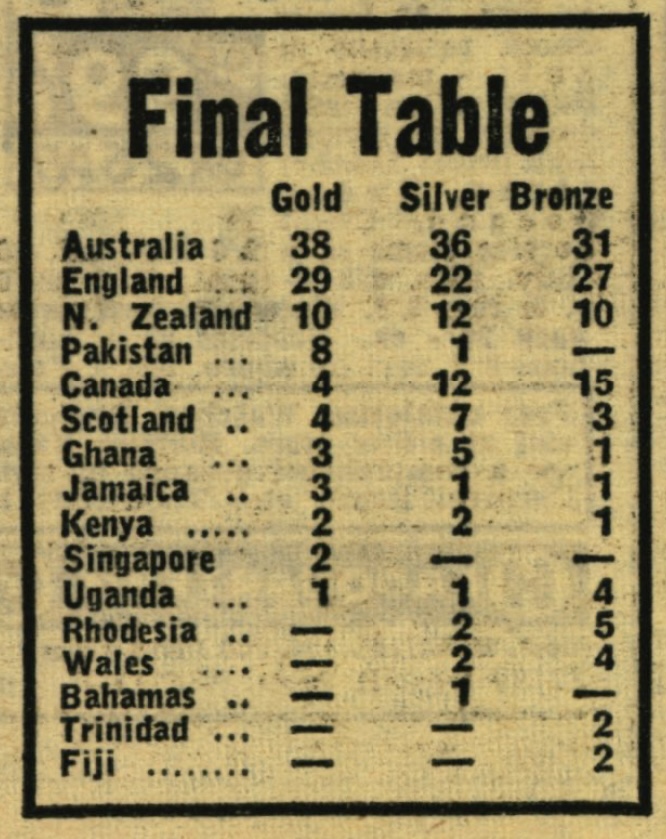
Pictured, the Commonwealth Games medal table. The event finished on 1 December 1962 in Perth, Australia.

Mirror Group Newspapers Christmas Appeal: they requested funds for blind children, the deaf, orphans, plus money to buy coal for the elderly.

Stars threatened to take strike action against the BBC over pay. The BBC offered £18 18s, an increase of £10 10s minimum wage for a performance.

Cabbie drivers in Paris wanted to carry guns – bandits had killed nineteen drivers since 1945.

The Trades Union Congress was concerned about the spread of automation and the ‘robot peril’ with machines making more people unemployed.

Table Tennis: a dispute over a plan to ditch players aged 27 and over in favour of younger players. The newspapers carried county results alongside the football scores.

Television highlights: Blue Peter, Top of the Form, and Maigret.

Radio highlights: Listen With Mother, Desert Island Discs (BBC), and Hit Parade (Radio Luxembourg).

The weather: sunny, less cold.

Tuesday 4 December 1962

Harold MacMillan may become a pop star. His spoken version of the old song She Didn’t Say Yes, She Didn’t Say No was recorded at the Tory conference and given a rock and roll backing and chorus. Sales to date – 2,000.

More people are now injured in British industry each month, 16,000, than the average total of our servicemen during World War Two, 10,667.

Chimneys cleaned for 10 1/2d. Simply drop Imp onto a bright fire and in minutes your chimney is clean and soot-free.

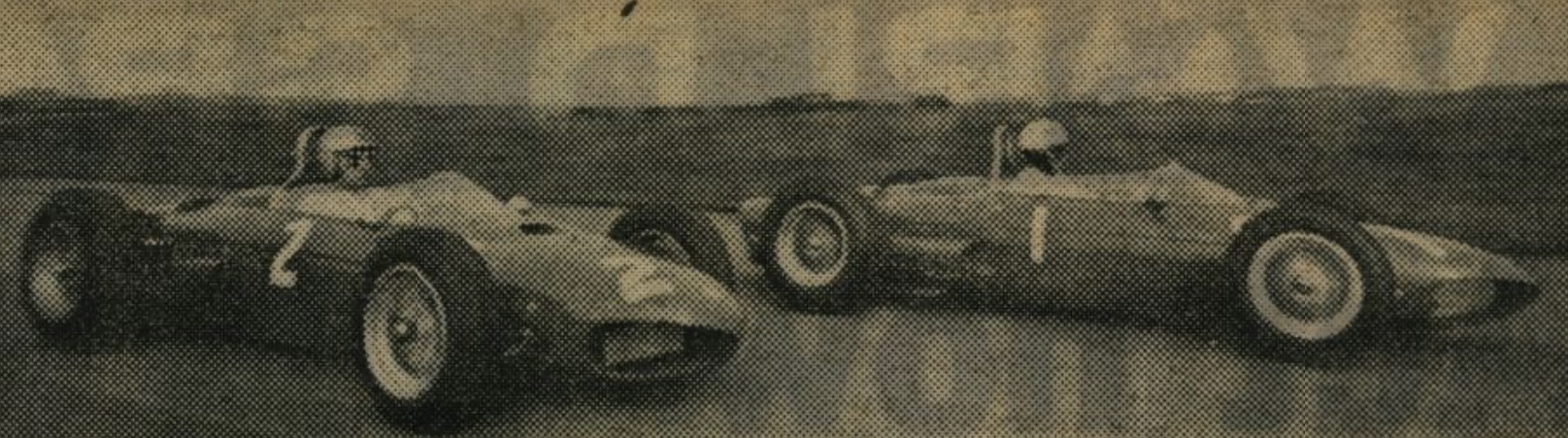
Motor Racing: Ferraris (pictured) may be the only threat to British cars in 1963, but watch out for Hondas. 

Television highlights: This Is Your Life, University Challenge, The Wall – a drama-documentary about the Berlin Wall.

Radio highlights: Housewives’ Choice, Workers’ Playtime, Pop to Bed 11.31 pm – 11.55pm.

Weather: cold with fog, 5c, 41f

Wednesday 5 December 1962

Nightmare Britain – Smog, Fog, Ice! Visibility nil. That was the grim report from most parts of freezing, fog-bound Britain last night. In London, the dense fog was officially smog. And grimmer weather is forecast for today.

One of the worst things about being a working wife is coming home to a cold house at night. This is where the new timer switches come in. They can switch on the electric fire before you get in. You can also buy multi-socket timers to switch on your radio and electric blanket.

Football: longest current undefeated run – Stoke, 17 games (third in Division Two). Longest run since a win – Raith Rovers, 14 games.

Football scores: Friendly: Ipswich 1 – 0 Vejle Boldklub (Denmark), abandoned after 27 minutes, fog. Cambridge University 0 – 0 West Ham, abandoned after 15 minutes, fog. Poole v Cambridge United, postponed, fog.

Television highlights: Z-Cars, Rawhide and Sportsview.

Radio highlights: Morning Story, Parade of the Pops, David Jacobs Plays the Pops.

Weather: foggy and cold, 7c, 45f

Thursday 6 December 1962

Grey Killer Claims First 40 Victims. The Smog Heroes. Give them all a cheer! Give them your thanks! Give them a medal! The railmen and bus workers of Britain are the heroes of the Big Smog. Half a million heroes! Due to the smog, the elderly and people with health problems are advised to stay indoors.

More and more patients are getting tranquillisers on the NHS. One reason why more people are taking “calm pills” these days is the increasing tension of modern living.

Britain’s cigarette smokers, especially women, are turning to tips. Last year, sales of tipped cigarettes soared by 4,600 million. Untipped dropped by 2,100 million. 

A man believed to be a top Nazi war criminal was arrested in Chile yesterday. The man was named as Walter Raus aka General Walter Rauff, who has been on the run for eighteen years, and is blamed for 90,000 deaths.

Television highlights: Rin Tin Tin, Crackerjack, Double Your Money.

Radio highlights: Alan Freeman Show (fifteen minutes on Radio Luxembourg), Round Britain Quiz, The Jazz Club: Humphrey Lyttelton.

Miss King, Queen of the Hits. She is blonde, she is twenty, and married with two children. She is Carole King. And she is fast becoming the Queen of Tin Pan Alley on both sides of the Atlantic. 

Weather: mainly foggy. No sign of the fog clearing. 7c, 45f.

Coming soon, Songbird, my novel set in the winter of 1962-63

https://books2read.com/u/bMqNPG

For Authors

#1 for value with 565,000 readers, The Fussy Librarian has helped my books to reach #1 on over thirty occasions.

A special offer from my publisher and the Fussy Librarian. https://authors.thefussylibrarian.com/?ref=goylake

Don’t forget to use the code goylake20 to claim your discount 🙂
Categories
Cherry Wainer

Cherry Wainer #4

I’m researching the career of musician Cherry Wainer and the 1950s-1960s music scene.

In the summer of 1956, Cherry shared bills with Morecambe and Wise, who became legends of British television.

For most of 1957 Cherry featured on the cabaret circuit alongside regular fifteen minute slots on television, playing her organ. After a short stay in South Africa, she returned to Britain on 15 November 1957. However, she did not return alone. Drummer Don Storer accompanied her on the voyage and soon they were featuring in shows as a couple. They were also associated with the prestigious Grade agency. All aspects of Cherry’s life were on the up

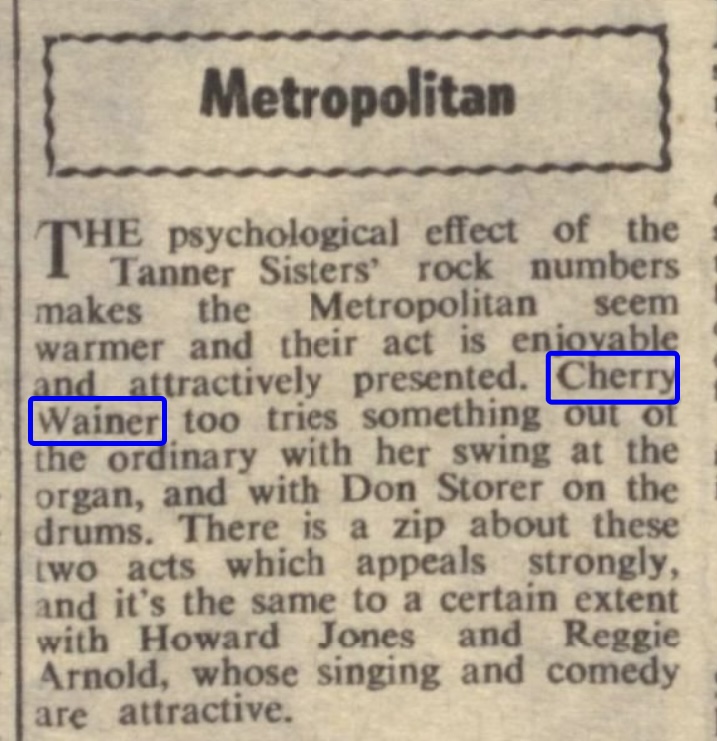
An interesting item from The Stage, December 1957 on the “psychological effects of rock numbers”. The Stage also noted that 1957 had been the year of “more nudes, skiffle groups, and crying crooners”. The writer hoped for a “return to variety in 1958”.

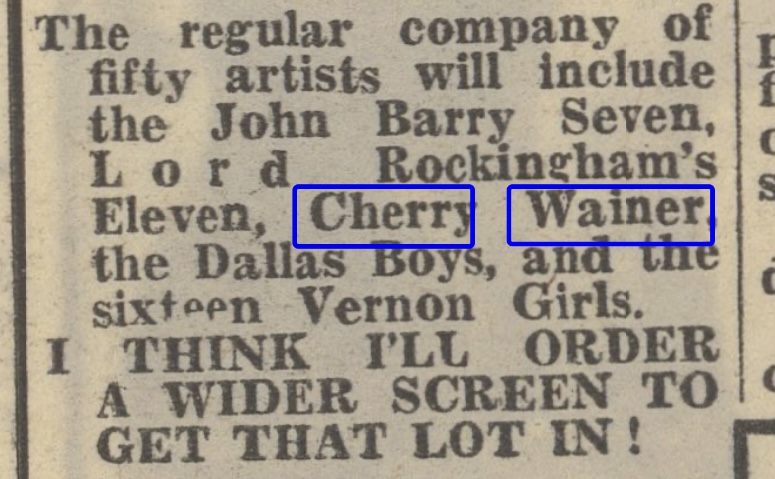
May 1958 and the first mention of Cherry Wainer in association with Lord Rockingham’s XI. Cherry was “twelfth woman” at this time, but she would soon join the team.

Cherry featured in a milestone of popular music – the television debut of Oh Boy! on 13 September 1958. What’s more, the media used Cherry’s image to promote the show.

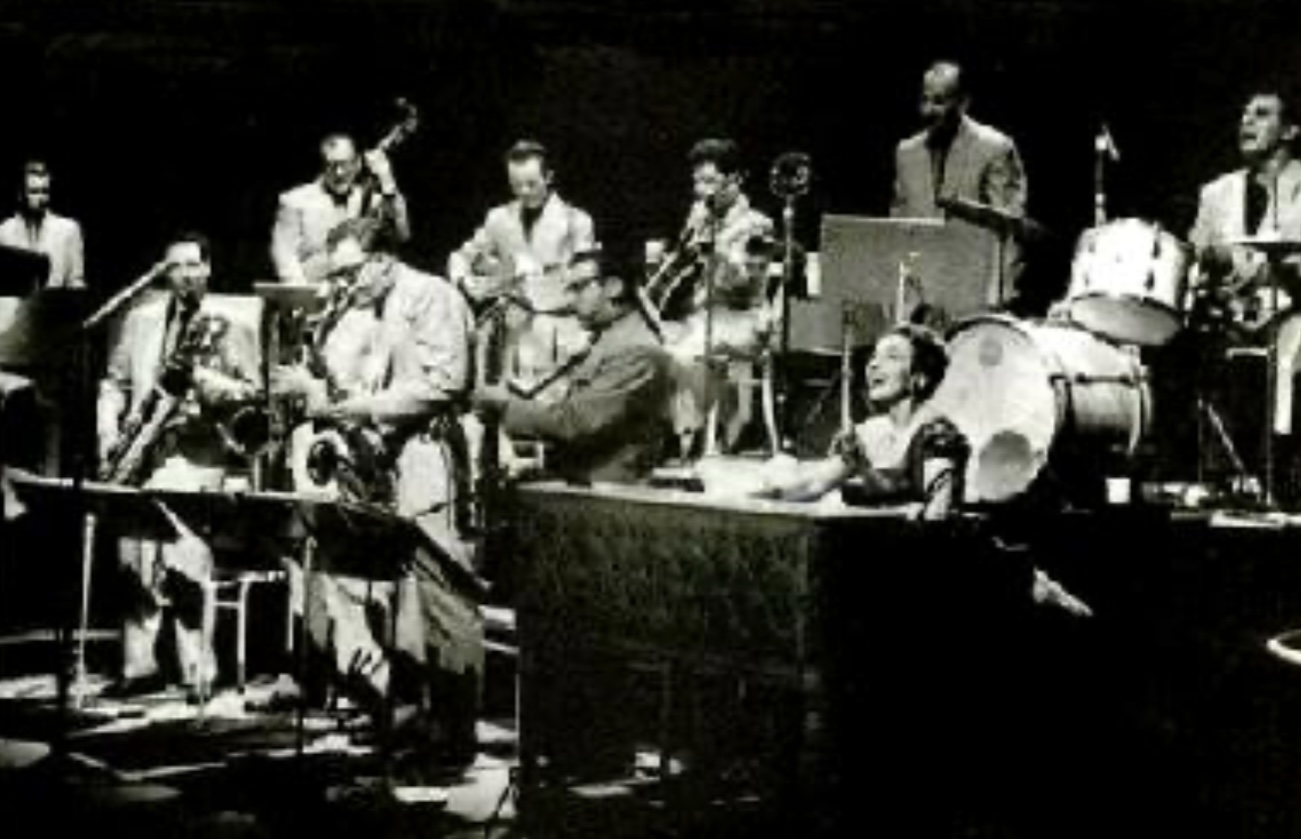
Released on the 30 October 1958, and featuring Cherry Wainer as a member of Lord Rockingham’s XI (pictured), Hoots Mon became a number one hit and, many years later, introduced me to popular music.

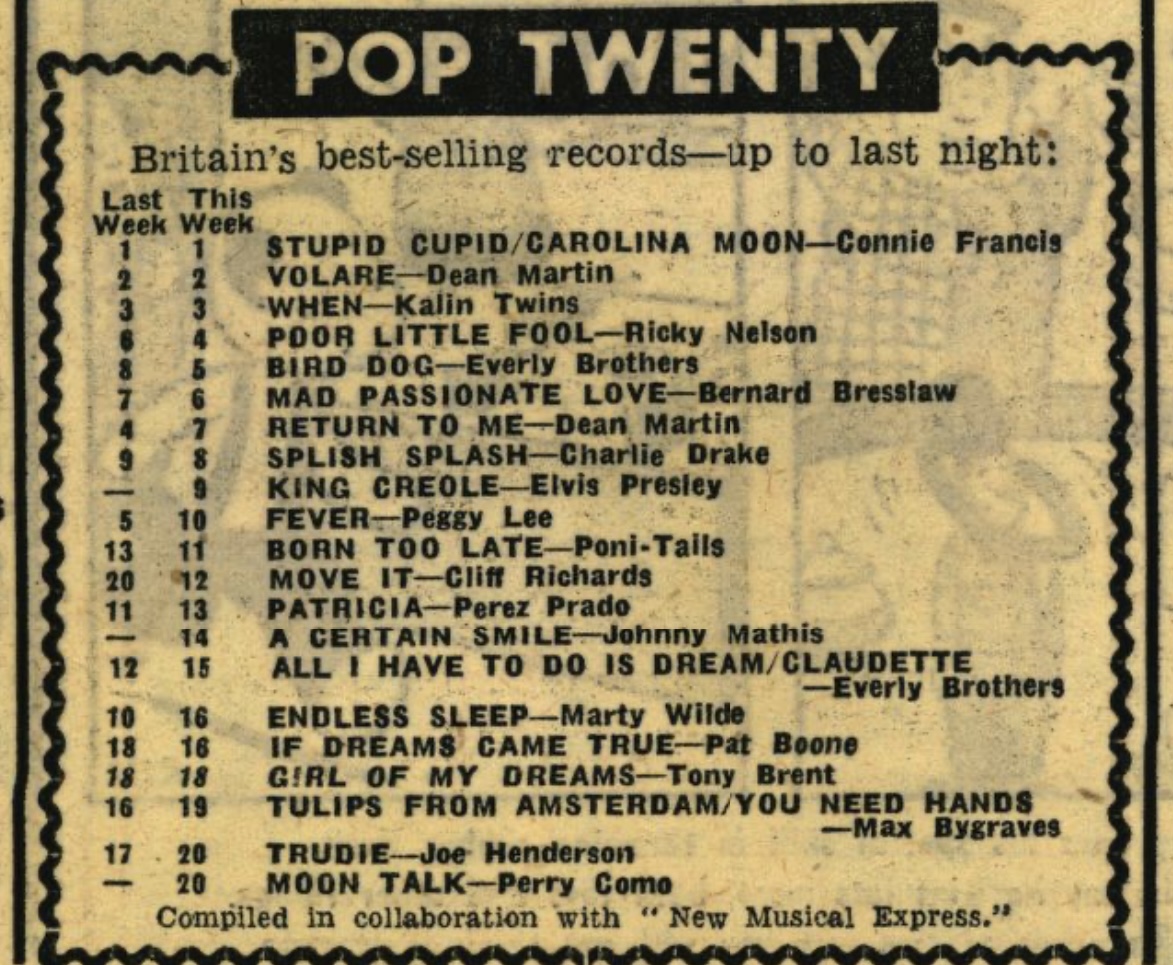
As a member of Lord Rockingham’s XI, Cherry Wainer topped the chart in late October 1958. Here’s the chart from earlier that month. As you can see, it featured some classics, some records worth checking out, and others best forgotten.

For Authors

#1 for value with 565,000 readers, The Fussy Librarian has helped my books to reach #1 on 32 occasions.

A special offer from my publisher and the Fussy Librarian. https://authors.thefussylibrarian.com/?ref=goylake

Don’t forget to use the code goylake20 to claim your discount 🙂
Categories
Cherry Wainer

Cherry Wainer #2

I’m researching the career of musician Cherry Wainer and the 1950s-1960s music scene.

In 1954, after four years spent developing her career in South Africa, Cherry returned to Britain, along with her Hammond organ, sheet music and eight suitcases of clothes – she appeared to have a penchant for the latest fashions. A hard slog on the entertainment circuit beckoned as she strove to break into the “big time”.

Even though Cherry Wainer was born in South Africa, in May 1955 the press were describing her as “Britain’s Greatest Rhythm Organist”. She was sharing bills with the likes of Alma Cogan and playing tunes like Mr Sandman and Waters of Minnetonka. She was also billed above Reg Varney who went on to become a regular on British television. It was taking Cherry a while to become an “overnight sensation”, but her career kept moving in the right direction.

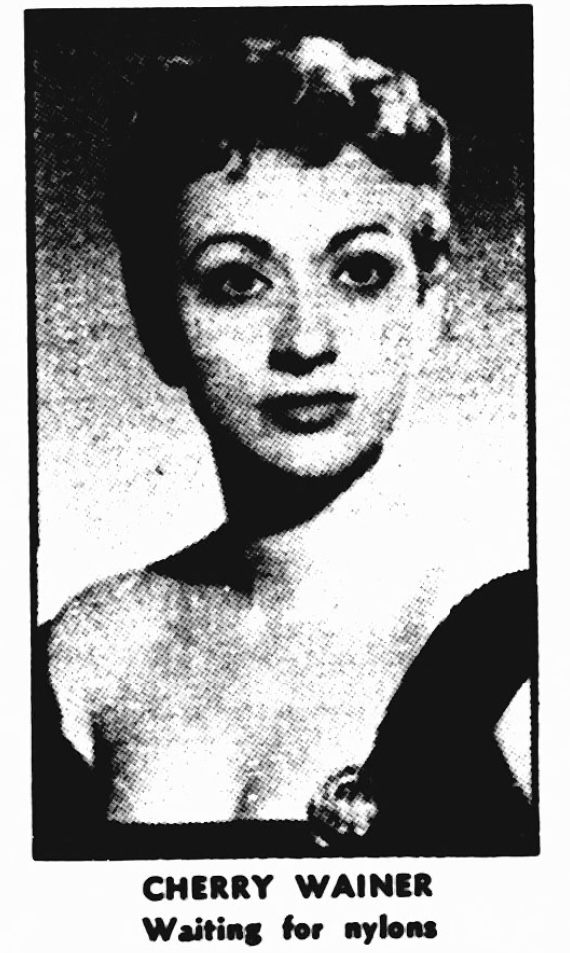
In August 1955, while performing in Manchester, Cherry told a reporter about her problem with nylons. Cherry refused to wear nylons with seams, and reinforced toes and heels. Consequently, she laddered a pair at every performance. “I’ve been going on-stage bare-legged all this week,” Cherry said. “I’ve run right out of stockings and I can’t buy the sort of nylons I like in this country. I’m waiting for my mother to get me some in America.”

In August 1955 the press reported that Cherry’s organ was insured for £1,250 (around £40,000 now). The organ always travelled in the guard’s van while Cherry sat in the nearest compartment.

At the time, Cherry had a residency at the Winter Garden’s, Morecambe, but the management did grant her time to be a judge in a National Bathing Beauty Contest, which was won by Patricia Nunns (pictured).

In August and September 1955, Cherry was sharing the bill with the likes of Des O’Conner, who became a regular on British television. She was also appearing in Paris. The Stage reported: “Most attractively gowned, and using trick lighting to make her lovely dress even lovelier, Cherry Wainer is an atomic ball of a personality at the keys of her electric organ. She plays with the confidence of one who knows she has mastered her numbers and so can put that little extra into them. Full marks for this South African blossom. Her Sabre Dance is a real sizzler.”

In October 1955, The Stage announced that “vivacious South African organist Cherry Wainer would be appearing on TV”.

Cherry featured on ABC Television – Associated British Cinemas (Television) Ltd. ABC was a commercial television company established in the 1950s by cinema chains in an attempt to compete with television, which was attracting cinema audiences.

Cherry played the Hammond organ “with a dexterity unmarred by four-inch heels”.

On 22 December 1955, at Chelsea Barracks, Cherry joined Vera Lynn, the Coldstream Guards and Scots Guards to entertain the troops. The event was broadcast on television as part of the Christmas Season programming.

Along with her variety show appearances, Cherry was now becoming a regular on television.

The ABC Studios in Didsbury, Manchester (Wikipedia)

For Authors

#1 for value with 565,000 readers, The Fussy Librarian has helped my books to reach #1 on 32 occasions.

A special offer from my publisher and the Fussy Librarian. https://authors.thefussylibrarian.com/?ref=goylake

Don’t forget to use the code goylake20 to claim your discount 🙂
Categories
1920s

The 1920s #3

Introduced in 1922, the Austin Seven, the “Car for the Feminine Touch”.

Fashion

For women, the flapper look dominated. Clothes that restricted were cast aside in favour of short skirts and trousers, attire that offered greater comfort. Men too abandoned formal daily attire in favour of casual and athletic clothing. Indeed, the suits of today are still based on the basic designs of the late 1920s.

In fashion, the Roaring Twenties really kicked off in 1925. Jazz, and dances like the Charleston, influenced designs of female outerwear, and underwear. For the first time in centuries, women’s legs were seen in public with hemlines rising to the knee. 

Headbands were popular, until 1925, and jewellery remained in vogue throughout the decade, although the emphasis was not so much on dazzling expense, but more on design and style.

Actress Louise Brooks

Football

The 1923 FA Cup final was played between Bolton Wanderers and West Ham United on 28 April at the original Wembley Stadium in London. It was the first football match to be played at the stadium.

The official capacity was 125,000. However, a crowd estimated at 300,000 gained admittance. Consequently, the terraces overflowed and people were forced on to the pitch.

Mounted policemen, including one on a white horse (pictured), entered the scene. They cleared the pitch and, after a delay of 45 minutes, the match commenced. 

Bolton emerged as winners, 2 – 0, but the defining image of the day was the policeman on his white horse, ensuring that the game would be forever known as the “White Horse Final”.

More flapper slang from the 1920s

Noodle juice – tea
Nutcracker – a policeman’s truncheon
Oil can – an imposter
Out on parole – recently divorced
Potato – lacking Intelligence
Rock of Ages – a woman over thirty

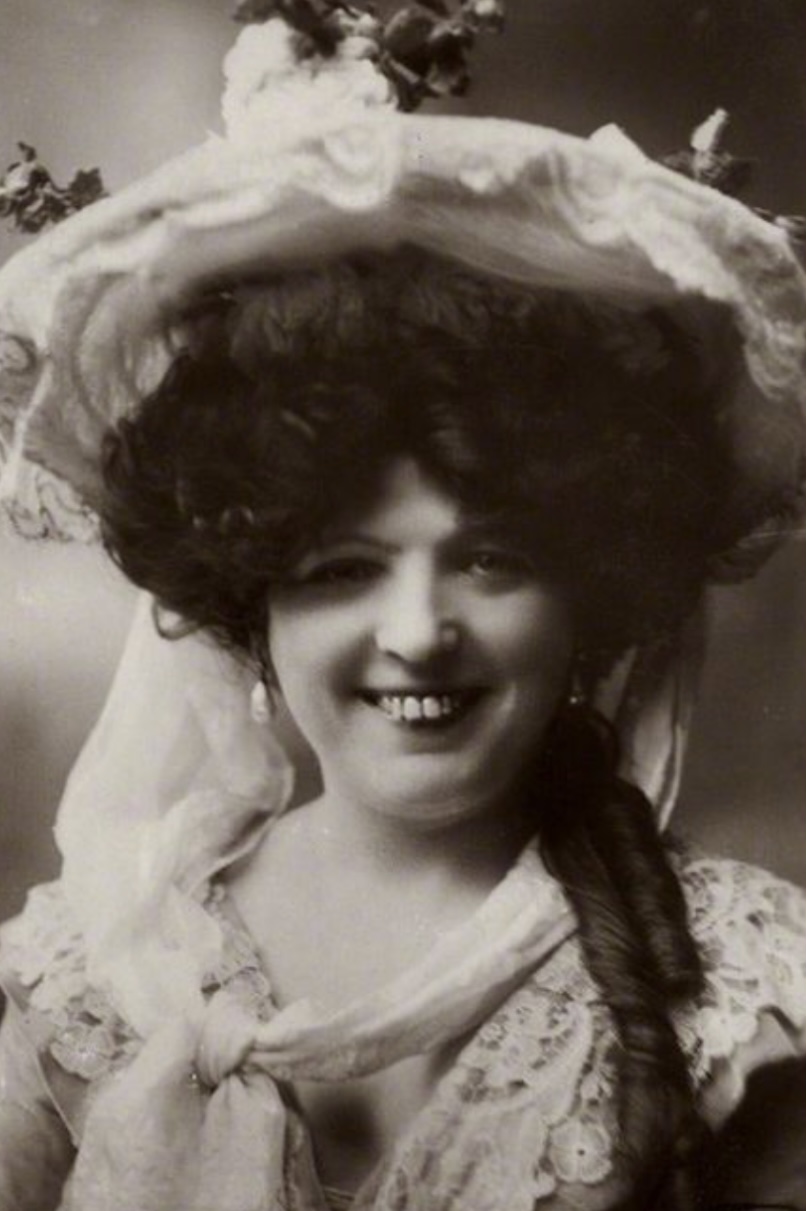
In April 1922, music hall star Marie Lloyd (pictured) collapsed in her dressing room after singing “The Cosmopolitan Girl” at the Gateshead Empire in Cardiff. Her doctor diagnosed exhaustion. After a period of rest, she returned to the stage in August, and reduced the running time of her act. 

On 12 August 1921, Marie Lloyd failed to show for an appearance at the London Palladium. Instead, she wrote her will. Marie Lloyd died two months later, on 7 October 1922. 

The Times wrote: “In her the public loses not only a vivid personality whose range and extremely broad humour as a character actress were extraordinary, but also one of the few remaining links with the old music-hall stage of the last century.”

In January 1920 the Marconi Company made occasional broadcasts, featuring music and speech, from Chelmsford, England. From 23 February to 6 March 1920 the company broadcast a series of thirty minute shows, repeated twice daily, from Chelmsford. These shows included live music performances.

A Marconi employee, 1906

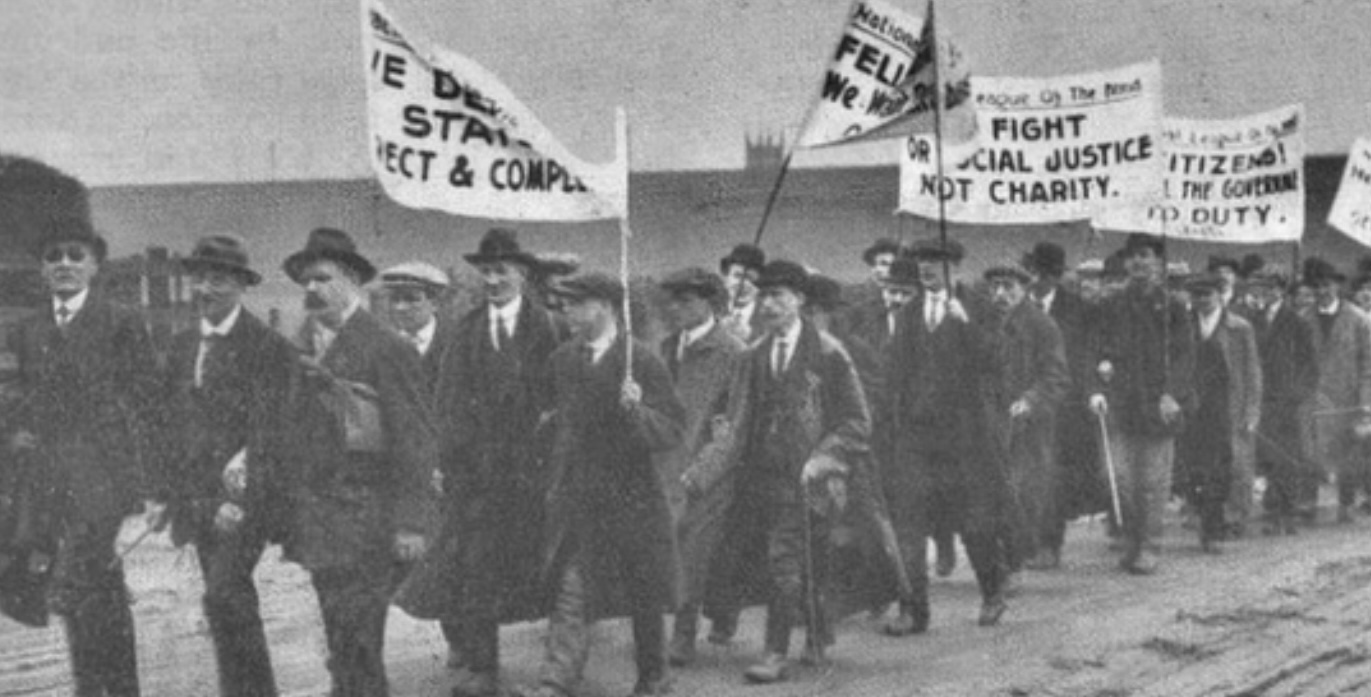
In 1920, 250 blind people marched from Newport, Manchester and Leeds to London. Organised by the National League of the Blind, the marchers assembled on 5 April 1920 and reached London on 25 April 1920, where a crowd of 10,000 supporters greeted them.

The NLB organised the march to protest against poor working conditions and poverty experienced by blind people. The leaders met Prime Minister David Lloyd George, who promised little, apart from to pay for the marchers’ rail tickets home.

However, a Blind Persons’ Act was introduced later in the year, the first disability-specific legislation in the world, which compelled local authorities to ensure the welfare of blind persons. 

The march of 1920 served as inspiration for the famous 1936 Jarrow March against unemployment, in which the NLB also participated.


Tula, my novel set in the 1920s

For Authors

#1 for value with 565,000 readers, The Fussy Librarian has helped my books to reach #1 on 32 occasions.

A special offer from my publisher and the Fussy Librarian. https://authors.thefussylibrarian.com/?ref=goylake

Don’t forget to use the code goylake20 to claim your discount 🙂