Categories
Dear Reader

Dear Reader #75

Dear Reader,

My latest translated titles, Stardust, Sam Smith Mystery Series book ten, and Eve’s War, Operation Locksmith, both in Spanish.
The calm after the storm, Paris 1947.

An amazing week for my Eve’s War Heroines of SOE Series. Operation Zigzag is #1 while Operation Broadsword and Operation Treasure are top twenty hot new releases. This landmark is dedicated to all the remarkable men and women of the SOE.

So now we know…

An autumnal view of the Goylake River.

You thought that beautiful woman was holding her parasol in her left hand simply because she was left-handed. However, her actions might reveal something totally different…

Men and women of the French Resistance during the summer of 1944, probably after the liberation of Paris.

Family History

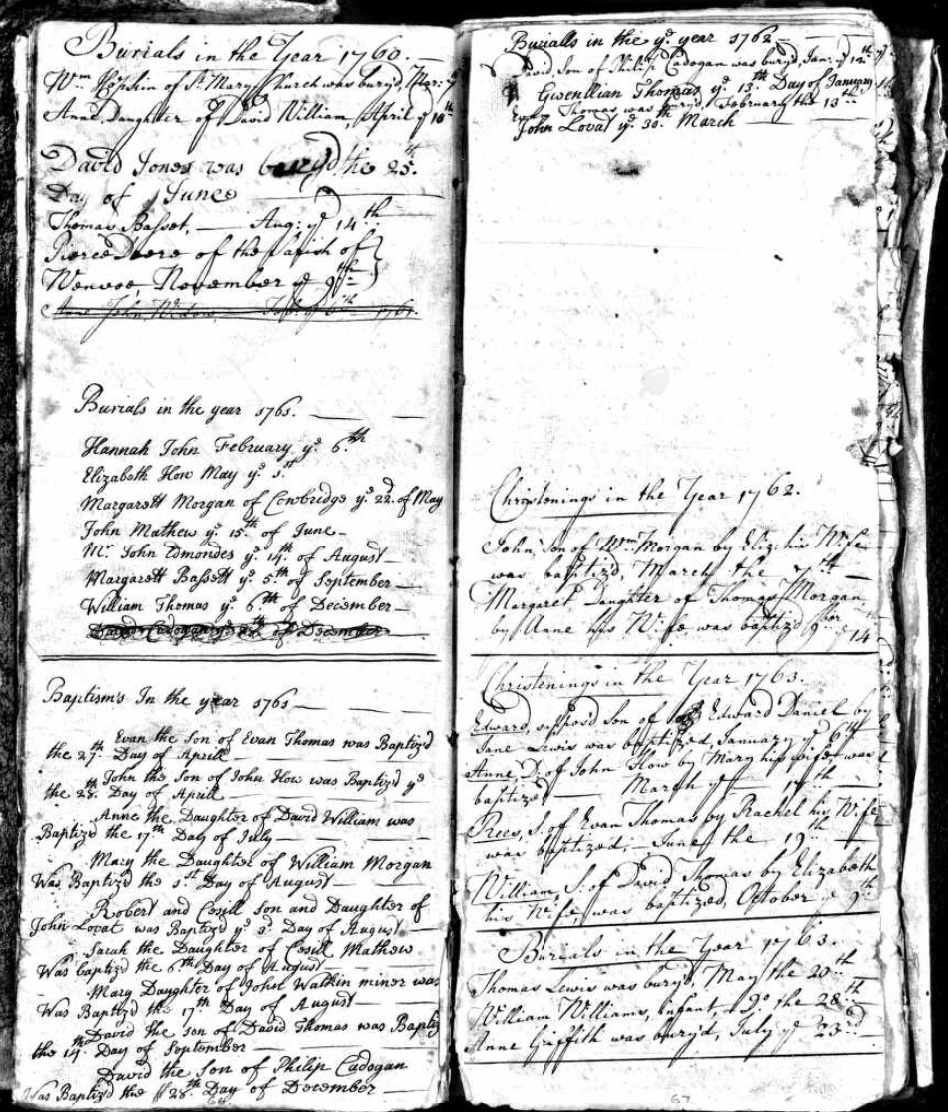
John Howe, my 5 x great grandfather, was born on 28 April 1761 in St Hilary, Glamorgan. His parents, John and Mary, were successful farmers so it’s probable that John spent his formative years learning the business of farm management.

The parish register confirms John baptism. Note the small number of births, marriages and deaths in the parish between 1760 and 1762.
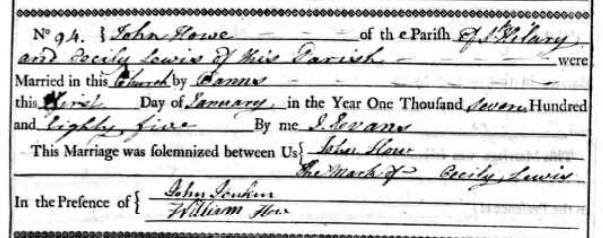
John married Cecily Lewis on 1 January 1785 in nearby Cowbridge, Glamorgan. The location is significant because for well over a hundred years all of the Howe’s activities, including births, marriages and deaths, had centred on St Hilary. The family was branching out, which ultimately would lead to mixed fortunes.
Cowbridge was a market town so it’s easy to imagine that John met Cecily there while on farm business. Cecily was born in Cowbridge in 1764 and the custom was that marriages took place in the bride’s parish.

Some genealogists list Cecily’s parents as John Lewis of Swansea and Elizabet Humphreys, but I have found no records to confirm that fact. Lewis is a very common surname and without cross-references it is difficult to identify the correct ancestor. 

The parish record reveals that John was literate, but Cicely signed her name with a cross. The witnesses were John’s younger brother, William, and John Jenkin, a ‘Gentleman’ of Cowbridge, which confirms that at this time the Howe family were still members of the gentry.

Continuing the story of my 5 x great grandparents, John Howe and Cecily Lewis. The couple married on 1 January 1785 in Cecily’s home parish, Cowbridge, Glamorgan. Five children followed: John (yet another one) my 4 x great grandfather, born 26 February 1786 in St Hilary, Glamorgan; Cecily, born 20 January 1789 in St Hilary; Priscilla, born 13 November 1793 in St Hilary; Richard, born 1 January 1797 in St Hilary – what a wonderful twelfth wedding anniversary present that was; and William, born on 1 February 1799 in St Hilary. Sadly, young Cecily died on 20 April 1798.

Well into the twentieth century, on average a couple produced a child every twenty-four months. However, John and Cecily’s children were born three or four years apart, hence ‘only’ five additions to the family.

Like his father before him, John was an Overseer of the Poor. In 1796-7, he paid 2s 6d to ‘Ten men in distress coming from the sea.’

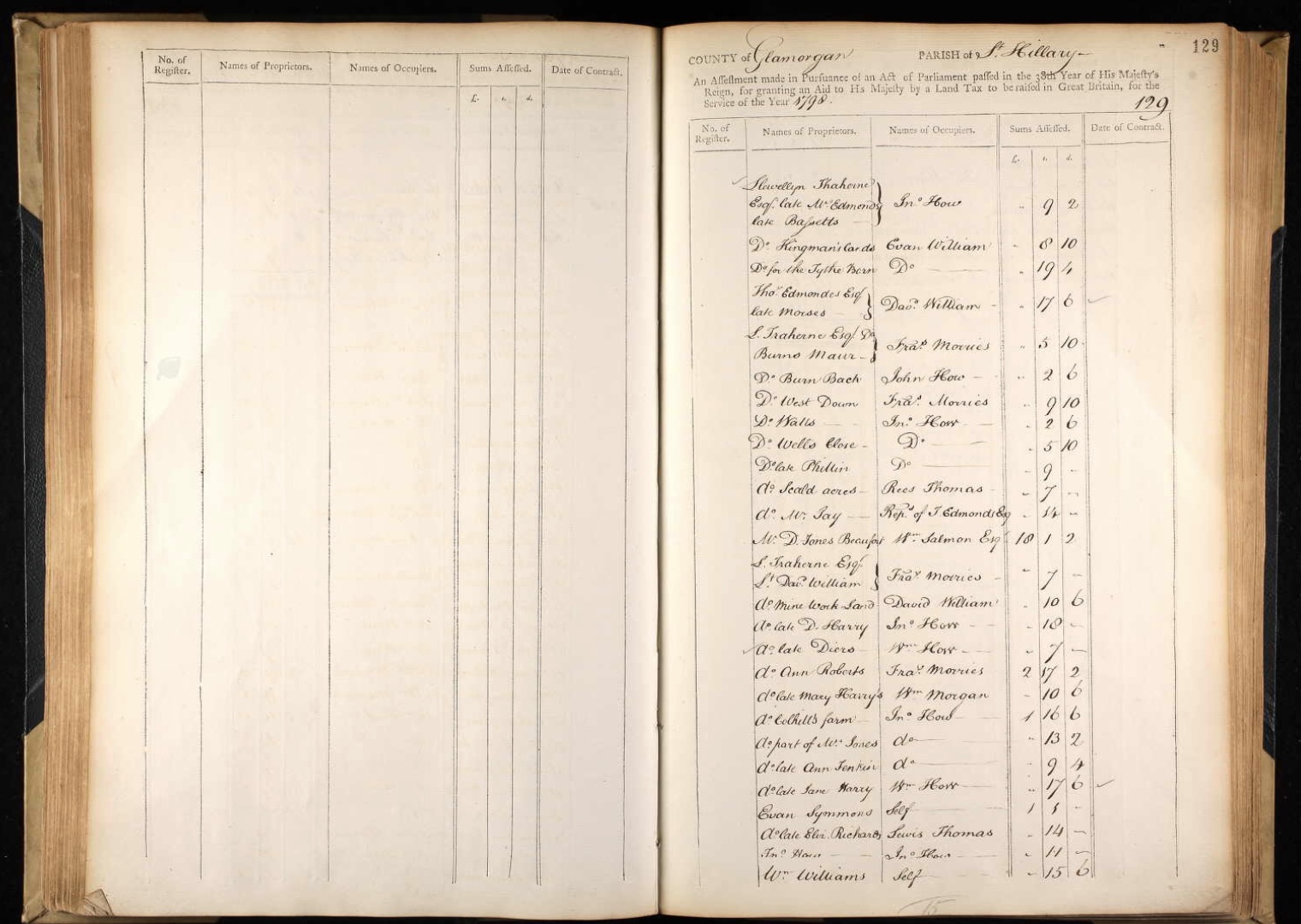
In 1798, the Howe family featured in the Land Tax Redemption register twelve times, far more than any other family in St Hilary, which indicates that they were farming more land than anyone else in the parish.
Early in the nineteenth century, John and his family left St Hilary, moving ten miles west to Coity, breaking the family’s bond with the parish. Why did they leave? 

By 1799, the Napoleonic wars had taken their toll on Britain. The British royal treasury was running out of money to maintain the royal army and navy. Soldiers were starving and His Majesty’s navy had already mutinied. For Prime Minister William Pitt the Younger, the solution was simple: impose an income tax. Under the Act of 1799, all citizens who earned above £60 were to pay a graduated tax of at least one percent. Those with an income of over £200 were taxed ten percent. Some people regarded the tax as a patriotic duty while others complained. I don’t know what John Howe thought of the taxes, but it seems they were the reason he moved his family to Coity.
The impressive nature of John and Cecily’s gravestone suggests that the couple lived in some style in Coity. By this stage the family had become scattered, living in various towns and villages throughout Glamorgan.
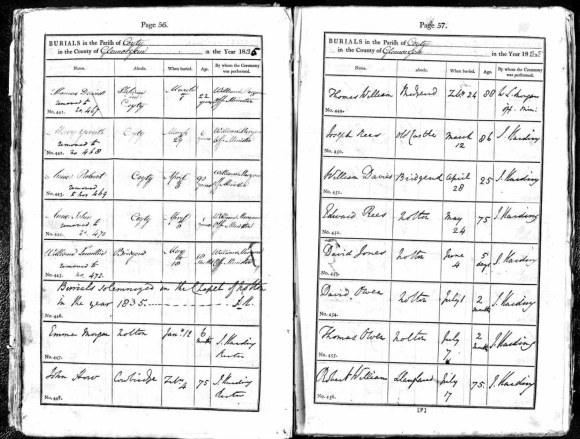
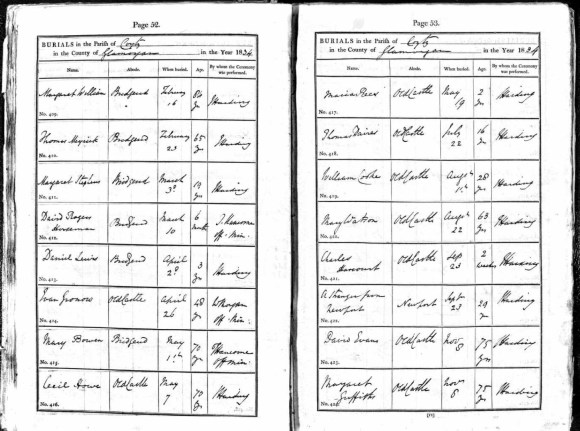
After 49 years of marriage, Cecily died  on 7 May 1834, aged 70 while John died on 4 February 1835, aged 73. The couple are buried together in Coity. 

Tugged away from their St Hilary roots, future generations of the Howe family lost their gentry status. Although a member of the family did become deputy prime minister of Britain in the 1980s, most branches led humbler lives, including John and Cecily’s son, John, my 4 x great grandfather.

Which classical composer are you? Apparently, I’m Schubert.

“You have a natural curiosity and enjoy finding out what makes people tick. You are a bit of an idealist who wants to make the world a better place, and you like to help others improve. You might sometimes appear stubborn, but you are only staying true to your values.”

https://www.bbc.co.uk/archive/what-classical-composer-are-you/zscrydm

As ever, thank you for your interest and support.

Hannah xxx

Categories
Dear Reader

Dear Reader #74

Dear Reader,

My article about SOE heroine Yvonne Cormeau is on page 36 of this month’s Seaside News 🙂

Did you know that the road to the IKEA in Valladolid, Spain is “Calle Me Falta un Tornillo” – “I’m Missing a Screw Street”.

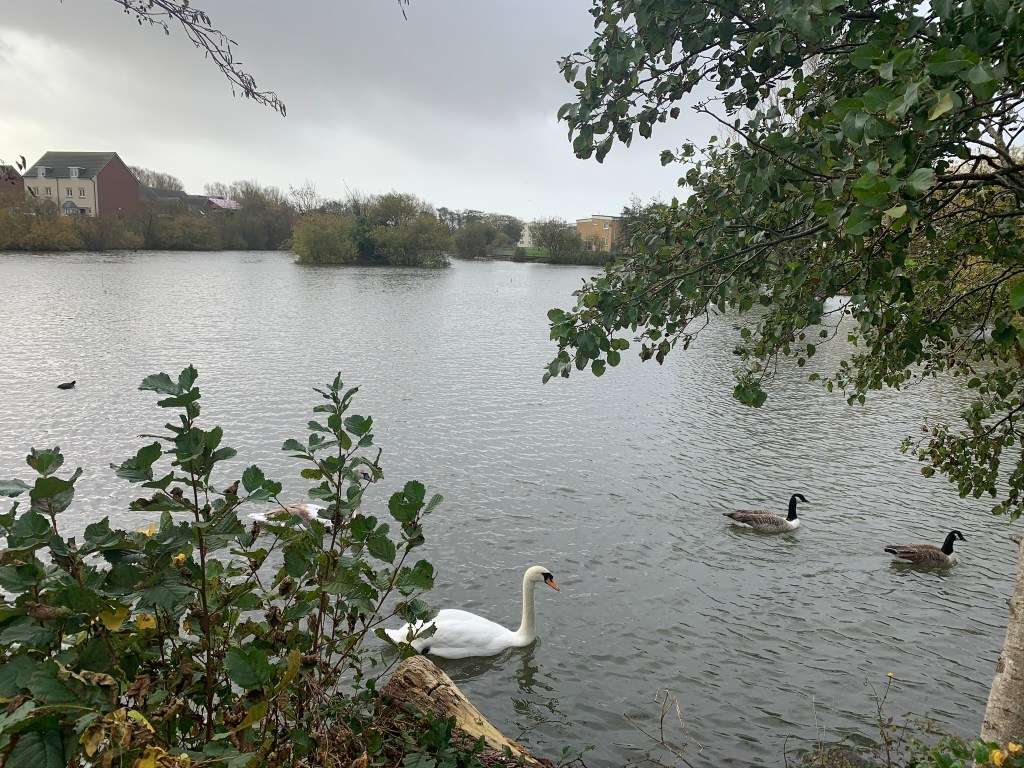
Swans and ducks on a local pond this morning.

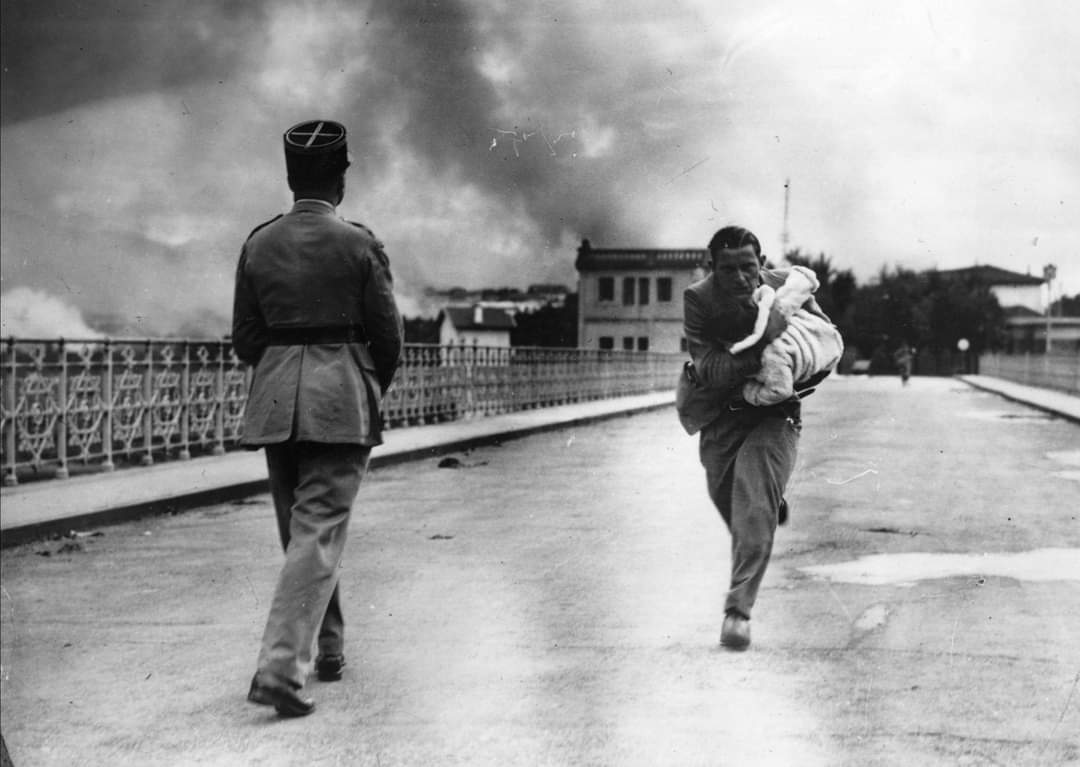
The Spanish Civil War. French journalist Raymond Vankers crossed the bridge from Irún, Spain to Hendaye, France to save a baby during the Battle of Irún, 6 September 1936.

Where the Sidewalk Ends, a 1950 noir movie, reunites Dana Andrews with Gene Tierney after the success of their 1944 classic, Laura. Where the Sidewalk Ends doesn’t quite match the class of Laura, nevertheless it is a excellent film with solid performances all round and a tight plot centred on one man’s path to redemption.

Occupied France, 1940. No petrol, so the locals converted their trucks to run on wood and coal.

November 5th was Bonfire Night in Britain. These are thought to be the earliest photographs of a bonfire. They were taken in 1853 by John Dillwyn Llewelyn at Penllergare in Swansea.

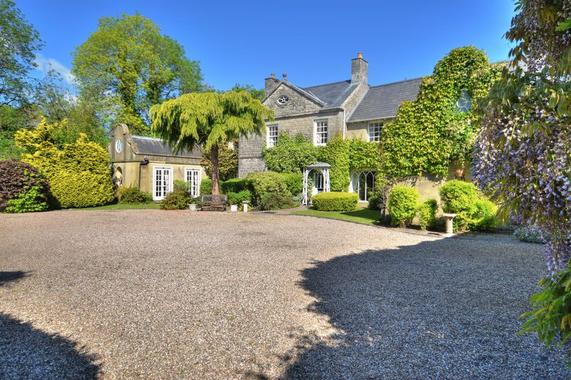
The Million Pound House

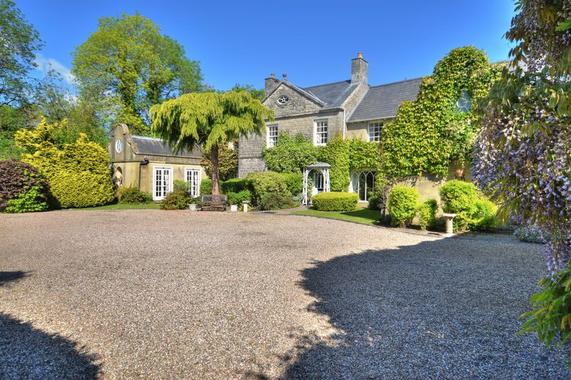
My ancestors in St Hilary owned Howe Mill, which recently went on the market for well over a million pounds.

I read about Howe Mill in a gazetteer that included this line ‘the Regency finery of Howe Mill’. The Regency refers to the period 1795 to 1837. However, further research revealed this entry, ‘Thomas David of Howe Mill was buried in 1699.’ Therefore, the mill existed in the seventeenth century and the Regency finery must refer to a refurbishment.

Howe Mill ground corn until the end of the nineteenth century. It was active in 1889, but maps published in 1899 list the mill as disused. It is situated within a twelfth century ringwork enclosure that might have served as the caput for the knight’s fee of Llandough. 

Howe derives from the Old Norse, haugr, which means hill, knoll, or mound. The Vikings settled, peacefully, in the Vale of Glamorgan in the ninth century so it is possible that my Viking ancestors acquired land that became a ringwork enclosure then a mill. Before 1699 their descendants sold the mill for a considerable sum of money. 

My St Hilary ancestors were wealthy. I know this because for many generations they held prominent places within the community. From a financial point of view they were lucky, probably because of a Viking who settled in the area and made his home on a piece of prime land.

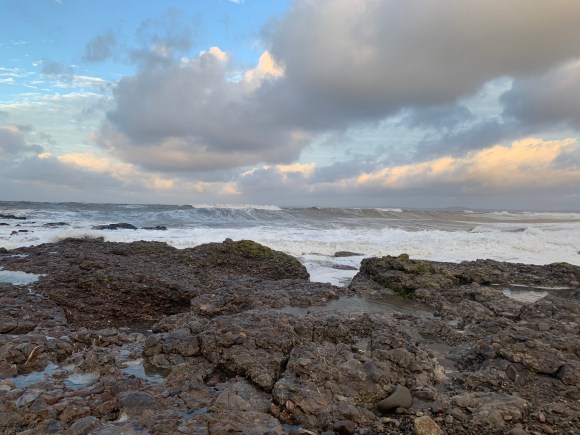
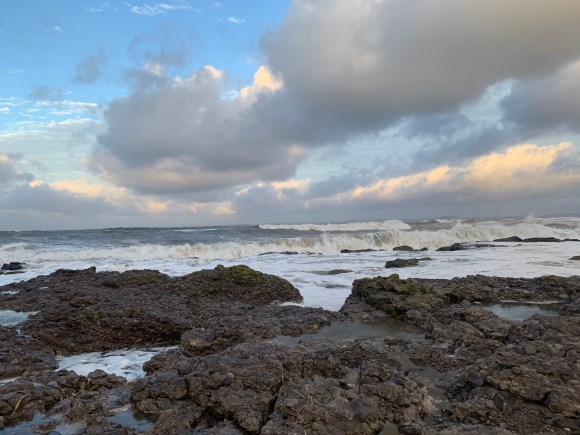
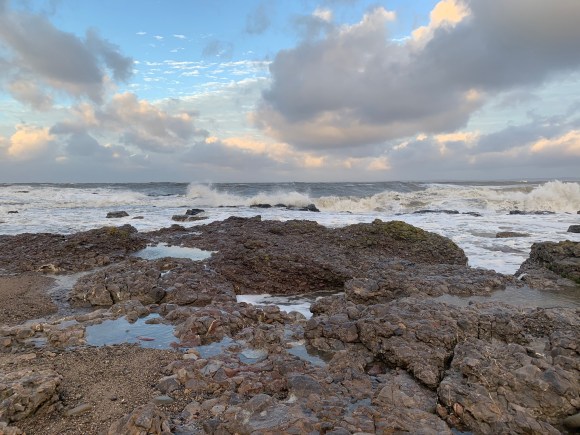
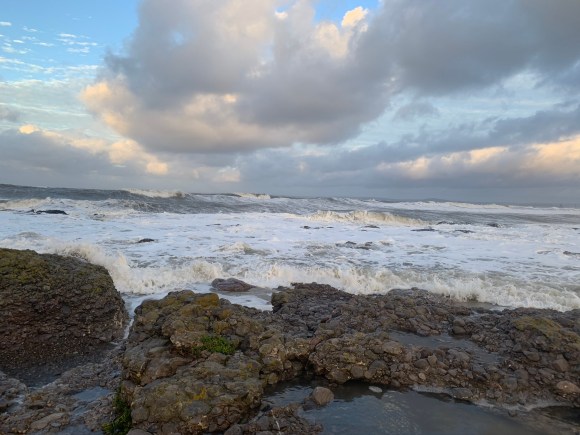
Sger Beach this week.

My Ancestry

John Howe, my 6 x great grandfather, was baptised on 24 July 1726 in St Hilary, Glamorgan, probably a week after his birth. Sadly, many babies died within a week of their birth so baptisms were often swift affairs.

The son of Joseph and Elizabeth, John became a successful farmer. When Joseph died on 5 July 1742, sixteen-year-old John became the ‘man of the house’ and helped his mother to run the farm.

In 1753, John became a churchwarden, Petty Constable and Overseer of the Poor. Overseers of the Poor were chosen from the ‘substantial householders’ within the community and were elected at the annual vestry. Although elected for a year, they often served multiple terms over many years.

As Overseer of the Poor, John made a payment of £1 17s 6d for the making and binding of bibles, 1s for attending a coroner’s inquest and 7d for a pair of male stockings. He also awarded payments of a few pence to ‘the little boy of whom nothing else is known’.

This is John’s account of 1753, written in his own hand.

Continuing the story of John Howe of St Hilary, my 6 x great-grandfather, a successful farmer, churchwarden, Petty Constable and Overseer of the Poor.

The pivotal period of John’s life arrived in April and May, 1761. On 3 April 1761 he married 39 year old Mary Williams, a widow, also of St Hilary. Then his first son, John, my 5 x great grandfather, was born on 28 April 1761. That’s right, Mary was eight months pregnant at the time of her marriage. On 1 May 1761 John’s mother, Elizabeth, died aged 62. A marriage, birth and death within four weeks. A very stressful time for John.

More children followed at regular intervals: Anne, born 17 March 1763, William, 25 November 1764 and Joseph, 12 October 1767. 

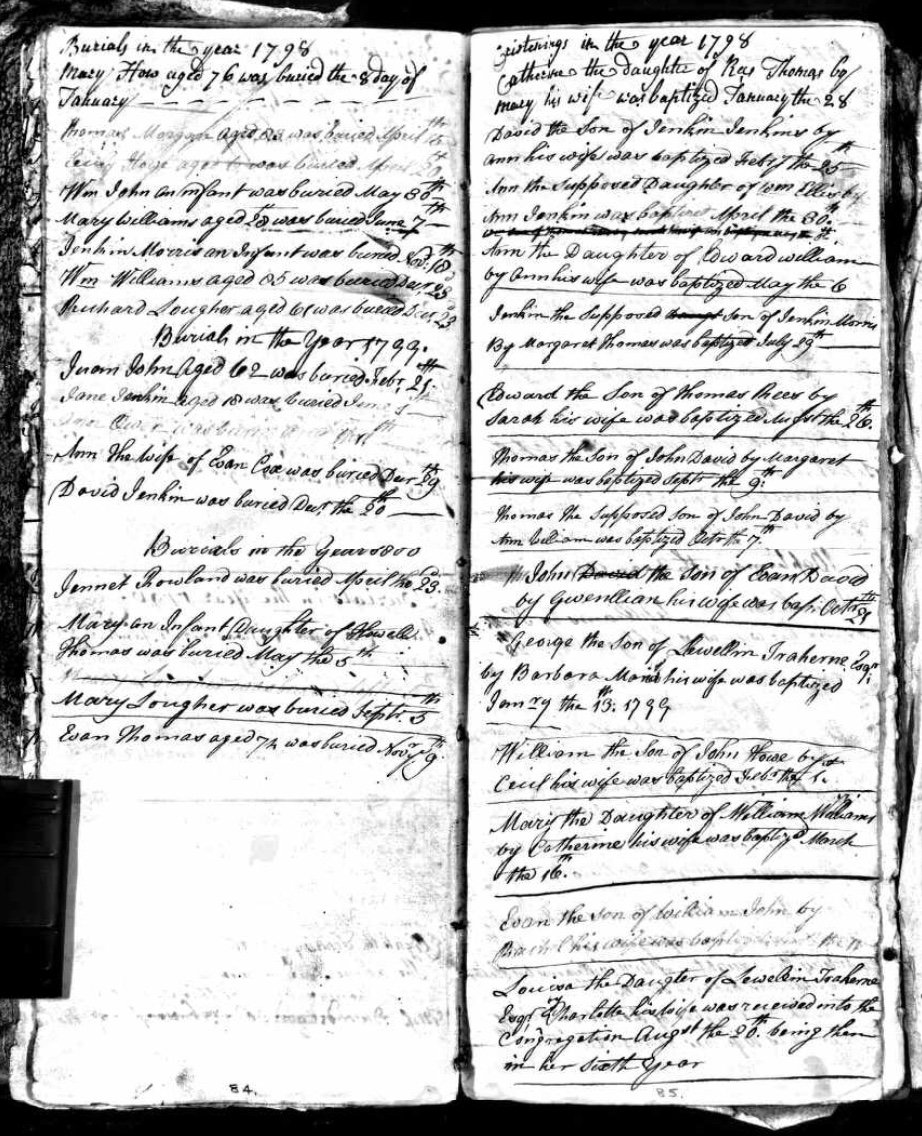
William died on 20 April 1795, aged 19, and Mary followed him three years later, on 8 January 1798. Her burial record is the first entry on the parish register for 1798.

The parish register for marriages reveals that both John and Mary were literate and that John’s cousins, John and Margaret, witnessed the wedding. With his farm, community activities and mother at home, John was probably waiting for the right moment to marry. With his standing in the community, he was an eligible bachelor so Mary, four years older than John, must have been pleased with the match. Equally, she must have possessed qualities that set her apart from younger women. The couple spent 37 years together and I trust enriched each other’s lives.

John died on 23 February 1818, aged 91. For the time, he certainly led a privileged life. And through his family, farm and community activities I sense that it was a rewarding life.

In this month’s issue of our Amazon #1 ranked magazine…

Celebrating the Little Things

Things Children Say

A Young Writer’s View of Our Oceans 

Nature

Poetry 

Art

Classic Movies 

And so much more!

As ever, thank you for your interest and support.

Hannah xxx
Categories
Dear Reader

Dear Reader #73

Dear Reader,

In 1925 Hugo Gernsback, an inventor, writer and magazine publisher designed a helmet that would shut out all external sounds so he could concentrate on his writing. He called it ‘The Isolator’. This is how I write 😂

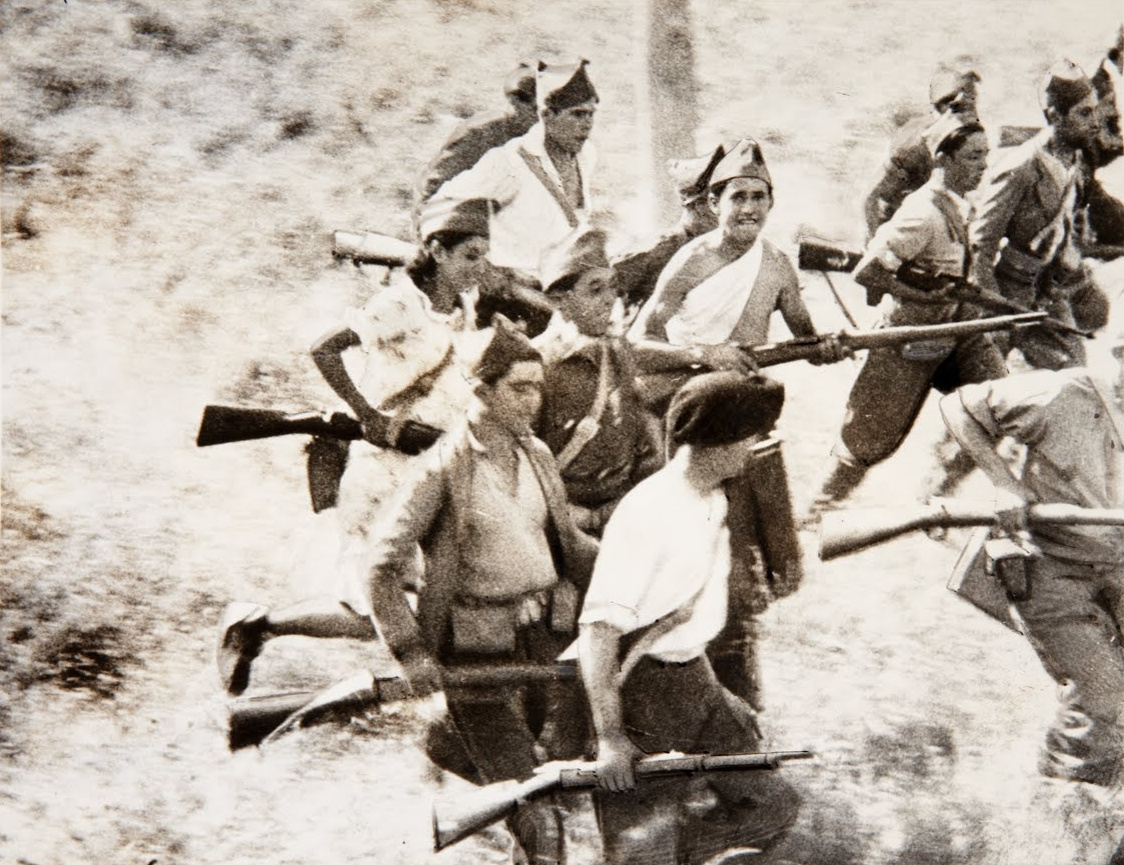
During the Spanish Civil War, Albacete was a loyalist stronghold. However, in July 1936 Franco‘s fascists staged a coup there only for the loyalists, pictured, to defeat them nine days later. Albacete is a location featured in Branches, book two in my Spanish Civil War Saga, The Olive Tree.

And he‘d bought a new mask and swag bag too…

Noreen Riols talks with candour and humour about training SOE agents, seduction and wartime love.

Our liquid amber tree in all its autumnal glory.

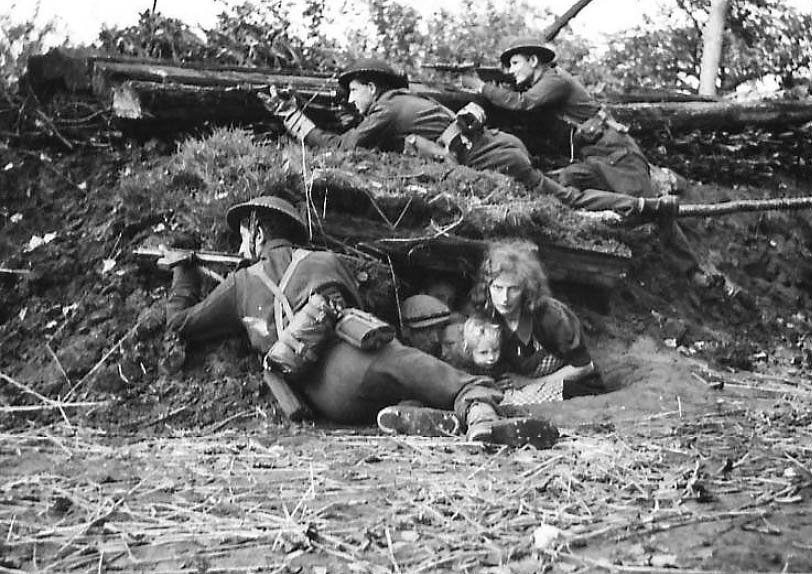
25.10.1944, Boxtel, the Netherlands. Defending a family from the Nazis.

Highlights of being a writer…developing the spark of an idea into a story, receiving kind words from readers who enjoy my books, working with talented translators and narrators. A translator recently: “I’m excited to work with you.” You couldn’t ask for a greater compliment.

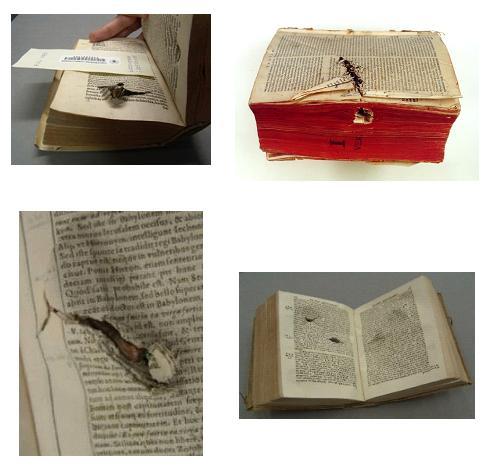
Books save lives. These images are from an exhibition held in Madrid in 2012. They show ‘wounded’ books used as barricades by Loyalists and International Brigade volunteers at the Facility of Philosophy and Letters during the 1936 siege of Madrid.

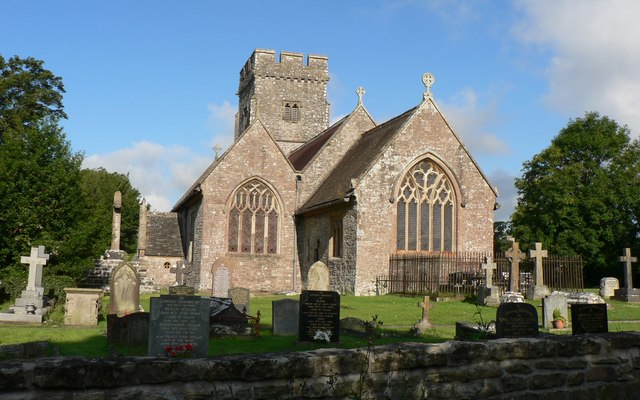
I’ve taken my family tree back to 1663 with the discovery of my 8 x great grandfather, John Howe, born in St Hilary, Glamorgan. Pictured, (Wikipedia) the 14th century parish church at St Hilary where John was baptised. I’m now searching for his wife and children.

I’m researching the family of my 8 x great-grandfather, John Howe, born in 1663. I’ve discovered that he had at least four children. The gap between Joseph and Rebecka strongly suggests that he had at least four more, but they are lost to the historical record.

No further details are available for Rebecka and John junior, but Priscilla married Thomas Deer and they had at least one daughter, Ann, born 23 July 1738 in St Hilary, Glamorgan.

John’s fourth child, Joseph, is my direct ancestor and my next task is to learn more about him.

Priscilla was a very popular name in my family and it featured in every generation well into the twentieth century. The choice of Joseph and Rebecka suggests that their father, John, was a devoted Christian and a regular attender at the parish church of St Hilary.

There is no mention of John’s marriage or his wife – women were often overlooked in the historical record – and in the seventeen century the trade or craft of a person was not often recorded, unless they were landowners or skilled artisans. St Hilary was an agricultural community at the time so it seems highly likely that John and his family worked on the land.

My 7 x great-grandfather, Joseph Howe, was born in 1693 in St Hilary, Glamorgan. He married Elizabeth, c1711, and they produced four children, Elizabeth, Dorothy, Mary and John. The gaps in the historical record suggest that the couple had at least four more children; they brought up a large family, which was common until the second half of the twentieth century.

Little is known of daughter Elizabeth and Mary while, sadly, Dorothy died within days of her birth, another common occurrence for the time. John is my direct ancestor, and more about him next time.

In the late seventeenth century into the early eighteenth century the population of St Hilary stood at around 150 with Welsh the dominant language. Formal education was rare in those days, but from 1675 a charitable trust, the Welsh Trust, ran a small school in the village with ten pupils attending in 1678. Religion was central to this form of education and lessons were conducted by vicars and churchwardens.

St Hilary was an agricultural community so Joseph probably worked on the land. He died on 5 July 1742. Elizabeth survived him by nearly nineteen years and died on 1 May 1761.

At this stage, the Howe family had been in St Hilary for a hundred years, and more. And they would remain there for another generation, thanks to my 6 x great-grandfather, John.

Yesterday, I discovered that one of my ancestors owned a property valued today at well over £1 million. More details after more research. Meanwhile, the question is, where’s my share of the family fortune?!

As ever, thank you for your interest and support.

Hannah xxx