Categories
1963

Social History 1963 #8

Tuesday 5 February 1963

Fierce new blizzards last night threatened to block all roads to the West Country. They followed a day in which widespread snowfalls, six inches deep, brought fresh chaos to the roads in many areas. Road conditions are described as bad to worse to appalling. 

Four out of five families now own a television set. There are six million private cars, and two million motorbikes and scooters on the roads. More than five million of us go dancing every week in 4,000 dance halls.

Nearly 30,000,000 people take a holiday away from home – 4,000,000 go abroad. The Pony Club now has 60,000 members and 700 branches. Show jumping is drawing increasing crowds at 1,000 annual shows with £100,000 in prize money.

Two out of three teenagers go to the cinema at least once a week. Eighty million records a year are sold, 25% of them classical. Five hundred and forty-eight library authorities provide more than 40,000 libraries with 75,000,000 books.

One family in four lives in a post-war house. One in three married women go out to work. Fewer than 1% of households have a resident servant. Nineteen million people are part-time gardeners.

Since 1951, the population has risen by two and a half million. The ratio of women to men is 107 – 100. For the over seventies the ratio is five to three.

Television highlights: Sing a Sing of Sixpence – the story of music hall. Living Today – Holidays on £50. Bookstand – the world of books.

Radio highlights: Dancing Party. Time For Laughter.

Weather: very cold with snow at times, heavy in places. Outlook – continuing very cold with snow. Maximum temperature 1c, 34f.


Wednesday 6 February 1963

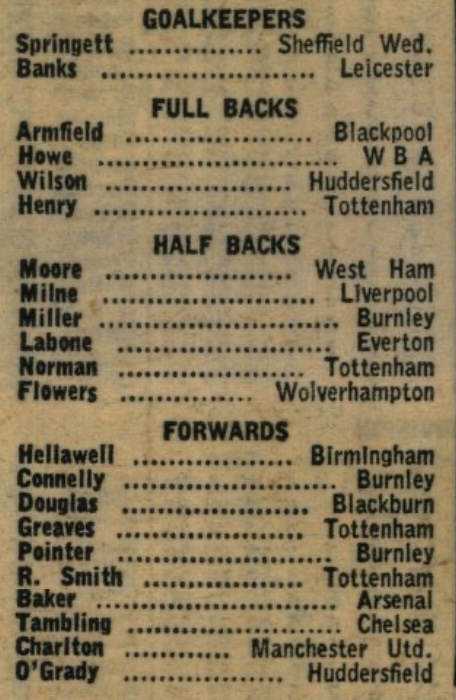
New England football manger Alf Ramsey’s first squad – see below.

An imported English secretary is fast becoming the new status-symbol for American businessmen. A girl’s shorthand and typing are not as important as her accent, reported the Wall Street Journal.

An early thaw in the West Country yesterday changed its mind and became a raging blizzard. Last night, conditions in the area were as bad as ever. Villages are cut off, motorists are stranded, and some people have no bread after sledge teams failed to get through.

James Crossen, 37, phoned a Glasgow hospital to say his wife was going to have a baby. Later, the couple were taken to the hospital – in the same ambulance. For on the way home from the call box, Mr Crossen’s car collided with a lorry. He was treated for head injuries. His wife was taken to the maternity ward.

Two workmen dug up a pair of Stone Age teeth yesterday. The teeth belonged to a mammoth, and were eight inches long. The men were digging a hole for a fuel tank at Guildford telephone exchange, Surrey.

To most people, France is not represented by General de Gaulle, but by Brigitte Bardot. Clothes, wine and perfumes apart, she is France’s biggest export.

Television highlights: Z Cars, My Friend Flicka, International Detective.

Radio highlights: Round Britain Quiz, Meet the Eagles (a pop band, but not the 1970s version).

Weather: very cold with snow. Outlook – a thaw probably spreading to most districts. Maximum temperature 1c, 34f.
Thursday 7 February 1963

Great Thaw Starts – So Do The Floods. As the 43-day grip of ice and snow was breaking, the flood waters were pouring over the roads of Devon, Cornwall and Wales. Torrential rain added to the floods. Many roads are now rivers.

The government is backing more research into the hovercraft – the revolutionary craft that floats on a cushion of air. A five-and-a-half ton model, HD1, will be built soon and tested on Southampton Water.

Four miners were released yesterday after a roof fall had trapped them for several hours 1,800 feet underground at Trelewis, Glamorgan. One man was badly injured. Last night, the body of a fifth man was found by rescue teams.

An entire department store was cleaned out by raiders yesterday. It’s believed that the gang spent four hours sorting through fur coats, underwear, radio sets, clocks and watches at D. B. Evans store in Holloway, London. They packed their loot – estimated value £20,000 – into lorries and drove away unseen. 

The BBC is asking for an increase in the £4-a-year combined tv and radio licence. The BBC say if they have an increase to £5 this year they can get through the 1960s without asking for a £6 licence.

Television highlights: European Figure Skating Championships, Lassie, Discs A-Go-Go.

Radio highlights: Folk Songs. Any Answers?

Weather: Rain, milder than of late. Outlook – rain, bright spells. Maximum temperature 4c, 39f.

Friday 8 February 1963

Troops, helicopters and army “Ducks” stood by on a flood alert in the West Country last night as rivers, swollen by the thaw, rose bank high. Many rivers in Devon are expected to burst their banks today. In Carmarthen, Wales, fields are under water.

Britain’s longest running television series, Emergency Ward Ten, makes its 574th appearance on ITV tonight. The series began in 1957, and prides itself on being realistic. The only item faked is the blood. “We use gravy,” an ATV official said last night. “We find that it flows at just the right speed.”

“Concerned” from Sussex writes, “My husband refuses to have a TV because he reckons that the children would waste their time watching tripe.” Jane Adams’ reply, “To deprive your children of television is to shut them off from a source of education, and a slice of life.”

“Donald” writes, “On our date, I behaved like a gentleman and did not kiss my girlfriend goodnight. She has behaved indifferently towards me ever since.” Jane Adams’ reply, “Clearly, this girl expected you to kiss her goodnight, and behave like a gentleman.”

Television highlights: Let’s Imagine – Flying Saucers. Dr Kildare. Bicycle Thieves – Italian Feature Film.

Radio highlights: German for Beginners. Play: The American Dream.

The average height of men in Britain is 5’ 71/2”.

Cardiff City’s Third Round FA Cup tie against Charlton Athletic has been postponed for the eighth time.

Weather: steady thaw. Rain at times. Outlook – similar. Maximum temperature 4c, 39f.

Saturday 9 February 1963

Soccer’s snowed-up 1962/63 season might run into June. So far, over 300 games have been postponed. Cricket is sure to protest, but it looks as if there will now be a major battle between the sports. Also, some football and cricket clubs share the same ground, so that issue also needs to be addressed.

The Scottish Football League is considering switching its season to run from March to November. The English Football League has already rejected a similar plan.

Due to snow, ice and floods only eleven football matches will be played this weekend. The Pools Panel will sit for the third week running, chaired by Group-Captain Douglas Bader. 

Traffic was held up at London’s Marble Arch yesterday when a lorry overturned and scattered thousands of whiskey bottles over the road. But not a drop was spilled – the bottles were empty.

The vegetable situation is still grim with greens very poor. Old potatoes are 6d a lb, sprouts are 10d, leeks 1s 6d, old carrots 1s, swedes 8d and mushrooms 1s 6d a quarter.

Top three TV this week: The Prime Minister’s Broadcast, Coronation Street, Steptoe and Son.

Television highlights: Grandstand, including the Pools Panel results. The Rag Trade. Ghost Squad.

Radio highlights: Twenty Questions. Top Discs.

Weather: fog patches, rain. Outlook – similar. Maximum temperature 5c, 41f.

Available for pre-order, Songbird, my novel set in the winter of 1962-63

https://books2read.com/u/bMqNPG

For Authors

#1 for value with 565,000 readers, The Fussy Librarian has helped my books to reach #1 on over thirty occasions.

A special offer from my publisher and the Fussy Librarian. https://authors.thefussylibrarian.com/?ref=goylake

Don’t forget to use the code goylake20 to claim your discount 🙂

Categories
1963

Social History 1963 #4

Wednesday 16 January 1963

A “TV phone” – a telephone fitted with a viewing screen – has been demonstrated to scientists in Milan, Italy.

The BBC’s “Book of Taboos”, a guide for producers and writers, lists lavatories, effeminacy in men and immorality. However, a BBC spokesman said that the BBC always encouraged producers and writers to use their judgement in matters of good taste.

The condition of Hugh Gaitskell, leader of the Labour Party, is now “giving rise to some anxiety.” Despite intensive treatment over the past week, his condition has deteriorated.

Britain was the only industrialised country to show a rise in unemployment in 1962, figures revealed yesterday. Total number of unemployed – 566,158.

Look out for a new star in Z-Cars, BBC 7.55 tonight. He is Colin Welland, 28, who plays Police Constable Graham. At the end of the month, Welland will become the co-driver of Z-Victor Two with PC Lynch (James Ellis).

Television highlights: Wednesday Magazine, including an interview with the new Earl of Buckinghamshire. Robin Hood. Danger Man.

Radio highlights: Parade of the Pops. Disc Club. 

Soccer: FA Cup Third Round – Barnsley 0 Everton 3. Attendance 30,024. Receipts £77,951.

Weather: sleet or snow. Brighter later. Outlook – continuing cold with more snow. Maximum temperature 1c, 34f.

Thursday 17 January 1963

Hospital bulletin on Labour leader, Hugh Gaitskell. Mr Gaitskell’s condition has deteriorated further. The outlook is very grave unless there is some response to treatment during the next twenty-four hours.

Keeping the bed warm is becoming a risky business, a report revealed today. The report stated that fires caused by electric blankets soared from seventy in 1953 to a staggering 1,022 in 1961. More recently manufactured electric blankets have a higher rate of fire incidence than those made earlier.

A thief stole dozens of odd shoes from a car in Manchester yesterday. There wasn’t a complete pair amongst them. 

Television highlights: Crackerjack, Tales of Mystery, Moment for Melody.

Radio highlights: Twelve O’Clock Spin, Smash Hits.

There are only three female solo singers in the top thirty – Julie Grant, Susan Maughan and Maureen Evans. Tipped for the top in Discland – Brenda Lee, Barbra Streisand, Alma Cogan and Nana Mouskouri. 

Football: Arsenal’s third round FA Cup tie against Oxford United has already been postponed five times. Their fixture programme now states that the game will be played in “January 1963”. With more snow forecast, maybe they should have stated “sometime in 1963”.

In Arctic Britain…polar bear Sonja has given birth to a cub at Whipsnade Zoo. The cub’s sex is not yet known.

Weather: mainly dry with periods of sunshine. Very cold. Outlook – very cold, frosty, snow showers. Maximum temperature -1c, 30f.

Friday 18 January 1963

Biggest Blackout Yet Hits Britain. Wide areas of East and South-East England were in darkness for three hours. And an Electricity Board spokesman said it could be just as bad today. The causes: the Big Freeze and the electricity works’ “go-slow” over a pay dispute.

Labour leader Hugh Gaitskell was said to be “dangerously ill” last night. Mr Gaitskell went into hospital two weeks ago with pleurisy and inflammation of the heart tissues.

A private in the Welch Regiment told a court-martial that he usually drank thirty-five glasses of beer when he went out for an “all-night session”. The private, John Hughes, was accused of drunkenness, assault and causing damage to a Berlin bar.

The BBC claim that they have 52% of viewers compared to ITV’s 48%. However, ITV claim to have 57% of viewers compared to the BBC’s 43%. The difference is due to the methods of audience measurement.

Thieves had to abandon a whiskey haul worth thousands of pounds in Stepney, London, because they could not start the getaway lorry.

The BBC censored Charlie Drake’s song My Boomerang Won’t Come Back. They removed the words “oh my gawd” from the Housewives’ Choice radio show introduced by “disc jockey” Kenneth Wolstenholme. However, Charlie Drake will be allowed to sing the uncensored version on TV.

Television highlights: Kanal – Polish film with subtitles. Gardening Club. The Verdict is Yours.

Radio highlights: Listen With Mother. Take Your Partners.

Weather: very cold with snow showers. Outlook – cold with more snow. Maximum temperature -2c, 28f.

Saturday 19 January 1963

Mr Hugh Gaitskell (pictured), the 56-year-old Labour Party leader, died last night. Labour spokesman John Harris said, “A light has gone out of our lives. A spokesman for Sir Winston Churchill said, “Sir Winston is grieved and says Mr Gaitskell’s death is a great loss to the nation.”

One in ten homes in London were blacked out last night by power cuts. The gay lights of the West End cut out at rush-hour time bringing big jams as street lamps and traffic signals failed. 

“Stagger Sunday lunchtime or there will be more power cuts”, the Electricity Board warned last night. There may also be some evening cuts today and tomorrow.

More than 200 vehicles were marooned on Stainmore, Westmorland, yesterday, as blizzards virtually isolated Scotland from England. Many of the drivers abandoned their cars and lorries, and spent the night in a moorland cafe. Vehicles were being frozen in their tracks as their fuel systems iced up.

Summer soccer? “Forget it,” was the verdict of League secretary Alan Hardaker yesterday. He added, “Out of all the managers, fans and sports writers screaming for it, not one has been able to come up with a workable idea for how it could be started.” Meanwhile, the wintry weather decimated the fixture list again this weekend.

Top television: Steptoe and Son soared to sixth place while Hancock dropped to number eighteen. Coronation Street remained at number one.

Television highlights: Grandstand, Juke Box Jury, That Was The Week That Was.

Radio highlights: LP Parade, Pops at the Piano.

Weather: still very cold with snow showers. Strong winds, sometimes reaching gale force. Outlook – continuing very cold. Maximum temperature -2c, 28f.

Sunday 20 January 1963

Football Pools Sensation – they may invent the results next week. A panel of experts will predict the results of postponed matches. If more than thirty games are postponed, the experts will announce their results and the pools will not be void.

There were a record number of soccer postponements in Britain yesterday – fifty-four league games, three more than last Saturday’s worst ever.

A Sheffield University professor predicts that in the not-too-dim future there will be robot maids to do the housework.

Latest American gimmick – pets’ doorways made of triangular polythene set in an aluminium or plywood frame. They can be fitted into walls and ordinary doors. Cats and dogs can pass through the panels, which spring back into position to exclude draughts.

Can I borrow £500 from a building society to buy a car and garage? If you are already buying your home your building society might lend you money to build a garage, but certainly not a car.

In the top twenty this week: Like I Do – Maureen Evans, Up on the Roof – Kenny Lynch, Bobby’s Girl – Susan Maughan.

A dikdook is an amazing thing. Read all about dikdooks and other up-to-date spells and love-potions in tomorrow’s Women’s Mirror, 6d.

Television highlights: Twizzle, Rejoice and Sing, The Avengers.

Radio highlights: Easy Beat, Time for Old Time.

Weather: very cold with biting East winds. More snow. Heavy frost.

Available for pre-order, Songbird, my novel set in the winter of 1962-63

https://books2read.com/u/bMqNPG

For Authors

#1 for value with 565,000 readers, The Fussy Librarian has helped my books to reach #1 on over thirty occasions.

A special offer from my publisher and the Fussy Librarian. https://authors.thefussylibrarian.com/?ref=goylake

Don’t forget to use the code goylake20 to claim your discount 🙂

Categories
1963

Social History 1963 #5

In the 1962-3 football season, Everton won the First Division title for the sixth time in the club’s history. They clinched the title on 11 May with a 4 – 1 victory over Fulham at Goodison Park. Welshman Roy Vernon was Everton’s top scorer with 24 goals.

1,536 goals were scored during the season at an average of 3.32 goals per match. The highest scoring game was Tottenham Hotspur 9 – 2 Nottingham Forest, 29 September 1962.

📊 Wikipedia

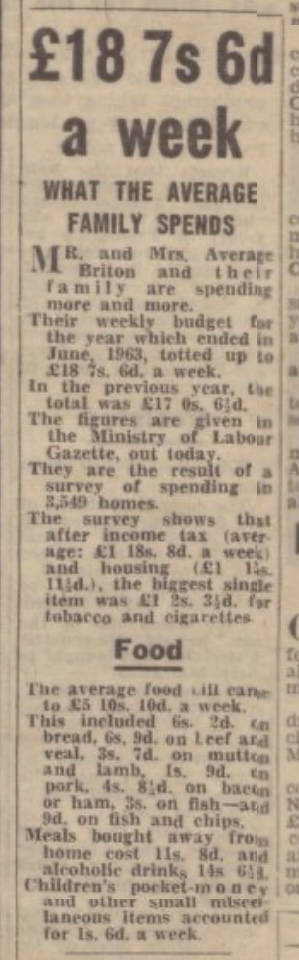
The family budge. From the Daily Mirror, 31 December 1963.

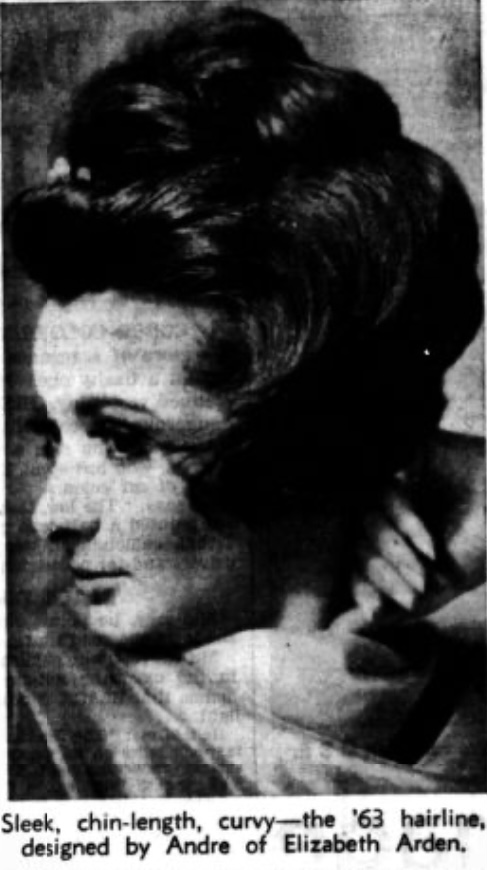
Female hairstyles for 1963, according to Alice Cooper Beck of the Daily Herald, will consist of chin-length, slightly tapered hair worn straight with a side or centre parting, and a heavy fringe. No back-combing. For the evening, your hair will be swept up, and topped with a curvy hairpiece. 

Alice reckoned that the demand for curvy hairpieces would soar in 1963.

Radio listings for 26 December 1963. From this distance, the programmes on offer look grim, but maybe they were exciting at the time? 🤔

My impression: radio programmes in 1963 were more in tune with the 1950s than the Swinging Sixties.

Dr Who was first broadcast at 17:16:20 GMT on 23 November 1963 with William Hartnell (pictured) as the First Doctor. The series was designed to appeal to a family audience with time travel used as a means to explore scientific ideas and famous moments in history.

Episode one of Dr Who appeared eighty seconds later than scheduled because of an announcement concerning the assassination of John F Kennedy.

The Daleks first appeared on British television on 21 December 1963 (just a glimpse on that occasion; they were fully revealed the following week). 

The seven-part serial was written by Welshman Terry Nation, thus beginning a long Welsh association with the series. With the Daleks, Nation was influenced by the threat of racial extermination by the Nazis.

I’m not a science fiction fan, but I reckon the Daleks and the Dr Who theme music are touched by genius.

📸 Wikipedia

Coming soon, Songbird, my novel set in the winter of 1962-63

https://books2read.com/u/bMqNPG

For Authors

#1 for value with 565,000 readers, The Fussy Librarian has helped my books to reach #1 on over thirty occasions.

A special offer from my publisher and the Fussy Librarian. https://authors.thefussylibrarian.com/?ref=goylake

Don’t forget to use the code goylake20 to claim your discount 🙂
Categories
1920s

1920s #4

In September 1920, the first Bentley cars were delivered to customers. Pictured, a Bentley EXP2 (Experimental nr. 2), the oldest surviving Bentley (📸 Wikipedia).

The 1921-22 season was the 30th for the Football League. Liverpool were champions while Bradford City and Manchester United were relegated. Nottingham Forest and Stoke took their place.

For this season the Third Division was divided into North and South sections increasing the number of clubs in the league from 66 to 86.

Graphic: Wikipedia

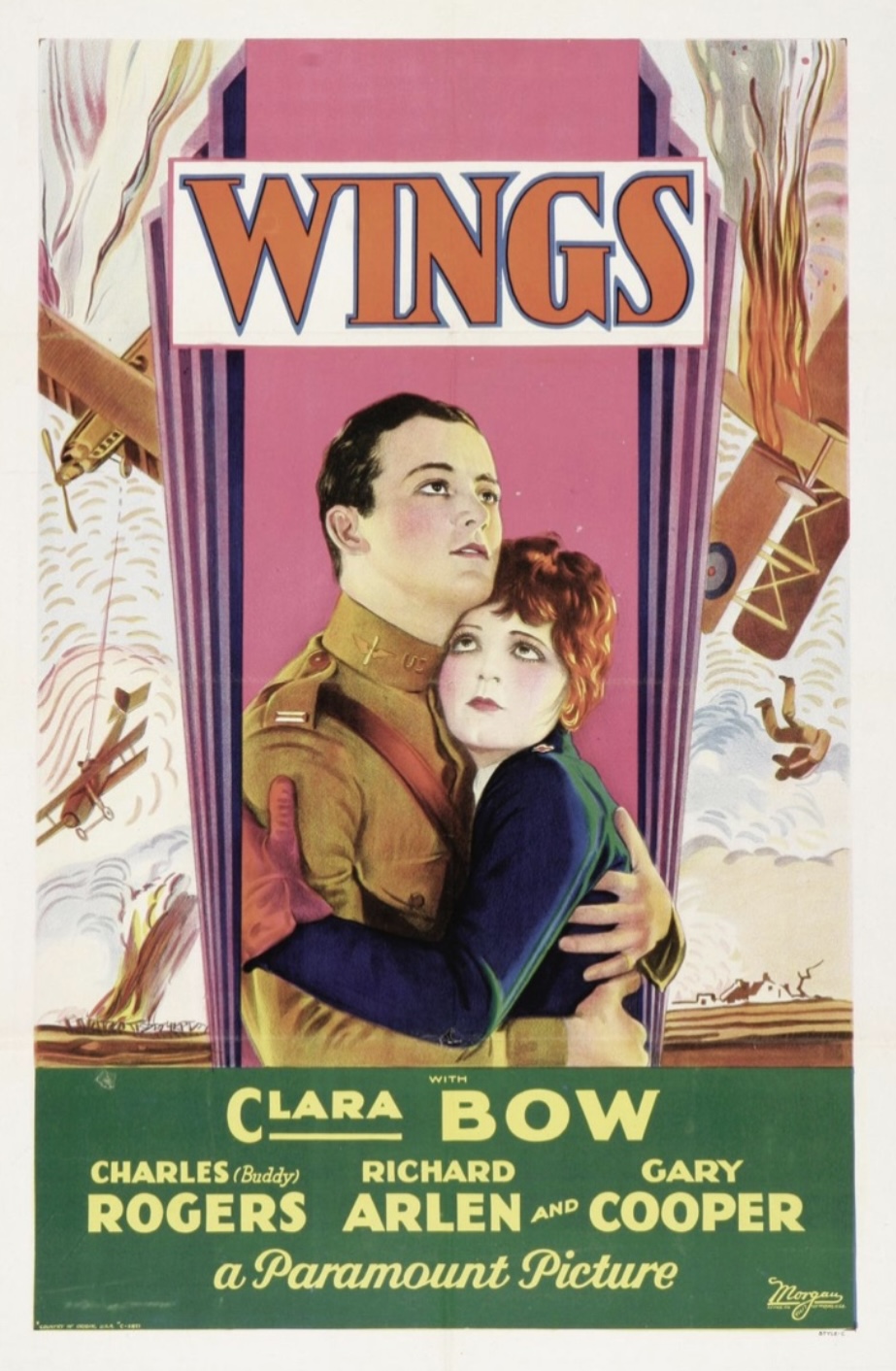
Wings, a First World War drama that dominated the movie world in 1927, opened at the Criterion Theater in New York City on August 12, 1927. Tickets cost $2, an unheard-of admission price. The standard rate was $0.25 a ticket.

Wings was a homage to First World War fighter pilots. As its star Clara Bow rightly observed, it was a buddy movie and she was only added to the cast because she was red hot at the box office. Clara’s appearance guaranteed that the movie would be a success. Furthermore, the quality of the film, and the amazing stunt flying, ensured that Wings won the first ever Academy Award for Best Picture.

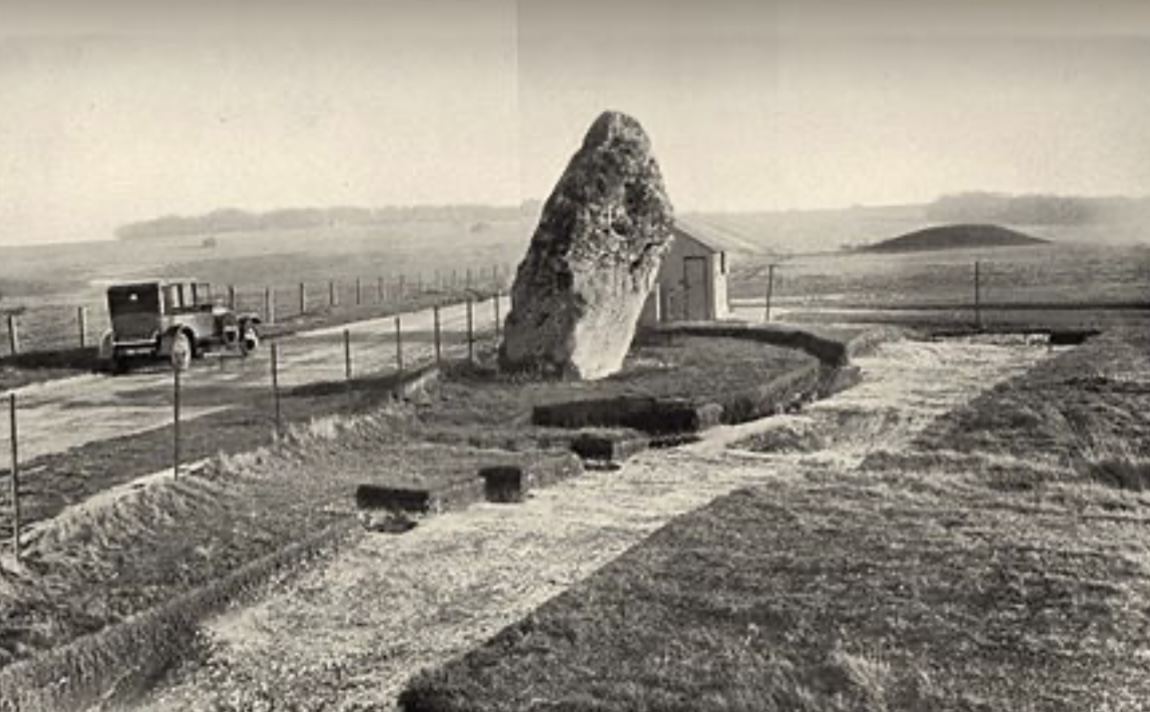
Between 1919 and 1926, Lieutenant-Colonel William Hawley (1851–1941) conducted pioneering excavations at Stonehenge. One of Hawley’s main achievements was to identify the Aubrey Holes (named after one of my ancestors, John Aubrey). Hawley also found cremated and uncremated human remains, which first indicated a funerary role for Stonehenge. His multiphase interpretation of the site was dismissed at the time, but in the 1950s the idea was revived. However, his idea that Stonehenge was a fortified settlement is still not accepted.

Excavations near the Heelstone (The Antiquaries Journal, 1925)

Motoring. Compulsory hand signals for all drivers were introduced on 10 October 1920.

Hand signals would remain a crucial part of motoring life until the 1970s, when the increased use of indicators on vehicles rendered them superfluous.

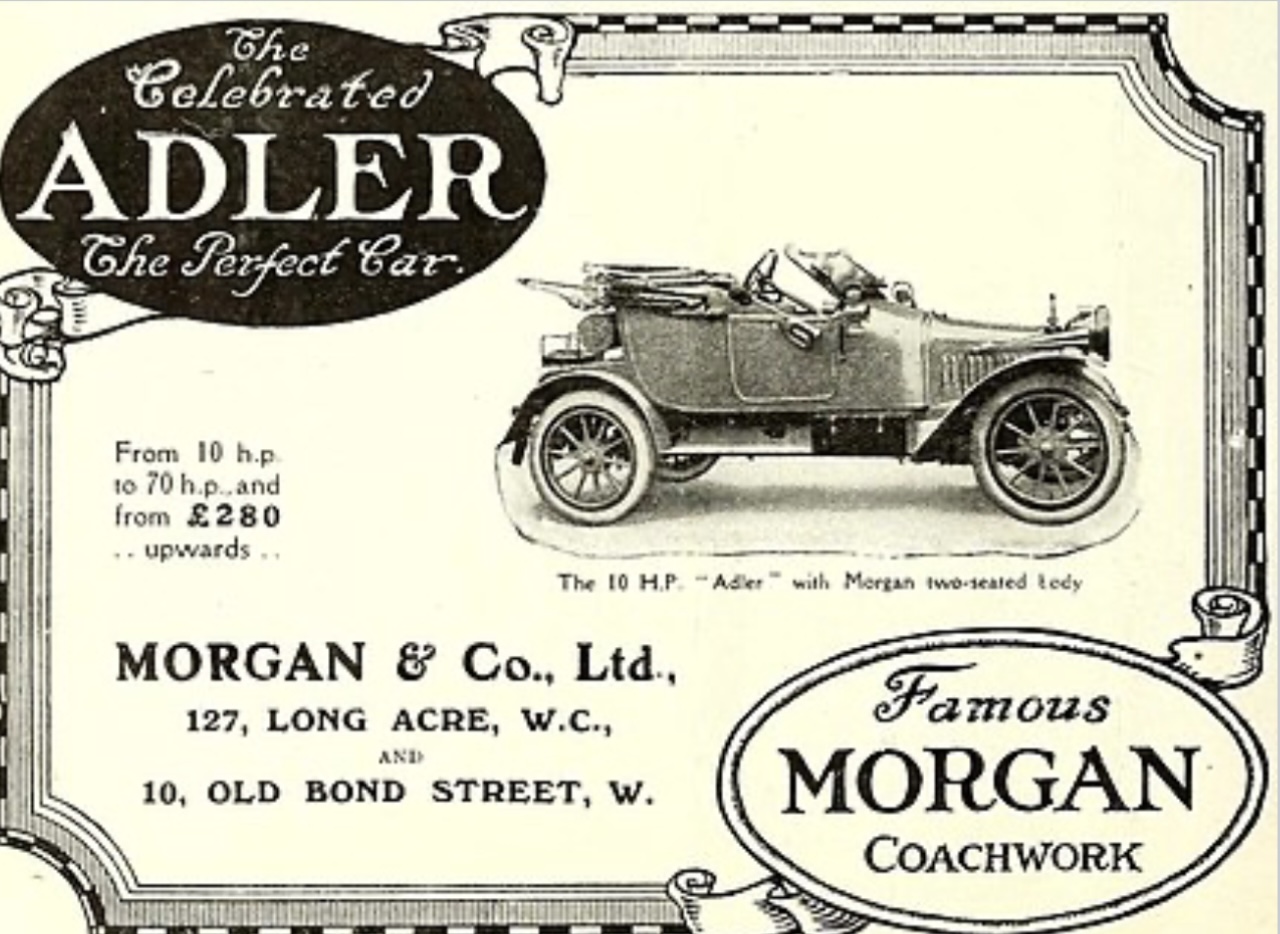
An advertisement for the Morgan Adler, “The Perfect Car”

In 1921, Swiss psychoanalyst Hermann Rorschach published Psychodiagnostik in which he proposed the inkblot test. 

In the Rorschach test, a subject’s perception of inkblots is recorded and analysed using psychological interpretation and complex algorithms. The test can shed light on a subject’s personality and emotional functioning, and is particularly helpful when subjects are reluctant to articulate their thoughts.

The first Rorschach card (I reckon this is Scooby Doo with his back to a mirror 😉)

More flapper slang from the 1920s

Sharpshooter – a good dancer and big spender

Spoon – kissing

Strike breaker – a woman who dates her friend’s boyfriend 

Tomato – a woman lacking intelligence

Umbrella – a man that any woman can borrow for an evening

Whangdoodle – jazz music

For Authors

#1 for value with 565,000 readers, The Fussy Librarian has helped my books to reach #1 on 32 occasions.

A special offer from my publisher and the Fussy Librarian. https://authors.thefussylibrarian.com/?ref=goylake

Don’t forget to use the code goylake20 to claim your discount 🙂
Categories
Dear Reader

Dear Reader #160

Dear Reader,

Fonts can suggest an atmosphere and sense of time. With Tula, my novel about an actress, I’m looking to invoke the 1920s, so I’m experimenting with Snell Roundhand and American Typewriter.

Brooklyn Bridge is a location in chapter two of Tula. She goes there to deliver a parcel for her father and notices a cameraman filming. While she’s engrossed in the filming, someone steals the parcel.

At the time of its opening, on May 24, 1883, Brooklyn Bridge was the longest suspension bridge in the world with a span of 1,595.5 feet.

🖼 Chromolithography of the “Great East River Suspension Bridge” by Currier and Ives, 1883.

Was Clara Bow a good actress? On a human level, this question is irrelevant – Clara dragged herself out of abject poverty and pursued her dream; that’s all that matters. On an artistic level, it would be nice to answer the question, so here’s my opinion.

First, what other people said about Clara’s acting ability. Fellow actress Louise Brooks: “She was absolutely sensational in the United States … in Dancing Mothers … she just swept the country … I know I saw her … and I thought … wonderful.”

In 1981, producer Budd Schulberg described Clara as “an easy winner of the dumbbell award” who “couldn’t act.” Furthermore, he compared her to a puppy that his father B. P. Schulberg had trained to become Lassie.

Director Victor Fleming compared Clara to a Stradivarius violin: “Touch her, and she responded with genius.” Another director, William Wellman said, “Movie stardom isn’t acting ability – it’s personality and temperament … I once directed Clara Bow (Wings). She was mad and crazy, but WHAT a personality!”

While Grace Kingsley of the Los Angeles Times said; “Don’t miss Wine. It’s a thoroughly refreshing draught … there are only about five actresses who give me a real thrill on the screen – and Clara is nearly five of them.”

Clara Bow in Stars of the Photoplay, 1924

Clara Bow didn’t require direction: she required background about a particular scene, then a wise director would light the set and allow her to go with the flow. She understood character, and how to convey that character to an audience, not en block, but with subtle asides that would convey different messages to males and females, to those who would love her character, and to those who would disapprove. The net result: (nearly) everyone loved her performances.

Brought up in the silent era, Clara knew how to convey emotions through facial expressions, particularly through her eyes. Her glances were worth a page of dialogue, while her ability to cry on demand was legendary.

My opinion: Clara Bow was a great emotional actress. She knew how to get inside a character, how to portray a character, and how to connect with an audience. I agree with Victor Fleming – on the silver screen, Clara Bow responded with genius.

***

Continuing my research into Eva Marie Saint’s ancestry using public records. I’m looking to answer two questions: was Eva’s talent the result of nurture, or nature? And why am I drawn to her as an actress? Can I find the answers to these questions in her roots?

Eva Marie’s grandfather was John Q Saint, a postmaster from Indiana, living in Iowa in 1900. What did the Q stand for? This document provides the answer, and a whole lot more.

The Q in John’s name stood for Quincy. Furthermore, his parents were Jonathan and Emily, and they were Quakers.

John Quincy Saint
Event Type:Birth
Birth Date:19 Dec 1847
Birth Date on Image:19 1847 Twelfth
Birth Place:Henry, Indiana
Father:Jonathan Saint
Mother:Emily Saint
Monthly Meeting:Duck Creek Monthly Meeting
Yearly Meeting:Philadelphia Yearly Meeting
Meeting State:Indiana
Meeting County:Henry

So, my next task is to discover more about Jonathan and identify when his family became Quakers – did they join a Quaker community in America, or were they persecuted Quakers in Britain, seeking a new home?

***

Sleight of Hand, Series 1, Episode 15 of The Rockford Files is different to all previous episodes. The main reason for the difference is Sleight of Hand was based on a novel, Thin Air by Howard Browne. 

This episode is Rockford noir with little in the way of humour. Rockford becomes seriously aggressive on a couple of occasions too, both justified. 

In long-running series, writers are always looking for new angles for their characters, so it’s easy to understand why the Rockford writers were drawn to this story, but did it work as an episode of The Rockford Files?

I reckon the radical nature of this story would divide fans. Some would recognise that the story was built on an interesting premise – a baffling disappearance – while others would appreciate that the story was written for a different main character, a married man.

Georgian London established itself as a place for fashionable living with new streets and squares in Westminster, plus plush palaces for entrepreneurs and aristocrats. It fashioned a society based on exploitation and profit. It became a city without a soul.

Through the Bank of England, the Royal Exchange and a network of coffee houses, fortunes were made – and lost. Money, stocks and shares were king. However, the financial pie is of limited size, and for every big time winner there were scores of big time losers. For every palace, scores of slums blighted the city, and ruined peoples’ lives.

Two new bridges across the Thames linked the north and south of London. The city spread into the countryside. Houses sprang up. The landscape altered beyond all recognition. 

Workshops and manufacturing centres fed the need for essentials, and luxury goods. Breweries quenched thirsts – alcohol was safer to drink than London water – while artisans displayed their skills in pottery and porcelain production, in clock and watchmaking, in furniture making, and in silk weaving.

London was a cosmopolitan place. But, as someone might have said at the time, “You ain’t seen nothing yet.”

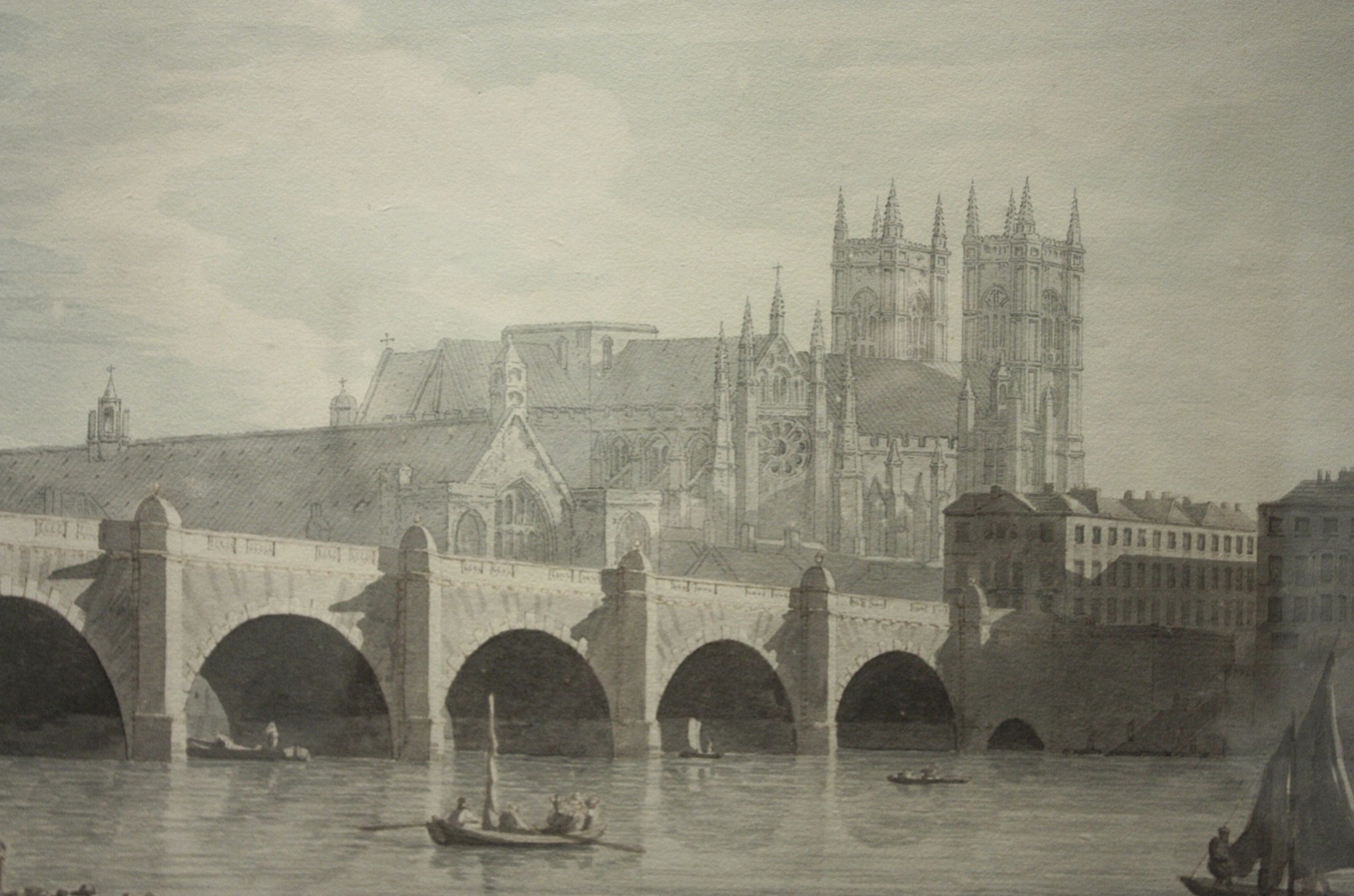
Westminster Bridge, depicted by Joseph Farrington, 1789. 🖼 Wikipedia.

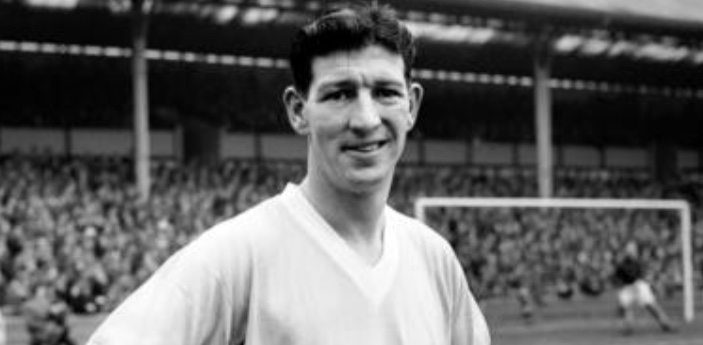
Roy Clarke was born on 1 June 1925. A winger, he played professional football for Cardiff City, Manchester City, Stockport County and Wales.

A natural sportsman at school, Roy served his country during the Second World War as a coal miner, digging the ‘black gold’ that kept British industry going, which in turn kept the war effort alive.

In 1942, Roy signed for Cardiff City as an amateur. When league football resumed in 1945, he turned professional. 

Cardiff City won promotion from Division Three (South) in 1946 – 47. In May of 1947, Roy signed for Second Division Manchester City for a fee £12,000. 

At that time, Manchester City secured promotion to the First Division. This meant that Roy achieved the unusual feat of playing in three different divisions in consecutive matches.

Roy secured a regular place in the Manchester City team. Over the next decade he made 349 league appearances scoring 73 goals. He was also an FA Cup winner in 1956. During that match his friend, Manchester City goalkeeper Bert Trautmann, broke his neck, but played on.

In 1958, Roy wound down his professional career at Stockport County. On the international stage, he won 22 caps for Wales.

After his retirement from football, Roy became the manager of the Manchester City social club. Along with his wife, Kathleen, he provided an environment for fans, management and players to forge closer bonds. The club ran for nearly 25 years.

***

Independent Press-Telegram, Long Beach, California, October 21, 1950. “Lady Stars Gain Height.”

Highest grossing film of 1920: Way Down East.

A silent romantic drama, directed by D.W. Griffith and starring Lilian Gish, Way Down East is best remembered for its climatic scene in which Lillian Gish’s character, Anna, is rescued from doom on an icy river (pictured).

Way Down East was heavy censored. The Pennsylvania film board demanded over sixty cuts, rendering the story meaningless. The mock marriage and honeymoon between Lennox and Anna had to go, along with any hints of her pregnancy. Other cuts included scenes where society women smoked cigarettes and an intertitle, which featured the words “wild oats”.

Clara Bow Quotes: “When I was ten years old I knew what I wanted – to be a screen star was my idea of heaven. But what chance had I? My family was poor. We lived in a not too pleasing section of Brooklyn, and my only contact with the screen was an occasional visit to a neighbourhood theatre, paying my admission with pennies and nickels earned by taking care of neighbours’ children when not looking after my (sick) mother.”

As ever, thank you for your interest and support.

Hannah xxx

For Authors

#1 for value with 565,000 readers, The Fussy Librarian has helped my books to reach #1 on 32 occasions.

A special offer from my publisher and the Fussy Librarian. https://authors.thefussylibrarian.com/?ref=goylake

Don’t forget to use the code goylake20 to claim your discount 🙂