Categories
1920s

The 1920s #1

In the new year, I hope to research 1925 in detail. Meanwhile, here’s some general information about the 1920s, starting with some flapper slang.

Airedale – an unfashionable, not with-it man
Alarm clock – a chaperone
Apple sauce – flattery
Banks closed – no petting or kissing
Barneymugging – the opposite of banks closed
The bee’s knees, the cat’s pyjamas, the elephant’s instep – the best

In 1925 Clarence Birdseye, pictured, invented a process for frozen food. Later, he invented the double belt freezer. His initial product line featured 26 items, including 18 cuts of frozen meat, spinach, peas, a variety of fruits and berries, blue point oysters, and fish fillets.

More flapper slang from the 1920s

Billboard – flashy man or woman
Biscuit – a cute, possibly promiscuous, woman
Cake basket – a limousine
Clothesline – local gossip
Corn shredder – a dancer who treads on your feet
Dropping the pilot – getting a divorce
Edisoned – being asked a lot of questions
Eye-opener – marriage
Father Time – a man over thirty

🖼️ The Flapper, 1922

In 1925, a number of record companies improved on an electrical recording process originally developed by Western Electric and produced a more lifelike sound.

Jazz dominated the music scene. The word jazz arose out of West Coast slang, c1912. At that time it did not refer to music. Jazz was used in an article about baseball in 1913 and appeared in reference to music in a Chicago Daily Tribune article of 1915.

The King and Carter Jazzing Orchestra, 1921

On 5 August 1926 Warner Brothers produced the first Vitaphone movie, Don Juan (the third highest grossing film of the year). The Vitaphone system used multiple 33 1⁄3 rpm gramophone records to play back music and sound effects synchronised with film.

The Jazz Singer, the first part-talkie, followed in 1927, then the first all-talkie Lights of New York, in 1928, then the first all-colour all-talkie On With The Show, in 1929. The silent movie era arguably ended with Modern Times in 1936.

The 2020s

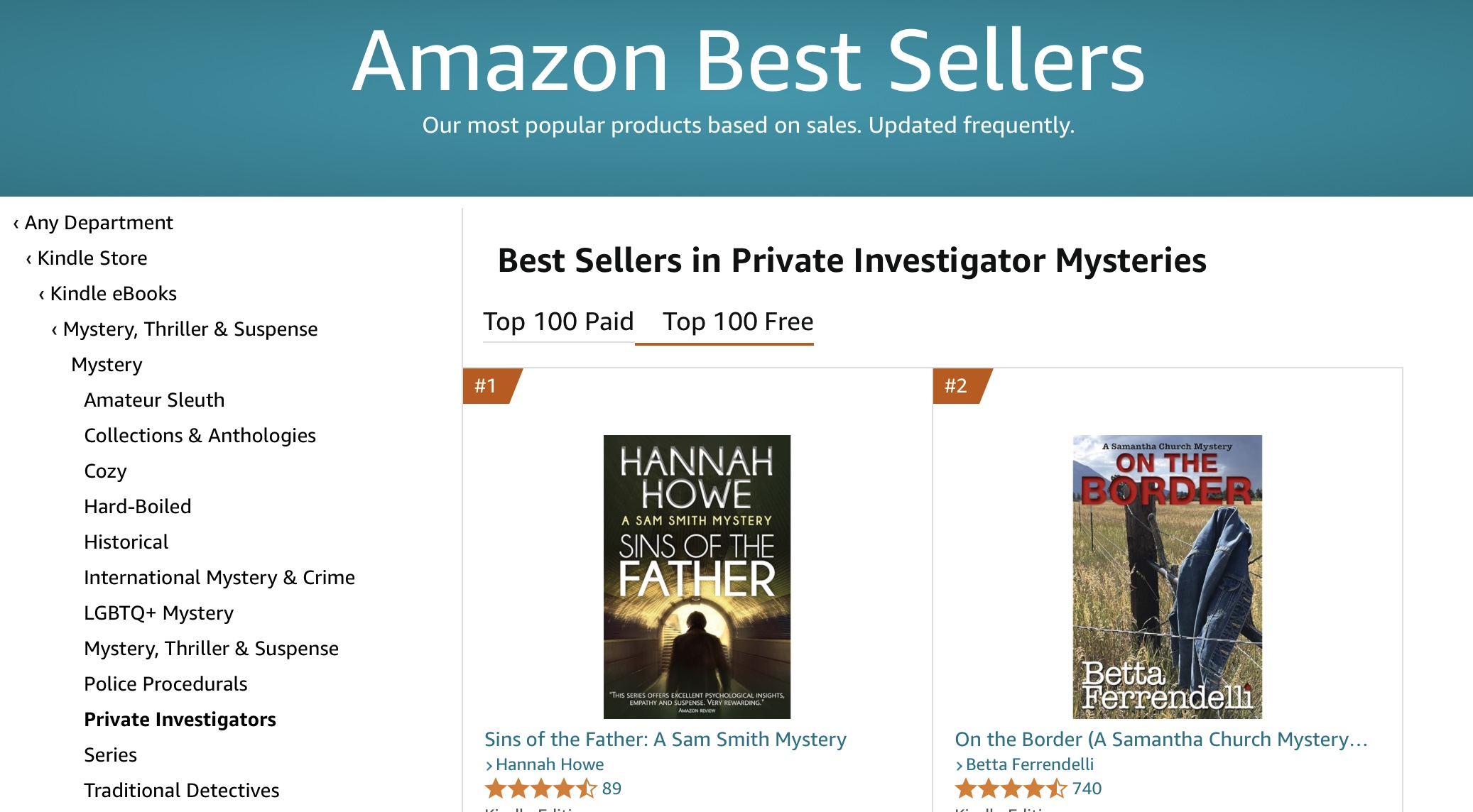
At the moment, we are promoting Sins of the Father, book eight in my nineteen book Sam Smith mystery series (book twenty is scheduled for next year). I’m delighted to say that Sins of the Father is #1 on Amazon’s private investigator chart 🙂
For Authors

#1 for value with 565,000 readers, The Fussy Librarian has helped my books to reach #1 on 38 occasions.

A special offer from my publisher and the Fussy Librarian. https://authors.thefussylibrarian.com/?ref=goylake

Don’t forget to use the code goylake20 to claim your discount 🙂

Categories
Genealogy

Lowcock Branch #4

In 1825, my 4 x great grandmother Ann Lowcock travelled from the West Country to London to seek Poor Relief for herself and three young children – Thomas, Sarah and James – because her husband, James Richard Brereton, was ill. James Richard Brereton was a skilled metalworker, and London was his parental home – hence the journey.

Thankfully, James Richard Brereton recovered and his family returned to the West Country. There, he resumed his trade working as a goldbeater and a travelling tinker. James also fathered three more children: Elizabeth, Maria and Francis. Sadly, Maria and her elder brother James died in infancy.

Ann Lowcock’s attempt to obtain Poor Relief

When, in 1834, James Richard Brereton fell ill again, his wife Ann Lowcock and her surviving children Thomas, Sarah, Elizabeth and Francis travelled to Portsmouth, where the family had lived, in the hope of obtaining Poor Relief. However, they were then sent to London. The Breretons were travelling around in circles, both figuratively and literally, trying desperately to keep the family together.

Eventually, Ann Lowcock returned to Somerset where, on 3 April 1833, she baptised my 3 x great grandmother Fanny Brereton. Tragically, James Richard Brereton died the same year. The date of his death has not survived in the records, but it’s possible that he did not live to see the birth of Fanny. 

Now a widow with five children in tow, Ann went on her travels again. Her comfortable upbringing no more than a distant memory, she had to find a way to survive.

For Authors

#1 for value with 565,000 readers, The Fussy Librarian has helped my books to reach #1 on 36 occasions.

A special offer from my publisher and the Fussy Librarian. https://authors.thefussylibrarian.com/?ref=goylake

Don’t forget to use the code goylake20 to claim your discount 🙂

Categories
Music Notes

Music Notes

Music Notes

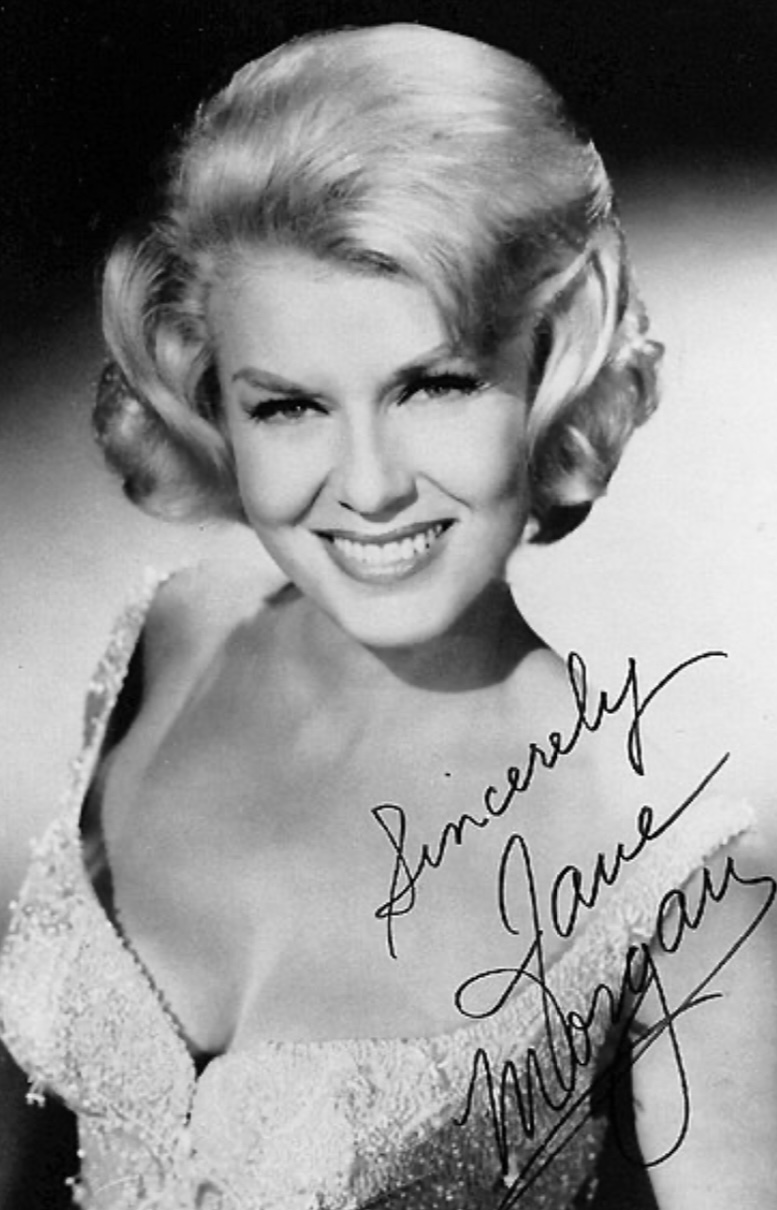
Jane Morgan (pictured) enjoyed a long career on Broadway, on record, on television, and in nightclubs and movies. Her career blossomed in America and Europe, and featured a number of million sellers including The Day the Rains Came (number one in Britain in 1959), which she released as a double A side, an English version of the song and a French version – Le jour où la pluie viendra. 

Later in her career, Jane Morgan released an answer song to Johnny Cash’s A Boy Named Sue called A Girl Named Johnny Cash. She performed this song on Cash’s television show, 1971. Check it out, it’s clever and amusing.

Jane married twice and her second husband, Jerry Weintraub, was instrumental in Elvis Presley’s re-emergence in the early 1970s.

Jane Morgan celebrated her 100th birthday on 3 May 2024.

Some artists write and record a song in half an hour. With ‘More Than a Feeling’, Boston’s Tom Scholz took five years. During that time, Scholz worked for Polaroid, and used his wages to build a recording studio in his basement. Boston’s rich sound, built around Scholz’s harmonised guitars and Brad Delp’s long-held notes, arguably, created the blueprint for the American rock sound of the mid to late seventies.

Incidentally, Scholz cited ‘Walk Away Renee’, the Left Banke version, as his main ‘More Than a Feeling’ influence.

***

A pop music curiosity: The Specials’ Too Much Too Young (1980), at just under two minutes, was the shortest number one since the Beatles’ From Me to You (1963).

“And every song was short and sweet, and every beat was fast
And every paper in the land said rock-and-roll won’t last
You know it just won’t last, it’s such a rapid burn.”

Class of ‘58 – Al Stewart

***

Originally established in 1931 to broadcast in German and French, in 1933 Radio Luxembourg began Sunday broadcasts in English on 208 metres medium wave. After 1945, the station broadcast an English service daily and introduced a new feature – a top twenty based on sheet music sales.

With the BBC indifferent to popular music, Radio Luxembourg’s evening shows became an important source for British listeners. Indeed, the station dominated the pop music airwaves until the arrival of pirate radio ships in 1964.

Radio Luxembourg at Expo ‘58, Brussels, Belgium

In 1971 Radio Luxembourg abandoned its pre-recorded shows and adopted an “all live” format with disc jockeys presenting their programmes from Luxembourg. 

In the late sixties and early seventies strong competition from BBC Radio 1 and British commercial radio stations reduced Radio Luxembourg’s audience. Listeners also preferred the cleaner sound of the BBC programmes to Radio Luxembourg’s “fade in-fade out” reception. 

Despite the heavy hand of sponsors interrupting the music, and the dodgy reception, Radio Luxembourg played an important part in the development of 1960s pop culture. 

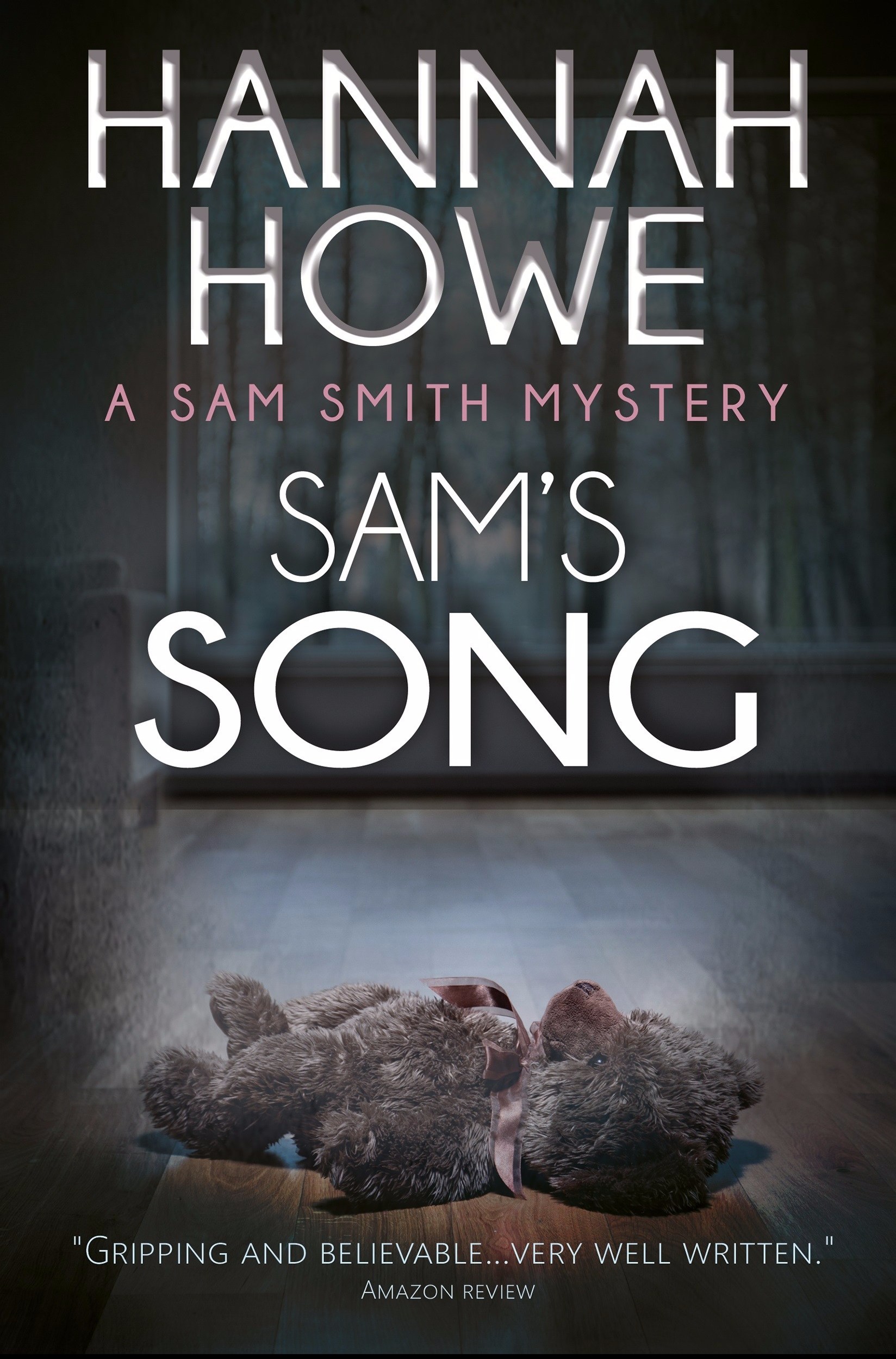
The book that started my writing career. Sam’s Song has received over 3,000 reviews and ten years after publication was #1 again recently on the Amazon charts https://www.amazon.com/Sams-Song-Smith-Mystery-Book-ebook/dp/B00OHZ151W

For Authors

#1 for value with 565,000 readers, The Fussy Librarian has helped my books to reach #1 on 36 occasions.

A special offer from my publisher and the Fussy Librarian. https://authors.thefussylibrarian.com/?ref=goylake

Don’t forget to use the code goylake20 to claim your discount 🙂

Categories
Genealogy

Lowcock Branch #3

Early married life for my 4 x great grandparents Ann Lowcock and James Richard Brereton saw the birth of three children: Thomas, Sarah and James. 

Thomas was born late 1818/early 1819. The records for him are scarce, and his baptism record has not survived.

Sarah was born on 29 March 1820 in Bristol and baptised on 29 April 1821 in the church of St Philip and St Jacob, Bristol. Her father James was working as a highly-skilled goldbeater at that time, producing gold leaf.

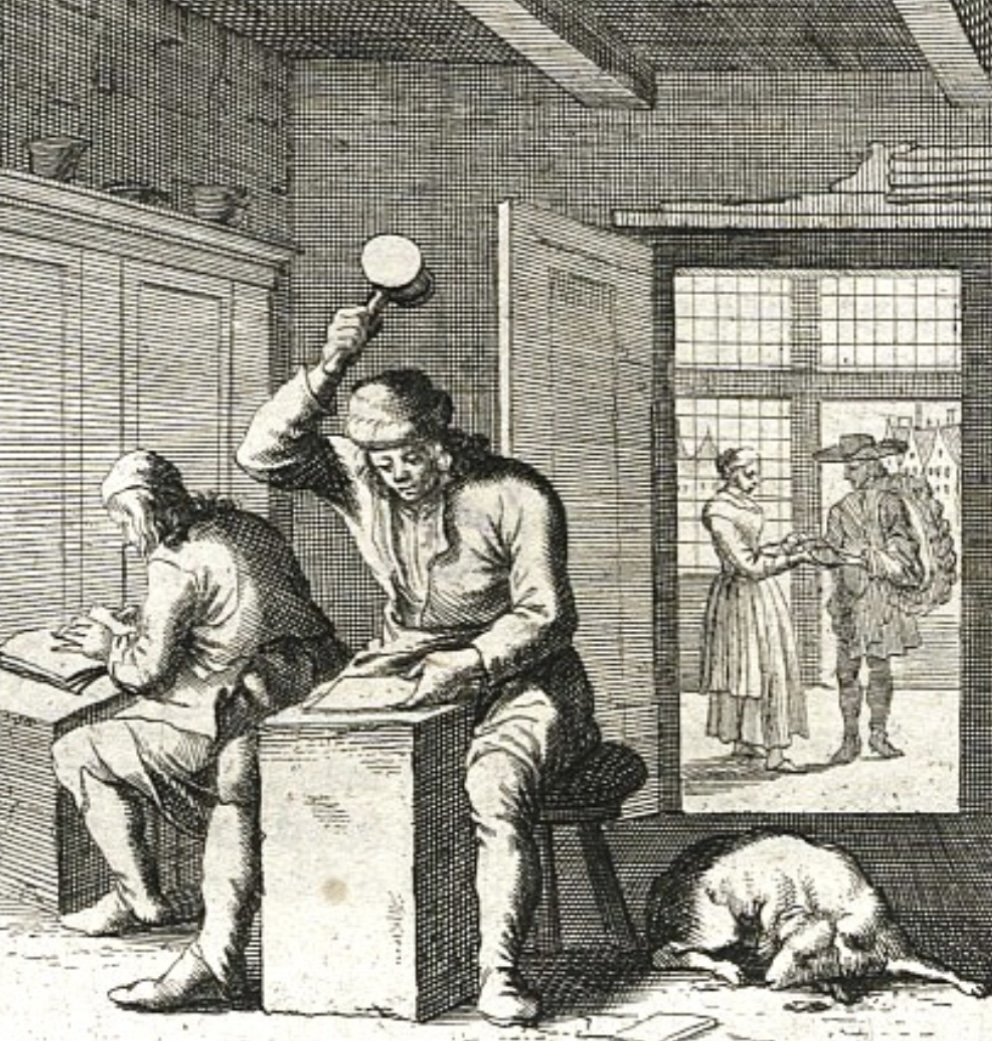
A goldbeater at work

Baby James was born late 1824. Again, there is no record of his baptism. One reason for the lack of Thomas and James’ baptism records could be that the family were moving around Somerset as James Brereton sought employment. 

No child was recorded born to James and Ann c1822. In common with most women of the period, Ann gave birth every two or three years, so the four year gap is unusual. My suspicion is that their baby born c1822 died in infancy, and the records have not survived.

Although James had a good trade, working in metal, his health failed – possibly due to metal poisoning. And his family found themselves in London, seeking financial support. Almost certainly, James had returned to his birth city to connect with his family. However, by this time his father Thomas had died and his mother Sarah did not have the means to offer financial support.

The record of James and Ann’s eviction

Seeking poor relief, James, Ann and their children were evicted from St Dunstan in the West, London. What would happen to them next?

***

 For Authors

#1 for value with 565,000 readers, The Fussy Librarian has helped my books to reach #1 on 36 occasions.

A special offer from my publisher and the Fussy Librarian. https://authors.thefussylibrarian.com/?ref=goylake

Don’t forget to use the code goylake20 to claim your discount 🙂
Categories
Genealogy

Lowcock Branch #2

I’m researching my 4 x great grandmother Ann Lowcock and her family.

On 17 May 1818 Ann married James Richard Brereton in her home town of Martock, Somerset. James was born on 19 November 1793 in Shoe Lane, Fleet Street, London, and baptised on 22 December 1793 in St Dunstan-in-the-West, London. How and why did he make his way to Martock?

James was the third of nine children born to Thomas Brereton and Sarah Wright. In 1807 he became an apprentice cutler, learning the skills required for metalworking. Apprentices usually served a seven-year term and, as with James, commenced their learning at the age of fourteen.

James’ father, Thomas, paid £30 – the equivalent of around £3,000 now – so that James could learn a trade. Thomas was a clerk in Fleet Street, and earning a decent living.

The apprentice became an extra worker in the master’s household. He or she was subject to the absolute authority of the master and by the terms of their ‘indenture’ could not gamble, go to the theatre or a public house, play cards or dice, marry or fornicate. Little wonder that some of the apprentices ran away from their masters.

In 1814 James qualified as a cutler. His skills allowed him to work with various metals, including gold. 

James travelled across southern England, plying his trade. In Martock, he met Ann Lowcock, and they married. Ann, from a secure family had, seemingly, secured her future. Now, she was expected to raise a family. More about that next time…

For Authors

#1 for value with 565,000 readers, The Fussy Librarian has helped my books to reach #1 on 36 occasions.

A special offer from my publisher and the Fussy Librarian. https://authors.thefussylibrarian.com/?ref=goylake

Don’t forget to use the code goylake20 to claim your discount 🙂