Categories
1963

Social History 1963 #55

Saturday 2 November 1963

Army corporal Roy Blake indulged in an “orgy of marriage”. He has wives in Germany, Holland and England. And he was planning to marry again. His legal marriage is to a German woman. Sent for trial accused of bigamy, he said, “I don’t know why I have done these things. I think it was because my first marriage was in such a mess.”

The execution of Edgar Valentine Black, who was sentenced to death for the murder of Richard Cook, has been fixed for 21 November at Cardiff Prison.

An article in Dental News states that dentists suffer a lot more than their patients. “The muscular strains suffered by a dentist during the course of his work are considerable,” the article said. “These strains plus unnatural postures mean that the dentist is literally killing himself while curing the patient.”

Members of the Women’s Institute were angry when the BBC’s radio serial The Archers presented them as only being interested in making jam and lampshades. A spokeswoman explained, “We do a great deal of serious social work to help the old, the young and the sick.” A BBC spokesman said they would highlight the welfare schemes in future episodes.

Sport is no longer enough to the public in these enlightened days. You must have a gimmick to go with it. Coventry City put on a forty-five minute radio show before each game. Manchester United parade drum majorettes, and other clubs are thinking of doing the same. And tonight, at the Empire Pool, Wembley a full house will watch an ice hockey match but, more importantly, listen to Beatle music during two fifteen minute intervals.

Television highlights: Comedy Playhouse – The Plan starring Peter Cushing. The Avengers – November Five. Espionage – spy series with Billie Whitelaw.

Radio highlights: Music While You Work. Compline. 

Weather: rain or drizzle. Outlook – similar. 13c, 55f.

Sunday 3 November 1963

Views on people and countries. Nicest people – the Poles. Least friendly – the Swiss (unless you have money, they are not interested in you). Most beautiful country – Norway. Prettiest girls – Sweden. Warmest-hearted girls – Poland. Least friendly girls – Italy, Greece, Spain. Best food – France. Best beer – Denmark. Worst beer – Spain. Worst roads – Yugoslavia, England. Best roads – Italy and Germany. Happiest people – Poland and Denmark. Unhappiest people – Ireland and Sweden. Shrewdest – the Scots. Most naive – the Americans. Best dressed – the Hungarians. Worst dressed – the Danes. Most arrogant – the French. Most humble – the Spanish. Noisiest – the Italians. Quietest – the Finns. Friendliest – the Tunisians. Most organised – the Dutch. Most disorganised – the Belgians. Most rebellious – young Germans. Most dishonest – the Italians. Most honest – the English.

Lord Robens, chairman of the National Coal Board, appealed to Britain’s coalminers to join in a voluntary “Big Dig” on six Saturdays before Christmas in order to avoid a coal shortage this winter.

Fancy being a Poppy Day collector next Saturday? The British Legion are appealing for volunteers. They are hoping to reach a donation target of £1,250,000.

The big showbiz bombshell this year was the break-up of the Springfields. And the big question was what would Dusty Springfield do next? I’m tipping her first solo disc, I Only Want To Be With You to make her the number one British singer in 1964.

Football Results: First Division – Blackburn 1 Sheffield Wednesday 1, Blackpool 1 Everton 1, Chelsea 2 Birmingham 3, Liverpool 0 Leicester 1, Sheffield United 2 Arsenal 2, Stoke 4 Burnley 4, West Ham 4 WBA 2, Wolves 2 Manchester United 0. Top three – Sheffield United, Spurs, Manchester United.

Television highlights: Play – Veronica with Billie Whitelaw. Billy Cotton Band Show. Pinky and Perky.

Radio highlights: Around the World in a Bowler Hat. The Jazz Scene.

Weather: sunshine and heavy showers. Warm.

Monday 4 November 1963

Mr Sidney Silverman, Labour MP for Nelson and Colne, appealed to the Hone Secretary to reprieve Edgar Black, who has been sentenced to hang at Cardiff Prison on 21 November. Black was sentenced after shooting his wife’s lover. His appeal against conviction was dismissed.

Two men have been sentenced to death at Cornwall Assizes for murdering farmer Wiliam Rowe. The men are Dennis Whitty, 22, and Russell Pascoe, 23.

There are 11,000,000 vehicles on Britain’s roads today. By the end of the century there will be 33,000,000 – Government Road Research Estimate.

The British Boxing Board of Control are to probe allegations of a monopoly syndicate headed by a mysterious “Mr X”.  Rumours of “dubious practices” have riddled boxing for months.

Happiness is…by Daily Mirror readers: When my baby budgie says “Pretty Bobby”. When the wife keeps her mouth shut. Being free from the Beatles. A ticket for the Beatles. A slimming diet with sticky buns. Eight draws on the pools. A television and wife – both working! When someone takes the spider out of the bath.

Where will the Beatles and the other Liverpool lads be this time next year? Most predict that they will still be riding high. However, some pop makers, like the Fourmost, are holding on to their day jobs, in case the Mersey roar becomes a whisper. This week’s number one, You’ll Never Walk Alone by Gerry and the Pacemakers.

Television highlights: The Way We Live – family relationships. Panorama – a report from Bournemouth on lonely old people. Jane Eyre – episode six.

Radio highlights: Tonight’s Topic. The Sense of the Future.

Weather: Bright spells, showers, mild. Outlook – similar. 13c, 55f.

Tuesday 5 November 1963

A storm is blowing up over reports that council workmen have been given a list of “amorous wives”. The wives in question live in Frimley and Camberley. Mr William Morris, chairman of the Tennant’s Association has arranged a special meeting to discuss the list. Airline pilot John Jeffrey, chairman of Frimley and Camberley Council, is also looking into the matter.

A family yesterday moved into Britain’s first “instant” skyscraper home. The eleven-storey building was built in twenty-eight weeks, half the time normally taken. This was possible because contractors used the “critical path” computer system employed to produce Polaris missiles. 

“If I had a large amount of money to spend, I would not spend it on trying to get to the Moon, I would spend it on trying to double the agricultural production of the World.” – Dr Alexander Todd, winner of the Nobel Prize for Chemistry, 1957.

Dennis Whitty, 22, and Russell Pascoe, 23, sentenced to hang for murder, have appealed against the sentences. The men blame each other for Wiliam Rowe’s death.

Shoe prices are expected to soar next spring. Hide prices have increased by 30%. The rising costs will not affect the current stocks of shoes and boots.

Half of Britain will have no trains on Christmas Day this year. British Railways said that a steady drop in Christmas Day travel has made many services uneconomical.

Television highlights: World in Action – the electrical family. Emergency Ward 10 – bonfire night. Five O’Clock Club – Freddie and the Dreamers.

Radio highlights: Keep Up Your French. The Power of Evil.

Weather: sunshine and showers. Outlook – rain at times. 14c, 57f.

Wednesday 6 November 1963

Fighting broke out between women on a council estate in Frimley where twelve housewives are said to be too amorous. The twelve are on a secret list issued to council workmen. There are demands for the women’s names to be made public. For their safety, council workmen are now working in pairs. Mrs Moria Spencer, a 25 year old mother of seven, said, “We have our own ideas about who should be on that list. I used to make a cup of tea for the workmen, but never again.”

Police in three counties and the London area are searching for four men who hijacked a lorry on the M1 near Crick, Northants. The driver was bound and dumped 13 miles away. The lorry contained £5,000-worth of hair cream.

Fifty year old Lady Campbell told a court that she had “two really stiff gins” before driving off to keep a dinner date. On the journey, she crashed into a coach. She added that she was used to stiff drinks because she had been an alcoholic. Lady Campbell was fined £40 and banned from driving for two years.

“I believe Honor Blackman as Cathy Gale is soon to be tied to a railway track in an episode of The Avengers. I believe this is a good thing to happen to self-reliant females. Can we have a picture of her tied to the rails printed in your newspaper?” – P.R., Trinity College, Oxford.

A waterspout, forty yards high, knocked over seven beach huts in Exmouth. It also damaged a roof and a porch. Engineer Mr Charles Tighe said, “It was like a tall white cloud. It moved in very fast.”

Television highlights: Sportsview – the All Blacks, boxing and figure skating. Boss Cat. What Next in Beds? with Barbara Cartland and Stirling Moss.

Radio highlights: Play – The Bedmakers. Makes a Change.

Weather: sunny spells, showers. Outlook – similar. 14c, 57f.

Thursday 7 November 1963

A suspicious wife hid under the bed in the daytime because she thought her husband was having an affair with one of her friends. The friend told a divorce court that nothing more than “mild horseplay” had occurred and that she’d met the husband to discuss chrysanthemums because they were both keen gardeners. The judge concluded that that was an unlikely story. Divorce granted on the grounds of adultery.

Edgar Black, sentenced to hang a fortnight today at Cardiff Prison, was reprieved yesterday. Black killed his wife’s lover with a sawn-off shotgun and will now serve a life sentence. Mrs Black expressed her relief at the decision and vowed that she would wait for her husband.

Big Tony Mella, the Soho nightclub owner shot dead in January, left £17,809 – but no will. Letters of administration have been granted to his widow, Mrs Peggy Mella. 

Stolen cars and parts of stolen cars worth over £250,000 were recovered in London last year. The “Big Boys” pay drivers £25 to steal a car and £1 a mile for delivery. The crooks have workshops that can change the look of a car within a few hours. But they frequently miss small identifying marks which can put the police on their track.

“Really, I’m a misfit. I haven’t got a pop face or a pop voice.” So says Dusty Springfield, who begins life as a solo artist in Discworld with I Only Want to Be With You. Tomorrow, she begins a nine-day stage tour. “I shall feel very odd and strange indeed. On stage, I shan’t know what to do with my hands.” She sings of love, but has no thoughts of marriage. “It wouldn’t be fair. In fact, it would be downright stupid.”

Television highlights: Miss World 1963. This Week – Beatle-mania. My Favourite Martian – new comedy series.

Radio highlights: The Rise and Fall of Poliomyelitis. Concerts on Records.

Weather: sunny spells, showers. Outlook – rain at times. 13c, 55f.

Friday 8 November 1963

Police swooped and seized 4,000 copies of a book that was due to be re-issued as a paperback. And Scotland Yard warned that anyone selling copies of the book will be prosecuted. The book, first published 200 years ago, is Fanny Hill by John Cleland. A spokesman for the publisher refused to comment until they have taken legal advice.

Cockney singer Joe Brown will not appear on the television programme Thank Your Lucky Stars because his version of George Formby’s Little Ukulele has been banned by the Independent Television Authority. The ITA said the song was “too suggestive”.

Marijuana – the drug used in the illegal “reefer” cigarettes smoked by some young people on the fringe of the beatnik movement – might be given the same social status as beer and whiskey. An article in the Lancet stated that the drug encourages passivity and is not addictive.

Monty Sunshine, the jazz clarinetist, had his honeymoon interrupted by the police. Someone had tipped the police off that Monty was Roy “The Weasel” James, wanted for questioning in connection with the Great Train Robbery. Satisfied that they had the wrong man, the detectives allowed Monty to continue his honeymoon with his bride, Jacqueline Lucy.

Miss Jamaica, Carole Joan Crawford, is the new Miss World. Second was Miss New Zealand, Elaine Miscall, and Miss Finland, Marja-Liisa Stahlberg was third. Fourteen million television viewers watched the contest.

Television highlights: Hobbies Club – embroidery and model boats. Dylan Thomas – a tribute introduced by Richard Burton. Pie in the Sky – comedy with Keith Barron and Diana Coupland.

Radio highlights: Continental Cocktail. Friday Spectacular.

Weather: showers. Outlook – showers. 11c, 52f.

Available for order and pre-order, my Swinging Sixties Mystery Series

https://books2read.com/u/bMqNPG

Categories
1920s

The 1920s #5

Cricket

In 1920-21, England toured Australia and became the first team to lose every match in a five-match Test series. On the return during the English cricket season of 1921, Australia continued their dominance, winning the first three Test matches. However, England did manage to draw the final two.

Jack Gregory, fast bowling tormentor of England, 1920-21.

In October 1927, Clarice Cliff (pictured) began test marketing her ‘Bizarre’ pottery range in Britain. Initially, her pottery sold for 7 shillings and 6 pence (35 pence). In 2004, Christie’s sold a Clarice Cliff 18-inch ‘charger’ (wall plaque) for £39,500.

Aviation

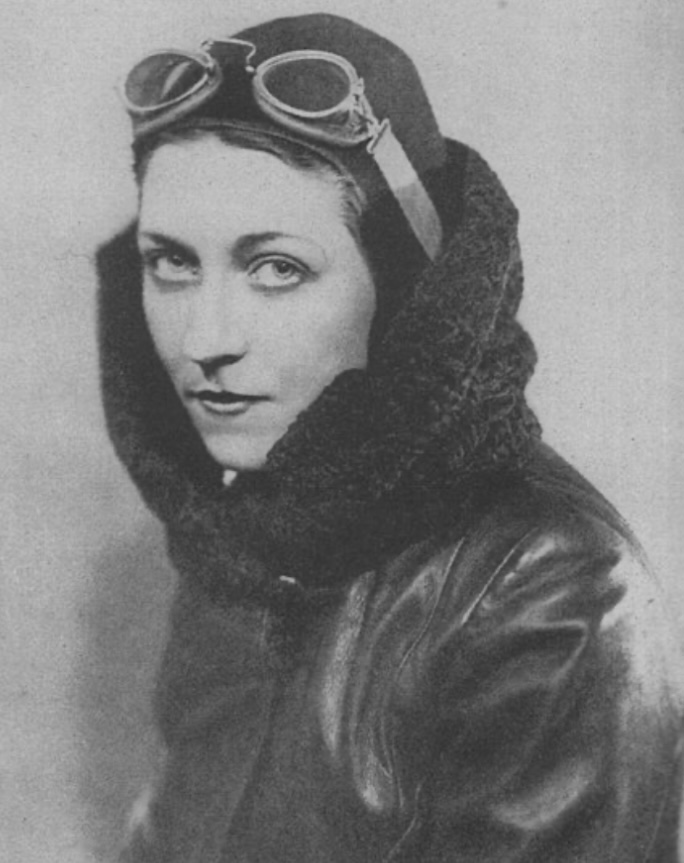
In 1929, Amy Johnson (pictured) obtained her pilot’s licence from the London Aeroplane Club. Later in the year she became the first British woman to obtain a ground engineer’s C Licence. In 1930, Amy was the first woman to fly solo from Britain to Australia.

Seaside Resorts

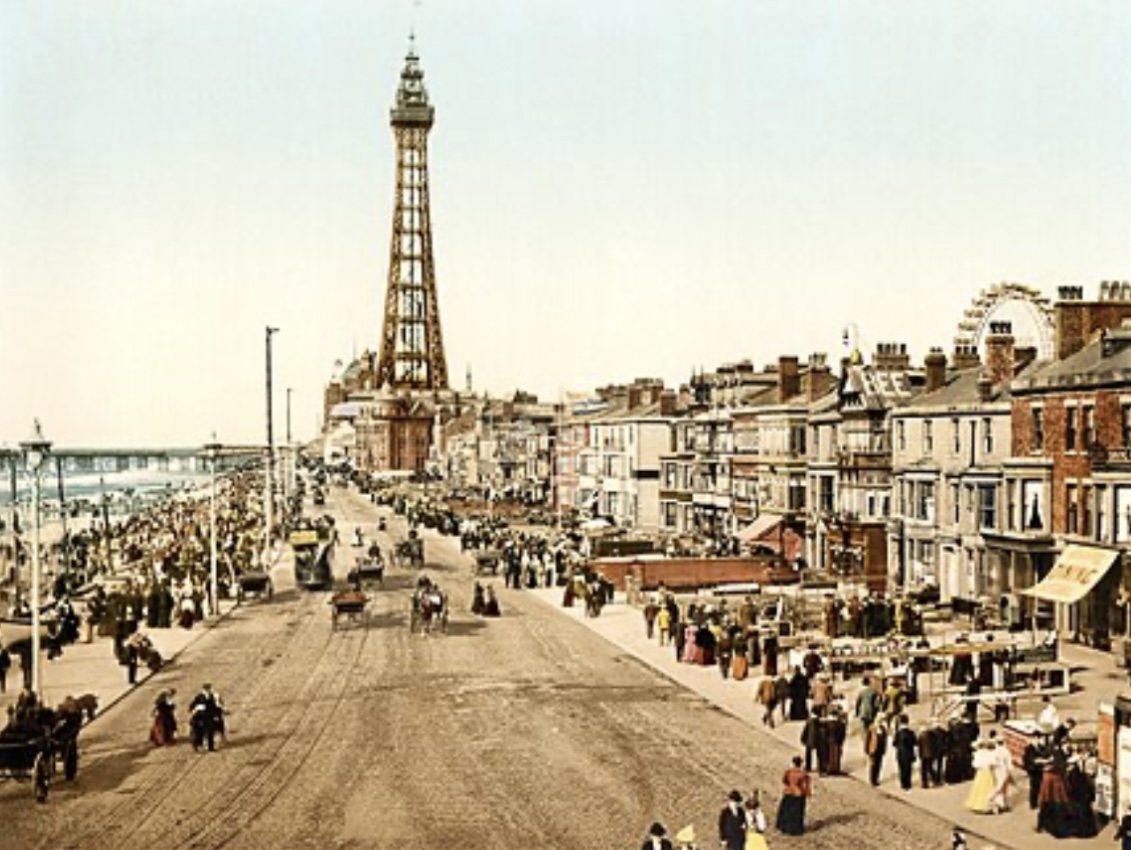
In the 1920s, a fortnight’s summer holiday by the seaside was a regular feature of working-class life. The practice started in the 1840s with the development of the railways. Entrepreneurs built accommodation in the form of hotels and bed and breakfast establishments. In places like Blackpool they also added fairground attractions, promenades and pleasure piers.

The cotton mills in the north of England would close during “wakes weeks” and people would flock to the seaside. Because beachwear was still considered immodest, proprietors provided bathing huts. During the 1920s, well over 100 British towns developed into seaside resorts.

Blackpool Promenade

On 17 January 1921, P.T. Selbit became the first magician to publicly “saw a woman in half”. He performed this illusion at the Finsbury Park Empire, London. 

In 1913, Selbit, with the aid of an attractive woman, performed the illusion of “walking through a brick wall”, a year before Harry Houdini performed the same trick. The two men entered a dispute over who invented the illusion. Spoiler: the magician or his assistant used a trapdoor that went underneath the wall.

In front of an audience more interested in the camera than the potential gore unfolding, P.T. Selbit “saws a woman in half”. 

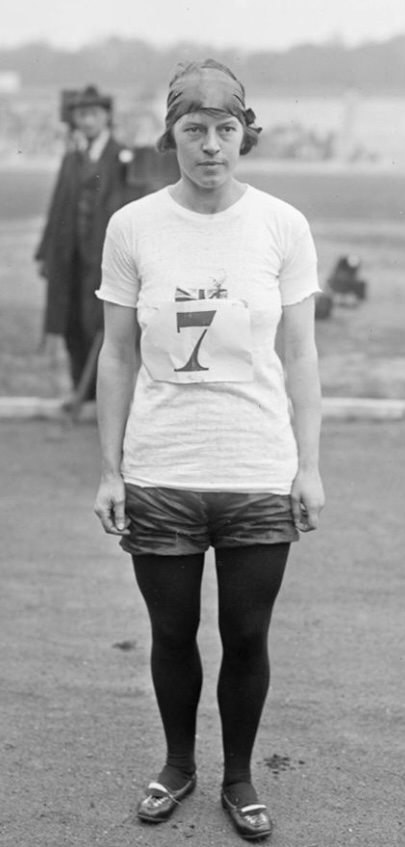
The 1923 WAAA Championship, the first British track and field championships for women, was held on 18 August at the Oxo Sport Grounds, in Bromley, London. The events: 100 yards, 220 yards, 440 yards, 880 yards, 660 yards relay, 120 yards hurdles, high jump, long jump, shot put, javelin, and track walk.

Mary Lines (pictured) won four events: 100 yards, 440 yards, 120 yards hurdles, and the long jump.

On 21 December 1927 aka “Slippery Wednesday” 1,600 people were hospitalised in the London area when they hurt themselves on icy streets.

The cold weather continued over Christmas with blizzards in south Wales, the Midlands and London.

The Train in the Snow – Claude Monet

For Authors

#1 for value with 565,000 readers, The Fussy Librarian has helped my books to reach #1 on 32 occasions.

A special offer from my publisher and the Fussy Librarian. https://authors.thefussylibrarian.com/?ref=goylake

Don’t forget to use the code goylake20 to claim your discount 🙂

Categories
Dear Reader

Dear Reader #163

Dear Reader,

Clara Bow’s second movie was Down to the Sea in Ships, a silent romantic drama about a whaling family living in a Quaker community. The movie, made during the summer of 1922 when Clara was seventeen, was premiered on September 25, 1922 and went on general release from March 4, 1923.

Clara plays Dot Morgan who, as a baby, is found floating near the shore on a raft made of branches. Dot is a mischievous, rebellious child who wants to be a whaler when she grows up, an ambition frowned upon by her community. So, we have Clara as a tomboy rebel: perfect casting.

Clara Bow as Dot Morgan

Dressed as a boy, Dot stows-away on a ship. She is attacked by a crew member, and rescued by her friend, Jimmie, a cabin boy. The ship returns to port and the main romantic thread of the story, which does not involve Clara, unfolds.

The movie contains authentic whaling scenes and strives for realism. The critics hated it, but audiences enjoyed it. Indeed, the movie played continuously for 22 weeks in New York City.

Billed 10th, Clara received praise for her role in the movie, her natural style contrasting with the mannered approach of the other actors. 

The critics said: “Miss Bow will undoubtedly gain fame as a screen comedienne.” “She scored a tremendous hit in Down to the Sea in Ships … [and] has reached the front rank of motion picture principal players.” “With her beauty, her brains, her personality and her genuine acting ability it should not be many moons before she enjoys stardom in the fullest sense of the word. You must see ‘Down to the Sea in Ships’.”

***

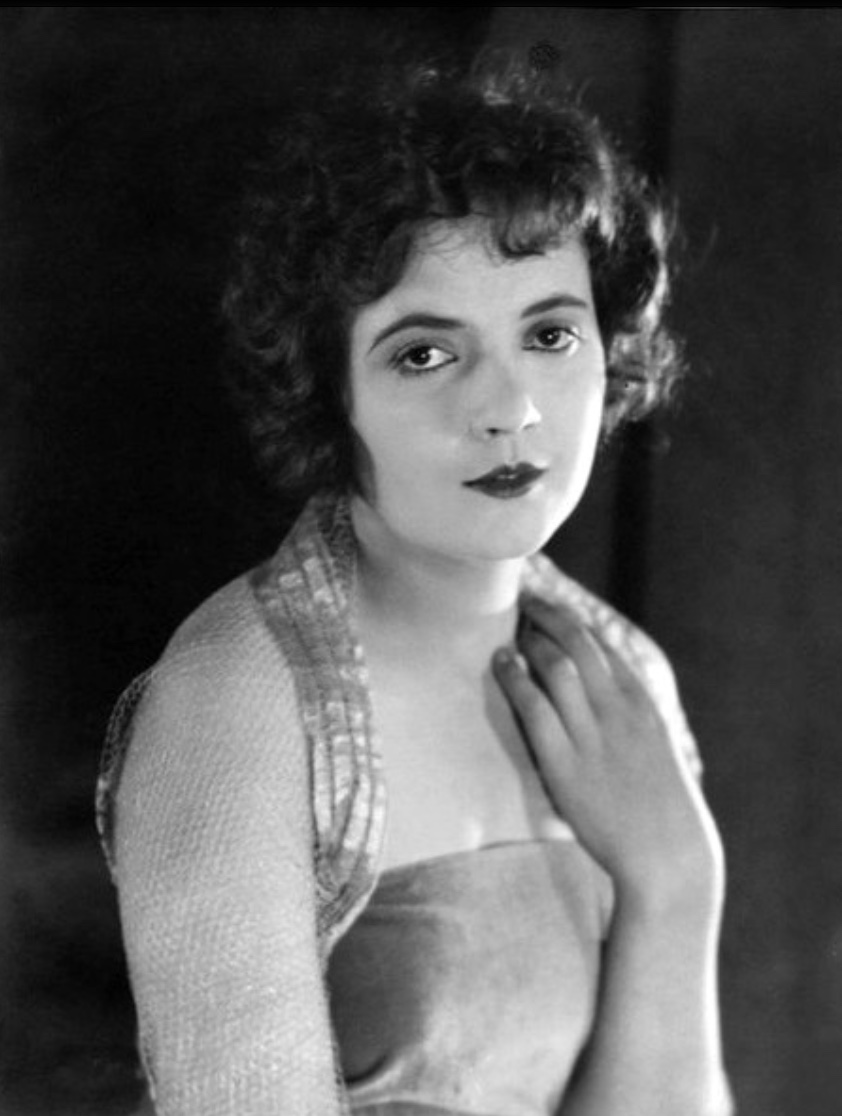
The Adventures of Kathlyn, released on December 29, 1913 was a thirteen episode adventure serial, which starred Kathlyn Williams (pictured) as the heroine. 

The second serial ever made, The Adventures of Kathlyn is widely regarded as the first of the cliffhanger serials that became popular over the next decade. The serial idea was ‘borrowed’ from newspapers and magazines, and adapted for film.

Chapter one of The Adventures of Kathlyn featured a situation ending, but future episodes concluded with a sensational action sequence or stunt, held over to the following week to heighten suspense.

These serials were often tied-in with newspaper serials, boosting the newspapers’ circulation figures. For example, the Tribune announced a 10% increase in circulation as a result of The Adventures of Kathlyn’s success.

November 1922. The Flapper. “Official Organ of the National Flappers’ Flock.” “Not for old fogies”. Learn how to edjimicate a Sweet Daddy. The Definition of a Kiss. Enter the Beauty Contest and win a golden dolphin. And so much more… 

Life Magazine cover “The Flapper” by Frank Xavier Leyendecker, 2 February 1922.

Highest grossing movie of 1923: The Covered Wagon.

A silent western, The Covered Wagon charted the adventures of a group of pioneers as they travelled through the Old West, from Kansas to Oregon. Along the way they experienced desert heat, snow, hunger and an Indian attack (Native Americans who appeared in this movie included the Northern Arapaho Nation from Wyoming and Chief Thunderbird, in an uncredited role).

Lois Wilson, pictured, played the heroine, Molly Wingate. In a career spanning 1915 – 1952 she appeared in 150 movies, including the converted role of Daisy Buchanan in the 1926 silent film version of The Great Gatsby.

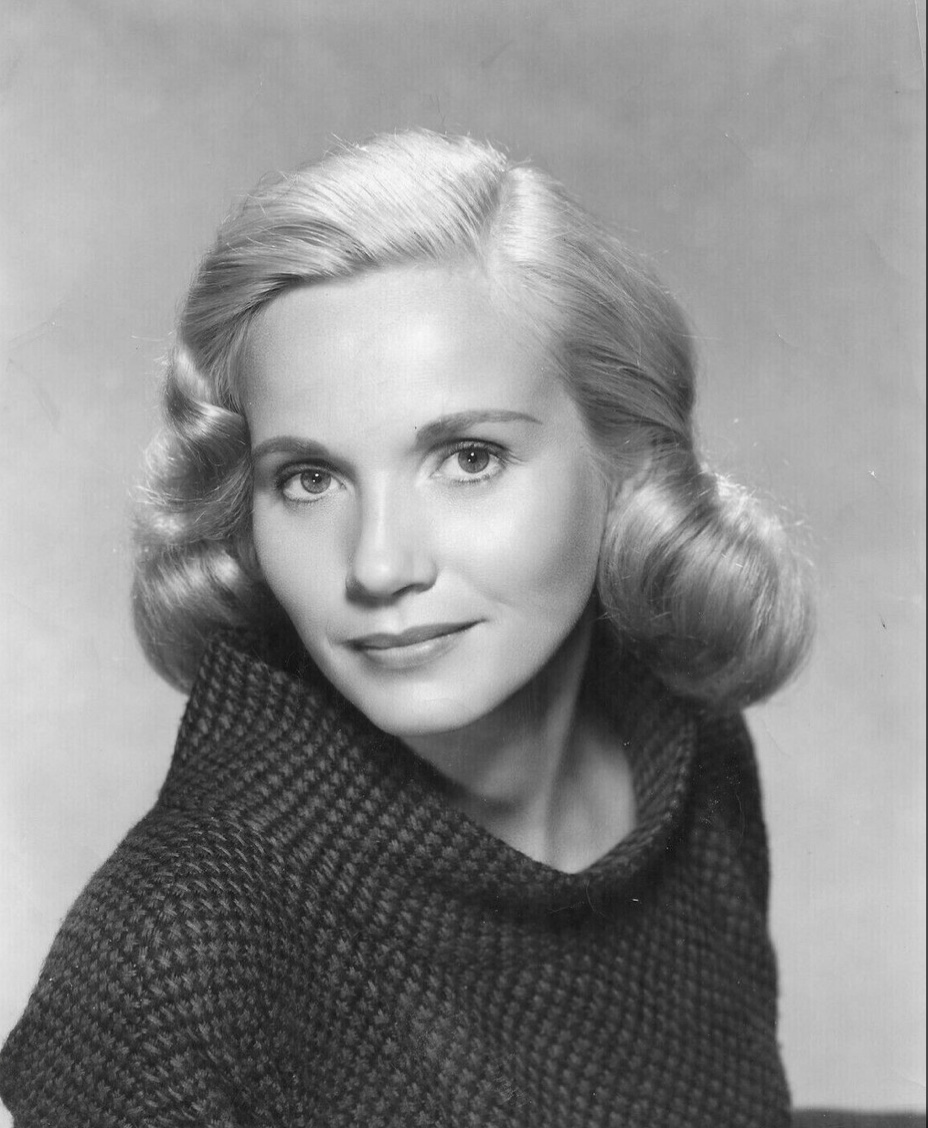
Through public records I’ve traced actress Eva Marie Saint’s ancestors back to the early 1800s. The family were Quakers for many generations. And, to my surprise, in 1810, their household contained a slave.

Slavery was abolished in America in 1865. But what of the Saint family and slavery in the period 1810 – 1865? The censuses of 1840, 1850 and 1860 provide an answer: William Saint, a farmer, was head of the household. His family, and labourers, worked on his farm. However, he did not own any slaves.

It would appear that the Saint family cut their ties with the slave trade long before the state did. I think Eva Marie Saint would be pleased to know that.

Also worthy of note, William Saint was born on 3 March 1781 and died on 24 January 1871.  He enjoyed a long life. At the time of writing this, Eva Marie Saint is 98. The Saint genes appear to be very strong ones.

Say Goodbye to Jennifer, Series 1, Episode 18 of The Rockford Files was directed by Jackie Cooper, who featured as Captain Highland in the previous episode, Claire.

The titles in Say Goodbye to Jennifer didn’t appear until 4’ 30” into the episode, a common trait for The Rockford Files, depending upon the number of close-ups in the opening scenes.

This episode made good use of dental records in identifying a victim, in an unusual way. The story was written by John Thomas James, one of his best in the first series.

A classic telephone message too: “This is Mrs Landis. Three times this month I came to clean and it always looks like people’ve been fighting in there; furniture broken, things tipped over; I’m sorry, but I quit.”

Clara Bow Quotes: In January 1921 Clara entered the ‘Fame and Fortune Contest’ organised by Motion Picture Magazine…

“Imagine my surprise when a letter arrived one day stating that I had been declared the winner. According to the rules of the contest, the winner was to be given an evening dress and also a role in a motion picture. I was in seventh heaven. My prayers had been answered. My whole future and happiness had been secured. What luck!”

The picture Clara submitted for the Motion Picture contest. She hated the picture, but couldn’t afford a replacement.

Intertitle #3 😗

As ever, thank you for your interest and support.

Hannah xxx

For Authors

#1 for value with 565,000 readers, The Fussy Librarian has helped my books to reach #1 on 32 occasions.

A special offer from my publisher and the Fussy Librarian. https://authors.thefussylibrarian.com/?ref=goylake

Don’t forget to use the code goylake20 to claim your discount 🙂

Categories
Dear Reader

Dear Reader #123

Dear Reader,

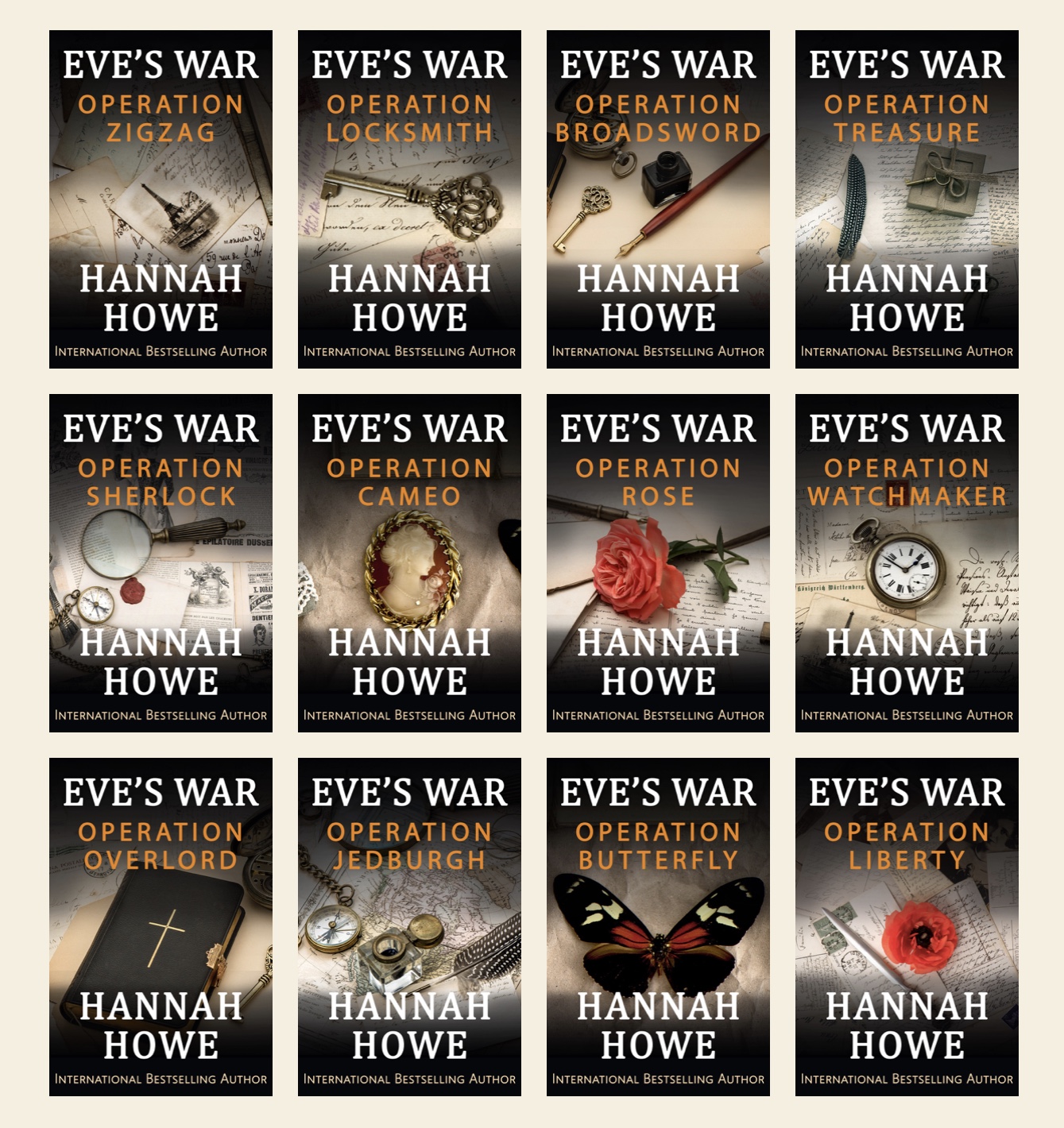
Always a satisfying moment, I’ve completed the storyboard for Operation Cameo, book six in my (Amazon #1 🙂) Eve’s War Heroines of SOE series. Next week, I will start on the first draft. Eve is feisty while her partner Guy is a pacifist. Based on true events.

My direct ancestor Joan, Countess of Kent (29 September 1328 – 7 August 1385) known to history as ‘The Fair Maid of Kent.’ French chronicler Jean Froissart described her as “the most beautiful woman in all the realm of England, and the most loving.”

Joan gave birth to my ancestor Thomas Holland and later when married to her third husband Edward Plantagenet ‘the Black Prince’, Richard II.

My direct ancestor Thomas Meade was born c1380 in Wraxall, Somerset. His parents were Thomas Atte Meade and Agnes Wycliff.

Thomas died in 1455 and this extract from his will offers an insight into the times.

“I leave to Philip Meade my son two pipes of woad, two whole woollen cloths, my beat goblet with a cover, made of silver and gilded, and my best brass bowl. I leave to Joan, the wife of Roger Ringeston, my daughter, one pipe of woad and 40s sterling.”

Lots of Quakers on my family tree. Here’s the latest discovery, Joan Ford, daughter of William Ford and Elizabeth Penny, born 11 December 1668 in Curry Mallet, Somerset. Joan was three years older than her husband, John Lowcock, not a big difference, but unusual for the era.

Just discovered that my direct ancestor Sir John Cobham, Third Baron Cobham, paid for the construction of Rochester Bridge (in the background on this painting) across the River Medway. This route, originally established by the Romans, was essential for traffic between London, Dover and mainland Europe.

Painting: Artist unknown, Dutch style, 17th century.

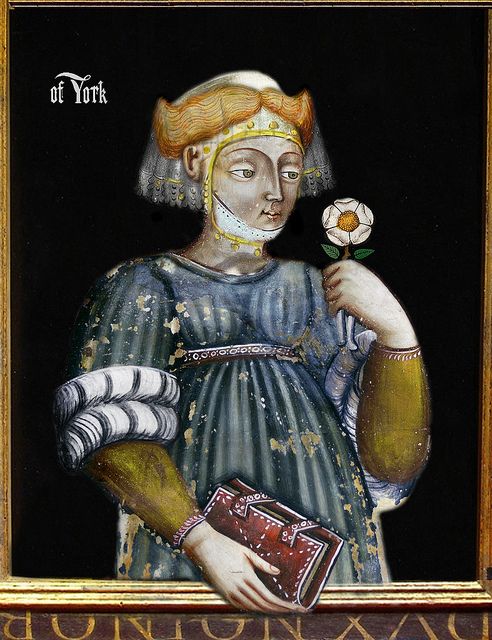
My 19 x great grandmother, Constance of York, Countess of Gloucester, was born in 1374, the only daughter of Edmund of Langley, 1st Duke of York, and his wife Isabella of Castile. 

In November 1397, Constance married Thomas Despenser, 1st Earl of Gloucester, one of Richard II’s favourites. The couple produced three children: a son, Richard, and two daughters. The first daughter, Elizabeth, died in infancy, while the second daughter, Isabel, was born after her father’s death.

When Henry IV deposed and murdered Richard II, the Crown seized the Despenser lands. In consequence, in December 1399, Thomas Despenser and other nobles hatched a plot known as the Epiphany Rising. Their plan was to assassinate Henry IV and restore Richard, who was alive at this point, to the throne.

According to a French chronicle, Edward, Constance’s brother, betrayed the plot, although English chronicles make no mention of his role. Thomas Despenser evaded immediate capture, but a mob cornered him in Bristol and beheaded him on 13 January 1400.

After Thomas’ death, Constance was granted a life interest in the greater part of the Despenser lands and custody of her son. However, in February 1405, during the Owain Glyndwr rebellion to liberate Wales, Constance instigated a plot to abduct Edmund Mortimer, 5th Earl of March, and his brother, Roger, from Windsor Castle. 

Constance’s plan was to deliver the young Earl, who had a claim to the English throne, to his uncle Sir Edmund Mortimer, who was married to Glyndwr’s daughter.

The first part of Constance’s plan went well, only to stumble when Henry’s men captured Edmund and Roger Mortimer as they entered Wales.

With the plot over, Constance implicated her elder brother, Edward – clearly sibling love was not a priority in the House of York – and he was imprisoned for seventeen weeks at Pevensey Castle. Meanwhile, Constance languished in Kenilworth Castle.

With the rebellions quashed, Henry IV released Constance and she became the mistress of Edmund Holland, 4th Earl of Kent. Out of wedlock, they produced my direct ancestor, Eleanor, who married James Tuchet, 5th Baron Audley.

Constance outlived Henry IV and her brother, Edward. She died on 28 November 1416 and was buried in Reading Abbey.

As ever, thank you for your interest and support.

Hannah xxx

For Authors

#1 for value with 565,000 readers, The Fussy Librarian has helped my books to reach #1 on 31 occasions.

A special offer from my publisher and the Fussy Librarian. https://authors.thefussylibrarian.com/?ref=goylake

Don’t forget to use the code goylake20 to claim your discount 🙂

Categories
Dear Reader

Dear Reader #85

Dear Reader,

Philosophical joke…

A new species discovered in 2020. As mankind goes backwards, the world continues to evolve.

A special week for Eve. Operation Zigzag is #1 while Operation Treasure, published 30 January, is #11 on the hot new releases chart 🙂

You make some interesting discoveries when you delve into the past…

15 August 1944, Allied troops landing in Provence. Colourised.

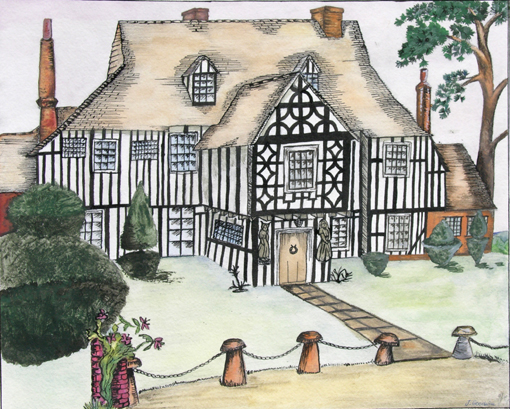
My 11 x great grandfather, William Hodsoll, was born in Ash by Wrotham, Kent in 1560. A gentleman farmer, William married Ellenor Dudley in Ash in 1587.

Ellenor was a widow. Born in Ash in 1562, she married Henry Parker in 1580 and gave birth to their son, Richard, a year later. Two years after that, Henry died and four years later Ellenor married William Hodsoll. 

South Ash Manor House, the Hodsoll home. From the Kent Archeology website.

In his Will, dated 30 September 1616, William left his wife, Ellenor, a yearly rent of £50 plus his lands, tenements and inherited items.

William also deferred a loan to his wife, a debt accrued by his stepson, Richard Parker. The loan totalled £27 2s 6d, which Richard had to pay to Ellenor, his mother.

William was buried on 5 October 1616, so this Will was just about the last act of his life.

William’s horses also found they way to Ellenor along with his riding furniture. The Will strongly suggests that Ellenor was fond of riding, “furniture wch my sayd wyfe doth vse when shee rydeth or iornyth abroad.” 

Ellenor probably rode sidesaddle, a form of horse riding that developed in Europe in the Middle Ages. Sidesaddle allowed a woman to ride a horse in modest fashion while also wearing fine clothing.

William instructed Ellenor to offer board and lodgings to their son, William, my direct ancestor, and to give their other son, John, £300 “upon condition that, at or on the Feast of St. Michael 1618, he makes release by sufficient conveyance to said “sonne William” of all right and title “of & in all my Mannors, messuages, etc.”

A third son, Hewe, received £300 “at or on” 29 September 1620. While the executor was to pay “my sayd sonne Henry” £10 a year upon his making similar release to “my sayd sonne William”. Daughters Hester and Ellenor, at age 24, were to receive £100 each. 

Much of William’s original Will is damaged, but the pages that remain ofter an insight into his life. Although not as wealthy as his father, John, who outlived him by two years, William was still an extremely rich man who could afford a comfortable lifestyle.

William was a contemporary of William Shakespeare (both died in 1616) and it’s possible that he saw the original performances of the Bard’s plays. Certainly, he was aware of them.

Ellenor’s name is recorded in various forms across a range of documents, including Elianora, but in his Will, William writes her name as Ellenor. She died in Ash on 29 July 1631, aged 69 and survived at least three of her daughters.

– o –

My 10 x great grandfather, William Hodsoll, was baptised on 21 July 1588 in Ash by Wrotham, Kent. A gentleman farmer, he married Hester Seyliard in 1609, in Ash, Kent.

The Seyliards were a noble family that arrived in Britain from Normandy about a hundred years after the Norman Conquest and prospered through to the age of the Hanoverian succession.

Portrait of a Lady, c1600. Emilian School, artist unknown.

William and Hester produced four children, possibly five, before Hester’s premature death in 1623, aged 33. Their eldest son, Captain John Hodsoll, my direct ancestor, inherited the estate.

From 8 May 1598 in nearby Ightham, an example of the incidents that troubled the local court. “William Willmott, yoman, on 7 May, 1598, broke the head of Richard Austin with his dagger and drew blood. Fined 5s.—remitted because he is in the service of the lord.”

The remission of Willmott’s fine looks generous. However, on the same day the court heard that, “Richard Austin, labourer, attached to himself five other armed persons in the night of Saturday, 6 May, 1598, and they assaulted William Willmott in the mansion house called ‘Ightam Courtlodg’, and with an iron-shod stick which he held in his hands he broke the head of William Willmot, and drew blood, against the peace of our Lady the Queen and to the alarm of her people. Fined 5s.”

During William’s lifetime, the Hodsolls ceased to be the only manorial family resident in the parish. Although the family still enjoyed great wealth, there is a sense of slow decline, as a result of turbulent times and the number of progeny produced by each generation.

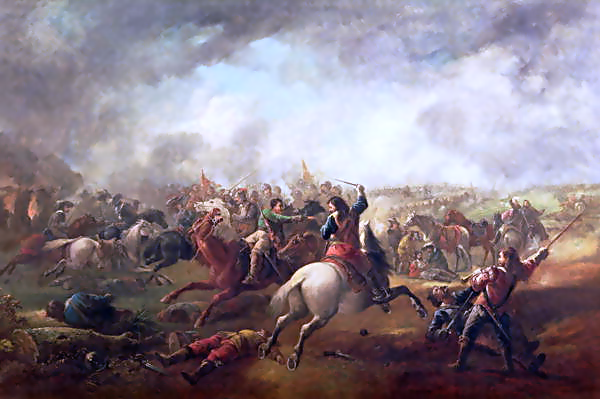
William lived through the English Civil War (1642–1651) also known as the English Revolution. The war pitted Oliver Cromwell’s Roundheads, the Parliamentarians, against Charles I’s Royalists, the Cavaliers, which ended with a Parliamentarian victory at the Battle of Worcester on 3 September 1651, and the beheading of Charles I.

The Battle of Marston Moor, 1644. Artist, John Barker.

The Hodsolls could trace their family’s roots back to the English royal family, moved in royal circles and later served in Charles II’s navy, therefore it is fair to assume that they supported the Royalist cause. William was probably too old to participate in the Battle of Maidstone on 1 June 1648, but a victory for the attacking Parliamentarians meant that he had to tread carefully.

The Hodsolls did not lose their lands during the English Civil War and therefore it’s possible that they accommodated, and adjusted to, Cromwell’s victory.

St Peter and St Paul, Ash near Wrotham. Picture: John Salmon.

After Esther’s death, William married Elizabeth Gratwick and produced a second family with her. William died on 31 December 1663, aged 75. He was buried not with his predecessors in the nave of the parish church of St Peter and St Paul, but in the former Lady Chapel. This chapel became the Hodsoll chancel and many later generations of the family were also buried there.

This week, I added a Canadian branch to my family tree. Meet Elizabeth Dent and family, c1885. More about the Dents in future posts.

As ever, thank you for your interest and support.

Hannah xxx