Categories
Dear Reader

Dear Reader #181

Dear Reader,

In early September 2022, I started Tula, my novel set in the Golden Age of Hollywood. Today, 420 pages and 77,000 words later, I completed the story. Four months of editing to go before publication on July 1, 2023. If you are interested, here are the details

Clara Bow’s twentieth movie was The Scarlet West, an ambitious silent film about the Battle of the Little Bighorn. The movie was produced in the spring of 1925, with location shooting in Colorado, and released on July 26, 1925. Clara played Miriam. Sadly, no copies of the film survive.

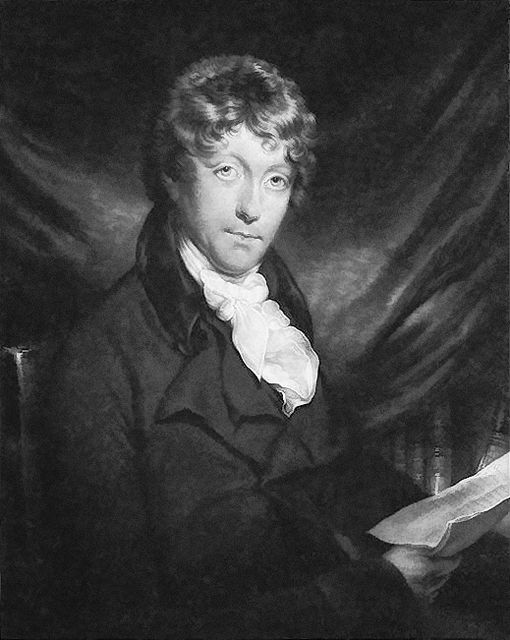
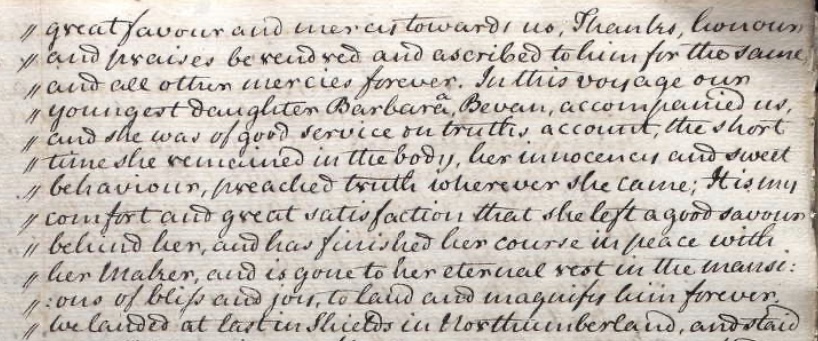
A transcribed page from my 9 x great grandfather John Bevan’s journal. In 1704, after twenty-one years in Pennsylvania, along with his wife Barbara and their youngest daughter Barbara, he returned to his estate in Wales. Sadly, daughter Barbara died. John wrote of her: “Her innocence and sweet behaviour preached truth wherever she came.”
A life-long love.

A transcribed page from my 9 x great grandfather John Bevan’s journal, c1720. Here, he writes of his wife Barbara Aubrey’s passing. 

She was very careful and open-hearted to help the poor and the weak both amongst us and others. In her last sickness, she was sensible she was not likely to recover out of it and she was satisfied and contented therein to submit to the Lord’s will. Speaking to me, she said, “I take it as a great mercy that I am to go before thee, we are upward of 45 years married, and our love is rather more now towards each other than at the beginning.”

Anniversaries

Died on this day, 19 February 1894, aged 41 my ancestor Hopkin Howe. Hopkin died due to an infection of his spinal cord.

In 1871, Hopkin left the family home in Glamorgan to live with a Welsh family in Stockton, Durham. There, he plied his trade as a blacksmith, serving the burgeoning railway industry.

On his return to Wales, Hopkin became a Methodist minister. In 1884, he married Elizabeth Jones. This event brought great joy and tragedy. Elizabeth gave birth to a daughter, Elizabeth May Gwendoline Howe, on 27 November 1885, but died in childbirth. Deprived of her mother, baby Elizabeth died in infancy. One can only imagine how these events tested Hopkin’s faith.

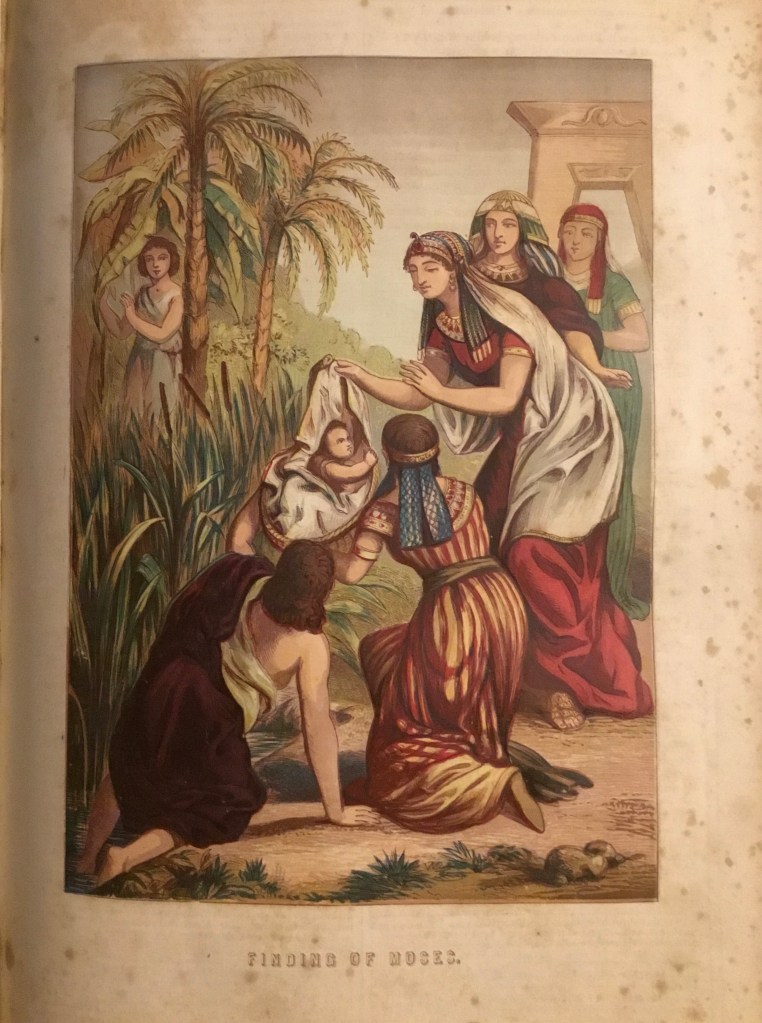
In December 1890. Hopkin married Sarah Ann Jones. When he died in 1894 he left Sarah Ann £119, the equivalent of a year’s wages. He left his Bible to his brother, my 2 x great grandfather, William Howe, a Methodist deacon. The Bible, with Welsh text and lavish illustrations captioned in English, is now in my possession. It’s a huge tome, and a treasured heirloom.

“As the ‘Brooklyn Bonfire’ Clara Bow blasted her way to fame. As the ‘It’ girl her name became synonymous with sex appeal the world over. Clara’s screen career became a succession of labels – all of them descriptive and not a few of them libellous.” – Dora Albert, c1933.

As ever, thank you for your interest and support.

Hannah xxx

For Authors

#1 for value with 565,000 readers, The Fussy Librarian has helped my books to reach #1 on 36 occasions.

A special offer from my publisher and the Fussy Librarian. https://authors.thefussylibrarian.com/?ref=goylake

Don’t forget to use the code goylake20 to claim your discount 🙂

Categories
Dear Reader

Dear Reader #103

Dear Reader,

Published on 5 June 2021, many thanks to everyone who has placed Operation Sherlock, Eve’s War book five, in the top thirty hot new releases.

Currently, I’m storyboarding The Olive Tree: Leaves, book three in my Spanish Civil War saga. This story centres on the Battle of Brunete (6–25 July 1937) and a race against time to evacuate children before the fascists controlled the northern Spanish ports.

Map credit: Wikipedia

Several branches of my family came from the West Country. This is Avon Street, Bath, Somerset 1880, a street that must have been familiar to some of them.

Mapping My Ancestors

Maps Five and Six: 1750 – 1800

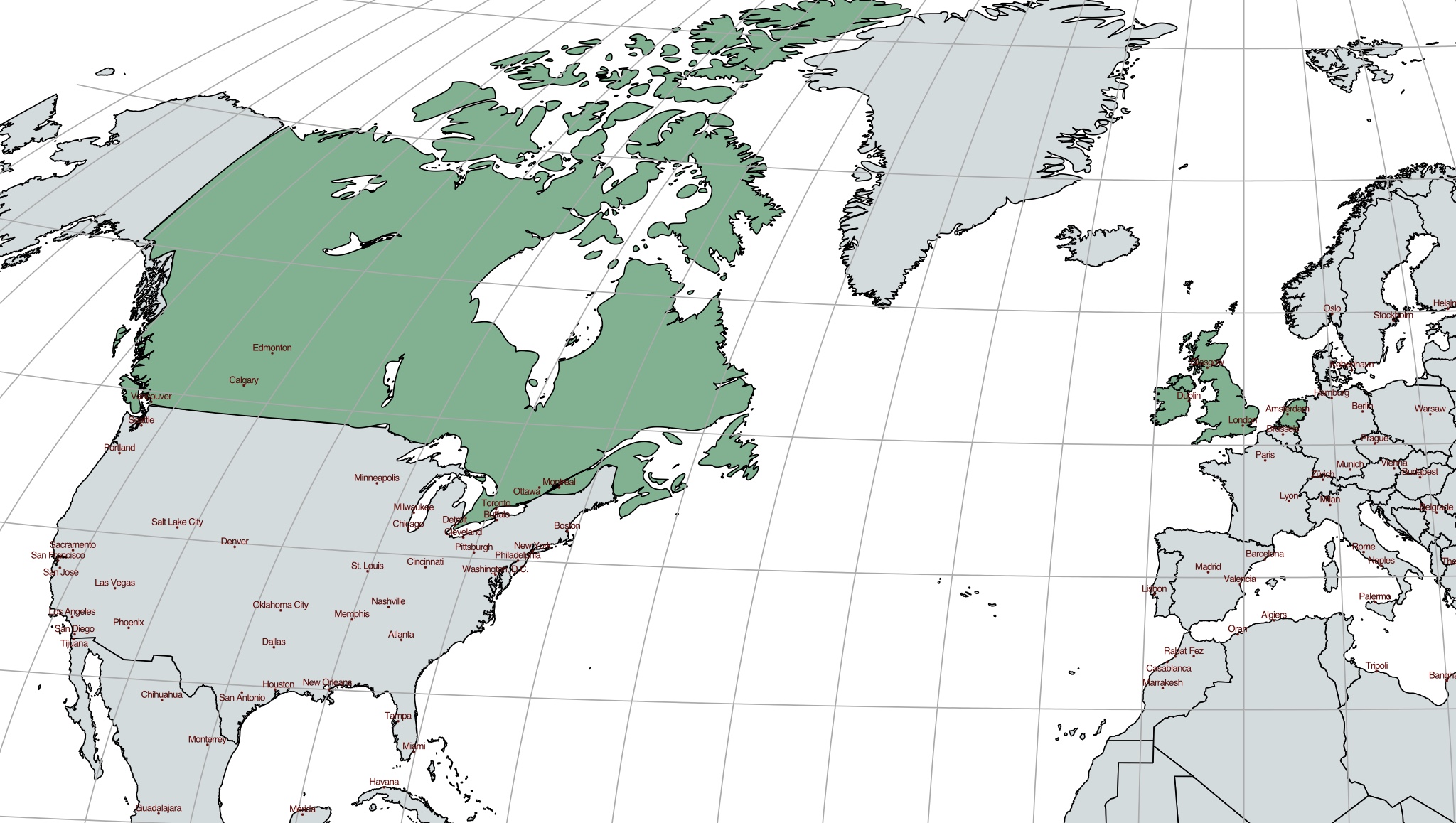
New counties on Map Five are Oxfordshire, Buckinghamshire and Cheshire. Various ancestors from these counties either moved to London or married someone from London during this period. 

On Map Six my Canadian ancestors emigrated to that country from Yorkshire and Durham while a branch of my family moved to Cheshire from the Netherlands, possibly in connection with the cloth trade. Several branches of my family established plantations in Barbados and one ancestor was ‘Born at Sea’. The exact location wasn’t recorded, but I suspect it was during a journey from the West Indies to Britain. More research required. Captains used to fire their guns to ‘encourage’ women to give birth, hence ‘son of a gun.’

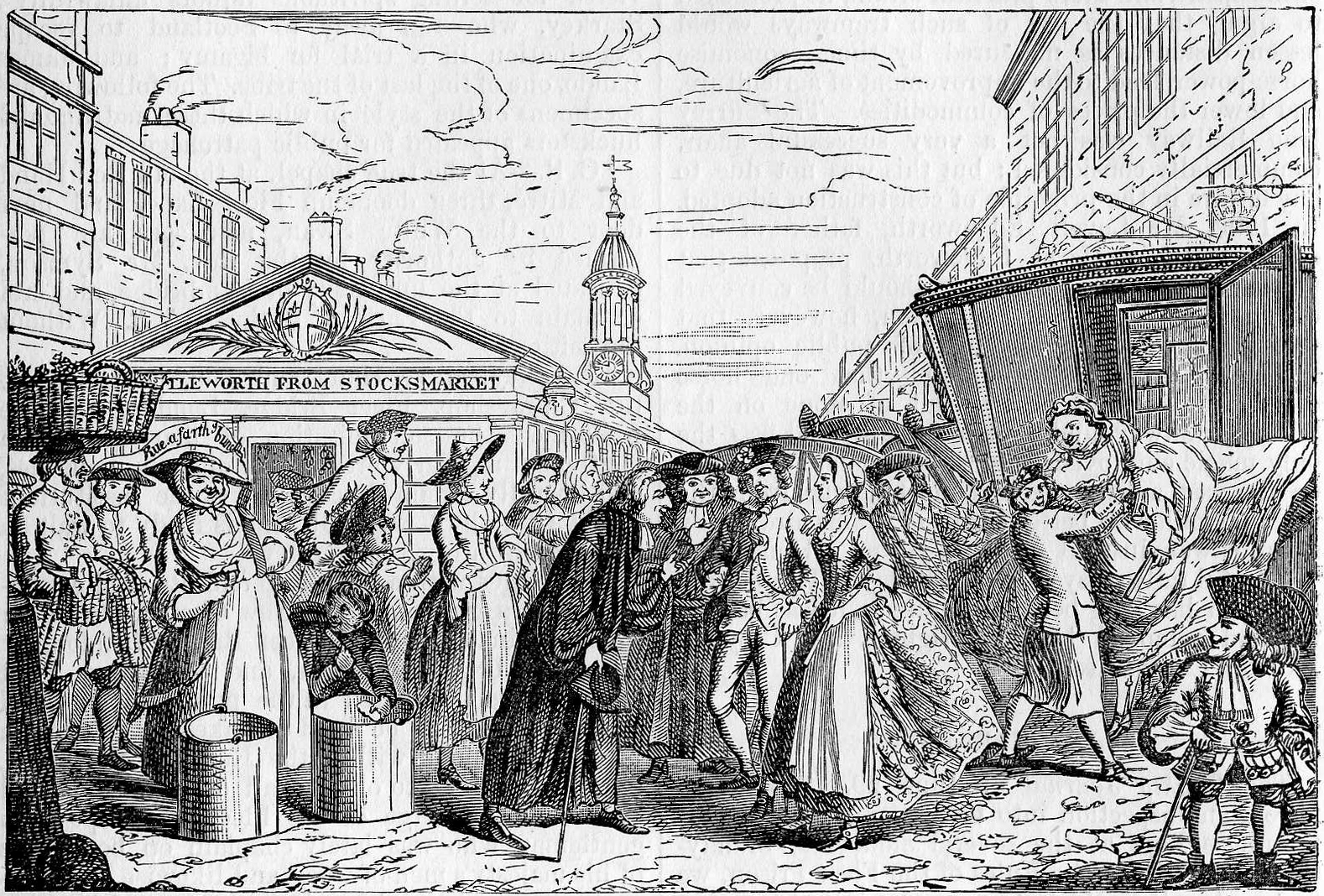
My  7 x great grandmother Sarah Wildsmith was born in London in 1698 to affluent parents. On 23 October 1719 she married Philip Spooner, a ‘gentleman’. However, an air of mystery surrounds the marriage for it was a Clandestine Marriage, a Fleet Marriage, pictured.

A Fleet Marriage was an example of an irregular or Clandestine Marriage that took place in England before the Marriage Act of 1753. Specifically, it was a marriage that took place in London’s Fleet Prison or its environs during the seventeenth and early eighteenth centuries.

By the 1740s up to 6,000 marriages a year were taking place in the Fleet area, compared with 47,000 marriages in England as a whole. One estimate suggests that there were between 70 and 100 clergymen working in the Fleet area between 1700 and 1753. The social status of the couples varied. Some were criminals, others were poor. Some were wealthy while many simply sought a quick or secret marriage for numerous personal reasons.

Sarah and Philip’s marriage was recorded in the ‘Registers of Clandestine Marriages and of Baptisms in the Fleet Prison, King’s Bench Prison, the Mint and the Mayfair Chapel.’ I assume the couple were married in Mayfair Chapel. However, maybe not because in 1729 Philip found himself in a debtors’ prison.

Debtors’ prisons were a common way to deal with unpaid debts. Destitute people who could not pay a court-ordered judgment were incarcerated in these prisons until they had worked off their debt or secured outside funds to pay the balance. 

In England, during the eighteenth and nineteenth centuries, 10,000 people were imprisoned for debt each year. However, a prison term did not alleviate a person’s debt; an inmate was typically required to repay the creditor in full before their release.

In England and Wales debtors’ prisons varied in the amount of freedom they allowed the debtor. Through his family’s financial support a debtor could pay for certain freedoms; some prisons allowed inmates to conduct business and to receive visitors while others even allowed inmates to live a short distance outside the prison, a practice known as the ‘Liberty of the Rules.’

A mid-Victorian depiction of the debtors’ prison

Along with the embarrassment for the family, life in these prisons was unpleasant. Often, single cells were occupied by a mixture of gentlemen, violent criminals and labourers down on their luck. Conditions were unsanitary and disease was rife.

Many notable people found themselves in a debtors’ prison including Charles Dickens’ father, John. Later, Dickens became an advocate for debt prison reform, and his novel Little Dorrit dealt directly with this issue.

More tragedy befell Sarah in 1729 when Philip died, possibly from gaol fever contracted at the prison. Gaol fever, was common in English prisons. These days, we believe it was a form of typhus. The disease spread in dark, dirty rooms where prisoners were crowded together allowing lice to spread easily.

Alone, and in financial difficulties, Sarah had to regroup and rebuild her life, which she did.

Sarah’s fortunes changed in 1731 when she married Gregory Wright, my direct ancestor. Gregory was also a ‘gentleman’ running a successful stable and coach business. Once again, the marriage was registered in the ‘Registers of Clandestine Marriages and of Baptisms in the Fleet Prison, King’s Bench Prison, the Mint and the Mayfair Chapel.’

Sarah’s Fleet Marriages raise the question: were her husbands in debt when she married them? With Philip Spooner this is a possibility because he did end his days in a debtors’ prison. However, the records suggest that Gregory Wright ran a successful coaching business and that debt was not an aspect of his life. Wealthy people participated in Fleet Marriages, especially if they sought secrecy or a quick marriage. It would appear that Sarah’s marriage to Gregory Wright fell into that category.

For Sarah and Gregory a child followed in 1739, my 6 x great grandfather William Wright, born in St Dunstan in the West, London. At last, Sarah had found contentment. However, drama followed in 1752 when Gregory featured in two trials at the Old Bailey. More about them next time.

As ever, thank you for your interest and support.

Hannah xxx

Bestselling psychological and historical mysteries from £0.99. Paperbacks, brand new in mint condition 🙂
https://hannah-howe.com/store/

Categories
Mini Mystery

Mini Mystery #5 Stand and Deliver!

Stand and Deliver!

You have probably heard of Dick Turpin, but who was he and what happened to him?

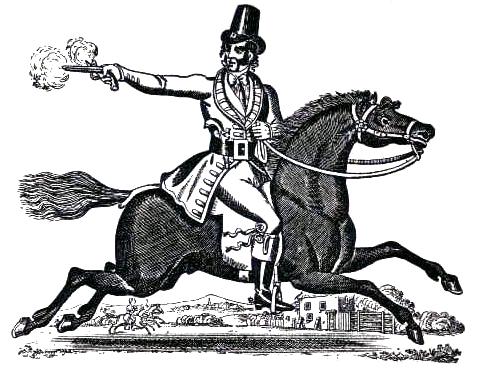
Dick Turpin was baptised on 21 September 1705 at Hempstead, Essex. He established himself as a butcher, stealing stock from local farmers. Later, while on the run, he resorted to robbing smugglers who roamed the local coast.

AEF955D6-4D52-4378-8359-B65355D5BB88

On 4 May 1737, Turpin murdered Thomas Morris while out poaching. With a £200 bounty on his head, Turpin fled to Yorkshire. Apparently, he rode the 200 miles from London to York on his mare, Black Bess, in fifteen hours, but this feat was probably achieved by John Nevison, aka Swift Nick, another highwayman.

Under the name of John Palmer, Turpin dealt in horses. Unsuccessful, he ended up in York’s Debtors’ Prison where, on 6 February 1739, he wrote to his brother-in-law asking for help. However, his brother-in-law refused to pay the sixpence delivery charge and returned the letter to the post office where James Smith recognised the handwriting. Smith travelled to York and identified Palmer as Dick Turpin. Turpin was duly arrested, Smith pocketed the £200 reward and a legend was born.


Categories
Saving Grace

A Hero

Daniel Morgan, my advocate in Saving Grace, was influenced by Sir William Garrow (13th April 1760 – 24th September 1840). Garrow was a barrister, politician and judge who radically reformed the judical system. Indeed, his reforms ushered in the adversarial court system used in most common law nations today. He introduced the phrase “presumed innocent until proven guilty”, and insisted that defendants’ accusers and their evidence should be thoroughly tested in court.

William_Garrow2
Sir William Garrow

William Garrow was elected to Parliament in 1805, a phase of his career he did not greatly enjoy. However, while in Parliament he campaigned in favour of more liberal laws and championed legislation that condemned animal cruelty. Later, he spent fifteen years as a judge. He began his career as a prosecutor. On the 14th January 1784, he prosecuted John Henry Aikles for obtaining a bill of exchange under false pretences, a case he won. However, in September 1785 Garrow defended Aikles and secured his release due to ill-health.

Old_Bailey_Microcosm_edited
The Old Bailey

In the late 1700s and early 1800s many, often trivial, crimes carried the death penalty therefore William Garrow sought to limit the punishment for his convicted clients. In 1784 two women were arrested for stealing fans worth 15 shillings, a crime that led to the death penalty. Garrow defended the women and convinced the jury to convict them of stealing 4 shillings worth of fans instead, thus reducing their sentences to twelve months hard labour.

During this era the sugar planters of the West Indies held large amounts of power in Parliament. This power allowed them to maintain a monopoly on the marketing of sugar, which in turn led to great profits. These profits were cultivated through the use of slave labour, a practice William Garrow abhored. When presented with the opportunity of managing the sugar planters legal and political business, he replied, “If your committee would give me their whole incomes, and all their estates, I would not be seen as the advocate of practices which I abhor, and a system which I detest.”

Sarah_Garrow,_by_John_Donaldson
Sarah Dore

William Garrow led an unconventional private life. He had a relationship with Sarah Dore, wife of Arthur Hill, Viscount Fairford. Sarah clearly loved Garrow and despite the social pressures of the time she left the Viscount. Her relationship with Garrow produced two children, David William Garrow, born on the 15th April 1781, and Eliza Sophia Garrow, born on the 18th June 1784. William and Sarah finally married on the 17th March 1793.