Categories
Dear Reader

Dear Reader #175

Dear Reader,

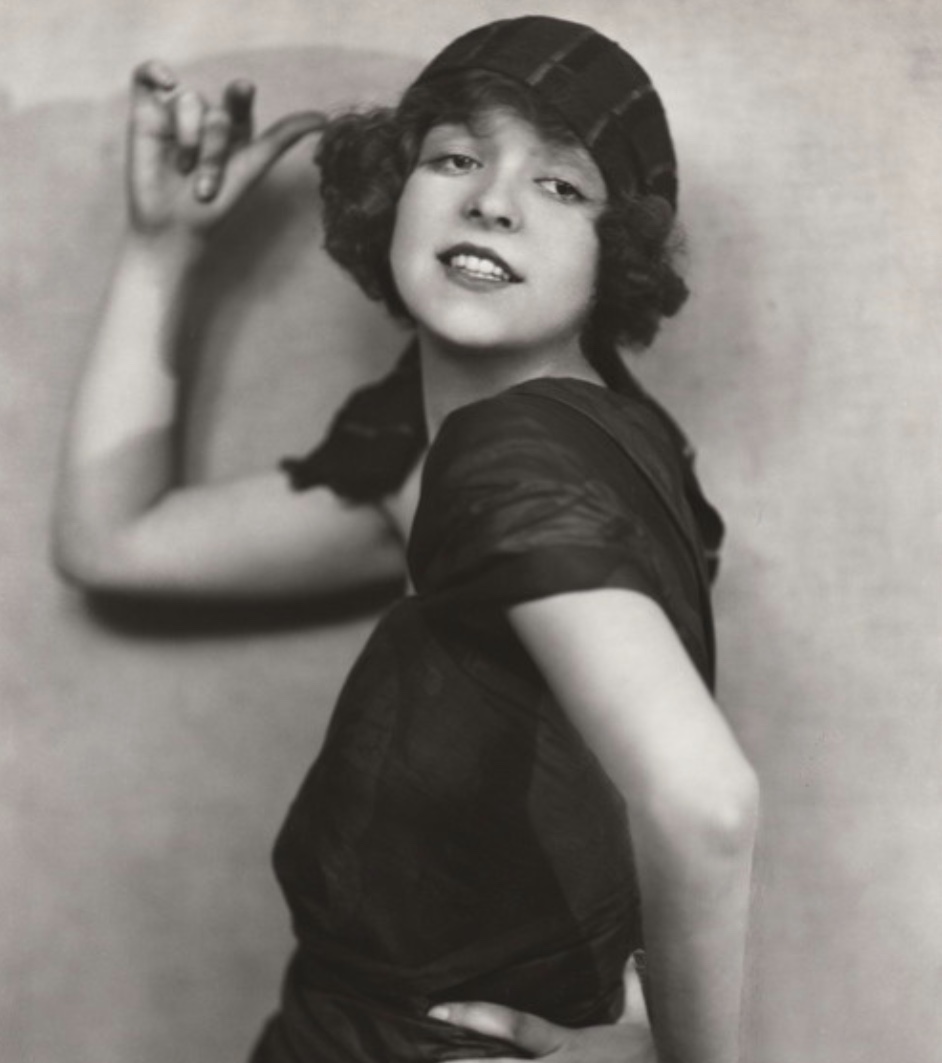
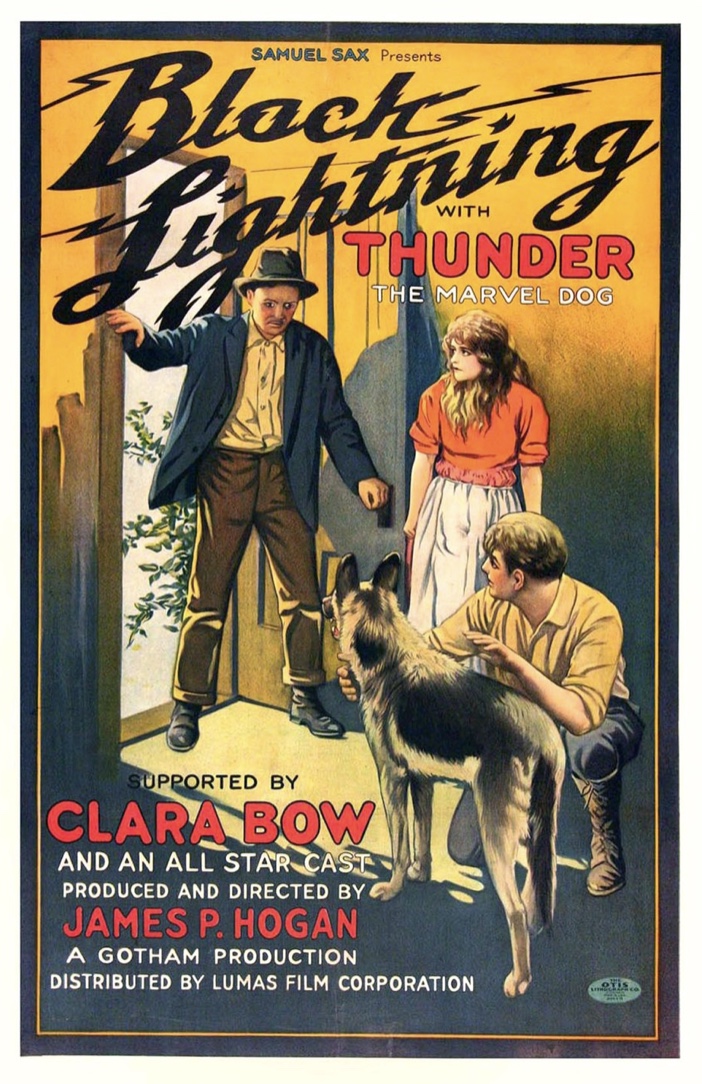
Clara Bow’s fourteenth movie was Black Lightning. The movie, produced during the Fall of 1924 and released on December 8, 1924, starred Thunder the Marvel Dog, supported by Clara Bow and “An All Star Cast”.

Thunder the Marvel Dog was a male German Shepherd that appeared in movies between 1923 and 1927. During this era, he had plenty of canine ‘rivals’ including Peter the Great, Napoleon, Rex, Strongheart and, more famously, Rin Tin Tin.

Clara loved dogs. However, the plot of this movie was convoluted and, given her ambitious, she could not have been happy as a support player to a dog. Greater days lay ahead, but at this stage of her career Clara was certainly paying her dues as she made her way in Hollywood.
Frances Gifford’s acting career blossomed in the 1930s and 1940s. Her breakthrough arrived in 1941 when she was cast as Nyoka in Jungle Girl, a fifteen-chapter movie serial. The serial was successful. However, tragedy struck on December 31, 1947 when Frances was seriously injured in a car accident. She attempted a comeback, but sadly that accident effectively ended her career.

Sister of actress Mary Pickford, Lottie Pickford (June 9, 1893 – December 9, 1936) also appeared in motion pictures, although her main passion in life was partying.

Lottie’s first starring role arrived in 1914 in The House of Bondage. She played a prostitute, in stark contrast to her sister Mary’s image as “America’s Sweetheart”. 

In 1915 Lottie appeared in The Diamond from the Sky, a silent adventure serial of thirty chapters. The serial was jeopardized when Lottie became pregnant, an incident that placed her on an unofficial Hollywood blacklist for a short time.

Lottie was a socialite who loved to party. Indeed, her parties were notorious all-night affairs that featured an abundance of alcohol, drugs and nudity. This hedonistic lifestyle took its toll and cut short the life of a woman who, despite her socialite status, was regarded as down to earth, friendly and unpretentious.

Tallulah Bankhead (January 31, 1903 – December 12, 1968) amassed nearly 300 film, stage, television and radio roles during her career. Her main forte was the stage – she was inducted into the American Theatre Hall of Fame in 1972.

A hedonist who loved men, women, cigarettes, drugs and alcohol, Tallulah rebelled against her family, prominent conservatives, by supporting the civil rights movement. She also helped families escape persecution during the Spanish Civil War and World War Two.

Marion Davies (January 3, 1897 – September 22, 1961) ran away from a convent to become a chorus girl, a performer in the Ziegfeld Follies and an actress. While performing in the 1916 Follies, nineteen-year-old Marion met fifty-three-year-old newspaper tycoon William Randolph Hearst. She became his mistress and he promoted her career, often to her detriment.

Throughout her life, Marion was mistakenly associated with the character of Susan Alexander Kane in Orson Welles’ Citizen Kane.  Susan was a singer who lacked talent. However, Welles himself said that Marion was a talented actress, and that he did not base Susan on Marion.

My latest article for the Seaside News appears on page 34 of the magazine.

My 5 x great grandmother Hannah David was born in Llantrisant, Glamorgan in 1757. She married James Morgan on 9 November 1776 in Llantrisant. Thomas Morgan, their first child, of twelve, arrived ten months later. In the 1700s, on average a woman gave birth to eight children so, maybe, the excessive strain of giving birth to twelve children contributed to Hannah’s death in 1802, aged 45. However, there was more to Hannah’s life than motherhood. Read on…
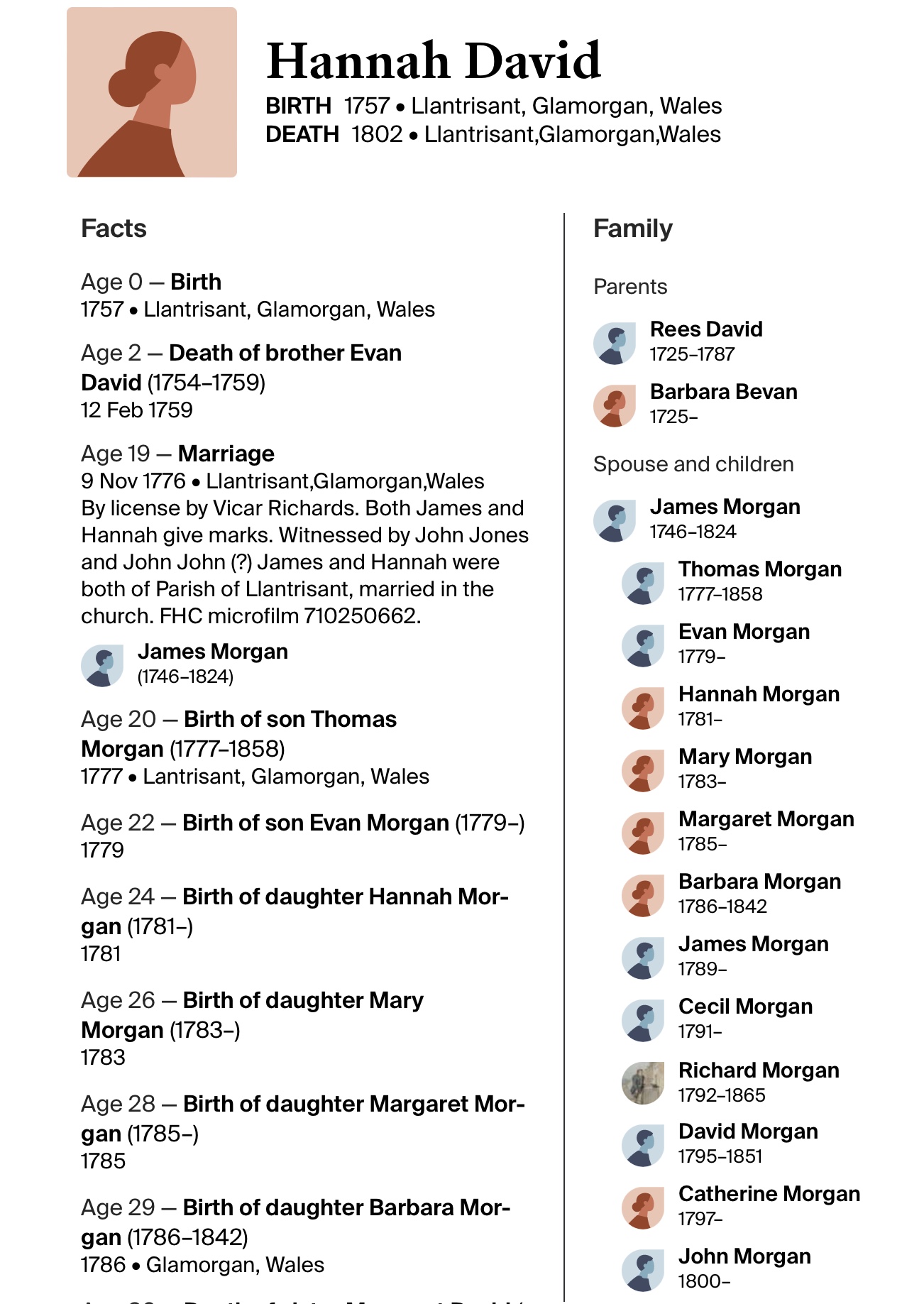
When my 5 x great grandmother Hannah David wasn’t pregnant or nursing one of her twelve children, she was helping her husband James Morgan to run the Swan Inn in Llantrisant.

William Aubrey of Llanwynno owned the property from 1767 until 1801. Hannah’s branch of our family tree connects with the influential and well-to-do Aubreys, so it’s likely that she became the landlady of the Swan through this family connection.
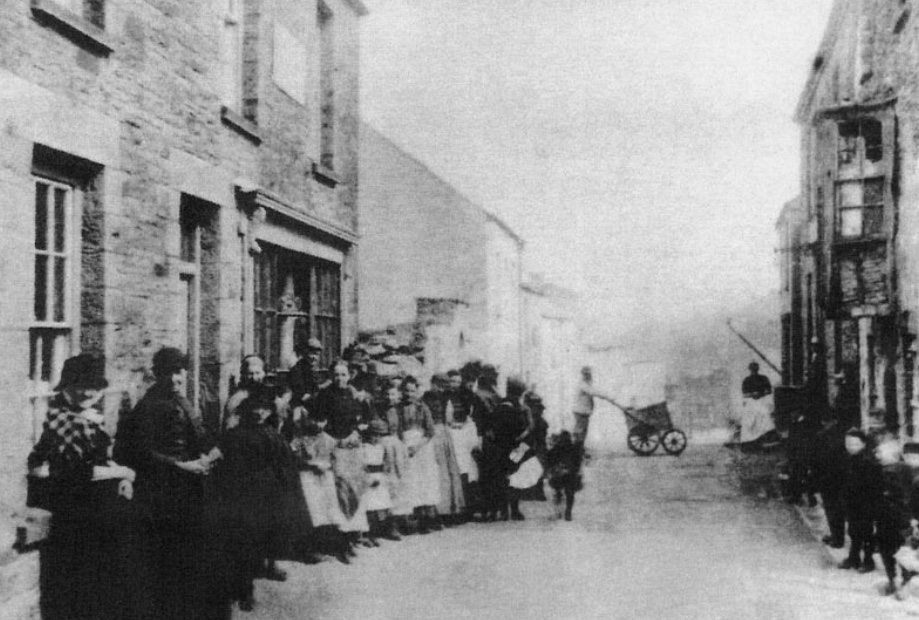
📸 The Swan Inn (Llantrisant.net)

One of the largest inns in the town, the Swan stood near Zozobabel Chapel on Swan Street. Taliesin Morgan’s 1898 history of Llantrisant referred to the Swan Inn as the venue for a number of eisteddfodau held by the Cymreigyddion Society. As such, the inn was a hotbed for promoting Welsh literature, poetry and music.

🧭 Location of the Swan Inn

In the fourth quarter of the 18th century my ancestor’s inn must have been the place to be, a venue reverberating with music and dancing, a place to listen to poems and stories. Hannah must have heard some tales. Maybe she told one or two herself. Maybe I can trace my love of stories to her.

***

Clara Bow Quotes: “Something every girl who goes into motion pictures must learn…if you do make a success of your work, your name is of public interest and where a girl in non-professional may be allowed certain liberties, a screen player is allowed none without attendant publicity.”

Intertitle #15

As ever, thank you for your interest and support.

Hannah xxx

For Authors

#1 for value with 565,000 readers, The Fussy Librarian has helped my books to reach #1 on 36 occasions.

A special offer from my publisher and the Fussy Librarian. https://authors.thefussylibrarian.com/?ref=goylake

Don’t forget to use the code goylake20 to claim your discount đŸ™‚

Categories
Dear Reader

Dear Reader #174

Dear Reader,

Clara Bow’s thirteenth movie was This Woman, produced during the summer of 1924. This Woman went on general release from November 2, 1924. Clara was very much a ‘jobbing’ actress at this stage, appearing in bit parts. She was listed eighth (out of nine) on the bill. To add insult to injury, the New York Times miscredited her as ‘Clare Bow’.

This Woman ran for seventy minutes and was released by Warner Bros. Clara played Aline Sturdevant, a jealous young lover. The movie was considered lost, but a complete print can be found at Lobster Films, Paris.

Joan Woodbury (December 17, 1915 – February 22, 1989) enjoyed an acting career that began in the 1930s and lasted well into the 1960s. She appeared in B-movies and as the heroine opposite cowboy actors such as Roy Rogers.

Joan appeared in fifty films between 1937 and 1945. Her most memorable role arrived in 1945 when she played Daily Flash newspaper journalist Brenda Starr in the serial Brenda Starr, Reporter.

Technicolor, a series of colour motion picture processes, dates back to 1916. In the 1930s three black and white films ran through a special camera to produce Technicolor, a process that continued into the 1950s when the 3-strip camera was replaced by a standard camera loaded with a single strip ‘monopack’ colour negative film. 

Technicolor’s three-colour process became famous for its highly saturated colour. Initially, the process was used for musicals, animations and costume dramas, but it also featured in film noir, in movies such as Leave Her to Heaven.

Betty Compson (March 19, 1897 – April 18, 1974) acted and produced during Hollywood’s silent era. Her notable performances included The Docks of New York and The Barker, the latter earning her an Academy Award nomination for Best Actress.

Initial success enabled Betty to establish her own production company, which gave her creative control over screenplays and financing. Unlike a number of female stars of the silent era, Betty’s voice recorded well and she extended her career into the talkies.

In common with many actresses of the era, Betty married three times: to director James Cruze; to agent/producer Irving Weinberg; and to Silvius Gall, a marriage that lasted until Gall’s death in 1962.

A Christmas present. An excellent version of The Great Gatsby.

“They were careless people, Tom and Daisy – they smashed up things and creatures and then retreated back into their money or their vast carelessness or whatever it was that kept them together, and let other people clean up the mess they had made.”

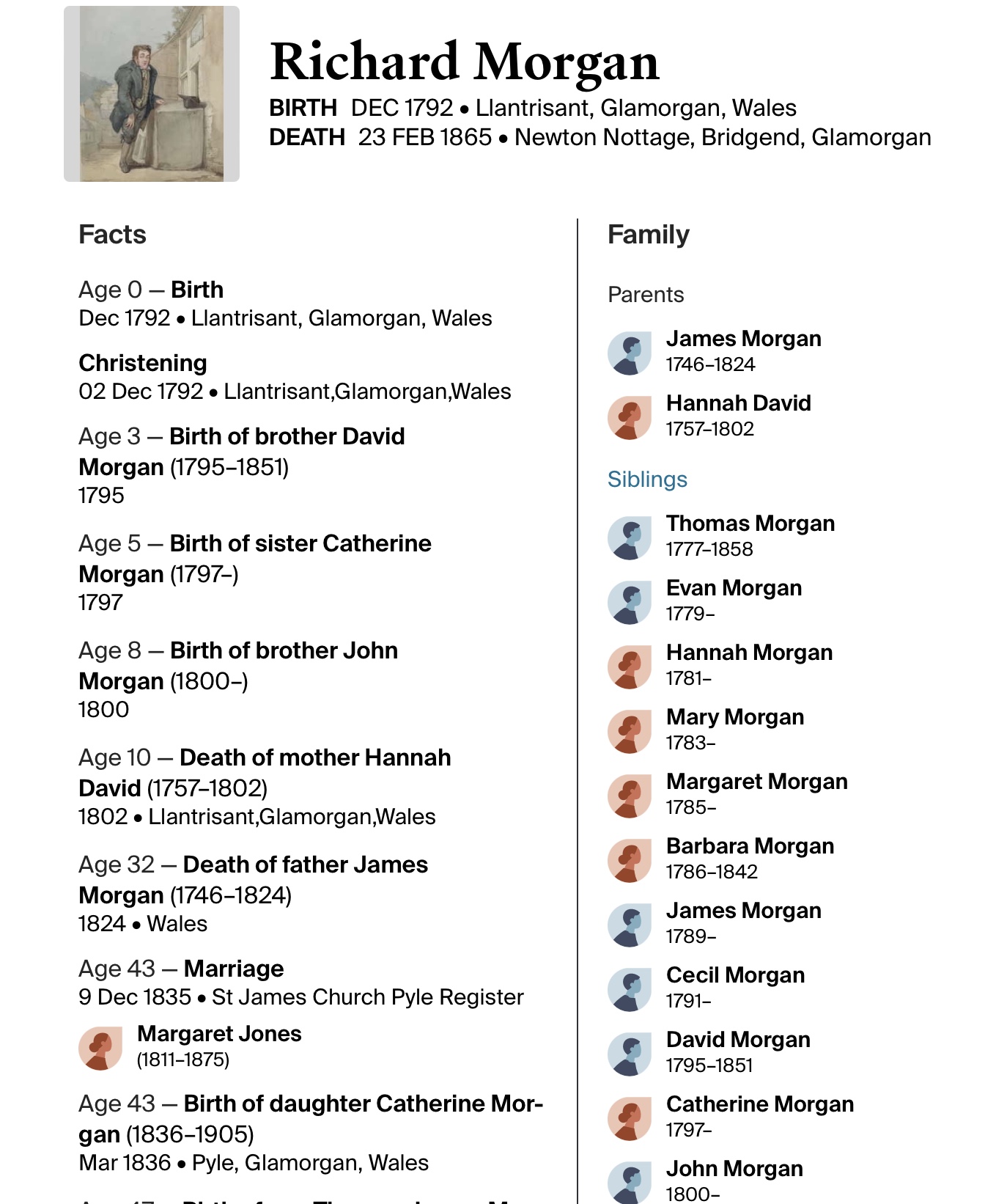
My 4 x great grandfather, Richard Morgan, was baptised on 2 December 1792 in Llantrisant, Glamorgan, the ninth of twelve children born to James Morgan and Hannah David. Sadly, Hannah died when Richard was ten. Richard’s family were associated with inns and horses, and he spent a long working life as an ostler.

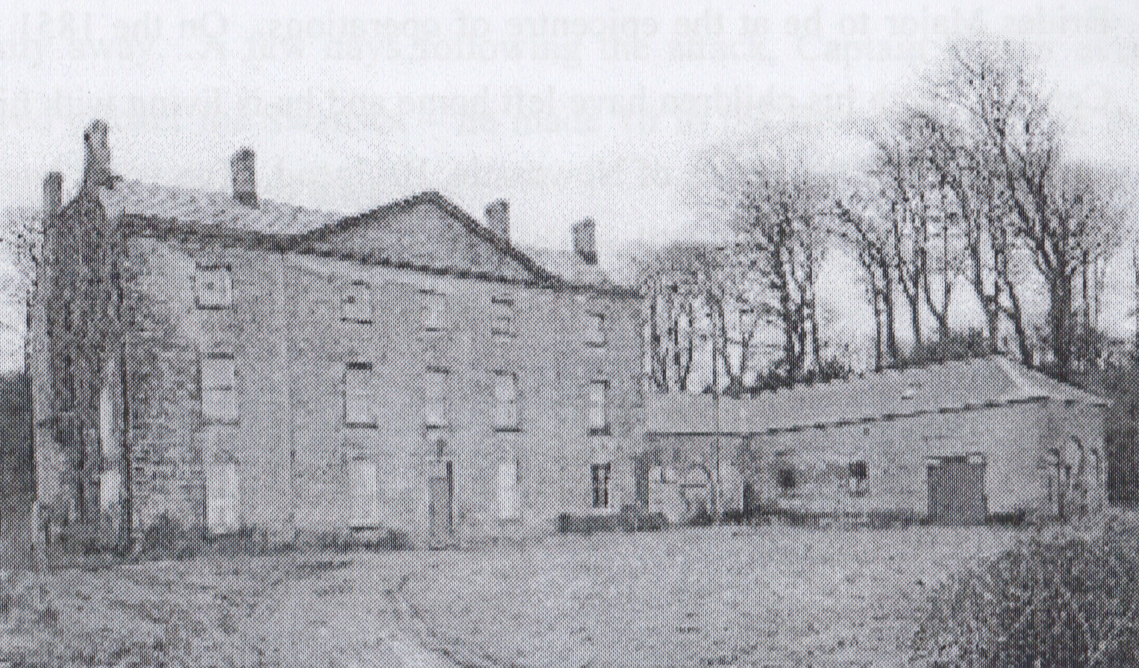
At the relatively advanced age of 43, my 4 x great grandfather Richard Morgan married Margaret Jones in St James’ Church, Pyle (pictured). St James’ was originally built in the medieval town of Kenfig. However, over a period of 200 years sand encroached upon the town and, eventually, buried it. The burgesses moved their town to Pyle, c1481, where they rebuilt St James’. They rebuilt one wall ‘upside down’ using the smaller stones on the bottom as they arrived from Kenfig.

During my research, I wondered what persuaded Richard to travel twenty miles west to settle in Pyle. Then, I hit upon a theory. As an ostler, he moved there to work at Pyle Coaching Inn, the main inn on the main highway. Then, while researching the births of Richard and Margaret’s children, I discovered that Richard was listed as a horse keeper at Pyle Coaching Inn, and living in nearby Cefn Cribwr, or Tythegston Higher as it was also called. It’s lovely when your theories are confirmed in the facts.

Mail deliveries became available to the public in 1635 and the introduction of national mail coaches in 1785 further increased the traffic travelling along the highways. The ongoing war with France meant that the gentry could no longer take the ‘grand tour’ of Europe and so they looked around for alternatives, their eyes and minds soon focusing on Wales with its romantic landscapes and medieval ruins. All of this led to the building of Pyle Coaching Inn during the 1780s by Thomas Mansel Talbot of Margam.

Thomas Mansel Talbot took a private apartment at the Inn and he would stay there while indulging in his passion for hunting and fishing. He built the Inn in the fashionable Georgian style with three floors and rooms of various sizes. The largest room was five metres by four and a half metres, and the building contained forty beds and twelve double-bedded rooms. Moreover, the Inn also boasted a spacious dining room and stables for eight coaching horses. My 4 x great grandfather Richard Morgan tended those horses.

Many 18th and 19th century antiquarians who travelled through south Wales visited the buried medieval town at Kenfig and invariably they also stayed at the Inn. Furthermore, it is rumoured that Admiral Lord Nelson resided there on one occasion.

Isambard Kingdom Brunel did stay at the Inn in 1849 – 50 to oversee the construction of the south Wales leg of the Great Western Railway. Another distinguished guest was Josiah Wedgwood and it is said that he gained inspiration for some of his pottery from the colour of the rocks and pebbles on the beach at Pink Bay.

📸 Pyle Coaching Inn, c1950, shortly before demolition.

When the railways arrived in Glamorgan in the 1840s they took passenger and commercial trade away from the horse carriages. As a result, my 4 x great grandfather Richard Morgan lost his job as an ostler at Pyle Coaching Inn. However, Richard adapted. He became a colt breaker then a horse keeper. With his love and knowledge of horses, he worked with the animals for the rest of his life.

🖼 Bridgend Railway Station, the commemorative opening, 1850.

When Richard lost his job as an ostler at Pyle Coaching Inn, due to the development of the railways, his wife Margaret decided to create her own ‘inn’ where she boarded navigators who had travelled from their homes in Ireland to help construct the railways. You could say life gave her lemons, so she made lemonade.

📸 Residents of Pyle Coaching Inn, c1900.

Clara Bow Quotes: “Romance had touched lightly upon me up to this time. Of course, I met many nice boys and went to dances and to the theatre with them just as any other girl would do. But even the intimation of love was far from my thoughts. I had a career to think of.”

Intertitle #14

As ever, thank you for your interest and support.

Hannah xxx

For Authors

#1 for value with 565,000 readers, The Fussy Librarian has helped my books to reach #1 on 36 occasions.

A special offer from my publisher and the Fussy Librarian. https://authors.thefussylibrarian.com/?ref=goylake

Don’t forget to use the code goylake20 to claim your discount 🙂

Categories
Dear Reader

Dear Reader #173

Dear Reader,

Clara Bow’s twelfth movie was Empty Hearts, produced during the summer of 1924 and released on September 15, 1924. Fourth on the bill, Clara played Rosalie. 

A drama, the plot of Empty Hearts centred on a blackmail letter, relationships, and misunderstandings. The screenplay was based on a story written by Evelyn Campbell a screenwriter, author and actress active during Hollywood’s silent era. Evelyn also wrote Westerns.

At this stage of Clara’s career, B.P. Schulberg was loaning her out to various studios. Indeed, not one of her eight movies made in 1924 was produced by Schulberg. On the whole, these movies were beneath Clara’s talent, and she must have felt frustrated.

Serial Stars

Kay Aldridge

Although she was screen-tested for the part of Scarlett O’Hara in Gone with the Wind, Kay Aldridge made her name as a heroine in serials. She starred as Nyoka Gordon in Perils of Nyoka, 1942. In the series, Nyoka confronted a host of villains while looking for her father, who’d disappeared while on expedition in Africa. Each episode ended with the traditional cliffhanger.

Kay also played the heroine in Daredevils of the West, 1943, and Haunted Harbor, 1944. She retired from acting in 1945.

After ten years, I’ve completed the preliminary research on my family tree. Of course, because of missing records, there are gaps, but I’m delighted with the stories I’ve discovered. Now, I intend to trace a branch back in greater detail, starting with my 3 x great grandmother Hannah Morgan, 30 July 1848 – c1881. How far back does this branch go? Stay tuned and find out 😉

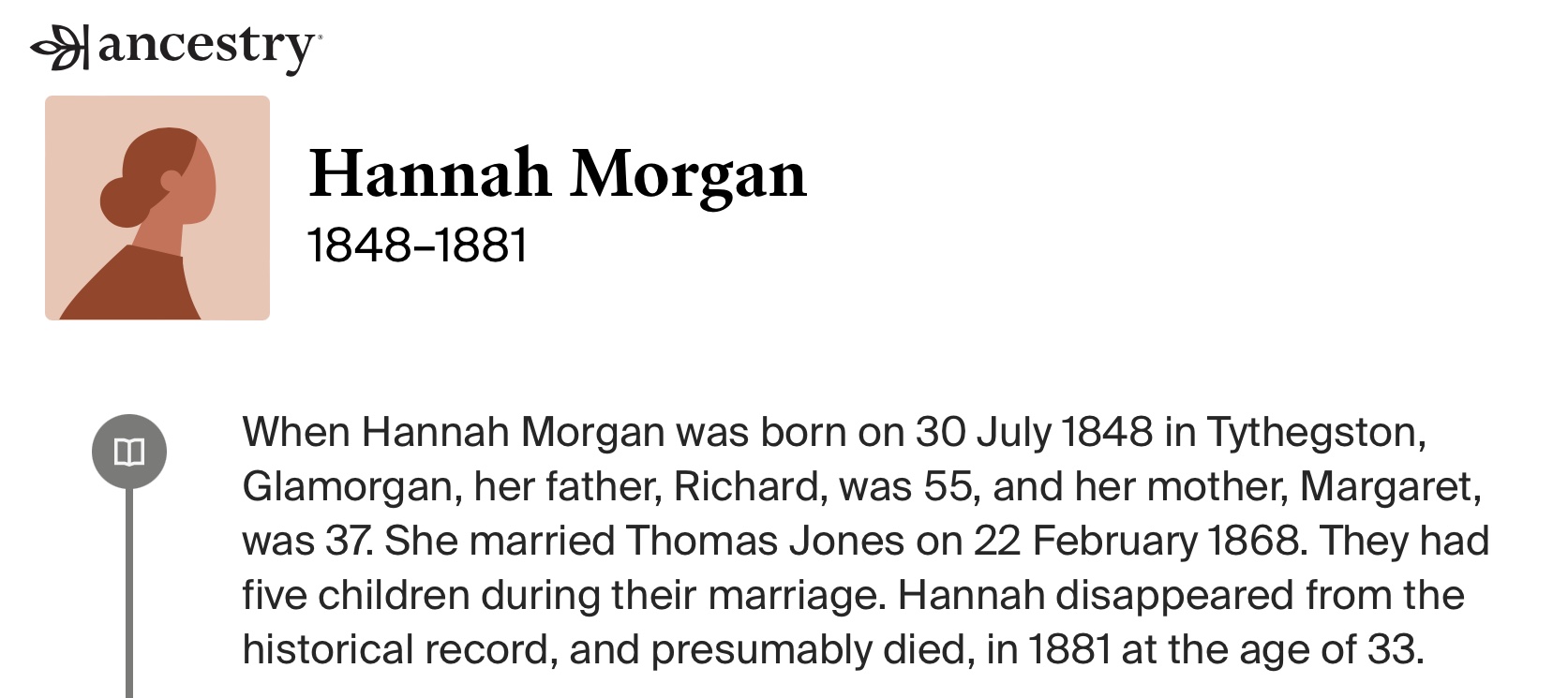
The basics of Hannah’s life, outlined below, look ordinary. However, as the mother of five children and the wife of a coal miner, she was one of the women who formed the backbone of Welsh society during the Victorian era.

Hannah’s father was an ostler, so it’s likely she was familiar with horses. Her mother lodged Irish navvies, so from a young age she became accustomed to the Victorian norm – a crowded house.

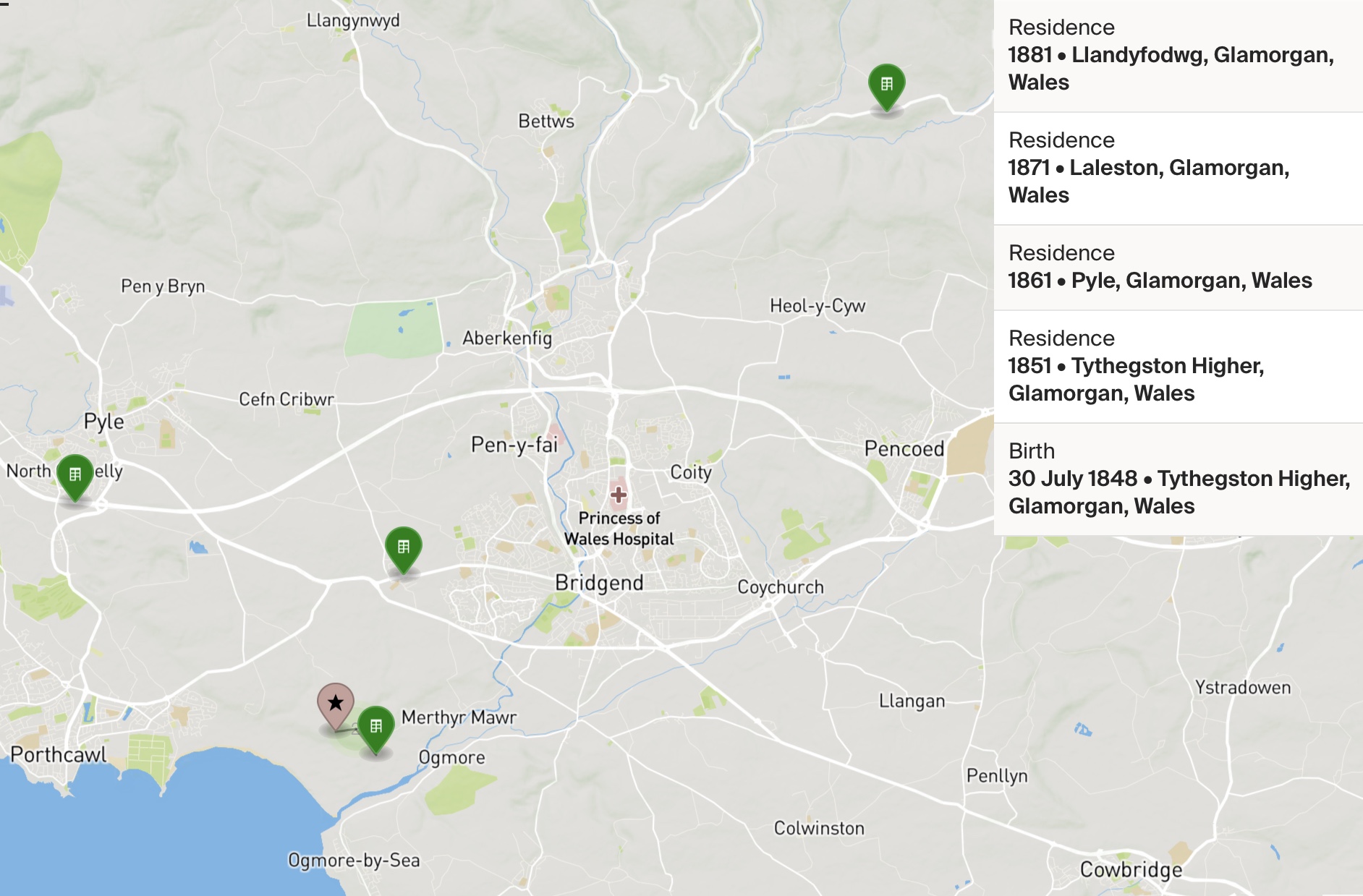
The points on this modern map highlight where my 3 x great grandmother Hannah Morgan was born and where she lived at the time of each census. The birth records of her five children indicate that her family was constantly on the move as her husband Thomas Jones sought employment in the newly developing coal mines that were transforming the culture and landscape of Glamorgan. Llandyfodwg, highlighted to the north, was Hannah’s last known address.

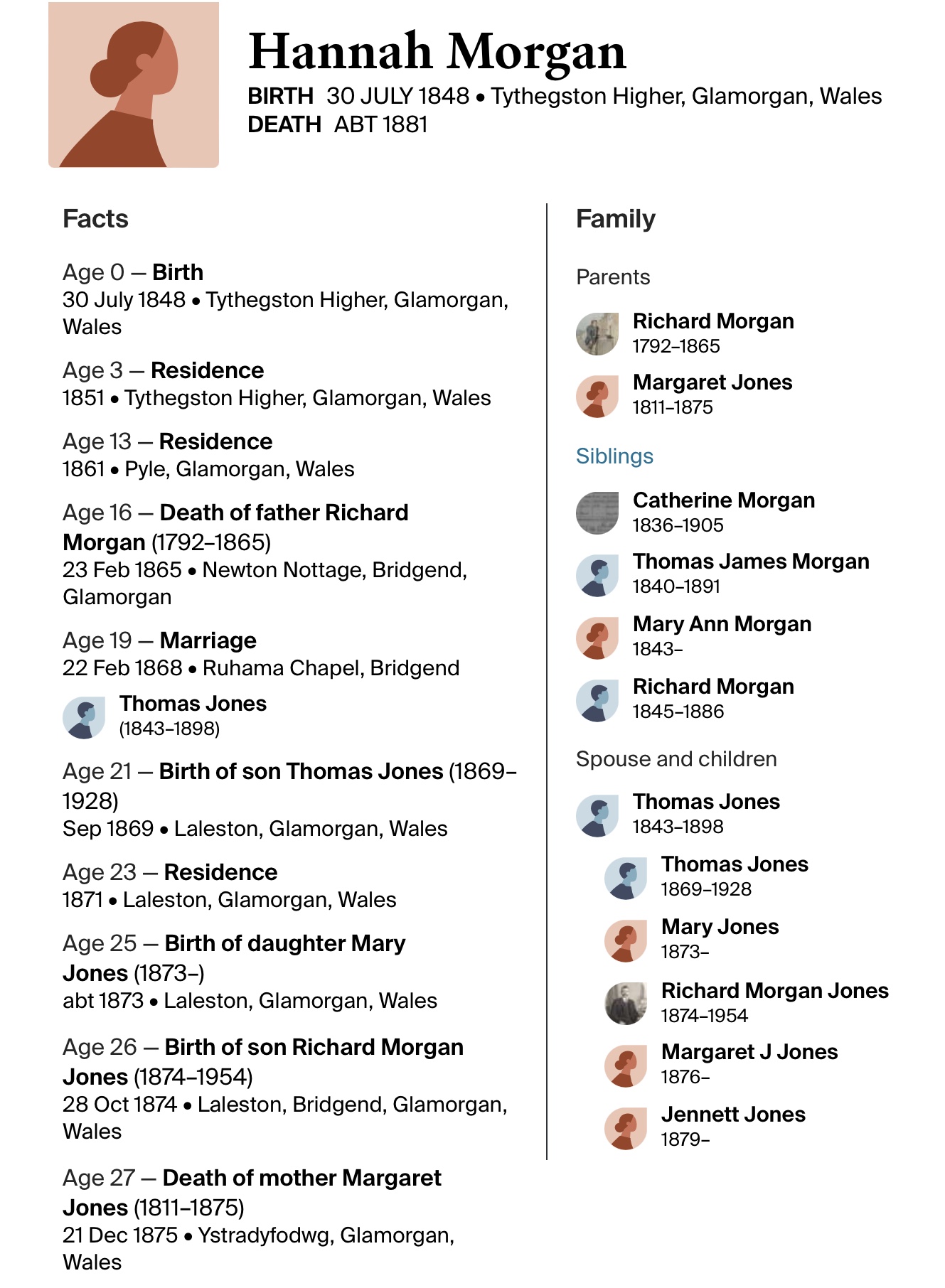
Hannah Morgan’s family chart and timeline reveal that, in common with many parents of her era, she named her children after her parents. Two of the major events of Hannah’s life occurred during her teenage years when her father died and when she married.

My 3 x great grandparents Hannah Morgan and Thomas Jones married on 22 February 1868, a Saturday, at Ruhama Baptist Chapel, Bridgend. As newlyweds establishing a home maybe they paid attention to advertisements like this one, which appeared on the day of their wedding.

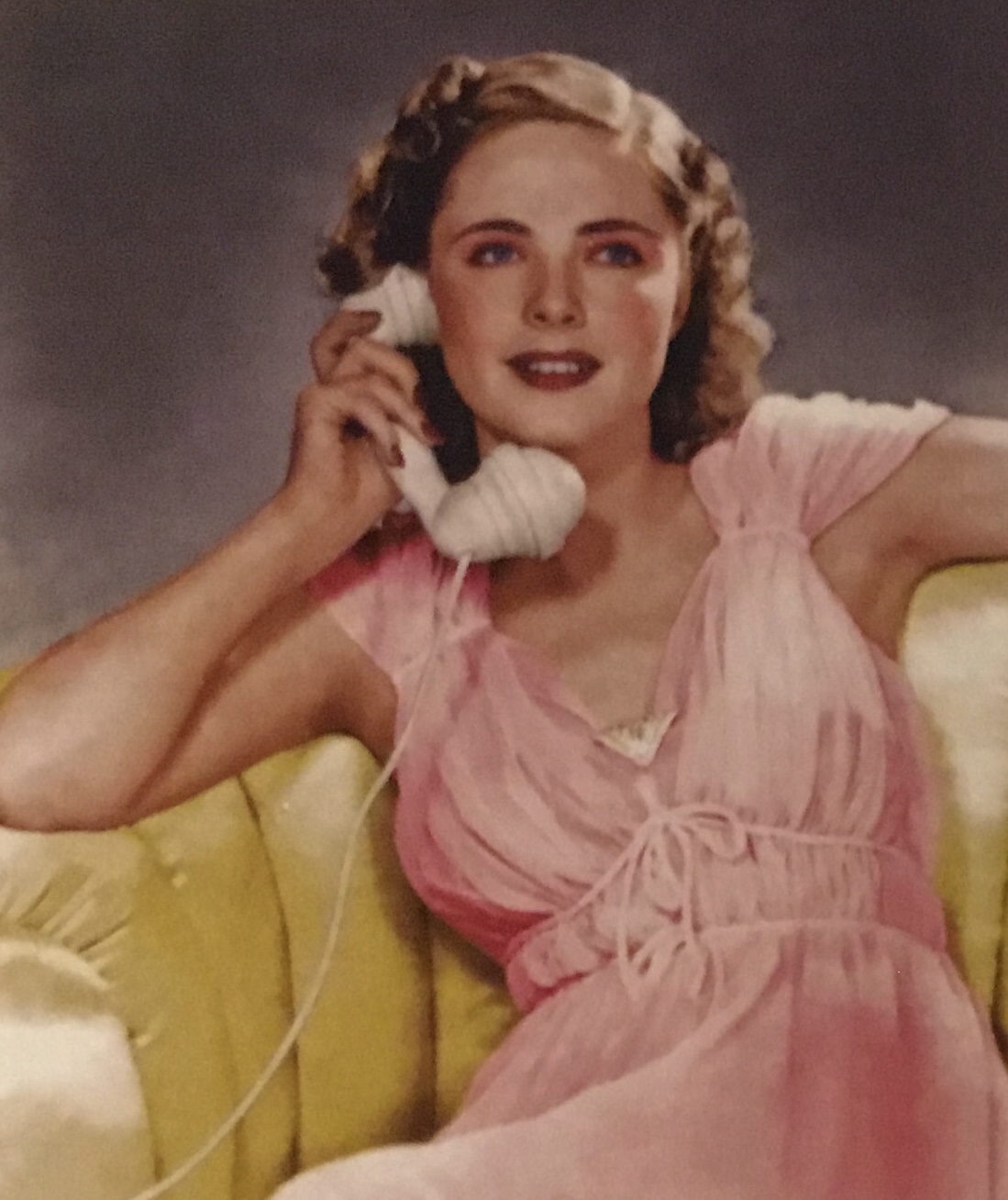
Unfortunately, no pictures of Hannah Morgan or Thomas Jones exist. However, I have managed to find a picture of their son, Richard Morgan Jones, 1874 – 1954. Like his father, Richard was a coal miner in Glamorgan.

My 3 x great grandfather Thomas Jones started his working life as a ‘cow boy’. After that he worked as a coal miner, dicing with death, every day. At random I have selected ten Joneses who worked alongside Thomas in the local coal mines. The brief notes that follow record their fate.

Thomas Jones, aged 22: killed by falling from a byat while moving a stage in the shaft.

Evan Jones, aged 14: killed by a full train passing over him.

William Jones, aged 38: killed when the mineshaft roof fell.

William Jones, aged 37: killed by a fall of coal.

William Jones, aged 16: killed by a fall of coal.

Richard Jones, aged 34: killed when the side of the pit gave way.

David Jones, aged 45: killed when the mine roof collapsed.

Thomas Jones, aged 48: killed by an explosion of firedamp, one of two people killed.

David Jones, aged 26: killed by a gas explosion, one of eleven people killed.

Lewis Jones, aged 12: run over by trams through breakage of coupling chains.

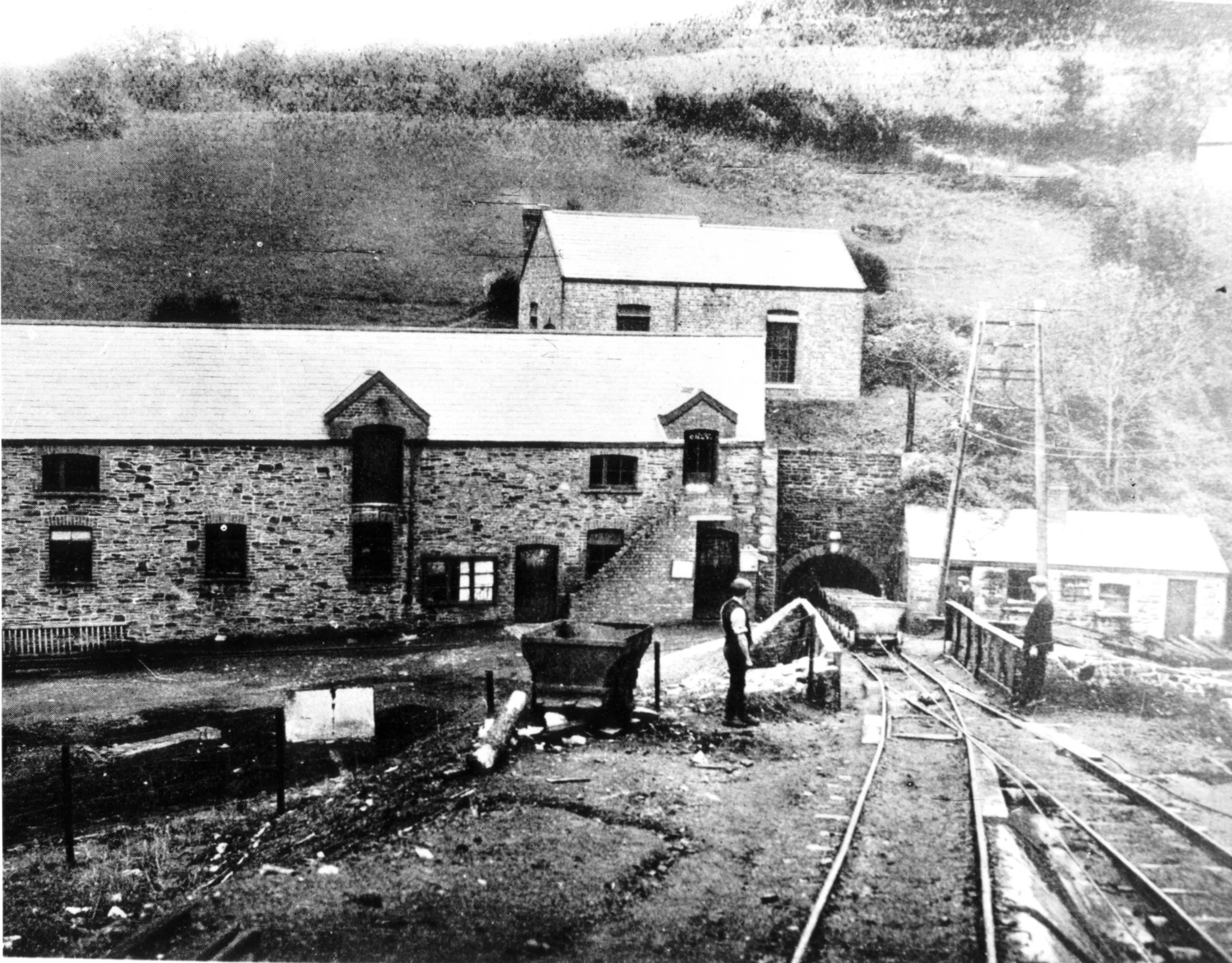
📸 Aberbaiden Colliery

My 3 x great grandmother Hannah Morgan disappeared from the historical record in the 1880s. Some researchers think she emigrated to America. The historical record and my DNA profile confirm that a number of my ancestors did emigrate to America. However, I have found no records that suggest Hannah joined them. With her family, she moved around the Glamorgan coalfields. I suspect that her death record was lost due to the transient nature of her life.

Clara Bow Quotes: “Mr Schulberg could not use me in any of his productions at the time but there was nothing to prohibit him from ‘farming me out’ to other producers for small roles. Looking over my records I find that I played in twenty-seven productions in not so many months. But as time went on, I was getting no place. Always the instructions were the same: ‘Clara, X Blank wants you for a “bit” in their production, which starts Thursday’. Always a “bit”. If this was Hollywood, I wanted no more of it.

Gradually, I became better known. Occasionally, my name would creep into the billing on pictures and executives of the various studios were nodding now and then when I ran across them on the lot. I was getting somewhere.”

Intertitle #13

As ever, thank you for your interest and support.

Hannah xxx

For Authors

#1 for value with 565,000 readers, The Fussy Librarian has helped my books to reach #1 on 36 occasions.

A special offer from my publisher and the Fussy Librarian. https://authors.thefussylibrarian.com/?ref=goylake

Don’t forget to use the code goylake20 to claim your discount 🙂

Categories
Dear Reader

Dear Reader #171

Dear Reader,

A landmark for my Sam Smith mystery Sam’s Song, this week the book received its 1,000th review 🙂

The Portuguese version of our Hollywood magazine.

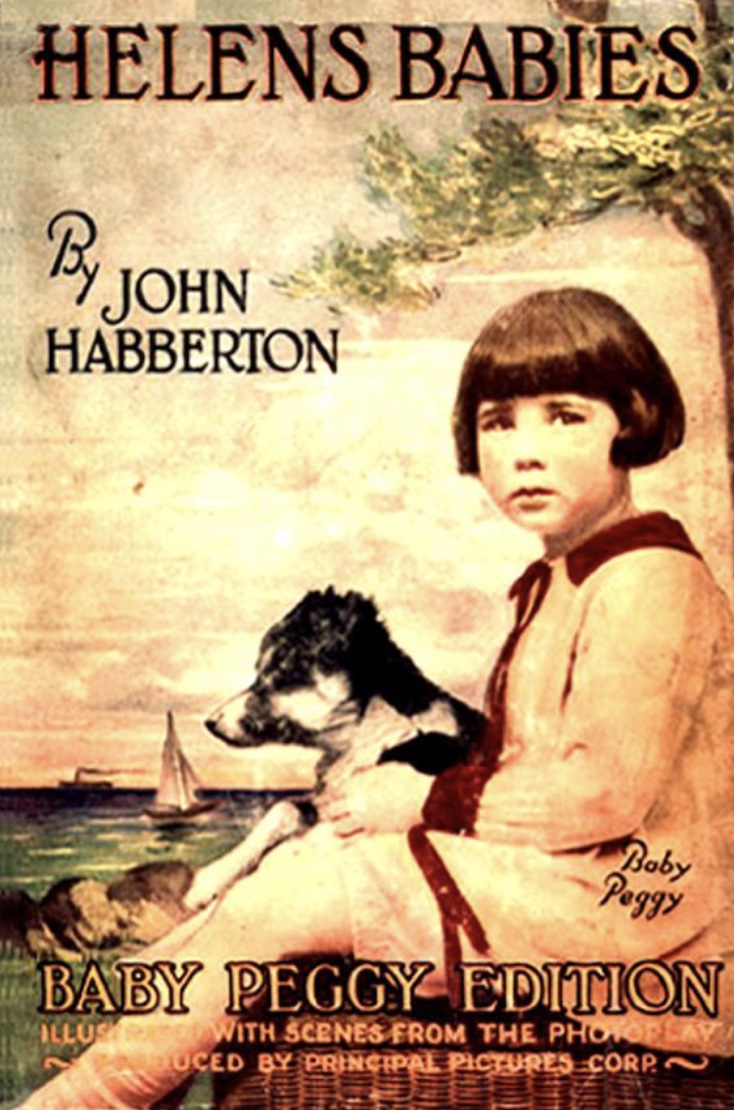
Clara Bow’s tenth movie was Helen’s Babies, a silent comedy based on an 1876 novel by John Habberton. Clara played Alice Mayton. The movie was produced during the spring of 1924 and released on October 24, 1924. 

At this stage of Clara’s career, producer B.P. Schulberg was loaning her out to various studios. She would play one part in the morning, another in the afternoon. Consequently, her hairstyle and hair colour would change continuously, sometimes during the course of one day.

In 1924, aged nineteen, Clara was renting a three-bedroomed house on Hollywood Boulevard. Her boyfriend, cameraman Artie Jacobson, lived with her, along with her father who had moved from Brooklyn. Jacobson was a steadying influence on Clara’s life. Her father, however…that, as they say, is another story…

Welcome to Mom’s Favorite Reads 106 page bumper Christmas and fiftieth issue!

In this month’s issue of our #1 ranked magazine…

Interview with Orna Ross, founder of ALLI. Plus, Author Features, Health, Nature, Photography, Poetry, Short Stories, Young Writers, Nature Photography Day, and so much more!

Available to read FREE here 👇

Eileen Sedgwick in The Terror Trail, a 1921 serial. The foreground is actually a film set while the background is downtown Los Angeles.

Clara Bow Quotes: “My advice for a girl trying to make good in Hollywood…Destroy the illusion from the start. Hollywood is no fairyland. Success comes to those with talent and ability who are willing to face hard work, to make such sacrifices as are demanded.

Take good advice and ignore bad, but be sure you are able to differentiate between the two. Don’t let your feelings run away with your good judgement. When you realise you are wrong, admit it. When you know you are right, FIGHT! Be yourself at any cost.”

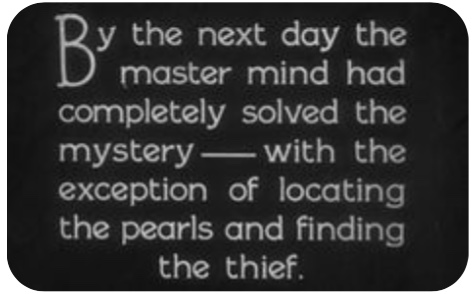
Intertitle #11

As ever, thank you for your interest and support.

Hannah xxx

For Authors

#1 for value with 565,000 readers, The Fussy Librarian has helped my books to reach #1 on 35 occasions.

A special offer from my publisher and the Fussy Librarian. https://authors.thefussylibrarian.com/?ref=goylake

Don’t forget to use the code goylake20 to claim your discount 🙂

Categories
Dear Reader

Dear Reader #170

Dear Reader,

Our latest translation, the Portuguese version of Operation Watchmaker, Eve’s War Heroines of SOE book eight.

Clara Bow’s ninth movie was Daughters of Pleasure, a 1924 silent romantic comedy. The film had a unique release date – February 29, 1924. Clara played Lila Millais, one of the support characters.

Clara was still finding her feet in Hollywood at this time and was dependent, probably over-dependent, on producer B.P. Schulberg for guidance. Schulberg undoubtedly helped Clara with her career but, it could be argued, was less supportive of her personal development. Indeed, Clara felt that Schulberg was betraying her trust.

Arthur Jacobson had an affair with Clara Bow. After that affair, they remained friends. Around the time of Daughters of Pleasure, he offered this insight into her character: “Clara was the sweetest kid in the world, but you didn’t cross her, and you didn’t do her wrong.”

📸 Clara in 1924.

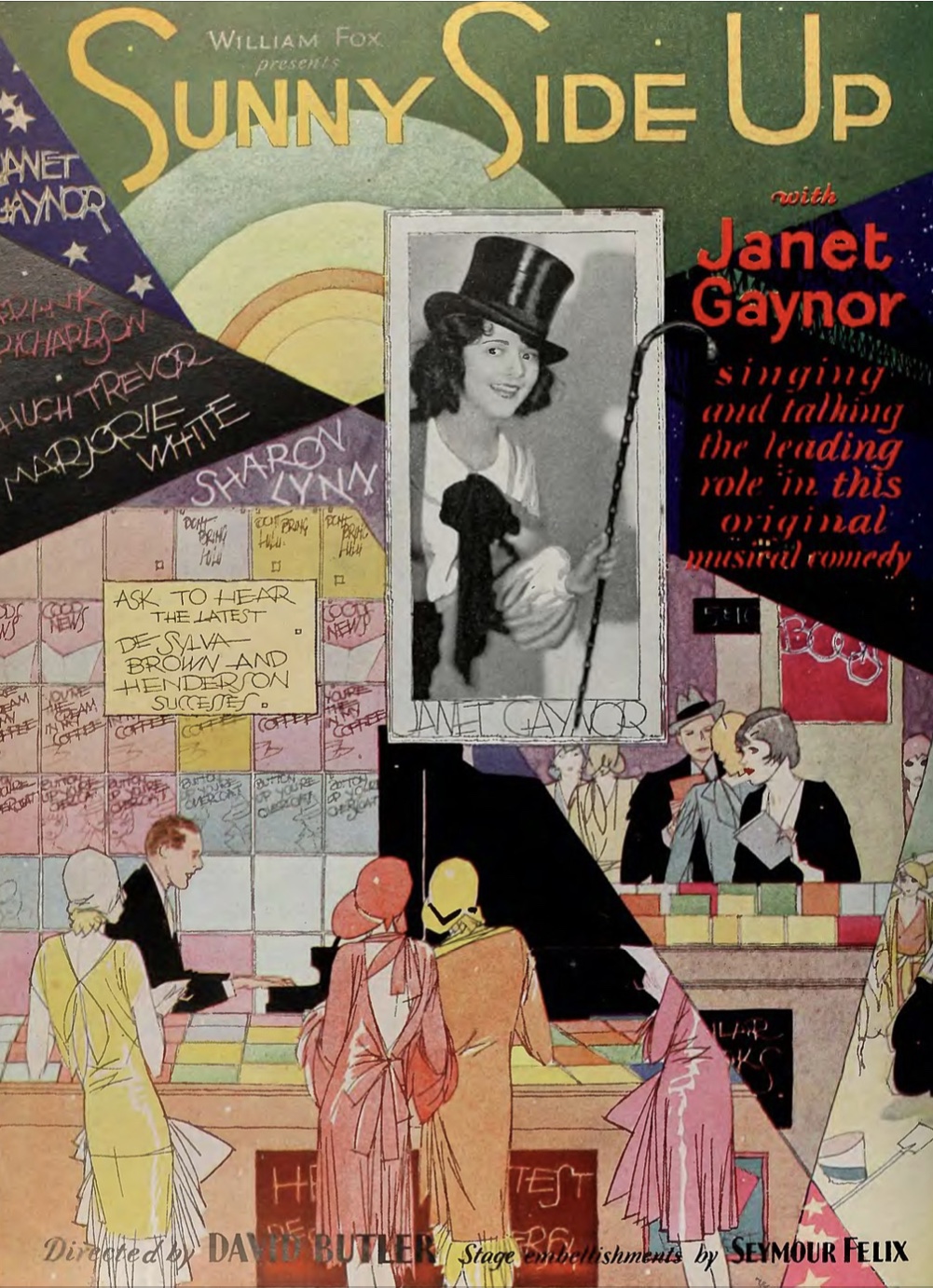
Highest Grossing Movie of 1929 (joint) Sunny Side Up.

Sunny Side Up continued the late 1920s tradition of a musical producing the highest grossing movie of the year. Sunny Side Up starred Janet Gaynor and Charles Farrell with songs by B.G. DeSylva, Lew Brown and Ray Henderson. A romantic-comedy, the movie premiered on October 3, 1929 at the Gaiety Theatre in New York. For early movies, it had a long running time – 121 minutes.

Sunny Side Up produced three popular songs – ‘I’m a Dreamer, Aren’t We All?’, ‘Turn on the Heat’ and ‘(Keep Your) Sunny Side Up’. 

Critics offered faint praise. They reckoned that the singing voices of Gaynor and Farrell, were “tolerable, but not exactly worthy of praise.” They disliked the movie’s sugary sentimentality, but were impressed with the cinematography and special effects.

My latest article for the Seaside News appears on page 34 of the magazine.

Clara Bow Quotes: “My advice to a girl trying to make good in Hollywood…In the first place, don’t under any circumstances ever come to Hollywood for motion picture work unless you have a contract, or definite assurance that you will be used in the making of screen plays.

Secondly, don’t try pictures if you are unduly sensitive. The work is hard and in the thick of battle many things may be said on the spur of the moment which are not to be taken at face value. It is part of the game, but it will cause heartache unless one’s sensitiveness can be overcome.”

Intertitle #10

As ever, thank you for your interest and support.

Hannah xxx

For Authors

#1 for value with 565,000 readers, The Fussy Librarian has helped my books to reach #1 on 34 occasions.

A special offer from my publisher and the Fussy Librarian. https://authors.thefussylibrarian.com/?ref=goylake

Don’t forget to use the code goylake20 to claim your discount 🙂