Continuing the story of the Howe family, the occupants of Lilac Cottage, 1939-45.
Lilac Cottage
Born on 4 July 1885 to my 2 x great grandparents William Howe and Ann Jones, Evan Howe lived in one half of Lilac Cottage with his sister Mary Ann Howe. Like so many of the male members of the family, Evan worked in the local limestone quarry.
Working in the dusty quarry, Evan liked a drink in the evening. Indeed, on one occasion he featured in the local newspapers for drinking “shandy gaff” after hours.
Evan never married. A boxer in his youth, he was prominent in local social circles. In 1918 he was a member of a committee that presented an honour to a returning First World War soldier. Aged 54 in 1939, Evan knew that he was unlikely to be called up, and therefore would have to serve his country on the home front.
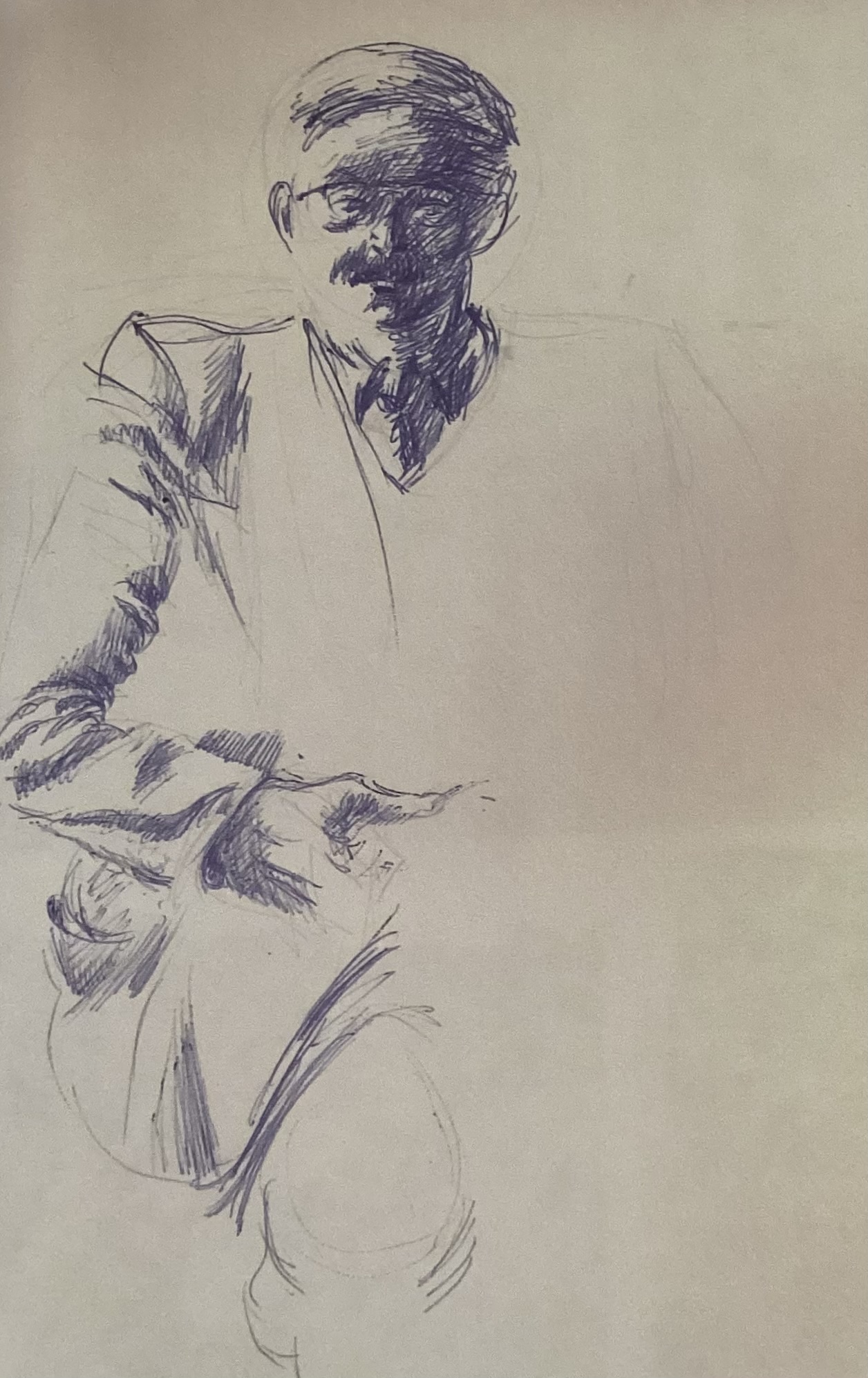
Sketch of Evan Howe, c1960, by Gail Kennard
Mary Ann Howe sister of Evan Howe was born on 2 September 1879 in South Cornelly. She was sixty when war broke out on 3 September 1939 and helped with the domestic duties at Lilac Cottage. A dressmaker in her youth, she remained unmarried throughout her life.
A possible reason for Mary Ann’s spinster status was that she lost a leg during her childhood. Family legend states that she injured her leg falling from a tree, and the surgeon amputated it on the kitchen table. This legend stems from contemporaries of Mary Ann, her brothers and sisters, so it may well contain the essence of the truth.
Mary Ann was partial to snuff and refused to touch coins. Maybe she believed that coins transmitted disease. Whatever, she insisted on paying for her goods with paper money.
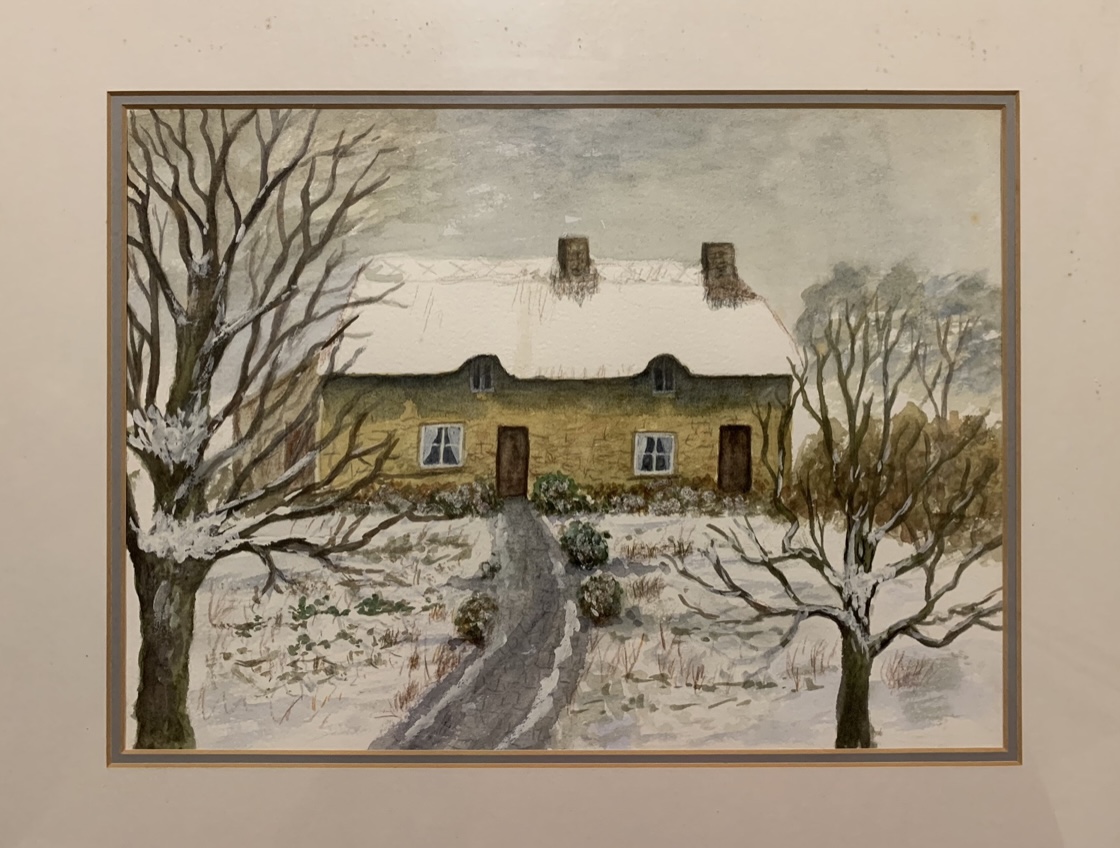
In the spring of 1937, Priscilla Doreen Howe – granddaughter of my 2 x great grandfather William Howe – married Handel Edwards and the couple lived adjacent to Lilac Cottage in South Cornelly. Priscilla was a talented artist and painted the picture of Lilac Cottage featured on this page.
Priscilla was named after her aunt Priscilla, a teenager who sadly died in 1913 during an operation.
Priscilla’s husband, Handel Edwards, was a lorry driver at the local quarry. His parents ran the New House, a popular public house in the village.
The locals gathered outside the New House, early twentieth century (Gail Kennard)
Living in Wood View, my 2 x great grandfather William Howe’s old house, and next door to Priscilla and Handel Edwards, were Christiana Howe – sister of Evan and Mary Ann Howe – her husband David T David, and their two children, Hopkin and Enid.
Born on 27 August 1881, Christiana married David T David in the autumn of 1899. She was heavily pregnant at the time, and gave birth to her first child, of nine, Thomas David on 10 February 1900.
When David T David, a strict no-nonsense man, married Christiana, he was a plate layer on the railways. Later, he became a coal hewer. By the time war broke out, David T David had improved his working status considerably – he was the foreman at a sand and gravel company that extracted sand from nearby Morfa Beach.
Christiana was noted for her kind and placid manner, and for her prefect skin, which reminded flawless even into old age.
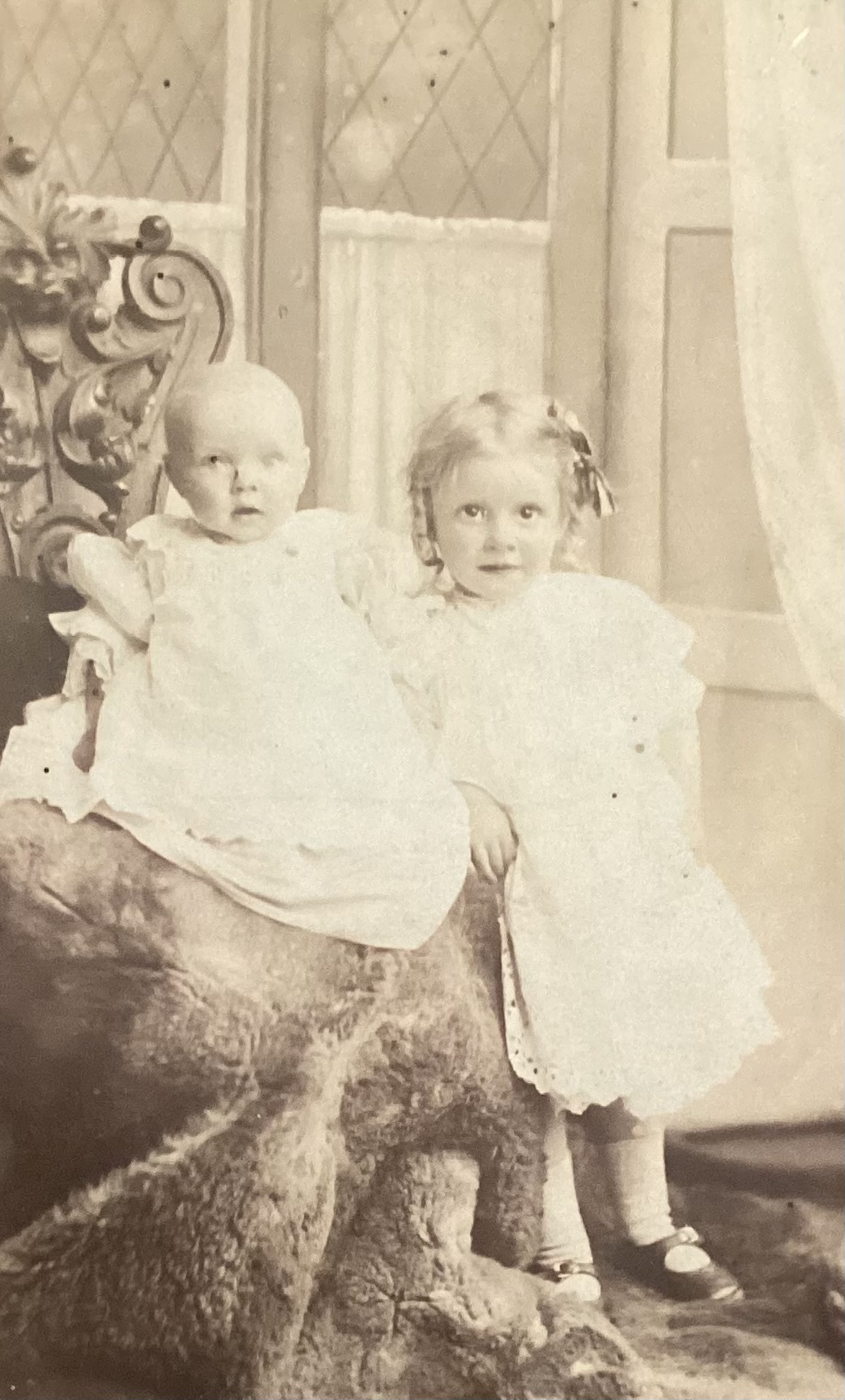
Christiana Howe, David T David and one of their children, early twentieth century (Howe family archive)
On 4 September 1939, the day after war had been declared against Hitler’s Germany, in the local newspapers the first wedding mentioned was a Howe wedding – Hilda Maud Howe married Philip Phillips in the local chapel. Hilda was descended from my 4 x great grandparents John Howe and Christiana John.
Hilda Howe (Ancestry website)
The newspapers also featured items related to the announcement that Britain was at war with Germany – a furniture store asked its customers to call in during daylight hours, because it would close at dusk; the Bedwellty Dog and Agricultural Show was cancelled; and recruits were urgently needed for the Women’s Land Army. People went about their daily routines, but even in the first week of September 1939 those routines were changing.
For Authors
#1 for value with 565,000 readers, The Fussy Librarian has helped my books to reach #1 on 36 occasions.
Continuing the story of the Howe family, the occupants of Lilac Cottage, 1939-45.
Lilac Cottage
The third son of my 2 x great grandfather William Howe, William David Howe was born on 29 March 1892 in South Cornelly. He was the second child named William David Howe. The first, born on 10 May 1890, died on 17 May 1891 of measles. He struggled with the disease for three and a half weeks. It was common in Victorian times for parents to name their children after a deceased sibling.
In 1939, William David Howe was working at C and J Gaen’s limestone quarry, the main employer in the village. Through the quarry, he was training to become an Air Raid Precaution warden. Air Raid Precaution wardens protected people during air raids and patrolled the streets during the blackouts to ensure that no lights were visible.
William David Howe (Curtesy of Gail Kennard)
Gwendolyne Thomas, the wife of William David Howe, was born on 3 December 1892 in Bettws, Glamorgan, the third of eleven children. She married William in the early summer of 1917 when three month pregnant. In six years she gave birth to four children, two girls and two boys.
When the Second World War broke out, Gwendolyne was suffering from poor physical health due to a heart condition, and was registered as an invalid. Sadly, there was little hope that her health would improve.
William Kenneth Howe, known as Ken, the eldest son of William David Howe and Gwendolyne, was born on 13 March 1919 in South Cornelly, Glamorgan. In 1939, he was a locomotive driver. The Great Western Railway line, developed in the mid-1800s, ran through the village and would have fascinated young boys like Ken. Train-spotting, recording the numbers of the various locomotives, was a popular pastime, and many youngsters dreamed of becoming locomotive drivers. Ken fulfilled that dream.
Joan Mary Howe, youngest daughter of William David Howe and Gwendolyne, was born on 20 February 1921 in South Cornelly, Glamorgan. When the Second World War broke out, she was eighteen years old, and full of an eighteen year old’s hopes and ambitions. With her mother unwell, and her older sister married, the duties of running the family home fell to Joan. She would have to wait before starting a family of her own.
Joan and Roy (Howe family archive)
Clifford Roy Howe, known as Roy, the youngest son of William David Howe and Gwendolyne, was born on 26 May 1923 in South Cornelly, Glamorgan. Single when the war started, like his father he worked in the limestone quarry. He was setting charges, causing explosions so that his fellow workmen could quarry the limestone. However, along with his brother Ken, Roy would have been aware that soon he’d be encountering explosions on the frontline.
Family Background
In 1919, my 2 x great grandfather William Howe was unwell, so the villagers railed round and arranged a prize draw for his benefit, raising the equivalent of £2,500. The success of the draw illustrated the high esteem in which William was held within the community.
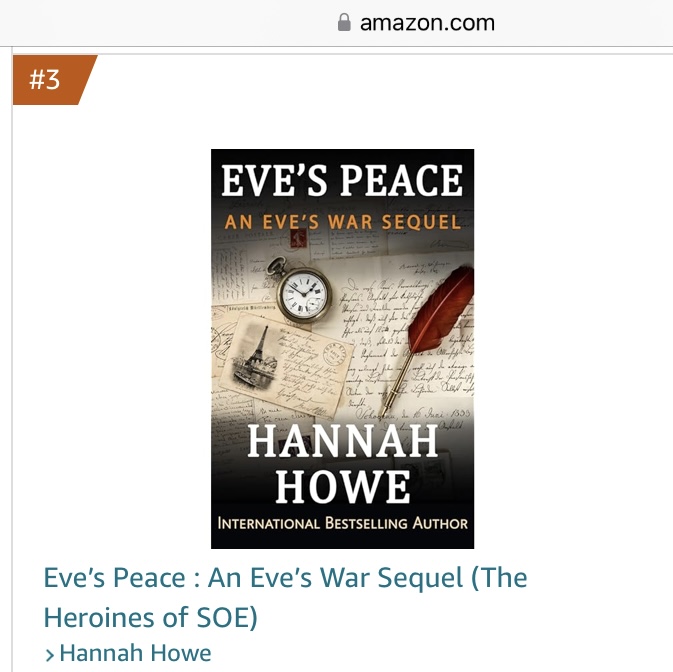
Some book news. My novel Eve’s Peace, published on 14 April 2024, is a #3 Hot New Release on Amazon’s charts in America and Britain 🙂
An audiobook version is currently in production.
My latest Golden Age of Hollywood article for the Seaside News appears on page 43 of the magazine.
For Authors
#1 for value with 565,000 readers, The Fussy Librarian has helped my books to reach #1 on 36 occasions.
When my 2 x great grandfather William Howe died on 14 May 1933 the newspapers carried the following obituary: “We regret to report the death of Mr William Howe, aged 78, of Wood View, Cornelly, who passed away on Sunday. Mr Howe was senior deacon at Cornelly Calvinistic Methodist Chapel and superintendent for many years at the Sunday School in South Cornelly. A man of Godly character and exemplary life, he was held in respect by all whom he came into contact with, and his memory will be cherish, especially by those who first learned the path of rectitude and duty at Cornelly Sunday School. He was employed for a number of years as the foreman to Mr Gaen at the quarries, and his fellow workmen were given a half day off to attend the funeral.”
The report continued with a long list of notable people who attended the funeral.
William died at Wood View, a house that remained in the family. However, he’d spent many years of his life at Lilac Cottage, South Cornelly.
For decades after William’s passing his descendants, my ancestors, continued to live at Lilac Cottage. I intend to take a snapshot of their lives, focusing on the war years, 1939-45, and tell the story of the Lilac Cottage Howes who served on the Home Front and the Frontline. It’s a tale of ordinary people, of village life, and great sacrifice. It’s a story personal to me, yet common to many people. During 1939-45, Britain was full of “Lilac Cottages” and the lives of my Howes mirrored the lives of many people who lived through this challenging time.
Lilac Cottage, a watercolour by Priscilla Doreen Howe
The Howes at Lilac Cottage, 1939
William David Howe – son of William Howe
Gwendolyne Thomas – wife of William David Howe
Joan Mary Howe – daughter of William David Howe
William Kenneth Howe – son of William David Howe
Clifford Roy Howe – son of William David Howe
Evan Howe – brother of William David Howe
Mary Ann Howe – sister of William David Howe
Also, Priscilla Doreen Howe – daughter of William David Howe – who in 1937 married Handel Edwards.
Living in Wood View, next door to Priscilla and Handel Edwards:
Christiana Howe – sister of William David Howe – her husband David T David, and their two children.
The cottage was divided in two with William David Howe and his family living in one part of the building and Evan and Mary Ann living in the other part.
Consider this the prologue. I will tell you more in Chapter One, next time.
For Authors
#1 for value with 565,000 readers, The Fussy Librarian has helped my books to reach #1 on 36 occasions.
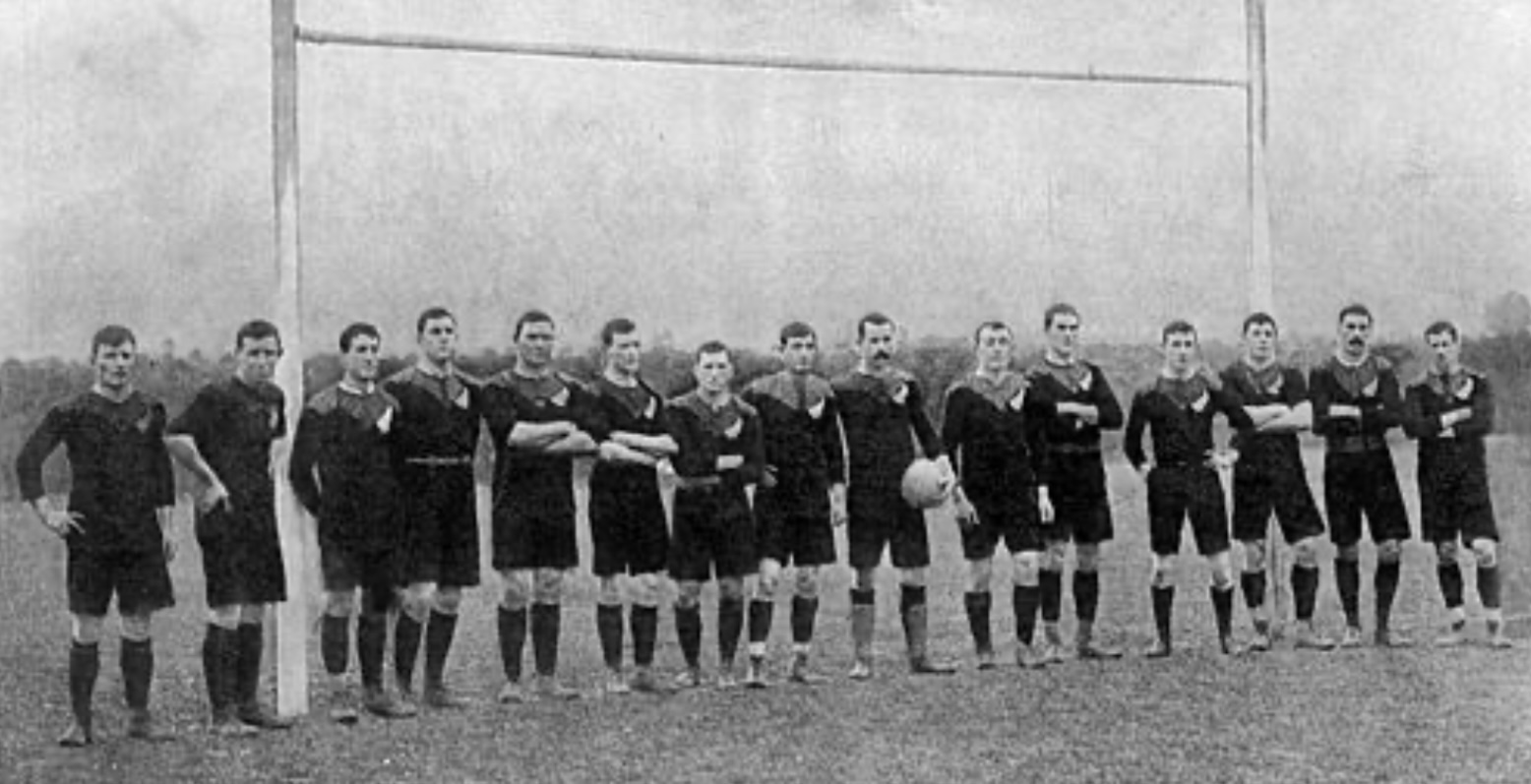
After their victories against Scotland and Ireland, New Zealand met England at Crystal Palace. In a one-sided contest, New Zealand scored five tries to none. Duncan McGregor scored four of the tries, Fred Newton the other. None of the tries were converted, so the score finished 15 – 0 in the All Blacks’ favour.
All-round sportsman C.B. Fry stated: “The notion that these men beat us because of our physical degeneracy is nonsense. They beat us by organisation and by tactics.”
In the Empire News ‘The Impressionist’ wrote: “It is my firm opinion that as a side the New Zealanders form the finest I have ever seen. It is a treat, yea an education to watch them. Gallant little Wales may be depended upon to make a great effort next Saturday. I hope to be present to see the struggle.”
The New Zealand team v England
Part Nine: The Build-Up to the Wales Match
Throughout October 1905, the Welsh Match Committee observed the New Zealanders and analysed their style of play. They soon realised that they would have to develop new tactics to overcome the tourists’ unorthodox style.
On 20 November 1905, the Committee held the first of two trials. The ‘Probables’ adopted the New Zealand formation, utilising seven forwards instead of eight, However, they were beaten 18–9 by the ‘Possibles’ and their traditional Welsh formation.
Despite this setback, the Committee persisted with the experiment and the ‘Probables’ won the second trial match 33–11. A final training session was held on 12 December 1905 dedicated to drop kicking (worth four points, a point more than a try) and perfecting the new scrum technique.
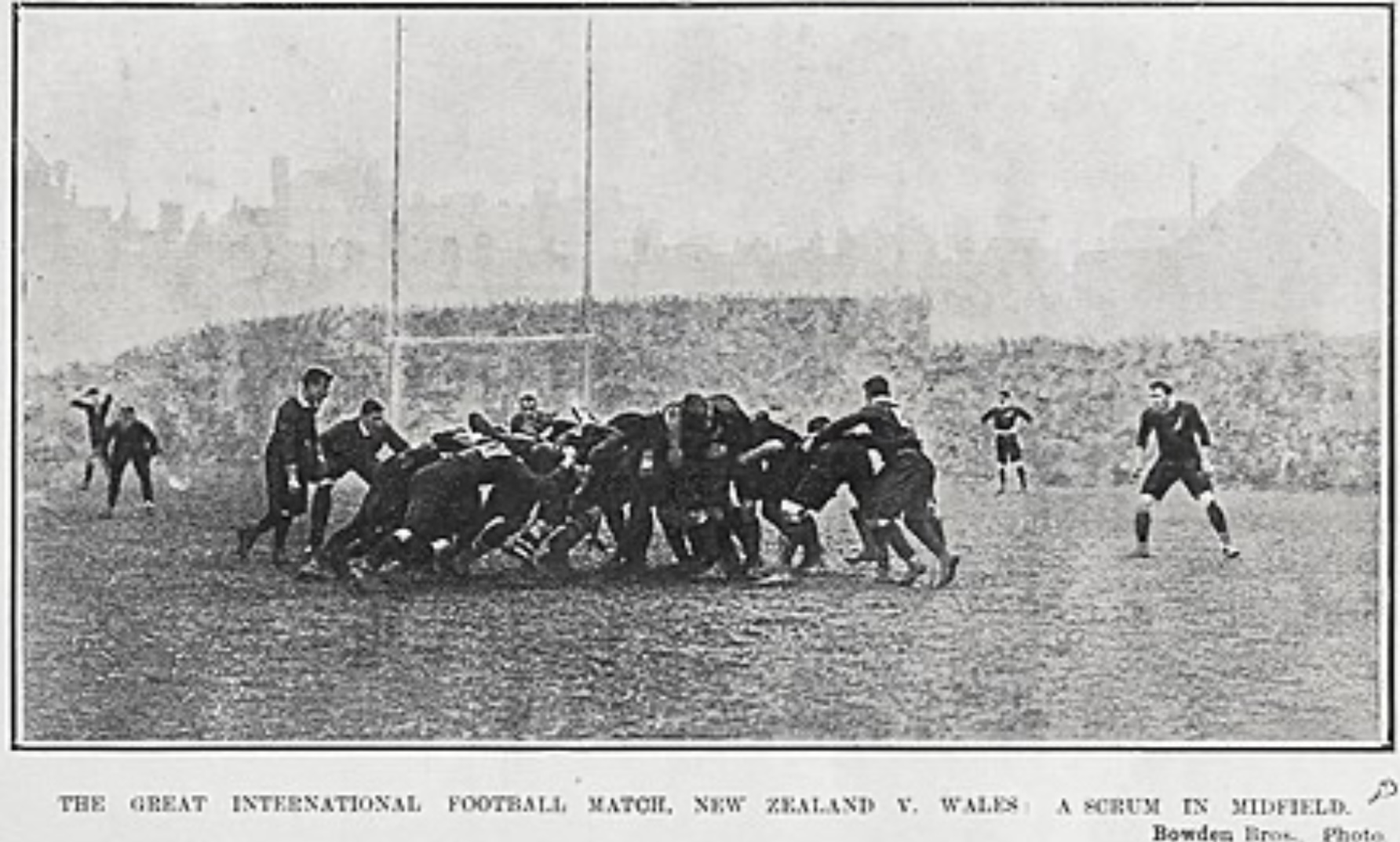
A scrum during the Wales v New Zealand match
Part Ten: The Haka
While the Welsh players concentrated on their new tactics, the administrators considered how they should respond to the New Zealand Haka. A selector, Tom Williams, suggested that the appropriate Welsh response to the New Zealanders’ cultural challenge should be the singing of the Welsh national anthem, Hen Wlad Fy Nhadau.
A debate ensued in the Welsh newspapers and the idea attracted a great deal of support. Nevertheless, no official plan was created, and no one was certain how the crowd would react after the New Zealanders had performed their Haka (pictured).
Part Eleven: The Press
The consensus amongst the media in London was that Wales had no chance against the all-conquering All Blacks. This article, published in The Times on the morning of the match, 16 December 1905, was typical.
“Time has stolen the dash from two or three of the best (Welsh players) – and the missing eighth man (the tactic to play only seven forwards) is likely to be badly missed before the Cardiff game comes to its conclusion in the inevitable defeat of Wales.”
Welsh lock Jack Williams receiving treatment at half-time
Part Twelve: The Crowd
Additional trains were provided for the travelling spectators. Large queues formed before the Arms Park gates were opened at 11am and those gates were closed again at 1.30pm with the ground full.
Many would-be spectators, locked out of the ground, climbed trees in order to glimpse the match. In addition, taxi drivers parked outside the ground and charged people for the privilege of standing on their cabs to get a view over the stand.
A line-out contested during the match
Part Thirteen: Pre-Match Build-Up
Crowds throughout Britain and Ireland offered hostility or indifference to the New Zealand Haka. However, the Welsh public, informed and aware of its cultural significance, offered the Haka due respect.
As the Haka concluded, Welsh winger Teddy Morgan (pictured) led an immediate response by singing Hen Wlad Fy Nhadau. Morgan encouraged his teammates to join in, and the crowd soon added their impassioned voices.
“Imagine some 40,000 people singing their national anthem with all the fervour of which the Celtic heart is capable. It was the most impressive incident I have ever witnessed on a football field. It gave a semi-religious solemnity to this memorable contest, intensely thrilling, even awe-inspiring. It was a wonderful revelation of the serious spirit in which the Welsh take their football.” – New Zealand captain Dave Gallaher’s remark on experiencing the Welsh crowd singing their anthem at a sporting occasion for the first time.
The singing of Hen Wlad Fy Nhadau is the first recorded instance of a national anthem being sung before an international sporting fixture – anthems were normally reserved for royalty and formal state occasions.
Witnesses, including the New Zealand players and London press, noted the impact of the anthem on the players, crowd and themselves. For decades to come, match reports, player interviews and memoirs all cited the anthem as a factor in the Welsh victory.
Soon, the singing of national anthems would become a formal part of proceedings in a variety of sports and, eventually, a standard practice across the sporting world.
Teddy Morgan
Part Fourteen: The Match
Hodges kicked off for Wales. Seeling made a break for New Zealand, and was brought down by the Welsh defence, resulting in the first scrum. The All Blacks adopted their usual formation of seven packed forwards. However, Wales abandoned the British system of eight forwards – they packed down with seven men, including four in the front row. This meant whichever side New Zealand tried to gain the loose-head advantage, Wales had a man outside.
Wales dominated the first half. Indeed, New Zealand only breeched the Welsh 25 in the minutes before half time. In the opening fifteen minutes, the All Blacks conceded a string of penalties. The best chance fell to Wales, but that chance faded when Willie Llewellyn, yards from the try line, failed to hold a difficult pass from Jack Williams.
On twenty-three minutes another scrum was called and Dicky Owen called the move he’d devised in training. Wales won the ball. Owen ran down the blindside with the backline of Bush, Nicholls and Llewellyn following him in support. This initial move drew Gallaher, Hunter and most of the New Zealand backs to the blindside. Then Owen switched play. He threw a long pass back to the openside. Cliff Pritchard picked up the ball from his bootlaces. He drew the covering tackle of Deans before passing to Gabe who beat McGregor. Finally, Gabe passed to Morgan who sprinted twenty-five yards past the covering full-back Gillett to touch down in the left corner. The try went unconverted. Half-time: Wales 3 – 0 New Zealand.
New Zealand rallied in the second half and dominated the attacking play. However, their kicking game was not up to its usual standard, and they had issues with the strong Welsh scrum.
Billy Wallace crossed the try line, but only after he’d placed a foot in touch. A forward pass from Deans put McGregor in the clear, and he was rightly called back.
The All Blacks pressed through a series of scrums on the Welsh goal line, but the Welsh forwards refused to yield. With the mist descending, Deans made a break and sprinted thirty yards to the try line. Inches from the try line, Morgan and Gabe tackled Deans. The referee, John Dallas, arrived and said no try. He estimated that Deans was a good six to twelve inches short of scoring. Some reports suggested that Deans made an illegal double movement, and was still short. Deans, however, insisted that he had scored, then been pulled back. New Zealand’s best chance had gone. Final score: Wales 3 – 0 New Zealand.
The Wales team v New Zealand
Part Fifteen: The Cultural Impact
At the sound of the final whistle, the crowd rushed on to the field and carried the Welsh players on their shoulders. Later, Gallaher led his team into the Welsh changing room, where he offered his congratulations, and the players exchanged jerseys. He also conceded that on the day, “the best team won”.
The victory over New Zealand cemented rugby’s place in the Welsh national psyche. It laid the foundations for the first Golden Age of Welsh Rugby. As the century unfolded, despite the devastation of two world wars, more Golden Ages followed. Welsh rugby enjoyed feasts of success and endured famines of defeat. Peaks and troughs. It has always been so.
As ever, thank you for your interest and support.
Hannah xxx
For Authors
#1 for value with 565,000 readers, The Fussy Librarian has helped my books to reach #1 on 36 occasions.
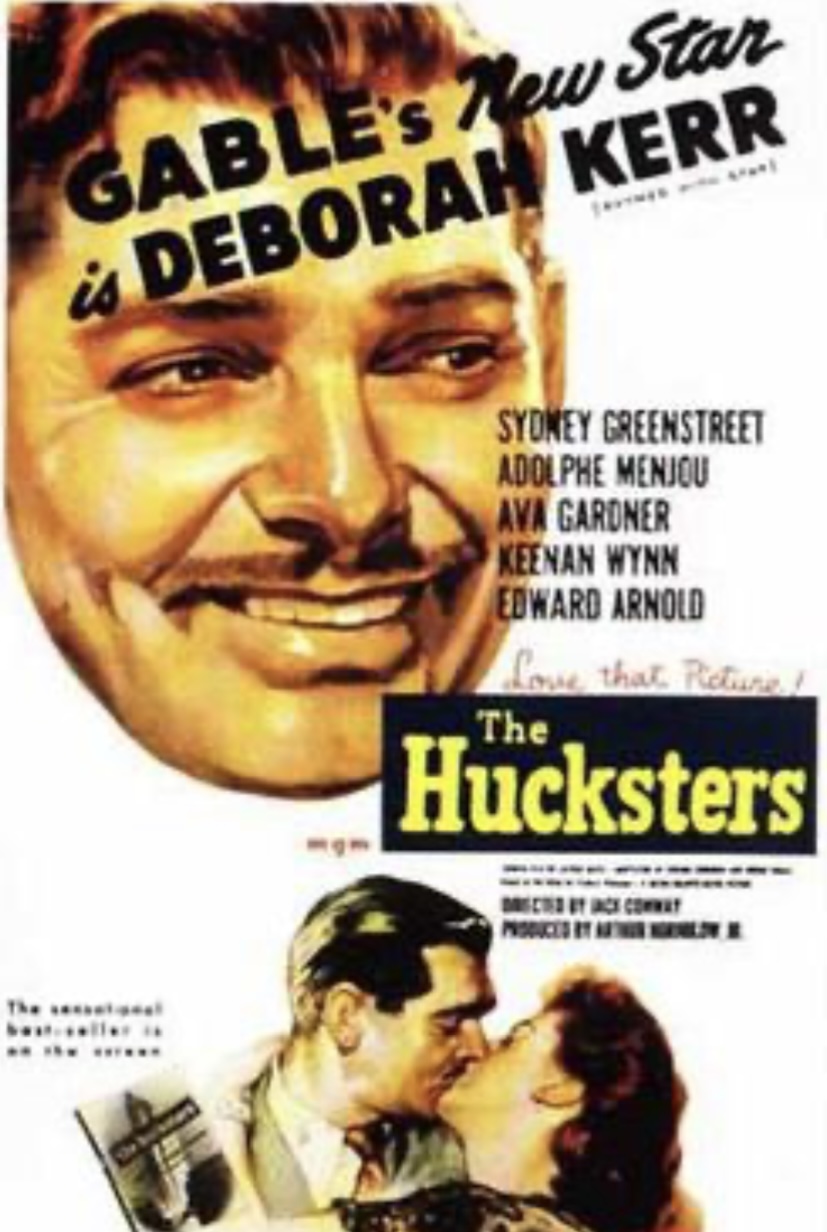
“Hollywood has apologised to film fan Shirley Browne of Blythe, Northumberland, who didn’t like The Hucksters staring Clark Gable and Deborah Kerr. As a peace offering MGM sent Shirley a parcel containing sweets, fruit and tins of meat. ‘I considered The Hucksters to be a very poor film,” Shirley told The Daily Mirror, “so let Hollywood know about it. I’m glad I did.’”
Movie News – March 19, 1948
“The story of an unusual love is told in striking fashion in Notorious. Ingrid Bergman, probably one of the best dramatic actresses to appear for years, plays the leading role, and Cary Grant makes a splendid addition to his record of screen successes.”
The first day of spring, and the start of a new social history series: Spring and Summer of 1976, featuring news, weather, sport, cinema, television and music items from that era. Item number one is the television guide for 20 March 1976. Do you remember any of these programmes?
21 March 1976
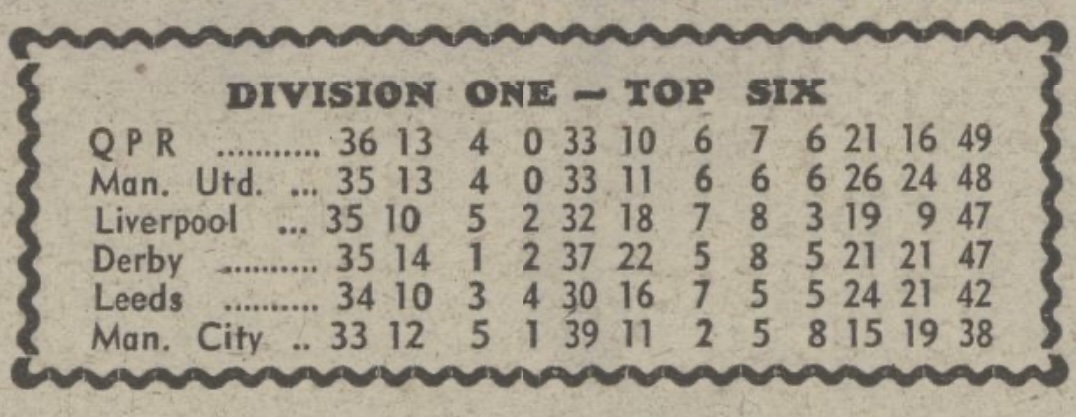
“Football’s winter of defensive discontent ended with a bang yesterday as the strikers turned the clock back to the good old days and celebrated British summer time with a glut of goals. Top of the hit parade were dour, dogged old Arsenal with six against Euro-heroes West Ham at Highbury.”
22 March 1976
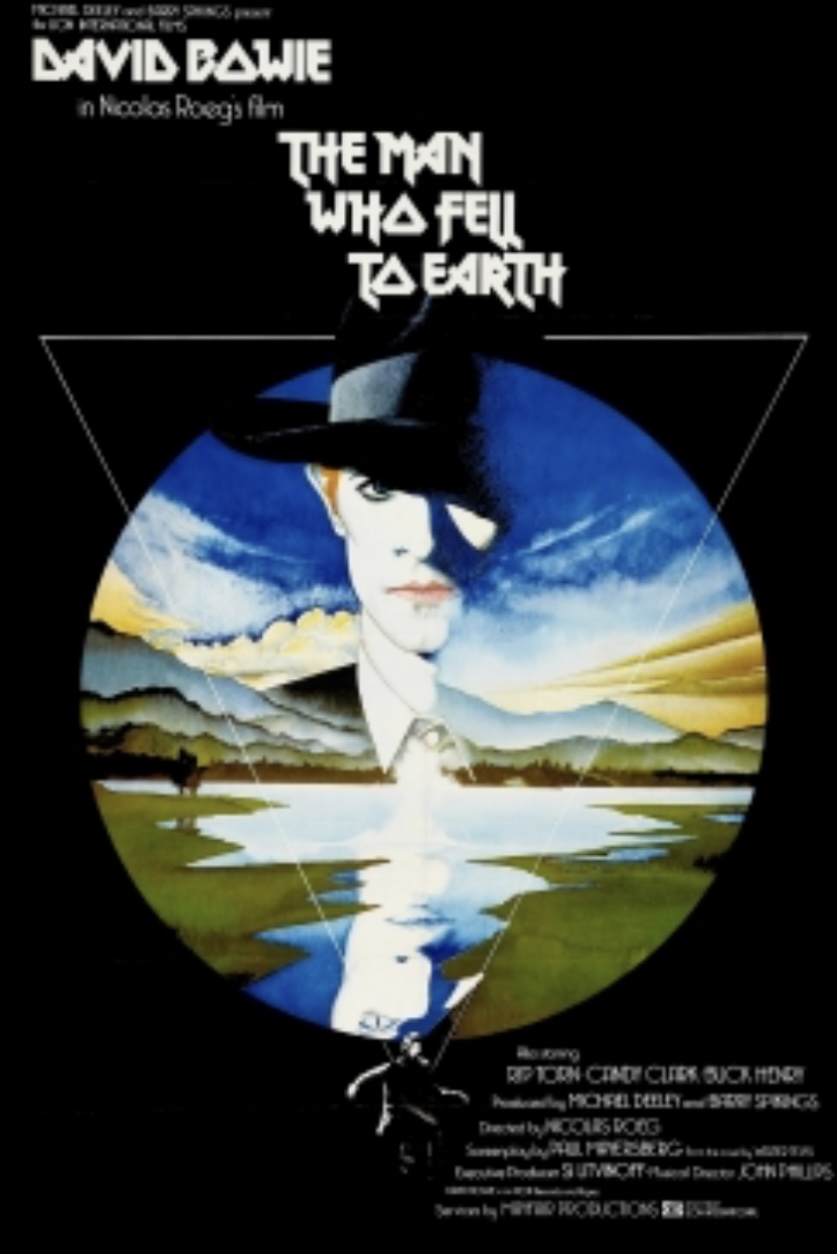
“British rock star David Bowie was arrested earlier today and charged with possession of marijuana. He was released on £1,000 bail. Bowie gave up music for the theatre, but returned to singing and his act soon became one of the more zany attractions on the pop scene. He is the star of a new science fiction film, The Man Who Fell to Earth, directed by Nicolas Roeg.”
23 March 1976
And now the weather…
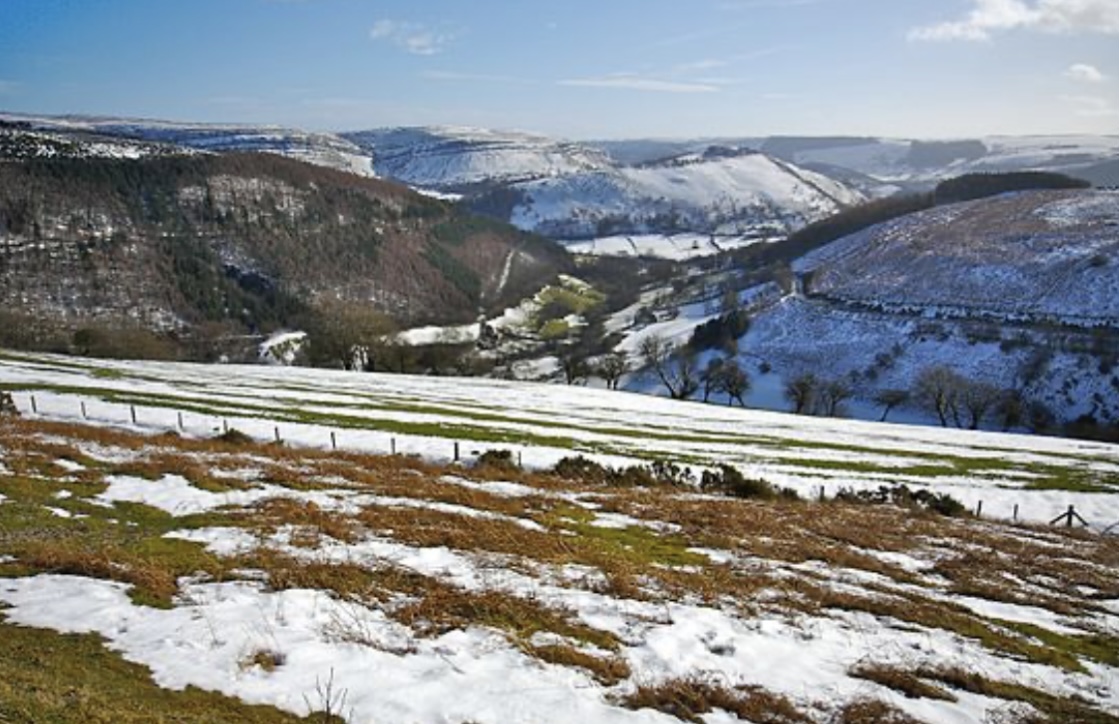
“Yesterday, the first full day of summertime, snow blocked the Horseshoe Pass near Llangollen and the Crimea Pass near Blaenau Ffestiniog. A six-inch fall of snow also blocked the Llanberis Pass for a time. In other parts of Britain, wintry conditions brought eight inches of snow overnight. Sunny periods are forecast for today.”
The Horseshoe Pass (Wikipedia)
24 March 1976
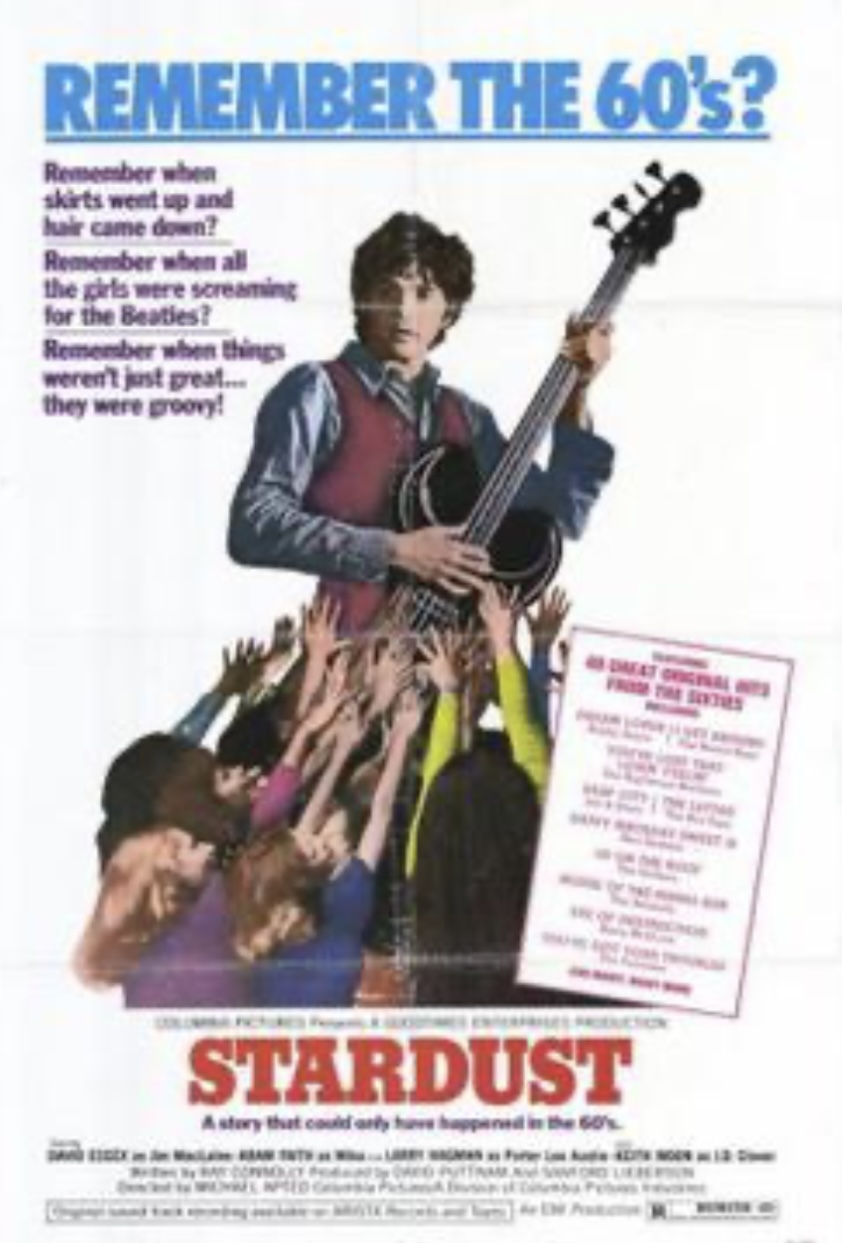
Movies showing at Theatre One this week: David Essex in Stardust (aa) and That’ll Be the Day (aa), and your last chance to see Enter the Dragon (x). Also, Lip Service (x), The Revengers (x), and Beyond the Valley of the Dolls (x). For members only: Bedspread and Country Girl. Just think, the censor had to watch all these movies. It was a dirty job, but someone had to do it…
As ever, thank you for your interest and support.
Hannah xxx
For Authors
#1 for value with 565,000 readers, The Fussy Librarian has helped my books to reach #1 on 36 occasions.









 Hannah Howe