Categories
Dear Reader

Dear Reader #158

Dear Reader,

Delighted to say that my books are now available in twelve languages. Here’s my latest, the Dutch version of Operation Broadsword, Eve’s War Heroines of SOE book three, my 112th translation 🙂

Continuing my research into Eva Marie Saint’s ancestry using public records. I’m looking to answer two questions: was Eva’s talent the result of nurture, or nature? And why am I drawn to her as an actress? Can I find the answers to these questions in her roots?

John Merle Saint. Picture courtesy of Eva Marie Saint.

I’ve discovered that John Merle Saint was Eva Marie’s father and that he served in World War One. Today’s record is a US World War One Draft Registration Card. This card provides the following information:
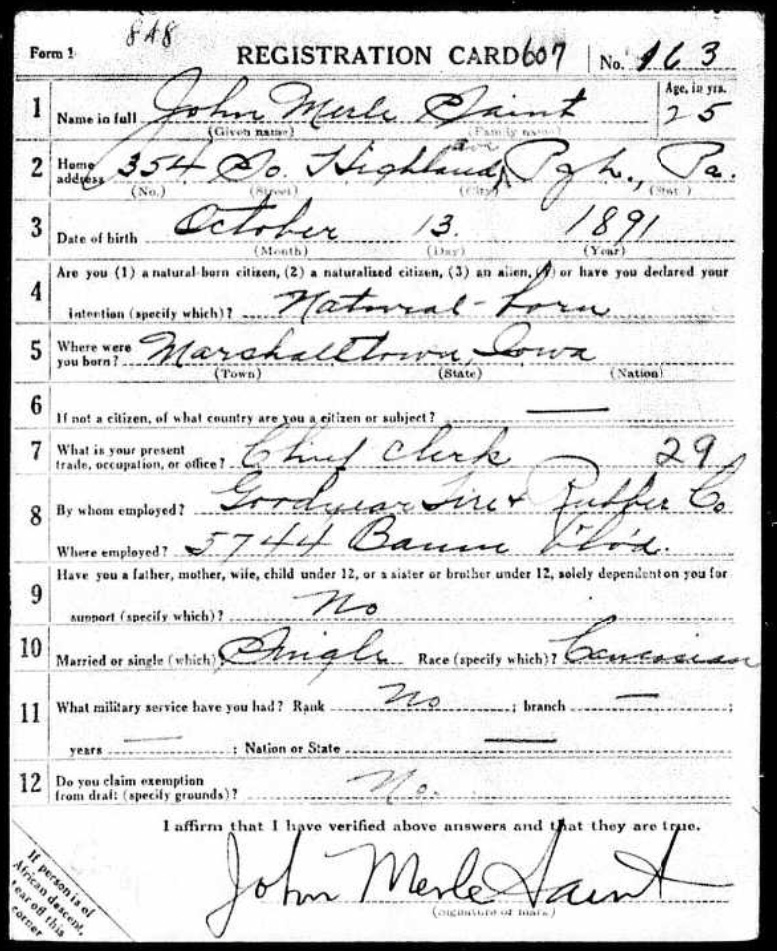
John Merle Saint
RaceCaucasian (White)
Marital StatusSingle
Birth Date13 Oct 1891
Birth PlaceIowa
Residence Date1917-1918
Street Address354 So. Highland
Residence PlacePittsburgh, Allegheny, Pennsylvania, USA
Draft Board06
Physical BuildSlender
HeightMedium
Hair ColorBrown
Eye ColorBrown

So, John Merle Saint was born in Iowa, another good lead, one which should enable me to locate his parents. This record also led me to other World War One records that featured John, including his burial record. John was buried, on 18 July 1965, at Bala Cynwyd, Montgomery County, Pennsylvania. This name strongly suggests that the region was developed by Welsh settlers, so does that mean that Eva Marie has Welsh roots? More research required.

***

Profit and Loss, Series 1, Episodes 12 & 13 of The Rockford Files is a two-parter. Written by John Thomas James and Stephen J. Cannell this is the strongest Rockford story to date. If you are new to the series, start with this one.

Profit and Loss contains a great storyline with sparkling dialogue. James Garner is having a ball with this story; his comic timing is perfect while his casual asides are sublime. Also, some social commentary about business corruption adds depth to the story.

There’s a great running joke about the trash dispenser, plus Beth and Becker make an appearance. If the writers could have included Angel, this would have been the perfect Rockford episode. As it is, it comes very close.

The answer machine message is brilliant too: (Slightly manic voice) “Hey, Jimmy – this here’s Teeter Skerritt. Remember me? From the Army. I’m stuck here in town. How ‘bout I come over and bunk with you, buddy?”
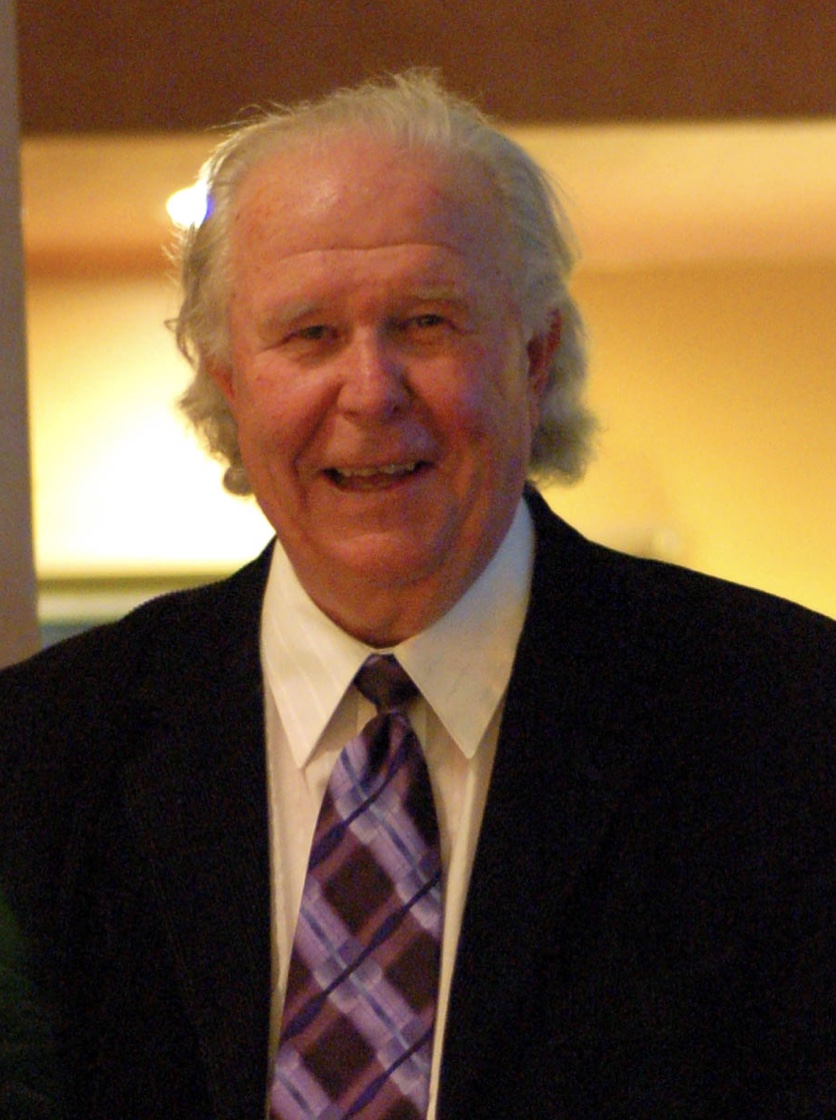
Ned Beatty, who co-starred in Profit and Loss. 📸 Wikipedia.

My latest article for the Seaside News appears on page 34 of the magazine.

Henry VIII’s Dissolution of the Monasteries in effect closed London’s hospitals because most hospitals at that time were run by the Church.

Henry VIII’s successors re-founded some of these hospitals, although their purpose differed from the hospitals of today. In the seventeenth century hospitals served the poor and destitute; they were places of shelter rather than centres of medical treatment.

Some hospitals specialised. For example, St Mary Bethlehem, pictured, was established for ‘lunatic people’ while St Thomas’ in Southwalk was established for the ‘sick and aged’. 

People of means were expected to pay for their upkeep. However, many hospitals provided the poor with bedding, clothes, food and three pints of ale a day.

Mel Charles was born on 14 May 1935. The brother of the legendary John Charles, Mel was a versatile player. He played as a centre-half, centre-forward and wing-half.

In 1952, Mel turned professional with his local club, Swansea Town. After seven years at the Second Division club, he secured a lucrative move to First Division Arsenal. However, injury blighted his period at the Gunners and, in February 1962, he joined Cardiff City, enjoying a three-year spell with the club. In total, Mel scored 122 goals in 401 league and cup matches.

At international level, Mel represented Wales on 31 occasions, scoring six goals. He captained Wales and was a member of his country’s 1958 World Cup squad. He also represented Wales in the British Home Championship over eight seasons.

In the BHC, Mel scored four goals in a 4 – 0 win over Northern Ireland, becoming only the third Welshman to score four goals in an international game.

One other remarkable fact about Mel: throughout his illustrious career he was never booked or sent off.

Mel Charles 📸 Arsenal.com

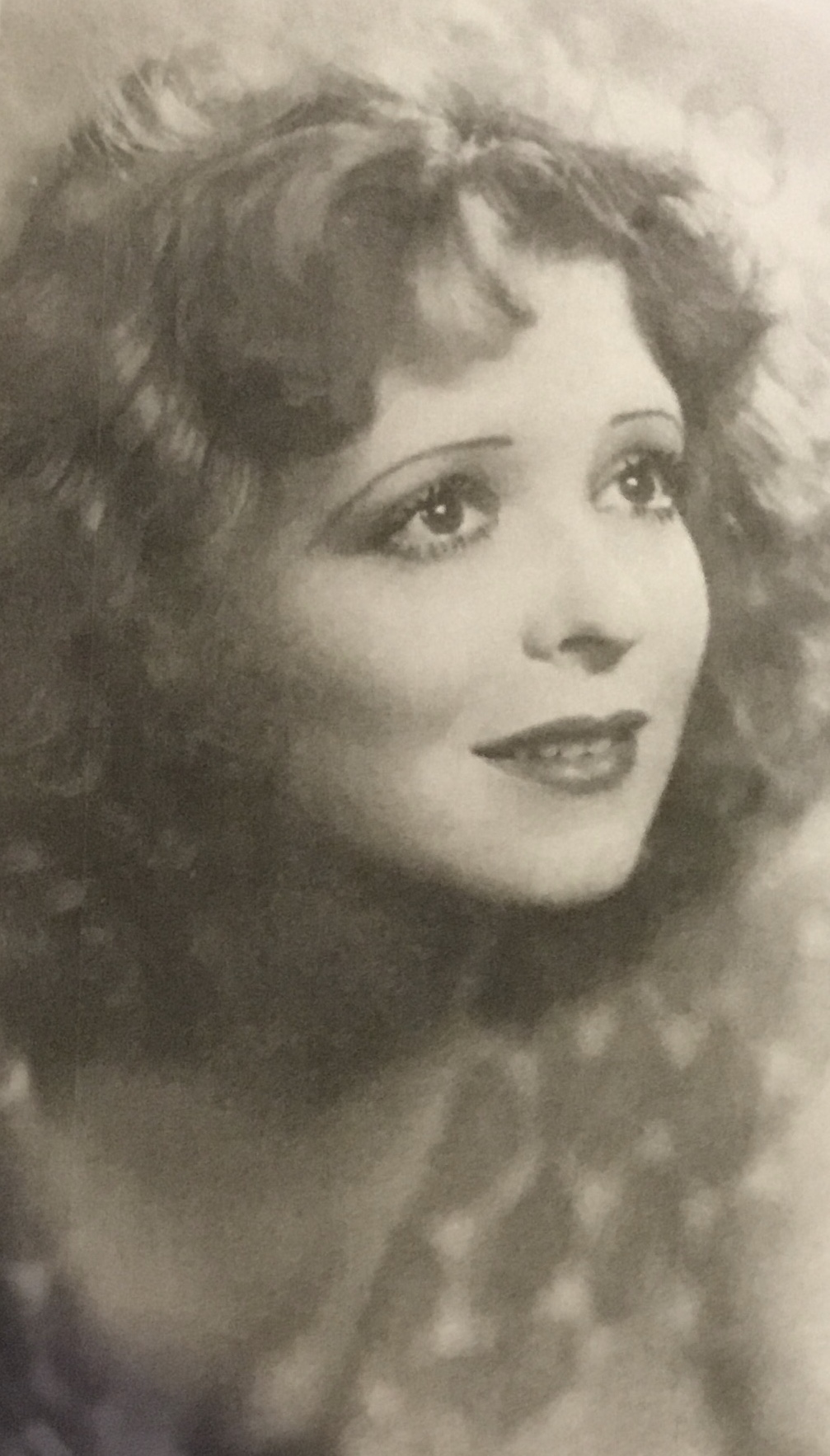
Clara Bow was born into a family of alcoholics and psychologically damaged people. Abuse, in all its ugly forms, was common. Clara’s family needed help, but in New York in 1905 few people, and certainly not the authorities, were prepared to offer a helping hand.

Clara’s neighbourhood was a network of slums and brothels, populated by the likes of ‘Submarine’ Mary – her name speaks for itself. House fires were common. Cholera, diphtheria, scarlet fever, smallpox and tuberculosis were rife. Violence was a way of life. 

During the summer heatwave of 1905, the New York infant mortality rate was estimated at eighty percent. Clara’s parents, Robert and Sarah, were convinced that she would die, so they didn’t even bother obtaining a birth certificate.

To understand Clara’s later choices in life, you need to understand where she came from: a hellhole where love was just a four-letter word. 

Welcome to the world, Clara Bow. 
Next week, news about my new project, Tula, plus background information.

As ever, thank you for your interest and support.

Hannah xxx

For Authors

#1 for value with 565,000 readers, The Fussy Librarian has helped my books to reach #1 on 32 occasions.

A special offer from my publisher and the Fussy Librarian. https://authors.thefussylibrarian.com/?ref=goylake

Don’t forget to use the code goylake20 to claim your discount 🙂

Categories
Dear Reader

Dear Reader #155

Dear Reader,

“Comic book characters never grow old, evergreen heroes whose stories are told.” – Bernie Taupin. It seems to me that every actor has a ‘perfect’ moment, a moment you remember forever. Eva Marie Saint was 98 recently, but I’ll always think of her as 35 in North By Northwest.

My latest article for the Seaside News appears on page 34 of the magazine.

The River Thames was, of course, central to London’s development. The dockyards and shipbuilding thrived, and both industries employed a number of my ancestors. Two of London’s most important dockyards were Deptford and Woolwich, with their strategic positions on the Thames.

In the seventeenth and eighteenth centuries corruption in the dockyards was rife. Clerks and labourers were badly paid. Consequently, they cheated the system by falsifying records and siphoning-off goods. Samuel Pepys tried to combat the corruption by introducing new systems of record-keeping, to no avail.

Pepys also reformed the navy and made it more professional. He introduced improved standards for ship construction – which affected the shipbuilding Stokes and Wilder branches of my family – victualling, discipline, officer training and seamen’s welfare. Seamen’s hospitals, like the one in Greenwich, were built, and in later life some of my naval ancestors spent their final years there.

🖼 Samuel Pepys, portrait by John Hayls, 1666.

In Pursuit of Carol Thorne, Series 1, Episode 9 of The Rockford Files is a neat episode where a group of cons try to out-con each other while looking for stolen loot. John Thomas James aka series co-creator Roy Huggins outlined this story. He used this stolen loot motif in another of his successful series, Alias Smith and Jones.

Rockford’s father, Rocky, appears in this episode, but it’s interesting to note that attorney Beth Davenport and Sergeant Dennis Becker are yet to feature regularly. The series was still finding its feet at this stage.

The Rockford producers tried to shoot ten pages of script a day. James Garner appeared on most of those pages, which indicates how hard he worked on The Rockford Files.

This week’s answer machine message was a good one: “This is the Message Phone company. I see you are using our unit, now how about paying for it?

📸 James Garner with Lynette Mettey, who played Carol Thorne.

Len Allchurch, born 12 September 1933, enjoyed a distinguished footballing career, which spanned nearly twenty years. During that time he represented Sheffield United, Swansea Town and Stockport County. 

Born in Swansea, and the brother of the legendary Ivor Allchurch, Len also won eleven caps for Wales and was a member of his country’s 1958 World Cup squad.

📸 BBC

In 1950, at the age of seventeen, Len began his professional career with Swansea Town. In March 1961, for a fee of £18,000, he signed for Sheffield United. Len scored six goals in eight games and helped his new club to clinch promotion. 

Over the following three seasons, Len scored 37 goals in 140 appearances for Sheffield United before, in March 1965, transferring to Stockport County. His transfer fee: £10,000, making him the most expensive signing in the club’s history.

Eventually, Len’s career turned full circle and he ended his professional days at his home club, Swansea Town.

Len enjoyed many highlights during his long and distinguished career, but perhaps this remains the most remarkable fact: he did not receive a single caution or booking throughout his entire Football League career.

***

Operation Zigzag, Eve’s War Heroines of SOE, book one, has returned to the top of the Amazon charts. Many thanks to everyone who has made this possible.

As ever, thank you for your interest and support.

Hannah xxx

For Authors

#1 for value with 565,000 readers, The Fussy Librarian has helped my books to reach #1 on 32 occasions.

A special offer from my publisher and the Fussy Librarian. https://authors.thefussylibrarian.com/?ref=goylake

Don’t forget to use the code goylake20 to claim your discount 🙂
Categories
Dear Reader

Dear Reader #150

Dear Reader,

My latest article for the Seaside News.

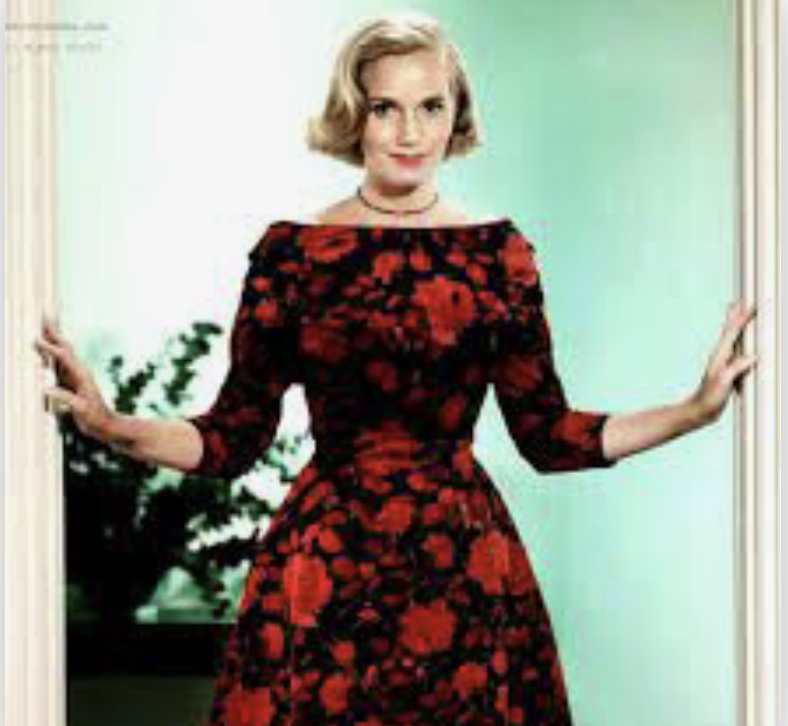
The teleplay for Exit Prentiss Carr, Series 1, Episode 4 of The Rockford Files, was written by long-standing Rockford Files associate Juanita Bartlett (pictured). 

This episode was set in the fictitious town of Bay City. Raymond Chandler set his 1940 novel Farewell My Lovely in Bay City, so presumably Exit Prentiss Carr was a homage to Chandler. Bay City also appeared in season two of The Rockford Files.

James Garner appeared in every scene in this episode. When that happens in detective fiction I think it makes for a stronger story, but obviously it’s quite demanding for the lead actor.

In the late sixteenth century, London had four regular companies and six permanent playhouses with plays performed every day except Sunday. The plays were popular with rich and poor alike with prices set to attract lower paid workers.

The authorities loathed the playhouses because people could gather together in large numbers while the plays themselves often challenged authority, a combination that offered the potential for civil unrest.

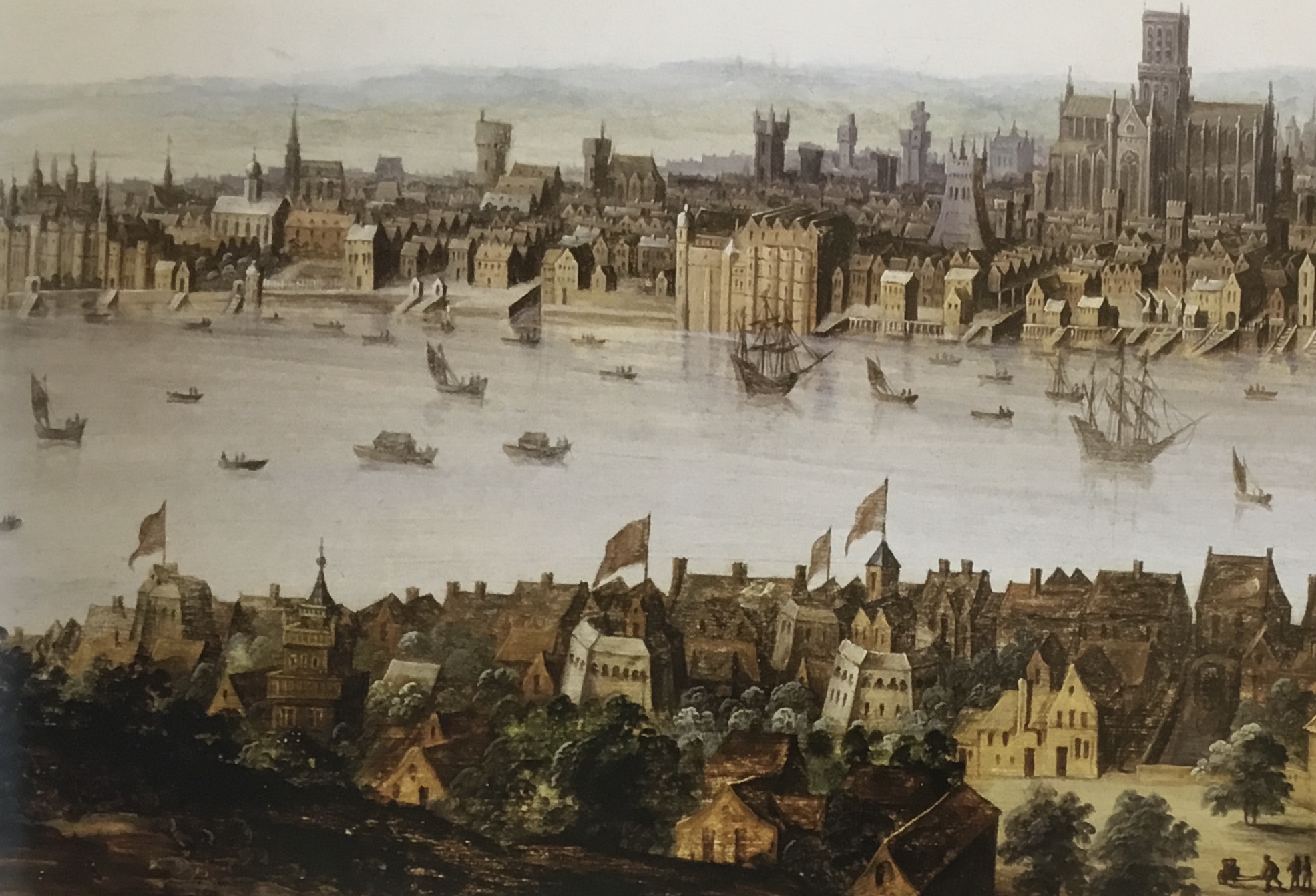
🖼 Bankside c1630, the earliest known oil painting of London. The theatres depicted on the south bank are the Swan, the Hope, the Rose, and the Globe. The flying flags indicated that there was a performance that day.

In the 1620s there were 400 taverns and 1,000 alehouses in London. Writing in 1621, Robert Burton said, “Londoners flocked to the tavern as if they were born to no other end but to eat and drink.”

Cookshops provided roast dinners and pies, and takeaways. Hawkers sold shellfish, nuts and fruit while if you fancied a cheesecake Hackney was the place to go, and Lambeth was noted for its apple pies.

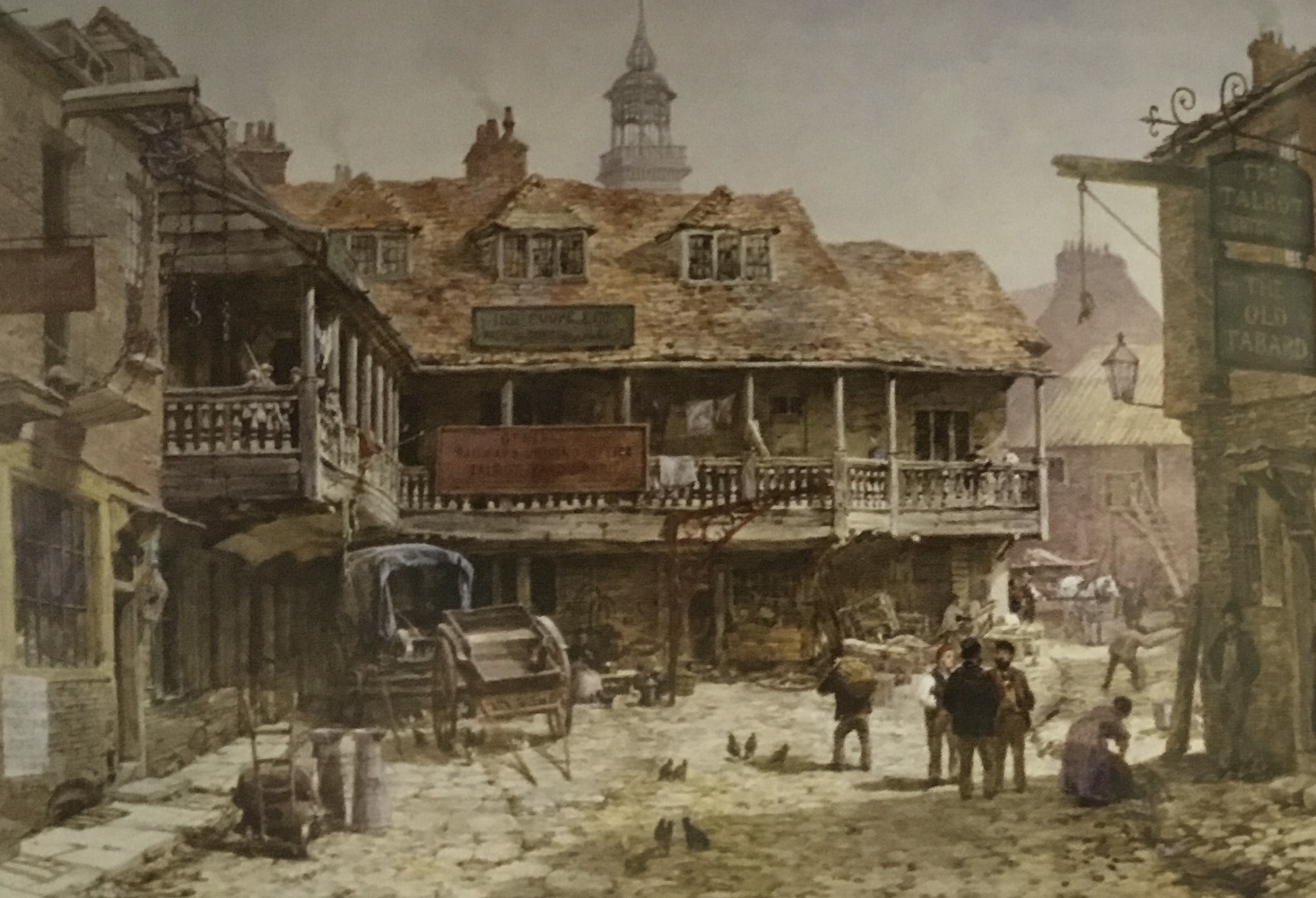
🖼 The Tabard Inn, renamed The Talbot, one of 48 inns or taverns situated between King’s Bench Prison and London Bridge, a distance of half a mile.

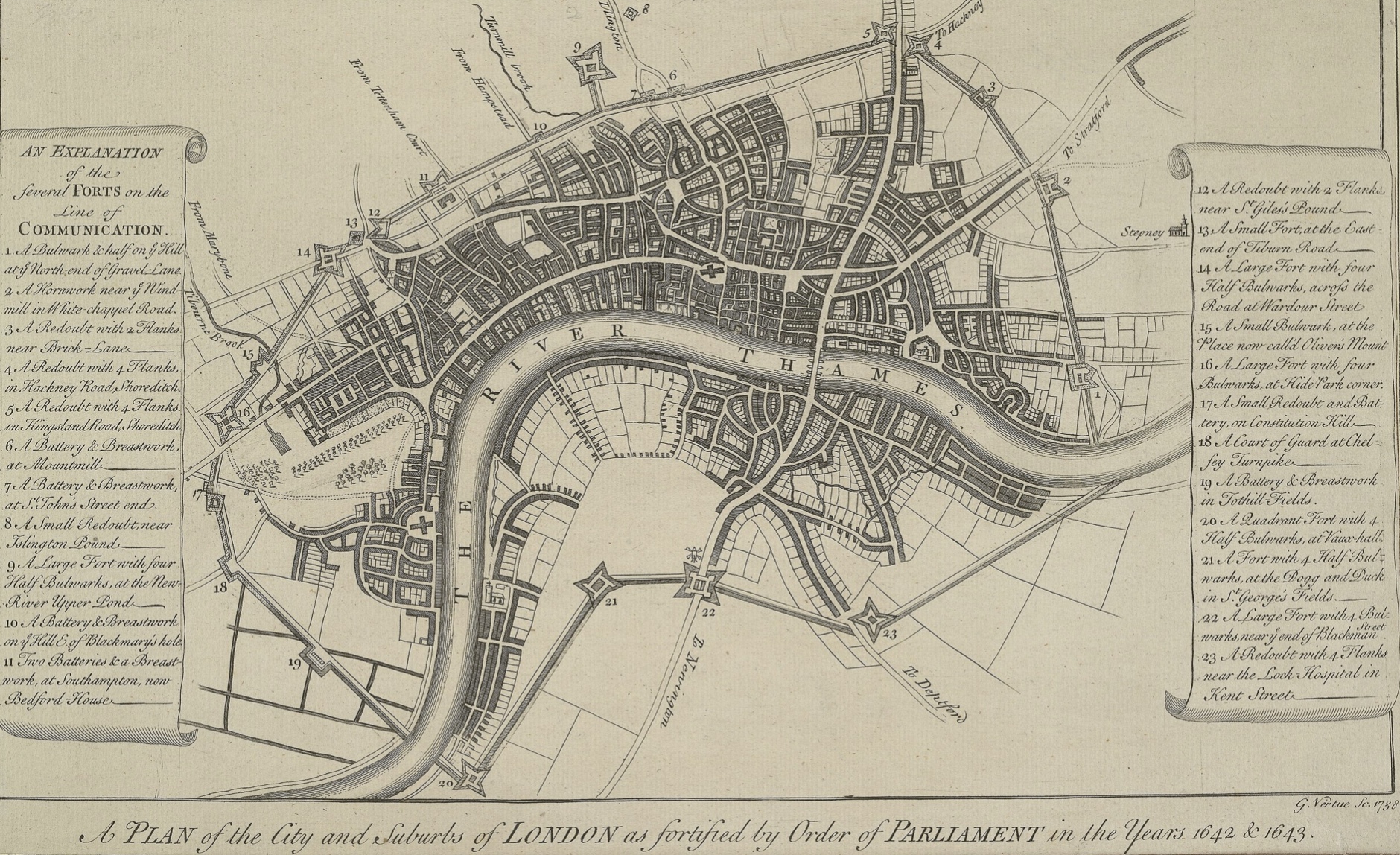
In 1642 Londoners rebelled against Charles I and he left town. The Civil War of 1642-49 was destructive, of course, but it did have some benefits. John Evelyn noted that when the supplies of hearth coal from Newcastle were interrupted London’s orchards and gardens bore ‘plentiful and infinite quantities of fruits.”

During the Civil War, London did not witness any major fighting, primarily because the Parliamentarians controlled the capital from an early stage. Without London, Charles I was doomed to defeat.

On the whole, city leaders were pro-Royalist while the workers sided with the Parliamentarians. However, by 1661 the workers were happy to welcome the new king, Charles II. The moment was lost, and Britain never recovered.

🖼 George Vertue’s plan of the London Lines of Communication, 1642.

Plague visited London in 1665. By the end of the year over 100,000 people were dead, a fifth of the population. The plague began just before Christmas 1664 when two men in Drury Lane died of ‘spotted fever’. 

By May 1665 the plague had spread to most of London’s 130 parishes and those who could afford to fled. Trade declined. The highways were clogged with refugees. Thomas Vincent remained in London throughout the plague. He noted that death rode ‘triumphantly on his pale horse through our streets and breaks into every house almost where any inhabitants are to be found’.

The authorities established ‘pest houses’ in fields and open spaces in an attempt to segregate the infected from the able-bodied. At the peak of the epidemic, mid-August to mid-September 1665, 7,165 people died in one week. Under such strain, traditional burial practices were abandoned in favour of common graves.

A Bill of Mortality published at the plague’s peak included the following as cause of death: Aged, 43. Burnt in his bed by a candle, 1. Constipation, 134. Flox and Smallpox, 5. Frighted, 3. Falling from a belfry, 1. Kingsevil, 2. Lethargy, 1. Rickets, 17. Rising of the Lights, 11. Scurvy, 2. Spotted Fever, 101. Stillborn, 17. Teeth, 121. Winde, 3. Wormes, 15. Plague, 7,165.

Males christened that week, 95; females, 81. Males buried, 4,095; females, 4,202. Parishes clear of the plague, 4. Parishes infected, 126. Many people returned to London in December 1665. However, members of parliament did not return until the following spring.

Welsh Football Legends

Walley Barnes was born on 16 January 1920 in Brecon, Wales. His parents were English. They were living in Brecon because Walley’s father, Edward, an army physical education instructor and footballer, was stationed with the South Wales Borderers.

Walley’s footballing career began during the Second World War. Initially, he played inside-forward for Southampton making 32 appearances between 1941 and 1943, scoring 14 goals. Walley’s impressive strike rate attracted the attention of Arsenal and he signed for the London club in September 1943.

At a time of ‘make do and mend’ footballers were versatile too. He played in virtually every position, including goalkeeper. In 1944 a serious knee injury threatened his career and an early retirement seemed a distinct possibility. However, Walley recovered, played in the reserves and forced his way back into first-team reckoning.

On 9 November 1946, Walley made his league debut for Arsenal against Preston North End. By 1946 he’d settled into his regular position of left-back. He won praise for his assured performances, his skilful distribution and his uncanny ability to cut out crosses. 

A regular in the Arsenal team that won the First Division Championship in 1947-48, Walley enjoyed more success in 1949-50 when Arsenal defeated Liverpool in the FA Cup final. On that occasion, deputising for injured captain Laurie Scott, Walley played right-back.

In the 1951-52 FA Cup final Walley injured a knee. He left the pitch after 35 minutes and missed the entire 1952-53 season, which saw another league triumph for Arsenal. Thereafter, his first-team appearances became more spasmodic.

After only eight appearances in 1955-56, Walley retired. In all he played 294 matches for Arsenal and scored 12 goals, most from the penalty spot.

For Wales, Walley won 22 caps and captained his country. He made his debut against England on 18 October 1947, marking Stanley Matthews. Matthews and England got the better of Wales that day and won 3 – 0. England also won the British Home Championship that year while Wales finished a creditable second.

As Walley’s playing career faded, he turned to management. Between May 1954 and October 1956 he managed Wales. Notably, on 17 July 1958 he signed a letter to The Times opposing the ‘policy of apartheid’ in international sport and defending ‘the principle of racial equality, which is embodied in the Declaration of the Olympic Games’.

Walley joined the BBC and presented coverage of FA Cup finals. With Kenneth Wolstenholme, he was a commentator on the first edition of Match of the Day, broadcast on 22 August 1964. He also provided expert analysis in the live commentary of the 1966 World Cup final when England beat West Germany 4 – 2.

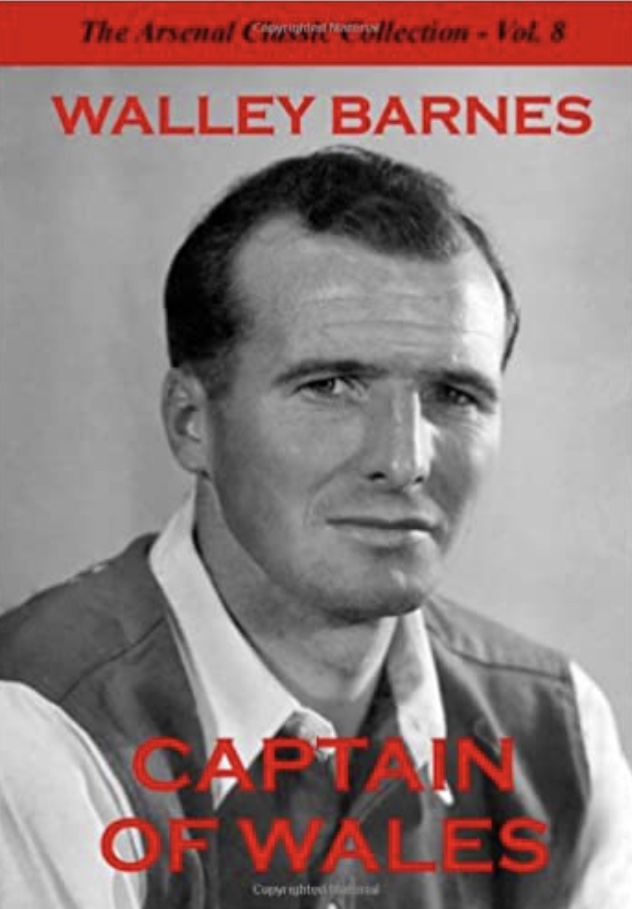
Walley wrote his autobiography, Captain of Wales, which was published in 1953. He continued to work for the BBC until his death on 4 September 1975.

As ever, thank you for your interest and support.

Hannah xxx

For Authors

#1 for value with 565,000 readers, The Fussy Librarian has helped my books to reach #1 on 32 occasions.

A special offer from my publisher and the Fussy Librarian. https://authors.thefussylibrarian.com/?ref=goylake

Don’t forget to use the code goylake20 to claim your discount 🙂

Categories
Dear Reader

Dear Reader #144

Dear Reader,

My latest translation, the Dutch version of Operation Zigzag, Eve’s War Heroines of SOE, book one.

My latest article for the Seaside News.

John Howe, my 5 x great grandfather, was baptised on 28 April 1761 in St Hilary, Glamorgan. He was one of only ten children baptised in the village that year, including a set of twins. John’s parents were farmers so he spent his formative years learning the business of farm management.

John Howe married Cecily Lewis on 1 January 1785 in Cowbridge, Glamorgan. Cowbridge was the nearest market town to John’s home in St Hilary and it’s likely that he met Cecily there during a social event connected to the market.  

Cecily was born in Cowbridge in 1764 and it was the custom that marriages took place in the bride’s parish.

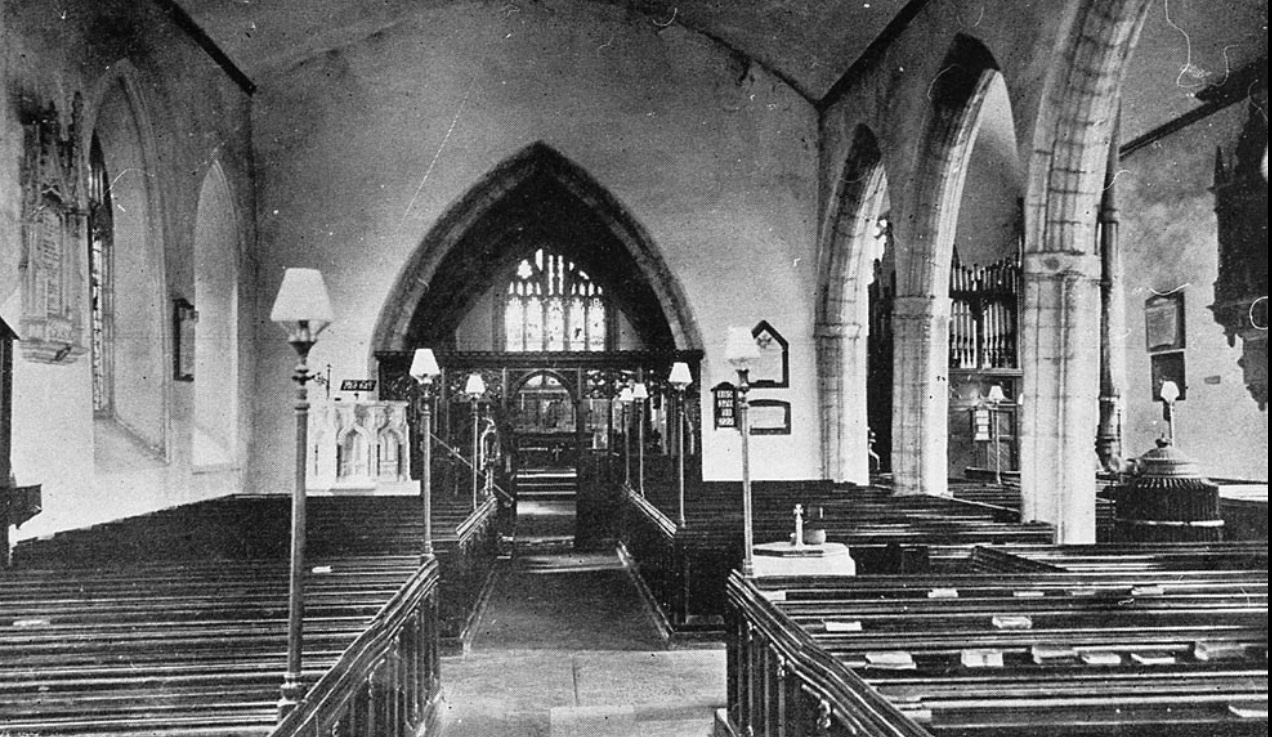
The interior of Holy Cross Church, Cowbridge (People’s Collection Wales).

Like his father before him, my 5 x great grandfather John Howe was an Overseer of the Poor. In 1797 he paid 2s 6d to ‘Ten men in distress coming from the sea.’ The Vale of Glamorgan coast is beautiful, but dangerous due to hidden rocks.

Le Vainqueur, which sank off Sker Rocks on 17th December 1753.

Taxes greatly affected the direction of the Howe family. In 1798, my 5 x great grandfather John Howe featured in the Land Tax Redemption register for St Hilary ten times (out of twenty-seven entries). Most people featured once while John’s brother, William, featured twice. 

John wasn’t ‘Lord of the Manor’, that title fell to the Bassets (although their influence was on the wane), but he was certainly ‘Mr St Hilary’.

The Land Tax became a permanent charge on the land in 1798 and was fixed at 4/- in the pound (20%). However proprietors were given the option to pay a (considerable) lump sum or purchase government stock to free themselves from future liability.

By 1799, the Napoleonic wars had taken their toll on Britain. The British royal treasury was running out of money to maintain the royal army and navy. Soldiers were starving and His Majesty’s navy had already mutinied. For Prime Minister William Pitt the Younger, the solution was simple: impose an income tax.

Under the Act of 1799, all citizens who earned above £60 were to pay a graduated tax of at least one percent. Those with an income of over £200 were taxed ten percent. Some people regarded the tax as a patriotic duty while others complained. 

I don’t know what John Howe thought of the taxes, but it seems they were the reason why he moved his family ten miles west to Coity breaking the Howe connection with St Hilary, which had lasted over 200 years.

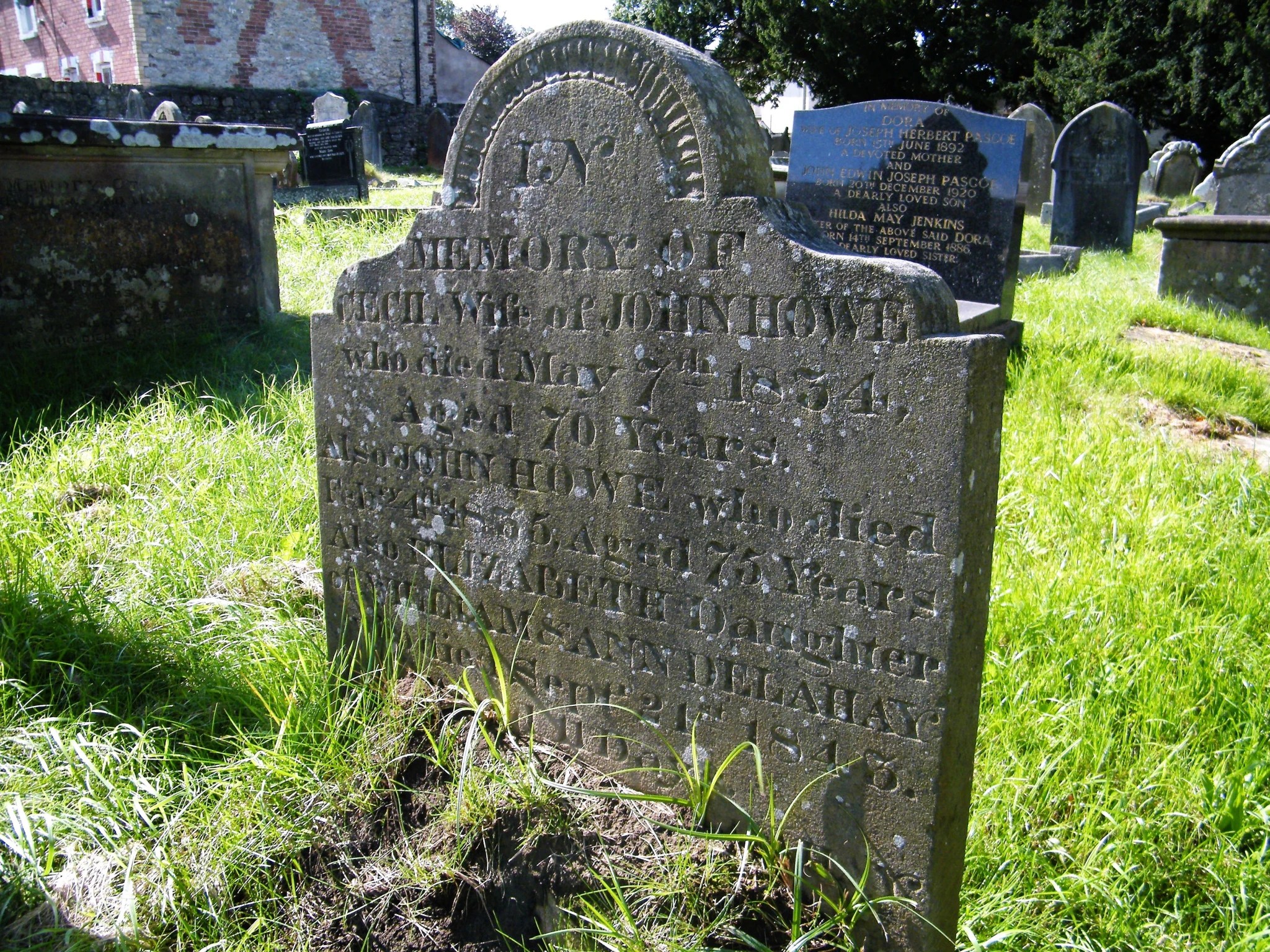
After 49 years of marriage, Cecily died  on 7 May 1834, aged 70 while John died on 4 February 1835, aged 73. The couple are buried together in Coity.

John and Cecily’s grave in Coity.

On Wednesday 4 April 1787 Cornelius Gordon and his wife Mary Bevan were gardening, and arguing, at their house in Crichton, Llanrhidian when Mary collapsed. A servant, Thomas Westley, and a neighbour, Elizabeth Long, helped Mary to bed. She slept while Cornelius continued his gardening.

The following morning, Cornelius told his servant Thomas to get Mr Thomas Williams, surgeon and apothecary, from Swansea. Surgeon Williams arrived at Crichton to find Mary dead. Relatives arrived. Accusations were made.

On Friday 6 April 1787, Gabriel Powell, Coroner, summoned twenty-four ‘honest and lawful men’ and held an inquest into Mary’s death. Evidence was taken. The servant, Thomas, “didn’t see anything” while Surgeon Williams stated that “the deceased did not die from a violent blow.”

A second surgeon, Thomas Sylvester, supported Surgeon Williams. The coroner’s inquest concluded that Mary died ‘by the visitation of God’, and she was buried the following day. However, Mary’s family were not happy and they intervened.

On Tuesday 10 April 1787, Rowland Pritchard, a Justice of the Peace, ordered Charles Collins, a surgeon from Swansea, to exhume and examine Mary’s body. He discovered a fractured skull, consistent with a violent blow, possibly caused by a spade. 

Surgeon Sylvester changed his tune and supported Surgeon Collins. Servant Thomas was questioned. His statement revealed that Cornelius had struck his wife about the head, and that during their marriage they had ‘frequently had words’.

Cornelius Gordon was tried four days later, found guilty, and sentenced to death. He was hanged on Stalling Down, Cowbridge, on 20 April 1787, a fortnight after the murder. This was the last hanging to take place at Stalling Down.

In the mid-1800s a Mrs Howe (first name sadly not recorded) spoke to David Jones an antiquarian. She said that as a young child she was taken up to Stalling Down to witness the execution of Cornelius Gordon.

Mrs Howe recalled the scene as Gordon’s family stood by with a coffin ready to transport his body back to Crichton. Mrs Howe stated that at the moment of the execution “the whole ground trembled, as with an earthquake.”

Next week, the Howes in America.

As ever, thank you for your interest and support.

Hannah xxx

For Authors

#1 for value with 565,000 readers, The Fussy Librarian has helped my books to reach #1 on 32 occasions.

A special offer from my publisher and the Fussy Librarian. https://authors.thefussylibrarian.com/?ref=goylake

Don’t forget to use the code goylake20 to claim your discount 🙂

Categories
Dear Reader

Dear Reader #141

Dear Reader,

We experimented by placing Operation Rose, Operation Watchmaker and Operation Overlord, the next three books in my Eve’s War Heroines of SOE series, on pre-order without blurbs and with dates running into next January, and already they are top 50 hot new releases. Many thanks to my readers for their support.

My latest article for the Seaside News appears on page 14 of the magazine. This one is about an illicit affair in 1814.

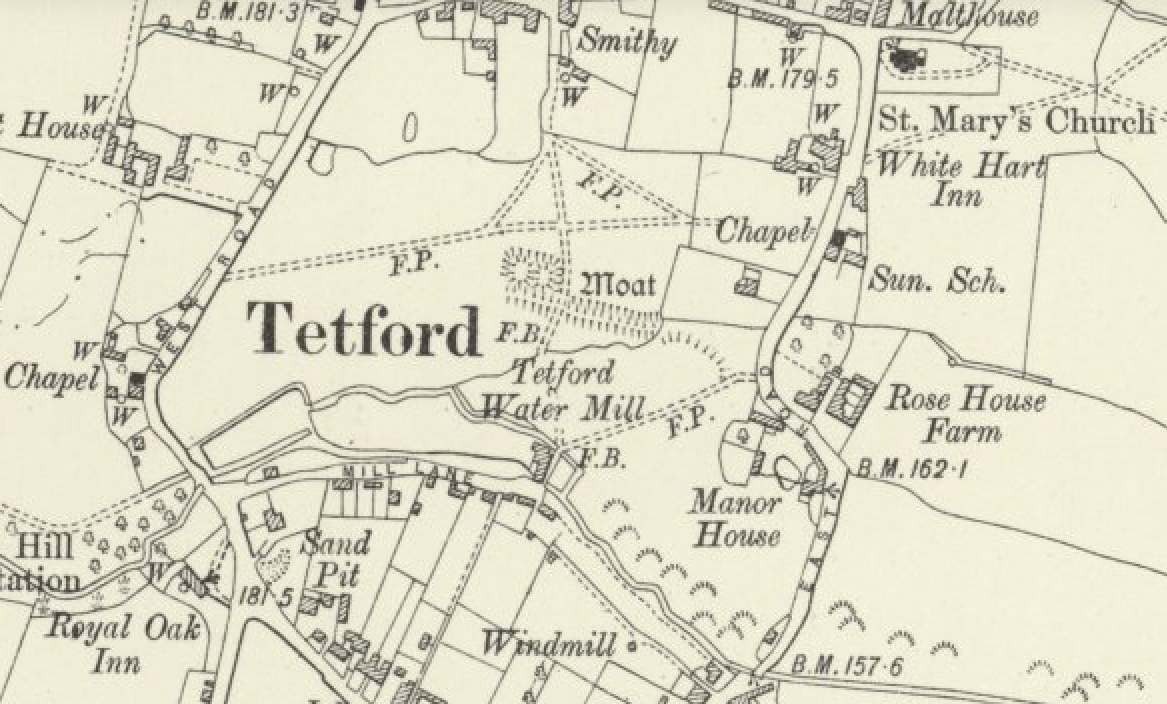
My 4 x great grandmother Sarah Foreman was born on 12 October 1803 in Tetford, Lincolnshire and baptised in the local church, St Mary’s, two days later. She was the youngest of four daughters. Sarah’s parents were Hutton Foreman, born in nearby Toynton in 1764, and Lucy Ironmonger, born in nearby East Kirby in  1761.

Hutton, who worked on the land, married twice. His second wife, Mary Blades, was nineteen years younger than him. He fathered eleven children, the last when he was sixty-four. He died in 1847 aged eighty-three.

Hutton’s first wife, my 5 x great grandmother, Lucy Ironmonger was widowed twice before she married him. Unusually for a rural woman of that time she was literate.

Sarah had three sisters, all with similar names: Mary born 1796, Maria born 1798 and Mary Ann born 1801. Maybe their mother Lucy liked the name Mary. Or maybe the children died in infancy because there is no further trace of them in the historical record. If the Marys did die in infancy then with Lucy’s death Sarah would have become the ‘mother’ of the house.

So what did Sarah make of these complex family dynamics? Sarah lost her mother, Lucy, when she was only eight. Her father, Hutton, then married a woman who was only fifteen years her senior. Sarah would have learned from Lucy in her formative years, so she was educated. Did she get on with her step-mother, Mary Blades? We don’t know. But we do know that by the early 1830s Sarah was living in London.

Sarah was in her late twenties or early thirties when she arrived in London. She was unmarried, which suggests that she had a career. In London, Sarah became a nurse/chemist/dentist. Although I have no proof, I suspect that she was nursing in Lincolnshire before her move to the Big City.

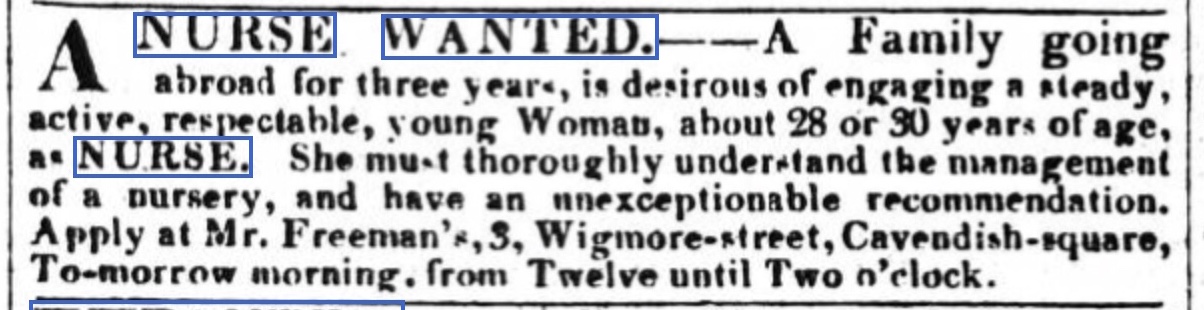
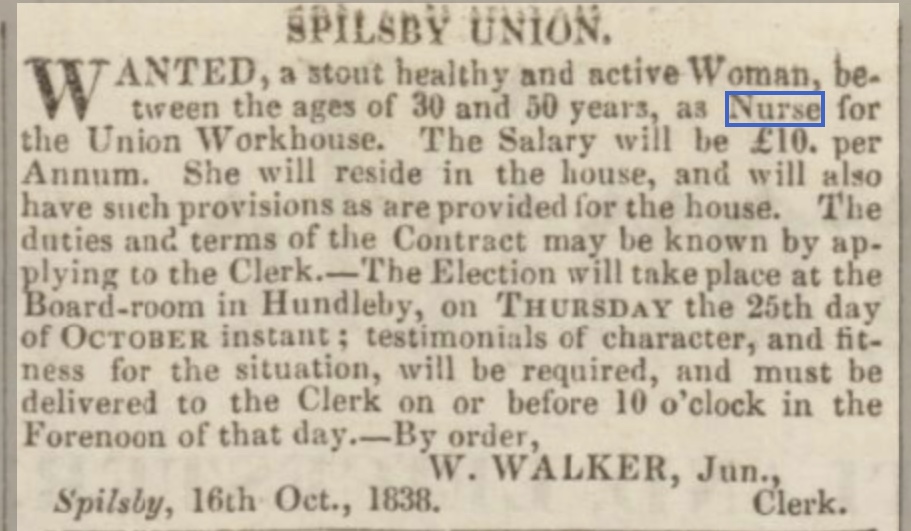
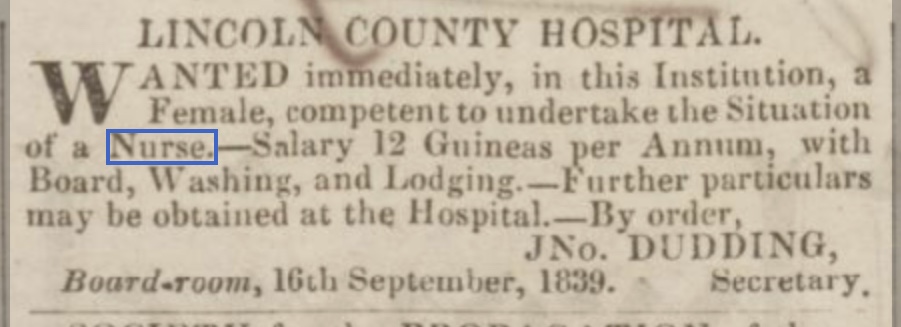
Why did Sarah move to London and how did she get there? Clearly, she decided that village life was not for her and that she would take her chances in the city. Maybe she responded to an advertisement looking for a nurse.

In the 1820s and 1830s the annual rate of pay for a nurse was £10, the equivalent of £600 today. Living expenses were covered. Even so, this was meagre renumeration.  In comparison, in the 1820s/30s a skilled tradesman could earn £10 in fifty days.

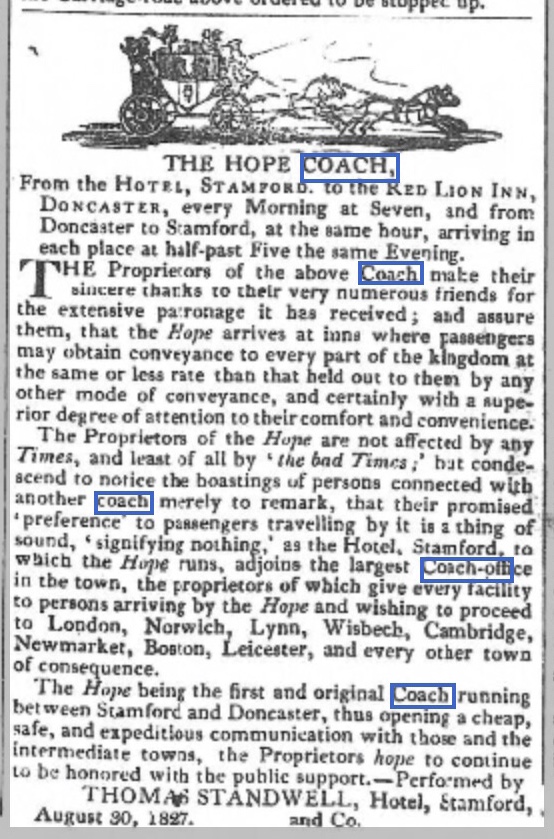
Sarah probably travelled to London on a coach. The journey from Tetford to London cost around £2, a huge financial commitment. She was making a life-changing journey and if things didn’t work out in London it was unlikely that she could immediately afford the journey back.

In London, Sarah met my 4 x great grandfather John Glissan, a surgeon/chemist/dentist. Had he placed the original advertisement seeking a nurse? After her initial time in London, did she apply to work for him? We don’t know, but I suspect that their careers overlapped, which led to love and marriage.

Sarah and John married on 24 March 1834 in St Brides, Fleet Street, a notorious location for ‘Clandestine’ marriages, marriages conducted in haste or secrecy, without the posting of banns. Many of my ancestors married in this fashion. However, Sarah and John posted banns so theirs was a regular marriage. Sarah and John signed the wedding register, thus confirming they were literate.

Separately, Sarah and John had travelled hundreds of miles from their homes to meet in London. Now, they were a couple. What would married life bring?

More about Sarah and John next time.

As ever, thank you for your interest and support.

Hannah xxx

For Authors

#1 for value with 565,000 readers, The Fussy Librarian has helped my books to reach #1 on 32 occasions.

A special offer from my publisher and the Fussy Librarian. https://authors.thefussylibrarian.com/?ref=goylake

Don’t forget to use the code goylake20 to claim your discount 🙂