Accused of murder, socialite, suffragette and sociologist Dr Anna Richards goes on the run. While in hiding, she meets Great War hero, Captain Aubrey Howell, who is also on the run. Although he fought with distinction, Captain Howell is wanted for desertion – he refused to send his men on a suicide mission, was court-martialled and sentenced to death.
Anna and Aubrey team-up, to save their own skins, and to solve the mystery of The Ninety Three.
For Authors
#1 for value with 565,000 readers, The Fussy Librarian has helped my books to reach #1 on 38 occasions.
I’m outlining a novel set in 1918 and the Hero was proving elusive. So, I asked my youngest son, who has a deep knowledge of WW1, how could a soldier leave the war, alive, before its conclusion? There are several answers, of course, but he said “desertion” and the Hero, and the conclusion of the book, came to life. The working title is The Ninety-Three (the initial idea arrived when I thought, what if you turn everything about The Thirty-Nine Steps around?)
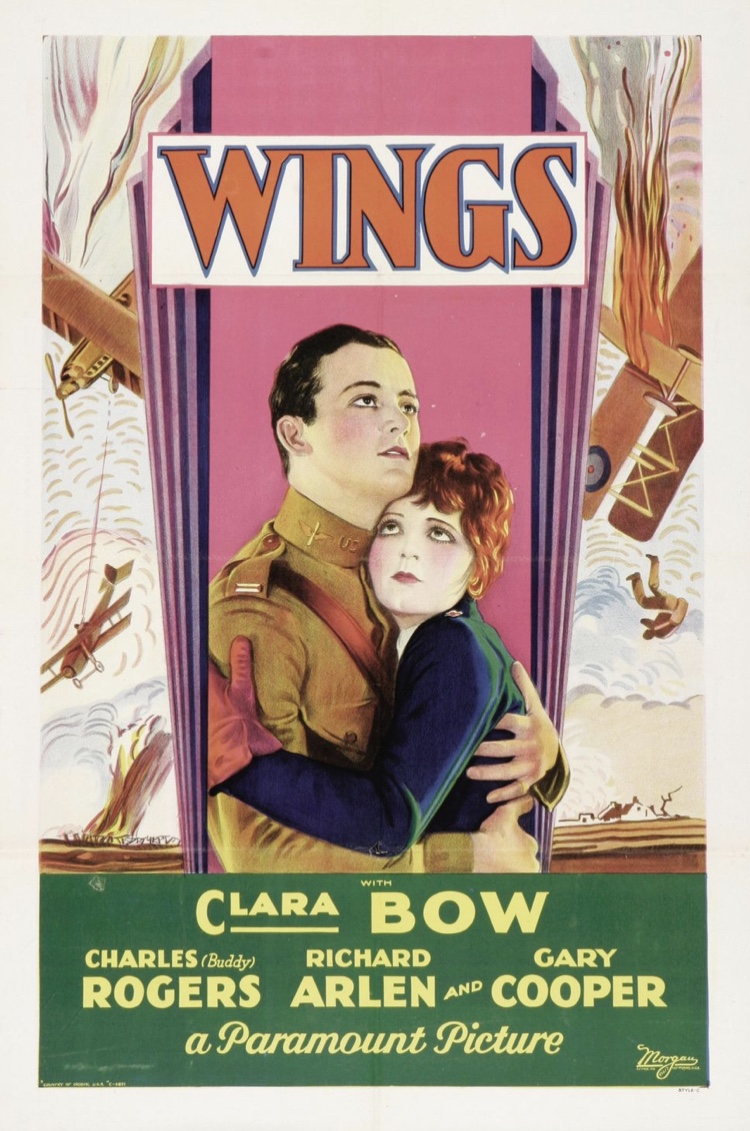
In terms of production, Clara Bow’s thirty-seventh movie was Wings, September 7, 1926 – April 7, 1927. General release, January 5, 1929. Clara played Mary Preston.
Wings was a homage to First World War fighter pilots. As Clara rightly observed, it was a buddy movie and she was only added to the cast because she was red hot at the box office. Clara’s appearance guaranteed that the movie would be a success. Furthermore, the quality of the film, and the amazing stunt flying, ensured that Wings won the first ever Academy Award for Best Picture.
Born Mary Ann Howe on 2 September 1879, but known in the family as Auntie Ann, my great grandaunt lost a leg as a child. Apparently, she fell out of a tree. Family legend states that the surgeon removed her leg, which presumably had become infected, on the kitchen table. This legend stems from Auntie Ann’s sister, Edith who, being present, is obviously a good source.
Auntie Ann kept house for her brother, Evan, a limestone quarryman. She had a penchant for snuff and used to take a pinch whenever she visited Edith. She lived in Lilac Cottage, pictured, a building that did not have indoor running water. She would gather her water from a pump in the garden.
A dressmaker, and due to the family allotment largely self-sufficient, Auntie Ann made her own lemonade. One day, her still exploded, showering her kitchen with lemonade. She had a number of idiosyncrasies including a refusal to handle copper coins. Consequently, she insisted on paying tradesmen in ten shilling or pound notes. Maybe she told them to keep the change?
With her crutch under her arm, Auntie Ann remained mobile well into her eighties. She died on 3 April 1966 aged eighty-six with her sister Edith and brother Evan at her side.
***
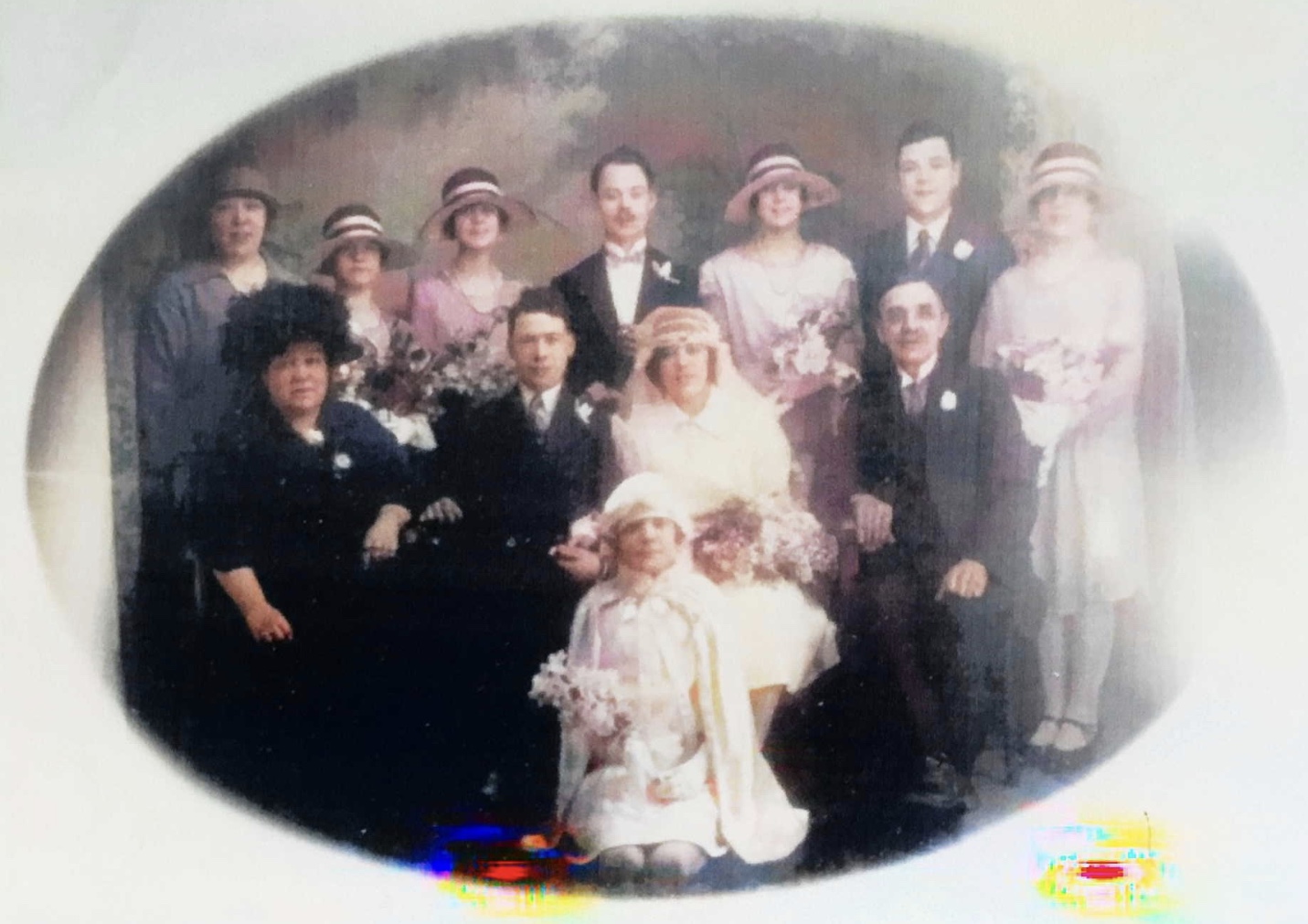
A wedding in London, 20 February 1927. My 2 x great grandmother Jane Dent is seated on the left and her husband, my 2 x great grandfather William Stokes, is seated on the right. The bride is their daughter Louisa Elizabeth Stokes. William was a master carpenter while Jane was a teenager in Whitechapel during the terror of Jack the Ripper.
Colourised, hence the flashes on the bottom.
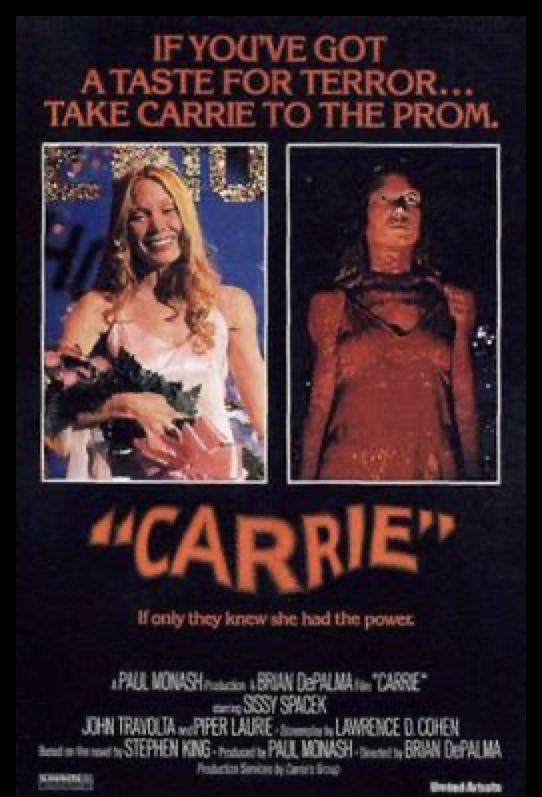
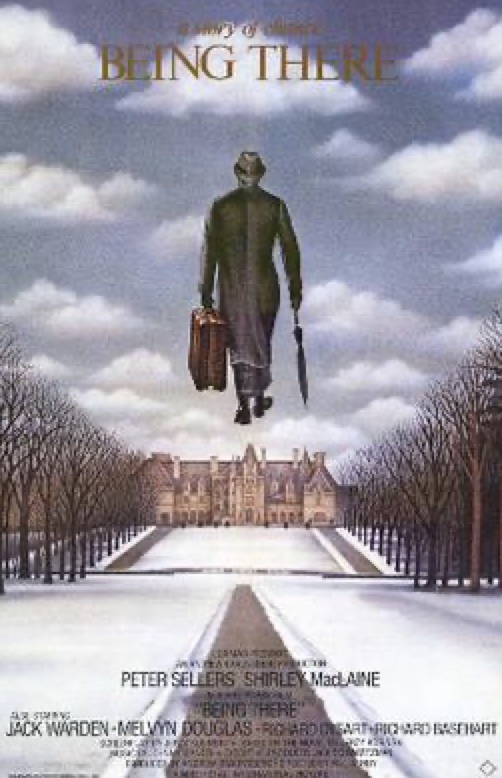
The Mastodon 1970s Mega Movie Poll Round One Continued
Apocalypse Now 67% v 33% Silent Running
The Last Picture Show 73% v 27% A Woman Under the Influence
The Countess, Series 1, Episode 3 of The Rockford Files saw another solid story from John Thomas James enlivened by crisp dialogue from Stephen J. Cannell. Joe Santos as the long-suffering Sergeant Becker appears in this episode.
In a phone call with Rockford, Becker implies that his wife’s name is Nancy. However, when that character appears later in the series, played by Pat Finley, her name is Peggy. Incidentally, she is one of my favourite side-characters in the series.
Mistakes in long-running series are inevitable. It’s hard enough for writers to keep track of events in real life, let alone in a fictional universe. The fact that fans notice any errors is a compliment to a series, I reckon; it highlights their deep commitment.
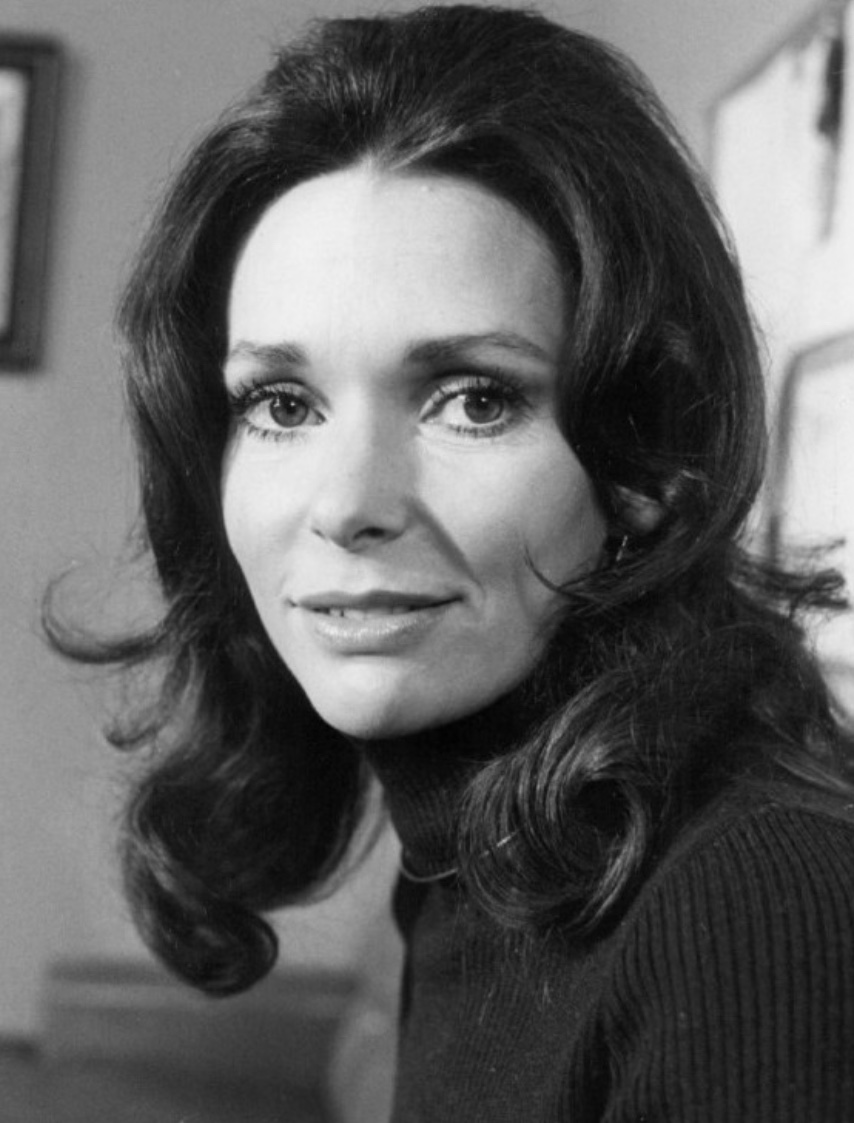
Susan Strasberg, ‘The Countess’.
The Dissolution of the Monasteries (1535 – 40) created great wealth for some, and more modest opportunities for others. The great religious land carve up started in London. With an influx of people from other parts of Britain, and abroad, the city grew from 150,000 inhabitants in 1580 to 500,000 by 1660.
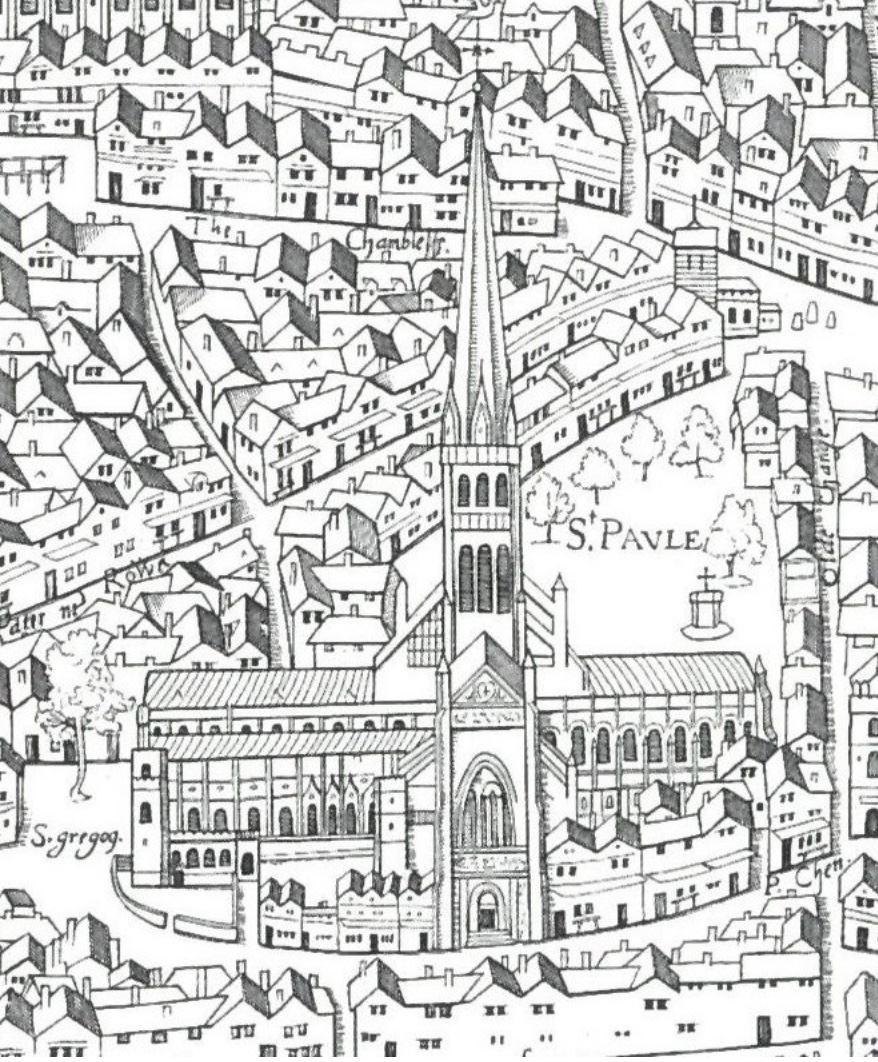
The ‘Copperplate’ map of London, produced from a survey conducted between 1553 and 1559, is the earliest true map of London. Sadly, only three of the original fifteen printing plates survived – the Moorfields plate, the Eastern City and the Western City.
From the Copperplate Map of London, 1559, St Paul’s Cathedral.
St Paul’s lost its spire when it was struck by lightning in 1561.
The printed word was seen as a threat to the Establishment (because people could form their own opinions). Nevertheless, by 1550, St Paul’s became the national centre of the book trade.
Education, Tudor and Stuart London. In ‘petty schools’ children learned the alphabet and the Lord’s Prayer. However, they were not taught how to write. Teachers were often invalids and paupers, seeking means of support.
Grammar schools, for boys, taught Latin and Greek, but not English. In theory, these schools were free, but most levied fees that went beyond the budget of the poor. City companies, such as brewers and coopers, also established grammar schools.
Adults attended lectures on astronomy, divinity, geometry, law, music, physic and rhetoric. The upwardly mobile studied history, music and dancing. These subjects prepared them for their move into the ‘right’ social circles.
What have immigrants ever done for us? From the late sixteenth century, women escaping religious persecution in Europe established schools in London and taught girls. Consequently , female literacy increased from 16% in 1590 to 48% in 1690.
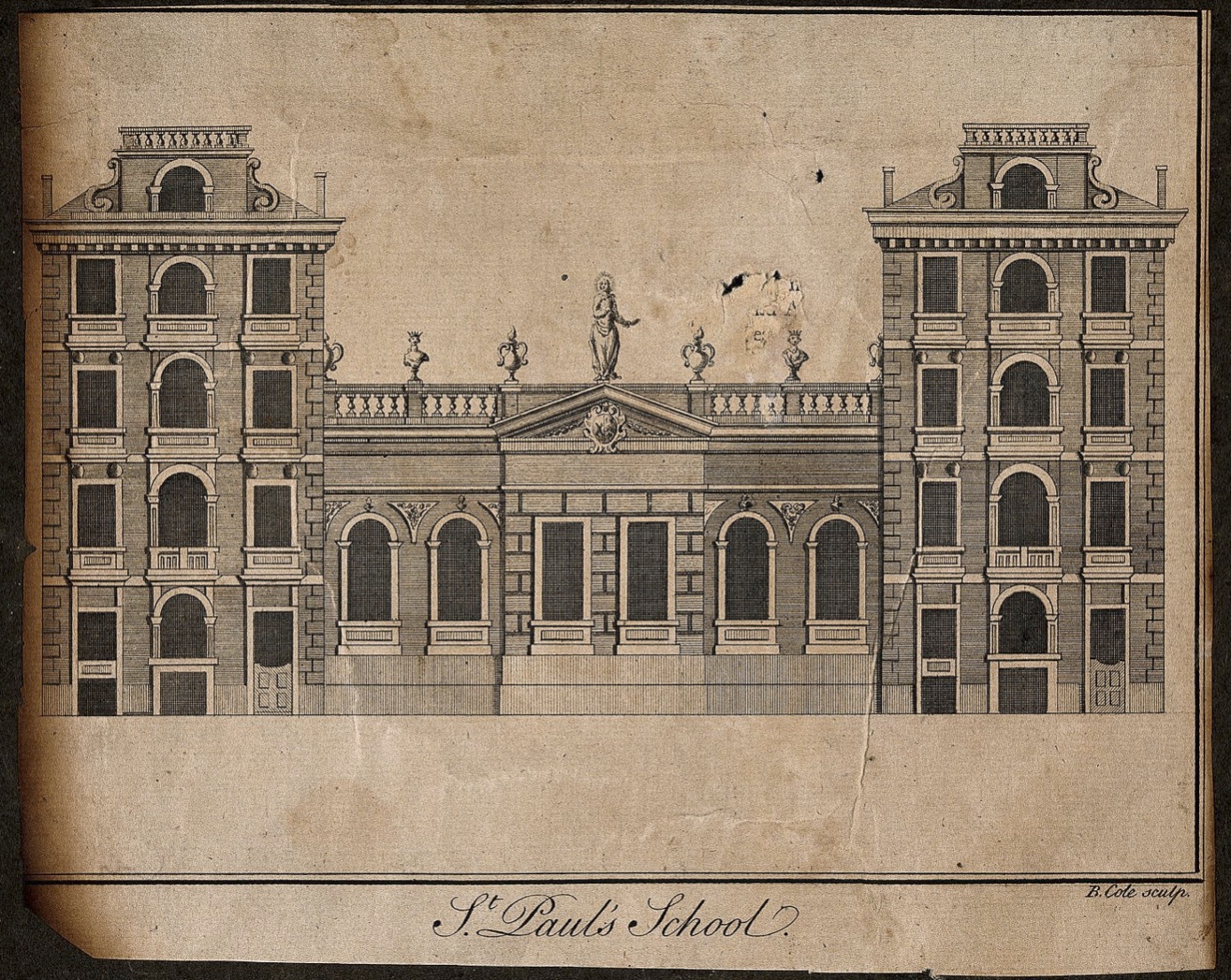
St Paul’s School, c1670. Wellcome Images.
With 28 bookshops encircling its churchyard, St Paul’s Cathedral became the centre of literacy in Tudor London. In 1599 they even removed the ‘common privy’ to make way for a new bookshop.
William Caxton established the first printing press in Westminster in 1476. Other presses followed, in Dowgate, Fleet Street, and St Dunstan’s in the West.
Wynkyn de Worde (his real name) was the most prolific printer and publisher in early Tudor Britain. He acquired Caxton’s impress and published bestsellers such as The Golden Legend and The Chronicles of England.
Branching out, de Worde published marriage guidance manuals, children’s books, medical treatises and romances. By the time of his death in 1535 his catalogue listed over 800 books.
St Paul’s Cathedral with bookshops crammed between the buttresses. John Gipkyn, 1616.
In the early 1600s the rich and poor of London lived side-by-side in timber and brick houses. Gardens were common, while some buildings were six storeys tall. The larger houses had lead cisterns to collect rainwater. All properties shared community wells.
Around 1630 the wealthy moved to the suburbs. Tradesmen lived in two-up, two-down houses with their shops occupying the ground floor. The poor lived in one-up, one down houses while those in extreme poverty lived in cellars.
By 1640 the united city had divided along class lines. And with each new decade and century those divisions increased.
A plan of timber-framed houses drawn by Ralph Treswell, c1600.
Welsh Football Legends
George Latham MC and Bar was born in Newtown, Powys on 1 January 1881. As a footballer, he played for Newtown, Cardiff City, Liverpool, Stoke City and Southport Central. He was also capped, ten times, by Wales.
As a military man, George served in the Second Boer War and the First World War. He received the Military Cross for his bravery in Gaza, Palestine and Turkey, 1917-18, and the Bar for his courage in Beersheba, 1918. George completed his military career with the rank of captain.
George was also a successful coach. He coached Cardiff City during their halcyon period, 1911 – 36, when the team won the FA Cup, 1927, and narrowly missed out on the league title, denied by goal difference.
George’s origins were humble. The fifth of six boys, his parents were William, a labourer, and Esther, a laundress. He attended New Road School then trained as a tailor in Market Street.
As a teenager, George played for Newtown as an inside forward and achieved modest success. However, in 1900 he volunteered to serve in South Africa during the Second Boer War. He joined the Fifth South Wales Borderers, who were stationed in Newtown.
In fourteen months George saw action in a number of places, including Brandfort and Potchefstroom. He rose from private to the rank of corporal. He played football in South Africa, for a team named the Docks. After the Boer War, George also played for the South African side, the Caledonians.
George’s footballing career in England was, initially, patchy. He joined Liverpool, but had to wait three years before his debut, on 8 April 1905. Never a first team regular, he made only nineteen appearances in seven years. Moves to Southport and Stoke followed before George joined Cardiff City as player-coach in February 1911.
In George’s first season, Cardiff City won the Welsh Cup, defeating Pontypridd 3 – 0 in a replay. George replaced the injured Bob Lawrie in the replay, but presented his winner’s medal to him after the game.
George was a squad player at Cardiff City, filling in for injured players. Nevertheless, he won ten caps for Wales, making his debut on 6 March 1905 in a 3–1 victory over Scotland. George’s tenth and final cap, on 18 January 1913 v Ireland was notable: due to a lack of fit players, as coach George joined the team. Wales won, 1 – 0.
In footballing terms, George’s main skill was as a coach. Working alongside Fred Stewart, he guided Cardiff City to the FA Cup final on two occasions. Cardiff lost 1 – 0 to Sheffield United in 1925 before tasting victory against Arsenal in 1927 in a famous match that ended 1 – 0.
During his spell with Cardiff City, George arranged annual charity matches with his hometown club Newtown to rise money for the Montgomery County Infirmary. After George’s death at the infirmary in 1939, Newtown named their ground Latham Park in his honour.
Author Caroline Dunford interviewed by Wendy H Jones. Plus, Author Features, Health, Nature, Photography, Poetry, Recipes, Short Stories, Young Writers, National Picnic Month, and so much more!
As ever, thank you for your interest and support.
Hannah xxx
For Authors
#1 for value with 565,000 readers, The Fussy Librarian has helped my books to reach #1 on 32 occasions.
My direct ancestor, Jeanne de Valois, c1294 – 7 March 1352), Countess consort of Hainaut, Holland and Zeeland. She married William I, Count of Hainault. A skilled mediator, she brokered peace between many warring factions during the first half of the fourteenth century.
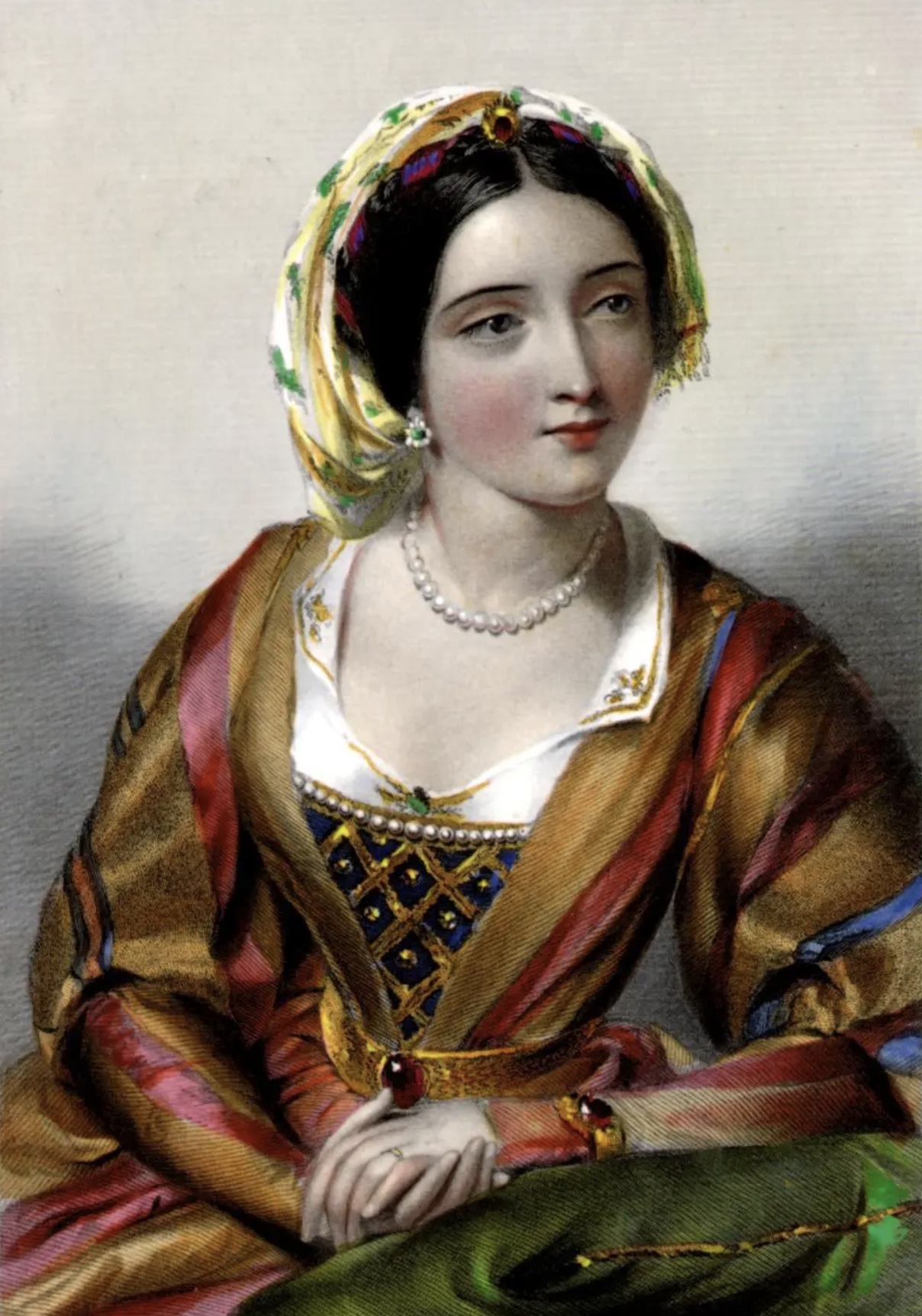
My direct ancestor, Eleanor of Castile, (1241 – 1290), wife of Edward I, a political match that developed into love. Well educated, Eleanor was a keen patron of literature and encouraged the use of tapestries and carpets in the Spanish style. She was also a keen businesswoman.
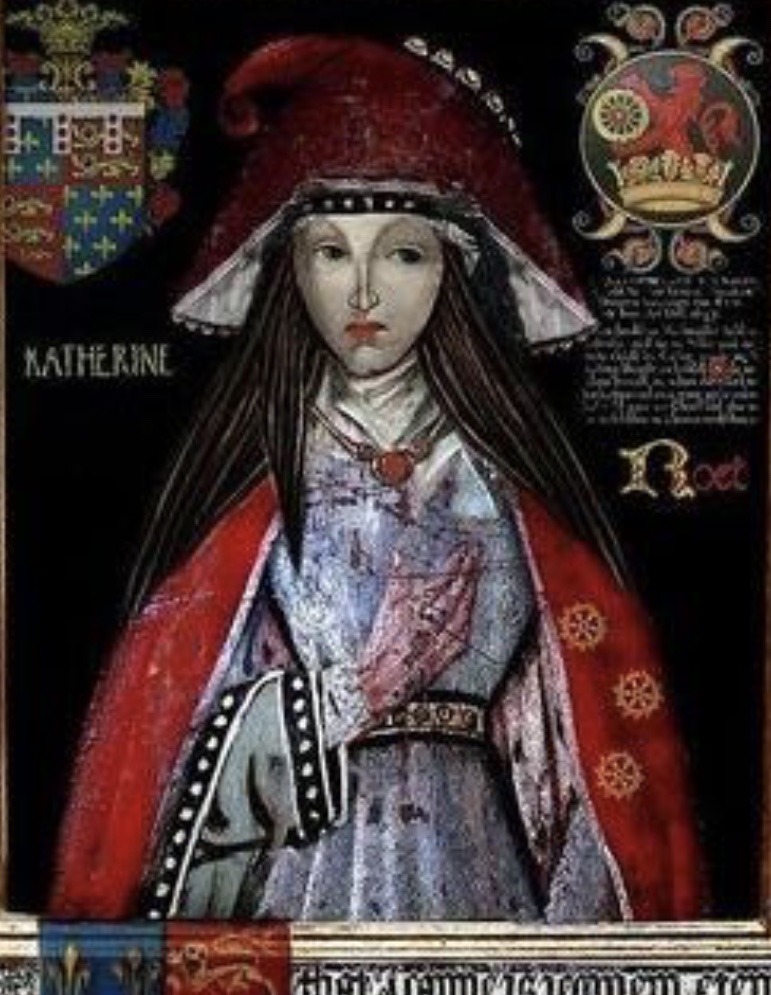
While tracing the Stradling branch of my family tree, I discovered a direct connection to Katherine Swynford, Duchess of Lancaster.
Born Katherine de Roet, Katherine is thought to be the youngest child of Paon (aka Payn) de Roet, a herald and later a knight. Her birthdate is uncertain, although some sources place it on 25 November 1350 in Hainaut, Belgium.
Katherine Swynford
Around 1366 at St Clement Danes Church, Westminster, Katherine married Sir Hugh Swynford. From Lincolnshire, Sir Hugh was in the service of John of Gaunt, a son of Edward III and arguably the most powerful man of his age. For Katherine, this was a political not a love match and we can only imagine her feelings as she embarked upon a new life with Sir Hugh.
As Lady Swynford, Katherine gave birth to the following children:
Blanche (born 1 May 1367)
Sir Thomas (21 September 1368 – 1432)
And possibly Margaret Swynford (born c1369), later recorded as a nun in Barking Abbey
Katherine served John of Gaunt, a charismatic, chivalric knight, as governess to his daughters, Phillippa of Lancaster and Elizabeth of Lancaster. In turn, John of Gaunt was named as the godfather of Katherine’s daughter, Blanche. At this stage it was evident that Katherine and John of Gaunt were close. In due course, that relationship became more intimate.
John of Gaunt’s wife, Blanche of Lancaster, died on 12 September 1368 of the plague. A few years later, after the death of Sir Hugh on 13 November 1371, Katherine and John of Gaunt embarked upon a love affair that produced four children out of wedlock. The children were:
John, 1st Earl of Somerset (1373 – 1410)
Henry, Cardinal Beaufort (1375 – 1447) My direct ancestor.
Thomas, Duke of Exeter (1377 – 1426)
Joan, Countess of Westmorland (1379 – 1440)
The illicit relationship continued until 1381 when it was truncated for political reasons. The ensuing scandal damaged Katherine’s reputation, and we can only imagine her feelings at losing John of Gaunt, the man she truly loved, and the gossip around court.
John of Gaunt
Another union for political reasons followed: John of Gaunt’s marriage to Constance of Castile (1354 – 24 March 1394). On 13 January 1396, two years after Constance’s death, Katherine and John of Gaunt were married at Lincoln Cathedral. Subsequently, the Pope legitimised their four children.
Katherine lived through many of the major events of the fourteenth century including the Black Death, the Hundred Years’ War and the Peasants’ Revolt. At the royal courts she met the greatest personalities of her age. While the London courts were often flamboyant and licentious she was also familiar with the pastoral aspects of Lincolnshire. Both locations must have offered a sharp contrast to her childhood in Hainaut.
When John of Gaunt died on 3 February 1399, Katherine was then styled as ‘Dowager, Duchess of Lancaster’. She outlived him by four years, dying on 10 May 1403 in her early fifties.
Katherine’s descendants were members of the Beaufort family, the name assigned to her children. This family played a major role in the Wars of the Roses when Henry Tudor, the future Henry VII, derived his claim to the throne from his mother, Margaret Beaufort, a great-granddaughter of Katherine and John of Gaunt. Furthermore, five American presidents are descended from Katherine.
Katherine has been the subject of numerous novels, including Anya Seton’s Katherine, published in 1954, and non-fiction works including Katherine Swynford: The Story of John of Gaunt and His Scandalous Duchess by Alison Weir.
Geoffrey Chaucer
A footnote to Katherine’s story. Her sister, Phillipa, married Geoffrey Chaucer, thus placing the great poet on my family tree.
As ever, thank you for your interest and support.
Hannah xxx
For Authors
#1 for value with 565,000 readers, The Fussy Librarian has helped my books to reach #1 on 32 occasions.
I’m researching the Cannes Film Festival for Damaged my latest Sam Smith mystery. The film festival began in 1939 as a response to fascism – Hitler and Mussolini had fixed the only international film festival, at Venice, in their favour.
The first movie premiered at Cannes, on 31 August 1939, was The Hunchback of Norte Dame. The followed day, Hitler invaded Poland and the festival was cancelled.
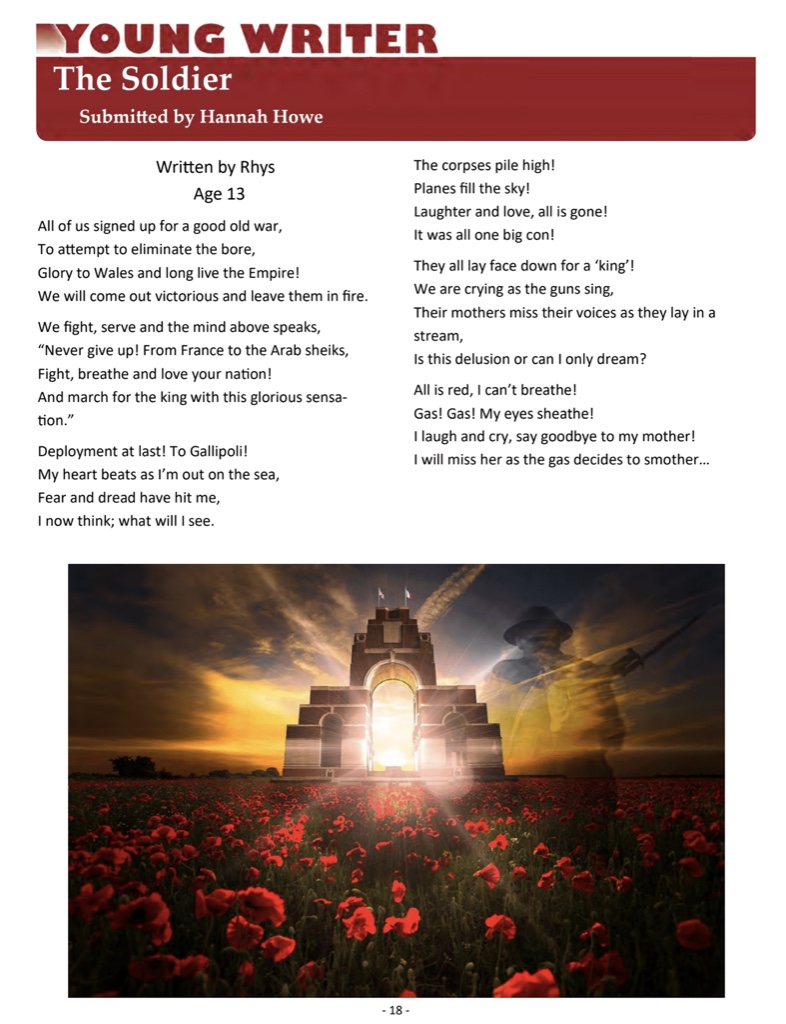
A sneak preview of Mom’s Favorite Reads’ November 2021 issue, a poem by my youngest son, Rhys. He wrote this poem from scratch in one draft.
A scene familiar to my Bristol ancestors, the Dutch House on the corner of Wine Street and High Street, 1884.
Through my gateway ancestor Barbara Aubrey (1637 – 1711) I’ve traced the Stradling branch of my family tree back to Sir John d’Estratlinges, born c1240 in Strättligen, Kingdom of Arles, Switzerland. He married a niece of Otho de Grandson and they produced a son, my direct ancestor Peter de Stratelinges, before her premature death. Later, in 1284, Sir John married Mathilda de Wauton, but the marriage produced no children.
Strättligen consisted of villages in the possession of the von Strättligen noble family, named after their home castle of Strättligburg. This family, my ancestors, ruled over much of western Bernese Oberland. Strättligburg was destroyed by the Bernese in 1332 and later generations of the Strättligens lost most of their possessions.
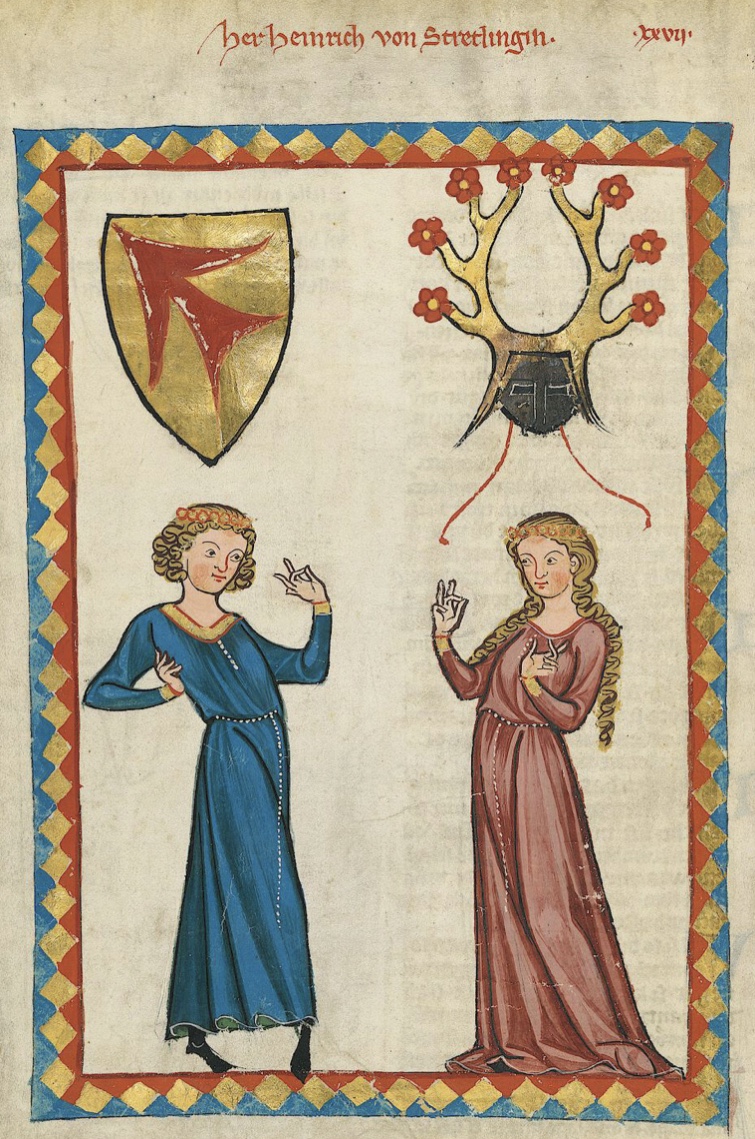
The minnesinger Heinrich von Stretlingin in Codex Manesse
(fol. 70v), depicted with the arms of the von Strättligen family.
On 20 May 1290, Edward I granted Sir John d’Estratlinges a charter for a weekly market and an annual two-day fair for the Feasts of Saint Peter and Paul, which occurred on 29 June. The fair was held at Sir John’s Little Wellsbourne Manor.
On 3 July 1290, before his departure to Palestine, Sir Otho divided his Irish lands amongst three of his living nephews, including Sir John. Sir Otho’s charter, witnessed by many nobles, granted Sir John the following:
Castle and Town of Kilfekle
Land of Muskerye
Manor of Kilsilam
Town of Clummele
On 4 May 1292, Henry de Foun quitclaimed a third of the following to Sir John de Strattelinges:
In Warwickshire: 36 messuages, 9 carucates, 9 virgates of land, 3 mills, 7 acres of wood, 15 acres of meadow, plus £51 10s of rent in Walton Deyuile, Walton Maudut, Wellsbourne, Lokesleye, Hunstanescote, Tysho and Ouer Pylardyngton.
In Oxfordshire: 1 messuage, 2 carucates of land, 1 mill, 5 acres of meadow plus £7 rent in Alkington.
In Gloucsestershire: 1 messuage and 4 virgates of land in Shenington.
Because his marriage to Mathilda produced no heir, all the de Wauton estates remained with her when she remarried. Subsequently, they were withheld from Sir John’s son, Sir Peter.
Sir John died c1294. A trusted servant of Edward I, the king cleared all of Sir John’s debts post mortem, ‘in consideration of John’s good service to him.’ Two points to note here: 1. If I had been alive at the time I would have been an opponent of Edward I, and therefore my ancestor Sir John, because of the king’s oppression of the Welsh people. 2. Even privileged nobles like Sir John ran up considerable debts. An example:
On 3 February 1294, John de Stratelinges, deceased, acknowledged in chancery that he owed Henry de Podio of Lucca and his merchants the considerable sum of £200. Edward I covered that debt.
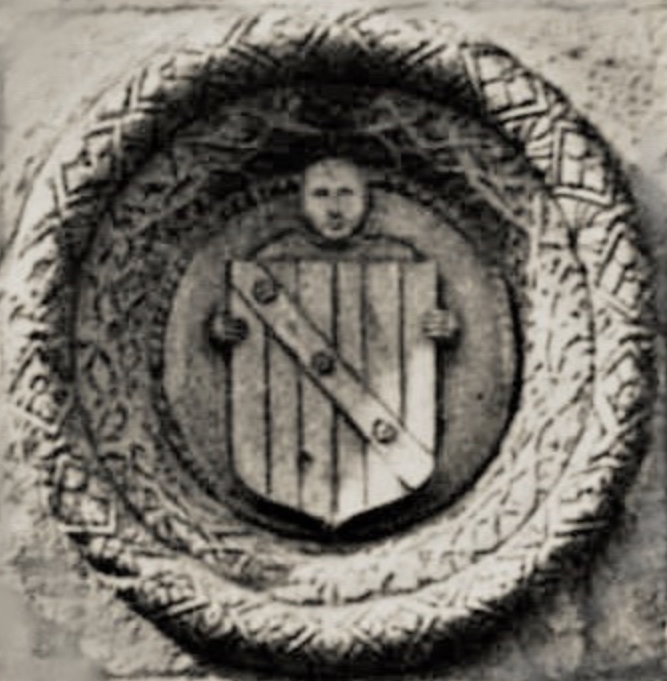
St Donats Castle Door Header. Image: Todd Gilbert, WikiTree.
Sir Peter de Stratelinges, son of Sir John, was born c1260 in Strättligen. He travelled to England with his father and in c1290 married Joan de Hawey, heiress of her brother, Thomas de Hawey. Their marriage produced two children: John Stradling and my direct ancestor Edward Stradling.
Sir Peter was governor of Neath Castle, Glamorgan, Wales. Through his wife’s inheritence, after her brother’s early death, he also obtained the following de Hawey estates:
St. Donat’s Manor, Glamorgan, Wales
Combe Hawey Manor, Somerset, England
Compton Hawey Manor, Somerset, England
Compton Hawey Manor, Dorset, England
In July 1297 Sir Peter was governor of Neath Castle when the king mandated ‘Peter de Straddeleye’ to deliver the castle to Walter Hakelute, ‘with its armour, victuals and other goods.’
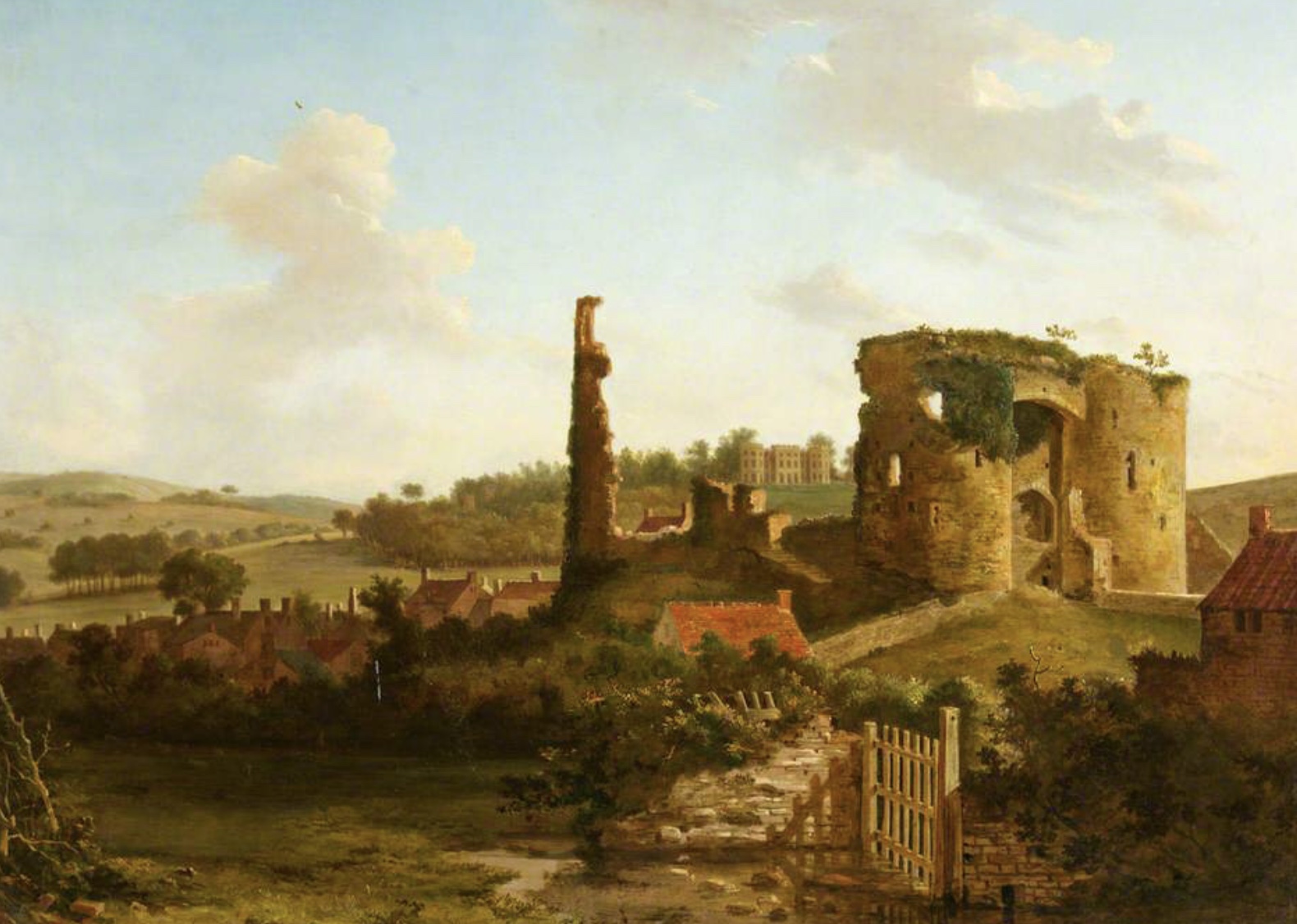
The Gnoll and Castle, Neath, 1790-1810 by Hendrik Frans de Cort.
On 1 April 1298 at Westminster, Sir Peter was nominated as attorney for the following men, who were out of the country tending to the king’s affairs:
Otto de Grandson, who had gone to the Court of Rome.
Peter de Stanye (d’Estavayer), who was ‘staying beyond the seas.’
Aymo de Carto, provost of Beverley, who had also gone to the Court of Rome.
As attorney, Sir Peter spent a considerable amount of time in Ireland, up to three years, overseeing his nominators’ affairs. He died c1300 possibly in Ireland. By this time he had acquired lands in Ireland through inheritance.
Through his wife’s inheritance, Sir Peter established the Stradlings in Glamorgan, my home county. Through marriage to other noble houses, they produced links to many of the castles in Glamorgan. It’s ironic that, in the past, I visited these castles without the knowledge that my ancestors used to reside there.
As ever, thank you for your interest and support.
Hannah xxx
For Authors
#1 for value with 565,000 readers, The Fussy Librarian has helped my books to reach #1 on 31 occasions.



























 Hannah Howe