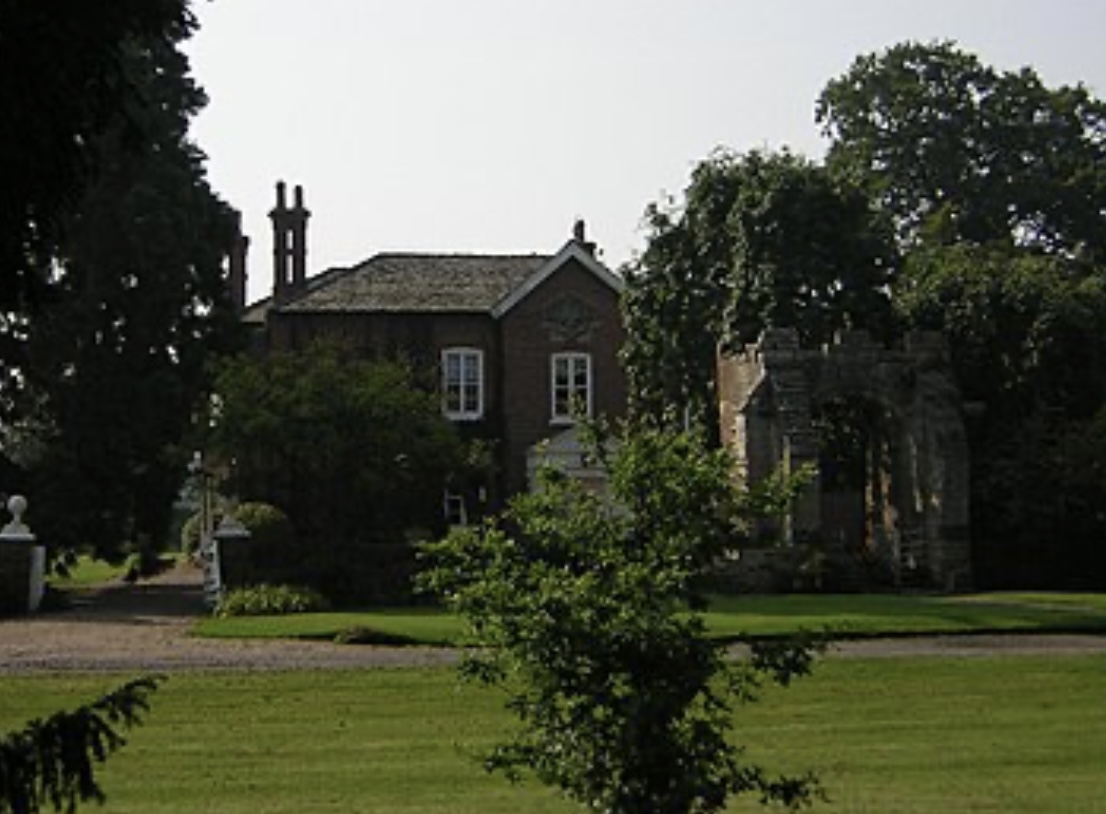
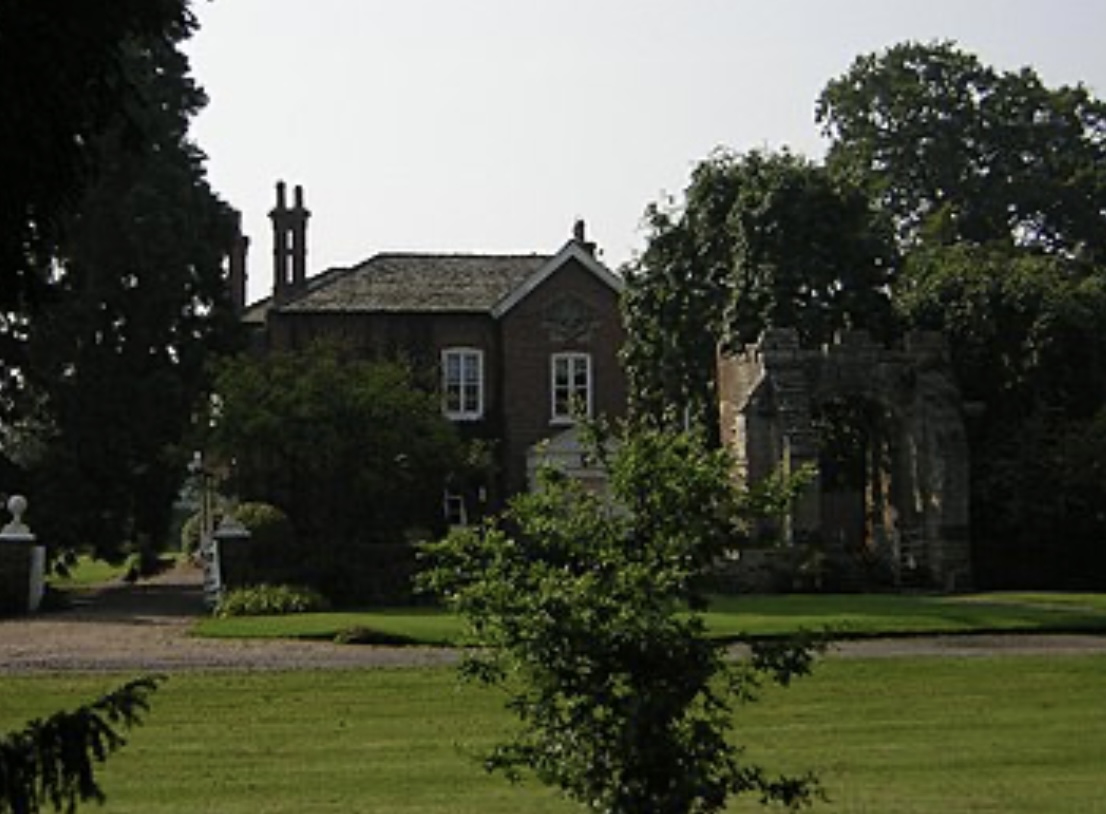
I’m researching the Lowcock branch of my family, starting with my 4 x great grandmother Ann Lowcock. Ann was born in March 1799 in Martock, Somerset to Thomas Lowcock and Ann Lawrence. However, she wasn’t baptised until 23 September 1804, also in Martock (pictured).
Why the delay? It is difficult to say. The family had strong church connections, so it is unlikely that the delay occurred on religious grounds. Maybe Ann’s mother was unwell for some time after the birth. Or maybe Ann was baptised at that time because she was unwell and not expected to survive. From this distance, we can only speculate.
Ann’s father, Thomas, was baptised on 2 November 1766 in Martock. He married Ann Lawrence on 1 March 1795, again in Martock.
Thomas was a weaver and a property owner in Martock. Weaving was undergoing a revolution in the early 1800s, and no doubt Thomas was caught up in that revolution. However, there is no evidence in the records to suggest that he was involved in, or affected by, the Luddites.
The Lowcock family enjoyed a high standing in Martock society. Ann’s brother, James, was a glove maker and a clerk at the local church. Indeed, he appeared as a witness at many weddings.
The evidence suggests that Ann enjoyed a comfortable childhood in a prosperous market town. Like most women of that era, she was illiterate. Society expected her to find a husband and raise a family, which she did. More about that next time…
* * *
For Authors
#1 for value with 565,000 readers, The Fussy Librarian has helped my books to reach #1 on 36 occasions.
Continuing the story of the Howe family, the occupants of Lilac Cottage, 1939-45.
Lilac Cottage
The third son of my 2 x great grandfather William Howe, William David Howe was born on 29 March 1892 in South Cornelly. He was the second child named William David Howe. The first, born on 10 May 1890, died on 17 May 1891 of measles. He struggled with the disease for three and a half weeks. It was common in Victorian times for parents to name their children after a deceased sibling.
In 1939, William David Howe was working at C and J Gaen’s limestone quarry, the main employer in the village. Through the quarry, he was training to become an Air Raid Precaution warden. Air Raid Precaution wardens protected people during air raids and patrolled the streets during the blackouts to ensure that no lights were visible.
William David Howe (Curtesy of Gail Kennard)
Gwendolyne Thomas, the wife of William David Howe, was born on 3 December 1892 in Bettws, Glamorgan, the third of eleven children. She married William in the early summer of 1917 when three month pregnant. In six years she gave birth to four children, two girls and two boys.
When the Second World War broke out, Gwendolyne was suffering from poor physical health due to a heart condition, and was registered as an invalid. Sadly, there was little hope that her health would improve.
William Kenneth Howe, known as Ken, the eldest son of William David Howe and Gwendolyne, was born on 13 March 1919 in South Cornelly, Glamorgan. In 1939, he was a locomotive driver. The Great Western Railway line, developed in the mid-1800s, ran through the village and would have fascinated young boys like Ken. Train-spotting, recording the numbers of the various locomotives, was a popular pastime, and many youngsters dreamed of becoming locomotive drivers. Ken fulfilled that dream.
Joan Mary Howe, youngest daughter of William David Howe and Gwendolyne, was born on 20 February 1921 in South Cornelly, Glamorgan. When the Second World War broke out, she was eighteen years old, and full of an eighteen year old’s hopes and ambitions. With her mother unwell, and her older sister married, the duties of running the family home fell to Joan. She would have to wait before starting a family of her own.
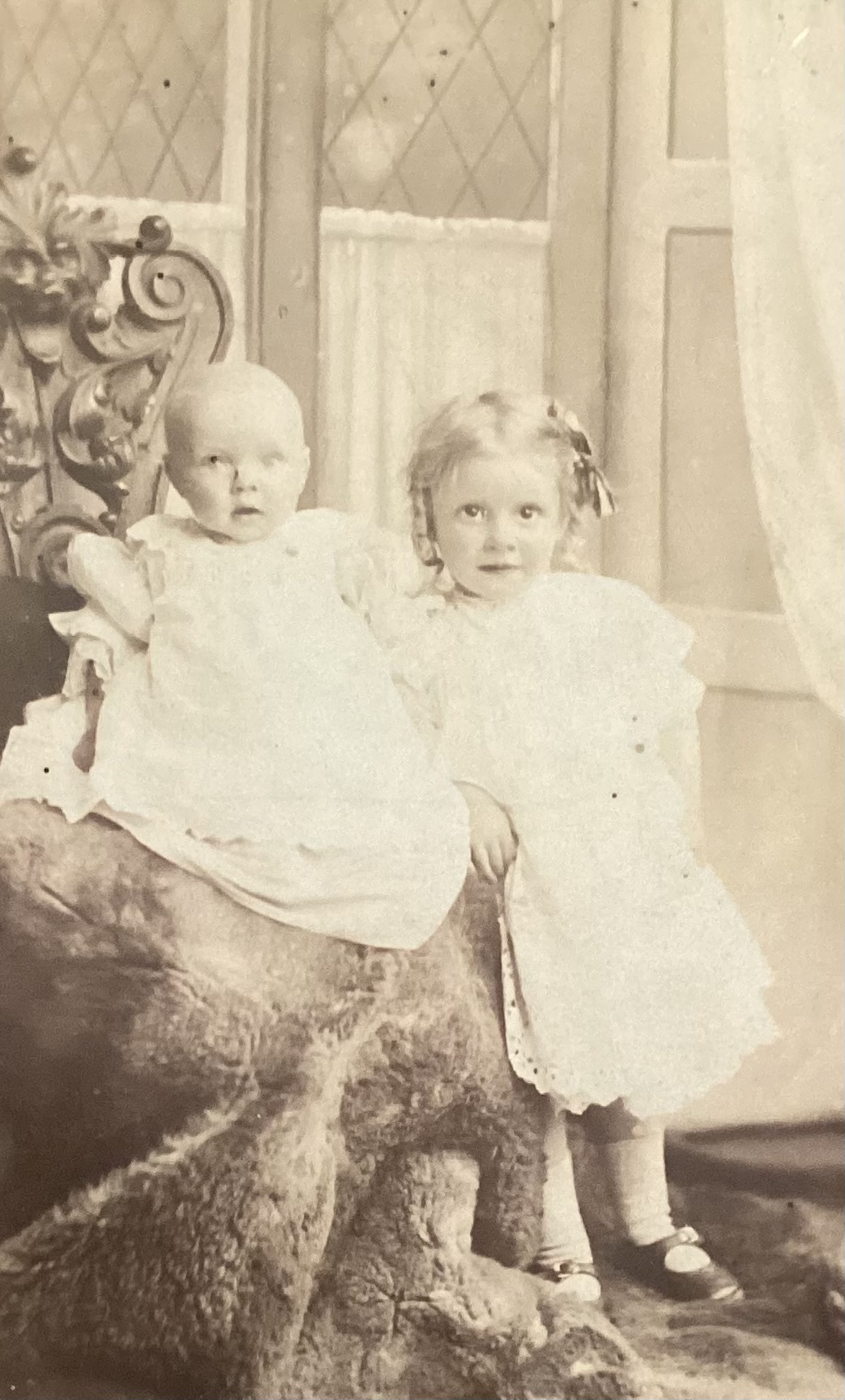
Joan and Roy (Howe family archive)
Clifford Roy Howe, known as Roy, the youngest son of William David Howe and Gwendolyne, was born on 26 May 1923 in South Cornelly, Glamorgan. Single when the war started, like his father he worked in the limestone quarry. He was setting charges, causing explosions so that his fellow workmen could quarry the limestone. However, along with his brother Ken, Roy would have been aware that soon he’d be encountering explosions on the frontline.
Family Background
In 1919, my 2 x great grandfather William Howe was unwell, so the villagers railed round and arranged a prize draw for his benefit, raising the equivalent of £2,500. The success of the draw illustrated the high esteem in which William was held within the community.
Some book news. My novel Eve’s Peace, published on 14 April 2024, is a #3 Hot New Release on Amazon’s charts in America and Britain 🙂
An audiobook version is currently in production.
My latest Golden Age of Hollywood article for the Seaside News appears on page 43 of the magazine.
For Authors
#1 for value with 565,000 readers, The Fussy Librarian has helped my books to reach #1 on 36 occasions.
When my 2 x great grandfather William Howe died on 14 May 1933 the newspapers carried the following obituary: “We regret to report the death of Mr William Howe, aged 78, of Wood View, Cornelly, who passed away on Sunday. Mr Howe was senior deacon at Cornelly Calvinistic Methodist Chapel and superintendent for many years at the Sunday School in South Cornelly. A man of Godly character and exemplary life, he was held in respect by all whom he came into contact with, and his memory will be cherish, especially by those who first learned the path of rectitude and duty at Cornelly Sunday School. He was employed for a number of years as the foreman to Mr Gaen at the quarries, and his fellow workmen were given a half day off to attend the funeral.”
The report continued with a long list of notable people who attended the funeral.
William died at Wood View, a house that remained in the family. However, he’d spent many years of his life at Lilac Cottage, South Cornelly.
For decades after William’s passing his descendants, my ancestors, continued to live at Lilac Cottage. I intend to take a snapshot of their lives, focusing on the war years, 1939-45, and tell the story of the Lilac Cottage Howes who served on the Home Front and the Frontline. It’s a tale of ordinary people, of village life, and great sacrifice. It’s a story personal to me, yet common to many people. During 1939-45, Britain was full of “Lilac Cottages” and the lives of my Howes mirrored the lives of many people who lived through this challenging time.
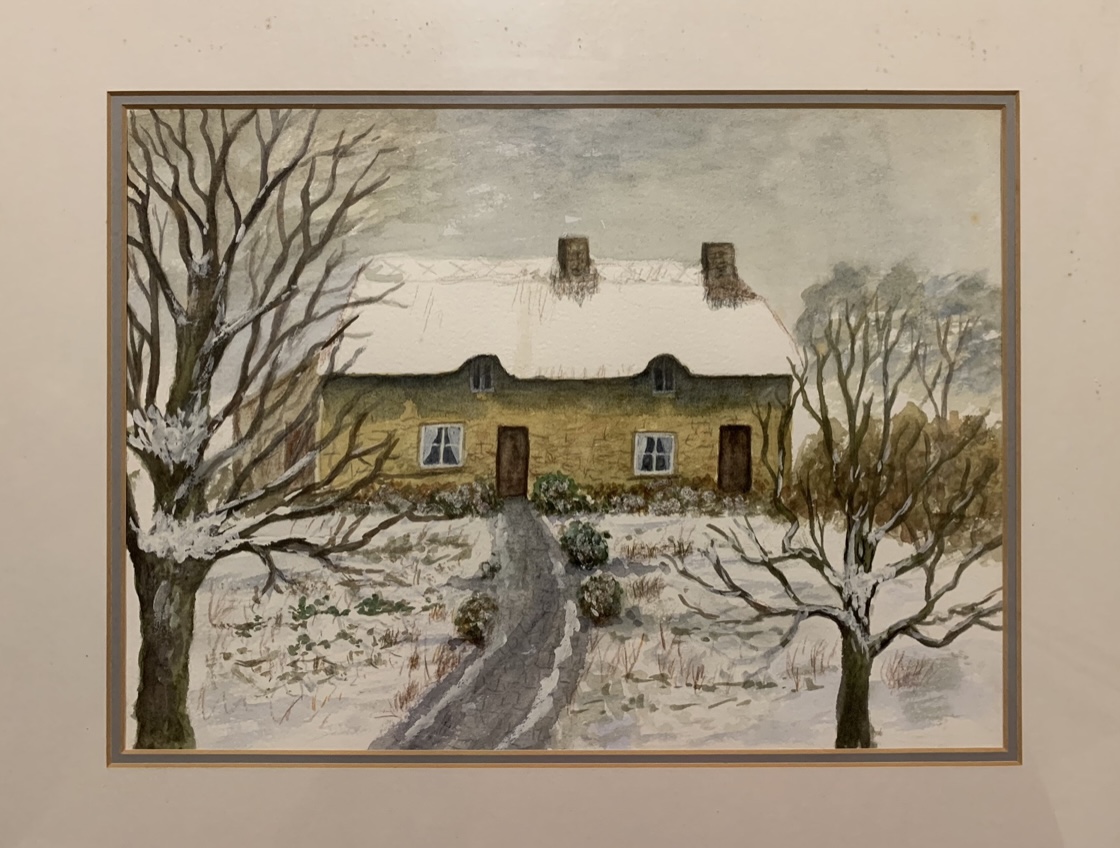
Lilac Cottage, a watercolour by Priscilla Doreen Howe
The Howes at Lilac Cottage, 1939
William David Howe – son of William Howe
Gwendolyne Thomas – wife of William David Howe
Joan Mary Howe – daughter of William David Howe
William Kenneth Howe – son of William David Howe
Clifford Roy Howe – son of William David Howe
Evan Howe – brother of William David Howe
Mary Ann Howe – sister of William David Howe
Also, Priscilla Doreen Howe – daughter of William David Howe – who in 1937 married Handel Edwards.
Living in Wood View, next door to Priscilla and Handel Edwards:
Christiana Howe – sister of William David Howe – her husband David T David, and their two children.
The cottage was divided in two with William David Howe and his family living in one part of the building and Evan and Mary Ann living in the other part.
Consider this the prologue. I will tell you more in Chapter One, next time.
For Authors
#1 for value with 565,000 readers, The Fussy Librarian has helped my books to reach #1 on 36 occasions.
In the early 1370s, as a widow with several young children to look after, my medieval ancestor Katherine de Roet faced an uncertain future. Then, John of Gaunt came to her aid. He placed her in the service of his new wife, Constance of Castile. Also, he offered direct financial support.
Meanwhile, Katherine’s sister, Phillipa, found herself a husband – none other than the poet, Geoffrey Chaucer, (pictured).
Why was John of Gaunt so generous towards Katherine? Events were about to take a dramatic turn…
In the autumn of 1372 the social status of my medieval ancestor, Katherine de Roet, increased significantly. The reason? She became John of Gaunt’s mistress.
A love affair between the couple had been on the cards for years. Now, with Katherine a widow, and despite the fact that John of Gaunt was married to Constance of Castile, he decided to act. Soon, she was pregnant, and attracting the displeasure of the royal court.
In 1373, my medieval ancestor, Katherine de Roet, mistress of John of Gaunt, was pregnant. Consequently, she retreated to her estate in Kettlethorpe.
Between 1373 and 1381, Katherine bore four children to John of Gaunt, the Duke of Lancaster: three sons and a daughter.
Katherine named her first son John, after his father. Her children carried the surname Beaufort. It’s not known why that surname was chosen. My connection to Katherine stems from the Beaufort branch of my family.
In the 1370s, John of Gaunt, the Duke of Lancaster, appointed his mistress, my medieval ancestor Katherine de Roet, as the governess to his daughters Philippa and Elizabeth. This was, of course, a ruse, so that John of Gaunt could remain close to Katherine.
Throughout her affair with John of Gaunt, Katherine kept a low profile, retreating to her estate in Kettlethorpe to give birth. For his part, John of Gaunt made sure that Katherine wanted for nothing. Clearly, he cared deeply for her. According to surviving documents, Katherine and John were good and loving parents. Indeed, the “Anonymous Chronicle” reports that Katherine “loved the Duke of Lancaster and the children born from him”.
John of Gaunt
In June 1377, King Edward III (pictured) died and the kaleidoscopic picture of the royal court turned again. In March 1378, my medieval ancestor Katherine de Roet made public her affair with John of Gaunt, Duke of Lancaster.
Thomas Walsingham wrote in his chronicle that John of Gaunt, “casting aside every shame of man and the fear of God, allowed himself to be seen riding through the Duchy with his concubine, a certain Katherine Swynford (Katherine’s married name). Walsingham added that the people were indignant and despaired because of such scandalous behavior. In his opinion, it was because of Katherine, whom he called “a witch and a whore”, that “the most terrible curses and vile insults began to circulate against the Duke”.
Incidentally, my direct link to the kings of England begins with Edward III.
The chroniclers did not approve of my medieval ancestor Katherine de Roet’s relationship with John of Gaunt. Henry Knighton wrote: “a certain foreigner Katherine Swynford lived in his wife’s house, whose relationship with him was very suspicious”.
Furthermore, the love affair disturbed members of John of Gaunt’s family, who feared its consequences. John of Gaunt himself in 1381 said that clerics and servants repeatedly warned him about the detrimental effect of his relationship with Katherine on his reputation, but he ignored them.
Considering that John of Gaunt and Katherine de Roet are my direct ancestors, I’m glad he did.
In April 1378, my medieval ancestor Katherine de Roet was joined by her sister, Philippa Chaucer, wife of the poet Geoffrey Chaucer, on her estate in Kettlethorpe. When able, John of Gaunt called on Katherine.
The chroniclers were still furious about Katherine and John of Gaunt’s love affair. They pointed out that Katherine’s income was greater than that of John’s wife, Constance of Castile.
Personal and political events were coming to a head, and they exploded with the Peasants’ Revolt of 1381.
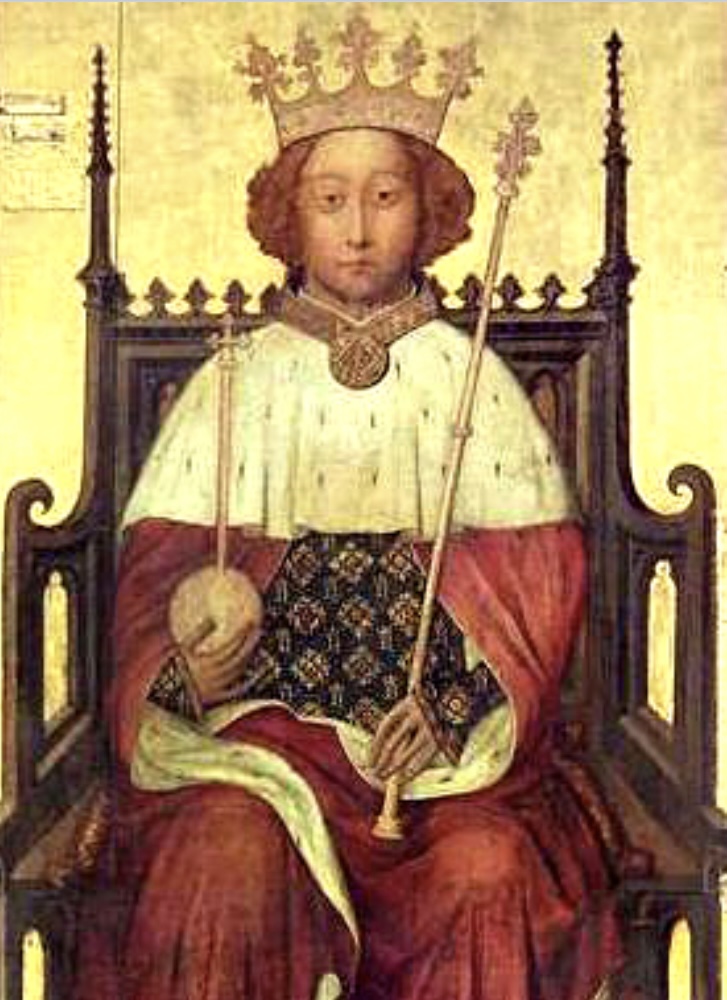
Richard II, King of England at the time of the Peasants’ Revolt
After the Peasants’ Revolt of 1381 (pictured), chronicler Thomas Walsingham stated that John of Gaunt “blamed himself for the death of [those] who had been overthrown by unholy violence” and “reproached himself for his connection with Katherine Swynford, or rather forswearing her”.
As a result, John of Gaunt ended his affair with my medieval ancestor Katherine de Roet Swynford and reconciled with his wife, Constance of Castile. One of the great romances of the medieval era appeared to be over.
In 1381, my medieval ancestor Katherine de Roet returned to her estate in Kettlethorpe (pictured, Wikipedia). She remained there for twelve years, her illicit relationship with John of Gaunt apparently over.
Then fate intervened again. John of Gaunt’s wife, Constance of Castile, died and free from his political obligations, John resumed his relationship with Katherine. To everyone’s surprise, and many noblemen’s displeasure, in 1396 he married Katherine.
Discontent amongst the nobles rumbled on. Then the Pope came to John and Katherine’s aid. He recognised their marriage as valid and legitimatised all of their children. John and Katherine’s long struggle was over. They could enjoy their autumn years together, in peace.
Concluding the story of my ancestors Katherine de Roet and John of Gaunt.
Together at last, Katherine and John no doubt entertained Katherine’s sister, Philippa, and her husband Geoffrey Chaucer. Maybe Geoffrey regaled them with his latest poems.
Katherine and John’s descendants, the Beaufort family, played a major role in the Wars of the Roses with Henry VII claiming the throne through his link to Margaret Beaufort, Katherine and John’s great-granddaughter.
Through her son John Beaufort and her daughter Joan Beaufort, Katherine became the ancestor of all English kings since Edward IV.
As ever, thank you for your interest and support.
Hannah xxx
For Authors
#1 for value with 565,000 readers, The Fussy Librarian has helped my books to reach #1 on 32 occasions.
In 1362, my medieval ancestor Katherine de Roet married Sir Hugh Swynford. This was a political marriage and there is no evidence that love existed between the couple.
Descended from an ancient English family, Sir Hugh Swynford was a professional soldier. He served John of Gaunt (pictured), which created tensions in the household because Katherine and John of Gaunt loved each other, and John of Gaunt was married to Katherine’s friend, Blanche of Lancaster. The situation had the makings of a romantic tragedy, which slowly began to unfold.
Against her wishes, my medieval ancestor Katherine de Roet married Sir Hugh Swynford. Sir Hugh was a landowner with lands in Lincolnshire, Northamptonshire, Essex and Suffolk. However, he was not an aristocrat and his income was modest compared to the lords Katherine had rubbed shoulders with at the royal court.
Sir Hugh and Katherine lived on their estate at Kettlethorpe, located twelve miles west of Lincoln. Katherine received the title Lady Kettlethorpe and with Sir Hugh active in various military campaigns, she managed the estate.
Katherine’s future was mapped out – estate manager and mother of Sir Hugh’s children. Yet, her heart still belonged to the love of her life, the unattainable John of Gaunt…
Katherine’s home, Kettlethorpe Hall (Wikipedia)
From her marriage to Sir Hugh Swynford, my medieval ancestor Katherine de Roet gave birth to a daughter, Blanche, c1363, named after Katherine’s friend Blanche of Lancaster. More children followed, including Margaret, born c1364. In 1377 she became a nun at Barking Abbey.
Sir Hugh was often away, fighting in military campaigns. Katherine, meanwhile, resided at John of Gaunt’s court. Katherine and John of Gaunt were in love, but it’s clear that Katherine respected her friend Blanche of Lancaster and her marriage to John of Gaunt. An air of Courtly Love pervaded, but how long could it last?
The Marriage of John of Gaunt and Blanche of Lancaster in Reading Abbey on 19 May 1359 by Horace Wright (1914).
While her husband Sir Hugh Swynford was away on military campaigns, my medieval ancestor Katherine de Roet cared for her children and, as nursemaid, the children of John of Gaunt and his wife Blanche of Lancaster.
Katherine and Blanche were close friends, yet due to the politics of the time, Blanche was married to the man Katherine loved, John of Gaunt.
In November 1366 the two women were pregnant at the same time. Katherine took the opportunity to move away from John of Gaunt’s household and care for her family at Kettlethorpe Hall.
*****
The period 1368 – 1371 saw dramatic changes in my medieval ancestor Katherine de Roet’s life. First, on 12 September 1368 Blanche of Lancaster, her friend and the wife of John of Gaunt, died. Then, on 13 November 1371 Katherine’s husband Sir Hugh Swynford died. The way appeared open for Katherine and John of Gaunt to marry. However, for political reasons, John of Gaunt married Constance of Castile (pictured).
Katherine was now a widow, and not a very prosperous one at that. Would she remarry, or find another way to win the affection of John of Gaunt?
As ever, thank you for your interest and support.
Hannah xxx
For Authors
#1 for value with 565,000 readers, The Fussy Librarian has helped my books to reach #1 on 40 occasions.











 Hannah Howe