Categories
Ancestral Stories

Ancestral Stories #8

Sarah Wildsmith

My 7 x Great Grandmother

Sarah and Gregory

My ancestor Sarah Wildsmith entered her thirties as a widow. She’d married at nineteen, but her husband, Philip Spooner, had languished in the debtor’s prison and died there. Could Sarah rebuild her life? Could she find a new husband?

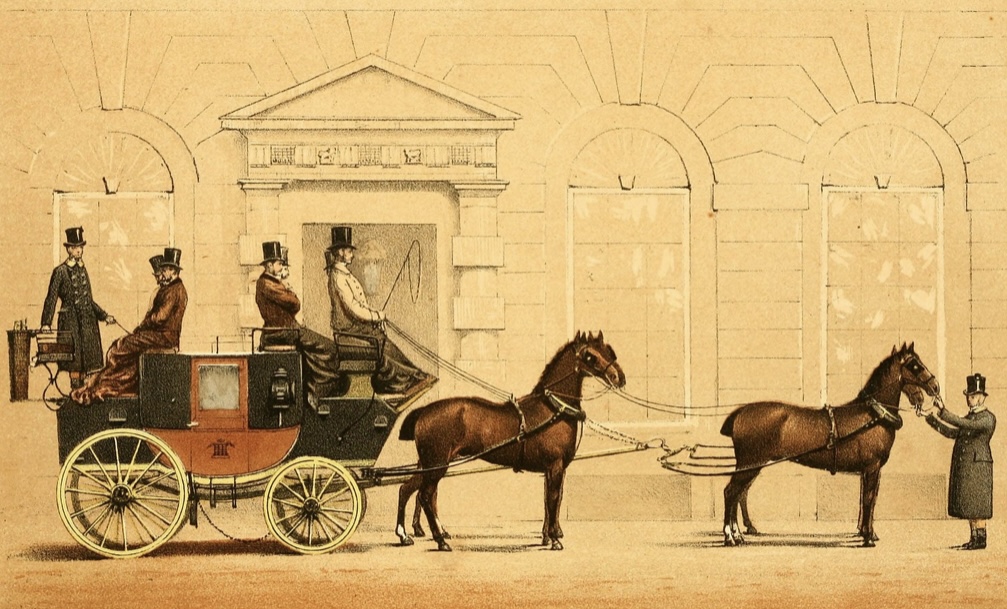
In 1731, a new man, literally, rode into town. His name: Gregory Wright. Gregory was a gentleman with a high reputation, the White Knight of the neighbourhood. He rode and tended to horses. He also ran a coaching business, transporting the citizens of London in his fine carriages. 

Gregory was Sarah’s age, thirty-one. Furthermore, he was an eligible bachelor. Gregory’s coaches ferried wedding parties. Dare Sarah dream that she could become his bride?
On 6 November 1731, my ancestor Sarah Wildsmith, as Sarah Spooner widow, married gentleman, coachman and bachelor Gregory Wright. Both bride and groom were thirty-one. The marriage was a “Clandestine Marriage”, a private affair held in the environs of the ‘Mint and Mayfair Chapel’.

After weathering natural and emotional storms during the first thirty years of her life, as the wife of a prosperous and respected gentleman, Sarah could look forward to sunnier days, and the prospect of raising a family.

While my ancestor Sarah Wildsmith settled into married life with her gentleman husband Gregory Wright, the world developed around her. In 1733 the invention of the flying shuttle revolutionised weaving, and in the same year the Sugar and Molasses Act was passed to tax British colonists in North America.

In 1739-40 the weather was extreme again with a Great Frost in Britain. Also, relevant to Gregory and his coaching business, the Hawkhurst smugglers were active in the south east of England, and highwayman Dick Turpin was hanged in 1738.

On 2 September 1737 Sarah and Gregory baptised a daughter, Mary, in St Dunstan in the West, London. Then, on 7 June 1739 Sarah gave birth to William, my 6 x great grandfather. William was baptised on 8 July 1739, also in St Dunstan in the West, London. In time, William would learn from his father and join him in the family’s coaching business.

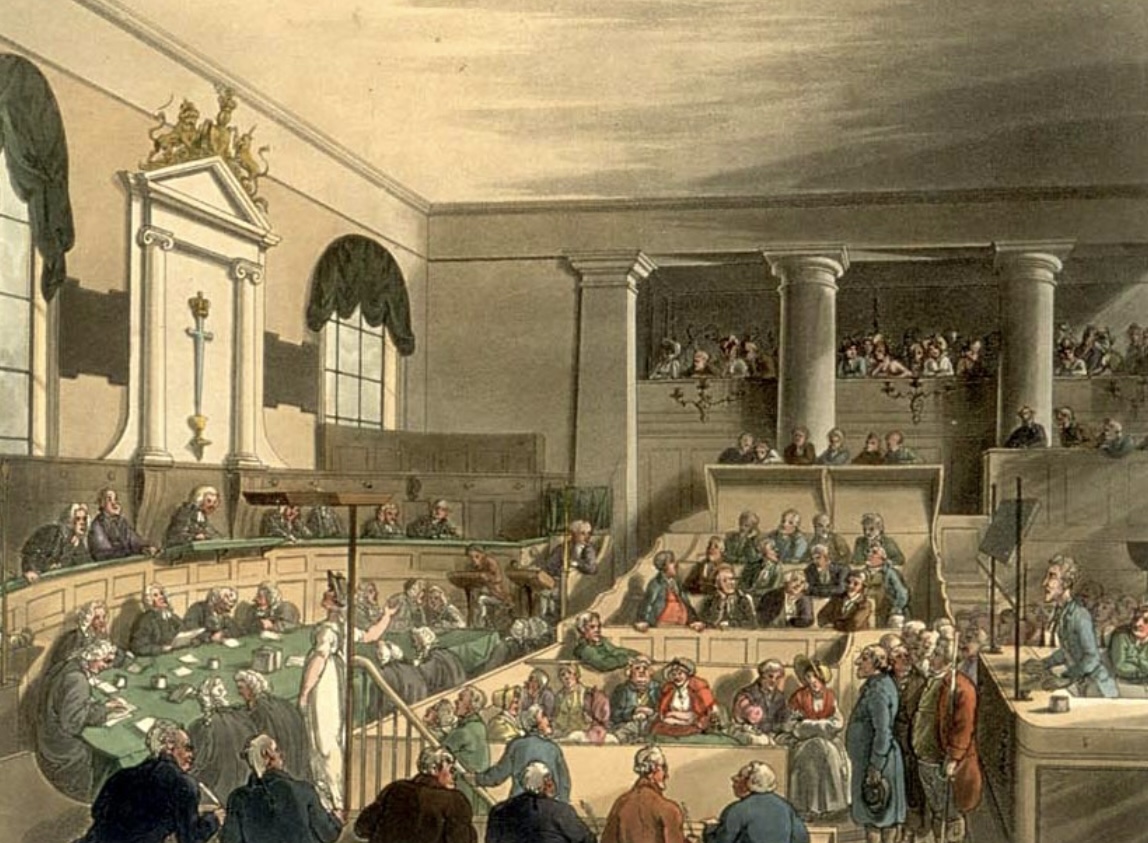
On 22 February 1752 my 7 x great grandfather Gregory Wright appeared at the London Sessions in the Old Bailey, as a witness. There, Gregory gave the following evidence.

‘Gregory Wright on his Oath Saith That On or about the Fourteenth of January Instant Two Coach Door Glasses was discovered to be Stolen out of a Coach House at the Bell and Tunn Inn, Fleet Street. Aforesaid the property of William Chamberlain, esq.’

In the court proceedings, Gregory Wright was described as a stable-keeper and coach-master living at Temple-Muse, Fleet Street, White Fryars in London.

The report continued that the thief, John Knight, tried to sell the coach glasses for twenty shillings, approximately £120 in today’s money. Knight, one of Gregory’s servants, was found guilty and sentenced to transportation.

***

A second trial, for perjury, took place on 8 April 1752 at the Old Bailey. Trials in those days were usually brief affairs, over in a matter of minutes. However, this trial received a number of witnesses and ran for some time. Details from the Old Bailey website https://www.oldbaileyonline.org/

‘Thomas Ashley, was indicted for wilful and corrupt perjury on the trial of Joseph Goddard in swearing he met Simons the Jew near Brentford-turnpike, and asked him to drink a pint of beer, that he then took hold of his beard in a joke, that the Jew held up his staff and struck him, that after that he throw’d the Jew in a ditch and scratched him in the bushes, and flung a stone which fell on his head and broke it three weeks before, Sept. 11.’

Henry Simons gave evidence through an interpreter and insisted that no one had harmed him, therefore suggesting that Thomas Ashley had committed perjury at Joseph Goddard’s trial. In his evidence, Henry Simons mentioned the Rose and Crown, an inn later owned by my Brereton ancestors.

Lettice Sergeant also gave evidence and mentioned the Rose and Crown, ‘on this side of the turnpike on Smallbury-green’. She lodged there ‘from the latter end of April to Michaelmas Day.’ She stated that Ashley was drunk, that insults were offered, but that no violence took place.

Gregory Wright gave evidence. He stated, ‘I live at the Temple-Muse, Fleet-street, White Fryars, on the 21st of August last, I set out from my house after one o’clock, for Newberry-Fair by myself, till I came on the other side Hammersmith, there Mr. Pain and Mr. Mercer overtook me; we lay at Maidenhead that night; we continued in company till we came to Newberry; upon out going between the Coach and Horses, on the other side Brentford, and the Rose and Crown Alehouse, before we came at the Turnpike, I saw one man pursuing another; we might be about two hundred yards from the Rose and Crown Alehouse; I saw it was a Foreigner by his dress, that was pursued, which made me anxious to enquire what was the matter; the man behind called out stop Thief! stop Thief! which I believe to be the prisoner at the bar; when the Jew got to us, he got between Mr. Pain’s horse and mine; the drunken man, the pursuer, scrambled up near, we kept him back, the drunken man said he is a rogue and a villain; we desired he’d tell us what he had done; he said he has drank my beer and ran away, and would not pay for it; said I if that he all, let the poor man go about his business, and what is to pay, I’ll pay it; no said he, he would not, and made a scuffle to come at the Jew; I took particular notice of the Jew, he made signs holding his hand up to his beard, we said he should desist; then he (Ashley) said to me, you have robbed me, said I if this is the case you are a villain, and if you say so again I’ll horse-whip you; we stopped him there till the Jew got near to the houses at Brentford; he was very near turning the corner where the bridge is; I believe on my oath, the Jew was at least two-hundred yards off; I turned myself on my horse, half britch, to see whether he was secure, the drunken man swore and cursed, and used many bad words; there came a woman and took hold on him, she seem’d to be his wife, she desired him to go back: he fell down, then Mr. Pain said, the man (Simons) is safe enough; the last woman that gave evidence told me nothing was the matter, that the Jew did nothing to him, he had drank none of his beer, but refused it, and that he made an attempt to pull him by the beard, with that we advanced towards the Crown Alehouse, I, and I believe Mr. Pain, stopt with me; there was the woman that was examined first, I asked her what was the matter, she said no thing at all; I said if there is anything to pay for beer that that poor Jew has drank, I am ready to pay for it; she said the Jew did no harm to the man, nor drank none of his beer.’

Question: ‘Had there been a stone throw’d?’

Gregory Wright: ‘I saw none throw’d, and believe the man was so drunk that he was not able to pursue or over-take him: I saw the woman at the door the time they were running, they crossed the road backwards and forwards; the Jew kept, it may be, fifteen or twenty yards before him, I kept my eye upon them from the first of the calling out stop thief!’

On his cross examination Gregory Wright said, ‘When we first heard the alarm, we believed the Jew might be within fifty yards of the alehouse, and the others about two-hundred yards from the Rose and Crown alehouse; that they were nearer that than the Coach and Horses; that they met the Jew about two-hundred yards on this side of the Rose and Crown alehouse; that we saw no blood or mark at all on the Jew, that he made no such complaint or sign to his head, but said my beard, and sign’d to it.’

Other witnesses agreed that although the mood was threatening no violence took place and that on the whole the community were protective of Henry Simons.

Question to Mr. Wright again. ‘How came you to know of this trial to give your evidence?’

Gregory Wright. ‘I was waiting at the door of the grand jury last sessions, to find a bill against a person (the stolen coach glasses); as I was leaning over the rails, I heard Lettice Sergeant talking about the affair of this Jew; the Jew I observed looked me out of countenance; I asked his interpreter what he look’d at me so hard for, he said he believed he knew me. The woman said she was come to support the cause of this poor unhappy man, and added, that in August last there were four gentlemen coming on the road when he was pursued, and he has made all the enquirey he can to find them out, and can’t find any of them; said I what time in August? she said the 21st; I look’d at the Jew, and saw he was the same man; I ask’d his interpreter whether he was pursued by any man, he said yes, he was; I said to the woman, I know the men, by which means I was brought to the grand jury about this affair; this bill and mine were in together.’

Question to Mr. Wright. ‘Did you, or any of you, tell this witness the drunken man had thrown the Jew into the ditch?’

Gregory Wright: ‘When this witness said so, it gave me a shock: we neither of us told him so. I saw Ashley down: there were none but women at that man’s house when we came there.’

Other witnesses, including thirteen-year-old Edward Beacham supported the testimony offered by Gregory Wright, while Martha James stated that Thomas Ashley was drunk, and that ‘I never saw a man so drunk in my life.’

Verdict: Guilty.

Sentence: Thomas Ashley, to stand once in the pillory at the gate of the Sessions House for the space of one hour, between the hours of twelve and one, and imprison’d during twelve months, after which to be transported for seven years.

This trial offers an insight into the local community, the legal system and Gregory’s character. He was protective of Henry Simons and was willing to meet any expense incurred by Simons at the inn. Gregory was obviously a kind and principled man; an ancestor to be proud of.
My ancestor Sarah Wildsmith died on 8 November 1759. Her husband Gregory Wright survived her by twenty-eight years, but did not remarry.

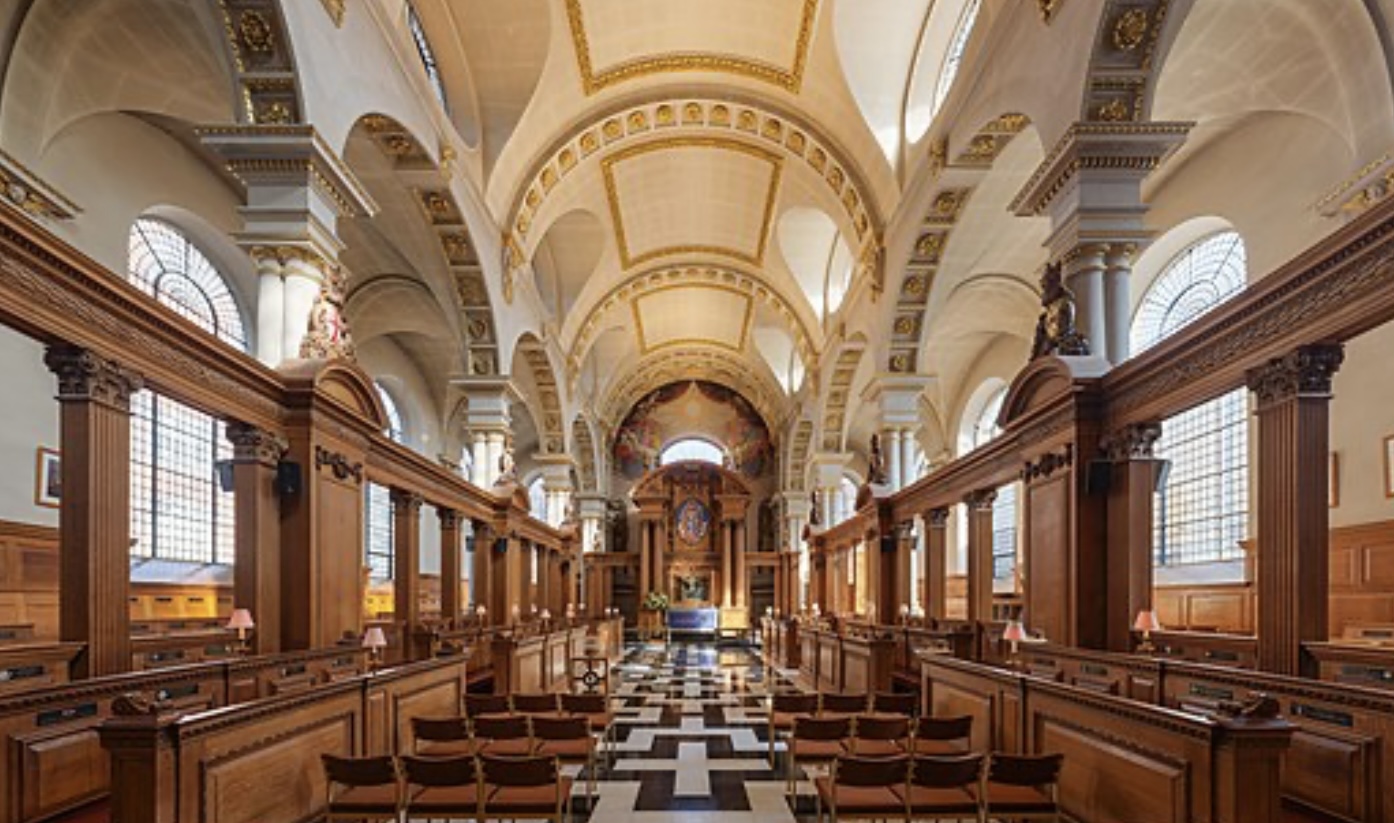
Sarah and Gregory were held in high esteem by their community, a fact illustrated by Sarah’s burial place. She was granted the privilege of being buried in the central aisle of the church, St Bride’s, Fleet Street (pictured, Wikipedia).
As ever, thank you for your interest and support.

Hannah xxx

For Authors

#1 for value with 565,000 readers, The Fussy Librarian has helped my books to reach #1 on 40 occasions.

A special offer from my publisher and the Fussy Librarian. https://authors.thefussylibrarian.com/?ref=goylake

Don’t forget to use the code goylake20 to claim your discount 🙂

Categories
Ancestral Stories

Ancestral Stories #7

Sarah Wildsmith

My 7 x Great Grandmother

Sarah’s Marriage to Philip Spooner

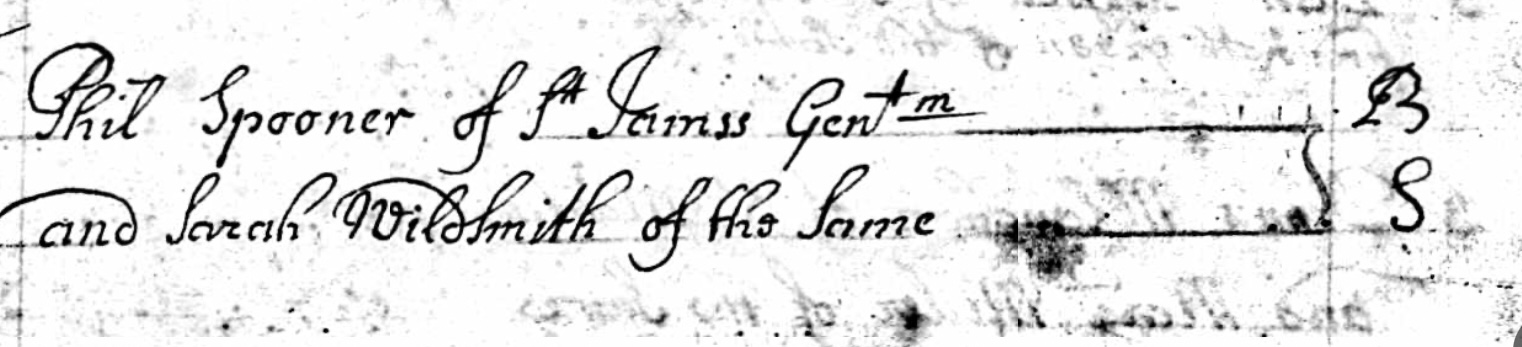
On 23 October 1719 my ancestor nineteen-year-old Sarah Wildsmith of St James’, London married twenty-four-year-old Philip Spooner, also of St James’. Sarah was from a respectable, well-to-do family, while Philip was a gentleman and a businessman. However, an air of mystery surrounded the marriage for it was a Clandestine Marriage (pictured). Why did the couple marry in such a secretive fashion?

On 23 October 1719, my ancestor Sarah Wildsmith married gentleman Philip Spooner in a Clandestine Marriage. Clandestine or Fleet Marriages took place in England before the Marriage Act of 1753. Specifically, they were marriages that took place in London’s Fleet Prison or its environs.

By the 1740s up to 6,000 marriages a year were taking place in the Fleet area, compared with 47,000 marriages in England as a whole. One estimate suggests that there were between 70 and 100 clergymen working in the Fleet area between 1700 and 1753. The social status of the couples varied. Some were criminals, others were poor. Some were wealthy while many simply sought a quick or secret marriage for numerous personal reasons.

Sarah and Philip’s marriage was recorded in the ‘Registers of Clandestine Marriages and of Baptisms in the Fleet Prison, King’s Bench Prison, the Mint and the Mayfair Chapel.’ But why did Sarah and Philip marry here? Did they wish to marry in secret, or was one of them a criminal?

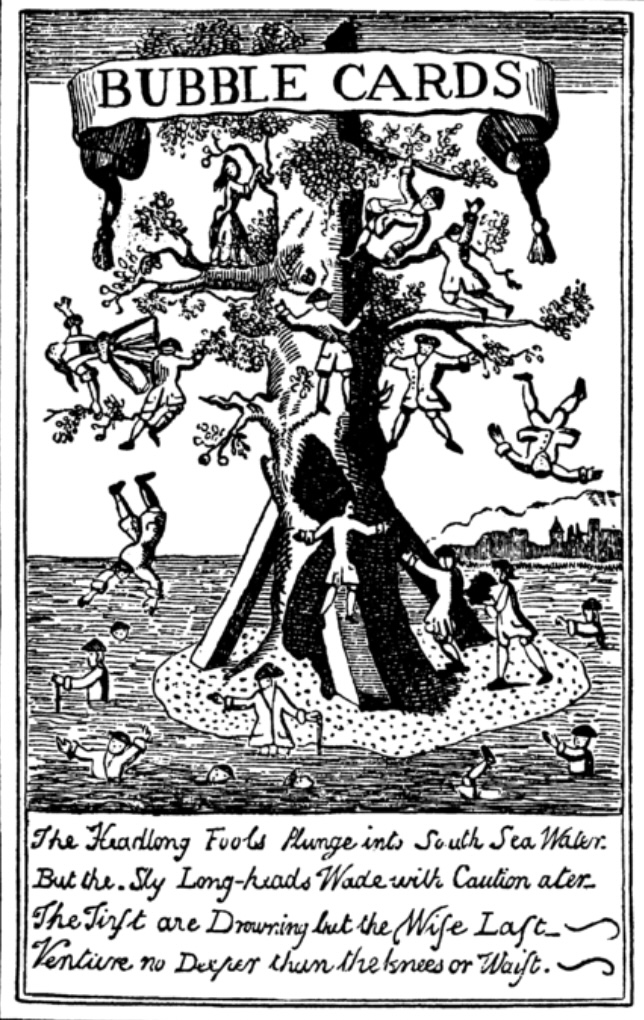
The South Sea Company was a British joint-stock company founded in January 1711. Initially, the company’s stock rose in value as it expanded its operations dealing in government debt. Then, in 1720, the company collapsed. The South Sea Bubble burst sending many investors into debt. Among them was Philip Spooner, recently married to my ancestor Sarah Wildsmith. Instead of enjoying a prolonged honeymoon, Philip found himself in the debtor’s prison, and Sarah found herself a wife in name only.

Tree caricature from Bubble Cards

In 1720, after the South Sea investment bubble burst, Philip Spooner, husband of my ancestor Sarah Wildsmith, found himself in the debtor’s prison.

Debtor’s prisons were a common way to deal with unpaid debts. Destitute people who could not pay a court-ordered judgment were incarcerated in these prisons until they had worked off their debt or secured outside funds to pay the balance. 

In England, during the eighteenth and nineteenth centuries, 10,000 people were imprisoned for debt each year. However, a prison term did not alleviate a person’s debt; an inmate was typically required to repay the creditor in full before their release.

In England and Wales debtors’ prisons varied in the amount of freedom they allowed the debtor. Through his family’s financial support a debtor could pay for certain freedoms; some prisons allowed inmates to conduct business and to receive visitors while others even allowed inmates to live a short distance outside the prison, a practice known as the ‘Liberty of the Rules.’ However, some people spent thirty years or more in prison. 

Unable to raise sufficient funds to cover his debt, Philip faced a bleak future. Sarah, meanwhile, could only rely on her parents and live in hope.

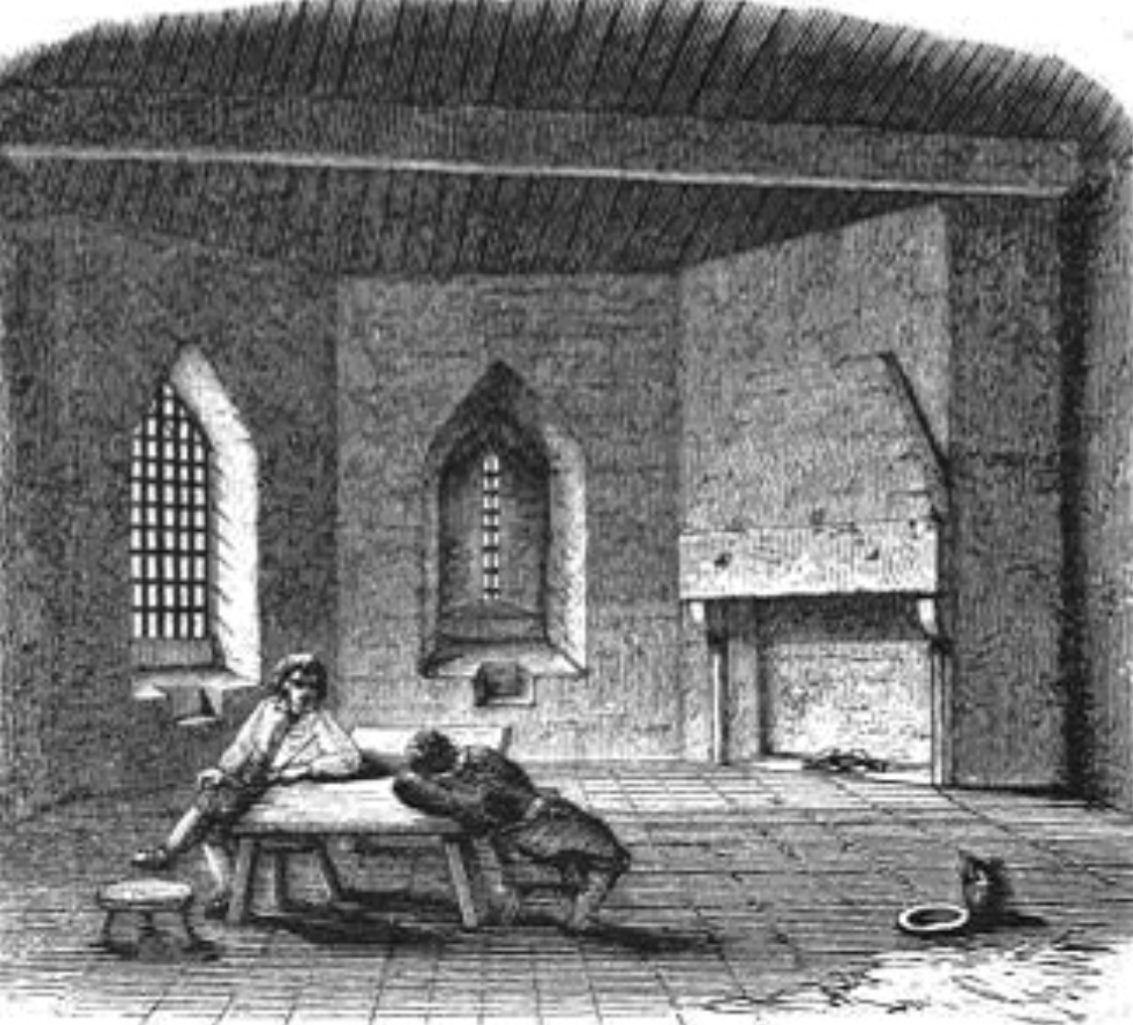
An inmate in a debtor’s prison

My ancestor, Sarah Wildsmith, faced life alone while her husband, Philip Spooner, languished in a debtor’s prison. Along with the embarrassment for the family, life in these prisons was unpleasant. Often, single cells were occupied by a mixture of gentlemen, violent criminals and labourers down on their luck. Conditions were unsanitary and disease was rife.

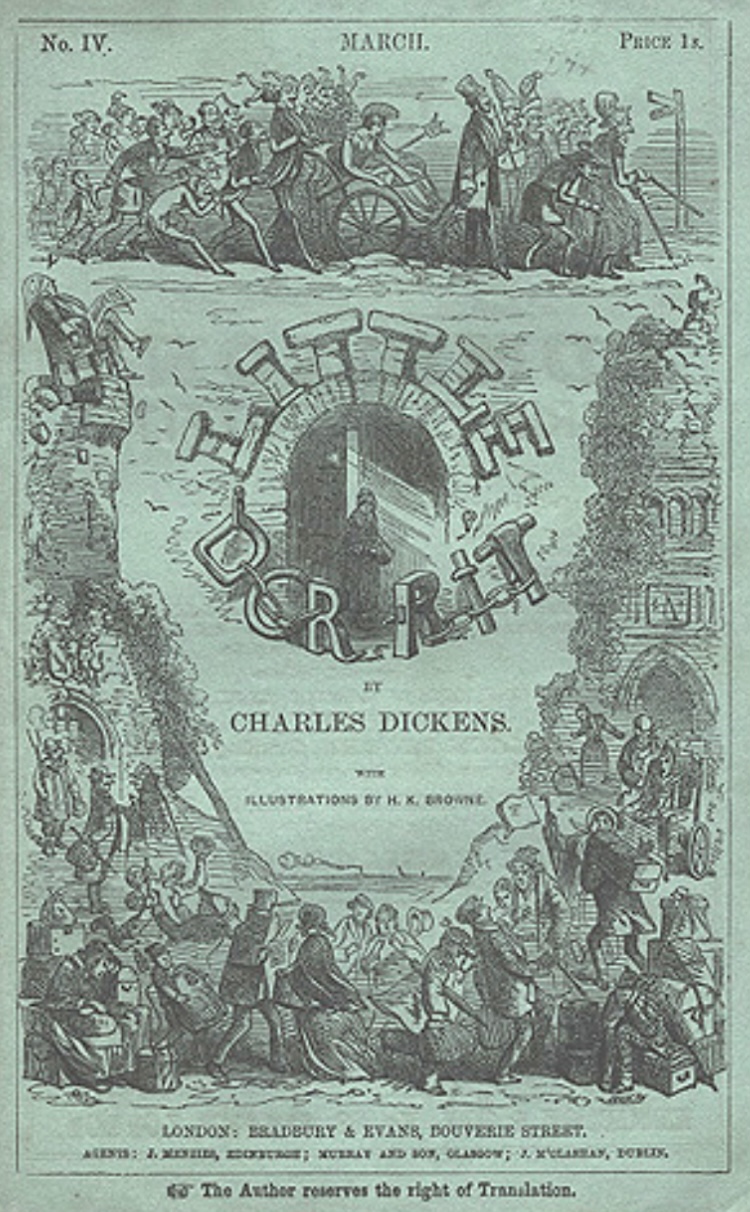
Many notable people found themselves in a debtor’s prison including Charles Dickens’ father, John. Later, Dickens became an advocate for debt prison reform, and his novel Little Dorrit dealt directly with this issue.

In 1729, Philip died, probably from gaol fever contracted at the prison. Gaol fever was common in English prisons. These days, we believe it was a form of typhus. The disease spread in dark, dirty rooms where prisoners were crowded together allowing lice to infest easily.

Alone, and in financial difficulties, Sarah had to regroup and rebuild her life. Showing great determination, she did.

As ever, thank you for your interest and support.

Hannah xxx

For Authors

#1 for value with 565,000 readers, The Fussy Librarian has helped my books to reach #1 on 40 occasions.

A special offer from my publisher and the Fussy Librarian. https://authors.thefussylibrarian.com/?ref=goylake

Don’t forget to use the code goylake20 to claim your discount 🙂

Categories
Ancestral Stories

Ancestral Stories #6

Sarah Wildsmith

My 7 x Great Grandmother

Sarah’s Childhood

Sarah Wildsmith, my 7 x great grandmother, was born in London in 1700 to William Wildsmith and his wife Mary. William and Mary were prosperous, so it’s fair to say that the Wildsmiths enjoyed a comfortable lifestyle.

Sarah was brought up in St Botolph, Aldgate. Daniel Defoe was married in the local church, so it’s possible that Sarah knew him. She certainly knew of him.

St Botolph’s (pictured) escaped the Great Fire of London in 1666, and was described at the beginning of the eighteenth century as “an old church, built of Brick, Rubble and Stone, rendered over, and … of the Gothick order”.

Three years old, Sarah Wildsmith my 7 x great grandmother, faced the Great Storm of 1703. During that storm, which occurred on 26 November (7 December on modern calendars) two thousand chimney stacks collapsed in London, Queen Anne sought shelter in the cellar of St James’ Palace, seven hundred ships were battered on the Thames, waves rose to six feet higher than ever recorded before, and five thousand homes were destroyed.

Daniel Defoe wrote about the tragic events in The Storm, published July 1704. He stated: “The tempest that destroyed woods and forests all over England, no pen could describe it, nor tongue express it, nor thought conceive it unless by one in the extremity of it.”

Sarah and her parents were in the extremity of it and, thankfully, survived.

Ships destroyed during the Great Storm of 1703

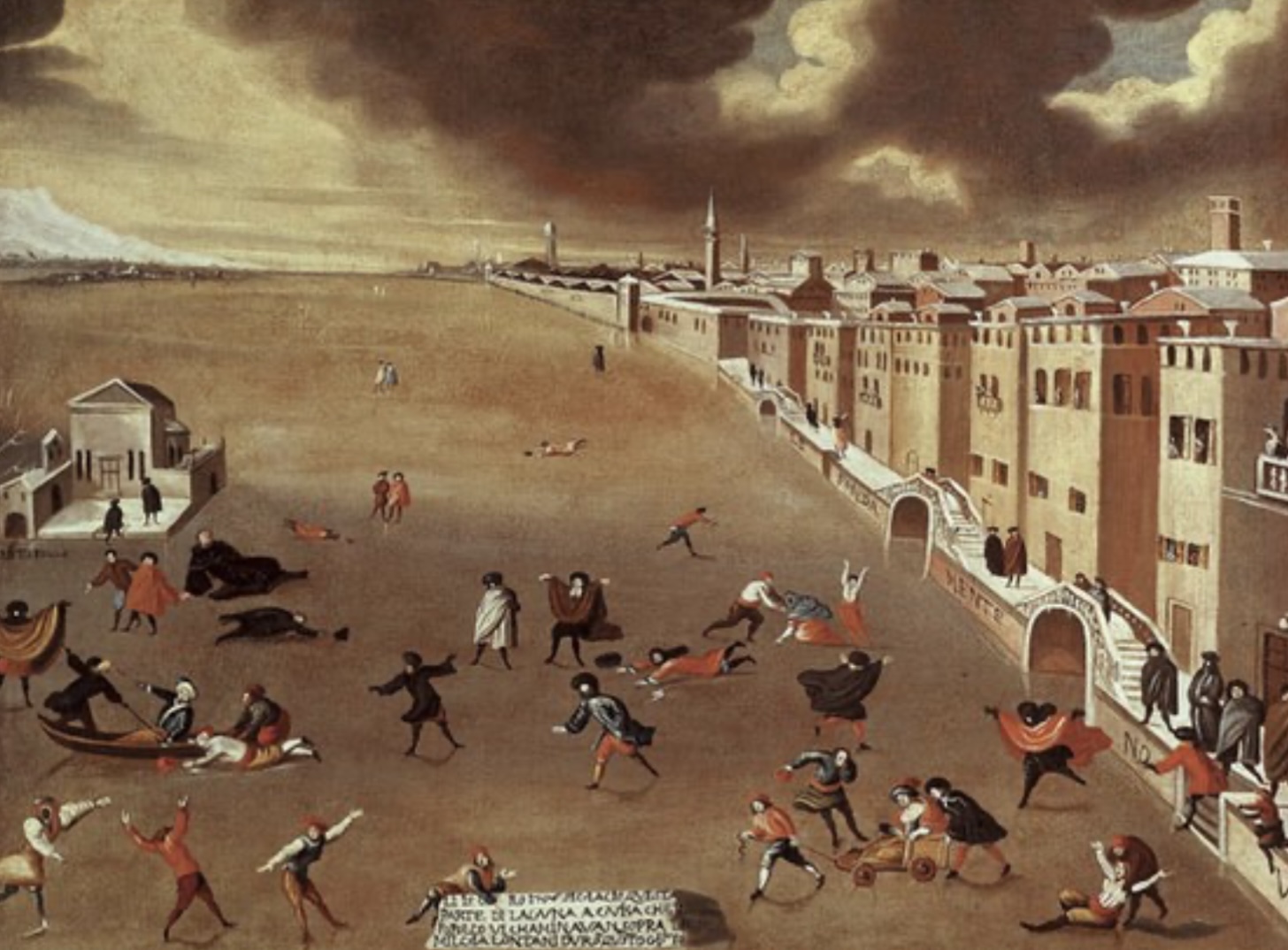
Sarah Wildsmith, my 7 x great grandmother, survived the Great Storm of 1703 when she was three. Six years later, she faced the Great Frost, an extraordinarily cold winter, the coldest in five hundred years.

William Derham, a contemporary meteorologist, wrote, “I believe the Frost was greater (if not more universal also) than any other within the Memory of Man.”

Poor harvests followed, and they led to famine across Europe and bread riots in Britain. 

Meanwhile, the Wildsmiths welcomed a new arrival into their home, Mary, a sister for Sarah.

Le lagon gelé en 1709, by Gabriele Bella, part of a lagoon which froze over in Venice, Italy

While my ancestor Sarah Wildsmith was growing up in early eighteenth century London, the world was developing around her. 

In 1705, Thomas Newcomen patented his steam engine. His invention went into effect in 1712, pumping water out of coal and tin mines.

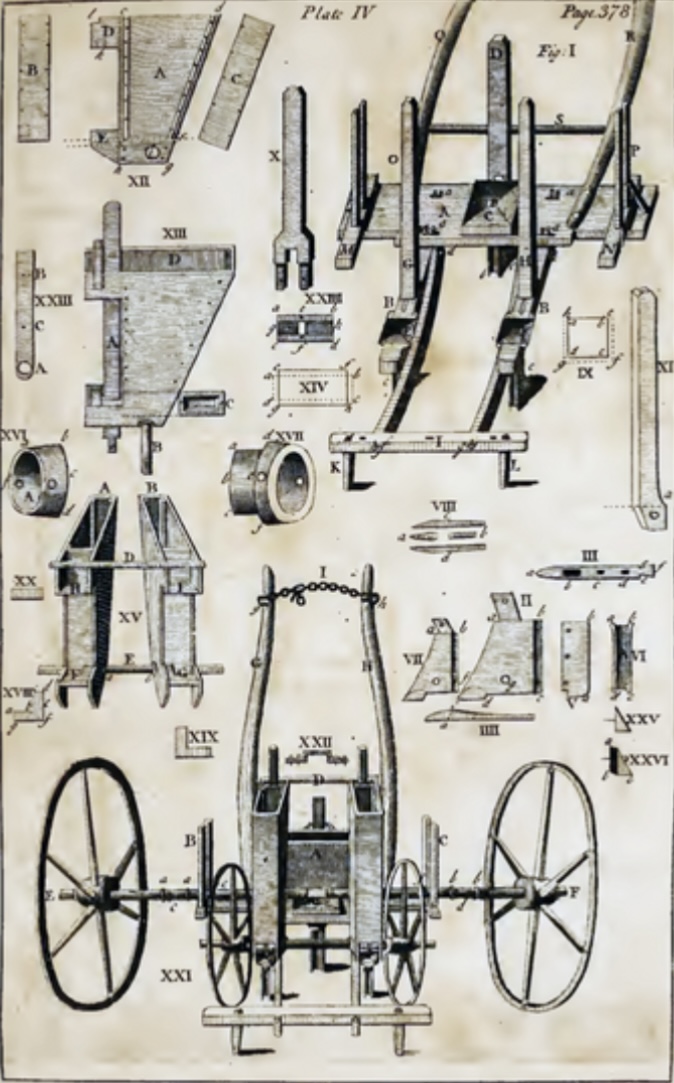
In 1714, Jethro Tull perfected his seed drill (pictured). Two hundred and sixty years later, he fronted a successful folk-rock band and wrote many memorable songs (historical joke).

In 1718, the first factory opened in Derby producing silk, and for millions of people a way of life would never be the same.

In early 1719, my ancestor Sarah Wildsmith announced her engagement to Philip Spooner, a gentleman and businessman. With marriage to a respectable man on the horizon, a sunny future for Sarah seemed assured. However, in keeping with her formative years, storm clouds were gathering, and this time Sarah would face the full impact of that storm…

Weymouth Bay with Approaching Storm, John Constable 

As ever, thank you for your interest and support.

Hannah xxx

For Authors

#1 for value with 565,000 readers, The Fussy Librarian has helped my books to reach #1 on 40 occasions.

A special offer from my publisher and the Fussy Librarian. https://authors.thefussylibrarian.com/?ref=goylake

Don’t forget to use the code goylake20 to claim your discount 🙂
Categories
Ancestral Stories

Ancestral Stories #5


Annie Wheeler

My 3 x Great Grandmother

Annie’s Forties

In the spring of 1897, my 3 x great grandmother Annie Wheeler faced another major challenge in her life – on 4 May her second husband, fifty-one-year-old Frederick Thomas Canty, was admitted to the Bow Road Infirmary (pictured, Wikipedia).

A former workhouse, Bow Road became an infirmary in 1874. Sparing no cost, architect Richard Tress incorporated into the building central heating, a dining hall measuring 100 feet by 50 feet, Siberian marble pillars, and a chapel with stained glass windows and an organ.

Frederick Thomas Canty was suffering from “delusional insanity” and an “unsound mind”. The doctors recommended that he should be transferred to an asylum.

Except for her son, Samuel, Annie’s children with James Noulton were in their teens, or older. However, Elizabeth, her daughter with Frederick Thomas Canty, was only two years old. With her family’s support, Annie soldiered on.

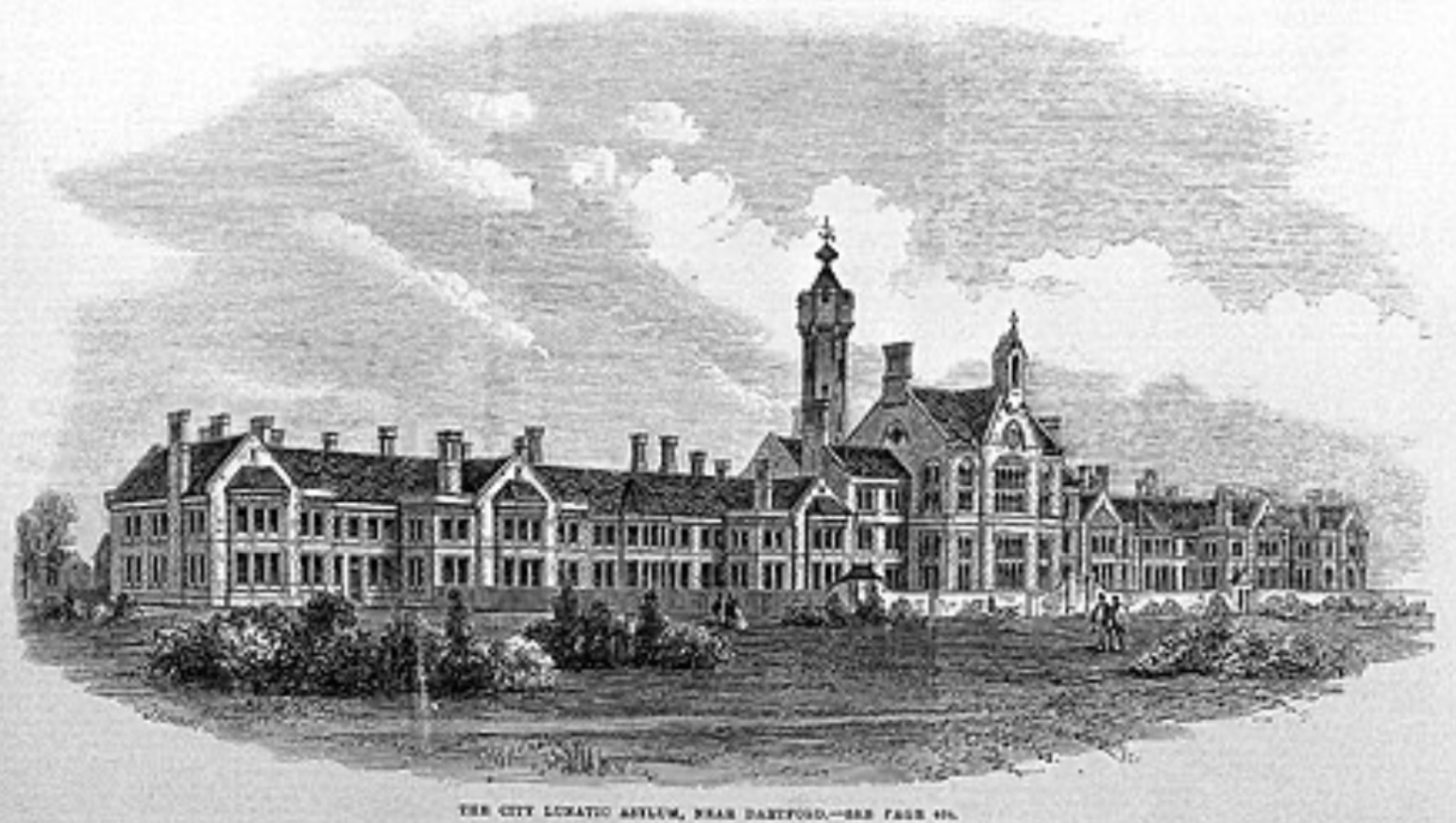
Stone House Lunatic Asylum (pictured below) was constructed between 1862 and 1866 at the behest of the London Commissioners in Lunacy to provide for destitute mentally ill patients from the London area.

On 8 May 1897, Frederick Thomas Canty entered Stone House Lunatic Asylum. He died there on 20 June 1897. For the second time, my 3 x great grandmother Annie Wheeler faced life as a widow.

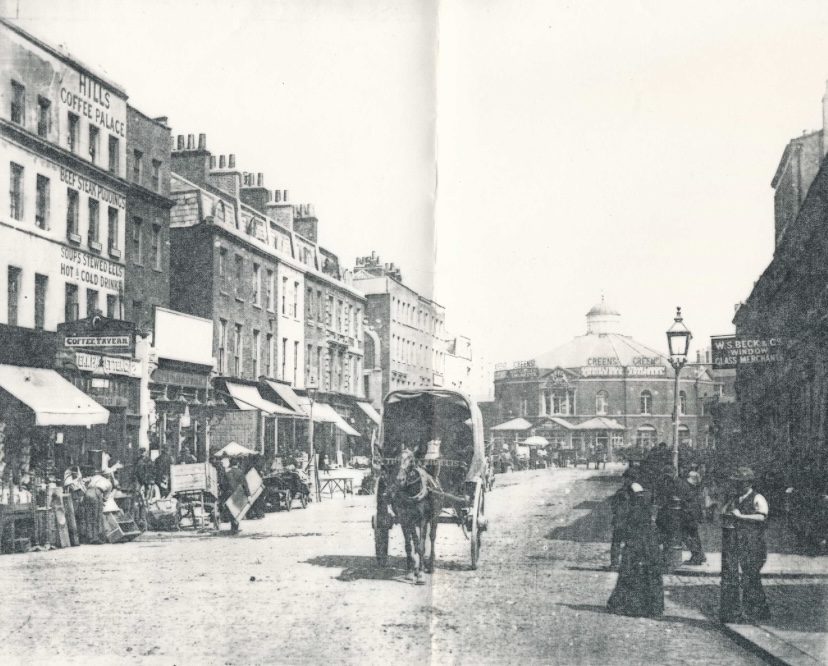
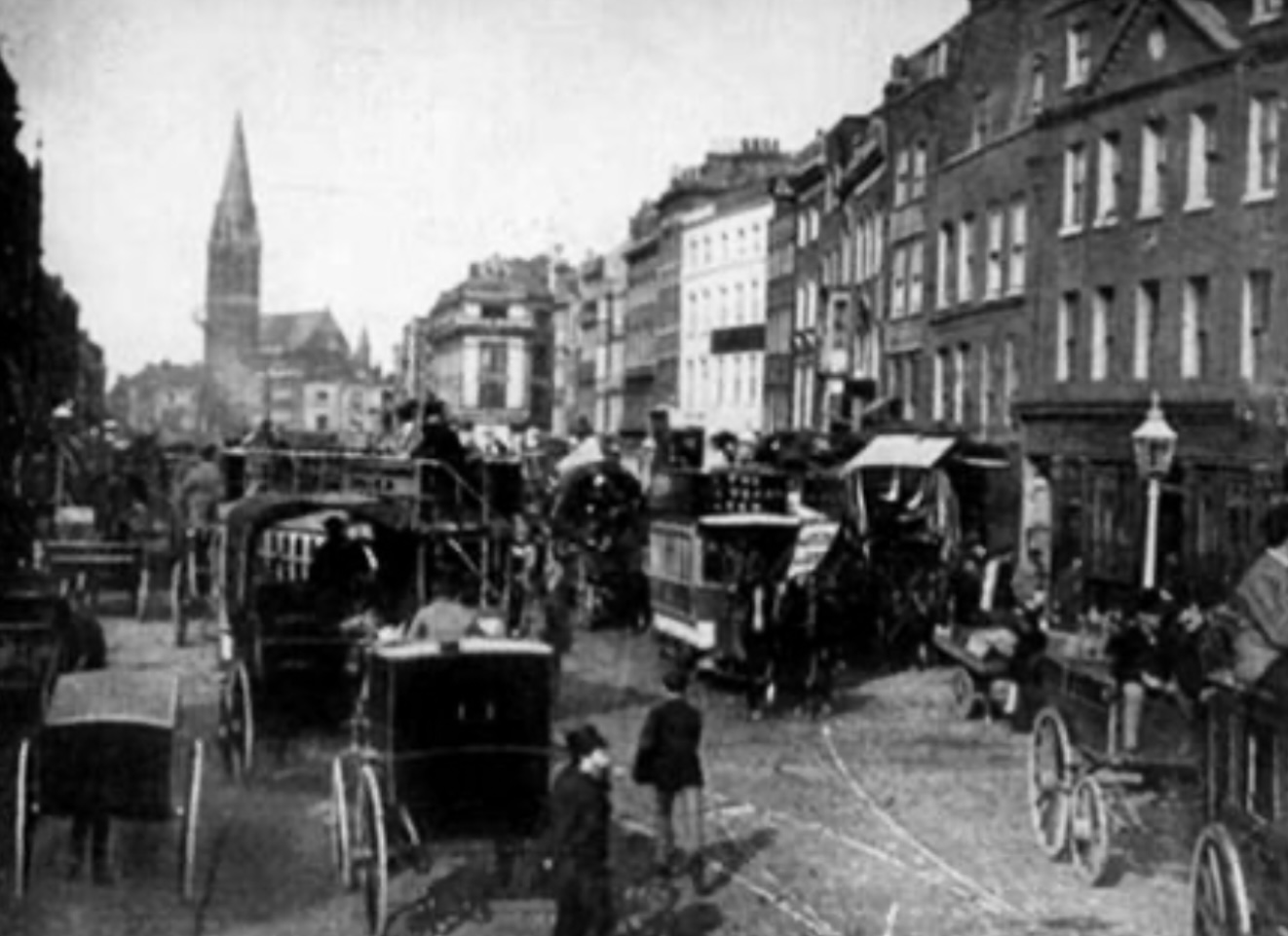
At the turn of the century, my 3 x great grandmother Annie Wheeler, forty-four, was living at 39 Neville Street, Lambeth, and working as a charwoman. Her step-son, John Canty was a gas stoker while her youngest daughter, Elizabeth, was at school. 

Three of Annie’s children with James Noulton, all young adults, also lived at the house. Charlotte ironed clothes, George laid parquet flooring while Samuel was an apprentice at the pottery. Compared to her days as a young mother in Salamanca Street, Annie’s living conditions had improved. Through hard work and determination, she’d lead the family forward.

A war veteran also lived with Annie, sixty-four-year-old George Melvin. A carpenter by trade, George served in the Coldstream Guards. From that regiment, he received nine pence allowance a day. A pittance. Impoverished, in his sixties, George was a frequent visitor to the workhouse.

Lambeth c1890

Ill-health affected my 3 x great grandmother Annie Wheeler during the early months of 1904. In late July, she collapsed, and on 27 July 1904 she died, aged forty-seven. 

An inquest and post mortem concluded that Annie had suffered from kidney and liver disease. What provoked that disease – excessive drinking or exposure to unsanitary living conditions? The coroner did not say.

When researching ancestors, it’s tempting to look at their lives through rose-tinted spectacles and think the best of them. So, I will try to be objective about Annie.

Annie was dealt a bad hand at birth, surrounded by poverty, the daughter of a ne’er-do-well father. The men she married, James Noulton and Frederick Thomas Canty, had some good qualities, but they were certainly not knights in shining armour.

Despite this background, Annie raised seven children, dragged them out of poverty. Remarkably, given the high child mortality rate in Victorian times, all her children survived. Three of her sons, Henry, George and Samuel served in the First World War with distinction (George lost his life) while her daughter Elizabeth lived to be ninety-six.

I don’t think a chronic alcoholic would have succeeded as Annie succeeded. Therefore, I’m inclined to believe that her unsanitary living conditions were responsible for her death, just as they were responsible for the death of her first husband, James Noulton. For all the successes of the Victorian era, their great failure was neglect and poverty. Profit overrode the basic needs of people.

I have a living relative who used to stay with Annie’s daughter, Annie, when she visited London. My relative speaks highly of daughter Annie. I believe this reflects well on my 3 x great grandmother Annie. 

I’m proud of Annie Wheeler’s achievements, and proud that she’s my ancestor.

As ever, thank you for your interest and support.

Hannah xxx

For Authors

#1 for value with 565,000 readers, The Fussy Librarian has helped my books to reach #1 on 40 occasions.

A special offer from my publisher and the Fussy Librarian. https://authors.thefussylibrarian.com/?ref=goylake

Don’t forget to use the code goylake20 to claim your discount 🙂
Categories
Ancestral Stories

Ancestral Stories #4

Annie Wheeler

My 3 x Great Grandmother

Annie’s Thirties

On 3 January 1887, at the age of thirty, my 3 x great grandmother Annie Wheeler gave birth to Samuel, her sixth child, and fourth son. Samuel was baptised on 19 January 1887, and the family continued to live at 25 Salamanca Street.

Meanwhile, Annie’s brother Charles lost his home in Salamanca Street due to the widening of the South-Western Railway. And the newspapers featured the following local tragedy, reported below. The women of Salamanca Street, including Annie, must have wondered if this was a future that awaited them.

In June 1888, James Noulton, husband of my 3 x great grandmother Annie Wheeler, fell ill. As well as tending to her baby, Samuel, and five other children, Annie nursed James. He was unable to continue in his job as a porter at the cement works, so the family lost his income. A hard life became even harder.

By the autumn of 1888, it was clear that James was suffering from tuberculosis, and unlikely to see the new year. 

At the age of thirty-one, and with six children to support, amongst the disease and deprivation of Salamanca Street, Annie had to contemplate life as a widow.

Salamanca Street

In the autumn of 1888, my 3 x great grandmother Annie Wheeler, her six children, and sick husband, James Noulton, moved around the corner from Salamanca Street to 12 Salamanca Court (pictured). There, Annie nursed James who was suffering from tuberculosis.

On 20 December 1888, at the age of forty, James died of tuberculosis. Annie was present at his passing. 

With a baby and five other children in the house, and no breadwinner, even the deprivation of Salamanca Street was out of Annie’s financial reach. The workhouse beckoned. Could Annie find a way to stay out of that hated institution? Could she keep her family together?

My 3 x great grandmother Annie Wheeler entered 1889 a widow having lost her husband James Noulton to tuberculosis. She found a new home, in York Street, Southwark. Doubtless, she was looking across to neighbouring Whitechapel (pictured) and wondering if Jack the Ripper’s reign of terror had come to an end, and maybe her sons were aware of the birth of professional football.

In need of funds to support her six children, Annie found work as a laundress. A survivor since birth, somehow she kept her children healthy and out of the workhouse.

While Buffalo Bill’s Wild West Show was touring Britain, on 22 May 1893, at Saint John The Evangelist, Walworth, Larcom Street, Southwark (pictured, Wikipedia), my 3 x great grandmother Annie Wheeler married her second husband, Frederick Thomas Canty. Annie’s eldest son, twenty-year-old James Noulton, was a witness.

Frederick was 46, ten years older than Annie, and a widower. He worked as a stoker at the local gas works – backbreaking work. With Annie’s six children, the couple set up home in 1 Salisbury Row, York Street. This wasn’t paradise, but after the tragedy of her first husband’s death, Annie had recovered and taken a step toward.

In September 1893, Mary Ann Campin, mother of my 3 x great grandmother Annie Wheeler, died. Mary Ann was the daughter of Charles Campin. Charles was a policeman, ironic given that Annie’s father and first husband spent time in prison for stealing.

Born in Colchester, Mary Ann gave birth to three children: Charlotte, Joseph and Annie. She lived in 12 Salamanca Court, Lambeth, the house where Annie’s first husband, James Noulton, died. The proximity to Annie’s home and the likelihood that Mary Ann helped to nurse James suggests a close family bond. 

Also in 1893, the Elementary Education (School Attendance) Act raised the school leaving age to eleven, which affected George and Samuel, Annie’s youngest sons. A further act made education compulsory for deaf and blind children, with provision for the establishment of special schools.

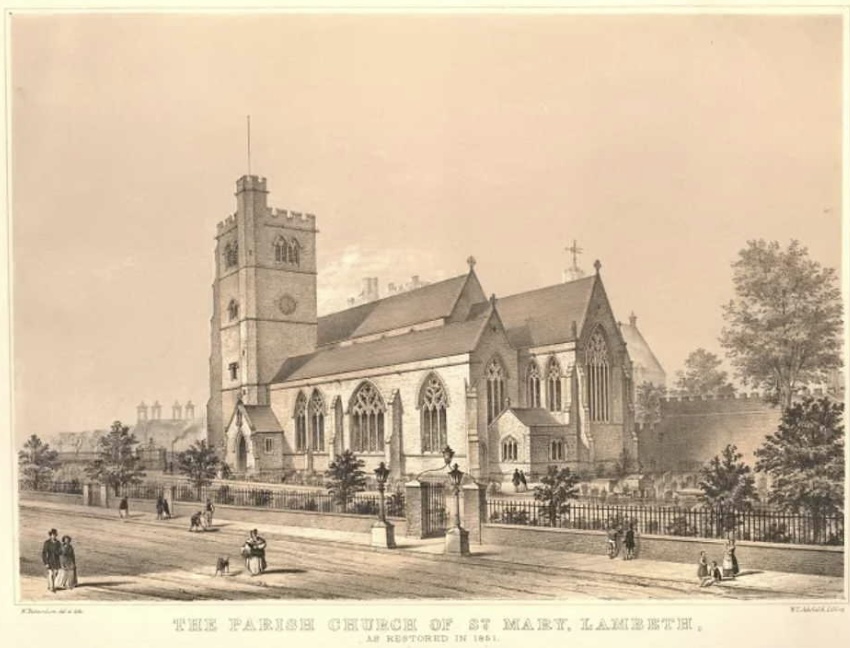
On 11 November 1894, at the age of 37, my 3 x great grandmother Annie Wheeler gave birth to her seventh child, a daughter, Elizabeth Canty. By the time of Elizabeth’s baptism, on 2 January 1895 at St Mary the Less, Lambeth, the family had moved again, to 11 Fryers Street in Lambeth. 

Also in 1894, the Royal Mail permitted publishers to print and distribute picture postcards. For those who could afford it, day trips to the seaside had become a feature of life, thanks to the expanding railway network. Collecting postcards from the seaside soon developed into a popular pastime. Annie was still living in the deprived neighbourhood of St Mary the Less, so it’s likely that such excursions were beyond her means.

The buildings opposite St Mary’s, a familiar sight to Annie 

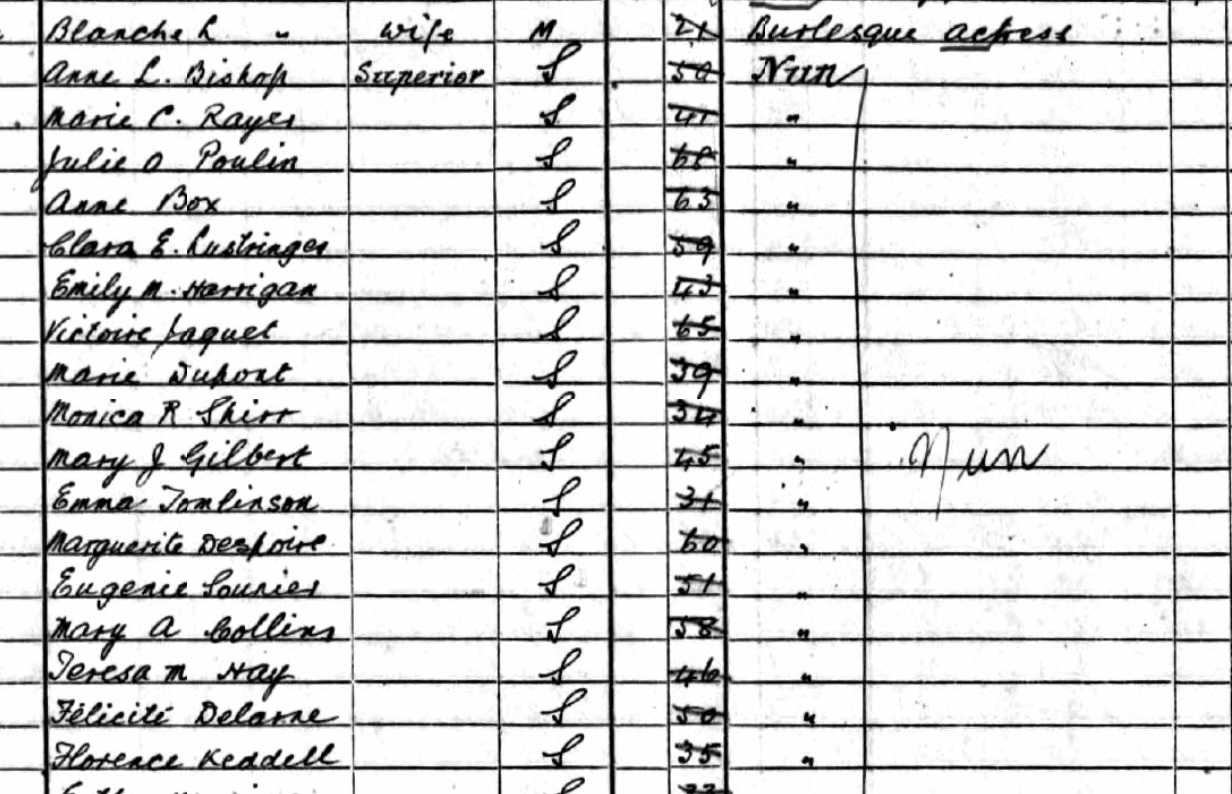
You find some wonderful things in the censuses. Lambeth, 1891, here’s a burlesque actress living next door to a convent of nuns.

As ever, thank you for your interest and support.

Hannah xxx

For Authors

#1 for value with 565,000 readers, The Fussy Librarian has helped my books to reach #1 on 38 occasions.

A special offer from my publisher and the Fussy Librarian. https://authors.thefussylibrarian.com/?ref=goylake

Don’t forget to use the code goylake20 to claim your discount 🙂