I’m researching the Lowcock branch of my family, starting with my 4 x great grandmother Ann Lowcock. Ann was born in March 1799 in Martock, Somerset to Thomas Lowcock and Ann Lawrence. However, she wasn’t baptised until 23 September 1804, also in Martock (pictured).
Why the delay? It is difficult to say. The family had strong church connections, so it is unlikely that the delay occurred on religious grounds. Maybe Ann’s mother was unwell for some time after the birth. Or maybe Ann was baptised at that time because she was unwell and not expected to survive. From this distance, we can only speculate.
Ann’s father, Thomas, was baptised on 2 November 1766 in Martock. He married Ann Lawrence on 1 March 1795, again in Martock.
Thomas was a weaver and a property owner in Martock. Weaving was undergoing a revolution in the early 1800s, and no doubt Thomas was caught up in that revolution. However, there is no evidence in the records to suggest that he was involved in, or affected by, the Luddites.
The Lowcock family enjoyed a high standing in Martock society. Ann’s brother, James, was a glove maker and a clerk at the local church. Indeed, he appeared as a witness at many weddings.
The evidence suggests that Ann enjoyed a comfortable childhood in a prosperous market town. Like most women of that era, she was illiterate. Society expected her to find a husband and raise a family, which she did. More about that next time…
* * *
For Authors
#1 for value with 565,000 readers, The Fussy Librarian has helped my books to reach #1 on 36 occasions.
Continuing the story of the Howe family, the occupants of Lilac Cottage, 1939-45.
Lilac Cottage
Born on 4 July 1885 to my 2 x great grandparents William Howe and Ann Jones, Evan Howe lived in one half of Lilac Cottage with his sister Mary Ann Howe. Like so many of the male members of the family, Evan worked in the local limestone quarry.
Working in the dusty quarry, Evan liked a drink in the evening. Indeed, on one occasion he featured in the local newspapers for drinking “shandy gaff” after hours.
Evan never married. A boxer in his youth, he was prominent in local social circles. In 1918 he was a member of a committee that presented an honour to a returning First World War soldier. Aged 54 in 1939, Evan knew that he was unlikely to be called up, and therefore would have to serve his country on the home front.
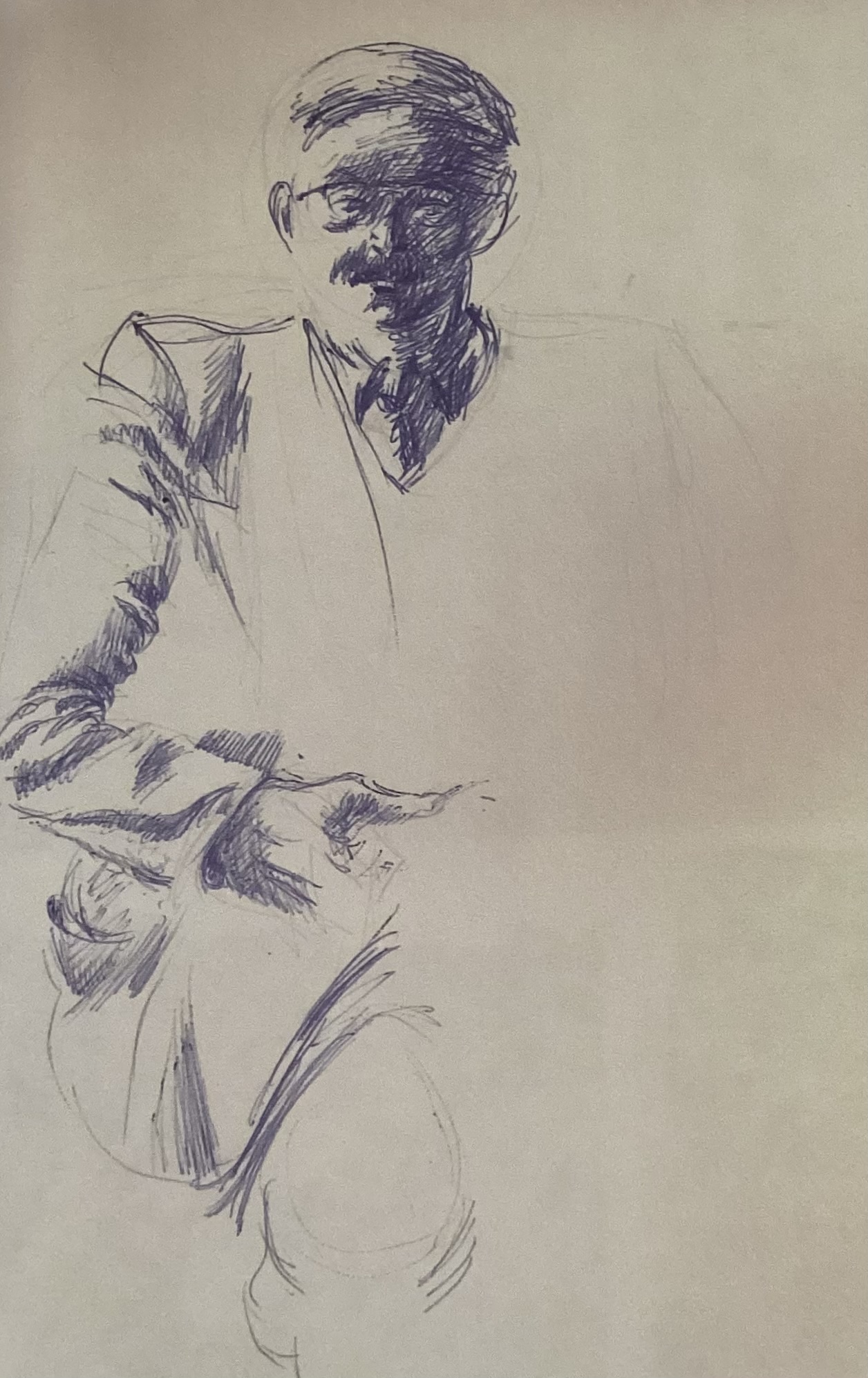
Sketch of Evan Howe, c1960, by Gail Kennard
Mary Ann Howe sister of Evan Howe was born on 2 September 1879 in South Cornelly. She was sixty when war broke out on 3 September 1939 and helped with the domestic duties at Lilac Cottage. A dressmaker in her youth, she remained unmarried throughout her life.
A possible reason for Mary Ann’s spinster status was that she lost a leg during her childhood. Family legend states that she injured her leg falling from a tree, and the surgeon amputated it on the kitchen table. This legend stems from contemporaries of Mary Ann, her brothers and sisters, so it may well contain the essence of the truth.
Mary Ann was partial to snuff and refused to touch coins. Maybe she believed that coins transmitted disease. Whatever, she insisted on paying for her goods with paper money.
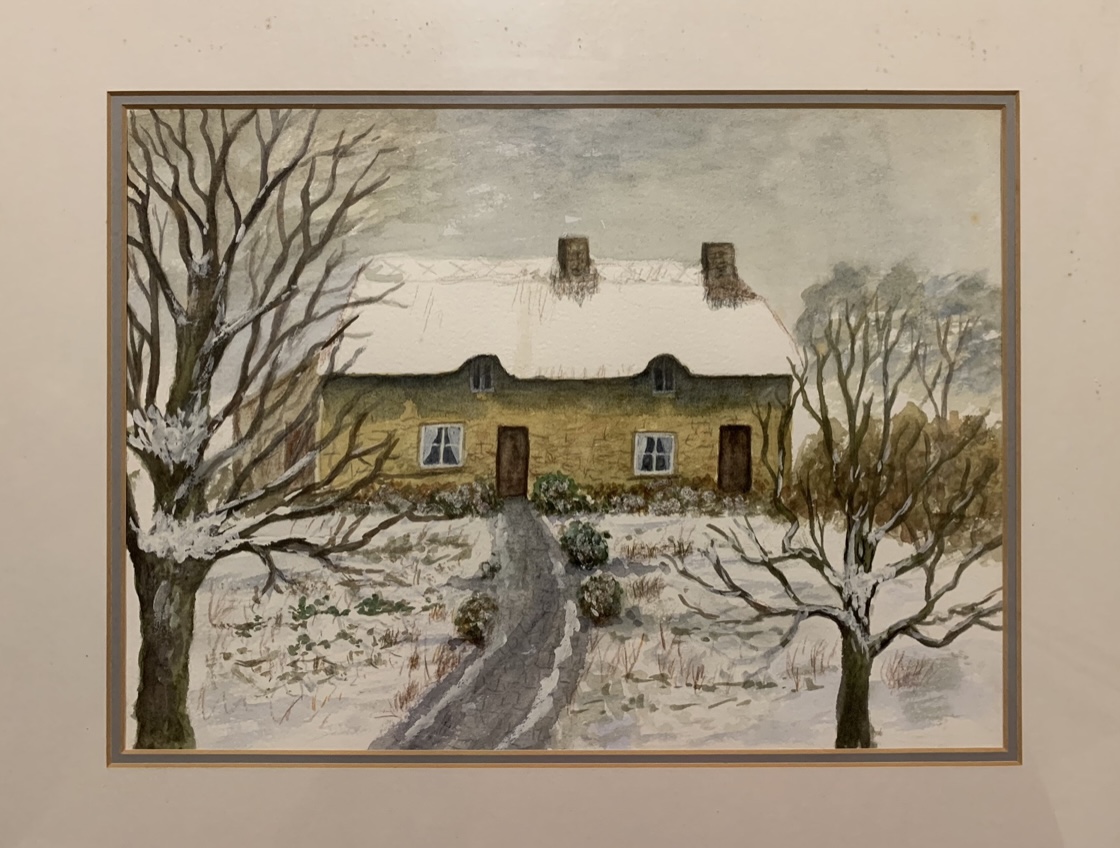
In the spring of 1937, Priscilla Doreen Howe – granddaughter of my 2 x great grandfather William Howe – married Handel Edwards and the couple lived adjacent to Lilac Cottage in South Cornelly. Priscilla was a talented artist and painted the picture of Lilac Cottage featured on this page.
Priscilla was named after her aunt Priscilla, a teenager who sadly died in 1913 during an operation.
Priscilla’s husband, Handel Edwards, was a lorry driver at the local quarry. His parents ran the New House, a popular public house in the village.
The locals gathered outside the New House, early twentieth century (Gail Kennard)
Living in Wood View, my 2 x great grandfather William Howe’s old house, and next door to Priscilla and Handel Edwards, were Christiana Howe – sister of Evan and Mary Ann Howe – her husband David T David, and their two children, Hopkin and Enid.
Born on 27 August 1881, Christiana married David T David in the autumn of 1899. She was heavily pregnant at the time, and gave birth to her first child, of nine, Thomas David on 10 February 1900.
When David T David, a strict no-nonsense man, married Christiana, he was a plate layer on the railways. Later, he became a coal hewer. By the time war broke out, David T David had improved his working status considerably – he was the foreman at a sand and gravel company that extracted sand from nearby Morfa Beach.
Christiana was noted for her kind and placid manner, and for her prefect skin, which reminded flawless even into old age.
Christiana Howe, David T David and one of their children, early twentieth century (Howe family archive)
On 4 September 1939, the day after war had been declared against Hitler’s Germany, in the local newspapers the first wedding mentioned was a Howe wedding – Hilda Maud Howe married Philip Phillips in the local chapel. Hilda was descended from my 4 x great grandparents John Howe and Christiana John.
Hilda Howe (Ancestry website)
The newspapers also featured items related to the announcement that Britain was at war with Germany – a furniture store asked its customers to call in during daylight hours, because it would close at dusk; the Bedwellty Dog and Agricultural Show was cancelled; and recruits were urgently needed for the Women’s Land Army. People went about their daily routines, but even in the first week of September 1939 those routines were changing.
For Authors
#1 for value with 565,000 readers, The Fussy Librarian has helped my books to reach #1 on 36 occasions.
In the early 1370s, as a widow with several young children to look after, my medieval ancestor Katherine de Roet faced an uncertain future. Then, John of Gaunt came to her aid. He placed her in the service of his new wife, Constance of Castile. Also, he offered direct financial support.
Meanwhile, Katherine’s sister, Phillipa, found herself a husband – none other than the poet, Geoffrey Chaucer, (pictured).
Why was John of Gaunt so generous towards Katherine? Events were about to take a dramatic turn…
In the autumn of 1372 the social status of my medieval ancestor, Katherine de Roet, increased significantly. The reason? She became John of Gaunt’s mistress.
A love affair between the couple had been on the cards for years. Now, with Katherine a widow, and despite the fact that John of Gaunt was married to Constance of Castile, he decided to act. Soon, she was pregnant, and attracting the displeasure of the royal court.
In 1373, my medieval ancestor, Katherine de Roet, mistress of John of Gaunt, was pregnant. Consequently, she retreated to her estate in Kettlethorpe.
Between 1373 and 1381, Katherine bore four children to John of Gaunt, the Duke of Lancaster: three sons and a daughter.
Katherine named her first son John, after his father. Her children carried the surname Beaufort. It’s not known why that surname was chosen. My connection to Katherine stems from the Beaufort branch of my family.
In the 1370s, John of Gaunt, the Duke of Lancaster, appointed his mistress, my medieval ancestor Katherine de Roet, as the governess to his daughters Philippa and Elizabeth. This was, of course, a ruse, so that John of Gaunt could remain close to Katherine.
Throughout her affair with John of Gaunt, Katherine kept a low profile, retreating to her estate in Kettlethorpe to give birth. For his part, John of Gaunt made sure that Katherine wanted for nothing. Clearly, he cared deeply for her. According to surviving documents, Katherine and John were good and loving parents. Indeed, the “Anonymous Chronicle” reports that Katherine “loved the Duke of Lancaster and the children born from him”.
John of Gaunt
In June 1377, King Edward III (pictured) died and the kaleidoscopic picture of the royal court turned again. In March 1378, my medieval ancestor Katherine de Roet made public her affair with John of Gaunt, Duke of Lancaster.
Thomas Walsingham wrote in his chronicle that John of Gaunt, “casting aside every shame of man and the fear of God, allowed himself to be seen riding through the Duchy with his concubine, a certain Katherine Swynford (Katherine’s married name). Walsingham added that the people were indignant and despaired because of such scandalous behavior. In his opinion, it was because of Katherine, whom he called “a witch and a whore”, that “the most terrible curses and vile insults began to circulate against the Duke”.
Incidentally, my direct link to the kings of England begins with Edward III.
The chroniclers did not approve of my medieval ancestor Katherine de Roet’s relationship with John of Gaunt. Henry Knighton wrote: “a certain foreigner Katherine Swynford lived in his wife’s house, whose relationship with him was very suspicious”.
Furthermore, the love affair disturbed members of John of Gaunt’s family, who feared its consequences. John of Gaunt himself in 1381 said that clerics and servants repeatedly warned him about the detrimental effect of his relationship with Katherine on his reputation, but he ignored them.
Considering that John of Gaunt and Katherine de Roet are my direct ancestors, I’m glad he did.
In April 1378, my medieval ancestor Katherine de Roet was joined by her sister, Philippa Chaucer, wife of the poet Geoffrey Chaucer, on her estate in Kettlethorpe. When able, John of Gaunt called on Katherine.
The chroniclers were still furious about Katherine and John of Gaunt’s love affair. They pointed out that Katherine’s income was greater than that of John’s wife, Constance of Castile.
Personal and political events were coming to a head, and they exploded with the Peasants’ Revolt of 1381.
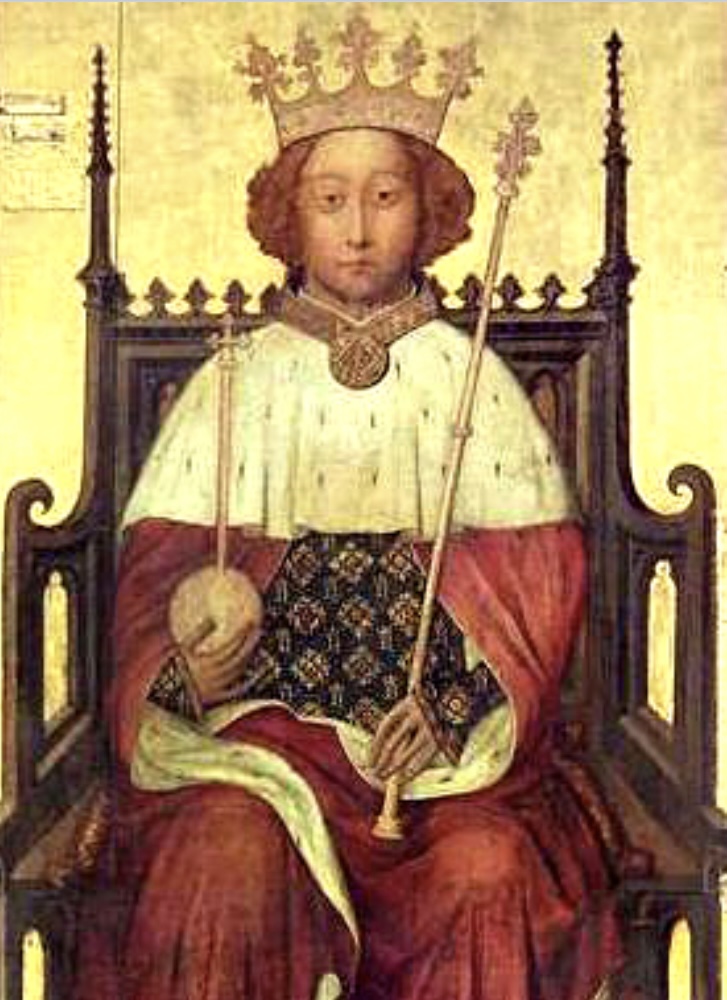
Richard II, King of England at the time of the Peasants’ Revolt
After the Peasants’ Revolt of 1381 (pictured), chronicler Thomas Walsingham stated that John of Gaunt “blamed himself for the death of [those] who had been overthrown by unholy violence” and “reproached himself for his connection with Katherine Swynford, or rather forswearing her”.
As a result, John of Gaunt ended his affair with my medieval ancestor Katherine de Roet Swynford and reconciled with his wife, Constance of Castile. One of the great romances of the medieval era appeared to be over.
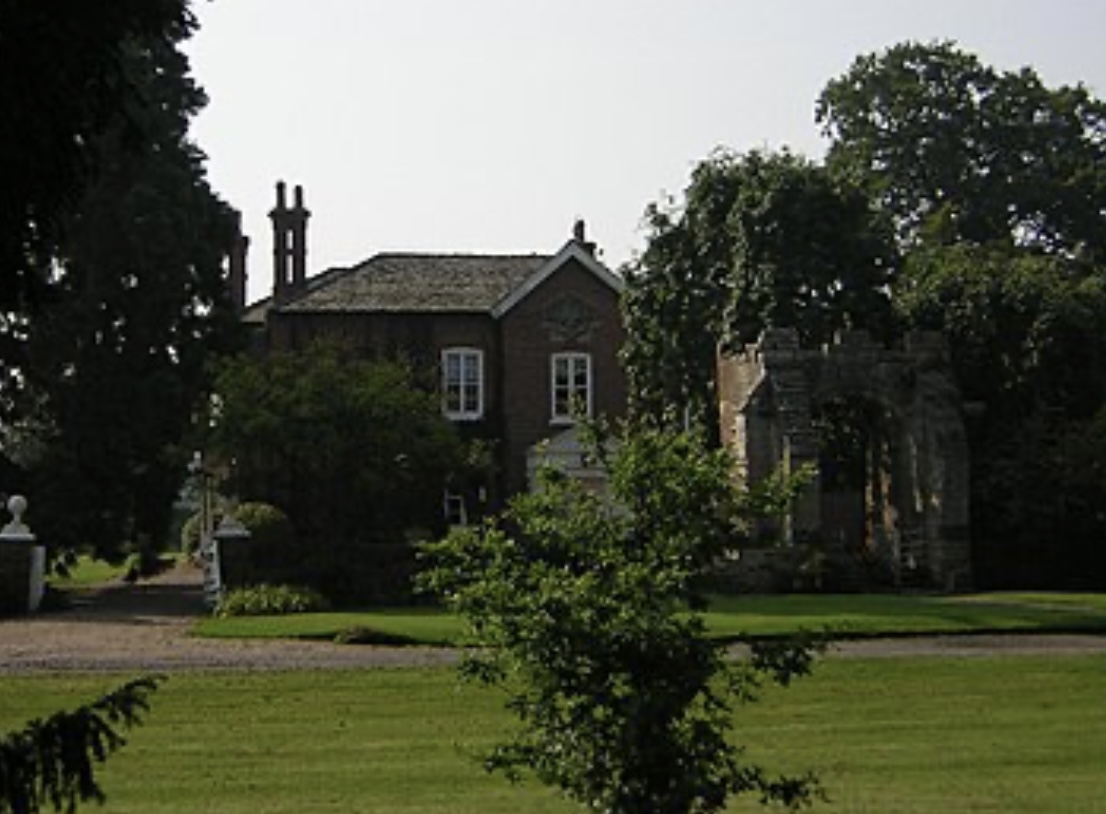
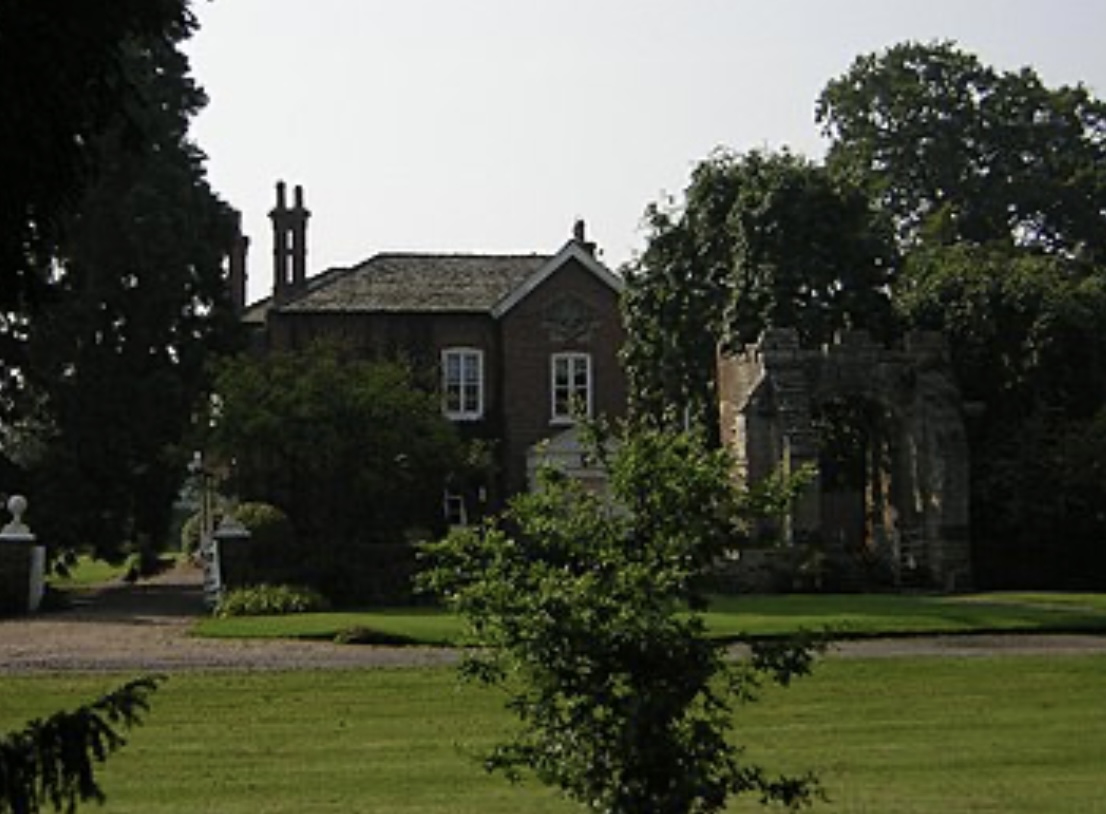
In 1381, my medieval ancestor Katherine de Roet returned to her estate in Kettlethorpe (pictured, Wikipedia). She remained there for twelve years, her illicit relationship with John of Gaunt apparently over.
Then fate intervened again. John of Gaunt’s wife, Constance of Castile, died and free from his political obligations, John resumed his relationship with Katherine. To everyone’s surprise, and many noblemen’s displeasure, in 1396 he married Katherine.
Discontent amongst the nobles rumbled on. Then the Pope came to John and Katherine’s aid. He recognised their marriage as valid and legitimatised all of their children. John and Katherine’s long struggle was over. They could enjoy their autumn years together, in peace.
Concluding the story of my ancestors Katherine de Roet and John of Gaunt.
Together at last, Katherine and John no doubt entertained Katherine’s sister, Philippa, and her husband Geoffrey Chaucer. Maybe Geoffrey regaled them with his latest poems.
Katherine and John’s descendants, the Beaufort family, played a major role in the Wars of the Roses with Henry VII claiming the throne through his link to Margaret Beaufort, Katherine and John’s great-granddaughter.
Through her son John Beaufort and her daughter Joan Beaufort, Katherine became the ancestor of all English kings since Edward IV.
As ever, thank you for your interest and support.
Hannah xxx
For Authors
#1 for value with 565,000 readers, The Fussy Librarian has helped my books to reach #1 on 32 occasions.
In 1362, my medieval ancestor Katherine de Roet married Sir Hugh Swynford. This was a political marriage and there is no evidence that love existed between the couple.
Descended from an ancient English family, Sir Hugh Swynford was a professional soldier. He served John of Gaunt (pictured), which created tensions in the household because Katherine and John of Gaunt loved each other, and John of Gaunt was married to Katherine’s friend, Blanche of Lancaster. The situation had the makings of a romantic tragedy, which slowly began to unfold.
Against her wishes, my medieval ancestor Katherine de Roet married Sir Hugh Swynford. Sir Hugh was a landowner with lands in Lincolnshire, Northamptonshire, Essex and Suffolk. However, he was not an aristocrat and his income was modest compared to the lords Katherine had rubbed shoulders with at the royal court.
Sir Hugh and Katherine lived on their estate at Kettlethorpe, located twelve miles west of Lincoln. Katherine received the title Lady Kettlethorpe and with Sir Hugh active in various military campaigns, she managed the estate.
Katherine’s future was mapped out – estate manager and mother of Sir Hugh’s children. Yet, her heart still belonged to the love of her life, the unattainable John of Gaunt…
Katherine’s home, Kettlethorpe Hall (Wikipedia)
From her marriage to Sir Hugh Swynford, my medieval ancestor Katherine de Roet gave birth to a daughter, Blanche, c1363, named after Katherine’s friend Blanche of Lancaster. More children followed, including Margaret, born c1364. In 1377 she became a nun at Barking Abbey.
Sir Hugh was often away, fighting in military campaigns. Katherine, meanwhile, resided at John of Gaunt’s court. Katherine and John of Gaunt were in love, but it’s clear that Katherine respected her friend Blanche of Lancaster and her marriage to John of Gaunt. An air of Courtly Love pervaded, but how long could it last?
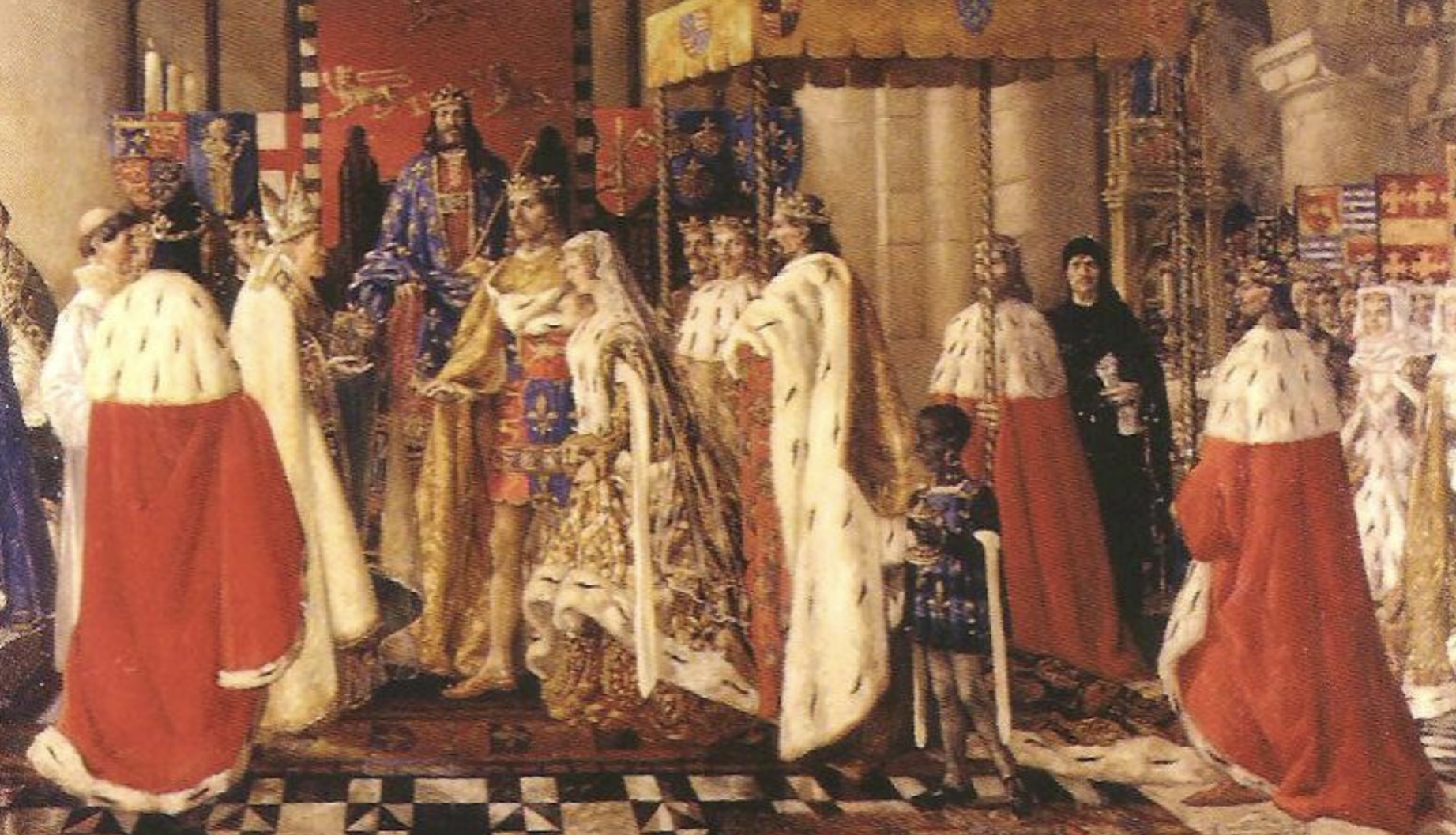
The Marriage of John of Gaunt and Blanche of Lancaster in Reading Abbey on 19 May 1359 by Horace Wright (1914).
While her husband Sir Hugh Swynford was away on military campaigns, my medieval ancestor Katherine de Roet cared for her children and, as nursemaid, the children of John of Gaunt and his wife Blanche of Lancaster.
Katherine and Blanche were close friends, yet due to the politics of the time, Blanche was married to the man Katherine loved, John of Gaunt.
In November 1366 the two women were pregnant at the same time. Katherine took the opportunity to move away from John of Gaunt’s household and care for her family at Kettlethorpe Hall.
*****
The period 1368 – 1371 saw dramatic changes in my medieval ancestor Katherine de Roet’s life. First, on 12 September 1368 Blanche of Lancaster, her friend and the wife of John of Gaunt, died. Then, on 13 November 1371 Katherine’s husband Sir Hugh Swynford died. The way appeared open for Katherine and John of Gaunt to marry. However, for political reasons, John of Gaunt married Constance of Castile (pictured).
Katherine was now a widow, and not a very prosperous one at that. Would she remarry, or find another way to win the affection of John of Gaunt?
As ever, thank you for your interest and support.
Hannah xxx
For Authors
#1 for value with 565,000 readers, The Fussy Librarian has helped my books to reach #1 on 40 occasions.
My 20 x great grandmother Katherine de Roet was born c1349. The chronicler Jean Froissart noted that Katherine was raised in Hainaut, a province in Belgium. In 1351, her father, Paon de Roet, was in the service of Margaret II, Countess of Hainaut, and caught up in a family civil war. Katherine and Paon were also caught up in the Bubonic Plague, which was sweeping across Europe.
In 1351, Margaret II’s second son, William, captured Hainaut, so Margaret and her supporters, including Paon de Roet, fled to England in the hope of securing safety, and to enlist the support of Margaret’s brother-in-law King Edward III of England. Baby Katherine travelled to England with her father.
A peace deal between Margaret II and her son William was brokered. Margaret II, Paon de Roet, and other members of the royal retinue returned to Hainault. However, Katherine remained in England because her family was in the service of Edward the Black Prince, the eldest son and heir of King Edward III and Queen Philippa of Hainaut. Through this connection, Katherine spent her childhood at the royal courts.
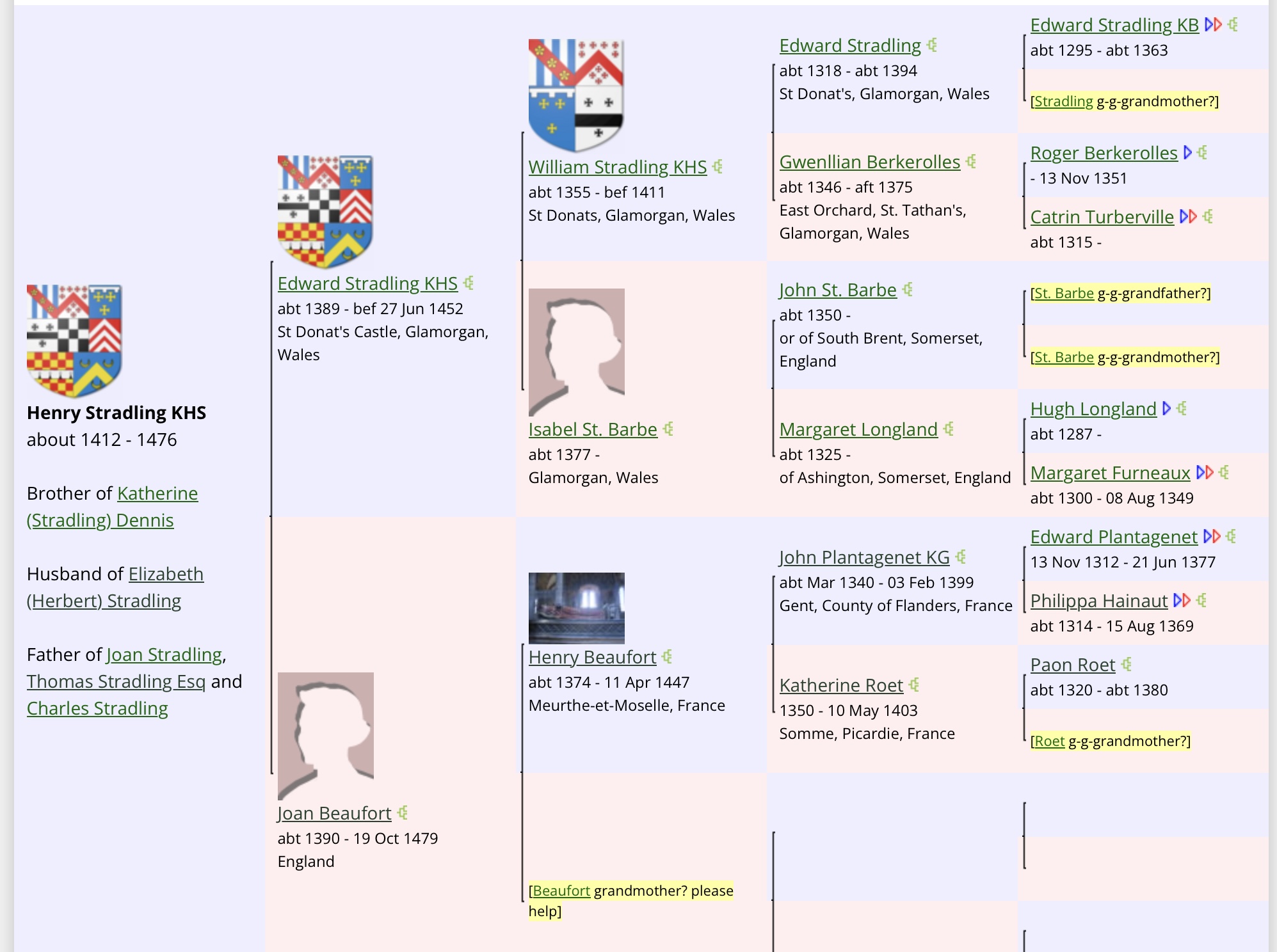
My connection to Katherine de Roet through the Stradling and Beaufort branches of my family. Graphic: Wikitree
My medieval ancestor Katherine de Roet’s father, Paon de Roet, died c1355. Her mother does not appear in the historical record and it’s probable that she also died around that date (the Bubonic Plague was rampant).
Katherine spent her childhood in the royal courts of King Edward III and his wife Queen Philippa of Hainaut. The older children of King Edward III and Queen Philippa were much older than Katherine, so she spent her time with their younger children, Mary and Margaret, and her nurse, Agnes Bonsergent.
The chronicler Jean Froissart noted that Katherine’s tutor in her youth was Blanche of Lancaster, a close relative of the King and the bride of his third surviving son, John of Gaunt. At the same time, Blanche herself, eight years older than Katherine, was brought up by Queen Philippa. Consequently, a close friendship developed between Katherine and Blanche of Lancaster.
The Marriage of John of Gaunt and Blanche of Lancaster in Reading Abbey on 19 May 1359 by Horace Wright (1914).
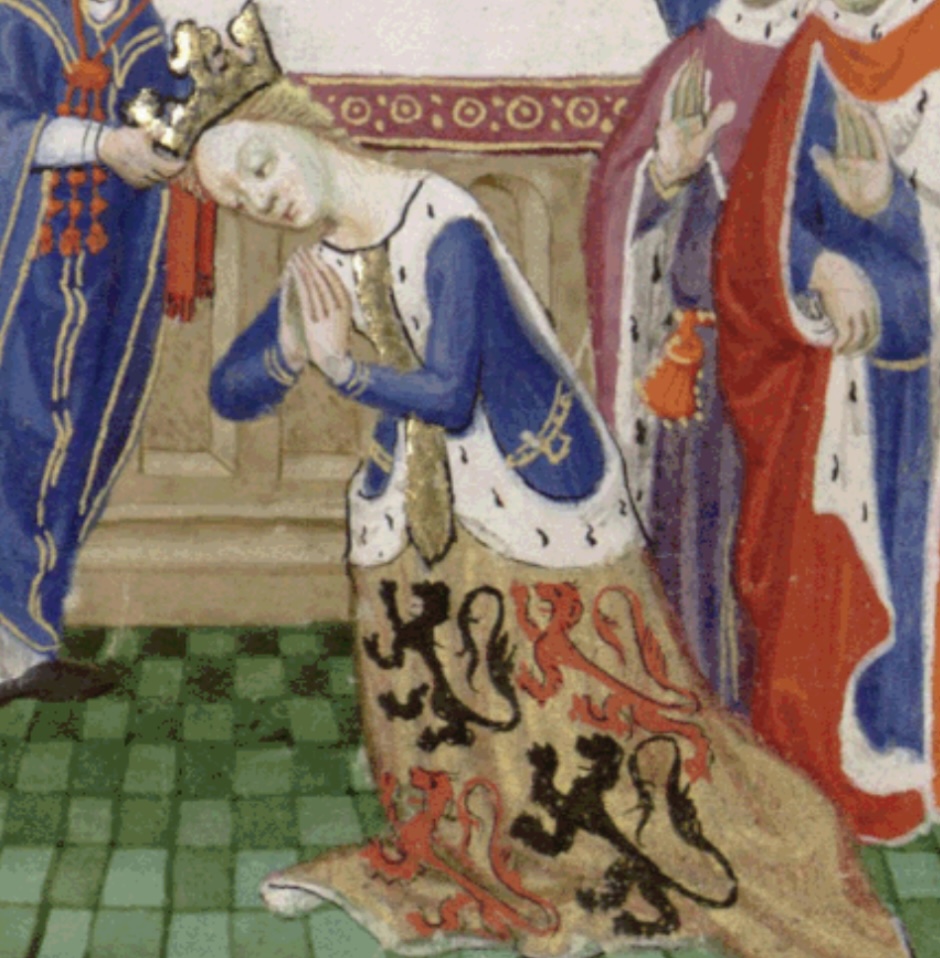
My ancestor Katherine de Roet’s guardian was Queen Philippa of Hainault (pictured), a “noble and kind woman”, who at that time, 1355, was over forty years old, and the mother of twelve children.
Queen Philippa enjoyed an interest in art and literature, and engaged in charity work. Chroniclers noted that she was “generous, kind, wise and humbly pious”, qualities that she imbued in Katherine.
Along with Dutch and Norman-French, Katherine also spoke English. She was literate, and developed into a skilled horsewoman. She learned the etiquette and diplomacy of the royal court. Not yet a teenager, she was wise beyond her years.
My ancestor Katherine de Roet received an excellent education at the royal English courts. She was literate, fluent in a number of languages, and a skilled horsewoman.
Although by origin Katherine did not belong to the highest nobility, her upbringing at the royal courts placed her at the centre of the political and social spectrum. She learned the art of diplomacy, the benefits of piety, and house management skills, lessons she took on board.
The chronicler Jean Froissart reported that Katherine from her youth “knew court etiquette perfectly”. Furthermore, she became acquainted with the dashing John of Gaunt (pictured), keeping a dozen horses at his stables, and accompanying him on horse rides throughout his estates. An attraction developed between the couple. However, they were from different social backgrounds, and therefore forbidden to marry.
No known portrait of my medieval ancestor Katherine de Roet exists, although some scholars believe she features in this picture, an image of Geoffrey Chaucer reciting Troylus and Criseyde to the royal court.
From fragments, Katherine has been described as fair-haired and buxom, perfectly built with a narrow waist and wide hips. She had a long neck, a round face and a high forehead, and was “extraordinarily beautiful and feminine”.
Book News
My latest translation, the Greek version of Betrayal, Ann’s War Mystery Series, book one.
As ever, thank you for your interest and support.
Hannah xxx
For Authors
#1 for value with 565,000 readers, The Fussy Librarian has helped my books to reach #1 on 40 occasions.











 Hannah Howe