Categories
Bevan Aubrey Pennsylvania

Bevan Aubrey Pennsylvania

I’m researching my ancestors’ connection with Pennsylvania. Part One of their story can be found here 👇

For Authors

#1 for value with 565,000 readers, The Fussy Librarian has helped my books to reach #1 on 32 occasions.

A special offer from my publisher and the Fussy Librarian. https://authors.thefussylibrarian.com/?ref=goylake

Don’t forget to use the code goylake20 to claim your discount 🙂

Categories
Ancestral Notes

Ancestral Notes

But for a rock, I would not be here. In February 1895, my 2 x great grandfather William Howe, then aged forty, nearly lost his life. Thankfully, he survived, became the foreman at the quarry, led the teaching at the Sunday School, and became a deacon at the local Methodist chapel.

On 27 April 1828 in Tetford, Lincoln, my 5 x great grandfather Hutton Foreman fathered his eleventh child, his ninth daughter, Eliza. He was sixty-four at the time. Mary Blades, Hutton’s second wife and Eliza’s mother, was forty.

In later life, on 2 April 1888, Eliza, now Mrs Coupland and the mother of ten children, found herself standing before the Boston magistrates, charged with larceny. She was acquitted and discharged.

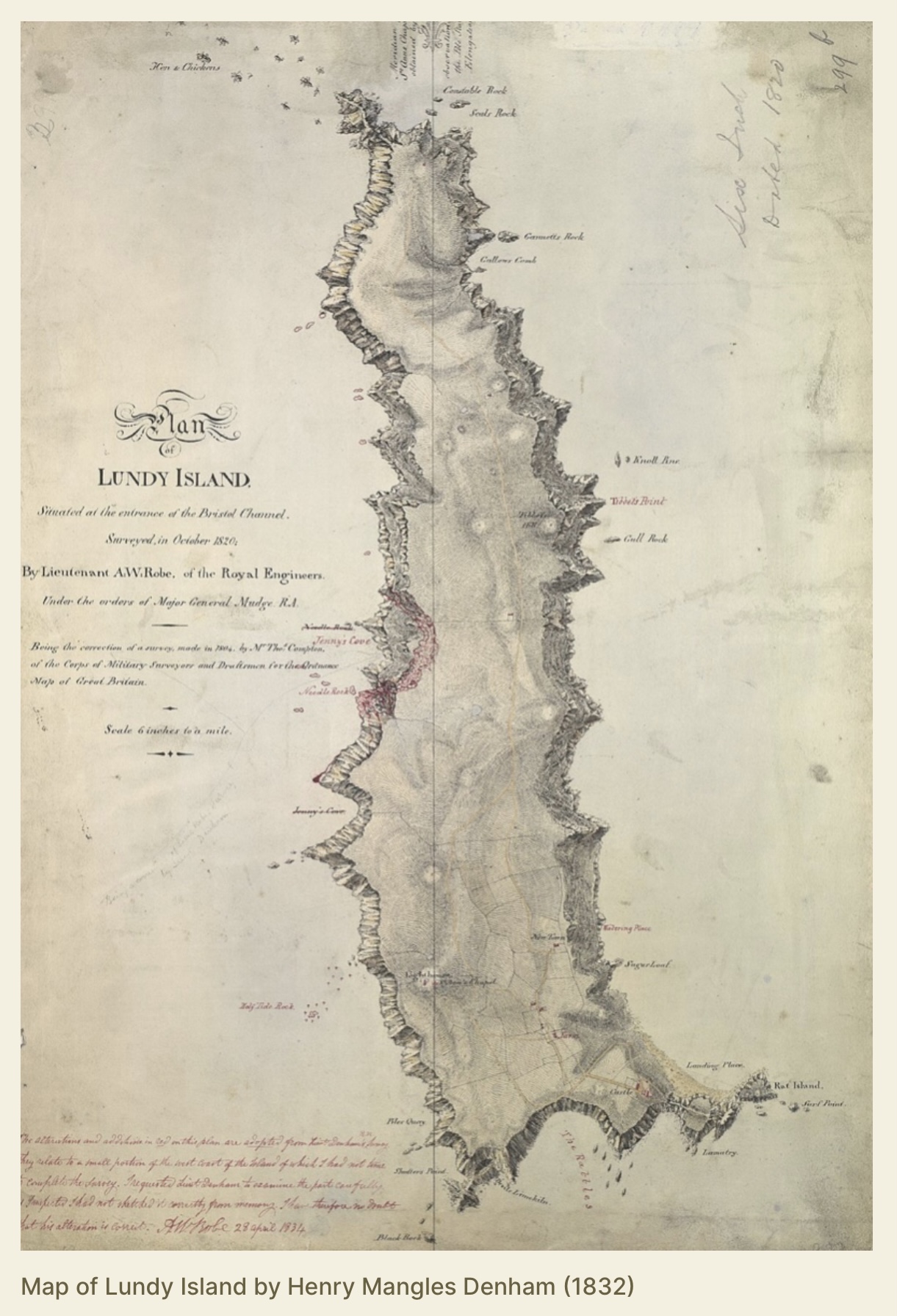
In 1449, my ancestors Sir Henry Stradling, his wife Elizabeth Herbert, and their daughter Elizabeth were kidnapped by Colyn Dolphyn and his pirates near Lundy Island. Dolphyn demanded a ransom of 1,000 marks from the Stradling family.

The ransom was not forthcoming, so over a period of two years the price went up to 2,200 marks. At that point the Stradlings were forced to sell their manors of Bassaleg and Rogerstone in south Wales, two manors in Oxfordshire and the Lordship of Sutton in Monmouthshire. With the ransom paid, Dolphyn released Henry and his family.

A few years later, Sir Henry Stradling gained his revenge. A storm blew Colyn Dolphyn’s ship, the Sea Swallow, on to the rocks near Nash Point. The locals alerted Sir Henry, who raised his men. They captured Colyn Dolphyn and his men, and dispensing swift justice hung them the following day.

This is a sad document, a grave layout for soldiers killed during the Great War of 1914 – 1918. It includes my ancestor Sergeant George Noulton, killed on 27 September 1918 at Pont de Nieppe, France. Look at all the references to “Unknown Soldiers”.

On 14 December 1868 my 3 x great grandparents Fanny Brereton and William Bick married in St Mary’s Church, Lambeth (pictured). I think it’s fair to say that my ancestors did not rush into this marriage – Fanny had already given birth to five of William’s children before she walked down the aisle. After her wedding day, she gave birth to five more.

Fanny and William arrived in London via Bristol, their home town, and Portsmouth. Fanny had relatives in London, and that no doubt influenced her decision to live there. 

Fanny’s father, James Richard Brereton, was a skilled silversmith, goldbeater and cutler. Sadly, Fanny never knew him because he died shortly before she was born.

For Authors

#1 for value with 565,000 readers, The Fussy Librarian has helped my books to reach #1 on 32 occasions.

A special offer from my publisher and the Fussy Librarian. https://authors.thefussylibrarian.com/?ref=goylake

Don’t forget to use the code goylake20 to claim your discount 🙂

Categories
Genealogy

Lowcock Branch #4

In 1825, my 4 x great grandmother Ann Lowcock travelled from the West Country to London to seek Poor Relief for herself and three young children – Thomas, Sarah and James – because her husband, James Richard Brereton, was ill. James Richard Brereton was a skilled metalworker, and London was his parental home – hence the journey.

Thankfully, James Richard Brereton recovered and his family returned to the West Country. There, he resumed his trade working as a goldbeater and a travelling tinker. James also fathered three more children: Elizabeth, Maria and Francis. Sadly, Maria and her elder brother James died in infancy.

Ann Lowcock’s attempt to obtain Poor Relief

When, in 1834, James Richard Brereton fell ill again, his wife Ann Lowcock and her surviving children Thomas, Sarah, Elizabeth and Francis travelled to Portsmouth, where the family had lived, in the hope of obtaining Poor Relief. However, they were then sent to London. The Breretons were travelling around in circles, both figuratively and literally, trying desperately to keep the family together.

Eventually, Ann Lowcock returned to Somerset where, on 3 April 1833, she baptised my 3 x great grandmother Fanny Brereton. Tragically, James Richard Brereton died the same year. The date of his death has not survived in the records, but it’s possible that he did not live to see the birth of Fanny. 

Now a widow with five children in tow, Ann went on her travels again. Her comfortable upbringing no more than a distant memory, she had to find a way to survive.

For Authors

#1 for value with 565,000 readers, The Fussy Librarian has helped my books to reach #1 on 36 occasions.

A special offer from my publisher and the Fussy Librarian. https://authors.thefussylibrarian.com/?ref=goylake

Don’t forget to use the code goylake20 to claim your discount 🙂

Categories
Genealogy

Lowcock Branch #3

Early married life for my 4 x great grandparents Ann Lowcock and James Richard Brereton saw the birth of three children: Thomas, Sarah and James. 

Thomas was born late 1818/early 1819. The records for him are scarce, and his baptism record has not survived.

Sarah was born on 29 March 1820 in Bristol and baptised on 29 April 1821 in the church of St Philip and St Jacob, Bristol. Her father James was working as a highly-skilled goldbeater at that time, producing gold leaf.

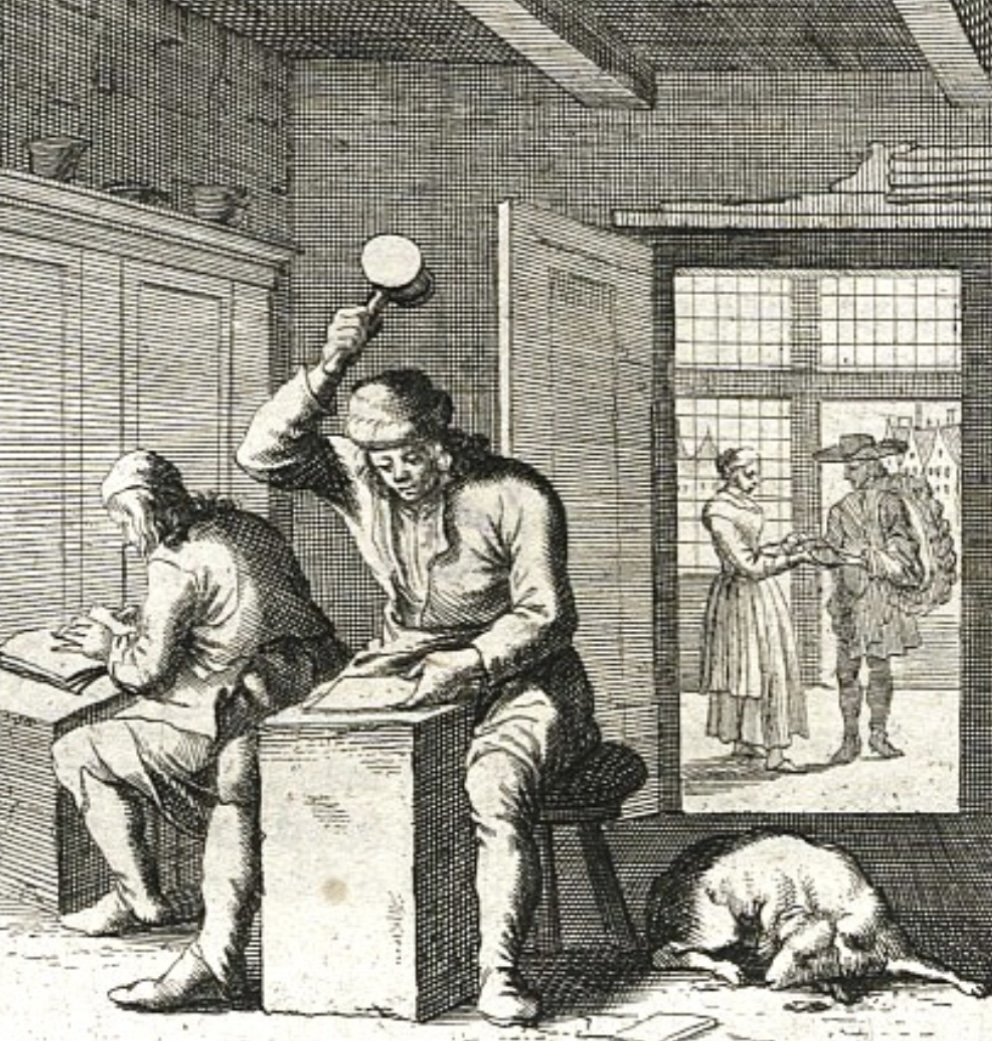
A goldbeater at work

Baby James was born late 1824. Again, there is no record of his baptism. One reason for the lack of Thomas and James’ baptism records could be that the family were moving around Somerset as James Brereton sought employment. 

No child was recorded born to James and Ann c1822. In common with most women of the period, Ann gave birth every two or three years, so the four year gap is unusual. My suspicion is that their baby born c1822 died in infancy, and the records have not survived.

Although James had a good trade, working in metal, his health failed – possibly due to metal poisoning. And his family found themselves in London, seeking financial support. Almost certainly, James had returned to his birth city to connect with his family. However, by this time his father Thomas had died and his mother Sarah did not have the means to offer financial support.

The record of James and Ann’s eviction

Seeking poor relief, James, Ann and their children were evicted from St Dunstan in the West, London. What would happen to them next?

***

 For Authors

#1 for value with 565,000 readers, The Fussy Librarian has helped my books to reach #1 on 36 occasions.

A special offer from my publisher and the Fussy Librarian. https://authors.thefussylibrarian.com/?ref=goylake

Don’t forget to use the code goylake20 to claim your discount 🙂

Categories
Genealogy

Lowcock Branch #2

I’m researching my 4 x great grandmother Ann Lowcock and her family.

On 17 May 1818 Ann married James Richard Brereton in her home town of Martock, Somerset. James was born on 19 November 1793 in Shoe Lane, Fleet Street, London, and baptised on 22 December 1793 in St Dunstan-in-the-West, London. How and why did he make his way to Martock?

James was the third of nine children born to Thomas Brereton and Sarah Wright. In 1807 he became an apprentice cutler, learning the skills required for metalworking. Apprentices usually served a seven-year term and, as with James, commenced their learning at the age of fourteen.

James’ father, Thomas, paid £30 – the equivalent of around £3,000 now – so that James could learn a trade. Thomas was a clerk in Fleet Street, and earning a decent living.

The apprentice became an extra worker in the master’s household. He or she was subject to the absolute authority of the master and by the terms of their ‘indenture’ could not gamble, go to the theatre or a public house, play cards or dice, marry or fornicate. Little wonder that some of the apprentices ran away from their masters.

In 1814 James qualified as a cutler. His skills allowed him to work with various metals, including gold. 

James travelled across southern England, plying his trade. In Martock, he met Ann Lowcock, and they married. Ann, from a secure family had, seemingly, secured her future. Now, she was expected to raise a family. More about that next time…

For Authors

#1 for value with 565,000 readers, The Fussy Librarian has helped my books to reach #1 on 36 occasions.

A special offer from my publisher and the Fussy Librarian. https://authors.thefussylibrarian.com/?ref=goylake

Don’t forget to use the code goylake20 to claim your discount 🙂