Categories
Dear Reader

Dear Reader #194

Dear Reader,

Research for Sunshine, book two in my Golden Age of Hollywood series.

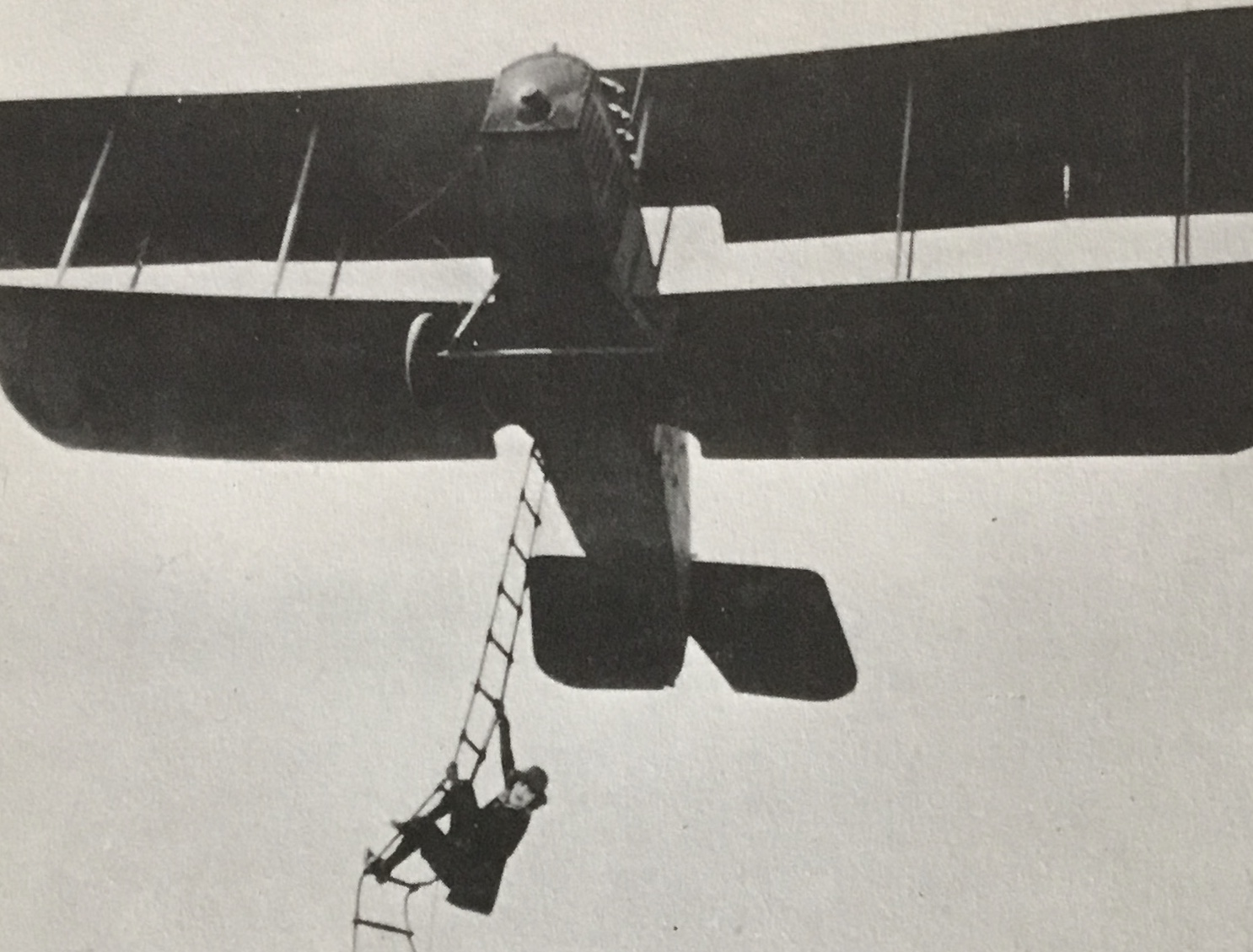
Between 1921 and 1929, Lillian Boyer (January 15, 1901 – February 1, 1989) performed numerous aerial stunts. They included: wing walks, automobile-to-aeroplane transfers, and parachute jumps.

While Lillian was working as a waitress, two customers invited her to fly in their plane. During her second flight, she climbed out on to the wing and began her career as an aerial performer.
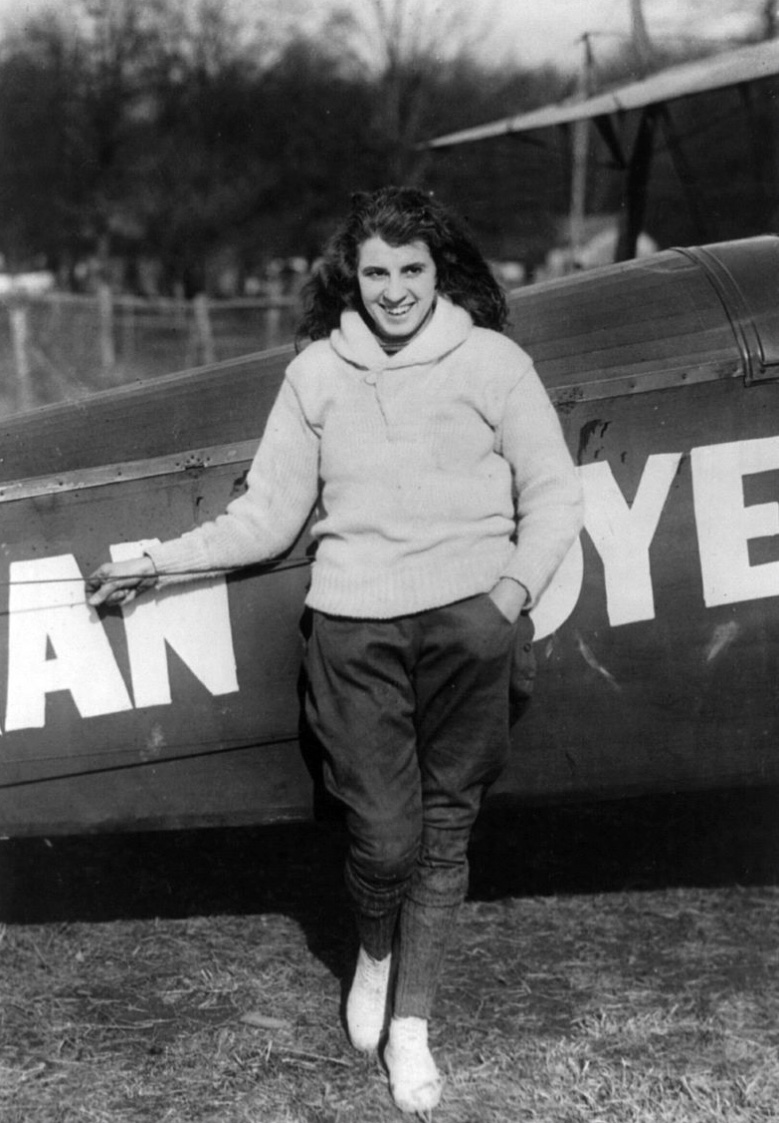
Lillian was the first woman to jump from a speeding automobile to an aeroplane. According to a 1922 Milwaukee newspaper, she was “without doubt the greatest thrill-producer since the days of the gladiators.”

Lillian’s performances included: 352 shows in 41 US states and Canada, most of them wing-walking; 143 automobile-to-plane changes; 37 parachute jumps (13 into Lake Erie).

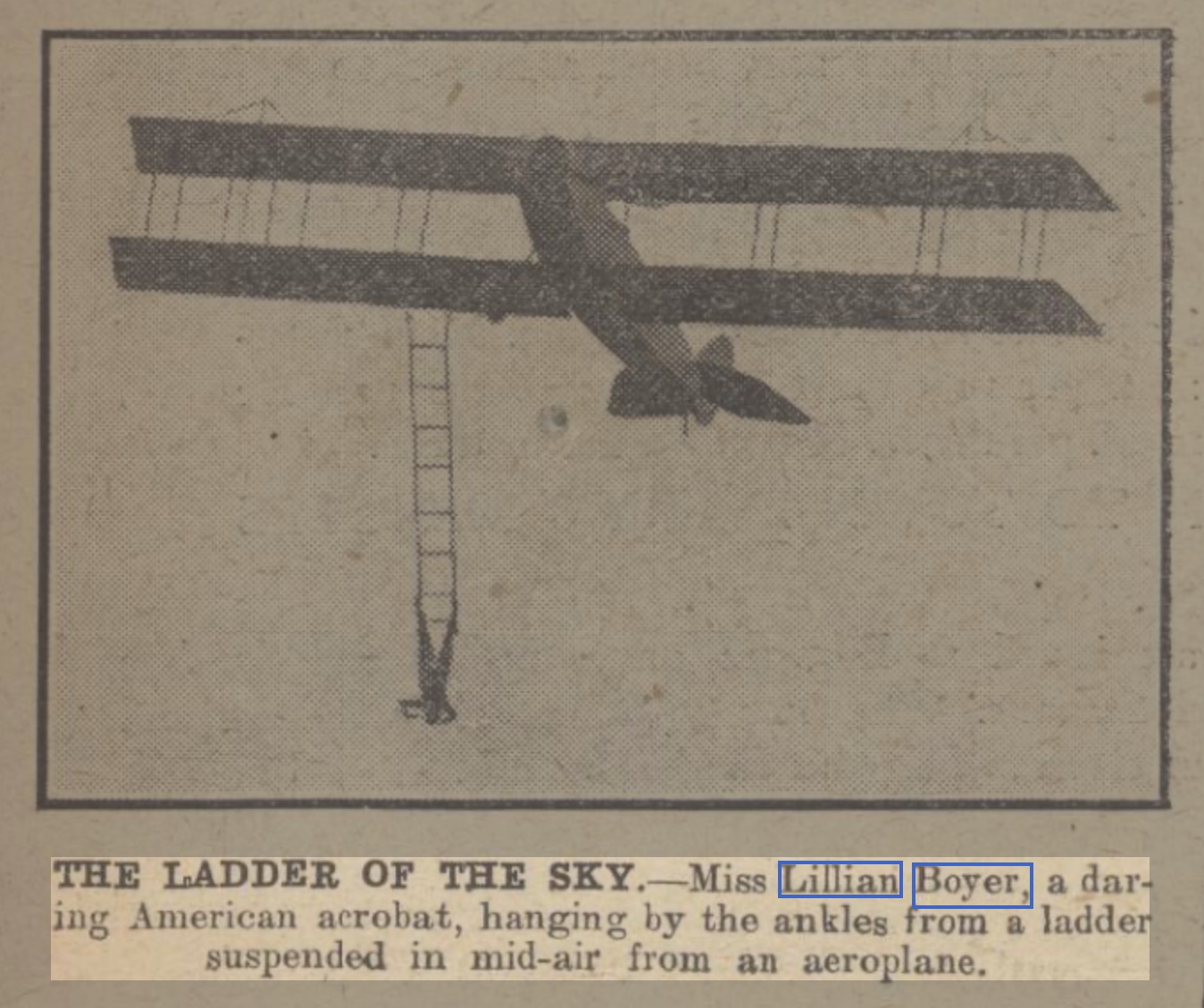
📸 Lillian performing the “breakaway” and “the ladder of the sky.”

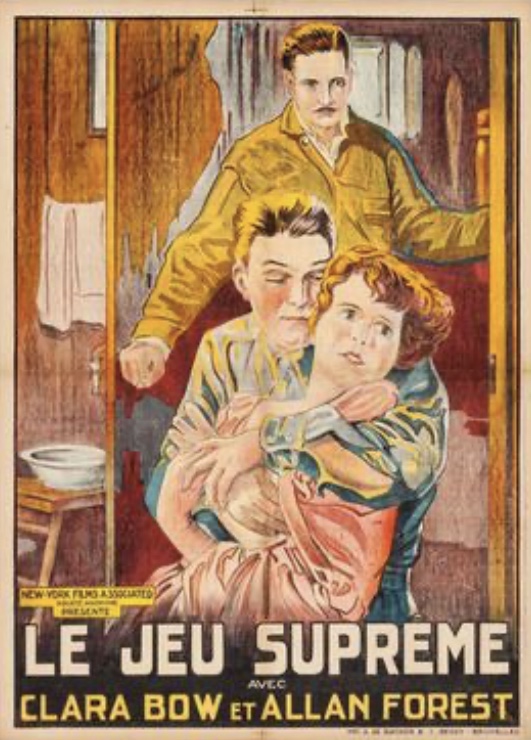
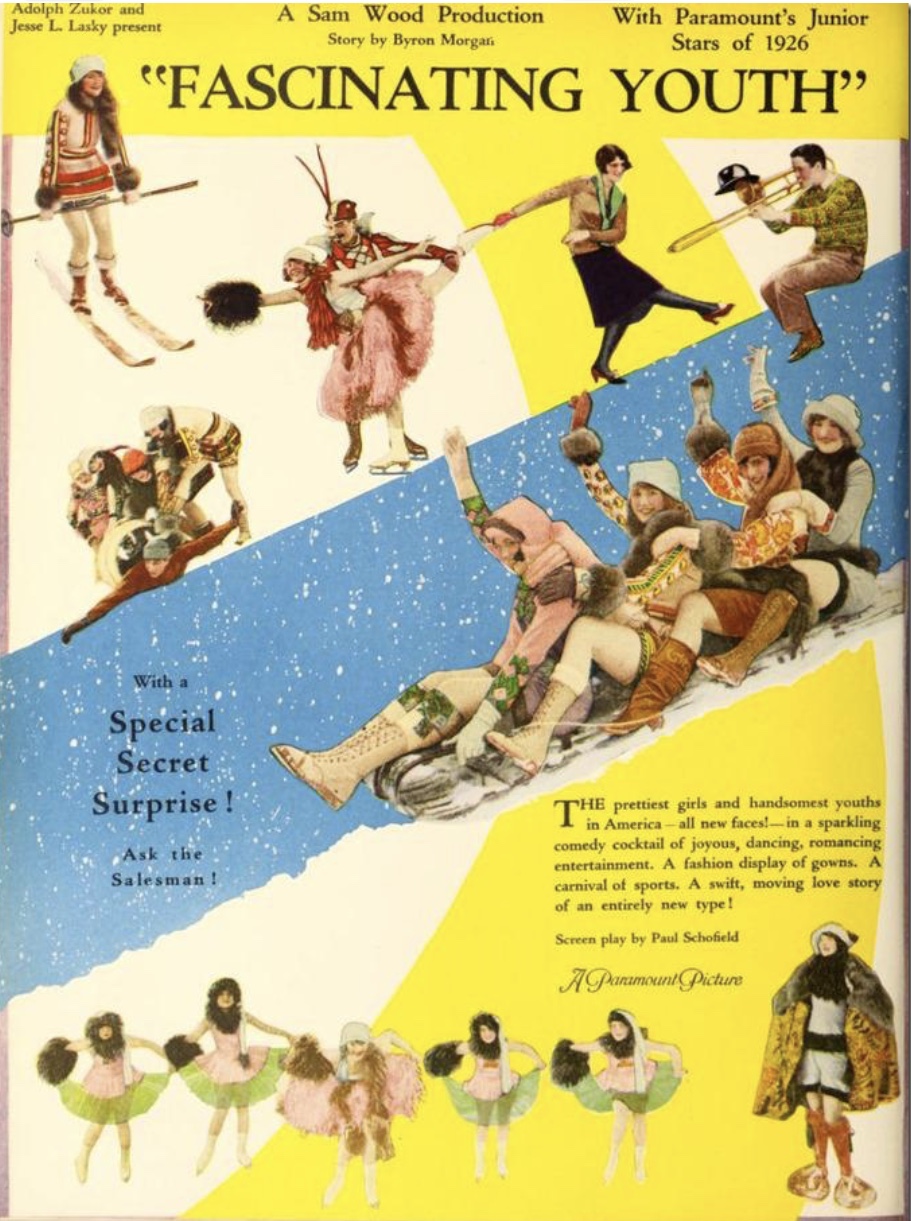
After her success in My Lady of Whims, Clara Bow was billed as “Clara Bow – Movie Star” in her thirty-third movie, Fascinating Youth, which went on general release on August 23, 1926. 

Fascinating Youth was a silent romantic comedy. The movie starred Charles “Buddy” Rogers, on debut. Buddy Rogers would soon become a regular in Clara’s personal and professional lives. 

Many well-known personalities, including Clara, made guest appearances in Fascinating Youth, judging a beauty contest. 

This movie was just a filler for Clara. Paramount recognised that they had a star on their hands, and were keen to cast her in bigger projects. At twenty, Clara’s star was bright, and it would become even brighter as the decade unfolded.
The Brereton branch of my family starts with Fanny Brereton, baptised on 19 November 1837 in Holy Trinity, Bristol. Fanny had five children out of wedlock with William Bick. In 1864, via Southampton, the family moved to London, where they married, on 14 December 1868 in St Mary’s, Lambeth. As a married couple, they had five more children.

Fanny’s father, James Richard Brereton, born 19 November 1793 in Shoe Lane, Fleet Street, London, baptised 22 December 1793, was a cutler. He travelled to the West Country where he worked with various metals. On 17 May 1818, James married Ann Lowcock in All Saints’ Church, Martock, Somerset. The couple had six children. 

I’m now researching the lives of James’ parents, Thomas Brereton and Sarah Wright.

Thomas Brereton was born on 24 April 1762 in Apollo Court, St Dunstan’s in the West, London. His parents were Sandford Brereton and Sophia Berry. Sandford was from Nantwich, Cheshire, while some records suggest that Sophia was born in Amsterdam. The family links are brought together in this document from 1766, which records the birth of Thomas’ brother, William, in the Holborn Lying-In Hospital.

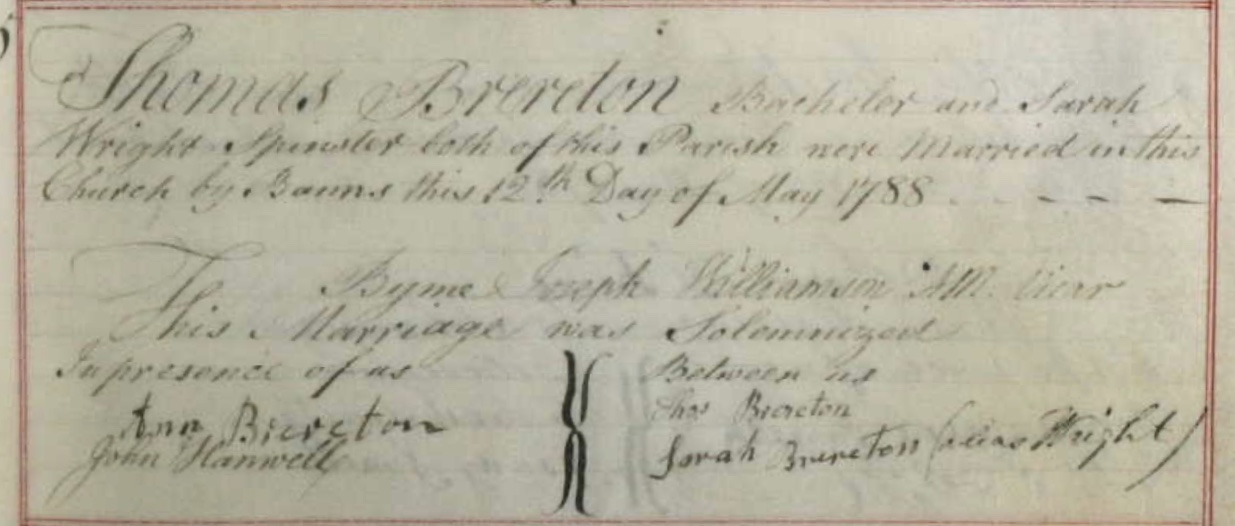
My ancestor Thomas Brereton married Sarah Wright on 12 May 1788 in St Dunstan in the West, London. Sarah’s parents were William Wright and Margaret Woodhouse. Like his father before him, Gregory, William ran a coaching business. The couple had nine children, five girls and four boys. It’s lovely to see Thomas and Sarah’s signatures on this document.
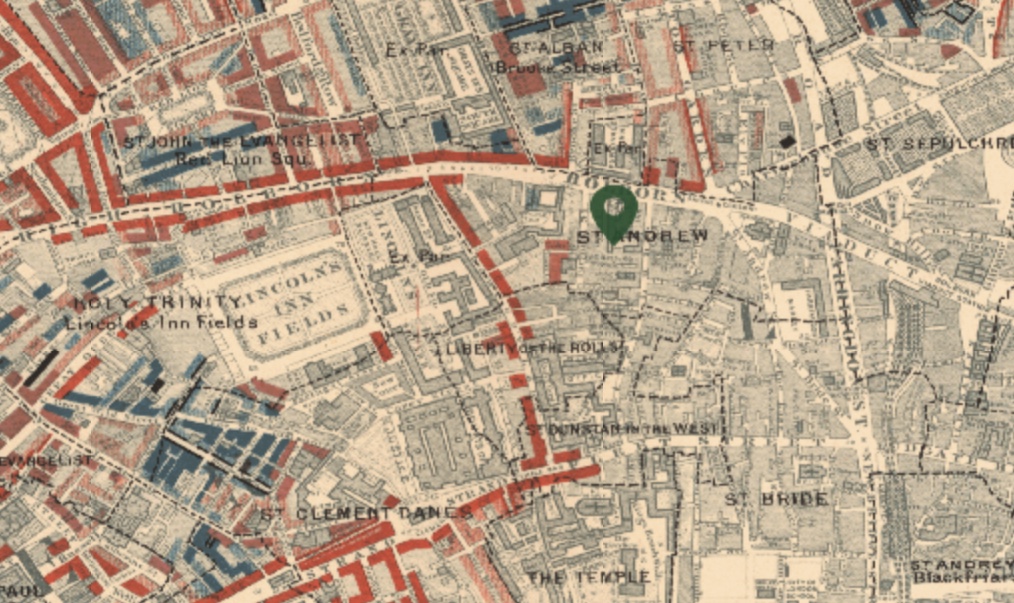
My ancestor Thomas Brereton was a clerk in Holborn, London. Charles Booth’s map shows that he lived and worked in the heart of London’s legal district, so it seems fair to assume that he spent his days working on legal documents. Ironically, the Old Bailey was to feature large in the family’s affairs in Thomas’ later years.
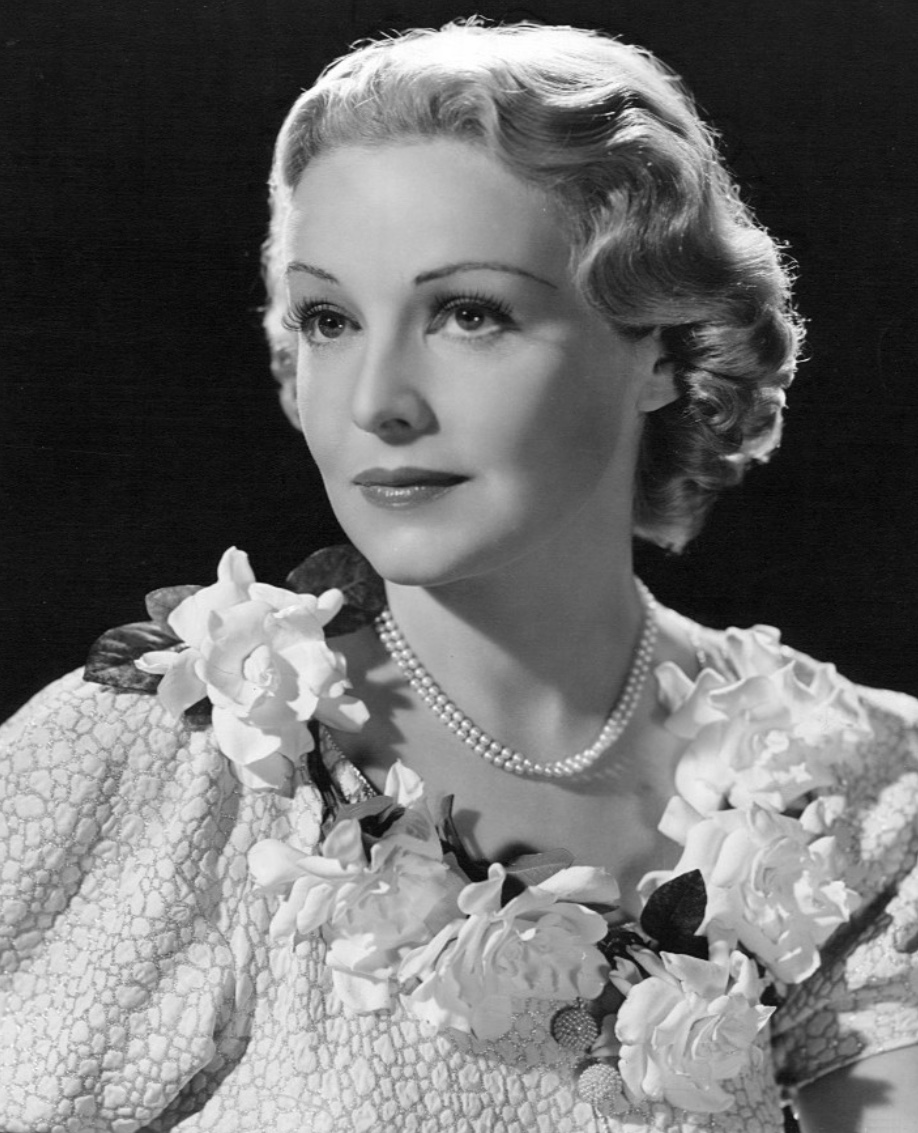
Madeleine Carroll

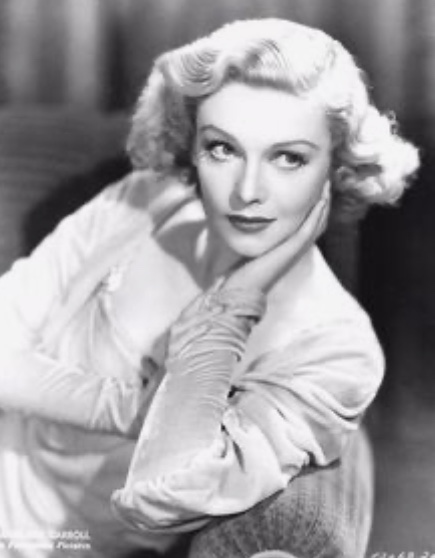
In 1938, when this picture was taken, Madeleine Carroll (26 February 1906 – 2 October 1987) was the world’s highest-paid actress. How did she achieve such success? Through public records, I’m endeavouring to find out.
Madeleine Carroll was born in Herbert Street, West Bromwich, Staffordshire to John Carroll, an Irish professor of languages, and his French wife, Helene Tuaillon. Helene died on 7 May 1980, four days after her 100th birthday.

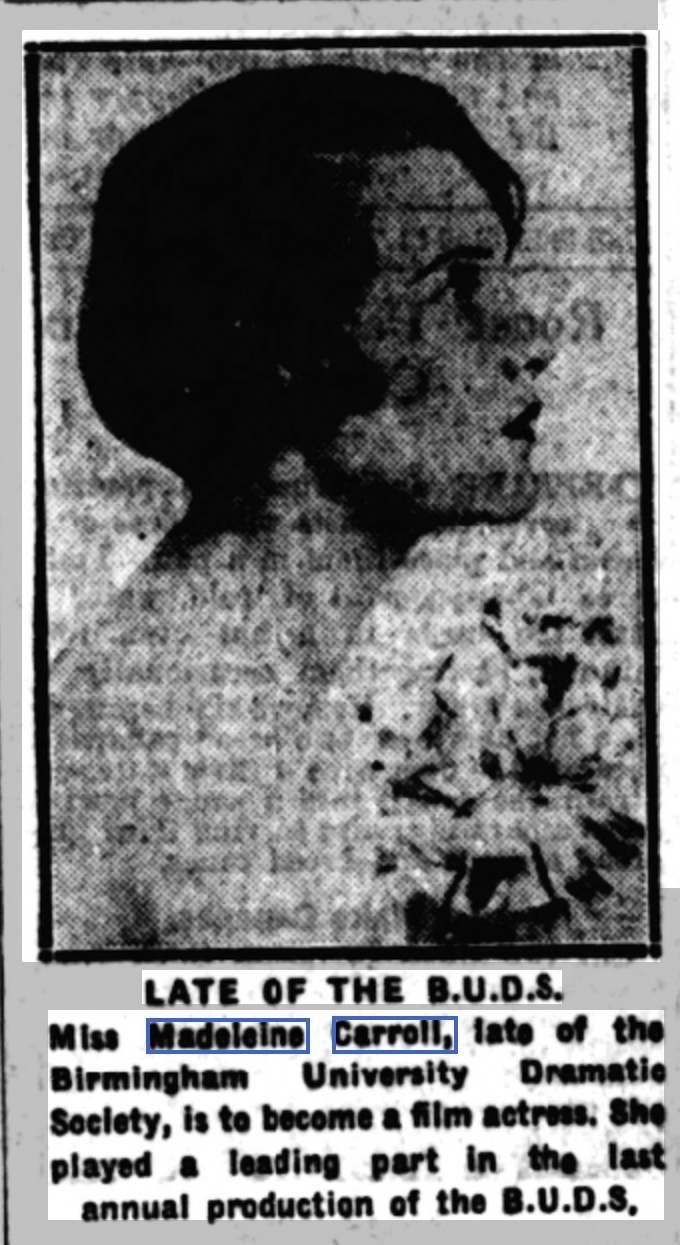
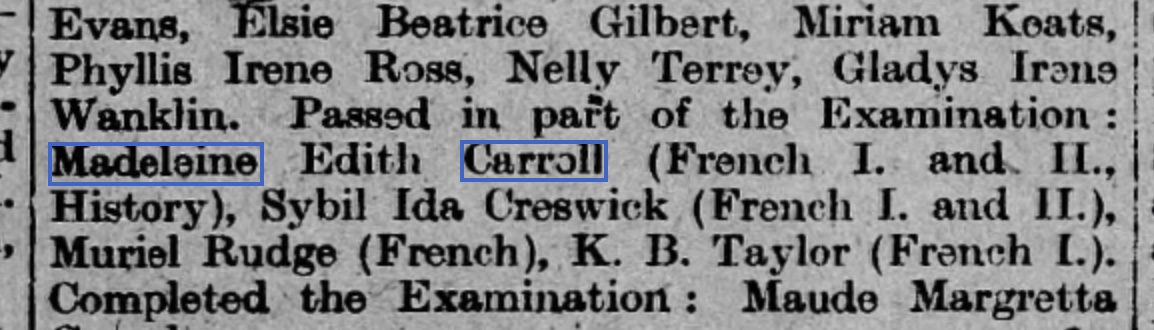
Madeleine graduated from the University of Birmingham with a B.A. degree in languages. Indeed, her first appearance in the local newspapers, on 3 July 1924, was the announcement of her exam results.
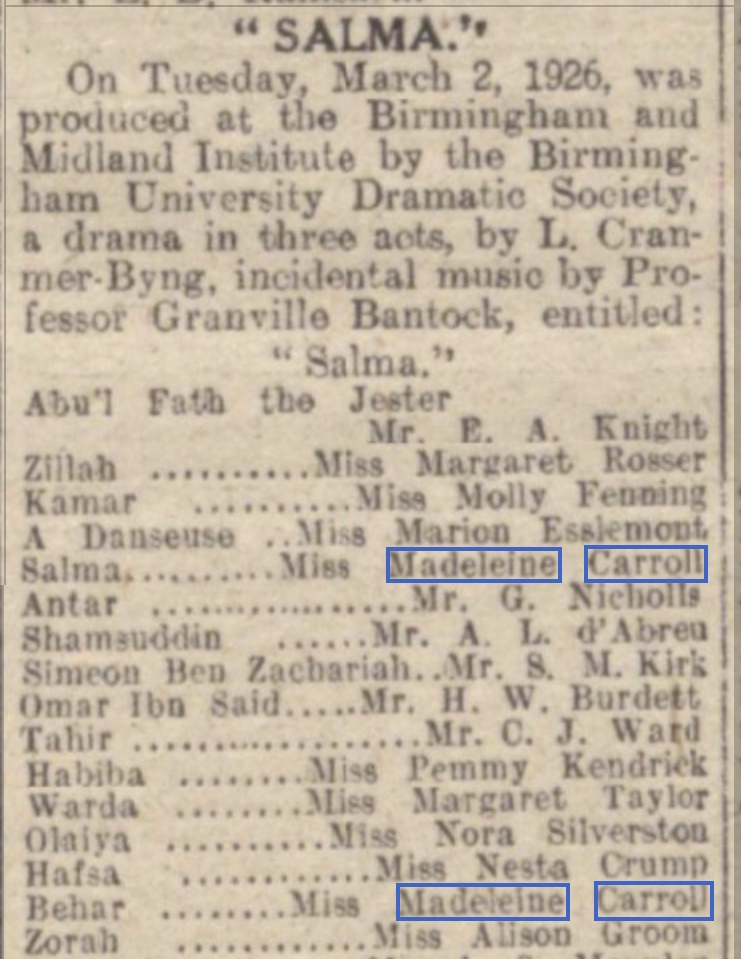
First steps. While at the University of Birmingham, Madeleine Carroll appeared in productions for the university’s dramatic society, taking the female lead in her first production and receiving a creditable review.
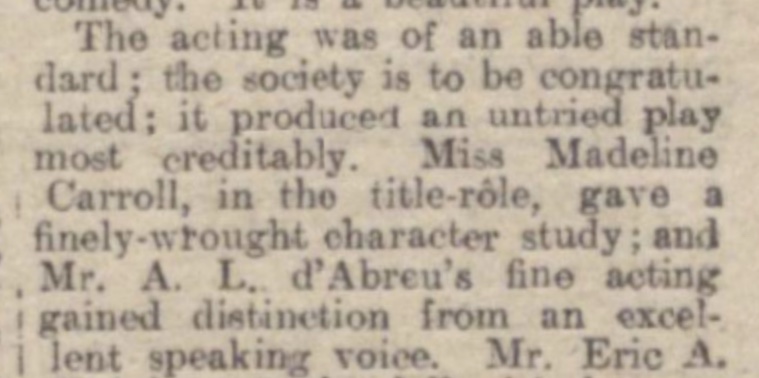
Madeleine’s parents employed a domestic servant, which suggests she enjoyed a comfortable upbringing. The family consisted of Madeleine, her parents and her sister, Marguerite Marie.
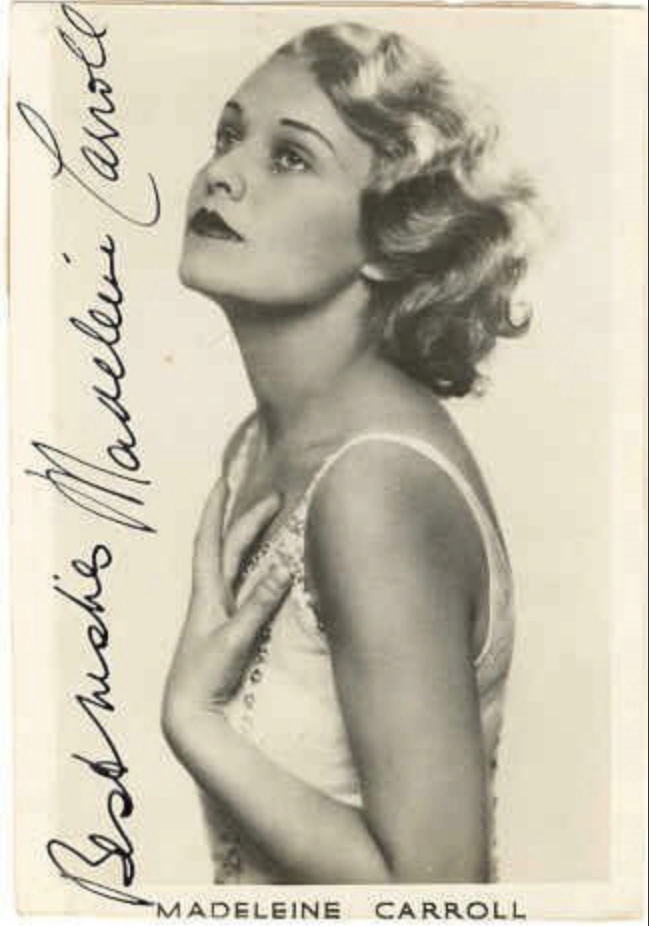
Second steps. The Birmingham Daily Gazette, 6 January 1927. While at university, Madeleine Carroll’s stage career progresses. In eleven years she would become the highest paid actress in the world.
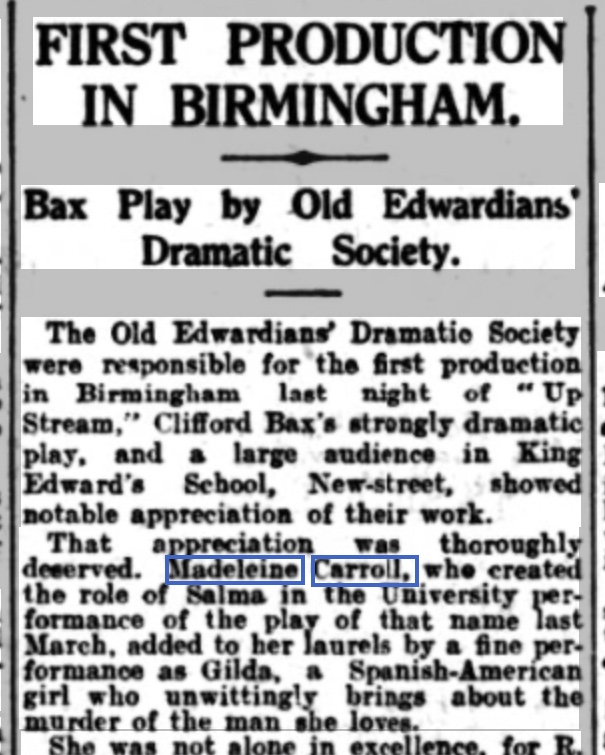
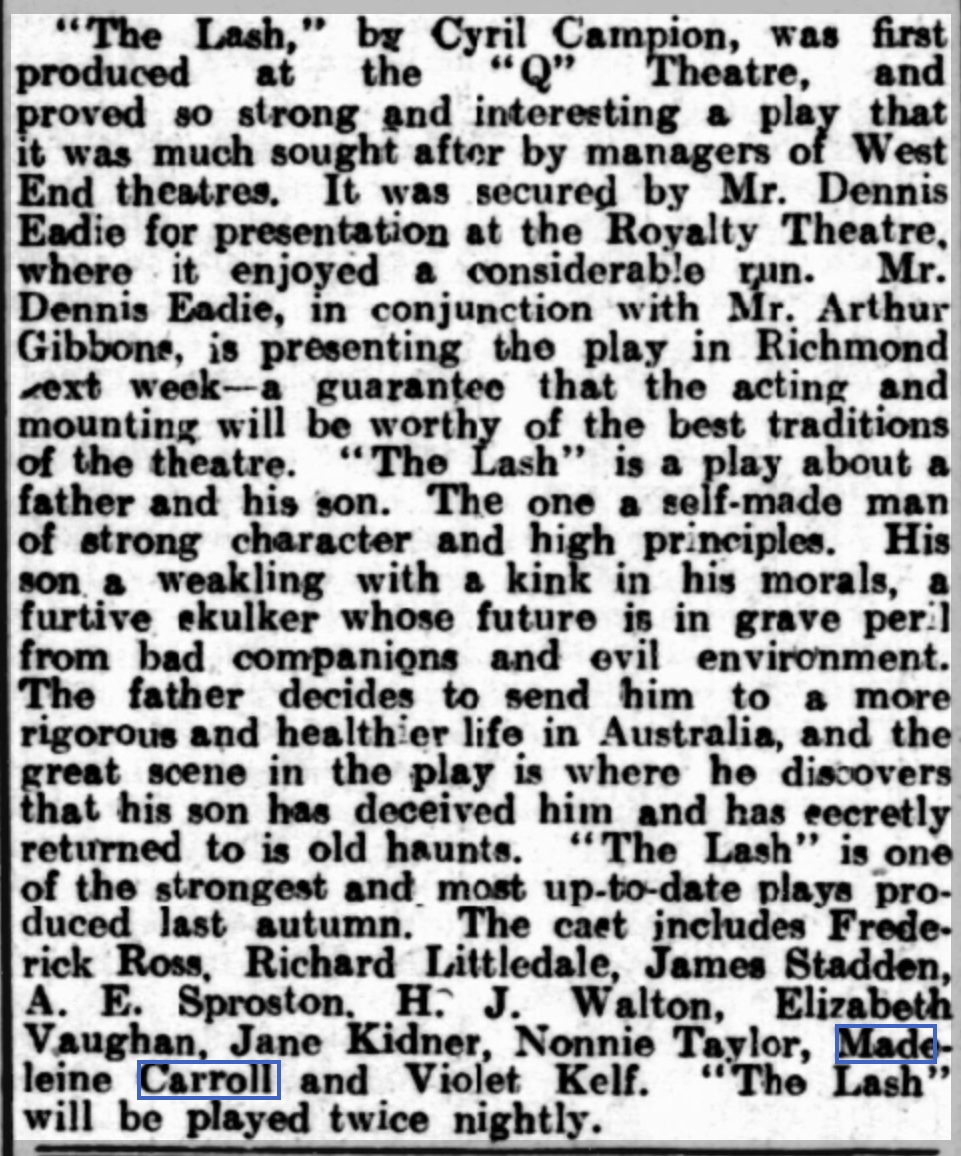
Third steps. Combining her university studies with acting, Madeleine Carroll next appeared on stage in The Lash. This review is from 21 May 1927. More stage productions followed over the summer. Then, on 19 September 1927, the Birmingham Daily Gazette announced that Madeleine was to become a film actress. She would appear as Diana Cheswick in The Guns of Loos.
Latest results from the Quarter-Finals of our Mastodon movie poll
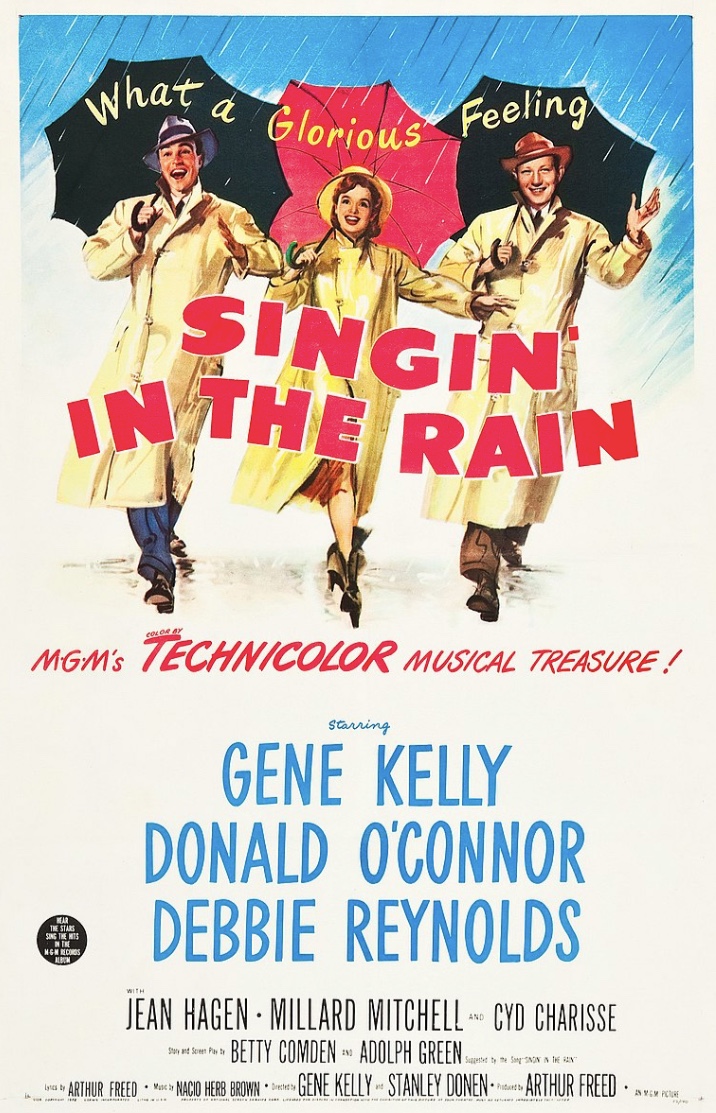
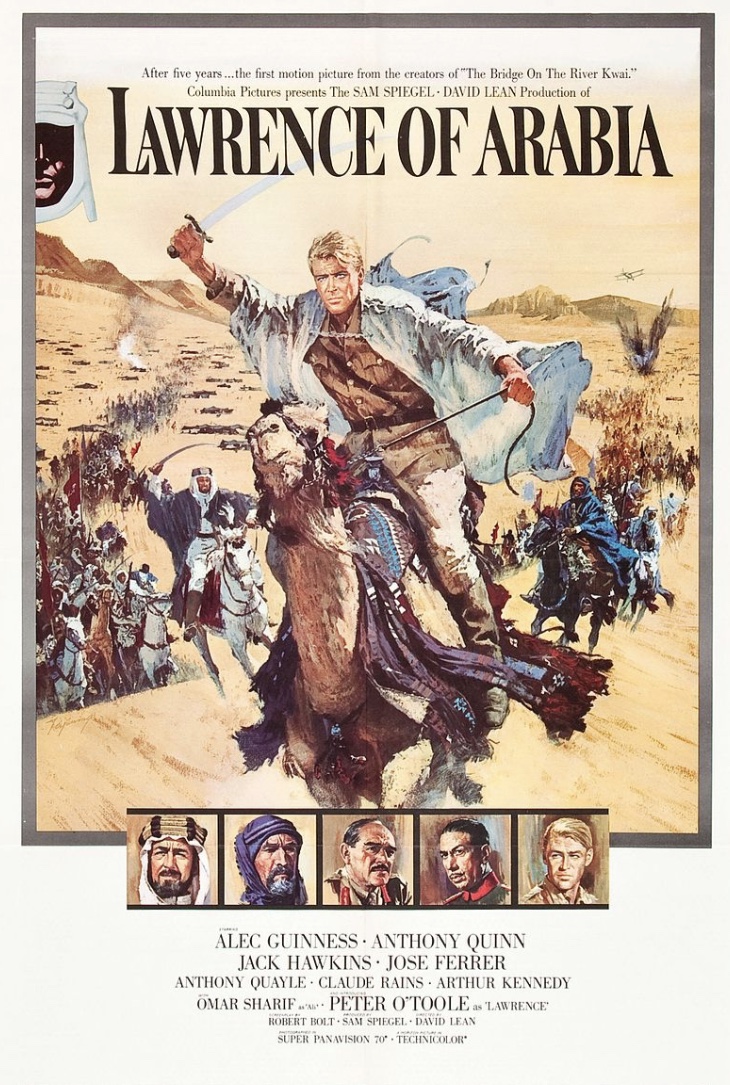
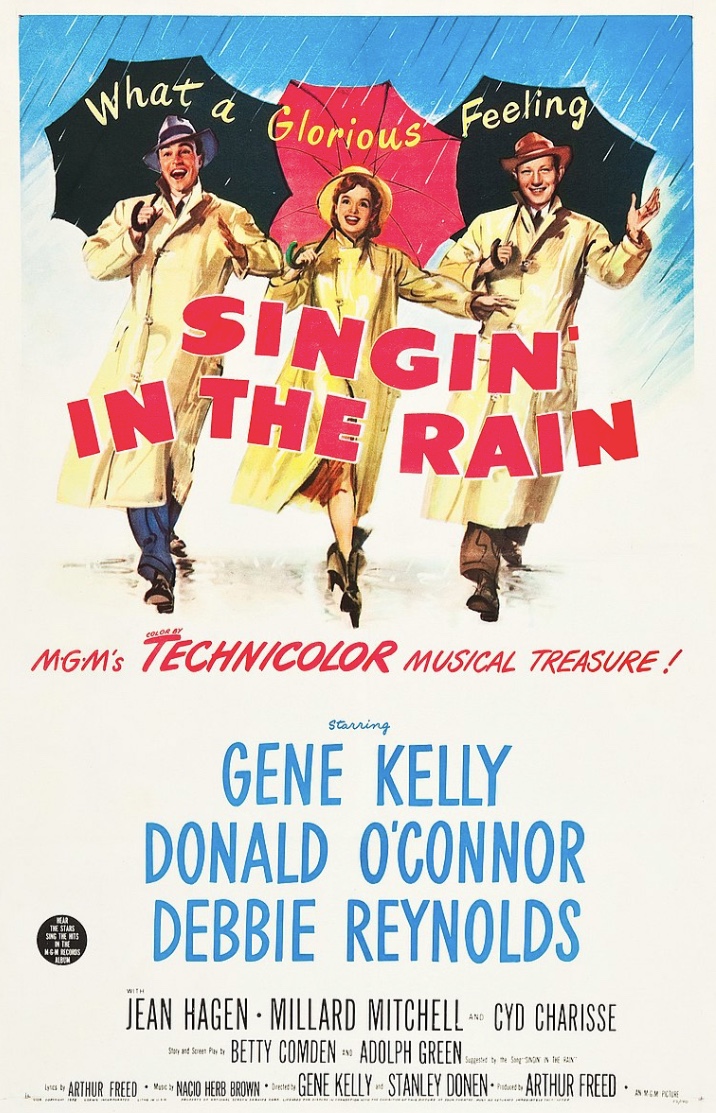
Singin’ in the Rain 38% v 62% Lawrence of Arabia

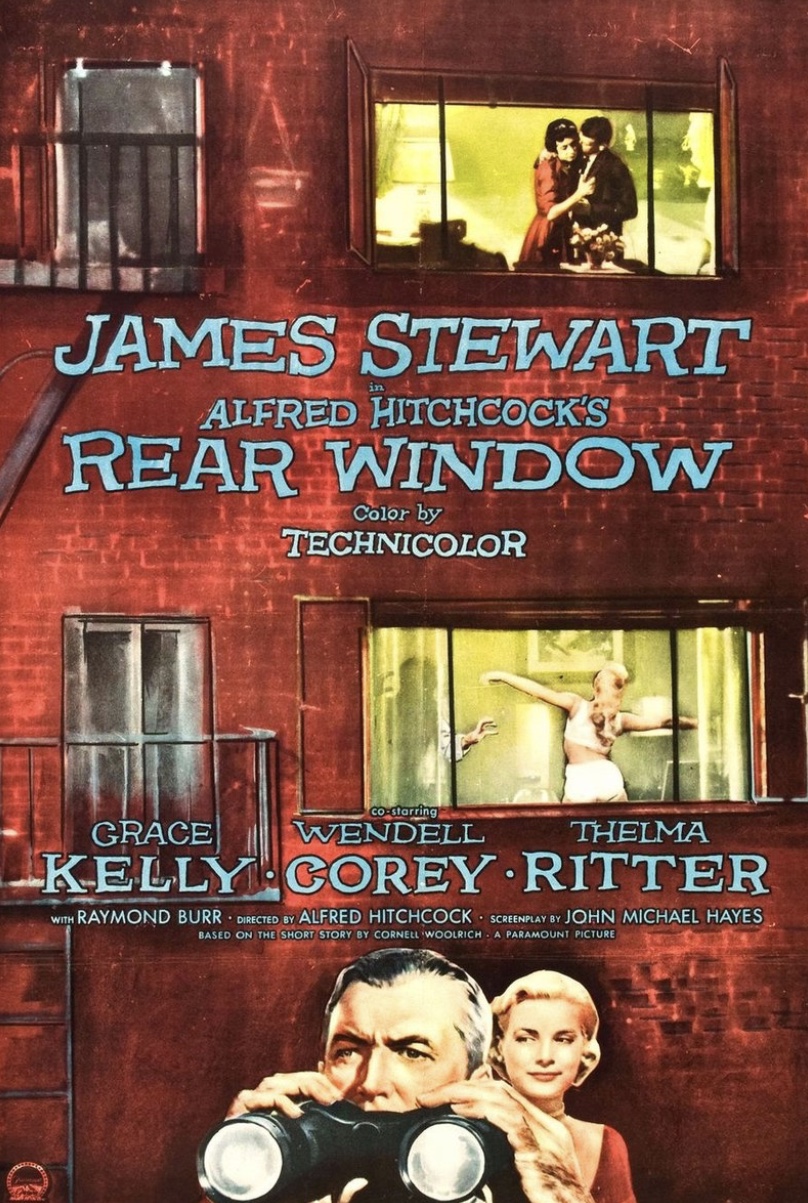
Casablanca 61% v 39% Rear Window

Semi-Finals
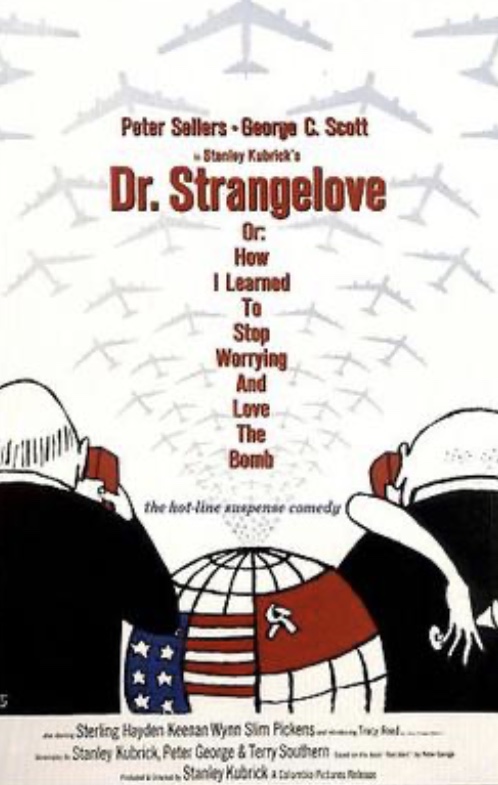
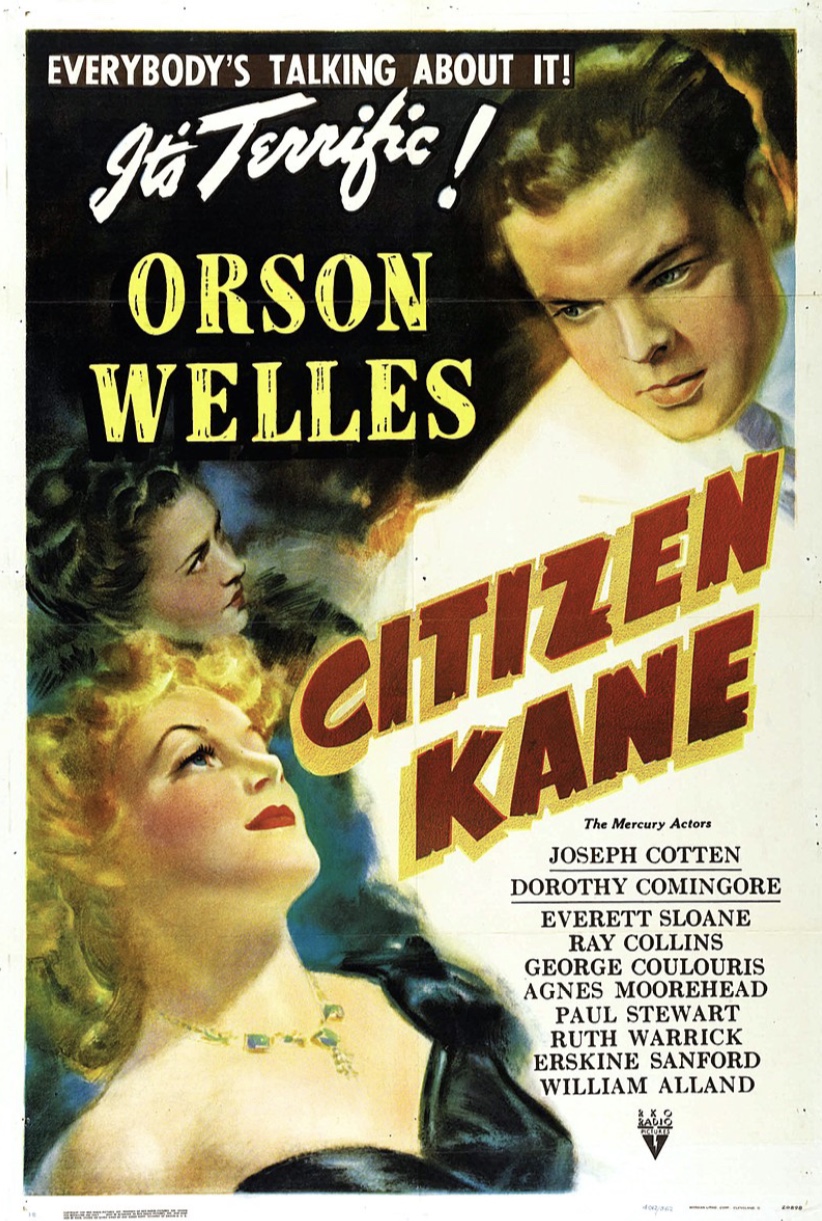
Dr Strangelove 46% v 54% Citizen Kane

Casablanca 70% v 30% Lawrence of Arabia

Final

Citizen Kane 32% v 68% Casablanca

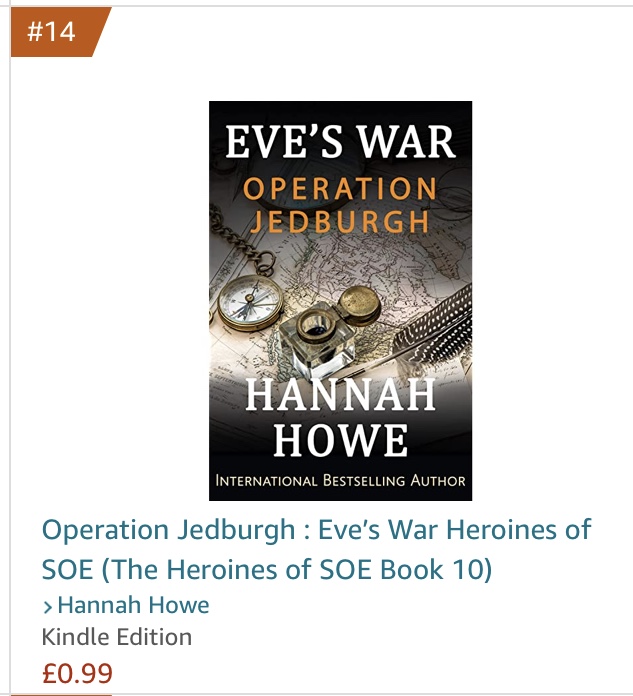
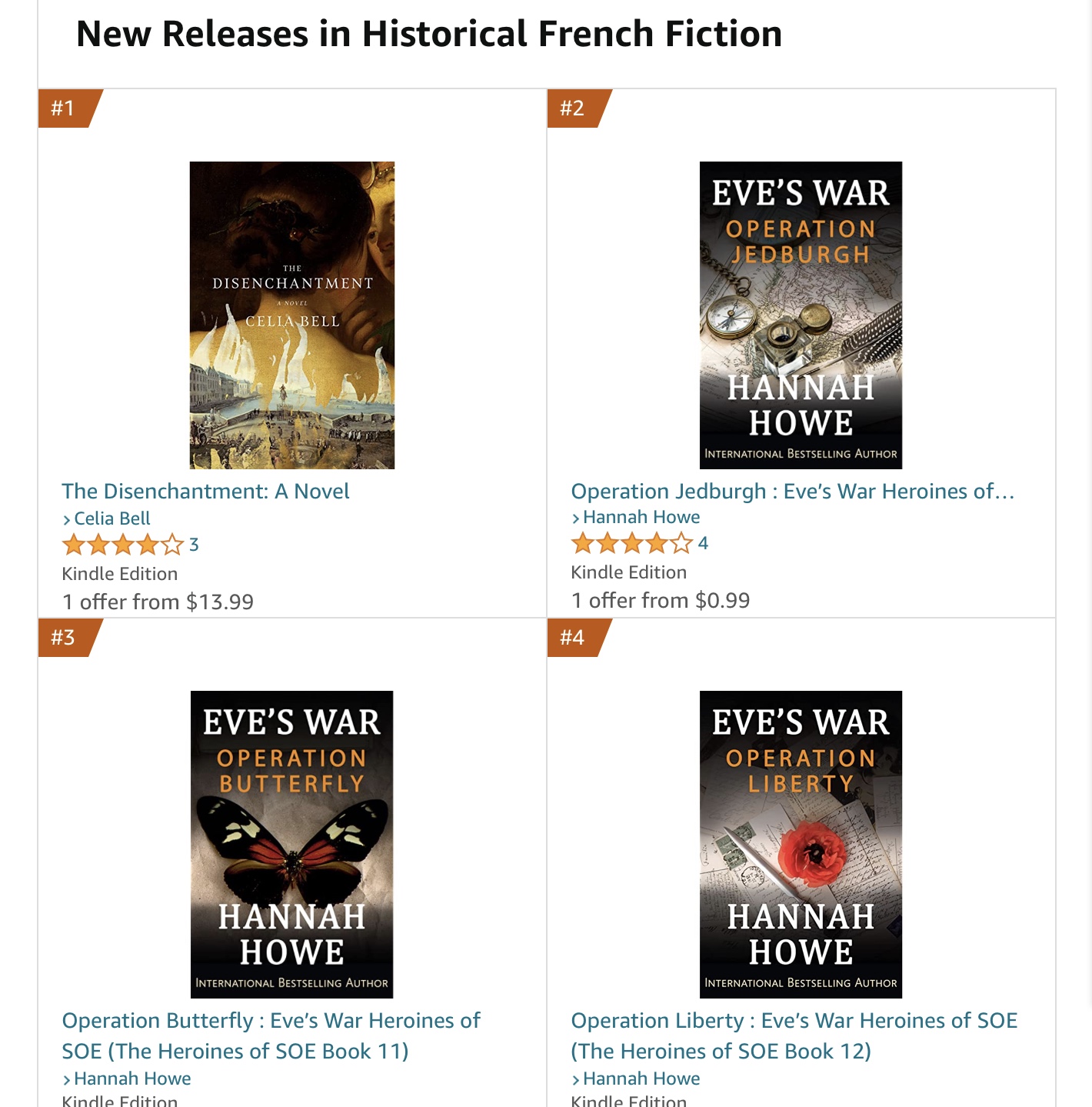
Some book news. Three of my books are listed on Amazon’s Hot New Releases French Fiction chart: #2 Operation Jedburgh, #3 Operation Butterfly and #4 Operation Liberty, books 10, 11 and 12 in my Eve’s War Heroines of SOE series. Butterfly will be published in July and Liberty, which completes the series, will be published in October.
As ever, thank you for your interest and support.

Hannah xxx

For Authors

#1 for value with 565,000 readers, The Fussy Librarian has helped my books to reach #1 on 38 occasions.

A special offer from my publisher and the Fussy Librarian. https://authors.thefussylibrarian.com/?ref=goylake

Don’t forget to use the code goylake20 to claim your discount 🙂

Categories
Dear Reader

Dear Reader #193

Dear Reader,

Sunshine: The Golden Age of Hollywood, Book Two

Summer, 1939 and my character Sunshine finds herself on holiday in Hollywood. She also finds herself in a movie, The Immelmann Turn, a film about stunt pilots, wing walkers and daredevils. Naturally, she decides that she’d like to have a go…

At the age of twenty, Clara Bow was already a movie veteran. Her thirty-second movie was My Lady of Whims, a silent comedy released on June 25, 1926. Clara played the lead, Prudence Severn.

The skintight, transparent dress Clara wore during the party sequence caused a sensation. The Cedar Rapids Tribune said that the dress made “the eyes of every flapper bulge.”

This would not be the last time Clara caused a sensation, on and off screen.

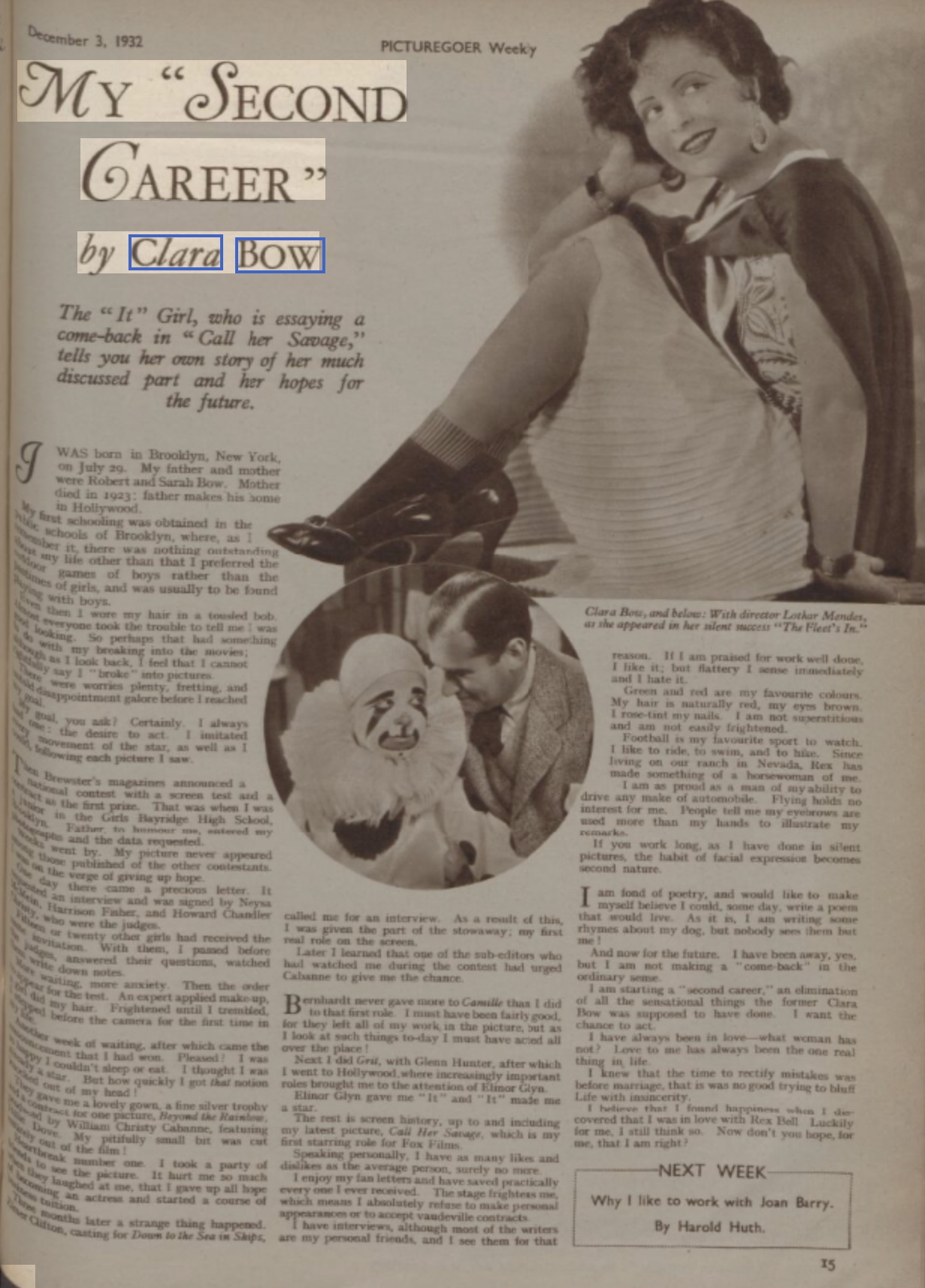
Picturegoer, December 3, 1932

This is a lovely piece about Clara Bow because it appears to have been written by Clara herself. She was promoting her ‘comeback’ movie, Call Her Savage. Although melodramatic in places, Call Her Savage is a decent film. Clara didn’t enjoy making talkies, but she had the natural talent to be a success in them.

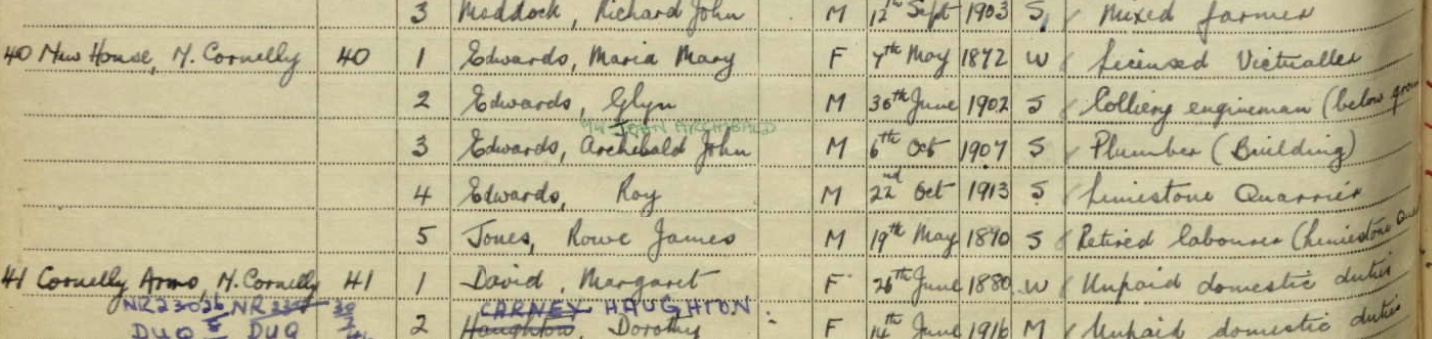
This record from 1939 features Roy Edwards, future husband of my relative Joan Howe. Joan was a beautiful person in every sense. Roy was living, with his parents, at the New House public house. He worked in the local limestone quarry – the Howes had close associations with the quarry – and served as an auxiliary fireman.

The indenture signed by my 4 x great grandfather James Brereton. As an apprentice cutler for seven years, James agreed to obey his master, William Vandenbergh. By the terms of his indenture, James could not gamble, go to the theatre or a public house, play cards or dice, marry or fornicate.

My 4 x great grandfather James Brereton qualified as a cutler in 1814. Unable to establish a business in London, he took to the road as a tinker, making and repairing pots and pans. Various documents also describe James as a metal beater and a gold beater.

On 17 May 1818 James married Ann Lowcock in Martock, Somerset. In nineteen years James and Ann produced six children, a child born approximately every three years, whereas the standard for the time was a child born every two years. Their sixth child, Fanny, was my 3 x great grandmother. Sadly, James did not live to see Fanny’s birth. He died in the summer of 1837 while Fanny was born on 19 November 1837.

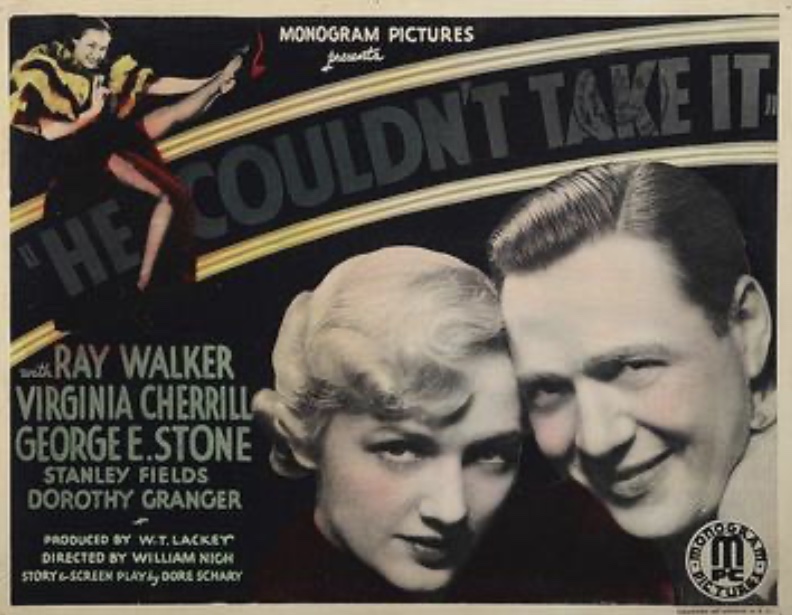
In 1933, Virgina Cherrill featured in five movies: Fast Workers, The Nuisance, He Couldn’t Take It, Charlie Chan’s Greatest Case, and Ladies Must Love. None of these movies excited moviegoers or film critics.

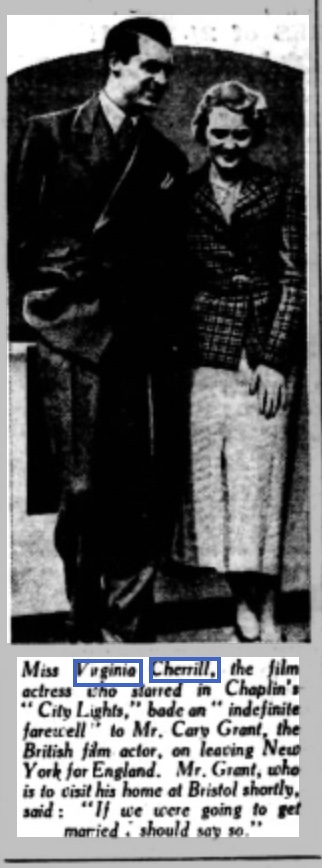
However, Virginia was exciting Cary Grant, who seemed keen on marriage. Virginia, married at nineteen and divorced at twenty appeared more reticent, as this newspaper report from November 13, 1933 suggests.

Latest results from the Last Sixteen of our Mastodon movie poll.

Lawrence of Arabia 57% v 43% Sunset Boulevard

Casablanca 92% v 8% The Grapes of Wrath

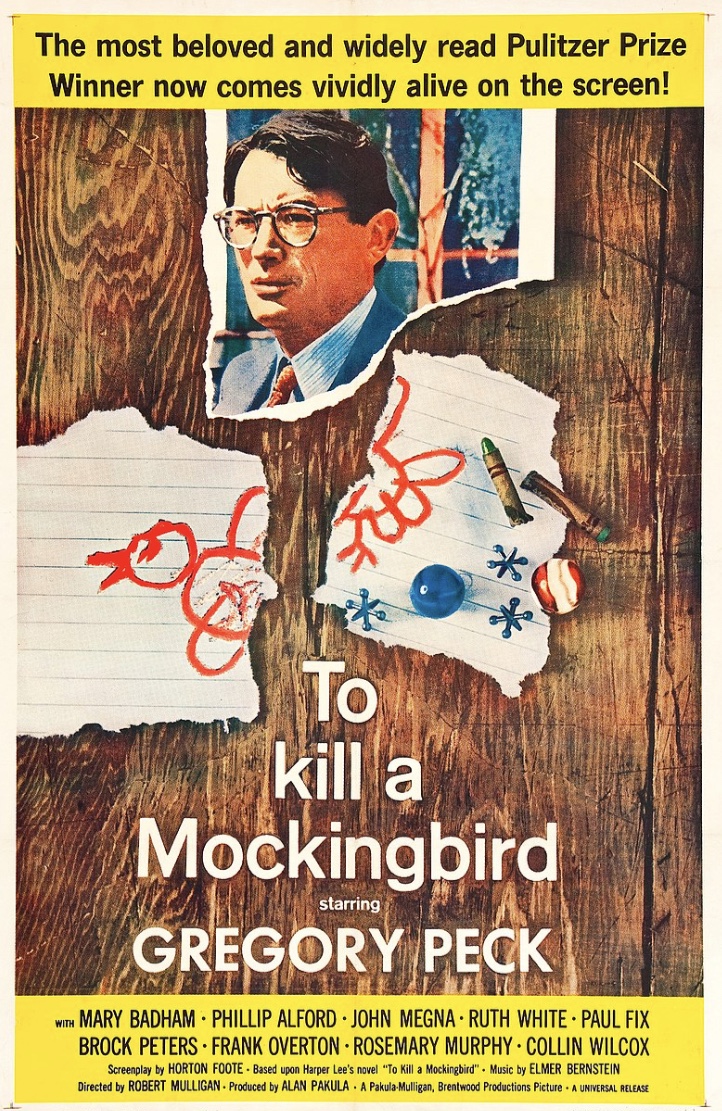
Singin’ in the Rain 61% v 39% To Kill a Mockingbird

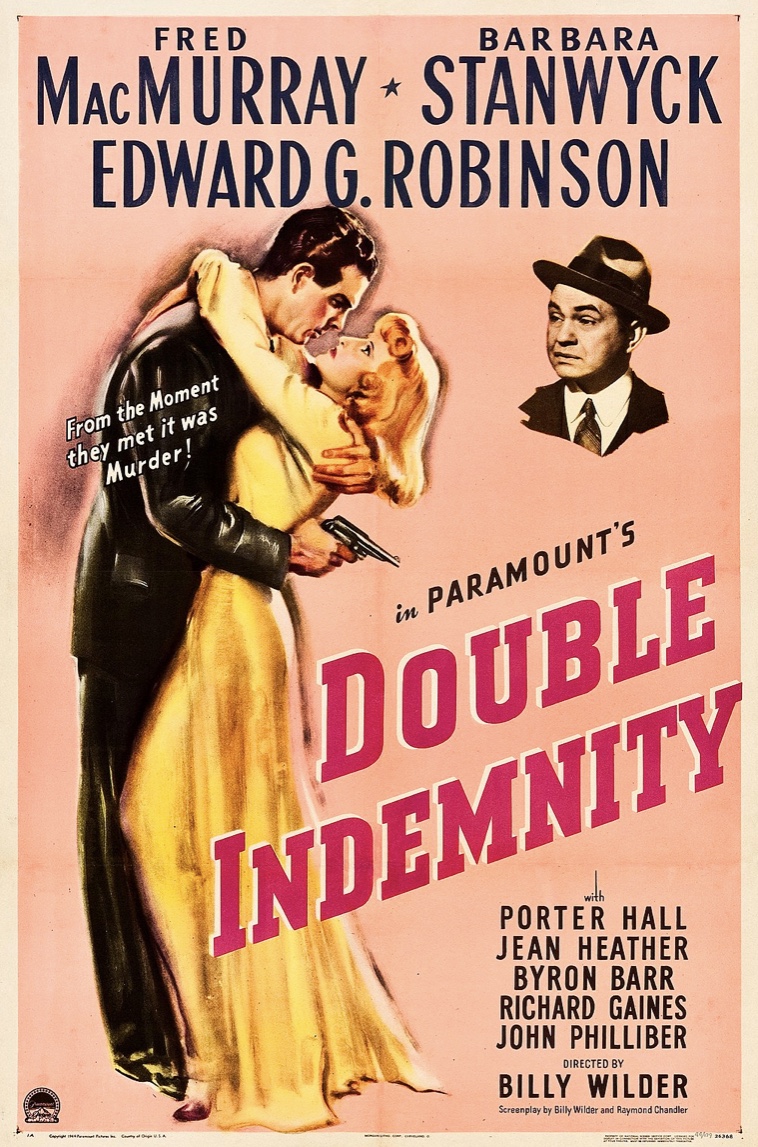
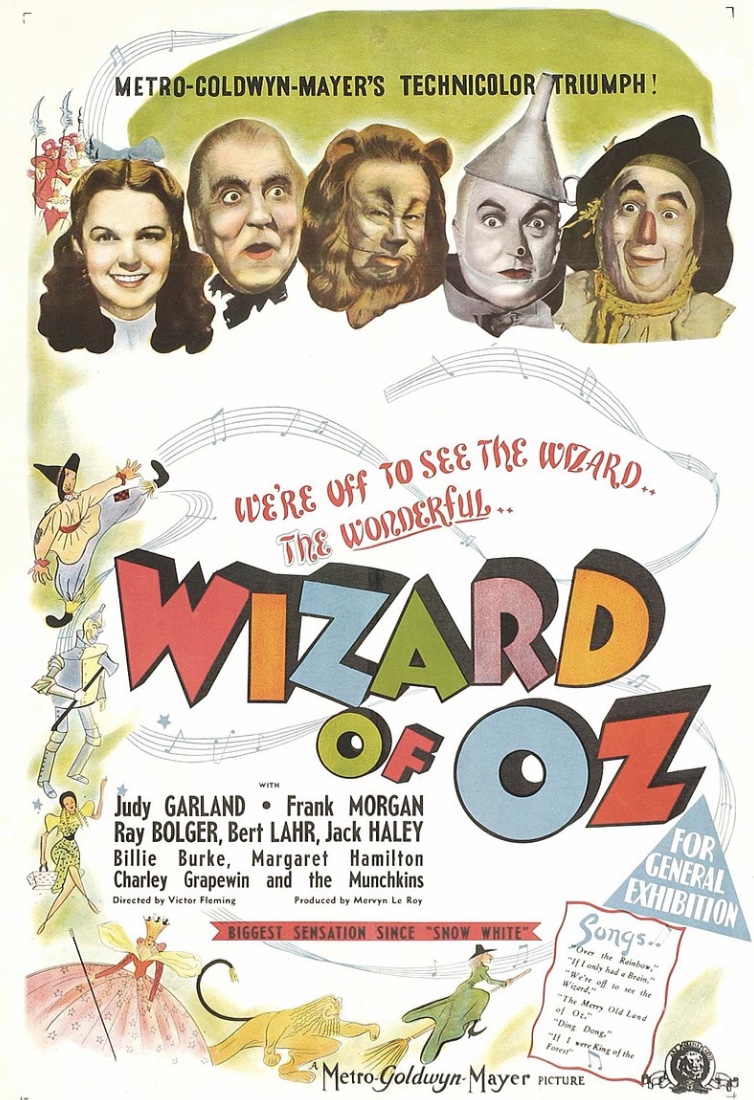
Double Indemnity 46% v 54% The Wizard of Oz

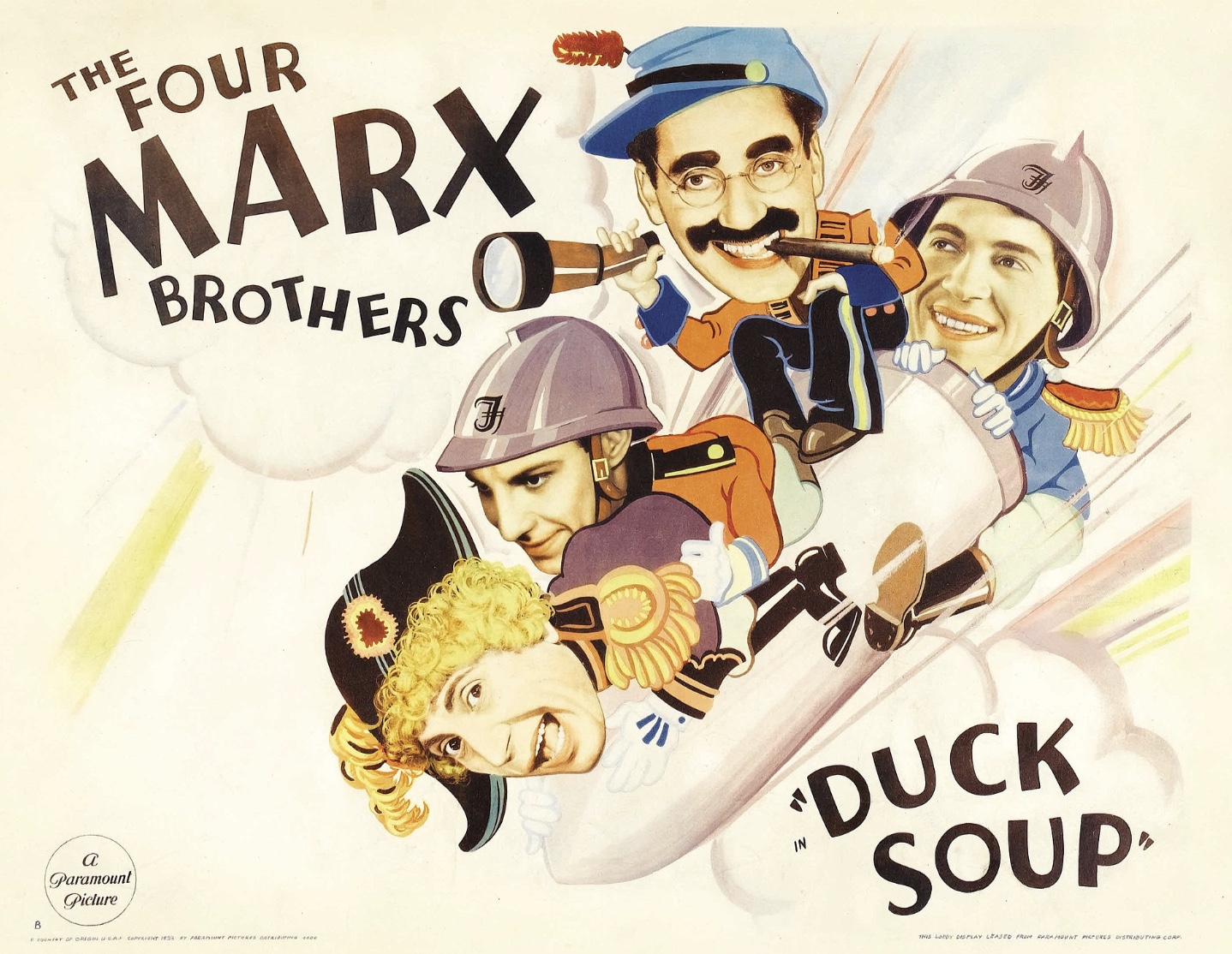
Duck Soup 25% v 75% Rear Window

Quarter-Finals

Dr Strangelove 57% v 43% 2001: A Space Odyssey

Citizen Kane 62% v 38% The Wizard of Oz

Operation Zigzag, book one in my Eve’s War Heroines of SOE series, has returned to #1 on the Amazon genre charts. Many thanks to everyone who has made this possible.

As ever, thank you for your interest and support.

Hannah xxx

For Authors

#1 for value with 565,000 readers, The Fussy Librarian has helped my books to reach #1 on 38 occasions.

A special offer from my publisher and the Fussy Librarian. https://authors.thefussylibrarian.com/?ref=goylake

Don’t forget to use the code goylake20 to claim your discount 🙂
Categories
The Golden Age of Hollywood

Maureen Adele Chase Dunlop de Popp

Research for my forthcoming novel, Sunshine, The Golden Age of Hollywood, Book Two.

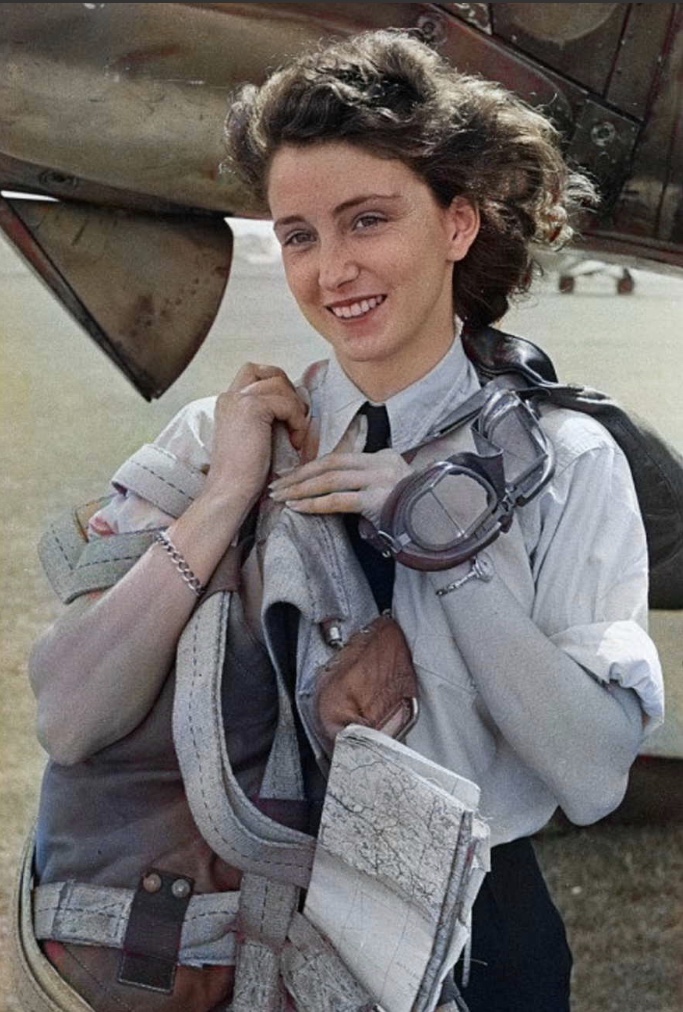
Thanks to her appearance on the cover of Picture Post, Maureen Adele Chase Dunlop de Popp (26 October 1920 – 29 May 2012) became the ‘cover girl’ of the Air Transport Auxiliary, a team of pilots who ferried Spitfires, Hurricanes, Mustangs and more between factories and airfields.

Maureen was born in Quilmes, near Buenos Aires. Her parents were Australian farm manager Eric Chase Dunlop, a World War One veteran and a sheep farmer in Patagonia, and his English wife, Jessimin May Williams.

Educated mainly by her governess, Maureen became an expert horse rider. She also developed a fascination for aeroplanes and during a holiday in Britain in 1936, she took flying lessons. Upon her return to Argentina, she backdated her birth certificate and continued flight training with the Aeroclub Argentino.

At the outbreak of World War Two, Maureen decided to support the war effort. However, to join the Air Transport Auxiliary, female pilots needed a minimum of 500 hours’ solo flying, twice that of a man.

Colourised version of Maureen walking away from her Fairey Barracuda

After increasing her flying hours, in April 1942 Maureen joined the ATA. She flew thirty-eight different types of aircraft, logging 800 hours of flight time. She flew Spitfires, Hurricanes, Mustangs, Typhoons and Wellingtons. Her favourite aircraft to fly was the de Havilland Mosquito. 

Maureen flew from the all-female ferry pool at Hamble, Southampton, which specialised in delivering Spitfires from Supermarine’s factory at RAF Southampton.

On at least two occasions, Maureen was forced to make emergency landings, once when the cockpit canopy of her Spitfire blew off after takeoff and secondly when the engine of her Fairchild Argus failed in the air.

Maureen Dunlop

After the war, Maureen served as a flying instructor at RAF Luton. She returned to Argentina where she instructed pilots for the Argentine Air Force and became a commercial pilot, retiring in 1969.

In 1955, Maureen married retired Romanian diplomat Serban Victor Popp. The couple met at a British Embassy function in Buenos Aires. They had a son and two daughters, and raised them on their farm Milla Lauquen Stud, in Norfolk, where they also bred pure-blood Arabian horses. 

Serban died in 2000. Maureen passed away at her home in Norfolk on 29 May 2012, aged ninety-one.

Categories
Dear Reader

Dear Reader #192

Dear Reader,

Some book news. I have three books in the top fifty of Amazon’s Hot New Releases, Historical Fiction: Operation Jedburgh, Eve’s War book ten, just published; Tula, book one in my Golden Age of Hollywood series, to be published this summer; and Operation Butterfly, Eve’s War book eleven, also to be published this summer.

A Tiger Moth, an aeroplane that becomes central to the life of my character Sunshine in my forthcoming novel, Sunshine: The Golden Age of Hollywood, Book Two. This is a Canadian version with its characteristic canopy. The biplane was designed by Geoffrey de Havilland and it operated mainly as a trainer aircraft.

Clara Bow’s thirty-first movie was Dancing Mothers, released on March 1, 1926.

Paramount cast Clara as Kittens, the second lead in the movie. Clara was too talented to play second-fiddle to anyone, and she duly stole the picture. She said, “I played her (Kittens) as a girl out for havin’ fun. When I said mean things, I tried t’put over the idea with a look after I’d said the thing: “Oh, why’d I say that? I didn’t really mean it.”

Clara always added depth to her roles, a depth that wasn’t always evident on the printed page. She had an intuitive understanding of her characters and, just as importantly, a knowledge of how various members of the audience would interpret her characters. She played each scene accordingly, with the aim of connecting with the entire audience.

Clara imbued her characters, and movies, with a great sense of energy. She also had the gift of suggesting a hidden sensitivity, even in characters that displayed a superficial façade. As Louise Brooks said, “She was absolutely a sensation in Dancing Mothers. Clara was so marvellous; she just swept the country! I thought she was oh, so wonderful; everybody did. She became a star overnight with nobody’s help.”

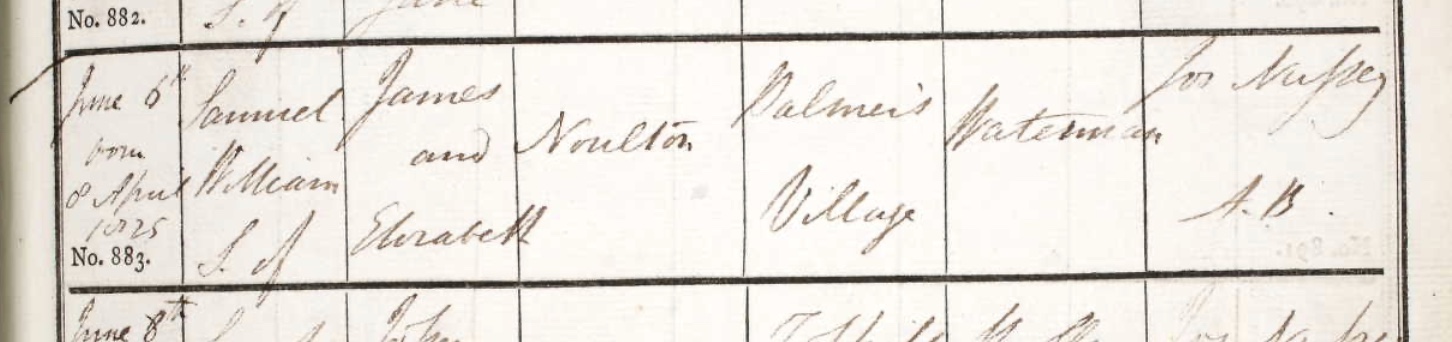
I’ve discovered the baptism record of my ancestor Samuel William Noulton, born 8 April 1825, baptised 6 June 1825. Samuel died in 1893, in the workhouse. The Noultons are one of the poorest branches on my family tree. Samuel’s father, James, served in the Napoleonic Wars, fractured his wrist, and was awarded a medal.

The wedding of my 3 x great grandparents, William Bick and Fanny Brereton, on 14 December 1868 in St Mary’s, Lambeth. Both were from labouring families. William was illiterate, but Fanny signed her name. They moved to London in 1864 from the West Country. After their marriage, William and Fanny had five children. However, they also had five children before they wed.

My 3 x great grandmother, Fanny Brereton, was literate in an age when even women from privileged backgrounds could not read or write. Who educated her? A clue is provided by this Register of Duties Paid for Apprentices’ Indentures, 26 March 1807, which reveals that her father, James Richard Brereton, was an educated man and an apprentice to William Vandenbergh, a citizen and cutler of London. Also, in terms of family history, it’s interesting to note the continental connection.

I’m exploring the life and career of Virginia Cherrill, the person who, along with Charlie Chaplin, delivered the “Greatest single piece of acting ever committed to celluloid.”

In 1933, Virginia Cherrill played Virginia, a support character in Fast Workers, aka Rivets, a drama that starred John Gilbert. The critics hated the movie. Harrison Reports, a New York film-review service, stated that Fast Workers was, “Mediocre! The action is slow, the talk dirty and suggestive, and the behavior of the characters vile. Unsuitable for children, adolescents, and for Sundays.”

Virginia’s acting career was not going anywhere. However, she was travelling. On 25 August 1933, in Los Angeles, Virginia boarded the Matson Lines passenger liner SS Lurline, pictured approaching Pier 10 at Honolulu in the 1930s, and arrived in Honolulu on 31 August 1933. 

Virginia was also sailing in another sense, into the life of Archie Leach, aka Cary Grant…

The latest results from the Third Round of our Mastodon Movie poll.

Sunset Boulevard 60% v 40% The Thin Man

2001: A Space Odyssey 60% v 40% The Great Escape

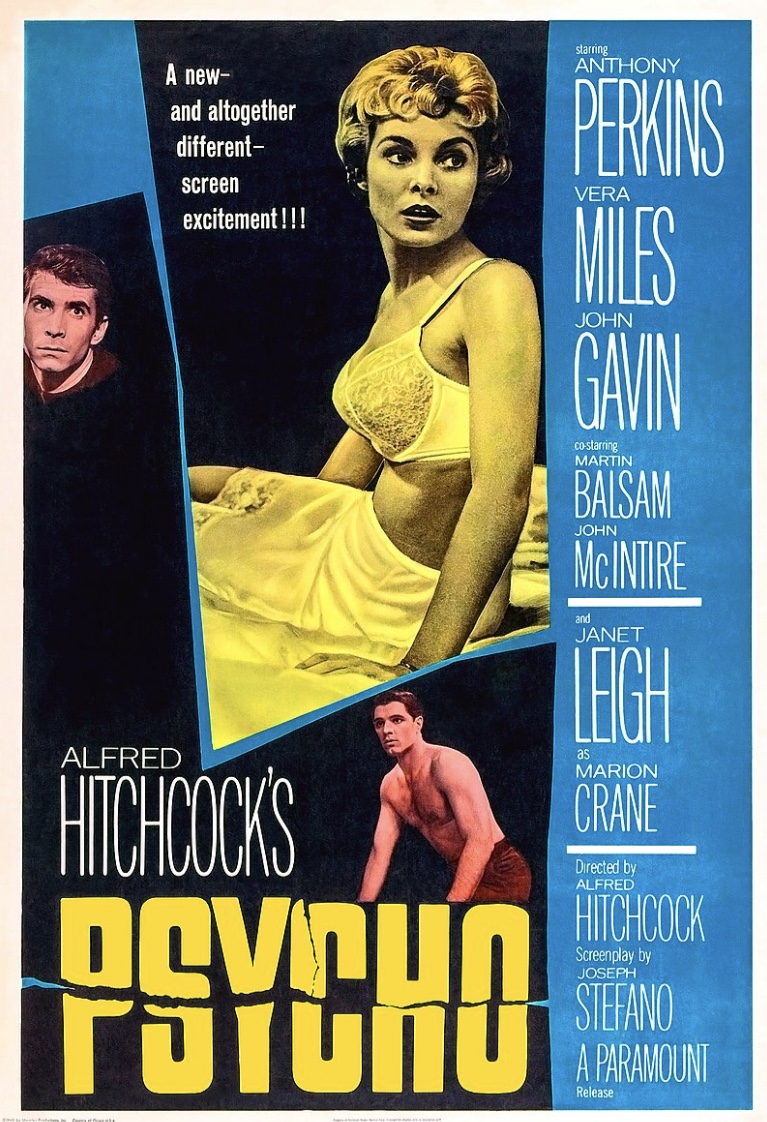
Psycho 46% v 54% Double Indemnity

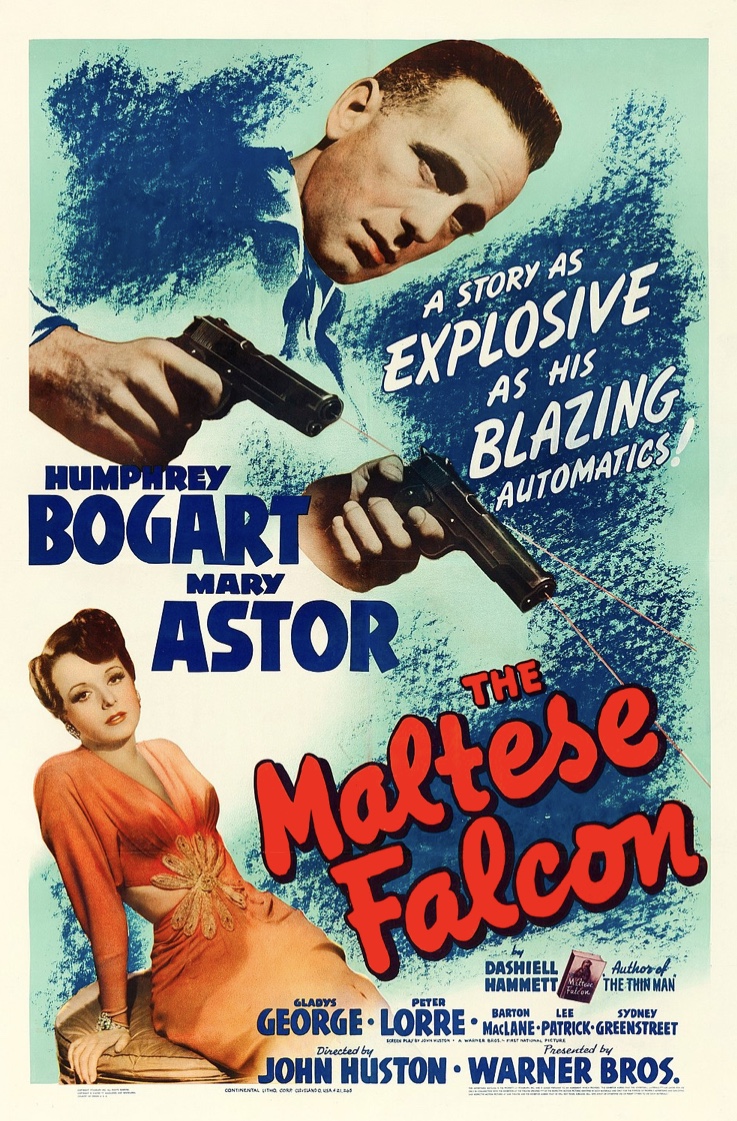
Rear Window 56% v 44% The Maltese Falcon

Last Sixteen

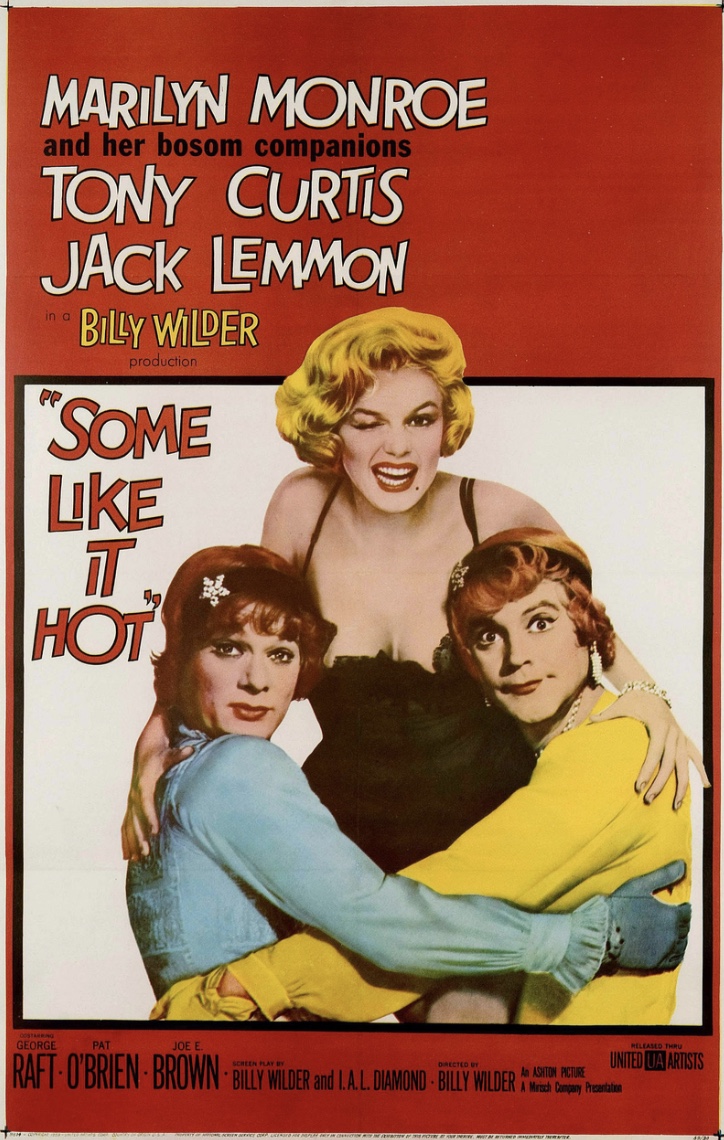
Citizen Kane 63% v 37% Some Like it Hot

Dr Strangelove 74% v 26% His Girl Friday

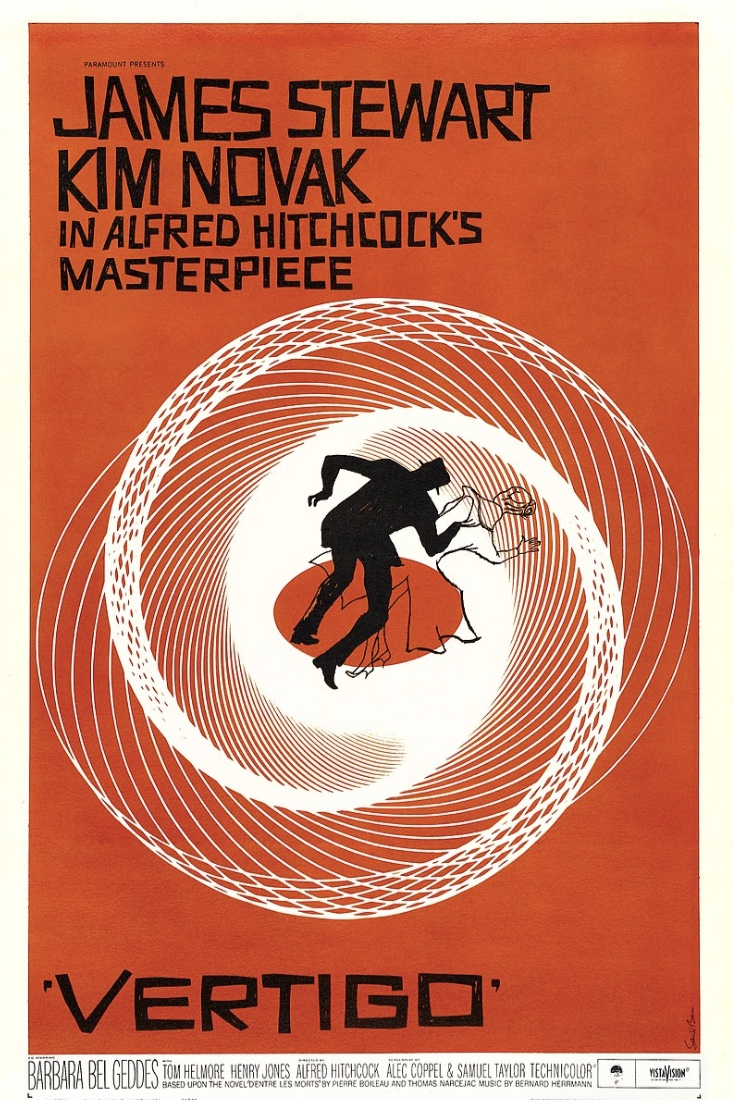
Vertigo 48% v 52% 2001: A Space Odyssey

My article about Fay Wray appears on page 35 of the Seaside News 

When you publish a book, in this case Operation Jedburgh, you are never sure what readers will think of it, so it’s always a relief when the first review comes through.

As ever, thank you for your interest and support.

Hannah xxx

For Authors

#1 for value with 565,000 readers, The Fussy Librarian has helped my books to reach #1 on 36 occasions.

A special offer from my publisher and the Fussy Librarian. https://authors.thefussylibrarian.com/?ref=goylake

Don’t forget to use the code goylake20 to claim your discount 🙂

Categories
Dear Reader

Dear Reader #191

Dear Reader,

For my forthcoming novel, Sunshine, I’m researching the Air Transport Auxiliary. The ATA was a British civilian organisation set up at the start of the Second World War to ferry aircraft between factories and active service squadrons. 

Ten percent, 168, of its pilots were women. They ferried all types of planes, from Lancasters to Spitfires, sometimes as many as six different types of planes a day, familiarising themselves with the controls on the spot.

The ATA’s call sign, after D-Day, was “Ferdinand the Bull”, while their unofficial motto was “Anything to Anywhere”.

📸 First Officer Maureen Dunlop on the cover of Picture Post

Clara Bow’s thirtieth movie was Two Can Play, another low-budget affair that was beneath Clara’s talent. The movie was released on February 21, 1926, disappeared on the daily-change circuit and is now presumed lost.

After thirty movies, Clara had certainly served her apprenticeship. All she needed was the right script, and the right lifestyle guidance, to propel her to superstardom. The script arrived with her thirty-first movie, Dancing Mothers. Whether the lifestyle guidance ever arrived is a matter for debate.

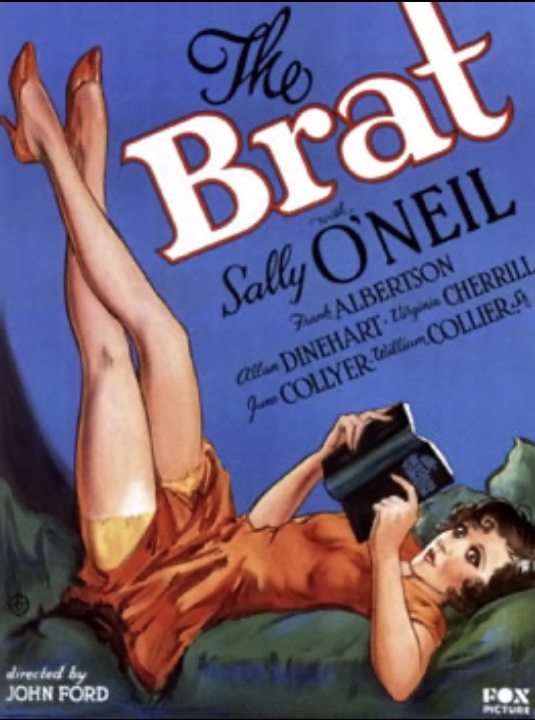
After the bright lights of Charlie Chaplin’s City Lights and the critical disaster of Girls Demand Excitement, Virginia Cherrill made two more movies in 1931, The Brat and Delicious.

In The Brat, a comedy directed by John Ford and starring Sally O’Neil, Virginia played Angela, a support character. She also had a supporting role in Delicious, a musical romantic comedy starring Janet Gaynor and Charles Farrell. 

Career-wise, Virginia was slotting into support roles. However, her profile remained high in Hollywood, and she was a regular at parties hosted by William Randolph Hearst and his mistress, Marion Davies. 

Engagements to eligible bachelors were announced in the press, but they amounted to nothing. After the distressing experience of a brief first marriage and divorce, Virginia was understandably cautious.

Latest results in our Mastodon Mega Movie Poll, Round Three

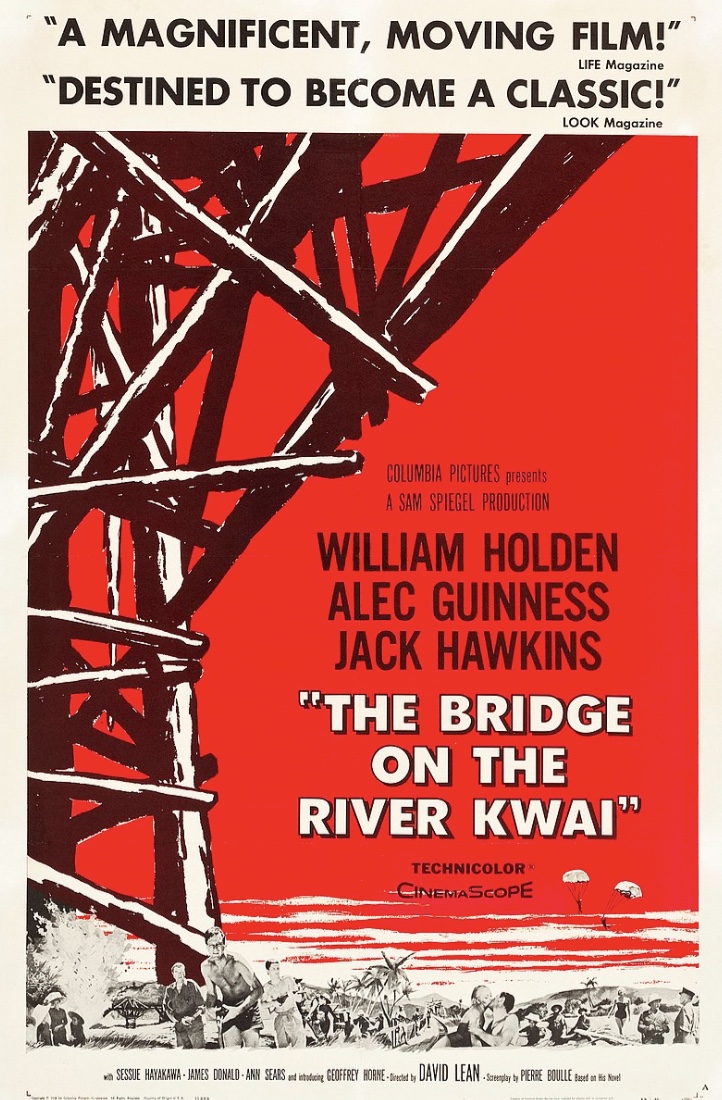
The Wizard of Oz 59% v 41% The Bridge on the River Kwai

Vertigo 76% v 24% Spartacus

Singin’ in the Rain 67% v 33% Modern Times

It’s a Wonderful Life 47% v 53% Some Like it Hot

On the Waterfront 47% v 53% The Grapes of Wrath

The General 39% v 61% To Kill a Mockingbird

The Manchurian Candidate 47% v 53% His Girl Friday

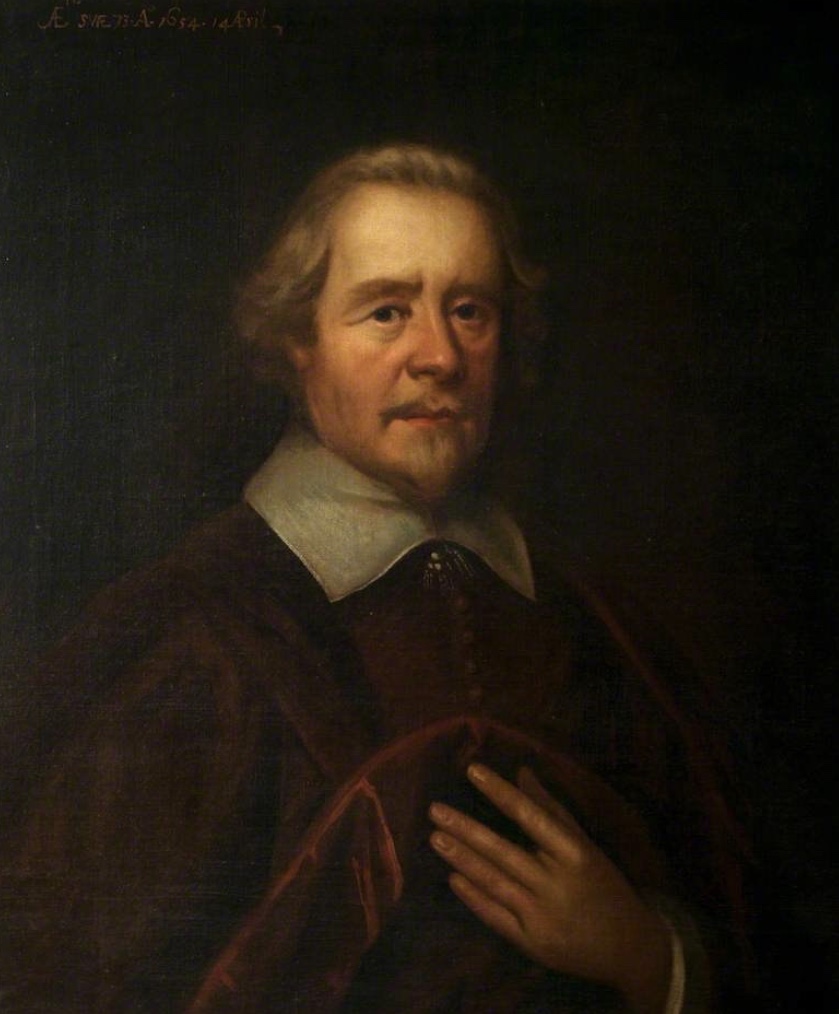
I’ve discovered this portrait, by an unknown artist, of my ancestor David Papillon (1581-1659). An oil on canvas, it depicts David at the age of 73.

David was an architect and military engineer. Born in Paris, he arrived in Britain in 1588 as a refugee. His mother died when their ship was wrecked. David and his two sisters were saved.

As ever, thank you for your interest and support.

Hannah xxx

For Authors

#1 for value with 565,000 readers, The Fussy Librarian has helped my books to reach #1 on 36 occasions.

A special offer from my publisher and the Fussy Librarian. https://authors.thefussylibrarian.com/?ref=goylake

Don’t forget to use the code goylake20 to claim your discount 🙂